

Month: September 2017


What I Learned As A Prisoner In North Korea
TED Talks has outdone themselves on Euna’s presentation.

7 Smart Ways To Use Technology In Classrooms
IDEAS.TED.com
Sep 13, 2017 /
Elementary school teacher Kayla Delzer’s students tweet, post on Instagram and watch YouTube in class. Here’s why she thinks all kids should do the same.
Many schools and teachers have an uneasy relationship with technology: they decry its power to distract young people but see it as a necessary evil to be tolerated, or at least strictly limited. Fargo, North Dakota, third-grade teacher Kayla Delzer believes that technology can truly revolutionize education — but only if educators make wise choices about what is used and how it’s used (TEDxFargo Talk: Reimagining Classroom Teachers as Learners and Students as Leaders).
It’s way too late to try to keep tech out of classrooms — or children’s lives. “We may think we’re protecting students when we keep them in a tech-free bubble for the school day, but they eventually leave, graduate, get jobs,” says Delzer. “If we block technology from them, we might actually be inhibiting them. We need to put them in dynamic, responsive environments at school so they can be successful later on.” After trying different approaches and a variety of devices, programs and apps with her students, she has come up with some common-sense guidelines for how adults can help their kids use technology to their best advantage.
Tech tip #1: Something boring on paper is still boring on a tablet or a laptop.
“Using technology simply for the sake of using it is wasteful,” Delzer says. “If tech doesn’t transform your classroom, your teaching or your students’ learning, skip it.” One easy rule of thumb: If a project can be done using paper or pencil but you’re doing it on a computer or device, it’s not transforming your classroom.
One way that Delzer’s students learn math is by playing an augmented-reality geometry board game called Cyberchase Shape Quest. To participate, kids point an iPad camera at a paper board, which then comes to life with animated math challenges. “It teaches geometry, problem solving and spatial reasoning in an interactive, responsive way,” she says.
Tech tip #2: How tech teaches is as important as what is taught.
Delzer avoids any software that relies on drills and repetition to educate. Instead, she chooses programs that encourage kids to create. One example: Cargo-bot, an app that requires students to write programs that control a robot moving boxes. The goal, says Delzer, is to compose code that makes the robot carry the boxes in the most efficient way possible, forcing kids to develop a number of important abilities, like critical thinking, creativity, problem-solving and logic.
Tech tip #3: Let students sometimes be the teachers.
The thought of mastering many apps, devices and programs in addition to their regular lesson plans will probably make teachers feel overwhelmed. Delzer’s advice: “You don’t need to master every single tool before you hand it over.” She likes to give a new tool to a student and ask them to learn how to use it first. After they figure it out, they can teach everyone else — including the teacher.
Tech tip #4: Find technology that lets kids learn from themselves and each other.
Using an app called AudioBoom, Delzer’s students take turns recording themselves reading classroom books aloud. Each recording is approved by Delzer, who helps kids evaluate factors like intonation, phrasing, speed, emotion and accuracy. Approved recordings are turned into a QR code that is taped to the back of the book that was read. Some books have multiple QR codes attached to them, Delzer says, letting students hear the different choices that their classmates make when reading the same thing.
“At the beginning of the year, my students thought that fast reading was fluent reading,” Delzer says, but after reading aloud and hearing their friends’ renditions, they understand the importance of pacing and emotion. Kids can then re-record their favorite books and compare their own recordings to see how their performances evolve after practice. “This helped instill a sense of pride among my students,” says Delzer.
Tech tip #5: Rather than ban phones or YouTube, educators should find smart ways to use them.
“Many schools in the US block YouTube, but I’ve heard it’s the number-one search engine among students in grades 5 through 12,” says Delzer. “So much learning is lost when we block resources from our students. Also, students are pretty savvy, and they can get around even complex filters.”
Delzer’s students create video newsletters that are added to YouTube every month. “I started replacing paper newsletters with video newsletters in 2014 and never looked back,” she says. “There’s a lot of power in having students report what they’re up to, rather than my typing it up in a newsletter.” The kids plan the newsletters — where they evaluate what they’re learning and discuss classroom happenings — as well as film them, edit them and add effects.
Tech tip #6: Adults should serve as champions of digital citizenship.
A safe, friendly environment like a classroom is a great place for children to learn how to behave responsibly on the Internet. Delzer has written student rules for Internet use and they include: never tweet anything you wouldn’t say to someone’s face or in front of their grandma; never share personal information; only go to appropriate websites; and always report cyberbullying to an adult. She set up a moderated Twitter account for her classroom so they can practice their digital etiquette, learn how to use social media, and explore their digital footprint. Her students tweet with experts from around the world; they also tweet with other classrooms around the world to share and compare what they’re learning.
Teachers should ask their students to Google themselves and then think about what their digital record says about them, advises Delzer. “93 percent of employers now use social media in some way to either recruit or hire employees,” she explains. “That means if our students have a negative digital footprint, they might have just a 7 percent chance of getting a job.” To practice what they preach, adults should also Google themselves and reflect on what they find.
Tech tip #7: Give kids some space to cultivate their own interests.
Inspired by Google’s former 20 percent policy, which let employees use that amount of their workweek on passion projects, Delzer lets her students pursue their own “genius” hours. Her students follow their interests for one hour a week, and some — but not all — of their projects are tech-focused. One student built a tin-can robot after learning how to do it by watching YouTube tutorials, and another filmed and edited her own movie. “It really gives kids ownership in their learning,” says Delzer.
https://ideas.ted.com/7-smart-ways-to-use-technology-in-classrooms/

Triple Shot Thursday *To Love, To Be Loved By You*
Have a great weekend. See you here next week. M

Change.org Petition: Equifax Breach
Change.org
IMPORTANT PETITION
Regardless of where or when a data breach occurs, it leaves people feeling powerless and helpless; confused and angry. The ITRC has been tracking data breaches for more than a decadeand we hear from the victims of these breaches on a near-daily basis. Breaches of really sensitive personal information like social security numbers are nothing new, but the sheer size of the Equifax data breach is unprecedented and alarming. Lately, we have been seeing data breaches grow larger and more dangerous at a frightening pace. Unless we, as a society, make this a national priority, we predict the Equifax breach will be eclipsed by yet another larger, more destructive data breach in a very short period of time.
We need ALL stakeholders – consumers, industry, and government – to engage in a solution.
Right now the industry has the opportunity to step up and help Americans protect themselves from the loss and theft of personal information. Currently, victims of identity theft may be able to have the fees for credit freezes waived. But what about other consumers who want to proactively protect their identity, especially in cases where they have become victims of data breaches? Everyone should be able to take the proactive step of a credit freeze, no matter their level of income.
We believe credit freezes should be free. Not just from Equifax, and not just for 30 days. We are asking for all credit reporting agencies to provide all Americans with the ability to enact an initial freeze of their credit report at any time and one free thaw and refreeze per year.
We realize that free credit freezes won’t solve the identity theft problem once and for all. That will require more work, in many other areas. However, it is one way that we can reduce the rate of identity theft in America and that’s definitely a step in the right direction.
We all need to continue working towards a better balance between convenience and security. The ITRC will continue to push for this conversation to be at the forefront of public debate. However, right now we are bleeding. We need a tourniquet and that tourniquet comes in the form of free credit freezes.
Will you join us in our efforts to help protect Americans from identity theft?
Sign the petition to tell the three major credit reporting agencies that you want a free initial credit freeze and one thaw and re-freeze per year for all Americans.
Share this petition and tag #FreeFromAll3
This petition will be delivered to:
- CEO, Equifax
Richard F. Smith - CEO, TransUnion
James M. Peck - CEO, Experian
Brian Cassin
Transracial Adoption: When the Adorable Babies Become Teens
Sharon, you’re greatly missed on the team. I pray you’ve beaten the fourth attempt to hold you down. I believe there is not stoping you. I think of you often and would love to know how your health is.
Sending prayers for health and happiness.

Lesbian Couple Takes Pulpit at Historic Baptist Church
Lesbian Couple Takes Pulpit at Historic Baptist Church
A historic Washington D.C. church has taken a gigantic step by appointing its first lesbian couple to partner-lead the congregation. The Calvary Baptist Church will now be led by Sally Sarratt and Maria Swearingen, two women who are bringing an entirely new image to the pulpit. The lesbian couple has extensive ministerial experience, and church officials say their values align closely with those of the congregation.
Marching Forward
While many congregations across the country have gay pastors, Sarratt and Swearingen become one of the first married gay couples to share a spot on the pulpit.
Swearingen calls the job a “dream that has unfolded”, and says that she never imagined it being possible when growing up. The young pastor also sees the shift toward modernization being in line with the goals of church, despite the fact that progressive values tend to fly in the face of long-held ideas and traditional religious beliefs. She explains that “the work of the church has been and always will be to set the table of hospitality for all people.”
Conservative Branches Push Back
Although many denominations are trending toward more tolerant beliefs, there has been no shortage of criticism for the decision to put a lesbian couple on the pulpit.
Just weeks after the decision, protestors burst through the doors of Calvary Baptist Church carrying signs and chanting slogans. The group told church members they “were going to hell” for allowing gay pastors and that the building was now “the house of Satan.”
Strong disapproval was also voiced by members of the Southern Baptist Convention (SBC), a socially conservative branch of the Baptist faith. Current SBC pastor Joseph Lyles said he was “surprised” and “concerned” to hear about the move. He finds it “difficult” to support same-sex relations “with a biblical basis”. Another pastor pointed to the hiring of Sarratt and Swearingen as an example of the progressive branch’s “impulse to try to modify Christianity”.
Read more at https://www.themonastery.org/blog/2017/04/gay-couple-takes-pulpit-at-historic-baptist-church/#FKklMabog6XFLC5e.99

Church of England Embraces Transgender Members
Posted on July, 2017 by Universal Life Church Monastery
The Church of England has voted to welcome transgender individuals into the church with open arms. By an overwhelming margin, the church’s governing body (known as the General Synod) chose to support transgender inclusion. It was a historic decision for a religious institution that for centuries clung closely to tradition and conservative tenets of the faith.
The timing of the vote was fitting, too – The General Synod vote happened to occur just as Gay Pride festivities were taking place across England.
Marking the Transition
The motion passed by church leaders provides for transgender “inclusion,” but what does that really mean?
Well, as it turns out, a lot. Their plan is to create specific church services to mark a transgender person’s “transition” from one gender to the other – thus welcoming their new identity into the church community. Just as births and marriages have their own specific religious ceremony, so too will switching genders.
Interestingly, the vote came almost immediately after another remarkable decision: to abandon conversion therapy. Church leaders agreed that the controversial practice which seeks to turn gay people straight was unethical. It would seem the Church of England has undergone a social awakening of sorts.
Read more at https://www.themonastery.org/blog/2017/07/church-of-england-embraces-transgender-members/#tvPL47J2HYBu4IUr.99

Why are Books Banned or Burned?
At the end of September, libraries and bookstores everywhere will be celebrating “Banned Books Week.” This got us thinking: why do people ban books (or, in extreme cases, burn them)? Literature is such a fundamental part of human life, and yet time and time again throughout history there have been concerted efforts to suppress or destroy certain books.
These days, when we talk about banned books, titles such as “To Kill a Mockingbird” usually come to mind. However, let’s not forget that one of the most commonly banned books worldwide is not some provocative piece of modern literature, it’s the Bible. Today, owning a Bible in certain countries is downright dangerous and can lead to arrest, assault, or worse.
Book Burning Throughout History
At the same time, it’s worth noting that censorship is nothing new when it comes to political and religious texts. Almost every country or religion has experienced some form of book burning. In 213 B.C, a Chinese Emperor burned philosophy and history books from states other than Qin, because the books did not comply with his dogma. Torah and Talmud scrolls have been burned since the early days of Christianity up until the Holocaust. Catholic priests burned Martin Luther’s German translation of the Bible during the Reformation.
Even Harry Potter is Not Safe
Unfortunately, book burning remains in fashion even to this day. Perhaps the most well-known modern example involves the popular “Harry Potter” book. J.K. Rowling’s now-famous stories have been frequently criticized by religious figures for romanticizing the occult and promoting devil worship. Some pastors, claiming the books were harmful to children, went as far as to hold public book burnings in an attempt to rid the Earth of the “ungodly” themes of wizardry promoted within.
Then again, book burning is not nearly as common as it once was. These days books deemed too offensive to read in school are put on the “Banned Books” list. Many school libraries throughout the U.S. continue to block students from reading certain supposedly-dangerous texts.
Censorship in Religion
Religious leaders often choose to stifle ideas that don’t align with the core teachings of their faith. For example, Charles Darwin’s “On the Origin of the Species” is rarely welcome during discussions about creation among people of faith. But isn’t there value in understanding ideas that contradict your own? Without reading the evidence behind evolution, how could a Christian successfully defend his/her belief in Creationism?
Great literature is worth reading and discussing, whether we believe with the point-of-view of the author or not. If a person is not strong enough in their own beliefs to stand against an opposing viewpoint, then censorship is the inevitable outcome. But is it the right one?
Read more at https://www.themonastery.org/blog/2017/09/fiery-ideas-why-books-are-banned-and-burned/#UdPp7J617Vj7jicV.99

Triple Shot Thursday: Infamous Blues Brothers
I can always count on the Blues Brothers to make me laugh, cry and keep laughing. For your Thursday enjoyment, time for a healthy mind bending break. M
Happy Anniversary Survivors
I’m so glad to share this day & everyday with you. M

Three Years Ago! Survivors Blog Here Was Born
The night Survivors Blog Here was born, Army of Angels, Hyperion, and myself brainstormed late into the night. We asked ourselves, what are readers looking for and what can we offer them? How do we make it inviting and show our commitment to helping people move forward? At that moment, we knew Survivors Blog Here’s mission.
We’re a collaborative of writers with a common goal to support men and women while working thru pain and taking steps forward to healing. Our contributors have diverse backgrounds, personalities, and age, which makes for interesting reading.
People with pain from Mental Illness, Child Abuse, Domestic Violence, Men’s and Women’s Sexual Assault, have to keep moving forward to understand the pain. Each step brings you closer to overcoming the next challenges and transitioning from victim or patient to Survivor.
Survivors Blog Here’s foundation is the Contributors who share their struggles to help others. Our followers are the brick and mortar of our blog. Our readers are expressive, loyal, and continue to push us forward. Thank you for following, leaving comments, making Survivors Blog Here a brighter place.
Army of Angels send’s her love and will return soon. To highlight the celebration of our third year anniversary, We want to shine a light on our Contributors and Readers who expresses joy, care, empathy, and love for one another. You surprise me, make me laugh, I grow from you. Thank You. You can find your favorite Contributors at Survivors Blog Here and their personal Blogs below.
A Patients Voice www.apaitentsvoice@wordpress.com
Hypervigilant http://hypervigilant.org
Livin with Paralysis www.livinwithparalysis@wordpress.com
Robert M Goldstein www.robertmgoldstein@wordpress.com
Sedge808 www.sedge808@wordpress.com
Survivors Road www.survivorsroad@wordpress.com
Surviving the Spector www.survivingthespector@wordpress.com
Army of Angels www.armyofangels@wordpress.com
Hyperian www.returnofthedragons@wordpress.com
Looking for the Light Blog www.lookingforthelightblog@wordpress.com
Browse around, meet your neighbors, grab a comfy chair, and enjoy the refreshments.
For your musical entertainment and a good laugh, this is for you. M

Sincerely, X Episode-7 Mood Changer
iTunes Podcast Episode-7 Mood Changer
https://itunes.apple.com/us/podcast/episode-7-mood-changer/id1238801741?i=1000391690504&mt=2

Change.org 2017 Progress and Victories
|
|||||||
|



In Music We Trust Supports Mind Charity
Aiden Hatfield started In Music We Trust to shine a light on Mental Health by creating a music centered clothing line and donating 50% of profits to Mind Charity. He’s the first person I met on Twitter, is from across the pond and quite funny.
“We’re a music based clothing brand that helps those with depression and other mental health issues by donating 50% of our profits to the ‘Mind’ charity.” Visit http://www.inmusicwetrust.com to see the awesome tee’s for sale. Follow Aiden on Twitter @inmwtclothing or @aidenhatfield. M
Mind Charity
Mind’s 2016-21 strategy is called ‘Building on change’.
It’s the next stage in our journey towards our ultimate ambition of support and respect for everyone with a mental health problem.
On reflection
Since launching our previous strategy in 2012 we’ve seen some significant changes in mental health. In just four years, public attitudes are improving, support is growing and mental health is high on the political agenda.
Because of Mind, millions more people have access to advice and support thanks to our information and services nationally and locally, in England and Wales. We’re building on change, but we know there is much more to do.
People need Mind more than ever
Too many people still don’t have the things they need and deserve to stay well. And, that’s not good enough.

Triple Shot Thursday *It Takes All Kind Of People*
Sending love, support and prayers to survivors of the hurricanes, we haven’t and will not forget you. Keep believing in the human spirit. Life brings us major challenges which you are now facing. The sunlight of a new day may take time, it will come. M

California’s Sexual Assault Survivors’ Bill of Rights Signed into Law
Overjoyed at the success of California passing the first Sexual Assault Bill of Rights in 2016. Why not a NATIONAL LAW? Men and women sexual assault survivors deserve protection across America. M
Amanda Nguyen and her organization Rise, starting a Change.org petition. Her passion and dedication helped protect 25 million sexual assault survivors.
HELP California Rape Survivors!

Victory — On October 7, 2016, President Obama signed the first ever Sexual Assault Survivors’ Bill of Rights into law. Championed by Amanda Nguyen and her organization Rise, this important legislation will help give civil rights and protections to more than 25 million sexual assault survivors.
5 months before signing the law, Medium.com ran the campaign below during Sexual Assault Awareness Month. The video is a provocative look at how hospitals judge and disrespect some Sexual Assault Survivors.
Five Ways You Can Support Survivors During Sexual Assault Awareness Month 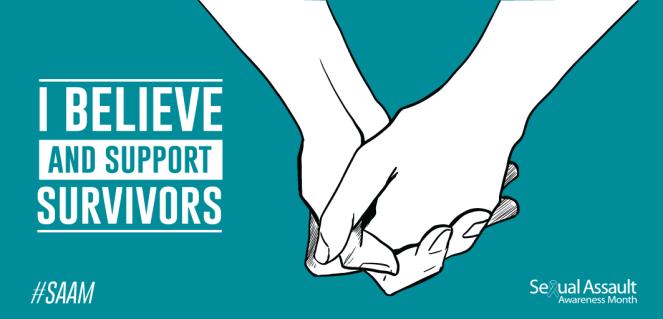

Nurse Arrested & Physically Abused for Doing Job
This story is important to everyone. Freedom was taken away from Nurse by Police Officer who violently abused and arrested an innocent woman. HE still has a job! This behavior adds to the divide in our country. Who next? When will this insanity end.
WP Editor has a mind of own, creating a formatting error. It’s Monday! M
Change.org
Alex Wubbels is an ER nurse from University Hospital in SLC, Utah who was arrested for following hospital policy and looking out for the rights of her patient. Let’s get behind her for doing to right thing.
This petition is to raise awareness of the dangers of front line staff in healthcare. Alex was simply following protocol and protecting her patient. She was stuck in a rock and a hard place and protected her patient. It is a situation I’m sure myself and other RNs have found themselves in at some level and at some point in their career. I can’t speak for what the patient did before they got to me, I will treat them with respect and protect their rights until they give me reason not to (like put me in danger).
While I am never an advocate for putting someone’s livelihood at risk without due process, I do think Officer Payne needs to have a formal written disciplinary action placed in his permanent file. If it is found that it has been a trend of similar behaviors during his time on the force, then he should be stripped of his badge. Additionally, I believe a public apology should be given by him to Alex.
This petition will be delivered to:
- Utah Governor
- Senator
Orrin Hatch - SLC Police Chief
Mike Brown

Teen who says Anthony Weiner sexted her shows her face for first time
The teenager whose online relationship with Anthony Weiner threw Hillary Clinton’s presidential campaign into a tailspin is revealing her face for the first time.
In an interview that will air in full on Monday, the teenager told Inside Edition how quickly the messages she exchanged with the disgraced New York congressman turned lurid.
Read: Sydney Leathers Weighs In on Weiner’s Latest Scandal: ‘He’s Quite the Egomaniac’
The girl was 15 when she first contacted Weiner through a direct message on Twitter in January 2016.

Police say Delaware man raped girl 250 times over 5 years
Delaware police say a man repeatedly raped the same girl 250 times over the course of five years.
41-year-old Richard White Jr. was recently indicted on 11 counts of second-degree rape, four counts of sexual exploitation of a child and possession of child porn.
Police detail that the raping started back in 2012.
Paterno knew about Sandusky’s child sex abuse before 2001: report
What did Joe Paterno know and when did he know it?
According to an explosive new CNN report published Saturday, the legendary ex-Penn State football coach may have known about Jerry Sandusky’s sexual abuse of young boys years before Sandusky’s 2011 arrest.
CNN obtained a Pennslyvania police report that described Paterno’s reaction to whistleblower Mike McQueary showing up in his office in 2001 and telling Paterno that he had witnessed Sandusky engaged in “an extreme sexual act” with a young boy in the football locker room.

Sincerely, X Audio Podcast Episode 8
SINCERELY, X AUDIO PODCASTThis week on Sincerely, X, a podcast from TED and Audible where speakers share ideas anonymously. Episode 8 features a woman whose bravery after a devastating assault allowed her to reclaim her own personal power. Available now on Apple Podcasts, the TED Android app, or wherever you listen to podcasts.
|

Yale Offering 19 Online Courses on Coursera
|
|||
|
|

Important Extra Security Measures For Blog
After being hacked in the spring, I talked with WordPress for extra security ideas. The post is short and sweet. I feel good taking the steps which are now good habits.
Log in from WordPress front page http://www.wordpress.com
Enable the two-step authorization, the response with the code needed is lightning quick
Sign out at Avatar/Gravatar in the upper right corner
This will take you to Profile page to sign out
These steps take at most 30 seconds.
In the cyber crime environment, you need safety. If anyone has more info on security, I’m all ears.
M

Triple Shot Thursday *Great Artist to Jam with*
Enjoy the tune mix up this week. Kathy Perry is so funny in many of her videos, I like this one. She can laugh at herself, she’s cool by me. I am enjoying Harry Stiles voice and sexy boy looks. How did he ever work in a boy band. Shaun Mendes wasn’t on my radar, he can shake it up. You’ll see more of him in the coming months.
Thanks for jamming with me and let’s do this again next Thursday.
M
Post Traumatic Stress
Patricia is a courageous woman, honest in her writings and allows you into her like. I think she is a wonderful. M


Unprocessed trauma causes severe and long lasting injury. Trauma commonly goes underground for children sexually abused because no one wants to acknowledge their own shame in committing the acts or for not protecting her from them. A child is critically wounded and no one comes. She’s bleeding and hanging on to life, but you don’t see the blood. She needs help and immediate intervention yet is left stranded and silenced. Yet life goes on.
An entire piece of her is locked away and behind the chains are all evidence of the child she was or the person she would have become. She does what she can to survive. Her brain deals with the sudden impact of life and death attacks internally. Over and over the mind spins with no relief. Nerve impulses create unhealthy pathways, deep grooves that become repetitive, permanent patterns.
Without intervention the child lives…
View original post 174 more words

Happy Birthday Daddy 1940-1992
The morning after you killed yourself we went to secure the house. I knew immediately you suffered slowly. Among the papers, trash, and clothes I found your lockbox. The divorce paperwork to my mother, every card I gave you as a child. I found the pad you were writing on. Your Bible on the coffee table, dried tears as you read Job.
The note had 11:30 a.m. written in the corner. I could see you called your best friend and the phone number to a suicide line. There were words and a drawing that made no sense. Granny paralyzed, crying, asking why. The house ransacked, not sure anything made sense to her.
Dirty dishes piled high, nothing in the refrigerator, how did you live like this, how long? You phoned me several times in the months before your death. Delusional and highly paranoid each time. Someone was tapping your phone, they were trying to get you and the rest I could not understand, you were already gone. As much as I hated you, I cried, begged you not to kill yourself, trying to reason Granny would never be the same. I paid your bills for months. You weren’t in touch with reality.
The outcome will not change if determined. I knew you would take your life and told no-one. I’ve wondered what went through your mind in the hours doodling to writing the note, then killing yourself. I received the call at 10:00 p.m. Gramps said your dad has done away with himself. I called right back to see if you were dead or going to the hospital.
The boxes of cassettes were next to your bed, taking months to listen to. You were mentally ill, not under the care, no medications. Your temper went 1-10 in seconds, obnoxious, loud, racist, screaming, out of control.
I think of you one day a year.
Melinda
 lookingforthelight.blog