Melanie Lockert remembers checking the traffic for her blog, Dear Debt, and feeling shocked at the results.
Someone had found her site by searching, “I want to kill myself because of debt.”
Lockert started Dear Debt in January 2013 after spending the previous year feeling depressed about her student loans. She posted monthly updates about her efforts to pay off $81,000 while working temporary hourly gigs before she landed a role running communications and planning events for a nonprofit. Along the way, she was open about her mental health struggles and how they were tied to her debt.
She had created her blog as a way to stay positive while she paid off the debt. But looking at the search terms that brought readers to her site made her recognize that her accountability stretched far beyond herself.
“It gave me an instant sense of purpose,” Lockert said.
She had attended counseling the previous year, after negotiating with a graduate student clinic to pay $5 per session while she was underemployed. She knew how much her debt affected her outlook.
She read up on the link between debt and depression. She saw she was far from alone.
“I found out that people who die by suicide are eight times more likely to have debt,” Lockert said. “From the emails I get, I know that debt is really affecting families and their mental health and their ability to find joy.”
People with debt are three times more likely to suffer from depression, according to a 2013 study published in the Clinical Psychology Review.
Lockert wrote a short post for people with debt who were feeling hopeless.
“You are not alone,” she declared. “You are not a loan.”
Still thinking about those search terms, she wrote another post.
“I want to jump through my computer and give you a hug,” she wrote. “Shake you and say your life is worth so much more.”
Then, she started getting emails from people who were desperate and afraid.
What Happened When She Wrote a Letter to Her Debt
A few months into blogging, Lockert wrote her first breakup letter to her debt.
“Dear Debt,” the letter reads. “You do not define me. My worth is more important than the value of your number. Love, M.”
The tendency to run every morning from feelings has been much of what my life was like. Staying, going deeper, like catching someone running by and grabbing their T-shirt, stay put. Don’t be afraid. Yet life is scary, not knowing day to day what will be, more so, facing the quagmire of thoughts within. Yet […]
No one ever said having bipolar disorder is fair. Not only does it take years to find the right combination of medications, it also takes a great deal of time to sort out how to best take care of ourselves. One of the biggest lessons I’ve learned is we must learn how to advocate for […]
Mrs. Orozco has a new project! Donate to Technology Matters! to help her classroom.
I want to share the type of projects teachers are doing in our school district today for the leaders of tomorrow. I included the book list, you may want to purchase some books yourself.
Emotionally Equipped
My students need fictional books over social issues and emotions to let them laugh while learning to solve their own problems, use better behavior, and develop healthy relationships.
My Students
As a teacher in a Title I elementary school I serve students with a low socioeconomic status. My students are faced with several challenges both in and out of the classroom. Despite the many challenges they face, I am aiming to increase Social/Emotional intelligence, the understanding of feelings, and using them to inform actions.
Children who exhibit healthy social, emotional, and behavioral adjustment are more likely to have good academic performance in elementary school.
The sharp distinction between cognition and emotion that has historically been made may be more of an artifact of scholarship than it is representative of the way these processes occur in the brain (Barrett and others 2007). From the minute they walk in the door of my classroom I focus on their potential and growth while they are with me. I may not be able to control their home lives, but I can certainly guide/influence their experiences during the school day.
Donors will be helping bring Children’s Fiction Social Issues Emotions Feelings Books in my classroom to help build
Social-emotional development including the child’s experience, expression, and management of emotions and the ability to establish positive and rewarding relationships with others.
My Project
As a teacher, I feel it’s important to recognize that social intelligence is different from just “getting along” with others or following rules. The books that I have selected will help students be able to find solutions during conflicts with others, demonstrate respect for the feelings of others, and adapting to different social situations.
Social/Emotional intelligence is the understanding of ones feelings and using them to inform actions.
Although there is some disagreement about the exact terminology to use, social and emotional intelligence both refer to the ability to understand your own and others’ feelings and emotions and then to use this understanding to inform your decisions and actions.
Socially/emotionally intelligent people solve interpersonal problems quickly by understanding what is upsetting others and being empathetic to these concerns. They tend to recognize when they’ve said something that made someone uncomfortable and know what makes others “tick.” Socially/emotionally intelligent people are able to thrive in many different relationships and settings because they quickly learn the social rules.
Where Your Donation Goes
MATERIALS
COST
QUANTITY
TOTAL
The Worst Day of My Life Ever! Activity Guide for Teachers: Classroom Ideas for Teaching the Skills of Listening and Following Instructions (Best Me I Can Be)• AMAZON BUSINESS
$16.61
1
$16.61
I Just Want to Do It My Way!: Activity Guide for Teachers • AMAZON BUSINESS
$16.48
1
$16.48
Teamwork Isn’t My Thing, and I Don’t Like to Share!: Activity Guide for Teachers (Best Me I Can Be!) • AMAZON BUSINESS
$15.78
1
$15.78
I Can’t Believe You Said That!: Classroom Ideas for Teaching Students to Use Their Social Filters (Best Me I Can Be!)• AMAZON BUSINESS
$15.65
1
$15.65
I Can Handle It (Mindful Mantras) (Volume 1) • AMAZON BUSINESS
$10.79
1
$10.79
I Can’t Believe You Said That!: My Story about Using My Social Filter…or Not! (Best Me I Can Be!) • AMAZON BUSINESS
$10.74
1
$10.74
Cell Phoney • AMAZON BUSINESS
$9.95
1
$9.95
Lying Up a Storm • AMAZON BUSINESS
$9.34
1
$9.34
But It’s Not My Fault! (Responsible Me!)• AMAZON BUSINESS
$9.30
1
$9.30
My Day Is Ruined!: A Story Teaching Flexible Thinking (Executive Function)• AMAZON BUSINESS
$9.30
1
$9.30
Ricky Sticky Fingers • AMAZON BUSINESS
$9.03
1
$9.03
It’s Hard to be a Verb! Activity and Idea Book • AMAZON BUSINESS
$8.96
1
$8.96
That Rule Doesn’t Apply to Me! (Responsible Me!) • AMAZON BUSINESS
$8.88
1
$8.88
Uniquely Wired: A Story About Autism and Its Gifts • AMAZON BUSINESS
$8.84
1
$8.84
What Were You Thinking?: Learning to Control Your Impulses (Executive Function)• AMAZON BUSINESS
$8.83
1
$8.83
The Technology Tail: A Digital Footprint Story (Communicate with Confidence)• AMAZON BUSINESS
$8.62
1
$8.62
A Bad Case of Tattle Tongue• AMAZON BUSINESS
$8.03
1
$8.03
I Just Want to Do It My Way! My Story about Staying on Task and Asking for Help• AMAZON BUSINESS
$7.52
1
$7.52
Decibella and Her 6-Inch Voice (Communicate With Confidence)• AMAZON BUSINESS
$7.10
1
$7.10
Baditude! What to Do When Life Stinks! (Responsible Me!) • AMAZON BUSINESS
$7.10
1
$7.10
Materials cost
$206.85
Vendor shipping charges
FREE
State sales tax
$0.00
3rd party payment processing fee
$3.10
Fulfillment labor & materials
$30.00
Total project cost
$239.95
Suggested donation to help DonorsChoose.org reach more classrooms
The school shooting in Florida earlier this year caused a new round of discussions about gun safety, although Republicans in the General Assembly say they would rather talk about other ways to make schools safer.
One of those ways is to look at mental health in the classroom.
Virginia schools need more mental health counselors. That is one of the conclusions of a select committee assembled in the wake of the school shooting in Parkland, Florida.
“School safety is more than just the shootings like at Parkland,” says Delegate Mike Mullin, a Democrat from Newport News and a member of the committee. “It’s the day-to-day bullying that affects and destroys young lives and emotions. A lot of that could be caught much more early on, and our schools could only get safer because of it.”
One way to accomplish this goal is to lift a cap on support staff in Virginia schools, a recession-era restriction that was created at a time when people were concerned that teachers were being crowded out by the growing ranks of support staff.
Republican House Speaker Kirk Cox says mental health counselors should also be able to focus on counseling instead of administrative duties. “So maybe one of the areas where we need to do more with school counselors is to free them up to do what that job is. Some of them do a lot of school testing, and they do other things,” Cox says.
The superintendent of New Kent County Public Schools, for example, says his mental health counselors spend almost half of their time on logistical duties, like facilitating standardized tests.
I can only have visitors from 7-8 pm and no way Gramps can drive that late. My brother and fiancé brought my grandparents one night. I was thrilled until the goodies they brought were taken away. Fuming, I almost checked out.
I have to share a room, the worst is we don’t have a bathroom in here. I feel so much anger, violated, isolated and lonely.
In the Recreation Hall has one television with a bad angle housed in plastic. Most of the over medicated blankly stare at whatever is on.
I see the doctor in the morning which means ECT will not start until Wednesday. The lab work and test were fine, I have no idea what day my first ETC is on. If I keep to my plan, the delays have me staying till January 1st. He gave me the AA lecture and I heard the nurses talking about me. What the hell happened to the Privacy Act? My Psychiatrist knows how much I drink, I ask him often if drinking affects my meds.
12/18/2001
In military fashion we rolled out of bed at 6:30, people were putting make-up on, whatever floats their boat. My bed was a rock with two pebbles for pillows. How can you sleep when staffers come in every two hours. I know this is a jail. They search rooms everyday at 3:00, giving me the same lecture about how beneficial group sessions are.
A friend is taking care of pets and getting mail, probably staying there. I wish he would come see me, bring some magazines and let me know what Christmas cards have arrived. He has no concept of mental illness and chooses to avoid all attempts to explain why I’m here.
It’s hard to comprehend how people wear an imaginary badge for the number of times they have been here, totally sad. In the 5 by 5 smoking area outside you here lots of bullshit. Lost souls looking for any affirmation the hospital can spit out.
I stay in bed all day adjusting pillows to read, no comfort to be found. The sun shines in the window and the door is closed, privileges are great. Today was the first day I could go to cafeteria, nothing different from what was brought to me while on suicide watch except Coke instead of water.
12/20/2001
I question why I’m here when looking around, people have given up and if left alone will probably not make it. Sick, yes I’m very sick but know how good my life is. I’ve been here since Monday and now getting first treatment. The standard for ECT is only three treatments a week.
I don’t care for the doctor and it’s mutual. Unlike his other zombie patients I ask questions, will not budge until get answers. My meds are not changing, scary to think how quick I would join the over medicated. One lady was taking one of the same meds as I do, it’s a stimulant and must be taken before noon. She was taking at 5:00. She was too afraid to say anything to the doctor. No wonder she has to take sleeping pills at night.
Thank goodness I have voicemail Christmas wishes from friends. It’s not fit for Santa in here. I miss Sasha and Truffel’s so much. No one to play with them. What type of friend won’t call back to fill you in on the kids, he likes them so I don’t worry about their welfare. I want to get better and get home before end of year.
12/21/2001
My first ECT treatment went well, the usual some jaw pain and headache. I worked hard on the doctor to give me a weekend pass, insurance companies don’t like the in and out paperwork he says. I want to hold my kids, they need to know I’m coming back. Treatments start again Monday. My mind is twirling, maybe I’ll check out Friday, only four treatments…..do feel better. I know, it’s not enough but this place is making me worse.
I want a new job, feel successful again, meet new people, have fun, a drink and make money. Meeting a nice man in the new year is icing on cake, I’m ready to laugh and enjoy life.
12/22/2001
There are an extra 10 people here for a day program. Did laundry and read, a busy day for me. HaHa.
“Mothers cannot give from a depleted source. Every mother needs emotional, mental, physical and spiritual validation, nourishment and support. When a mother is respected and well cared for, she, and her whole family, will benefit.”
I think this has been the post I’ve mostly put off. There is a lot of things that happened, that it scares me a bit to see it typed out. This was a time for me where I didn’t know how strong I could be until I had no other choice.
When my first daughter was born, I was 19. I instantly fell in love with the idea of having a little person of my own, so I wouldn’t feel so lonely. My pregnancy wasn’t planned or meant “to trap” anyone. I used every method possible to prevent from becoming pregnant, but nonetheless she came and she brightened my world. Soon after I gave birth to…
The memories are forever etched in my mind. Back when concerts were fun, everyone passed it down, no privacy policies or lawsuits from a balloon touching their head. Another Jethro Tull favorite in Auqalung, we played the card game Spades listening to the LP often. This may be the best 70’s spin all year! Have a great day. M
When I’m to sick to write or write anyway and its complete gibberish.
What do you enjoy most about blogging?
Learning, meeting people from every corner of the globe, feedback and helping others. Blogging also fulfills my 6th grade goal of being a Journalist. Not quite the same but I’ll take it.
How do you define success?
The internal knowledge I did my best.
What is the one thing you most want from your followers?
Feedback, feedback, feedback, feedback!
What is the one thing you most want to give the people you follow?
Hope
How do you define the difference between positive and negative criticism?
You can learn from all feedback if you can peel your ego away. Try not to curse too much.
How do you deal with moments when a blogger you like posts something you don’t like?
I’m all ears……everyone has an opinion, doesn’t mean there’s not another side to story.
Is your blog a journal, a literary experiment, performance art or none of that?
I have three blogs each are different and are what the followers want’s them to be.
Feeling good about the post you write or information you share. The icing is always comments, but the world is moving faster and it’s hard for people to always take the time.
By your definition, do you consider yourself successful?
I’m successful in life by putting one foot in front of the other. Any day out of bed is a great day and leaving the house gives me the chills.
Questions (You can make your own up if you like, be a rebel)
What song do you listen to that always pumps you up?
As a child did you color inside the lines?
Best vacation parents ever took you on?
As a teenager what was dream job? Did you find your dream?
The first and last song on your playlist?
Walking along the surf or jump in for swim?
Two examples of a perfect day.
Hiking or Parasailing?
Before Blogging did you write journals, professionally?
THE AWARD WOULD NOT SEE THE LIGHT OF DAY IF I HAD TO PICK 11 BLOGS. INSTEAD THIS IS A SHOUT OUT TO ALL THAT FOLLOW LOOKING FOR THE LIGHT BLOG AND SURVIVORS BLOG HERE. I WOULD BE REMISS IF I DID NOT MENTION THE CONTRIBUTORS OF SURVIVORS BLOG HERE. BOTH HAVE TRUELY CHANGED MY DAYS, WEEKS AND YEARS. ESPECIALLY MY SICKEST YEARS.
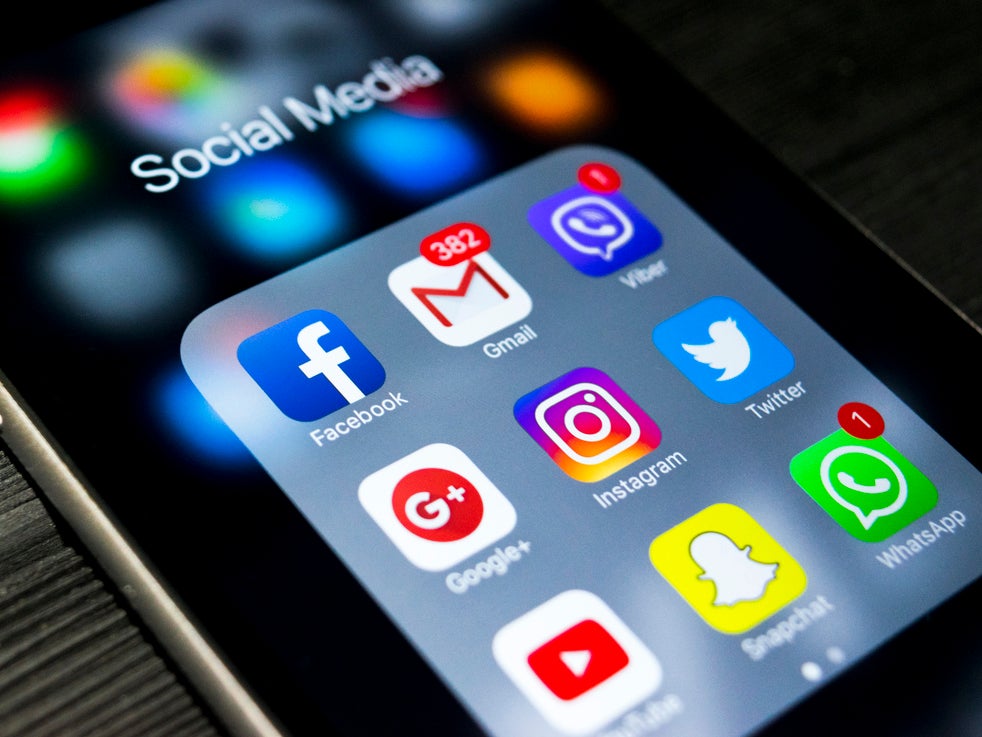
Documenting your every move on social media can take its toll
The rise of social media has meant that we as a global population are more connected than we have ever been in the history of time.
However, our reliance on social media can have a detrimental effect on our mental health, with the average Brit checking their phone as much 28 times a day.
While social media platforms can have their benefits, using them too frequently can make you feel increasingly unhappy and isolated in the long run.
Do the pros of social media outweigh the cons? (Getty Images)
The constant barrage of perfectly filtered photos that appear on Instagram are bound to knock many people’s self-esteem, while obsessively checking your Twitter feed just before bed could be contributing towards poor quality of sleep.
Here are six ways that social media could be negatively affecting your mental health without you even realising.
Self-esteem
We all have our fair share of insecurities, some that we speak about openly and others that we prefer to keep to ourselves.
However, comparing yourself to others on social media by stalking their aesthetically perfect Instagram photos or staying up to date with their relationship status on Facebook could do little to assuage your feelings of self-doubt.
A study conducted by the University of Copenhagen found that many people suffer from “Facebook envy”, with those who abstained from using the popular site reporting that they felt more satisfied with their lives.
“When we derive a sense of worth based on how we are doing relative to others, we place our happiness in a variable that is completely beyond our control,” Dr Tim Bono, author of When Likes Aren’t Enough explained in Healthista.
Becoming more conscious of the amount of time you spend scrolling through other people’s online profiles could help you focus more on yourself and boost your self-confidence.
Human connection
As human beings, it’s so important for us to be able to communicate and forge personal connections with one another.
However, it can be hard to do so when we’re glued to rectangular screens, becoming more acquainted with our friends’ digital facades than their real-life personas.
Stina Sanders, a former model who has 107,000 followers on Instagram, explained how social media sometimes makes her feel like she’s being left out.
“I know from my experience I can get FOMO when I see my friend’s photos of a party I didn’t go to, and this, in turn, can make me feel quite lonely and anxious,” she told The Independent.
A study published in the American Journal of Epidemiology that assessed 5,208 subjects found that overall, regular use of Facebook had a negative impact on an individual’s wellbeing.
Memory
Social media can be great for looking back fondly on memories and recounting how past events occurred.
However, it can also distort the way in which you remember certain tidbits from your life.
New research suggests that people with binge eating may be at increased risk.
Posted Jun 29, 2018
Source: Photo by Kristina Tripkovic on Unsplash
Could people struggling with binge eating be at an increased risk for suicide? That’s what a new study suggests. While it has long been recognized that people with anorexia nervosa and bulimia nervosa are at increased risk for suicidal behaviors, little has been known about the risk for people struggling with binge eating and binge eating disorder (BED)—until now.
A recent study by Brown et al (2018) published in BMC Psychiatry suggests that people struggling with binge eating are at an increased risk of suicide, with those at higher weights having the highest risk. The study examined data from 14,497 participants in a large, diverse, nationally representative US database (the Collaborative Psychiatric Epidemiologic Surveys) and found that among participants with a history of binge eating (approximately 4% of the sample), 1/3 (34.2%) reported ever thinking about suicide, 1/5 (18.6%) had a history of attempted suicide, and 10.1% experienced suicidality in the past year.
Results were similar for those with a history of binge eating and those who met full criteria for BED, indicating that the risks of subclinical binge eating may be similar to the full-spectrum disorder.
Binge eating and BED were significantly associated with lifetime suicidality, and BMI did not explain this relationship. The relationship between binge eating and suicidality was stronger for women than for men. Results did indicate a significant interaction between BMI and binge eating on the likelihood of suicidality; meaning that those with binge eating who were at a higher BMI were at higher risk for suicidality.
Unfortunately, this study did not examine the role of weight stigma so we do not know what impact this has in the relationship between binge eating, BMI, and suicidality. Prior research suggests that weight stigma increases the risk of eating disorders and disordered eating, including binge eating and BED, and I imagine it also plays a role in the increased risk of suicidality for people struggling with binge eating who live in larger bodies. What do you think?
We all have our biases — but just because bias is a universal part of the human experience doesn’t mean it is something we should ever dismiss offhandedly, either in ourselves or others. That’s because bias has serious consequences, and when left unchecked, it can turn into bullying. A 2012 study of California middle and high school students published in the American Journal of Public Health found that 75 percent of all bullying originated from some type of bias against a person’s race, sexual orientation, religion, disability or other personal characteristic.
People often talk about bullying in general terms. But as Annaleise Singh, a professor of counseling and associate dean for the Office of Diversity, Equity and Inclusion at the University of Georgia, points out, “If you look more closely at ‘general bullying,’ what you’ll see is a lot of bias-based bullying.”
SeriaShia Chatters-Smith, an assistant professor of counselor education and coordinator of the clinical mental health counseling in schools and communities program at the Pennsylvania State University, defines bias-based bullying as bullying that is specifically based on an individual’s identifying characteristics, such as race/ethnicity, gender, sexual orientation or weight. For example, adolescents might create Snapchat stories that attack someone on the basis of their race, weight or sexual orientation, and parents or teachers might treat children differently on the basis of their skin color, notes Chatters-Smith, an ACA member who presented on “Bullying Among Diverse Populations” at the ACA 2017 Conference & Expo in San Francisco. Research indicates that individuals of color, particularly black and Hispanic men, are more likely to be identified as being aggressive, she adds.
In her research on transgender people, Singh, who co-founded the Georgia Safe Schools Coalition and founded the Trans Resilience Project, has found that bias-based bullying can be based on appearance, gender expression or gender identity, and it can range from name-calling to physical and sexual harassment and assault.
A four-letter word
When people start talking about someone having a bias, those four letters typically trigger a negative reaction and shut down conversation, which isn’t productive. Thus, Chatters-Smith argues that helping people understand that everyone has biases is crucial to addressing bias-based bullying.
However, this task can be difficult because people often resist closely exploring their own prejudices. Counselors should help clients realize that just because everyone has biases doesn’t mean they are excused from recognizing and addressing their own, Chatters-Smith argues.
Because bias is often an emotionally charged topic, Chatters-Smith finds it helpful to start with a nonthreatening example. After pointing out bias, she asks clients when they first identified something as their favorite color. Most people can’t remember when this color preference started because they were young, Chatters-Smith says. She explains how after someone establishes a color preference, the brain starts to sort things by that color.
“When you see something that is your favorite color, you are more likely to gravitate toward it. You have more positive feelings toward cars that are your favorite color. … And sometimes a car may not be the best-looking car, but because it’s our favorite color, we gravitate toward it. That is bias,” Chatters-Smith explains.
Bias is a kind of sorting process that our brain goes through, she continues. “The experiences that we have with individuals can then cause us to have specific attitudes toward someone, and when we see them, we prejudge that they are going to act or be a certain way because of those experiences. … We do an automatic sort.”
Counselors are not immune to bias either. For example, a counselor might assume that a black male client who is unemployed did something to cause his unemployment, Chatters-Smith says. If this happens, the counselor needs to take a step back and ask why he or she is entertaining that assumption, she continues.
These internalized biases can also have a direct effect on students. For example, Singh says, LGBTQ students will not feel safe reporting bias-based bullying by their peers when they hear educators or school counselors expressing anti-queer or anti-trans views. Educators can also hold bias against students in special education, which may limit the opportunities those students have to learn, she adds.
Singh, an American Counseling Association member and licensed professional clinical counselor in Georgia, finds cognitive behavior therapy (CBT) helpful because challenging irrational thoughts is at the heart of addressing bias-based bullying. Thus, counselors need to ask clients and themselves some CBT-related questions: Where did you learn this thought? What research supports this idea?
Counselors “have to become strong advocates in order to interrupt those beliefs systems because the person enacting them — whether or not they’re conscious [of it] — isn’t going to stop until there’s an advocacy intervention,” Singh says.
After making clients (or educators) aware of bias, counselors can work with them to figure out times that they might have sorted a person into a category before getting to know that person and then brainstorm ways to manage that differently in the future.
Counselors can also benefit from bias-based bullying training. In working with Stand for State, a bystander intervention program at Penn State, Chatters-Smith found that certain questions or situations related to bias would cause the counselors participating in the bias-based education to pause or stumble. “A person who is not educated to know [how to respond] can get really thrown off guard,” she says.
Chatters-Smith knows from experience. Once in a workshop, she mentioned how saying that all Jewish people are good with money is an example of a racially charged joke. One of the participants responded, “But all Jewish people are good with money.”
Chatters-Smith questioned this statement by asking, “Really? All Jewish people? Where does this stereotype come from? Is this a racially based stereotype that is meant in a negative way?”
“One of the most damaging things that can happen in [a] workshop is if a bias educator is perpetuating bias,” Chatters-Smith contends. This experience helped her realize that the trainers themselves needed training to be effective at bias and discrimination education. She is currently developing workshops and a workbook that will allow counselors to practice answering questions and go through specific scenarios related to bias-based bullying to help them gain confidence and knowledge in handling these challenging situations.
Uncovering bias
A counselor’s role is to interrupt the systems of bias-based bullying, Singh argues. This process starts with the intake assessment, which should clearly define what bias-based bullying is and provide examples, she continues.
Counselors need to ask upfront questions about bias and harassment in counseling to let clients know that these issues exist and that they affect mental health, Chatters-Smith says. The best way to know if it is happening is to ask, she adds.
Of course, when assessing clients, counselors can also be alert to signs that bias-based bullying may be occurring. Anxiety or fear of being bullied may cause younger children to wet their beds at certain times of the year (right before school starts, for example) or to avoid public bathrooms, Chatters-Smith notes. She advises school counselors to pay close attention to the dynamics between students in the cafeteria. “A child can be sitting at a table full of kids because they don’t want to sit alone, but no one is interacting with them. No one is talking to them. They’re purposely being excluded,” she says.
Singh and Chatters-Smith also urge counselors to watch for signs of depression or anxiety, client withdrawal, client complaints that are not tied to anything specific, chronic tardiness, or changes in client behavior such as nervousness, avoiding school or sessions, or missing certain classes.
Counselors should exercise the same level of vigilance with young adult and adult clients. Chatters-Smith finds that counselors often fail to factor in the isolation, feeling of being ostracized and lack of belonging that some minority college students experience at predominantly white institutions. Counselors “know all of [these factors] impact mental health from [the] K-12 research of bullying but seem to forget about it when people graduate from high school,” she argues.
In addition, counselors often “do not factor in the cultural pieces of experiencing bias-based bullying at work. It manifests itself differently,” Chatters-Smith says. For example, individuals may go on short-term or long-term disability, or bullying may result in harassment claims or absenteeism from work. In certain instances, clients may not be able to put a finger on the core issue causing them not to enjoy the workplace, or they find that for some unknown reason, they can’t please a co-worker or employer, she says.
Sometimes, clients don’t even recognize that bias-based bullying could be an issue until the counselor brings it up, Chatters-Smith adds. Thus, she advises counselors to ask questions such as “Have you experienced any prejudice or discrimination at work?” or “Do you have increased anxiety around yearly evaluations for work?”
“In any organization that has built-in hierarchies, bullying [is likely] to occur,” Chatters-Smith says. For example, in the military, transgender individuals still face discrimination, and often discrimination is based on race or socioeconomic status, such as enlisted individuals versus officers who require a college education and receive more money and leadership positions, she explains.
Avoiding assumptions
When people are introduced to the concept of bias-based bullying, they often assume that it involves someone from a dominant group bullying someone from an oppressed group. “When you think about bias-based bullying, typically people are going to gravitate toward majority [versus] minority … but at the same time, it can happen within group,” points out Cassandra Storlie, an assistant professor of counselor education and supervision at Kent State University. She cautions counselors not to overlook the possibility of intracultural bullying because it does happen. For example, a Latino child may bully another Latino child because that child doesn’t speak Spanish, or an individual may bully someone else of the same ethnicity because that person’s skin color is judged to be “too dark” or “too light.”
Just because someone is oppressed does not mean that they can’t be oppressing others, Chatters-Smith emphasizes. “For centuries … African Americans have bullied each other based on darker complexion versus lighter complexion, and the same thing happens in Latino and Hispanic groups as well,” she says. “What makes it identity based and bias based is because there are biases that come along with the perspectives of individuals who are of darker skin. Even though it’s within a specific racial category, the bias is still there, and then the individual still has the psychological impact because they’re being bullied just for who they are.”
In addition, although people of color have a higher likelihood of being bullied in predominantly white settings, bias-based bullying can still occur when they are in settings with higher diversity, Chatters-Smith notes. The bias may just take another form and be based on characteristics other than race, such as sexual orientation, she explains.
Within transgender communities, someone who is more binary identified and operates with certain gender stereotypes may discriminate against another transgender person for not looking enough like a woman or a man, says Singh, a past president of both the Southern Association for Counselor Education and Supervision and the Association for Lesbian, Gay, Bisexual and Transgender Issues in Counseling. Within-group bullying is particularly painful to the individuals who experience it because the group is supposed to be their source of support and belonging, she says.
Singh also points out that bias-based bullying can be targeted at anyone based on how he or she is perceived. “If they’re perceived to step out of a gender or sexual orientation box, even if they don’t have that identity, they may experience [bias-based bullying].” In fact, Singh says, a substantial amount of anti-queer and anti-trans bullying is actually experienced by cisgender and straight people.
Creating a positive, safe environment
“Ethnic identities are strong protective factors,” says Storlie, president-elect of the North Central Association for Counselor Education and Supervision. She encourages counselors to find ways to celebrate cultures and differences. If counselors are practicing in a school district or community that isn’t taking preventative measures against bias-based bullying and being inclusive and advocating for all students, then they need to take initiative and educate those communities, Storlie says.
One approach that Storlie, an ACA member and a licensed professional counselor with supervisory designation in Ohio, suggests is to mention how diverse populations are increasing. In fact, according to the National Center for Education Statistics, the percentage of white students enrolled in public elementary and secondary schools decreased to less than 50 percent in 2014, while minority students (black, Hispanic, Asian, Pacific Islander, American Indian/Alaska Native and those of two or more races) made up at least 75 percent of the total enrollment in approximately 30 percent of these schools.
Storlie works with a school district that has Ohio’s second-highest number of students who speakEnglish as a second language. Roughly 50 percent of the student body is Latino — up from approximately 2 percent only two decades ago.
When Storlie first walked into the school district, she couldn’t find any Spanish on the walls of the schools or in school materials, but since she started working with the educators and teachers, all of the school district’s documents are translated. “If you’re handing this information out to students … you’ve got to make sure it’s in the right language,” she argues.
Schools are in transition now because of increased diversity, Storlie notes. “It’s happening across the country where teachers don’t look like the kids that they’re teaching anymore, and they have stereotypes that can be pervasive,” she observes. Thus, counselors need to work with educators and communities to ensure that they are being inclusive.
Storlie advises counselors to facilitate events such as English classes for parents whose first language is not English to improve communication between teachers and parents, and workshops to educate parents, school personnel and the community on bias-based bullying. Counselors might also provide workshops for school personnel on multicultural competency, she says.
The Human Rights Campaign Foundation’s Welcoming Schools program is one helpful resource, Chatters-Smith says. The program provides training and resources such as recommended books, lesson plans and videos to school educators to help them create inclusive, supportive school environments and aid them in preventing bias-based bullying.
Building strong relationships
Storlie has found that teachers and school personnel who instill hope in their students — regardless of any identifying characteristic — have the best outcomes. These students often have higher levels of school engagement, demonstrate greater resilience and enjoy more academic success.
The therapeutic relationship can play a central role in instilling hope and achieving these positive outcomes, Storlie argues. For that reason, she adds, counselors shouldn’t become so focused on theories and techniques that they forget what it means to foster a good relationship with their clients. Among individuals who have been oppressed or marginalized, there is often an “us versus them” attitude, so the challenge for counselors is finding a way to reconnect and develop the relationship, Storlie says.
Trust is one key component of building a strong relationship with clients. However, Chatters-Smith has found that adults don’t always trust children’s reports of bias and discrimination. In her private practice, Chatters-Smith often works with children of color who report that no one believes them when they complain about bias-based bullying. Over time, this disbelief can result in their silence. Thus, she emphasizes, it is crucial that counselors believe children when they report having experienced bias-based bullying and discrimination.
In addition, Storlie stresses the importance of taking a team approach to bias-based bullying. “You can’t do it solo. … You really have to have the team approach because that’s how change happens,” she says. This is especially true for school counselors confronted with high student-to-counselor ratios, she adds.
When school counselors notice bias-based bullying in their schools, they should connect with other leaders in the school district and position themselves as a part of the leadership team, Storlie advises. Then, in this leadership position, counselors can educate school personnel on warning signs and interventions for bias-based bullying, thereby creating a team approach to intervening, she explains.
School counselors should also strive to work with families to address bias-based bullying. Because family members’ work schedules may not coincide with school system hours, counselors might have to get creative to find ways to reach families, Storlie continues. “School counselors who stay in their offices are not going to be able to reach families the same way that … [counselors] doing outreach with families would,” she adds.
In Storlie’s work with undocumented Latino youth, she found that the school counselors who were present, who made a point of getting out of their offices and who were visible to parents — for example, showing up at basketball games after school hours — enjoyed the most effective relationships with families and students. Their students were also more receptive to looking ahead and thinking about their future careers, she adds.
Bystander intervention
“What hurts [children] typically is not specifically the bullying itself. What hurts them is the other children around who stand and watch it happen,” Chatters-Smith asserts. The inaction and silence of bystanders causes people who are bullied to feel depressed and isolated, and it feeds into dysfunctional thinking that they are not good enough and no one cares about them, she adds.
In workshops, Chatters-Smith uses an active witnessing program to train people how to respond to discrimination and bias. Because bias-based bullying is often verbal, onlookers can state that they disagree with what is being said and question the validity of the biased comment, she elaborates. Bystanders can also support the person being bullied by telling them they are not alone or calling for help, she says.
Bystanders can also help people who commit the offense to self-reflect by asking them to repeat what they said and letting them know that it was hurtful, Chatters-Smith continues. If a bystander doesn’t feel safe to intervene at the time of the incident, they can later call a manager (if the bullying incident happened in an establishment or organization) or notify someone about what they witnessed, she advises.
Chatters-Smith has also used ABC’s What Would You Do? — a hidden-camera TV program that acts out scenes of conflict to see if bystanders intervene — in her workshops. She plays the scenarios from the show but not the bystanders’ reactions. Instead, she has workshop participants use the skills they have learned in the workshop to see how they would respond.
The more aware counselors become of bias, prejudice and discrimination in their day-to-day lives, the more it will affect them in their work with clients, Chatters-Smith says. “Practice is what helps us move forward as individuals,” she explains. “When you are at the store, when you are eating in a restaurant, when you are in the mall, when you see these things happening, if you feel [like you] know what to do, you’ll become more aware of what it is and you’ll feel more confident at not only being able to intervene and be empowered in your everyday life but also being able to talk to your clients about their experiences.”
Storlie and Singh both tout training student leaders as an effective approach to preventing bias-based bullying. Often, students — not counselors — are the ones who hear about or witness these instances of bullying. So, counselors can work with these student leader groups to teach them how to intervene, Storlie says.
Another way to create a team approach to bias-based bullying intervention is through the use of popular opinion leaders, Singh says. With this approach, school counselors and teachers nominate student leaders who represent different groups in the school (à la The Breakfast Club). With the counselor’s guidance, these students discuss bias-based bullying, what they’ve noticed and how they might be able to change it. Then, after learning bias-based bullying interventions, the popular opinion leaders try them out and report on which ones worked and which ones didn’t, Singh explains.
An ongoing issue
Singh warns of the danger of minimalizing bias-based bullying — such as saying that people “don’t mean it” — because it sends a message that it is OK to have bias. Comments that dismiss bias-based bullying “can really add up over time in the form of microaggressions for transgender people,” she argues. “But, more importantly, [these comments create] a hostile environment in society, and that hostile environment in society can set transgender people up for experiencing violence.”
“When children grow up in an environment where they are taught implicit and explicit messages about whose identities matter and whose don’t, and then there’s power attached to that, then you’re going to see those negative health outcomes,” Singh argues. “And they’re not just negative health outcomes and disparities. They’re verbal, physical and sexual harassment that play out across people’s bodies and communities. Those microaggressions add up to macroaggressions on a larger scale.”
Apologizing isn’t the answer either. Often, people who bully, commit a microaggression or say something prejudiced will apologize by saying that they didn’t intend it that way, Chatters-Smith says. “It’s not intent that matters. It’s impact. … Whether or not you intended it, it doesn’t matter. It hurt the person.”
One possible solution is to start bias education at a young age so that over the life span, people are more aware of bias-based bullying and discrimination, Singh says. Counselors can challenge the internalized stereotypes that people learn in society about themselves and others and counter those biased messages with real-life experiences and compassion, she adds.
Education and awareness are key because bias-based bullying is an ongoing issue. “[Bias] is not going to go away. … People are going to find a way to treat each other differently. I think that what will change is more and more people not accepting it,” Chatters-Smith says.
This past spring, social media revealed another case of discrimination when two black men who were waiting for a friend were arrested at a Starbucks in Philadelphia on suspicion of trespassing. The incident might have received little notice except that a white woman posted a video of the arrest on Twitter and challenged the injustice, which prompted protests. Starbucks responded by apologizing and announcing that it would close thousands of stores for an afternoon to conduct racial bias training in May.
Even though this injustice never should have occurred, the public outcry sent a message that these two men were not alone and that bias is not acceptable, Chatters-Smith says. “The intervention is what’s going to change [things],” she says. “If we have more eyes on it, hopefully we can reduce the impact and reduce the duration and the longevity of the impact of these instances.”
Chatters-Smith, Singh and Storlie all agree that counselors have an important role to play in educating people about bias and building strong partnerships between educators, parents, students and communities. “[Counselors] are in the business of helping people challenge inaccurate, internalized thoughts,” Singh points out. “Counselors have to challenge those thoughts and help rebuild beliefs systems that include the value of a wide variety of social identities.”
****
Lindsey Phillips is a contributing writer to Counseling Today and a UX content strategist living in Northern Virginia. Contact her at consulting@lindseynphillips.com or through her website at lindseynphillips.com.
Opinions expressed and statements made in articles appearing on CT Online should not be assumed to represent the opinions of the editors or policies of the American Counseling Association.
Here are newer releases from people or bands I like. Not sure about the effects used but with a few more views I might change my mind. Leave me a comment on your thoughts. I love to spin for you, request line open 24/7. Have a great day. M
I had the pleasure of interviewing David Kanigan at Live & Learn http://www.davidkanigan.com. He is well-loved as reflected by the large number of glowing comments left by followers. He is funny, gracious and well read. David thank you for taking time to talk, play phone tag, it was a pleasure.
As a child did you color inside the lines? Always between the lines. ALWAYS!
Best vacation parents ever took you on? We used to go to Radium Hot Springs in the summer. They had large swimming pools. Here’s the link: https://www.radiumhotsprings.com
As a teenager what was dream job?Did you find your dream? I was born and raised in a small town in British Columbia. My dream job was to work in NY. I work in NY!
The first and last song on your playlist? I rotate my playlists so there is no constant first and last. And have an eclectic music taste. Love Dave Matthews Band. Many groups from 70’s (eg, Doobie Brothers, Fleetwood Mac, etc)
Walking along the surf or jump in for swim? Walking along the surf, for sure.
Two examples of a perfect day. Reading a great book. Saturday morning in solitude after a long work week.
Hiking or Parasailing? Neither. Suffer from acrophobia even though I fly a good deal for work.
Before Blogging did you write journals, professionally? Never wrote a stitch before blogging.
Guest Margie Lakefield shares the trauma of Postpartum Psychosis in a multi series post.
I read Margie’s post in tears, feeling empathy, above all I knew she was a strong woman. A woman who made tough decisions for the better of her children’s future. Her story touched me deeply, I had to meet her. We worked together on the series. Unfortunately Margie had a family emergency and can’t be with us.
She is dedicated to sharing her story at the cost of lingering pain. Margie takes us thru the arrival at hospital until the moment she reached out for help.
The Series will post starting next Monday and consecutive Mondays. Margie’s participation in the app is dear to her heart. She encourages everyone to download the app, get familiar with the resources available and the DNA initiative.
Hope for the Helpless suffering from Post Postpartum Depression.
The pactforthecure app is a new initiative. Available at App Store. Giving Hope for the Helpless Suffering PPD •
March 28, 2016 •
Thank you to the University of North Carolina, Chapel Hill , for this initiative. I will forever be indebted to your servitude.
This past week I noticed a story on CNN of an upcoming app that was to be released. I am submitting this after receiving an email today giving me permission to submit my article to the organization responsible for this International Study of Women Suffering/or have suffered from Postpartum Depression, and/or, Psychosis. It is my sincere hope that you will spread this information in an effort to draw attention to this program. They are looking to collect thousands of participants for this study. You can find the app, for free. Look for PPD ACT app. I found it through the Apple Store.
I literally had tears running down my face when I read that this initiative was taking place. In 1984, at the time of my episode, there was not much information readily available to women suffering from PPD. This study will no doubt change that, and with it, the lives of thousands upon thousands of women. It is my understanding that one in five women will experience some sort of the so-called, ‘baby blues’ and some will not be as fortunate as those of us who have survived the mayhem of insanity that swallowed our souls. Thankfully, we have returned to tell a story, using genetic markers they may one day find the answer to helping others from being driven into the abyss.
Bring hope to those who have lost theirs by sharing this initiative. Again,
WordPress sent a nice badge informing me Looking for the Light Blog was celebrating its ninth anniversary. I can’t find the badge and will improvise.
Looking for the Light became an outlet to share past trauma. The shame, guilt, self-hatred, my father’s suicide, each beating and bruise remembered. During this time I met many people going thru trauma and pain. I also met many supporters. Being able to unleash the secret box inside was life changing. Survivors Blog Here, http://www.survivorsbloghere@wordpress.com was born during this time. I’m so proud of the contributors and the knowledge gained from followers. Thank you!
Looking for the Light Blog was a “Where is Waldo” moment when WordPress Support Engineers took a two-week holiday leaving me with a big problem I could not fix. Like life, things worked themselves out. Looking for the Light Blog was born.
I thank you, celebrate our conversations, your prayers, support and understanding. Looking for the Light Blog would not be the same without you. More importantly neither would I.
You may notice Blog was dropped from the name on this theme.
I had not planed to spin for you today but it didn’t feel right. Hoping everyone had a safe fireworks show, don’t forget the burn bans. Have a great Thursday. Don’t forget I love your comments and request. M
Believe me, dear Sir: there is not in the British empire a man who more cordially loves a union with Great Britain than I do. But, by the God that made me, I will cease to exist before I yield to a connection on such terms as the British Parliament propose; and in this, I think I speak the sentiments of America.




















predominantly white institutions. Counselors “know all of [these factors] impact mental health from [the] K-12 research of bullying but seem to forget about it when people graduate from high school,” she argues.






 lookingforthelight.blog