Nightware’s app uses a proprietary algorithm to generate a personalized sleep profile for each user to detect a nightmare by recording when the biometric data breaks from the norm. (Getty Images)
The FDA has cleared an app for the Apple Watch to help people suffering from nightmares or post-traumatic stress disorder (PTSD) get a better night’s sleep.
Dubbed Nightware, the prescription app monitors the wearer’s heart rate and movement while they sleep—and, if they’re having a nightmare, gently prods them out of the dream without aiming to wake them up completely, using the smartwatch’s vibrations.
The agency designated the app a breakthrough device in May 2019 for its promise to help adults with PTSD, and it has now granted the program a de novo clearance.
A randomized clinical trial showed that the ability to intervene in a nightmare led to improvements in sleep scores after 30 days, when compared to a sham device that provided no vibrations, according to the FDA.
“Sleep is an essential part of a person’s daily routine. However, certain adults who have a nightmare disorder or who experience nightmares from PTSD are not able to get the rest they need,” said Carlos Pena, director of the FDA’s Office of Neurological and Physical Medicine Devices. “Today’s authorization offers a new, low-risk treatment option that uses digital technology in an effort to provide temporary relief from sleep disturbance related to nightmares.”
The program uses a proprietary algorithm to generate a personalized sleep profile for each user to detect when they are having a nightmare by recording when the biometric data breaks from the norm.
Nightware estimates that nearly 5 million people in the U.S. suffer from nightmare disorders related to PTSD. The app is not meant to act as a standalone therapy for PTSD, and it should be used alongside any prescribed medications and other therapies.
From about eight weeks old, Angie Kent couldn’t have breast milk. As she grew older, she realised lactose products were “ruining her whole day”, so she listened to her body and made adjustments.
There are so many lactose-free dairy options out there now. But when Angie Kent was growing up, not so much. There wasn’t even much information about lactose intolerance, which she now realises was the reason she couldn’t take breast milk after about the age of eight weeks and why, after noticing how eating regular dairy products brought on discomfort and pain, she made a “conscious effort” to research her symptoms and seek medical advice.
Body+Soul: You’ve spoken often about your journey with being a coeliac, but not of your lactose intolerance – why is that?
Angie Kent: Coeliac disease can be a life-threatening disease for many people and I felt it was important to bring attention to how serious this intolerance is. By comparison, for most people, lactose intolerance symptoms can often be managed.
How does drinking/eating lactose make you feel? What are the major symptoms for you?
Eating and drinking lactose gives me overall discomfort. I feel as if my digestive issues have the power to ruin my whole day. I don’t feel my best, and I don’t feel like I can be relaxed or active due to my physical pain from bloating, toilet troubles, and skin breakouts.
When did you first learn of your intolerance, and how did you get diagnosed?
I was a colicky baby and was not able to have breast milk from eight weeks old. As a child, there wasn’t much education around being lactose intolerant and as I got older I could no longer deal with the pain and needed to do something about it.
I started noticing a pattern after eating dairy and experiencing consistent symptoms, so I made a conscious effort to listen to my body, researched my symptoms, and learnt more about lactose intolerance, and then sought medical professional advice.
How did avoiding lactose affect your social life/general diet/ability to eat what you wanted/mood?
I find catering to my dietary restrictions these days is much easier with the increased number of alternative milk and lactose-free options, as well as the amazing vegan products that are now on the market.
Being lactose intolerant has just made me more conscious of what I am putting in my body, but I don’t feel like I have to make major sacrifices in my life.
How has knowing about your intolerance improved or changed your general wellbeing?
My overall well-being improved when I got a handle on my symptoms and felt more myself again. I certainly know when something my body doesn’t agree with has snuck into my food, because all hell breaks loose with all different types of symptoms. I’m a sensitive soul.
What is the worst thing possible for you to eat/drink for your lactose intolerance?
I don’t consume any dairy milk, yoghurts or creams because of my intolerances but I am a sucker for cheeses! With so many lactose-free dairy products out there, I can now enjoy lactose-free cheese without all the stress on my body physically and mentally. If you’re feeding your gut something it can’t process or handle, your mental health suffers too. It’s important to know your gut is your second brain. Why do you think people say ‘trust your gut’ so often?!
What non-dairy and dairy alternatives are you able to eat with your lactose intolerance?
So many dairy products have lactose free options nowadays that I don’t necessarily have to seek dairy alternatives, my favourite brand is Liddells. But knowing that most coffee shops always have a range of reliable dairy-free alternatives always makes things really easy for me.
What does your average day on a plate look like now?
I am mainly veggie-based so I will make myself a smoothie in the morning with my herbs, supplements powders, dairy-free yoghurt, bananas, blueberries, and almond milk.
For lunch I try to have a salad with lots of greens and maybe some kind of seafood. Dinner I love to make myself a veggie dish or fish curry! The options are endless.
For snacks, I can now snack on some lactose-free cheese singles, avocado, and tomato with rice crackers. I am mad about it! Plus lots and lots of herbal teas.
Native American Heritage Day dates back to 2008 when President George W. Bush signed the day of observance into law. The Native American Heritage Day Bill encourages Americans of all backgrounds to observe the Friday after Thanksgiving as Native American Heritage Day, through appropriate ceremonies and activities. It also encourages public elementary and secondary schools to enhance student understanding of Native Americans by providing classroom instructions focusing on their history, achievements, and contributions.
I am proud of my Cherokee Indian heritage and know my ancestors paid a heavy price for my freedoms today.
Photo by Gabriela Custu00f3dio da Silva on Pexels.com
It’s the weekend!!!!!! I’m so glad you’ve joined me. I’m going with Rock music icon, Steve Winwood this weekend. I have great memories of seeing him in concert at an outdoor arena. My girlfriend and I danced down to the front row to get a good look at Steve, we had a blast.
What is your favorite music?
In health,
Melinda
Welcome back to Weekend Music Share; the place where everyone can share their favorite music.
Feel free to use the ‘Weekend Music Share‘ banner in your post, and don’t forget to use the hashtag #WeekendMusicShare on social media so other participants can find your post.
Hi Everyone, It’s Friday! So glad you stopped by today. I hope you have a great weekend. Stay safe. It’s hard right now but we have to live in our family bubbles so we can get past this virus.
Today is Thanksgiving in America which is the celebration of a harvest festival by the Pilgrims in 1621. It’s an annual holiday marked by religious observances and a traditional meal that includes turkey. Thanksgiving is always the fourth Thursday in November.
Growing up my granny would make a huge meal of ham, no turkey, potato salad, sweet potatoes, green beans, salads, rolls, and several desserts which always included a pecan pie and homemade chocolate fudge.
When I was younger I had friends who didn’t have family nearby and she would let me invite them over for dinner. It became my thing, always bringing someone along for the Thanksgiving meal. What better way to give thanks for our friends.
I would say grace and then we would start passing the food around the table. Like all families, we had our differences but most holidays we could put this aside and focus on the reason we were getting together.
This year it will be just the two of us and that is fine. What’s most important is taking care of our health and those around us. I’m not making a large meal but we are having ham and sweet potatoes, rolls, and an assortment of desserts. We’re not big on turkey unless fried.
I have so much to be thankful for and now more than ever I work hard to keep those blessings on the front of my mind.
I’m thankful for the support you have given me over the years. I enjoy our communications and appreciate your feedback. We’ve learned a lot this year and we have so much to be thankful for.
Choosing between repairing and replacing a car can be a challenge. Without the skills to assess your car like a mechanic, many people feel as though they can’t figure out whether or not they’ll end up paying more to repair or replace their motor. Some car issues are big, while others are small, but it can be very hard to tell exactly how much a repair will cost until you have it done. To help you out with this, this post will be exploring some of the considerations you need to make as you go through this process. This should make it much easier to figure out if your car needs to be repaired for replacement.
What’s The Problem?
Before going too deeply into this, it’s always worth figuring out what the problem your facing actually is. This can be tricky when you don’t know much about cars, but you can usually use sound and the resources found on the web to give you a good idea. If your car is making a strange noise, you can search for this on Google, looking for potential causes of the issue.
Once you’ve done this, you can begin to look at the potential costs to get the issue fixed. There are loads of garages around the web that will happily discuss their pricing openly, giving you valuable insight into the price that you will have to pay. This isn’t always a sure way to find out how much something will cost, though, as each car job is different, and it can be hard for a garage to say what the issue might be when they first look at your car.
Alongside this, you could also consider the option of talking to people on sites like Reddit. Message boards like this are packed with users who are willing to spend their time to help others, even if they don’t get anything out of it. Describing your issue in detail with photos and videos will be essential, but this can give you a clear idea of the price of your repairs without having to go to a garage.
Potential Future Issues
Along with looking at the current issue with your car, it can also be worth thinking about future issues that could come about as a result. For example, replacing brake pads will fix issues with stopping, but you may still need to change your disks after a couple more months of driving. It can be hard to predict issues like this, making it worth asking those who are in the know to make sure that you aren’t going down the wrong path.
If an issue is likely to develop in the future no matter what repairs you make, it could be worth looking at replacing your car. Vehicles can get into a state where they hardly leave the garage, giving you loads of issues to deal with while also costing a small fortune. If this is the case, you will almost always save money by looking for a new motor.
Can You Fix It Yourself?
Being able to fix a car problem for yourself can drastically reduce the costs, with the fees that garages charge consisting largely of labor costs. This often makes it worth DIYing your car problems, but you have to make sure that you can both get your hands on the parts and handle the repair before you choose this option.
Finding the parts you need will be the most challenging part of this. eBay and Amazon can be a good place to start, though you may need to look for specialized stores to get your hands on things like wheel and tyre packages that will work for your car. Alongside this, it can also be a good idea to watch some YouTube videos of the repair you need to make before buying anything. This will give you a good idea as to whether or not you can do it, while also showing you the tools and parts you will need for it.
Choosing the DIY route can be a good idea when you are trying to save money, but it can also be very difficult. You need to make sure that you are confident in your ability to handle the repair before you get started, or you could easily find yourself without a car until you can get professional help. Tools can be expensive, making any job that requires specialist tools one for the garage.
The Value of Your Car
Finally, as the last area to think about, it’s time to consider the value of your car. If a repair is going to cost more than this, there will be little reason to look much further, and you may as well start hunting for a new car. But how exactly can you figure out the value of your car without having to get expert help? Thankfully, there are loads of different resources that can help you with this.
Car sales websites should always be the first place you look, as this will give you an accurate idea of what your car would sell for in good condition today. Look for your make and model, followed by searching for examples in similar conditions. This will give you an idea of the price range you can expect to get for your car.
Alongside car sales websites, you can also look for directories that list the value of different types of cars. While this might be a little faster, it won’t be as accurate as simply looking at prices, but it can still be worth the effort if you can’t find your car listed on any website. Using the lower estimates you find is a good way to avoid disappointment.
There will be some cases where it’s almost always best to repair your car instead of replacing it. For example, you might own a super-rare vehicle or one that just always increases in value.
In those cases, you should consider doing some restorative upgrades like fitting Wiseco pistons kits (or having an auto shop install them for you) – especially if your engine has done more than 100,000 miles.
You may also wish to consider a top-end rebuild to provide many more years of trouble-free motoring if you’ve got a highly desirable and valuable car. Of course, it’s not something everyone can afford to do, but it’s worth considering in some situations.
With all of this in mind, you should be feeling ready to take on the challenge of choosing whether to repair or replace your car. It can be hard when you find yourself stuck in a position like this, though most people have the resources to get themselves out of it when they put the work into it.
Hi, it’s Wednesday! I’m thrilled you’re here! These two beauties are chowing down on the dill I planted for them. Their appetite is voracious, mowing thru a plant in a day. This year there were about 25-30 of these beautiful caterpillars who will turn into magnificent butterflies.
It’s really important to be self-aware; and it can also be fun to get to know yourself better. The following questions can help you with this: 1. If you could change one aspect of your life or personality, what would it be? 2. Are you ‘your own person’ or are you defined, and pushed around, […]
You don’t have to like Madonna to like the message of this song. We’re living in very unusual times and if we could just take a one day to celebrate life, maybe we could all find some peace of mind.
Take time for yourself today, your mental health needs you.
We met at a New Year’s Eve party that neither of us wanted to be at, we were the oldest people in the crowd. We gravitated towards each other, talking about our travels, even went outside to smoke a cigar. When we came back in, you were a gentleman and hung my coat in the closet. We shared many laughs as witnessed by the photos of the night. You almost left without asking for my number, I had to chase you down.
Eleven months later we married in Reno, Nevada, just the two of us. A great place to spend our honeymoon. Snow on the mountains and fresh crips air.
You’ve always allowed me the space to be myself, have my space, and my own life outside of our marriage. The support you’ve given me during the late nights of writing or months away from home taking care of gramps is not forgotten.
You had no way of know the for better or worse, in health and sickness would come so soon in our marriage. You nurse me to health, taking care of me when I could not walk or feed myself. Most important you’ve never complained.
We were not new to the rodeo, we both had been married before and knew what was important the second time around. I think we got it right. Below are a few reminders of the years we’ve spent together. Some good, some not so good.
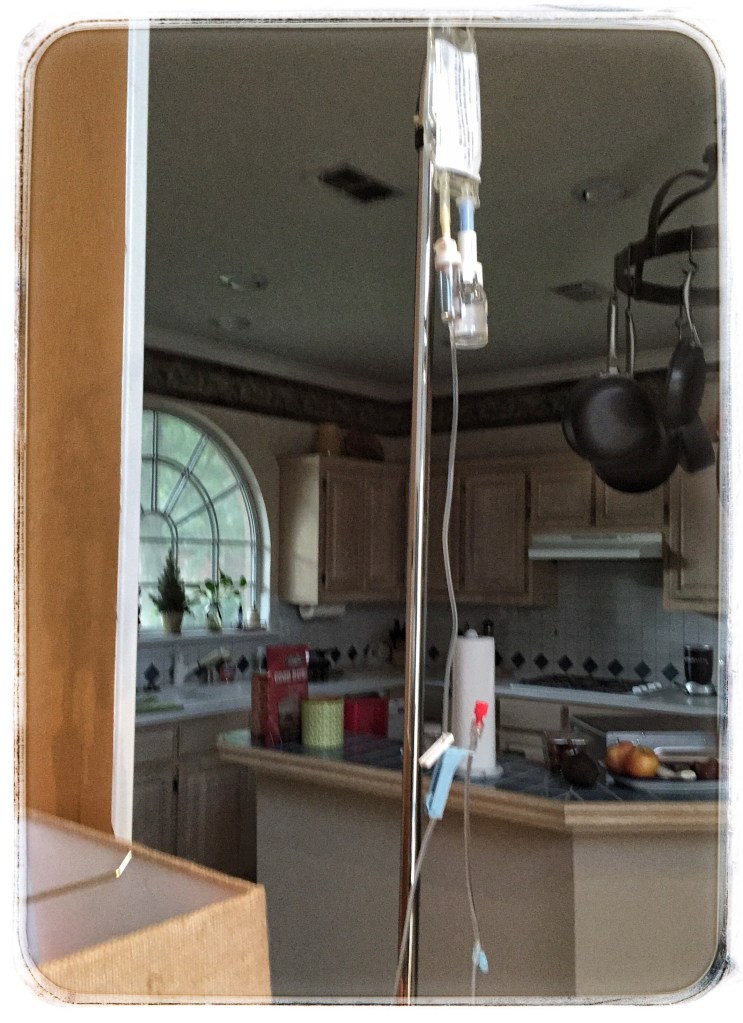
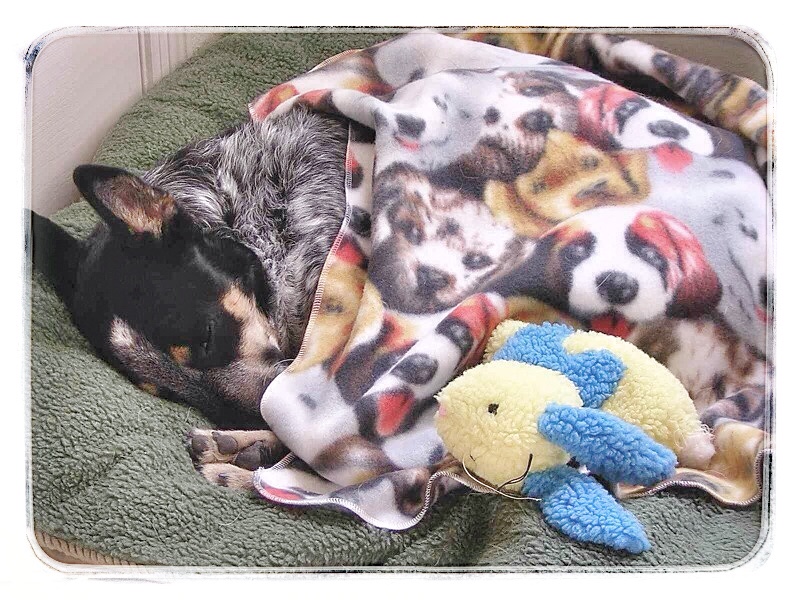
Jet and GriffyGriffyJetBroke wrist falling down stairsFell down stairsFirst time shaved headPort InsertedState of Living Seven days of IV’sShaggyBanjo with blanket and toyTruffles on my deskSydney, AustraliaYosemite FallsHappy Birthday Honey!Sunset Gulf Shores AlabamaWW ii Memorial Washington, D.C.AlabamaThoughtful SurpriseSurprise
Thank you for being my best friend and biggest supporter. I look forward to the next 18 years, all the good and the bad. We’ll be there for each other and growing slightly older each year.
This post is part of TED’s “How to Be a Better Human” series, each of which contains a piece of helpful advice from people in the TED community; browse through all the posts here.
Meetings can crush your soul.
My personal experience — and the prevailing wisdom of management and psychology research — is that meetings default to patterns like these:
• Whoever speaks first is likely to set the direction of the conversation.
• The higher-power, more extroverted, majority-demographic people are more likely to take up disproportionate airtime, receive credit, be given the benefit of the doubt and interrupt others.
• The larger the group, the less meaningful the conversation — and the less likely we are to break out into more meaningful, smaller group discussions because doing so is time- and space-consuming in the physical world.
• Key information is less likely to be shared when it is already known by others; lesser-known but important information tends to not be shared broadly.
• Whatever we did in the last meeting, we are likely to do again in the next meeting.
The result is predictable: A sub-optimal, sub-inclusive meeting.
I believe we can do better.
Whether you are running the meeting or just participating in it, there are ways to make it better and more inclusive. And, believe it or not, in some ways that’s easier to do on virtual platforms. So while many of us are stuck on our screens, let’s make the most of it and use some of the unique features offered by virtual platforms for better inclusion.
Here are 15 ways to make your virtual meetings better and more inclusive:
1. Have a facilitator
Too many in-person meetings flounder because there is no one at the wheel. The result is airtime hogging and groupthink, which are inclusion crushers. In virtual platforms, there is a clearly designated host.
Use this clarity as a nudge towards having a clearly designated facilitator who will balance airtime and bring out a range of perspectives.
2. Bring in more perspectives
Speaking of more perspectives, why talk about customers, when you can have an actual customer zoom in to your meeting? Why guess what employees in the field would think, when you can have actual field employees share their thoughts?
Take advantage of the virtual format to break out of the homogeneous networks that define our workplaces, levels on the org chart, communities, and social circles so that you can hear a broader array of perspectives.
3. Put names with faces
In many online platforms, such as Zoom, each participant’s name is visible. This creates a better opportunity to learn people’s names if you are meeting people for the first time (or like me, can’t remember names of people you have met in the past). You can also grab a screenshot which you can use as a reference for future interactions.
4. Clarify nicknames and preferred names
Platforms like Zoom allow the participant to edit their name as it appears on screen. Rather than always trying to guess which Rajiv goes by Raj and which goes by Rajiv, it will be visible to all.
We can then take ownership for referring to people as they wish, not in whatever way is most convenient or memorable for us (which will inevitably favor the majority group).
5. Learn how to pronounce people’s names
Have everyone share the phonetic spelling / pronunciation of their name in the chat box. For example, I might type in “Dolly = dah-LEE which rhymes with golly + Chugh = ‘u’ sounds like oo in ‘good’ and ‘gh’ is a hard g.”
Each participant should do this, not just those with “hard” names. Taking shared ownership of learning how to say people’s names is one step towards reversing the heartbreaking benefits which diversity and inclusion researcher Sonia K. Kang and her coauthors find for anglicizing one’s name (and “whitening” one’s resume) in the workplace.
And, speaking for my embarrassed self, I am less likely to avoid interacting with someone — which is the opposite of inclusive — when I have confidence that I am saying their name correctly.
6. Share pronouns
Many of us grew up at a time when preferred pronouns were not commonly shared so we have some catching up to do about gender identity. One best practice is to include preferred pronouns with one’s name to guide others.
Again, using the option to edit your name allows for this, or it can also be done in a chat function. So, my name might read “Dolly Chugh, she/her.” Again, it’s ideal if everyone does this, not just a subset of participants.
7. Read the room
Many platforms offer you a way to take the pulse of the room. Break up groupthink with a poll, which can be anonymous or not. This allows you to read the room and allows participants to take less popular stands without having to verbally navigate through those offering the majority opinion. Sharing the result of a poll can shift the group norm in an instant, by revealing a previously invisible perspective.
8. Elicit more ideas at once
In a virtual meeting, you can bring out many thoughts simultaneously by asking a question to which people can respond in the chat function. Then, the facilitator can call on people to discuss.
Keep in mind that many people find it difficult to process both auditory and text inputs at the same time, so it’s ideal to allow time for people to type in their responses. Also keep in mind that people using text readers will end up with the chat and the verbal discussion talking over each other, so it’s important to either space things out or know your audience on this one.
9. Make recordings and transcripts available
Consider recording as a way to support those who would benefit from listening at another time or with the option to pause. For example, people with pandemic parenting/caregiving responsibilities — who are disproportionately women — may need to multitask during the meeting.
The recording allows them to listen later and stay in the loop without burdening others. Of course, recording may make some uncomfortable or be problematic for other reasons so feel this out and be sure to have permission before recording.
10. Offer closed captioning
Some platforms offer automatic closed captioning, which can be useful in a wide variety of circumstances, such as when someone has hearing impairments, when some participants are engaging in a non-native language and when individuals are trying to block out background noise while listening.
This feature may need to be enabled so do some research into what your version of the platform offers. And, it’s rarely fully accurate so realize its limitations and edit afterwards.
11. Pivot in and out of smaller discussions
Breakout discussions are an excellent way to improve meeting performance and team relations. In the virtual world, it can be done in a click. Randomly assigning groups or pre-assigning diverse groups are both good modalities which can build relationships across all kinds of differences and boundaries.
The key to a good breakout is clear instructions about timing, purpose, and deliverables (if any). No need to endure default big group discussions.
12. Practice reading non-verbals
Use virtual meetings to sharpen your non-verbal reading skills. In virtual meetings, I’ve been stunned to witness what non-verbal researchers have knownall along: Words are just a slice of what we communicate. In the real world, it’s not polite to stare at people while trying to read their non-verbal reactions; in the virtual world, bring it on.
Stay in gallery view to watch the group or pin a particular video to be visible throughout the meeting — I call it “zoom-watching.” Send someone a private chat and watch them read it. Tell a joke and watch how people react. Listen to an argument and watch people cringe. Observe the impact that code-switching demands place on colleagues who hold marginalized identities.
Then, use what you notice to step in as an ally. Important: Be curious, not creepy, in your staring.
13. Assume accessibility is part of your job
I am embarrassed at how new I am to learning about accessibility and accommodations for a wide range of disabilities. I am learning so much from accessibility and inclusion expert Courtney Craven (in this guide and this guide).
I have been reactive in the past, compliantly doing what is suggested in a legal-y sounding email from an office whose job is to ensure accommodations are made, or a student specifically requests, and that’s it. If I get a document saying a student needs extra time on an exam, I grant it, without asking the student what is helpful to their learning outside of the exam, for example.
Honestly, it never crossed my mind to think about it. I want to — and can — do better. Join me in the realization that this is not someone else’s job.
14. Ask about accessibility needs
One thing I am learning is that often people experience backlash and bureaucracy when they try to advocate for their needs in schools and organizations, leading them to silence their needs. That’s what makes my passive and reactive approach the wrong approach.
I am going to be proactively asking my colleagues and students, “Are there ways in which the technology we are using can be made more accessible? Are there practices we are using in our meetings that are not working for you?” My new understanding is that I need to ask everyone this question, not just people who have identified themselves as needing an accommodation.
15. Check in and relaunch
You’ve never had more freedom to say “Let’s have a do-over” than 2020. More than ever, we are all learning as we go. So, proactively ask people what challenges they are having staying engaged, offering input and earning respect in virtual meetings.
In fact, Tsedal Neeley, Harvard Business School professor and author of the forthcoming book Remote Work Revolution, has sage advice — she proposes that we “relaunch” our remote teams as a way to help everyone orient to new realities. Think of these 15 tips for more inclusive virtual meetings as one step in that relaunch.
No doubt, much has been lost in this new virtual world — so much. I miss three people telling a funny story in unison. I yearn for accidental eye contact, however awkward it sometimes is. I barely remember what it’s like to see people’s footwear.
Still, much can also be gained in the virtual world. There are ways to foster inclusion in a virtual gathering that are not available in person. Try one or two of these ideas in your next virtual meeting. More inclusive meetings are better meetings.
This piece was originally published in Dolly Chugh’s Dear Good People newsletter, a five-minute monthly read containing timely, evidence-based, actionable advice. Sign up for it here.
ABOUT THE AUTHOR
Dolly Chugh is a Harvard-educated, award-winning social psychologist at the NYU Stern School of Business, where she is an expert in the unconscious biases and unethical behavior of ordinary, good people.
Made from stinging nettle plants, organic nettle tea can help relieve seasonal allergy symptoms with its natural antihistamine. You reap all the benefits of antihistamine symptom relief without having to take conventional medicines. You can drink the daily as a preventative or as needed.
Spirulina & Other Superfoods
Spirulina is a superfood full of amazing plant nutrients, like iron, calcium, vitamin A and C, and protein. While great for overall health, spiraling may be beneficial during allergy season because it is high in antioxidants and has been shown to protect the body from anything that might compromise the immune system. It is high in chlorophyll and is detoxifying. Other superfoods like Kale, turmeric, mace powder, hemp, and flax are great for reducing inflammation and boosting your immune system.
Probiotic
A probiotic can help boost your gut and immune system health, which plays a big part in seasonal allergies. You can digest probiotics by eating fermented items like sauerkraut, and kombucha, or by taking a supplement. Make sure it is a high-quality probiotic from an organic source.
Apple Cider Vinegar
Apple Cider Vinegar is detoxifying and practically a remedy for everything. Taking as little as 1 tablespoon a day can help you feel and be healthier, which will, in turn, reduce your allergy symptoms. Make sure you purchase unfiltered organic Apple Cider Vinegar.
Essential Oils
Essential oils, such as melaleuca, peppermint, lavender, frankincense, lemon, and eucalyptus, help with seasonal allergy relief. I like to fill a roller bottle with a carrier oil and 5-10 drops of each chosen essential oil. I apply this to my nose, on my temples, and behind my ears when I begin to feel swollen or puffy, as well as to the bottom of my feet. You can use these as needed as well as preventative.
All great ideas from one of my favorite bookazines, Williow & Sage by Stampington.
I believe this recipe came from Willow & Sage by Stampington.
YOU WILL NEED
Yields 1 cup
1/2 cup coconut oil
Glass bowl
1 cup granulated sugar
12-15 drops peppermint essential oil
Glass jars
Candy cane, finely crushed
TO MAKE
Melt the coconut oil in a glass bowl in the microwave for about 30 seconds, and let cool for five minutes. Stir in the sugar and essential oils until combined. Package the peppermint sugar scrub in airtight glass jars, and sprinkle finely crushed candy cane on top; mix the candy cane into the scrub if desired.
The pivotal role of patients in Lyme disease research
I gave the following remarks by telephone at the November 17 meeting of the Tick-Borne Disease Working Group.
Good morning. I’m Lorraine Johnson, the CEO of LymeDisease.org and the principal investigator of the MyLymeData patient registry and research platform.
Although Lyme disease is estimated to have over 400,000 cases per year, clinical trial research funding trails behind leprosy, which has an incidence of less than 200 cases a year.
In chronic Lyme disease, pharma has shown no interest in developing new treatment drugs and the NIH has funded just three clinical trial grants – the last one funded over 20 years ago.
The challenges of Lyme disease research
This means that even though it is not a rare disease, Lyme disease is research-disadvantaged and faces the same research challenges that rare diseases encounter. To facilitate and accelerate the pace of research, these diseases build a research engine linking patient registries, biorepositories, and clinical data networks. The NIH and the Patient Centered Research Outcomes Institute as well as the Agency for Healthcare Research and Quality have led efforts in this area. Dr. Collins recently acknowledged the important role of patient-led research in COVID-19.
MyLymeData has enrolled over 14,000 patients, collected over 5 million data points, and published three peer-reviewed studies. It has also partnered with the Lyme Disease Biobank, a project of the Bay Area Lyme Foundation and is working with a publicly traded company to help recruit patients for a diagnostics study.
MyLymeData was initially developed as part of the PCORnet patient-driven research effort when I served on its Executive Committee. I continue to serve as a subject matter expert in patient registries for PCORnet registries through the University of Chicago.
When the optimal treatment, duration, or combination of treatments is unknown–as it is in chronic Lyme disease–the process of conducting back-to-back sequential randomized controlled trials to determine the best treatment approach is not realistic. Dr. Califf, former head of the FDA who served with me on the PCORnet Executive Committee used to say, “Randomized trials are great, but they take too long, cost too much, and don’t apply to most people.”
Professor Abernathy at Duke puts it this way: “It can take more than a decade for a trial to progress from the idea stage to actionable information, and the cost and complexity mean that many questions will never be addressed with such trials”
Patients can’t wait for research that may not come. Patient registries like MyLymeData play a pivotal role in accelerating the slow pace of research. They allow us to evaluate care as it is actually provided by clinicians to provide the answers that chronic Lyme disease patients need today. To solve these problems, we will need to avail ourselves of all tools in our kits and all forms of evidence. Thank you.
Lorraine Johnson, JD, MBA, is the Chief Executive Officer of LymeDisease.org. You can contact her at lbjohnson@lymedisease.org. On Twitter, follow her @lymepolicywonk.
It’s the weekend, I’m so glad you’ve joined me. This week I’m staying with Rock music, these are my coming of age songs and have great memories attached. I’m sure you have your own coming of age tunes.
What is your favorite music the time period?
In health,
Melinda
Welcome back to Weekend Music Share; the place where everyone can share their favorite music.
Feel free to use the ‘Weekend Music Share‘ banner in your post, and don’t forget to use the hashtag #WeekendMusicShare on social media so other participants can find your post.
Hi Everyone, It’s Friday! So glad you stopped by today. I hope you have a great weekend. Stay safe and please only be around your COVID FREE family and friends. It’s hard right now but we have to live in our family bubbles so we can get past this virus.
You don’t. And you’re also steering the focus away from someone who probably just wants to be heard. Here’s how to be a more considerate conversation partner, says radio host and writer Celeste Headlee.
A good friend of mine lost her dad some years back. I found her sitting alone outside our workplace, just staring at the horizon. She was absolutely distraught, and I didn’t know what to say to her. It’s so easy to say the wrong thing to someone who is grieving and vulnerable.
So I started talking about how I grew up without a father. I told her my dad had drowned in a submarine when I was only nine months old and I’d always mourned his loss, even though I’d never known him. I wanted her to realize that she wasn’t alone, that I’d been through something similar and I could understand how she felt.
But after I related this story, my friend snapped, “Okay, Celeste, you win. You never had a dad and I at least got to spend 30 years with mine. You had it worse. I guess I shouldn’t be so upset that my dad just died.”
I was stunned and mortified. “No, no, no,” I said, “that’s not what I’m saying at all. I just meant I know how you feel.”
And she answered, “No, Celeste, you don’t. You have no idea how I feel.”
Often subtle and unconscious, conversational narcissism is the desire to do most of the talking and to turn the focus of the exchange to yourself.
She walked away and I stood there feeling like a jerk. I had wanted to comfort her and, instead, I’d made her feel worse. When she began to share her raw emotions, I felt uncomfortable so I defaulted to a subject with which I was comfortable: myself. She wanted to talk about her father, to tell me about the kind of man he was. She wanted to share her cherished memories. Instead, I asked her to listen to my story.
From that day forward, I started to notice how often I responded to stories of loss and struggle with stories of my own experiences. My son would tell me about clashing with a kid in Boy Scouts, and I would talk about a girl I fell out with in college. When a coworker got laid off, I told her about how much I struggled to find a job after I had been laid off years earlier. But when I began to pay more attention, I realized the effect of sharing my experiences was never as I intended. What all of these people needed was for me to hear them and acknowledge what they were going through. Instead, I forced them to listen to me.
Sociologist Charles Derber describes this tendency as “conversational narcissism.” Often subtle and unconscious, it’s the desire to take over a conversation, to do most of the talking, and to turn the focus of the exchange to yourself. Derber writes that it “is the key manifestation of the dominant attention-getting psychology in America.”
We can craftily disguise our attempts to shift focus — we might start a sentence with a supportive remark and then follow up with a comment about ourselves.
The game of catch is often used as a metaphor for conversation. In an actual game of catch, you’re forced to take turns. But in conversation, we often find ways to resist giving someone else a turn. Sometimes, we use passive means to subtly grab control of the exchange.
This tug-of-war over attention is not always easy to track. We can very craftily disguise our attempts to shift focus. We might start a sentence with a supportive comment, and then follow up with a comment about ourselves. For instance, if a friend tells us they just got a promotion, we might respond by saying, “That’s great! Congratulations. I’m going to ask my boss for a promotion, too. I hope I get it.”
Such a response could be fine, as long as we allow the focus to shift back to the other person again. However, the healthy balance is lost when we repeatedly shine the attention back on ourselves.
While reciprocity is an important part of any meaningful conversation, the truth is shifting the attention to our own experiences is completely natural. Modern humans are hardwired to talk about themselves more than any other topic. One study found that “most social conversation time is devoted to statements about the speaker’s own emotional experiences and/or relationships, or those of third parties not present.”
The insula, an area of the brain deep inside the cerebral cortex, takes in the information that people tell us and then tries to find a relevant experience in our memory banks that can give context to the information. It’s mostly helpful: the brain is trying to make sense of what we hear and see. Subconsciously, we find similar experiences and add them to what’s happening at the moment, and then the whole package of information is sent to the limbic regions, the part of the brain just below the cerebrum. That’s where some trouble can arise — instead of helping us better understand someone else’s experience, our own experiences can distort our perceptions of what the other person is saying or experiencing.
The more comfortable you are, the more difficult it is to empathize with the suffering of another.
A study from the Max Planck Institute for Human Cognitive and Brain Sciences suggests that our egos distort our perception of our empathy. When participants watched a video of maggots in a group setting, they could understand that other people might be repulsed by it. But if one person was shown pictures of puppies while the others were shown the maggot video, the puppy viewer generally underestimated the rest of the group’s negative reaction to the maggots.
Study author Dr. Tania Singer observed, “The participants who were feeling good themselves assessed their partners’ negative experiences as less severe than they actually were. In contrast, those who had just had an unpleasant experience assessed their partners’ good experience less positively.” In other words, we tend to use our own feelings to determine how others feel.
Here’s how that translates to your daily conversations: Let’s say you and a friend are both laid off at the same time by the same company. In that case, using your feelings as a measure of your friend’s feelings may be fairly accurate because you’re experiencing the same event. But what if you’re having a great day andyou meet a friend who was just laid off? Without knowing it, you might judge how your friend is feeling against your good mood. She’ll say, “This is awful. I’m so worried that I feel sick to my stomach.” You’d respond, “Don’t worry, you’ll be okay. I was laid off six years ago and everything turned out fine.” The more comfortable you are, the more difficult it is to empathize with the suffering of another.
It took me years to realize I was much better at the game of catch than I was at its conversational equivalent. Now I try to be more aware of my instinct to share stories and talk about myself. I try to ask questions that encourage the other person to continue. I’ve also made a conscious effort to listen more and talk less.
Recently, I had a long conversation with a friend who was going through a divorce. We spent almost 40 minutes on the phone, and I barely said a word. At the end of our call, she said, “Thank you for your advice. You’ve really helped me work some things out.”
The truth is, I hadn’t offered any advice. Most of what I said was a version of “That sounds tough. I’m sorry this is happening to you.” She didn’t need advice or stories from me. She just needed to be heard.
Celeste Headlee is an award-winning journalist, the bestselling author of We Need to Talk: How to Have Conversations That Matter, and cohost of the series Retro Report on PBS. Headlee serves as an advisory board member for Procon and the Listen First Project. In her 20-year career in public radio, she has been the executive producer of On Second Thought at Georgia Public Radio and has anchored programs including, Tell Me More, Talk of the Nation, All Things Considered and Weekend Edition. She also cohosted the national morning news show The Takeaway for PRI and WNYC, anchored World Channel’s presidential coverage in 2012, and received the 2019 Media Changemaker Award.
Gluten-Freedom by Alessio Fasano, MD with Susie Flaherty
Ingredients:
1 1/2 to 2 pounds salmon (wild-caught preferred with skin on)
Juice from 2-3 limes
Olive Oil
Sesame Seeds
Preheat oven to 350 degrees. Line baking sheet with parchment paper and coat very lightly with olive oil. Place salmon, skin side down, on parchment paper in the pan.
Squees the juice of 2-3 limes into a bowl. Use a pastry brush to coat salmon with lime juice. Coat the top of the salmon with sesame seeds. Bake for 15-20 minutes. Fish is done when it flakes easily with a fork. Be careful to not overcook.
Despite having Chronic Lyme Disease, Fibromyalgia, Hypogammaglobulinemia, and Dementia, I’ve been relatively healthy for the past six months. I count my blessings and chalk it up to some big lifestyle changes.
I believe self-care is the things we do every day to stay healthy, not just the special moments we spend taking care of ourselves. I’m learning more every day about the importance mental health plays on physical health, they are intertwined.
Below are the simple but important steps I work to accomplish every day, there may be a day or two where I don’t get outside or go to Starbucks but as a general rule the outline is my daily schedule.
We go to the Starbucks drive-thru for a coffee. We have a huge container of Clorox wipes and have a routine we go thru before leaving the drive-thru to ensure we don’t get the virus.
Taking all of my medications is critical to my physical and mental health.
Women’s over 50 Multi-Vitamin with Calcium.
Biotin for healthy hair.
Calcium 1200mg.
Vitamin D with K-5000 IU of D3 and 180 Mcg of K2 MK7
Probiotics 100 Billion CFU
Nicotinamide 300mg-Recommended by my Lyme doctor to help improve the immune system at the cellular level.
Reduce stress by meditating several times a day for at least 5 minutes.
Only watch one hour of news, 30 minutes local, and 30 minutes national.
Light an aromatherapy candle, placed somewhere I won’t forget it’s burning.
In spite of COVID, I still schedule critical doctor’s appointments and lab work.
Getting outside for fresh air even for 10 minutes. Just hearing a bird call can change the outlook on my day.
There are several bird feeders and a birdbath at my kitchen window that my husband takes care of for me. I can not tell you the enjoyment I get out of seeing the birds, woodpeckers, and squirrels every day.
Spend multiple times a day with my dogs, one on one attention and training. it’s rewarding to watch them grow and learn. The love I get is unconditional.
Bedtime Routine:
Go to bed 2 hours before bedtime. In those 2 hours, there is no sound, no computer, no phone, nothing. I lather up with my CBD creams and favorite hand lotion and a touch of aromatherapy oil. Sometimes I’ll turn on the diffuser.
Those 2 hours give my mind time to wind down, get all the ramblings out, and let my mind completely calm down. At bedtime, I take my sleeping meds and another round of CBD cream. I’m now ready. Rarely do I have trouble going to sleep.
There’s no one size fits all to have the best healthy life but we all can take steps every day to push ourselves forward. What small steps have you taken each day to improve your physical and mental health?
Hi, it’s Wednesday! I’m thrilled you’re here! These little bees were enjoying the flowers on my Purple Ivy plant during the Summer. They were so tiny and very thirsty. What do you think about these photos? Do you like little creatures?
New from the Aromalief blog is a great Women’s gift guide. Annabel has done an excellent job of rounding up gift ideas that I would love to receive, especially the Passion Planner and Aromalief package.
Holiday shopping has started earlier than ever this year! To help you pick out some thoughtful gifts for the women in your life (or for yourself!), we’ve rounded up some of our favorite Gifts for Women Over 40. All wonderful and unique ideas to end 2020 strong and begin 2021 full of energy and positivity!
Our Vegan Gifts for Women Over 40 brings has wonderful and unique ideas to end 2020 strong and begin 2021 full of energy and positivity.
The holidays are just around the corner and 2020 has been a challenging year in so many ways. From COVID to fires and more, the country is under stress and for those of us with chronic pain, this may translate into pain flare ups. However, we need to take care of ourselves and try our best to choose hope because the world needs more people that look for the light instead of falling into darkness.
1. It’s like your mini 2020 survival kit that includes your basics during COVID and still be stylish. Be Well Kit contains a plant-based hand sanitizer, a body serum to relieve dryness, an antibacterial powerhouse in a roll-on for an aromatherapy boost and a cotton face mask- all bundled in a signature reusable pouch.
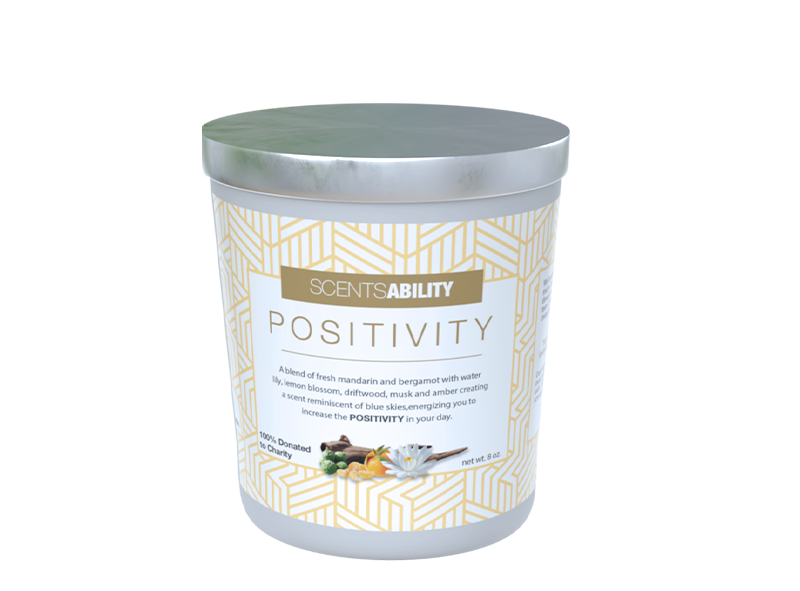
2. The Positivity Candle from Scentsability will help with your state of mind. Light it up for a gentle reminder for the light you wish to be for the world. Based in South Florida, Scentsability provides training and work for adults living with intellectual and developmental disabilities (I/DD). A blend of fresh mandarin and bergamot with water lily, lemon blossom, driftwood, musk, and amber, creating a scent reminiscent of blue skies, energizing you to increase the POSITIVITY in your day.
3. This stylish bag is made from recycled water bottles. They have several other wonderful designs, but this one has the perfect size and shape to wear daily or to a special occasion when we go back to doing those things.
4. This is my favorite planner and I have been using this for the past 2 years. Some of my favorite features are the weekly motivational quotes, a personal and work list because we need to not just work, but also take care of ourselves as people. The other great thing is the monthly reflections section. This planner is perfect to live life with purpose.
$1 for every planner sold will benefit charity: water, a non-profit organization whose mission is to bring clean and safe drinking water to people around the world through community-owned and sustainable water projects
5. No list would be complete without Aromalief. Our brand has been steadily growing thanks to the wonderful support of our customers. This winter we excited to bring you the Aromalief Day & Night Gift Set that comes in a beautiful box and ready to gift. This is the perfect gift for a wonderful and caring person that may be stressed and suffering from aches and pains.
If you have an elderly loved one in your life, it’s extremely important to keep an eye out for them and to help them wherever possible. Sure, it may feel odd looking after these people. After all, they are often individuals who looked out for us and helped us while we were growing up. But now, the tables have switched and it’s your turn! Now, in particular, they are likely to need more help than ever, as we’re living through a pandemic. Here are a few steps you can take to make their life as easy as possible!
Pandemic Related Help
Coronavirus has wreaked havoc for almost everybody this year. But the virus and disease are most dangerous to elderly individuals – the over 70s – in general. So, your elderly loved ones may need a little more support during this time. Here are some steps you should be taking to help them out!
Provide Them With Up to Date Information – right now, many of us are getting our news from our smartphones. We get notifications and can read the news on a second by second basis to see new guidelines and regulations. Elderly people, on the other hand, tend to get their news from newspapers, the radio, or the television. This makes updates slower. So, keep them in the know by updating them yourself.
Do Their Shopping for Them – supermarkets are packed with people. Sure, many may be implementing social distancing. But it’s generally best to pick up your elderly loved ones’ shopping for them. This can include food shopping, toiletries, picking up prescriptions, and other essentials.
Keep In Touch – it’s easy for the elderly to feel pretty lonely right now. Keep in touch to make sure they’re feeling loved and so they can have a chat. Give them a call regularly.
Day to Day Life
There are steps you can take to make the elderly’s day to day lives – whether we are in a pandemic or not – a little simpler. Here are a few to consider!
Adapting Their Home – there are many changes you can make to your elderly loved one’s home to make it more comfortable and easier to get about. Whether that’s a stairlift, a walk-in bath, or anything else.
Helping Their Mobility – sometimes elderly people find it a little difficult getting from A to B. Maybe they’re no longer comfortable driving. Maybe they don’t have the energy to walk long distances. This is when you can contact Scooters ‘N Chairs. They have all sorts of mobility equipment available.
Consider Care Services – some elderly individuals need a little help around the house day today. If you are unable to provide this yourself due to other commitments, you may need to look into care services. This could include at-home care or moving your loved one into a care home. A proper assessment will determine their needs.
These changes aren’t all too big. So, make the effort to ensure your elderly loved one is getting everything they could possibly need on a day to day basis to make their lives as easy as possible!
Your parents and older relatives spent their time supporting you through a range of roadblocks you encountered in life. Now that they are older, it’s your turn to repay the favor. But how can you, your partner, siblings, and children provide the vital support that seniors need as they grow older?
Help Them Find Communities
It’s easy for seniors to become isolated from the world around them. Their friends may not live close enough anymore. Or they aren’t as mobile as they once were. However, staying in touch with a community can help stave off degenerative diseases such as Alzheimer’s, which will ensure their quality of life is as good as it can be. There are plenty of elderly communities around that you can find and introduce your relatives to, allowing them to meet people their age who share their interests. This means they won’t solely rely on you for the company, and can even have new experiences.
Give Them Ways to Contact You
Life can be exceptionally busy, there’s no doubt about this, and because of this, there’s a risk that you neglect to get in touch with your elderly relatives as often as you should. However, this shouldn’t mean they cannot get in touch with you when they feel like a chat. Smartphones, laptops, and tablets may intimidate them at first, but they are crucial for ensuring that they can contact you, allowing you to offer the support they need. They won’t need the latest smartphone, but something easy to use and with a strong wifi connection will do the trick.
Include Them
When planning how to support your parents, you need to remember that they are not just there. They are still human, and they will always have their preferences for how they want to live. Because of this, you must include them in any plans you have for offering support. Don’t neglect to ask them what they want to do, whether it’s visiting them at their house or go somewhere else where they can get some fresh air. It’s easy to feel like you lose your autonomy the older you get, so providing a chance to retain their independence will do wonders for their well being.
Assess What They Need
Sometimes, you can’t provide exactly what your elderly relatives need, so you need to assess these needs and look for solutions. While they might live at home now, medical conditions could impact how easy this is for them. If this is the case, you can consider retirement homes or care workers who will visit your relatives to provide the treatment they need. Services that offer such assistance include https://catholiccarecenter.org/long-term-care/, which will provide expert service and give you and your relatives the peace of mind you need.
Support
Supporting your elderly relatives will help them manage their senior years more comfortably and prevent any of the loneliness or isolation problems that can come from old age. Whether they require a helping hand now and again or need more professional support, you can be there for them no matter what and make the best of the last years you have with them.
For your next birthday party, make a “pavlova” – a delicious meringue shell filled with whipped cream and topped with fresh fruit. With it’s sweet, fluffy interior and crunchy crust, meringue is a favorite for kids of all ages. The desert, which is claimed by both New Zealand and Australia, was created for the great imperial Russian ballerina, Anna Palova, during her tour in the 1920’s.
INGREDIENTS:
4 egg whites
1 cup fine granulated sugar (castor sugar)
1 teaspoon white vinegar
2 teaspoons cornstarch
1 teaspoon vanilla extract
1 cup heavy cream
1 tablespoon whipping cream
1 tablespoon powdered sugar (if desired)
1 teaspoon vanilla extract
Strawberries and kiwi fruit
Preheat oven 250 degrees. Beat eggs whites on high speed until they look like ribbons when dropped from the beater. Add sugar, one tablespoon at a time, beating after each addition. Beat meringue mixture until it forms stiffs peaks but isn’t dry.
Fold vinegar, cornstarch, and vanilla into mixture. Using parchment paper on a cookie sheet, spoon the meringue mixture into a circle on the sheet about six to eight inches in diameter ( a rubber spatula really helps with this step.)
Bake 1 1/2 hours. Turn oven off and open the door, leaving the meringue to cool. The meringue shell will fall as it cools but that is okay.- that’s when whipped cream is for.
When the meringue shell is cool, whip the cream in the mixing bowl until it thickens. If desired, add sugar and vanilla to the cream. Don’t overbeat the cream or it will clump. Cover meringue with whipped cream and sliced fruit. You might want to make two-this is a very popular dessert! One pavlova serves six to eight people. And just in case you’d like the kids to eat dinner before dessert, try this traditional New Zealand family dinner one weekend.
My gramps would be 102 today, it’s hard to believe it’s been almost eight years since he died. Gramps was the only father figure I had in my life and he was rock solid. On the first date, he made the guy give his driver licenses, car plate number, home phone number, parent’s name, where he went to school, and what movie he was taking me to see. I was mortified and remember telling granny if this is would happen every date I wouldn’t be dating.
My gramps loved me unconditionally, always living by example and telling me I could do anything, be anything. When I was a young girl we would watch Miss America and I would say I want to be Miss America, he said okay, you can if you work hard and really want it.
In all my life he only lost his temper three times, two I deserved. The other, well…..he was too sick, dying really and I don’t count that one. I had the privilege of being a caregiver to my gramps while he was dying. You find out what a person is made of and what you are made of when you’re faced with death.
He had kidney failure and we knew he would go into a coma a couple of days before dying. One morning he woke up talking but not making sense, I knew we were getting close. I made his favorite meal, potato soup, and called family. He would not get into the hospital bed until that day, he had refused. That day he knew the end was near.
We talked about how he would be with my granny soon and see his parents again. He loved my granny so much and was ready to see her, she had died several years earlier. I feed him or tried to, I ended up spilling soup down his face, we laughed.
There wasn’t a need to say a tearful goodbye, we had months to talk and share our feelings, say what we wanted to say and so there weren’t any tears. He was not in pain, just sleepy. What a beautiful way to die. Being able to talk about good times and then go to sleep.
My gramps loved to play Lotto scratch-off games. In this photo rendering, he is enjoying several cards we bought for his birthday. It was always the simple things that made him happy.
I know he’s proud of me and was the daughter he never had.
I miss him terribly and not a day goes by without thinking about him or the lessons he taught me.
One of my favorite sweet treats during that ravenous time in my second trimester was a homeade peanut butter cookie. The recipe is so quick and it’s easy, it’s a snap.
INGREDIENTS
1 beaten egg
1 cup sugar
1 cup peanut butter
Mix well and drop on parchment paper on a cookie sheet. Bake at 375 dgrees for 10 minutes until golden.
2 large eggs (or reconstituted Ener-G egg replacer or applesauce)
1 teaspoon baking soda
1/2 teaspoon baking powder
2 1/2 cups Jules Gluten-Free All-Purpose Flour or other brand
12 ounces semisweet chocolate chips or dairy-free chocolate chips, peanut butter chips, white chocolate chips (available dairy-free), M&M’s, or a mixture
Bring the butter and shortening to room temperature and then beat together with sugars until light and fluffy (several minutes). Mix in the vanilla extract and eggs until combined.
In another bowl, whisk together dry ingredients. Gradually stir these dry ingredients into the sugar mixture. Stir in chips and nuts, if so desired.
Scoop dough into a container (metal, if possible) and cover tightly. Refrigerate of freeze until very cold (overnight is ideal). Preheat oven to 350 degrees (static) or 325 degrees (convection).
Drop measured tablespoons onto a cookie sheet lined with parchment paper, at least 1 inch apart. Bake 8-9 minutes, or until the tops are lightly browned. Let them stand 5 minutes before removing them from cooling racks.















































 lookingforthelight.blog