Thank you for all the great feedback on the Blogger Highlight series, I’ve enjoyed meeting each blogger and sharing their site with you. This week we highlight a new blogger, Second Chances.
CONTENT GUIDANCE: This blog has strong language, explores aspects of mental health, domestic violence ,drug abuse, alcohol abuse, and suicide. Please read with caution!
Hi all!!! I’m Rae,37 year old mom, blogger,AR analyst,addiction advocate/coach. My all time favorite time of year is fall 🍁🍁🍁.
Her blog covers many serious topics and I know you will find her post enjoyable.
How can I say that? We are emotional people, even those who try to be strong will have crises. When a spouse or child dies, a bad car wreck, you lose your job, your child is addicted to drugs, the list goes on. This is not a mental illness it’s an emotional crisis from what is happening in your life.
My crisis started with low-grade depression, being diagnosed with Kidney Disease, my husband being diagnosed with two types of cancer, and I had two repressed memories come back to me. With all that being down on me, I couldn’t handle it anymore.
We’ve all had or will have something traumatic happen that will affect us deeply and cause emotional distress. We are human beings and as such we do get emotional scars we have to work thru. Sometimes it’s as simple as talking to someone and having a good cry, other times you may need a Therapist to work thru the pain. They are trained to listen and talk about ways to help you cope. I’ve been seeing a Therapist for 30 years, she has helped me process the trauma of my childhood and is a good ear when a new issue comes up and I’m not sure how to handle it.
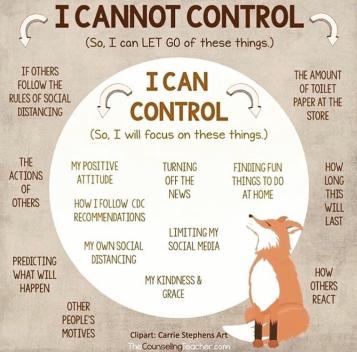
According to Vice Chair of Adult Psychology Elissa Epel, Ph.D., If you feel in crisis or overwhelmed, it may be helpful for you to make a list of what you can and cannot control right now. In this guide, we suggest radical acceptance of the situations we cannot control, and focus on what we can do.
I’ve experienced my share of trauma and have moved past the pain, it was holding me back in life. My Therapist was a big part of overcoming the trauma that ruled my life and I am stronger for it. I believe stress and trauma can turn your life upside down. I’ve already stopped watching the national news, too much politics that get me extremely worked up. I feel less stressed already.
Before you experience an emotional crisis, look at your habits, really examine your life and cut negative people out of your life, I don’t care if they are family, you don’t want negative influences around you. If your friends aren’t supportive of you, they are not your friends, if politics get you jacked up, don’t watch the news.
I think social media can have a negative effect on our health. The way I look at social media is it’s a place I share my post with. I follow very few people and I always assume the person on the other end is not who they say they are. That’s reality. You see news stories every day of stalking, raping, or trolling. If you have a mindset that people are not who they say they are, you won’t get pulled into a bad situation. That might sound harsh but it’s a reality. You do not know the person on the other end, and you don’t know their motive, instead look at them as Social Media friends, not the type of friends you have in your life outside of Social Media.
We can never prepare for when an emotional crisis will hit us, we can do everything right and we’re still going to face a crisis in our life. Talk to someone, don’t keep it inside for the pain and stress don’t go away on their own.
When my grandparents died I was devastated, how could I live without them, they were my rock and my parents because my parents were abusing me. Long before I went into therapy, my granny was the one I talked to about teenage trauma. She always said it would pass, I would say if your emotional crisis is interfering in your life in the least, go talk to a therapist.
I’ve worked thru most of my emotional crisis but still have two repressed memories to discuss, luckily they are not interfering in my life and I will see my Therapist soon.
An emotional crisis is NOT a mental illness, I will say as a person with Bipolar Disorder that an emotional crisis can bring on depression but being depressed about losing someone you love is natural and from our heart. It’s when our heart is breaking that an emotional crisis can happen.
I’m so glad you’ve joined me this week for another edition of Weekend Music Share.
Have a great weekend!
Melinda
Welcome back to Weekend Music Share; the place where everyone can share their favorite music.
Feel free to use the ‘Weekend Music Share‘ banner in your post, and don’t forget to use the hashtag #WeekendMusicShare on social media so other participants can find your post.
The National Alliance on Mental Illness is highly respected not only for its advocacy work but for the resources that are available for free. They have an extensive library of previous posts in English and Spanish and they update often. They work with our Government to advocate for more services and better treatment for mentally ill patients.
NAMI envisions a world where all people affected by mental illness live healthy, fulfilling lives supported by a community that cares.
Our Mission
NAMI provides advocacy, education, support and public awareness so that all individuals and families affected by mental illness can build better lives.
Our Values
Hope: We believe in the possibility of recovery, wellness and the potential in all of us.
Inclusion: We embrace diverse backgrounds, cultures and perspectives.
Empowerment: We promote confidence, self-efficacy and service to our mission.
Compassion: We practice respect, kindness and empathy.
Fairness: We fight for equity and justice.
Who We Are
The National Alliance on Mental Illness (NAMI) is the nation’s largest grassroots mental health organization dedicated to building better lives for the millions of Americans affected by mental illness.
What started as a small group of families gathered around a kitchen table in 1979 has blossomed into the nation’s leading voice on mental health. Today, we are an alliance of more than 600 local Affiliates and 49 State Organizations who work in your community to raise awareness and provide support and education that was not previously available to those in need.
Diversity, Equity And Inclusion
At NAMI, we believe a diverse, inclusive and equitable organization (or Alliance) is one where all employees, volunteers and members — regardless of gender, race, gender identity, ethnicity, national origin, age, sexual orientation, education, disability, veteran status or other dimension of diversity — feel valued and respected.
We are committed to a nondiscriminatory approach and to providing equal opportunity for employment, participation and advancement in all programs and worksites.
NAMI not only has a site full of resources but they also have locations across the United States. Look to find an office near you. I support their work 100% and believe in their work so much they are one of the charities I give to each year.
If you need any help with your Mental Illness turn to NAMI’s resources to help you thru the issue you are struggling with. I love how they have a section on how to talk with family and friends about your illness.
Are you a fan of rock concerts, lively city streets, or perhaps adrenaline-fueled activities? While these experiences can be thrilling, have you considered the possible impact they have on your delicate ears? In this revealing blog post, we delve into the realm of high-decibel noise exposure and its harmful effects on our hearing abilities. From understanding the science of ear damage to exploring practical preventive measures, join us on this exploratory journey as we reveal how something as trivial as a few extra decibels can have lasting consequences. Get ready to prioritize your auditory health like never before.
Understanding the Perils of High-Decibel Noise Exposure
High-decibel noise exposure ranks amongst the leading causes of hearing loss. It can occur gradually over time or instantaneously due to a one-off exposure to loud noise. Unfortunately, hearing loss from noise exposure is irreversible. If you’ve suffered hearing damage due to an accident that wasn’t your fault, contact the likes of Schuerger Shunnarah trial attorneys as soon as possible.
Numerous sources of loud noise can potentially harm your hearing, including:
firearms
fireworks
power tools
music concerts and events
car stereos
engines
Loud noise exposure is also prevalent in the workplace, for instance:
factories
construction sites
agricultural machinery
The Types of Ear Damage from High-Decibel Noise Exposure
Four types of ear damage can result from high-decibel noise exposure:
Temporary threshold shift: Here, your hearing is temporarily impacted by loud noise but typically recovers within a few hours or days.
Permanent threshold shift: This refers to when your hearing is permanently damaged by loud noise, an irreversible condition.
Noise-induced hearing loss: This type of permanent threshold shift leads to a gradual deterioration in hearing over time.
Tinnitus: This is characterized by a ringing, buzzing, or other noise you perceive in your ears or head without any external source. Both temporary and permanent threshold shifts can trigger tinnitus.
Preventing Ear Damage from High-Decibel Noise
High-decibel noise exposure is a frequent cause of ear damage, leading to permanent hearing loss over time. It can also result in tinnitus (ringing in the ears) and vertigo (dizziness). There are several strategies to prevent ear damage due to loud noise:
Use earplugs or earmuffs when you’re exposed to loud noise, such as when operating power tools, lawnmowers, or firearms.
Adjust the volume on music players and other personal audio devices. If you can’t hear someone speaking from three feet away, the music is excessively loud.
Avoid attending noisy events, like concerts and sports matches, without ear protection.
Maintain a distance of at least 25 feet from fireworks displays.
The Long-Term Consequences of Hearing Loss Due to High-Decibel Noise Exposure
There are numerous long-term effects of hearing loss resulting from high-decibel noise exposure. Some of these effects include:
Hyperacusis: A condition in which sounds are perceived as being far louder than they are. This can make everyday activities such as phone conversations or movie outings challenging.
Dizziness: People with hearing loss often report dizziness and balance issues. This is because the inner ear plays a pivotal role in maintaining balance.
If you’ve been exposed to high-decibel noise and are experiencing any of these symptoms, it’s crucial to consult a doctor for a thorough hearing evaluation. Neglected hearing loss can lead to social isolation, depression, and even dementia. So, don’t delay – have your hearing assessed today!
Managing and Treating Ear Damage from High-Decibel Noise Exposure
If you’ve been exposed to high-decibel noise, either through work or recreational activities, it’s vital to be aware of the potential ear damage. Here are some tips on managing and treating ear damage from such exposure:
Consult a doctor if you experience pain or hearing loss after exposure to high-decibel noise.
Avoid further exposure to loud noise. If unavoidable, always wear ear protection.
Rest your ears as much as possible and limit your time in noisy environments.
Clean your ears gently with a soft, dry cloth after exposure to loud noise.
Avoid using cotton swabs or other objects in your ear canal, as it can exacerbate the damage.
In Conclusion
Exposure to high-decibel noise can severely impact your hearing and should never be underestimated. Understanding the ramifications of prolonged exposure is crucial as it can cause permanent ear damage over time. Proactive measures such as wearing protective headphones, limiting exposure to loud noises, and steering clear from areas with high sound levels are all effective ways to reduce your risk of hearing loss or other adverse effects caused by long-term exposure to loud noise.
I remember the blistering days of summer spent playing with the Slippery Slide and the Wiggle Worm. All you could hear is us laughing so hard and having a blast.
Thank you for all the great feedback on the Blogger Highlight series, I’ve enjoyed meeting each blogger and sharing their site with you. This week we highlight a new blogger, She the bald blogger.
Hello my fellow readers!!..I’m Anshika from India.I’m 18 and currently pursuing Bachelor’s of science. I love writing, listening to music, art and styling up!!..and my main hobby is to take a lot of stress and crack bad jokes..rofl 🙂
I’ve had struggled with alopecia for 3 years of my life.When i went through extreme hair thinning,dandruff ,oily scalp issues and literally nothing sort of treatment worked for me that’s when i lost my patience and decided to shave my head off. It literally took hell lot of courage and wasn’t as easy as it sounds 😦 .After crying for all day long, finally gathered some strength and decided to open my blog on WordPress. So here I’m to motivate,share my feelings and to change the definition of beauty. There are many people out there who don’t beautiful or confident enough just because of their looks. I want to empower them and help them with their insecurities.
Last week my depression drug me into a hole I could not get out and I signed into my favorite Psych Hospital on Friday for Electro Convulsive Therapy (ECT). Many still have the images of One Flew Over The CoKoos Nest. That movie was dramatized although ECT was more difficult until doctors learned that by using a muscle relaxer along with the drugs the anesthesiologist uses it’s really a piece of cake. I usually have a headache and Friday I felt jaw pain but it didn’t last long.
It takes longer to prepare you than the treatment itself. ECT makes you have a convulsion to get your brain to change channels. The number of treatments you need will vary, I’m hoping 5 is my magic number because I don’t want to have to roll into the following week. My husband has taken off so much time coming to see me every day but next week he will get really backed up at work. As he says, we do what we have to.
Trama
After meeting with the doctor for 10-15 minutes the doctor had the nerve to tell me:
I wasn’t Bipolar
Was overmedicated
My doctor had not taken care of me over the last 32 years
He said I did not have Dementia and should not take any of the meds I’m taking. In 2017 I saw a Neurologist about my Dementia, I scored a 17, very bad, on Thursday when I did the test I’m up to 21. Not great but it tells me the meds are slowing the progression.
*He had no right to say that to me, I’m in a Psych Hospital, the last thing you tell a person indistress is that type of information. He is an ass and I didn’t believe one word. My Psych doctor was surprised, he thought this doctor was a good one. I’ve already sent emails to the Chair of Psychiatry, Psych doctor, my therapist, and cc my husband. KARMA IS A BITCH!
Don’t let any doctor shake your confidence in the team you have. I would tell your doctor what was said but do not take anyone’s ideas except for your own doctor. I got mad as hell and wanted too much of him but knew better.
Cherry on Top
I almost laughed my ass off when he said that when I don’t get my way I act out. That has never been my personality and people that know me would say the opposite.
ECT
I had a treatment on Friday and will go back outpatient next week, going M, W & F. The worst thing about ECT to me is they have lower some of my medication right away and hold the others the night and morning of treatment. By the time they came to get me for ECT, it was going on at 11:00, and I was in full-blown withdrawal. Crying, wailing, asking for God’s help, my entire body was shaking, I could barely walk, and was starting to hyperventilate. Missing two Xanax sends me over the edge. I will be in withdrawal there days next week. It’s going to be a very rough week but we have to do what we have to do.
If you have a serious Mental Illness including Bipolar Disorder PLEASE don’t pass on ECT because it works miracles and it’s nothing like the movie which was overly dramatic, which sells movie tickets. Not the whole truth.
I’m still sore in a few places like my jaw but it’s much better than yesterday.
I have written a post on ECT before and will write another post on the history of treatments available for Mental Illness, you’ll be how barbaric it was before ECT.
I’m glad to be home, resting, and about to tackle some laundry.
I won’t be posting much since I only have two days without ECT. Then I hope to get back on my regular schedule. I’ve thought of many topics while in the hospital.
If you have any questions about ECT, leave me a comment and I’ll answer the best I can.
Creating a healthy romantic relationship can be hard for anyone, whether you have any kind of medical condition or not. But, sometimes it’s the people who are struggling the most with other aspects of their lives that find it the most difficult to have a romantic relationship. There are many reasons why this would be the case, but it’s important to understand that no matter what, it is possible if you want it to happen. In this article, we’re going to be taking a look at three things that you are going to need if you want to achieve this goal, so keep reading if you would like to find out more.
The first step to creating a healthy relationship is to communicate. Communication is the key to pretty much everything in life, including this. You are never going to get anywhere if you are unable to communicate with the people in your life that you are interested in, and this is especially the case if you are trying to have a romantic relationship. You have got to be able to talk about everything, knowing that you are safe and secure and that you feel heard.
Communication is a two-way street. You need to be listening to understand, not to respond, and you need to be willing to lay your feelings out as they are. Sometimes it gets messy, but as long as you are able to work through everything, that’s the main goal.
Trust
In order for there to be a healthy romantic relationship, you have got to trust the other person. There is no relationship if there is not a solid foundation of trust, and that’s what you need to understand. We know that it can be tough to believe someone when they say that they love you, or that they are never going to leave no matter what, but unless they give you a reason to believe otherwise, you have to trust their word.
You cannot live in a relationship where you are constantly second-guessing what is being said to you, or you don’t feel comfortable.
Understand
The final thing that we are going to say is that you have got to be understanding in a relationship. You have got to be willing to work through the hard times as well as the good times, even when it feels like there is nothing left there. But, at the same time, if there is nothing left and you need to look at a divorce attorney, do this before it gets nasty, and try to remain amicable. A relationship can still be healthy, even if it’s ending.
We hope that you have found this article helpful, and now see some of the things that you are going to need to do if you want to create a healthy romantic relationship. For people with chronic illness, it can be really hard to have these because in some cases the self-sabotage is real, but you can get there if you are willing to put the effort in. We wish you the very best of luck and hope that you manage to have a healthy and happy relationship going forward.
I may be out of touch for a couple of weeks. I’m not sure when my computer will be available.
I’m checking into the hospital for a week of testing then moving to Psychiatric Hospital for ECT Treatments. I plan to get 3 ETC Treatments in-house and then move to outpatient treatment. Comparing my depression to other times I’ve needed ECT, I may need at least 6-9 treatments.
My depression, which I’ve kept from my husband and Therapist, has taken a nose dive to a dark and scary place. I started thinking about suicide and knew it was time to reach out.
Don’t follow my example! As soon as you feel depression coming on please share and ask for help.
I thought I would die quietly like my gramps but he didn’t have other illnesses making it quite painful at times.
I don’t normally write about my situations as they are going on but wanted you to know why I’ve disappeared.
Thank you so much for being there and sending your love.
I’m doing better by taking my anger out on politicians by writing to them and the local news in Austin. It’s made a small dent.
My Therapist doesn’t return from surgery for a week or two. Once she’s back I can start to process why two repressed memories came back, I’m hoping we can talk thru them in a couple of sessions, who knows.
I see my Nephrologist on the 19th, wow my birthday, and will know after labs if I’ve progressed to Stage 4 Kidney Disease. If I have progressed to Stage 4, I will start to close down all my sites as the time I have to live will be greatly reduced. I spend most of the day in bed because of symptoms from Kidney disease, I’m having trouble catching my breath and Fibro is raising its ugly head.
I have written several posts in my head and maybe tomorrow I’ll be able to publish at least one.
Thank you for being a big part of my life, the memories never end. Hugs!
Thank you for all the great feedback on the Blogger Highlight series, I’ve enjoyed meeting each blogger and sharing their site with you. This week we highlight a new blogger, I Believe in Daffodils.
Here are some basics I’ve learned after one of the drugs I take could not be found in several surrounding cities month after month. This fight to find my drug each month forced me to withdraw and start a medication that is not targeted yet.
If you take Xanax and related drugs or take stimulant medication in the United States you may find yourself without access to your prescription.
The DEA digging everywhere they can to catch doctors who overprescribe and the people who are selling their drugs on the street.
I highly respect what the DEA is doing to prevent overdosing, and arresting doctors who overprescribe Controlled Substance drugs. I was in shock by how dangerous Health Apps can be. In this case, the App referred all its participants to an unlicensed doctor who was overprescribing and even writing prescriptions for those that did not have one. Unless you have a death wish, I would not buy any drugs from Health Apps or Social Media.
If you take one of the targeted medications and have trouble filling your prescription every month because it’s on backorder. DON’T take your anger out on the pharmacy, it is totally out of their hands. Your anger needs to target the problem, The DEA.
Prescriptions for Controlled Substances CAN NOT be transferred to another pharmacy, PERIOD!
Here is the most important action you can take to reduce stress when trying to get your Controlled Substance medication filled. Don’t have your doctor call in a refill yet.
A week before your monthly prescription is due for a refill call your pharmacy to see if they have it in stock. If not call all the other pharmacies in your area to find where there is stock. Then ask your doctor to send in a refill, the sooner the better. You have survived a month but every month you may have to use another pharmacy if you can find it.
The DEA is leaving people who take their drugs legally, from a legitimate doctor left holding the bag. Many like myself can’t find their drug month after month and will find themselves in withdrawal and having to try something close that is not the target now. Your doctor will know.
If you would like to join me in anger, start learning more about the DEA and flood them with messages.






























 lookingforthelight.blog