

Celebrate Life · Health and Wellbeing · Men & Womens Health

Why I Set Goals, Not Resolutions By Jessica Walker From bpHope

By Jessica Walker 

Last Updated: 14 Dec 2023

Setting goals helps me balance my mental health, find a middle ground, make measurable progress, and give myself grace during the ups and downs of bipolar disorder.

Have you ever had the experience of simply hearing a word and then suddenly having negative thoughts fill up your brain?

Well, I have. And, for me, that word is “resolutions.”

At the beginning of every year, it seems as if everyone in the whole world is focusing on one thing they want to change in their lives.

They do research and buy all the equipment, clothes, drinks, and pills to help them achieve their resolution for the year. They give it all they have … for about three weeks. And then they quit.

There are many reasons why people give up their New Year’s resolutions. Often, it’s trying to make too big of a change all at once, a lack of planning, a lack of support, or not choosing something that they can stay motivated about in the long run. Sadly, they then often feel like they’ve failed — or, worse, that they are failures.

This is why, instead of resolutions, I set goals for myself.

Words Matter and Can Affect Your Thinking

The word “goal” sounds fun.

Well, it does to me, anyway!

Even though some people might think that the words mean the same thing, “resolution” and “goal” have different tones and connotations around them.

Resolutions seem like all-or-nothing situations. You “resolve” to do (or not do) something. It will or won’t happen.

Whereas goals bring up images of playing a fun game and trying to achieve something — and that’s something I’d be interested in.

Setting Goals Is Exciting and Meaningful

Goals are things we want to achieve. Each year, I think about what I want to do, learn, explore, and see. Some of these goals might be things that won’t happen for years, but they’re on my list. (And I love a good list!)

It’s also exciting to really sit down and think about what you want. There are no limitations! With a resolution, it’s about one goal and there is only one thing to do — which is to achieve it. There are no other options or any leeway.

With goals, when you think about what your heart wants, you can really dig deep. Not all goals are life-changing. There are common goals like lose weight, read more books, learn Spanish, get a pay raise, and so on. But some goals could be those bucket-list dreams. And it takes time to reflect in order to determine these goals. It involves getting to know who you are and recognizing what you really want out of life.

Goals to Manage Bipolar Symptoms

Goals might have to do with who we are as people. And they could relate to how we live our lives with bipolar. Maybe now’s the time to commit to finding a new doctor, if your current one isn’t meeting your needs. Or perhaps it’s time to reflect on your lifestyle choices and try to sort out what triggers you could address in an effort to improve mood stability and feel more comfortable day-to-day.

Using Goals to Self-Reflect and Measure Progress

I’ve been making lists of my goals for years, and I really do enjoy it. Some years are fantastic for meeting my goals, others, not so much. Without the pressure of “resolutions,” reviewing the year feels like a good thing.

1. Look Back at Last Year’s List

When I’m making my list of goals, I always look back and the past year’s list. If there are any that were not met, I add them to my new list — but only if they’re still relevant.

Each year, life situations change and so do our priorities. This means the things you wanted in life in the past, even only 12 months ago, might not be what you want now.

Like I said, goals do not have to be just “normal” ones; they can be about building relationships and finding out more about who you are.

Choose a Format That Works for You

When creating my “goals” list, I use the Notes feature of my phone and set it as a checklist. I find that this is the easiest way to make sure I can find the list and keep track of my goals from year to year. Plus, keeping it in a checklist format makes it easier to see each goal; and, when you’re done and you’ve achieved a goal, there is a checkmark next to it. It keeps it organized. And it lets you see what you’ve accomplished.

3. Consider Overarching Goals and Measurable Goals

I list out everything I want to do in life. Here are some of my goals that I have had in the past or that I’m still doing or working toward now:

  • Find joy in every day
  • Find an amazing job
  • Stop being wasteful
  • Save money from each paycheck
  • Sit up straight
  • Read six books
  • Lose 15 pounds
  • Reduce social media use
  • Exercise and yoga
  • Mini-vacation (weekend getaways)

As you can see, the list could go on and on. There are goals that can’t be measured (like sitting up straight), and there are some that are number-specific (like reading six books). I’ve heard many times that making sure a goal is number-specific can help you achieve it because there’s something there for you to measure.

Let’s look at two of my measurable goals: lose 15 pounds and read six books. Now, I did lose the weight (and gained it back and lost it again) … but that book goal is getting rolled right over to this year because I only read two and half books.

Looking at these two goals, I don’t feel pressured. I see progress.

4. Give Yourself a Lot of Grace

The reason I set goals and not resolutions is that I feel like goals suit me better. If I don’t accomplish something in that year, it’s okay.

I give myself a lot of grace. I forgive myself, and I don’t beat myself up if things didn’t or don’t go according to my plan.

The Positivity of Setting Goals

In doing this, I’m meeting myself with positivity, which will leave me in a good mental state. In using goals, I find that I’m not denying myself anything. I’m looking to increase something. Even with the weight-loss goal, I’m trying to increase my health.

With each of these goals, I’m trying to make myself better. I am trying to find my middle ground. Balancing out my life with a set of goals in my hand helps me balance out my mental health.

If I’m manic and I get two goals accomplished, then right on! On the other hand, if I’m depressed and something doesn’t get done, it’s OK.

Life is so unpredictable, and we can plan our lives out to the T (which I do), but things change. As the saying goes, “If you want to make God laugh, tell him your plans.”

Resolutions only go one way and seem so finite to me. I’m hoping to accomplish all my goals for this year. Yes, I have a plan — and I’ll be adding “Go with the flow” to this year’s list.

My goals help me to enjoy life, to find the good in life, and to live it fully. There will be ups and downs, good times and bad, but there’s always grace and forgiveness for myself.

Here’s to accomplishing my goals and, yours! Happy New Year!

She has excellent ideas on how to set goals and how to manage them with Bipolar Disorder.

Melinda

References:

bpHope.com


Celebrate Life · Health and Wellbeing · Men & Womens Health · Mental Health · Moving Forward

Let’s Ring In The New Year And The New Opportunities Coming Our Way!

If you’ve read my blog for a long time, you know I don’t believe in Resolutions. Resolutions are wish lists, which you write down and never look back on because you’re not vested in making real goals for yourself. Pie in the Sky wishes are not going to come your way unless you have skin in the game to make each goal on the list happen. 

Don’t put pressure to knock each one off of the list. Commit to a goal and work to make it happen. Some goals may take the entire year to complete, so be patient. Then pick another goal and put a plan in place to accomplish the goal which may involve asking someone for help. 

Because of my health issues, I’m realistic about how long the list of goals is. I approach it like work, some goals have to be met, and those beyond meeting your goals are stretch goals. I’ll add a couple stretch goals but don’t feel like I failed if I did not meet them.

2023 has been extremely stressful along with many new diagnoses. My mind has already shifted to 2024. My first goal is to turn my attitude back to being positive. To do that I have two hospitals to file a complaint on and that will help release the scars both hospitals left behind. I feel this is the foundation goal and the others are built from there. 

What I know for sure is that in 2024 each of us has new opportunities our way. We have to have open eyes and open hearts to see through the scammers and garbage to see the real opportunities. 

I’m not against the parties and excitement of New Year’s Eve, I spent many years indulging myself. After many years with Chronic Illnesses, I look more logical this time of year brings. I want to have goals to help keep my mind focused on where I want to be at the end of 2024.

It’s so funny, I met my husband at a New Year’s Eve party. We were the oldest people there so we sat outside around a fire and smoked a cigar. We just celebrated 22 years of marriage.  

Be super safe this holiday if you are out in crowds, wear your mask and if you’re prone to drink passed your limit make sure you have a ride. Life is too short for us to bring negativity or illness into our lives. 

Melinda


Celebrate Life · Fun

#Weekend Music Share-Stevie Ray Vaughan & Double Trouble – Tightrope (Live From Austin, TX) *No one plays guitar like Stevie!!!!

It’s the weekend!!!!!!

I’m so glad you’ve joined me this week for another edition of Weekend Music Share.

Have a great weekend!

Melinda

Welcome back to Weekend Music Share, the place where everyone can share their favorite music.

Feel free to use the Weekend Music Share banner in your post, and use the hashtag #WeekendMusicShare on social media so other participants can find your post.

Celebrate Life · Health and Wellbeing · Men & Womens Health

What Are Glutens And How To Start A Gluten-Free Lifestyle?

It’s important to understand what gluten is and where to look to establish a gluten-free lifestyle. As more people are diagnosed gluten intolerant more pre-made products will become available making choices much easier. I plan to write some posts on the Gluten-Free lifestyle in the coming months. Below is a short list of items and ingredients you can eat.

The Information is taken from Gluten Freedom by Alessio Fasano, MD. Founder and Director of the Center for Celiac Research at Massachusetts General Hospital Harvard Medical School. 

Gluten is found in common foods such as breads, cereals, baked goods, and pasta. Because it’s used in processed foods as an additive or preservative, gluten is also found in a wide variety of foods and nonfood items from prescription medications to Play-Doh. If you are a food shopper in the family, you must learn to read labels very carefully to comply with a gluten-free diet.

Things You Can Eat on the Gluten-Free Diet

Gluten-Free Grains, Flours, Seeds and Starches

  • Amaranth
  • Arrowroot
  • Buckwheat
  • Cassava
  • Corn
  • Flaxseed
  • Nut Flours
  • Millet
  • Montina
  • Gluten-Free Oats
  • Quinoa
  • Rice
  • Sago
  • Sorghum
  • Tapioca
  • Teff
  • Wild rice

Safe Ingredients List 

  • Vinegar except for malt vinegar 
  • Distilled alcohol
  • Carmel color
  • Citric acid
  • Spices
  • Monosodium glutamate
  • Maltodextrin
  • Mono- and diglycerides
  • Artificial flavor and color
  • Natural flavor and color 

While struggling with Lyme Disease, every time I saw my doctor he would encourage me to go Gluten-Free. I couldn’t do it, probably more like didn’t want to. 

I think there’s a ramp-up in going gluten-free, cold turkey may be too much at one time. 

Melinda

Celebrate Life · Health and Wellbeing · Men & Womens Health · Moving Forward

Want To Overcome Bad Habits?

Overcoming a bad habit is not something that’s easily done. It takes a lot of control and motivation to kick a habit, and some habits, might not be something that you can easily rid yourself of instead, you may want to try and cut down. Here are some tips for overcoming a bad habit.

Photo by Pixabay on Pexels.com

Find The Trigger Points

Trigger points are worth recognizing when you have a bad habit. These are the moments or scenarios where you need to do whatever bad habit it is whether it’s taking drugs to biting your nails. We can all have different triggers that depending on the habit, can vary. It might be to do with stress, or it could be to do with who you hang around and the situation you’re put in which will make you do it more. By finding these trigger points, you can focus more on how you can get rid of them or at least start by addressing where they tend to occur mostly and how you could avoid those scenarios as best you can. Stress at work, for example, might be why you tend to smoke more cigarettes in the day than you do at home. It could be that you speak to your boss about managing this stress better and finding alternative ways to cope with it.

Seek Professional Help

When some bad habits are all-consuming or bad for your health, you shouldn’t dismiss getting professional help where it might be needed. An Outpatient Drug Rehabilitation Center, for example, can be good, or it might be worth speaking to a psychologist to find out why this bad habit, in particular, is hard for you to control. It’s often that bad habits like excessive drinking, smoking, and taking drugs can get addictive, so you almost lose control because of it. Seeking professional help can definitely help in your battle to kick the habit.

Choose A Substitute

A substitute is something that can mimic the bad habit or elements of it to do something healthier or prevent you from doing that bad habit. For example, if you’re someone who often bites their nails, you could always consider getting chewing gum to chew on, or if it’s something you prefer you could always choose to get acrylic nails as that will make it impossible for you to get to your natural nail. There are ways around bad habits to avoid them, so consider these as something that might work for you.

Surround Yourself With The Right People

Surrounding yourself with the right people is important, and it’s something you want to do more of where you can. If you’re putting yourself with people who are going to encourage or not stop you from doing the bad habit, then you’re only going to disappoint yourself. Look at who brings out the best in you and stick with them.

Overcoming a bad habit can take time so trust that you can do it and don’t feel guilty for falling short of your goal.

Collaborative Post

Melinda

Celebrate Life · Fun · Travel

Wordless Wednesday *Breathtaking Stained Glass

I’m so glad you joined me on Wordless Wednesday. Thanks for stopping by.


Chapel near The Mayo Clinic in MN

Melinda

Celebrate Life · Health and Wellbeing · Men & Womens Health

Recycling Is Easier Than Ever & You Can Save Money By Reusing

I jumped on board with recycling in the ’90s when the city provided one plastic bin to recycle newspapers. Jump forward to 2023, and now we have two huge trash cans for recycling alone which are full when the truck comes by every other week.


To make recycling easier we have a regular plastic trash can with a flip lid in the laundry and a separate non-leaking bin for newspapers and larger items.

How To

Most plastic bags from grocery stores are recyclable, some even recycle the bags at the store. An item that was not recyclable in the past may be now.

Almost every package from Amazon is recyclable.

Bottles, the trick here is to make sure the lid is recyclable, I have found a few lids but not many. Lids that are not recyclable need to go in the trash.

Check all of the food packages, it’s getting easier to see the recycle symbol

All boxes, cardboard, and most packaging from pantry items are recyclable.

Find a store that recycles computers and other electronics. Best Buy will take most electronics and allow three items a day.

If recycling is not available in your area, see if a grocery store recycles plastic bags.

Continue to look at all packaging regularly because companies are using more recyclable packaging.

A surprise to me was the coconut water carton was recyclable, good thing because I drink so much each week.

You can visit the city website for more specific information.

Melinda

Celebrate Life · Health and Wellbeing · Men & Womens Health · Mental Health · Moving Forward

Want to help your resolutions stick?

Dec 21, 2017 

Make this one-word change

Psychologist Susan David explains why a simple switch from “I must go to the gym three times a week” to “I want to go to the gym three times a week” can put your goal within reach.

Ted was a London-based client of mine who became a good friend. He was forty pounds overweight and, because he traveled a lot for work, he found it difficult to get into a healthy routine. After a long flight, he’d show up at a hotel tired, hungry and missing his family. He’d seek out comfort in a cheeseburger and a couple of beers, then he’d graze from the minibar. His wife and doctor were after him to lose weight and exercise, but somehow, knowing what he “had to” do never got him to do it.

Ted married late in life, and he and his wife adopted a boy from Romania named Alex. Alex had been orphaned at a young age and had spent his early years in heartbreaking circumstances. He’d barely been held, touched or spoken to, and was so malnourished he developed long-term learning disabilities.

Despite these difficulties, Alex was a very talented artist. One day, when he was 10, he drew a picture of himself alone, desolate and abandoned. He titled his picture “The Orphan.” Ted was not surprised at the theme — Alex often depicted his early memories — but this time, Ted noted that the figure in the picture was a young adult. When he asked Alex about it, his son began to cry. He said he “just knew” his dad would die because of his poor health habits, leaving Alex fatherless again.

In that moment, Ted later explained to me, he went from feeling that he “had to” change his health habits to feeling that he “wanted to.” He was motivated to get healthy out of love for his child and the desire to see Alex grow up. Ted began to make small changes — ordering salad instead of fries, placing the minibar candy out of sight, and exploring cities on foot rather than by cab — and those changes added up. He lost weight and has kept it off, because he wants to.

When we’re compelled by a wagging finger instead of a willing heart, we end up in an internal tug-of-war between good intentions and less-than-stellar execution.

When we double down on discipline and willpower, this rarely leads to the best results. You may drag yourself to the gym, but how often does that lead to you sticking with an exercise routine? You may call up your relatives out of obligation, but how often do you have a meaningful conversation? When we’re compelled by a wagging finger instead of a willing heart, we end up in an internal tug-of-war between good intentions and less-than-stellar execution.

Twenty-five hundred years ago, Plato captured this inner conflict with his metaphor of a chariot being pulled by two very different horses. One horse was passion — our internal urges — and the other was intellect — our rational, moral mind. Plato understood that we are constantly pulled in two opposing directions by what we want to do and what we know we should do. It is our job, as the charioteer, to tame and guide the horses in order to end up where we want to be.

Modern neuroimaging tells us that whenever the impulsive, reward-seeking system in our brain (passion) conflicts with our rational, long-standing goals (intellect), our brain tries to — pardon the pun — rein things in. Let’s say you’re trying to eat better. You’re at a restaurant, and you spot chocolate mousse on the dessert tray. That triggers activity in your nucleus accumbens, an area of the brain associated with pleasure. You want that chocolate mousse. But, no, you remind yourself, I can’t have it. As you muster up the strength to pass on dessert, your inferior frontal gyrus, a part of the brain associated with self-control, kicks in. With both areas activated, our brain is fighting with itself while we try to decide whether to dig in or abstain.

To make matters more complicated, our baser instincts have a head start. According to brain imaging, when we’re faced with a typical choice, basic attributes like taste are processed on average about 195 milliseconds earlier than health attributes. This might explain why, in one study, 74 percent of people said they would choose fruit over chocolate “at some future date,” but when fruit and chocolate were put in front of them, 70 percent grabbed the chocolate.

Want-to goals reflect a person’s genuine interest and values, while have-to goals are imposed, often by a nagging loved one or by our own sense of obligation.

Fortunately, there is a tiny tweak we can make to help us sidestep this competition between the two horses. Like Ted, we can position our goals in terms of what we want to do, as opposed to what we have to. When we tweak our motivation in this way, we don’t have to worry about which part of us prevails — our passion or our intellect — because our whole self is working in harmony.

Want-to goals reflect a person’s genuine interest and values (their “why”). We pursue them because of personal enjoyment, because of the inherent importance of the goal, or because the goal has been assimilated into our core identity. But most important, these goals are freely chosen by us.

Have-to goals, on the other hand, are imposed, often by a nagging loved one (“You’ve gotta lose that gut!”) or by our own sense of obligation, sometimes related to avoiding shame (“Good grief! I look like the Goodyear blimp! I can’t go to the wedding looking like this!”).

You can choose to eat a more healthful diet out of feelings of fear, shame or anxiety. Or you can choose to eat well because you view good health as an important quality that helps you feel good and enjoy life. A key difference between these two kinds of reasons is that although have-to motivations will allow you to make positive changes for a while, eventually that determination is going to break down.

Studies show, for instance, that two people with the same goal of losing five pounds will see that same serving of chocolate mousse very differently depending on their motivation. The person with a want-to motivation will physically experience it as less tempting (“The dessert looks nice, but I’m just not that interested”) and will perceive fewer obstacles in sticking to the goal (“There are other, healthier options on the menu”). Once she’s tweaked her motivation, she no longer feels like she’s struggling against irresistible forces.

Want-to motivation is associated with lower automatic attraction toward the stimuli that are going to trip you up — the old flame, the martini passing by on a waiter’s tray — and instead draws you toward behaviors that can help you achieve your goals. Have-to motivation, on the other hand, actually ramps up temptation because it makes you feel constricted or deprived. In this way, pursuing a goal for have-to reasons can undermine your self-control and make you more vulnerable to doing what you don’t want to do.

I’m not suggesting we should all simply think positive and ignore real concerns. If you can’t find a want to, then that could be a sign that change is in order.

If life is a series of small moments, each of which can be adjusted ever so slightly, and all of which, in combination, can add up to significant change, imagine how much ground you could gain by employing this simple tweak and finding the want to hidden in the have to. We all fall into these subtle traps of language and think, “I have to be on dad duty today,” or “I have to attend another boring meeting.” When we do this, we forget that our current circumstances are often the result of earlier choices we made in service of our values: “I want to be a father,” or “I love the work that I do and want to excel at my job.”

To be clear, I’m not suggesting we should all simply think positive and ignore real underlying concerns. If you can’t find a want to in some particular facet of your life, then that could be a sign that change is in order. If you entered your field because you wanted to make a difference in the world but your company is focused more on the bottom line, it may be time to switch jobs. Or if you’ve come to realize that your significant other is not the person you thought he was, you might need to seek a new relationship. Finding a want to is not about forcing any particular choice; it’s about making it easier to choose things that lead to the life you want.

Excerpted with permission from Emotional Agility: Get Unstuck, Embrace Change, and Thrive in Work and Life by arrangement with Avery Books, a member of Penguin Group (USA) LLC, a Penguin Random House Company. Copyright © 2016, Susan David PhD.

This is a book you might want to add to your shelf or audio to rely on as you face each challenge of “have to” and “want to”.

Melinda

Celebrate Life

Ho Ho Ho Merry Christmas

If you read my post, Jesus Is The Reason For The Season you might think I’m a Grinch but that’s far from the truth. On the news each night they show charities, grassroots efforts, and even sports stars giving Christmas presents and basic essentials to those who would not have anything under the tree. My heart melts and I look at these efforts as blessings. The smile on the children’s faces is priceless.

What I don’t like about Christmastime is seeing children begging or demanding, the items they expect, and parents rushing to buy everything on the lists. If children are given everything they want, what do they have to look forward to?

Growing up my Granny would ask us to write a list to Santa every year with the knowledge that Santa would not bring everything on the list, it would be a surprise. Due to circumstances I’ve talked about before it fell on my Grandparents to buy us clothes and essentials. We would receive one or two inexpensive gifts and the rest were clothes, underwear, or shoes.

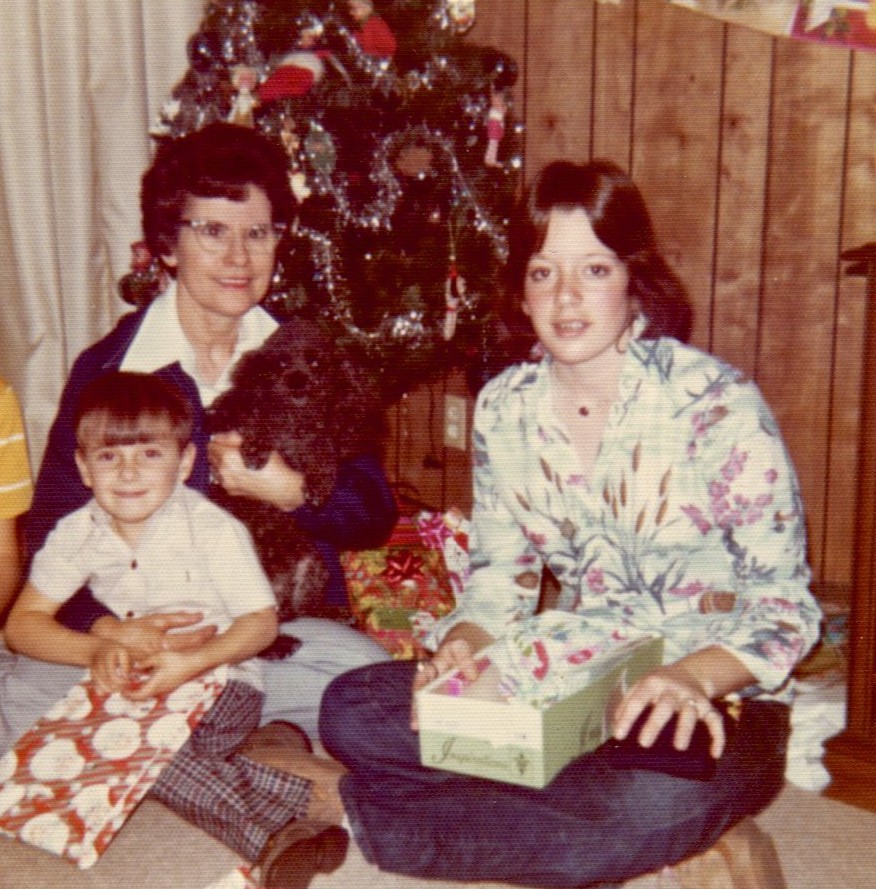
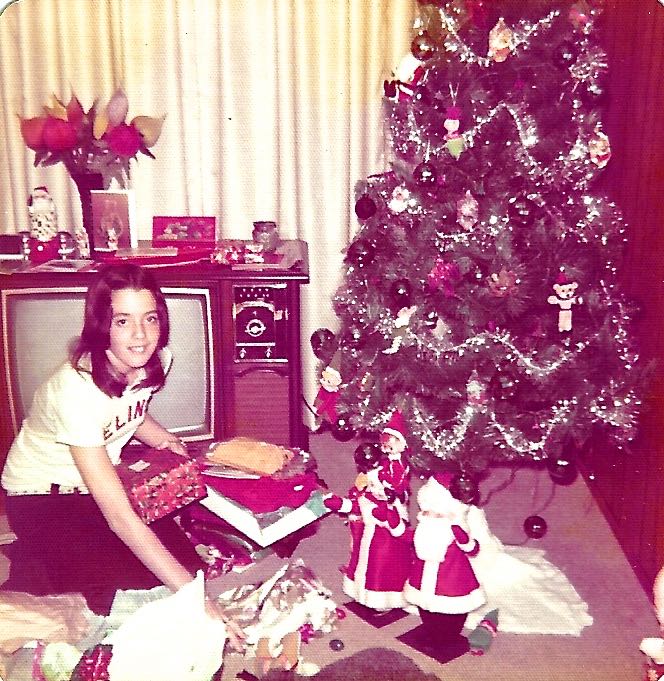
I’m 12 years old with my stepbrother Ricky and her dog Blackie

I was 10 or 11 years old with a large smile on my face. 

I would not have wanted Christmas any other way. My Granny was very religious and she would read the Bible every day, if I was there she would explain to me what she had read. What a blessing.

I pray you have a happy, healthy, and safe Christmas.

Melinda

Celebrate Life · Men & Womens Health

Let’s Celebrate Kwanzaa

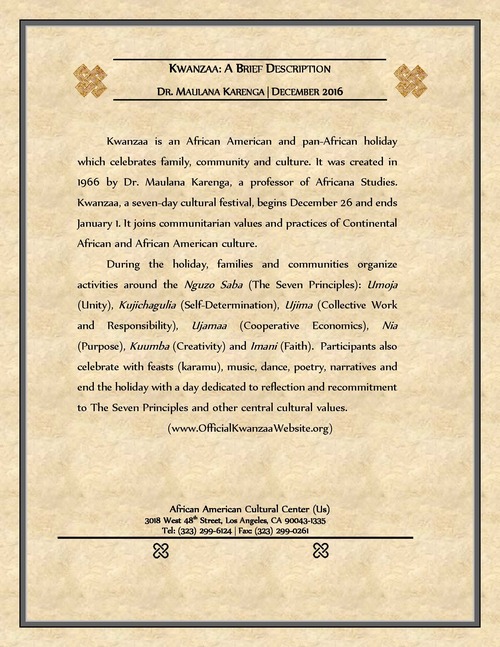
Kwanzaa is an African American celebration of family, community, and culture. It sounds like a spiritual holiday with plenty of celebrating. The holiday is not attached to any religion.

The graphic is from the African-American Cultural Center and can explain the holiday and its history.


I hope you are surrounded by family, friends, and good food as you celebrate Kwanzaa.

Melinda

Celebrate Life · Men & Womens Health

Jesus Is The Reason For The Season

Christians were blessed by God when he sent his only son, Jesus to earth to live as a man, to experience ongoing hardships, pain, and temptation. The mission was to teach Christianity to the world, and he did it through living by the word of God and a devoted group of people who helped spread the word.

I can’t imagine the strength of the Virgin Mary and Joseph, a pregnant virgin, unheard of, and shamed for it. As I look at the manger set I have, it hits my heart that Jesus was born in a barn with animals. What does that say to Christians? Do we need our mansions and designer clothes or Jesus in our hearts?

Mary Magdelain was a devoted believer and a part of Jesus’s inner circle and was the first to see Jesus after the resurrection. It fills my heart that a woman served him so closely. He showed the world that men and women were equal in his eyes.

Over time, Christmas was commercialized by retailers; now it’s about what presents we receive instead of the blessings we have. I doubt many children know about Jesus’s birth. It makes me cringe! That was not God’s doing, it was ours.

I want everyone who visits my blog to know I respect all religions in fact, my interest since high school has been World Religion. In fact, I wrote my senior high school paper on the Muslim Religion. Learning how many Christians were revered and the belief that Jesus was thought of as a Prophet blew my mind. If I remember correctly, Jesus and Mohammed were born 40 miles apart.

Three religions believe in God, Christians, Muslims, and the Jewish. We need to remember that as we judge each other. We are connected by God and need to embrace each other not judge and hate. 

I’m sending you wishes for a healthy and happy Christmas with friends and family spending time reflecting on God’s gift to us. 

Melinda


Celebrate Life · Fun

#Weekend Music Share- Free – All Right Now 1970 Official Live Video *Will Blow Your Mind

It’s the weekend!!!!!!

Free, Bad Company and Paul Rogers never disappoints. He’s one of the greats!

I’m so glad you’ve joined me this week for another edition of Weekend Music Share.

Have a great weekend!

Melinda

Welcome back to Weekend Music Share, the place where everyone can share their favorite music.

Feel free to use the Weekend Music Share banner in your post, and use the hashtag #WeekendMusicShare on social media so other participants can find your post.

Celebrate Life · Health and Wellbeing · Men & Womens Health · Mental Health

Deep Thoughts

In this fast-paced social media world, it can be difficult to find the time to look within or back in time. I hope you find these quotes and questions interesting. So glad you stopped by today!

Continue reading “Deep Thoughts”
Celebrate Life

Belated Hanukkah Blessings

I’ve been battling with my health for months leading up to spending four days in the hospital the week of Hanukkah. 

Hanukkah is a Holy time filled with family, friends, good food, and blessings. I’m not Jewish, and my understanding is limited, but I know we believe in the same God, and that makes us one in my eyes. 

I’m sending well wishes for today and every day. 

Melinda

Celebrate Life

José Feliciano – Feliz Navidad with Daryl Hall (Live From Daryl’s House)

I don’t understand the Spanish part but can’t live without this song every year.

Melinda

Celebrate Life · Health and Wellbeing · Men & Womens Health · Mental Health

How to Boost Your Mental Health When Encountering Burnout

Encountering burnout can be a challenging and often overwhelming experience. It typically results from prolonged stress and can manifest as emotional exhaustion, reduced performance, and a lack of motivation. Boosting your mental health during these periods is crucial to recovery and overall well-being. Here’s a comprehensive guide on uplifting your mental health when dealing with burnout.

Recognizing and Acknowledging Burnout

The first step in addressing burnout is recognizing and acknowledging its presence. Burnout can sneak up gradually, making it difficult to identify until it becomes severe. Common signs include constant fatigue, irritability, diminished job performance, and a general feeling of disillusionment. Acknowledging that you are experiencing burnout is not a sign of weakness but rather the first step towards healing and recovery.

Photo by Andrea Piacquadio on Pexels.com


Prioritizing Self-Care and Rest

Self-care is vital in combating burnout. This means prioritizing activities that replenish your energy and bring you joy. It could be as simple as reading a book, taking a long bath, or engaging in a hobby. The key is to engage in activities that are for you and about you.

Rest is equally important. This includes getting adequate sleep, as sleep deprivation can exacerbate symptoms of burnout. Creating a bedtime routine, ensuring your bedroom is a comfortable and calming space, and avoiding screens before bedtime can improve the quality of your sleep.

Setting Boundaries and Reducing Stressors

Setting boundaries is crucial in preventing and managing burnout. This might involve saying no to additional responsibilities, delegating tasks, or setting limits on your work hours. It’s important to communicate these boundaries to colleagues, friends, and family so they can support you in maintaining them.

Identifying and reducing stressors in your life is also important. This could mean reevaluating your workload, addressing conflicts, or changing routines that contribute to stress. While not all stressors can be eliminated, managing them effectively can significantly reduce their impact on your mental health.

Seeking Support and Building a Support Network

Dealing with burnout can be isolating, but you don’t have to go through it alone. Seeking support from friends, family, or colleagues can provide a sense of community and understanding. Sometimes, just talking about what you’re going through can be incredibly relieving.

In some cases, professional help may be necessary. This could be in the form of counseling or therapy, which provides a safe space to discuss feelings and develop coping strategies. Support groups can also be beneficial, providing a platform to share experiences and learn from others who are going through similar challenges.

Engaging in Physical Activity and Mindfulness Practices

Physical activity is a powerful tool in boosting mental health. Exercise releases endorphins, which have mood-boosting effects. It doesn’t have to be intensive; even a daily walk or light yoga can make a significant difference.

Mindfulness practices like meditation and deep breathing exercises can also be beneficial. They help in managing stress, improving focus, and fostering a sense of peace. These practices can be particularly helpful in moments of overwhelm, helping to ground and center you.

Considering Nutritional Supplements

In certain cases, nutritional supplements can support mental health. Products from science.bio supplements, for example, offer a range of supplements that can assist in managing stress and improving cognitive function. However, it’s important to approach the use of supplements cautiously and ideally under the guidance of a healthcare professional. Supplements should complement, not replace, other strategies such as a balanced diet, exercise, and adequate sleep.

Overcoming burnout and boosting mental health requires a multifaceted approach. It involves recognizing the signs of burnout, prioritizing self-care and rest, setting boundaries, seeking support, engaging in physical activity and mindfulness, and potentially incorporating supplements. Remember, recovery from burnout is a gradual process, and it’s important to be patient and kind to yourself as you navigate this journey.

This is a collaborative post.

Melinda