
Thank you for joining me for this week’s Friday Quote.
Melinda

Thank you for joining me for this week’s Friday Quote.
Melinda
This is such a fun video. I love Aerosmith and he is so talented. Let’s dance!
It’s the weekend!!!!!!
I’m glad you joined me for another edition of Weekend Music Share this week.
Have a great weekend!
Melinda
Welcome back to Weekend Music Share, the place where everyone can share their favorite music.
Feel free to use the Weekend Music Share banner in your post, and use the hashtag #WeekendMusicShare on social media so other participants can find your post.
If you have a stressful job, you might find that your mental health is taking quite a beating every now and then. The good news is that there are things that you can do to maintain your mental health even when you have a stressful job so that you don’t find yourself so close to burnout all of the time. Now, you might think this isn’t possible, but we can assure you it is. In this article, we’ll be talking about some of the ways you can succeed in doing this, so keep reading if you would like to find out more.

First, it helps if you ensure you have a job you like. If you’re constantly trying to manage your mental health but you’re stuck in a job that you hate, then this is going to make things harder. Stress can be handled, but the fact that you hate your job on top of this is going to make everything worse, and it’s going to make it more difficult to come out of the other side.
So, the first thing you should do is move into a job that you like. Even if you’re out there locking down mortgage protection leads, as long as you like it, you’re going to have a much better chance of maintaining your mental health in the long term. This will reduce the amount of stress that you feel already, as you will be happier in what you are doing!
Another thing that we recommend is that you learn some calming techniques. You want to look into things like breathing exercises so that you can step away from the situation when things start to become overwhelming. When this happens, it helps if you remind yourself of the things that make you happy, think about them, and bring some calm into your life. Stress can only be combated by calm, anything else is going to make it worse.
It might even be worth speaking to someone about how you are feeling as they may have some more suggestions on what you can do.
Last but not least, we know that it’s hard, but try not to stress yourself out too much. There’s a difference between working hard and spreading yourself too thin. Our recommendation is to find someone that you can look up to in your industry like Paul Ognibene in real estate development and look into their path to success. If you can plan out a course of action on how to get to where you want to be, you may find yourself becoming less stressed and more focused.
We hope that you have found this article helpful, and now see some of the things that you can do to maintain your mental health when you have a stressful job. You can keep a hold on your mental health without having to give up your job, helping you to live the best life possible! We wish you the very best of luck with this and hope that you see success in trying out these things.
This is a collaborative post.
Melinda
Repost
Addiction Rehab Treatment.com/mental-health/depression/
Depression and Bipolar Support Alliance
International Bipolar Foundation
National Institute of Mental Health
National SuicidePreventionLifeline.org
1-800-273-TALK (8255)
Press 1, Veterans Crisis Line USA
Press 2, Se Habla Español
LifeLine Chat
CrisisTextLine.org
Text 741-741
Facebook.com/CrisisTextLine
TheTrevorProject.org (LGBTQ Youth)
1-866-488-7386 (24/7/365)
TrevorChat (7 days/week from 3PM–10PM ET / noon–3PM PT)
TrevorText — text START to 678-678 (Mon–Fri, 3PM–10PM ET / noon–3PM PT)
Brain & Behavior Research Foundation (BBRFoundation.org): Awards grants for scientific research. Keep up to date on latest research
International Bipolar Foundation (IBPF.org): Bipolar research. Care and support resources for individuals and caregivers. Erase stigma through education.
MentalHealth.gov: US government mental health resources and information.
MentalHealthAmerica.net (MHA): Address needs of those living with mental illness. Promote mental health.
National Alliance on Mental Illness (NAMI.org): Build better lives for the millions of Americans affected by mental illness.
National Institute of Mental Health (NIMH.nih.gov): Federal agency for research on mental disorders.
NeedyMeds.org: 1-800-503-6897. Educates and empowers those seeking affordable healthcare.
Substance Abuse and Mental Health Services Administration (SAMHSA.gov): Reduce the impact of substance abuse and mental illness on America’s communities.
To see the complete list of resources click here.
Melinda
I’m glad you joined me on Wordless Wednesday and I hope to see you soon.


I have only heard of Thanksgiving and Christmas Catus but mine is starting to bud and have flowers in March. The flowers are beautiful but it’s so confusing why it’s blooming now.
Melinda
KSAT.COM
Jared Hoehing, ProducerPublished:
Behavioral science expert gives some ways to help your child beat separation anxiety

NEW HAVEN, Conn. – According to the National Institutes of Health, the numbers of kids and adolescents struggling with anxiety, depression, and other mental health conditions have been steadily on the rise. Cognitive-behavioral therapy, which teaches the child coping skills, and medication may help. But for some kids and their families, there is little relief. Now, researchers are studying a new method that helps parents help their children.
Bedtime for some families can become a struggle. But when the goodnight routine for Nicole Murphy’s son began to stretch for up to three hours, she knew she needed help with his separation anxiety.
“His little mind was always racing nonstop. So, it was kind of hard for him to shut that off, I think,” Nicole explained.
Eli Lebowitz, Ph.D., Psychologist, Yale School of Medicine Child Study Center, and his colleagues, developed a method of training parents to support anxious children. It’s called SPACE, or supportive parenting for anxious childhood emotions. Parents go through training to help their child face anxiety. Lebowitz says the first step is to show support and not downplay what their child is feeling.
“I get it. This is really hard, but I know you can handle it,” shared Dr. Lebowitz.
Lebowitz said parents also learn to help their children by not accommodating them. For example, a parent who would limit visitors for a child who gets anxious around strangers, or speaks for a child who gets nervous speaking, learns not to take those steps. In a study of 124 kids and their parents, the Yale researchers examined whether SPACE intervention was effective in treating children’s anxiety.
“Even though the children never met directly with the therapist and all the work was done through the parents, we found that SPACE was just as effective as CBT in treating childhood anxiety disorders,” stated Dr. Lebowitz.
The Murphy’s used the techniques learned through SPACE to coach their son through bedtime. Within a few weeks, he was falling asleep in 30 minutes.
“For us, it was like life-changing, honestly,” smiled Nicole.
Melinda
Repost
For a complete list of resources visit Organizations That Can Help.
Melinda
Thank you for all the great feedback on the Blogger Highlight series. I’ve enjoyed meeting each blogger and sharing their site with you. This week, we highlight Taking Each Day Free. Liz’s writing is inspiring, and will leave you wanting more.
My name is Liz and I have been blogging a good number of years, whether its using the WordPress or Blogger platform.
I decided to write this blog, to share some of my life journeys.
Taking each day as it comes is the only way I can tackle life and it has been this way for some time. Each day I am free to do as I please. I have no one to answer to, but myself. So hence the title of this blog, “Taking Each Day Free.”
Liz has had a long and difficult journey to getting a cochlear implant.
For my cochlear implant, everything is under the tag “My-Cochlear-Implant-Journey. At the moment, I don’t have my CT scan results. So until I have those, I don’t know if it will still be happening. It all depends on my CT scan results.
I have added the link below for my tag link:
https://takingeachdayfree.wordpress.com/tag/my-cochlear-implant-journey/
M. How has blogging changed your life?
L. I have been blogging for much longer than the years, writing my current blog. But it’s always served the same purpose:
• Being therapeutic
For keeping in touch with friends near and far.
M. What is your favorite post and why?
L. My favourite post is a hard one to pick. But I think my favourite post is one I wrote this year, “What makes you feel good?” This one is my favourite post because it serves as a reminder to me what things I need to keep doing that make me feel good both physically and mentally, along with my other physical exercises I do that I have mentioned in other posts.
https://takingeachdayfree.wordpress.com/2025/02/12/what-makes-you-feel-good/
Be sure to stop by Liz’s blog, say hello and enjoy reading her archives.
Melinda
Welbeck Publishing Group kindly gifted me The Smart Girl’s Handbook by Scarlett V Clark for review. Scarlett V Clark was 19 when she started her passion project which is now the UK’s largest Women’s Empowerment organization. Scarlett states she is just a girl who decided to go for it. Go for it she did! Today she helps millions of women overcome life’s obstacles which allows them to live to their full potential.

Giving women the tools they need to shine in the modern world, become their fearless and authentic self, and design the life and career that fills them with joy. The Smart Girls Handbook brings together inspiration, game-changing ideas, and empowering words from women around the world who have been through it all.
Scarlett V Clark is a speaker and the award-winning founder and CEO of Smart Girl Tribe, the UK’s number one female empowerment community. She is available to provide extracts and top tip features such as:
• How my toxic relationship became the catalyst to my success
• 6 stress busters to stop feeling anxious
• ‘You grow through what you go through’: embracing failure
• How to silence your inner ‘mean girl’
The Smart Girl Handbook is for women who are tired of being told what dress size they should be, tired of the negativity surrounding them today, including from other women, and for women who want to be their authentic selves. Life happens, and it’s not always pretty, but with a backbone, determination, and the guidance of The Smart Girl’s Handbook, you can come through unscathed, just slightly bruised but not battered.
Learn not to fall into the traps set out there to trip you up. Life around us is very negative, with news outlets, social media, and even toxic friends. You must learn to rise above the negativity, and Scarlett helps you silence your inner mean girl. The Smart Girl Handbook is all the questions you wish you could have asked when you were younger but had no one or place to turn for the answers.
I encourage every woman to buy Scarlett’s book, The Smart Girl’s Handbook. Maybe even share one with a friend. This is not your average self-help book that has been regurgitated over and over. She’s witty, original, and honest about the problem and how to get the answers. She’s not sharing pie-in-the-sky stories; this is her life, dissected and laid out for you to learn from. I think The Smart Girl book is an excellent primer for moms to help their daughters navigate the rough waters ahead.
Website: www.smartgirltribe.com
Facebook: Smart Girl Tribe
Instagram: @smartgirltribe
Podcast: ‘The Smart Girl Tribe Podcast’ is available on Podbean, Spotify, iTunes, and anywhere you can find podcasts.
Hi Melinda,
I am the author of The Smart Girls Handbook and I have to be honest, I cried when I read your review, it’s the first one that came in and you nailed the precise mission I wanted the reader to get out of the book. It would be brilliant to connect further but on launch day (March 4th) I’d love to invite you to share a review on Amazon knowing how inspiring you found it! I really think you could help mothers and other women in purchasing it. My entire business has been built on the idea of women fundamentally deserve more from the media and are fully deserving of living a beautiful life full of confidence, ambition and self-worth. I can’t wait to hear your thoughts, Scarlett X CEO/FOUNDER
We are Welbeck Publishing Group – a globally recognised, independent publisher based in London. Our mission is to deliver talent-driven publishing with leading authors and brands worldwide. Our books and products span a variety of categories including, fiction, non-fiction and stationery and gift. We are renowned for our innovative ideas, production values, and developing long-lasting content.
Welbeck’s amazing product comes to life for adults, children, and families in over 30 languages in more than 60 countries around the world. We have collaborated with many of the world’s leading institutions and licensors including – Disney, Universal, Paramount, HBO, Queen Productions, FIFA, International Mensa, Roald Dahl Literary Estate, the Science, Natural History and Imperial War Museums, and Royal Botanic Gardens, Kew.
Melinda
Repost from 2021
It’s the weekend!!!!!!
I’m glad you joined me for another edition of Weekend Music Share this week.
Have a great weekend!
Melinda
Welcome back to Weekend Music Share, the place where everyone can share their favorite music.
Feel free to use the Weekend Music Share banner in your post, and use the hashtag #WeekendMusicShare on social media so other participants can find your post.
Thank you for joining me for this week’s Friday Quote.

Melinda
Every parent wants their kids to live a healthy and happy life, but they cannot expect their kids to understand all of this themselves. They are not the ones buying the food or paying for clubs and activities, which is why it’s so important for parents to know how to encourage a healthy lifestyle. If you want to ensure your kids grow up big and strong, consider these tips.
Your kids will not be able to live a healthy lifestyle if you don’t make healthy living accessible. Filling the home with candies and fatty foods will not do anyone any favors, so it’s worth buying whole foods that are good for their development and mental well-being to ensure they get into good habits early. It can be challenging to change children’s habits as they grow older if they haven’t been exposed to fruits and vegetables already, so establishing this kind of diet early can make a world of difference.
Similarly, parents need to lead by example. It’s not enough to push healthy foods or habits onto your kids if you don’t do the same, especially as they will look to you as an example. Besides this, you should also avoid common food mistakes that force kids to eat things they might not like, as this will only promote a negative association and could even impact their trust as they won’t feel comfortable eating what you serve them in case you’ve hidden other foods inside.
Healthy living is about what they eat and how they spend their time. Kids naturally need (and want) to burn off energy, so channeling this through sports and activities is an excellent way to introduce them to sports they may play for the rest of their lives. However, while you might want your child to be the next big football star, remember they might not share your interests. Instead, let them explore different sports to find one they love.

A healthy home is a cornerstone of a healthy lifestyle, so understanding how to create this environment is essential. Keeping the space clean and tidy is vital, as is cultivating a positive and supportive environment. Let your kids feel comfortable sharing their stories and feelings, and ask about their day to ensure they can see the value in being open and honest about their lives rather than trying to hide things from you.
Many kids can be scared of a doctor or dentist, but they need to understand how important regular healthcare and checkups are. You can help them by familiarizing them with medical professionals so they feel at ease. Besides typical doctors, treatment from physiotherapists, opticians, and chiropractic care are also important and can help your kids treat and overcome a variety of potential health issues as they grow up.
Healthy living can seem tricky for many parents, especially if they don’t have the time to put together lavish meals or cannot afford to buy their kids the newest sports gear. Still, these tips can make it easier for you to establish a healthy base that teaches your kids all they need to know about a healthy lifestyle.
This is a collaborative post.
Melinda
Repost
I was kindly gifted The Joy of Selfish by Michelle Elman from WelBeck Publishing Group for an honest review. The book was released earlier this month, and the timing is perfect. This is a must-read for everyone.
When I saw the press release for the book, I knew this book was going to be a great seller. Most people know that taking care of themselves is important, but they don’t consider it critical to their health. Well, it is. If you keep putting yourself behind others and the daily tasks you have, you’ll never get around to yourself. You have to plan and prioritize, and most importantly, you have to buy in 100%.
It doesn’t matter if you’re chronically ill, a mother of five, just retired, or a college student; you need this book. It’s never too late to set boundaries for your life and create the life you want and envision.
Michelle Elman is a five-board accredited life coach, award-winning activist, author, and podcaster. In 2020, she was named one of the Top 50 most inspirational women in the UK and is respected globally for her work as a body positivity influencer, best known for her ‘Scarred not Scared’ campaign.
Michelle has over 300k followers across Instagram and Tik Tok and has been a guest on media outlets, including Sky News, Channel 5 News, Loose Women, and BBC Radio London. She’s written for publications including HuffPost, Grazia, Metro, and Stylist. Recently, she coached Emily Atack on her series ‘Adulting’ and appeared on Geordie OGs to discuss online bullying and its impact on mental health. She was also featured in the BBC3 documentary Being East Asian, which aired earlier this year. Michelle’s podcast, In All Honesty, is available on Acast. Her first book, Am I Ugly?, was published in 2018.
The Joy of Being Selfish redefines selfishness as a positive act, allowing us to love ourselves and those around us authentically without apology. It explores the different types of boundaries, offers tips on how to start setting them, and helps with the quilt of felt after boundaries are put into place.
Learn how to deal with her being disliked, common responses to boundaries, dealing with invitations, block/mute/delete-how to limit information, learning to express yourself-and most importantly using you inane power to start a new life.
The idea of taking care of ourselves is being selfish is outdated and ridiculous. If we do nothing but give until we are depleted, who is going to take care of us, let alone our loved ones? I can’t agree with Michelle more on this message. Self-care is not selfish, and if it is, then get selfish.
In 2015, Michelle was a Life Coach at Crossroads in the direction of her career focus. She decided to see a Business Coach. Little did she know this chance meeting would make her future very clear, and she set out on a mission to accomplish her new goals.
The Joy of Selfish is a tool for anyone who needs guidance in setting boundaries. dealing with guilt and self-sabotage, and help with dealing with the outside influences that try to throw you off track.
The Joy of Selfish is a book for everyone, every age, every gender. We can’t be our best selves for others if we don’t take care of ourselves first.
We are Welbeck Publishing Group – a globally recognized, independent publisher based in London. Our mission is to deliver talent-driven publishing with leading authors and brands worldwide. Our books and products span a variety of categories, including fiction, non-fiction, stationery, and gifts. We are renowned for our innovative ideas, production values, and long-lasting content.
Welbeck’s amazing product comes to life for adults, children, and families in over 30 languages in more than 60 countries around the world. We have collaborated with many of the world’s leading institutions and licensors including – Disney, Universal, Paramount, HBO, Queen Productions, FIFA, International Mensa, Roald Dahl Literary Estate, the Science, Natural History and Imperial War Museums, and Royal Botanic Gardens, Kew.
Melinda Sandor
Repost from 2021
llness invalidation by medical professionals—sometimes called “gaslighting”—is an underappreciated and understudied problem in Lyme disease.
Many Lyme disease patients complain not only of fighting to recover their health but also of fighting to be believed by health care practitioners.
Expecting to receive understanding and proficient care from medical professionals, many instead experience having their persistent debilitating symptoms dismissed, minimized, disbelieved and/or psychologized.
How common is the occurrence of medical gaslighting in Lyme disease? Is illness invalidation by medical professionals related to disease severity? Are there specific constituencies who are being affected more than others?
These are some of the questions that a team of researchers led by Alison Rebman, MPH, Assistant Professor in Medicine and Director for Clinical and Epidemiological Research at the Johns Hopkins Lyme Disease Research Center at Johns Hopkins Medicine, set out to identify and quantify in a cohort of well-characterized Lyme disease patients.
The Johns Hopkins study, published in August 2024 in Scientific Reports, finds that invalidating encounters with medical professionals are common for post-treatment Lyme disease (PTLD) patients, particularly women and younger patients, and also are linked to higher illness severity.
Lyme disease is the most common tick and vector-borne disease in the US with about 500,000 new cases per year. Lyme infections are expanding geographically, and acute and chronic cases are on the rise in the US and Eurasia. Lyme infection-associated chronic illness affects around 2 million Americans and can be difficult to properly diagnose and effectively treat.
A Lyme infection can affect multiple body systems including musculoskeletal, neurologic, and cardiovascular. Patients with early diagnosis and appropriate treatment usually get better. However, about 10-20% of patients even when treated promptly with standard of care antibiotics do not return to health and are functionally impaired by persistent musculoskeletal pain, crushing fatigue, and cognitive dysfunction, known in the research setting as post-treatment Lyme disease (PTLD).
Patients frequently refer to this as “chronic Lyme.” Misdiagnosis and delayed treatments further increase the risk for PTLD as well as for more broadly defined community-based Lyme infection-associated chronic illness or “chronic Lyme.”
In the Johns Hopkins study, 49% of the PTLD patients reported a lack of understanding and 29% experienced discounting from medical professionals. Additionally, women and younger patients were at higher risk for experiencing more invalidation than men or older age patients.
The study found, “Before their initial diagnosis of Lyme disease, approximately half (51.3%) had first been told that their symptoms represented another illness or condition. This high rate is consistent with the hypothesis that diagnosis and treatment delays, and possibly exposure to inappropriate treatment, may be risk factors for PTLD.”
Women more often received alternative diagnoses (such as another contested illness like fibromyalgia or ME/CFS and/or a psychological illness) which in turn correlated with more discounting and lack of understanding. PTLD patients who reported the highest levels of illness invalidation were discovered to have greater symptom severity, lower quality of life, and less trust in physicians.
The pervasiveness of Lyme disease illness invalidation and the consequential negative effects on illness burden and health outcomes are not broadly known by medical professionals.
Improved physician education is needed to help engender more patient-centered paradigms that incorporate the patient illness experience and better recognize how that experience may impact the healing process.
The National Academies of Sciences, Engineering and Medicine (NASEM) has helped validate infection- associated chronic illnesses as being significant public health problems that need greater national attention, a coordinated strategy, and considerably more federal resources.
NASEM held its first national workshop on infection-associated chronic illnesses (IACI) in June 2023 to explore overlapping symptoms and biologic pathways for IACIs including Lyme disease, long COVID, ME/CFS, MS, and others.
In July 2024, a follow-up NASEM meeting focused specifically on Lyme infection-associated chronic Illness. Both forums discussed the importance of listening to and incorporating patients’ illness experience perspectives into improving diagnostic and treatment approaches. For example, patient-driven data such as MyLymeData can be leveraged to improve research and clinical care. It is vital to listen to patients especially when diagnostics are problematic, treatments are inadequate, and the science is contested or evolving.
Building upon insights and collaborative momentum from the NASEM IACI meetings, a coalition of advocates (patient, scientific and medical) are now calling for the creation of a new National Institutes of Health (NIH) office to help strengthen and coordinate research across infection-associated chronic conditions and illnesses including Lyme infection-associated chronic illness, Long COVID, ME/CFS, PANS/PANDAS, POTS/dysautonomia and others.
Listening to patients will be key to advancing solutions, reducing invalidating patient-practitioner encounters, and improving health outcomes.
Nancy Dougherty is an education and communications consultant for the Johns Hopkins Lyme Disease Research Center. Other research investigations at the Center include Pilot Treatment Trials and the SLICE Studies.
Melinda
Damon has exciting posts that always make me stop and think. Be sure to stop by and say hello.
Melinda
It’s the weekend!!!!!!
I’m glad you joined me for another edition of Weekend Music Share this week.
Have a great weekend!
Melinda
Welcome back to Weekend Music Share, the place where everyone can share their favorite music.
Feel free to use the Weekend Music Share banner in your post, and use the hashtag #WeekendMusicShare on social media so other participants can find your post.
Thank you for joining me for this week’s Friday Quote.
Melinda
I have been battling depression for several months. I have Treatment Resistant Biplor Disorder. What that means is many medications don’t work on me, or if they do, they stop working at some point. I have been dealing with this up and down since 1992.
One of the medications I started in the Spring, which was working wonders, stopped working. I’ve been working closely with my Psychiatrist to change doses, but nothing is working. He increased the dose today on one of my medications, and I’m always positive it will work. My fingers are crossed.
I’m sure you’ve noticed I have been posting less; I can’t wait to get back to myself.
If your medications stop working, don’t abandon your medications, call your doctor and get the attitude that the next drug will work. You can’t do it alone.
Melinda
Melinda
It’s the weekend!!!!!!
I’m glad you joined me for another edition of Weekend Music Share this week.
Have a great weekend!
Melinda
Welcome back to Weekend Music Share, the place where everyone can share their favorite music.
Feel free to use the Weekend Music Share banner in your post, and use the hashtag #WeekendMusicShare on social media so other participants can find your post.
It’s the weekend!!!!!!
I’m glad you joined me for another edition of Weekend Music Share this week.
Have a great weekend!
Melinda
Welcome back to Weekend Music Share, the place where everyone can share their favorite music.
Feel free to use the Weekend Music Share banner in your post, and use the hashtag #WeekendMusicShare on social media so other participants can find your post.
Thank you for joining me for this week’s Friday Quote.

Melinda
He’s also been called out for only having the bars of a Navy commander, but the so-called cap’n held his ground on Twitter, arguing that captaining the S. S. Guppy with his crew “makes an official Cap’n in any book!” For more fun facts, find out other characters you didn’t know had full names.
Its receipts say “Store Number 1” instead of “Starbucks,” and its workers need an escort to leave their work posts. Find out why “Pequod” was almost the name for Starbucks.
Their dark bluish black color is probably to prevent sunburn.
Montpelier, Vermont, doesn’t have any of those Golden Arches. It also happens to have the smallest population of any state capital, with just 7,500 residents. Find out the farthest you can possibly be from a McDonald’s in the United States.
Scholars think Hernán Cortés brought the seeds in 1519 with the intent of the fruits being used ornamentally in gardens. By the 1700s, aristocrats started eating tomatoes, but they were convinced the fruits were poison because people would die after eating them. In reality, the acidity from the tomatoes brought out lead in their pewter plates, so they’d died of lead poisoning. These facts about our world are so surprising, they’re hard to believe.
Studies have indicated rats dream about getting to food or running through mazes. Most mammals go through REM sleep, the cycle in which dreams occur, so scientists think there’s a good chance they all dream. Here are 13 more interesting facts about dreaming.
Percy Spencer was working as a researcher for American Appliance Company (now Raytheon) when he noticed a radar set using electromagnetic waves melted the candy bar in his pocket. He had the idea to make a metal box using microwaves to heat food, but the company was the one to file the patent. He received a $2 bonus but never any royalties. Here are 16 more random facts about money.
The high temperatures make the iron expand. Don’t miss these other 19 Eiffel Tower facts you never learned before.
A cattle rancher in New Jersey is credited for inventing glitter, and it was by accident. Henry Ruschmann from Bernardsville, New Jersey was a machinist who crushed plastic while trying to find a way to dispose of it and thus made glitter in 1934.
Victor Frankenstein’s Creature is actually vegetarian. Frankenstein and Creature are fictional characters created by Mary Shelley in her novel, Frankenstein. In the novel, Creature says, “My food is not that of man; I do not destroy the lamb and the kid to glut my appetite; acorns and berries afford me sufficient nourishment.”
So glad you are enjoying these post, I love hearing your hilarious comments.
Melinda
Repost
I’m glad you joined me on Wordless Wednesday and I hope to see you soon.


A tray from my collection. Stay tuned for more. I received this one for Christmas.
Melinda
Thank you for all the great feedback on the Blogger Highlight series. I’ve enjoyed meeting each blogger and sharing their blog with you. This week, we highlight Love, Life, Happiness, and More. Tina started blogging in 2020 and has never looked back. She has a big heart, and one of the goals of her blog is to motivate and inspire. We have not followed each other long but she always brightens my day.
Let’s chat! marriage, love, daily motivation, uplifting, self-love & more
M. What is your favorite post and why?
T. My favorite post would be Thankful Thursday. I have dedicated Thursday’s to expressing my gratitude for GOD blessings.
M. What was the catalyst that made you decide to start a blog?
T. Starting a blog meant I could start writing. I knew it would be putting myself out there like never before but, I was excited and ready. What the world needs is love, motivation, and peace and that’s what I love blogging about.
Read Tina’s Thankful Thursday post from 2/13/25 HERE.

One of my favorite posts from 2024 is If someone..
The post is about helping someone who seems down or having trouble. Be the rock for them. The message reminds us to think about others.

Stop by and pull up a chair to read through her archives, you will leave inspired.
Melinda
No one knows how to push your buttons like your family does. Here are some strategies for navigating challenging family dynamics and setting boundaries to help you get through difficult family gatherings unscathed.
Dreading an upcoming family gathering with your relatives? Learn from experts on how to navigate get-togethers with challenging family members, set healthy boundaries, and use confrontation as a positive tool to make the next family reunion a lot more bearable.
For many people, getting together with family can be a contentious time. At dinnertime, you may get into family drama about politics and current events. And then comes dessert, along with the open forum about why you haven’t settled down yet. (But Aunt Edna knows a nice boy you should meet!) And on yes, what exactly are you doing with your career these days? Because your perfect cousin Jennifer is a surgeon. Did you know that?
The election might be over, but the politically charged conversations at the family table are far from done. And then comes dessert, along with the open forum about why you haven’t settled down yet. (But Aunt Edna knows a nice boy you should meet!) And, oh yes, what exactly are you doing with your career these days? Because your perfect cousin Jennifer is a surgeon. Did you know that?
Ah, family. It’s not that they’re toxic — it’s just that they’re not always your cup of tea, yet you still like (maybe even love?) them enough to pay them a visit.
But what if this year could look more like a Norman Rockwell painting and less like the Jerry Springer show?
While we can’t make any promises, we do have some strategies that will help you stay as unruffled as possible — even when Aunt Edna asks for the fiftieth time why you aren’t married yet.
Before you go, do some journaling. Think and write about the issues in your family that tend to be the most triggering, especially during the holidays or other so-called “special” occasions that can feel anything but special.
“What you don’t want to do is to get drawn in, and that’s really easy for all of us because no one can push our buttons like our family members. They know us, grew up with us, know our weak links, so they will consciously or unconsciously push those buttons,” says Dr. Carla Marie Manly, a clinical psychologist and author of Joy from Fear, whom DailyOM interviewed for this story.
Use your journal to write down all the hot spots that you know will trigger you, such as unwanted comments about your appearance, career, love life, or political beliefs. “When you’re more aware of these hot spots and how you will navigate them, you will be able to approach them from a place of observing and not judging,” Dr. Manly explains. “That’s an important piece. When we judge, we get ‘hooked in’ and our emotions get hot.”
Boundaries will only be as strong as your willingness to follow through on the consequences if your boundaries are crossed.
While you have your journal out, your next task is to begin the crucial work of setting boundaries, starting with a list of what you value most.
“Boundaries are easier to create when you know what you’re protecting,” Kathryn Ely, a licensed professional counselor and founder of Empower Counseling & Coaching, tells DailyOM.
Ely suggests using a framework where you journal about your value in each of the following eight categories: mental health and physical well-being; your intimate love relationship; parenting and family; friends and community; career and finances; spirituality and faith; learning and self-growth; and adventure and leisure.
“When you determine what is most important to you in [these eight categories] of your life, that becomes your compass. Every action either takes you closer [to] or farther away [from what you value]. It becomes your guide for the boundaries you need,” says Ely.
Now, here’s the key part: Boundaries will only be as strong as your willingness to follow through on the consequences if your boundaries are crossed. “When you’re creating boundaries, it’s imperative to know the consequences. It does no good to create a boundary if you don’t enforce it,” says Ely.
That means clearly communicating with challenging family members what that boundary is and what will happen if they don’t respect it.
Manly suggests a “three-strike rule” when communicating and enforcing boundaries.
If someone crosses your line, make it clear that they have crossed it and politely ask that they not do it again. If they do, you will leave. (Strike one.)
If it happens again, remind them that they have crossed your line and to please not do it again. If they do, you will leave. (Strike two.)
If it happens for the third time, that’s strike three, and it is crucial that you follow through with your ultimatum. Make it clear this was the third time and that you are now leaving. Also, make it clear that you will be taking a week (one month, three months, however long you decide) of silence from them. And it’s okay to need more time even after that time passes, says Manly.
Honesty about your feelings and strong communication will always be your best allies when it comes to dealing with parents or in-laws, especially when they still treat you as a child and have trouble respecting how you have changed and grown. And it’s best to tackle that elephant in the room prior to the event.
One of Ely’s tactics is to ground your tough conversations in a place of love and respect. This is particularly helpful to remember if you’ve had negative experiences with confrontation in the past. But, as Ely notes, confrontation can be very beneficial to a relationship when you approach it with compassion and honesty.
For example, says Ely, if you have a parent who has difficult expectations of you, the confrontation might look like this:
“I love you and I’m sure you mean well, but when you say things like x, y, or z, it makes me feel like my results are more important to you than how I feel as a person, and that’s not okay with me. We’re going to have to do things differently moving forward. If this happens [insert the thing they say or do here], then this will happen [insert what the consequence is for breaking that boundary here].”
Another helpful strategy is to role-play as many scenarios and conversations that could arise during an event with difficult parents or in-laws ahead of time. You can do this with your partner, a trusted friend, or even yourself in front of a mirror.
“With family, it’s hard to keep our emotional regulation in check,” says Manly. “[Role play] gives you a chance to practice in a safe environment and helps you determine at what point you’ll walk away.”
Manly also suggests practicing this one simple, yet effective response to disarm any unwelcome comments: “I see your perspective. Thank you for sharing that.”
Having grown up under the same roof, siblings have a way of getting under each other’s skin like no one else can.
Something to help keep your emotional regulation in check around challenging family members such as siblings is to identify what they may use as “bait” to rock the boat, notes Manly. Perhaps it was a nickname they tease you with or a memory they know will make you hot with embarrassment.
When you can recognize that and calmly detach yourself from their “hook” by reminding them of your boundary (and perhaps giving them a “strike”), the better you’ll be able to stay composed and in control.
Also, it’s useful to recognize that all of your emotions are good, explains Manly. It’s how you use those emotions that can make an outcome either positive or negative. Anger, for example, is “telling us that our boundaries are being crossed,” she says.
When you feel that anger, recognize it or — better yet — communicate it. One way to do that: “I feel angry [or hurt] when you say that. I would prefer you do this [insert your desired outcome] in the future,” says Manly.
Again, don’t be afraid to follow through with your three-strike rule if your boundary isn’t being respected.
One of the best ways to deal with extended family? Step into the background and become “a fly on the wall,” suggests Manly. Stay quiet and observe the family dynamics, the conversations, what “bait” is triggering other people. Being an observer rather than a participant will help you detach yourself from any difficult behavior they might be exhibiting and see it as an extension of their own baggage.
Manly also suggests taking timeouts as often as needed. If you’re feeling triggered (but aren’t ready to make an exit quite yet), find a quiet place for a deep breath, perhaps in the kitchen.
“I love being in the kitchen and being the first person to clear the plates,” Manly says with a laugh. “Especially for introverts, going to the kitchen for a timeout, which is my go-to, is absolutely okay and healthy because you’re saying, I’m getting overloaded. You’re still part of the gathering, but you get your peace and quiet. Or go for a short walk. A lot of this is about self-care.”
Is there anyone in your family you actually enjoy seeing and having a conversation with? Be clear about what you want from a gathering on a personal level and make that your focus.
“Let what you want be the driving factor, not what you don’t want, so that [challenging] person doesn’t get all the power and ruin the occasion for you,” says Ely. “Ask yourself: ‘What do I want to say that I did at the end of this [event]? Who is the person I want to be in this situation?’ And then refuse to let those [challenging] people get in your way of doing that, even if you have to step outside or take a timeout — whatever you need to do in that situation to keep your focus on the positive parts for you.”
It doesn’t even have to be a person. The positive thing you focus on can also be your mom’s apple pie — whatever it takes to make it through. And knowing that you got through a challenging family event with both your self-respect and sanity intact will make that apple pie even sweeter.
Melinda
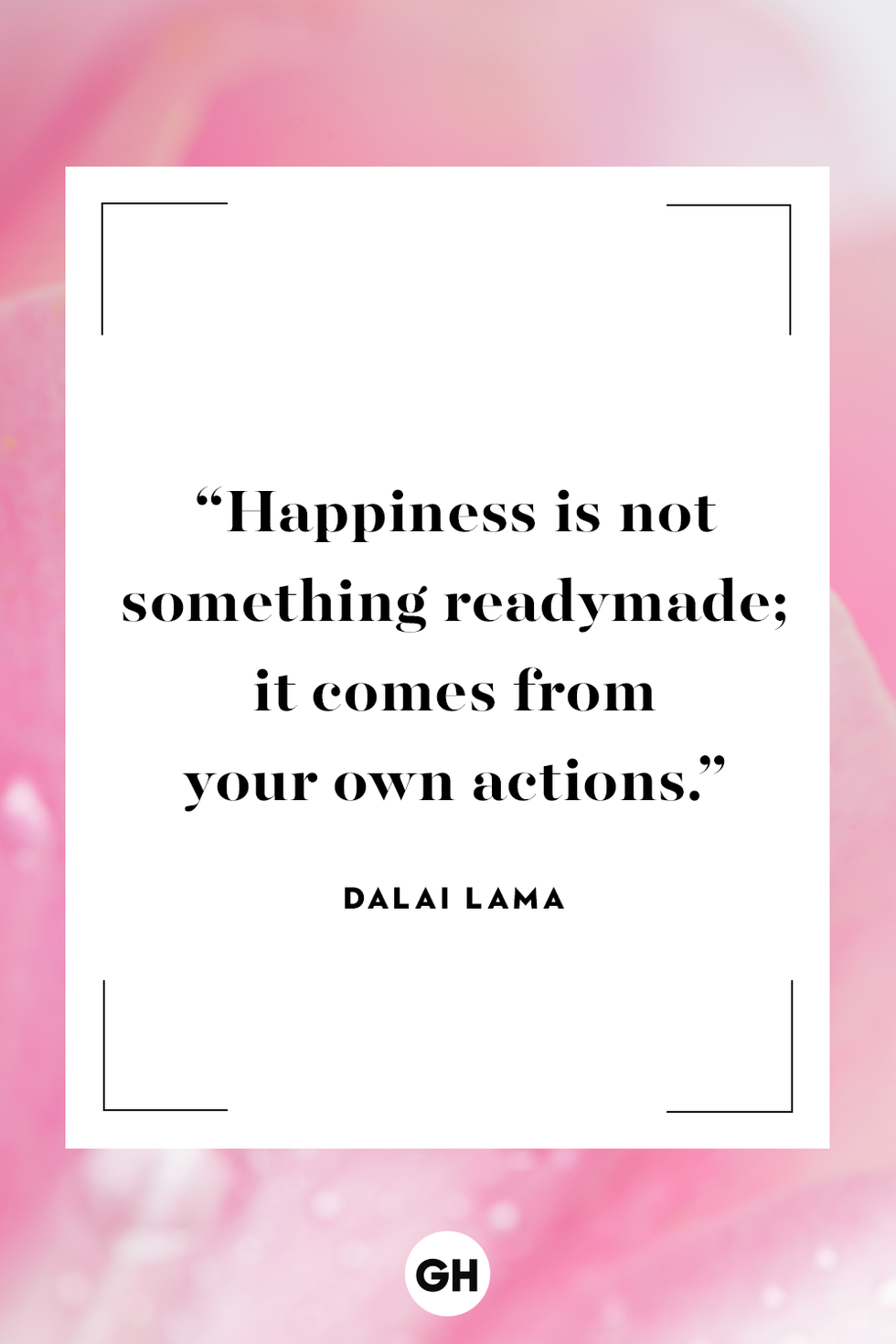
Thank you for joining me for this week’s Friday Quote.
Melinda
It’s the weekend!!!!!!
I’m glad you joined me for another edition of Weekend Music Share this week.
Have a great weekend!
Melinda
Welcome back to Weekend Music Share, the place where everyone can share their favorite music.
Feel free to use the Weekend Music Share banner in your post, and use the hashtag #WeekendMusicShare on social media so other participants can find your post.
Dec 15, 2017 / Bill Bernat
When I lived with severe depression and social anxiety, I found it extremely difficult to talk to strangers. Yet the one conversation that uplifted me more than any other occurred in the dining hall of the mental health wing of a mountain-town hospital. I met a woman who told me that a few days earlier, she’d driven her Jeep Wrangler to the edge of the Grand Canyon. She sat there, revving the engine and thinking about driving over.

She described what had been going on in her life in the days and months leading up, what her thoughts were at that exact moment, why she wanted to die, and why she didn’t do it. We nodded and half-smiled, and then it was my turn to talk about my journey to our table in that fine dining establishment. I had taken too many sleeping pills. After the doctors treated me, they were like, “Hey, we’d love it if you would be our guest in the psych ward!”
That day, she and I talked shop. She allowed me to be deeply depressed and simultaneously have a genuine connection to another person. For the first time, I identified as someone living with depression and I felt, oddly, good about it — or rather, like I wasn’t a bad person for having it.
Now, imagine one of the people at that table was a member of your family or a close friend who told you they were really depressed. Would you be comfortable talking to them?
Depression doesn’t diminish a person’s desire to connect with other people, just their ability.
The World Health Organization says that depression is the leading cause of ill health and disability worldwide, affecting more than 300 million people. In the United States, the National Institute of Mental Health reports 7 percent of Americans experience depression in a year. But while depression is super common, in my experience most folks don’t want to talk to depressed people unless we pretend to be happy. So we learn to put on a cheerful façade for casual interactions, like buying a pumpkin spice latte. The average barista doesn’t want to know that a customer is trapped in the infinite darkness of their soul.
Depression doesn’t diminish a person’s desire to connect with other people, just their ability. And despite what you might think, talking to friends and family living with depression can be easy and maybe fun. Not like Facebook-selfie-with-Lady-Gaga-at-an-underground-party fun — instead, I’m talking about the kind of fun where people enjoy each other’s company effortlessly, no one feels awkward, and no one accuses the sad person of ruining the holidays.
There’s a chasm that exists. On one side are people with depression, and on the other side is everyone else and they’re asking, “Why you gotta be so depressed?”
I’ve noticed there’s a chasm that exists. On the one side are those people living with depression, who may act in off-putting or confusing ways because they’re fighting a war in their head that nobody else can see. On the other side is everyone else, and they’re looking across the divide, shaking their heads, and asking, ‘Why you gotta be so depressed?’
I began battling depression when I was eight, and decades later, to my surprise, I started winning that battle. I shifted from being miserable much of the time to enjoying life. Today I live pretty well with bipolar disorder, and I’ve overcome some other mental health conditions, like overeating, addiction and social anxiety. As someone who lives on both sides of this chasm, I want to offer you some guidance based on my experiences to help you build a bridge across. I’ve also talked to a lot of people who’ve lived with depression to refine these suggestions.
Please don’t let our lack of bubbly happiness freak you out. Sadness doesn’t need to be treated with the urgency of a shark attack.
Before I get to the do’s, here are some some things you might want to avoid when talking to someone who’s depressed.
Don’t say “Just get over it.” That’s a great idea – we love it — but there’s just one problem: we already thought of that. The inability to “just get over it” is depression. Depression is an illness, so it’s no different from telling someone with a broken ankle or cancer to “just get over it.” Try not to fix us — your pressure to be “normal” can make us depressed people feel like we’re disappointing you.
Don’t insist that the things which make other people feel better will work for us. For example, you cannot cure clinical depression by eating ice cream, which is unfortunate because that would be living the dream.
Don’t take it personally if we respond negatively to your advice. I have a friend who, about a year ago, messaged me saying he was feeling really isolated and depressed. I suggested some things for him to do, and he was like, “No, no, and no.” I got mad, like, “How dare he not embrace my brilliant wisdom!” Then I remembered the times I’ve been depressed and how I thought I was doomed in all possible futures and everybody hated me. It didn’t matter how many people told me otherwise; I didn’t believe them. So I let my friend know I cared, and I didn’t take his response personally.
Don’t think that being sad and being OK are incompatible. Please don’t let our lack of bubbly happiness freak you out. Sadness does not need to be treated with the urgency of a shark attack. Yes, we can be sad and OK at the exact same time. TV, movies, popular songs and even people tell us if we’re not happy, there’s something wrong. We’re taught that sadness is unnatural, and we must resist it. In truth, it’s natural and it’s healthy to accept sadness and know it won’t last forever.
Talk to a depressed person as if their life is just as valuable, intense and beautiful as yours.
And here are some do’s.
Do talk to us in your natural voice. You don’t need to put on a sad voice because we’re depressed; do you sneeze when you’re talking to somebody with a cold? It’s not rude for you to be upbeat around us.
Do absolve yourself of responsibility for the depressed person. You might be afraid that if you talk to them, you’re responsible for their well-being, that you need to “fix” them and solve their problems. You’re not expected to be Dr. Phil — just be friendly, more like Ellen. You may worry that you won’t know what to say, but words are not the most important thing — your presence is.
Do be clear about what you can and cannot do for us. I’ve told people, “Hey, call or text me anytime, but I might not be able to get back to you that same day.” It’s totally cool for you to make a narrow offer with really clear boundaries. Give us a sense of control by getting our consent about what you’re planning to do. A while back when I was having a depressive episode, a friend reached out and said, “Hey, I want to check in with you. Can I call you every day? Or, maybe text you every day and call you later in the week? What works for you?” By asking for my permission, she earned my confidence and remains one of my best friends today.
Do interact with us about normal stuff or ask us for help. When people were worried about a friend of mine, they’d call him and ask if he wanted to go shopping or help them clean out their garage. This was a great way to reach out. They were engaging with him without calling attention to his depression. He knew they cared, but he didn’t feel embarrassed or like a burden. (Yes, your depressed friends could be a good source of free labor!) Invite them to contribute to your life in some way, even if it’s as small as asking you to go see a movie that you wanted to see in the theater.
This is, by no means, a definitive list. All of these suggestions are grounded in one guiding principle: speaking to someone like they belong and can contribute. That’s what allowed the woman in the Jeep Wrangler to start me on my path to recovery without even trying: She spoke to me like I was OK and had something to offer exactly as I was at that moment. Talk to a depressed person as if their life is just as valuable, intense and beautiful as yours. If you focus on that, it might just be the most uplifting conversation of their life.
This piece was adapted from a talk given at TEDxSnoIsleLibraries2017.
Bill Bernat is a technology marketer, Comedy Central comedian, and The Moth Radio Hour storyteller living in Seattle. He brings awareness and humor to mental health in his award-winning show, Becoming More Less Crazy. He also leads storytelling workshops and fundraisers for nonprofit organizations.
Melinda
Repost
Money can be one of the worst things for making you worry; indeed, a lot of people can feel like their mental well-being has been effectively ruined by their financial insecurity. It’s a very serious thing – almost half of the people currently in debt also report having mental health issues.
If that also sounds like you, being able to take more control over your finances is key to achieving greater peace and stability in your lifestyle. Of course, learning to live with and/or manage your money worries is only part of the solution, but it’s essential to do. But don’t worry, you don’t have to take this challenge on alone – here are some tips for stopping your money worries from overwhelming you.

Don’t ever let your finances go unchecked; face your fears and confront the problem head-on by keeping up with how your bank account, credit scores, and any other financial platforms you’re a part of our functioning.
Because when you’re aware, you’re in control. You’re able to face the problem and prevent it from becoming a bigger problem before it ever gets the chance. And you can make this easy for yourself. For example, if you’ve got car insurance to pay for, be sure to make it easy to check in by using something like a direct auto insurance account to keep up to date straight from your phone.
The next step is to be realistic, which can be a hard thing when you’re finding it very hard to face the reality of your finances. However, when you’re realistic, you’ll be able to put together a workable budget, that allows you to take care of yourself and pay for any debt and other financial obligations you have.
Start with your income, and then take away your expenses, both fixed and variable. If this all fluctuates, use a monthly average. Whatever you’ve left over is what you can put towards those credit card bills, and use to bump up your credit score bit by bit. Even just a couple of regular debt payments can turn it green again.
Finally, if you’re someone who has serious money worries, don’t let yourself be alone in facing them. Talk to friends and family about them, or work with a professional such as an advisor, who could help you to see the light in your struggles.
Most of all, make sure you feel supported, and like you’ve got some strength behind you. Even if you need someone to be there with you when you check your bank account for the first time in months, ask someone to come round and sit with you. It could really change how you see your finances.
Money worries can be overwhelming, at their worst. Be sure to reach out for help, and always try to face your fears, as you have the power to take control of a problem like this.
This is a collaborative post.
Melinda
Repost













 Looking for the Light