Health and Wellbeing · Men & Womens Health · Mental Health · Moving Forward · Self-Care · Survivor · Trauma

NO MORE Week 2026 And More @nomoreorg

Let’s spend NO MORE Week advocating, sharing our stories, participating in activities and supporting this most amazing organization. Check out their website for resources galore.

February has been a powerful month for reflection. We commemorated Black History Month and raised awareness of challenges facing young people for Teen Dating Violence Awareness Month. We continue to be both awed by the strength and courage of the Epstein survivors in speaking out and horrified by even more revelations of the abuse so many endured and so many ignored. It is all a constant reminder of the vast scourge of violence, the far-reaching, long-lasting implications of it, and the need to continue to build a global movement to stop it… for everyone! It’s in this spirit that we continue our work, creating moments that bring communities together and driving change to end domestic and sexual violence once and for all. 


Get Ready for NO MORE Week 2026!

In just a few days, NO MORE Week 2026 kicks off! From March 2nd–8th, communities from around the world are uniting to support survivors and prevention efforts. If you haven’t yet made your plans for NO MORE Week, it’s not too late! Throughout the week, commit to sharing tools, resources, information, and stories to help more people be able to recognize and respond to abuse. Or, plan to host a lunch & learn, pledge drive, or another small-scale awareness event at your workplace, campus, or community space. 

You can also join the NO MORE Week Challenge, our free, virtual Walk/Run uniting advocates and allies everywhere in raising awareness and speaking out against abuse. Take on the Challenge. However you choose to take part, be sure to tag @nomoreorg in your posts to share how you’re saying “NO MORE,” so we can celebrate and help amplify your efforts! 

Advancing Safety: NO MORE x CERRET

This month, we were proud to announce our new partnership with CERRET, which will include the co-development of a co-branded CERRET safety bracelet, as well as the integration of NO MORE’s awareness and training content into the CERRET app. Together, by bridging the gap between advocacy and tech, we’re looking forward to amplifying prevention efforts, empowering users, and expanding access to safety resources around the world.

Read more about this new partnership and check out the existing safety features on the CERRET app today!

Learn More

I’m a proud supporter of No More and Joyfull Heart charities, they we’re both founded by Mariska Hargitay and she leads powerful teams and through her committed efforts, police across the country have cleared their backlog of untested rape kits. We’re not there yet but we will.

Melinda

Celebrate Life · Fun · Mental Health · Music

#Weekend Music Share-Train – Drops of Jupiter (Live at Royal Albert Hall)

It’s the weekend!!!!!!

 I’m glad you joined me for another edition of Weekend Music Share this week.

Have a great weekend!

Melinda

Welcome back to Weekend Music Share, the place where everyone can share their favorite music.

Feel free to use the Weekend Music Share banner in your post, and use the hashtag #WeekendMusicShare on social media so other participants can find your post.

Celebrate Life · Family · Fun · Health and Wellbeing · Mental Health

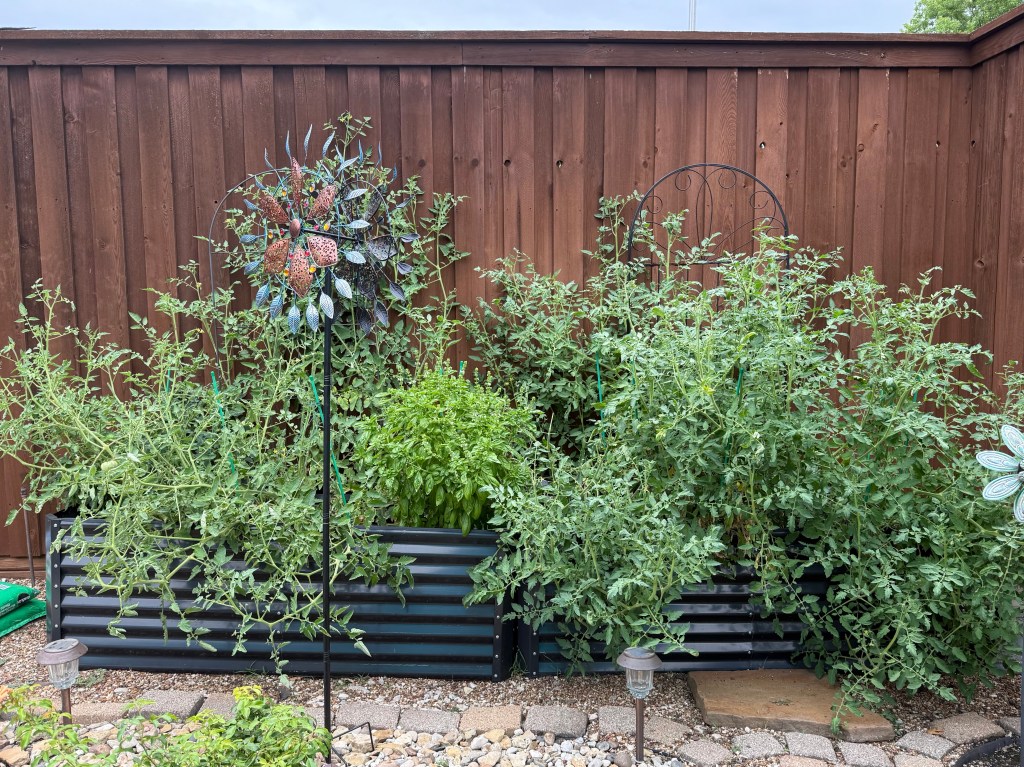
#Wordless Wednesday-Tomatoes Everywhere

So glad you’re joining me this week for Wordless Wednesday and I look forward to seeing you soon.
Melinda

Celebrate Life · Health and Wellbeing · Men & Womens Health · Mental Health · Moving Forward · Self-Care

15 Ways to Soothe Your Mind and Body During Times of Distress

When upsetting thoughts and feelings pop up, you might find yourself plummeting into a deep well of dread and overwhelm. During such stressful moments, you might start to believe there’s not much you can do about those emotions.

But that’s not actually the case. In fact, practicing self-soothing activities can help you climb out of that dark well and work toward feeling better.

How? According to psychologist Rebecca Leslie, PsyD, self-soothing activities can:

So, the next time you start to feel distressed, consider trying these 15 lesser-known self-soothing strategies.

Fill up the balloon

Diaphragmatic (deep) breathing “helps calm you down and tells your mind and body you are safe,” says Leslie.

Research suggests that deep breathing can bring increased comfort and relaxation while helping decrease symptoms of anxiety, anger, confusion, and depression.

Leslie suggests imagining you have a balloon behind your belly button that fills up with your breath as you breathe in.

  • Inhale slowly through your nose until the balloon feels “full.” This might take about 4 to 5 seconds.
  • Purse your lips and slowly exhale for the same amount of time until you feel the balloon “empty.” 
  • Repeat until you start to feel calmer.

Practice square breathing

Square breathing, also called box breathing, offers another powerful technique. 

To try this type of breathing:

  • Breathe in for 4 seconds.
  • Hold your breath for 4 seconds.
  • Breathe out for 4 seconds.
  • Relax for 4 seconds.

In short, each step forms one side of the “square.” 

Try this for 4 rounds or more, recommends Selma Bacevac, LMHC, a psychotherapist specializing in childhood trauma and attachment.

Focus on a color

Scan your surroundings for the color blue or for your favorite color, suggests Bacevac. 

“Gently rest your eyes in the hues of the color as you bring awareness to your breath, and slowly breathe in for 7 seconds,” she says.

Follow the inhale with a long, slow exhale.

It’s worth noting, too, that challenging yourself to find different objects in the same color could offer a distraction from the source of your distress.

Give yourself a hug

A hug or any kind of compassionate touch causes your brain to release oxytocin. This hormone can make you feel safe, connected, and loved, explains Joree Rose, LMFT, a therapist and mindfulness and meditation teacher.

Bonus: Your brain can’t tell the difference between a hug someone gives you and one you give yourself. Wrapping your arms around your chest can instantly soothe your tense body.

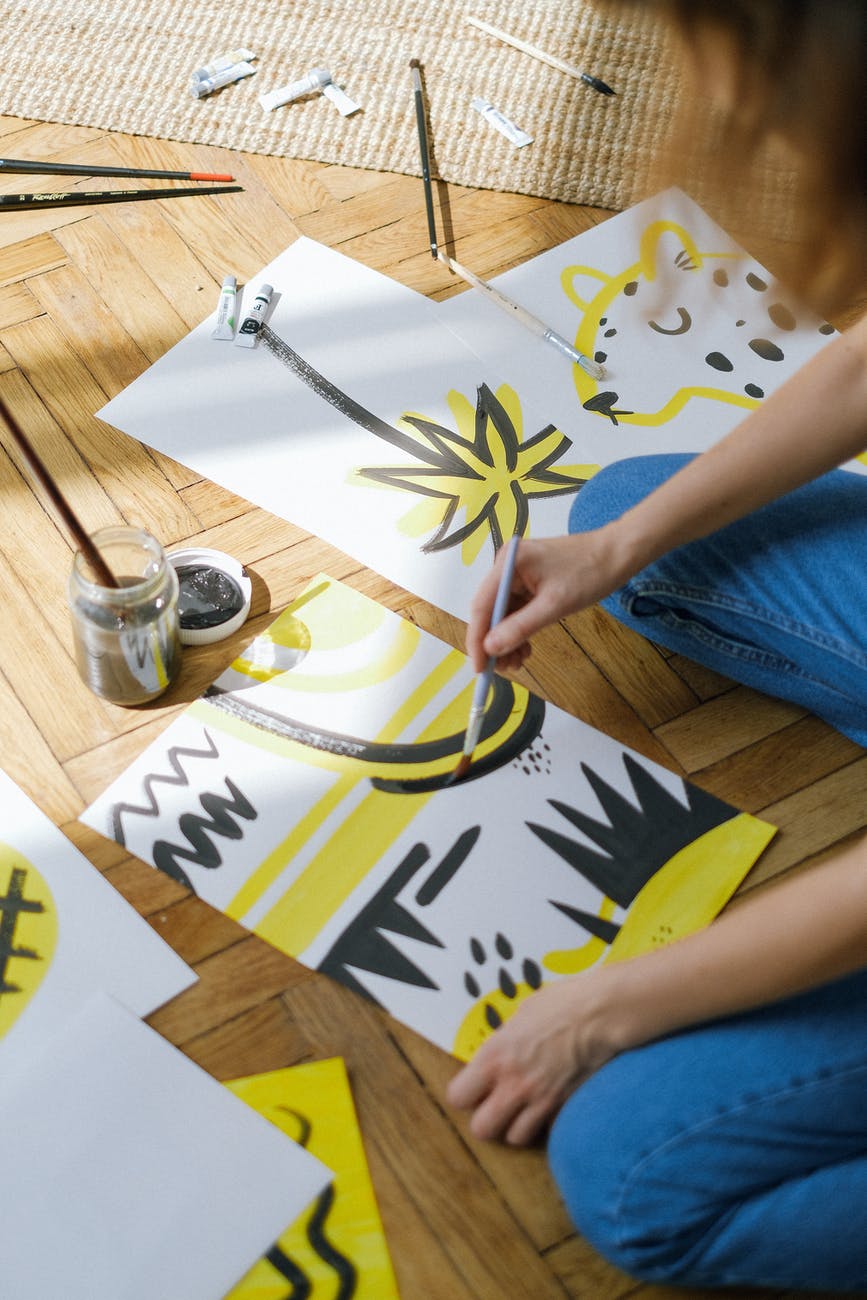
Paint with watercolors

“Art is an active tool we can use to move stress out of our body, express distress, and distract ourselves from what is bothering us by externalizing it,” says Jackie Tassiello, a board certified creative arts therapist and co-founder of Soulutions Therapy, based in Montclair, New Jersey.

One art technique to try? Watercolor painting. According to yoga teacher Namita Kulkarni, benefits reside in the “tactile pleasure of touching the paint to the paper, visual surprise and delight of watching the pigments swirl into the water and the ever-present unpredictability of water’s behavior.”

To start, simply buy a watercolor set at any craft or big box store.

Provide validation

When you’re upset, you might tell yourself stories like “This isn’t that bad,” “I’m overly sensitive,” or “I shouldn’t be feeling this way,” says Sera Lavelle, PhD, a clinical psychologist and hypnosis expert. 

But this kind of dismissive, invalidating self-talk often just leaves you feeling worse. 

Instead, validate your experience with self-compassion. According to Lavelle, this might involve:

  • noticing your inner dialogue
  • placing your hands over your heart
  • using language that offers comfort, such as “I recognize I feel scared right now and that’s hard. In this moment, the things I fear aren’t happening, and I am safe.”

Try autogenic training

Considered a form of self-hypnosis, autogenic training promotes relaxation in the body and a state of emotional calm.

To start, you might repeat certain phrases three times, says Leslie. Examples of soothing phrases might include:

  • My right arm is heavy.
  • My left arm is heavy.
  • My arms are heavy. 
  • I am calm and relaxed.
  • My left leg is heavy. 
  • My right leg is heavy. 
  • My legs are heavy.
  • I am calm and relaxed.

Play with something you’re wearing

Kaylin Zabienski, LMFT, a therapist and yoga teacher, used to get overwhelmed when running groups at her treatment center. To self-soothe, she’d wear a long necklace with a pendant or charm that she’d move up and down the chain.

“It doesn’t look like anything special, but the subtle vibration and sound that it made was extremely calming to me,” says Zabienski.

She suggests doing the same with your own clothing and accessories. “Using mindfulness and curiosity, it can be soothing to explore the item with your hands, to move it around on your skin, to notice its texture or any sounds it makes.”

Surround yourself with love

Sending messages of love to yourself can go a long way toward helping ease emotional distress.

Liz FitzGerald, a yoga instructor and co-founder of Daygold, suggests doing this loving practice for at least 5 minutes:

  • Sit comfortably with your eyes open or closed.
  • Starting with both hands at the top of your head, gently move your hands over your head while saying “I am with me.”
  • Move your hands across your face and say, “I see me.”
  • Move your hands across your ears and the front and back of the throat and say, “I hear me.”
  • Move your hands over your chest and say, “I trust me.”
  • Move your hands over your belly and say, “I am safe.”
  • Move your hands over your legs and feet and say, “I am loved.”

Practice Legs Up the Wall

According to Kulkarni, this restorative yoga pose activates the parasympathetic nervous system, which is responsible for rest and relaxation.

To try this pose, simply lie down with your legs up a wall. Hold the pose for up to 20 minutes.

Tip: If putting your legs up against a wall feels uncomfortable, you can put your legs on a couch, chair, or bed, says yoga and meditation teacher Catherine Tingey.

Perform repetitive tasks

“Anything that we have to do over and over creates a rhythm, which can ease tension and create an outlet for our anxiety or stress,” says Tassiello.

Examples of repetitive tasks that may help soothe stress include: 

  • knitting
  • dicing vegetables
  • folding laundry
  • washing dishes
  • doodling patterns

Observe the tornado

During periods of intense distress and overwhelm, it can feel like you’re in the center of a tornado, at the whims of “wherever it’ll take you, making you feel helpless and more stuck,” says Rose.

Instead, try to shift your vantage point and imagine yourself as the meteorologist commenting on the tornado, she says, not someone trapped in the center.

In a nutshell, picturing yourself on the sidelines of an emotional storm can help reduce its power over you.

Savor your senses

Immerse yourself in a sensory experience, recommends Neha Chaudhary, MD, a psychiatrist at Massachusetts General Hospital and chief medical officer at BeMe Health

Chaudhary notes that this could mean:

  • putting on headphones and playing your favorite songs
  • using aromatherapy oil
  • dipping your hands in a bowl of cold water

Practice heart breathing

Heart breathing, based on work from the HeartMath Institute, helps us “gain a deeper awareness and sense of calm, and return to center,” says Bara Sapir, an integrative life coach, MBSR-Trained provider, and founder of City Test Prep.

To practice, perform these three steps:

  • Heart focus. Place one hand over your heart and the other over your belly. Focus your attention on the area around your heart.
  • Heart breathing. As you inhale, feel as if your breath is flowing in through your heart. As you exhale, feel it leaving through this area. Continue breathing with ease until you find a natural rhythm that feels good to you.
  • Heart feeling. As you maintain your heart focus and heart breathing, recall a time you felt good. Take a moment to re-experience this positive feeling.

Set up a preventive plan

Using self-soothing tools in the moment can help a lot, but it’s equally as important to work on creating calm in your day-to-day routine. 

According to Tassiello, you could:

The bottom line

When you experience a difficult emotion, a self-soothing technique can reduce distressing thoughts and help relax a frazzled body.

It can help to try these activities before you’re upset to see which ones resonate with you. You can even keep a list of your top five soothers in your phone.

Remember that learning to soothe yourself can take time, says Lavelle. Try to be patient with yourself while “reminding yourself that you deserve to feel peaceful and taken care of.”


Margarita Tartakovsky, MS, has been writing for Psych Central and other websites for more than a decade on a wide range of topics. She’s the author of the mental health journal “Vibe Check: Be Your Best You” (Sterling Teen). She’s especially passionate about helping readers feel less alone and overwhelmed and more empowered. You can connect with Margarita on LinkedIn, or check out her writing at her website.

Melinda

Reference:

https://www.healthline.com/health/self-soothe?utm_term=roundup&utm_source=Sailthru%20Email&utm_medium=Email&utm_campaign=alzheimers_carejourney&utm_content=2026-02-03&apid=36735751&rvid=7f053d6ecf820dccd09e4914833cbd49bdfe95bb517404ee9b41601767d1bace

Celebrate Life · Chronic Illness · Health and Wellbeing · Men & Womens Health · Mental Health

Book Review for Hope Amid the Pain by Leslie L. McKee

I want to thank Leslie L. McKee for sharing an advanced copy of Hope Amid the Pain: Hanging On to Positive Expectations When Battling Chronic Pain and Illness (a 60-Day Devotional Journal) for an honest review.

About the Author

Leslie is an author, editor, and reviewer. She is a member of American Christian Fiction Writers and The Christian PEN. Some of her devotionals were published in compilations by Ellie Claire in 2017 and 2020. Her flash fiction stories have been published with Havok, Splickety, and Spark (websites, magazines, and anthologies). Her devotional journal (HOPE Amid The Pain: Hanging on to Positive Expectations When Battling Chronic Illness and Pain) will soon be published with Ambassador International. She enjoys reading, playing piano, crocheting, spending time with family and friends (and her turtle!), and rooting for the NY Giants. 

Blurb

Why me? Is God punishing me? Is my faith not strong enough for God to heal me? How can I achieve my dreams? What’s my purpose?

If you’re someone living with a chronic illness or chronic pain, these are just a few of the questions you’ve likely asked on more than one occasion. You may feel overlooked or even resentful. You try to stay positive, but some days it’s hard. It’s natural to feel this way and grieve, but it’s still possible to have a hope-filled life. God has a purpose for the pain.

Christians aren’t immune from pain and illness, but we don’t have to go through it alone. Jesus promised that He would “never leave you nor forsake you” (Deuteronomy 31:6 NIV).

Millions of women suffering from chronic pain and illness want the reassurance they’re not alone. The devotions in Hope Amid the Pain are written by a chronic pain warrior with over twenty-five years’ experience and will point the reader to hope and encouragement. It’s possible to Hang On to Positive Expectations (HOPE) even amid the pain.

What Others Are Saying

Beautifully written, HOPE Amid the Pain tugs at the heart with both practical and spiritual instruction. Anyone who is or has suffered with crippling and debilitating pain or illness will find encouragement and support in this devotional. Spirit-lifting, wise, and filled with inspiration, this devotional is sure to strengthen hearts for wherever the Lord is leading.

Debbie Macomber | #1 NYT Bestselling Author

McKee writes with compassion and understanding. Words of grace and compassion for those struggling with chronic pain.

Vannetta Chapman | USA Today bestselling author

As a mental health therapist I often look for resources for clients who struggle with chronic mental and physical illnesses. Leslie L. McKee speaks from personal experience as a woman who suffers from chronic illness. She has combined her personal experience, her deep faith in Christ, and her writing skills to provide a devotional which will truly minister to women who are fellow travelers on the chronic illness journey. Her format provides encouragement with practical application based on Scripture. I can’t wait to be able to offer such a devotional to my clients.

Patricia J Edwards| LCSW, TheAntioch Group

My Thoughts

Leslie has been a chronic pain warrior for over twenty years and understands the challenges we face daily. She does a great job of lifting you up; it’s like a gentle hug from a friend.

The journal covers topics like:

Don’t Settle

You Are Enough

Rest Stop

Through The Fire

Leslie also offers a Resource guide at the back of the book and a chapter on Scriptures. 

I think it’s a great gift for you or someone you care for who has a chronic illness or suffers from chronic pain.  Self-care is critical to our overall health and especially our mental health. 

Leslie’s book is a must buy and will be a resource you will refer to again and again.

Melinda

Repost

Celebrate Life · Fun · Mental Health · Music

#Weekend Music Share-Adele – Hello (Official Music Video)

It’s the weekend!!!!!!

 I’m glad you joined me for another edition of Weekend Music Share.

Have a great weekend!

Melinda

Welcome back to Weekend Music Share, the place where everyone can share their favorite music.

Feel free to use the Weekend Music Share banner in your post, and use the hashtag #WeekendMusicShare on social media so other participants can find your post.

Health and Wellbeing · Medical · Men & Womens Health · Mental Health · Self-Care

More Than Postpartum Depression: Addressing Maternal Mental Health Through the Life Cycle

Psychiatric Times

What are the implications of maternal mental health not only for mothers, but also for children, families, and society as a whole?

May is Maternal Mental Health Month, and moms around the world could probably use a break. During the COVID-19 pandemic, they have done even more of the childcare and housework, while also, in many cases, keeping up with their careers. How has the pandemic affected their mental health—either by creating new problems or by exacerbating perennial concerns?

In this edition of PsychPearls, Anita H. Clayton, MD, explores the wide and varied field of maternal mental health. Along with the effects of the pandemic, Clayton discusses prenatal mental health care, new and emerging treatments for postpartum depression and psychosis, and how what she saw in a courtroom set her on a path to becoming a renowned expert on maternal wellness.

https://embeds.audioboom.com/posts/7863094/embed/v4

Dr Clayton will speak further on these issues at the Annual Psychiatric TimesTM World CME Conference.

Dr Clayton is the David C. Wilson Professor and chair of the Department of Psychiatry and Neurobehavioral Sciences at the University of Virginia, with a secondary appointment as professor of clinical obstetrics and gynecology. She is the author of Satisfaction: Women, Sex, and the Quest for Intimacy, published by Ballantine Books in 2007, and an editor of the 2005 Women’s Mental Health: A Comprehensive Textbook. She is also a program co-chair of the Annual Psychiatric TimesTM World CME Conference.

Melinda

Celebrate Life · Fun · Mental Health · Music

#Weekend Music Share-B.B. King – The Thrill Is Gone [Crossroads 2010]

BB King is the greatest blues guitar player, he still amazeses me by his talent.

It’s the weekend!!!!!!

 I’m glad you joined me for another edition of Weekend Music Share this week.

Have a great weekend!

Melinda

Welcome back to Weekend Music Share, the place where everyone can share their favorite music.

Feel free to use the Weekend Music Share banner in your post, and use the hashtag #WeekendMusicShare on social media so other participants can find your post.

Celebrate Life · Fun · Mental Health · Music

#Weekend Music Share-Coldplay & Ed Sheeran – Fix You (Live at Shepherd’s Bush Empire)

It’s the weekend!!!!!!

 I’m glad you joined me for another edition of Weekend Music Share this week.

Have a great weekend!

Melinda

Welcome back to Weekend Music Share, the place where everyone can share their favorite music.

Feel free to use the Weekend Music Share banner in your post, and use the hashtag #WeekendMusicShare on social media so other participants can find your post.

Celebrate Life · Health and Wellbeing · Men & Womens Health · Mental Health

Your Mental Health Is Important: Tips On Moving To A New Town

Moving to a new town can be challenging. You’re uprooting your life and starting over in unfamiliar surroundings where no one knows you or where no familiar faces exist. However, with an open mind and positive approach, moving can be both enjoyable and beneficial for your mental well-being. It will help to expose you to new people from various walks of life, and there may be exciting opportunities out there that lead to improved quality of life. Here, we will cover everything from how to find housing in a new town to practical advice for making it feel like home in your new environment. So read on for advice on settling comfortably into life in a brand new city and its potential impact on mental health.

Photo by Ketut Subiyanto on Pexels.com

Research Your Options

A new town can be both exciting and overwhelming. Before making the leap, it is wise to research its characteristics – neighborhoods, parks, and community events are good places to begin exploring your options, as are local schools and businesses. Spend some time getting acquainted with its amenities, such as shopping centers, medical facilities, and recreational activities, so you can form positive associations between yourself and the place you will soon call home.

Find An Experienced Realtor

Whether selling or renting out your current home, consulting with a realtor can be invaluable in the process. Their expertise and market knowledge will ensure you obtain the maximum return for your property sale or rental investment. Finding the best realtor for yourself is key; seek someone who understands your individual needs, who will guide the process in an optimal way, and who will help you find a home in your new town that fits both your requirements and budget.

Declutter Before Moving

Moving can introduce feelings of excitement and anxiety all at once, and decluttering before the big day can make all the difference. While it might be tempting to simply pack everything up and deal with it later, reducing clutter will create a more organized and soothing atmosphere when you arrive in your new home. Not only will you have less to unpack, but you’ll be able to easily find what you need and avoid feeling overwhelmed in your new surroundings. 

Get To Know Your Neighbors

Making new friends in a new town may be daunting, but getting to know your neighbors can be one of the easiest ways to build a new community. Remember that building relationships take time; one way of making this transition more manageable is by getting acquainted with your neighbors – they may become your close friends, gym partners, or trusted pet sitters! So take the time to introduce yourself, invite them over for a meal, or offer to lend a hand whenever they need it.

Make Time For Yourself

Take time for yourself by participating in yoga classes, going for leisurely walks, or sitting quietly and meditating – however, you choose. Doing this will allow you to unwind, assess your emotions, and process changes in life more easily. Making this investment in yourself will reduce stress while improving your overall well-being; your mental well-being should be treated just as seriously as your physical well-being, so take the time needed for both!

Technology Makes Making Friends Easier

Moving away from those you love and places you are familiar with can be daunting, particularly when you don’t know anyone in your new town. But thanks to technology, making friends has never been simpler: friendship apps such as Bumble BFF are a great way to meet people who share similar interests or hobbies – you could meet potential friends within seconds by signing up. And who knows, you might just find your soulmate!

Explore Local Attractions

One of the best ways to familiarize yourself with a new town is by visiting its attractions. Take time out to visit landmarks, take part in outdoor activities, and try local eateries; doing this can quickly break down any barriers you might be feeling around meeting new people. It will also provide the opportunity for you to socialize with locals as well as learn about the town’s history while discovering hidden gems that will enhance your life experience.

Final Thoughts

Moving to a new city can be an immensely enriching experience for many, which is why it’s essential that it be done the correct way. Your mental health and well-being should always come first, so use the tips given above to make sure you have a successful transition into your new home. With a little effort, you’ll soon be feeling like a local in no time.

This is a collaborative post.

Melinda

Celebrate Life · Fun · Mental Health · Music

#Weekend Music Share-Mark Knopfler, Eric Clapton, Sting & Phil Collins – Money for Nothing Live

I would love to have seen them practicing, chatting about and take in the possitve energy.

It’s the weekend!!!!!!

 I’m glad you joined me for another edition of Weekend Music Share this week.

Have a great weekend!

Melinda

Welcome back to Weekend Music Share, the place where everyone can share their favorite music.

Feel free to use the Weekend Music Share banner in your post, and use the hashtag #WeekendMusicShare on social media so other participants can find your post.

Celebrate Life · Health and Wellbeing · Men & Womens Health · Mental Health · Self-Care

Book Review One Step At A Time By Francesca Giacomozzi

I was kindly gifted a copy of One Step At A Time, by Francesca Giacomozzi from Soraya Nair at Cherish Editions for an honest review. Thank you, Soraya.

About Author

“Francesca Giacomozzi has lived in the UK since April 2016.

After quitting a full-time job that wasn’t fulfilling her, she studied to become a yoga teacher and reflexologist and now owns her own yoga teaching and massage therapy business.


Her drive to help others overcome mental health issues has pushed her out of her comfort zone, leading her to raise awareness about eating disorders as a daily mission.


Francesca has two degrees and can speak five languages.”

Excerpt From: Francesca Giacomozzi. “One Step at a Time.” Apple Books.

Blurb

“My long-winded journey into a fuller and healthier self. Written with the hope that if you are lost, you will soon be found. This is the honest and unfiltered truth about me and my experiences as a warrior in eating disorder recovery. All the people mentioned in this book are real, and therefore have been made anonymous unless they provided consent to be spoken about by name.”

Francesca Giacomozzi found herself on the verge of a crisis, exhausted from waking up day after day without a sense of purpose. Determined to get her life back on track, she decided to take on a challenge to engage both her mind and body: a two-week walk along the South West Coastal Path.

She invested in kit and prepared – or so she thought – for the solo trek. Little did she know, her journey would leave her with a completely different outcome to the one she expected. Her diary pages are filled with two tales: what happened on the trail, and how it made her feel on the inside.

My Thoughts

When you’re faced with demons, you have two paths you can take. You can tackle them head-on or you can turn and run. Francesca found herself at a crossroads and decided to face her demons in the most interesting way. She set out to trek 360 miles across England to find herself and found so much more. 


Armed with her diary, she sets out and discovers the generosity of others feeds her need for food. When you struggle with an eating disorder, you over focus on food and look for an emotional fulfillment which doesn’t come. Fran struggles with her thoughts and self loathing along the way but as she reaches her destination there is a new sense of self. A sense she can overcome and ask for help. 


Ask for help she does, she sees a therapist for the first time and starts a new, more informed and self assured chapter. I beleive she is living her best life and inspires others with deep rooted struggles that there is light at the end of the tunnel. 


Fran sprinkles in poetry throughout the chapters. She is a great writer and the book is a fast read, you can’t wait to see what adventure she will encounter next. You can also fully relate to the insecurities she feels about herself and in social situations. 


I struggled with an eating disorder for years and can say this book hit home. It’s real and gives a look at the true mental and physical toll an eating disorder can take in the body. 


This book is a great read for most types of mental health struggles, not just eating disorders. The guilt, anger, insecurities and shame are universal. 


I highly recommend One Step At A time to everyone and give it 5 stars! 

Cherish Editions

Cherish Editions is the self-publishing division of Trigger Publishing, the UK’s leading independent mental health and wellbeing publisher.

We are experienced in creating and selling positive, responsible, important and inspirational books, which work to de-stigmatise the issues around mental health, as well as helping people who read them to maintain and improve their mental health and wellbeing. By choosing to publish through Cherish Editions, you will get the expertise of the dedicated Trigger Team at every step of the process.

We are proud of what we do, and passionate about the books that we publish. We want to do the very best for you and your book, holding your hand every step of the way.

Happy Reading!

I know you will enjoy the book as much as I did and encourage you to pick up a copy today.

Melinda

Celebrate Life · Health and Wellbeing · Men & Womens Health · Mental Health

Book Review Navigating Loneliness By Cheryl Rickman

I was kindly gifted an advanced copy of Navigating Loneliness by Cheryl Rickman from Maddie Kirby-Dunne at Wellbeck Publishing Group for an honest review. Thank you, Maddie.

About the Author

Cheryl Rickman is a qualified Positive Psychology Practitioner and Sunday Times bestselling author and ghostwriter of twenty self-help, wellbeing and business books.

After her parents’ lives were cut short, Cheryl decided to devote her life to helping others make the most of their own precious lives through the books she writes.

She specializes in writing practical books to help people fret less and flourish more, and is a Wellbeing Ambassador for the Network of Wellbeing.

Having qualified with a Certificate in Applied Positive Psychology in 2016, Cheryl also runs wellbeing retreats and delivers workshops on acceptance, balance and compassion, The ABC of FlourishingTM.

Cheryl lives with her husband, daughter and two dogs in a country cottage in Hampshire, UK. She is an unashamed tree- hugger and nature-lover, has an overflowing bookshelf and her favourite colour is rainbow. She loves pizza and the seaside, but is not a fan of mushrooms or spiders.

You can find out more at http://www.CherylRickman.co.uk

OTHER WELLBEING BOOKS BY THIS AUTHOR

Be More Wonder Woman: Fearless Thinking from a Warrior Princess

(DK, 2020)

The Flourish Colouring Book: Art Therapy Mindfulness

(CreateSpace, 2015)

The Flourish Handbook: How to Achieve Happiness with Staying Power, Boost Your Well-Being, Enjoy Life More and Reach Your Potential (CreateSpace, 2013)

The Happiness Bible: An Ultimate Guide to Sustainable Wellbeing

(Godsfield Press, 2019)

The Little Book of Resilience (Gaia, 2019)

The Little Book of Serenity (Gaia, 2020)

May You Be Well: Everyday Good Vibes for the Spiritual (Pyramid, 2021)

You Are Enough: Embrace Your Flaws and Be Happy Being You

(Summersdale, 2021)

Blurb

Navigating Loneliness is part of a Trigger Publishing series of books about managing mental health issues. Throughout this book you’ll learn what actions you can take to tackle the main causes of loneliness and reduce it.

My Thoughts

The book is a very fast read at only 155 pages long and includes helpful resources at the back of the book. It’s a great read with a long list of resources.

Wellbeck Publishing Group

Wellbeck Publishing Group is an exciting, fast-growing independent publisher based in London, dedicated to publishing only the very best and most commercial books spanning a number of genres and categories, from leading authors and well-known brands to debut talent. We live for books that entertain, excite and enhance the lives of readers around the world.

Melinda

Repost

Celebrate Life · Fun · Mental Health

Wordless Wednesday-Every Bookcase Tells A Story

I’m happy to see you for another Wordless Wednesday, and I look forward to seeing you again.


Melinda

Children · Communicating · Family · Health and Wellbeing · Mental Health

Why Kids And Teens May Face More Anxiety Far More These Days: A Must Read For All Parents

When it comes to treating anxiety in children and teens, Instagram, Twitter and Facebook are the bane of therapists’ work.“With (social media), it’s all about the self-image — who’s ‘liking’ them, who’s watching them, who clicked on their picture,” said Marco Grados, associate professor of psychiatry and clinical director of child and adolescent psychiatry at Johns Hopkins Hospital. “Everything can turn into something negative … [K]ids are exposed to that day after day, and it’s not good for them.”

Anxiety, not depression, is the leading mental health issue among American youths, and clinicians and research both suggest it is rising. The latest study was published in April in the Journal of Developmental and Behavioral Pediatrics. Based on data collected from the National Survey of Children’s Health for ages 6 to 17, researchers found a 20 percent increase in diagnoses of anxiety between 2007 and 2012. (The rate of depression over that same time period ticked up 0.2 percent.)Philip Kendall, director of the Child and Adolescent Anxiety Disorders Clinic at Temple University and a practicing psychologist, was not surprised by the results and applauded the study for its “big picture” approach.

The data on anxiety among 18- and 19-year-olds is even starker. Since 1985, the Higher Education Research Institute at UCLA has been asking incoming college freshmen if they “felt overwhelmed” by all they had to do. The first year, 18 percent replied yes. By 2000, that climbed to 28 percent. By 2016, to nearly 41 percent.

The same pattern is clear when comparing modern-day teens to those of their grandparents’ or great-grandparents’ era. One of the oldest surveys in assessing personality traits and psychopathology is the Minnesota Multiphasic Personality Inventory, which dates to the Great Depression and remains in use today. When Jean Twenge, a professor of psychology at San Diego State University, looked at the MMPI responses from more than 77,500 high school and college students over the decades, she found that five times as many students in 2007 “surpassed thresholds” in more than one mental health category than they did in 1938. Anxiety and depression were six times more common.

Those responding yes were asked to describe the level of both anxiety and depression in their children: 10.7 percent said their child’s depression was severe, and 15.2 percent who listed their child’s anxiety at that level.

Among the study’s other findings: Anxiety and depression were more commonly found among white and non-Hispanic children, and children with anxiety or depression were more likely than their peers to be obese. The researchers acknowledge that the survey method — parents reporting what they were told by their child’s doctor — likely skewed the results.

 Grados often identifies anxiety in the children and adolescents he sees as part of his clinical practice in Baltimore. “I have a wide range [of patients], take all insurances, do inpatients, day hospital, outpatients, and see anxiety across all strata,” he said.

The causes of that anxiety also include classroom pressures, according to Grados. “Now we’re measuring everything,” he said. “School is putting so much pressure on them with the competitiveness … I’ve seen eighth graders admitted as inpatients, saying they have to choose a career!”

Yet even one of the latest study’s authors acknowledges that it can be difficult to tease out the truth about the rise in anxiety.

“If you look at past studies,” said John T. Walkup, chairman of the Department of Psychiatry at Lurie Children’s Hospital in Chicago, “you don’t know if the conditions themselves are increasing or clinicians are making the diagnosis more frequently due to advocacy or public health efforts.”

Nearly a third of all adolescents ages 13 to 18 will experience an anxiety disorder during their lifetime, according to the National Institutes of Health, with the incidence among girls (38.0 percent) far outpacing that among boys (26.1 percent).

Identifying anxiety in kids and getting them help is paramount, according to clinicians. “Anxiety can be an early stage of other conditions,” Grados said. “Bipolar, schizophrenia later in life can initially manifest as anxiety.”

For all these reasons, Kendall said, increased awareness is welcome.

“If you look at the history of child mental health problems,” he said, “we knew about delinquency at the beginning of the 20th century, autism was diagnosed in the 1940s, teenage depression in the mid-’80s. Anxiety is really coming late to the game.”

Melinda

Reference:

Repost
Celebrate Life · Health and Wellbeing · Men & Womens Health · Mental Health · Moving Forward · Self-Care

You Are Not Alone: Quotes for the Toughest Days

Leaning on the hard-earned wisdom of others helps shift your perspective and uplift your spirits, serving as a reminder that resilience is possible even on the toughest days. 

May these words serve as a gentle source of inspiration and comfort. If you have a specific quote that helps you through the hard times, we invite you to share it in the comments.

Love’s Power to Ease Life’s Sorrows

“Love has, at its best, made the inherent sadness of life bearable, and its beauty manifest.” ~ Kay Redfield Jamison (An Unquiet Mind, 1995)

Seeing Stars Beyond the Tears

“If you cry because the sun has gone out of your life, your tears will prevent you from seeing the stars.”
Rabindranath Tagore

Finding Safety in the Present

“In times of pain, when the future is too terrifying to contemplate and the past too painful to remember, I have learned to pay attention to right now. The precise moment I was in was always the only safe place for me.”
Nicholas Sparks

Courage Is Something Quiet

Courage doesn’t always roar. Sometimes courage is the quiet voice at the end of the day saying, ‘I will try again tomorrow.’”
Mary Anne Radmacher

Perseverance Is the Foundation 

“Of all that is good, sublimity is supreme. Succeeding is the coming together of all that is beautiful. Furtherance is the agreement of all that is just. Perseverance is the foundation of all actions.”
~ Lao Tzu

The Power of Hope

Hope is the thing with feathers that perches in the soul — and sings the tune without the words — and never stops at all.”
Emily Dickinson

Imagination, Love, and Laughter 

“I believe that imagination is stronger than knowledge; myth is more potent than history; dreams are more powerful than facts; hope always triumphs over experience; laughter is the cure for grief; love is stronger than death.”
Robert Fulghum (All I Really Need to Know I Learned in Kindergarten: Uncommon Thoughts on Common Things, 1986)

Life is Music — Both Joyful and Sad

“Life is like a piano; the white keys represent happiness and the black show sadness. But as you go through life’s journey, remember that the black keys also create music.”
Ehssan

How Our Loved Ones See Us

“Those who love you are not fooled by mistakes you have made or dark images you hold about yourself. They remember your beauty when you feel ugly; your wholeness when you are broken; your innocence when you feel guilty; and your purpose when you are confused.”
Alan Cohen (Wisdom of the Heart, 2002)

Embrace Nature’s Reality

“It isn’t the language of painters one ought to listen to but the language of nature…. Feeling things themselves, reality, is more important than feeling paintings, at least more productive and life-giving.”
Vincent van Gogh (letter to Theo van Gogh, The Hague, on or about Friday, July 21, 1882)

Welcoming the Day With Joy

“Hello, sun in my face. Hello, you who made the morning and spread it over the fields… Watch, now, how I start the day in happiness, in kindness.” 
Mary Oliver (poem, “Why I Wake Early,” 2004)

The Art of Living Well

“Living well is an art that can be developed: a love of life and ability to take great pleasure from small offerings and assurance that the world owes you nothing and that every gift is exactly that, a gift.”
Maya Angelou (Wouldn’t Take Nothing for My Journey Now)

Happiness is What Drives Life

“Happiness is what greases the wheels of life, what opens the floodgates, raises the sun, aligns the stars, beats your heart, finds true love.”
Mike Dooley

Courage Through Facing Fear

“You gain strength, courage, and confidence by every experience in which you really stop to look fear in the face.”
Eleanor Roosevelt (You Learn by Living, 1960)

Accepting Life’s Unexpected Path

“We must let go of the life we have planned, so as to accept the one that is waiting for us.”
Joseph Campbell (to Diane K. Osbon, as recorded in Reflections on the Art of Living: A Joseph Campbell Companion)

Stronger After Life’s Storms

“And once the storm is over, you won’t remember how you made it through, how you managed to survive. You won’t even be sure whether the storm is really over. But one thing is certain. When you come out of the storm, you won’t be the same person who walked in. That’s what this storm’s all about.”
Haruki Murakami (Kafka on the Shore)

Keep Moving Forward

“If you can’t fly, then run; if you can’t run, then walk; if you can’t walk, then crawl; but whatever you do, you have to keep moving forward.”
Dr. Martin Luther King Jr. (“Keep Moving from This Mountain,” speech at Spelman College, April 10, 1960)

It’s Never Too Late to Be You

“For what it’s worth: It’s never too late or, in my case, too early to be whoever you want to be. There’s no time limit. You can change or stay the same; there are no rules to this thing. We can make the best or the worst of it. I hope you make the best of it.… I hope you live a life you’re proud of. If you find that you’re not, I hope you have the courage to start all over again.”
Eric Roth (The Curious Case of Benjamin Button, film, 2008)

Melinda

Reference:

https://www.bphope.com/bipolar-buzz/20-inspirational-quotes-to-help-cope-with-bipolar-disorder/?utm_source=iContact&utm_medium=email&utm_campaign=bphope&utm_content=BUZZ+-+Jan4+-+Quotes

Health and Wellbeing · Medical · Men & Womens Health · Mental Health

Common Myths About Cannabis

It seems like there are new myths about Marijuana popping up all the time. The reality is that many of these myths have been disproven long ago. However, they persist in today’s society for one reason or another. Some people believe them because they haven’t done any research on their own. In contrast, others may do so because it benefits them to keep these misconceptions alive. We’ll be giving you the facts about some common myths associated with Marijuana and dispel them once and for all!

You Can’t Get Addicted To Marijuana

You can find this myth in many pro-marijuana campaigns across the world. The truth is that it’s entirely possible to get addicted to Marijuana, just like any other substance out there. Of course, it will not happen overnight, and you shouldn’t be able to do so by smoking one joint either! When people argue about whether or not marijuana addiction exists, they are usually talking about cannabis dependency. This type of dependency occurs when someone smokes on a daily basis for an extended period of time, usually several months. It slowly becomes harder and harder for them to function normally without getting high first.

This doesn’t mean that these individuals have no control over their actions, though; they simply use weed as a crutch because they’re too anxious or uncomfortable without it. The next time you’re around someone who is high, really think about whether or not they look like they need it to function normally.

Marijuana Is Always Safe To Use

One of the most common things heard about weed is that it’s safe and harmless to use. This couldn’t be further from the truth! We’ll touch on some key points here, but if you would like more information, then research Marijuana safety tips.

There are many negative health effects associated with smoking marijuana regularly or excessively. For one thing, long-term smokers usually end up getting respiratory problems such as bronchitis because they inhale so much tar and ash into their lungs. If this doesn’t sound healthy to you already, keep in mind that Marijuana contains 50% more carcinogenic hydrocarbons than regular cigarettes do too! There have also been studies showing an increased risk of lung cancer among people who smoke Marijuana regularly.

Getting your Marijuana from the best dispensary possible is an additional factor to consider as there are legislative quality controls they need to follow, ensuring you get a pure and clean product.

Marijuana Is A Gateway Drug

This is a controversial point, but it has been proven that Marijuana does not cause people to try out harder drugs. Sure there are cases where this happened due to the influence of others, but overall it would be an unfair label to place on Marijuana.

The problem here lies in the fact that some unscrupulous dealers will sell their customers harder drugs when they come back. It’s not because the Marijuana itself made them do it, but you can’t deny that Marijuana is an easy way to get someone hooked on something else! There are studies showing that people who already have a tendency towards addiction may try harder substances if given access to an alternative like Marijuana in most cases.

Marijuana Doesn’t Have Any Medicinal Value

The biggest argument for legalizing Marijuana is its medicinal properties. There are many positive uses for Marijuana, both as an analgesic and to help with the symptoms of certain diseases. It makes sense that people who could benefit from this would want access to it without having to wait until the laws change in their state or country!

There has been a wealth of research done in the past several years that have shown Marijuana’s amazing medical value. The US government even holds a patent on Cannabis for its antioxidant and neuroprotectant abilities.

In conclusion, there are many common myths when it comes to marijuana use that simply isn’t true at all! This is especially important nowadays when more and more states are legalizing the drug either recreationally or medically.

This is a collaborative post.

Melinda

Repost

Celebrate Life · Fun · Mental Health · Music

#Weekend Music Share-Robin Williams Makes an Insane First Appearance | Carson Tonight Show

Be prepared to laugh so hard it hurts!

Robin was the brightest star with humor in his blood. He shared his talent with us and we are thankful. His life was cut too short from mental illness.

It’s the weekend!!!!!!

 I’m glad you joined me for another edition of Weekend Music Share this week.

Have a great weekend!

Melinda

Welcome back to Weekend Music Share, the place where everyone can share their favorite music.

Feel free to use the Weekend Music Share banner in your post, and use the hashtag #WeekendMusicShare on social media so other participants can find your post.

Celebrate Life · Communicating · Health and Wellbeing · Men & Womens Health · Mental Health

Listening To Shame By Brene Brown

Her perspective on life and brutal honesty can help us live our best lives.

Melinda

Chronic Illness · Health and Wellbeing · Infectious Diease · Medical · Men & Womens Health · Mental Health · Tick Borne Illnesses

PATHOBIOME PERSPECTIVES: Borrelia, Bartonella & Babesia in the Brain

For years, people living with Lyme disease and other infection-associated chronic illnesses have reported cognitive decline, mood changes, memory problems, and unexplained psychiatric symptoms. Yet these symptoms are routinely dismissed as psychological rather than biological.

At the 2nd Annual Alzheimer’s Pathobiome Initiative (AlzPI) & PCOM Symposium, a new conversation is reshaping that understanding.

In a special live recording of Pathobiome Perspectives, author and Galaxy Diagnostics CEO Nicole Bell shares how her family’s search for answers revealed the role of infection in her late husband Russ’s devastating neurological decline.

What lab tests later showed

In her presentation, “When the brain pathobiome becomes personal,” Bell describes laboratory findings from Russ’s donated brain, including:

  • Borrelia burgdorferi (Lyme)
  • Chlamydia pneumoniae
  • Babesia otocoli (previously thought to be deer-restricted)
  • Elevated heavy metals (lead and mercury)

These data, now being prepared for publication, reinforce a growing scientific model: polymicrobial infection and toxic exposures may converge to drive neuroinflammation and Alzheimer’s-like symptoms.

Bell also outlines why so many patients fall through the cracks:

  • Standard two-tier Lyme serology can miss true infection, especially in late-stage disease
  • Direct detection methods can identify active pathogens that serology overlooks
  • Bartonella and Babesia must be considered alongside Lyme when neuropsychiatric symptoms appear

She highlights hallmark Bartonella clues often mistaken for psychological disorders — irritability, anxiety, OCD, tics, vision changes, and stretch-mark-like striæ — noting that exposure risk extends beyond ticks to fleas and household cats. Bell advocates for precision diagnostics that assess pathogen load, immune dysfunction, and toxic exposures together, rather than in isolation.

A turning point for chronic illness science

Bell’s story underscores a pivotal shift: what looks psychiatric or “idiopathic” may be a complex, biologically driven pathobiome process — and recognizing it early could change outcomes.

Tune in to this episode of Pathobiome Perspectives, presented in collaboration with Tick Boot Camp and LymeDisease.org, to learn how cutting-edge research could transform our understanding of chronic illness and cognition–and offer hope to millions navigating life through the haze.

Pathobiome Perspectives was developed in collaboration with the Pathobiome Research Center at PCOM, led by Founding Director Nikki Schultek, and Director Dr. Brian Balin and the Center for Chronic Disorders of Aging (CCDA).

New episodes of Pathobiome Perspectives will roll out every Tuesday night at 7:30 p.m. Central.

Ali Moresco is a tick-borne disease survivor, advocate, speaker and founder of Moresco PR, a healthcare communications firm. She also serves as Executive Board Chair of Project Lyme. You can connect with Ali on Instagram at @AliTMoresco or on YouTube.

Melinda

Reference:

https://www.lymedisease.org/pathobiome-hicole-bell/

Celebrate Life · Fun · Mental Health · Music

#Weekend Music Share-She’s Gone (1976) – Hall & Oates

It’s the weekend!!!!!!

 I’m glad you joined me for another edition of Weekend Music Share this week.

Have a great weekend!

Melinda

Welcome back to Weekend Music Share, the place where everyone can share their favorite music.

Feel free to use the Weekend Music Share banner in your post, and use the hashtag #WeekendMusicShare on social media so other participants can find your post.

Celebrate Life · Health and Wellbeing · Men & Womens Health · Mental Health

If you’re unhappy with your body, just repeat after us: You are the new hotness

Too many of us struggle to achieve a body ideal that’s just not obtainable by humans. It’s time to redefine what’s good, healthy and attractive on our own terms, say writers (and sisters) Emily Nagoski and Amelia Nagoski.
The Bikini Industrial Complex. That’s our name for the $100 billion cluster of businesses that profit by setting an unachievable “aspirational ideal,” convincing us that we can and should — indeed we must — conform with the ideal, and then selling us ineffective but plausible strategies for achieving that ideal. It’s like old cat pee in the carpet, powerful and pervasive and it makes you uncomfortable every day but it’s invisible and no one can remember a time when it didn’t smell.

Let’s shine a black light on it, so you can know where the smell is coming from. You already know that basically everything in the media is there to sell you thinness — the shellacked abs in ads for exercise equipment, the “one weird trick to lose belly fat” clickbait when all you wanted was a weather forecast, and the “flawless” thin women who fill most TV shows. The Bikini Industrial Complex, or BIC, has successfully created a culture of immense pressure to conform to an ideal that is literally unobtainable by almost everyone and yet is framed not just as the most beautiful, but the healthiest and most virtuous.

But it’s not just magazine covers, ads and other fictions that get it wrong. The body mass index (BMI) chart and its labels — underweight, overweight, obese, etc. — were created by a panel of nine individuals, seven of whom were “employed by weight-loss clinics and thus have an economic interest in encouraging use of their facilities,” as researchers Paul Ernsberger and Richard J Koletsky put it.

You’ve been lied to about the relationship between weight and health so that you’ll perpetually try to change your weight.

But listen: It can be healthier to be 70 or more pounds over your medically defined “healthy weight” than just five pounds under it. A 2016 meta-analysis in The Lancet medical journal examined 189 studies, encompassing nearly four million people who never smoked and had no diagnosed medical issues. It found that people labeled “obese” by the CDC have lower health risk than those the CDC categorized as “underweight.” The study also found that being “overweight” according to the CDC is lower risk than being at the low end of the “healthy” range as defined by the US federal government and the World Health Organization.

Another meta-analysis even found that people in the BMI category labeled “overweight” may live longer than people in any other category, and the highest predictable mortality rate might be among those labeled “underweight.” Taking it further, newer research is suggesting that doctors warn their middle-aged and older patients against losing weight, because the increasingly well-established dangers of fluctuations in weight outweigh any risk associated with a high but stable weight.

Our culture has primed us to judge fat people as lazy and selfish. And it goes deep. Amelia conducts a children’s choir, and she has to teach her kids to breathe. At ten, eight, even six years old, they already believe that their bellies are supposed to be flat and hard, so they hold their stomachs in. You can’t breathe deeply, all the way, without relaxing your abdomen, and you can’t sing if you can’t breathe. So Amelia has to teach children to breathe.

Please: Relax your belly. It’s supposed to be round. The BIC has been gaslighting you.

We’re not saying the people or companies that constitute the BIC are out to get you. Frankly, we don’t think they’re smart enough to have created this system on purpose. But they recognize there’s money to be made by establishing and enforcing impossible standards.

We all encounter the BIC every day. So how can we make it through the fray?

One strategy: Play the “new hotness” game.

When we reconstruct our own standard of beauty with a definition that comes from our own hearts and includes our bodies as they are right now, we can turn toward our bodies with kindness and compassion. Well, easier said than done.

Amelia is vain about pictures of her conducting, in which she inevitably has her mouth wide open and her hair is a sweaty wreck. Emily watches herself on TV and worries that her chin is too pointy because one time, somebody said it was. (We are identical twins.)

Neither of us has ever had the skinny proportions of a model, and we watched our mom — who was model-thin before she gestated two seven-pound babies at the same time — look at her reflection in mirrors and cry at what she saw there. What she saw there is very much like what we see in our own reflections now.

Which is why we play the “New Hotness” game, a way to let go of body self-criticism and shift to self-kindness. One day, Amelia was at a fancy boutique, trying on gowns for a performance. Attire for women conductors is hard to find: solid black with long sleeves, formal yet not frumpy is an unlikely combination. Finding all of this in her size is even more difficult.

She tried on a dress that looked so amazingly good she texted Emily a dress selfie, with a caption paraphrasing Will Smith in Men in Black II: i am the new hotness.

And now “new hotness” is our texting shorthand for looking fabulous without reference to the socially constructed ideal. We recommend it. It’s fun.

Maybe you don’t look like you used to, or like you used to imagine you should, but how you look today is the new hotness. Even better than the old hotness.

Saggy belly skin from that baby you birthed? New hotness.

Gained 20 pounds while finishing school? New hotness.

Skin gets new wrinkles because you lived another year? New hotness.

Hair longer or shorter, or a different color or style? New hotness.

Mastectomy following breast cancer? New hotness.

Amputation following combat injury? New hotness.

The point is, you define and redefine your body’s worth, on your own terms. It’s not necessary to turn toward your body with love and affection — love and affection are frosting on the cake of body acceptance, and if they work for you, go for it. But all your body requires of you is that you turn toward it with kindness and compassion, again and again, without judging all your contradictory emotions, beliefs and longings.

No doubt after you finish reading this, you will go out into the world and notice the diversity of bodies around you. And you will still have reflexive thoughts about the people who don’t conform to the aspirational ideal, envious thoughts about the people who do, or self-critical thoughts about the ways the world tells you that you fall short. And then you might even have emotional reactions to your emotional reactions: “Darn it, I shouldn’t think that!”

Change happens gradually. Your brain has been soaking in the BIC for decades; any time you step outside your door, you’re back in it; any time you turn on a TV, you’re back in it; and any time you put clothes on, you’re back in it. Just notice it, as you’d notice a fleck of dust floating through the air. Smile kindly at the mess. And know what’s true: Everyone is the new hotness. You are the new hotness. So is she. So are they. So are we.

Excerpted from Burnout: The Secret to Unlocking the Stress Cycle by Emily and Amelia Nagoski. Copyright © 2019 by Emily and Amelia Nagoski. Used by permission of Ballantine, an imprint of Random House Publishing Group, a division of Penguin Random House LLC. All rights reserved. No part of this excerpt may be reproduced or reprinted without permission in writing from the publisher.

Health and Wellbeing · Medical · Men & Womens Health · Mental Health · Trauma

January Awareness Month

Each month there is a long list of awareness months, days and weeks, To keep the post short I only write about the awareness months. To read to complete list CLICK HERE or the link at bottom of post.

Cervical Health Awareness Month

Glaucoma Awareness Month

Mental Wellness Month

National Blood Donor Month

National Eye Care Month

National Slavery and Human Trafficking Prevention Month

National Stalking Awareness Month

Poverty Awareness Month

Self-Love Month

National Mentoring Month

Many of the awareness months hit close to home for me, not only through experience but as missions I’m dedicated to by advocating and sharing information with you.

Melinda

Reference:

Good Good Good