Health and Wellbeing · Men & Womens Health · Mental Health

5 Easy, Practical Ways To Support Your Child’s Emotional Health This Year

HUFFPOST

Catherine Pearson

09/04/2020 11:31am EDT

Spend at least five minutes a day, every single day, hanging out with them and doing whatever they want.
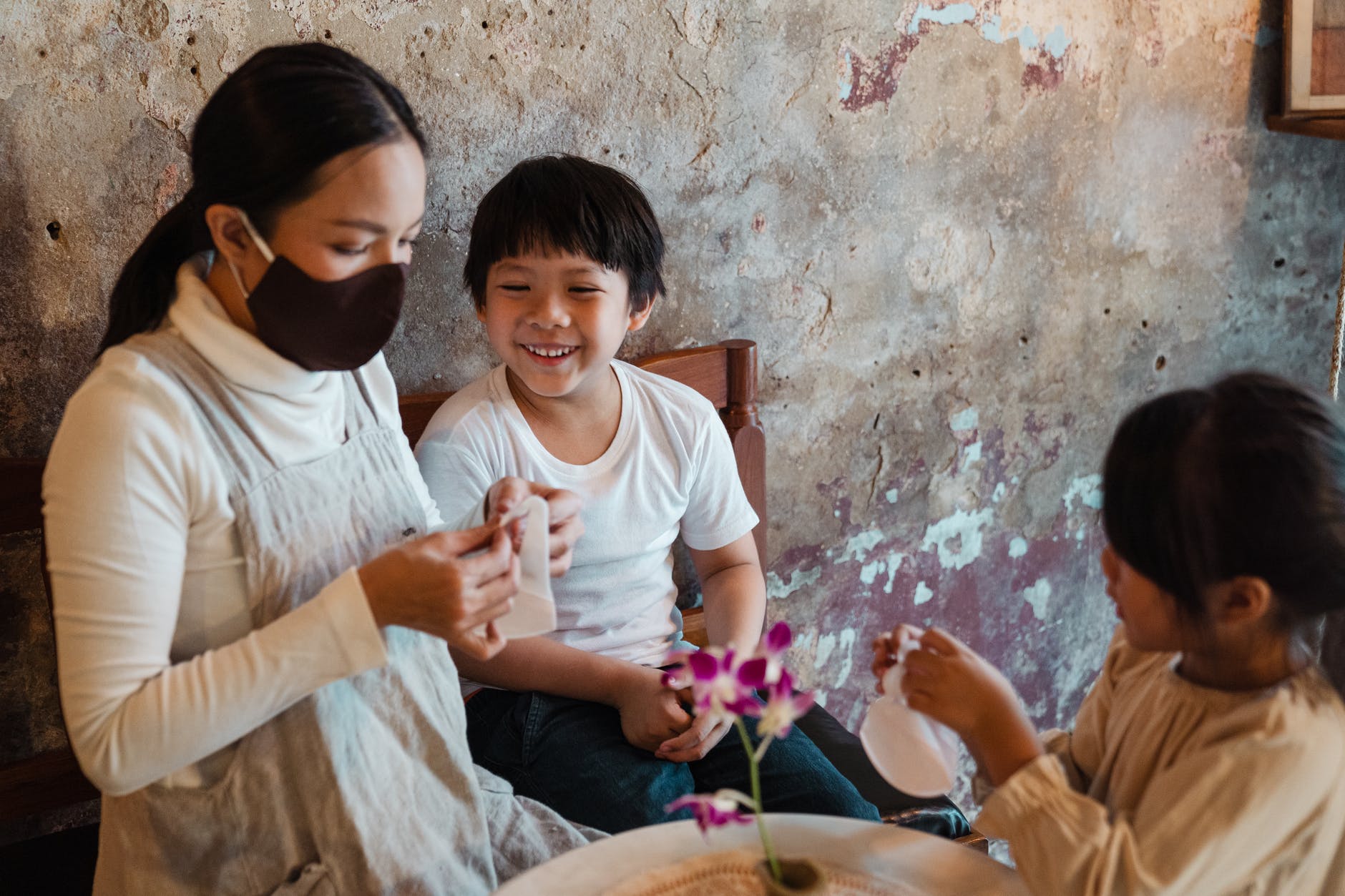
Photo by Ketut Subiyanto on Pexels.com

Kids might find it more difficult to cope with the pandemic. Here’s how parents can help them.

When the COVID-19 pandemic hit this past spring, billions of children around the globe were abruptly sent home from school — an anchor in so many ways. Kids have been cut off from friends and loved ones, and yanked away from daily activities and passions. Many have watched their loved ones get sick or have come down with the virus themselves. It has been … a lot. 

Now, as another unprecedented academic year swings into high gear, children are facing more of the same “new normal” that no one asked for.

“We don’t know how long we’re going to be living in this very strange period. For some kids, that mean that they’ve adjusted and things are a little bit easier to manage,” said Kimberly Canter, a child psychologist at Nemours Children’s Health System. “For other kids, that just means this gets harder and harder every day.”

HuffPost Parents spoke to several experts about simple, concrete ways we can help support our children during this upcoming school year. Here’s what they had to say: 

1. Regularly check in with them about what they think is happening with COVID-19. 

Talking to your child about what they know (or believe they know) about the pandemic is a crucial first step to understanding where they’re at emotionally, said Canter, who developed an online intervention to help kids struggling with COVID-19 stress. (The intervention is currently available to Nemours patients only, but she shared some of the broader concepts below.)

You’re looking to understand their specific concerns, she said.

“Are there things they are hearing that are frightening them that are not true?” she asked. “Are there things they are hearing that are frightening them that are true? And how can we address that?”

If your child brings up something you don’t have an answer to, or there’s no answer to, be honest. Tell them you’ll seek out accurate information together, and reassure them that they’re not facing this alone.

Parents should also pay attention to any physical, emotional or social changes they notice in their children, said Ron Stolberg, a licensed child psychologist and professor at Alliant International University.

“Typical things to look for are significant weight gain or weight loss not related to normal development, rejecting long-standing friends, major social withdrawal, and with teens, we also add unaccounted-for spending,” Stolberg said.

Your check-ins can be brief, but they should be consistent. Parents may have done this more at the start of the pandemic, when everything was strange and new. Don’t let up now.

2. Help them identify their emotions. 

Emotional intelligence is a learned skill that is rooted in a person’s ability to identify what they are feeling. Parents can help their children do that, Canter said. It’s really about noticing their feelings and learning how to name them.

This can start even if kids are young. Simple mood meters — red for angry, blue for sad, green for calm and yellow for happy — can help young kiddos track where they are and give voice to those feelings.

If your child brings up something you don’t have an answer to, or there’s no answer to, be honest. Tell them you’ll seek out accurate information together, and reassure them that they’re not facing this alone.

Parents should also pay attention to any physical, emotional or social changes they notice in their children, said Ron Stolberg, a licensed child psychologist and professor at Alliant International University.

“Typical things to look for are significant weight gain or weight loss not related to normal development, rejecting long-standing friends, major social withdrawal, and with teens, we also add unaccounted-for spending,” Stolberg said.

Your check-ins can be brief, but they should be consistent. Parents may have done this more at the start of the pandemic, when everything was strange and new. Don’t let up now.

Your check-ins can be brief, but they should be consistent. Parents may have done this more at the start of the pandemic, when everything was strange and new. Don’t let up now.

3. Build trust with their teachers.

Even if you live in an area where your child is in the classroom five days a week, this is an academic year like no other. One simple way to emotionally support your child — and your child’s teacher — is to help them feel “safe and connected to their school communities,” said Jeanne Huybrechts, chief academic officer at Stratford School, a network of private schools in California. That is true whether classes are in person, hybrid or starting the year off remotely.

“Reach out to your child’s teacher and introduce yourself and your family,” Huybrechts said. “Share family stories, values, your family’s living situation this fall, your child’s feelings about the return to school.” 

More than ever this year, open communication with your child’s teachers is essential.

4. For at least five minutes a day, hang out with them however they want. 

Parents sometimes hate to hear this tip because at the end of a long, exhausting day, many parents just (understandably) want to collapse, said Jill Ehrenreich-May, a psychologist and director of the Child and Adolescent Mood and Anxiety Program at the University of Miami.

But she recommends taking at least five minutes a day, every day, to just hang out together with the kids.

“Do something — not on screens — that your child wants to do with you,” Ehrenreich-May said. Follow their lead, and really try to connect through joy. They need it.

5. Remind them of what they can control. 

Many children are struggling under the weight of so many unknowns. We don’t know when school will be “normal” again. We don’t know when they’ll be able to freely hug grandparents or friends. We don’t know if they’ll get sick, or if we will get sick — and how serious it might be. That’s difficult for anyone to deal with, particularly kids. 

Parents can help by focusing them on what they can control right now.

“You might not be able to control if there’s a vaccine, but you can control things like washing your hands and wearing a mask,” Canter said. Similarly, kids may not be able to control when, say, soccer starts up again, but they can schedule Zoom hangouts with their teammates. And so on.

And here is something parents can control, to a certain extent: They can model the type of resiliency and self-care they hope to see in their children. That means parents need to find ways to take care of themselves.

“If I expect them to be calm and handle this really not normal situation, well, I probably need to express my own emotions appropriately,” Ehrenreich-May said.

Stolberg agreed, suggesting that parents follow a healthy sleep routine, eat nutritious food, avoid caffeine and alcohol, exercise outside if it’s safe to do so and stay connected to people, even if it’s digitally. He also recommended mindfulness exercises, such as breathing, meditation and yoga.

“You cannot be your best parent if you are not healthy and mentally prepared for the job,” he said.

At the end of the day, it’s not about pretending everything is totally OK. It’s about modeling emotional intelligence yourself and trying to show your kiddo how to live with uncertainty, while also trying to make the best of this unprecedented time.

Celebrate Life · Fun

#Weekend Music Share *Dream Baby Dream

It’s the weekend, YEAH! I’m so glad you’ve joined me. Be Safe. The words to Dream Baby Dream are more relevant than ever. The world has been tested to the limits by the COVID-19 virus and we all need to keep dreaming. There are better days ahead!

Melinda


Welcome back to Weekend Music Share; the place where everyone can share their favorite music.

Feel free to use the ‘Weekend Music Share‘ banner in your post, and don’t forget to use the hashtag #WeekendMusicShare on social media so other participants can find your post.

Fun

Friday Quote

Hi Everyone, It’s Friday! So glad you stopped by today. Please be safe this weekend by wearing a mask.

Photo by Musa Ortau00e7 on Pexels.com

We cannot change our past. We can not change the fact that people act in a certain way. We can not change the inevitable. The only thing we can do is play on the one string we have, and that is our attitude.

Charles R. Swindoll

In Health,

Melinda

Fun · Men & Womens Health

How To Deal With 3 Common Gardening Problems

Photo Credit – CC0 License

Gardening is such a therapeutic hobby to take up. In fact, it’s been shown to help a great deal with your mental health during the pandemic. You can spend so many hours in your garden tending to your plants and making everything look perfect. Things don’t always go your way, as there are lots of common garden issues to face. If you’re a garden novice, the advice below can help you deal with some of the most frequent problems in your back garden:

A lack of sunlight

Plants need sunlight to grow big and strong. They take the energy from the sun and use it to grow and carry out other plant functions. You may have a lack of sunlight in your garden that’s not caused by the climate. It could be sunny as hell, but your plants are stuck in the shade due to big obstacles.

Combatting this can be both easy and hard – depending on what the obstacles are. If it’s something you can move with ease, then the problem is solved in minutes. However, trees tend to be the biggest culprits. So, you may have to have yours chopped down or trimmed. Don’t attempt this yourself; companies like the Sydney Tree Company can do it for you. It’s never a good idea to attempt to cut something big down as you have no idea where it can fall!

A lack of water

This is a problem for lots of gardeners during the summer months. The sun comes out, the rain dries up, so your garden is left with no water at all. In some areas, this can go on for a good few months. While your plants need sunlight, too much of it and too little water will cause them to burn up and die. 

As such, you need to be strict with your watering schedule. You’ll have to be out there at least once or twice a day giving your whole garden a little shower. Personally, I think sprinkler systems work the best as you can turn them on and do something else while they water your garden. Plus, there’s no danger of overwatering the plants as the sprinkles distribute the water evenly. 

Too much water

Yes, you can have too much water! As you can probably tell, gardening requires a fine balance of sunlight and water. When the rain clouds come out to say hello, you may be inclined to rejoice. However, if it pours with rain and waterlogs in your garden, your plants will not be happy. Too much water will basically drown the plants and turn them a strange yellow color. 

To rectify this problem, you need a good drainage system for your plants. Some people like to hang theirs in plant pots, while others install a proper irrigation system in their lawn. The choice is yours, just be sure there’s a place for the water to run down when it rains. 

On that note, you’ve come to the end of today’s tips. I hope they will help any aspiring gardeners deal with some of the most common and annoying issues. Now, you can start gardening with more confidence and fewer problems.

This is a collaborative post.

In health,

Melinda

Health and Wellbeing · Men & Womens Health

Looking For The Light Named One Of 34 Best Chronic Illness Blogs To Read In 2020


WOW! What a huge surprise this was. To be included in this list of heavy hitters is such an honor. 
 
I want to give a special thanks to Ruth Gray at GetBlogged.net for taking the time to understand what Looking for the Light is about and for including me among such great blogs. 
 
Please take some time to read Ruth’s post and check out these Chronic Illness blogs. You will find many new blogs to follow and meet some great people along the way. 
 

34 Best Chronic Illness Blogs To Read In 2020

 
Thank you for following my journey, inspiring me, providing moral support, and most of all being a great friend. 
 
In Health,
 
Melinda


Fun · Health and Wellbeing · Men & Womens Health · Mental Health

Gifts for People Who Love to Garden

Buying gifts is always a challenge, but one way to find the ideal gift for a special person in your life is to focus on a niche that you know is of interest to them. So if you know someone who loves gardening, you’ll be glad to learn there are lots of gifts that are ideally suited to people who love to garden. We’re going to look at the best of the bunch today, so keep reading to find out all about them.

Photo by Pixabay on Pexels.com


An Attractively Designed Bird Bath

The great thing about birdbaths is that they’re not just about adding something functional to the garden. They also act as great ornamental pieces, so if you’re looking for something to give that brings a visual impact, an attractively designed birdbath could be exactly what you’re looking for. There’s no shortage of designs and options out there to choose from these days either.

Gardening Gloves

If you want to make the process of gardening a little more comfortable for a special person in your life, a pair of high-quality garden gloves can make the perfect gift. Again, there are lots of styles and designs out there, just make sure you choose a pair that fits well. It’s a good and affordable gift option so it should definitely be considered.

A Seed Subscription

Right now, subscription services are all the rage. There’s a subscription service for just about everything, so you might not be surprised to learn that there’s also a subscription available for seeds. That means you can get different seeds sent to your door each month, so this could be a great gift idea. You could pay for their seed subscription for a year, for example.

The Latest Top Books

There’s a range of great gardening books released each and every year. They might be guide books, general advice, or even photo books. There’s something for just about every garden lover on the shelves of your local book store, so it’s an avenue you should definitely explore. This article is A Review Of The Best Gardening Books in 2020, so it might give you some interesting ideas for which you might want to buy.

Solar-Powered Outdoor Lanterns

You don’t have to choose something that’s focused on the task of gardening; it might be a good idea to choose a gift that adds something new and fun to the garden and has a social dimension. Some solar-powered outdoor lanterns allow you to light up the garden at night and carry on the party into the evening. It’s a good gift idea and they’re also eco-friendly as the battery can charge up during the night and be put to use during the day.

If you’re looking for gifts for the gardener in your life, the ideas above should provide you with the inspiration you need. Find a gift they’re guaranteed to love and help them get even more out of their love of gardening with the kinds of gift options we’ve discussed here. 

This is a collaborative post. 

In Health,

Melinda


Health and Wellbeing · Men & Womens Health · Mental Health

How Resilient Are You?

Posted Sep 07, 2020

Diana Raab PhD

The Empowerment Diary

There are certain characteristics inherent to resiliency. 

I have always believed, and I still believe, that whatever good or bad fortune may come our way we can always give it meaning and transform it into something of value.”  ~ Hermann Hesse

The way in which you deal with the stresses and our ‘new norm’ bestowed on us by the pandemic, could be an indication of how resilient you really are. Resilienceis defined as the ability to withstand or recover from difficult situations. It’s the ability to ‘spring back,’ in spite of all odds. It’s how you’re able to restore equilibrium in your life during or following upheaval. In recent months many of us have encountered many new challenges, personal, economic, psychological and/or emotional, and it’s certainly a good test of resilience.

Even under normal conditions, we all have a certain amount of adversities in our lives. Much of how we deal with an adversary basically has to do with our attitude. We don’t have to look too far away from our circle of friends and family to see the different reactions to the challenges presented by the pandemic. Positive self-talk can do wonders in dealing with scary or unknown situations, and negative thoughts can easily activate the brains’ fear center. Chances are that those who have coped well are flexible, and generally have the ability to cultivate happiness in their lives through balance and wisdom

Those who are resilient have a certain sense of empowerment or are able to easily shift their perspective. This means that during stressful or challenging times, they are able to reframe their situation. In addition to maintaining a sense of optimism,  they are most likely able to regulate their emotions. Some studies have shows that resilience might be inherited, but it’s not all nature—early childhood experiences and environments play a role in how resilient we become. Many of those who have had severe childhood traumaor those who moved a lot, such as military families, tend to be more resilient.

The Resilience Theory states that it’s not the nature of the adversity or challenging situation that is most important, it’s how you deal with it that is important. This is the same philosophy used when teaching memoir. It’s not about telling your story, but it’s about how you reacted to your story and how it transformed you. Positive psychology is connected to resilience theory because they’re both about formulation a beneficial way to foster our health and well-being. In fact, it’s been suggested that those who’ve had exposure to various degrees of lifelong adversity had better mental health and well-being outcomes than those who have had little or no adversity.  

Further, there are those who are more open to new experiences and there are those who get strength from adversity as this is their way of coping with a potential threat. According to Tennen and Affleck (1999), in their study, “Finding Benefits in Adversity,” “The individual who is more open to experience—imaginative, emotionally responsive, and intellectually curious—might be particularly likely to meet the challenge of adversity through a philosophical reorientation and a new direction in life plans.” (p. 286). 

In general, most people have a large capacity for adaptation and to overcome threatening events and experiences. While some individuals might be innately more resilient, there’s no doubt that resilience can be practiced and developed, and like the old adage saying, ‘from all bad comes good,’ and that when one door closes, another door opens.

References

Fletcher, D. and M. Sartar. (2013) Psychological Resilience: A review and critique of definitions, concepts and theory.” European Psychologist. Vol 18. pp. 12-23.

Moore, C. (2020). “Resilience Theory: What Research articles in psychology teach us.” Positive Psychology.com.

Seery, M.D., Holman, A.E. & Silver, R.S. (2010). “Whatever does not kills us: Cumulative lifetime adversity, vulnerability and resilience.” Journal of Personality and Social Psychology, 99, pp. 1025-1041.More

Fun · Travel

#Wordless Wednesday Gulf Shores, Alabama

Hi, it’s Wednesday! I’m so glad you stopped by today. This week I’m taking you to beautiful Gulf Shores, Alabama. This area was recently hit by a hurricane and there was extensive damage across the shoreline. You can see an Oil Rig in the distant sunset. This photo was taken from the balcony of the condo we stayed in.

Gulf Shores Sunset

In health,

Melinda

Health and Wellbeing · Men & Womens Health · Mental Health

9 Simple Check-Ins to Identify Your Needs

Psych Central

By Margarita Tartakovsky, MS 

Last updated: 23 Aug 2020

Tuning into our feelings, thoughts, and physical sensations is the foundation of caring well for ourselves. We have to know what’s going on in order to take healthy, nourishing action and just better understand ourselves. 

But the way we do these check-ins really depends on our personality and preferences. There’s no one-size-fits-all approach. The key is to incorporate a check-in into your day, regardless of what shape or form it takes. Make it as habitual as brushing your teeth. In fact, one way to check in with yourself is to ask how you’re feeling while you are brushing your teeth in the morning and at night. 

Here are additional ideas for checking in: 

  1. Set an alarm on your phone to ding every hour and ask yourself: How am I doing right now?
  2. Do Julia Cameron’s morning pages, jotting down whatever comes to mind first thing in the morning. Simply keep a notebook on your bedside table, and before getting up, fill up three pages of your journal. 
  3. In the evening, for 5 to 10 minutes, reflect on how your day went. What went well? What didn’t? How are you feeling about it? What might you change tomorrow? 
  4. Listen to a guided meditation that specifically helps you tune into your mind and body, such as paying attention to any present tension. 
  5. Ask yourself the same questions every day (and record your responses): What am I grateful for? What am I anxious about? What did I learn about myself today? What do I need? 
  6. Take a few deep breaths, put your hands in prayer position, and ask yourself: What’s on my heart? 
  7. Move your body in a favorite way. For you, this might be taking a yoga class, taking a walk, riding your bike, or doing a stretching video. Personally, I’ve found that any time I move my body, my emotions, which might’ve been previously suppressed as I go about my day, bubble up to the surface and I have a better grasp on how I’m doing. 
  8. Name what emotion you’re feeling, trying to get as specific as possible, and then rate the intensity of that emotion from 1 to 10. 
  9. Draw three concentric circles. In the innermost circle, jot down the emotions you’re feeling. In the second circle, jot down the physical sensations you’re experiencing. In the biggest circle, jot down the thoughts running through your mind or the stories you’re telling yourself right now or have been all day. 

When you’re checking in with yourself, remember to allow whatever arises. It’s so hard, but our jobs are not to censor, judge, or criticize. Our jobs are to witness what’s going on internally, taking on the perspective of an unbiased observer. 

I liken it to writing: It’s not helpful to edit while we write our first draft, because then we might miss something important. We want to write first, to spill our hearts and message onto the page. After everything has poured out, we can start to make sense of that message and refine as needed. 

Pick a check-in practice that resonates with you and, again, incorporate it into your day (or, of course, come up with a practice that feels like a better fit). To make it easier, add it to something you do all the time: check in while you sip your water. Check in during your morning coffee. Check in right before you ask your kids how they’re doing. 

Either way, prioritize your daily check-in—and you’ll likely find that even if you don’t respond to your needs, simply listening helps you feel well taken care of. Because as I’ve written before, listening is a beautiful, powerful gift we can give to ourselves and others. 

Margarita Tartakovsky, MS

Margarita is an associate editor at PsychCentral.com. She writes about everything from taking compassionate care of yourself at any weight, shape, and size, to coping healthfully with difficult emotions. Her goal is to give readers practical, empowering tips to better their lives, and to remind you that whatever you’re struggling with, you’re never, ever alone.

Health and Wellbeing · Men & Womens Health · Mental Health

Home Gardening Promotes Mental Health during COVID-19

Vegetable gardening takes center stage during the pandemic, nurturing the emotional wellbeing of an increasing number of home gardeners

Home gardening is on the rise since COVID-19, says Rose Hayden-Smith, Emeritus advisor at the University of California. But activists from food justice organizations argue that home gardening has the potential to promote emotional wellness, especially for Black women and other marginalized communities.

Home vegetable gardening can not only increase produce consumption and physical activity—it is also associated with improved emotional wellbeing, according to a recent study from Princeton University. The report finds that out of 15 daily leisure activities, such as walking and biking, vegetable gardening is one of the most beneficial activities for mental and emotional health.

“Gardening combines so many things that are positive for mental health—being outdoors around plants and nature, physical exercise,” Diana Martin, Director of Communications and Marketing at the Rodale Institute, tells Food Tank. “Something about growing food, connecting with the earth, and sharing the bounty with your neighbors and community can help you feel rooted, connected, and grateful.”

In response to the influx of home gardeners during COVID-19, the Rodale Institute offers a free Victory Gardens Starter Kit complete with an Organic Gardening 101 webinar, composting tips, and lesson plans to involve children.

Home gardening may also address some effects of long-standing social inequalities. Women, especially women of color, have disproportionately shouldered social care work during the pandemic, according to a recent study in the Journal of Sustainability: Science, Practice, and Policy. And this work may contribute to poor mental health in those responsible for it, according to a report from the Swiss School of Public Health.

“From an equity perspective, supporting household gardening would provide more benefits for women and low-income gardeners,” Dr. Ramaswami, co-author of the Princeton University study, tells Food Tank. She explains that home gardening was the only activity studied that had a greater impact on emotional wellbeing for women and people with low income, compared to men and people with medium-and high incomes.

Jasmine Jefferson, founder of Black Girls With Gardens, also believes that gardening can be a tool for self-care. An online platform, Black Girls With Gardens provides education, support, inspiration, and community for women of color interested in gardening.

Jefferson noticed that her website has gained popularity since COVID-19, as more Black women began home gardening.

“Gardening is an act of self-preservation for Black women,” Jefferson tells Food Tank. “We are able to release our rage in the soil and still not be judged by nature.

Despite the benefits of home gardening, Black, Indigenous, and People of Color (BIPOC) communities have been systematically disenfranchised from growing their own food, Jefferson says. She argues that food deserts, lack of access to quality soil and compost, and white-dominated gardening groups with expensive membership dues all work to keep women of color out of gardening.

“We are resisting systematic racist policies and procedures…when we make the space to grow our own food,” Jefferson tells Food Tank. “Black women deal with very stressful environments, high anxiety, and trauma on [a] daily basis. Gardening can be the escape black women need from that harsh reality of the world.”

Photo Courtesy of Unsplash, Benjamin CombsTweetShareShare

Katell Ane

Katell Ané (she/her) studies International Relations at the University of Edinburgh, focusing on the global politics of food. Her interests in food insecurity in her hometown led her to volunteer with FairShare CSA Coalition, a nonprofit working to create a more sustainable food system in Wisconsin by promoting the Community Supported Agriculture model. Since working with FairShare, Katell has been passionate about changing food systems to address broader questions of racial and migrant justice, health disparities, and Native sovereignty. She spends her free time hiking, dancing, and marveling at heirloom vegetable varieties.PREVIOUS ARTICLE

The Dark Side of Agricultural Free Trade: A Caribbean Perspective

NEXT ARTICLE

New on the Podcast: Tom Philpott, food and agriculture correspondent for Mother Jones Magazine, discusses his new book Perilous Bounty: The Looming Collapse of American Farming and How We Can Prevent It.