Health and Wellbeing · Men & Womens Health

Want COVID 19 Vaccine In America?

Wait your turn!

Take what vaccine comes your way first!

I’ve kept my mouth shut thru the entire COVID crisis, not one post. Today is my day. 

In order for the WORLD to kick the COVID  19 virus and prepare for the next killer virus, 70-80% of the world population has to take the vaccine to stamp it out! That’s a TON of vaccines. That’s a TON of science behind creating a vaccine in under 10 years. It’s a TON, a logistic nightmare that is not managed in a central process under a standard set of rules.

Each state, county, and city can do their own processes, they are given guidance by the CDC, which by the way is the leading scientific organization we have in America, but each entity who thinks they know better can serve the vaccines as they wish.

I know you’ve heard all this information in bits every day but the bottom line is there are so many moving parts and time is still only 24 hours in a day. We have several promising vaccines and possibly one getting approval this week. We still need millions and millions of doses and companies and time to make enough for everyone to get a vaccine.

Why am I stating the obvious, I just need to vent. There are people who truly need the vaccine first, and even if you don’t or I don’t agree, which may be on a number of issues, there are some clear lines. Even with what I see are clear lines, my state, county, and city may not administer exactly as I would prioritize. That is life!

Dr. Fuchi has made it clear when he thinks we will all have a chance to get vaccinated, there are logistic hurdles in there beyond his control but I buy into his theory that by the end of this year everyone that wants a vaccine will have a chance to get one. Last week I heard him say a much more aggressive timeframe but I’m not buying into or repeating that one. I work hard to deliver no FAKE news here.

Everyone will get a shot, we have to wait our turn and realize science is already working at warped speed and our day will come.

If you’ve already received your shot, Thank GOD! You’re a good American and a smart person. I look forward to my day, I’m on the High-Risk list but no vaccine has been available to me yet. I will be in line with pride, with my MASK ON to take my shot and kick COVID 19 in the ass.

Melinda

Photo by RUN 4 FFWPU on Pexels.com
Health and Wellbeing · Men & Womens Health

What Outdoor Structures Can Be Used For

We regularly think of our home as one big building. We tend not to even think of our gardens as being truly part of the property per se. This is because it’s easy to become more attached to the space that we live in day after day than the space that we hardly visit. This could be solved by sitting in our gardens for more times of the year but that’s not the issue that is being looked at. We are going to focus on what types of outdoor living structures could be best for your home and why? It’s quite simple. We want to look at the cost of building, space and leisure as well as style.

Photo by Jou00e3o Jesus on Pexels.com

Garden home

A garden home is separate from the home. It’s not attached (usually) and it can be styled in a totally different way to your main property. It’s usually for guests as it will provide one bedroom, a small kitchen that is probably linked to the living room. It makes sense to have an open plan for this just so there is a feeling of more space. It should be seen as about half or maybe two-thirds of the space that a normal ground floor would provide. But what can you do about it? Well, it’s best used as an extra space that can be converted into a different kind of space when needed. It can be a game or entertainment area. Maybe it could be a play area for your small children, or maybe, a guest room. 

An annexe

An annexe is linked to the main home. This means it will have a hall or corridor that allows the occupant to enter the home directly, from the annexe. Many people might not understand why this is so, but when you see this granny annexe explanation, you’ll understand why. It helps older people to essentially move into your home, without actually, living inside it. They will have their own bedroom, kitchen, bathroom or shower but they won’t have a lounge area or dining room. Usually, this kind of property may cost anywhere from about £5,000 to £30,000. However, the living conditions are excellent and there is a separation that you can create, physically, so you have privacy and space for yourself.

Photo by Kelly Lacy on Pexels.com

Cabin option

The next best option aside from these two is the log cabin. This is great for properties that are by waterfronts such as lakes, rivers, or streams. But it can also double as a cabin for a home that is in the forest or countryside. It’s cheap to build as the materials are essential, insulation in themselves. Logs don’t need insulation like a normal house with hollow walls does. To build a cabin, it might cost anywhere from £5,000 to £15,000. It provides space for one or two people. It can be a two-story building or just a bungalow.

What is your favorite type of outdoor property? We think that space and leisure are a delicate balance, but the cost always plays the deciding role.

This is a collaborative post.

Melinda

Health and Wellbeing · Men & Womens Health

Reasons You Might Experience Hair Loss

Hereditary 

The most common reason for hair loss is genetics. If you have a history of hair loss in your family, it is more likely that you will lose your hair. 

This is known as pattern baldness, both male and female. It will often start slowly and in patterns, such as thinning hair and bald spots at the crown or a receding hairline. Most of the time, people who have a family history of baldness will expect hair loss, but this doesn’t make the initial occurrences much easier to confront. 

Stress 

Just like stress can cause your hair to turn gray, it can also contribute to hair loss. Too much stress leads to your hair thinning out, and you will usually find it most frequently when washing your hair in the bath or shower. 

Such stress can come from a traumatic event, and the hair loss symptoms will usually last for at least a few months after. However, the good news is that this is usually temporary. 

Treatments, Shampoos, Products

Some hair treatments, such as certain hairstyles or products you use in your hair can also contribute to hair loss. The more strain your hair is put under, the less healthy it becomes, and this can cause the hair follicles to fail, causing your hair to fall out. 

Chemicals can also impact the thickness of your hair, but like stress, this can be temporary is you catch it early enough. If you experience hair loss after changing shampoos or testing new products, go back to your previous products to see if there is a difference or consider searching for PRP (Platelet Rich Plasma) treatment to help slow and stop hair loss. 

Medical Conditions

Hair loss can also happen as a reaction to certain illnesses and medications, such as cancer, arthritis, and depression. Often, this is a side effect of medication you take for the illness, although the stress of the sickness can also be a factor. 

There are also medical conditions like alopecia related to your immune system and leads to hair falling out in patches, ringworm, a scalp infection, or even chronic hair pulling, a disorder also known as trichotillomania. 

Is Your Hair Tied To Your Identity

For anyone who considers their hair part of their identity, suddenly losing hair can make you feel entirely unlike yourself. It can cause stress, lack of confidence, and affect your mental wellbeing. However, if you can understand why you are losing your hair, you can come to terms with it more comfortably and even consider ways to prevent or halt losing more hair. 

This is a collaborative post.

Melinda


Celebrate Life · Fun

#Weekend Music Share with * Lean On me

It’s the weekend!!!!!!

I’m so glad you’ve joined me this week for another edition of Weekend Music Share. I love music, all types of music, and can’t imagine life without music as a backdrop. I know many of you feel the same way, I’ve read your comments over the years and know how much music can mean in a person’s life.

There’s a strain on us all, across all borders and at times it can feel bleak. One thing to remember is we alwasy have each other, alwasy have and will get thru another storm with the help of a friend or a stranger.

Have a great weekend!

Melinda


Welcome back to Weekend Music Share; the place where everyone can share their favorite music.

Feel free to use the ‘Weekend Music Share‘ banner in your post, and don’t forget to use the hashtag #WeekendMusicShare on social media so other participants can find your post.

Men & Womens Health

Rare Disease Day 2021: 5 Reasons Awareness Is Important — Guest Blogger Invisibly Me

To celebrate Rare Disease Day 2021 this February 28th, here are just 5 reasons why raising awareness of such conditions is so vital.

Rare Disease Day 2021: 5 Reasons Awareness Is Important — Invisibly Me
Men & Womens Health

The Hero’s Journey — Guest Blogger Shedding Light on Mental Health

Imagine you’re the hero in one of your favorite movies. In a hero’s journey the character sets out from his home to learn, grow and “get beat up” from life experiences. The hero faces villains along the way and overcomes many obstacles. The hero then comes home and helps everyone around him. The Pandemic has […]

The Hero’s Journey — Shedding Light on Mental Health
Men & Womens Health

#Wordless Wednesday*Psycho Jellyfish

Have a great Wednesday!

I took several beautiful photos of jellyfish at the local aquarium and couldn’t help but funk them up. What do you think? Can you still tell they are jellyfish?

Psycho Jellyfish

I look forward to seeing you again next week.

Melinda

Celebrate Life · Health and Wellbeing · Men & Womens Health

We Have Water!!!!!!!

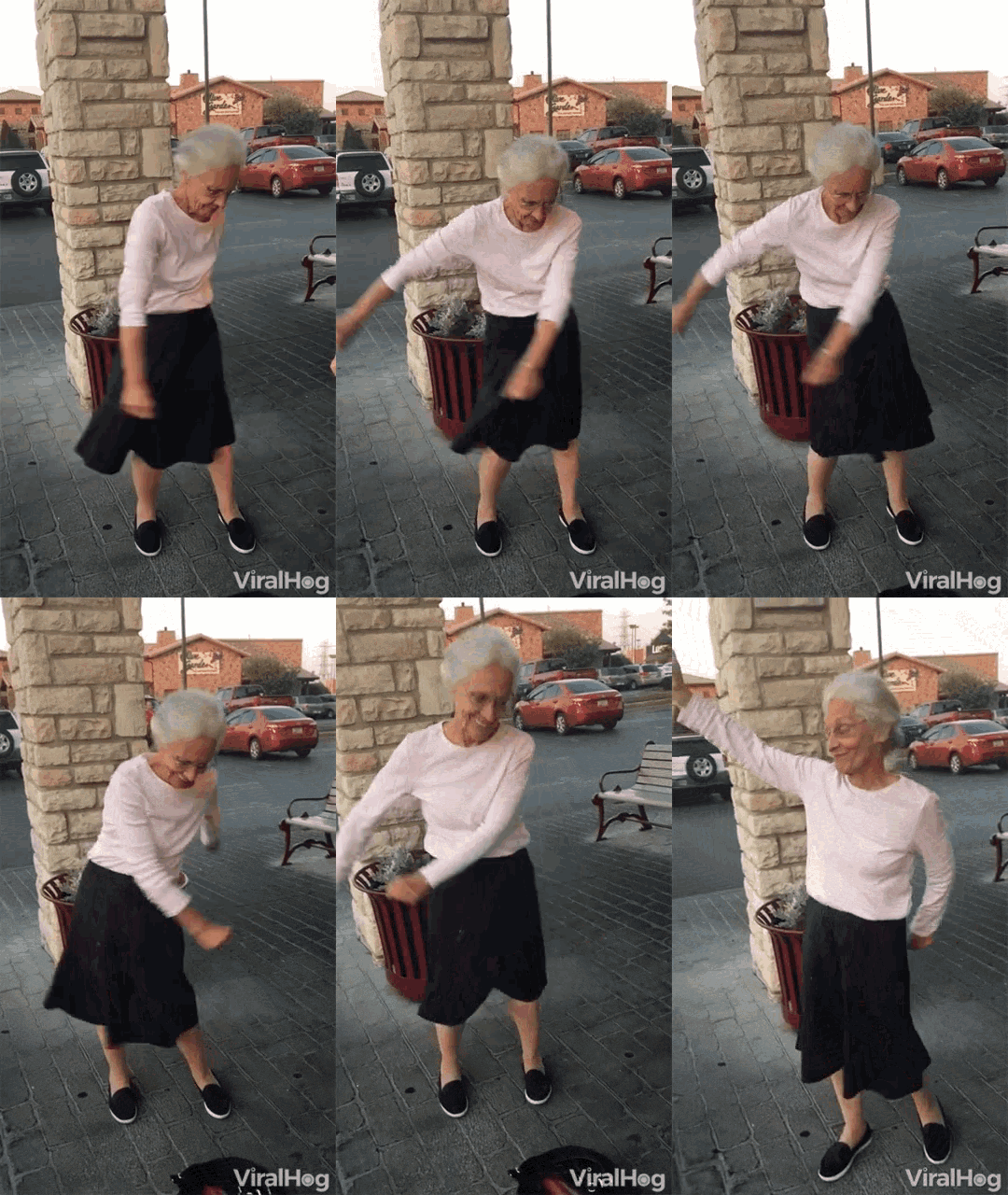
A week ago a major winter storm hit a large part of Texas causing several of our pipes to freeze and it left us without water. The plumbers are wrapping up the repairs and I’m ready to jump for joy! I will not miss having to put water in the toilet every time I need to flush and can’t wait to take a hot shower!

This is me!

Viralhog Grandma Dance GIF - Viralhog GrandmaDance BackPackDance GIFs

My prayers are with the many who are still struggling to get water, repairs, and some even housing. Please donate to give water to local charities if you can.

Melinda

Men & Womens Health

The 70 Year Storm: A Week Without Water

 I want to say first that we are totally blessed!!!!!!! I have nothing to complain about by a small inconvenience when people have lost everything they owed , have no where to live, and still have no running water and electricity.

This storm didn’t catch us by surprise but the magnitude of it did. There is no way to prepare for a storm that Texas is not built to the specs to handle that type of weather.

I will be watching closely to see who our power suppliers show transparency through the aftermath of the storm, what we’ve learned, and did they do all they could This is the last major storm we’ve had since 2011, which brought sweeping changes from the shortfalls then. 

I’ve included a few photos of the small inconveniences we’ve had to go thru, the biggest is not having running water and having buckets of water in the bathroom to flush the toilet.

Yesterday it was the 70’s and today a beautiful 60 degrees. That’s Texas for ya!

Please give to local charities if you can to help to provide meals and water to those without not to mention the devastation that will show itself in the coming weeks.

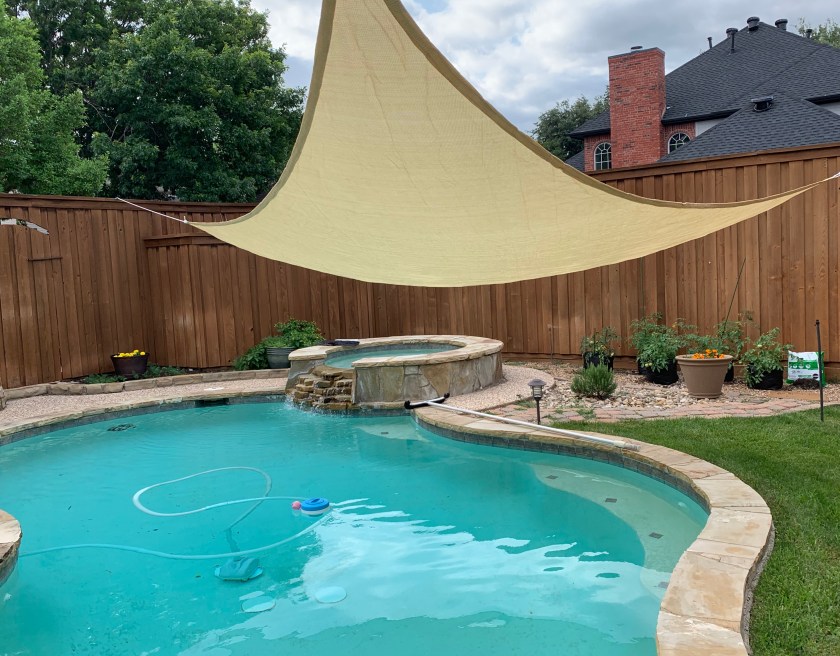
We have three water lines broken, a drain on the pool frozen, the line for the ice maker broke but we consider ourselves extremely lucky.

Please take advantage of the warming centers if you don’t have electricity and most importantly check on the elderly.

I’m sending all my fellow Texas lots of love and love to the rest of the country who are dealing with record temperatures.

Melinda


Men & Womens Health · Mental Health

The Osbournes Open Up About Addiction and How the Family Finally Found Recovery

Variety

By Marc Malkin

Ozzy Osbourne is finally in a good place.

The 72-year-old rock legend, whose battle with alcoholism and drug addiction began in the 1970s, has been sober for about seven years. “I thought I’d be drinking to the day I die,” says Osbourne, who took the first of his many trips to rehab back in 1984. His wife and longtime manager, “The Talk” co-host Sharon Osbourne, 68, struggled for years to keep the Black Sabbath frontman safe and capable of performing.

Ozzy, Sharon and their 35-year-old son, Jack, who has 17 years of sobriety, sat down with Variety’s Marc Malkin for an in-depth talk about substance abuse, its effect on families and what it’s like to seek treatment while living in the Hollywood spotlight.

Ozzy, when you had your first drink or drug experience, did you know right away it was going to be a problem?

Ozzy: I’ve always been self-medicating because I’ve never liked the way I felt. I’ve had great success in my life, but I’ve never felt great about myself. And so, from a very early age, I used to sniff fumes, all kinds of things, anything to get me out of my head.

When was the first time someone said to you, “Ozzy, you need help”?

Ozzy: I think the first time I took a drink. I needed help to get the next drink. And I never went for a drink. I went to get fucking smashed. I just checked out every day. And that becomes a way of life. In England, the thing is the pubs. I don’t know what it’s like there now, but when I was younger it was “We’ll meet in the pub.” Everything was around the pub. One of the last things my father said to me before he died, he said, “Do something about your drinking.” So I had a drink.

Sharon, do you remember when you thought Ozzy had a problem?

Sharon: I knew nothing about alcoholism. Nothing. I had worked with a lot of musicians, a lot of actors. And I just thought that’s how people are when they drink. I just thought, “OK. They just like to drink.” That was it. I understood nothing about the “-ism.”

And when did you learn about the “-ism”?

Sharon: I learned about it when Elizabeth Taylor went to Betty Ford Center. And that was exactly 36 years ago.

Ozzy: She said to me, “I found this place where they teach you to drink properly. It’s called the Betty Ford Center.” And I went, “That’s it. I’ve been doing it wrong.”

Sharon: I read the stories that she was there for drugs and drink, but I knew nothing about AA. I knew nothing about what happens there for your recovery, nothing about how they educate you. I just said, “You’ve got to go.” I was pregnant at the time. And I gave birth to Kelly, and the next morning, Ozzy left for Palm Springs. We lived in the countryside, way up north in England. And it was very barren, and all there was were the pubs. I just knew that this wasn’t the way people should carry on when they’ve got kids.

Jack, we hear this so often: Children of alcoholics and addicts say, “I don’t want to be like my mom. I don’t want to be like my dad.” Did you ever say that?

Jack: No, I guess I didn’t want to be the downside of it. I wanted to be the upside of it, because the upside of it, when things were great, it seemed like a lot of fun. I wanted the excitement of crazy adventures inebriated.

What was it like telling your parents you had a problem? Or did they tell you that you had a problem?

Jack: It was like a bit of a staggered disclosure, if you will. I was suffering from a lot of depression in my early teens, and I was drinking a lot. And then we did “The Osbournes” and it gave me a rather large piggy bank, so my parents had less control, and then my mom got sick [Sharon is a colon cancer survivor]. But in these times, I would dip in and be like, “Things aren’t great.” And then I’d pull back — “Oh, things are OK.” So it was this dance. Eventually, my mom received a phone call from a friend who was like, “This is bad.”

What happened next?

Jack: My mom sent some people to try and get me to go to treatment, but there wasn’t really a plan in place. I had not shown up to film something, and I was tucked away at the beach house my parents had at the time. And then I took off for a very long whirlwind of a weekend, and kind of came back home. I was pretty much done at that point.

How much do you think the reality show and fame contributed to your addiction?

Jack: I think it was just a matter of time. I think it just sped things up to the inevitable. Whether I’d never touched a drink until the age of 50, I still think the end result would have been the same. I’m one of those people that have an addictive personality, and I like things that change the way I feel.

You’ve been sober almost half your life.

Ozzy: That’s just great, Jack. I’m really proud of you for that.

Jack, did you ever think you would have 17 years of continuous sobriety?

Jack: No. I didn’t think that was even possible.

Ozzy:  The first year is the worst, isn’t it Jack? After the first year it’s like you can start breathing again.
Jack: But then I found after the first year, you’re like, “Oh, OK. So I guess I’ve just got to do that over again.” And then when you get to two years, you’re like, “All right, I guess I’ve got to do these two years over again to get to four years.” The blessing and the curse, I think with sobriety, is that time goes by really quickly, in a very strange way. It feels like a flash, 17 years, because you’re counting time.

Sharon, were you worried that your kids would be addicts too?

Sharon: No, I was like, “This is really like a huge, huge life lesson for them. They’ll never be like this, because look, this guy’s pissing himself on the floor. This one’s throwing up. This one’s just got a divorce. And their behavior’s outrageous. There’s no way they will follow this.” And they kept seeing their dad go back into rehab, and back, and back. And so I just thought, “They won’t want this in their life.” Little did I know that Jack was sniffing, and drinking, and God knows what else.

Sharon, you’ve always been described as the rock of the family. You’re the one who has stayed strong through it all. But how many times did you go in the bathroom, or go behind a closed door, and just scream?

Sharon: Probably every week.

How many times did you think Ozzy was going to die?

Sharon: Oh, my Lord. Well, basically for years, because I was terrified that he was going to get sick in the night, or fall over, hit his head. I would always make sure that there was somebody there, checking on him through the night when he was on the road without me. But it was always in the front of my mind.

Ozzy, what did it feel like to know that your children were watching you go through all of this?

Ozzy:  I didn’t give a shit, because I was loaded. It’s a very selfish disease. You don’t think about it because you’re loaded, in an altered state.

How hard is it to get sober in the public spotlight?

Jack: We’re on “The Osbournes” in the middle of whatever season we were doing and I decided to go into treatment, and it becomes this very public thing at that point. And I just found it incredibly invasive and, morally, really inappropriate. I was 17 years old. And the stuff that was being written, and having photographers try and take photos of me while I’m in a medical facility. Such violations of someone’s privacy while they’re trying to get help.

Ozzy:  The thing is, people call it a disease, but if you had cancer, people wouldn’t climb over trees and take a photo of you in your bed. Yet they do when you’re in rehab.

What do you say to musicians who are struggling but think it’s the only way?

Ozzy:  All I can say is, I’m 72 years of age. Most of the people that I drank with are dead. And the ones that aren’t, that still continue to drink, are going to be dead soon. It’s not a happy ending. If you want to carry on drinking, my hat goes off to you.

Sharon, did you ever think that Ozzy would get it?

Sharon: Initially I thought the first, maybe up to the fourth or fifth time he went into rehab, I thought, “It will work. He’ll get it this time. This time I know he’s got it.” And then after about the fifth time I’m like, “He’s never going to get it.” And you just accept it. That’s the way it’s going to be.

Ozzy: But then you realize the kids have got this fear in their eyes. I mean, it’s a very selfish disease. My kids needed me. … I had a row with Jack. I had to talk business. And I said, “What have you ever fucking wanted? I’ll give you whatever you want.” He says, “What about a father?” That kicked me in the balls so hard. It knocked me sideways. I went, “Oh, my God.” I’d give whatever materialistic things they ever wanted. But the most important person wasn’t there.

And as much as you say addiction and alcoholism is a selfish disease, so is recovery, because you have to put your recovery first.

Ozzy: Recovery is selfish. But you know if you don’t recover, you know exactly what it’s going to do there. Kelly said to me one day [after she got sober], “Nothing’s changed. I’ve gone so many years sober. What’s the problem? I might as well drink.” I said, “Let me tell you something, Kelly. When I drank after some period of time, it’s the worst feeling you will ever, ever have in your life. And you know what you do? You drink more to get rid of that guilt. It’s just that and it’s over.”

Jack, what do you say to a young person in Hollywood who is struggling?

Jack: If you want it, there’s a way to achieve it. It’s kind of like shut your mouth and be willing to take direction. It’s that honesty and open-mindedness, and willingness, to do whatever it takes. And if you want something bad enough, you can achieve it. Just as if you want to get loaded bad enough, you’re gonna get loaded. And it’s that kind of situation of, for me, I really wanted it. And I did what I was told. And I followed the direction of my tribe, my community around me. And it has continued. Whatever I did has continued to work, because I continue to do it. It’s never over. There were times, when I had 10 years sober, and I was raising my hand as a newcomer at a different 12-step recovery group.

Ozzy, why do you think you’ve survived?

Ozzy: I’m lucky. There’s nothing special about me. I should have been dead 1,000 times. I’m not being big-headed about that, or invincible. It doesn’t take much to kill you.

Sharon: It really doesn’t.

Sharon, what’s it like to have a sober Ozzy?

Sharon: Very calm in the house. It’s very pleasant in the house. It’s great for our whole family. It really is.

This interview has been edited and condensed for clarity.

Health and Wellbeing · Men & Womens Health

7 Zoom mistakes you might still be making — and how to raise your video skills

IDEAS.TED.COM

Feb 9, 2021 / Briar Goldberg

This post is part of TED’s “How to Be a Better Human” series, each of which contains a piece of helpful advice from people in the TED community; browse through all the posts here. 

Here we are, over a month into 2021 and I’m feeling cautiously optimistic.

I’m hoping that we’ll soon be able to enjoy some of the simple, daily routines we took for granted before the pandemic.  But — and I hate to break it to you — there’s one 2020 routine that appears to be sticking around for the long haul: Virtual presentations.

I’m the Director of Speaker Coaching at TED, and before I joined TED, I was an executive communication coach and speechwriter. I’m telling you this because for me, this shift to virtual presentations is a hilarious career irony. I’ve spent so many years hating on webinars and begging the speakers and executives I’ve coached to avoid video communications whenever possible.

But virtual meetings, speeches, presentations and conferences are, in fact, the new normal. So if that’s the way it’s going to be, let’s do our future audiences a favor and polish up our virtual communication skills.

Even though so many of us have been spending so much time on Zoom in recent months, I’ve noticed there are some common mistakes that people — even experienced communicators — are still making. Here they are, along with my favorite tips and tricks to fix them all.

Mistake : Not enough eye contact with the audience 

The fix: Look at your camera, not your screen

We’ve all heard that eye contact is important. But do you know why? Direct eye contact can influence your audience’s perception of your credibility, trustworthiness, even your ability to lead.  But most importantly, your audience will try harder to stay focused if you appear expressive and look them in the eye. In the great battle for attention between you and your audience’s Insta feed, eye contact is one weapon that could tip the scales in your favor.

The only way to make eye contact with your virtual audience is to look directly at the lens of your camera. Trust me: This will feel really strange at first, because we’re used to looking at our screens during video calls so we can see what everyone else is doing (and see how we look). But if you want your audience to remain engaged and attentive, you’ll need to sacrifice your own desire to look at their faces.

My general rule is to keep your eyes on the lens 90 percent of the time and use the remaining 10 percent to look around and make sure your audience is smiling and following what you’re saying. To understand the difference — which is subtle but significant — check out these two photos:

Looking at my lens
Looking at my screen

Mistake #2: Vocal monotony 

The fix: Make sure there’s variety in your voice  

When we talk to our friends and family, there’s a lot of natural variety in the speed, volume, pitch and inflection in our voices. That variety is really important, because it adds context and meaning to our words — and it adds interest and drama.

But when we’re nervous or reading from our notes, we can often lose that variety. This can be a big problem in a virtual setting where the other non-verbal cues that add context, such as hand gestures and facial expressions, are harder to see.

One way to inject vocal variety into your virtual presentation — or any presentation, for that matter — is to use words and phrases that feel comfortable to you. Practicing beforehand also helps ensure your voice maintains its natural spontaneity, and even just one out-loud rehearsal can make you feel less nervous and less dependent on your notes.

Mistake #3: Winging it or reading from your notes 

The fix: Rehearse in advance 

Speaking of practice … yes, you still have to practice even though you’re presenting over Zoom. As a communicator, your number-one priority should be your audience’s experience — regardless of the setting. And you can’t focus on their experience if you’re too busy thinking about what to say next or fumbling with your script.

Think about it this way: Your audience is taking time out of their busy days to listen to you. So the very least you can do to honor their time is to practice a little in advance. Just because you could turn your laptop or your phone into a teleprompter doesn’t mean you should. 

Mistake #4: Going overboard on slides 

The fix: Use your slides effectively 

As we all know, it’s so easy to get distracted when watching a virtual presentation. So when you’re speaking virtually, you want to do everything in your power to keep your audience’s eyes on you and off of their phones. One way to do this is to make sure you’re using slides effectively.

Remember, you’re the main event: Only use slides if they will actually help your audience better understand what you’re presenting. While this is true when you’re speaking in person, I’d argue it’s even more important over video. If your entire presentation is slides — and the audience can’t see your face — they’ll feel less accountable and off to Instagram they’ll go!

Simplify, simplify, simplify: If your audience is forced to make a choice between reading a dense slide or listening to you speak, they’ll go for reading almost every time. In order to maintain control of your presentation, you should limit the amount of information you put on each of your slides. Yes, you’ll have more slides, but they’ll be easy to digest, so that’s OK.

Practice the technical aspects too: Before your virtual speech or presentation, rehearse toggling in and out of “share screen” mode so your slides won’t be projected throughout your entire presentation. Because eye contact helps your audience stay focused, you want your face front and center as much as possible.

Use black slides: Sometimes you’ll have several slides that you want to share in a short amount of time, which means toggling back to full video isn’t an option. However, keeping an old slide up could be distracting. In these cases, here’s a pro-tip: Add blank, black slides in between your content slides so you can essentially click to black and get the audience to refocus on your voice. I prefer black slides to white slides, because black makes it look like you’ve intentionally turned off the slide-sharing feature.

Mistake #5: Inviting your audience to look at all the titles on your bookshelf 

The fix: Choose a non-distracting background 

I’ll be the first to admit how much I’ve enjoyed peeking into so many different people’s homes as a result of virtual meetings. But I’ll be honest, I do have concerns about how many people sit in front of their bookshelves  so it ends up being their background.

If your goal is to keep our audience engaged and focused, you want to make sure your background isn’t accidentally distracting. At the same time, sitting in front of a plain white wall looks a little bleak. If possible, select a background that’s familiar but not too busy. If sitting in front of a bookshelf is your only option, consider sitting a little further away so you’ll still have a colorful background but your audience won’t be able to read the titles while you’re speaking.

Mistake #6: Lighting that’s too bright or too dark 

The fix: Sit in the right spot in your room  

A little lighting can go a long way towards making you look polished and prepared when speaking to a virtual audience. While there are many great lighting products and devices you can buy, you don’t have to spend money to light yourself well.

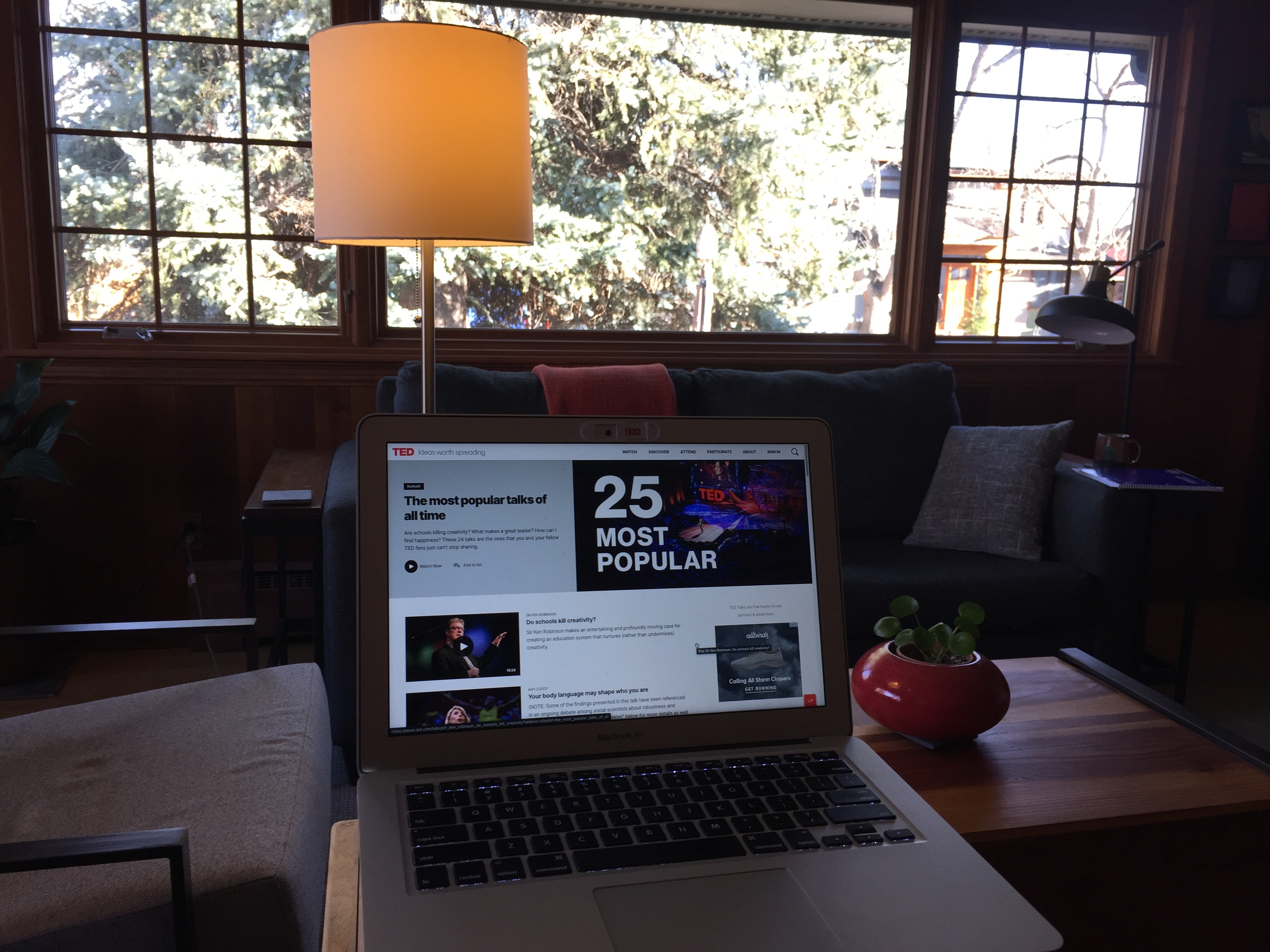
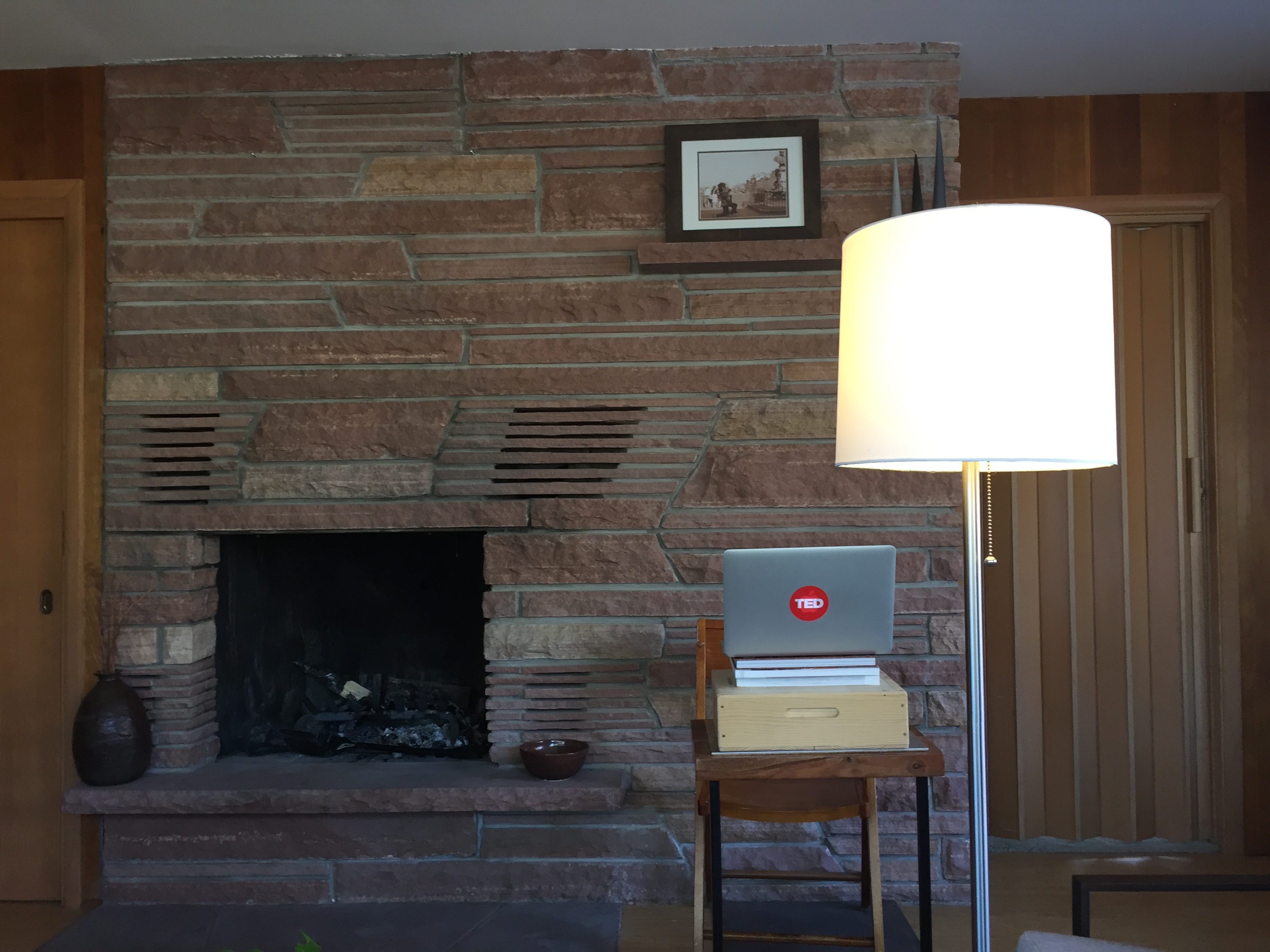
The key is to make sure your primary source of light is directly behind your camera, throwing light on your face. So you might choose to position yourself in front of a window or a lamp or both. Here are a few photos of the lighting setup that I use when I teach TEDTrainings from my living room.

I face the window and the lamp, and then I use the fireplace as my background

Mistake #7: Letting everyone turn off their video 

The fix: Encouraging your audience to stay on camera

There are a handful of communication truths that I’ve been preaching my entire career, and one of them is that I believe it’s always the speaker’s responsibility to keep the audience engaged. If the audience’s attention starts to wane, it’s on the speaker to adjust.

But virtual speaking adds a little wrinkle to my belief — as a virtual communicator, it’s often  impossible to know if your audience is paying attention when you can’t see them! So, in Zoom land, it’s 100 percent OK for you to ask your audience to turn on their cameras. And if you want to be very polite, send a note asking for on-camera attendance in advance. That way, your audience can plan!

Speaking of being polite, we can also choose to show up on camera when we’re in the audience. You would never show up to an in-person meeting with a paper bag on your head, but it seems that in our new virtual normal, many of us feel pretty comfortable showing up incognito.  So why don’t we make a little pact right now?  Since virtual communications are here to stay, let’s all agree to be on camera as often as possible when we’re a member of a virtual audience.  That way, when it’s our turn to present, we’ll be able to see everyone’s messy homes and pandemic hair without having to ask.

Here’s to hoping that sooner rather than later, we’ll all find ourselves fending off stomach butterflies backstage before we speak in front of real, live, in-person audiences. But until then, I’m wishing you the best of luck in all of your virtual speeches, presentations, meetings and cocktail hours.

Watch this TED-Ed Lesson on effective rhetoric: 

Watch this TED Talk from Julian Treasure: 

ABOUT THE AUTHOR

Briar Goldberg is the Director of Speaker Coaching at TED. 

Health and Wellbeing · Men & Womens Health · Mental Health

Why rejection hurts so much — and what to do about it

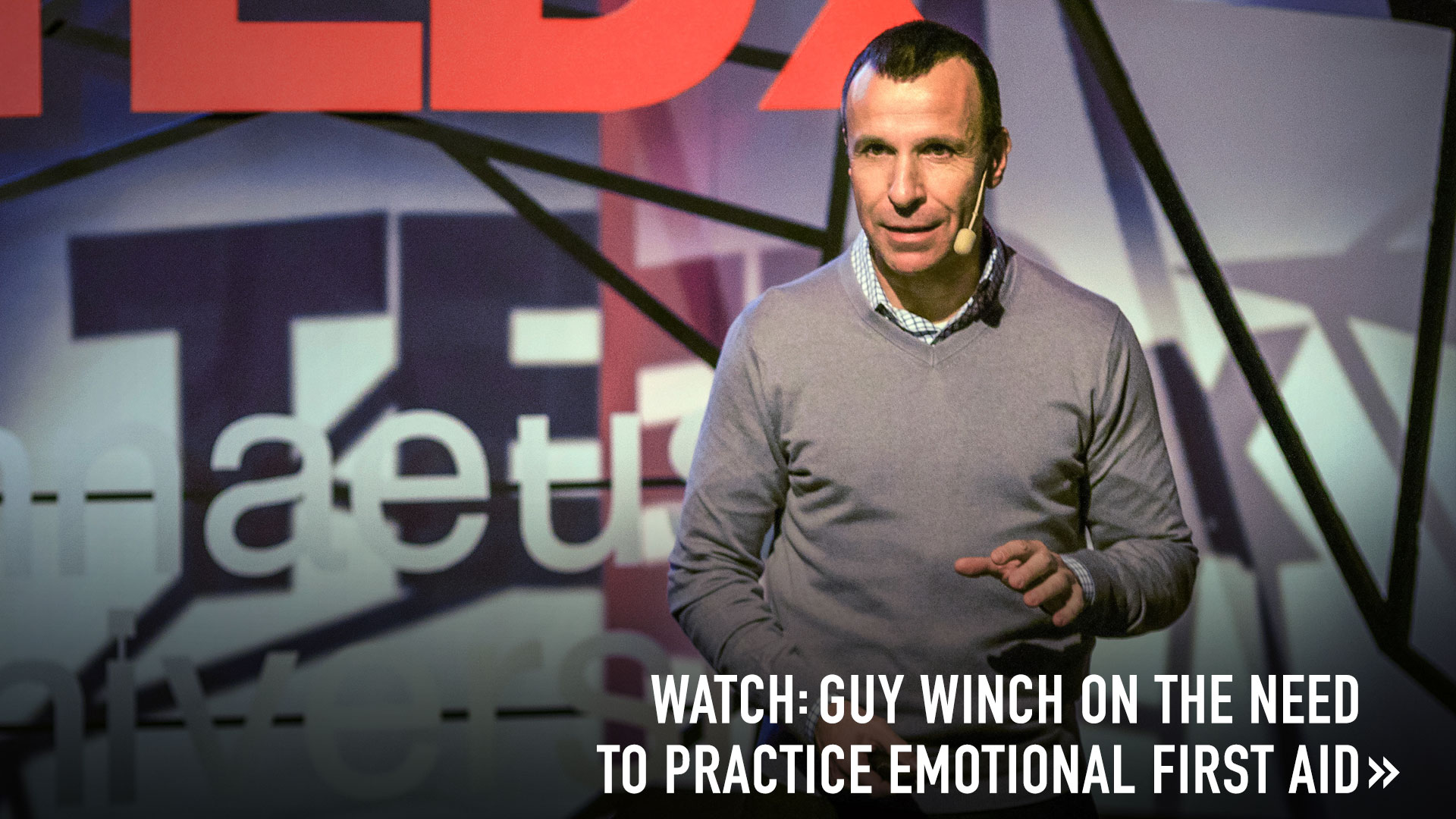
Dec 8, 2015 / Guy Winch

IDEAS.TED.COM

Psychologist Guy Winch shares some practical tips for soothing the sting of rejection.

Rejections are the most common emotional wound we sustain in daily life. Our risk of rejection used to be limited by the size of our immediate social circle or dating pools. Today, thanks to electronic communications, social media platforms and dating apps, each of us is connected to thousands of people, any of whom might ignore our posts, chats, texts, or dating profiles and leave us feeling rejected as a result.

In addition to these kinds of minor rejections, we are still vulnerable to serious and more devastating rejections as well. When our spouse leaves us, when we get fired from our jobs, snubbed by our friends, or ostracized by our families and communities for our lifestyle choices, the pain we feel can be absolutely paralyzing.

Whether the rejection we experience is large or small, one thing remains constant — it always hurts, and it usually hurts more than we expect it to.

The question is, why? Why are we so bothered by a good friend failing to “like” the family holiday picture we posted on Facebook? Why does it ruin our mood? Why would something so seemingly insignificant make us feel angry at our friend, moody, and bad about ourselves?

The greatest damage rejection causes is usually self-inflicted. Just when our self-esteem is hurting most, we go and damage it even further.

The answer is — our brains are wired to respond that way. When scientists placed people in functional MRI machines and asked them to recall a recent rejection, they discovered something amazing. The same areas of our brain become activated when we experience rejection as when we experience physical pain. That’s why even small rejections hurt more than we think they should, because they elicit literal (albeit, emotional) pain.

But why is our brain wired this way?

Evolutionary psychologists believe it all started when we were hunter gatherers who lived in tribes. Since we could not survive alone, being ostracized from our tribe was basically a death sentence. As a result, we developed an early warning mechanism to alert us when we were at danger of being “kicked off the island” by our tribemates — and that was rejection. People who experienced rejection as more painful were more likely to change their behavior, remain in the tribe, and pass along their genes.

Of course, emotional pain is only one of the ways rejections impact our well-being. Rejections also damage our mood and our self-esteem, they elicit swells of anger and aggression, and they destabilize our need to “belong.”

Unfortunately, the greatest damage rejection causes is usually self-inflicted. Indeed, our natural response to being dumped by a dating partner or getting picked last for a team is not just to lick our wounds but to become intensely self-critical. We call ourselves names, lament our shortcomings, and feel disgusted with ourselves. In other words, just when our self-esteem is hurting most, we go and damage it even further. Doing so is emotionally unhealthy and psychologically self-destructive yet every single one of us has done it at one time or another.

The good news is there are better and healthier ways to respond to rejection, things we can do to curb the unhealthy responses, soothe our emotional pain and rebuild our self-esteem. Here are just some of them:

Have zero tolerance for self-criticism

Tempting as it might be to list all your faults in the aftermath of a rejection, and natural as it might seem to chastise yourself for what you did “wrong” — don’t! By all means, review what happened and consider what you should do differently in the future but there is absolutely no good reason to be punitive and self-critical while doing so. Thinking “I should probably avoid talking about my ex on my next first date” is fine. Thinking “I’m such a loser!” is not.

Another common mistake we make is to assume a rejection is personal when it’s not. Most rejections, whether romantic, professional, and even social, are due to “fit” and circumstance. Going through an exhaustive search of your own deficiencies in an effort to understand why it didn’t “work out” is not only unnecessarily but misleading.

Revive your self-worth

When your self-esteem takes a hit it’s important to remind yourself of what you have to offer (as opposed to listing your shortcomings). The best way to boost feelings of self-worth after a rejection is to affirm aspects of yourself you know are valuable.

Make a list of five qualities you have that are important or meaningful — things that make you a good relationship prospect (e.g., you are supportive or emotionally available), a good friend (e.g., you are loyal or a good listener), or a good employee (e.g., you are responsible or have a strong work ethic).

Then choose one of them and write a quick paragraph or two (write, don’t just do it in your head) about why the quality matters to others, and how you would express it in the relevant situation. Applying emotional first aid in this way will boost your self-esteem, reduce your emotional pain and build your confidence going forward.

Boost feelings of connection

As social animals, we need to feel wanted and valued by the various social groups with which we are affiliated. Rejection destabilizes our need to belong, leaving us feeling unsettled and socially untethered.

Therefore, we need to remind ourselves that we’re appreciated and loved so we can feel more connected and grounded. If your work colleagues didn’t invite you to lunch, grab a drink with members of your softball team instead. If your kid gets rejected by a friend, make a plan for them to meet a different friend instead and as soon as possible. And when a first date doesn’t return your texts, call your grandparents and remind yourself that your voice alone brings joy to others.

Rejection is never easy but knowing how to limit the psychological damage it inflicts, and how to rebuild your self-esteem when it happens, will help you recover sooner and move on with confidence when it is time for your next date or social event.

guy_winch_emotional_first_aid_TEDTalk

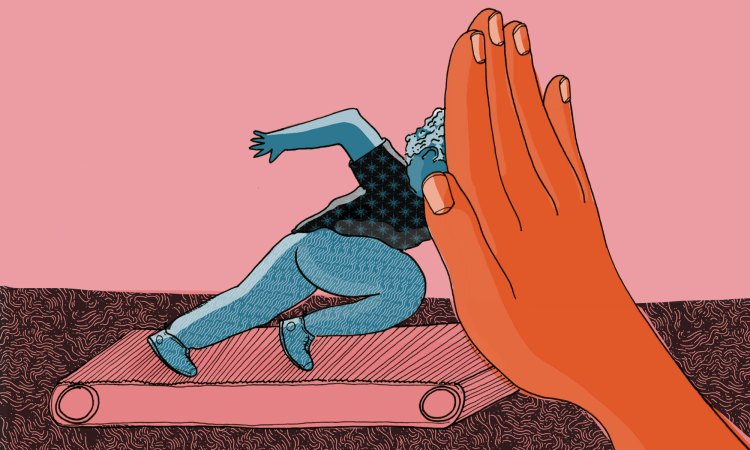
Illustration by Dawn Kim for TED.

ABOUT THE AUTHOR

Guy Winch is a licensed psychologist who is a leading advocate for integrating the science of emotional health into our daily lives. His three TED Talks have been viewed over 20 million times, and his science-based self-help books have been translated into 26 languages. He also writes the Squeaky Wheel blog for PsychologyToday.com and has a private practice in New York City.

Celebrate Life · Fun

#Weekend Music Share *

It’s the weekend!!!!!!

I’m so glad you’ve joined me.

With so much of the country ia a freezing lockdown I looked for an appropriate song about weather, snow, rain, something that might hit the feeling I have right now. My husband and I are blessed, we have only minor damage and did not lose water or electricity. My heart bleeds for those how Mother Nature wreaked havoc on their life. I’m sending warm wishes your way.
Have a great weekend!

Melinda


Welcome back to Weekend Music Share; the place where everyone can share their favorite music.
Feel free to use the ‘Weekend Music Share‘ banner in your post, and don’t forget to use the hashtag #WeekendMusicShare on social media so other participants can find your post.

Fun

Friday Quote

It’s Friday!

This week was a little hard to stay positive, with this 70 year winter freeze but in the big picture we are so blessed compared to many of our neighbors and those around the world.

See the source image

So glad you stopped by today.

I hope you have a great weekend with friends and family staying COVID safe.

Melinda

Health and Wellbeing · Men & Womens Health

5 Important Tips To Consider When Signing Prenuptial Agreement

Thinking of moving into a new relationship after a split is a great feeling. But, first, consider the status of the family assets from the broken marriage. You will need to sign a prenup for the children before getting into another relationship.

Photo by Anna Shvets on Pexels.com

To attain family peace, have this contract to ease financial pressure, know how to handle the kids in the new formation, and for alimony settlement. Getting into a new marriage without an agreement could paralyze the relationship before it even starts.

Here are few tips to consider when going for a prenuptial agreement:

Be Keen During the Negotiations

Before getting into marriage, you need to be honest in all open discussions relating to finances and liabilities. And, highlighting your financial expectation from the partner is essential. You should ask the partner if they’re willing to sign the agreement. 

You never know; some people are easily offended by the idea, not to mention the document itself. Often such people perceive it as a lack of trust. For this reason, this is a delicate topic that requires a lot of caution. If the partner isn’t willing, know what to do and remember that the agreement doesn’t have security in removing separation court battles. 

Have Compassion

Even though you desire to get into another relationship, understanding your partner is essential. Prenuptial agreements are strict, and once this discussion comes to the table, don’t get hurt by your lover’s suggestions.  

 Know the Power Imbalances

Most prenup agreements come into being when one partner has more property or assets than the fiancée. In most cases, it shows an imbalance during the negotiation process. And you can use divorce solicitors to help you in case you’ve kids with the property shares. 

You can settle the imbalance with straight talks – openly discuss the leverage and power disparities for amicable understanding. If done the right way, the final agreement document won’t be coercive but rather good. 

Understand that prenups vary

Ideally, these types of agreements are necessary when you’re getting into a marriage with assets and properties made before the partner’s existence. So, you have to agree on how to plan everything and so forth. 

It’s not necessary if both of you own nothing. You can plan with your partner on sharing expenses.

Consider Mediation

When signing a prenup, a mediator is inevitable. You can consider bringing a divorce mediator on board to help with vital information. These people have vast experiences and knowledge on what contributes to a marriage failure and the successful ones. 

In most cases, people sign the agreement to help if a divorce arises, making divorce mediators the best professionals for the task. They will help you determine solutions on how to share the assets or properties when a split strikes. 

While these tips place you in a better position of signing a prenuptial agreement, you must also consider a professional mediator’s input in the process. You wouldn’t want to carry the burden of overlooking the expert input aspect.

Besides, you can search through and find the best advice fitting your situation with the partner. From there, please consult a professional to help you in signing this vital life document.

This is a collaborative post.

Melinda

Men & Womens Health

#Wordless Wednesday*Dreaming

Have a great Wednesday!

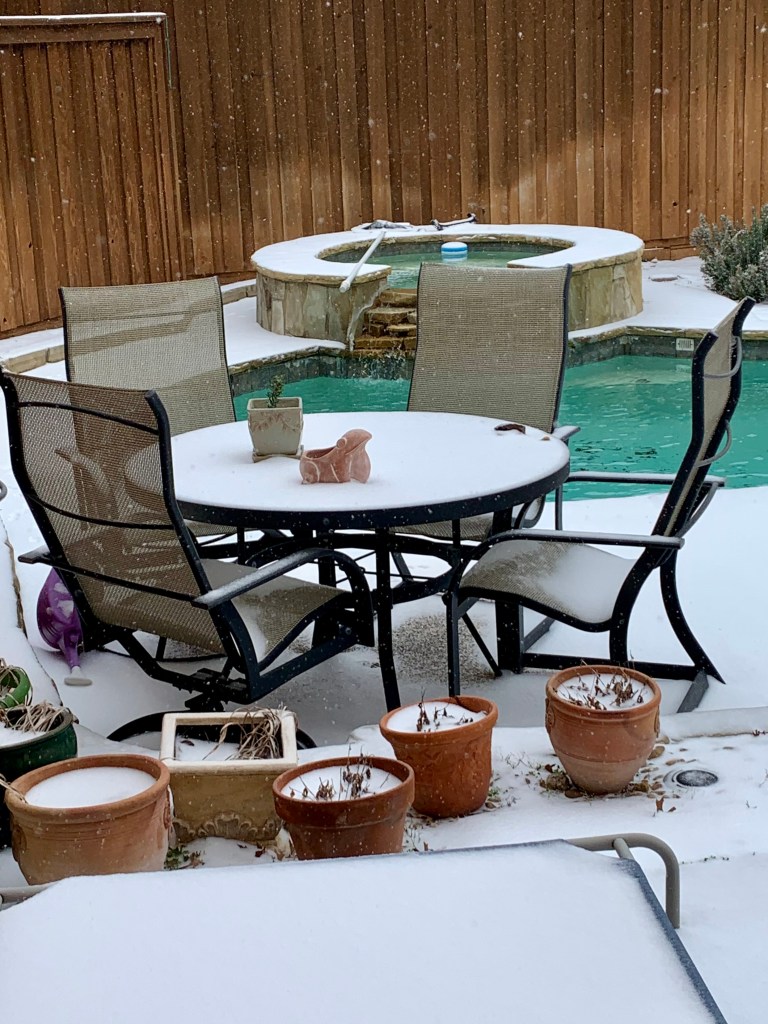
We have ice in the pool for the second day, we’re praying the pipes don’t freeze. We have half of the pipes in the house frozen, luckily not broken. That’s what happens when a storm like this hasn’t hit in 70 years.

I look forward to seeing you again next week.

Melinda

Health and Wellbeing

Why is The Beauty Industry So Expensive?

According to a SkinStore.com survey, 85% of American women never leave the house without using at least 16 facial care and beauty products. The survey established that every day, women wearing on average $8 worths of skincare and beauty products. This may not seem like much, but during your lifetime, you are likely to spend up to $300,000 on beauty products. 

Why is the beauty industry so expensive? Indeed, while we are willing to look after our skin and hair, most of us would think twice if they considered their beauty budget as a whole. Does it have to be so costly? 

Unsplash – CC0 License 

It’s worth checking the trends 

The beauty and personal care market is constantly growing and evolving. The trends of today may not be relevant anymore by tomorrow. Besides, diving into the Personal Care Industry market could highlight some interesting findings. Perhaps, other buyers have identified new wonder products that could be more effective than your routine buys. Alternatively, this is also a great way of understanding how to balance beauty services and products, and where you should spend your money for the best results. 

Businesses price insecurities rather than solutions 

Why are you willing to pay a lot of money for a product you haven’t yet tried? Businesses in this market know how to make their products sound appealing to their audience groups. For instance, a lot of customers are willing to pay more for products that promise to tackle their insecurities. Hair loss products, for example, can cost several hundreds of $, while you could get positive results without breaking the bank. The belief that expensive is better is engraved in our brains. We put a high price on our insecurities, whether it is bad skin or hair loss, based on how they make us feel. Therefore, we want to pay a lot of money for products whose price tag reflects our heightened emotional state. 

We lack beauty knowledge

Science can play a huge role in the beauty market. However, science doesn’t mean you need to buy products that have been specifically designed in labs to obtain positive results. Science is about understanding which ingredients work for you. Therefore, basic beauty knowledge could dramatically transform our routines and beauty budget. You’ve got a lot of natural ingredients in your kitchen that can replace some of your most expensive products without sacrificing results. Raspberries and coconut oil combined can help brighten up your lips and nourish the skin. Comparatively, it is a cheap but effective alternative to chemical treatments. 

Photo by Elly Fairytale on Pexels.com

We misunderstanding the luxury in self-care

Everyone wants a personal care routine that makes us feel good. But that doesn’t mean you should confuse the luxury feel of me-time without your product price tag. Beauty is about self-care. Expensive products are not always more effective. Giving your mind the time it needs to unwind can help reduce stress levels and alleviate signs of stress, aka dull complexion, pimples, wrinkles, etc. 

In conclusion, while some products are expensive to reflect on the difficulty to find or process some ingredients, there’s no need for the beauty industry to create a hole in your budget. More often than not, we are willing to pay more because we lack knowledge of the trends or the best natural ingredients. The more insecure we feel, the more we are ready to spend money to make our fears disappear. This has to stop! Feeling good in your skin shouldn’t break the bank. 

This is a collaborative post

Melinda

Health and Wellbeing · Men & Womens Health

How To Find The Luxury Home Of Your Dreams

How To Find The Luxury Home Of Your Dreams

https://unsplash.com/photos/KtOid0FLjqU

We all have a dream home in mind. Even if you don’t exactly know what it looks like, that’s okay. Most of us just know that there’s a certain style of home or caliber of property that we’re aspiring to. Whether it’s something that you want to start thinking about now, or it’s a property that you want to work towards in the future. It’s nice to know exactly what you’ll need to do to be able to make it happen.

If you’ve ever bought a property before, you’ll find that you know what the process is like. It can take time. You may spend months or years trying to find the right place. Or maybe you’re just not sure how to find it. Let’s take a look at what you can do to find the luxury home of your dreams.

Work With An Agent

First of all, you might want to think about working with a specialist to help you here. You may find that working with the best real estate agents is going to be the key. They know the market the best and they may even know about houses for sale that aren’t listed yet. This could be the simplest option to start with.

Find An Area You Love

From here, you might want to think about finding an area that you really love. It might be the case that there are certain luxury apartment communities that you know about and want to explore. Knowing the area is always a good start. So this is important to keep in mind.

Build It Yourself

It could even be that you decide that you want to find the house of your dreams by building it yourself. Sometimes, you just won’t find the house you want already out there. Or maybe you are inspired by a range of properties you’ve seen and you want to combine the things you love? When you build your dream home, you get to bring everything you want together for all the modern conveniences you desire. So this might be the option for you.

Make An Offer

Sometimes, you don’t find your perfect home through the traditional route at all. It could be that you actually know which home you want to live in. Maybe it’s in your area or you’ve seen it before. It could be that it’s not actually for sale. But sometimes, you can actually reach out to the owners and make an offer. It’s obviously not the traditional thing to do, but it happens and there is no reason why you can’t ask. Sometimes it will mean that you get to live in the house you’ve always wanted to.

Final Thoughts

Searching for a luxury home isn’t always a quick process. When you have high standards and you know what you’re looking for, it can take time to find the right place. But with one of these options, you should be able to find your perfect luxury home.

This is a collaborative post.

Melinda

Health and Wellbeing · Men & Womens Health

3 Things to Consider in a Legal Separation

3 Things to Consider in a Legal Separation

Did you know that for you and your spouse to be considered legally separated, you should have been living apart for six months? Additionally, while pursuing a separation, there should be no possibility of reconciliation. With 50% of marriages in the United States ending in separation and divorce, it helps to arm yourself with some knowledge on what this entails. Read further to find out the things to consider when seeking a legal separation.

Child visitation and custody

Image Credit

Although it’s a legal separation, the law demands that both parents decide on custody agreements and child visitation rights. Regardless of the circumstances behind the marriage’s breakdown, your young children (under 18 years) should come first in this decision-making process, primarily for their mental and emotional well-being. No matter how low the marriage has sunk, your utmost concern should be creating a stable and balanced family for the kids in question. You should always try to make your children feel safe and secure in every situation.

Remember also that whatever you agree to concern child custody can continue to remain so when the divorce is finally granted, the only exception being when there’s irrefutable proof or evidence of one partner being abusive. In other cases, when a party has a criminal record that bars him or her from getting full custody of kids (biological or adopted), the court can grant supervised visitations.

Hire qualified legal representation

Indeed, the procedures, processes, and countless paperwork necessary in legal separations are complex. It can be an arduous emotional and mental journey getting through with each stage. With the associated stress and emotional torture that comes with it, you’ll find it worthwhile to seek a qualified family law attorney. Most importantly, your lawyer can represent you in court, which can save you countless courthouse sessions.

If you’re already on the lookout for such help, you can Google “divorce solicitors Manchester” and reputable firms such as Bannister Preston will be among the results. They are a group of lawyers with decades of experience in family law with trusted solutions for your legal challenges. Getting useful legal advice and representation in a trying period such as this can help smoothen the process. As already indicated in earlier paragraphs, legal separation can be intense, and you need experienced hands to help you set the right plan in motion.

Create an asset inventory

Image Credit

This is one of the essential parts of any legal separation and divorce. Dividing assets is a stage every couple seeking separation and divorce will arrive at, at some point. Make a rough list of properties (moveable and unmoveable) you own, ranging from houses, land, bank accounts to vehicles.

Everything both parties own should be listed and valued appropriately, as this is usually the stage notable for contention during the legal separation and divorce proceedings. It’s better to declare everything you both own as a couple to avoid any further strife.

Separation and divorce are not things people willingly look forward to. Unfortunately, circumstances leading to the total breakdown of the marriage may bring couples to this point.

So, assuming you have no choice but to go down this path, make sure it’s done within the confines of the law.

This is a collaborative post.

Melinda

Men & Womens Health

Jet’s First Snow Day

This is more snow than we’ve had in ages and tonight it’s going to be in the teens! That should be a record-breaker for us here in North Texas. We’re on full alert here for freezing pipes and the craziest thing happened, our refrigerator quit out last night.

Health and Wellbeing · Men & Womens Health · Mental Health

A Chronic Voice February Link Up Party

Writing Prompts For The February Link-Up Party

Each month Sheryl from A Chronic Voice does a link-up party and this month’s writing prompts are Defining, Saving, Allocating, Educating, and Uniting. I choose three of the five writing prompts, Defining, Saving, and Allocating. This is my first link-up party and I look forward to joining in more often during 2021.

The purpose of the Link Up Party is for people with chronic illnesses to use writing prompts to share aspects of their life that may help or motivate others to live their best lives. A Chronic Voice has been doing the monthly writing prompts since 2017 and the post contributed each month are very interesting, educational, and motivating, and sometimes very funny.

Defining

I’m defining who I want o to be, what I want each day to look like, and most importantly, how I want to act. It’s so easy to go with the flow when you chronically ill, we have every reason too. What I want to do is define what my life is going to look like for all the days I can control. I know there will be days I won’t live up to my expectations and that’s okay, it’s not a failure, it’s reality. I need to clear my head and get back to what my goals are and what am I working for in the way of self-improvement. It only takes a small amount of effort to be nice, and I want to work harder at taking that extra step to help people and not be the naysayer.

Saving

This month I’m saving my energy for my health by getting enough rest and sleep. I’m saving a ton of energy by staying away from negativity, and also being more aware of how much time I spend on social media. I already limit my news watching to one hour a day but there are many headlines thrown at you while you’re on the Internet that can be very distracting. I’m working harder to not look at the headlines, for all I know its fake news. Staying clear and focused on my goals will save energy. If I’m doing the actions to support my goals every day then there isn’t time to waste on energy drainers.

Allocating

I’m allocating time to expand the types of posts I write, one way is by reading books that have been gifted for reviews. I’ve worked hard to transition my blog, Looking For The Light to a Health and Lifestyle blog, not one focused solely on my chronic illnesses. Another way I’m allocating is thru time spent on reading, researching, and taking more time to write each post. Not worrying about a schedule as much. On the health front, my hips are causing me tremendous pain and have even disrupted my sleep for months now. The doctor has increased my meds and has me scheduled for a CT Scan of both hips next week. This is on top of the everyday Fibromyalgia pain I have. I have to allocate time for rest, pain is very draining. Taking time out several times a day to rest or do nothing is important, I’m working on making myself number one more often.

How are you Defining, Saving, and Allocating this month?  

Melinda


Celebrate Life · Fun · Health and Wellbeing

Happy Valentines Day

I remember as a kid my mother would buy us a package of Valentine’s cards to fill out for all of our classmates. And who can forget the sweetheart candy with sayings like Would you be mine? on written them. Somewhere along the line cards became directed at a special someone you wanted to know how you felt about them.

My husband and I still exchange Valentine’s Day cards after 18 years of marriage. it’s an important day to say you care and that you hold them in a special place in your heart. In addition to a card, I received a heart-shaped box of chocolate-covered strawberries and an orchid plant. He knows the way to my heart! Of course, it takes much less than that to win me over.

Valentine’s Day, also called Saint Valentine’s Day or the Feast of Saint Valentine, is celebrated annually on February 14. It originated as a Western Christian feast day honoring one or two early Christian martyrs named Saint Valentine and is recognized as a significant cultural, religious, and commercial celebration of romance and….

Photo by Pixabay on Pexels.com

Happy Valentines Day, Will you be my Valentine?

Melinda

Celebrate Life · Health and Wellbeing · Men & Womens Health

How did the human heart become associated with love? And how did it turn into the shape we know today?

IDEAS.TED.COM

Feb 12, 2019 / Marilyn Yalom

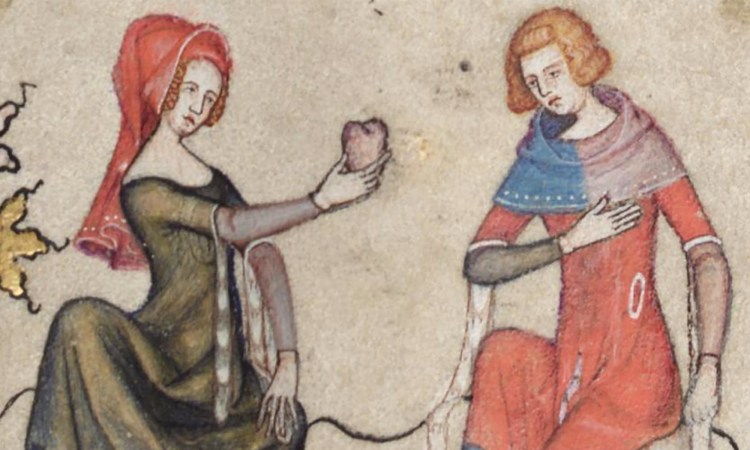
Jehan de Grise and his workshop, “The Heart Offering,” 1338-1344. Illustration from The Romance of Alexander, Bodleian Library, Oxford, England.

We see the familiar symbol everywhere — in text messages, signs, cakes, clothing, and more. But we also know the real heart looks nothing like it. Historian Marilyn Yalom tells us how the anatomical organ became the symbol that we all know today.

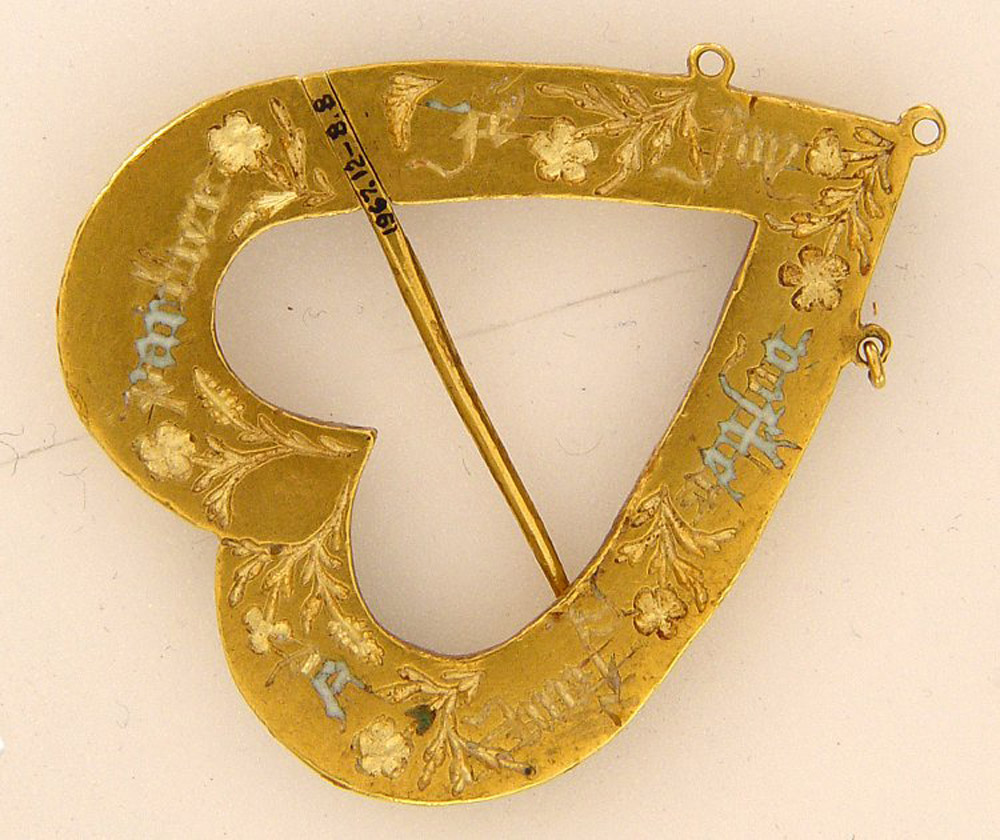
In 2011, I went to the British Museum in London to see a collection of 15th-century artifacts, which included gold coins and jewelry that were part of the Fishpool Hoard found in England in 1966. I was particularly attracted to a heart-shaped brooch (below, one of the heart brooches from the hoard).

That day, I noticed the heart’s two upper lobes and its V-shaped bottom point as if I were seeing them for the first time. It quickly dawned on me that the symmetrical shape is a far cry from the ungainly lumpish organ inside us. From that moment on, the figure of the heart pursued me. I wanted to answer two questions: “How did the human heart become transformed into the iconic form we know today?” and “How long has the heart been associated with love?”

Artist unknown. Brooch from the Fishpool Hoard, 1400-1464, British Museum, London, England.

As far back as the ancient Greeks, lyric poetry identified the heart with love in verbal conceits. Among the earliest known Greek examples, the poet Sappho agonized over her own “mad heart” quaking with love. She lived during the 7th century BC on the island of Lesbos surrounded by female disciples for whom she wrote passionate poems, now known only in fragments, like the following: Love shook my heart, Like the wind on the mountain Troubling the oak-trees.

Greek philosophers agreed, more or less, that the heart was linked to our strongest emotions, including love. Plato argued for the dominant role of the chest in love and in negative emotions of fear, anger, rage and pain. Aristotle expanded the role of the heart even further, granting it supremacy in all human processes.

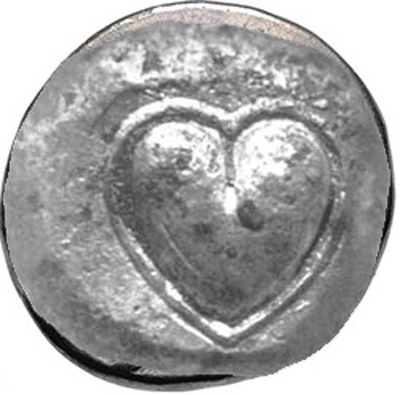
Artist unknown. Drachm depicting a silphium seed pod, ca. 510-490 BC. Sanctuary of Demeter and Persephone, Cyrene.

Among the ancient Romans, the association between the heart and love was commonplace. Venus, the goddess of love, was credited — or blamed — for setting hearts on fire with the aid of her son Cupid, whose darts aimed at the human heart were always overpowering.

In the ancient Roman city of Cyrene — near what is now Shahhat, Libya — the coin (above) was discovered. Dating back to 510-490 BC, it’s the oldest-known image of the heart shape. However, it’s what I call the non-heart heart, because it is stamped with the outline of the seed from the silphium plant, a now-extinct species of giant fennel. Why in the world would anyone have put that on a coin? Silphium was known for its contraceptive properties, and the ancient Libyans got rich from exporting it throughout the known world. They chose to honor it by putting it on a coin.

Illustration from the novel Manon Lescaut by Antoine François Prévost, iStock.

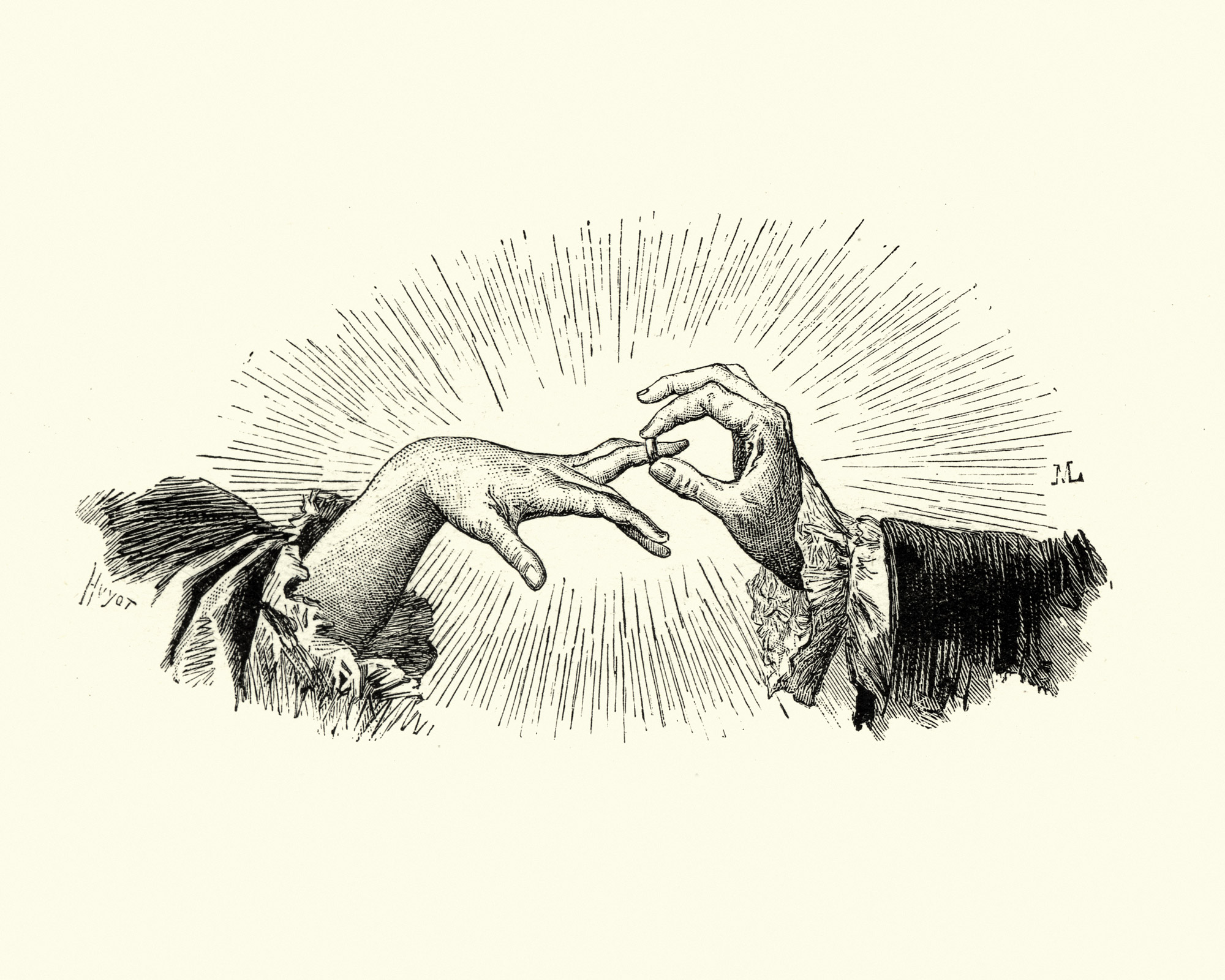
The ancient Romans held a curious belief about the heart — that there was a vein extending from the fourth finger of the left hand directly to the heart. They called it the vena amoris. Even though this idea was based upon incorrect knowledge of the human anatomy, it persisted. In the medieval period in Salisbury, England, during the church ceremony in the liturgy, the groom was told to place a ring on the bride’s fourth finger because of that vein. Wearing a wedding ring on that finger goes back all the way to the Romans.

Artist unknown, “Herr Alram von Gresten: Minne Gespräch,” from the Codex Manesse. Heidelberg University Library, Heidelberg, Germany.

During the 12th and 13th centuries, the heart found a home in the feudal courts of Europe. Minstrels in France celebrated a form of love that came to be known as “fin’ amor.” Fin’ amor is impossible to translate: today we call it courtly love, but its original meaning was closer to “extreme love,” “refined love” or “perfect love.” Courtly love required the troubadour to pledge his whole heart to only one woman, with the promise that he would be true to her forever. Accompanied by his lyre or harp, he’d sing his heart out in the presence of his lady and the members of the court to which she belonged.

This explosion of song and poetry that started in France spread to Spain, Portugal, Italy, Germany, Hungary and Scandinavia, each of which created its own variations. Through them, love staked out its place not only as a literary concept but also as an important social value and an intrinsic part of being human. A yearning for amorous love seeped into the Western consciousness and has remained there since. The illustration (above) is from the German Codex Manesse, a compilation of love poems which historians place sometime between 1300 to 1340. Between the couple, a fanciful tree rises to form the outline of a heart, which carries within it a coat of arms bearing the Latin word AMOR (love.)

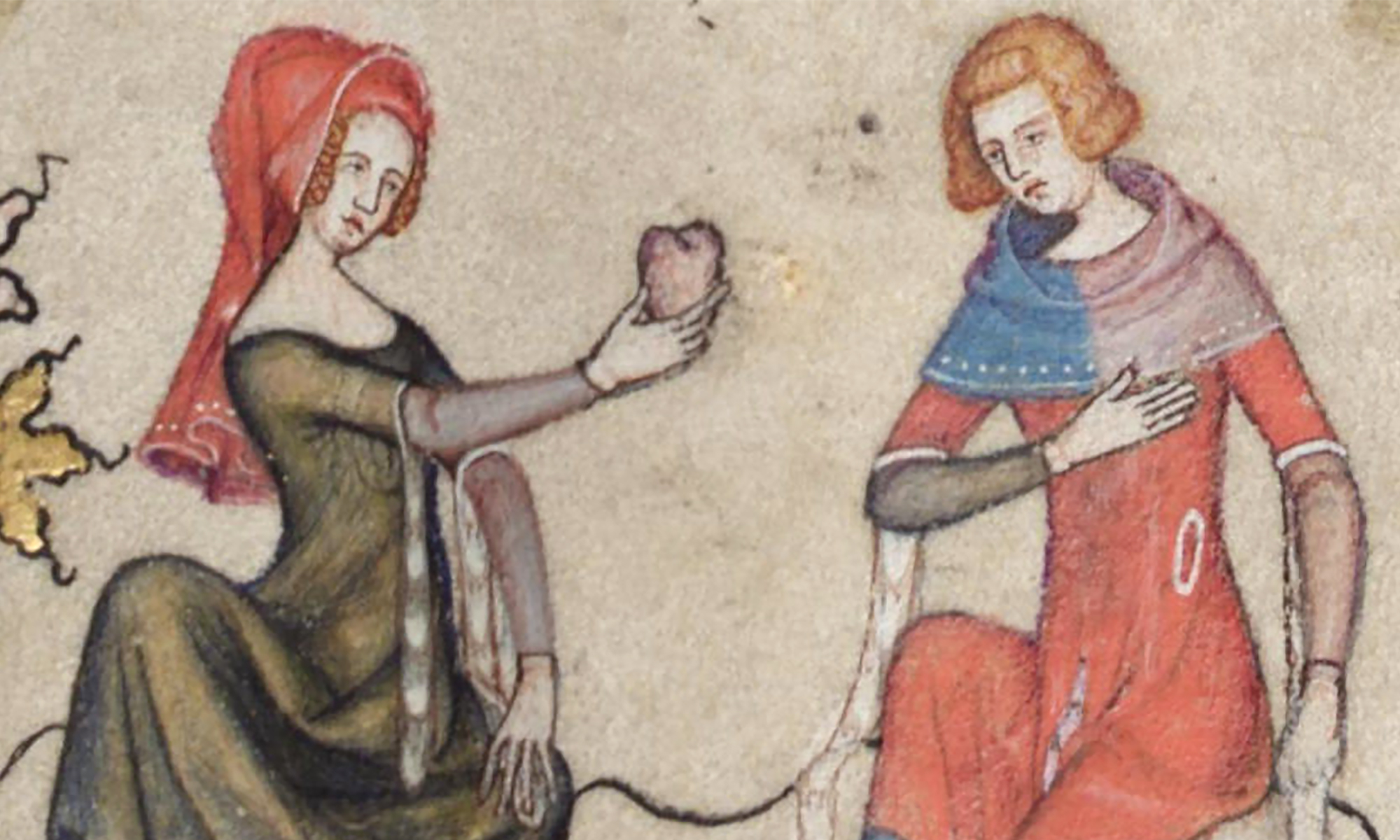
Jehan de Grise and his workshop, “The Heart Offering,” 1338-1344. Illustration from The Romance of Alexander, Bodleian Library, Oxford, England.

In 1344, the first known image of the indubitable heart icon with two lobes and a point appeared. It made its debut in a manuscript titled The Romance of Alexander, written in the French dialect of Picardy by Lambert le Tor (and, after him, finished by Alexandre de Bernay). With hundreds of exquisitely ornamented pages, Alexander is one of the great medieval picture books.

The scene containing the heart image appears in the lower border of a page decorated with sprays of foliage, perched birds and other motifs characteristic of French and Flemish illumination. On the left-hand side (above), a woman raises a heart that she has presumably received from the man facing her. She accepts the gift, while he touches his breast to indicate the place from which it has come. From this moment on, there was an explosion of heart imagery, particularly in France.

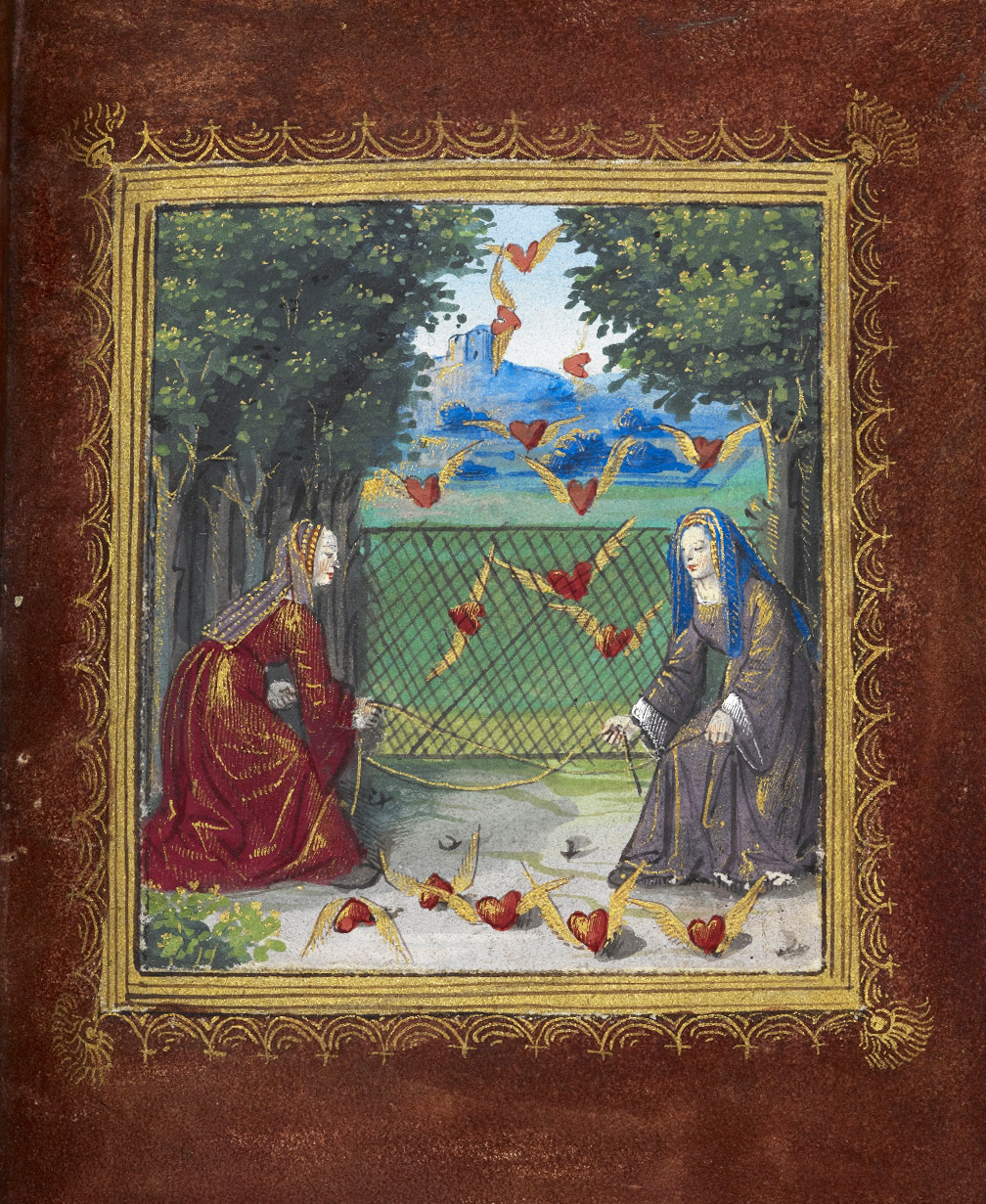
Master of the Chronique scandaleuse, “Miniature of Two Women Trying to Catch Flying Hearts in a Net” (detail), ca. 1500. From Pierre Sala, Petit Livre d’Amour, British Library, London, England.

During the 15th century, the heart icon proliferated throughout Europe in a variety of unexpected ways. It was visible on the pages of manuscripts and on luxury items like brooches and pendants. The heart also turned up in coats of arms, playing cards, combs, wooden chests, sword handles, burial sites, woodcuts, engravings and printer’s marks. The heart icon was adapted to many practical and whimsical uses, with most — but not all — related to love.

Frenchman Pierre Sala contributed to the history of the amorous heart with a book titled Emblèmes et Devises d’amour, or Love Emblems and Mottos, prepared in Lyon around 1500. His collection of 12 love poems and illustrations was intended for Marguerite Bullioud, the love of his life, although she was married to another man. (She and Sala wed after her husband’s death.) Sala’s tiny book was meant to be held in the palm of one’s hand. In one of the illustrations (above), two women attempt to catch a bevy of flying hearts in a net stretched out between two trees. The winged heart, borrowing from angels, had already appeared in earlier illustrations as the sign of soaring love.

Artist unknown, Pensez à moi, ca. 1900. Paper valentine, image courtesy of Marilyn Yalom.

Though some people assume that Valentine’s Day is the creation of the modern greeting card industry, its history is much older — indeed, so old that its origins are clouded. Saint Valentine of Rome was added to the Catholic calendar by Pope Gelasius in 496, to be commemorated on February 14, the same day it still occupies. While there have been various theories of why St. Valentine became associated with love, it most likely developed during the late Middle Ages in the context of Anglo-French courtly love.

By the mid-17th century, the celebration of Valentine’s Day in England was customary for those who could afford its rituals. Affluent men drew lots with women’s names on them, and the man who picked a lady’s name was obliged to give her a gift. The earliest English, French and American valentines were little more than a few lines of verse handwritten on a sheet of paper, but over time, makers began embellishing them with drawings and paintings. These were folded, sealed with wax, and placed on their intended’s doorstep.

Then, the first commercial valentines appeared in England at the end of the 18th century. They were printed, engraved or made from woodcuts and sometimes colored by hand. They combined traditional symbols of love — flowers, hearts, cupids, birds — with doggerel verse of the “roses are red” variety. Thanks to the Industrial Revolution, mass-produced Valentine’s Day cards obliterated the handmade variety in England and the US. The French, too, began exploiting the commercial valentine, with cards featuring angel-like cupids surrounded by hearts (above, a French card, circa 1900).

Milton Glaser, I Love New York, 1977. Trademarked logo, New York State Department of Economic Development, New York, New York.

In 1977, the heart icon underwent yet another transformation when it became a verb. The “I ❤ NY” logo was created to boost morale for a city in crisis. Trash piled up on the streets, the crime rate spiked, and it was near bankruptcy. Hired to design an image that would increase tourism, graphic designer Milton Glaser created the famous logo (above) that has since become a cliché and a meme. With the logo, Glaser extended the heart’s meaning beyond romantic love to embrace the realm of civic feelings and thereby opened the gateway to new uses. Once it became a verb, ❤ could connect a person with any other person, place or thing.

Twenty-two years later, a new graphic form appeared that brought the heart into a whole new realm. In 1999, Japanese provider NTT DoCoMo released the first emojis made for mobile communication. In the original set of 176 symbols, there were five concerning the heart. One was colored completely red, one included white blank spots to suggest 3-D depth, another had jagged white blanks at its center signifying a broken heart, one looked as if it were in flight, and one had two small hearts sailing off together.

Now there are more 30 different emojis containing a heart, and I suspect the heart image will keep evolving in unknown ways for centuries to come.While the heart may be only a metaphor, it serves us well, for love itself is impossible to define. Throughout the ages, men and women have tried to put into words the various shades of love they’ve experienced — fondness, affection, infatuation, attachment, endearment, romance, desire or “true love.” But when words fail us, we fall back on signs. We add ❤ to our emails, texts and notes. We send valentines adorned with ❤ to those dear to us. We give gifts with❤ patterns. We make ❤ -shaped cookies for children. The continued global popularity of the heart as a symbol for love offers us a small dose of hope, serving as a reminder of the ageless assumption that love can save us.

This story was adapted from Marilyn Yalom’s TEDx talk and from her book The Amorous Heart: An Unconventional History of Love, with the permission of Basic Books, an imprint of Perseus Books LLC, a subsidiary of Hachette Book Group. Copyright © Marilyn Yalom 2018. 

Watch her TEDxPaloAlto talk here: https://www.youtube.com/embed/d9Yb6pQagHs?version=3&rel=1&showsearch=0&showinfo=1&iv_load_policy=1&fs=1&hl=en-US&autohide=2&wmode=transparent

ABOUT THE AUTHOR

Marilyn Yalom is a senior scholar at the Clayman Institute for Gender Research at Stanford University, and the author of “A History of the Wife” and “How the French Invented Love,” among other books. 

Health and Wellbeing · Men & Womens Health

Do you know the 5 love languages? Here’s what they are — and how to use them

IDEAS.TED.COM

Feb 8, 2021 / Carol Bruess PhD

Maria Medem

Have you ever been asked “What’s your love language?” 

Chances are, you have. Because the concept — first created by counselor and pastor Gary Chapman, unpacked in a series of books, and picked up by many others — has spread far and wide. The five love languages refer to the five simple ways that we want love to be shown to us and the ways that we show others love.

I’m a relationship researcher, and while I haven’t empirically studied the love languages concept, other academics have. Some of the published studiesconfirm the validity of love languages, revealing they can increase people’s relationship satisfaction and longevity.

What I find so helpful about love languages is that they express a basic truth. Implicit to the concept is a common-sense idea: We don’t feel or experience love in the same way. Some of us will only be content when we hear the words “I love you,” some prize quality time together, while some will feel most cared for when our partner scrubs the toilet.

In this way, love is a bit like a country’s currency: One coin or bill has great value in a particular country, less value in the countries that border it, and zero value in many other countries. In relationships, it’s essential to learn the emotional currency of the humans we hold dear and identifying their love language is part of it.

No matter your situation — whether you’re living alone, spending 24/7 with a partner or roommates, living with adult kids or steering younger kids through virtual school —  the five love languages are a highly effective set of tools to have in your relational toolkit. When we know what another person’s love language is, we can choose the gestures that will most resonate with our partner, friend, parent or child. And when we know which actions speak make us feel loved, we can ask other people for exactly what we need.

While there are plenty of online quizzes to tell you what your love language is, it’s easy to figure out yours and what your loved ones’ are by looking at what lights them up, what presents they give you (since many of us bestow on others what we would most like), and what their perfect day would look and feel like.

Here’s a look at the five languages and how they can be applied and optimized — even during a pandemic.

Love language : Words of affirmation

Those of us whose love language is words of affirmation prize verbal connection. They want to hear you say precisely what you appreciate or admire about them. For example: “I really loved it when you made dinner last night”; “Wow, it was so nice of you to organize that neighborhood bonfire”; or just “I love you.”

For the people in your life that you’re not seeing in person because of the pandemic, you could film a short video to send them. My kindergarten-aged goddaughter and I haven’t been together  in 7+ months, but we text each other silly videos of us saying — or even singing — what we miss most about each other.

And for the people you are seeing all of the time these days, remember that even making tiny gestures matters. This is my primary love language, and my husband of 29 years knows it. I’ll often wake up and go into the kitchen to find a sweet post-it note next to a glass of ice water on the counter (which is another love language — an act of service).

Love language #2: Acts of service

Some of us feel most loved when others lend a helping hand or do something kind for us. A friend of mine is currently going through chemotherapy and radiation, putting her at high risk for COVID-19 and other infections. Knowing that her love language is acts of service, a group of neighbor friends snuck over under the cover of darkness in December and filled her flower pots in front of her house with holiday flowers and sprigs. Others have committed to shoveling her driveway all winter. (It’s Minnesota, so that’s big love.)

In your home, you could be proactive and do something that eases your person’s daily grind. Why not take on the chore that everyone avoids doing, whether that’s cleaning the oven, changing the litter box, scraping ice off the car, or filling and running the dishwasher? For anyone whose love tank is filled up by people pitching in, seeing someone intentionally scanning the environment to figure out what they can do to make their environment better sends a clear and loving message to them.

Love language #3: Gifts

Those of us whose love language is gifts aren’t necessarily materialistic. Instead, their tanks are filled when someone presents them with a specific thing, tangible or intangible, that helps them feel special. Yes, truly, it’s the thought that counts.

When you’re out grabbing groceries for your family, pick up your roommate’s favorite kombucha or seltzer and drop it by their door. Our daughter — whose love language is gifts — is a junior in college and we know she’ll adore what’s in the box soon to arrive in the mail: a small package covered in valentine stickers and containing her favorite chocolates, gift cards for coffee and a framed picture of our family dogs, Fred and George. It’s an act of love that will fill her mailbox and her emotional bank account.

Love language #4: Quality time

Having another person’s undivided, dedicated attention is precious currency for the people whose love language is quality time. In a time of COVID-19 and quarantining, spending quality time together can seem challenging. But thanks to technology, it’s actually one of the easiest to engage in.

Make an intentional effort to have Zoom coffee dates with the colleagues you’ve been missing, or go on distanced walks with your in-laws. Put a good old fashioned phone call each week on the calendar with your best friend, or schedule an in-house date night with your partner or spouse — no phones or “I’m just going to turn on the TV for a second” distractions allowed. Nothing says “I love you” in quality time language better than them being the only thing on your agenda.

Love language #5: Physical touch

Expressing the language of physical touch can be as platonic as giving a friend an enthusiastic fist-bump when she tells you about landing an interview for a dream job or as intimate as a kiss with your partner to mark the end of the workday.

I know that for some parents with young children, spending too much time in the same small space has created a rub — literally. They’d do anything to have fewer people touching them fewer hours of the day. At the same time, for those living alone or those self-isolating because of their exposure or health risks, they’re experiencing the painful opposite: a lack of touch.

While there are no easy solutions for either case, we can get creative. If you know someone who’s overwhelmed by the small hands reaching for them, you might offer to take the kids to a park so they can run off some of their energy. For loved ones who are touch-deprived, try emailing them an outline of your hand and instruct them to lay their hand on the image while imagining your hand on theirs. Even thinking about a warm embrace — something you can do by texting friends and family members with the hug or hugging face emoji and telling you wish you could be doing this in person — can cause their brain to produce some of the same endorphins as an actual hug would.

Love languages are a worthwhile concept to become fluent in during this pandemic time — and at this time in the world. Long before COVID arrived on the scene, we were already living through an epidemic of loneliness. Loneliness is not just about being alone; it’s about experiencing a lack of satisfying emotional connections. By taking the time to learn each other’s love languages and then using them, we can strengthen our relationships and our bonds to others.

Watch Carol Bruess’s TEDxMinneapolisSalon Talk here: https://www.youtube.com/embed/oOnl76UqUcw?version=3&rel=1&showsearch=0&showinfo=1&iv_load_policy=1&fs=1&hl=en-US&autohide=2&wmode=transparent

ABOUT THE AUTHOR

Carol Bruess PhD Carol Bruess (rhymes with “peace”) is professor emeritus at the University of St. Thomas, Minnesota; resident scholar at St. Norbert College, Wisconsin; and forever passionate about studying and improving relationships. She is fluent in emoji, loves parentheticals (it’s what all the cool kids are doing), and is happy-dancing her way through empty-nesting (although don’t tell her kids; they think she’s all weepy). Check out her five books and sewing/design shenanigans over at http://www.carolbruess.com

Celebrate Life · Fun

#Weekend Music Share *I Honestly Love YOu

It’s the weekend!!!!!!

I’m so glad you’ve joined me. As we prepare for Valentine’s Day I thought this would be a great reminder. 

Have a great weekend!

Melinda


Welcome back to Weekend Music Share; the place where everyone can share their favorite music.

Feel free to use the ‘Weekend Music Share‘ banner in your post, and don’t forget to use the hashtag #WeekendMusicShare on social media so other participants can find your post.

Health and Wellbeing

5 Tips to Get the Most Out of Your Pain Doctor’s Appointment

This post has some great tips for preparing for a doctor’s appointment. I thought you would like to read it.  The tips here can apply to any type of doctor or medical professional appointment.

Photo by Sammsara Luxury Modern Home on Pexels.com

January 29, 2021

So, you’ve made a doctor’s appointment to discuss your chronic pain. That’s great and a huge step forward! Establishing a relationship with a good doctor can lead to treatment options, knowledge, and support that may ease your daily discomfort. Preparing for your appointment is a must, as it can lessen your stress and ensure you’ve gathered all pertinent information that your doctor might need to understand your case. Whether you’re seeing a regular MD or a pain specialist, the following 5 tips to get the most out of your pain doctor’s appointment.

Write down the history of your pain and the symptoms you experience

In order for your doctor to best understand your condition and provide an accurate diagnosis, you’ll want to share all pertinent details about your condition. It can be hard to remember all the information you want to relay when you’re actually face to face with your doctor, so take time before your appointment to write down the medical history of your pain, symptoms you experience, and any other information you think might be helpful. You should include:

  • An estimated date of when your pain began and if it followed a particular incident (i.e. after an accident, infection, or surgery).
  • How your pain has progressed or changed over time.
  • The different symptoms you experience and what they feel like—burning, stabbing, shooting, dull, achy, sharp, deep?
  • Any triggers that you’ve noticed that make your pain worse. These might include lack of movement, activity, rainy weather, certain foods, stress, etc.
  • Any treatments you’ve tried to reduce your pain. These might include medications, supplements, creams, injections, psychology, alternative therapies, physical therapy, surgery, changes in diet, etc. Which have helped and which have not?
  • If you’ve had any scans done, such as X-rays or MRIs, bring them or the results with you to the appointment.

Come up with a list of questions you want to ask

Just as with your pain history, it’s easy to forget questions that you wanted to ask your doctor when you’re on the spot during your appointment. To ensure that you get all of your questions answered, write a list of any questions or concerns you have beforehand. Start creating this list a week or more before your appointment to allow time for additional questions to pop into your mind. Designate a small note pad and pen to your questions list and make sure it’s accessible at all times—even carry it with you on outings so you can jot down questions before you forget them.

Don’t be afraid to ask for clarification

Your doctor’s appointment will undoubtedly include the exchange of a lot of information, some of which you probably won’t understand. During your appointment, don’t be afraid to ask your doctor to explain something in simpler terms or in a different way if you don’t initially understand it. Don’t be shy—this is your doctor’s job and clear communication between you two is key in receiving the best care possible.

Bring a notepad to write down helpful information

It can be hard to remember what you had for lunch yesterday, so as you can imagine, it’ll be difficult to remember all of the information your doctor tells you during your appointment.  That’s why it’s crucial to bring a notepad and pen with you when you go into your doctor’s office. Take copious notes during your appointment and don’t hesitate to ask your doctor to slow down or repeat something. You never know what information will be of help to you, so jot down as much as you can so you can review it following your appointment.

Consider bringing a trusted friend or family member

Having someone with you at your appointment not only provides comfort, but comes with the added benefit of having another set of ears there to listen to the doctor. You might feel a bit scared, anxious, or flustered during your appointment so having someone there to support you can go a long way. Your companion can help you write notes, ask for clarification, advocate for your health, or simply offer. Be sure to ask your friend or family member to accompany you a week or more in advance so that there’s a better chance they’ll be free to go with you.

You are ready to get the most out of your visit

Apply these 5 tips to get the most out of your pain doctor’s appointment and you will also get a sense of comfort knowing that you’ve done everything you can to advocate for yourself. Preparation is key so really take the time to gather pertinent information, write down questions, and mentally prepare yourself to speak up. Wishing you the best of luck at your appointment!

Follow the Aromalief Blog for more valuable pain relieving information.

Men & Womens Health

Let’s Talk About Womens Hair Loss And Growth

Since writing the posts Let’s Talk About Hair Loss, I have learned several things and wanted to update you. You might remember I was losing large amounts of hair and found no clear reason/reasons behind it. The amount of hair saved on my shower chair was crazy not to mention the hair clogging the drain after just three or four showers. I installed one of those hair traps in my shower drain to stop the clogs. It was eye-opening how much hair was going down the drain that I didn’t even know about. 

Four months ago I started using Minoxidil 2% on the hair loss areas twice a day to encourage growth. It works by shedding old hair and making room for new hair to grow. It took about three months to see a difference in the amount of hair loss but now I’m losing much less and it’s thicker now too.

My scalp felt dry and I had developed flakes on one side of my head. I read the extra sebum build-up on the scalp can cause hair loss. After changing brands several times, I’m currently using Nioxin Scalp Recovery. I tried several highly recommended shampoos and conditioners including the Her’s shampoo and conditioner. It irritated my scalp so bad. I’m crossing my fingers the Nioxin System will work. I’ve already tried the Sooting Serum twice and the difference in irritation is night and day. My scalp no longer itches and is not as dried out. The shampoo and conditioner leave my scalp clean and my hair nice and shiny which was a problem with other conditioners.

The hairbrush I was using was touted as a scalp massager that would help circulation, clean the scalp and enhance hair growth. I didn’t put much stake into the claims of hair growth but have heard good things about a scalp massage. Two weeks ago I decided that it wasn’t helping and went back to my old fashion Mason hairbrush. The Mason brush is expensive but if you take care of them properly it may be the only hairbrush you need. I have one that’s half boar hair and half plastic. It’s doesn’t work for styling you. It gets down to the scalp when brushing which helps reduce the amount of sebum build-up. Since mine is black I will also be able to see when the flakes are reduced.

I started taking Biotin around the same time so it’s hard to say how much hair growth can be contributing to Biotin. I read multiple articles while researching the previous posts and the reviews on Amazon are very positive.

One of the most exciting discoveries is Castor Oil will make your brows and lashes grow. I purchased a bottle, two months ago and the results are so shocking. I had to put on mascara the other day just to see how long they had grown. It works. The bottle of Castor Oil came with one mascara wand container and a liner container. I use the mascara wand with the oil on my eyebrows and lowers lines. The liner is used for the upper eyelid and lower lid if you like. I found using the liner puts too much oil on the bottom lids. I go thru a routine two or three times a day where I put heavy amounts on my brows and a small amount on lower lids and use the liner to put on lashes at night. The oil does get on your sheets.

I’m am so shocked! I had looked at products claiming hair growth that ranged in price from $30 to over $200. A bottle of Organic Castor Oil will last a year for $10.00. My lower lids are much longer than I could have expected and my brows have grown in slightly darker and filled in a few acres missing hair. I’m addicted. It’s one of the best beauty finds to date.

Castor oil can be used used for many things including a hair massage, great on dry skin, and cuticles

I would love to hear what hair growth treatments you’ve tried and the results.

Melinda