I’m so glad you stopped by today, I love seeing your smiling faces and hearing your comments.
There are more signs of Spring around our house, as the rain comes and the sun shines, everything is growing and looking so pretty. It’s so easy this time of year, it’s in July and August when you’re watering every day in 100-degree temps that you question why so many fowers.
This post is part of TED’s “How to Be a Better Human” series, each of which contains a piece of helpful advice from people in the TED community; browse through all the posts here.
In the modern economy, motivation is a tricky thing.
A hundred years ago, when people like Frederick Taylor were pioneering the field of scientific management, motivation was pretty easy. The idea was you could switch people from an hourly rate to a piece-rate system to do a set of repetitive tasks, and it would incentivize them to do the tasks faster. It was a rudimentary idea, but in some organizations it’s still the philosophy behind how pay — especially incentive pay — is set. And there’s actually a decent amount of research that incentives like that can work to increase motivation when there is a really clear understanding of exactly what tasks must be done to earn the reward. But in a knowledge work or creative work economy, those easy-to-understand, repetitive tasks are becoming more and more rare.
Fortunately, there’s another option to increase motivation.
The research that began to uncover that option was conducted by two men: Richard Ryan and Edward Deci. Deci and Ryan pioneered what would come to be known as self-determination theory. Self-determination theory essentially argued that people are motivated when they can determine for themselves what to work on and how to work on it.
In other words, Deci and Ryan and other pioneers in this field of research asserted that incentives could actually decrease motivation — because incentives take away a sense of power to determine the work for oneself. But self-determination theory didn’t just point out why so many well-meaning incentive plans fail. It also outlined several drivers of human motivation, drivers that could be built into a job or a team culture to make work more motivating and increase motivation.
Below, I’ll outline the three main drivers of motivation according to self-determination theory — autonomy, competence, and relatedness — and I’ll provide practical ways to leverage the power of each.
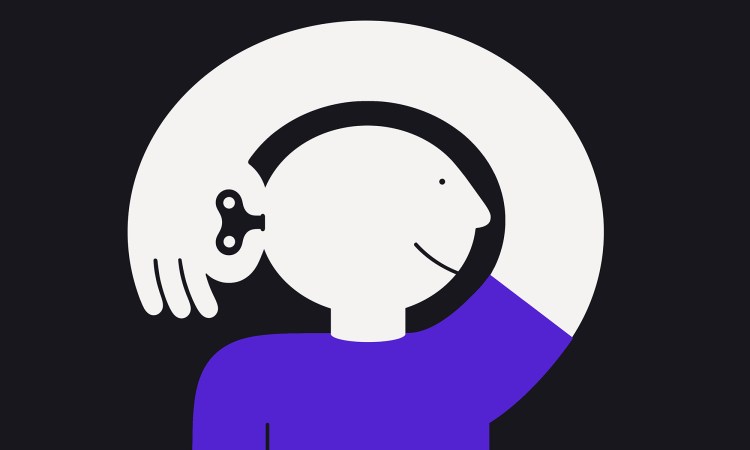
People who experience autonomy at their jobs don’t feel micromanaged. Instead, they feel empowered by their managers to pursue objectives and deadlines on their terms.
1. Autonomy
The first motivational driver is autonomy. Autonomy refers to how much people feel in control of their own life and able to make their own choices. In the context of work, autonomy means people feel they have a say in what they work on and how they work on it. They don’t feel micromanaged; they feel empowered by their managers to pursue objectives and deadlines on their terms.
Creating a sense of autonomy in an individual or on a team can come in many forms. It could be by mutually assigning objectives and establishing deadlines. It could also be giving people more freedom over where they work, or incorporating the team or individuals in decision making more often.
One easy way to judge whether you are leading from a place of autonomy versus control is to pay attention to your feedback or coaching conversations with the team. Specifically, do this: Pay attention to how many times you’re giving them advice vs. asking them questions. If you’re often giving advice or telling people how to do something, you could be diminishing their sense of autonomy. But if you are asking questions designed to guide them to finding their own solutions, then you are leaving them in control.
Remind people of the progress they’ve already made — and show them you’re trying to help them make even more progress.
2. Competence
The second motivational driver is competence. Competence refers to our desires to seek control but also to experience mastery. Competence speaks to our natural human desire to be learners, to be growing and feeling like we’re making progress. It could be progress in our career, progress towards a set of objectives or working for a team or a company that is making progress. Anything that helps individuals feel they are moving toward mastery leverages competence as a motivation.
Creating a sense of competence in an individual or on a team might actually be more about what you don’t do. Much of the job of a team leader is providing feedback or constructive criticism. But constructive or negative criticism has been found in numerous studies to decrease a person’s feeling of competence, and thus reduce motivation.
So rather than just focusing on constructive feedback, make sure you’re taking the time to celebrate wins, large and small. And make sure that even when you are giving people constructive feedback, you are pairing it with a lot of positive feedback and praise as well. That way it reminds them of the progress they’ve already made — and show them you’re trying to help them make even more progress.
If you can ensure the members of your team know who exactly is being helped by their efforts, you can almost guarantee they’ll be willing to work hard to help those people.
3. Relatedness
The third and final motivational driver is relatedness. Relatedness refers to our will to connect with others, interact and care for other people. In terms of research, we’ve only just begun to grasp just how important relatedness to others truly is. But we know that humans are much more motivated to take actions when they’re seen as pro-social — that is, when they’re seen as being able to help other people.
Creating a sense of relatedness in an individual or on a team means making sure people build connections to each other. But it also means making sure people know the significance of what they’re being asked to do and how it relates to the whole team and the team’s and organization’s larger objectives. Even better, you might frame the team’s work in a way that makes it quite clear exactly who is helped by the organization’s, the team’s and even the individual’s actions.
This is not about reiterating the company’s mission statement — instead, it’s about creating a connection between the mission and the specific people who are served when that mission is accomplished. If you can ensure the members of your team know who exactly is being helped by their efforts, you can almost guarantee they’ll be willing to work hard to help those people.
Now if you’re read this far, you probably noticed what hasn’t been discussed yet. I haven’t talked about salaries or about perks like free food or a keg in the refrigerator. I didn’t talk about how many hours people are working or any of things typically discussed when employers are working to build a more engaged and motivated workplace. Yes, those things are all great. They just don’t do much for motivation — at least when compared to creating a sense of autonomy, competence and relatedness.
When people have the ability to determine how they work, the means to judge their progress and the feeling that their work helps other people, they can’t help but be motivated to get to work.
This article originally appeared on DavidBurkus.com and it’s been adapted with the author’s permission.
Watch his TEDxUniversityofNevada Talk here:
ABOUT THE AUTHOR
David Burkus PhD is an organizational psychologist and bestselling author of five books, including Leading from Anywhere: Unlock the Power and Performance of Remote Teams.
Back in 2006, psychologists Jordan Litman and Paul Silvia identified two main “flavors” of curiosity, which they dubbed D-curiosity and I-curiosity.
The D in D-curiosity stands for deprivation, the idea that if we have a gap in information, we go into a restless, unpleasant, need-to-know state, while the I in I-curiosity stands for interest, the pleasurable aspects of the hunger for knowledge. In other words, curiosity — our drive for information — can induce a state that is either aversive or pleasant.
Deprivation curiosity is driven by a lack of information, often a specific piece of information. For example, when you see a picture of a famous actress and you can’t remember her name, you might start racking your brain to remember who it is. Trying to remember might get you into a contracted state, as though you are trying to squeeze that answer out of your brain. Then when you go to google for help and see her name, you feel a sense of relief because you’re no longer deprived of the information.
This extends to texting and social media. If you are out to dinner and you feel or hear a text come into your phone, you might notice that suddenly it’s hard to pay attention — not knowing what the text says can make you restless, causing your body temperature to rise, and that fire of uncertainty is only put out when you check your phone.
Each of the curiosity “flavors” feels different in our bodies — deprivation feels closed, while interest feels open.
Interest curiosity is piqued when we’re interested in learning more about something. Usually this isn’t a specific piece of information (like an actress’s name) but a broader category. For example, did you know that there are animals who keep growing in size until they die? They are called “indeterminate growers” and include sharks, lobsters and kangaroos. In fact, based on its size, one 20-pound lobster was believed to be 140 years old. That’s one big, old lobster! Isn’t that fascinating?
Interest curiosity is when you dive into an internet search and realize hours later you’ve learned a whole bunch of stuff and your thirst for knowledge has been quenched. It feels good to learn something new. This is different from filling a deficit, simply because you weren’t experiencing a deficit in the first place. For instance, you didn’t know about big, old lobsters but when you learned about them, you were intrigued and delighted to know more.
Unlike the D-curiosity — which is about reaching a destination — the I-curiosity is more about the journey. Each of these curiosity “flavors” has different “tastes”, and they feel different in our bodies. Deprivation feels closed, while interest feels open.
What this means is getting more and more curious about what anxiety feels like in your body, instead of assuming you know everything about it or that it will never change.
Most of us approach ourselves and the world with D-curiosity, like a problem to be solved. But we’re all in the perfect place to tap into our I-curiosity, which we can leverage to help ourselves break old habits and build new ones.
In practice, what this means is getting more and more curious about what anxiety feels like in your body and how it triggers your worry and procrastination habit loops, instead of assuming you know everything about anxious or that your feelings will never change or you have to find a magic pill or technique to cure you of it.
Over the years, I’ve found that curiosity is a simple tool that helps people — regardless of language, culture and background — drop directly into their embodied experience and tap into their natural capacities for wonder and interest. It puts people right in that sweet spot of openness and engagement.
Let me walk you through a curiosity exercise that I teach everyone on Day 1 in the Unwinding Anxiety app. This exercise can work as a kind of panic button for when anxiety hits, and it takes about 2 minutes.
Whenever I do this exercise, I like to use the mantra “Hmmmm”. It allows me to bring a playful, even joyful attitude to what I’m doing.
Step 1:
Find a quiet comfortable place. You can be sitting, lying down or standing up; you just need to be able to concentrate without being distracted.
Step 2:
Recall your most recent run-in or incident with a habit loop, which is any habit you find yourself returning to whenever you’re worried or anxious.
See if you can remember the scene and relive that experience, focusing on what you felt right at the time when you were about to act out your habitual behavior. What did that urge to go ahead and “do it” feel like?
Step 3:
Check in with your body. What sensation can you feel most strongly right now?
Here’s a list of single words or phrases to choose from. Pick only one — the one you feel most strongly:
tightness
pressure
contraction
restlessness
shallow breath
burning
tension
clenching
heat
pit in stomach
buzzing/vibration
Step 4:
In terms of this feeling, is it more on the right side or the left? In the front, middle, or back of your body? Where do you feel it most strongly?
And was there anything you noticed about being curious about what part of your body you felt the sensation in? Did being a little curious help with getting closer to this sensation?
Step 5:
If the sensation is still there in your body, see if you can get curious and notice what else is there. Are there other sensations you’re feeling? What happens when you get curious about them? Do they change? What happens when you get really curious about what they feel like?
Step 6:
Follow them over the next 30 seconds — not trying to do anything to or about them — but simply observing them. Do they change at all when you observe them with an attitude of curiosity?
Whenever I do this exercise, I like to use the mantra “Hmmmm” — as in, the hmm you naturally emit when you’re curious about something (and not to be confused with the traditional mantra “Om”). I find saying “hmm” to myself gets me out of my head and into a direct experience of being curious. It also allows me to bring a playful, even joyful attitude to what I’m doing; it is hard to take yourself too seriously when you are hmm-ing.
If you notice that by being curious you gained even a microsecond more of being with your thoughts, emotions and sensations than you have in the past, then you’ve taken a huge step forward.
This short exercise is just intended to give you a taste of curiosity and to support your natural capacity to be aware about what is happening in your body and your mind at any moment instead of getting caught up in a habit loop. If you notice that by being curious you gained even a microsecond more of being with your thoughts, emotions and body sensations than you have in the past, then you’ve taken a huge step forward.
Here’s what a patient in the Unwinding Anxiety program told me about curiosity: When I first started the program, I didn’t quite buy into the benefits of curiosity. Today, I felt a wave of panic, and instead of immediate dread or fear, my automatic response was “Hmm, that’s interesting.” That took the wind right out of its sails! I wasn’t just saying it was interesting; I actually felt it.
Sometimes I get the question “What happens if I’m not curious?” My response is to use the mantra of hmmm to drop right into your experience. Ask yourself: “Hmm, what does it feel like not to be curious?”
This helps people move from their thinking, fix-it mind state into a curious awareness of their direct sensations and emotions in their bodies and move out of their thinking heads and into their feeling bodies.
Watch this TED-Ed Lesson about panic attacks here:
ABOUT THE AUTHOR
Judson Brewer MD, PhD Judson Brewer is the Director of Research and Innovation at the Mindfulness Center and associate professor in psychiatry at the School of Medicine at Brown University, as well as a research affiliate at MIT. As an addiction psychiatrist and expert in mindfulness training for treating addictions, he has developed and tested novel programs for habit change, including both in-person and app-based treatments for smoking, emotional eating and anxiety. Based on the success of these programs in the lab, he cofounded MindSciences, Inc. to create app-based versions of these programs for a wider audience. He is also the author of the book The Craving Mind.
Veneers have become much more common in recent years as they have become more affordable. Good veneers can repair your smile, and make you look younger and more confident. But they also need proper care if they’re going to last you and keep looking good.
When you first have veneers fitted, some patients will experience some tooth sensitivity directly after the dental veneers procedure. This temporary sensitivity is completely normal and nothing to worry about, even if you order veneers online, although it can be uncomfortable.
During the veneer procedure, some tooth enamel is reduced to create enough space for the veneers. Thinner teeth are more susceptible to sensitivity, so this causes this temporary discomfort. This sensitivity is completely normal and should go away on its own after a few days.
Treat dental veneers like natural teeth
You don’t need to go overboard with dental care to keep your veneers white and in good condition.
Treat your dental veneers in the same way as your treat your own teeth, by maintaining routine dental hygiene and oral care. The best way to take proper care of your veneers is to brush twice a day, floss on a regular basis, and use a mouthwash to keep your teeth and veneers healthy.
Buy a better toothbrush
Using the right toothbrush makes a lot of difference in taking proper care of dental veneers. Bristles that are too hard will dull the shine and the polish of the veneers. If you brush too hard with firm bristles, you can scratch the veneers.
Dental veneers are strong, but any damage to them can’t be put right without replacing the entire veneer. The best way to avoid scratching the veneers is to use a soft-bristled toothbrush and brush in the proper way.
Stop grinding your teeth
It’s common to grind your teeth while sleeping. This grinding is damaging to the teeth and is especially dangerous for dental veneers.
Grinding can wear down the veneers and damage their structure and placement. Wear a mouthguard at night to stop this from happening, if you’re a tooth grinder. Custom mouthguards can be made by your dentist to get the most comfortable fit.
Revisit the dentist
Always talk to an expert. Book any follow-up appointments and checkups your dentist recommends to make sure your veneers will be taken care of by someone who is familiar with exactly how they should look.
Your dentist will be able to give you advice on how to avoid any damage and suggest treatments or lifestyle changes to make sure that your veneers last as long as possible.
Avoid damaging substances
Remember that if something can damage your own teeth, it can also damage your veneers. Veneers are subject to normal decay, and there are a few things that you should avoid to maintain the appearance of dental veneers. This includes hard or sticky foods or foods that stain teeth such as coffee, wine, and dark juices.
“What we need right now is more women who are full of themselves,” writes activist Glennon Doyle in her book Untamed. One thing that can hold them back: Unhelpful and unhealthy beliefs about being a mom.
Every generation of parents receives a memo when they leave the hospital with their baby.
My grandmothers’ memo: Here is the baby. Take it home and let it grow. Let it speak when spoken to. Carry on with your lives.
My mother’s memo: Here is your baby. Take her home and then get together each day with your friends who also have these things. Drink Tab before four o’clock and wine coolers after. Smoke cigarettes and play cards. Lock the kids out of the house and let them in only to eat and sleep.
Lucky bastards.
Our memo: Here is your baby. This is the moment you have been waiting for your entire life: when the hole in your heart is filled and you finally become complete. If, after I put this child in your arms, you sense anything other than utter fulfillment, seek counseling immediately. After you hang up with the counselor, call a tutor. Since we have been speaking for three minutes, your child is already behind. Have you registered her for Mandarin classes yet? I see. Poor child. Listen closely: Parent is no longer a noun — those days are done. Parent is now a verb, something you do ceaselessly. Think of the verb parent as synonymous with protect, shield, hover, deflect, fix, plan, and obsess. Parenting will require all of you; please parent with your mind, body, and soul. Parenting is your new religion, within which you will find salvation. This child is your savior. Convert or be damned. We will wait while you cancel all other life endeavors. Thank you.
Now the goal of parenting is: Never allow anything difficult to happen to your child.
To that end, she must win every competition she enters. (Here are your four hundred participation trophies, distribute accordingly.) She must feel that everyone likes and loves her and wants to be with her at all times. She must be constantly entertained and amused; every one of her days on Earth must be like Disneyland, but better. (If you go to actual Disneyland, get a fast pass because she should never be forced to wait. For anything, ever.) If other kids don’t want to play with her, call those kids’ parents, find out why, and insist they fix it. In public, walk in front of your child and shield her from any unhappy faces that might make her sad, and any happy faces that might make her feel left out. When she gets into trouble at school, call her teacher and explain loudly that your child does not make mistakes. Insist that the teacher apologize for her mistake. Do not ever, ever let a drop of rain fall upon your child’s fragile head. Raise this human without ever allowing her to feel a single uncomfortable human emotion. Give her a life without allowing life to happen to her. In short: Your life is over, and your new existence is about ensuring that her life never begins. Godspeed.
We got a terrible memo.
Our terrible memo is why we feel exhausted, neurotic, and guilty.
Our terrible memo is also why our kids suck.
They do, they just suck.
Because people who do not suck are people who have failed, dusted themselves off, and tried again. People who do not suck are people who have been hurt, so they have empathy for others who are hurt. People who do not suck are those who have learned from their own mistakes by dealing with the consequences. People who do not suck are people who have learned how to win with humility and how to lose with dignity.
Our memo has led us to steal from our children the one thing that will allow them to become strong people: struggle.
Our terrible memo is also why we stay busy with the trivial while the world our children will inherit crumbles. We obsess over our children’s snacks while they rehearse their own deaths in active-shooter drills at school. We agonize over their college prep while the earth melts around them. I cannot imagine that there has ever been a more overparented and underprotected generation.
Glennon Doyle is the author of the #1 New York Times bestseller Love Warrior, an Oprah’s Book Club selection, as well as the New York Times bestseller Carry On, Warrior. An activist, speaker and thought leader, she is also the founder and president of Together Rising, an all-women led nonprofit organization that has revolutionized grassroots philanthropy — raising over $20 million for women, families and children in crisis, with a most frequent donation of just $25. Doyle was also named among OWN Network’s SuperSoul 100 inaugural group as one of 100 “awakened leaders who are using their voices and talent to elevate humanity.” She lives in Florida with her wife and three children.
Whether you put on your cap and gown last week — or last century — these honest answers can give you some insight and guidance.
“If you don’t know what you want to do with the rest of your life, you’re not a failure. Give yourself time and get yourself experience to figure things out.” — Angela Duckworth (TED Talk: Grit — the power of passion and persistence)
“Although I think I already knew this back when I graduated from college, I didn’t do it enough: trust your instincts. Deep inside you, you already know what you need to do to pursue your goals. And just as importantly, do not seek permission to pursue your goals. Pursue them. Only by doing so can you show the world what you had in mind and get the support of others.” — Alejandro Sánchez Alvarado (TED Talk: To solve old problems, study new species)
“Don’t take yourself, your decisions, your outcomes or even your mistakes so damn seriously. There’s nowhere special to get to and no special accomplishment to check off the list. The moment is now; the place is here; the person is you. Make choices that make you feel alive. But here’s my advice about my advice — I couldn’t have possibly done this myself when I was a new college graduate because I was Wrapped. Way. Too. Tightly. This would have sounded like loosey-goosey hokum to me, and I’d have rolled my eyes and gone back to alphabetizing my soup shelf. Truly, what I wish I’d done differently during the past 20 years is enjoyed the ride and engaged in less hand-wringing over my decisions. I wish I’d trusted myself more, trusted the universe more, trusted the love and support of family and friends more, and realized this: ‘I’m enough, and it’s all going to be great.’ Because it has been marvelous.” — Casey Brown (TED Talk: Know your worth, and then ask for it)
“It’s okay to quit your first job — even if it was really hard to get it, it paid well, and everyone seemed to admire you for getting it. If you hate your job, you’ll be wasting your life acquiring skills, contacts and a reputation that you don’t want to use. The sooner you find something you love, the better.” — Tim Harford (TED Talk: How frustration can make us more creative)
“The world can only thrive when people know what they’re talking about. Find the thingthat makes you want to know what you’re talking about. Then talk about it.” — Ruth Chang (TED Talk: How to make hard choices)
“The advice that I wish I’d gotten when I graduated from college is: Pay attention to the difference between the quick hits of excitement that come from that first kiss of a new relationship or job and those feelings you get when you think about your strong connections with family or friends. Don’t get fooled by shiny things — that shine fades over time, while the gold of strong relationships never tarnishes. Remember the differences between these feelings to help you make decisions as you go forward.” — Judson Brewer (TED Talk: A simple way to break a bad habit)
“1) Your high heels are not too high, even if you are a scientist. Someday, your unusual shoe choice will be just the right height to carry you into prestigious research labs and important business meetings, and help you peer into a wasp nest and discover a microorganism that will change the beer-brewing world. Your heels are just right for your journey. 2) There can be great beauty and great utility in what at first evokes feelings of fear and disgust, so dare to explore. 3) Remember to stop and sniff the microbes. This will probably help you gain perspective, but it will definitely help you discover future microbial technologies.” — Anne Madden (TED Talk: Meet the microscopic life in your home and on your face)
“Regarding relationships of all categories (platonic, romantic, professional, etc.): Don’t let someone take up your emotional real estate if they aren’t paying rent.” — Sarah Kay (TED Talk: If I should have a daughter … )
“Never stop learning. When we graduate college and start our careers, we often understand that we have a lot to learn, so we approach our jobs with a learning orientation. We ask questions; we observe others; we know we may be wrong; and we realize we’re works in progress. But once we gain competence in our jobs, too many of us stop learning and growing. The most successful people — in work and in life — never stop deliberately continuing to learn and improve.” — Eduardo Briceño (TED Talk: How to get better at the things you care about)
“I felt a lot of urgency to ‘do good’ right out of the gate after college, working in nonprofits and government right away. I wish someone had urged me to build my skills instead, so I would have received mentoring on my professional performance and communication early on. Then, when I transitioned into the social good sector, I’d have had a good set of tools and habits to bring with me.” — Jessica Ladd (TED Talk: The reporting system that sexual assault survivors want)
“Graduation is a euphoric moment, but soon after, people often experience withdrawal symptoms. One reason is that your immediately accessible social network has been pulled out from under you, and entering ‘the real world’ means that you lose the effortless social interaction from dorm life, organized clubs and regular parties. Rather than feeling down, be intentional about maintaining and building a social world that brings out your richest self. And, when you hit your lowest points, in addition to turning to your strongest and closest relationships for support, have the courage to widen both your thinking and your networks as well.” — Tanya Menon (TED Talk: The secret to great opportunities? The person you haven’t met yet)
“Look for people’s inner worlds. Imagine their hopes and fears and what it feels like to be them. Seeing into other hearts can make you more effective in achieving personal and professional goals. It may also give you the comfort of remembering how deeply alike we all are.” — Bill Bernat (TED Talk: How to connect with depressed friends)
“I was the first to attend college in my family, so neither my parents nor my siblings could advise me on my graduate school or career plans. I heeded my inner calling and pursued two master’s degrees in information systems at same time, and it all worked out well. Remember: your best academic counselor and career advisor is your heart.” — Navi Radjou (TED Talk: Creative problem solving in the case of extreme limits)
“I know the anxiety-provoking notion that you have to specialize or you will never become successful is weighing heavily on you right now. There’s good news! It just isn’t true. You can do and be many things and still thrive professionally. Over the next ten years, you’ll meet amazing people who are doing all kinds of things, such as a programmer/comedian/author and a filmmaker/teacher/carpenter. It’s OK to be a complex, multifaceted person who doesn’t fit neatly in one box. In fact, it’s actually a lot of fun.” — Emilie Wapnick (TED Talk: Why some of us don’t have one true calling)
“Be less afraid of getting older — way, way less afraid. Our fears are way out of proportion to the reality, and we squander a ridiculous amount of our youth worrying about it.” — Ashton Applewhite (TED Talk: Let’s end ageism)
“Give yourself more time. So many college graduates immediately start wanting to make all their dreams come true at once — this can go wrong in many ways. The first is the frustration that you’re not ‘there’ yet. It’s going to take time to find (or build) your dream career. The second is burnout. If you find your career early, you can find yourself setting all sorts of unrealistic goals with arbitrary deadlines and chase them until you drop from fatigue. You can have it all — but not all at once.” — David Burkus (TED Talk: Why you should know how much your coworkers get paid)
“Whenever possible, get as uncomfortable as possible. Challenge yourself to get outside of your comfort zone regularly — spend time with people you deeply disagree with, read books about experiences you will never have, travel to places where you don’t speak the language, and take jobs in industries you’ve never worked in before. And if you feel yourself resisting, try again. Those experiences will help you build deep empathy, and we could all use more of that.” — Anjali Kumar (TED Talk: My failed mission to find God and what I found instead)
“Surround yourself with people who help you be the best versions of yourself. Avoid those who don’t. And get enough sleep.” —Lisa Feldman Barrett (TED Talk: You aren’t at the mercy of your emotions)
“When I graduated, I wish I’d known the research showing that future success doesn’t lead to happiness. I sometimes got paralyzed by the fear that happiness existed only if I found the perfect job, degree or position. In truth, the research is clear: happiness exists down almost any life path as long as you are grateful for the present, and develop meaningful relationships. Choose optimism and gratitude now and invest more in others, and happiness will be a lifelong advantage as you pursue your dreams.” — Shawn Achor (TED Talk: The happy secret to better work)
“You don’t have to pursue what you studied. I followed my heart, and now I’m happier and more satisfied with life than I could have ever envisioned. We kill ourselves looking for jobs in our fields of study, while there are a million other things we are able to do. I also wish somebody had told me money doesn’t equate to happiness. When you get a job and start working, don’t forget to live.” — Kasiva Mutua (TED Talk: How to use the drum to tell your story)
“You don’t have to do something extraordinary to lead a meaningful life; you don’t have to cure cancer, become an Instagram celebrity, or write the Great American Novel. Freud said that the meaning of life lies in love and work. So: In your relationships, lead with love. Be generous, be vulnerable, give of yourself to others, and don’t do the expedient thing just because it’s more convenient for you. Make the effort to put others first. In your career, find work that makes you proud and adopt a service mindset — remember how what you’re doing helps others, no matter how big or small the impact may be. Touching the life of just a single person is a powerful legacy to leave behind. Finally, make gratitude a part of your daily life; don’t save it for Thanksgiving. Every day, reflect on one or two things that happened to you which you’re grateful for. Not only will it make you happier, but it will also put you in touch with what really matters. Then, when you experience setbacks or hardships, it will also be a good reminder of how blessed you really are.” — Emily Esfahani Smith (TED Talk: There’s more to life than being happy)
“When you finish college and begin your first job or internship, you’ll be keen to learn all you can and impress your employer so you can start on the path to promotions and raises. But the important thing that you might not see amidst all this excitement is the great idea that could someday become a great business or entrepreneurial venture. I’ve found the most interesting employment that life offers is often something of your own creation that you do full time or in addition to your main job. So, after you graduate from college, take the time to identify a venture that you’d like to do by yourself or with friends, and start building it. One day, you’ll be glad you started early.” — Washington Wachira (TED Talk: For the love of birds)
“Move toward the light — toward people, activities, ideas that make you see more, that nourish you. Do this for at least five years. At that point, you can take stock and decide if you need to do some utterly practical, careerist, traditionally ‘wise’ thing. But give yourself a chance to follow your heart and your mind first. The best careers are built by people who have had a breadth of experiences on which to draw. Don’t get anxious if for a while your life seems to be made of a lot of fragments; in time, they will seem like facets of a diamond.” — Sherry Turkle (TED Talk: Connected, but alone?)
“That adage about pursuing things you’re passionate about does eventually pay off. When? No one knows. I suppose that’s why it’s a pursuit.” — David Sengeh (TED Talk: The sore problem of prosthetic limbs)
“It’s traditional at graduation to offer neat, packaged stories of triumph over difficulties. But life isn’t like that — it’s open-ended, subject to a million contingencies and constant change. This doesn’t mean you shouldn’t make plans. But it does mean you should be alert to all the changes in the world and in yourself that could render your plan suddenly obsolete, unattractive or perverse. Be open to change. Be prepared to experiment. Take risks. Keep learning. Make your life your own.” — Margaret Heffernan (TED Talk: Dare to disagree)
ABOUT THE AUTHOR
Rebekah Barnett is the community speaker coordinator at TED, and knows a good flag when she sees one.
I’m so glad you’ve joined me this week for another edition of Weekend Music Share.
At 13 years old I was sent to a boarding school for bad girls at a convent. It was a drastic change from the wild drug-induced life I was living. Music was one of the only outlets we had to the outside world, especially in the first three month when you could not go home.
I meet other teenage girls of all ages and economic backgrounds, it was quite interesting. Music has been my friend since I was a small child singing along to the radio with my father. We weren’t allowed to listen to the radio but did have a record player and could bring your albums in. Here are a couple of songs we had on constant repeat during the year I was there.
My favorite song at the time was Mercedes Benz by Janis Joplin. We would sing the whole time we were working in the laundry each morning.
The nun’s and my grandparents saved my life.
Have a great weekend!
Melinda
Welcome back to Weekend Music Share; the place where everyone can share their favorite music.
Feel free to use the ‘Weekend Music Share‘ banner in your post, and don’t forget to use the hashtag #WeekendMusicShare on social media so other participants can find your post.
Buying gifts is always a challenge, but one way to find the ideal gift for a special person in your life is to focus on a niche that you know is of interest to them. So if you know someone who loves gardening, you’ll be glad to learn there are lots of gifts that are ideally suited to people who love to garden. We’re going to look at the best of the bunch today, so keep reading to find out all about them.
The great thing about birdbaths is that they’re not just about adding something functional to the garden. They also act as great ornamental pieces, so if you’re looking for something to give that brings a visual impact, an attractively designed birdbath could be exactly what you’re looking for. There’s no shortage of designs and options out there to choose from these days either.
Gardening Gloves
If you want to make the process of gardening a little more comfortable for a special person in your life, a pair of high-quality garden gloves can make the perfect gift. Again, there are lots of styles and designs out there, just make sure you choose a pair that fits well. It’s a good and affordable gift option so it should definitely be considered.
A Seed Subscription
Right now, subscription services are all the rage. There’s a subscription service for just about everything, so you might not be surprised to learn that there’s also a subscription available for seeds. That means you can get different seeds sent to your door each month, so this could be a great gift idea. You could pay for their seed subscription for a year, for example.
The Latest Top Books
There’s a range of great gardening books released each and every year. They might be guide books, general advice, or even photo books. There’s something for just about every garden lover on the shelves of your local book store, so it’s an avenue you should definitely explore. This article is A Review Of The Best Gardening Books in 2020, so it might give you some interesting ideas for which you might want to buy.
Solar-Powered Outdoor Lanterns
You don’t have to choose something that’s focused on the task of gardening; it might be a good idea to choose a gift that adds something new and fun to the garden and has a social dimension. Some solar-powered outdoor lanterns allow you to light up the garden at night and carry on the party into the evening. It’s a good gift idea and they’re also eco-friendly as the battery can charge up during the night and be put to use during the day.
If you’re looking for gifts for the gardener in your life, the ideas above should provide you with the inspiration you need. Find a gift they’re guaranteed to love and help them get even more out of their love of gardening with the kinds of gift options we’ve discussed here.









 lookingforthelight.blog