Health and Wellbeing · Men & Womens Health · Mental Health

Get A Fresh Start On 2022 For Better Mental Health

2021 has been a year of ups and downs, and many of us would like to jump ahead to the new year. Since the emergence of the global pandemic and the beginning of lockdowns, none of us have been able to live a normal life. 

Photo by Andrea Piacquadio on Pexels.com

Being stuck in the same four walls every single day as well as working from home has been tough for many of us, and by the time 2022 hits we are all raring for new experiences. Whether it be changed to your lifestyle, health or career – 2022 is a time perfect to change, and here are some of the ways you can make a change in your life next year for the better. 

By now, most of us are sick of our own homes. Being stuck inside for 9 months has been hard for all of us and many of us have already started to look at houses and apartment rentals in our area. If you want to make a fresh start next year, moving house isn’t a bad idea. Let go of the bad memories of the past and move forward in a positive way by buying or renting a better living space for yourself. Being able to live somewhere new can do wonders for your mental health. 

If you want to make a positive change to your physical and mental health in 2022, you need to get up and get moving. There are lots of ways you can stay fit without the need for a gym, and here are just a few of the things you can try: 

  • Walking 
  • Running 
  • Cycling 
  • Yoga 
  • HIIT Workouts 
  • Body Combat 
  • Dance Workouts 

Change up your routine by adding a 30-minute workout to the start of your day, and soon see the benefits it brings in terms of energy and wellbeing. 
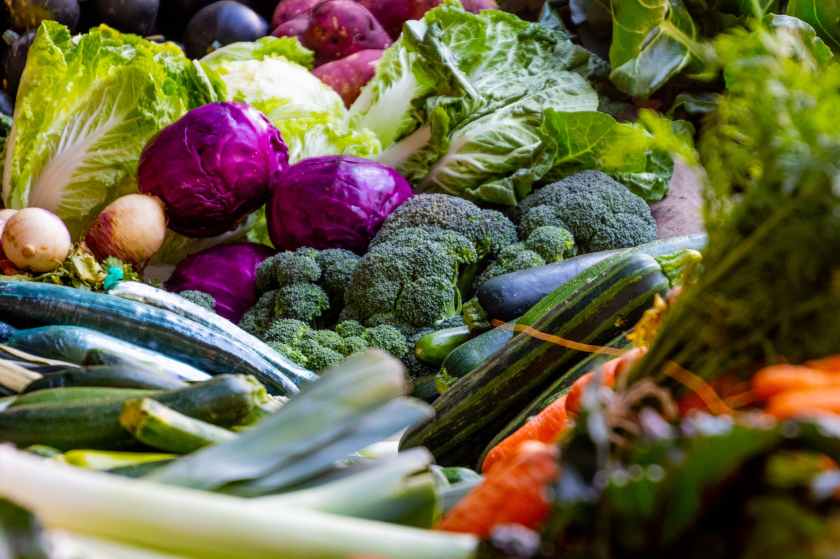
Photo by Magda Ehlers on Pexels.com

One great way to make a change to your life without committing to anything crazy is changing your diet in small ways. From substituting white for brown bread and rice; to eating less meat and dairy; there are many brilliant things you can do to change your diet for the better. Consider finding foods that are good for the gut and for your heart such as sweet potatoes and peppers, and add these things to your diet more for a healthier body. You don’t have to overhaul your whole diet right away, just make small changes as you go. 

We all need to have hobbies in our lives. When you spend all of your time working, eating, and sleeping – you will soon become bored with your life and your mental health can plummet. Change up your daily routine by spending time doing something new. It could be baking, writing, painting, a new sport, or anything you like. Bring something new into your life that you haven’t tried before and this could open you up to so much more in the future. 

Making changes to your life in 2022 is a great idea and will change your life for the better. 

This is a collaborative post.

Melinda
Health and Wellbeing · Men & Womens Health · Mental Health

Mental Illness Awareness Week 3-9th

Did you know that 1 in 5 adults in the U.S. has a Mental Illness? Many go untreated or undiagnosed which is why an awareness week is so important.

Mental Illness Awareness Week

Each year, millions of Americans face the reality of living with a mental health condition. However, mental illness affects everyone directly or indirectly through family, friends or coworkers. That is why each year, during the first week of October, NAMI and participants across the country raise awareness of mental illness, fight discrimination and provide support through Mental Illness Awareness Week (MIAW).

We believe that mental health conditions are important to discuss year-round, but highlighting them during MIAW provides a dedicated time for mental health advocates across the country to come together as one unified voice. Since 1990, when Congress officially established the first full week of October as MIAW, advocates have worked together to sponsor activities, large or small, to educate the public about mental illness.

This year’s MIAW is centered around our new awareness campaign, “Together for Mental Health,” where we will focus on the importance of advocating for better care for people with serious mental illness (SMI). Each day throughout the week, we will be raising the voices of people with lived experience to talk about SMI and the need for improved crisis response and mental health care.

MIAW 2021

Mental Illness Awareness Week runs from October 3–9 and coincides with additional related events:

  • Tuesday Oct. 5: National Day of Prayer for Mental Illness Recovery and Understanding
  • Thursday Oct. 7: National Depression Screening Day
  • Saturday Oct. 9: NAMIWalks United Day of Hope
  • Sunday Oct. 10: World Mental Health Day

How To Engage Online With MIAW

MIAW Video Series

NAMI is featuring videos from real people sharing their lived experience with some of the symptoms and conditions we are focusing on during MIAW. Watch and share the videos below.

Krishna Louis: What I wish people knew about anxiety

Andrea Landry: What I wish people knew about bipolar disorder

Ashlynn McNeeley: What I wish people knew about Borderline Personality Disorder

NAMI Blog

Each day during MIAW, we’ll be featuring special blog topics. Visit the NAMI Blog at nami.org/Blogs/NAMI-Blog and look for posts on our social media.

Personal Stories

Each day during MIAW, we’ll be featuring special personal stories at nami.org/personal-stories.

Social Media

Social media graphics and logo files you can share on accounts as posts, cover images, website hero images or to add to existing messaging can be downloaded here.

Here are some sample social media posts you can use throughout MIAW. Amplify our social media posts by sharing, liking and retweeting.

  • 1 in 20 U.S. adults experience SMI each year, but less than two-thirds get treatment. We must improve access to quality care. #Together4MH
  • Do you have a mental health crisis story? Share with us today to help reimagine our crisis response system. #Together4MH
  • Mental health is a huge part of overall health and should be a priority for everyone, whether you have a mental health condition or not. #Together4MH #MIAW
  • Now, more than ever, we need to provide mental health support and resources. NAMI is here for you! #Together4MH

Additional Resources

Information, resources and graphics to support Mental Illness Awareness Week can be downloaded here. Additional stats, infographics and resources can also be found on our Mental Health by the Numbers web page.

Fast Facts

These are only a few of the reasons why it’s important to take part in promoting awareness for MIAW. Please use these facts and others, including the infographics at nami.org/mhstats, to encourage discussions about mental health through social media or other forms of outreach.

  • 1 in 5 U.S. adults experience mental illness each year
  • 1 in 20 U.S. adults experience serious mental illness each year
  • 1 in 6 U.S. youth aged 6-17 experience a mental health disorder each year
  • Mental illness affects:
    • 44% of LGB adults
    • 32% Mixed/Multiracial adults
    • 22% of White adults
    • 19% of American Indian or Alaska Native
    • 18% of Latinx adults
    • 17% of Native Hawaiian or Other Pacific Islander adults
    • 17% of Black adults
    • 14% of Asian adults
  • Annual prevalence among U.S. adults, by condition:
    • Anxiety Disorders: 19.1% (estimated 48 million people)
    • Major Depressive Episode: 7.8% (19.4 million people)
    • Posttraumatic Stress Disorder: 3.6% (estimated 9 million people)
    • Bipolar Disorder: 2.8% (estimated 7 million people)
    • Borderline Personality Disorder: 1.4% (estimated 3.5 million people)
    • Obsessive Compulsive Disorder: 1.2% (estimated 3 million people)
    • Schizophrenia: <1% (estimated 1.5 million people)

Talking about Mental Illness is as important and getting the proper diagnosis. If we don’t have the information, we have dis-information which leads to misunderstanding and stigmas.

I was diagnosed with Bipolar Disorder at 19 years old, it took my father’s suicide at 28 years old to go get help and treatment. I’ll talk in more detail about my disorder in another post.

Please take the time to understand and be understanding.

Melinda

Mental Health · Survivor

Thru The Eyes Of A Child

Growing up in a household of Domestic Violence is traumatic, lonely, heartbreaking and forever changes the person you are and who you become.

My step-father would regularly drag my mother down the hall, beating her head from one side to the other, calling her vial names. The hall ended at my bedroom door. I heard all saw the brunt of her pain.

One evening after he was drinking heavily again, he dragged her down the hall, only this time when they stopped at my bedroom door I heard her begging for her life. I peeked out the door carefully and found he had a knife to her throat. I knew he was going to kill her. Then what?

I ran away that night, I was nine years old. That’s more than a child can handle. I went to my boyfriend’s house across town and told his parents what happened. Of course, they had to call my mother after I calmed down. I received a beating for that before we even turned the corner.

I was also emotionally and physically abused by my mother and stepfather which added my train wreck of a life.

It took years of therapy and medication for me to clearly see I was not to blame and even longer to grieve for the little girl whose childhood was ripped away piece by piece.

It was almost 20 years later before my brother had to pull a gun on my step-father to make him leave while beating my mother. 

Here are a few organizations that can help:

Joyful Heart Foundation   joyfulheartfoundation.org

RAINN.org  has provided support to the National Assault Hotline for since 1994 Many other services are provided and available in English & Spanish

National Domestic Hotline Resources/Support  24/7  1-800-799-7233   Live Chat Daily from 7am-2am Central Standard Time  1-800-787-3224

No More NoMore.org

If you’re in a Domestic relationship that is violent, have a plan for the day you need to leave and only tell the most trusted person where you are. Get a new cell phone and don’t use joint credit cards. Get as far away as you can and take your children.

Keep your eyes and ears open, most importantly look at the children, their actions and remember the eyes can tell you everything.

Melinda

Health and Wellbeing · Men & Womens Health

Common Myths About Cannabis

It seems like there are new myths about Marijuana popping up all the time. The reality is that many of these myths have been disproven long ago. However, they persist in today’s society for one reason or another. Some people believe them because they haven’t done any research on their own. In contrast, others may do so because it benefits them to keep these misconceptions alive. We’ll be giving you the facts about some common myths associated with Marijuana and dispel them once and for all!

Photo by Harrison Haines on Pexels.com

You Can’t Get Addicted To Marijuana

You can find this myth in many pro-marijuana campaigns across the world. The truth is that it’s entirely possible to get addicted to Marijuana, just like any other substance out there. Of course, it will not happen overnight, and you shouldn’t be able to do so by smoking one joint either! When people argue about whether or not marijuana addiction exists, they are usually talking about cannabis dependency. This type of dependency occurs when someone smokes on a daily basis for an extended period of time, usually several months. It slowly becomes harder and harder for them to function normally without getting high first.

This doesn’t mean that these individuals have no control over their actions, though; they simply use weed as a crutch because they’re too anxious or uncomfortable without it. The next time you’re around someone who is high, really think about whether or not they look like they need it to function normally.

Marijuana Is Always Safe To Use

One of the most common things heard about weed is that it’s safe and harmless to use. This couldn’t be further from the truth! We’ll touch on some key points here, but if you would like more information, then research Marijuana safety tips.

There are many negative health effects associated with smoking marijuana regularly or excessively. For one thing, long-term smokers usually end up getting respiratory problems such as bronchitis because they inhale so much tar and ash into their lungs. If this doesn’t sound healthy to you already, keep in mind that Marijuana contains 50% more carcinogenic hydrocarbons than regular cigarettes do too! There have also been studies showing an increased risk of lung cancer among people who smoke Marijuana regularly.

Getting your Marijuana from the best dispensary possible is an additional factor to consider as there are legislative quality controls they need to follow, ensuring you get a pure and clean product.

Marijuana Is A Gateway Drug

This is a controversial point, but it has been proven that Marijuana does not cause people to try out harder drugs. Sure there are cases where this happened due to the influence of others, but overall it would be an unfair label to place on Marijuana.

The problem here lies in the fact that some unscrupulous dealers will sell their customers harder drugs when they come back. It’s not because the Marijuana itself made them do it, but you can’t deny that Marijuana is an easy way to get someone hooked on something else! There are studies showing that people who already have a tendency towards addiction may try harder substances if given access to an alternative like Marijuana in most cases.

Marijuana Doesn’t Have Any Medicinal Value

The biggest argument for legalizing Marijuana is its medicinal properties. There are many positive uses for Marijuana, both as an analgesic and to help with the symptoms of certain diseases. It makes sense that people who could benefit from this would want access to it without having to wait until the laws change in their state or country!

There has been a wealth of research done in the past several years that have shown Marijuana’s amazing medical value. The US government even holds a patent on Cannabis for its antioxidant and neuroprotectant abilities.

In conclusion, there are many common myths when it comes to marijuana use that simply isn’t true at all! This is especially important nowadays when more and more states are legalizing the drug either recreationally or medically.

This is a collaborative post.

Melinda
Health and Wellbeing · Men & Womens Health · Moving Forward · Survivor

Know The Cycle Of Domestic Violence

Here is a graphic that shows all the ways an abuser tries to control you.

Do you recognize some of them?


image

Joyful Heart Foundation   

RAINN.org  has provided support to the National Assault Hotline for since 1994 Many other services are provided and available in English & Spanish

National Domestic Hotline Resources/Support  24/7  1-800-799-7233   Live Chat Daily from 7am-2am Central Standard Time  1-800-787-3224

1 in 6   Supports Male Survivors of Sexual Assault as a Child or an Adult  

Please reach out for help the minute you are safe! 

Melinda

Celebrate Life · Fun · Mental Health

Today in History

Welcome to the weekend edition of Today in History. I’m so glad you’re enjoying the post. Have an awesome weekend.

1995

 O.J. Simpson Acquitted

At the end of a sensational trial, former football star O.J. Simpson is acquitted of the brutal 1994 double murder of his estranged wife, Nicole Brown Simpson, and her friend, Ronald Goldman. In the epic 252-day trial, Simpson’s “dream team” of lawyers employed creative and controversial methods to convince jurors that Simpson’s guilt had not been proved “beyond a reasonable doubt,” thus surmounting what the prosecution called a “mountain of evidence” implicating him as the murderer.

1992

Sinéad O’Connor tears up a photo of Pope John Paul II on “Saturday Night Live”

On October 3, 1992, Irish musician Sinéad O’Connor stuns the audience at 30 Rockefeller Plaza and viewers across the United States when she tears up a photo of Pope John Paul II during a performance on Saturday Night Live. O’Connor surprised the SNL staff when she opted to sing …read more

1895

“The Red Badge of Courage” is published

On October 3, 1895, The Red Badge of Courage, by Stephen Crane, is published in book form. The story of a young man’s experience of battle was the first American novel to portray the Civil War from an ordinary Union soldier’s point of view. The tale originally appeared as a …read more

1990

East and West Germany reunite after 45 years

Less than one year after the destruction of the Berlin Wall, East and West Germany come together on what is known as “Unity Day.”  Since 1945, when Soviet forces occupied eastern Germany, and the United States and other Allied forces occupied the western half of the nation at the …read more

1863

President Lincoln proclaims official Thanksgiving holiday

On October 3, 1863, expressing gratitude for a pivotal Union Army victory at Gettysburg, President Abraham Lincoln announces that the nation will celebrate an official Thanksgiving holiday on November 26, 1863. The speech, which was actually written by Secretary of State William …read more

Melinda

Celebrate Life · Fun · Health and Wellbeing · Men & Womens Health

Fun Facts That Will Amaze You

The last time I did Fun Facts people raved about how informative and funny they were so I wanted to start a new weekend tradition.

Alexander the Great was the first person to be pictured on a coin.

FDR’s portrait was on the dime because of his association with the March of Dimes charity.

The sun weighs 2,000 million million million million tons.

Shoes that were specific to left and right were not made until the Civil War.

The Turks call the turkey an “American bird.”

Lightning kills about 10,000 people a year worldwide, more people than tornadoes or flooding.

At an average of 15 breaths per minute, we take about 400 million breaths during a lifetime. This is equivalent to about 53 million gallons of air.

The shiniest living thing on earth is the Pollia Condensata, an African fruit.

The bee hummingbird drinks from up to 1,500 flowers a day

We throw away enough ribbon each year to tie a bow around the entire Earth.

Enjoy!

Melinda

Health and Wellbeing · Men & Womens Health · Moving Forward · Survivor

Make Domestic Violence Your Business

You’re out in public and see a couple fighting and yelling or you’re at home watching television when you hear the neighbors going at it, if you see or hear things escalating call the police. It may be a call that saves someone a trip to the emergency room or far worse.

Everyone has a role to play in stopping Domestic Violence. 


Here are some startling statistics:

Talking about these issues openly will help end the shame and stigma that domestic violence and sexual assault survivors are burdened with. The next time you’re in a room with 6 people, think about this:

  • 1 in 4 women and 1 in 9 men experience violence from their partners in their lifetimes.
  • 1 in 3 teens experience sexual or physical abuse or threats from a boyfriend or girlfriend in one year.

What is Domestic Violence


Domestic Violence
is a pattern of behavior used to establish power and control over another person through fear and intimidation, often including the threat or use of violence. Some signs of an abusive relationship include:

  • Exerting strict control (financial, social and/or appearance).
  • Needing constant contact including excessive texts and calls.
  • Emotional abuse including insulting a partner in front of other people.
  • Extreme jealousy.
  • Showing fear around a partner.
  • Isolation from family and friends.
  • Frequent canceling of plans at the last minute.
  • Unexplained injuries or explanations that don’t quite add up.
Of course if you see, hear, or suspect that someone is in immediate danger, call 911 immediately.

Melinda

All information is taken from the No More website. 

Health and Wellbeing · Men & Womens Health · Mental Health · Survivor

No Mas Domestic Violence

NO MÁS – a collaborative effort between Casa de Esperanza: National Latin@ Network, the nation’s leading Latin@ organization on domestic violence prevention, and NO MORE – provides tools and resources tailored to the needs and strengths of the Latin@ community. Visit https://www.decimosnomas.org/en/ to learn more. 

The NO MÁS Study, conducted by Lake Research Partners, is a groundbreaking, in-depth study of domestic violence and sexual assault in the U.S. Latino community.

Among the key findings:

  • More than half of the Latin@s (56%) in the U.S. know a victim of domestic violence, and one in four (28%) know a victim of sexual assault.
  • 41% of Latin@s believe that fear of deportation is the number one barrier preventing Latin@ victims from seeking help, followed by fear of more violence for themselves and their families (39%) and fear of children being taken away (39%).
  • Lack of respect for the opposite sex was seen as a stronger driver of domestic violence and sexual assault than traditional gender roles.
  • Nearly two-thirds of Latin@s who knew a victim of domestic violence (61%) and sexual assault (60%) say that they intervened and did something for the victim.

“Debo aprender de lo que voy a hablar, porque muchas veces yo no puedo hablar algo que yo no conozco”— RECENT IMMIGRANT LATINO, LOS ANGELES

When compared to the 2013 NO MORE Study, the NO MÁS data reveals that Latin@s are more likely than the population at large to take action to intervene and help prevent domestic violence and sexual assault. The NO MORE study, conducted by GfK Public Affairs and Corporate Communications, looked at attitudes of teens and adults on domestic violence and sexual assault in the population at large and was commissioned by the Avon Foundation for Women.

Key findings – 2015 NO MÁS Study and 2013 NO MORE Study comparison:

  • Latin@ parents are much more likely than parents in the U.S. population at large to talk to their children about domestic violence and sexual assault. More than half (54%) of Latin@ parents have talked to their children about these issues, compared to just 29% of  parents in the population at large who say they have talked to their children about domestic violence and/or sexual assault.
  • Over half (57%) of U.S. Latin@s report talking about domestic violence and sexual assault with their friends. In comparison, only 34% of the U.S. population at large say they have had a conversation about domestic violence and/or sexual assault with their friends.
  • Latin@s are more likely than the population at large to say they intervened and did something for the victim.

Review the Study’s Findings

You can help end Domestic Violence by calling the police if you see or hear a situation escalating.

Melinda

Health and Wellbeing · Men & Womens Health · Moving Forward · Survivor · Trauma

Domestic Violence Awareness Month

Join me and No More in the ongoing fight against Domestic Violence. Domestic Violence is everyone’s business and you could save a life. Make the call to 911 if you hear or see anything, it could save a life. 

I grew up in a Domestic Violence household and the traumatic experience was painful and harrowing at times. I watched my step-father put a knife to my mother’s throat when I was nine years old, the image never left me.

“TOGETHER, WE CAN HELP FREE THOSE HARMED BY DOMESTIC AND SEXUAL VIOLENCE.” No More

NO MORE is dedicated to ending domestic violence and sexual assault by increasing awareness, inspiring action and fueling culture change.

OUR  STORY 

 If you need help, help is there for you! All you have to do is reach out.

Melinda

Celebrate Life · Fun

#Weekend Music Share *Fugees perform “Killing Me Softly” Global Citizen Live


I’m so glad you’ve joined me this week for another edition of Weekend Music Share.


Welcome back to Weekend Music Share; the place where everyone can share their favorite music.
Feel free to use the ‘Weekend Music Share‘ banner in your post, and don’t forget to use the hashtag #WeekendMusicShare on social media so other participants can find your post.

Melinda

Health and Wellbeing · Men & Womens Health

Could You Recover From Illness…Using Your Own Stem Cells?