I’m glad you joined me on Wordless Wednesday and I hope to see you soon.
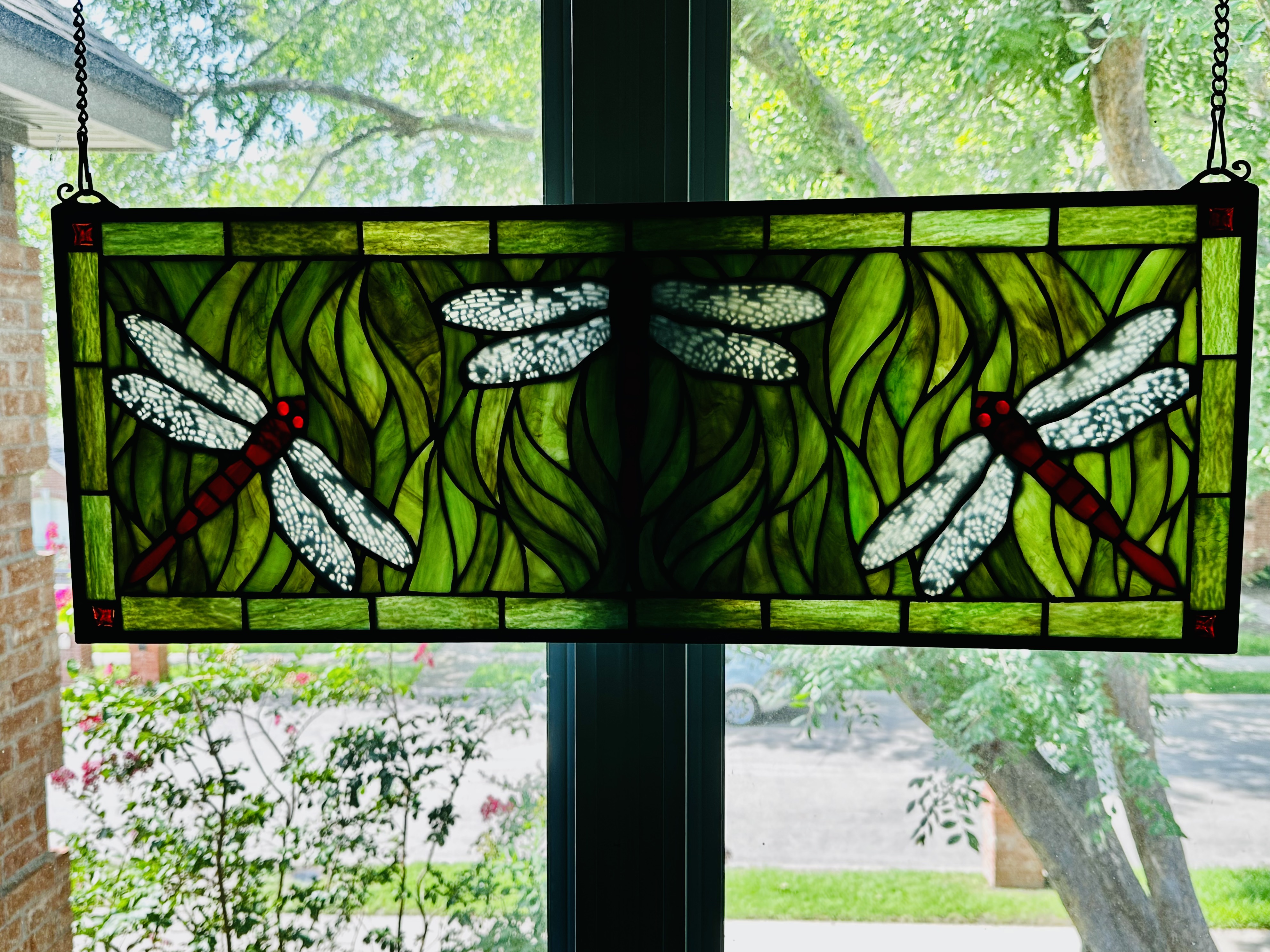
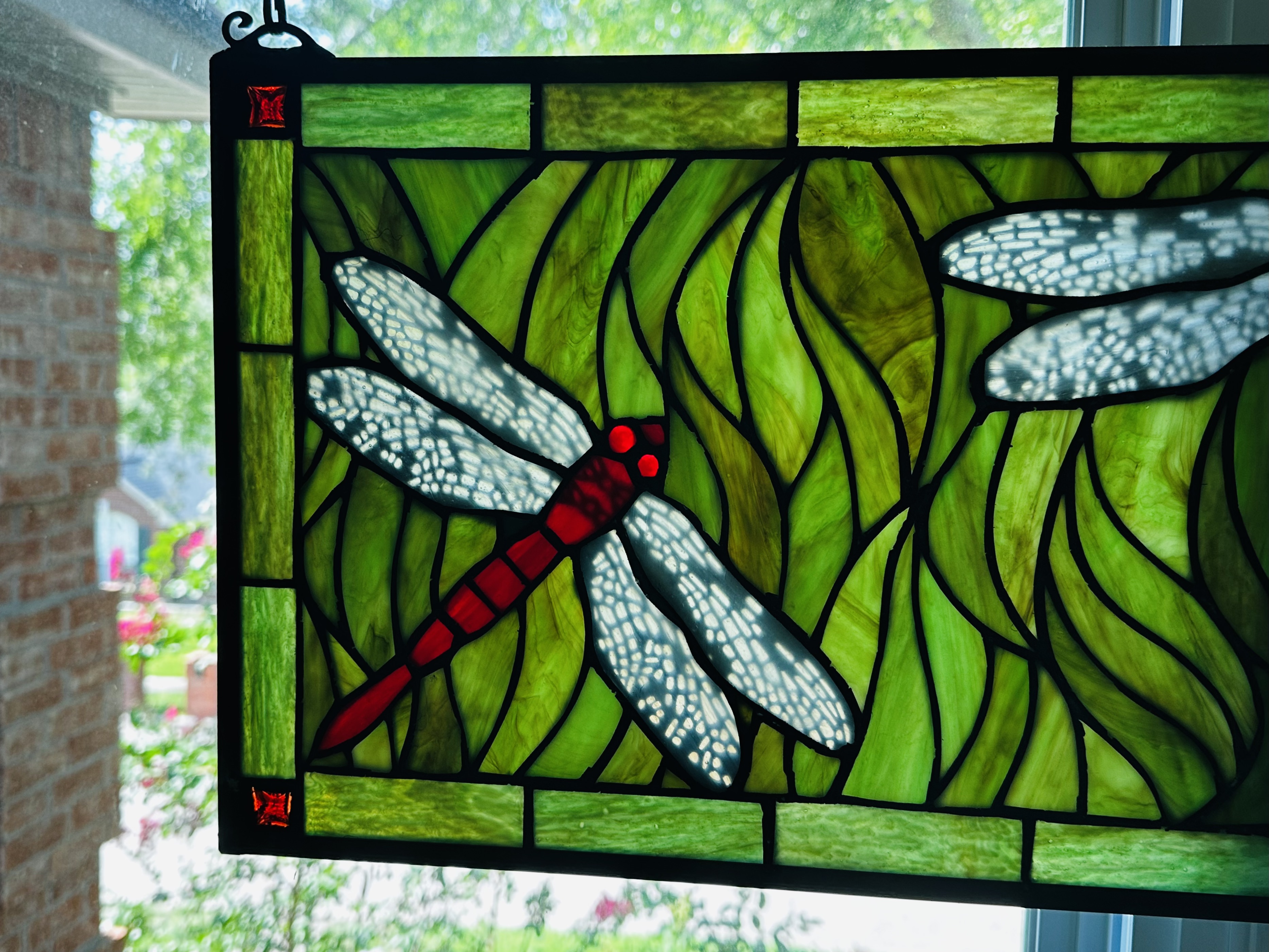
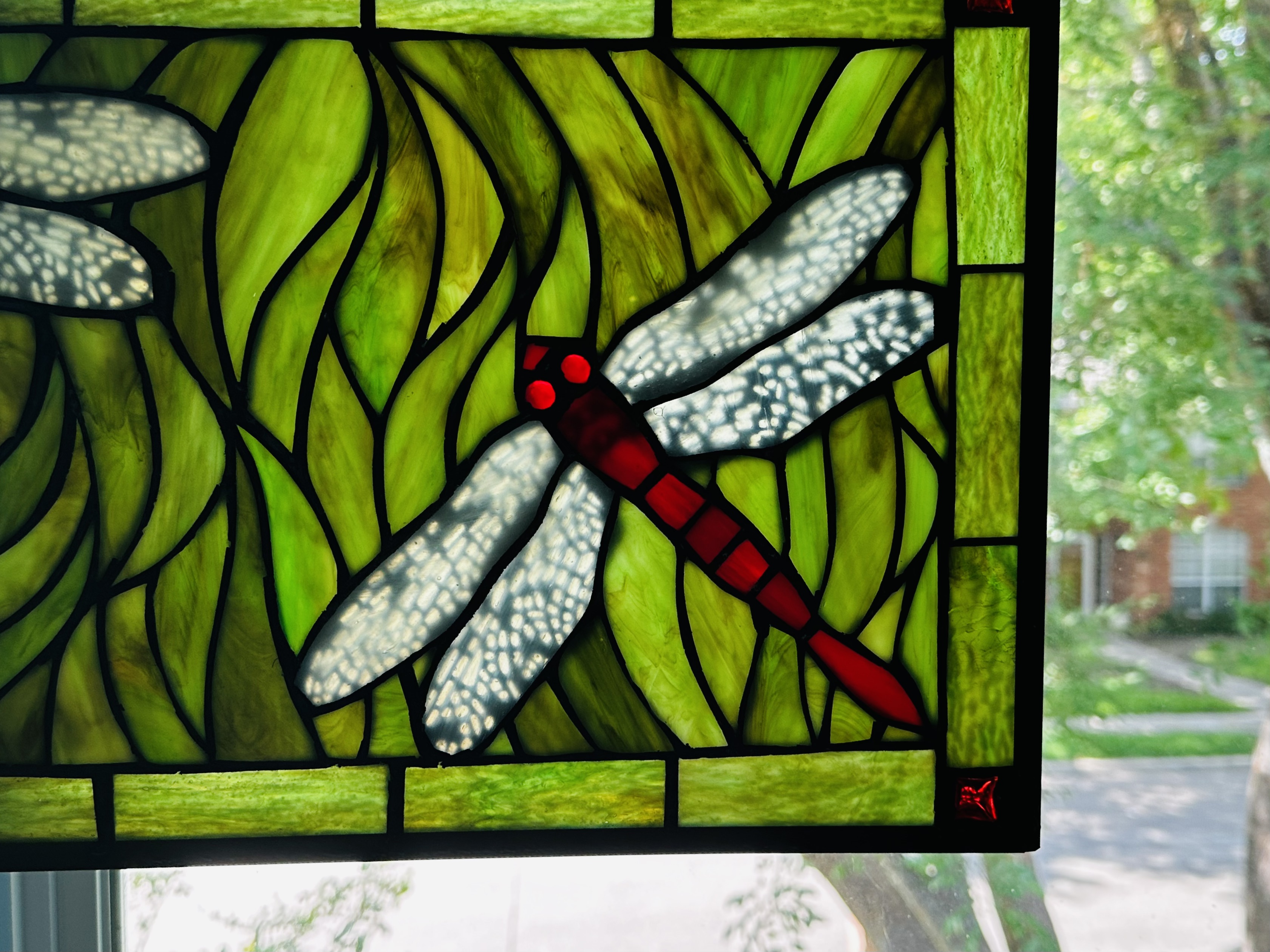
This is a beautiful piece of handmade leaded glass of Dragon Flies. The first photo is hard to see becaue it mosted coved by a tree outside my office window but as you look to the sides of the galls the colors shine through. Seeing Dragon Flies always make me smile.
I’ve always questioned the value of seeing a reporting out in the hailing winds and rain trying to stand up, what is the point. We know there is a storm, the news is covering it in the studio and we have better photos of what is happening than the few feet the reporters are in.
Hurricane Milton crossed the line for me, all the major channels were reporting and it was so bad that several had close calls and one was hit in the face with debris. Is this what it comes to? Put employees at risk for their lives to show this channel will go further than the next. I drew the line.
Anderson Cooper was reporting from Bradenton, Florida, and was barely able to stand, the rain was pouring down and he reached won to show how deep the water was a was hit in the face by flying debris. He sought safety after that. the situation could have been much worse.
The National Hurricane Center reported Milton reached Category 5 status twice and had maximum sustained winds of 120 mph when it hit Siesta Key, Florida, near where Anderson was reporting.
Anderson was working with Bill Weir who was in St Petersburg and was washed away. Why is this acceptable corporate behavior?
Social Media was blowing up with comments of concern for the safety of the reports but where were The corporations they work for? Do they feel this is dramatic television that people want to watch so they can make more money? Bullshit! This shows a total lack of care for human life!
Anderson was not the only reporter who put their life on the line, so did: Dylan Dryer and Ginger Zee and these are the ones I’ve heard of.
We have to stand up and say enough is enough! Let CNN, GMA, and The Today Show this cruel and unusual behavior by writing to the Media Corporations, taking to Social Media, and sending letters to your local media and your local political representative. Only we can make a difference because their employers will not.
There are thousands of stories and videos to read or watch of the hurricanes should you wish to relive the carnage.
I’m disgusted that Journalism has come to being thrown to the wolves. Long gone are the days when I wanted to be a Journalist. I won’t be treated like a piece of meat.
I pray to donate to the Red Cross or other legitimate charities on the ground to provide daily needs and support.
Yesterday we spent the day driving around in the countryside looking at farms and fields of solar panels. we went to his tiny lake, but the description did not match the actual place. It was a tiny man-made lake with a shoreline that kids swim in during the warmer months. We went to The Peace Center and watched a great program on Native American Indians, tribe members from all over the country participated. There were many different ceremonial dances by women and men, live tribal music, and singing. It was beautiful. Unfortunately, I left my phone behind and so far the photos my husband took are well….not so good.
We also checked out what building we needed to be at in the morning and where to park. We’re set. Tomorrow isn’t a long day. I will meet with an internal medicine doctor in the morning and pick up an oximeter machine on Tuesday night.
We have the late afternoon free if we don’t decide to take a nap. The weather is cold here and naps feel really good.
Wednesday starts early at 6:40 AM with blood work and closer to lunch a meeting with a Hematologist. I expect at least one diagnosis to come out of this meeting since most of the blood work being done is focused on the blood itself if that makes sense. One of the problems I currently have is that my hemoglobin is low which means it’s not carrying enough blood through my body.
Unless something is added to my program, I’m off on Thursday and back on Friday afternoon to meet with the Internal Medicine Doctor, I expect a diagnosis to come from this meeting.
Take good care of yourself and I’ll keep you posted if anything new comes up.
This is some very serious news for ALL WordPress bloggers! Educate yourself and BE SURE to back up all your data. Be sure to read the link in Daniels’s post, all the facts and details are spelled out there. So many concerns.
I recently discovered that the WordPress project owned by Automattik is in a complicated battle with its Hosting company WP. The integrated aspect of WordPress with Automattik and WP is complex and currently under threat. WordPress represents about 40% of all websites on the Internet and a punitive legal battle could drastically affect the Internet … Continue reading
To think for one moment about what Christopher Columbus accomplished is mind-blowing. He shaped our world, taught us about countries we didn’t know existed, and built solid teams committed to the cause. I would love to feel what Christopher felt when he landed in America, what was the emotion?
Who was Christopher Columbus?
Christopher Columbus (born between August 26 and October 31?, 1451, Genoa [Italy]—died May 20, 1506, Valladolid, Spain) was a master navigator and admiral whose four transatlantic voyages (1492–93, 1493–96, 1498–1500, and 1502–04) opened the way for European exploration, exploitation, and colonization of the Americas. He has long been called the “discoverer” of the New World, although Vikings such as Leif Eriksson had visited North America five centuries earlier. Columbus made his transatlantic voyages under the sponsorship of Ferdinand II and Isabella I, the Catholic Monarchs of Aragon, Castile, and Leon in Spain. He was at first full of hope and ambition, an ambition partly gratified by his title “Admiral of the Ocean Sea,” awarded to him in April 1492, and by the grants enrolled in the Book of Privileges (a record of his titles and claims). However, he died a disappointed man.
Christopher’s world travels lived on with many new discoveries including the Mayflower heading to America.
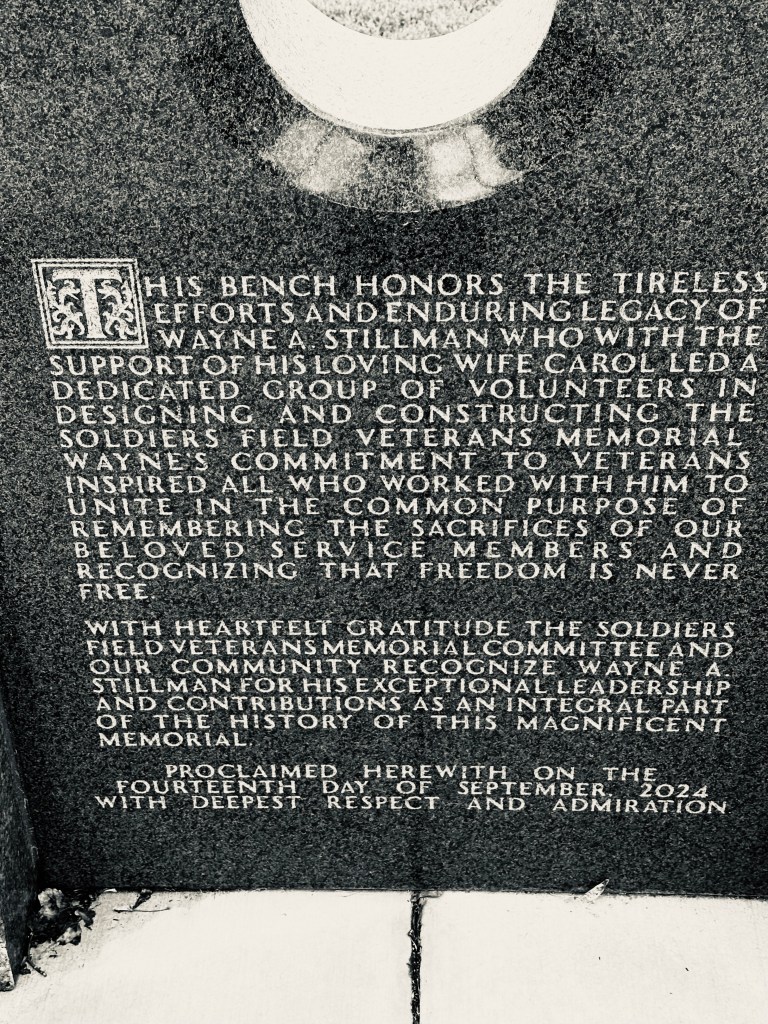
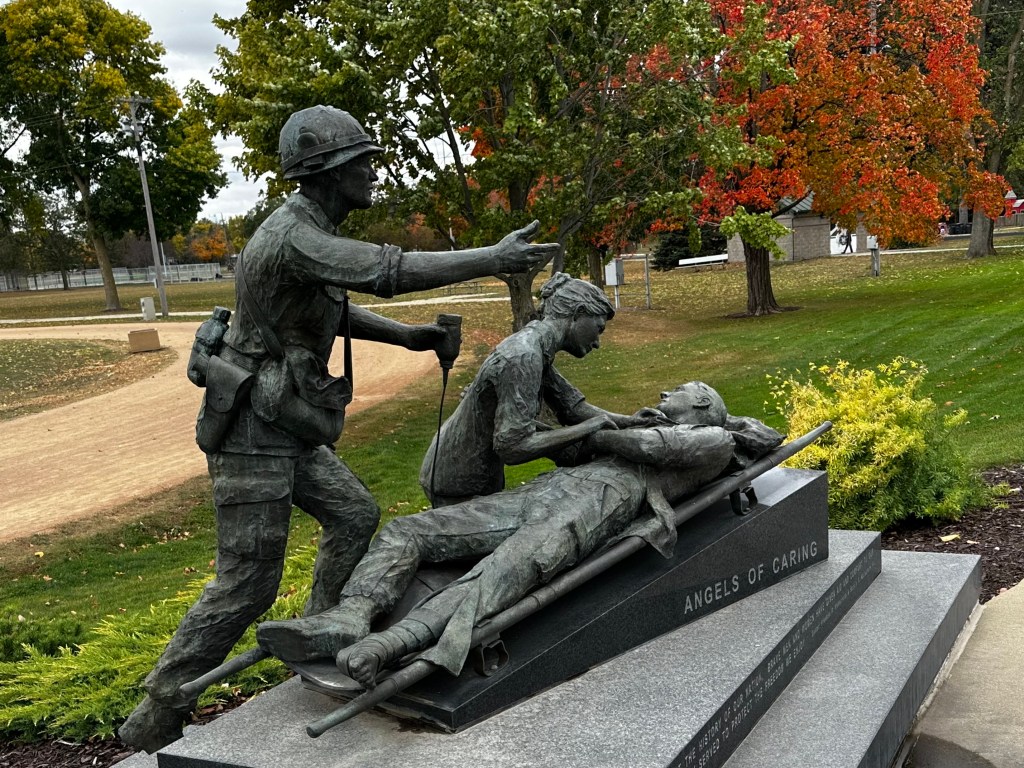
The memorial is very nice, it was opened in 1996 and Rochester is very proud of the soldiers who gave all.
The day was extremely windy so I was not able to get many photographs but I’m thrilled with the ones I did, The images itched into the granite are breathtakingly real.
We landed last night with just enough light to find our car and head to Trader Joe’s for some goodies. We grabbed some dinner there so all we had to do was bring half a ton of luggage into the room and eat. My husband was happy because a college football game was on. After watching for a few minutes, I laid down to rest after an exhausting day at airports, walking and pulling luggage.
It’s very chilly here compared to home so I’m glad I brought my extra warm clothes. We’ve slept in this morning and plan to head out to see a few sites. I don’t know everywhere we’re going but I have the Vietnam Veterans Memorial at the top of my list. I like to pay my respect when I travel, that’s the very least I can do.
Tomorrow is Columbus Day and a holiday for many, I will write a post about it this afternoon. We have free days until Tuesday and then it’s off to The Mayo for meetings with doctors, getting blood work, testing, and leaving with a diagnosis.
Yom Kippur is the holiest day of the year in Judaism. Its central themes are atonement and repentance. Jews traditionally observe this holy day with a day-long fast, confession, and intensive prayer, often spending most of the day in synagogue services.
Observances: Fasting, prayer, abstaining from physical pleasures, refraining from work
What a great love song and coming from Robert Plant’s mouth is even better.
It’s the weekend!!!!!!
I’m glad you joined me this week for another edition of Weekend Music Share.
Have a great weekend!
Melinda
Welcome back to Weekend Music Share, the place where everyone can share their favorite music.
Feel free to use the Weekend Music Share banner in your post, and use the hashtag #WeekendMusicShare on social media so other participants can find your post.
This awareness month is critical for all ages, even the youngest of children can feel depression and even though you may think they should blow it off, it’s not that easy and you can alienate them from talking to you again. Today life is so hard on kids, from an early age they are judged for the way they look, and who their friends are, for any reason because there are so many who don’t know who to communicate with and are haters. Kids also mimic their parents, if your child is having problems, look at your own behavior.
Young girls are fed to believe that these so-called influencers are real perfect-looking people who are pumping the greatest products they have to have. It never crosses their mind that the person is not an influencer, they are made up to look like the girls want to be and they are selling a product they make money on. They don’t get it or don’t want to. They are bullied for being a certain weight or not looking like someone else’s unrealistic standards.
Mix in real life as they get older and a deeper depression may present itself, it could be short-term term or it could be from unresolved issues, one you may not even know about. The key is to get your children the help they need at every step. As they age, professional help may be the answer. Don’t let stigma keep your child from getting the help they need.
As for adults, life can get messy, people can hurt you deeply, someone you trusted can betray you and family can hurt the worst. Some people may be more predisposed to depression whereas others may be situational driven. Adults have their own stigma and don’t seek out help, some men don’t think they need help and some just don’t know where to turn because the answer is not their parents. This is where a therapist comes in, therapy can be short-term just to get over a hump or more long-term because you have many buried issues that need to be addressed.
—
October is recognized as Depression Awareness Month each year. The purpose is to increase understanding, decrease stereotypes, and help educate on how depression and other mental health issues impact people.
Awareness months give people affected by a specific condition a chance to share their stories. The goal is to help increase the overall understanding of depression or other conditions and help overcome stereotypes.
Depression is a common mental health concern in America and throughout the world. Far more than just “feeling sad,” depression negatively impacts how a person feels, thinks, and acts. It can cause disruption to school, work, and personal interests.
Misconceptions and misunderstandings of depression contribute to continuing stigmas about people living with the condition, the reasons it occurs, and their willingness to seek care.
In a 2018 study, researchers conducted a survey to assess the public’s knowledge of depression and the severity of the stigma surrounding it. Key findings included:
30% reported believing a “weak personality” causes depression
58.9% reported believing that pharmaceutical interventions or medications are not an effective treatment
over 70% reported understanding the importance of rest and that a person may appear happier than they actually are when living with depression
Depression can wear you out at the exact time you need all of your strength to fight. Trying to cope is extremely tiring — and it’s often difficult to know when others are suffering. That’s why, during October, we observe National Depression Education & Awareness Month. This important holiday helps teach us about the signs, symptoms, and treatment options for depression. It also lets all of us know that seeking help — either from a counselor, a trusted friend, or your community — is a sign of hope and strength.
Signs of Depression to look for
Feeling sad, hopeless, or empty.
Losing interest in activities that you used to enjoy.
Changes in appetite, weight loss, or weight gain.
Difficulty sleeping or sleeping too much.
Feeling tired and lacking energy.
Difficulty concentrating, making decisions, or remembering things.
Feeling irritable or restless.
Thoughts of death or suicide.
Withdrawing from social activities and isolating themselves from others.
Difficulty performing daily activities and taking care of themselves.
Feeling guilty or worthless.
Changes in behavior, such as increased substance use or reckless behavior.
Unexplained physical symptoms, such as headaches or stomachaches.
This is not an exhaustive list but it’s a good start to start looking for when you or your child it not themselves. It’s sometimes hard to see depression in yourself and you need someone you trust to give you feedback and it can be hard to hear. Work to have an open mind.
I was floored by Rolling Stone’s cover story on Kris Kristofferson’s Lyme-induced Alzheimer’s.
Having almost died from heart failure after 12 “top” NYC doctors neglected to properly treat my own case of Lyme & Bartonella in 2014, I wanted every possible detail. I had a million questions.
I was introduced to Kris and his wife, Lisa, by a mutual friend, and honored that they trusted me to write an in-depth piece for my HuffPo column documenting his tumultuous health journey, from earliest symptoms of fibromyalgia and cardiac arrhythmias to severe memory loss, and astounding, significant recovery.
In light of the terrible news of his recent death, I couldn’t help but wonder if Lyme played a role, and felt compelled to shine light on this important story again. The media is largely ignoring it. Acknowledging the truth about chronic Lymeand the vastdriver of autoimmune, psychiatric and neurologic illness that it is, is touching the third rail.
I am also struck, again, by the uncanny overlap between chronic Lyme and LongCovid, from their dark politics and conflicts of interest, severe effects on the brain and body, to how they both can persist long after initial infection. It’s also notable that those with Lyme had worse COVIDoutcomes. There seems to be nothing a wily, misunderstood infection can’t do. Kris’s story is a perfect example.
I am forever grateful for the awareness he raised about Lyme and infection-mediated chronic illness. Sincere condolences to Lisa and the Kristofferson family.
Kris’s fierce, intuitive wife, Lisa, tells us how she shepherded him through a haze of missed opportunities and misdiagnoses and got him back.
When and how did Kris’s Lyme symptoms begin?
About 12 years ago he was diagnosed with fibromyalgia, which looking back, should have been the first indication that a test for Lyme was warranted. But we suspect he’s been infected with Lyme anywhere from fourteen to thirty years because he used to have these chronic muscle spasms, which is a common symptom.
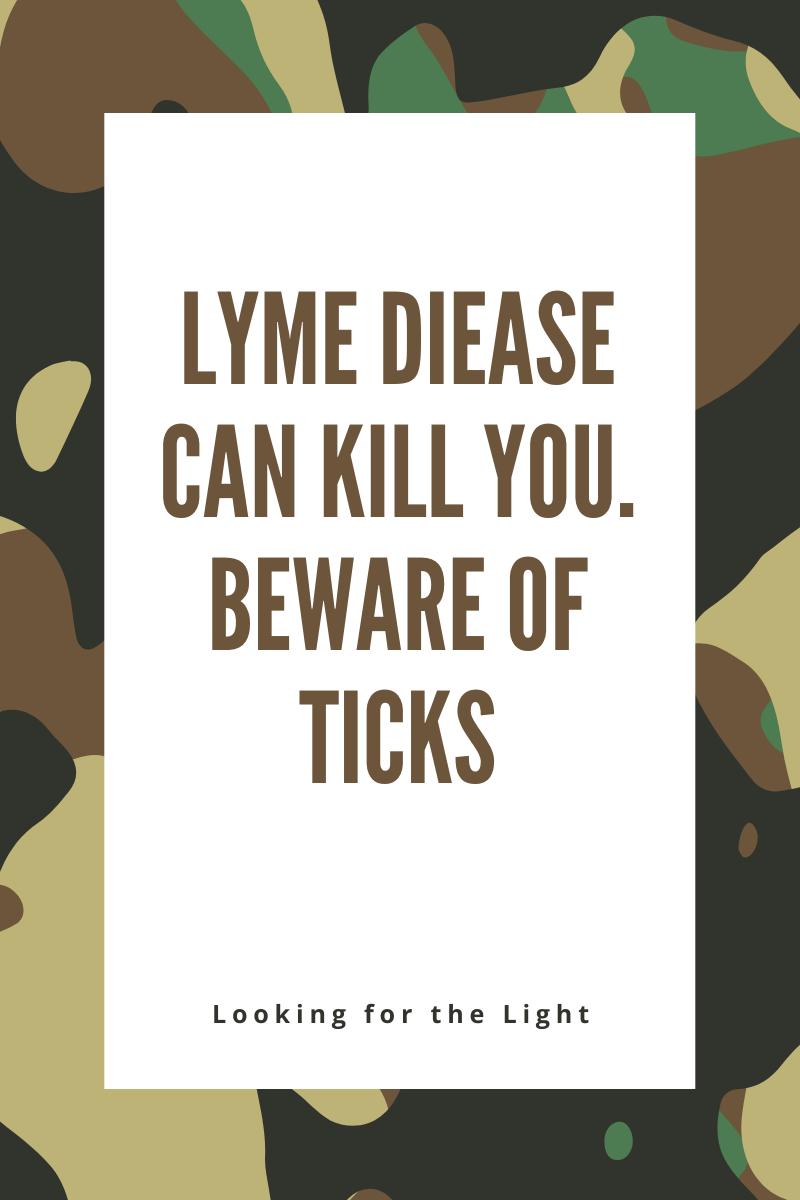
We were in LA at the time, in Malibu, and I just don’t think doctors were looking for it or aware of it there then. But now we know it’s everywhere. There are signs on my local playground that say beware of ticks.
Can you describe his fibromyalgia?
He had massive, painful spasms all over his back and legs- it was so horrible- his nerve endings were causing golf ball-sized, painful contractions that we battled with acupuncture, heat and massage, then finally a spinal cortisone shot by a rheumatologist, and a low dose anti-depressant.
This eight-month period he was in so much pain he could not work. Two years earlier he had spent six weeks in the woods in rural, remote Vermont making a film called Disappearances. He was on the forest floor for much of the shoot, being dragged in a makeshift sling and carried by his son in the film, because he had been “shot” in the leg.
So, after so many years, how did he finally get diagnosed with Lyme?
During the aftermath of that film, Kris was diagnosed with moderate to severe sleep apnea, warranting a bi-level CPAP machine, which he tried and refused to use. He had painful knees and annual knee shots, a pacemaker for arrhythmias–which we now know could be from Lyme–so much Advil for headaches that he got anemic.
After a year of iron supplements and seeing a hematologist, he just wasn’t healthy-looking so I took him to an integrative doctor, Mark Filidei, at Whitaker Wellness Institute. Upon examining Kris and watching the muscles in his forearms constantly twitching, he announced, “He’s got Lyme disease,” and ordered a blood test. The first test from LabCorp came back suspicious, the second test by IGeneX was positive. This was in February 2016.
Excellent that the doctor knew to go to a reliable lab for Lyme like IGeneX. I also like MDL Labs. Most physicians don’t know that the tests are only about 50% accurate at the major labs and that Lyme should be clinically diagnosed based on symptoms. What did you do when you found out his diagnosis of Lyme?
Well, we got the news when we were on tour in the UK and Ireland, so immediately upon landing in the US, I went to a local pharmacy and picked up Kris’s prescriptions for doxycycline and alinia. Soon after, we also started hyperbaric oxygen therapy (HBOT) and transcranial magnetic stimulation (TMS) of the frontal lobe.
At this point, did anyone refer you to a Lyme-Literate doctor?
Yes, luckily, Kris’s cardiologist did her residency in New Jersey so she understood the cardiac involvement in Lyme and said go to a Lyme specialist. We began working with Dr. Steve Harris in California, who added antibiotic intramuscular injections to Kris’s protocol and is continuing to treat Kris.
But before this, wasn’t Kris misdiagnosed with Alzheimer’s?
Yes, for the past three years, he was treated for Alzheimer’s by two different neurologists. He was on two drugs for it, Namenda and Exelon patches. But finally, a spinal tap and functional MRI ruled out Alzheimer’s, so he quit those meds and the antidepressant for fibromyalgia. They also tested him for Lyme disease in the spinal fluid and it was negative but the doctor explained to me that Lyme does not live in fluid, it lives in tissue. It bores into tissue so you would really have to do a biopsy of the brain to find it.
That’s what makes Lyme blood tests so unreliable. I always encourage people suffering with Lyme symptoms or an autoimmune illness that’s linked to Lyme like MS, RA, Alzheimer’s etc to seek a second opinion from a Lyme-Literate doctor.
Exactly. People need to know this! I can’t wrap my head around why this information is not more widespread! Since Kris was diagnosed, so many people–even close friends of ours–are coming out of the woodwork telling us their stories and they’re not being heard. This is why Kris and I are glad to come forward. If it helps anyone, then great.
Were you told Kris was going to die from Alzheimer’s?
Well, no, but eventually Alzheimer’s is fatal, as is life. What we were doing was keeping him on these medications that would keep him from declining further for long stretches of time and then he would get worse and then he would plateau again. We had a very fatalistic attitude than none of us were getting out of this alive.
Why did you start transcranial magnetic stimulation?
The TMS targets the frontal lobe of the brain that was abnormal on the MRI. His neurologist is such a proactive, positive person and when she said, “let’s do this,” I was so ready to agree.
Can you describe his memory symptoms?
He could always remember songs, music is deeply embedded in the brain. The first thing I noticed was that he lost his keen sense of smell. The next thing I noticed was his spatial awareness was off. Like, if he would come out of the men’s room in the airport, he would start looking around and having no idea where to go. I had to watch him constantly, it was very consistent with Alzheimer’s. And he would do these mini-mental status tests where they have you remember certain presidents and things like that, and he was consistently failing them.
Did Kris think he had Alzheimer’s?
Actually, he has been complaining about having memory loss to his doctors for about 12 years and my understanding of Alzheimer’s is that you’re not even aware you have memory loss. That was a big clue to me that maybe it was not really Alzheimer’s. He would say “my memory’s shot, my memory’s gone.”
What were the doctors saying?
Well, after I questioned it, one of the head injury specialists that we saw looked at me and said, with a sad look on his face, “You really don’t want this to be Alzheimer’s.” I said, “It’s not that I want it to be something else, it just does not feelright to me.” Also, Alzheimer’s patients often fight things and don’t want to do certain things and Kris has always been a very compliant patient. That was another clue to me. Subtle things.
Do you think he felt hopeless?
I don’t think he even knew to feel that way, he just kind of floated. He did a film with the director feeding him lines and a teleprompter, and he is such a soldier. He never gives up.
What has treatment been like?
We had tremendous improvement after the intramuscular injections of Invanz, the Doxy and Alinia, thirty days of hyperbaric oxygen and twenty days of TMS of the frontal lobe. How it all worked is impossible to say but I can tell you that twenty days into theTMS, his personality was back. Of course, we are not done but that’s where we are right now.
Did he have Herxheimer reactions?
Oh, God, yes. He had three episodes of the most severe herxing. I wish I had him under medical surveillance because it was so bad. The first time, he violently threw up all over the hotel bathroom- the shower curtain- and he was so confused, he kept asking, “What’s happening? Why is this happening to me?” He was so disoriented. I’m gonna cry thinking about it.
Then it calmed down til the next evening when he had another episode in the restaurant bathroom where he kept saying, “What’s wrong with me,” and the way he was saying it, it was like when a little kid is confused. He just didn’t know why. Then, his third episode gave him a tremendous amount of shaking and spasming in his body, and again, the next day, he was totally fine. It’s the craziest thing. And so scary, I almost called 911.
How is he feeling now?
He still has spatial awareness issues and short-term memory loss. He sometimes even forgets he has Lyme! He shook the hand of a lady the other day and she told him she had Lyme and he said, “Oh! Is it contagious?”
So, he really lives in the present and he feels good. We walked two miles yesterday. His physical health is incredibly good. All his symptoms of fibromyalgia, sleep apnea and twitching are now gone with the Lyme treatment. He has stayed off the two Alzheimer’s drugs and the antidepressant he was taking for the fibromyalgia. He is continuing to do treatment as needed. When I look back, his symptoms really should’ve caused his doctors to test him for Lyme and they missed it. Most doctors are just not looking for it.
It’s a balance trying to work with all these doctors and telling them that even if they don’t all agree, we have to keep Kris’s best interest and we have to acknowledge he is getting better with Lyme treatment. His internist does not trust the Lyme tests and doesn’t want him doing more antibiotics.
It’s alarming that so many doctors don’t seem to even want to understand the seriousness of this disease.
I know! You and Dr. Phillips did a great job of conveying that onyour Fox interviewlast week. Seeing that young girl on the special broke my heart. I don’t understand the stigma or lack of awareness. It’s like doctors don’t wanna touch it. I think what I am teaching doctors now is that there is no downside in testing for and treating for Lyme when you can’t find anything else that makes sense. Because not acknowledging Lyme can be so devastating.
I had one doctor say to me that unless you live in New Hampshire, you can’t have Lyme. I’m like, “Why won’t you acknowledge Lyme? What is it, a religion?”
With over five million Americans living with an Alzheimer’s diagnosis, I have to wonder how many actually have Lyme and not Alzheimer’s, and what it will take for doctors to look for Lyme before giving someone a sentence like that. Malpractice suits? Complaints to medical boards?
Sadly, the average doctor doesn’t even check or test for Lyme, it’s not the norm. But they should! And now, with treating it, Kris is doing so much better than he was three years ago. I couldn’t even get certain doctors to look at his blood test and agree it was positive. But once he got his clinical assessment from his Lyme doctor, they all seemed to finally agree. And then we got him off all the Alzheimer’s meds and it was like, “I’ll be damned!”
How was Kris able to function on the road before his Lyme diagnosis?
Right before he started treatment, he had two fainting episodes where we got really worried about him. We were in Ireland and he was walking through the hotel lobby doors and he fainted. I grabbed him and yelled for help. He was completely passed out. This happened two nights in a row at exactly the same time, after his shows, walking back into the hotel lobby.
Thank God it was there because it was caught on camera and the hotel was nice enough to give us the footage to show our neurologist. Since then, I’ve learned that that is failure of the autonomic nervous system, which Lyme attacks.
Did he have any neuropsychiatric symptoms? You mentioned depression earlier. Do you think this was related?
In 1988 he was first given a diagnosis of clinical depression and he went on an antidepressant for a while but it was also in a period of a life where things were difficult. As he worked through his issues, he went off of the antidepressant and then went back on a very low dose because of the fibromyalgia symptoms.
In terms of other psych symptoms, it was more that his confusion would trigger anxiety. He would ask, “where are we going, what are we doing?” That kind of repeated thing. And that still persists today to some degree. It seems like most of the damage is in his short-term memory and spacial awareness.
Did any of that get better?
Not so much his working, short-term memory yet, but his whole personality came back after three years. I could cry now thinking about it. We were driving back from his sixth HBOT treatment and he looks over at me and says, “Wow, I feel like I’m back.” And I looked right in his eyes and I said, “OH MY GOD, HE’S BACK! It was like, WHOA!”
When you say his personality is back, what was it like before his Lyme treatment?
I think describing it as flat is the best way to explain it. Because he is such a charismatic, funny, fun person and his intellect is so amazing. Over the course of treating him for Alzheimer’s, there was a slow slipping away.
Looking back over the years, how do you think none of Kris’s doctors caught this?
All these doctors were wonderful in treating him and caring, but nobody was finding the cause or connecting the dots. The neurologist suggested anti-seizure medications for passing out, the fibromyalgia doctor was giving him antidepressants for his body pain, his cardiologist gave him a pacemaker for his cardiac arrhythmias, his knees were sore, so he got annual shots from his orthopedist.
Nobody was connecting the dots at all.
It wasn’t until I took him to the integrative doctor, Dr. Filidei, that he looked at everything and said, “This looks like Lyme disease.” I’m just so grateful that he is so much better now. And I feel really lucky that our doctors are willing to work with our Lyme-literate doctor. I know that is not always the case.
I bet he saw the best doctors money could buy.
The most expensive doctors don’t necessarily buy you the best treatment, that’s one thing I’ve learned. It’s not like he’s immortal at eighty, but there’s not that big black void ahead of us anymore. He is so much better now than he was three years ago. We are back hitting the road again.
You must be so relieved, Lisa!
I am relieved! And now we’re at a point where we can acknowledge and look at each other’s deficits with humor. I am deaf in one ear and everybody is patient about that, and we laugh about it. It’s OK, everybody has a challenge.
We understand Kris’s deficits in spatial awareness and short-term memory loss and we laugh about it all the time. We laugh at him and with him and we make the best of it because Lyme is so tragic that if you don’t have something to counterbalance the sadness of that, it’ll take you down. The more we can get Kris to laugh, the healthier he is. Being on the road, the laughter, the music. It’s great medicine. And I understand that when you have Lyme disease, your quality of life will vary with each different person. You have to just do the best you can.
Also, I tell people to exercise because Lyme can only live in a low-oxygen environment. The more you get out and do some aerobic exercise to get oxygen flowing through your body― if you are able to do that― the better.
Do you have any Lyme symptoms?
Well, I don’t, but the doctor thinks I should be tested since it potentially can be sexually transmitted and he doesn’t want me to reinfect Kris as he’s getting better.
Are you happy with Kris’s care now?
Yes! The good news is that the doctors we have now support us going to a Lyme specialist and when they don’t know the answers to certain things, they tell me to ask him.
That’s really unusual and wonderful. Certainly, that was the opposite of my experience.
Yeah, what’s that about? Again, I just don’t get it. People are coming up to us all the time now with their Lyme stories and it’s just so tragic! Doctors are not looking for this and then people end up down the road so much sicker. It’s heartbreaking. I am fortunate my doctors are willing to admit when they are unsure about something and have Kris’s best interest at heart.
What’s life like now for Kris?
We’re on the road right now with Willie [Nelson] and the Haggard boys. Kris is doing what he loves, he’s eighty and he’s healthy – we just walked for four hours in the LA Zoo with our grandchildren.
He doesn’t remember bypass surgery, and so many things, but recently, he did this big Q&A in front of 600 people and my daughter and I were scared to death about how it would go, but it turned out to be the best, funniest thing ever.
And that’s the deal now, Kris is totally present and sometimes we forget he’s battling anything. At times, he’ll still say, “where are we going, what are we doing,” but he really rolls with it now. That’s just how it is. He is right here, right now. We’re jamming with it. It’s such a weird, beautiful journey.
Dana Parish is a singer, songwriter, author, and a major advocate for Lyme disease patients. She co-authored the book Chronic with Dr. Steven Phillips. This interview and other writings are available on her Substack newsletter Third Opinion. Click here to subscribe.
Kris Kristofferson died on September 28, 2024. Here is a great article about his career and his life by The New York Times.
I’m glad you joined me on Wordless Wednesday and I hope to see you soon.
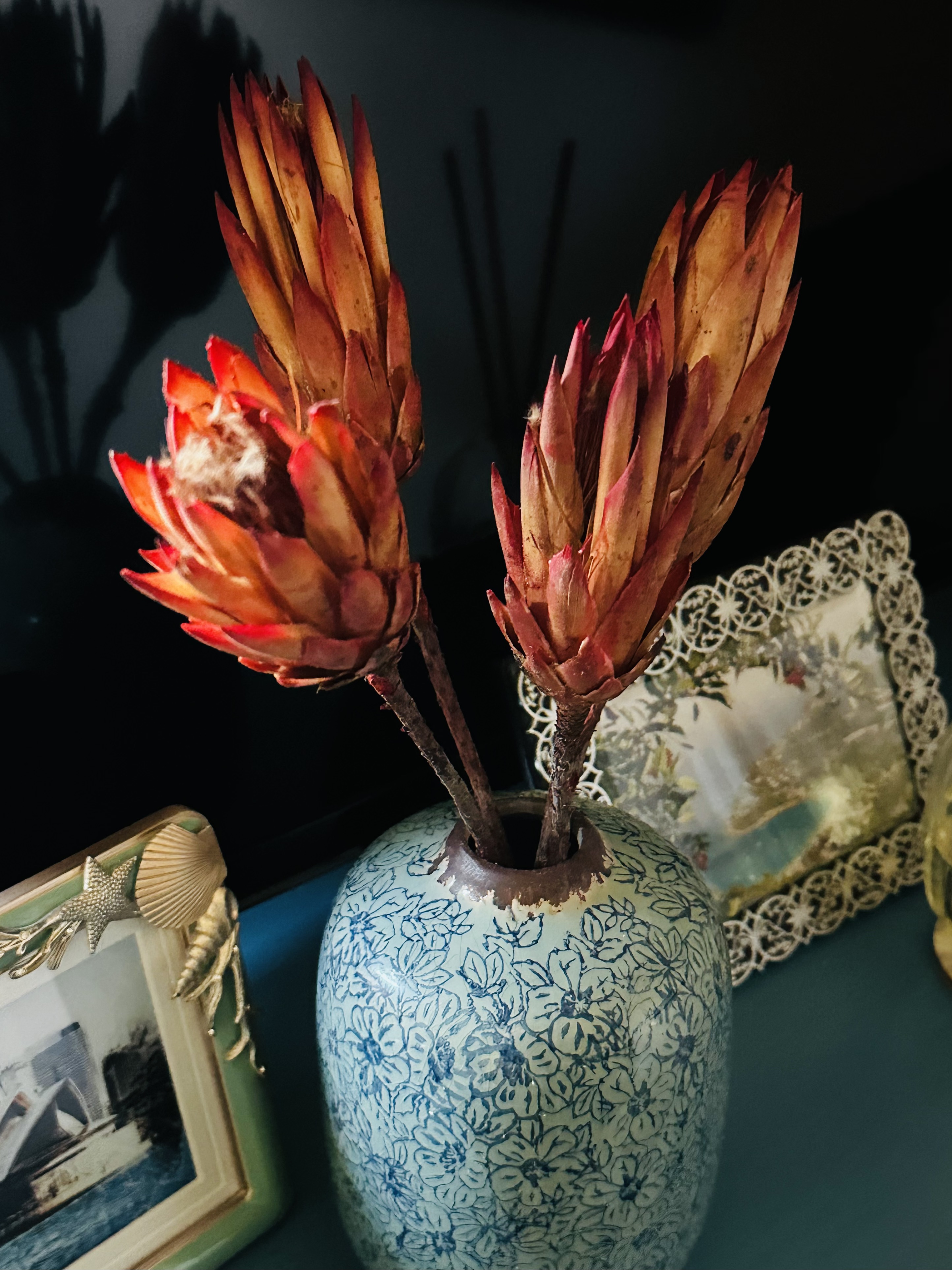
I shop at a store on Amazon and sometimes they run off-the-cuff crazy steals, I bought this ceramic vase for $5! The fake flowers cost more. I love the bright and dark orange color combination.
The newsletter talks about how to vote, the players in Texas who are up for election, and additional resources. Sometimes these newsletters publish a link, not sure why I can see the content but WordPress turns it to a link. Please click on the link or copy in paste on your computer to read. This message is important to all Texans.
October 2024
We are less than one month out from General Election Day! It is critical that Texans get out and vote as policymakers elected in 2024 will make major decisions regarding individuals and families affected by mental health conditions. Furthermore, exercising your right to vote ensures representation, the individuals we elect will be our voice at the local, state, and federal levels. When you participate in elections, we hold our elected officials accountable for their actions and decisions. Additionally, voting has the ability to drive social change as voters have the opportunity to advocate for policy reform and issues that are important to us.
Finally, voting promotes equality, providing an opportunity for all citizens to have a say in the decision-making process. Important Dates:General Election Day: Tuesday, November 5th, 2024 Early Voting: Monday, October 21st-Friday, November 1st, 2024 Last day counties can receive mail-in ballot requests: Friday, October 25th, 2024 Find out what’s on your personalized ballot by checking out Vote411.
Get involved & encourage others to do so too! The NAMI Texas team encourages you to check out NAMI National’s #Vote4MentalHealthcampaign webpage where you can pledge to vote for mental health, learn more about why mental health is more than a single policy issue and several ways to get engaged. Furthermore, the campaign provides resources like finding your voting options, requesting an absentee ballot, and planning to vote.
#Vote4MentalHealth Videos Check out this videothat highlights the importance of voting in all elections, from those at the White House to local school board elections. Additionally, watch this educational video on how votes for education, economy, and healthcare all impact mental health!
Please note: #Vote4MentalHealth is nonpartisan – the NAMI Alliance will never tell people what party or candidate to vote for; instead, it focuses on understanding how every person’s vote impacts mental health. NAMI Texas Voter Guide:
Additionally, check out NAMI Texas’ General Election 2024 Voter Guides! The Policy Team has collected information from Texas candidates on various mental health topics. This guide can be used to help you gather information regarding where candidates stand on various mental health systems and what they hope to improve upon if they are elected. Please note, that all candidates were contacted and only those who responded are in the guides.
Losing a baby is a very personal matter and one that we don’t often hear or talk about unless you’re close to someone who has experienced that loss. At 19 I had a miscarriage at 4-5 months along and my then-husband didn’t even acknowledge the child or the death, we never talked about the entire night it happened. Instead, he went out of town with the guys the next morning and there was no conversation when he returned. I was devastated, had no ride home, and didn’t have anyone to help me with the pain. I was in shock seeing the baby in the toilet at the hospital but I never grieved.
I can’t imagine the grief of carrying a baby close to term or full term and then watching them die, it has to be gutwrenching. There are many children born with diseases or a defect and they fight for their lives, but it was not to be. The overwhelming pain can only be felt by the parents who lost their baby. Think about the pain felt when the parents get home to see the baby’s nursery they planned so carefully without their baby.
These are my thoughts on what Pregnancy & Infant Loss Awareness Month is, let’s see the official meaning of the day.
When Pregnancy and Infant Loss Awareness Month was proclaimed.
In 1988, President Ronald Regan proclaimed October Pregnancy and Infant Loss Awareness Month. Pregnancy and Infant Loss Remembrance Day is observed on October 15th each year and includes the International Wave of Light.
In the United States, 1 out of every 4 pregnancies ends in miscarriage and 1 and every 160 pregnancies end in stillbirth. These numbers do not include infant death from preterm labor, diagnosis of life-limiting conditions, or SIDS.
What is Pregnancy Loss and Infant Loss Awareness Month?
Pregnancy and Infant Loss Awareness Month, observed every October, is dedicated to raising awareness about the grief and challenges faced by families who have experienced miscarriage, stillbirth, or the death of an infant. The month provides a platform for breaking the silence surrounding these often stigmatized and unspoken losses. Through various events, campaigns, and remembrance activities, it seeks to honor the lives lost, offer support to grieving parents, and educate the public on the impact of pregnancy and infant loss. It also encourages open conversations and fosters a sense of community among those affected.
When is National Pregnancy and Infant Loss Remembrance Day?
Pregnancy and Infant Loss Remembrance Day is observed on October 15th each year. It is a day dedicated to honoring and remembering babies who have passed away due to miscarriage, stillbirth, or infant death. Many people participate in the global “Wave of Light” by lighting candles at 7 PM in their local time zone to create a continuous wave of light across the world.
If you’ve lost a baby or know someone who has and wants to share their memory, consider setting up a memorial website on Ever Loved. Memorial websites are free, simple to use, and a beautiful place to share your baby’s obituary, event information, collect memories, and more.
I think the timing of Sober October is perfect, it comes right before the holidays and there is plenty of alcohol flowing at that time of year. Being or getting sober is damn hard any time of the year but during the holidays your endurance can get tested. For me to remain sober, I made it known that I had stopped drinking, that didn’t mean that others needed to stop but I wanted it known that this was a commitment to me and it was serious. I stopped drinking close to 20 years ago, went cold turkey, and never attended a meeting and my husband still drinks. Actually, he’s an alcoholic but that’s his choice. I had the strength to do it so quickly because it was affecting the medications for my mental illness and it’s hard to live without stability of the mind.
Don’t convince yourself that you can only have fun while drinking and stand firm that you can hang out with family or friends without drinking. One line to draw is that no one badgers you or says something negative because you’re not drinking. Give them one chance, stop the conversation, and set a boundary. If they can’t respect that, they are not your friend nor do they care about you. Parents and family can be the worst, hold the line clearly and if they break your boundary again don’t be around them. The psychology behind what they are doing quite frankly is disrespecting you.
Alcohol is like a drug, and you become addicted to it, it’s also easy to see alcohol as a comfort that makes the day easier. I get that, I understand that and I know that when you are ready to quit drinking YOU CAN. Seek out all the support you need, just don’t turn to a replacement addiction. Everyone is different and how we move past an addiction is different, don’t compare yourself to others, or buy into that you have to recover a certain way. There is no certain way, you have to make your own, just don’t do it alone.
Pardon the mess WordPress made out of the alignment. It looks fine in Editor but when reviewed it’s a complete mess. No surprise. Let’s put the frustration aside and enjoy reading about Ilze’s blog.
Thank you for all the great feedback on the Blogger Highlight series, I’ve enjoyed meeting each blogger and sharing their site with you. This week we highlight the blog A Day in the Life of a Latvian Mom. Ilze and I haven’t followed each other long but you would never know it. We became fast friends and now we talk almost every day. She is inspirational, logical with a touch of whimsy, and I can’t forget to say what a great photographer she is.
Hello! I’m Ilze, a mom of three wonderful kids who arrived in quick succession. This beautiful chaos led me to step away from my IT career to embrace motherhood fully.
Before becoming a mom, I built a career in IT, earning degrees in Programming and Computer Science. Almost two years ago, I accepted a position at a dream company after months of consideration, and I haven’t looked back since!
My blogging journey began with greeting card making, which eventually led to opening a photo studio to spend more time with my family. However, I soon realized I needed a change and discovered my love for making beeswax candles, experimenting with sweet aromas like green tea and lemon.
One thing I admire about Ilze is she can multitask until bone tired and still find humor in the day. What a blessing. The greatest lesson I took away from the posts is there is Physics to everything and life is how we look at it. This is a photo of her husband on a Zoom call with colleagues in Canada while he’s holding the water over the outdoor shower so Ilze can take her shower. Life can’t get much funnier!
Ilze is a devoted cook and has an archive full of delicious recipes to try your hand at. I saw this post and had to stop, drool, and think of how good it tasted. As my backing skills improve I will definitely try this cake. She has the ingredients and instructions laid out nicely so it is easy to follow.
I asked Ilze two questions:
What type of music she likes, why, and how has it changed her life? Her reply.
A song that’s close to me is “(You Make Me Feel Like) A Natural Woman” by Aretha Franklin. There’s something so powerful and soulful about the way she sings it. The song reminds me of the importance of authenticity and emotional connection, both in my personal life and in my work. It’s uplifting and grounding at the same time, and it always inspires me to embrace who I am and what I do. What a great song of liberty!
Aretha Franklin – (You Make Me Feel Like) A Natural Woman
The second question:
Tell me about your favorite job and what she learned from it, here’s her reply.
My favorite job is the one I’m currently in, which I started almost two years ago in client support. I enjoy it because it challenges me to think creatively and come up with solutions that aren’t always straightforward. I work with managers and stakeholders, helping them use the report-managing app eazyBI, which is a rewarding experience. What I’ve learned most from this job is how to assist with different management questions and how to build reports that are valuable for decision-making. Even when the work becomes overwhelming, I’m fortunate to have a great mentor and a supportive team, which has taught me the importance of collaboration and asking for guidance when needed.
Ilze is a multitasker to the nth degree, and she does it effortlessly, always with a good sense of humor, grounded in nature, and good manners, and being kind to all is not act! In her career, she’s been a professional photographer, had her own studio, and loves working in IT.
You are short-changing yourself if you don’t stop by and say hello, you’ll make a fast friend and her archives are a walk through nature, life, cooking, foraging, and remodeling an 1880 derelict house by hand.
Thank you for visiting my blog and allowing me into your life, your time here makes me smile. I set a goal to travel the world when I was a child and get the chance through your visit. I appreciate the time you’ve taken to read a post or two and hope you’ve found something that resonates with you. I have not had a chance to visit your home country yet but it’s on my bucket list.
I’ve recently struck up a friendship with a woman in Latvia, and she has shared incredible photos of the countryside which gives me a taste of where she lives. You can find Ilze at A Day in the Life of a Latvian Mom. Yesterday I wrote a special post of support for Ukraine, you can find it here.
I look forward to seeing you again soon and please take good care of yourself in the meantime.
Thanks to the incredible efforts of campaign groups, individuals, healthcare companies and charities, the world knows more about stomas. With that increased awareness comes a lot of good things, but unfortunately there’s still many ways in which those with an ostomy can feel ignored, misunderstood or sidelined. Here are just 5 ways in which we can be left feeling invisible with a stoma.
[ This post is in honour of 5th October Stoma Awareness Day 2024, the theme of which is “Do You See Me?”]
I had only heard of Ukraine a couple of times before Putin attacked Ukraine and knew nothing about Russia stealing Crimea away years prior. Since the war began, I think of Ukraine multiple times a day. The Ukrainian people are an example of community, love your neighbor, help one, help all, and they are strong to the core.
I’ve heard Ukrainians talk to reporters and talk about what happened to their house or how a family member was killed but one thing I DON”T hear is complaining. I believe in my heart that someone would share their last meal, true humanity.
I admire President Zelenski, he’s on the ground with the soldiers, and he talks about reality, he appears to be a humble man but with the strength of a million bulls. His determination and commitment to his country is why so many soldiers from other countries, including America came to fight in the war. He doesn’t put on airs, blow smoke, or play games. I love how he dresses the same regardless of who he meets, that tells me so much about him. He’s focused on the war, winning, and building a better life for all Ukrainians.
I have seen many interviews since the war started and I’m always struck by the resilience of the Ukrainian people. I see the sadness in their eyes yet I see hope. They have faith in a brighter day and make the best of every moment, and no doubt it’s much worse than what I see on television. To see neighbors taking care of a child who lost his mother while his father is on the front line is overwhelming heartbreaking and joyful, the child is not left aside, it’s loved and cared for. It’s a miracle.
I’ve gone out of my way to purchase items from Ukraine to help the few who can work continue to make a living. Etsy.com has a large community of Ukrainian sellers and they truly appreciate your business. The homemade wool items I’ve purchased from Woven Wool Art are high-quality and the seller will take custom orders. The extra cost of postage is nothing compared to helping someone who needs to work. Check Etsy out, if you order fast enough your items will get here by the holidays.
I’m sending hugs to all the Ukrainian people. :)
America would be a great place to live if we had leadership like President Zelenski.
I’m glad you joined me this week for another edition of Weekend Music Share.
Have a great weekend!
Melinda
Welcome back to Weekend Music Share, the place where everyone can share their favorite music.
Feel free to use the Weekend Music Share banner in your post, and use the hashtag #WeekendMusicShare on social media so other participants can find your post.
Life throws all kinds of challenges at us from the loss of loved ones to mental health issues that make us feel like we will never be happy again but you know what? No matter how hard life has been and no matter how challenging it continues to be, you should never give up on finding happiness. Here’s why:
1. New Treatments Are Popping Up Like Apps on Your Phone
Do you know how there’s always a new app for everything these days? Well, the same goes for treatments for depression. If traditional talk therapy and medication aren’t cutting it, don’t worry—science has got your back. Ketamine therapy, for instance, has been making waves as a game-changer for treating depression. Yep, you read that right. The same stuff that was once seen as party drug material is now helping people kick depression to the curb. And that’s just one example—there are new treatments being discovered all the time.
So, the next time you feel like you’ve exhausted all your options, remember: somewhere out there, someone’s cooking up a fresh, innovative approach that just might be your golden ticket to happiness.
2. Happiness Is Not One-Size-Fits-All
Let’s clear something up: happiness isn’t like a pair of skinny jeans that only fit one type of person. It’s more like sweatpants—different for everyone, and much more comfortable. So if what works for one person (say, mindfulness meditation or bubble baths) doesn’t work for you, don’t sweat it. Happiness comes in a million forms, and you just need to find the one that fits you best. Maybe it’s painting your dog’s toenails (no judgment) or starting a new hobby like indoor skydiving. Keep exploring until you stumble upon your happy place.
3. Happiness Is Closer Than You Think (No, Really)
I know, it’s cliché to say “happiness is right around the corner,” but sometimes it really is. It’s just that the corner might be at the end of a path you haven’t tried yet. Whether it’s giving a new therapist a shot, picking up that hobby you dropped in 2014, or even trying something as wild as ketamine therapy, there are countless avenues to happiness you might not have considered. Spoiler alert: happiness might be waiting for you at the next twist or turn.
4. Setbacks Don’t Mean Failure
Look, no one finds happiness on their first try—if they did, we’d all be running around like a bunch of overly enthusiastic puppies. Life has ups and downs, and yeah, sometimes it feels like you’re stuck in the downs. But remember, setbacks are just detours, not dead ends. It’s okay to feel frustrated, to take a break, or even to scream into a pillow (highly recommended, by the way). Just don’t give up on the journey entirely. You’re not finished yet.
5. Because You Deserve It
You’ve probably heard this a million times, but I’m going to say it again: you deserve to be happy. Full stop. It doesn’t matter how long it takes or how many times you stumble along the way—your happiness is worth fighting for.
Take a deep breath, and keep on pushing forward because who knows where it will take you?!
You would think that the question would be easy to answer given the physical abuse by my mother which started at birth, my stepfather hitting me in the mouth with his fist, watching my mother being beaten by my stepfather from the day they were married, and the sexual abuse by my father. My childhood was beyond traumatic, and it didn’t stop when I became a preteen.
At 12 years old, I was living with my father who was incapable of being a father and had no rules. I was dating a 21-year-old dealer and addicted to speed. Every weekend was a different mix of exotic drugs to try. I skipped school for 45 days straight and my father had me put in Juvenile Detention for three days as punishment. I was so dead inside and totally lost that the sexual abuse didn’t phase me at the time.
There’s plenty more to talk about but I also had issues when I got older. I was sexually assaulted more than once, stalked three times, had Cervical Cancer at 27 years old, and had a total hysterectomy. That’s a lot to decide at 27 years old with no children but I made it clear at 12 years old that I didn’t want children.
My father committed suicide when I was 28 years old, the only positive is that I sought out treatment for my Bipolar Disorder. Sometimes I think he died so I would live.
I’ve had all the normal career challenges including being fired from a six-figure job for something I didn’t do. I didn’t get rich of the lawsuit but I proved my point, it was someone else’s lie and politics that got me fired. The lawsuit did prove to me how strong I was and how much badgering I could take from the other side.
I’ve had health issues large and small most of my life and I think I’m facing my biggest battle yet. My first day at The Mayo Clinic is 10/13/24 and after extensive testing, I will meet with my team of doctors and learn my diagnosis and the treatment plan. I have complete confidence in The Mayo and am working hard to prepare for whatever they find.
I feel calm most of the time with a tiny bit of fear for how my life could change. I’ve worked hard as always to not diagnose myself but I have run a few searches on Copilot that have given two possible answers. I’m not putting stock in that but it’s easy to believe when everything you put in the search comes back to the same answer. I’ll leave that for the doctors and won’t be surprised if it’s something completely different.
I won’t know if I’m strong enough until the reality comes but at least I have a good track record of survival.
I’m sending a special thanks to everyone who has sent kind words of encouragement and well wishes. You are the sunshine in my life.
A consistently healthy diet may ease symptoms of depression. Here are experts’ in-season picks for your plate.
Fall and winter can be brutal for people with depression. It gets dark early, resulting in far less exposure to mood-brightening sunlight, plus colder temperatures can make you just want to stay in bed.
In addition, it’s a time of year filled with the sugar-laden, high-fat holiday foods that are often least likely to benefit our mental health. “It’s a challenging time for eaters,” says Drew Ramsey, MD, a nutritional psychiatrist based in Jackson, Wyoming. “There’s lots of delicious stuff that oftentimes isn’t so great for our mood.”
Atlanta-based Jerlyn Jones, RDN, agrees, pointing out that the relationship between an unhealthy diet and depression is often a vicious cycle. “If you have a poor diet, then you’re going to feel more depressed. And when you feel more depressed, you’re probably going to eat more of those types of foods,” says Jones.
The good news: Diet is a modifiable risk factor for depression. In other words, simply loading up on whole foods like fruits and vegetables, fish, nuts, legumes, and the like can improve symptoms of this mood disorder in some people, according to research.
The problem is that when people feel stressed and depressed, they tend to crave comforting foods that are higher in sugar, salt, and fat, Jones says. Unfortunately, the instant relief you experience from those foods — especially the sugar-laden ones — dissolves quickly, which then can cause your mood to crash.
Not to mention that filling up on so-called “junk food” can make it hard to receive enough of the essential nutrients that the brain needs to function at its best, including B vitamins, folate, and magnesium.
“These vitamins and minerals have been inversely associated with depressive disorders,” Jones says. “Foods that are high in different nutrients can make you feel so much better.”
Wondering which healthy cold-weather foods can improve your mood? Experts advise increasing your intake of these five.
Brussels Sprouts Are High in Folate
These cruciferous vegetables are rich in folate — a B vitamin that helps with mood regulation in the brain, Jones says. Studies have shown that B vitamins like folic acid — a form of folate — may benefit people with depression, according to a review article.
“This nutrient is linked to brain activity and increasing our moods,” says Jones. “Eating foods on a daily basis that are high in folate will help significantly improve the way you feel.”
Try adding raw, shredded Brussels sprouts to salads, or cut them in half, toss them with olive oil and spices, and roast them until brown.
Pomegranates Are Rich in Antioxidants
Another great fall food to eat regularly is pomegranate, a fruit high in antioxidants, Jones says. And it’s especially easy to reap this benefit because drinking pomegranate juice can significantly increase the number of antioxidants you take in, Jones notes.
In addition to their antioxidant content, pomegranates contain polyphenols, which have anti-inflammatory and antidepressant-like properties, according to a review article. “Inflammation is one of the root causes of depression, anxiety, and other mental health problems,” Dr. Ramsey says.
Pumpkins Boast a High Magnesium Content
These perennially popular fall fruits contain magnesium, which was linked to a lower risk of depressive symptoms and disorders in one systematic review.
Fitting this squash into your diet is easier than you may think — pumpkins are incredibly versatile. Try adding pureed pumpkin to soups, smoothies, and pasta sauces. Or simply snack on pumpkin seeds or toss them in a fall salad. “Pumpkin seeds are really one of our top [food] recommendations,” Ramsey says.
Sweet Potatoes Are Chock-Full of Vitamins
Usually harvested in September and October, sweet potatoes pack several essential nutrients — in particular, vitamin C. A meta-analysis concluded that higher levels of vitamin C are associated with reduced depressive symptoms, while lower levels of this vitamin are linked to increased symptoms, though more research is needed to confirm this association.
Winter Squash Is High in Vitamin B6
Winter squash comes in many forms — acorn squash, butternut squash, and spaghetti squash, to name a few. And each of them contain high amounts of vitamin B6, a nutrient shown to positively affect mood. One study found that a lower intake of vitamin B6 was associated with an increased risk of depression among more than 3,300 women.
More Tips for Healthy Seasonal Fare
Colder weather is a good time to consume more soup, especially clam chowders and seafood stews, says Ramsey. Dishes that contain mussels, clams, and oysters are dense with nutrients like magnesium, as well as omega-3 fatty acids, another nutrient that research suggests benefits people with depression.
If you’re in the mood for something sweet, Ramsey advises swapping sugary holiday desserts for dark chocolate, which is packed with antioxidants and fiber.
“There’s now some interesting data about how the nutrients in dark chocolate are stimulating but also good for the brain, in the sense that people who eat dark chocolatetend to have less depression,” Ramsey says.
Data from a survey of more than 13,000 U.S. adults showed that chocolate, especially dark chocolate, may be tied to a reduced risk of depressive symptoms.
Along with avoiding excess sugar, Ramsey advises being mindful of how much alcohol you consume around the holiday season.
“There’s a lot of drinking during the holidays, and alcohol can be awful if you have depression,” Ramsey says. “It tends to make people feel better in the short term, and then worse the next day.”
If you need help planning good-mood-friendly meals, the U.S. Department of Agriculture’s online tool MyPlate offers quizzes and hundreds of recipes to get you started.
The Takeaway
Although diet isn’t a cure for depression, eating nutritious foods can help people with the condition feel better. This fall and winter, consider adding seasonal fruits and vegetables rich in mood-enhancing nutrients like folate, antioxidants, and magnesium to your plate (think Brussels sprouts, pomegranates, and sweet potatoes, for example).
“There’s a lot of drinking during the holidays, and alcohol can be awful if you have depression,” Ramsey says. “It tends to make people feel better in the short term, and then worse the next day.”
If you need help planning good-mood-friendly meals, the U.S. Department of Agriculture’s online tool MyPlate offers quizzes and hundreds of recipes to get you started.
I’m glad you joined me on Wordless Wednesday and I hope to see you soon.
The Hydrangeas didn’t turn out as well as they looked in the editor. But you get a good look at the art piece. I shopped the house to find something to fill in the wall.
A little backstory will help here. I was stalked in 2017-2018 by someone I knew on WordPress, I didn’t know it at the time. They stalked me for seven months and wreaked havoc on my life. It started the day my Twitter account was hacked and they made it look like two people I was close to were the ones stalking me. I was completely shocked and for some reason I contacted WordPress, and they told me that the DNS address was one of my close friends. I was even more confused now. Why would they stalk me?
Over the coming months, they hacked my phone and my computer, sending me text messages that didn’t make sense, and when I would be typing a post they would change the words. I started asking them questions like do you plan to hurt me, are you a mean person and similar questions. I received back jibberish but felt they didn’t want to hurt me. The texts were the worst, I had no idea what they were saying so I started asking who they were. I would get back an initial but it didn’t match anyone I knew.
It ended badly but one day they sent me an initial I recognized, and as soon as I said her name, I never heard from her again.
Fast forward all these years, and someone from the country she lived in is searching my archives, it’s not a bot just 20 or so posts a day but the hairs went up on my neck. This has been happening for a couple of weeks, and I’ve become paranoid. It doesn’t sound logical but the trauma from the experience came rushing back. I can’t tell who they are, only that they are on Facebook.
Have you experienced this type of unfounded fear before?
Hi, I’m glad you stopped by, and I look forward to seeing you soon.
No matter how busy or hectic life gets, we all need to let our hair down every now and then and have some fun. Stomping in puddles, going down a slide at the local playground…..
When was the last time you let loose?
Hiking Verna Falls Yosemite National Park
Playing in the rain sounds great to me, and so does playing on a slippery slide or swinging off a rope into the lake. As for the last time I let loose, who knows.
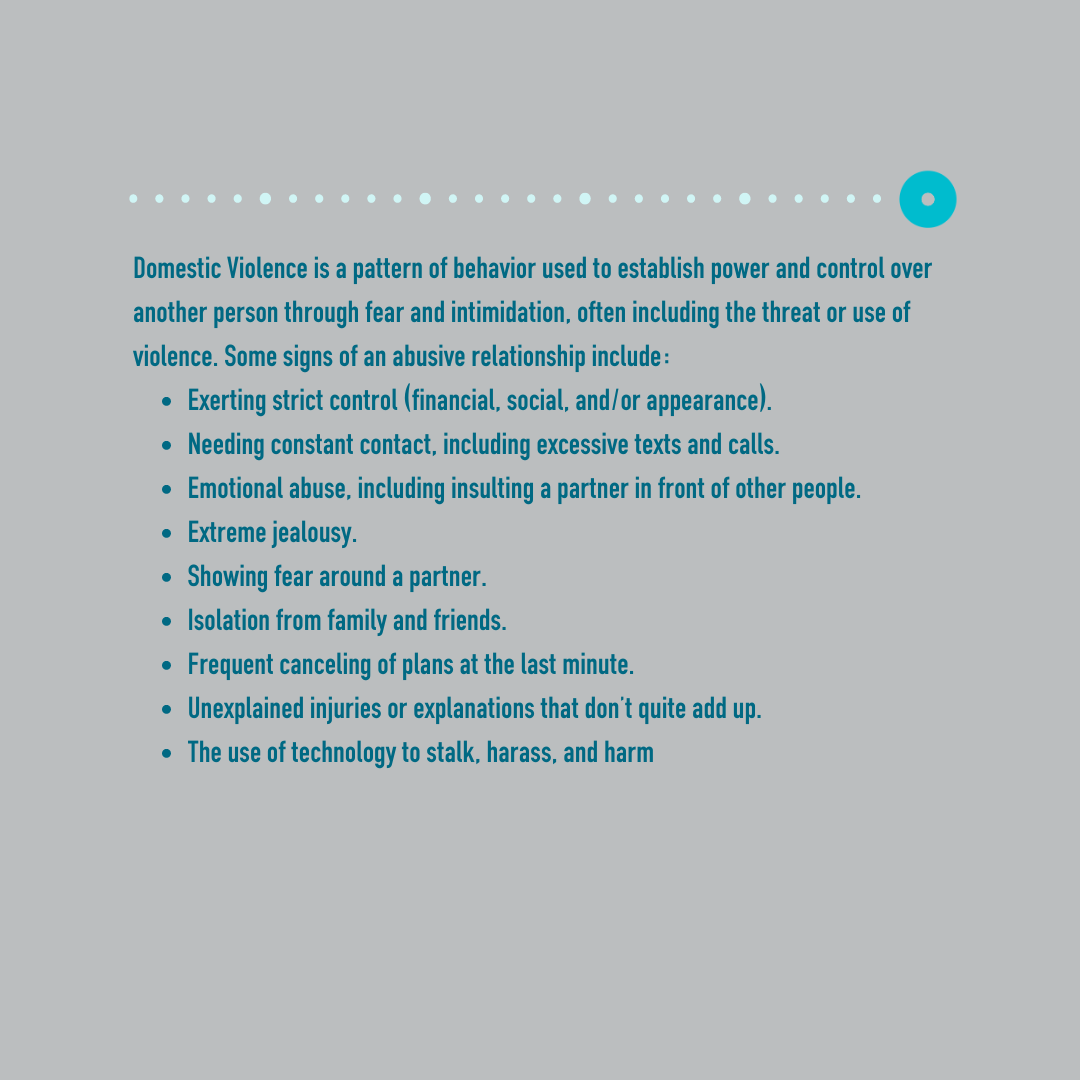
Domestic violence not only traumatizes the woman but also their children. My mother married my stepfather when I was seven years old and I watched him beat her to a pulp almost daily until I moved out at 12 years old. She screamed out in pain, begged for her life, and cared for her wounds privately to not set him off again. He was an alcoholic but that is not what made him an abuser, that came from within for reasons no one will know.
I watched him drag her down the hall, beating her head from side to side so she would hit both walls, all the while she was begging and crying for him to stop. What’s crazy is that I hated my mother, she was my abuser but down deep she was my mother and it pained me to watch her be treated that way. She stayed married to him until he was beating her and my brother took out a shotgun and made him leave.
You might ask “Why didn’t she just leave?” There are so many reasons women don’t leave, one is their children. How do you prepare to leave when you are watched like a hawk? How do you squirrel away enough money to live, relocate, move your kids out of school, and pay rent? It’s nearly impossible. One attitude the abuser takes is that they own the woman and they will go to any lengths to keep her. To get her to come back, the most common is the sweet personality change and wooing her back only to beat her more.
At the same time, they are beating a woman, they are also degrading her and some women think they deserve it over time which causes them to stay. Some women stay out of fear and others know they will be hunted down, some will have a child kidnapped or the abuser will call the police claiming she left with the kids and make up a wild story that the police have to check out.
I’ve met many women while blogging who were in violent relationships and saw what they went through to leave, the heartbreak after, and all the horrific acts towards them and each one was so traumatic you ask yourself, “How did they make it?” Each one is a survivor!
It’s important to know that men also have violent relationships. There can be shame involved and that is why many men don’t come forward but they are not forgotten. They are survivors as well and often carry a big burden by not seeking help or telling anyone.
































 lookingforthelight.blog