
Thank you for joining me for this week’s Friday Quote.

Melinda

Thank you for joining me for this week’s Friday Quote.
Melinda
It’s too hard to pick a favorite Chicago tune because everyone is great!
It’s the weekend!!!!!!
I’m glad you joined me for another edition of Weekend Music Share this week.
Have a great weekend!
Melinda
Welcome back to Weekend Music Share, the place where everyone can share their favorite music.
Feel free to use the Weekend Music Share banner in your post, and use the hashtag #WeekendMusicShare on social media so other participants can find your post.
My husband told me at lunch that 23&Me is in the financial news saying they are possibly going bankrupt. I wanted to let you know right away for those who were interested. If you are already a client, you can have them delete all your information which I did today. Once they go into bankruptcy if they do you will not have any control of how your DNA is handled and that is a bad place to be.
Another highly respected company that offers ancestry services and has DNA kits is Ancestry.com. I worked with them for ages building my family tree and never had a problem. They are another option to check out. If I were to have my DNA tested again, I would go with Ancestry.com. But I suggest you do your homework and go with the company you feel most comfortable with, just avoid small companies who might not make it long term.
Melinda
by Maya Capasso
Medically Reviewed by: Matthew Boland, PhD
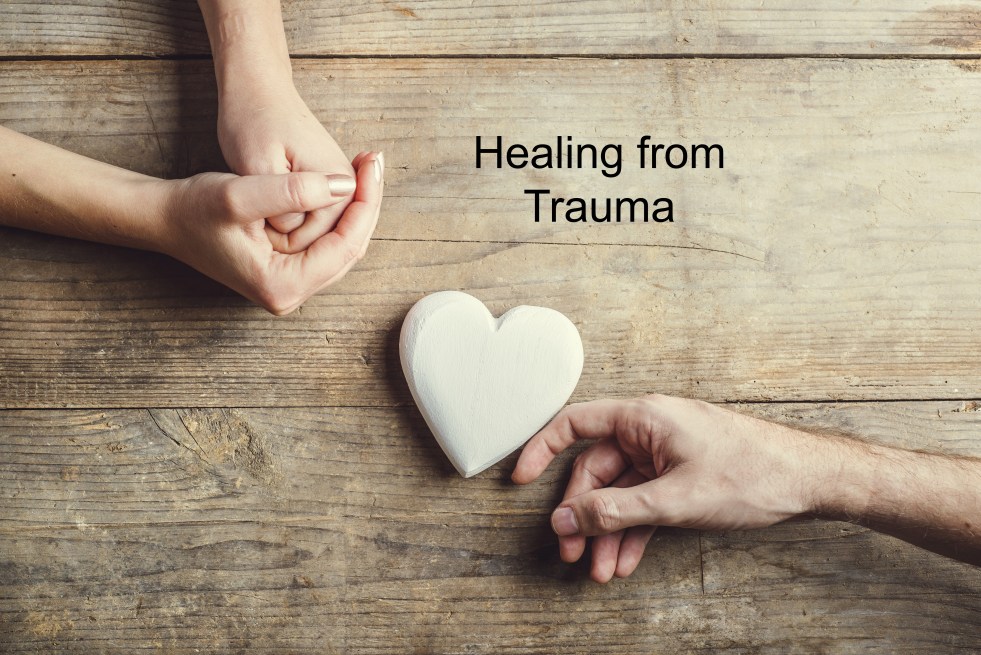
Trauma looks different for everyone, and sometimes we don’t even recognize our own. But learning to do so is important — and one of the first steps toward healing.
Last week a friend of mine reached out to me because they’re struggling. They recently broke up with their partner of 4 years and shared with me that they’re angry at themselves for still feeling depressed weeks after the initial breakup.
The thing is, my friend deserves to be kinder to themselves. For them, their breakup was extremely distressing and left them feeling overwhelmed as they worked to rebuild their life. Some might even consider this type of event “little t” trauma.
If you’ve experienced a stressful event in your life that affects you after the fact and you don’t know why, you might benefit from seeking treatment. It’s important to know that your response to any stressor is valid and deserves attention.
In the broader sense, trauma can be defined as an emotional response to any event perceived as dangerous by the person who went through it.
Some people use the terms “big T” and “little t” trauma to distinguish between different kinds of stressful experiences and responses. While researchers and most mental health professionals don’t currently use these terms, they helped me better understand that various forms of stressors can have an impact on your mental health.
“Big T” trauma typically refers to events that are universally understood as dangerous or life threatening.
This form of trauma is what often comes to mind when we think of traumatic events, such as serious injuries, sexual violence, or natural disasters. Events like these are specifically referred to in the diagnostic criteria for post-traumatic stress disorder (PTSD).
“Little t” trauma refers to events that may not involve potential death or serious injury but can be stressful enough to negatively affect your mental health.
“Little t” traumas can include — but are by no means limited to — sexual harassment, financial hardship, or breakups.
For some trauma survivors and psychologists, the terms “big T” and “little t” trauma do more harm than good.
Licensed marriage and family therapist Robyn E. Brickel believes that the terms “big T” and “little t” trauma can minimize and invalidate people’s traumatic experiences. “It’s unhelpful in mental health practice to conceptualize some traumatic events as less or more significant than others,” Brickel writes.
She explains that by doing so, trauma survivors may feel more stigma around their response to an event if it’s considered only “little t” trauma.
Researchers avoid this terminology for a different reason. Within the field of science, trauma specifically refers to life threatening events because of the unique ways in which this degree of danger can affect our brains — such as developing PTSD — and the unique ways in which these symptoms or conditions should be treated.
Referring to extremely stressful but non-life-threatening events as “little t” trauma runs the risk of indicating that such events have the same type of impact on our brains and should be treated in the same way as “big T” trauma. For example, while both “big T” and “little t” trauma can lead to serious mental health conditions, like depression or anxiety, only events that fall under “big T” trauma can cause PTSD and might require specialized treatment.
Despite these important differences, understanding the concept of “little t” trauma was a huge step for me in my recovery.
The concept made me feel validated because it demonstrated that all forms of stressors can have a strong impact on your well-being and should be taken seriously.
If I had never learned about “little t” trauma, I would still believe that I shouldn’t be suffering because other people have it worse than I do. Learning about “little t” trauma helped me stop minimizing my pain and seek treatment.
Acknowledging my trauma and facing it head-on was essential to my recovery journey. I used to have the mindset of: “why does it matter if we acknowledge our trauma? Isn’t it easier to continue minimizing it and pretending it doesn’t exist?”
Today I say, “No, not at all!” For me, avoidance and minimization were actually a big part of my own experience and what led me to be diagnosed with PTSD.
According to the National Center for PTSD, “If you go out of your way to avoid thoughts, feelings, and reminders related to a traumatic event, your symptoms may get worse. Using avoidance as your main way of coping with traumatic memories can make PTSD symptoms worse and make it harder to move on with your life.”
If you realize that you engage in avoidant behaviors when it comes to tough memories from your past, you can change that. The first step toward healing for me was validating my trauma and acknowledging that it impacted my life.
Here are some tips that helped me get there:
A great place to start is with yourself. If you don’t yet feel comfortable reaching out to loved ones or a professional for help, that’s OK. You can take some actions to feel validated all by yourself.
Connecting with others and being vulnerable in safe spaces can be incredibly healing.
Reaching out to a therapist who specializes in trauma is essential. Many therapeutic practices can help you process your trauma or stressful event in a safe environment.
If you’re like my friend from the beginning of this article, you might be struggling with your mental health but avoiding the pain by telling yourself that others have it worse than you.
For me, the real healing began when I stopped minimizing and started validating my painful experiences. In facing the impact of these events, I was able to move forward and start my journey to recovery.
Sharing her journey can help many people and I’m proud of her for writing.
Melinda
Reference:
I’m glad you joined me on Wordless Wednesday and I hope to see you soon.


I was treated to a large arrangement from Costco last weekend. They are larger than Kroger’s, so I’m always happy when he makes the monthly trip. The white pumpkin says it all and I’ve left it in the arrangement because it matches my Fall decorations.
Melinda
Medically reviewed by Bethany Juby, PsyD — Written by Jillian Goltzman — Updated on September 27, 2022.
Books are more than just a comfort. They can be a portal to different worlds, a bridge to a new past or future, an outpost for philosophies, and a support system for times of need.
In a literal sense, research shows that reading has the power to change your brain and create different patterns within it. On a practical level, reading allows you to learn new information and skills you might’ve not known before.
While dealing with a mental illness can feel isolating, 20 percent of the U.S. population experiences mental illness each year. Therapy and mindfulness are powerful steps in seeking help. For those looking to learn new skills outside of therapy, libraries and bookstores are teaming with options written by experts and licensed professionals.
Mental health books can be a useful way to process your experiences, learn about psychology, and often find techniques and tools to help you in your daily life. They can aid your mental health toolkit by providing different techniques, scientific research, and stories of others who have faced the same hurdles.
Melinda
Reference:
Thank you for visiting my blog and allowing me into your life. Your time here makes me smile. I set a goal to travel the world when I was a child and got the chance through your visit. I appreciate your time reading a post or two and hope you’ve found something that resonates with you. I have not had a chance to visit your home country yet, but it’s on my bucket list.
Take good care of yourself until I see you again. :)
Melinda
You need blood samples from a female and a male relative to see your complete DNA Genome. The trick here is that male DNA doesn’t pass down to women which means a female needs the help of a male relative to see your complete ancestral history.
Your DNA can reveal a lot about your ancestry-where your ancestors may have come from, when and where they may have migrated around the globe, and how you’re connected to populations worldwide.
European
Northwestern European 99.6%
Breakdown
British & Irish 81.1 %
French & German 16.1%
Finnish 0.4 %
Broadly Northeastern European 2%
Unassigned 0.1%
Trace Ancestry 0.3%
North African 0.3%
I belong to Haplogroup H which is dominant in the general European population and appears frequently in the continent’s royal houses. I’m a distant relative to Marie Antoinette, Prince Phillip, The Duke of Edinburgh, and famed 16th-century astronomer Nicolaus Copernicus.
The most exciting finding was that I am related to Neanderthals, the first modern humans before extension 40,000 years ago. I’m 2% Neanderthal. Cool, and I like having prehistoric ancestors.
I have 1510 relatives who have had their DNA tested at 23&Me, I’ve talked with a few but it hasn’t been of great interest to me.
Have you had your DNA tested and taken the trip your ancestors did?
Melinda
References:
Thank you for all the great feedback on the Blogger Highlight series, I’ve enjoyed meeting each blogger and sharing their site with you. This week we highlight the blog Veselin. We have only followed each other briefly, but his photos grabbed my attention at first sight. His site isn’t just photography, he participates in The Daily Prompt, book reviews, and writes posts as well.
My name is Veselin Nikolov. I work as the lead of the WordPress.com MarTech team. My hobbies are Books and Walking. I’m active on X as dzver and on Goodreads. I am 45 and live in Sofia. I read, work, and try to be a good parent of my 2 kids.
M. When did you get into photography and why?
V. My blog is personal, I take these photos to capture some nice traces from my life. Things I saw. I know very little about photography, unfortunately, and rely on the iPhone camera to do the work for me.
M. Do you have a favorite photo or post?
V. Maybe this old post from 2018 on Active Listening:
https://veselin.blog/2018/01/22/active-listening/
M. Did you start counting your steps to lose weight and add a goal to your life?
V. I’m a software engineer who works remotely. I don’t have many reasons to leave the room. This lead me to inactivity and health issues, and I didn’t even realize I’m doing it. I thought going to the gym is enough. It wasn’t. There’s no need for me to lose or gain weight, it’s a quality of life choice. I want to be able to climb mountains again, and at least to reach higher floors without an elevator. So the steps are a way to get there, and a an attempt to change my life. I am close to achieving my goal of averaging 10K steps/day over an entire year. For the next year, I have a peak 🙂
One of my recent favorite posts is Stop By.
I love this photo, it reminds me of my European travels.
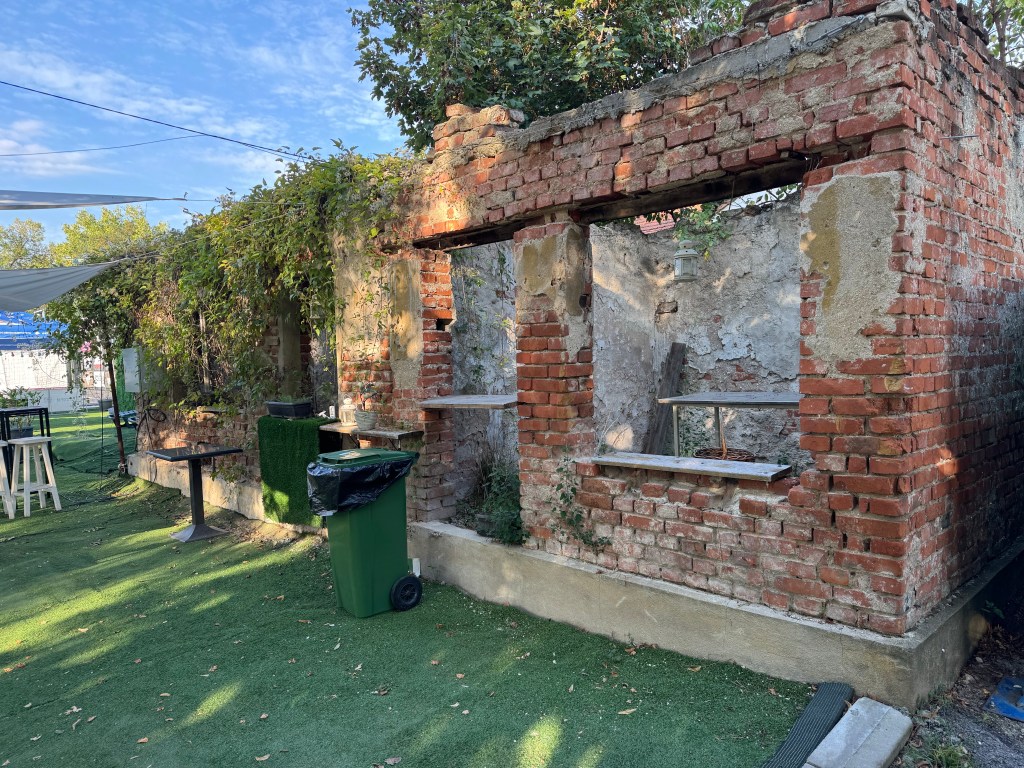
Be sure to stop by and say hello to Veselin, read through his archives, and be prepared to relax.
Melinda





 lookingforthelight.blog