I am a huge animal lover who is concerned about climate change, mental health, helping others and enjoying life. How I look doesn’t matter, that’s the last thing I want someone to remember. I’m a whole person and it’s important to show who I am on the inside.
We eat in the living room vs the dining table most of the time. Our recliners have desk attached we can eat on it.
Long gone are the days of cooking every possible item for the holidays.
Only cooking on Thanksgiving and Christmas. The eve’s are spent eating a meal that includes, hard meats, several cheeses, olives, crackers and deserts of course. It’s a simple way to have a special meal without cooking.
I’m glad you joined me on Wordless Wednesday and I hope to see you soon.
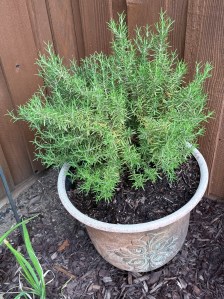
How this plant survived winter outside is beyond me. I’m adjusting to new eyeglasses and the photo looks slightly burry. I apologize if my eyes were off.
Hi, I’m glad you stopped by and I look forward to your comments.
“I am going quite mad with the knowledge of accepting the overwhelming number of the of things I can never know, places I can never go, and people I can never be.
For me to travel to Jordan, the conflict in the Middle East would have to change dramatically. I’ve wanted to see Jordan since I saw a feature on the Travel Channel. The awe-inspiring Petra, Dead Sea salt baths and the people are so inviting. They are so generous by taken in so many refugee’s.
The list of places and countries to travel to is long but with planes falling out of the sky every day, I’m not flying.
Don’t depair if your backyard isn’t bathed in sunlight. Many medicinal herbs thrive in partial shade, including lemon balm, mint, skullcap, sweet woodruff and thyme.
Start Small, start simple
Begin with a few easy-to-grow herbs, like rosemary, lavender, and calendula. As you gain confidence, you can expand your collection.
Observe and learn
Pay close attention to how hearts grow and respond to their environment. Keep a journal to make note of eaches plants unique needs, and preferences. Research their medicinal properties, history, and folklore and record your insights.
Connect with community
Join a local gardening club or community garden. Sharing knowledge and resources with other gardners can be incredibly rewarded.
Grow what you need
Consider what ailments or conditions you’d like to address with your herbal remedies. Camomile can a great ally for stress, headaches, and sleep. Peppermint can calm an upset stomach and sooth nausea.
Harvest with intention
When harvesting your herbs, do so with gratitude and respect; this will enhance healing properties.
Make it a sensory experience
Engage your senses. Smell the herbs, feel their textures, taste the leaves, and observe their growth.
So much fun! James Bay is one of my favorite UK artist.
It’s the weekend!!!!!!
I’m glad you joined me for another edition of Weekend Music Share this week.
Have a great weekend!
Melinda
Welcome back to Weekend Music Share, the place where everyone can share their favorite music.
Feel free to use the Weekend Music Share banner in your post, and use the hashtag #WeekendMusicShare on social media so other participants can find your post.
Board (MEB), which found me “100% unfit for duty due to chronic systemic tick-borne illness.”
I was bitten in the summer of 2012, while serving at Seymour Johnson Air Force Base, North Carolina. Upon listening to my flu-like symptoms AND looking at my rash, my military medical provider told me (and I quote), “we don’t have Lyme disease in North Carolina.” That was the day I became chronically ill forever.
1,525 days of misdiagnosis
In fact, it took military medicine 1,525 days, over 24 doctors across 8 specialties, and 3 misdiagnoses, to finally figure out what was wrong with me. Lack of medical provider education & awareness, both military and civilian, continues to lead to misdiagnosis, lack of diagnosis, and inevitably to unnecessary suffering through chronic illness.
Last year, I found myself speaking to the American Academy of Family Physicians (AAFP), where they opened their hearts and minds to hearing my tick-borne illness patient story. Afterwards, a very curious and compassionate man, Dr. Russell Kohl, approached me with many thoughtful questions.
It just so happens that he’s a Colonel in the Missouri Air National Guard AND the State Air Surgeon (lead doctor). He was deeply concerned that what happened to me happened while I was in service to my country, and even more concerned that it may still be happening to others.
After a few minutes of conversation and fully “clicking” as a duo, I asked him if he’d join me in educating military medical providers and service members. Keep in mind, I’d been literally begging the Department of Defense, Defense Health Agency, for a decade to do an awareness campaign in May, which is Lyme Disease Awareness Month, to no avail.
To my surprise, Dr. Kohl said, “Absolutely!” If I’m being honest here, I never expected to hear back from him.
Boy, was I wrong…
Within a few days, he connected with me and mentioned how he had broached the subject already with the Director of the Air National Guard Medical Service, and had received approval for a Lyme Disease and Tick-Borne Illness Awareness campaign in May of 2025.
To say I was overwhelmed with gratitude is an understatement. Now we had to garner the educational materials needed to support their effort. And this is where community comes in. The Lyme disease community heard my request and charged the hill!
Two major global non-profits stepped up to help: LymeDisease.org and the Bay Area Lyme Foundation. They did what they do best: share their knowledge and materials, because they know the power of educating medical providers. They also understand the importance of keeping our service members and military families healthy for duty.
Educating 100,000 members of Air National Guard
The end result? Well, you can read the details in the very gracious attached Memorandum of Appreciation. Big picture: over 100,000 citizen airmen, including over 100 physicians, and 1,000 medical technicians, received the educational training. The sooner our service members are diagnosed, the better the treatment outcomes. This is, indeed, a military readiness issue.
My deepest gratitude to Dr. Russell Kohl for his curiosity and courage, and to my wingmen at LymeDisease.org and The Bay Area Lyme Foundation. Together, we have made a difference.
Oh, and now that we have ‘proof of concept’ of this Lyme Disease and Tick-borne Illness Awareness education campaign, it’s long overdue for the Department of Defense, Defense Health Agency, to do the right thing. We stand by ready to support. What say you?
You can follow Nicole Malachowski on Instagram: @realmalachowski
Despite its name, hurry sickness isn’t an actual medical or mental health condition. Still, a pressing need to hurry through tasks and make the most of every moment can represent a legitimate concern for many people.
This time urgency, as it’s also known, often partly relates to the ever-increasing variety of technological devices designed to make life easier:
With so many tools to help you get things done, you have plenty of time to take on additional tasks, right? (Probably not.)
You’ve got a laptop and a smartphone, so you can respond to work emails anytime, can’t you? (Actually, no.)
Shouldn’t it be easy to complete a full day’s work, cook meals, exercise, do chores, connect with loved ones, and still devote 7 or 8 hours to a good night’s rest? (When you do the math, you certainly won’t get a number below 24.)
The more that’s expected of you, the more you might agree to take on, pushing yourself harder to complete every “essential” task.
Yet rushing through life can affect physical health and leave you feeling unfulfilled and unable to devote attention to the people and things you care for most.
Hurry sickness can show up as a driving need to make the most of every second.
“We’ve come to know this habit as multitasking,” explains Rosemary K.M. Sword, author and co-developer of time perspective therapy. “Many people who’ve incorporated multitasking into their life are proud of their ability to do more than one thing at the same time.”
When you juggle too much at once, however, you might forget or neglect important things — even while in the middle of them.
Case in point: Distracted by something your colleague has just said, you forget about the soup. It scorches, setting off the smoke alarm and ruining lunch.
Other signs might include:
speeding, both in your car and through conversations, the grocery store, or meals
rushing through work tasks and household chores, to the point where you sometimes make mistakes and have to do them again
frequently performing time calculations in your head to see whether you can fit in another task
feeling irritable when you face delays
constantly trying to find ways to save time
endlessly running through your to-do list in your head to make sure you haven’t forgotten anything
Hurry sickness frequently involves an undercurrent of anxiety. Perhaps stress and worry creep up when you think of everything you have to do.
Or maybe you quickly become anxious when you find yourself stuck in traffic, early for an appointment, or waiting for something with nothing to do in the meantime.
Hyperaware of the seconds ticking by, you fixate on all the things you could be doing with the wasted time.
The belief that you don’t have time to handle daily responsibilities or achieve more distant goals can create plenty of stress. Packing the tasks you want to accomplish into the time you have available, you worry whether you’ll ever get them all done.
Living with anxiety always simmering on the back burner generally doesn’t feel very pleasant. This anxiety presses you to keep moving, to keep doing, to attach more urgency to your to-do list than it requires.
As you rush from one thing to the next, you might notice trouble concentrating, since you’re always worrying about the next item on your list.
Neglecting to give your work the attention it deserves means you either have to:
do it again, using up more time
leave it as it is, knowing you could’ve done better
Either option can leave you facing more stress, Sword notes, along with feelings of inadequacy, failure, or diminished self-esteem. You might also feel irritable, tearful, and guilty.
Relationship Issues
“Hurry sickness can eclipse what’s really important in our lives — our relationships with others,” Sword says.
Perhaps you don’t listen to your partner because you’re worrying about everything you have to do, or you snap at your children when they’re slow to get moving.
You forget important dates, push others aside because you lack the time to offer emotional support or physical affection, and find it difficult to keep hold of the frayed edges of your temper.
In short, you struggle to remain present and engaged with your loved ones, which can do lasting emotional damage to all involved.
Spending your days hurrying often means you devote less time to self-care.
Relaxation and alone time might be the first “unnecessary” activities you scrap when you feel busy, but many people with hurry sickness also start to ignore things like hydration, balanced meals, physical activity, or sleep.
Prolonged stress can also play a partTrusted Source in burnout, a state where you feel completely drained and no longer able to cope with the demands of daily life.
A 2003 studyTrusted Source found evidence to suggest certain traits associated with type A personalities— including time urgency and impatience — led to an increased risk for high blood pressure (hypertension).
Researchers looked at five traits in more than 3,000 adults between the ages of 18 and 30:
When researchers followed up with participants 15 years later, they found that 15 percent of the participants had developed hypertension.
Study authors say competitiveness, anxiety, and depression didn’t appear to increase hypertension risk. Known risk factors, including lack of exercise, alcohol use, or obesity, also didn’t seem to affect the results.
What did appear to increase risk were two specific traits: Time urgency/impatience and hostility. What’s more, those who experienced these traits more strongly showed greater risk for hypertension.
At first, slowing down might feel impossible — you’ll never get anything done, and thinking about the tasks waiting will only add to your stress. But remember: You can work much more efficiently when your mind isn’t bogged down by racing thoughts.
Instead of coming to a screeching halt, it’s often more helpful to slow down, well, slowly.
These strategies can help you push back the urge to keep rushing and get in the habit of taking life as it comes.
Take a walk
Putting down what you’re doing and temporarily changing your environment can help you counter the need to hurry, even when you feel most rushed.
As you walk, take deep breaths to ground and refresh yourself. Aim to walk for 30 minutes, if you can. A half hour spent stretching your legs, breathing fresh air, and getting some sunlight can energize you and even boost creativity, so you might find yourself returning to your responsibilities with a renewed outlook and improved mood.
Embrace mindfulness
Mindfulness — whether it’s meditation or just taking a few deep breaths — helps you focus your attention on the things happening in the moment, so it’s an important skill to develop when trying to manage hurry sickness.
Trying to multitask and jam several activities into one short span of time can leave you distracted and frustrated:
You’re replying to an email from your boss while making a doctor’s appointment over the phone. Since you aren’t entirely listening, you end up needing the information repeated before you can accurately note down the time and date of your appointment. When you finish the call, you notice you’ve typed some of the receptionist’s words into your email, so you have to review it again to check for other errors.
When your awareness remains with your current task, instead of wandering along to everything else you have to do, you’ll probably notice you do a better job and feel more satisfied with your results.
You’re cooking dinner. Instead of rushing through the chopping and slicing your finger open, you slow down and focus on the rhythm of the knife and the uniform shape of the vegetable slices. Putting more of your attention into the meal allows you to take more pride in your work when it comes out just as you envisioned.
Mindfulness takes practice, and you might notice worries and distracting thoughts keep popping up.
But instead of fixating on the slipping sands of time, acknowledge those thoughts and then let them go. Accept that yes, you have other things to do later, and remind yourself you’ll get there when you get there.
Take care of important needs
There are certain physical needs you simply can’t neglect, no matter how busy you become.
Your body needs fuel and rest to function properly. Without food and water, quality sleep, companionship, and exercise, you won’t be able to maintain your top speed for very long. Eventually, you won’t be able to maintain any speed at all.
Instead of denying your body’s essential needs because you’re in too much of a hurry, remind yourself investing in your body helps prevent hunger, exhaustion, and burnout, making it possible to keep going.
Prioritize relaxation
Sleep, hydration, nutrition, and exercise make up the basics of self-care. Other key components, including relaxation, can improve quality of life along with physical health.
Making time for yourself makes it easier to show up as your best self and stay present as you move throughout the day. Balancing your responsibilities with enjoyable activities also makes it easier to remember that you don’t always need to hurry.
Relaxation might involve quiet moments sitting alone, an hour of online shopping, an afternoon with a good book, or a long talk with your best friend. How you choose to unwind matters less than the fact that you do find time to unwind.
Learn to recognize your limits
People often get stuck in the hurry cycle because they have a hard time saying no. When you accept more responsibilities than you can realistically handle, you’ll almost certainly find yourself rushing to cram everything in.
You might worry saying “no” will upset loved ones or create difficulties at work, but consider another possible outcome: You say “yes” but end up not having time to get to the task or do a good job with it.
Setting healthy boundaries for yourself (and sticking with them) can help:
“I won’t take on extra work when I have more than one current project.”
“I’ll make time for a walk every day so I can relax and recharge.”
Prioritization can also make a difference. You probably can’t refuse every task you’d like to turn down. Instead, evaluate your responsibilities and identify which need immediate attention and which can wait.
Remember, too, that it never hurts to ask for help. If you truly can’t let anything go, a good next step might involve seeking help from a co-worker or loved one.
Get support
It’s not always easy to break free of long-standing patterns. If you just can’t seem to slow down, a therapist can offer guidance and support.
Sword recommends talking to a professional particularly when you find yourself doing dangerous things, like speeding, or struggling to control irritability or anger toward others.
Therapy can also help when a sense of time urgency fuels anxiety and other emotional or physical distress. A therapist can teach mindfulness and relaxation techniques, along with other tools to help manage hurry sickness.
Support from a therapist can also make it easier to identify potential contributing factors, such as people-pleasing tendencies or a fear of failure. By addressing hurry sickness at the root, you’re more likely to see lasting improvement.
Pressing the “pause” button and disrupting the hurry cycle is often easier said than done. But living your life on fast-forward won’t do much to support long-term wellness.
“Stop and smell the roses” might be a cliche, but that doesn’t make it bad advice. Taking life at a more gradual pace leaves you with more time to enjoy important relationships and savor everything life offers, both large and small.
New research has found that cognitive behavioral therapy may help people with fibromyalgia.
The researchers were able to identify differences between fMRI scans between participants as well as a significant reduction using survey-style tools.
Experts are hopeful that these finding can help support patients and clients while reducing bias and barriers to care.
For those in chronic pain, mental health supports are both vital and lack availability. A new study, published September 20 in Arthritis & Rheumatology, has found that the use of cognitive behavioral therapy (CBT) can be especially helpful for those living with fibromyalgia.
The research—conducted by a team from Harvard, Norway, and Pittsburgh—included 114 participants and found that CBT was better at helping to reduce catastrophic thinking related to the disease.
This was compared to people using educational materials alone.
Understanding catastrophizing, according to Dr. Chandler Chang (PhD), clinical psychologist and founder at Therapy Lab, is key to supporting people with a chronic illness like fibromyalgia.
“Let’s say you have fibromyalgia and you start thinking, ‘The rest of my life is going to be like this, my life is ruined, everything is going to suck after this.’ Those are examples of catastrophic thoughts that you might have,” Chang said.
The researchers used tools such as Brief Pain Inventory (BPI), BPI Pain Severity, the Fibromyalgia Impact Questionnaire-Revised (FIQR), and the Pain Catastrophizing Scale (PCS), to assess participants alongside the scans. Once the participants participated in the imaging, they were either given eight weeks of CBT or educational materials about fibromyalgia and chronic pain.
Those who received the CBT were provided weekly sessions across eight weeks.
The researchers used the Pain Catastrophizing Scale (PCS), a tool that is scored out of 52, to see how CBT could impact people with the condition.
They found that those who received CBT therapy saw an average reduction of 8.7 points on the scale while those receiving educational materials saw a much lower drop of 4.6.
The team also used an fMRI scan and were able to see the impact of catastrophizing thoughts in the brain patterns. After the CBT, they could see evidence that changes in brain patterns coincided with people who benefited from CBT.
Kelsey Bates (LPC), founder at Women’s CBT, says that catastrophizing is a particularly impactful element of both fibromyalgia and CBT treatment but that providing mental health support for those with chronic illness, in her practice, requires the use of trauma-informed tools.
“Reframing our thoughts is important. But we also need space to acknowledge the grief that might happen when people are going through a chronic illness or dealing with chronic pain,” Bates said. “There’s a level of acceptance that we have to figure out.”
Dr. Jeff Krauss, Chief Medical Officer at Hinge Health and Staff Physician at the VA of Palo Alto, says that this study could help reduce stigma and lead to better patient outcomes.
“One of the problems with chronic pain is that it’s very hard to see it. People used to get, and still do get, accused of faking their pain, because doctors will look and see that there’s nothing wrong with their back, or there’s nothing wrong with their knee… It’s really exciting that we can start to see it in the brain, and know that these feelings that people have are very real, even though it might not be correlated with tissue damage.”
Bates says that while “pain doesn’t discriminate” she also regularly sees clients who feel left behind by the medical system when it comes to the mental health side of chronic illness and chronic pain.
“I meet folks and they’ve felt really gaslit by medical providers, especially with fibromyalgia in particular, that they have heard the phrases like you just need therapy, you just need to relax, just manage your stress,” Bates said.
One of the stated limitations of the study was that, while fibromyalgia does disproportionately affect women, and all the participants were female, more work can and should be done to include both men and non-binary people in future research.
As for what comes next, Krauss says that while these results are encouraging they are still part of a larger picture that has many barriers to treatment for those experiencing these symptoms.
“I think until we have the ability at scale to do this very expensive imaging, and to find those interventions that can actually change the way the brain processes pain through some sort of pharmacologic intervention or something, through a drug, then we’re really left with a lot of these very foundational lifestyle changes that are so effective and necessary for treating chronic pain.”
Bates, meanwhile, says that her hope is that research like this can add to a more integrated approach when it comes to CBT, one that prioritizes trauma-informed care as well as other modalities like Dialectical Behavioral Therapy (DBT) and acceptance and commitment therapy (ACT).
“My personal outlook is that chronic illness and chronic pain is considered medical trauma…So I think it’s our clinical duty to provide a safe, warm therapeutic space that’s conducive to holding space for all of those things.”
A new study, published this week in Arthritis & Rheumatology, has found that the use of CBT can be especially helpful for those living with fibromyalgia.
With tick activity hitting alarming highs this summer, the pest control company Terminex has announced its first-ever comprehensive ranking of the Top 25 Most Tick-Infested U.S. States.
Based on proprietary 2024 pest management data, this report reveals which states are facing the greatest tick pressure and risk of tick-borne illnesses.
This first-of-its-kind list arrives at a critical time, offering homeowners and outdoor adventurers new insight into how geography and climate are shaping tick populations across the country.
States like California, Florida, Texas, Pennsylvania, and New York are at the top of this list due to their warm climates, high humidity and abundance of green spaces.
Notably, New York City, Los Angeles, Philadelphia, San Francisco and Washington, D.C. rank as the top five tick-infested cities in the country, underscoring that even densely populated urban areas are not immune to tick activity.
Overall, the Northeastern region of the U.S. generally experiences the highest populations of ticks, with common species including the blacklegged tick and the American dog tick.
“This isn’t just a nuisance; tick activity is reaching new levels across the country, posing a serious and growing public health threat,” said Tom Dobrinska, Technical Service Manager at Terminix.
“Climate change continues to increase tick populations. As winters become milder and warm seasons increase in length, tick survival and risk for human exposure increase significantly.”
Top 10 most tick-infested states
California
Florida
Texas
Pennsylvania
New York
Georgia
New Jersey
Arizona
Massachusetts
Ohio
States most impacted by Lyme and other tick-borne diseases
While not all ticks carry illness-causing pathogens, disease risk can vary by tick species.
According to the CDC, Northeastern states like Pennsylvania, New York and New Jersey, as well as parts of the Upper Midwest, are often identified as the worst places for ticks in the U.S. due to their high rates of Lyme disease cases. Southeast and Southcentral U.S. might see more cases of ehrlichiosis or spotted fever rickettsiosis.
“Scientists and public health experts are constantly researching ticks to better understand the threats they pose,” said Dobrinska. “As these experts continue to monitor tick activity and disease spread, it is essential for the public to stay informed about the dangers and know how to prevent tick bites.”
Tips for tick prevention
To protect against tick bites and tick-borne illness, Terminix recommends the following steps:
Avoid tick-infested areas: Ticks prefer wooded areas with high grass and abundant leaf litter; wear long sleeves and pants whenever you plan to go on a hike or walk through forested areas.
Inspect yourself and pets: After returning home from being outdoors, conduct a full body check, especially under the arms, around the ears and on the back of the knees. Finding them before they bite will help prevent being infected with any diseases they may be carrying.
If you find a tick bite: Using fine-tipped tweezers, grasp the tick as close to the skin as possible and pull upward with steady, even pressure. After removal, clean the area with soap and water or rubbing alcohol. It’s best to consult with a medical provider for extra precaution.
Mary provides a comprehensive list of ways to heal yourself naturally.
Stuffy nose, headache, upset tummy, and even obesity. There’s a pill for that. Modern medicine has discovered an endless list of pharmaceutical drugs to “cure” whatever ailment may come your way. We also have an extensive list of alternatives or complementary remedies to conventional medicine, most of which have been used for hundreds, if not … Continue reading
I didn’t have the opportunity to listen to music at work until I moved into a sales role. My days were spent driving to client meeting to client meeting so there was time to enjoy some tunes. I listened to some popular 90’s music but mostly CD’s of my favorite old Rock & Roll tunes.
I’m now retired and enjoy quite days unless my husband sends me a link to a song he thinks I’ll like. I’ve included a great tune by Bonnie Rait & Keb Mo.
I wrote this post many years ago, I think the last one written was #17. This was written during a difficult time when Fibro ruled my life. I haven’t had a bad flare in several months and I’m so thankful.
————-
I had to accept the loss of everyday control once diagnosed with Fibromyalgia. I go to bed with plans for the next day, when the morning rolls around, I can’t get out of bed. In the past, I would beat myself up, feel shame and anger.
A shower takes an hour, it’s painful and exhausting. Instead, I use hospital approved cleansing wipes to bathe on the days when I can’t handle the thought of a shower. I’m embarrassed to tell my husband.
I shaved my head yesterday, taking care of my hair takes too much energy. I’m housebound, only doctors see me. My husband doesn’t say anything but I imagine the negative thoughts he has. Why can’t his wife be normal like others, why can’t we go out to eat, why don’t we have sex, I’m fat………the thoughts can consume.
I can ask myself questions about why not shower every day, I don’t. It’s not productive, within my control and doesn’t help my health. Stress creates inflammation creates more pain.
I’m so glad you are enjoying Fun Facts. I learn something new each week, even if it’s weird. I love hearing your comments!
Canada is south of Detroit (just look at a map)
The original name for the search engine Google was Backrub. It was renamed Google after the googol, which is the number one followed by 100 zeros. (about.google)
The oldest-known living land animal is a tortoise named Jonathan, who is 187 years old. He was born in 1832 and has lived on the island of St. Helena in the Atlantic Ocean since 1882. (guinnessworldrecords.com)
Bats are the only mammal that can actually fly.
Wombats are the only animal whose poop is cube-shaped. This is due to how its intestines form the feces. The animals then stack the cubes to mark their territory. (bbc.com)
Many of the go to comfort foods today are the same since childhood. Mac & cheese, chicken & potato soup, peanut butter & jelly sandwichs, chocolate cake and my daily Cherrios top the list. My Gramps made the best homemade chicken soup and a mean job on potato soup.
Pleasure Beach, a popular summer destination in Bridgeport, Connecticut, will remain closed for the entire 2025 season due to a serious tick infestation.
City officials, in consultation with state environmental and public health experts, made the call after discovering multiple tick species on the island, including the Asian longhorned tick—an invasive species that poses unique risks.
Unlike native ticks, this species can reproduce asexually, allowing a single female to spawn a full-blown infestation. Even more concerning, it can potentially carry serious pathogens.
While disappointing for beachgoers, the closure may benefit the island’s fragile ecosystem. Pleasure Beach is a critical nesting site for protected Audubon bird species, including the endangered piping plover.
With reduced human activity, conservationists expect a boost in nesting success and habitat restoration.
Bridgeport officials plan to conduct treatment and containment efforts throughout the summer, with the goal of reopening the beach in 2026.
Birthdays have always meant something to me, as a child it was all about the cake, as I grew older it was about the presents but now it’s a celebration of life. Surviving the struggles and appreciating what additional knowledge I have. It’s a great day.
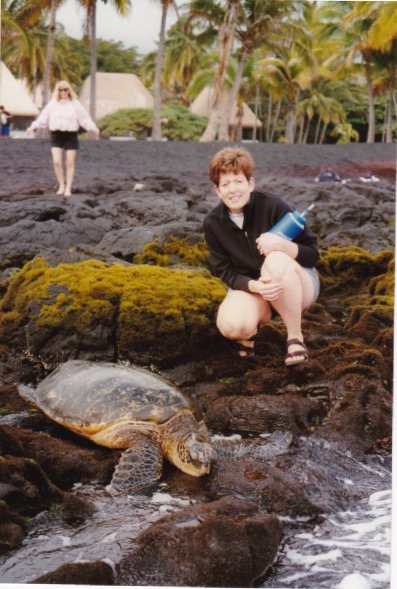
Me and My Pony Final test for scuba certification 1987My name is Miss Trouble Happy FaceToys for Tots Yearly RunBig Island 1993
My Birthday meal is sweet corn and shrimp on the grill. Yummy!
Happy Birthday to everyone who shares the special day.
I’m glad you joined me for another edition of Weekend Music Share this week.
Have a great weekend!
Melinda
Welcome back to Weekend Music Share, the place where everyone can share their favorite music.
Feel free to use the Weekend Music Share banner in your post, and use the hashtag #WeekendMusicShare on social media so other participants can find your post.
Three years ago, the 988 Suicide & Crisis Lifeline launched to connect people in emotional distress with trained crisis counselors – 24/7, free, and confidential. Since then, 988 has fielded about 16.5 million calls, texts, and chats from people needing urgent support. But a crisis resource like 988 is only as strong as the resources we give to it. Congress must continue to invest in 988 to ensure it’s there when people need it most. That means more capacity at local crisis centers, more training for staff, and more availability of follow-up services that can save lives. Take 2 minutes today to urge your members of Congress to support robust federal funding for 988.
Together, we can protect and strengthen this vital service. According to today’s new poll from NAMI and Ipsos, 86% of Americans believe that funding 988 should be a priority for Congress. Let’s make sure we tell Congress how much we care about continuing to build and improve 988 and crisis services. Read more about the poll here.
Emergency rooms nationwide are reporting a record-breaking increase in tick bite cases, according to new CDC data.
July 2025 is already surpassing previous highs set in 2017.
Director of the University of Rhode Island’s Center for Vector-Borne Disease and its TickEncounter Resource Center, Dr. Thomas Mather, and Dr. Tom Daniels joined the Morning Joe to discuss.
They say Lyme disease is still the top concern when it comes to tick bites, but note that ticks can transmit other pathogens as well.
With ticks being so plentiful right now, they say it’s likely that more people will end up getting sick from tick-borne infections.





































 lookingforthelight.blog
