

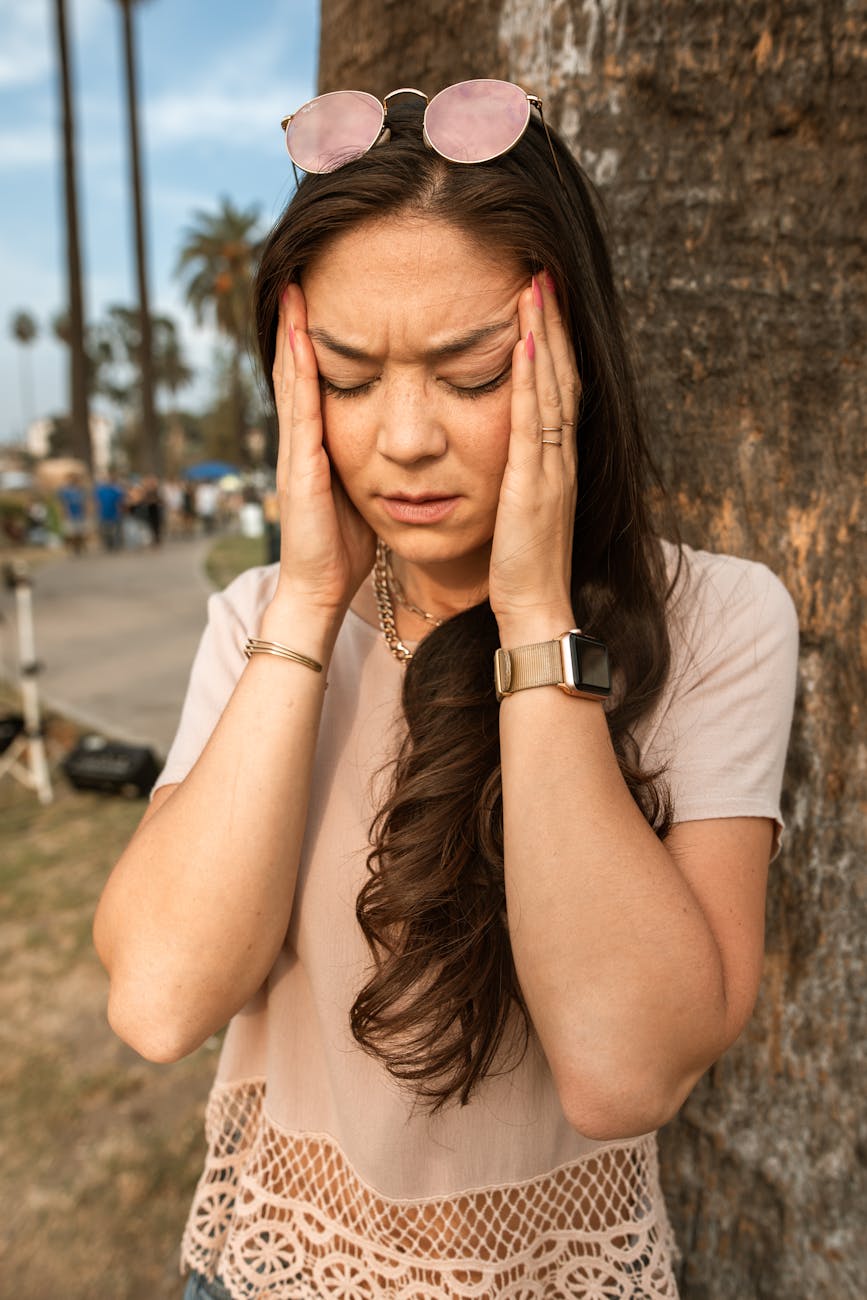
For nearly a decade, Megan Miller woke up every day bracing for pain. What began as the occasional migraine spiraled into years of confusion and fear — until one phone call, and a viral TikTok, changed everything.
“I cried like that,” Miller tells PEOPLE, recalling the emotional video that captured her raw reaction when she finally learned what could be causing her chronic migraines. “That video that was posted was literally, like, my real reaction to getting the call.”
The call that inspired her tears didn’t bring certainty at first. “The call wasn’t like, we know for sure that this is what’s doing it,” Miller says. “But the call was more of like, ‘Hey, this is kind of what we think could be causing it. Let’s try to cut out gluten. Let’s see what’s going to happen.’ ”
Miller’s pain began when she was just 17. “The very first one that I got, I woke up in the middle of the night screaming because I was in so much pain,” Miller recalls. “My parents rushed me to the ER, and the doctors actually thought I was having a stroke.”
Tests came back clear, but the cause remained a mystery. Over the next decade, Miller visited countless doctors and tried everything from prescription medications to lifestyle changes. “I had to learn really quickly, I need to file with the disability offices because, like, if I can’t make a class because I physically cannot move, you cannot hold that against me,” she explains. “So that’s been a big thing. Learned how to advocate for myself pretty young.”
Life became a balancing act between ambition and pain. “I would rather not take anything and just deal with the migraines,” Miller says, remembering how one medication dulled her mind and made her feel detached.
Each day revolved around uncertainty — would she make it through work or class without collapsing? “When they hit, they were completely debilitating,” she says. “I couldn’t see, couldn’t function, couldn’t even get out of bed.”
For years, she kept searching for a solution that never came. “I’ve been to neurologists, primary care doctors, even allergy specialists,” she says. “And no one could tell me why this was happening.”
That changed when she switched to a new primary care doctor who looked at her case differently. “It was the first time that a doctor really wanted to find an answer,” Miller recalls. “I’ve been to so many doctors that are just like, ‘We don’t know,’ and this was the first time that she really ran all the tests.”
The results revealed something no one had suspected: a severe gluten allergy, and possibly celiac disease. For the first time, Miller had an explanation that made sense.
“It was the first time that someone finally looked at all of it and said, ‘Wait a second, this could actually be connected,’ ” she recalls. “And that was such a relief, but also so frustrating because it took so long to get there.”
She had never imagined gluten could be behind her suffering. “People think gluten allergy, they think you eat a piece of bread, you’re throwing up, you’re having stomach cramps, all this stuff,” she says. “It can present really differently for a lot of people.”
For her, the allergy didn’t cause digestive issues. Instead, it looked like headaches and fatigue — symptoms she’d never linked to food. “I had no idea gluten could even do that,” she says. “If I’d known that, maybe I could’ve figured it out sooner.”
But a decade of pain management had taken its own toll. “Results that came back from my endoscopy … the stomach pain I was getting was actually from all of the aspirin-based products I’ve taken in the past 10 years [that] have just eaten away at my stomach,” she tells PEOPLE. “So now my stomach lining is basically not there.”
She had spent years trying to relieve her pain, not realizing those same medications were quietly damaging her body. The discovery was both freeing and devastating.
“That was a hard pill to swallow,” she admits. “I was just trying to make it through each day, and now I’ve got a whole new thing to heal from.”
Still, the diagnosis gave her something she hadn’t had in years — hope. When she shared her emotional reaction on TikTok, she had no idea it would strike such a chord. “Everyone was just so kind,” Miller says, smiling. “So many people commented like, ‘Oh my gosh, the same thing happened to me — when I stopped eating gluten, my migraines just went away.’ ”
Her story quickly became a space for others to share their own experiences. People offered encouragement, gluten-free recipes and even restaurant tips in the comments.
“Everyone just started giving their different suggestions, giving the recommendations, people offering their recipes for homemade bread,” she recalls. “It turned into this really positive community.”
That sense of belonging carried her through the hardest parts of learning to live gluten-free. “It is hard because there’s gluten in things I would have never thought there would be,” she says. “Having that support and just kind of having people that it’s like, ‘Yeah, it’s gonna suck … but you’re gonna feel so good not eating it that you’re not gonna want to.’ ”
When she returned to her hometown, she stumbled upon a fully gluten-free bakery that instantly made her feel welcome. “I walked in and I told her, ‘Okay, I’m like, newly gluten free,’ and she’s walking me through like, everything they have to offer,” Miller says. “It was just so sweet — she really cared.”
Now, each day without a migraine feels like a small miracle. “I’ve gone longer not eating gluten and not having a migraine than I have in 10 years,” she tells PEOPLE. “So I’m finally at the point that I’m like, I will take not eating gluten any day over having this head pain two or three times a week.”
After years of living in fear, she’s finally free from the constant dread. Her body, once a source of suffering, now feels like a source of peace. Within six weeks of completely eliminating gluten, Miller says she hadn’t had a single migraine — a stunning turnaround after years of two or three attacks a week.
“You have to fight for answers,” Miller says. “And you have to find a doctor that’s willing to actually advocate for you, willing to put in those tests.”
Through her videos, she continues to raise awareness about how gluten sensitivity can present in unexpected ways.
Now, pain-free for the first time in her adult life, Miller hopes her story will encourage others to listen to their bodies and keep searching for answers. “Your body doesn’t feel right, there’s a reason why,” she says. “And you kind of have to figure it out.”
As she continues to heal, gratitude has replaced frustration. Each migraine-free morning feels like a victory she once thought impossible.
“I feel like I finally get to live again,” Miller says. “It’s like I’m getting my life back, one day at a time.”
I am so happy for her, migrains can consume your life and it’s a blessing when I here a story of someone living a migraine free life.
Melinda
Reference:
Discover more from
Subscribe to get the latest posts sent to your email.
 lookingforthelight.blog
Thanks for this important post! It’s a reminder that patients need to keep looking for answers, and stay open to the fact that ‘typical’ issues might be presenting themselves in alternative ways. So happy she found a way to improve her health – fingers crossed for the rest of us! Linda xox
LikeLiked by 1 person
We never know where the answer may come from. You’re right, we have to be informed but not over focused and have an open mind. I was so blessed my doctor read that article about how a deviated septum could cause migraines. I suffered for 2 years but compared to other’s like yourself, mine was short lived. Amen!
LikeLiked by 1 person
cheers to that! here’s hoping my hormones calm down in the next few months and mine disappear too (I feel like I’m close). Sending lots of love your way for Christmas! (in case I get distracted before then!) 💚🎄❤️
LikeLiked by 1 person
I must have missed that hormones were playing a part. How does that happen?
LikeLiked by 1 person
For me, I had menstrual (monthly) migraines a day or two before my period – presumably due to an estrogen drop (it’s a hormone that is often linked to pain symptoms). When I was pregnant and breastfeeding, I got ZERO migraines for those 3 years. But then, when I turned 50 the hormones during perimenopause went mental, and so did the migraines. Then, later still, I went on Hormone Replacement Therapy to regulate those hormones, and the migraines got better… for both my mum and mother-in-law, their migraines ended with menopause – so I’m hoping I’m the same – almost there!! xx
LikeLike
Wow! That sucks!
LikeLiked by 1 person
Goes to show it is such a diverse disease that affects us all so differently – and how much it changes throughout a single person’s lifetime. Sending some of our sunshine (and heatwaves) your way! L 🌞
LikeLiked by 1 person
This is an interesting discovery.
LikeLiked by 2 people
very!
LikeLiked by 1 person
Gluten can do serious damage, when your allergic to it! I’m glad she found the problem! 10 years is a long time to live in constant daily pain!
LikeLiked by 1 person
Wow! Thanks for sharing!
LikeLiked by 1 person
I had not heard of that before but it does make sense. When I was struggling with Lyme, my doctor wanted me to go gluten-free but I was completely stubborn. After 18 months of IV therapy I survived. Thanks for dropping me a note.
LikeLike
Interesting. I don’t think I have a severe gluten allergy, but I have less overall and unexplained inflammation since almost eliminating gluten.
LikeLiked by 1 person
You’re a very disciplined eater, the changes you’ve make over time will help you live longer.
LikeLiked by 1 person
I am a disciplined eater with occasional exceptions. I hope it helps. Also, I shared this article with my daughter who gets migraines and eats plenty of gluten.
LikeLiked by 1 person
We all need a snack occasionally.
LikeLiked by 1 person