Here are a few products I’m loving right now. I hope you find a product to add to your household or self-care routine. The list may also give you ideas for a surprise for friends, and family. Most of the products were found on Amazon.
Ursa Major Essential Face Wipes
I don’t wear makeup anymore so there’s no need for a makeup remover. The wipes have a light scent and are oversized. I avoid my eyes, not sure their meant for that. The wipes not only keep my skin clean without any breakouts. They are more expensive but you are worth it.
The Body Shop Shea Butter
The 12.9 oz. Shea Body Butter is creamy and it melts right in. It’s vegan and the container is recyclable. This size will last and is affordable. The Body Shop has long been a favorite place to shop.
Pure Enrichment Small Heating Pad
I love having a smaller size for my shoulder, instead of our much larger one. It comes with its own storage pouch which makes it easy to store. There are a variety of settings and turns itself off. I move it under my pillow when not in use.
L’Occitane Nail & Cuticle Oil
The smell is great and there is a small brush to apply the oil on one end. This brand is more expensive but I love their products. I had a large bottle of oil on my nightstand but never used it, now I apply it most days. This is so convenient that you may get addicted to it.
Melixir Clear Lip Balm
Finding a lip balm I like is hard to find and Melixir has many colors if you like a sheer color. It goes on smoothly and lasts for several hours. I think all of their products are vegan and made in Korea which is known for excellent face products.
What products have you added to your life that you love?
People who are chronically ill or disabled have little challenges they may not talk about because these are little in comparison to the top challenges.
After leaving the hospital last month, I realized that many small challenges add to the stress I already juggle.
Here’s an example of mine
Not being able to open most lids due to lack of strength, and then spending 30 minutes to screw the lid back on. Sometimes they sit overnight without a lid off, other nights I continue to try for dexterity and concentration.
I tried to take care of myself without going to the doctor. At that time, I wore adult underwear for the first time. My husband doesn’t know how to shop in this category. What good is adult underwear when the crotch hangs low and they gap all the way around the legs which caused many accidents that were quite embarrassing. At the hospital, I was given a mesh boy short underwear that hardly covered anything and I had to add a pad for security.
I have to sit on the toilet to put on socks, jeans, and shoes or I’ll lose my balance getting dressed and standing up.
After the big fall in the shower gave me a concussion, my walking is different. I will walk straight and then my feet move three or four times to one side. I trip over my own feet and when I’m standing close to a wall, my body is like a magnet and I fall into the wall.
The very frustrating one is getting off the toilet and rolling then falling on the floor.
I’m also growing older and my hands do not have much strength. Which I deal with every day. I get tired of asking my husband to open something, it makes me feel even older.
This post is part of TED’s “How to Be a Better Human” series, each of which contains a piece of helpful advice from people in the TED community; browse through all the posts here.
I don’t meditate.
It’s a simple fact that often feels like a confession. After all, meditation is hailed as an almost magical cure in self-help circles, and the list of benefits it offers is undeniably impressive. Meditation promotes calm and compassion, decreases stress, and improves attention and concentration. Avid meditators won’t hesitate to point out, breathlessly, that it can actuallychange your brain. It is one of the most studied non-pharmacologic mental health interventions in the world, and most of the data is overwhelmingly positive.
So why don’t I do it?
At its best, meditation felt like I was floating in the ocean. But I noticed this only seemed to happen when I was already calm. When I was anxious, meditation actually increased my agitation.
It’s not that I’ve never tried. I used the apps and the timers. I tried body scan meditations and mindfulness meditations. I tried sitting, which made me uncomfortable, and then lying down, which made me fall asleep. I focused on my breath (until I began to hyperventilate), and I also imagined my thoughts floating away in little clouds (there were a lot of clouds).
And to be fair, I went through a period of a couple of months when I had some success with it. At its best, it felt like I was floating in the ocean, bobbing on waves of pure consciousness. But I noticed this only seemed to happen when I was already calm.
When I was anxious, meditation actually increased my agitation. I felt a profound sense of dissonance, my mind bubbling like it was coming to a boil, trapped inside a body that was desperately trying to hold still. At the end of each effort, I felt drained from the failure and worn out by the attempt. Despite the assurances of meditation evangelists that I just needed to stick with it and that feeling like I was failing was part of the process, I suspected that maybe meditation wasn’t for me.
I gained a new perspective when one day I shared with my therapist that meditation has been such a struggle for me.
“Oh, I definitely wouldn’t recommend meditation for someone with your profile,” she said matter-of-factly.
In fact, a 2017 study found that a significant proportion of meditators have experienced fear, pain, dizziness, paranoia, dysphoria and other “challenging” effects.
I was surprised, and strangely relieved. I’d become so used to people extolling the virtues of meditation that I had assumed it was universally beneficial. It never occurred to me that a therapist might not recommend it, or even advise against it. When I asked why, she explained that for some people with histories of unprocessed trauma and physical dissociation, meditation can do exactly what I’d experienced — increase anxiety, prompt flashbacks or trigger other physical symptoms.
In fact, a 2017 study of meditation experiences found that a significant proportion of meditators have experienced fear, pain, dizziness, paranoia, dysphoria and other “challenging” effects. Researchers believe these effects are often under-reported, because studies aiming to understand the benefits of meditation don’t ask about adverse effects. As a non-pharmacologic intervention, meditation is assumed to be harmless.
The moral of this story isn’t “don’t meditate” but rather, that meditation is like many things — great for some people, but not necessarily for everyone.
If it works for you, wonderful! No need to read any further.
But if like me you’ve struggled with traditional forms of meditation, yet still crave a way to settle your mind and ease your anxiety, happily, there are other approaches that can create a similar kind of mental expansiveness to that offered by meditation. These techniques don’t have nearly the same fervor or body of research backing them, but they are valuable alternatives, especially for those of us who find meditation unbearable rather than unburdening.
Rather than feeling like I need to sit with uncomfortable feelings or ideas, visualization allows me to transform them creatively and work with them in a generative, dynamic way.
Here they are:
1. Visualization
I’d always thought of visualization as a kind of new age-y cousin to manifesting, but it was actually in therapy where I began to use this technique. During our early sessions, my therapist sometimes asked me to envision a place where I felt safe and calm, describing it out loud as I envisioned it in my mind.
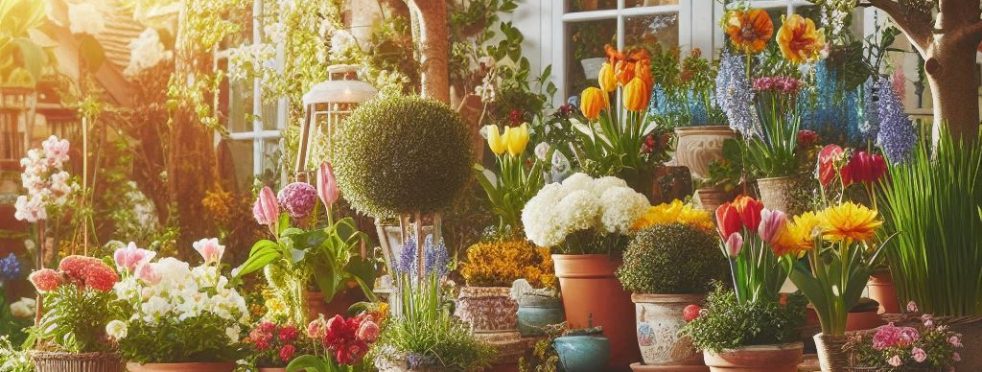
I began to create a garden in my mind, a place I could go when I felt overwhelmed or stressed, or when I struggled to sleep. When anxious, I often come back to this place, adding detail in one corner or another. Some elements are constant, while others change. I always enter the same way, for example, but once inside, I might see different flowers or trees, or I might look around a corner and “find” a new area previously unexplored.
Another time, I was struggling with the noise of constant construction in my building. I was working on my book Joyful at home, and I never knew when the grinding noise would start up, spiking my anxiety and making it impossible to focus.
My therapist asked me to envision something noisy yet innocuous, and for some reason, elephants came to mind. I imagined a crew of elephants in yellow hard hats bumbling around with tools and jackhammers. Whenever the noise fired up and I felt that pit in my stomach, I pictured the elephants and my tension eased. Of course, it didn’t erase the noise, but it helped me find calm amid a situation where I couldn’t gain control.
I find that visualization gives me the same kind of distance and space that many people find in meditation, but it also engages my imagination in the process. Rather than feeling like I need to sit with uncomfortable feelings or ideas, it allows me to transform them creatively — not to avoid them but to work with them in a generative, dynamic way. I haven’t found great research on the use of visualization as a meditation alternative, but there are anecdotal accountsof nurses using visualization with patients, particularly children, as a method of relieving pain.
2. Coloring
Adult coloring books had a real heyday in the mid-to-late 2010s, as people sought a creative yet low pressure form of stress relief.
As it turns out, certain types of coloring may help reduce anxiety. In particular, research shows that coloring a complex abstract design such as a mandala or a plaid pattern can reduce anxiety in a meaningful way. Structured patterns like this have strong symmetry that taps into the harmony aesthetic, which promotes calm through symmetry and balance, quieting the visual noise of our surroundings so we can focus more deeply on what we care about. Tied to this, subsequent studies have shown that coloring not only decreases anxiety, but also increases mindfulness and may also improve attention and creativity.
The physicality of coloring may also be helpful to those of us who tend to dissociate from our bodies. The engagement of the hands and the senses can keep us from feeling like we’re swimming in our thoughts.
In one study, a group drumming initiative resulted in significant reductions in anxiety and depression, along with an increase in overall mental well-being.
3. Drumming
OK, parents of a child who recently acquired a drum set might not see this activity as calming, but research shows that the rhythmic quality of drumming can be a powerful aid for mental health. In one study, a group drumming initiative resulted in significant reductions in anxiety and depression, along with an increase in overall mental well-being. Drumming also correlated with a decrease in inflammatory markers in the bodies of the participants.
Why does drumming promote calm?
One reason may be the repetition of the sounds and movements (again, a manifestation of the harmony aesthetic). Percussion is considered one of the oldest forms of music-making (perhaps after singing) and may have originated as a way to promote coordination of work among groups of early humans.
Drumming is a grounding activity that lets us blow off steam in a safe and non-aggressive way. Notably, drumming is one activity that has typically been studied as a group intervention rather than an individual practice. It’s possible that solo drumming also has benefits, but current research on drumming tends to focus on the physical experience of rhythm, synchrony and belonging as the key drivers of mental well-being.
4. Cloud gazing
For those who benefit from having something outside of themselves to focus on, cloud gazing can be an appealing alternative to meditation. Cloud gazing draws us outside, which has documented mental health benefits, while amorphous, softly shifting clouds give the attention something calming to focus on.
Looking upward may also help, as this increases the amount of light that enters the eye, which itself has distinct benefits for mental well-being.
Little research has been done on cloud gazing (sadly!), however one studypoints to the benefits of sky views as restorative, and accessible. While green nature views have been widely shown to help reduce stress, sky views are beneficial because they can be accessed even in dense urban areas.
While it might sound far-fetched, a whole community of internet users have found peace and joy in vintage videos of Bob Ross’s The Joy of Painting.
5. Morning pages
Morning pages are a creative tool devised by the writer Julia Cameron in her celebrated book The Artist’s Way. To do them, you simply write three long-hand pages first thing in the morning, writing without stopping and allowing whatever thoughts arise to go onto the page.
For writers, morning pages are a way of breaking through the pressure of the blank page and opening a line of dialogue with your creative brain. No one has to read them. In fact, you can place them directly into the trash when you’re done if you choose.
Though morning pages are billed as a creativity tool, for me they function as a mental health tool. I discovered the technique while working on the later chapters of my book and found it far more effective than meditation at calming my anxiety around my work. Knowing I had the open space of morning pages as a buffer before sitting down to work on my book alleviated so much pressure that I began sleeping better and enjoying my free time more. I regularly return to the practice if not every day, then several times a week at least.
6. Walking
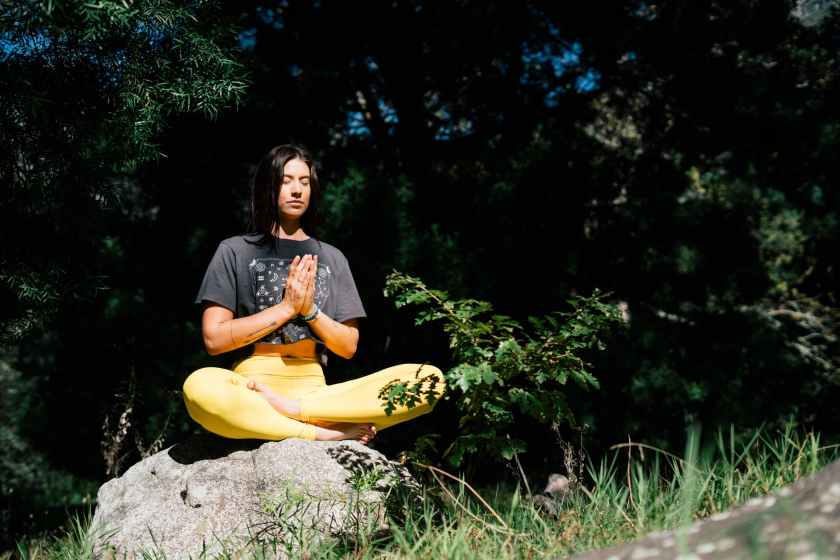
Walking meditation is a form of meditation in its own right, but even if you don’t have a formal walking meditation practice, some form of mindful movement can be calming. Walking is easy and accessible to most people, and for those who feel stuck when attempting a seated meditation, it can help by engaging the body as well as the mind in the act of quiet reflection.
Benefits of mindful walking include stress reduction and improved cognition among older adults, in addition to the many mental health benefits of increased physical activity that it provides.
7. Watching Bob Ross painting videos
And if you’re still struggling to find a way to calm your mind, maybe it’s time to turn to a soothing voice and his “happy little trees.” While it might sound far-fetched, a whole community of internet users have found peace and joy in vintage videos of Bob Ross’s The Joy of Painting.
Some researchers believe that Ross’s soft baritone and the swishy sounds of his brush against the canvas trigger ASMR reactions, also known as “brain tingles.” The popular meditation app Calm has used Bob Ross’s voice in their Sleep Stories series, which is intended to help insomniac users fall asleep. You can watch every episode of his show on YouTube, and if you’re looking for one to get started, here’s a favorite episode.
Thank you for all the great feedback on the Blogger Highlight series, I’ve enjoyed meeting each blogger and sharing their site with you. This week we highlight the blog of Homestead On Lakeside.
This recipe sounds so good, I could use one right now!
Ingredients
2 black tea bags
2 cups full-fat coconut milk
1 tsp. raw honey
1 tsp. pure maple syrup
1/2 teaspoon ground cinnamon
1/4 tsp. ground ginger
1/4 tsp. ground nutmeg
1/4 tsp ground cardamon
1/4 tsp. ground cloves
1 tsp pure vanilla extract
How to make
Steep both tea bags in 1 cup of hot water for 5 minutes. Remove and discard
Meanwhile, warm the coconut milk in a small saucepan over medium-high heat to your discard bags
Pour the warm milk into a high-powered blender and add the brewed tea, honey, maple syrup, cinnamon, ginger, cardamom, nutmeg, cloves, and vanilla extract. Blend until the latte is combined and slightly frothy, about 1 minute
Pour into two cups and enjoy.
Melinda
Reference:
The recipe is from Kristin Cavallari’s cookbook True Comfort.
The recipe is from Kristin Cavallari’s cookbook True Comfort.
I am so impressed with her cookbook, she covers every meal, snack, and smoothie. You don’t have to be living a Gluten-Free life to enjoy the recipes, they sound delicious. Several followers have made comments about how good the recipe was.
Ingredients
1/2 avocado
1 tbs raw honey
1 cup almond milk
2 tbs raw cacao nibs
1 cup frozen cauliflower florets
1 big handful of fresh spinach
1 tsp brain octane oil (she likes Bulletproof)
1 tbs bee pollen
1 tbs hemp seeds
1/4 cup chopped or sliced blueberries and blackberry
How to make
Place the avocado, honey, almond milk, cacao nibs, cauliflower florets, spinach, and brain octane oil (if using) in a high-powered blender and blend until well combined, about one minute.
Pour into glass and top with the bee pollen, hemp seeds, and berries.
The recipe is from Kristin Cavallari’s book True Comfort.
This smoothie sounds so good I’ll have to try it. I like how easy it is to make and you can double the recipe to make two lattes.
1 tbs. ground coffee or instant coffee granules
1 tbs. raw cacao powder
1 tbs. coconut cream
1 cup frozen cauliflower florets
1 1/2 cups almond milk
1 frozen banana
Serves 1
Place the coffee, cacao powder, coconut cream, cauliflower, almond milk, and a banana in a high-powered blender and blend until well combined, about 1 minute.
I’m so glad you’ve joined me this week for another edition of Weekend Music Share.
Have a great weekend!
Melinda
Welcome back to Weekend Music Share, the place where everyone can share their favorite music.
Feel free to use the Weekend Music Share banner in your post, and use the hashtag #WeekendMusicShare on social media so other participants can find your post.
This is my reality and it’s hard to swallow when I look at my life 20 years ago. No doubt many people with Chronic Illnesses face similar problems. It’s not that I miss my younger self, I miss being capable and independent.
In December, I was writing my 2024 goals, and my health and limits on driving make going to new places or getting a smoothie require my husband to be available to drive me. It sucks!
I’d love your feedback and any ideas you have.
My Life
I have no family except my husband
No friends
The only people I see are doctors and my hairdresser
My hobbies
Blog
Photography
Bird watching
Green Thumb
Ancestry
Reality
I can not drive anymore
Agoraphobia
Memory Impairment
Balance problems have returned
Severe Anemia
It’s difficult to bring joy to your life when you sit at home day after day. If you’re housebound, how do you add joy to your day?
Buying a gift is deeply personal and can get complicated when trying to buy for a friend with a chronic illness or for one who has chronic pain. I have a few chronic illnesses of my own and thought it would be nice to put together a list of year-round gift ideas.
Ideas
Silk pillowcase
Ultrasonic diffuser
Lavender essential oil
Weighted blanket
Scented candle with a pretty box of matches
Light Therapy Lamp
A handmade card or scrapbook
Audible subscription for a year
Footbath massager
Pack of foot masks
Luxurious foot cream
A wellness basket that includes body cleaning towelettes, dry shampoo, hand conditioning treatment, a box of Camomile tea bags
A journal with motivational sayings, or Scripture
Maid service for a deep clean
Car detail that comes to them
Walk their pet for a week
A gift certificate for a manicure/pedicure
A gift card to their favorite store
Lumbar pillow
Picture frame with a lovely photo you’ve taken
Insulated (non-sweating) water bottle with a flip-top
Assortment of coffees along with a mug
A pretty faux plant for the plant lover
Flowers in a pretty vase with a bow tied around it with a personal message
Singing Gram
Magazine subscription for one of their interest
A book that is special to you they may enjoy with an inscription in the front
Nice writing pen
A wreath and hanger for their front door
Bath and shower bombs
Assortment of food goodies like chocolates or gluten-free items
Pack of face masks
Homemade potpourri with or without scent
Pretty adjustable cane
A walker attachment bag
Subscription to Itunes
Subscription to streaming service
A Fire TV stick
An annual subscription to Amazon Prime
Wireless Earbuds
Cook dinner for them
Pay for a meal delivery service for a month
Walk in the park with a camera to capture the moments
Silk eyemask
Metro card
Scented hand wash with matching lotion
A luxurious assortment of soaps
Travel-size hand sanitizer
Travel-size hand lotion
A Silk mask with a place for a filter insert
Certificate for a back massage
Matching dish and hand soap in a dish
Electric toothbrush
An assortment of flavored toothpaste
Wool throw
Hand warmers
Heating pad
Sunrise clock
Reusable grocery bags
Alexa enabled lightbulb
Slip-resistant socks
I hope this sparks some ideas of your own. Shopping for someone who has a chronic illness isn’t as complicated as it feels, just think from a different perspective.
I know whatever you decide to give your friend or loved one, they will appreciate it and you very much.
Thank you for all the great feedback on the Blogger Highlight series. I’ve enjoyed meeting each blogger and sharing their site with you. This week we highlight the blog of Ms. C. Loves.
In my world, where my life is ever so happening yet my memory is ever so fleeting, I have decided to dedicate some time weekly to preserve those precious moments for my future wrinkly self.
So here, I present to you: my valiant attempt to document all the big and small things in life that capture my heart (cheesy, I know!)—enjoy!
You have to stop by often to see what new is going on.
In this fast-paced social media world, it can be difficult to find the time to look within or back in time. I hope you find these quotes and questions interesting. So glad you stopped by today!
This post was written after I saw my first Lyme Literate Doctor. Quack! One day I’m reviewing the doctor’s notes again and realize I have another person’s file. I fired him because he said I had high lead levels and had to go through this horrible treatment, what else can I expect? The second doctor was a great success.
I have learned several lessons since the last journal entry. A word of caution. Please educate yourself on Lyme Disease for those who enjoy the outdoors anywhere in the US, Canada, Germany, and parts of England. If detected early doctors can usually treat with a short round of antibiotics. It is hard to think a tick the size of a period used in a sentence could do so much damage. I can’t imagine looking for a tick that size or a larger one the size of rice. The classic symptom doctors look for is called a Bulls Eye Rash. Up to 50% don’t get the rash, slipping through during the early phase.
The CDC acknowledges there are flaws with in Lyme Test. DEET and proper clothing are your only defenses against ticks. Other critters like mosquitos and flies carry the Lyme Virus. Protect yourself by using a spray or a sunscreen containing DEET. Read about extra precautions you can take.
Here are three resources recommended by my doctor, lymenet.org, lyme.org, and lymediseaseassociation.org (A great site for locating a Lyme Literate doctor)
* The doctor was right, when giving yourself a shot you have to go with gusto. I made the mistake of going slow, I had a little blood, a slight pain at the entry spot, and medication stained my shirt. You don’t have to stab yourself hard, pick your spot with enough stomach fat, and when you aim keep going.
* Managing the number of probiotics, pills requiring an empty stomach, pills with food, and working with my normal meds can cause a challenge. The key reason for the probiotics is to prepare your “gut” for the antibiotics. I’ve been told long-term use of high levels of antibiotics will take your stomach for a ride. I hate to throw up, it’s high on my list of things I dislike.
* Enjoy the good days remembering overexertion and lack of sleep can worsen symptoms. I was fooled last week, staying up till 1:00 or 2:00, one night at 4:40 AM. The past three days are a reminder, the lack of sleep catches up. If you wake up late it throws your med schedule off the next day if you sleep in. I’m the queen of sleeping in, there is no discipline to force myself to set an alarm to get out of my comfy bed to take meds.
* You could have several doctors on your support team. I can’t drive while drugged and jerking, my husband has to take the day off to shuttle me to appointments. I’ve had appointments one day every week for the past month.
* When you’re enjoying the good days, you don’t think about what day the symptoms will return. Upon return this time my symptoms are like an early Parkinson’s’. I’m herky jerky making typing difficult. I have to realize at this point the disease is in the front seat driving me. I have little control.
* As the virus invades my brain the neurological symptoms increase, last night I experienced 15-20 seizures before they let up. My memory is getting foggy. I picked a song for Throwback Thursday over the weekend. It’s Wednesday morning and I still can’t remember the name of the band. I see the singer on stage, some of the lyrics to songs yet the band name escapes me. It is hard to accept the disease is invading your body. I try to keep positive, looking at this as a growing experience. When you read my post or comments and I use the wrong word or make no sense at all please remember it’s the virus in me speaking.
* My doctor handed me a brochure for a Healing Center with a new state-of-the-art HYPERBARIC THERAPY. Maybe Michael Jackson can sleep in one, not me. The therapy is 1 1/2 hours long, lying in this weird chamber and receiving 100% oxygen. I am claustrophobic, not to the worst degree however put me in one of those and someone will not see the better side of me.
This morning, 8/6/14 is the first time I’ve cried, just losing it. I was reading the beautiful feedback from friends and followers and the level of support warmed my heart.
Warrior
In 2014, I went by Warrior and then decided my name was more personal.
The #Stop Hate campaign first started with #Stop Jew Hate but it has clearly expanded its reach to include everyone who is being persecuted for their religion, the color of their skin, or what country they lived in before moving to America.
Let’s make this a chance to heal. Only we can take the steps to heal, no steps forward leaves you among the chaos.
I’m so glad you’ve joined me this week for another edition of Weekend Music Share.
Have a great weekend!
Melinda
Welcome back to Weekend Music Share, the place where everyone can share their favorite music.
Feel free to use the Weekend Music Share banner in your post, and use the hashtag #WeekendMusicShare on social media so other participants can find your post.
When life knocks you down, drains you of energy, and weakens your resolve, the last thing on your mind is gratitude. It’s hardly surprising; after all, gratitude is an emotional response of appreciation for what we have. When we feel depleted it can feel impossible to draw from an empty reservoir.
And yet, developing gratitude during hard times is precisely what fills the void. What’s more, gratitude is the key to preventing emotional and physical breakdowns during times of stress.
The difficult circumstances we find ourselves in are not the only challenge to practicing gratitude. While it’s certainly true that gratitude can be an automatic emotional response to many of our life events, it rarely is. Rather, what’s more true is that gratitude is an internal perspective—a lens we view the world through—and one that we in fact control. The struggle to find gratitude comes from expecting life to be a certain way (and being disappointed and angry when it is not).
Evaluate Your Perspective
Maybe you have not thought about this before—what do you expect life to be like? Take the year 2020, for example—were you expecting a global pandemic? Probably not!
But really, when have we ever known what is going to happen? Over this past year, many good people developed cancer; many kind souls lost a loved one to a drunk driver; many hopeful new parents had a child born with birth defects. They weren’t expecting these life-changing events to occur, but nevertheless, they did. When our perspective of life is limited by the belief that life “should” be a certain way, we will find gratitude difficult to express.
Gratitude is only possible when we realize that all that we have is a gift.
Having worked and traveled in many countries around the world, here is my impression about differing cultures—the more we have, the less we express gratitude for it. In other words, excess leads to a feeling of entitlement. However, the opposite is true for those who live in extreme poverty: people who live in the poorest countries in the world tend to express tremendous appreciation for what they have. Moreover, they are not dissatisfied, anxiously waiting for the next good thing to come their way.
Life as a Gift
There is nothing like sharing a simple meal of bread and tea in the home of a person of modest means; indeed, the experience is humbling.Instead of a sense of anger, bitterness, or irritation for what they lack, they express gratitude for the things they do have—the ability to walk and breathe, to survive; they take note of the beautiful sky at night and the richness that friends and family provide them. Even in their poverty they willingly give away what they have to others in need.
Here’s a simple exercise to try. The next time you are stuck in traffic, frustrated that you “should” be arriving at your destination on time, try to change your focus and see what it does for your mood. A simple yet startlingly effective way to do this? Follow your senses: feel the warmth of the sun coming through the window (or perhaps your car’s heater); smell the cup of coffee sitting at arm’s reach in your cup holder; take a sip, perhaps marveling at the insulated mug that keeps it warm long past the pot; listen to a favorite song on the radio; look at your fellow travelers and allow curiosity to fill in the blanks of where they all might be headed to. Like you, they are people with hopes, dreams, and disappointment. Taking a break from focusing on your current stress will allow a brief reprieve by shifting your perspective to these small gifts in life, (and maybe even seeing all of life as the gift that it is).
The Benefits of Gratitude
When we get a hold of the idea that everything we have is a gift—and we express appreciation for the gift of life itself—we shift our perspective away from what we don’t have to what we do have. In appreciating what we have, we invite important changes to take place in our brain and body. Indeed, expressing gratitude on a daily basis provides many benefits—here are five that might surprise you.
Reduction in physical and mental symptoms of distress. Based on a study of 200 chronic pain sufferers, those who expressed gratitude for the good things in their lives reported less depression, anxiety, fatigue, inflammation, and insomnia.
Creation of positive changes in your brain. When we feel—and express—gratitude, we can increase the volume of gray matter in the right inferior temporal gyrus of the brain; this helps us to regulate our emotions more effectively. It also enhances dopamine and serotonin and changes the hormones that regulate fear and anxiety.
Enhanced connection with others. When we express gratitude to others, we not only realize their importance to us, but we build stronger connections and feel more supported by those around us. And social support is a well-documented key factor in developing resilience in hard times.
When we keep a daily journal of our blessings, we are likely to experience less pain and be more willing to engage in physical activities that help us move toward health and away from dysfunction.
Regulation of stress. Gratitude helps us regulate the stress hormone cortisol. Keeping our cortisol levels in check in turn improves our cardiac function when we are under stress and increases our ability to stay balanced.
Plant the Seeds of Gratitude
Think of gratitude as a garden you plant. When you start incorporating gratitude practices into your activities of daily living, at first you won’t see any immediate change in your outlook on life. Lasting improvements in your emotional and physical health take time, but they will come if you are diligent. In fact, setting the intention to “plant a gratitude garden” in and of itself speaks to your capacity for hope and a more fulfilled life. And when the fruits of gratitude do show up? It will have been well worth the effort.
In this fast-paced social media world, it can be difficult to find the time to look within or back in time. I hope you find these quotes and questions interesting. So glad you stopped by today!
Here are a few products I’m loving with right now. I hope you find a product to add to your household or self-care routine. The list may also give you ideas for a surprise for friends, family, or co-workers. All products were found on Amazon.
Duerer Arthritis Compression Gloves
It was the first time I’ve found gloves that do not have too much elastic around the wrist. Mine were always too tight. These gloves are so soft and easy to put on. No elastic issues anywhere, I’m buying another one for downstairs.
Amazon Prime
I buy most of our products from Amazon even our groceries from there. The two-day delivery time is amazing. They even offer free shipping, actually most of the time. Last year, we started watching the series they offer. We have several that we hope they will come back. We’ve only had a few duds.
They now have a pharmacy, I haven’t tried the pharmacy but I know Amazon will deliver everything they commit to. When I can order our groceries and have them delivered the same day.
XL Medicine Caddy
I love that they had only two places and it is so easy to open and my knuckles love it. The arthritis in my hands is worse as I age so I had to make adjustments. It’s multi-colored but you can see through to your medication
Paparage Lined Notebooks
They look like Moleskin’s, even with the back pocket. They have a large selection of sizes and I bought the 252-page journal, which is 5.7 inches by 8 inches. This larger size is for my ancestry work.
What products have you added to your life that you love?
I was too young to remember Martin Luther King Jr. but I do know he advocated peacefully, no violence, and no violence encouraged. He raised his voice a bit like a preacher so he got the message across.
He is respected for his messages which many could tell you about. He advocated for peace and to end segregation He didn’t pretend to advocate, he believed and took action to the street.
He lived and dedicated his life to peace and to changing society. He will always be known as a great leader and how he changed lives.
Here’s what Time and Date said about Martin Luther King Jr.
Martin Luther King was an important civil rights activist. He was a leader in the movement to end racial segregation in the United States. His most famous address was the “I Have A Dream” speech. He was an advocate of non-violent protest and became the youngest man to be awarded the Nobel Peace Prize. He was assassinated in 1968.
In 1968, shortly after Martin Luther King died, a campaign was started for his birthday to become a holiday to honor him. After the first bill was introduced, trade unions led the campaign for the federal holiday. It was endorsed in 1976. Following support from the musician Stevie Wonder with his single “Happy Birthday” and a petition with six million signatures, the bill became law in 1983. Martin Luther King Day was first observed in 1986, although it was not observed in all states until the year 2000. In 1990, the Wyoming legislature designated Martin Luther King Jr/Wyoming Equality Day as a legal holiday.
As we celebrate his legacy, what comes to my mind is his “I Have a Dream” speech How can we think of Martin Luther King Jr. without knowing the “I Have a Dream” speech.
Nowadays it’s violent protesters, mass shootings, and violence against other nationalities. I blame the violent protestors/cowards for encouraging this behavior. If you don’t know the person, how can you hate them?
Have a great celebration for a man who made a big impact in America.

















 lookingforthelight.blog