So glad you joined me this weekend, I hope you’re doing great! Hearing this song makes me think of the first time I heard Born In The USA by Bruce Springstein and thought you might enjoy going back to the Glory Days.
Melinda
Welcome back to Weekend Music Share; the place where everyone can share their favorite music.
Feel free to use the ‘Weekend Music Share‘ banner in your post, and don’t forget to use the hashtag #WeekendMusicShare on social media so other participants can find your post.
I can’t think of a better year to celebrate International’s Friendship Day! No doubt our friends have helped us keep our heads above water in these difficult COVID times. Be sure to let your friends know how much you appreciate them today.
Survivors Blog Here is celebrating our six anniversary with a big celebration! Come by, say hello, browse and read a few posts while enjoying the refreshments. We could not have made this journey without the thousands of guests on our site. I want to thank each of you and let you know you’ve made an […]
Stacey Chapman has this great page she put together of her favorite chronic illness Bloggers and I’m so humbled to be on the list. I want to call attention to her blog and to the other great writers you may not have discovered yet. Please check out the bloggers she has listed and most of all follow her. You will not be disappointed, Stacey is a shining light in life.
Stacey is positive about life, no matter how many things are stacked on her plate outside of her own health concerns. Right now she is helping her son who had a terrible accident and had to move home for assistance. I know her well enough to know, she will not take time for self-care because she is so dedicated to her family.
Please send her a note of good wishes and encourage her to take five-ten minutes for herself, just to smell a candle, take a hot bath that smells out of this world, or just go outside by herself to think of her life. To think of life after this chaos, to her normal level of living.
Long before I began blogging, I was following Blogs about Chronic Illness, Fibro and CFS/ME. Over the years, I have come across some really great Blogs and met some really great Bloggers. So I wanted to introduce you to them. I am so grateful to have found a plethora of information and encouragement, over the years, from great people like them.
**UPDATE**: The great thing about the blogging world is the support that comes with finding people who live with similar challenges. We know and understand what it is to live like this, when often, others cannot. We may have experienced the same symptoms and can offer advice or suggestions. Sometimes, it simply comes down to the ability to make connections again, after many of us have had to abandon our careers. After nearly a year of being part of this blogging world, I am happy to have met even more awesome bloggers and friends than when I originally wrote this post. As such, I felt it was a great time to add a few names to my already awesome list:
Jayne, at See Jayne Run, holds a special place in my heart. She is full of life and personality and happens to swear as much as I do! Despite all she has lived with and endured, she still keeps a positive and hopeful outlook on life. Which, as we all know, can sometimes be super challenging. Jayne writes a super eloquent Blog at: https://seejaynerun.com/
Terri writes at: https://reclaiminghopecoaching.com/ Terri has been living with Fibro since 2012 and has been writing for nearly three years. I really love hearing from Terri through blogging. She writes positive, helpful posts and takes ownership of having once lost hope in her battle; something we can pretty much all, sadly, relate to.
Pamela Jessen writes about Fibromyalgia, Chronic Pain, Chronic Fatigue and Invisible Illnesses on her Blog; which covers alot of territory! She is a prolific volunteer and is incredibly involved in the chronic illness community, offering a voice for those of us so often underrepresented. Find Pamela’s blog here: https://pamelajessen.com/
Meet Caz at InvisiblyMe-you will absolutely love her!! Caz is 30, has been sick for 11 years and blogs about a myriad of conditions and living life positively with them. You can feel that same positivity and warmth in every exchange you have with Caz. You can check out her Blog here: https://invisiblyme.com/
Kim at I Tripped Over a Stone was one of the very first Bloggers that welcomed me to the Blogging world with open arms and really encouraged me. Kim is a veteran spoonie and aside from writing her blog, maintains a Facebook page and has written a book about Fibro. Please find Kim here, I’m sure she’ll be just as warm to you: https://itrippedoverastone.com/
Melinda is another Blogger who has been super welcoming and supportive. The thing about Melinda is this: she’s fiesty!! Watch out!! Despite Melinda suffering from multiple health issues, she still finds the time to be positive and occasionally silly. Melinda blogs in a couple places. You can find her here: https://lookingforthelight.blog/ and here: https://survivorsbloghere.wordpress.com
Lee Good was my very first Pinterest follower and every exchange I’ve had with her has been really great! She has a tremendous wealth of knowledge and expertise when it comes to Blogging. Lee has her own Blog: http://www.fibrofiles.net/p/about.html but Lee also manages The Fibro Blogger Directory here: http://www.fibrobloggerdirectory.com/p/directory.html The great thing about Lee’s directory is that you can find great Fibro Bloggers from around the world conveniently listed in Lee’s directory.
Claire Saul writes at PainPals Blog. Claire has an award winning Blog and does a great roundup of inspiring weekly blog posts on Mondays. This Monday Magic gives one an opportunity to check out other great blogs, besides Claire’s. But make sure not to skip over her great content! Find Claire here: https://painpalsblog.com/
Michelle writes at The Zebra Pit. What I really love about Michelle’s Blog is that it is super diverse and covers not only Chronic Illness, but also touches upon Mental Health, recipes and health and wellness. Michelle is also super personable and sweet!! Check out Michelle’s Blog here: https://zebrapit.com/
While I haven’t had any specific interactions with the Bloggers who write these Blogs, I have found their Blogs to be very informative! I imagine these Bloggers are just as awesome as their content. Check them out!
If I have forgotten you, please forgive me, this is a dynamic page and will be updated and added to accordingly! I find and meet great Bloggers every day! ❤ Stace
There’s a grave in Dozenhem military cemetery where the inscription on the headstone reads: “G. Blacker. Somerset light Infantry. 9th August 1917. Age 39”. This man existed, and he mattered. This man was a member of our family. He died for his country in World War 1. And like the others who are buried there […]
So glad you joined me this weekend, I hope you’re doing great! I’m sharing a new tune from Kenny Chesney called We Do. It’s a great anthem and has a great summer beat. I like the line “Who gets to live like we do?” No one gets to live like we do!!!!!!!
Re-energize, Re-generate and Seek Wellness
Melinda
Welcome back to Weekend Music Share; the place where everyone can share their favorite music.
Feel free to use the ‘Weekend Music Share‘ banner in your post, and don’t forget to use the hashtag #WeekendMusicShare on social media so other participants can find your post.
The photo I’ve been using was old, back when I was younger and believe much prettier, but reality can burn sometimes. Fifteen years, anti-psychotic medications and chronic illness has changed my looks.
I have always been comfortable with how I looked. That is until three years ago when I gained over 40 pounds from taking a new medication for my Bipolar Disorder. Anyone who takes medications for mental illness can relate to this amount of weight gain in a month’s time.
I write openly, honestly, and from my heart. I have taken many photos over the past couple of months looking for one I could live with. This is the best one so far. It will probably not be the last one. I want you to see the face behind the blog.
I was thrilled to find the product is cruelty-free, vegan, PETA approved, and in a relaxing Lavender scent. I have not tried Hemp cream products before because of the smell and was eager to see how well the cream worked.
This post may contain affiliate links in which I earn a small commission. They don’t cost you extra to use and help fund my coffee habit.
Here’s some information about Aromalief
What about the safety of the product?
Aromalief is made in an FDA registered facility and each ingredient has a Safety Data Sheet and Certificate of Analysis. We buy only high-quality ingredients from reputable suppliers and do our own internal testing for everyone’s peace of mind.
How do you make sure Aromalief is Vegan and Cruelty-free?
Every ingredient that we source comes with a written letter from the ingredient manufacturer that the product does not contain any animal ingredients and that they do not test it on animals. The manufacturing line also has a strict vegan-only policy. Aromalief is proud to have PETA’s Vegan & Cruelty-free designation.
What type of pain is Aromalief good for?
Pains of the body and the soul. This includes muscle, joint, nerve, and chronic pains PLUS stress, anxiety, and sadness. Our ingredients are the best in the market to help relieve pain due to arthritis, back pain, herniated discs, carpal tunnel, tennis elbow, and more. If your type of pain isn’t listed here, we still encourage you to try it. If it doesn’t help you, then simply return it. Have a little faith and try Aromalief.
The cream has a subtle lavender and menthol scent, not overpowering. I have slightly sensitive skin and the cream didn’t cause any sensitivity. There are other scents available that I have not tried. I love this one and keep buying this scent, I need to give another scent a try.
It rubs in quickly, no greasy fingers on the keypad. It has a warming sensation that eases inflammation. I focused on three areas, neuropathy in my feet, sore shoulder muscles, and arthritis in my hands.
Right away I noticed a difference in my feet, they could touch each other without pain. It lasted long enough for me to go to sleep. My shoulders are always tense and I have a problem relaxing at night. I used the cream on my worst shoulder and it did warm up the muscles helping me to relax and sleep.
The thing I love the most about the cream is how well it worked on arthritis in my fingers, I also noticed neuropathy relief in hands. The fact that the cream dries enough to get right back on the computer is a huge bonus.
I have already bought six tubes to make part of my daily self-care routine. Aromalief is a great everyday hand cream too. There are several scents to try, it’s made in The USA and is women-owned. Let’s support our women-owned business when possible.
So glad you joined me this weekend, I hope you are doing great! Have an awesome weekend. I’m sharing music from one of my favorite UK artist James Bay. Please check out his other work, he will blow your mind on the guitar.
Re-energize, Re-generate and Seek Wellness
Melinda
Welcome back to Weekend Music Share; the place where everyone can share their favorite music.
Feel free to use the ‘Weekend Music Share‘ banner in your post, and don’t forget to use the hashtag #WeekendMusicShare on social media so other participants can find your post.
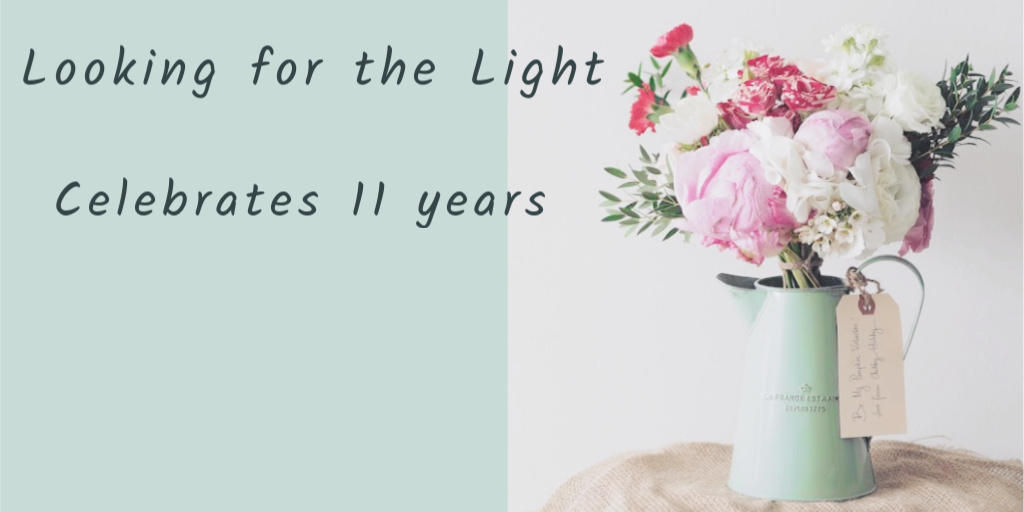
Happy Anniversary with WordPress.com! You registered on WordPress.com 11 years ago. Thanks for flying with us. Keep up the good blogging.
There are days when it feels like yesterday when I started blogging back in 2005, my blog was called Defining Memories. My blog was a personal diary of the grieving process after my Granny died. After a couple of years, my post started to turn towards other memories, many not so good, but ones that needed to be dealt with. I also started openly talking about my mental illness and my life long journey to reach stability.
I realized a name change was in order, my journey was more of a search, sharing my struggles, my wins, and losses. So Looking for the Light was born. I had no idea of the wonderful journey ahead of me. Although sharing the most intimate details of child abuse, sexual assault, and mental illness wasn’t easy, it opened a door to people like me who were on a similar journey. We were at different points in the journey but talked a language each understood.
I’ve grown and the blog is a reflection of my growth towards a healthier relationship with myself, my past, and how I advocate for chronic illnesses including my mental health and living a healthier lifestyle. I’m in a good place. I turn 57 in a few weeks and feel like I’m on level footing.
This year I was nominated for several categories in The WEGO Health Awards which is a huge honor. It affirms I’ve reached someone and that’s why I share. All of your comments and feedback are so important to my growth and understanding. Needless to say, Looking for the Light wouldn’t be where it is today without you.
If I’ve touched your life in some way, I’m so glad we’ve crossed paths. I grow from every conversation and relationship I make.
Looking for the Light will continue to evolve as I grow, gain knowledge, and look for betters ways to share the information as I learn. You are most important to me and shape the growth of the blog. Your responses or lack of let me know what you’re interested in. Please know, I’m always open to suggestions or ideas, use the comment section to share your thoughts and feedback. I read every comment.
I’m going to close with one of my favorite quotes.
“If you are always trying to be normal, you will never know how amazing you can be.”
So glad you joined me this weekend. In honor of Independence Day, I have picked something special for you. For those who live outside of The United States, The Fourth of July is the most significant national holiday in the United States. It celebrates the Declaration of Independence, adopted on 4 July 1776.
Have a great weekend.
Bell well and take good care of yourself.
Melinda
Welcome back to Weekend Music Share; the place where everyone can share their favorite music.
Feel free to use the ‘Weekend Music Share‘ banner in your post, and don’t forget to use the hashtag #WeekendMusicShare on social media so other participants can find your post.
Virtual hugs. So glad you joined me this weekend. I do take request! Just drop your suggestions in the comment box. Have a great weekend.
Melinda
Welcome back to Weekend Music Share; the place where everyone can share their favorite music.
Feel free to use the ‘Weekend Music Share‘ banner in your post, and don’t forget to use the hashtag #WeekendMusicShare on social media so other participants can find your post.
Sending a special thank you from my heart to all the veterans who have served and lost there lives serving our country fighting for my freedom. Without you, America would not be a free country. I don’t want to live anywhere else.
A simple way to feel at ease is by taking a deep breath and practicing an encouraging mantra. A mantra is a positive statement repeated to promote calmness and concentration. We loving using them to create peace in our day! Today we’re sharing 7 of our favorite daily mantras plus a printable download too 💕
7 Daily Mantras of Encouragement
1. I will seek out the good in an unpleasant situation.
2. I will let go of one thing I cannot change.
3. I will trust my journey even if I may not understand it yet.
4. I will grant myself permission to be me.
5. I will practice kindness toward a stranger.
6. I will be the best version of me.
7. I will continue to check in with myself to ensure I’m on the right path.
CLICK HERE to print these mantras to display on your desk!
Is there a mantra you like to incorporate in your day? Share with us in the comments below!
“Resentment is a relationship killer,” says psychotherapist and couples counselor Susan Adler. If we want happier relationships, we need to drop the blame, own our mistakes, and act in ways that increase connection, not conflict.
This post is part of TED’s “How to Be a Better Human” series, each of which contains a piece of helpful advice from people in the TED community; browse through all the posts here.
“So many relationship problems actually have very little to do with the relationship itself.”
That’s the conclusion — shared in a TEDxOakParkWomen Talk — which Chicago psychotherapist Susan Adler has come to after years of working with couples. In fact, she believes that many of the so-called relationship difficulties she sees have much more to do with the individuals’ own problems.
As it turns out, she says most people have this blindspot: “Instead of seeing that our own unhappiness puts stress on our relationship, we blame our relationship for our unhappiness — we get mad, then we try to get even, then we wonder why things go badly.” And after repeated exposure to this potent blend of blame, resentment and retaliation, as Adler puts it, “you might still be a couple, but you’re no longer a team.”
We could all benefit from having better, closer bonds. “These are pretty tough times,” Adler states. “What if we could inspire each other — especially the people we partner with — to become more thoughtful, more loving versions of ourselves?”
Here, she shares three tips for happier relationships.
Step #1: Express your feelings to your partner — that is, anything but anger
It’s normal to feel angry or upset when your partner doesn’t meet your expectations or lets you down in some way. “Anger is like the bodyguard of emotions,” according to Adler. Many of us rely on it to act as a bouncer, keeping our more difficult, uncomfortable emotions in check. She explains, “We use anger to push away our hurt and our sadness and our vulnerability, and in the process we end up pushing away the people that we love the most.”
The next time your partner does something that makes you see red, stop yourself from immediately going on the attack. Instead, try to separate yourself (even moving to the bathroom or a corner of the room can be enough), take a deep breath, and ask yourself: ‘What am I really feeling underneath all this anger?’” After you’ve had some time to settle down, let your partner know what’s going on for you. “Expressing anything other than frustration or anger can bring you closer,” Adler says, and help you start a conversation — and not another argument.
Step #2: When your partner spins out of control, take the high road
The day will inevitably come when your partner behaves unwisely — they’re irritable, grumpy, unreasonable, testy, argumentative, prickly, you name it. It’s natural to want to respond in a similar vein. Resist the temptation, and remind yourself — as Adler puts it — “You can go down that rabbit hole with them, or you can make a different choice.”
And what is that different choice? “Challenge yourself to be helpful, patient, caring and kind,” says Adler. “These are all factors that research indicates make relationships happier.”For example, she suggests, “Instead of yelling, ‘Oh my god, what is wrong with you?, stop, take a breath, and imagine saying, ‘I’m so sorry you’re upset … How can I help?’ There is nothing to fight about if you’re being helpful.”
One common-sense rule of thumb from Adler: “As the saying goes, ‘The hallmark of a good relationship is when only one person goes crazy at a time.’” And the more that you can demonstrate the benefits of staying calm when your partner isn’t, the more your behavior can influence your partner to do the same when you’re in a spin.
Step #3: Express your to-dos and wishes in the form of “I would love it” statements
It’s no secret that communicating your needs is the key to a healthy relationship, but how you approach that communication is just as important. For instance, let’s say that you’re at your wit’s end because your partner is cancelling date night yet again because they have to work late. Your inclination would be to tell them, “You have absolutely no consideration for my feelings!” or “You never make time for me!”, even though you know those remarks set the stage for a blazing-hot argument.
Adler’s recommendation: Communicate what you want from them by telling them what you’d like to happen. So you might say something like, “I would love it if we could figure out a night that works for both of us to spend some time together.”
There is a caveat to this approach. Be careful with your “I would love it” statements, warns Adler. “Don’t say negative things like ‘‘I would love it if you would stop being such a jerk.’ That’s not positive; that’s criticism,” she explains. “And don’t say things that focus on the past, like ‘I would love it if you would have cleaned the kitchen yesterday’ … Focus on moving forward and being positive. This is how you set your partner and yourself and your relationship up for success. This is how you get your needs met.”
While these techniques can be highly effective, according to Adler, “these skills aren’t
for every situation and they’re not for every couple. Frankly, not every relationship should survive; some are just way too unhealthy.”
In the end, these steps are all about creating more opportunities for connection and communication, avoiding acting from a place of annoyance and anger, and recognizing how you might be letting your individual stresses and worries affect your relationship. Adler says, “When we take responsibility and we value one another, our new attitude can actually inspire our … partner to want to do the same thing.”
I’ve recently been diagnosed with the immune disorder Hypogammaglobulinemia which requires the expertise of an Endocrinologist. My doctor isn’t sure how I contracted it since I don’t fit any noted categories.
Infusion treatments may become necessary for Hypogammaglobinemia, some patients only require one treatment and others require ongoing infusion treatment for life.
Hypogammaglobulinemia is a problem with the immune system that prevents it from making enough antibodies called immunoglobulins. Antibodies are proteins that help your body recognize and fight off foreign invaders like bacteria, viruses, and fungi.
Without enough antibodies, you’re more likely to get infections. People with Hypogammaglobulinemia can more easily catch pneumonia, meningitis, and other infections that a healthy immune system would normally protect against. These infections can damage organs and lead to potentially serious complications.
Several gene changes (mutations) have been linked to Hypogammaglobulinemia.
One such mutation affects the BTK gene. This gene is needed to help B cells grow and mature. B cells are a type of immune cell that makes antibodies. Immature B cells don’t make enough antibodies to protect the body from infection.
THI is more common in premature infants. Babies normally get antibodies from others through the placenta during pregnancy. These antibodies protect them from infections once they’re born. Babies that are born too early don’t get enough antibodies from their mothers.
A few other conditions can cause Hypogammaglobulinemia. Some are passed down through families and start at birth (congenital). These are called primary immune deficiencies.
They include:
ataxia-telangiectasia (A-T)
autosomal recessive agammaglobulinemia (ARA)
common variable immunodeficiency (CVID)
hyper-IgM syndromes
IgG subclass deficiency
isolated non-IgG immunoglobulin deficiencies
severe combined immunodeficiency (SCID)
specific antibody deficiency (SAD)
Wiskott-Aldrich syndrome
x-linked agammaglobulinemia
More oftenTrusted Source, Hypogammaglobulinemia develops as a result of another condition, called secondary or acquired immune deficiencies. These include:
If your Hypogammaglobulinemia is severe, you may get Immune Globulin replacement therapy to replace what your body isn’t making. You get this treatment through an IV. The immune globulin comes from the blood plasma of healthy donors.
Studies show we’re better at remembering the novel and the new, so let’s use this tendency to add to our storehouse of memorable and meaningful moments, says happiness expert Meik Wiking.
Ask any older person to recall some of their memories, and there’s a good chance they will tell you stories from when they were between the ages of 15 and 30. This is known as the reminiscence effect, or reminiscence bump.
Memory research is sometimes conducted by using cue words. If I say the word “dog,” what memory comes to mind? Or “book’? Or “grapefruit’? It’s best to use words that are not related to a certain period in life. For instance, the phrase “driver’s license” is more likely to prompt memories from when you were a specific age than the word “lamp.”
In studies, when participants were shown a series of cue words and asked about the memories they associate with those words and how old they were at the time of the memory, their responses will typically produce a curve with a characteristic shape, the reminiscence bump. The recency effect — a final upward flip of the curve — can usually be seen, too. For example, when asked what memory comes to mind when cued with the word “book,” what people have read recently may pop up more easily than what they read 10 years ago.
You can also see the reminiscence effect in some autobiographies, where adolescence and early adulthood are described over a disproportionate number of pages. If you look at Agatha Christie’s autobiography, which is 544 pages long, the death of her mother happens on page 346, when Christie was 33. In the period that covers the reminiscence bump in her life, memories fill more than 10 pages per year. In contrast, she sums up the events of 1945 to 1965, when she was aged between 55 and 75, in just 23 pages — a little over one page per year.
What do you remember about being 21, or from another year? And how do your memories from different decades compare?
One theory behind the reminiscence bump is that our teens and early adulthood years are our defining years, our formative years. Our identity and sense of self is developing at that time, and some studies suggest that experiences linked to who we see ourselves as are more frequently retold in explaining who we are and are therefore remembered better later in life.
One study found that 73 percent of people’s vivid memories were either first-time experiences or unique events.
Another theory is that the period involves a lot of firsts. Our first kiss, our first flat, our first job. In the Happy Memory Study we conducted at the Happiness Research Institute, we found that 23 percent of people’s memories were of novel or extraordinary experiences.
Novelty ensures durability when it comes to memory. Several studies show that we are better at remembering the novel and the new, the extraordinary days when we did something different. One study by British researchers Gillian Cohen and Dorothy Faulkner found that 73 percent of vivid memories were either first-time experiences or unique events. Extraordinary and novel experiences are subject to greater elaborative cognitive processing, which leads to better encoding of these memories. That is the power of firsts. Extraordinary days are memorable days.
The importance of firsts also means that, say, if you go to university, you are more likely to remember events from the beginning of your first year than later in that same year. In a study led by David Pillemer, professor of psychology at the University of New Hampshire, participants were asked to describe memories from their freshman year in college. “We are not interested in any particular type of experience,” said the researchers, “just describe the first memories that come to mind.” The researchers interviewed women who had graduated 2, 12 or 22 years ago from Wellesley College in Massachusetts.
In the second part of the study, participants were asked to analyze, one by one, each of the memories they had described earlier. The memories were rated on the intensity of the emotions the experience involved, the impact the event had on their life (both at the time of the memory and also in retrospect), and the estimated date of the experience they remembered.
The study showed that the majority of memories took place at the beginning of the academic year: around 40 percent in the month of September and around 16 percent in October. These results suggest that transitional and emotional experiences are especially likely to persist in the memory for many years. That is the power of firsts.
In our study, we also found evidence of the power of extraordinary days and novel experiences when it comes to happy memories. That is why I remember every first kiss I’ve ever had — including the very first.
In our study, we also found evidence of the power of extraordinary days and novel experiences when it comes to happy memories. More than 5 percent of all the happy memories we collected are explicitly about firsts. First dates, first kisses, first steps — or traveling alone to Italy at the age of 60 for the first time. The first job, the first dance performance or the first time you watched a movie in the cinema with your dad.
That is why I remember every first kiss I’ve ever had — including the very first. Her name was Kristy and I was 16 and scared of her dad, who was a professional rugby player.
If you want to create a night to remember for dinner guests, serving them something they have not tasted before might do the trick.
New and memorable experiences can also come in the form of food. I was 16 when I first tasted a mango. It was in 1994, I was an exchange student in Australia, and mangoes had not yet been introduced to supermarkets in Denmark, where I grew up.
I remember the sweetness, the texture. I remember thinking, “Where have you been all my life?”Since then, I have been chasing mangoes — other great food experiences out there which I have not yet had. I have tried fermented Icelandic shark and snails in a street market in Morocco. Both made me throw up a little, but I remember those moments quite vividly.
My point is that firsts can come in the shape of gastronomy. If you want to create a night to remember for your dinner guests, serving them something they have not tasted before might do the trick (but maybe not fermented shark, if you want them to come again). Ideally, it would be something that is not over and done with in a second, like a shot of licorice vodka at 3 AM. Nobody remembers that — for several reasons.
Better to go with something like an artichoke, which takes a bit of an effort to eat, as you have to peel each leaf off, dip it in salted butter, then use your teeth to harvest that wonderful flesh. This makes the whole experience longer lasting and multisensory.
It might also be the reason why life seems to speed up as we get older. When we’re in our teens, there are a lot of firsts, while firsts at age 50 are rarer. This is also why studies find that people who immigrated from a Spanish-speaking country to the US have their reminiscence bump at different times, depending on how old they were at the time of the move. Temporal landmarks of firsts and changes of scene play an important role in organizing autobiographical memory. There is a before and an after.
If we want life to slow down, to make moments memorable and our lives unforgettable, we may want to remember to harness the power of firsts. In our daily routines, it’s also an idea to consider how we can turn the ordinary into something more extraordinary in order to stretch the river of time. It may be little things. If you always eat in front of the television, it might make the day feel a little more extraordinary if you gather for a family dinner around a candlelit table—and if you are always eating candlelit dinners, it might be nice to eat dinner during a movie marathon.
Meik Wiking is CEO of the Happiness Research Institute, research associate for Denmark at the World Database of Happiness, and founding member of the Latin American Network for Wellbeing and Quality of Life Policies. He is the author of The Little Book of Hygge, and he lives in Copenhagen, Denmark.
It doesn’t take 21 days to wire in a habit, says psychologist BJ Fogg. Sometimes, all you need is a shot of positive feeling and emotion, a dose of celebration. Celebrating is a great way to reinforce small changes — and pave the way for big successes.
Psychologist BJ Fogg is the founder and director of the Behavior Design Lab at Stanford University — he’s coached over 40,000 people in his behavior change methods and influenced countless more. His Tiny Habits method states that a new behavior happens when three elements come together: motivation, ability and a prompt.
If we really want to make lasting changes in our lives, Fogg believes we need to break them down into specific, easy behaviors (what he calls Tiny Habits), and find ways to trigger and reward them. Taking 30 seconds or less, a Tiny Habit is fast, simple and will grow For example, instead of having “get in shape” as a vague and intimidating goal, do two push-ups every time you make your morning coffee — that’s your Tiny Habit. After a while, you can increase the number of push-ups and expand into different exercises.
In working with thousands of people, Fogg has found one thing really helps fledgling habits to stick: Celebrating them. Here, he explains how the power of celebration can wire new behaviors into our lives — and make us feel great in the process.
Linda had a postcard taped on her fridge next to her kids’ finger-painted masterpieces. It was a black-and-white illustration of a 1950s housewife talking on the phone. Above the woman’s perfectly coiffed head was a talk bubble: “If the kids are alive at five o’clock, I’ve done my job.”
When Linda saw it, she laughed out loud. It made her smile, then it made her think. It represented an attitude of self-acceptance that she badly wanted but felt was too difficult to adopt.
Linda was a full-time stay-at-home mom with six kids under the age of 13. She loved being home and wouldn’t have had it any other way, yet she felt constantly underwater and overwhelmed. Unlike the woman on the postcard, Linda’s every thought at the end of the day was about all the things she didn’t get done or had done badly: the Cheerios on the back seat of the car (“I should have vacuumed it”); the dirty plates in the sink (“I should have washed them; my mom would never left them”); her son’s face falling after she snapped at him for teasing his sister (“I should be more patient”), and so on.
In my research, I’ve found that adults have many ways to tell themselves “I did a bad job” and very few ways of saying “I did a good job.” Like Linda, we rarely recognize our successes and feel good about our accomplishments. We focus only on our shortcomings as we scamper through our days and trudge through our years.
I want to show you how to gain a superpower — the ability to feel good at any given moment — and use this superpower to transform your habits and, ultimately, your life. Feeling good is a vital part of the Tiny Habits method. You can create this good feeling by using a technique I call “celebration.” When you celebrate, you create a positive feeling inside yourself on demand. This good feeling wires the new habit into your brain. Celebration is both a specific technique for behavior change and a psychological frame shift.
I discovered the power of celebration when I was trying to pick up a tooth-flossing habit. I stumbled on it at a time when I felt so much stress that I could barely get through each day. A new business I’d started was failing, and my young nephew had died tragically. Navigating the fallout of those events meant I hadn’t gotten a good night’s sleep in weeks. I was so anxious most nights that I would get up at 3 AM and do the only thing that calmed me down: watch videos of puppies on the Internet.
One early morning, after a particularly bad night, I glanced in the mirror and thought to myself, “You know, this could be the day when the wheels totally fall off.” A day of not just setbacks but paralyzing failure.
As I went about my morning routine, I picked up the floss and flossed one tooth. I thought to myself, “Well, even if everything else goes wrong today, I’m not a total failure. At least I flossed one tooth.”
I smiled in the mirror and said one word to myself: “Victory!”
Then I felt it.
Something changed. It was like a warm space had opened up in my chest where there had been a dark tightness. I felt calmer and even a little energized. And this made me want to feel that way again.
But then I worried that I was losing it. My nephew had just died, my life seemed ready to fall apart, and flossing one tooth had made me feel better? That’s nuts.
If I hadn’t been a behavior scientist and endlessly curious about human nature, I might have laughed at myself and left it alone. But I asked myself, “How did flossing that tooth make me feel better? Was it the flossing itself? Or was it saying ‘Victory!’ into the mirror? Or was it smiling?”
I tried it again that evening. I flossed one tooth, smiled at myself in the mirror, and said, “Victory!” In the days that followed, many of which were still difficult, I continued to floss and proclaim victory. No matter what else was going on, I was able to create a moment in each day when I felt good — and that was remarkable.
When I teach people about human behavior, I boil it down to three words: Emotions create habits. Not repetition. Not frequency. Not fairy dust. Emotions. When you are designing for habit formation — for yourself or for someone else — you are really designing for emotions.
Celebration is the best way to use emotions and create a positive feeling that wires in new habits. It’s free, fast, and available to people of every color, shape, size, income and personality. In addition, celebration teaches us how to be nice to ourselves — a skill that pays out the biggest dividends of all.
Celebration is habit fertilizer. Each individual celebration strengthens the roots of a specific habit, but the accumulation of celebrations over time is what fertilizes the entire habit garden. By cultivating feelings of success and confidence, we make the soil more inviting and nourishing for all the other habit seeds we want to plant.
You can adopt a new habit faster and more reliably by celebrating at three different times: the moment you remember to do the habit, when you’re doing the habit, and immediately after completing the habit. Your celebration does not have to be something you say out loud or even physically express. The only rule is that it has to be something said or done — internally or externally — that makes you feel good and creates a feeling of success. It could be a “yes!”; a fist pump; a big smile; a V with your arms. You might imagine the roar of the crowd; think to yourself “Good job” or “I got this”; or picture fireworks.
I like to call this feeling “Shine.” You know it already. You feel Shine when you ace an exam. You feel Shine when you give a great presentation and people clap at the end. You feel Shine when you smell something delicious that you cooked for the first time.
If you’re stumped on what celebration might work for you, put yourself in the following scenarios and watch how you react. This will give you a clue about your natural ways of celebrating. As you read them, don’t overthink or analyze. Just let yourself react.
Scenario #1: You apply for your dream job. You make it through the process all the way to the final interview. The hiring manager says, “We’ll send an email with our decision.” The next morning the manager’s email is waiting for you. You open it, and the first word you read is: “Congratulations!” What do you do at that moment?
Scenario #2: You’re sitting at work. You have a piece of paper to recycle, and the recycling bin is in the far corner of the room. You decide to wad up the paper and throw it; you are not sure you’ll make it. You aim carefully and toss the paper. Up it goes into an arc and it vanishes into the bin — perfect shot! What do you do at that moment?
Scenario #3: Your favorite sports team is in the championship game. The score is tied and as the time on the clock runs out, your team scores — and wins the championship. What do you do at that moment?
Suppose you have this as a proposed habit: “After I walk in the door after work, I will hang up my keys.” I encourage you to celebrate the exact moment your brain reminds you to do your new habit. Imagine you walk in the door after work, and as you’re putting down your backpack, this idea pops into your head: “Oh, now is when I said I was going to hang my keys up so I can find them tomorrow.”
Celebrate right then. You’ll feel Shine, and by feeling it, you are wiring in the habit of remembering to hang up your keys, not the habit of hanging up your keys. When you celebrate remembering to do your habit, you’ll wire in that moment of remembering. And that’s important. If you don’t remember to do a habit, you won’t do it.
Another time to celebrate is while you’re doing your new habit. Your brain will associate the behavior with Shine. A woman named Jill was trying to adopt the practice of wiping down the kitchen counter right after she used it. What most reliably prompted the feeling of Shine for her was picturing the meal that her husband would make that night and imagining him giving her a kiss and saying, “Nice work, babe.” Her celebration was her visualizing this moment. It allowed her to connect her small action with positive feelings of togetherness. This celebration wired in the remembering and increased her motivation to wipe the counter in the future. Fast-forward to today: Jill wipes the counter without even thinking about it.
I know that celebration can sometimes trip people up. They can’t get themselves to celebrate, or they’ve tried out different celebrations and still feel like a big faker. It also may not feel that compelling or comfortable. If that’s how you feel, I suggest that you try one of my favorite techniques to get a taste of the power of celebration: the Celebration Blitz.
I encourage everyone to do a Celebration Blitz when you need a score in the win column: Go to the messiest room or corner in your house or office, set a timer for three minutes, and tidy up. After every errant paper you throw away, celebrate. After every dishtowel you fold and hang back up, celebrate. After every toy you toss back into its cubbyhole — you get the idea. Say, “Good for me!” and “Wow. That looks better.” And do a fist pump or whatever works for you. Celebrate each tiny success even if you don’t feel it authentically, because as soon as that timer goes off, I want you to stop and tune into what you are feeling.
I predict that your mood will be lighter and that you will have a noticeable feeling of Shine. You will be more optimistic about your day and your tasks ahead. You may be surprised at how quickly you’ve shifted your perspective. You’ll see that you made your life better in just three minutes. Not just because the room is tidier, but because you took three minutes to practice the skills of change by exploring the effects of tiny celebrations done quickly.
BJ Fogg , PhD, is the founder and director of the Behavior Design Lab at Stanford. In addition to his research, he teaches boot camps in Behavior Design for industry innovators and also leads the Tiny Habits Academy helping people around the world.
“But we, insofar as we have power over the world and over one another, we must learnto do what the leaf and the whale and the wind do of their own nature. We must learn to keep the Balance.”
I wish everyone a safe and healthy holiday season. Your friendship, walking the journey with me, your loving and many times hilarious comments, just being there…..I deeply appreciate you and look forward to what we share in 2020.
The team from Charity Navigator, the nation’s largest independent charity evaluator and leading donor advocate, shares their thoughts on emerging nonprofit-sector issues and offers tips to better inform your intelligent giving decisions.
I don’t know about you, but I love this time of year. For a few weeks, it feels like we’re largely able to put aside our differences for a renewed spirit of goodwill, hospitality, and generosity.
For many of us, the holiday spirit manifests itself in gifts to loved ones, as well as charities working on the causes close to our hearts. This year, make the most of those gifts by using Charity Navigator to inform your charitable giving.
Keep reading for tips on how to get the most of our (forever) free charity ratings and donation resources this holiday season.
Discover an Organization
Has the holiday spirit ignited your inspiration and generosity? If you already have a favorite charity, or charities, you can skip down to “Review their Rating.” If you’re looking for a charity that aligns with your philanthropic interests, stay here.
Charity Navigator provides in-depth evaluations for more than 9,000 of America’s largest and most well-known organizations. We understand that you’re busy, especially this time of year, which is why we’ve made discovering the right charity for you quick and easy.
Through our Discover tool, you can find a charity working on a current issue (or Hot Topic), or begin your search with the cause you care most about. Simply select your favorite cause and sub-cause, and use the search filters in the left corner to filter your results. Some donors filter their search by a charity’s size, regional scope, or star rating.
Take some time to review your results–read through the charities’ mission statements to understand where and how an organization is tackling the issue it set out to solve. You can also scroll to the bottom of the charities’ profiles to view a list of charities performing similar kinds of work.
Review their Rating
Charity Navigator’s free charity ratings make it easy to determine whether or not a charity is worthy of your support. Our multidimensional ratingsconsider a charity’s financial health and accountability/transparency: two important indicators of an organization’s efficiency and efficacy.
Organizations receive a 0-4 star rating for their financial health, accountability and transparency, and overall performance. Charity Navigator strongly encourages donors to consider 3- and 4-star rated organizations, which we consider to be highly-rated and meeting or exceeding industry standards. Organizations that receive 0-, 1-, or 2-star ratings are in need of varying degrees of improvement to come in line with best practices.
Charity Navigator provides the information and data you need to do as deep a dive into a charity’s health and performance as you’d like. We have found that all some donors need to make their donation is a quick glance at our evaluations. Others prefer to spend time reviewing how much a charity spends on things like programs and fundraising, or what policies they have in place to protect their staff, constituents, and donors. Whichever route you decide, Charity Navigator has what you need to feel confident giving generously this holiday season.
Make your Donation
Once you’ve discovered a charity and reviewed its rating to determine that its worthy of your support, you’re ready to make a donation. Charity Navigator’s Giving Basket makes it easy to support the charity, or charities, you’ve been researching without having to leave our site.
Charity Navigator’s Giving Basket is an easy, secure way to support the causes you’re passionate about. To initiate your donation, click on the green “Donate to this Charity” button at the top of the organization’s rating profile. A pop-up window will guide you through the donation process.
There are two additional features our users love about the Giving Basket. The first is their ability to give anonymously. Before you finalize your donation through the Giving Basket you have the opportunity to elect how much personal information you want to share with the organization you’re supporting. Whether you choose to share full information or remain anonymous, your gift will be properly receipted fully tax-deductible.
The second is their ability to support multiple charities in one, easy transaction. This saves time, keeping you from having to bounce from charity website to charity website to make all of your donations. It also eliminates the hassle of tracking down and saving all of those donation receipts. You will immediately receive an electronic receipt that reflects your individual and total contributions and the tax-deductible nature of your gifts.
Since its launch in October 2015, donors have used Charity Navigator’s Giving Basket to direct more than $67 million dollars to efficient and effective organizations. Join this community of satisfied donors by using the Giving Basket to make your year-end donations this holiday season.
More Tips and Tools
Charity Navigator helps America’s donors give confidently by providing them with the resources they need to make better-informed giving decisions. Thanks to the generous support of our users, we continue to offer all of our resources for free, all year round.
To our loyal readers who continue to use Charity Navigator to inform your charitable giving: thank you. Thank you for making us America’s largest and most-trust charity evaluator. To our new readers or first-time users: welcome. We hope you find our service and resources helpful, and welcome your thoughts and feedback. Please contact info@charitynavigator.org to ask questions and share comments with our team.
Written by Ashley Post, Communications Manager at Charity Navigator.





















 lookingforthelight.blog