
Chronic Illness · Health and Wellbeing · Infectious Diease · Lyme Disease · Medical · Men & Womens Health · Tick Borne Illnesses

Are lone star ticks taking hold in California?

The lone star tick, notorious for spreading disease and causing a red meat allergy called alpha-gal syndrome, has long plagued the eastern United States.

Now, UC Davis researchers warn it may be edging closer to establishing itself in California.

Their study uncovered seventy-six lone star ticks reported across the state, including recent finds in the Bay Area and San Clemente. While field teams in 2024 and 2025 didn’t recover any during surveillance, climate models show coastal California offers prime conditions for the species.

Experts say the tick isn’t officially established yet, but the risk is real. With climate change and increased movement of animals and people, scientists caution that Californians should stay vigilant, check for ticks after outdoor activities, and report unusual sightings.

Click here to read the study in the journal Ticks and Tick-borne Diseases.

Melinda

Reference:

https://www.lymedisease.org/lone-star-ticks-california/

Celebrate Life · Chronic Illness · Health and Wellbeing · Men & Womens Health · Self-Care

Five More Fabulous Fibro Bloggers

Five Fabulous Fibro Bloggers

We’re back with another round of inspiring fibro bloggers who continue to write, reflect, and uplift despite the daily challenges of chronic illness. These storytellers offer wisdom, humor, and solidarity to the fibromyalgia community—and beyond.

💜Glenys at Australian Sacrificial Home Body

Glenys writes with gentle honesty about home life, aging, and the quiet rhythms of living with fibromyalgia. Her blog is a space of peace and acceptance, where chronic illness is acknowledged but not allowed to eclipse joy.

“I write about home keeping, aging, peace and acceptance. My blog is a place to reflect on the small things that make life meaningful—even when pain is present.”

Fibro-related posts include:

📸 Dale at Fibro & Photos

Dale combines photography and storytelling to explore life with fibromyalgia. His YouTube channel and blog are filled with creative therapy ideas, including how photography can be a healing outlet.

“I use photography to express what words sometimes can’t. Living with fibromyalgia has taught me to see beauty in stillness and resilience in imperfection.”

Fibro-related content includes:

💜 Carrie at My Several Worlds 

Carrie blends advocacy, art, and lived experience to illuminate life with fibromyalgia and also axial spondylarthritis. Her blog, My Several Worlds, is a vibrant hub for chronic illness awareness. From her home in Taipei, she writes with clarity and compassion, offering both practical resources and emotional resonance within Asian healthcare and the wider world.

“Blogging is a great coping tool because it allows me to vent when I need to. Plus, it’s a great way to meet other people in the chronic illness community.”

Fibro-related content includes:

Her work is especially powerful for those seeking validation in complex medical systems, and for anyone who needs to hear: you are not alone, and your story matters.

💜 Melinda at Looking for the Light

Melinda’s blog is a blend of advocacy, interviews, and personal reflection. Her “Blogger Highlight” series lifts up other voices in the fibro community, and she writes candidly about mental health and invisible illness.

“I want to shine a light on the stories that often go unheard. Fibromyalgia is invisible, but our voices don’t have to be.”

Fibro-related posts include:

✝️ Windy at Windy’s Journey

Windy writes about her experience with fibromyalgia and physical therapy, weaving in reflections on faith and healing. Her blog is heartfelt and grounded, offering hope to those navigating similar paths.

“My connection to God has helped me through the hardest parts of this journey. I write to share what I’ve learned and to remind others they’re not alone.”

Fibro-related posts include:

We hope you’ve enjoyed meeting these five fabulous fibro bloggers. Their voices are part of a growing chorus of resilience, creativity, and advocacy. Stay tuned for the next spotlight in our Focus on Five Fibro Blogs series or review the previous one.

Sending a special thanks you to all the Fibro Warrior’s who contribute to Fibro Directory, speading awareness is critical.

Fibro Bloggers Directory is the brainchild of Lee Good, the community of Fibro Warriors contribute post focused living with Fibromyalgia. If you are interested in learning about how to join the group, reach out Firbo Directory for information.

If you don’t want to join at this time, you can visit for invaluable resources.

Melinda

Reference:

https://www.fibrobloggerdirectory.com/search/label/fibro%20bloggers

Chronic Illness · Health and Wellbeing · Medical · Men & Womens Health · Self-Care

Updated List of Fibromyalgia Resources

I have updated the resources for Fibromyalgia and as always continue to look for more. I created this page to add to Organizations That Can Help pull down menus but because I don’t do it often, it’s not showing up in the right place yet. I’m working on because these resources are critical. 

National Fibromyalgia Association: Offers resources, support group directories, and advocacy activities to help individuals manage fibromyalgia.

The Mighty: A platform for sharing stories, support, and information for people living with fibromyalgia.

Fibromyalgia Coalition International: Provides a listing of healthcare providers and support groups for those with fibromyalgia.

National Fibromyalgia & Chronic Pain Association: Offers information about fibromyalgia, resources for legal issues, mental health, and a healthcare provider directory.

Fibromyalgia Information Foundation: Publishes the Fibromyalgia Frontiers Journal and provides information about the condition and resources for learning more.

Fibromyalgia Forum: A community forum for those affected by fibromyalgia and chronic pain to seek support. 

Living with Fibromyalgia Patients Support Community: An online community powered by BensFriends.org for patients and caregivers.

Support Fibromyalgia Network: Offers various initiatives, including support groups and health coaching. 

Patient Advocate Foundation

A pharmaceutical co-payment assistance program for insured patients suffering with chronic pain.

 (800) 532-5274
 www.copays.org

Together RX Access

Uninsured Americans gain access to immediate savings on prescription products right at their neighborhood pharmacies AND resources that help people take care of what’s most important—their health.

 800-444-4106
 www.togetherrxaccess.com

RxHope

RxHope is exactly what its name implies…a helping hand to people in need in obtaining critical medications that they would normally have trouble affording. We act as your advocate in making the patient assistance program journey easier and faster by supplying vital information and help.

 877-979-4673
 www.rxhope.com

Needy Meds

NeedyMeds is not a patient assistance program, but rather a source of information on thousands of programs that may be able to offer assistance to people in need. NeedyMeds does not have an application, nor can we answer questions about individual assistance programs. We strive to provide accurate and current information, but ask that you contact specific programs directly with questions.

 800-503-6897
 www.needymeds.com

Healthcare Bluebook

Helps consumers save money on medical expenses — everything from drugs to x-rays — by giving them access to a nationwide database that estimates a “fair price” for watever they’re paying for.

 (888) 866-8159
 healthcarebluebook.com

Free Drug Card Program

Nationwide Prescription Assistance Program (PAP) sponsored by a non-profit organization to help all Americans lower their prescription drug costs. This program has LOWEST PRICE LOGIC to guarantee that you get the best deal on your prescriptions. – See more at: http://freedrugcard.us/#sthash.IbJo8Fdh.dpuf

 www.freedrugcard.us

Benefits and Checkup

A patient assistance program that provides certain GSK prescription medicines to qualified patients who need help paying for treatment.

 866-728-4368
 www.bridgestoaccess.com

Melinda

Looking for the Light

Chronic Illness · Health and Wellbeing · Lyme Disease · Men & Womens Health · Tick Borne Illnesses

A Mother’s Story: The Nightmare In The Leaf Pile

When many people see a big, beautiful pile of colorful autumn leaves, it feels like an open invitation to dive in. The scene evokes joy, nostalgia, and the simple thrill of childhood.

But for Isabel Rose, it brings up something very different. It reminds her of a moment that marked the beginning of her lifelong struggle with Lyme disease.

What others see as innocent fun, she now views with alarm.

Ticks thrive in damp, shaded environments close to the ground. Leaf piles, tall grass, and wooded edges are prime habitats for them. Children playing in these areas are at increased risk, often unaware that a single tick bite can lead to years of misery.

For Isabel, what began as a carefree childhood leap into a leaf pile became the start of a medical nightmare.

Isabel is now a writer, Lyme disease advocate, and founder of Mothers Against Lyme, a support network for families affected by congenital and pediatric Lyme. She also serves on the board of Project Lyme, a national nonprofit.

In a recent essay published on her Substack, Isabel shares the story of how a tick bite at age 8 led to decades of misdiagnosed symptoms, chronic illness, and eventually, the discovery that both she and her children had Lyme disease and co-infections.

Her experience is a powerful reminder of the importance of tick awareness. Ignoring the risks can be hazardous to yourself–and future generations.

Click here to read her raw and deeply informative essay.

Click here to learn more about Mothers Against Lyme.

TOUCHED BY LYME is written by Dorothy Kupcha Leland, President of LymeDisease.org. She is co-author of Finding Resilience: A Teen’s Journey Through Lyme Disease and of When Your Child Has Lyme Disease: A Parent’s Survival Guide. Contact her at dleland@lymedisease.org.

Melinda

Chronic Illness · Family · Health and Wellbeing · Medical · Men & Womens Health · Mental Health · Mental Illness

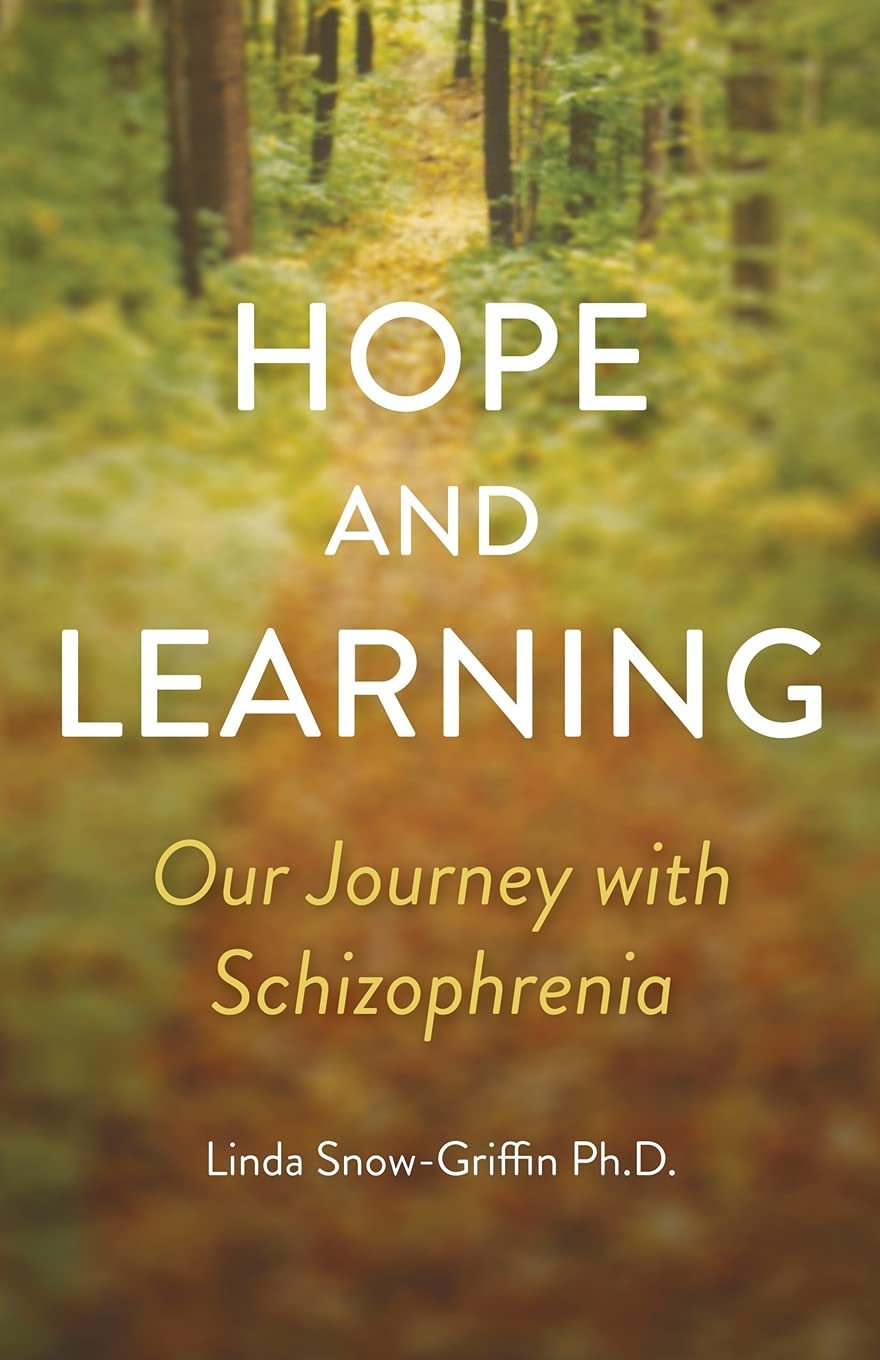
Book Review-Hope and Learning Our Journey with Schizophrenia by Linda Snow-Griffin

I want to say a special thanks to Linda Snow-Griffin for providing me a copy of her book Hope and Learning, Our Journey with Schizophrenia for a review.

Published 2021

Cherish Editions

About the Author

Linda Snow-Griffin, Ph.D. is a retired psychologist. She is the mother of two, stepmother of three adult children and grandmother of sixteen. She has practiced in a variety of settings – college, university and community mental health – and spent the last 30 years in private practice in Cincinnati. Her desire is to provide hope to families coping with mental illness, especially schizophrenia.

Blurb

When her son was diagnosed with Schizophrenia, Linda Snow-Griffin, a psychologist in private practice, felt devastated and overwhelmed. There were thousands of questions going through her mind: How can I help him? What does he need to get better? Will he be able to get better?

Hope and Learning narrates the 20-year journey Linda and her son embarked on, as they navigated their way towards recovery and a better understanding of what it is like to live with schizophrenia.


This book combines personal experience with schizophrenia with substantial data to create a heartwarming and informative resource.

My Thoughts

Linda shares her journey of her son’s diagnosis with Schizophrenia thru her intimate and raw writing. She discovered a journal of her son’s written in high school that set the wheels in motion that changed their life forever and in surprising ways.  

I have Bipolar Disorder, which is a serious mental illness, yet I have been around only one person with Schizophrenia and it was during one of my hospital stays. Being around “John” was not scary but he was totally detached, walked the halls constantly talking to other beings who controlled his life. As you can imagine, that was my perception of Schizophrenia. A stigma/myth that Linda changes in this wonderful book. 


Her son is highly functioning with medication and even attended college, it was quite difficult and presented some unique challenges when it came to writing his papers but with the understanding of his mother and love of his family, he made it thru. Linda’s book is heart-wrenching, at times it’s hard to imagine how difficult it must have been on a mother and family but what she shows us is love and understanding concurs all. 


I am so glad I read her book, my stigma of what Schizophrenia looked like changed and for that I am thankful. 


I recommend this book to anyone who thinks they may have or suspect a family member or a loved one has Schizophrenia, you will learn so much and walk away with answers and tools to take on your journey. 

Melinda

Repost

Chronic Illness · Health and Wellbeing · Medical · Men & Womens Health · Self-Care

Can You Benefit From A Weighted Blanket?

It’s that time of year when many of us are pulling out heavier blankets for the colder months of winter. If you have a chronic illness maybe you’ve already heard about weighted blankets, maybe even sleep with one year-round. If not familiar with weighted blankets, I’ll share some of the basics of buying one.

Weighted blankets come in all sizes, including children’s and throws. The blankets work by distributing weight evenly across the body to imitate a hug to induce better sleep by increasing Serotonin levels inducing a deeper sleep.

Weighted blankets have been known to help with many types of chronic illnesses and sleeping problems.

The key difference from your average blanket is they are made with glass beads as a filler. You purchase the weight of the blanket based you your own weight. It is also suggested that if you are a first-time user to buy a lighter one to start off.

The blankets come in a variety of fabrics and many have slipcovers you can purchase as well. I’m a very hot sleeper and they even make weighted blankets for people like me. Look for Cooling in the description.

I started my search last night for a new one since the first one I purchased was too heavy. I learned a lot about how they are made and why some are more expensive than others.

When you’re looking for a blanket you want small sewn 5″-3″ squares, that way the beads are more evenly distributed. The larger the square the more the beads can roll around.

Another important feature to look for is if it is machine washable, I found several that were hand wash only and I can’t go for that. I would recommend a duvet cover for your blanket which will allow you to keep it clean and only have to wash the blanket occasionally.

There are many lists of the top brands to buy, after looking at a few lists, I went to Amazon. I could not justify the $300 price of the top-rated blankets, it just doesn’t make sense. I found several including one on the list that cost $100 for a small size. I’m only buying a blanket for my side of the bed, not the entire King Size bed. He sleeps with the heavier blanket I bought years ago.

I found something interesting as I did more research. One brand I discovered said on more than one occasion, they are not for people with sensitive joints and back pain! Wait, hold the phone! What! I have sensitive hip joints and bad back pain. Do I need one of these blankets?

If you do decide to buy one, make sure you buy the right weight for your body. I’ve heard the praises of weighted blankets for years but for me, it was not the right choice.

Ask lots of questions and shop around before buying there are so many nuances to each blanket.

Melinda

Repost

Chronic Illness · Health and Wellbeing · Infectious Diease · Lyme Disease · Men & Womens Health · Tick Borne Illnesses

Do You Think Ticks Hibernate Or Die In The Winter?

One would think that freezing weather would cause ticks to hibernate or die, but you would have to think again. States that stay below freezing for most of the winter will not have a high risk but it is not impossible. Keep this in mind when raking the leaves and snow close to the ground.

The key is to know ticks are active and how to prevent tick bites. It’s easy to fend off these beasts by making a few changes. If you are walking in high grass, or have tree limbs brushing the trail, even dead leaves can be a host for ticks. Before you head out, spray exposed areas with DEET* making sure to spray the foot to above your ankles.

Put pant legs in socks so the tick can’t climb in. Wear a hikers hat with a trail that covers the back of the neck. No more falling off a tree limb right down the back of your shirt. They look for every chance they can get to attach to you, the host. The most critical step is to check your body, complete body, once home. Wash your clothes right away, don’t put them in the washing bin and let them move around your other clothes.

As someone who lives with Chronic Lyme Disease, I can say that preventing a tick bite is a hell of a lot better than getting Lyme.

Tick Expert with the Connecticut Agricultural Experiment Station says:

If you’re enjoying the warmer-than-usual winter, so are ticks. The insects do not have to go into their usual hibernation on days when the temperature exceeds 40 degrees. It used to be the people who study ticks in Connecticut got pretty bored in the winter months. Not anymore.

“We used to call it tick activity season,” explained Dr. Goudarz Molaei, a tick expert with the Connecticut Agricultural Experiment Station. “We can no longer call it tick activity season as ticks are active year-round.”

When people get bit, they send their ticks to the Agricultural Experiment Station. It used to be they would get about 50 all winter long. Now they are getting around 800.

“We receive ticks daily, and some days we receive over ten tick specimens from the public,” Molaei said.

If Connecticut no longer has a non-active tick season, chances are the surrounding states are also seeing an increase in ticks during the winter. Be safe by preparing on the front end.

DEET* or no DEET, is based on your preference. There is plenty of information for your searches.

Melinda

References:

https://www.wtnh.com/news/ticks-becoming-active-year-round-in-connecticut-due-to-warmer-winters/

Celebrate Life · Chronic Illness · Family · Health and Wellbeing · Memories · Men & Womens Health

I Found His Cell Phone In The Ashtray

I found his cell phone in the ashtray along with ten pairs of fingernail clippers, a knife, a small pair of scissors, a Corona Light bottle top, and three nickles and nine pennies.

On top is my favorite knife, the camping type with a fork and spoon, he gave to me when I was little, and a paper-towel covers them all. It’s been over eight years since I’ve stayed awhile with the memeries held in the ashtray.

The ashtray sat by my grandparent’s telephone for as long as I can remember. They didn’t believe in buying something new unless it was broken or you could no longer use it. The ashtray was very useful.

When I removed the paper towel today, the memories of my gramps came flooding back like a wave.

“If you’re going to be late to work, don’t go in.”

“If you can get out of bed, you can go to work”

“If you borrow something, give it back in better shape than when you borrowed it.”

Photo by Carl Attard on Pexels.com

He taught me responsibility and accountability.

He also taught me to drive. I was fourteen, we went to the river bottoms, two metal trashcans in the back of the 1969 Ambassador. He set them apart the right distance and had me practice until nightfall. I was still knocking down cans when we left. I did pass my driver’s test though.

One of the hardest memories was weeks before his death, telling him to call friends and family to let them know he was dying. Sitting in front of him, I dialed the numbers, handing him the phone and listened as he cried telling people he was no longer going to be here. It was one of the most difficult days of my life.

My gramps was the greatest man I’ve ever known, a true gentleman, a stand-up guy, God broke the mold when he made my gramps.

I found his cell phone in the ashtray……

Melinda

Repost form 2020

Celebrate Life · Chronic Illness · Health and Wellbeing · Medication · Men & Womens Health

Don’t Buy Prescriptions Online Unless It’s A Legit Pharmacy

In America we have the FDA to approve all prescription medications, manufacturers have to prove their drug has all the data on clinical trials, and they even do down to approving what the label can have on it. If the FDA is not satisfied the FDA will tell the manufacturer to go get this information and reapply. That’s critical to know. In America, we have a system that all prescriptions go thru before being released to the public. They also have a section you can report adverse reactions or a medical device that failed. We have a system.

I know that people with chronic illnesses especially those with chronic pain have trouble getting the pain management they need and out of frustration turn to the Internet. BEWARE!

Photo by Pixabay on Pexels.com

There are other countries that have a system in place but we have no idea if it matches our standards. There are also countries that have no system to verify the drugs are pure, they do what they say and they are monitored.

The FDA says this about online Pharmacies.

Warning Signs of an Unsafe Online Pharmacy

Beware of online pharmacies that:

  • Do not require a doctor’s prescription.
  • Are not licensed in the U.S. and by your state board of pharmacy.
  • Do not have a licensed pharmacist on staff to answer your questions.
  • Send medicine that looks different than what you receive at your usual pharmacy, or arrives in packaging that is broken, damaged, in a foreign language, has no expiration date, or is expired.
  • Offer deep discounts or prices that seem too good to be true.
  • Charge you for products you never ordered or received.
  • Do not provide clear written protections of your personal and financial information.
  • Sell your information to other websites.

These pharmacies often sell medicines that can be dangerous because they may:

  • Have too much or too little of the active ingredient you need to treat your disease or condition.
  • Not contain the right active ingredient.
  • Contain the wrong ingredients or other harmful substances.

If you buy from any online site from another country, you have no guarantee of what’s inside. It could cause more harm to your body, it could have nothing in there to help you, and the worst is it can be laced with different products and can kill you.

That’s strong words I know but I have read too many articles and heard of personal stories where buying online was the worst move to make.

Melinda

References:

Yes, there are ligament Pharmacies online, I would check them out before you buy. Do an Internet search on the Pharmacy. You may be surprised what you find or you see they are legit Pharmacies you can go to. The key is what country is your medication coming from.

Where you can protect yourself is to search, search, and search before buying. Your health and life are more important. Personally, I would not buy a drug online unless my insurance company offers an online Pharmacy.

Melinda

Reference:

https://www.fda.gov/consumers/consumer-updates/how-buy-medicines-safely-online-pharmacy#:~:text=These%20internet%2Dbased%20pharmacies%20often,countries%20with%20high%20safety%20standards.


Repost

Chronic Illness · Health and Wellbeing · Medical · Men & Womens Health · Mental Health · Self-Care

What is Hypocalcemia? My latest diaognosis

Earlier in the month I was diagnosed with persistent Hypocalcemia. The lack of calcium can cause many problems but the most troubling to me at this time is more Osteoporosis which I already have in my hip and heart complications, which I already have several heart issues.

Like everyone my appointment was pushed out and we wait out the social distancing to get back to normal. I’m lucky that I don’t have the worst symptoms yet.

Hypocalcemia (Calcium Deficiency Disease)

What’s calcium deficiency disease?

Calcium is a vital mineral. Your body uses it to build strong bones and teeth. Calcium is also needed for your heart and other muscles to function properly. When you don’t get enough calcium, you increase your risk of developing disorders like:

Children who don’t get enough calcium may not grow to their full potential height as adults.

You should consume the recommended amount of calcium per day through the food you eat, supplements, or vitamins.

What causes hypocalcemia?

Many people are at an increased risk for calcium deficiency as they age. This deficiency may be due to a variety of factors, including:

  • poor calcium intake over a long period of time, especially in childhood
  • medications that may decrease calcium absorption
  • dietary intolerance to foods rich in calcium
  • hormonal changes, especially in women
  • certain genetic factors

It’s important to ensure proper calcium intake at all ages.

For children and teenagers, the recommended daily allowances for calcium are the same for both sexes. According to the National Institutes of Health (NIH), the daily allowances are:

According to the U.S. government’s dietary guidelinesTrusted Source, calcium requirements for adults are:

Women need to increase their calcium intake earlier in life than men, starting in middle age. Meeting the necessary calcium requirement is particularly important as a woman approaches menopause.

The hormone disorder hypoparathyroidism may also cause calcium deficiency disease. People with this condition don’t produce enough parathyroid hormone, which controls calcium levels in the blood.

During menopause, women should also increase their calcium intake to reduce the risk of osteoporosis and calcium deficiency disease. The decline in the hormone estrogen during menopause causes a woman’s bones to thin faster.

Other causes of hypocalcemia include malnutrition and malabsorption. Malnutrition is when you’re not getting enough nutrients, while malabsorption is when your body can’t absorb the vitamins and minerals you need from the food you eat. Additional causes include:

  • low levels of vitamin D, which makes it harder to absorb calcium
  • medications, such phenytoin, phenobarbital, rifampin, corticosteroids, and drugs used to treat elevated calcium levels
  • pancreatitis
  • hypermagnesemia and hypomagnesemia
  • hyperphosphatemia
  • septic shock
  • massive blood transfusions
  • renal failure
  • certain chemotherapy drugs
  • “Hungry bone syndrome,” which may occur after surgery for hyperparathyroidism
  • removal of parathyroid gland tissue as part of surgery to remove the thyroid gland

If you miss your daily dose of calcium, you won’t become calcium deficient overnight. But it’s still important to make an effort to get enough calcium every day, since the body uses it quickly. Vegans are more likely to become calcium deficient quickly because they don’t eat calcium-rich dairy products.

Calcium deficiency won’t produce short-term symptoms because the body maintains calcium levels by taking it directly from the bones. But long-term low levels of calcium can have serious effects.

What are the symptoms of hypocalcemia?

Early stage calcium deficiency may not cause any symptoms. However, symptoms will develop as the condition progresses.

Severe symptoms of hypocalcemia include:

Calcium deficiencies can affect all parts of the body, resulting in weak nails, slower hair growth, and fragile, thin skin.

Calcium also plays an important role in both neurotransmitter release and muscle contractions. So, calcium deficiencies can bring on seizures in otherwise healthy people.

If you start experiencing neurological symptoms like memory loss, numbness and tingling, hallucinations, or seizures, make an appointment to see your doctor as soon as possible.

How’s calcium deficiency disease diagnosed?

Contact your doctor if you have symptoms of calcium deficiency disease. They’ll review your medical history and ask you about family history of calcium deficiency and osteoporosis.

If your doctor suspects calcium deficiency, they’ll take a blood sample to check your blood calcium level. Your doctor will measure your total calcium level, your albumin level, and your ionized or “free” calcium level. Albumin is a protein that binds to calcium and transports it through the blood. Sustained low calcium levels in your blood may confirm a diagnosis of calcium deficiency disease.

Normal calcium levels for adults can range from 8.8 to 10.4 milligrams per deciliter (mg/dL), according to the Merck Manual. You may be at risk for calcium deficiency disease if your calcium level is below 8.8 mg/dL. Children and teens typically have higher blood calcium levels than adults.

How’s hypocalcemia treated?

Calcium deficiency is usually easy to treat. It typically involves adding more calcium to your diet.

Do not self-treat by taking a lot of calcium supplements. Taking more than the recommended dose without your doctor’s approval can lead to serious issues like kidney stones.

Commonly recommended calcium supplements include:

  • calcium carbonate, which is the least expensive and has the most elemental calcium
  • calcium citrate, which is the most easily absorbed
  • calcium phosphate, which is also easily absorbed and doesn’t cause constipation

Calcium supplements are available in liquid, tablet, and chewable forms.

Shop for calcium supplements.

It’s important to note that some medications could interact negatively with calcium supplements. These medications include:

  • blood pressure beta-blockers like atenolol, which may decrease calcium absorption if taken within two hours of taking calcium supplements
  • antacids containing aluminum, which may increase blood levels of aluminum
  • cholesterol-lowering bile acid sequestrants such as colestipol, which may decrease calcium absorption and increase the loss of calcium in the urine
  • estrogen medications, which can contribute to an increase in calcium blood levels
  • digoxin, as high calcium levels can increase digoxin toxicity
  • diuretics, which can either increase calcium levels (hydrochlorothiazide) or decrease calcium levels in the blood (furosemide)
  • certain antibiotics such as fluoroquinolones and tetracyclines, whose absorption can be decreased by calcium supplements

Sometimes diet changes and supplements aren’t enough to treat a calcium deficiency. In this case, your doctor may want to regulate your calcium levels by giving you regular calcium injections.

You can expect to see results within the first few weeks of treatment. Severe cases of calcium deficiency disease will be monitored at one- to three-month intervals.

What are the possible complications of hypocalcemia?

Complications from calcium deficiency disease include eye damage, an abnormal heartbeat, and osteoporosis.

Complications from osteoporosis include:

  • disability
  • spinal fractures or other bone fractures
  • difficulty walking

If left untreated, calcium deficiency disease could eventually be fatal.

How can hypocalcemia be prevented?

You can prevent calcium deficiency disease by including calcium in your diet every day.

Be aware that foods high in calcium, such as dairy products, can also be high in saturated fat and trans fat. Choose low-fat or fat-free options to reduce your risk of developing high cholesterol and heart disease.

You can get 1/4 to 1/3 of your RDA of calcium in a single serving of some milks and yogurts. According to the United States Department of Agriculture (USDA)Trusted Source, other calcium-rich foods include:

While meeting your calcium requirement is very important, you also want to make sure you’re not getting too much. According to the Mayo Clinic, upper limits of calcium intake in milligrams (mg) for adults are:

  • 2,000 mg per day for men and women 51 years of age and up
  • 2,500 mg per day for men and women 19 to 50 years of age

You might want to supplement your diet by taking a multivitamin. Or your doctor may recommend supplements if you’re at high risk for developing a calcium deficiency.

Multivitamins may not contain all of the calcium you need, so be sure to eat a well-rounded diet. If you’re pregnant, take a prenatal vitamin.

Vitamin D

Vitamin D is important because it increases the rate calcium is absorbed into your blood. Ask your doctor how much vitamin D you need.

To increase your calcium intake, you can add food rich in vitamin D to your diet. These include:

  • fatty fish like salmon and tuna
  • fortified orange juice
  • fortified milk
  • portobello mushrooms
  • eggs

As with calcium-rich dairy products, some vitamin D-rich dairy products can also be high in saturated fat.

Sunlight triggers your body to make vitamin D, so getting regular exposure to the sun can also help boost your vitamin D levels.

Melinda