Family · Health and Wellbeing · Infectious Diease · Men & Womens Health · Tick Borne Illnesses

Avril Lavigne, who has sung about Lyme, named to Order of Canada

Singer/songwriter Avril Lavigne has been named to the Order of Canada, that country’s highest civilian honor. It recognizes individuals for their “exceptional contributions” to Canada and humanity.

According to the official website for the Order of Canada:

Avril Lavigne is one of the best-selling female artists of all time. With over 50 million albums sold worldwide, she paved the way for female-driven punk-rock music and continues to do so today. Generous with her time, she supports individuals with serious illnesses, disabilities and Lyme disease through the Avril Lavigne Foundation. A global ambassador for Special Olympics, she promotes inclusion and helps end the stigma around intellectual disabilities.

Lavigne became severely debilitated by Lyme disease in 2014 and was bed-bound for two years. In 2018, she released the single “Head Above Water,” based on her Lyme experience.

The Avril Lavigne Foundation supports people with Lyme disease, and other serious illnesses or disabilities. Through programs and grants, it provides funding, education and encouragement for its beneficiaries.

Watch her official video of “Head Above Water” here:

She has done a great deal to educate the younger generations about Lyme Disease.

Melinda

Celebrate Life · Family · Health and Wellbeing · Holiday · Men & Womens Health

Let’s Honor Those Who Fought For Our Fredom This Independence Day On The 4th of July!

The 4th of July is one of the most important days for the Americas who are proud to call America home. To me, the 4th of July stands for what being American is about, bravery, honor, and doing what it takes to keep our country safe and free. Yes, we have our problems but I’m so proud to be America and it’s home for me. So many brave souls fought for our freedoms, many gave all but they were proud to fight for our country. I look beyond the surface of it being a day off work and fireworks but it is a day I’m deeply proud of and thank those that fought for my freedom. 

My Gramps and many of his brothers fought in WW11 and after my divorce at 19 years old I wanted to join the Air Force, Gramps said I was not cut out for the service, as the rules would be too hard on me. After 911 I wanted to list but the cut-off had been changed to 38 years old and I was 40. Gramps was right the service was not right for me and is not right for everyone but those who enlist are the ones who fight for our freedom today. I thank them for their sacrifices.  

Below is a great speech given by President Ronald Reagan called Patriotic Speech and a few songs I love about being an American. The one from Jonny Cash is especially moving. 


Celebrate Life · Family · Health and Wellbeing · Men & Womens Health · Self-Care

July Awareness Days

It’s fascinating how the months were named and when. I didn’t learn this in high school History class. 

When Julius Caesar became Pontifex Maximus, he reformed the Roman calendar so that the 12 months were based on Earth’s revolutions around the Sun. It was a solar calendar, as we have today. January and February were moved to the front of the year, and leap years were introduced to keep the calendar year lined up with the solar year.

Fragile X Month

Frech-American Heratige Month

National Minority Mental Health Month

National Bison Month

Nation Cleft & Craniofacial Month

Sarcoma and Blood Cancer Month

UV Safety Awareness Month

Disability Pride Month

Minority Mental Health Awareness Month

Plastic Free July

Malala Day July 12th

Be Love Day July 16th

International Self-Care July 24th

World Heart Day July 29th

International Tiger Day July 29th

Melinda

Family · Health and Wellbeing · Men & Womens Health · Self-Care

Why Does A Pain Relief Cream Burn?

I have been a proud Affiliate of Aromalief for many years and have written several reviews about their products. This post contains affiliate links that don’t cost you more, take you directly to their site, and help keep my coffee habit supplied.

OUR STORY

Hi, I’m Annabel! Welcome to Aromalief, a brand dedicated to helping women like you beat pain. I started Aromalief in 2018 to help my mom who was in pain. After wasting money on several products, I decided that my mom deserved better. 

With the help of a naturopathic chemist, we developed formulas that are clean, easy to apply and smell like rich essential oils. The experience of using Aromalief is like applying a luxurious body cream and not your grandfather’s pain reliever. 

Thousands of women across the US love and trust Aromalief and I am so proud of all the people who work at our small business (including my mom). 

– Annabel founder/daughter/mom

——-

Posted by Annabel Mendez on June 24, 2024

When you’re in pain, reaching for a pain relief cream can feel like a quick and easy solution. However, many people are familiar with the uncomfortable burning sensation that often accompanies the use of traditional pain relief creams. Understanding why this happens and how some products, like Aromalief, differ can help you make a more informed choice for your pain management needs.

Sensitive Skin

WHY DOES A PAIN RELIEF CREAM BURN?

1. ACTIVE INGREDIENTS

Many traditional pain relief creams contain ingredients like menthol, camphor, or capsaicin. These substances are known as counterirritants, meaning they create a mild irritation or sensation (like burning or cooling) on the skin to distract pain receptors from deeper pain.

  • Menthol and Camphor: These ingredients produce a cooling effect that can be intense, sometimes causing a burning sensation on sensitive skin.
  • Capsaicin: Derived from chili peppers, capsaicin works by depleting a neurotransmitter called Substance P, which is responsible for sending pain signals to the brain. The initial effect, however, can be a strong burning feeling as the nerve endings react.

2. SKIN SENSITIVITY

Individuals with sensitive skin or certain skin conditions like diabetes may experience heightened reactions to these active ingredients, resulting in a more pronounced burning sensation.

3. APPLICATION AMOUNT

Using too much cream or applying it too frequently can increase the intensity of the burning sensation. The concentration of active ingredients in the cream can lead to an overpowering effect if not used as directed. Some creams can have up to 25% active ingredients and even though this may sound like a good idea, the burning sensation may prove to be worse than the actual pain.

HOW AROMALIEF IS DIFFERENT

Aromalief has developed a premium formula that addresses pain relief without the intense burning sensation commonly associated with traditional creams. Our unique blend of active ingredients, nutrients, and botanicals are not found in other creams. When it comes to getting relief without the burning sensation here’s how:

Why Is Aromalief Different

1. SLOW RELEASE COOLING CRYSTALS

Aromalief incorporates slow-release cooling crystals in its formula. These crystals provide a gradual and gentle cooling effect, rather than an immediate and intense one. This slow release mechanism ensures sustained pain relief without the harsh burning feeling. Most companies don’t use this technology because it is 20x more expensive than traditional menthol or camphor. 

2. ALOE VERA

Aloe vera is well-known for its soothing and healing properties. It helps to calm irritated skin and reduce inflammation. In Aromalief, aloe vera works synergistically with the cooling crystals to enhance the overall soothing effect, making the cream more comfortable to use even on sensitive skin.

3. ALMOND OIL

Almond oil is a natural emollient that helps to moisturize and nourish the skin. It provides a protective barrier that not only enhances the skin’s hydration but also helps to minimize any potential irritation from the active ingredients. This makes Aromalief a gentler option for those with delicate skin.

Aromalief Vegan Pain Relief Cream

THE BENEFITS OF CHOOSING AROMALIEF

  • Gentle Yet Effective: Aromalief’s balance of slow-release cooling crystals, aloe vera, and almond oil offers effective pain relief without the discomfort of a burning sensation.
  • Skin-Friendly: The natural ingredients in Aromalief are designed to be kind to your skin, providing hydration and soothing effects along with pain relief.
  • Sustained Relief: The slow-release formula ensures that the cooling effect is long-lasting, providing extended relief from pain without the need for frequent reapplication.

CONCLUSION

While traditional pain relief creams can offer quick relief, the burning sensation they often cause can be a significant downside. Aromalief’s innovative approach with slow-release cooling crystals, aloe vera, and almond oil provides a more comfortable and skin-friendly alternative. By choosing Aromalief, you can experience effective pain relief without the burn, making it an ideal choice for those seeking both comfort and efficacy in their pain management solutions.

This blog post is not intended to provide medical advice. Please consult a physician.

I love the Hemp Pain Relief hand cream in Lavender and Orange the best.

Melinda

Family · Health and Wellbeing · Men & Womens Health · Tick Borne Illnesses

New Rickettsial Pathogen Discovered In California

IMPORTANT READ!

Add a new spotted fever group Rickettsia to the long list of pathogens carried by West Coast ticks.

Researchers with the California Department of Public Health (CDPH) have identified a new species of rickettsial bacterium, called Rickettsia sp. CA6269. It is now confirmed to cause severe illness in humans.

The report, published in the July 2024 issue of CDC’s Emerging Infectious Diseases journal, documents two severe cases of Rocky Mountain spotted fever-like illnesses in patients residing in Northern California.

First found in rabbit ticks

The pathogen was first detected in rabbit ticks (Haemaphysalis leporispalustris) in Northern California in 2018. The researchers who discovered the pathogen have proposed naming it Candidatus Rickettsia lanei, after Robert S. Lane, PhD, Professor Emeritus of Medical Entomology, at the University of California, Berkeley.

Professor Lane, internationally recognized for his research on ticks and tick-borne diseases since the mid-1970s, has served on California’s Lyme Disease Advisory Committee since its inception in 2000 to the present.

For this study, CDPH researchers examined blood samples taken from a 2023 patient (first case below) and eight confirmed rickettsiosis cases collected over the past 20 years.

They used triplex real-time reverse transcription PCR (rRT-PCR)—a highly specialized tool to quickly detect specific RNA sequences. With this technique, researchers identified a new species of Rickettsia that very closely resembles Rickettsia rickettsii—the cause of Rocky Mountain spotted fever (RMSF).

Both patients were in San Francisco Bay Area

In the first case, the patient had been golfing several times in the San Francisco Bay Area but had no recollection of a tick bite. In the second case, the patient had been camping at two different parks in the San Francisco Bay Area. He remembered seeing a tick crawling on his body but did not recall a bite. (Note: In nearly half of all reported Rocky Mountain spotted fever cases, individuals do not recall a tick bite.)

Neither patient had traveled outside the San Francisco Bay Area in the two to three weeks prior to becoming ill.

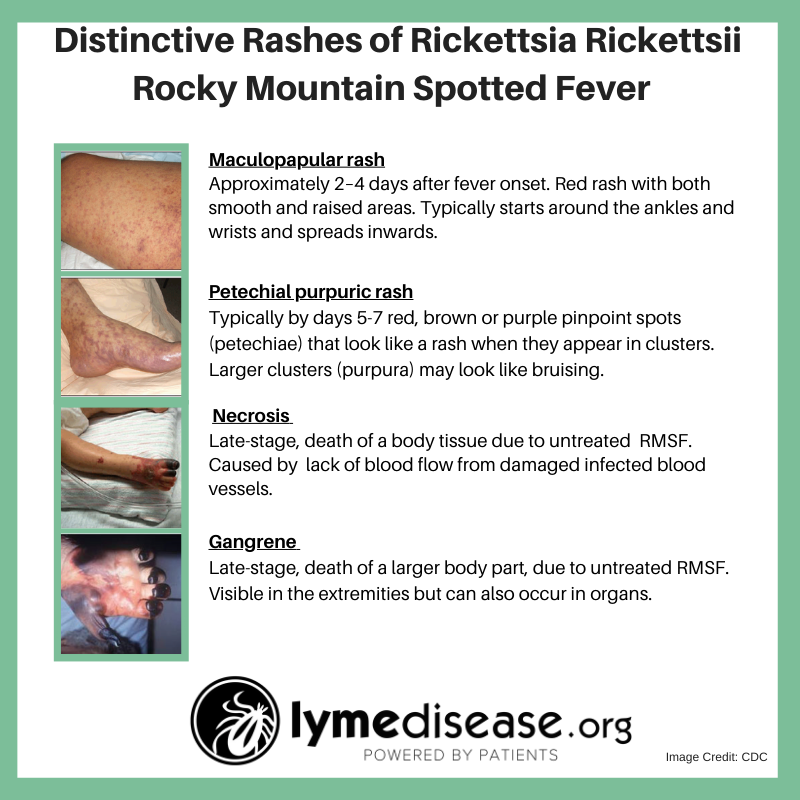
In both cases, they were admitted to the hospital for high fever, severe headache, nausea, vomiting, diarrhea, abdominal pain, and other symptoms. One patient had a rash characteristic of RMSF. The other developed cutaneous necrosis (irreversible injury to skin cells) and gangrene, and lost portions of several fingers on both hands.

Each patient was started on a triple-combination of antibiotics that included ceftriaxone and vancomycin but did not include doxycycline.

Within days of being hospitalized, each patient went into a coma and respiratory failure and was transferred to intensive care. Each was then given a presumptive diagnosis of RMSF and started on doxycycline.

The first patient spent 22 days in the hospital, the second 13 days before being sent home. Both had continuing symptoms upon discharge.

Severe illness

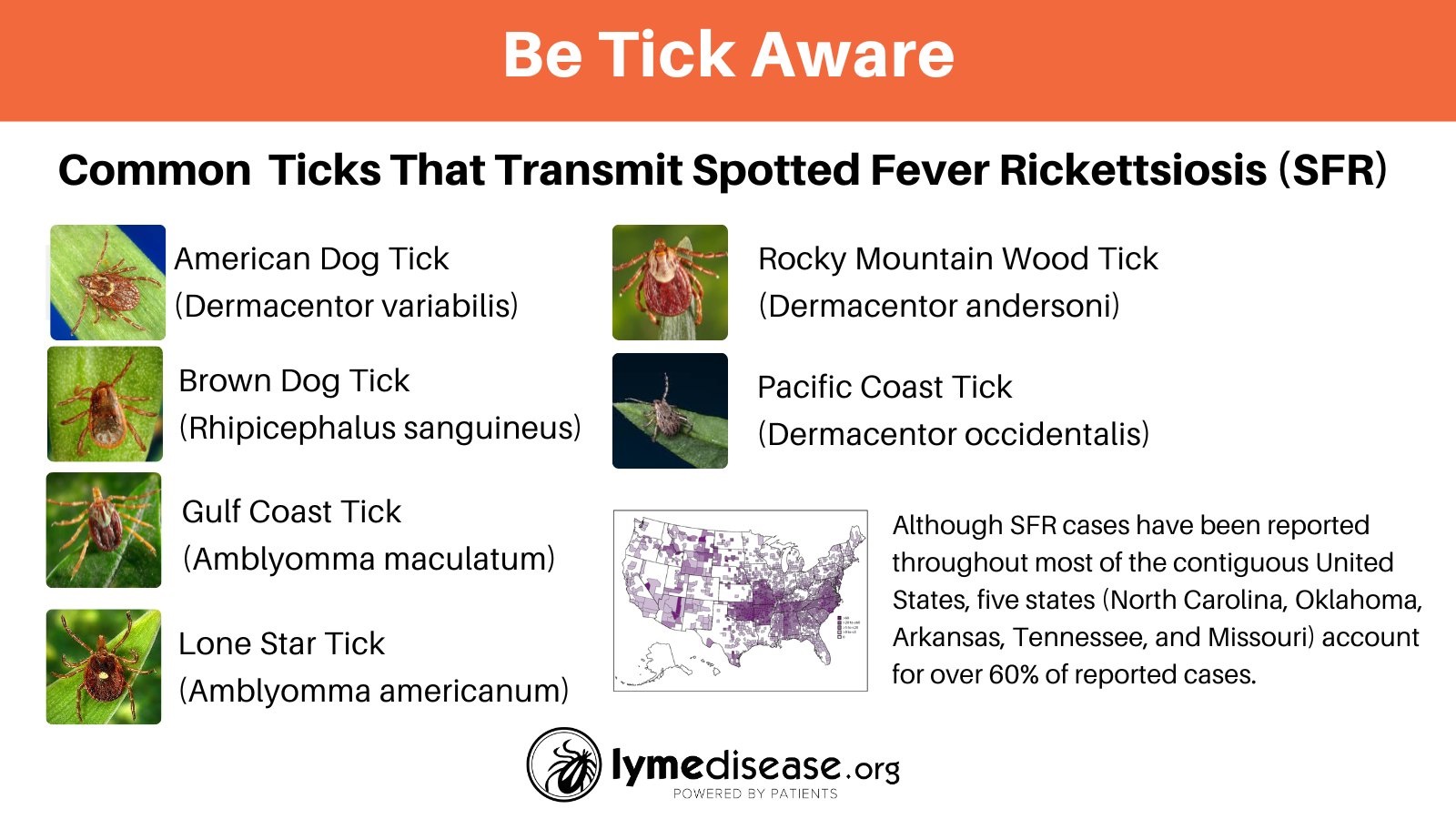
In the United States, spotted fever rickettsiosis is spread by several species of ticks that are known to bite humans, including:

  • American dog tick (Dermacentor variabilis or D. similis)
  • Brown dog tick (Rhipicephalus sanguineus)
  • Gulf Coast tick (Amblyomma maculatum)
  • Lone star tick (Amblyomma americanum)
  • Rocky Mountain wood tick (Dermacentor andersoni)
  • Pacific Coast tick (Dermacentor occidentallis)

Based upon these cases, Rickettsia CA6269 (lanei) can progress into a severe life-threatening illness. While the rabbit tick rarely bites humans, it may have been the vector in at least these two cases although that awaits confirmation.

Rickettsial infections are prevalent worldwide but remain significantly under-diagnosed because clinicians are not aware of them, the general public also is not aware of them, and diagnostic tests are either not available, slow to detect infection, and/or non-specific.

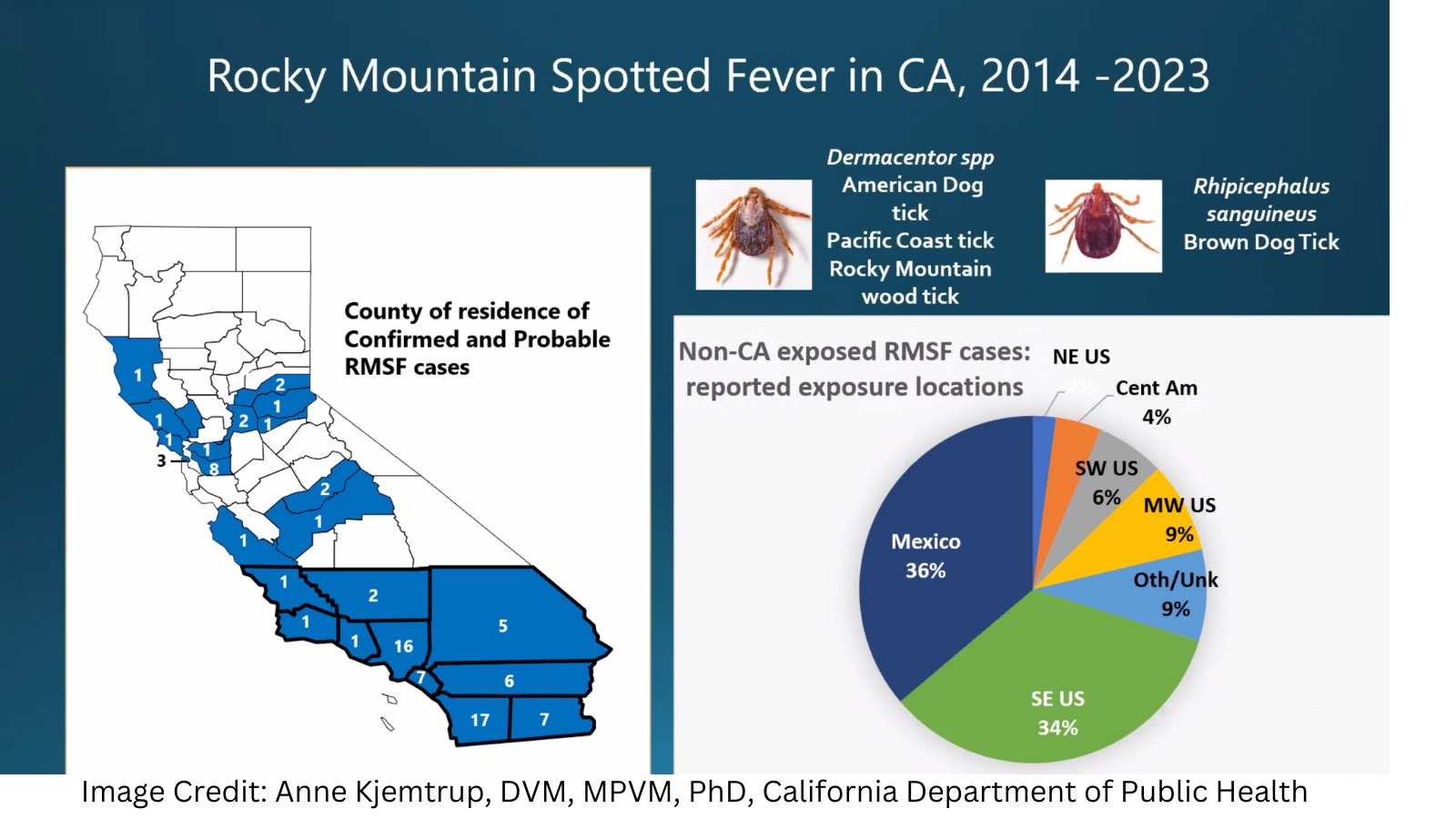
At a “public engagement meeting,” on June 11, Anne Kjemtrup, DVM, MPVM, PhD, with the California Department of Public Health, gave an update on RMSF.

In the image below, the number of reported California cases of RMSF is summarized by county of residence. Of those cases acquired outside of California, 36% were from tick bites in Mexico, and 34% were from visits to the Southeastern U.S.

Signs and Symptoms of RMSF

Early signs and symptoms of RMSF can be vague and non-specific, including fever and headache. However, the disease can rapidly progress to a life-threatening illness, even before a rash appears.

Signs and symptoms can include:

  • Fever
  • Headache
  • Rash
  • Nausea or vomiting
  • Stomach pain
  • Muscle pain
  • Lack of appetite

The CDC advises immediate treatment with doxycycline whenever rickettsiosis is suspected.

LymeSci is written by Lonnie Marcum, a physical therapist and mother of a daughter with Lyme. She served two terms on a subcommittee of the federal Tick-Borne Disease Working Group. Follow her on Twitter: @LonnieRhea  Email her at: lmarcum@lymedisease.org.


Resources

References

Probert WS, Haw MP, Nichol AC, Glaser CA, Park SY, Campbell LE, et al. Newly recognized spotted fever group Rickettsia as cause of severe Rocky Mountain spotted fever–like illness, Northern California, USA. Emerg Infect Dis. 2024 Jul [date cited]. https://doi.org/10.3201/eid3007.231771

Eremeeva ME, Weiner LM, Zambrano ML, Dasch GA, Hu R, Vilcins I, Castro MB, Bonilla DL, Padgett KA. Detection and characterization of a novel spotted fever group Rickettsia genotype in Haemaphysalis leporispalustris from California, USA. Ticks Tick Borne Dis. 2018 May;9(4):814-818. doi: 10.1016/j.ttbdis.2018.02.023. Epub 2018 Mar 1. PMID: 29545107.

I this adds to the knowledge bank but remember there are more undiscovered than discovered.

Melinda

Celebrate Life · Family · Health and Wellbeing · Men & Womens Health

The Unsung Heroes: Supporting Loved Ones Through Pain By Guest Blogger Mind Strength


Discover the Strength Behind Those Who Share the Burden of Their Loved Ones’ Suffering When we think about pain, our minds often turn to the person who is directly suffering. But what about those who feel the pain of someone else? It’s a complex and challenging experience that can leave one feeling helpless and unsure … Continue reading
 
 
Her words resonate with me, with each post she helps me look inward and take what I’ve learned outward. Pull up a chair and visit her archives.
 
Melinda 
Celebrate Life · Family · Health and Wellbeing · Mental Health

Happy Father’s Day Gramps

Many of you know I was extremely close to both of my Grandparents, we loved each other dearly. Not only did they pull me from rock bottom, but they made sure I had the tough love needed to get away from the bad crowd I was hanging with, my drug addiction, and recover from my childhood trauma. It was truly unconditional love. I went to live with them after a year of bad girl boarding school at the age of 14 and they became my legal guardians. 

My Granny worked with my Social Worker to find the right type of rehabilitation, it was a boarding school at a Convent that she remembered from her youth. It was just what I needed. They paid for my uniforms, the necessary towels and sheets, and a monthly allowance of $40 to buy a soda pop and a candy bar daily and they bought my cigarettes. Since I was a ward of the State of Texas, the state paid the yearly tuition. They came every Wednesday to the family group sessions and Granny would make enough goodies for my dorm or bring enough of the good candy everyone loved. We weren’t allowed to talk but the nuns let them come in for a minute to give me the goodies to share. 

My Gramps had just retired and no doubt thought more about hunting, fishing, and his daily squirrel run to the levees. But he embraced me and taught the lessons of life, the ones that matter, they became my foundation. They cooked every day except for Saturday when they went to El Chico’s for Mexican food, I joined them long after leaving home, it was a special time between us. 

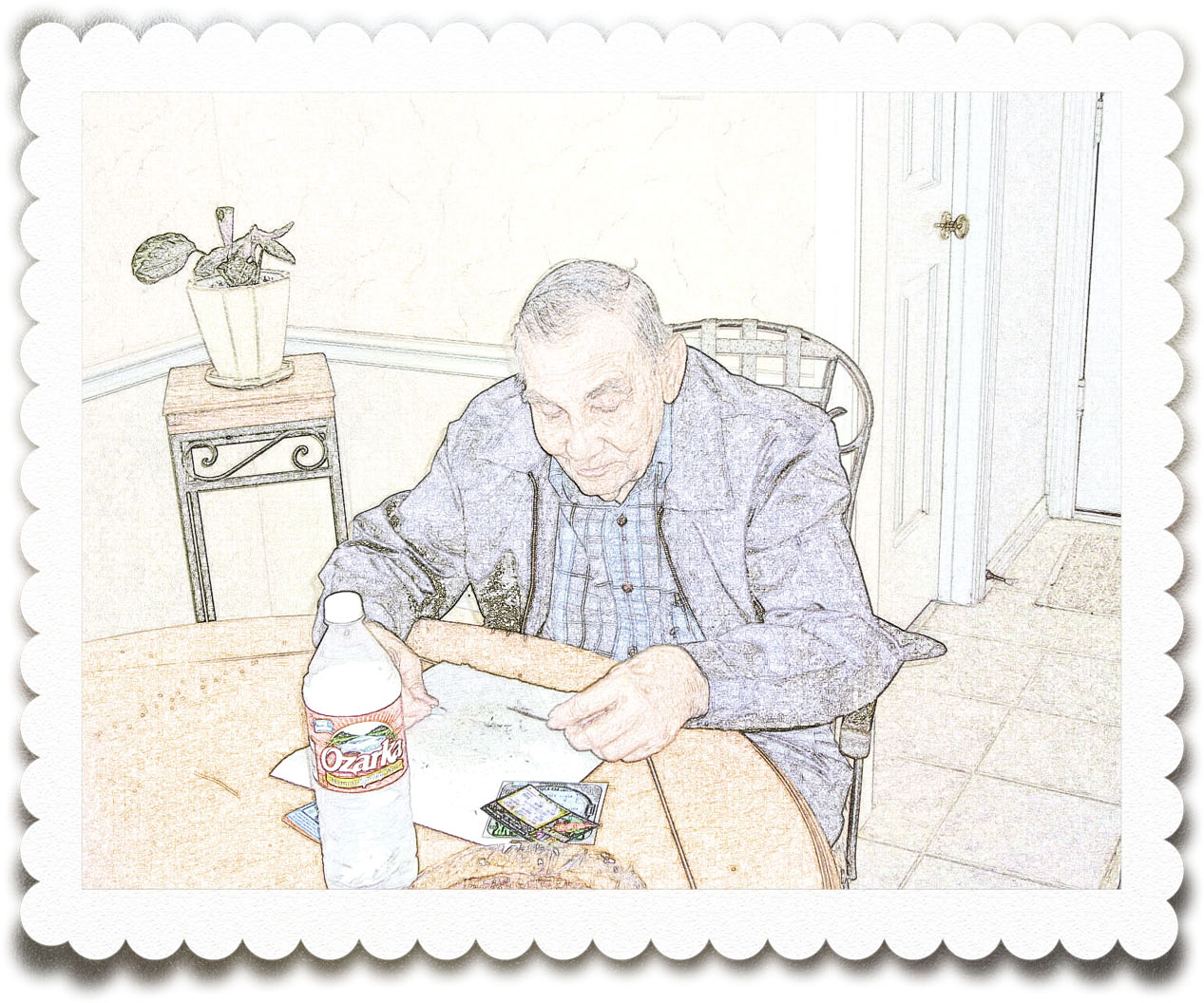
A sketch I did of Gramps playing scratch-off games

Gramps enjoyed scratch-off games and we often gave them as treats, he would not but for himself. So we did.

These were his core values:

Work hard

Do it right the first time

If you borrow something, give it back in better shape

Always make time for family

Don’t hate

Stand up for yourself

Marriage was sacred

If you can do it yourself it means more

He was right on target and I have those values today and what I looked for in my husband.

He was very protective all my life but when it came to boys, he was extra tough.  With a strict curfew, I couldn’t drive my car on weekends, only to school, to take Granny shopping or doctor appointments, and to work. He knew my schedule like clockwork. I had to pay him 8 dollars a week for gas and 50 dollars for the extra insurance. He taught me responsibility and accountability. There were no excuses unless it was a freak thing and I had to call before my curfew. Even 5 minutes late was late. I can’t thank him enough.

My Gramps was from a very poor family who were sharecroppers and self-taught wielders. He joined the Army in 1939 to leave poverty and build a better life for himself and he did just that. After leaving the Army, he worked as a mechanic for Greyhound Bus Line’s for 38 years, and he never accepted a promotion, he felt most comfortable working with his hands alone and had no BS from management. I can understand that.

 He married only once to my Granny and loved her to the day she died. He had the strength to move forward and he built a full life after her death, by going to the recreation center every day, eating a 1 dollar lunch, always giving his milk to a man who needed it, and then playing dominos, for an hour or two. He made great friends there and they were in his life until the end. He tried indoor swimming which shocked me, even had a couple of friends visit him and he visited them. He believed in taking something every time he visited someone.

Money was important to build a simple humble life, never wanting more than he needed to provide. He accepted my Granny’s only son, my father, and no doubt he was a handful. He didn’t discipline my father, that was Granny’s job because he never wanted to impose on her. He was a happy man, witty, like a clean but dirty joke, not raunchy. He accepted people for who they were and felt everyone was equal except for a few. He was racist towards blacks, I’m not sure where that came from. He didn’t hate them but didn’t allow them in his house. He never spoke ill of anyone even though many family members deserved it. 

He loved his family and the ones that mattered the most to him who were still alive, visited him during the last few weeks of his life. He didn’t tell anyone until I brought the phone book into the living room one day and said it was time to call family and friends. 

The mold was broken when they made my Gramps, he was a proud man, who kept his word and took people at face value even to a fault. There were many hillbilly’s in the family and a few shady dealers but it didn’t matter to him. 

Gramps called me Pud since I was a child until the end. It was something just between us and always meant love to me. I’m the person I am today abuse of their love and faith in my future. He only went to 3rd grade and Granny to 5th grade, that is what happens when you are poor and can’t afford the clothes or were needed at home to work. They made sure I went to school every day except the few occasional Granny would write a note so we could go have fun shopping for the formals I needed for high school. We pinched pennies, went to outlets, and found all my formals for under 20 dollars. Gramps wore nothing but Dickies work pants and they wore them out before buying new. I learned late that you don’t need more, but the best you can afford, don’t show off and be proud of what you have. 

I spent the last 5 months of his life caring for him around the clock, sleeping in the front bedroom/junk room, and boy was he a handful. He expected me to be like Granny and keep everything like clockwork which is exhausting when you’re a caregiver. He was hard-headed and I get that from him. 

My Gramps was a true American, as Toby Kieth sings, he fixed everything with a Craftsman wreck and WD 40, always drove American cars, did all the maintenance and car repairs he could, was an excellent lawnmower repair man, and fixed many for others.  

I can go on and on but I will leave it here for another time. He was the only father I had, yes, I had a biological father but he didn’t know how to be a one due to an undiaonosised mental illness and he was an alcoholic.  

The video says it all. RIP Keith, your songs added to the fabric of our lives. 


Melinda


Family · Men & Womens Health · Music · Survivor

A Country Boy Can Survive

The Story of Hank Williams Jr. is rich in music history but did you know he had an horrific fall during an avalanche that almost took his life. It’s a story of the strength, strength we all have inside to live and to fight for it. It was a catapulting moment for him. Watch the entire video, you’ll see the magic. 

A Country Boy Can Survive was written by Toby Keith and his breakout song. He believed strongly in songs he wrote himself and stayed true to his roots. RIP Toby, we know you have the sunshine. The video was taken during a tribute to Country’s Greatest Music Heros. It tells Hank Jr.’s story and you can see him proudly sitting in the front row beaming. 

Toby Keith – A Country Boy Can Survive

God does answer prayers. 
 
Melinda
 
I have no clue why WordPress shows the post correctly as I’m writing yet when I preview and once it’s posted there is all this space between. That’s on WP, as always. 
Celebrate Life · Family · Health and Wellbeing · Holiday · Men & Womens Health

I’m Sending You Joy This Rosh Hashanah-Sunset September 23, 2025 –

Happy New Year! I pray you’re surrounded by friends, family and good food. As I understand it, Rosh Hashanah starts the New Year and many rituals follow back to the bible.

Melinda


Celebrate Life · Family · Health and Wellbeing · Holiday · Men & Womens Health

Holy Day Yom Kippur

Yom Kippur translates from Hebrew to English as Day of Atonement. Traditionally, Jews spend the holiday fasting and reflecting on sins committed over the past year. Even if you’re not Jewish, you can acknowledge the holiday, and it is indeed respectful to share well wishes to your friends and colleagues who do observe.

According to tradition, it is on Yom Kippur that God decides each person’s fate, so Jews are encouraged to make amends and ask forgiveness for sins committed during the past year. The holiday is observed with a 25-hour fast and a special religious service. Yom Kippur and Rosh Hashanah are known as Judaism’s “High Holy Days.”

God judges all creatures during the 10 Days of Awe between Rosh Hashanah and Yom Kippur, deciding whether they will live or die in the coming year. Jewish law teaches that God inscribes the names of the righteous in the “book of life” and condemns the wicked to death on Rosh Hashanah; people who fall between the two categories have until Yom Kippur to perform “teshuvah,” or repentance. As a result, observant Jews consider Yom Kippur and the days leading up to it a time for prayer, good deeds, reflecting on past mistakes and making amends with others.

Yom Kippur is one of the Holiest of days of the year along with Rosh Hashanah. I pray you can look into your heart and reflect on the sins you’ve made against God. L’shana Tova. 

Melinda

References:

MSN

Celebrate Life · Children · Family · Health and Wellbeing · Men & Womens Health

Will Having Children Change Your Marriage?

There is no denying that your life is going to change once you have children. This is the biggest change in anyone’s life. You and your partner have created another human. You will experience a love you have never experienced before. You will have a sense of responsibility you have never experienced before. You will be doing and learning about things you have never done before. It is only natural that this has an impact on the dynamic of your relationship. So, with that being said, let’s take a look at some of the common ways that relationships change once you have had kids.

Photo by Katie E on Pexels.com

Your relationship will end up getting a bit neglected 


This is only natural. You don’t end up nurturing or prioritizing your relationship in the way that you should because you now have a crying baby to attend to all of the time. You will not have the attention and time you did for one and another before the baby. This can be difficult. However, it is important to try and make some time for one and another whenever you can. If your family offers to look after your baby so you can have a date night, take advantage of it. 

You have a new bond 

No matter how tough it gets, you will find that you have a new bond. Yes, lack of sleep takes its toll. Nevertheless, you have brought a beautiful baby into the world, which makes you smile and laugh. You will feel closer than ever. Despite the ups and downs, this strong sense of unity will be there. 

You might hate your partner a little bit 

Hate is a bit of a strong word here because it is rarely genuine hate, although it can feel like it at the time. You may find yourself snapping at your partner 24/7 or resenting them for going to work. It is important to recognize that your hormones are all over the place. You may think you need a divorce lawyer, but try to be patient and work through it. Of course, there are cases whereby divorce is the only option but take your time here. Most people refer to this stage as early mood swings. Not only have you gone through hormonal changes but you are probably suffering from a severe lack of sleep too. This is completely normal, so long as it does not turn into postpartum depression. 

As you can see, there are a number of different ways that your relationship may change once you have had children. Some of these changes are positive and some are negative. However, it is important to acknowledge and accept these changes. Don’t be hard on yourself or your partner. You are both adjusting to a new way of life, and that in itself can be a challenge. Nevertheless, it is the most beautiful challenge of them all! 

This is a collaborative post.

Melinda

Children · Family · Health and Wellbeing · Men & Womens Health · Mental Health

How Cultures Around The World Think About Parenting

What can American parents learn from how other cultures look at parenting? A look at child-rearing ideas in Japan, Norway, Spain — and beyond.

The crisis of American parenting, as anyone who has looked at the parenting section of a bookstore can attest, is that nobody knows what the hell they’re doing. Yet despite this lack of confidence and apparent absence of knowledge, many American parents zealously believe that their choices carve out their children’s futures. Indeed, they seek the advice of expert after expert in the field in order to succeed at one goal: to raise the happiest, the most successful, and the most well-adjusted leaders of the future.

But what dangers lay in thinking that there is one “right” way to parent? How much of how we parent is actually dictated by our culture? How do the ways we parent express the essentialness of who we are, as a nation?

“Americans have no script,” says Jennifer Senior (TED Talk: For parents, happiness is a very high bar), author of All Joy and No Fun: The Paradox of Modern Parenthood. “We believe we get to invent our future, our opportunities and who are our children are going to be. Which is wonderful, but also very troubling.”

In reporting her book, says Senior, when she asked mothers who they went to for parenting advice, they named friends, websites and books. None named their own mothers. Only the most current child-rearing strategies were desired, in order to best position their children for achievement in the future.

In other words, that which is most American about us — our belief that the future is unwrit — is what is driving us mad as parents. Senior paraphrases Margaret Mead, who wrote this in 1942: In America, there are only this year’s children.

In Norway, childhood is strongly institutionalized, says Norwegian sociologist and economist Margunn Bjornholt. Indeed, most children enter state-sponsored daycare at 1 year old (parents first get almost a full year of state-sponsored leave from work), then enter school and organized activities.

Norwegians believe that it is better for children to be in daycare as toddlers. At daycare, methods reflect the country’s fetishistic dedication to fresh air. So even in Oslo, where arguably the indoor air quality is fresher, and even in Scandinavian winters, children are bundled up and taken outside to nap in their strollers.

Craziness? Culture. In Japan, where Gross-Loh lives part of the year, she lets her 4-year-old daughter run errands with her 7-year-old sister and 11-year-old brother — without parental supervision. Her kids don’t hesitate to take the Tokyo subways by themselves and walk on busy streets alone, just like their Japanese peers. But when she comes back to the States, Gross-Loh doesn’t allow the same.

“If I let them out on their own like that in the U.S., I wouldn’t just get strange looks,” she says. “Somebody would call Child Protective Services.”

Both in Japan and Norway, parents are focused on cultivating independence. Children do things alone early, whether it’s walking to school or to the movies. The frames, however, are different. In Scandinavia, there is an emphasis on a democratic relationship between parents and children. In Sweden especially, the “rights” of a child are important. For example, a child has the “right” to access their parents’ bodies for comfort, and therefore should be allowed into their parents’ bed with them in the middle of the night. If a parent doesn’t allow them, they are both denying them their rights and being a neglectful parent. In parts of Asia, meanwhile, co-sleeping with a family member through late childhood is common. Korean parents spend more time holding their babies and having physical contact than most. But within a family, obedience is key — not democracy.

In Jewish tradition, says Wendy Mogel, a clinical psychologist and author of The Blessing of a B Minus: Using Jewish Teachings to Raise Resilient Teenagers, there’s a teaching in the Talmud that every parent has an obligation to teach their child how to swim.

“We’re supposed to be raising our children to leave us,” she says. “They must develop self-reliance and resourcefulness and resilience, which is a challenge, because we must allow our children to make mistakes.”

This is enormously hard for American parents to do. “Parents are genuinely anxious about really big things like the melting ice caps and collapsing economy and the unending stories about violence and predators and college admissions,” says Mogel. “They displace all of these fears of things they can’t control onto the one thing they believe they can control, which is children.”

American parents are highly focused on making sure that their children’s talents are groomed for success. Sara Harkness, a professor in the Department of Human Development and Family Studies at the University of Connecticut and a pioneering researcher on parenting and culture, found that nearly 25 percent of all of the descriptors used by American parents were a derivation of “smart,” “gifted” or “advanced.” “Our sense of needing to push children to maximize potential is partly driven by fear of the child failing in an increasingly competitive world where you can’t count on the things that our parents could count on,” Harkness suggests.

This is not unlike many Asian nations, where parenting, from a very early age, is focused highly on academics and college acceptance. One Korean mother who Harkness interviewed played English tapes to her 2-month-old baby “because it’s never too early to start,” she says. The parent’s primary role is as an educator, and the child’s role is to respect the parent and repay them with sacrifices.

In the Netherlands, meanwhile, parents used “smart” to describe their children only 10 percent of the time. Dutch parents believe strongly in not pushing their children too hard. “People would talk about a cousin who got a PhD and was very unhappy because there were no jobs at universities, and said that you shouldn’t teach your child to read before they got to school, because then your child would be bored at school and not have any friends,” says Harkness.

Instead, regularly scheduled rest, food and a pleasant environment are the top priorities for Dutch parents.

But in Spain, where families are focused on the social and interpersonal aspects of child development, parents are shocked at the idea of a child going to bed at 6:30pm and sleeping uninterrupted until the next day, instead of interacting and participating in family life in the evenings. “They were horrified at the concept,” says Harkness. “Their kids were going to bed at 10 p.m.”

In the U.S., we want to be Korean and Dutch and Japanese and Jewish and Norwegian and Spanish, all at once. “What is unique to us is the desire to be happy all the time and experience no discomfort and achieve,” says Mogel. “These are competing values.”

The American desire for solutions is starting to radiate outwards. A growing awareness of the scarcity of resources, and the potential for true social mobility, is increasing the pressure on parents globally to “parent” their kids, as a verb. In Taiwan, the most popular parenting books are translations of American guides.

Yet parental anxiety is a terrible idea to export. Instead, “we should be learning from each other,” says Harkness, “and recognizing that there are very different successful pathways to raising children.”

The diversity of ideas should be liberating, not stress-inducing, agrees Gross-Loh. “It was incredibly freeing to realize that there was no single way to do things and it’s totally okay to make mistakes as a parent,” says Gross-Loh of her research. “It gave me space to let my children be who they are, and let them grow into that.”

The U.S., home to immigrants who bring their own traditions from around the world, is uniquely positioned to both learn and let go. American parents can recast their scriptlessness as they see fit, drawing on both global tradition and present theory. Will they? Tomorrow’s children may decide.

For those who live outside of America, I would love to hear your perception’s, please leave a comment. I can take the good, bad and the ugly.

Melinda

Reference:

Amy S. Choi is a freelance journalist, writer and editor based in Brooklyn, N.Y. She is the co-founder and editorial director of The Mash-Up Americans, a media and consulting company that examines multidimensional modern life in the U.S.

Children · Communicating · Family · Health and Wellbeing · Mental Health

Researchers: Parents can help their children to face anxiety

KSAT.COM

Jared Hoehing, Producer Published: 

Behavioral science expert gives some ways to help your child beat separation anxiety

Photo by Daria Shevtsova on Pexels.com

NEW HAVEN, Conn. – According to the National Institutes of Health, the numbers of kids and adolescents struggling with anxiety, depression, and other mental health conditions have been steadily on the rise. Cognitive-behavioral therapy, which teaches the child coping skills, and medication may help. But for some kids and their families, there is little relief. Now, researchers are studying a new method that helps parents help their children.

Bedtime for some families can become a struggle. But when the goodnight routine for Nicole Murphy’s son began to stretch for up to three hours, she knew she needed help with his separation anxiety.

“His little mind was always racing nonstop. So, it was kind of hard for him to shut that off, I think,” Nicole explained.

Eli Lebowitz, Ph.D., Psychologist, Yale School of Medicine Child Study Center, and his colleagues, developed a method of training parents to support anxious children. It’s called SPACE, or supportive parenting for anxious childhood emotions. Parents go through training to help their child face anxiety. Lebowitz says the first step is to show support and not downplay what their child is feeling.

“I get it. This is really hard, but I know you can handle it,” shared Dr. Lebowitz.

Lebowitz said parents also learn to help their children by not accommodating them. For example, a parent who would limit visitors for a child who gets anxious around strangers, or speaks for a child who gets nervous speaking, learns not to take those steps. In a study of 124 kids and their parents, the Yale researchers examined whether SPACE intervention was effective in treating children’s anxiety.

“Even though the children never met directly with the therapist and all the work was done through the parents, we found that SPACE was just as effective as CBT in treating childhood anxiety disorders,” stated Dr. Lebowitz.

The Murphy’s used the techniques learned through SPACE to coach their son through bedtime. Within a few weeks, he was falling asleep in 30 minutes.

“For us, it was like life-changing, honestly,” smiled Nicolle.

Melinda

Celebrate Life · Family · Health and Wellbeing · Men & Womens Health · Self-Care

Review of Aromalief Lavender Hemp Pain Relief Cream

Aromalief


Aromalief Hemp Pain Relief Cream Sensitive - 4oz

I’m reviewing Aromalief Hemp Pain Relief, Hemp 1000MG as a member of Chronic Illness Bloggers

I was thrilled to find the product is cruelty-free, vegan, PETA approved, and in a relaxing Lavender scent. I have not tried Hemp cream products before because of the smell and was eager to see how well the cream worked.

This post may contain affiliate links in which I earn a small commission. They don’t cost you extra to use and help fund my coffee habit. 

Here’s some information about Aromalief

What about the safety of the product?

Aromalief is made in an FDA registered facility and each ingredient has a Safety Data Sheet and Certificate of Analysis. We buy only high-quality ingredients from reputable suppliers and do our own internal testing for everyone’s peace of mind.

How do you make sure Aromalief is Vegan and Cruelty-free?

Every ingredient that we source comes with a written letter from the ingredient manufacturer that the product does not contain any animal ingredients and that they do not test it on animals. The manufacturing line also has a strict vegan-only policy. Aromalief is proud to have PETA’s Vegan & Cruelty-free designation.

What type of pain is Aromalief good for?

Pains of the body and the soul. This includes muscle, joint, nerve, and chronic pains PLUS stress, anxiety, and sadness. Our ingredients are the best in the market to help relieve pain due to arthritis, back pain, herniated discs, carpal tunnel, tennis elbow, and more. If your type of pain isn’t listed here, we still encourage you to try it. If it doesn’t help you, then simply return it. Have a little faith and try Aromalief.

Aromalief Hemp Pain Relief Cream Sensitive - 4oz

Aromalief

The cream has a subtle lavender and menthol scent, not overpowering. I have slightly sensitive skin and the cream didn’t cause any sensitivity. There are other scents available that I have not tried. I love this one and keep buying this scent, I need to give another scent a try.  

It rubs in quickly, no greasy fingers on the keypad. It has a warming sensation that eases inflammation. I focused on three areas, neuropathy in my feet, sore shoulder muscles, and arthritis in my hands.

Right away I noticed a difference in my feet, they could touch each other without pain. It lasted long enough for me to go to sleep. My shoulders are always tense and I have a problem relaxing at night. I used the cream on my worst shoulder and it did warm up the muscles helping me to relax and sleep.

The thing I love the most about the cream is how well it worked on arthritis in my fingers, I also noticed neuropathy relief in hands. The fact that the cream dries enough to get right back on the computer is a huge bonus.

I have already bought six tubes to make part of my daily self-care routine. Aromalief is a great everyday hand cream too. There are several scents to try, it’s made in The USA and is women-owned. Let’s support our women-owned business when possible. 

Aromalief Hemp Pain Relief Cream Sensitive - 4oz

Aromalief

A special thank you to Annabel at Aromalief and Chronic Illness Bloggers.

In health,

Melinda


Celebrate Life · Family · Health and Wellbeing · Men & Womens Health

Happy Mothers Day

I’m sending kind thoughts to all the mothers out there. My hope is your children know how deep your love goes and that love never goes away.

Melinda

Children · Chronic Illness · Family · Health and Wellbeing · Medical

MANAGING FIBROMYALGIA IN CHILDREN

Welcome to Remedy, a blog by U.S. Pain Foundation. Remedy aims to provide people with the support they need to thrive despite chronic pain. It features the information about promising treatments, tips and strategies for self-management, resources for coping with the emotional and social effects of pain, unique perspectives from patients, clinicians, and caregivers–and much more. To submit an article idea, email contact@uspainfoundation.org.


By Brent Wells, DC, a chiropractor and founder of Better Health Chiropractic and Physical Rehab

If your child feels tired and achy, you may not worry initially. After all, there’s nothing urgent about what seems to be mild, general discomfort. However, if your child is constantly in pain, exhausted, having trouble sleeping, and experiencing intense moods, he/she may have fibromyalgia.

This condition is fairly common in adults, but parents and clinicians may overlook the possibility of juvenile primary fibromyalgia syndrome — that is, fibromyalgia in children.

JUVENILE FIBROMYALGIA SYMPTOMS TO WATCH OUT FOR

Fibromyalgia is a chronic condition characterized by pain and fatigue. According to experts, children will often describe this pain as “stiffness, tightness, tenderness, burning or aching.” This pain can last for months and is often accompanied by other symptoms that affect a child’s overall well-being, energy level, and emotional health, including:

  • Tender spots on muscles
  • Difficulty sleeping and fatigue
  • Aches, including stomachaches and headaches
  • Lack of focus or memory
  • Anxiety and depression

If your child is experiencing these symptoms, you should see a doctor. There’s not one test to confirm it, so he/she will go through a range of tests to rule out other conditions.

Unfortunately, there is no one “cure” for fibromyalgia, which can be frustrating for patients, especially children. If left untreated, symptoms can lead to issues at school or making friends. Many parents describe this as a “vicious cycle” where symptoms continue to feed the condition.

Experts still aren’t sure what causes fibromyalgia or how it develops in the body. Some believe that mixed-up pain signals in the brain cause greater pain chemicals and/or overactive pain receptors. Others think it might be triggered, in part, by an emotional event like an illness, injury or psychological stress. But even if the cause involves emotions, the pain is still real.

HOW CHILDREN CAN COPE WITH FIBROMYALGIA

It’s important to create a support team and get your child’s primary care doctor, pain specialist, psychologist, physical therapist, and teachers on board. The more people are aware of your child’s condition, the more they can help him/her cope with symptoms at home and school. You may also want to look for pain support groups near you, for both your child and you as a parent.

Your doctor can help you decide whether medication, such as anti-inflammatories, antidepressants, or nerve pain medications, may be right for your child. He or she also may recommend therapies like injections or topical creams. In conjunction with these interventions, your doctor will probably prescribe treatments like physical therapy and behavioral changes, which are crucial to long-term management of fibromyalgia.

Let’s go over some nonpharmacological strategies for coping with fibromyalgia.

FIVE STRATEGIES FOR IMPROVED SYMPTOMS

Although fibromyalgia may disrupt your child’s life, affecting school and friendships, you may be able to improve your child’s quality of life with these natural therapies and changes. Of course, there’s no cure for fibromyalgia, but by managing symptoms, you can help your child get back to some sense of normalcy.

  1. Get moving!

Exercise can be incredibly valuable for managing your child’s fibromyalgia symptoms. Exercise can relieve muscle stiffness and tire out the body physically so that your child can fall asleep more easily. In particular, pool exercises have been shown to help patients because the warm water can have a soothing effect on pain and also promote blood circulation.

Consider signing up your child for swim class to get regular exercise that is both fun and good for symptoms. Start with limited intervals of exercise at first, and slowly increase them as symptoms allow. Aquatic physical therapy can be extremely beneficial for patients whose fibromyalgia is too severe for regular pool activities.

  1. Incorporate meditation methods

While your child may not be interested in meditation, try to incorporate some of the practices in your child’s daily life. After playtime, encourage your child to take a moment to relax and reset. In addition, teach your child how to use relaxing breathing exercises when he/she feels overwhelmed during school or before bed.

Studies show that meditation can help reduce fibromyalgia patients’ stiffness, anxiety and depression. In the least, promoting a stress-free environment and creating a sense of relaxation will help your child feel less anxious.

  1. Say goodnight to fibromyalgia

Your child’s sleep routine is essential for improving fibromyalgia symptoms. Chart out the best routine for your child together. Make sure he/she goes to bed at the same time every day and start “sleep-ready” habits an hour before bed. This routine could include a break from screen time, reading a story together, listening to a relaxing song and/or taking a hot bath. Promoting a relaxing environment will help your child get to sleep.

Make sure you’re not giving your child food late at night, especially items with any caffeine or sugar. Also, be sure take away tablets and cell phones. The blue light can wake up your child instead of helping him/her get sleepy. Sufficient sleep is essential to managing pain.

  1. Change your child’s diet for success

Some experts recommend following an anti-inflammatory diet to prevent aches and pains. In general, an anti-inflammatory diet is based on the Mediterranean diet, which emphasizes fish, fish, vegetables, whole grains, and olive oil.

Update your child’s lunch to include a handful of nuts, or add an apple for a snack. Anytime you can add fruits and vegetables to his/her diet, do it! This boost of nutrients will fuel your child for success. Try to limit junk food as well, which has no value and could actually inflame your child’s pains.

  1. Schedule your child for a physical therapy session

Your child could benefit from seeing a physical therapist or chiropractor near you. Recent studies show how physical therapy or chiropractic can have a positive impact on fibromyalgia patients. Finding the right physical therapist is important. Call in advance to ensure they have experience with fibromyalgia and/or with children. Specific exercises in physical therapy can help to improve your child’s core strength and incorporate techniques to soothe muscle aches and pain. Similarly, regular massage therapy sessions with an experienced masseuse can improve your child’s exercise, sleep and mood.

TALK TO YOUR DOCTOR

A fibromyalgia diagnosis can be challenging, but doesn’t have to take over your child’s life. It’s a good idea to talk to an expert to come up with the most effective care plan for your child, one that ideally includes a diverse range of strategies, like those listed above. Together, you can talk about your child’s specific issues and needs, and figure out the best way to improve symptoms.

About Dr. Brent Wells

Dr. Brent Wells is a graduate of the University of Nevada where he earned his bachelor of science degree before moving on to complete his doctorate from Western States Chiropractic College. He founded Better Health Chiropractic and Physical Rehab in Anchorage in 1998. He became passionate about being in the chiropractic field after his own experiences with hurried, unprofessional healthcare providers. The goal for Dr. Wells is to treat his patients with care and compassion while providing them with a better quality of life through his professional treatment.

Melinda


Children · Family · Health and Wellbeing · Medical

FDA Investigate Serious Side Effects Of Codeine In Children’s Cough And Cold Medicine

FDA MedWatch – Codeine Cough-and-Cold Medicines in Children: Drug Safety Communication – FDA Evaluating Potential Risk of Serious Side Effects
07/01/2015

Codeine Cough-and-Cold Medicines in Children: Drug Safety Communication – FDA Evaluating Potential Risk of Serious Side Effects
AUDIENCE: Family Practice, Pediatrics, Surgery, Patient

ISSUE: FDA is investigating the safety of using codeine-containing medicines to treat coughs and colds in children under 18 years because of the potential for serious side effects, including slowed or difficult breathing.

Children, especially those who already have breathing problems, may be more susceptible to these serious side effects. In 2013, FDA warned against using codeine in children who recently had surgery to remove their tonsils and/or adenoids.

In April 2015, the European Medicines Agency (EMA) announced that codeine must not be used to treat cough and cold in children under 12 years, and that codeine is not recommended in children and adolescents between 12 and 18 years who have breathing problems, including those with asthma and other chronic breathing problems.

FDA will continue to evaluate this safety issue and will consider the EMA recommendations. Final conclusions and recommendations will be communicated when the FDA review is complete.

BACKGROUND: Codeine is a specific type of narcotic medicine called an opioid that is used to treat mild to moderate pain and also to reduce coughing. It is usually combined with other medications in prescription and over-the-counter (OTC) cough-and-cold medicines.

RECOMMENDATION: Parents and caregivers who notice any signs of slow or shallow breathing, difficult or noisy breathing, confusion, or unusual sleepiness in their child should stop giving their child codeine and seek medical attention immediately by taking their child to the emergency room or calling 911. Parents and caregivers should always read the product label to find out if a medicine contains codeine and talk with their child’s health care professional or a pharmacist if they have any questions or concerns. Health care professionals should continue to follow the recommendations in the drug labels and use caution when prescribing or recommending codeine-containing cough-and-cold medicines to children.

Healthcare professionals and patients are encouraged to report adverse events or side effects related to the use of these products to the FDA’s MedWatch Safety Information and Adverse Event Reporting Program:

Complete and submit the report Online: http://www.fda.gov/MedWatch/report
Download form or call 1-800-332-1088 to request a reporting form, then complete and return to the address on the pre-addressed form, or submit by fax to 1-800-FDA-0178
Read the MedWatch safety alert, including links to the Drug Safety Communication and previous MedWatch alerts, at:

http://www.fda.gov/Safety/MedWatch/SafetyInformation/SafetyAlertsforHumanMedicalProducts

Melinda

Family · Health and Wellbeing · Medical · Men & Womens Health · Mental Health · Trauma

Mother leaves 8 year old at county hospital *Reposted from June 2014*

It’s interesting the events our mind suppresses or forgets. I have no problem or emotion talking about the physical and emotional abuse at the hands of my mother and step father. I have disassociated memories of sexual abuse by my father. I know it. My therapist and I have talked about it, she doesn’t push and knows if the door opens I’ll talk. What I will not do is force my mind and body to endure pain it’s not ready for. I have a good perspective on what I’ve survived and the methods our mind uses to deal with our deepest pain. I’m not sure if this particular memory was forgotten or suppressed. I had no emotion as my therapist was almost brought to tears.

I saw a story on the news about a 8-year-old girl tortured by her parents in some way. I don’t recall the circumstances. I always plan what I want to talk about but this day was different. I sat down and the memory of the little girl crossed my mind. I asked her if she had heard the story then adding my thoughts. I started to cry which I do easily for others in pain. As we talked about what type of parent would do that, a childhood memory flooded over me. The tears dried and it was if I was talking about someone else. When I was 8 years old I started having terrible side pains and daycare called my mother. She didn’t take off early and it was maybe 3 hours before she arrived. At that point I could barely walk and could not walk and breath. The supervisor thought I had an appendicitis attack and should get to the hospital right away. It was Halloween night and I didn’t want to miss out on the candy but pain was taking over my small body. My mother was angry for ruining things for my brother, nothing new about that. I guess we did not have insurance since the first hospital turned us away. We are talking early 1970’s. She drove to the county hospital and I waited on a bed until the people bleeding and dying received treatment. Halloween night is one of the busiest nights of the year with more shootings than normal. The emergency room was full and I was outside a mans curtain to wait my turn. During this time my mother left to take my brother to trick or treat. I didn’t realize until a nurse asked where she was. I said she talked to a nurse and went home. She was a big woman and I knew nobody gave her any shit. Asking why in the hell my mother would leave me there. My answer did not sit well with her, I knew a beating was in store for me. One thing to keep in mind is the county hospital is in the hood in one of the worst areas of Dallas. This is not a place an adult would feel comfortable let alone a child. I was on my side crying in pain and saw the man thru the curtain. He was an older man and he had what looked like wires coming out of several places on both arms. My eyes caught his, I ask does that hurt. He was a kind man saying not as bad as my pain did and then where was my mother. I told him how upset I was that my brother would not share his candy with me. He looked shocked my mother would leave me there. My mother eventually came back in the greatest of moods and was raising her voice at the big nurse. I was rooting for her to punch my mother if the mouth or grab her by the neck. I have no doubt it happened many times getting drunks under control.

The doctor didn’t think I needed surgery, just to stay overnight for observation. For a second I was glad until rolled to my room. The hospital was so overcrowded I hade to sleep in a baby bed. That is the last thing a kid (big girl) wants to hear. I cram myself in the bed and they pull the side up. It was so dark in there I thought I was alone until babies started crying. Which made it much worse for me. Not only did I have to sleep with my legs pulled up, babies are crying and my mother is home in her comfortable bed.

You would think at this point in the story I would feel some emotion but my mind switches back to the little girl. My mind turned a switch, my story was over, no big deal, that was my mother, that was my life. I couldn’t help but cry for the other girl. How can people do that to their children. As I’m talking to my therapist my story and pain never crosses my mind again. That was several years ago, it buried itself and popped back up last week.

XO Warrior