Financial · Future Planning · Health and Wellbeing · Men & Womens Health

Stop Your Money Worries From Overwhelming You

Money can be one of the worst things for making you worry; indeed, a lot of people can feel like their mental wellbeing has been effectively ruined over their financial insecurity. It’s a very serious thing – almost half of the people currently in debt also report having mental health issues. 

If that also sounds like you, being able to take more control over your finances is key for achieving greater peace and stability in your lifestyle. Of course, learning to live with and/or manage your money worries is only part of the solution, but it’s essential to do. But don’t worry, you don’t have to take this challenge on alone – here are some tips for stopping your money worries from overwhelming you. 

Pexels Image – CC0 Licence

Stay Aware

Don’t ever let your finances go unchecked; face your fears and confront the problem head-on by keeping up with how your bank account, credit scores, and any other financial platforms you’re a part of our functioning. 

Because when you’re aware, you’re in control. You’re able to face the problem, and prevent it from becoming a bigger problem before it ever gets the chance to. And you can make this easy for yourself. For example, if you’ve got car insurance to pay for, be sure to make it easy to check in with by using something like a direct auto insurance account to keep up to date straight from your phone. 

Be Realistic

The next step is to be realistic, which can be a hard thing when you’re finding it very hard to face the reality of your finances. However, when you’re realistic, you’ll be able to put together a workable budget, that allows you to take care of yourself and pay for any debt and other financial obligations you have. 

Start with your income, and then take away your expenses, both fixed and variable. If this all fluctuates, use a monthly average. Whatever you’ve got leftover is what you can put towards those credit card bills, and use to bump up your credit score bit by bit. Even just a couple of regular debt payments can turn it green again. 

Don’t Let Yourself Be Alone

Finally, if you’re someone who has serious money worries, don’t let yourself be alone in facing them. Talk to friends and family about them, or work with a professional such as an advisor, who could help you to see the light in your struggles. 

Most of all, make sure you feel supported, and like you’ve got some strength behind you. Even if you need someone to be there with you when you check your bank account for the first time in months, ask someone to come round and sit with you. It could really change how you see your finances. 

Money worries can be overwhelming, at their worst. Be sure to reach out for help, and always try to face your fears, as you have the power to take control of a problem like this.

This is a collaborative post.

Melinda

Repost

Future Planning · Health and Wellbeing · Men & Womens Health · Travel

Quicksand Warning Issued by National Park Service for Popular Tourist Area: ‘Beware’

The National Park Service (NPS) has issued a new warning for travelers visiting public lands in the southwest United States. 

Officials at the Glen Canyon National Recreation Area, which includes areas between the Utah and Arizona border, have reported quicksand near the shoreline and in drainages throughout the park.

Encompassing more than 1.25 million acres, Glen Canyon offers opportunities for visitors to explore and enjoy Lake Powell and the surrounding lands, stretching from Northern Arizona through Southern Utah. The park features rugged, high-desert terrain with a vast landscape of buttes, mesas, canyons and cliffs.  

But hidden underneath the surface is the ever-present danger of quicksand. 

Quicksand is a mixture of sand and water or sand and air that appears solid, but becomes unstable when disturbed, according to Scientific America. As opposed to regular sand, quicksand is like a house of cards in that the space between the cards is greater than the space occupied by the cards. This results in the sand collapsing, or becoming “quick,” when force overcomes the friction holding the grains together. 

“It can appear dry and firm on the surface but may suddenly give way,” the NPS alert says. “Recognize unstable, shifting or unusually soft ground, and use caution when entering through these areas.”

The NPS says quicksand can usually be identified by spotting wet, loose or unusually smooth ground. When stepped near, the ground may “move, ripple, or subtly vibrate, indicating insufficient support below the surface.” 

If a visitor does encounter quicksand, the NPS recommends they stay calm and avoid sudden movements as panicked motion may cause the body to sink deeper. Instead, lean back to spread out body weight and shift into a reclined or sitting-back position to help the body float.

Melinda

Source:

https://people.com/quicksand-warning-national-park-service-glen-canyon-national-recreation-area-in-arizona-and-utah-11920988

Celebrate Life · Climate Change/Global Warming · Future Planning · Health and Wellbeing · Men & Womens Health · Moving Forward

The planet clearly needs help, so what can you do? Demand change

If the true urgency of climate change was not clear to Americans before, it should be clear by now. The mind-bending heat, drought, fire and floods sweeping the US are both nightmares and wake-up calls to the reality fossil fuels created. For over 40 years, our most powerful people and institutions collectively ignored climate scientists, and now the deadly consequences have arrived at all our doorsteps.

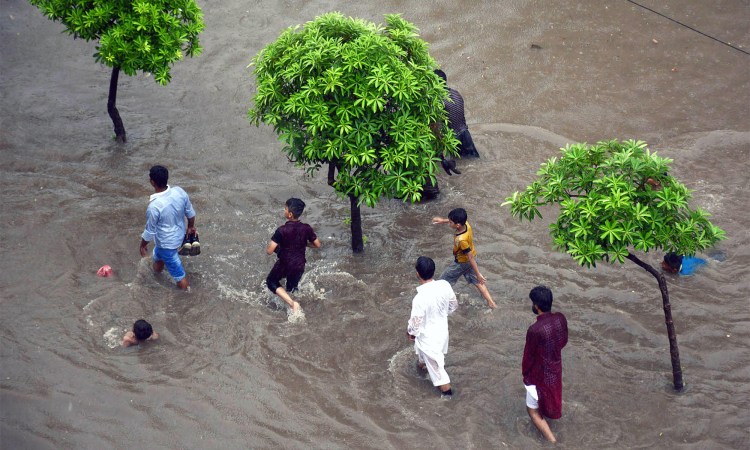
People wade through floodwater during the monsoon rains in Lahore. Pakistan is the fifth most climate-vulnerable country in the world and already experiencing weather extremes. Alamy

“I have witnessed people suffering and dying since I was a child,” the 18-year-old from Pakistan told me over the phone. Her hometown, located in the mountainous Hunza Valley, is surrounded by towering Himalayan glaciers that have been melting at an astonishing rate since before Baig was born. These climate-fueled melts have formed more than 3,000 glacial lakes, which now regularly break their banks and rush through surrounding villages, taking everything — and everyone — in their path with them. More than 7 million people in the region are at risk from these floods, according to UNDP.

Baig now lives in the southern city of Karachi, but friends and family still live in Hunza. Eventually, they’ll face a difficult choice: Move south willingly, or let the mountain do it for them. Even if the world meets its most ambitious climate targets, one-third of the Himalayan glaciers will melt by the end of the century, a 2019 International Centre for Integrated Mountain Development report found. And even the south won’t provide much respite; the heat and monsoon rains there are some of the most punishing in the world. The average daily temperature in Karachi this past week was 104 degrees*. Stepping outside “feels like you’re going to die.”

After 18 years of life in the world’s fifth-most climate-vulnerable nation, Baig sees her family’s predicament for what it is — not just tragedy but profound injustice. Pakistan contributes less than 1 percent of the world’s carbon emissions, and yet has been forced to bear the brunt of the world’s carbon crisis. “I’m angry about it. I’m sad about it. I don’t know how people have the audacity to prioritize money over humanity,” she said. And she can’t help but wonder if this would have happened if America—which has put more carbon into the atmosphere than any other nation—had felt these impacts first.

“I should be in university,” she said. But her life’s work is activism. “I have no choice,” she said, her voice breaking on the phone. Each day, Baig said, she’s fighting to secure the world’s future. And she wants to know, in this critical moment: are you doing anything to help secure hers?

In more than a dozen interviews over the last two weeks, activists from across the climate movement have issued a common call to arms: If you have ever thought of becoming more involved in the fight for climate justice, it’s time to stop thinking — and start doing.

“This is pretty much the biggest moment in climate politics in over a dozen years,” said Jamal Raad, the executive director of Evergreen Action, a progressive climate group focused on federal legislation. “If anyone was considering climate activism at any level, from contacting their member of Congress to volunteering with an organization to attending a protest, now’s the time.”

The scientific case for urgency has never been clearer. Last month, a draft of the latest UN IPCC report — the gold standard summation of modern climate science — was leaked to Agence France-Presse in hopes it might serve as a wake-up call before the next round of international climate talks in November. The report warned that the dire impacts of global heating were materializing faster than most scientists expected. Several “tipping points” — major, rapid changes in climate conditions that once reached are near-impossible to reverse — are now likely to come sooner rather than later, and many impacts are already locked in. Significant and rapid decarbonization can still prevent further pain and suffering, but the longer we wait, the worse things will become. “Life on Earth can recover from a drastic climate shift by evolving into new species and creating new ecosystems,” it warned. “Humans cannot.”

The costs of inaction are also already playing out in American life. More than 100 people were killed by the oppressive heat in Oregon last month, part of a larger record-breaking heat dome event that cumulatively caused more than 800 deaths across the Pacific Northwest. Farmers and ranchers are suffering under historic drought conditions in the West, where states are already limiting water supply while fighting out-of-control wildfiresRecord rainfall in Michigan is overwhelming Detroit’s aging sewage systems, part of the growing pandemic of poop-filled floodwaters. And on the East Coast, tropical storm Elsa signaled a powerful start to yet another destructive hurricane season, expected to be “above average” in activity for the sixth year in a row.

Fortunately, scientists are also more confident than ever about how to improve the situation. In May, the influential and notoriously conservative International Energy Administration (IEA) released a “bombshell” report outlining how the world could still achieve the Paris Agreement’s goal of preventing a 1.5°C rise in global average temperatures. “As the major source of global emissions, the energy sector holds the key to responding to the world’s climate challenge,” the report read. That sector must fully decarbonize by 2050, which requires not just a massive acceleration to renewables, electric vehicles, and energy-efficient building retrofits, but “a huge decline in the use of fossil fuels,” it said. “There is no need for investment in new fossil fuel supply in our net-zero pathway.”

The dire need to significantly decrease fossil fuel use, however, has still not sunk into the minds of the world’s biggest polluters. Take the United States. The Biden administration has taken some meaningful steps toward reducing carbon pollution, including suspending oil and gas leasing on federal land, canceling the Keystone XL pipeline, and reinstating several EPA climate regulations. But the US Justice Department is also currently defending at least three massive new fossil fuel projects — the Willow drilling project in Alaska, the Line 3 tar sands pipeline in Minnesota, and millions of acres of oil and gas leasing in Wyoming.

The massive infrastructure bill making its way through Congress is also a big opportunity to ensure meaningful climate investments in the energy sector — and may in fact be the last chance to pass meaningful climate legislation during Biden’s presidency. But the latest version was recently stripped of most of its significant climate provisions, including a Clean Energy Standard, tax credits for renewable energy and a new civilian climate corps.

The draft IPCC report places the blame for such inaction directly on the fossil fuel industry. Specifically, “think tanks, foundations, trade associations and other third-party groups that represent fossil fuel companies for promoting ‘contrarian’ science that misleads the public and disrupts efforts to implement climate policies needed to address the rising threats,” Politico reported. “Rhetoric on climate change and the undermining of science have contributed to misperceptions of the scientific consensus, uncertainty, unduly discounted risk and urgency, dissent and, most importantly, polarized public support delaying mitigation and adaptation action, particularly in the US.”

The fossil fuel industry is indeed fighting very hard to undo and prevent further climate action in the US. But others are helping them, too.GOP states are using taxpayer dollars to file lawsuits on their behalf. Advertising and marketing firms are creating sophisticated PR campaigns to help them convince the public they’re green. News outlets, many of which routinely ignore the climate crisis, are running those ad campaigns and making a profit. Social media companies like Facebook and Twitter are doing the same.

In other words, there’s a lot to do — and the IEA, which wrote the blueprint for effective action, says the key is people power. 

“A transition of the scale and speed described by the net-zero pathway cannot be achieved without sustained support and participation from citizens,” the blueprint said. That means more than just saying you’re for a healthy planet. It means taking a stand against the reason it’s sick.

The ability to participate in activism is a privilege. Many simply do not have the time, money or emotional bandwidth to take on a global cause. Climate activism also has an unfortunate history of regressive finger-wagging, blaming relatively powerless individuals for not making “better” environmental choices.

The climate activism that is needed today is not that type of activism — especially since, according to the IEA, individual “behavior” changes will only account for around four percent of cumulative emissions reductions in the path to net-zero. What’s needed today is sustained outrage at the powerful, by those with the time and resources to express it.

For 18-year-old Jaweria Baig in Pakistan, this means pushing for big changes at powerful corporations. 

Her latest campaign, launched with youth activists from climate-vulnerable counties across the world, targets Microsoft. She’s asking the tech giant to significantly decrease its emissions from corporate flights and use its own video conference platform “Teams” instead, as it did during the pandemic-induced lockdown. Microsoft is currently “one of the world’s top buyers” of flights, the Just Use Teams campaign says, its emissions comparable to some small countries.

Microsoft — which markets itself as a leader in the fight for climate justice — has so far declined to respond to Baig’s campaign. A spokesperson for the tech giant sent me only a link to its corporate sustainability and aviation plans in response to the group’s complaints. 

So in the meantime, Baig is asking for people power. She wants Microsoft staff to leave anonymous Glassdoor reviews telling their bosses to use Teams instead of airplanes and wants Microsoft customers to tweet their support.

If Microsoft’s flights don’t inspire you, though, there are plenty of other campaigns in need of voices, resources, signatures, or bodies. Is the bipartisan infrastructure deal your thing? Perhaps you’d like No Climate No Deal, a campaign launched by Evergreen Action and the youth-led Sunrise Movement. The campaign is pressuring Democratic members of Congress to reject any infrastructure legislation lacking “transformational investments in climate and environmental justice solutions.” They’ve already secured pledges from 14 Democratic Senators. They’re seeking support in the form of a petition, calls to Senators and tweets.

Or maybe you’re really pissed at advertising agencies, marketing firms and social media giants for helping promote fossil fuel company propaganda. If that’s the case, you might like Clean Creatives. Despite only launching less than a year ago, it has gotten 92 advertising agencies to sign a pledge against working with fossil fuel companies. It’s now spreading a petition to get social media platforms like Twitter and Facebook to ban fossil fuel ads. (Duncan Meisel, one of the group’s cofounders, said in an interview that the HEATED newsletter — which is where this post was first published — was part of the inspiration for forming the group. So maybe you could also start a newsletter, if that’s your thing.)

Indigenous groups also need help opposing fossil fuel projects across the country. Most have action hubs with a range of potential ways to help, like this one for the Line 3 pipeline. Environmental justice groups like We Act and the Climate Justice Alliance also need voices and resources. Perhaps Vice’s list of 12 environmental justice organizations to donate time and money to would be of interest.

If straight-up activism isn’t your thing, maybe you’d like to support climate science education or communications projects like Climate Central or the Alliance for Climate Education. If you believe in the power of journalism, maybe you want to support accountability projects like Floodlight and Drilled News or regional publications like Southerly Mag

Maybe you’re into culture and want to donate to a place like the Climate Museum. Maybe there’s a state climate policy you want to get involved with; a local office you want to run for; or an opportunity to make a difference at the company you already work at. Maybe you just want to troll fossil fuel companies all day.

The opportunities to get involved in the climate fight are endless, and that can be overwhelming. But the beauty of people power is that you don’t have to do everything. “You don’t need to quit your job and become a climate activist,” said Genevieve Gunther, founder of the media-focused group End Climate Silence. “With enough people, one little thing every week, even a tweet, can make a huge difference.”

Some people may read this and believe it is pointless. That we are too late. That none of it matters. The fossil fuel industry knows this is not true. Their fear of a determined, pissed-off public is why they promoted campaigns of climate denial and “individual responsibility” in the first place. They knew if people were unsure about the problem, they’d waste time fighting about it instead of mobilizing to fix it. They knew if people were confused about the solution, they’d waste time trying to change themselves and each other instead of the system.

However worse the climate crisis gets now depends on how quickly society transforms. And how quickly society transforms depends on how many people demand it. The most harmful lie being spread about climate change today is not that it is fake. It’s that nothing you can do can help save the world.

This story originally appeared in HEATEDEmily Atkin‘s weekly newsletter that is dedicated to original accountability reporting and analysis on the climate crisis. Subscribe here


The US sewage system is long overdue for an update — and here’s why you should never, ever jump in puddles after a rainstorm. Watch  Emily Atkin’s TEDxShinnecockHills Talk now: 

Melinda

Reference:

Emily Atkin is the author and founder of HEATED, a weekly newsletter dedicated to original accountability reporting and analysis on the climate crisis. Find her at http://www.emilyatkin.com and subscribe to the newsletter at heated.world. 

Celebrate Life · Future Planning · Health and Wellbeing · Men & Womens Health

Have Your Voice Heard By Voting, Primaries End Tomorrow

Your voice counts more than ever, we have to stop the division, chaos, and the governments decisions that only add to the budget and increase inflation.

When voting, please put aside what party you belong to or you voted for before, instead pick the best candidate based on what they can do to turn the governments view back to what is best for Americans.

Winners move to the National Election in November. We need to send a clear message of what we want in future leaders.

Melinda

Future Planning · Health and Wellbeing · Internet Good/Bad · Men & Womens Health

Join The Social Security Department For National Slam the Scam Day 3/5

On March 5, 2026, during National Consumer Protection Week, the Social Security Administration (SSA) and its Office of the Inspector General (OIG) will lead National Slam the Scam Day.
Take part by using tools from SSA and the Federal Trade Commission (FTC) to recognize imposters — including Social Security-related scams — and stop scammers from stealing your money and personal information.
Help Us Slam the Scam!
Learn about common tactics and how to recognize the signs. For example:An unexpected problem or offer of a prize or government benefit increase.
Pressure to act immediately.
Request for unusual payments like cryptocurrency, gift cards, gold bars, cash, or wire transfers, even with the promise of keeping your money safe.
Spread the word. Visit ssa.gov/scam for more information that could help you and others stay safe.
Report suspicious activity. Report Social Security-related issues to SSA OIG (oig.ssa.gov/report) and other concerns to the FTC (reportfraud.ftc.gov).
Report a Social Security Scam

scamFollow SSA OIG on FacebookX, and LinkedIn.
Repost #SlamtheScam content on social media to keep your friends and family safe.

We need all the help we can get from trusted sources to keep us from getting pulled into a scam and losing your money.

Melinda

Celebrate Life · Family · Fun · Future Planning · Health and Wellbeing · Men & Womens Health

Daily Writing Prompt

Daily writing prompt
What is the biggest challenge you will face in the next six months?

I have several challeges rolled into a big challenge. We closed on our new house a couple of weeks ago and my husband is working feverishly to get the upgrades and repairs completed so we can move in.

After we move in, it’s time to do upgrades on our house and sell it. We go back and forth on how much money we need to put into our house to sell it, I’ve stopped having the conversation. I know he has changed his mind because he is doing upgrades we had not planned on. YEAH!!!!!

Then there is timing of the contractors at the same time pushing hard because we would like to have our house on the market by May.

My health and hand conditions don’t allow me to pack as fast or as heavy as in the past. I have been in charge of picking out a few pieces of furniture we need and decorating. The last thing we are doing before moving in is having a maid service do a move-in clean so we can’t pack the house with boxes for them to deal with. I was there yesterday stuffing everything in cabinets to clear the counters.

The big unknows are what is next in my TMJ Therapy and if my right thumb needs surgery.

Not to mention all the money we are spending after being savers all these years. I have to remember, I don’t like this house and we have saved for 23 years to make my dream house a reality.

Not to worry, God has me in his palm.

Melinda

Looking for the Light

Celebrate Life · Family · Future Planning · Health and Wellbeing · Men & Womens Health

What Do First Time Home Renovators Wish They’d Known?

Home renovation is an exhilarating, frustrating, emotional, challenging, and often addictive process. The journey of seeing a house go from unloved wreck to home of your dreams is a feeling quite unlike anything else. Getting there can be quite the ride, but you may find that you love the end result so much you’re soon itching for your next big project. There are many reasons to renovate an older home. Generally speaking, you can get much more for your money and it may enable you to buy a bigger plot or in a nicer area that would normally have been just out of your budget. If the property is liveable, you can then give yourself some extra time to save up the money needed for construction work.

It can also prove a good investment – if you buy at the right price and are able to make the renovation budget work, and you don’t overdevelop the property when it comes time to sell hopefully you will have made a profit. It’s also a chance to design and develop a home exactly as you want it, specific to all your own needs and preferences. There are a lot of plus points to renovating your first home.

On the other hand, being prepared is everything, or first-time renovation projects can be quite a shock. The expense, noise, mess, unexpected problems, and missed deadlines can be enough to put some people off for life. So how do you get ready for renovation if you’ve never done it before? And what do more experienced home renovators wish they had known before their first project?

Photo by Rene Asmussen on Pexels.com

It may not be very romantic to hear, but everything within your project is driven by one factor: budget. There’s no denying the extensively redeveloping property is hugely expensive, so understanding from the outset exactly what your renovation budget is, and estimating realistically are vital. After all, no one wants to run out of cash part way through a building project. It’s quite likely you may have to scale back some of your expectations, especially on a first project, when you’re unlikely to have huge cash reserves to fall back on. Plan out the projects you want to do in phases, in order of how urgent they are.

You may have to wait a while between phases if you need to save up more money or secure a loan for the building works. Keep a close eye on the budget during the project and remember that the small things can be expensive and quickly add up. Decide in advance what features of the renovation are an absolute deal-breaker for you, and what you will be prepared to compromise on if you have to. Always create a contingency fund. It’s likely that there may be unforeseen issues that pop up during the course of the project – especially with older properties – that you haven’t budgeted for, so this margin could save you. You may find yourself having to pay for additional structural work, new electrics, or even things like local pest control. And if by some miracle, you don’t spend it, it can be spare cash to spend on the final decorative touches. Remember that it is possible to save money on a home renovation.

Learning to DIY some of the slightly easier bits yourself can be very cost-effective, so jobs such as painting, adding skirting, etc are all easy wins. Shop around for everything, from equipment hire to kitchens, to get the best price, and consider what preloved elements you could either reuse from the original property or source elsewhere.

Get The Layout Right

The key to a successful renovation is to find a new layout that works. You will either be working within the original floorplan of the house, but with the option to remove and add walls and reconfigure the space – or you may be extending your home to add on additional space. You’ll be surprised what the right layout change can do to transform both the feel and the usability of a property – for example, opening up a maze of little rooms to form a free-flowing, open-plan space. If you do want to keep smaller rooms, there are lots of tricks to make them appear more spacious, from the clever placement of mirrors to dressing the windows so that they look taller and choosing paint techniques that make the room look bigger. 

It’s a time in your life you will always remember, so be prepared, do your research and embrace the chaos – your ideal home is now within reach.

This is a collaborative post.

Melinda

Repost

Future Planning · Health and Wellbeing · Men & Womens Health · Saving Money

Take Advantage Of Savings Cards Where You Shop!

We’ve saved plenty of money without sacrificing quality, by joining company Saving Card’s like CVS ad Kroger or pay for a membership at a big box companies like Costo or Sam’s.

The free savings copay cards:

Amazon-Paid Membership-Prime Members get free shipping and returns on most items.

Starbucks

JCrew

Madewell

Petco

HEB

CVS

Kroger

Sam’s Club- paid membership

Costco-paid membership

Golf Pass

A few restaurant we frequent also have memberships to co-pay card’s free of charge. Your points add up based on what you buy and when you’ve reached a certain tier you see your coupons or more.

I have disover that many companies including include a savings program to dine there and even Starbucks offers a membership available. Keep you eye open where you shop or dine.

Amazon-Pharmacy

Wow, talk about saving money! Always ask the pharmacist what the price is to fill for 90 days. Most of mine at 90 days when possible. Take a look at Amazon Pharmacy and you may be surprised at how little you being you’re being charged. Take a look at see if the support the medication and insurance. The easiest way for me was to completely start over, had all scripts sent to Amazon and thus far, I’m impressed by how quik they turned the script and no issues to date.

We shop the Costo’s ad each week, they have the great deals, if it’s not in the catalog you have, keep your eye’s open for the next catalog. David makes a monthly trip to stock up.

When we don’t plan for the future, we can find ourselves there without any savings.

Save every penny saved and is put back into savings, will be surprised you how quickly the money adds up.

Costco is one membership that is worth every penny. If living alone, maybe buying in bulk isn’t the answer unless you visit with a free to see what they offer.

I’m working on a post on ways to save money on your medication cost, and learn where to go for help when medical insurance denies your claim. I have some great referrals to share.

Melinda

Celebrate Life · Climate Change/Global Warming · Future Planning · Health and Wellbeing · Men & Womens Health · Moving Forward

The planet clearly needs help, so what can you do? Demand change

If the true urgency of climate change was not clear to Americans before, it should be clear by now. The mind-bending heat, drought, fire and floods sweeping the US are both nightmares and wake-up calls to the reality fossil fuels created. For over 40 years, our most powerful people and institutions collectively ignored climate scientists, and now the deadly consequences have arrived at all our doorsteps.

People wade through floodwater during the monsoon rains in Lahore. Pakistan is the fifth most climate-vulnerable country in the world and already experiencing weather extremes. Alamy

“I have witnessed people suffering and dying since I was a child,” the 18-year-old from Pakistan told me over the phone. Her hometown, located in the mountainous Hunza Valley, is surrounded by towering Himalayan glaciers that have been melting at an astonishing rate since before Baig was born. These climate-fueled melts have formed more than 3,000 glacial lakes, which now regularly break their banks and rush through surrounding villages, taking everything — and everyone — in their path with them. More than 7 million people in the region are at risk from these floods, according to UNDP.

Baig now lives in the southern city of Karachi, but friends and family still live in Hunza. Eventually, they’ll face a difficult choice: Move south willingly, or let the mountain do it for them. Even if the world meets its most ambitious climate targets, one-third of the Himalayan glaciers will melt by the end of the century, a 2019 International Centre for Integrated Mountain Development report found. And even the south won’t provide much respite; the heat and monsoon rains there are some of the most punishing in the world. The average daily temperature in Karachi this past week was 104 degrees*. Stepping outside “feels like you’re going to die.”

After 18 years of life in the world’s fifth-most climate-vulnerable nation, Baig sees her family’s predicament for what it is — not just tragedy but profound injustice. Pakistan contributes less than 1 percent of the world’s carbon emissions, and yet has been forced to bear the brunt of the world’s carbon crisis. “I’m angry about it. I’m sad about it. I don’t know how people have the audacity to prioritize money over humanity,” she said. And she can’t help but wonder if this would have happened if America—which has put more carbon into the atmosphere than any other nation—had felt these impacts first.

“I should be in university,” she said. But her life’s work is activism. “I have no choice,” she said, her voice breaking on the phone. Each day, Baig said, she’s fighting to secure the world’s future. And she wants to know, in this critical moment: are you doing anything to help secure hers?

In more than a dozen interviews over the last two weeks, activists from across the climate movement have issued a common call to arms: If you have ever thought of becoming more involved in the fight for climate justice, it’s time to stop thinking — and start doing.

“This is pretty much the biggest moment in climate politics in over a dozen years,” said Jamal Raad, the executive director of Evergreen Action, a progressive climate group focused on federal legislation. “If anyone was considering climate activism at any level, from contacting their member of Congress to volunteering with an organization to attending a protest, now’s the time.”

The scientific case for urgency has never been clearer. Last month, a draft of the latest UN IPCC report — the gold standard summation of modern climate science — was leaked to Agence France-Presse in hopes it might serve as a wake-up call before the next round of international climate talks in November. The report warned that the dire impacts of global heating were materializing faster than most scientists expected. Several “tipping points” — major, rapid changes in climate conditions that once reached are near-impossible to reverse — are now likely to come sooner rather than later, and many impacts are already locked in. Significant and rapid decarbonization can still prevent further pain and suffering, but the longer we wait, the worse things will become. “Life on Earth can recover from a drastic climate shift by evolving into new species and creating new ecosystems,” it warned. “Humans cannot.”

The costs of inaction are also already playing out in American life. More than 100 people were killed by the oppressive heat in Oregon last month, part of a larger record-breaking heat dome event that cumulatively caused more than 800 deaths across the Pacific Northwest. Farmers and ranchers are suffering under historic drought conditions in the West, where states are already limiting water supply while fighting out-of-control wildfiresRecord rainfall in Michigan is overwhelming Detroit’s aging sewage systems, part of the growing pandemic of poop-filled floodwaters. And on the East Coast, tropical storm Elsa signaled a powerful start to yet another destructive hurricane season, expected to be “above average” in activity for the sixth year in a row.

Fortunately, scientists are also more confident than ever about how to improve the situation. In May, the influential and notoriously conservative International Energy Administration (IEA) released a “bombshell” report outlining how the world could still achieve the Paris Agreement’s goal of preventing a 1.5°C rise in global average temperatures. “As the major source of global emissions, the energy sector holds the key to responding to the world’s climate challenge,” the report read. That sector must fully decarbonize by 2050, which requires not just a massive acceleration to renewables, electric vehicles, and energy-efficient building retrofits, but “a huge decline in the use of fossil fuels,” it said. “There is no need for investment in new fossil fuel supply in our net-zero pathway.”

The dire need to significantly decrease fossil fuel use, however, has still not sunk into the minds of the world’s biggest polluters. Take the United States. The Biden administration has taken some meaningful steps toward reducing carbon pollution, including suspending oil and gas leasing on federal land, canceling the Keystone XL pipeline, and reinstating several EPA climate regulations. But the US Justice Department is also currently defending at least three massive new fossil fuel projects — the Willow drilling project in Alaska, the Line 3 tar sands pipeline in Minnesota, and millions of acres of oil and gas leasing in Wyoming.

The massive infrastructure bill making its way through Congress is also a big opportunity to ensure meaningful climate investments in the energy sector — and may in fact be the last chance to pass meaningful climate legislation during Biden’s presidency. But the latest version was recently stripped of most of its significant climate provisions, including a Clean Energy Standard, tax credits for renewable energy and a new civilian climate corps.

The draft IPCC report places the blame for such inaction directly on the fossil fuel industry. Specifically, “think tanks, foundations, trade associations and other third-party groups that represent fossil fuel companies for promoting ‘contrarian’ science that misleads the public and disrupts efforts to implement climate policies needed to address the rising threats,” Politico reported. “Rhetoric on climate change and the undermining of science have contributed to misperceptions of the scientific consensus, uncertainty, unduly discounted risk and urgency, dissent and, most importantly, polarized public support delaying mitigation and adaptation action, particularly in the US.”

The fossil fuel industry is indeed fighting very hard to undo and prevent further climate action in the US. But others are helping them, too.GOP states are using taxpayer dollars to file lawsuits on their behalf. Advertising and marketing firms are creating sophisticated PR campaigns to help them convince the public they’re green. News outlets, many of which routinely ignore the climate crisis, are running those ad campaigns and making a profit. Social media companies like Facebook and Twitter are doing the same.

In other words, there’s a lot to do — and the IEA, which wrote the blueprint for effective action, says the key is people power. 

“A transition of the scale and speed described by the net-zero pathway cannot be achieved without sustained support and participation from citizens,” the blueprint said. That means more than just saying you’re for a healthy planet. It means taking a stand against the reason it’s sick.

The ability to participate in activism is a privilege. Many simply do not have the time, money or emotional bandwidth to take on a global cause. Climate activism also has an unfortunate history of regressive finger-wagging, blaming relatively powerless individuals for not making “better” environmental choices.

The climate activism that is needed today is not that type of activism — especially since, according to the IEA, individual “behavior” changes will only account for around four percent of cumulative emissions reductions in the path to net-zero. What’s needed today is sustained outrage at the powerful, by those with the time and resources to express it.

For 18-year-old Jaweria Baig in Pakistan, this means pushing for big changes at powerful corporations. 

Her latest campaign, launched with youth activists from climate-vulnerable counties across the world, targets Microsoft. She’s asking the tech giant to significantly decrease its emissions from corporate flights and use its own video conference platform “Teams” instead, as it did during the pandemic-induced lockdown. Microsoft is currently “one of the world’s top buyers” of flights, the Just Use Teams campaign says, its emissions comparable to some small countries.

Microsoft — which markets itself as a leader in the fight for climate justice — has so far declined to respond to Baig’s campaign. A spokesperson for the tech giant sent me only a link to its corporate sustainability and aviation plans in response to the group’s complaints. 

So in the meantime, Baig is asking for people power. She wants Microsoft staff to leave anonymous Glassdoor reviews telling their bosses to use Teams instead of airplanes and wants Microsoft customers to tweet their support.

If Microsoft’s flights don’t inspire you, though, there are plenty of other campaigns in need of voices, resources, signatures, or bodies. Is the bipartisan infrastructure deal your thing? Perhaps you’d like No Climate No Deal, a campaign launched by Evergreen Action and the youth-led Sunrise Movement. The campaign is pressuring Democratic members of Congress to reject any infrastructure legislation lacking “transformational investments in climate and environmental justice solutions.” They’ve already secured pledges from 14 Democratic Senators. They’re seeking support in the form of a petition, calls to Senators and tweets.

Or maybe you’re really pissed at advertising agencies, marketing firms and social media giants for helping promote fossil fuel company propaganda. If that’s the case, you might like Clean Creatives. Despite only launching less than a year ago, it has gotten 92 advertising agencies to sign a pledge against working with fossil fuel companies. It’s now spreading a petition to get social media platforms like Twitter and Facebook to ban fossil fuel ads. (Duncan Meisel, one of the group’s cofounders, said in an interview that the HEATED newsletter — which is where this post was first published — was part of the inspiration for forming the group. So maybe you could also start a newsletter, if that’s your thing.)

Indigenous groups also need help opposing fossil fuel projects across the country. Most have action hubs with a range of potential ways to help, like this one for the Line 3 pipeline. Environmental justice groups like We Act and the Climate Justice Alliance also need voices and resources. Perhaps Vice’s list of 12 environmental justice organizations to donate time and money to would be of interest.

If straight-up activism isn’t your thing, maybe you’d like to support climate science education or communications projects like Climate Central or the Alliance for Climate Education. If you believe in the power of journalism, maybe you want to support accountability projects like Floodlight and Drilled News or regional publications like Southerly Mag

Maybe you’re into culture and want to donate to a place like the Climate Museum. Maybe there’s a state climate policy you want to get involved with; a local office you want to run for; or an opportunity to make a difference at the company you already work at. Maybe you just want to troll fossil fuel companies all day.

The opportunities to get involved in the climate fight are endless, and that can be overwhelming. But the beauty of people power is that you don’t have to do everything. “You don’t need to quit your job and become a climate activist,” said Genevieve Gunther, founder of the media-focused group End Climate Silence. “With enough people, one little thing every week, even a tweet, can make a huge difference.”

Some people may read this and believe it is pointless. That we are too late. That none of it matters. The fossil fuel industry knows this is not true. Their fear of a determined, pissed-off public is why they promoted campaigns of climate denial and “individual responsibility” in the first place. They knew if people were unsure about the problem, they’d waste time fighting about it instead of mobilizing to fix it. They knew if people were confused about the solution, they’d waste time trying to change themselves and each other instead of the system.

However worse the climate crisis gets now depends on how quickly society transforms. And how quickly society transforms depends on how many people demand it. The most harmful lie being spread about climate change today is not that it is fake. It’s that nothing you can do can help save the world.

This story originally appeared in HEATEDEmily Atkin‘s weekly newsletter that is dedicated to original accountability reporting and analysis on the climate crisis. Subscribe here


The US sewage system is long overdue for an update — and here’s why you should never, ever jump in puddles after a rainstorm. Watch  Emily Atkin’s TEDxShinnecockHills Talk now: 

Melinda

Reference:

Emily Atkin is the author and founder of HEATED, a weekly newsletter dedicated to original accountability reporting and analysis on the climate crisis. Find her at http://www.emilyatkin.com and subscribe to the newsletter at heated.world. 

Financial · Future Planning · Health and Wellbeing · Men & Womens Health

Stop Your Money Worries From Overwhelming You

Money can be one of the worst things for making you worry; indeed, a lot of people can feel like their mental wellbeing has been effectively ruined over their financial insecurity. It’s a very serious thing – almost half of the people currently in debt also report having mental health issues. 

If that also sounds like you, being able to take more control over your finances is key for achieving greater peace and stability in your lifestyle. Of course, learning to live with and/or manage your money worries is only part of the solution, but it’s essential to do. But don’t worry, you don’t have to take this challenge on alone – here are some tips for stopping your money worries from overwhelming you. 

Pexels Image – CC0 Licence

Stay Aware

Don’t ever let your finances go unchecked; face your fears and confront the problem head-on by keeping up with how your bank account, credit scores, and any other financial platforms you’re a part of our functioning. 

Because when you’re aware, you’re in control. You’re able to face the problem, and prevent it from becoming a bigger problem before it ever gets the chance to. And you can make this easy for yourself. For example, if you’ve got car insurance to pay for, be sure to make it easy to check in with by using something like a direct auto insurance account to keep up to date straight from your phone. 

Be Realistic

The next step is to be realistic, which can be a hard thing when you’re finding it very hard to face the reality of your finances. However, when you’re realistic, you’ll be able to put together a workable budget, that allows you to take care of yourself and pay for any debt and other financial obligations you have. 

Start with your income, and then take away your expenses, both fixed and variable. If this all fluctuates, use a monthly average. Whatever you’ve got leftover is what you can put towards those credit card bills, and use to bump up your credit score bit by bit. Even just a couple of regular debt payments can turn it green again. 

Don’t Let Yourself Be Alone

Finally, if you’re someone who has serious money worries, don’t let yourself be alone in facing them. Talk to friends and family about them, or work with a professional such as an advisor, who could help you to see the light in your struggles. 

Most of all, make sure you feel supported, and like you’ve got some strength behind you. Even if you need someone to be there with you when you check your bank account for the first time in months, ask someone to come round and sit with you. It could really change how you see your finances. 

Money worries can be overwhelming, at their worst. Be sure to reach out for help, and always try to face your fears, as you have the power to take control of a problem like this.

This is a collaborative post.

Melinda

Repost