


Melinda

Melinda
The National Park Service (NPS) has issued a new warning for travelers visiting public lands in the southwest United States.
Officials at the Glen Canyon National Recreation Area, which includes areas between the Utah and Arizona border, have reported quicksand near the shoreline and in drainages throughout the park.
Encompassing more than 1.25 million acres, Glen Canyon offers opportunities for visitors to explore and enjoy Lake Powell and the surrounding lands, stretching from Northern Arizona through Southern Utah. The park features rugged, high-desert terrain with a vast landscape of buttes, mesas, canyons and cliffs.
But hidden underneath the surface is the ever-present danger of quicksand.
Quicksand is a mixture of sand and water or sand and air that appears solid, but becomes unstable when disturbed, according to Scientific America. As opposed to regular sand, quicksand is like a house of cards in that the space between the cards is greater than the space occupied by the cards. This results in the sand collapsing, or becoming “quick,” when force overcomes the friction holding the grains together.
“It can appear dry and firm on the surface but may suddenly give way,” the NPS alert says. “Recognize unstable, shifting or unusually soft ground, and use caution when entering through these areas.”
The NPS says quicksand can usually be identified by spotting wet, loose or unusually smooth ground. When stepped near, the ground may “move, ripple, or subtly vibrate, indicating insufficient support below the surface.”
If a visitor does encounter quicksand, the NPS recommends they stay calm and avoid sudden movements as panicked motion may cause the body to sink deeper. Instead, lean back to spread out body weight and shift into a reclined or sitting-back position to help the body float.
Melinda
Source:
When my children were at their sickest with Lyme and other tick-borne diseases, I was pushed into a level of caregiving I never expected. It felt as if we had been swept into a storm without warning, the sky suddenly dark and the path forward impossible to see.
I searched constantly for direction, for steady ground, for someone who could help us navigate the uncertainty. Instead, we were often left to make critical decisions alone. What I needed most was clarity—a compass to help chart a path forward.
It was perhaps no surprise, then, that I felt an immediate connection when I met siblings Carter and Payton Bradsky in Washington, DC, last May, while advocating on Capitol Hill with the Center for Lyme Action.
Between meetings, they shared that they were building a digital health platform designed specifically for people living with complex tick-borne illness. Their vision resonated with me instantly. They understood this journey because they had lived it.
Years earlier, the Bradskys had watched their once-vibrant mother decline from an illness no one could explain. This woman who had once filled their home with energy and warmth became increasingly exhausted, and even simple daily activities grew more difficult. She was eventually diagnosed with Lyme disease, but only after the family endured a long search for answers.
Her diagnosis also brought a deeper awareness within the family about the many ways tick-borne illness can present. Yet the family’s journey with illness was far from over.
Carter developed neurological and psychological symptoms, including brain fog, anxiety, and dissociation, that disrupted both his academic focus and athletic pursuits. Ultimately, his illness derailed what might have been a promising Division I basketball career. He was later diagnosed with Lyme disease and multiple co-infections.
Payton’s path to diagnosis was different. During her senior year of college, she developed severe headaches and fatigue, which she attributed to academic stress. The seriousness of her condition became clear only after she suffered a seizure and awoke with no memory of the event. She was diagnosed with epilepsy and began anti-seizure medication.
When a second seizure occurred despite treatment, the family’s expanding awareness of Lyme disease prompted deeper investigation. Payton was ultimately diagnosed with Lyme disease along with multiple tick-borne co-infections.
Over time, the family had collectively consulted more than 40 physicians and spent over $300,000 seeking answers and treatment.
Although their symptoms varied, their experiences revealed the same truth: tick-borne illness rarely follows a predictable course. The knowledge their family gained through their mother’s persistent search for answers helped shorten their own paths to diagnosis and deepened their understanding of this complex disease.
As they researched tick-borne illness, the Bradskys discovered an expansive Lyme community they had never known existed. What once felt like uncharted territory gradually revealed a network of physicians, researchers, advocacy organizations, and patient resources devoted to helping individuals navigate complex disease.
The more they learned, the clearer it became that access to reliable information can profoundly shape a patient’s care journey. Guided by these insights, and informed by their educational and professional backgrounds, Carter and Payton committed themselves to making that knowledge more accessible.
After years of development and collaboration with patients and Lyme-literate clinicians, the brother and sister launched LymeLess Health. It’s a digital platform created to bring clarity and organization to the often overwhelming realities of complex care.
LymeLess Health helps patients manage evolving treatment plans, multiple therapies, and the unpredictable nature of complex illness. Available as a mobile app through the App Store and Google Play, it supports patients in tracking their health, recognizing patterns, and preparing for more productive conversations with their clinicians. It is not intended to replace medical care but rather to complement it.
At the center of the LymeLess platform is Ella, an AI-powered health companion created to help patients living with Lyme and associated conditions. Unlike general health apps, Ella draws from Lyme-literate resources and is designed to support the realities of complex care, where treatment plans often require ongoing adjustment.
Ella is designed to support patients in several important ways:
Tracking: Log symptoms, medications, supplements, and therapies in one place.
Care reminders: Customizable alerts help patients stay organized with treatment schedules.
Pattern recognition: Compiles health data over time to identify trends and treatment responses.
Visit preparation: Generates concise summaries for you to take to your doctor appointments.
Health timeline: Organizes medical records, labs, rash images, and appointment notes in one secure location, enabling Ella to generate summaries for provider visits and insurance requests.
Care navigation: Access educational resources and locate Lyme-literate providers.
Adaptive support: Adjusts alongside changing care plans without requiring patients to rebuild their records.
Through a conversational interface, Ella helps patients build a personalized record of their health, enabling them to better understand their condition and monitor progress over time.
The Bradsky siblings set out to place Lyme-literate knowledge directly into the hands of patients. Their goal is simple yet powerful: to help patients navigate illness with greater confidence, clarity, and support.
For patients and caregivers living with the uncertainty of tick-borne disease, tools that provide support and structure can feel like a long-awaited point of direction. While no platform can calm the storm entirely, having guidance along the way can make the path forward easier to see.
To learn more, visit LymeLess.com or download the mobile app from the App Store or Google Play. The first month is offered at no cost, giving new users time to explore the platform and see if it’s right for them.
Melida
Source:
https://www.lymedisease.org/meet-ella-ai-assistant-for-lyme/
It seems like there are new myths about Marijuana popping up all the time. The reality is that many of these myths have been disproven long ago. However, they persist in today’s society for one reason or another. Some people believe them because they haven’t done any research on their own. In contrast, others may do so because it benefits them to keep these misconceptions alive. We’ll be giving you the facts about some common myths associated with Marijuana and dispel them once and for all!
You can find this myth in many pro-marijuana campaigns across the world. The truth is that it’s entirely possible to get addicted to Marijuana, just like any other substance out there. Of course, it will not happen overnight, and you shouldn’t be able to do so by smoking one joint either! When people argue about whether or not marijuana addiction exists, they are usually talking about cannabis dependency. This type of dependency occurs when someone smokes on a daily basis for an extended period of time, usually several months. It slowly becomes harder and harder for them to function normally without getting high first.
This doesn’t mean that these individuals have no control over their actions, though; they simply use weed as a crutch because they’re too anxious or uncomfortable without it. The next time you’re around someone who is high, really think about whether or not they look like they need it to function normally.
One of the most common things heard about weed is that it’s safe and harmless to use. This couldn’t be further from the truth! We’ll touch on some key points here, but if you would like more information, then research Marijuana safety tips.
There are many negative health effects associated with smoking marijuana regularly or excessively. For one thing, long-term smokers usually end up getting respiratory problems such as bronchitis because they inhale so much tar and ash into their lungs. If this doesn’t sound healthy to you already, keep in mind that Marijuana contains 50% more carcinogenic hydrocarbons than regular cigarettes do too! There have also been studies showing an increased risk of lung cancer among people who smoke Marijuana regularly.
Getting your Marijuana from the best dispensary possible is an additional factor to consider as there are legislative quality controls they need to follow, ensuring you get a pure and clean product.
This is a controversial point, but it has been proven that Marijuana does not cause people to try out harder drugs. Sure there are cases where this happened due to the influence of others, but overall it would be an unfair label to place on Marijuana.
The problem here lies in the fact that some unscrupulous dealers will sell their customers harder drugs when they come back. It’s not because the Marijuana itself made them do it, but you can’t deny that Marijuana is an easy way to get someone hooked on something else! There are studies showing that people who already have a tendency towards addiction may try harder substances if given access to an alternative like Marijuana in most cases.
The biggest argument for legalizing Marijuana is its medicinal properties. There are many positive uses for Marijuana, both as an analgesic and to help with the symptoms of certain diseases. It makes sense that people who could benefit from this would want access to it without having to wait until the laws change in their state or country!
There has been a wealth of research done in the past several years that have shown Marijuana’s amazing medical value. The US government even holds a patent on Cannabis for its antioxidant and neuroprotectant abilities.
In conclusion, there are many common myths when it comes to marijuana use that simply isn’t true at all! This is especially important nowadays when more and more states are legalizing the drug either recreationally or medically.
This is a collaborative post.
Melinda
Repost from 2021
The CDC is encouraging Americans traveling abroad to make sure they are up to date on their polio vaccines
A travel alert has been issued warning Americans to take precautions against polio, which is spreading in Europe and elsewhere across the globe.
The U.S. Centers for Disease Control issued a level 2 alert, cautioning travelers to “practice enhanced precautions” before visiting 32 countries. The agency is advising people to make sure they’re up to date on their polio vaccines, adding that people who plan to travel to the listed countries are eligible for a single-dose booster of the vaccine.
The countries include European travel destinations like Spain, Finland, Germany, and Poland — as well as the U.K.
As the CDC explains, polio‚ which is caused by the extremely contagious poliovirus, is “a crippling and potentially deadly disease that affects the nervous system.” It lives in the feces of an infected person, but can also be spread via eating or drinking food that’s been contaminated.
Most people who contract polio do not exhibit symptoms — or if they do, they experience flu-like fevers, tiredness, nausea, headache, nasal congestion, and sore throat.
:max_bytes(150000):strip_icc():focal(958x622:960x624)/polio-vaccine-030426-6ae35fbe700b437f9771c2206db992da.jpg)
In some cases, polio can lead to paralysis, as it did with U.S. President Franklin Delano Roosevelt, who needed a wheelchair after he contracted the disease.
The CDC says that “vaccination has helped eliminate wild poliovirus in the United States.” It’s a four-dose series of shots given throughout childhood.
The full list of countries where polio is spreading includes Afghanistan, Algeria, Angola, Benin, Burkina Faso, Cameroon, Central African Republic, Chad, Côte d’Ivoire, Democratic Republic of the Congo, Djibouti, Ethiopia, Finland, Gaza, Germany, Ghana, Guinea, Israel, Niger, Nigeria, Pakistan, Papua New Guinea, Poland, Senegal, Somalia, South Sudan, Spain, Sudan, Tanzania, United Kingdom, Yemen, and Zimbabwe.
Melinda
Reference:
https://people.com/travel-advisory-issued-warning-of-spread-of-polio-11919347
Thank you for joining me for this week’s Friday Quote.

Melinda
From Olympic podiums to the Super Bowl, these athletes have used their platforms to show that mental health challenges can affect anyone.
Elite athletes endure relentless pressure to perform, often facing fierce public scrutiny in a culture that has historically discouraged seeking help. From an early age, these competitors are conditioned to be invincible — physically superior and mentally bulletproof. Yet, physical strength offers no immunity to clinical depression, anxiety, or bipolar disorder. Performance anxiety, the isolation of injury, and the weight of expectation can take a serious psychological toll.
Fortunately, the tide is turning. A growing number of sporting legends are shattering the silence, proving that mental well-being is just as critical as physical conditioning. By sharing their stories, these athletes are dismantling stigma and redefining what it means to be strong.
British heavyweight boxing champion Tyson Fury, known as “The Gypsy King,” has spoken publicly about living with bipolar disorder. Despite dethroning Wladimir Klitschko in 2015, Fury spiraled into a dark depression that included substance use and suicidal ideation, famously revealing that he nearly drove his Ferrari off a bridge during his lowest moment. Diagnosed with bipolar in 2017, he credits his recovery to his Christian faith, family, and a disciplined return to training. With a scheduled return to the ring on April 11, 2026, against Arslanbek Makhmudov, Fury continues to act as a powerful voice for destigmatizing mental illness. “I have flaws, and I have many of them,” he once said. “But I’m an ambassador for mental health.”
While celebrated as a four-time Super Bowl champion and NFL Hall of Famer, Terry Bradshawis equally prolific as a broadcaster, actor, and musician. However, behind the public persona, he struggled silently until a diagnosis of clinical depression in 1999. Following years of anxiety attacks, intense anger, and alcohol abuse, Bradshaw found stability through medication, therapy, and faith. He remains unapologetic about his journey. “You know what, I’m not ashamed of who I am,” he told esperanza magazine. “It’s the way I was made. I just got some issues here, and I dealt with them. And I’m proud of it.”
Widely considered the greatest gymnast of all time, Simone Biles changed the definition of strength when she withdrew from the Tokyo Olympics to protect her mind and body from “the twisties ” — a dangerous mental block. She prioritized her safety over gold medals, sparking a global conversation about the pressure placed on elite athletes. Biles returned to the world stage at the 2024 Paris Olympics with a renewed perspective, proving that taking a step back is often the bravest move of all. “I have to focus on my mental health and not jeopardize my health and well-being,” she said. “It’s okay not to be okay.”
Originally known as one of the greatest professional wrestlers of all time, Dwayne “The Rock” Johnson has successfully transitioned into a global superstar on the big screen. Recently, he drew attention for a dramatic turn in the A24 biopic The Smashing Machine (2025), portraying MMA legend Mark Kerr’s battle with addiction. Despite his massive success, Johnson has been remarkably open about his own history of major depressive disorder, using his platform to encourage men to seek support. He emphasizes that psychological well-being is as vital as physical strength. A dedicated father and philanthropist, Johnson actively contributes to social causes ranging from animal welfare to natural disaster relief.
As the most decorated Olympian in history, swimmer Michael Phelps has been candid about the price of perfection. He revealed to esperanza magazine that he spiraled into deep depression, anxiety, and substance use even while at the peak of his career. “With athletes or celebrities, people think they’re so much different than everybody else,” he said. “But I’ve gone through the same troubles.” In December 2025, Sports Illustrated honored Phelps with the Muhammad Ali Legacy Award for his enduring commitment to mental health advocacy.
Retired WWE superstar and author A.J. Mendez (formerly known as AJ Lee) is dedicated to combating the stigma surrounding bipolar disorder. Now a New York Times best-selling author and executive producer of WOW (Women of Wrestling), Mendez uses her platform to discuss her bipolar diagnosis. In her memoir, Crazy Is My Superpower, she detailed her childhood struggles and the cultural pressure to hide weakness, specifically challenging the “machismo” often found in the Puerto Rican community. Although she retired in 2015, Mendez made headlines with a surprise return to WWE SmackDown in late 2025.
As a four-time Grand Slam champion, tennis superstar Naomi Osaka made headlines not just for her dominance on the court, but for her refusal to compromise her peace. In 2021, she withdrew from the French Open to prioritize her mental health, revealing a long battle with depression and anxiety that made mandatory press conferences unbearable. Her decision forced the sports world to re-evaluate how it treats athletes. After taking time away to become a mother, Osaka returned to tennis with a mission to advocate for player well-being. “I felt like it was important to stand up for myself,” she said. “And I hope that my actions encourage others to do the same.”
For years, NBA champion Kevin Love struggled in silence, viewing his challenges as a weakness he had to hide. That changed in 2017 when he experienced a panic attack during a game, leaving the court unable to catch his breath. He later penned a groundbreaking essay, “Everyone Is Going Through Something,” which dismantled the stigma of vulnerability in men’s sports. Love founded the Kevin Love Fund to provide mental health education and support. “Nothing haunts us like the things we don’t say,” he wrote. “So if you’re reading this and you’re having a hard time, you’re not alone.”
WNBA legend and Olympic gold medalist Chamique Holdsclaw was initially treated for major depression, but later re-diagnosed with bipolar disorder after antidepressants triggered a manic episode and impulsive spending sprees. She has since turned her struggles into advocacy. “I want others to understand it can get better. I went through a period when I had no hope, when I didn’t want to be here,” she revealed to bp Magazine. “I hope they see my journey and get inspired to keep moving forward.” She remains an active speaker, recently headlining the 2025 MLK Convocation to discuss the intersection of civil rights and mental wellness.
With 10 international wins and a successful second career as a commentator, former pro golfer David Feherty has lived a full life alongside the challenges of attention deficit hyperactivity disorder (ADHD) and bipolar depression. He views his condition with a unique perspective. “You know, I tell people I don’t suffer from bipolar disorder, I live with it,” he told Rolling Stone. He even credits it for his broadcasting success: “I see from a different side of the street than most people. And I think one of the reasons I got hired to do commentary is the ability to describe something differently.”
A seven-time Olympic medalist and former world record holder, swimmer Amanda Beardfaced battles out of the pool that included bulimia, drug use, major depressive disorder, and self-harm. “Some days, it was hard to just get out of bed,” she told esperanza magazine. Her life turned around when she embraced a combination of medication and therapy. Beard has since transitioned into mentorship, returning to the University of Arizona as an assistant coach in 2023.
Former NHL goaltender Clint Malarchuk is best known for surviving a devastating, life-threatening injury on the ice in 1989. Following that incident, he faced a different battle: post-traumatic stress disorder (PTSD), alcoholism, and obsessive-compulsive disorder (OCD). After pulling himself out of a deep depression through medication, talk therapy, and meditation, he found a new calling. “I realize now that playing hockey gave me the platform for my real purpose,” Malarchuk said. “To raise awareness of mental illness, and to help reduce the stigma surrounding depression and anxiety so that no one has to feel alone.”
As an Olympic silver medalist and former World Champion, American weightlifter Kate Nye (Vibert) appeared to have it all — until a diagnosis of bipolar disorder in 2019 revealed that her periods of intense productivity were actually symptoms of hypomania. After realizing that her ability to train on nearly zero sleep was a warning sign rather than a superpower, she sought help to stabilize her mood. She has since become a vocal advocate for athletes, proving that medication does not dull a competitor’s edge. “I felt weak for thinking I needed help,” she admitted to BarBend. “But honestly, it has taken a weight off my shoulders knowing what I have to do to feel like a functioning human being.”
Olympic middle-distance runner Suzy Favor Hamilton experienced intense hypersexuality linked to bipolar disorder, as well as acute peripartum depression. She has courageously shared how her condition drove her toward risky behaviors, using her story to demystify the often-misunderstood symptoms of mania. “In my case, my bipolar was driving me toward sex. It could have just as easily been driving me toward drugs and alcohol,” she told bp Magazine. While she has since stepped back from the public eye to live a private life in California, her candor remains a powerful testimony that diagnosis and treatment can provide a path forward.
As the first five-time Super Bowl champion and a Pro Football Hall of Fame inductee, Charles Haley became an NFL icon. However, his post-NFL life was rocky until a 2002 diagnosis of bipolar disorder helped explain years of struggle, including a decade-long battle with substance use. Haley eventually found balance through medication, therapy, and a men’s prayer group. Today, he dedicates his time to charity work and mentoring the next generation of football players.
I’m so proud of each athlete for sharing their story because when we share the stigma lessons.
Melinda
Reference:
If the true urgency of climate change was not clear to Americans before, it should be clear by now. The mind-bending heat, drought, fire and floods sweeping the US are both nightmares and wake-up calls to the reality fossil fuels created. For over 40 years, our most powerful people and institutions collectively ignored climate scientists, and now the deadly consequences have arrived at all our doorsteps.

People wade through floodwater during the monsoon rains in Lahore. Pakistan is the fifth most climate-vulnerable country in the world and already experiencing weather extremes. Alamy
“I have witnessed people suffering and dying since I was a child,” the 18-year-old from Pakistan told me over the phone. Her hometown, located in the mountainous Hunza Valley, is surrounded by towering Himalayan glaciers that have been melting at an astonishing rate since before Baig was born. These climate-fueled melts have formed more than 3,000 glacial lakes, which now regularly break their banks and rush through surrounding villages, taking everything — and everyone — in their path with them. More than 7 million people in the region are at risk from these floods, according to UNDP.
Baig now lives in the southern city of Karachi, but friends and family still live in Hunza. Eventually, they’ll face a difficult choice: Move south willingly, or let the mountain do it for them. Even if the world meets its most ambitious climate targets, one-third of the Himalayan glaciers will melt by the end of the century, a 2019 International Centre for Integrated Mountain Development report found. And even the south won’t provide much respite; the heat and monsoon rains there are some of the most punishing in the world. The average daily temperature in Karachi this past week was 104 degrees*. Stepping outside “feels like you’re going to die.”
After 18 years of life in the world’s fifth-most climate-vulnerable nation, Baig sees her family’s predicament for what it is — not just tragedy but profound injustice. Pakistan contributes less than 1 percent of the world’s carbon emissions, and yet has been forced to bear the brunt of the world’s carbon crisis. “I’m angry about it. I’m sad about it. I don’t know how people have the audacity to prioritize money over humanity,” she said. And she can’t help but wonder if this would have happened if America—which has put more carbon into the atmosphere than any other nation—had felt these impacts first.
“I should be in university,” she said. But her life’s work is activism. “I have no choice,” she said, her voice breaking on the phone. Each day, Baig said, she’s fighting to secure the world’s future. And she wants to know, in this critical moment: are you doing anything to help secure hers?
In more than a dozen interviews over the last two weeks, activists from across the climate movement have issued a common call to arms: If you have ever thought of becoming more involved in the fight for climate justice, it’s time to stop thinking — and start doing.
“This is pretty much the biggest moment in climate politics in over a dozen years,” said Jamal Raad, the executive director of Evergreen Action, a progressive climate group focused on federal legislation. “If anyone was considering climate activism at any level, from contacting their member of Congress to volunteering with an organization to attending a protest, now’s the time.”
The scientific case for urgency has never been clearer. Last month, a draft of the latest UN IPCC report — the gold standard summation of modern climate science — was leaked to Agence France-Presse in hopes it might serve as a wake-up call before the next round of international climate talks in November. The report warned that the dire impacts of global heating were materializing faster than most scientists expected. Several “tipping points” — major, rapid changes in climate conditions that once reached are near-impossible to reverse — are now likely to come sooner rather than later, and many impacts are already locked in. Significant and rapid decarbonization can still prevent further pain and suffering, but the longer we wait, the worse things will become. “Life on Earth can recover from a drastic climate shift by evolving into new species and creating new ecosystems,” it warned. “Humans cannot.”
The costs of inaction are also already playing out in American life. More than 100 people were killed by the oppressive heat in Oregon last month, part of a larger record-breaking heat dome event that cumulatively caused more than 800 deaths across the Pacific Northwest. Farmers and ranchers are suffering under historic drought conditions in the West, where states are already limiting water supply while fighting out-of-control wildfires. Record rainfall in Michigan is overwhelming Detroit’s aging sewage systems, part of the growing pandemic of poop-filled floodwaters. And on the East Coast, tropical storm Elsa signaled a powerful start to yet another destructive hurricane season, expected to be “above average” in activity for the sixth year in a row.
Fortunately, scientists are also more confident than ever about how to improve the situation. In May, the influential and notoriously conservative International Energy Administration (IEA) released a “bombshell” report outlining how the world could still achieve the Paris Agreement’s goal of preventing a 1.5°C rise in global average temperatures. “As the major source of global emissions, the energy sector holds the key to responding to the world’s climate challenge,” the report read. That sector must fully decarbonize by 2050, which requires not just a massive acceleration to renewables, electric vehicles, and energy-efficient building retrofits, but “a huge decline in the use of fossil fuels,” it said. “There is no need for investment in new fossil fuel supply in our net-zero pathway.”
The dire need to significantly decrease fossil fuel use, however, has still not sunk into the minds of the world’s biggest polluters. Take the United States. The Biden administration has taken some meaningful steps toward reducing carbon pollution, including suspending oil and gas leasing on federal land, canceling the Keystone XL pipeline, and reinstating several EPA climate regulations. But the US Justice Department is also currently defending at least three massive new fossil fuel projects — the Willow drilling project in Alaska, the Line 3 tar sands pipeline in Minnesota, and millions of acres of oil and gas leasing in Wyoming.
The massive infrastructure bill making its way through Congress is also a big opportunity to ensure meaningful climate investments in the energy sector — and may in fact be the last chance to pass meaningful climate legislation during Biden’s presidency. But the latest version was recently stripped of most of its significant climate provisions, including a Clean Energy Standard, tax credits for renewable energy and a new civilian climate corps.
The draft IPCC report places the blame for such inaction directly on the fossil fuel industry. Specifically, “think tanks, foundations, trade associations and other third-party groups that represent fossil fuel companies for promoting ‘contrarian’ science that misleads the public and disrupts efforts to implement climate policies needed to address the rising threats,” Politico reported. “Rhetoric on climate change and the undermining of science have contributed to misperceptions of the scientific consensus, uncertainty, unduly discounted risk and urgency, dissent and, most importantly, polarized public support delaying mitigation and adaptation action, particularly in the US.”
The fossil fuel industry is indeed fighting very hard to undo and prevent further climate action in the US. But others are helping them, too.GOP states are using taxpayer dollars to file lawsuits on their behalf. Advertising and marketing firms are creating sophisticated PR campaigns to help them convince the public they’re green. News outlets, many of which routinely ignore the climate crisis, are running those ad campaigns and making a profit. Social media companies like Facebook and Twitter are doing the same.
In other words, there’s a lot to do — and the IEA, which wrote the blueprint for effective action, says the key is people power.
“A transition of the scale and speed described by the net-zero pathway cannot be achieved without sustained support and participation from citizens,” the blueprint said. That means more than just saying you’re for a healthy planet. It means taking a stand against the reason it’s sick.
The ability to participate in activism is a privilege. Many simply do not have the time, money or emotional bandwidth to take on a global cause. Climate activism also has an unfortunate history of regressive finger-wagging, blaming relatively powerless individuals for not making “better” environmental choices.
The climate activism that is needed today is not that type of activism — especially since, according to the IEA, individual “behavior” changes will only account for around four percent of cumulative emissions reductions in the path to net-zero. What’s needed today is sustained outrage at the powerful, by those with the time and resources to express it.
For 18-year-old Jaweria Baig in Pakistan, this means pushing for big changes at powerful corporations.
Her latest campaign, launched with youth activists from climate-vulnerable counties across the world, targets Microsoft. She’s asking the tech giant to significantly decrease its emissions from corporate flights and use its own video conference platform “Teams” instead, as it did during the pandemic-induced lockdown. Microsoft is currently “one of the world’s top buyers” of flights, the Just Use Teams campaign says, its emissions comparable to some small countries.
Microsoft — which markets itself as a leader in the fight for climate justice — has so far declined to respond to Baig’s campaign. A spokesperson for the tech giant sent me only a link to its corporate sustainability and aviation plans in response to the group’s complaints.
So in the meantime, Baig is asking for people power. She wants Microsoft staff to leave anonymous Glassdoor reviews telling their bosses to use Teams instead of airplanes and wants Microsoft customers to tweet their support.
If Microsoft’s flights don’t inspire you, though, there are plenty of other campaigns in need of voices, resources, signatures, or bodies. Is the bipartisan infrastructure deal your thing? Perhaps you’d like No Climate No Deal, a campaign launched by Evergreen Action and the youth-led Sunrise Movement. The campaign is pressuring Democratic members of Congress to reject any infrastructure legislation lacking “transformational investments in climate and environmental justice solutions.” They’ve already secured pledges from 14 Democratic Senators. They’re seeking support in the form of a petition, calls to Senators and tweets.
Or maybe you’re really pissed at advertising agencies, marketing firms and social media giants for helping promote fossil fuel company propaganda. If that’s the case, you might like Clean Creatives. Despite only launching less than a year ago, it has gotten 92 advertising agencies to sign a pledge against working with fossil fuel companies. It’s now spreading a petition to get social media platforms like Twitter and Facebook to ban fossil fuel ads. (Duncan Meisel, one of the group’s cofounders, said in an interview that the HEATED newsletter — which is where this post was first published — was part of the inspiration for forming the group. So maybe you could also start a newsletter, if that’s your thing.)
Indigenous groups also need help opposing fossil fuel projects across the country. Most have action hubs with a range of potential ways to help, like this one for the Line 3 pipeline. Environmental justice groups like We Act and the Climate Justice Alliance also need voices and resources. Perhaps Vice’s list of 12 environmental justice organizations to donate time and money to would be of interest.
If straight-up activism isn’t your thing, maybe you’d like to support climate science education or communications projects like Climate Central or the Alliance for Climate Education. If you believe in the power of journalism, maybe you want to support accountability projects like Floodlight and Drilled News or regional publications like Southerly Mag.
Maybe you’re into culture and want to donate to a place like the Climate Museum. Maybe there’s a state climate policy you want to get involved with; a local office you want to run for; or an opportunity to make a difference at the company you already work at. Maybe you just want to troll fossil fuel companies all day.
The opportunities to get involved in the climate fight are endless, and that can be overwhelming. But the beauty of people power is that you don’t have to do everything. “You don’t need to quit your job and become a climate activist,” said Genevieve Gunther, founder of the media-focused group End Climate Silence. “With enough people, one little thing every week, even a tweet, can make a huge difference.”
Some people may read this and believe it is pointless. That we are too late. That none of it matters. The fossil fuel industry knows this is not true. Their fear of a determined, pissed-off public is why they promoted campaigns of climate denial and “individual responsibility” in the first place. They knew if people were unsure about the problem, they’d waste time fighting about it instead of mobilizing to fix it. They knew if people were confused about the solution, they’d waste time trying to change themselves and each other instead of the system.
However worse the climate crisis gets now depends on how quickly society transforms. And how quickly society transforms depends on how many people demand it. The most harmful lie being spread about climate change today is not that it is fake. It’s that nothing you can do can help save the world.
This story originally appeared in HEATED, Emily Atkin‘s weekly newsletter that is dedicated to original accountability reporting and analysis on the climate crisis. Subscribe here.
The US sewage system is long overdue for an update — and here’s why you should never, ever jump in puddles after a rainstorm. Watch Emily Atkin’s TEDxShinnecockHills Talk now:
Melinda
Reference:
Emily Atkin is the author and founder of HEATED, a weekly newsletter dedicated to original accountability reporting and analysis on the climate crisis. Find her at http://www.emilyatkin.com and subscribe to the newsletter at heated.world.
My first and only skiing trip was to Breckenridge, Colorado and our friends family joined us. I was at a huge disadvantage becuase this was the first time to ski and they do morals???. If you ever get a chance to visit, you will love it. Long story short, we were getting our lunch and as I turned around my burger went flying and I fall very hard on my ars. Skiing is not my interest.
There was an elderly couple across the street and shorting after meeting them his wife dies. I take some food and struck a great friendship with him and we talked everyday. One day, I look out the window and saw he had the strangest items all thrown in a pile close to front porch, the top item was an ironging board. He had never done that before and became concerned. I called the police for a welfare check. I’m talking to two officers when he drove up, his daughter had taken him to the doctor. She was not happy with me. I never saw Jim after that day and I still miss our conversations.
As a child I was called monkey toes because I could pick up so many items with my toes.
I knew nothing about tank fish yet decided to buy a 10 gallon tank. I pick two fish, the salesman forgot to tell me they were fighting fish and can’t share tanks. I had to get another tank for the other. The type of decisions made at 19 years old.

Melinda
Your voice counts more than ever, we have to stop the division, chaos, and the governments decisions that only add to the budget and increase inflation.
When voting, please put aside what party you belong to or you voted for before, instead pick the best candidate based on what they can do to turn the governments view back to what is best for Americans.
Winners move to the National Election in November. We need to send a clear message of what we want in future leaders.
Melinda

Subscribe to get access to the rest of this post and other subscriber-only content.
| On March 5, 2026, during National Consumer Protection Week, the Social Security Administration (SSA) and its Office of the Inspector General (OIG) will lead National Slam the Scam Day. Take part by using tools from SSA and the Federal Trade Commission (FTC) to recognize imposters — including Social Security-related scams — and stop scammers from stealing your money and personal information. Help Us Slam the Scam! Learn about common tactics and how to recognize the signs. For example:An unexpected problem or offer of a prize or government benefit increase. Pressure to act immediately. Request for unusual payments like cryptocurrency, gift cards, gold bars, cash, or wire transfers, even with the promise of keeping your money safe. Spread the word. Visit ssa.gov/scam for more information that could help you and others stay safe. Report suspicious activity. Report Social Security-related issues to SSA OIG (oig.ssa.gov/report) and other concerns to the FTC (reportfraud.ftc.gov). Report a Social Security Scam Repost #SlamtheScam content on social media to keep your friends and family safe. |
We need all the help we can get from trusted sources to keep us from getting pulled into a scam and losing your money.
Melinda
Let’s spend NO MORE Week advocating, sharing our stories, participating in activities and supporting this most amazing organization. Check out their website for resources galore.
| February has been a powerful month for reflection. We commemorated Black History Month and raised awareness of challenges facing young people for Teen Dating Violence Awareness Month. We continue to be both awed by the strength and courage of the Epstein survivors in speaking out and horrified by even more revelations of the abuse so many endured and so many ignored. It is all a constant reminder of the vast scourge of violence, the far-reaching, long-lasting implications of it, and the need to continue to build a global movement to stop it… for everyone! It’s in this spirit that we continue our work, creating moments that bring communities together and driving change to end domestic and sexual violence once and for all. Get Ready for NO MORE Week 2026! In just a few days, NO MORE Week 2026 kicks off! From March 2nd–8th, communities from around the world are uniting to support survivors and prevention efforts. If you haven’t yet made your plans for NO MORE Week, it’s not too late! Throughout the week, commit to sharing tools, resources, information, and stories to help more people be able to recognize and respond to abuse. Or, plan to host a lunch & learn, pledge drive, or another small-scale awareness event at your workplace, campus, or community space. You can also join the NO MORE Week Challenge, our free, virtual Walk/Run uniting advocates and allies everywhere in raising awareness and speaking out against abuse. Take on the Challenge. However you choose to take part, be sure to tag @nomoreorg in your posts to share how you’re saying “NO MORE,” so we can celebrate and help amplify your efforts! |
Advancing Safety: NO MORE x CERRET
This month, we were proud to announce our new partnership with CERRET, which will include the co-development of a co-branded CERRET safety bracelet, as well as the integration of NO MORE’s awareness and training content into the CERRET app. Together, by bridging the gap between advocacy and tech, we’re looking forward to amplifying prevention efforts, empowering users, and expanding access to safety resources around the world.
Read more about this new partnership and check out the existing safety features on the CERRET app today!
I’m a proud supporter of No More and Joyfull Heart charities, they we’re both founded by Mariska Hargitay and she leads powerful teams and through her committed efforts, police across the country have cleared their backlog of untested rape kits. We’re not there yet but we will.
Melinda
Thank you for joining me for this week’s Friday Quote.

Melinda
So glad you’re joining me this week for Wordless Wednesday and I look forward to seeing you soon.

Melinda
I have several challeges rolled into a big challenge. We closed on our new house a couple of weeks ago and my husband is working feverishly to get the upgrades and repairs completed so we can move in.
After we move in, it’s time to do upgrades on our house and sell it. We go back and forth on how much money we need to put into our house to sell it, I’ve stopped having the conversation. I know he has changed his mind because he is doing upgrades we had not planned on. YEAH!!!!!
Then there is timing of the contractors at the same time pushing hard because we would like to have our house on the market by May.
My health and hand conditions don’t allow me to pack as fast or as heavy as in the past. I have been in charge of picking out a few pieces of furniture we need and decorating. The last thing we are doing before moving in is having a maid service do a move-in clean so we can’t pack the house with boxes for them to deal with. I was there yesterday stuffing everything in cabinets to clear the counters.
The big unknows are what is next in my TMJ Therapy and if my right thumb needs surgery.
Not to mention all the money we are spending after being savers all these years. I have to remember, I don’t like this house and we have saved for 23 years to make my dream house a reality.

Not to worry, God has me in his palm.
Melinda
Looking for the Light
Thank you for all the great feedback on the Blogger Highlight series, I’ve enjoyed meeting each blogger and sharing their site with you. This week we highlight Terri at I Wanna Be An Artist. I’ve know Terri for many years, she’s comforting, and has a determination to continue growing.
Terri is a wife, mother, and Air Force veteran. As she contemplated what she wanted to be now that she’s retired, she realized that the thing she wants to be, more than anything else, is an artist. The only issue, she says, is that she feels she’s a creative soul trapped in a non-artistic body. Her blog is her attempt to document her pursuit of becoming the artist she wants to be, and hopefully, serve as encouragement for others who also find themselves searching for what’s next for them.
How did you decide to change direction from health and start a new art blog?
Those are great questions Melinda! I don’t think it was a conscious change from one thing to another, to be honest. I decided to close down my health and wellness blog, and I thought I was done blogging for good.
How does painting bring joy to your life?
Fast forward a year or so, and as I was starting to get serious about improving my watercolor skills, I thought it would be fun to document my journey. It occurred to me that a blog would be the perfect way to do it. I can document my progress, and maybe encourage others who are starting something new in the later chapters of their lives. Painting brings joy to my life in a couple of ways. First, it’s a great stress reliever! I haven’t been able to paint as often as I’d like the last 5 months, but when I can, just the act of putting paint on the paper helps quiet my mind. It’s easy to get into a flow state where the only thing I’m thinking of is the project in front of me. It also brings me joy when I’m able to paint a card, or do a small painting for someone in my family or my friends. Even though I’m still just learning, they always seem to appreciate that I did something just for them, and that makes me happy.
Be sure to stop by, say hello and pull up a chair and enjoy her posts.
Melinda
The recalled items violate “the mandatory flammability standard for children’s sleepwear,” per a release from the United States Consumer Product Safety Commission.
More than 200,000 items of children’s clothing have been recalled due to potential burn risk.
Meijer, a Midwestern superstore chain, has issued a recall for select MCS and Lullaby Lane branded one-piece footed sleepwear for babies, according to a release from the United States Consumer Product Safety Commission.
MThe products violate “the mandatory flammability standard for children’s sleepwear, posing a risk of burn injuries to children,” per the release.
The specific MCS and Lullaby Lane onesies in question are sized for children ages 12 months, 18 months and 24 months and were made in Thailand. The brand, size and country of origin are printed on the neck of the garments.
The styles affected by the recall are:
MCS: Heart, XOXO, Shamrock, Bunny, Beige Heather, Beige Heather Halloween and Cupids Bows.
Lullaby Lane: Airplane, Animal Print, Animals, Apples, Camping, Daisies, Dinos, Duckies, Elephants, Forest, Highland Cow, Safari Lilac, Safari White, Sheep, Toile Floral, Bees, Meadow, Sharks, Star and Moon, Strawberries, Chalk Blue, Green, Heather Grey, Pastel Lilac, Pink A Boo, Powder Blue, Fair Isle, Heart, Multi Check, Penguin Pink, Penguin Iced Aqua, Polar Bear, Trees, Buffalo Check, Reindeer Heads and Gingerbread.
The onesies were sold at Meijer locations in Michigan, Ohio, Indiana, Illinois, Wisconsin and Kentucky from December 2024 through October 2025 for about $5 to $12. Approximately 211,520 onesies with the defect were sold.
Meijer urges anyone in possession of any of the recalled onesies to return the item(s) to the store for a refund.
No injuries or incidents have been reported in connection with the products at this time.
Melinda
https://people.com/more-than-200-000-items-childrens-sleepwear-recalled-potential-burn-risk-11911415
Enjoy!
Melinda
Thank you for joining me for this week’s Friday Quote.

Melinda
Thank you for joining me on Wordless Wednesday and I look forward to seeing you again soon.

Melinda
Subscribe to get access to the rest of this post and other subscriber-only content.
When upsetting thoughts and feelings pop up, you might find yourself plummeting into a deep well of dread and overwhelm. During such stressful moments, you might start to believe there’s not much you can do about those emotions.
But that’s not actually the case. In fact, practicing self-soothing activities can help you climb out of that dark well and work toward feeling better.
How? According to psychologist Rebecca Leslie, PsyD, self-soothing activities can:
So, the next time you start to feel distressed, consider trying these 15 lesser-known self-soothing strategies.
Diaphragmatic (deep) breathing “helps calm you down and tells your mind and body you are safe,” says Leslie.
Research suggests that deep breathing can bring increased comfort and relaxation while helping decrease symptoms of anxiety, anger, confusion, and depression.
Leslie suggests imagining you have a balloon behind your belly button that fills up with your breath as you breathe in.
Square breathing, also called box breathing, offers another powerful technique.
To try this type of breathing:
In short, each step forms one side of the “square.”
Try this for 4 rounds or more, recommends Selma Bacevac, LMHC, a psychotherapist specializing in childhood trauma and attachment.
Scan your surroundings for the color blue or for your favorite color, suggests Bacevac.
“Gently rest your eyes in the hues of the color as you bring awareness to your breath, and slowly breathe in for 7 seconds,” she says.
Follow the inhale with a long, slow exhale.
It’s worth noting, too, that challenging yourself to find different objects in the same color could offer a distraction from the source of your distress.
A hug or any kind of compassionate touch causes your brain to release oxytocin. This hormone can make you feel safe, connected, and loved, explains Joree Rose, LMFT, a therapist and mindfulness and meditation teacher.
Bonus: Your brain can’t tell the difference between a hug someone gives you and one you give yourself. Wrapping your arms around your chest can instantly soothe your tense body.
“Art is an active tool we can use to move stress out of our body, express distress, and distract ourselves from what is bothering us by externalizing it,” says Jackie Tassiello, a board certified creative arts therapist and co-founder of Soulutions Therapy, based in Montclair, New Jersey.
One art technique to try? Watercolor painting. According to yoga teacher Namita Kulkarni, benefits reside in the “tactile pleasure of touching the paint to the paper, visual surprise and delight of watching the pigments swirl into the water and the ever-present unpredictability of water’s behavior.”
To start, simply buy a watercolor set at any craft or big box store.
When you’re upset, you might tell yourself stories like “This isn’t that bad,” “I’m overly sensitive,” or “I shouldn’t be feeling this way,” says Sera Lavelle, PhD, a clinical psychologist and hypnosis expert.
But this kind of dismissive, invalidating self-talk often just leaves you feeling worse.
Instead, validate your experience with self-compassion. According to Lavelle, this might involve:
Considered a form of self-hypnosis, autogenic training promotes relaxation in the body and a state of emotional calm.
To start, you might repeat certain phrases three times, says Leslie. Examples of soothing phrases might include:
Kaylin Zabienski, LMFT, a therapist and yoga teacher, used to get overwhelmed when running groups at her treatment center. To self-soothe, she’d wear a long necklace with a pendant or charm that she’d move up and down the chain.
“It doesn’t look like anything special, but the subtle vibration and sound that it made was extremely calming to me,” says Zabienski.
She suggests doing the same with your own clothing and accessories. “Using mindfulness and curiosity, it can be soothing to explore the item with your hands, to move it around on your skin, to notice its texture or any sounds it makes.”
Sending messages of love to yourself can go a long way toward helping ease emotional distress.
Liz FitzGerald, a yoga instructor and co-founder of Daygold, suggests doing this loving practice for at least 5 minutes:
According to Kulkarni, this restorative yoga pose activates the parasympathetic nervous system, which is responsible for rest and relaxation.
To try this pose, simply lie down with your legs up a wall. Hold the pose for up to 20 minutes.
Tip: If putting your legs up against a wall feels uncomfortable, you can put your legs on a couch, chair, or bed, says yoga and meditation teacher Catherine Tingey.
“Anything that we have to do over and over creates a rhythm, which can ease tension and create an outlet for our anxiety or stress,” says Tassiello.
Examples of repetitive tasks that may help soothe stress include:
During periods of intense distress and overwhelm, it can feel like you’re in the center of a tornado, at the whims of “wherever it’ll take you, making you feel helpless and more stuck,” says Rose.
Instead, try to shift your vantage point and imagine yourself as the meteorologist commenting on the tornado, she says, not someone trapped in the center.
In a nutshell, picturing yourself on the sidelines of an emotional storm can help reduce its power over you.
Immerse yourself in a sensory experience, recommends Neha Chaudhary, MD, a psychiatrist at Massachusetts General Hospital and chief medical officer at BeMe Health.
Chaudhary notes that this could mean:
Heart breathing, based on work from the HeartMath Institute, helps us “gain a deeper awareness and sense of calm, and return to center,” says Bara Sapir, an integrative life coach, MBSR-Trained provider, and founder of City Test Prep.
To practice, perform these three steps:
Using self-soothing tools in the moment can help a lot, but it’s equally as important to work on creating calm in your day-to-day routine.
According to Tassiello, you could:
When you experience a difficult emotion, a self-soothing technique can reduce distressing thoughts and help relax a frazzled body.
It can help to try these activities before you’re upset to see which ones resonate with you. You can even keep a list of your top five soothers in your phone.
Remember that learning to soothe yourself can take time, says Lavelle. Try to be patient with yourself while “reminding yourself that you deserve to feel peaceful and taken care of.”
Margarita Tartakovsky, MS, has been writing for Psych Central and other websites for more than a decade on a wide range of topics. She’s the author of the mental health journal “Vibe Check: Be Your Best You” (Sterling Teen). She’s especially passionate about helping readers feel less alone and overwhelmed and more empowered. You can connect with Margarita on LinkedIn, or check out her writing at her website.
Melinda
Reference:
https://www.healthline.com/health/self-soothe?utm_term=roundup&utm_source=Sailthru%20Email&utm_medium=Email&utm_campaign=alzheimers_carejourney&utm_content=2026-02-03&apid=36735751&rvid=7f053d6ecf820dccd09e4914833cbd49bdfe95bb517404ee9b41601767d1bace
If you’ve spent any time navigating the world of tick‑borne disease, you already know this: people don’t always take steps to protect themselves, even when they live in high‑risk areas.
And for years, public‑health messaging has chalked that up to a simple explanation — people just don’t know enough.
But a new Cornell University study suggests something far more complicated is going on. And honestly, it’s about time someone asked.
Researchers reviewed more than 1,000 survey questions from 36 studies conducted across the U.S., Canada, and Europe.
These surveys are the backbone of many public‑health campaigns. They’re supposed to tell us what people understand about ticks, what they fear, and what they do to protect themselves.
Except, as the Cornell team found, they mostly tell us what people know — not what they do, and certainly not why they don’t do what they ought to.
Lead author Emily Mader put it bluntly: many surveys “measure things that don’t impact behavior.” In other words, we’ve been asking the wrong questions.
The review found that:
If you’ve ever tried to get a teenager to use repellent, or a neighbor to do a tick check, you already know the truth: awareness doesn’t automatically lead to action. People skip prevention for all kinds of reasons — inconvenience, discomfort, cost, forgetfulness, or simply because no one around them is doing it.
The authors note that understanding the risk isn’t the same as believing prevention is doable or worthwhile. And that public‑health messages only work when they connect to something people care about — and when they come from trusted messengers.
That rings true for anyone who has watched tick‑borne disease spread while prevention campaigns stay stuck in the same loop: “Use repellent. Wear long pants. Do tick checks.” Good enough advice, but that alone doesn’t get the job done.
Tick‑borne illnesses continue to rise across the country. And yet, prevention behaviors remain stubbornly low.
The Cornell team isn’t calling for more surveys — just better ones. Surveys that ask:
If we want people to protect themselves, we need to understand the real‑world decisions behind their actions. And that starts with asking better questions.
Click here to read the Cornell study.
TOUCHED BY LYME is written by Dorothy Kupcha Leland, President of LymeDisease.org. She is co-author of Finding Resilience: A Teen’s Journey Through Lyme Disease and of When Your Child Has Lyme Disease: A Parent’s Survival Guide. Contact her at dleland@lymedisease.org.
Melinda
Every month, there are national and international celebrations dedicated to raising awareness and support for meaningful causes.
Please visit their site for the remaining awareness days.
Melinda
Reference:
| Do you ever have those nights where nothing that you try can help you fall asleep? It’s not pain. It’s more like a general discomfort that you can’t quite pinpoint, but it has you tossing and turning. It’s such a horrible feeling because as you look at the clock, it keeps getting later and later and you just know that the following day you will be too exhausted to function. We have been working on a new magnesium spray formula to calm overactive nerves and help muscles to relax and we are finally ready to share it with you. Our Deep Sleep Magnesium Spray goes on perfectly as a primary layer to restore magnesium levels in the body and to increase absorption of your favorite pain relieving creams. I am a proud Affliate for Aromalief, that means I make a small commission from using the links. Using the links do not cost you more and will take to the Aromalief website. |
Magnesium plays a key role in nerve signaling and muscle relaxation, but many people are deficient — especially those dealing with stress, poor sleep, or chronic tension.
By applying magnesium directly to the skin, you bypass digestion and allow for fast, targeted absorption right where nerves and muscles need support.
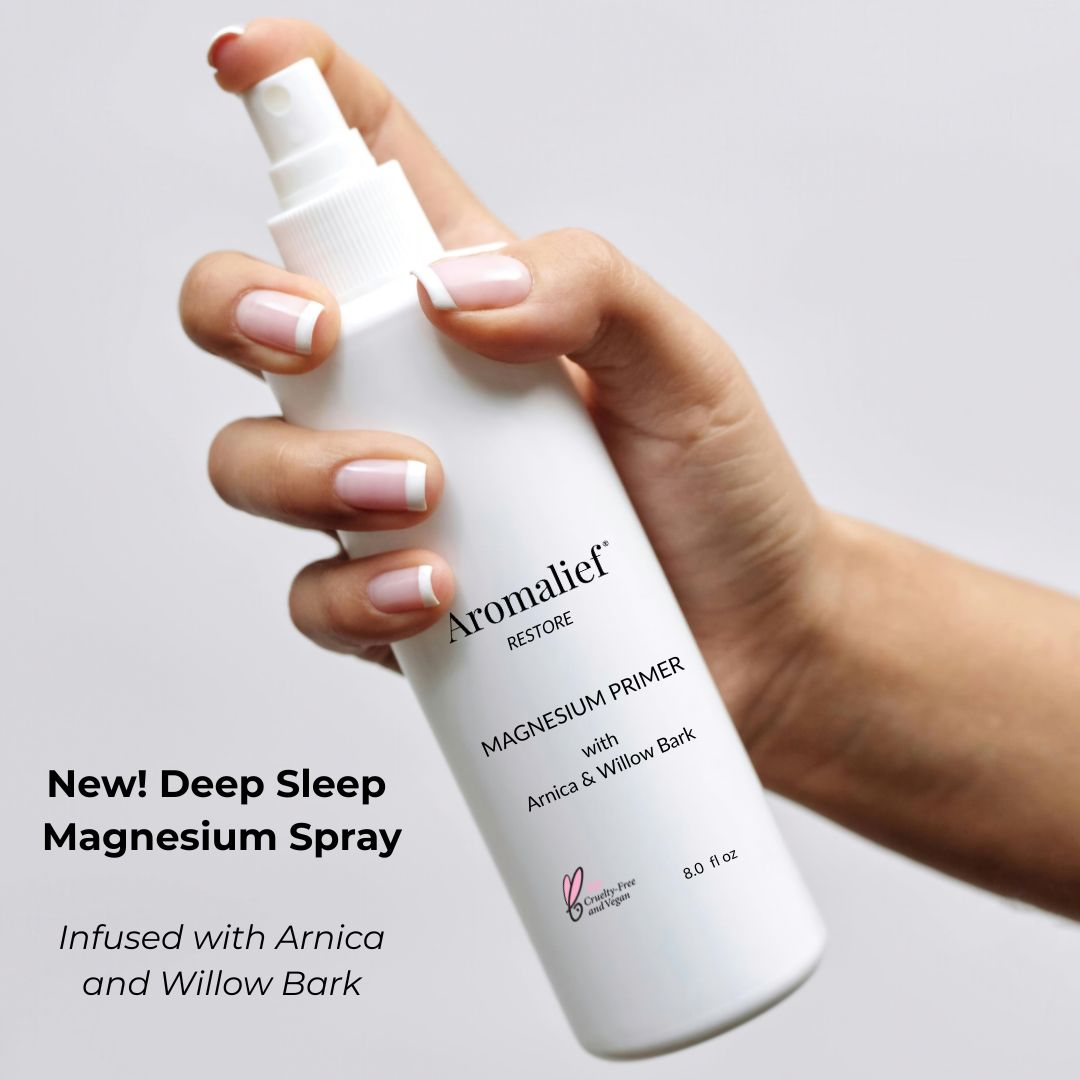
| The spray is good for relaxing, calming the nerves and enjoying your day without pain. The Deep Sleep Magnesium Spray works great with all Aromalief hand cream. What has helped me is using the spray and the Lavender Pain Hand Cream together. Lavender essential oil smells so good and adds to the relaxing. It’s a must buy. Melinda Reference: https://www.aromalief.com?sca_ref=244289.feW8IbRFn2 |
Since last week, I have not been able to add a link and when I paste the link, nothing shows up, it won’t let you add any link except for the link at bottom of page.
ARE YOU HAVING THIS ISSUE AND HOW DID YOU FIX IT?
I have cleared my cache several times, closed the laptop and even tried a different browser, nothing has worked.
Please leave any comments that may help me, posts are piling up.
Melinda
Looking for the Light
I want to thank Leslie L. McKee for sharing an advanced copy of Hope Amid the Pain: Hanging On to Positive Expectations When Battling Chronic Pain and Illness (a 60-Day Devotional Journal) for an honest review.
Leslie is an author, editor, and reviewer. She is a member of American Christian Fiction Writers and The Christian PEN. Some of her devotionals were published in compilations by Ellie Claire in 2017 and 2020. Her flash fiction stories have been published with Havok, Splickety, and Spark (websites, magazines, and anthologies). Her devotional journal (HOPE Amid The Pain: Hanging on to Positive Expectations When Battling Chronic Illness and Pain) will soon be published with Ambassador International. She enjoys reading, playing piano, crocheting, spending time with family and friends (and her turtle!), and rooting for the NY Giants.
Why me? Is God punishing me? Is my faith not strong enough for God to heal me? How can I achieve my dreams? What’s my purpose?
If you’re someone living with a chronic illness or chronic pain, these are just a few of the questions you’ve likely asked on more than one occasion. You may feel overlooked or even resentful. You try to stay positive, but some days it’s hard. It’s natural to feel this way and grieve, but it’s still possible to have a hope-filled life. God has a purpose for the pain.
Christians aren’t immune from pain and illness, but we don’t have to go through it alone. Jesus promised that He would “never leave you nor forsake you” (Deuteronomy 31:6 NIV).
Millions of women suffering from chronic pain and illness want the reassurance they’re not alone. The devotions in Hope Amid the Pain are written by a chronic pain warrior with over twenty-five years’ experience and will point the reader to hope and encouragement. It’s possible to Hang On to Positive Expectations (HOPE) even amid the pain.
Beautifully written, HOPE Amid the Pain tugs at the heart with both practical and spiritual instruction. Anyone who is or has suffered with crippling and debilitating pain or illness will find encouragement and support in this devotional. Spirit-lifting, wise, and filled with inspiration, this devotional is sure to strengthen hearts for wherever the Lord is leading.
Debbie Macomber | #1 NYT Bestselling Author
McKee writes with compassion and understanding. Words of grace and compassion for those struggling with chronic pain.
Vannetta Chapman | USA Today bestselling author
As a mental health therapist I often look for resources for clients who struggle with chronic mental and physical illnesses. Leslie L. McKee speaks from personal experience as a woman who suffers from chronic illness. She has combined her personal experience, her deep faith in Christ, and her writing skills to provide a devotional which will truly minister to women who are fellow travelers on the chronic illness journey. Her format provides encouragement with practical application based on Scripture. I can’t wait to be able to offer such a devotional to my clients.
Patricia J Edwards| LCSW, TheAntioch Group
Leslie has been a chronic pain warrior for over twenty years and understands the challenges we face daily. She does a great job of lifting you up; it’s like a gentle hug from a friend.
The journal covers topics like:
Don’t Settle
You Are Enough
Rest Stop
Through The Fire
Leslie also offers a Resource guide at the back of the book and a chapter on Scriptures.
I think it’s a great gift for you or someone you care for who has a chronic illness or suffers from chronic pain. Self-care is critical to our overall health and especially our mental health.
Leslie’s book is a must buy and will be a resource you will refer to again and again.
Melinda
Repost
I am fortunate to have traveled to Russia alone, jumped out of a plane, took a hot balloon ride, and scuba dived on several islands. In the past I was up for adventure yet my health conditions have slowed me down completely.

As for lost interest, playing cards, street racing, embroidery, and knitting. I have a couple of activities to try once I’m able.
Have a great day!
Melinda
Looking for the Light
I apologize, WordPress is still not letting me add a link.

























 lookingforthelight.blog