Accidents are rough. Other than the physical pain they inflict, it also leaves scarring damage to our mental and emotional well-being. Doctors usually offer pain medications for recovery but did you know there are other alternatives we can take and not just solely depending on those prescribed on pills? Are you curious what it is? I’m talking about natural methods! Let’s narrow down these remedies to find out what works for you!
Restoring Strength with Physical Therapy
Think of physical therapy as the star player on your comeback team after an injury. It’s not just about moving around—it’s a strategic move to make the most of your recovery. Using a wide variety of techniques, physical therapy works to reduce pain and improve strength and flexibility so your body can get back to normal. Here are a few key treatments:
Manual therapy is a hands-on technique to loosen stiff joints and ease pain, including stretching and massage.
Customizing exercise is a therapy that targets muscles to improve strength and flexibility.
Hot and cold treatment uses temperature (hot or cold) to reduce soreness and pain.
Electrotherapy uses electrical signals to assist in managing pain and stimulating muscles.
Water therapy, wherein the patient uses the water’s gentle resistance and support during the rehabilitation process.
Role of Acupuncture in Unlocking Natural Pain Relief
When you want to express yourself, get a tattoo they said. If you want to heal yourself, get acupuncture. Trigger warning for those who are afraid of needles as we are going to talk about acupuncture, an ancient practice with a touch of modern science that is proven and tested by those who undergo that procedure. Here are a few of the ways, simply explained, that acupuncture can help:
Reduces Chronic and Acute Pain
Enhances Circulation and Boosts Blood Flow
Stress Reduction
Boost Immune System
Improves Sleep Quality
Chiropractic Care as Another Route for Recovery
You never know what bones have realigned after your accident. It may feel and look normal, but there are already underlying conditions. That’s why having chiropractic care after an accident is helpful during your recovery. This hands-on approach adjusts your spine and restores your body’s balance and other systems to work together. Here’s how chiropractic care can facilitate your recovery in several key ways:
Reduce your pain as your chiropractor will help to eliminate the source of your injury-related pain by realigning your body to its natural form.
Improved mobility by restoring flexibility and movement to areas of the body that have stiffened up or become immobile as a result of your accident.
Enhanced healing, as the aim of this practice, is to make your body naturally heal itself. The realignment process is your body’s cue to begin its innate healing process once more.
It decreases inflammation and allows you a speedier recovery
Give you a better posture and ensure that your body’s reconfiguration is done properly, which will help to avoid such difficulties.
Herbal Remedies
If you have a garden and you have herbs like ginger, turmeric, and others, no need to take a walk towards the pharmacy as these herbs are in the remedy business. Those mentioned herbs are still providing relief and fighting inflammation today. Some may call it grandmother’s medicine, but hey, they are backed by science. Here are some soothing herbal remedies commonly used for their pain-relieving properties:
Ginger: It is a natural anti-inflammatory agent and makes it an effective natural alternative for muscle and joint pain.
Turmeric: A powerful anti-inflammatory and antioxidant that has shown to be as effective as over-the-counter pain relievers with no unpleasant side effects.
Willow Bark: Called “nature’s aspirin” for a good reason.
Lavender: Helps with headaches and soreness when it’s brewed and drank as a tea.
Peppermint: It can relieve certain types of headaches and muscle pain on contact.
Don’t let the pain take a toll on your everyday activities. Let these methods be your co-pilot in the healing process.
Here are a few products I’m loving with right now. I hope you find a product to add to your household or self-care routine. The list may also give you ideas for a surprise for friends, and family. All products were found on Amazon.
Keurig K-Classic Coffee Maker K-Cup Pod, Single Serve, Programmable, 6 to 10 oz. Brew Sizes, Black
I’ve had mine for years, at least 10 years, without a single problem. No coffee pot to clean, and makes coffee in minutes. I can’t live without it.
MIRA 32 oz Stainless Steel Water Bottle – Hydro Vacuum Insulated Metal Thermos Flask Keeps Cold for 24 Hours, Hot for 12 Hours – BPA-Free One Touch Spout Lid Cap – Hawaiian Blue
We both love these insulated bottles. When I added more water to my day, I bought us two each. That was years ago. I drink at least 2 refills a day, and I make fewer trips to the fridge.
Bar Keepers Friend Powdered Cleanser 12-Ounces
My Granny used this to keep her stainless sink clean. It probably has more uses and they have several types of cleaners. Nothing gets my stainless sinks cleaner. This is a powder, you will need to work around the sink until the small bits resolve and then take another pass.
We splurged on the trashcan, and it was the best decision. Ours is close to 20 years old, not one problem.
The way to keep the stainless clean is to buy Stainless wipes. My other recommendation is to use Simplehuman trashbags. The big difference is theirs fits the trashcan completely. The cheaper trashbags that my husband is using drive me cringe. The problem is they don’t fit right and don’t cover the removable inner can and food and anything else you put in the trash gets on the top and the back of the trashcan. More cleaning!
Ficus Lyrata Fake Plant – Artificial Plants for Home Decor Indoor, Faux Plants Indoor – Artificial Potted Plants, Faux Plant for Bedroom – Plants for Bedroom Decor, Fake Plant Decor – 30 Inches
I bought this plant last year, it still looks new, and the leaves are still shiny. The planter is bad-looking and cheap. I bought a ceramic planter to put it in. It is perfect for my office and it doesn’t take up much space. I’ve also bought many other artificial plants and the quality top notch. The more expensive offer lasts much better.
Amazon Fire TV Cube, Hands-free streaming device with Alexa, Wi-Fi 6E, 4K Ultra HD
I would have a hard time living without the system and have already forgotten how to turn off the television. Alexa takes a short time to adjust to and lately, I am frustrated when I have to ask more than one time. In the big picture of life that’s a crub.
Just a note:
An Amazon Prime membership unlocks thousands of movies and TV episodes including “Thursday Night Football” and Amazon Originals like “The Big Sick” and “Sneaky Pete”
There are so many choices of older shows and the originals are top-notch.
Thank you for all the great feedback on the Blogger Highlight series, I’ve enjoyed meeting each blogger and sharing their site with you. This week we highlight the blog of heard + felt.
I’m Anna (she/her), a survivor-writer-fighter-dreamer-healer. Writing is in my blood- literally. I grew up surrounded by novels and poems and libraries thanks to the influence of my grandfather, best-selling author, journalist, and pal of Robert Frost. From a young age, I learned that writing and words hold power– the power to transform, influence, comfort, harm, heal, process, teach, and so much more.
I love this blog because she writes about many topics including trauma.
In this fast-paced social media world, finding the time to look within or back in time can be difficult. I hope you find these quotes and questions interesting. So glad you stopped by today!
Many of you know I was a wild child at 12 years old. I was a drug addict, my boyfriend was 21 years old and a drug dealer. I did not go to school for a month and spent three days in Juvenile Detention for that.
I don’t remember the circumstances but I was caught with a gun and put on probation. I met with her every month and for 7 months I did not talk. She said the State of Texas wanted to take custody and send me to a boot camp type of facility as punishment.
She did not believe a boot camp was what I needed to reform. She told me about potential options and one day I asked if she could find a boarding school to stay for a year.
My Granny and the Probation Officer worked together to find a boarding school for bad girls. My Granny remembered a Convent for bad girls from when she was younger. Sure enough, the Convent was what I needed, and I stayed there for a year.
My Probation Officer was patient with me and took me to my dental and doctor’s appointments. She never told me what I did wrong or talked down to me. The only snag was when she showed up one day and I was wearing a tee that said cocaine. She made me change. Fair enough.
She encouraged me, told me how smart I was, and other complements I was not used to hearing.
I was transformed early in my stay and was promoted to the highest rank, giving me complete freedom.
She was one of the good guys who saw something in me and I’m so thankful for her. She saved my life.
I have been feeling down and thoughts of my illnesses came to mind. I know many people have many other illnesses, and I wish them the best in life I was a sickly child, always with an ear infection.
My life changed in 2012, after spending a year with a Neurologist for a year, all of my tests were abnormal but she didn’t have any answers. After some digging, I realized I had Lyme Disease.
At the time my only illness was Bipolar Disorder and anxiety. How did so many illnesses pop up while in treatment and after treatments for Lyme? I guess that path was meant for me.
Here are the illnesses I struggle with
Bipolar Disorder
Anxiety
Remission from Lyme Disease
Stage 3 Chronic Kidney Disease
Sjögeren’s
Tardive Dyskinesia
Hypogammaglobulinemia
Cognitive Impairment
Fibromyalgia
Anemia
Chronic Fatigue
PTSD
And four newly diagnosed Neurologic Disorders, I’ll know more after seeing a Neurologist on March 5th.
Stay posted for an update on the Neurological Disorders.
I wanted to set this post up as a survey but couldn’t find how it would have made your feedback much easier. I apologize but really need your feedback. I’ll keep it short.
Does my About Me page give enough information on what my blog is about and myself?
Am I writing on topics you care about?
What topics would you like to see?
If you could take one minute to share your feedback in the comments section.
I truly appreciate my followers and want to make sure I’m meeting your needs.
We’re getting excited for NO MORE Week2024, March 3rd to 9th! Are you ready to help shine a brighter spotlight on the need to end domestic and sexual violence? As a reminder, here are some ways you can get involved: Do the NO MORE Week Virtual 5K Your Way! Run, walk, bike, swim, play pickleball, take your dog for a stroll… any step or movement counts, at any time between March 3rd and 9th. It makes a real difference to support the work of the NO MORE Foundation. Sign up today and please tell your friends, colleagues and family to join too! Sign Up NowAttend the KNOW MORE Conference: “Silicon Saviors or Digital Threats?” It’s Free! Join us for this special online conference focused on technology’s positive and negative impacts on domestic and sexual violence. Log on for one session or the whole day. You’ll get to hear from incredible experts and innovators from around the world. It’s free so invite all your colleagues to attend too! Register TodayHold or Join a NO MORE Week EventGet your workplace, school, or community to hold a NO MORE Week event! It could be a panel or discussion; a social media campaign to share why you say NO MORE; a bake sale or other fundraiser, a group 5K outing, and lots more. No matter what, you’ll be helping to increase awareness and action! Get Event IdeasThank you in advance for your incredible support! We can’t wait to see your NO MORE Week photos. Make sure to tag us (@nomoreorg and #NOMOREWeek) so we can amplify your amazing efforts!
I was diagnosed with Lyme Disease and its coinfections in 2014. It controlled my life while the virus spread across my body setting up a house in my brain and causing cognitive impairment. The best way to describe how my brain was affected is to say, a machine gun was used on my brain and those memories are gone. In addition, I forget what I was saying and what I was going to do.
According to The Mayo Clinic Lyme disease is an illness caused by borrelia bacteria. Humans usually get Lyme disease from the bite of a tick carrying the bacteria.
Ticks that can carry borrelia bacteria live throughout most of the United States. But Lyme disease is most common in the upperMidwest and the northeastern and mid-Atlantic states. It’s also common in Europe and in south-central and southeastern Canada.
While most tick bites are harmless, several species can cause life-threatening diseases. Tick-borne diseases include:
If Lyme is detected in the first couple of weeks, an antibody is used for a couple of weeks and you dodged a bullet. A large number of people do not get the Lyme Rash, and by the time symptoms start, a small amount of antibiotics does not work. The next step is Antibody Therapy. I had a port in my chest and had Antibody Treatments every day at home. It was miserable.
Know where the ticks are more prominent in your area, avoid the area, or dress appropriately to cut down on having ticks get on you. The last thing to do after every outing is check your ENTIRE body for ticks. Even in the tricky places. Be sure to look in your hair!
Dogs can get extremely ill if bitten by certain ticks. My sweet Sasha contracted Ehrlichiosis twice, each time it almost killed her.
Tucked away on the picturesque shores of Costa Rica, Tamarindo offers an unparalleled experience for fishing enthusiasts. From the adrenaline rush of reeling in a prized catch to the tranquil beauty of its marine ecosystem, this vibrant coastal town beckons adventurers seeking the ultimate fishing escapade. Join me as we dive into the depths of Tamarindo fishing charters and the area’s rich marine life and discover why it’s a must-visit destination for any angler.
A Gateway to Oceanic Splendor
Nestled along the northwest coast of Costa Rica, Tamarindo boasts a prime location blessed with abundant marine biodiversity. Its crystal-clear waters teem with a myriad of fish species, making it a haven for both novice anglers and seasoned fishermen alike. Whether you’re casting your line from the shore or venturing out into the open sea, Tamarindo offers endless opportunities to encounter the wonders of marine life up close.
Casting Off into Adventure
Embarking on a fishing excursion in Tamarindo is more than just a hobby—it’s an adventure waiting to unfold. With a variety of charters and tours available, anglers can tailor their experience to suit their preferences and skill levels. Whether you prefer offshore trolling for trophy-sized billfish or inshore fishing for roosterfish and snapper, there’s something for everyone in Tamarindo’s diverse fishing scene.
The Thrill of the Chase
Picture yourself aboard a sturdy fishing vessel, the salty breeze in your hair and the sun warming your skin as you scan the horizon for signs of life beneath the waves. As your experienced captain navigates the turquoise waters, anticipation builds with each cast of your line. Suddenly, the reel sings its sweet melody, signaling the start of an exhilarating battle between angler and prey. Whether you’re wrestling with a feisty marlin or testing your skills against a powerful sailfish, the thrill of the chase is an experience like no other.
Conservation and Sustainability
While the thrill of landing a trophy fish is undeniable, responsible angling practices are paramount to preserving Tamarindo’s delicate marine ecosystem for future generations. Many local charters and fishing operators adhere to sustainable fishing practices, promoting catch-and-release techniques to minimize environmental impact. By respecting size limits and avoiding overfished areas, anglers can help ensure Tamarindo’s marine life’s long-term health and vitality.
Beneath the Surface: Marine Marvels Await
Beyond the excitement of angling, Tamarindo’s waters are home to a dazzling array of marine creatures waiting to be discovered. Strap on your snorkel and dive beneath the surface to encounter colorful coral reefs, graceful sea turtles, and schools of tropical fish darting through the water. For the more adventurous souls, scuba diving offers a chance to explore deeper realms where elusive creatures like octopuses and moray eels lurk among the submerged rock formations.
Savoring the Spoils: Culinary Delights of Tamarindo
After a day of casting lines and battling the elements, there’s no better way to unwind than by indulging in the culinary delights that Tamarindo has to offer. Head to one of the local seafood restaurants where expert chefs transform the day’s fresh catches into mouthwatering dishes bursting with flavor. From ceviche made with succulent mahi-mahi to grilled tuna steaks served with a side of plantains, each bite offers a taste of the ocean’s bounty. Pair your meal with a refreshing cocktail crafted from locally sourced ingredients and toast to the day’s adventures. With its vibrant culinary scene, Tamarindo invites you to savor the spoils of your fishing expedition in style.
Tips for Planning Your Fishing Adventure
Choose the Right Charter: Research reputable fishing charters in Tamarindo and read reviews from previous anglers to ensure a memorable and safe experience.
Pack Accordingly: Don’t forget to bring sunscreen, a hat, sunglasses, and plenty of water to stay hydrated during your fishing excursion.
Listen to the Experts: Trust the guidance of your captain and crew—they know the local waters and can help maximize your chances of success.
Embrace the Unexpected: Keep an open mind and be prepared for surprises along the way, whether spotting dolphins playing in the wake or reeling in a fish you never expected at the marine playground.
Q&A: Your Top Fishing Questions Answered
Q: What is the best time of year for fishing in Tamarindo? A: Peak fishing season in Tamarindo typically runs from December to April, coinciding with the dry season when offshore waters are calm and teeming with activity. Q: What types of fish can I expect to catch in Tamarindo? A: Tamarindo offers a diverse range of fishing opportunities, including marlin, sailfish, dorado, tuna, roosterfish, and snapper, among others. Q: Do I need a fishing license to fish in Tamarindo? A: Yes, all anglers are required to obtain a fishing license before casting their lines. Your charter operator can assist you in securing the necessary permits.
I bet your interest has peaked, check out all the wonders that await.
Every day people with Chronic Illnesses have tiny stressors that add up throughout the day and are added to the bigger issues you’re already dealing with. I know it’s time for a break when the tiny issues have me cussing.
It could be something like not being able to open toothpaste, or toothpaste falling off into sink. I’m talking about tiny issues. Many don’t notice the tiny issues as they stack up and can make a decent day into a bad day. Everything piles up until it crashes.
I don’t have the answer but we can’t just turn the other way regarding our health. We must add the tiny stresses to our daily list of struggles to acknowledge them and see if we can change our day. We can’t avoid the extra stress, we have to learn to accept or find a workaround.
When you think about how many spoons you have, include the tiny issues when counting spoons.
Those who have not played the game may want to as a stress reliever.
You might find a great self-care treat if you play older games, like board games, not electronic ones.
I’m not saying anything new, just asking you to be aware of those tiny stressors when you look back over your day.
As my health continues to challenge me, it’s the little things that can throw me over the top. Last week, I had forgotten how to peel an orange, but instead of being bothered, I threw it in the trash.
Caring for your mental health is just as important, if not more so, than caring for your physical well-being. However, it’s often forgotten or overlooked in our busy lives.
Here are eight practical and accessible ways to maintain healthy mental habits without leaving the comfort of home. Prioritize yourself by investing some time into these simple yet powerful activities!
Having an established routine is one of the most effective tools for improving mental health. Not only does it provide structure, but the familiarity of the routine can also reduce anxiety and lift your mood.
Set yourself a morning or evening routine, or come up with a combination of both! A few ideas include having a regular wake-up time, starting off each day with some physical exercise, journaling, mindful meditation, and/or setting goals for the day.
Connect with your Loved Ones
Spending time with family and friends is one of the best ways to boost your mental health. You don’t even have to leave home – technology has made connecting easier than ever! Take advantage of video-calling or texting to catch up, share stories, and plan activities.
You can also connect with people online through social media, forums, blogs, and more. For example, why not join an online chat room dedicated to a hobby or interest? Or even start your own blog and become part of the blogging community.
Learn Something New
What better way to stay engaged than learning something new? Whether it’s taking up a new hobby, reading a book, listening to podcasts, or teaching yourself a language. Use this opportunity at home to explore some of these.
If you need some motivation and guidance, there are plenty of online courses available from universities around the world. From photography to web development, you’ll be spoilt for choice.
Body
At-home workouts don’t have to be boring. Use this time to switch up your routine, try something new, and challenge yourself! Yoga, HIIT, and Weightlifting are a few examples of exercises you can use to switch up your routine.
If working out isn’t your thing, that’s okay too – any type of physical activity will do the trick. Go for a walk around the neighborhood, dance in the kitchen, or ride a bike in an open space. All of these activities release endorphins which help us feel happier and reduce stress levels.
Cook Comfort Food
Cooking is an excellent way to relax and destress – try making a delicious meal or dish that reminds you of something special. You can either try making chicken and waffles from scratch or try a recipe you’ve never made before.
Remember that comfort food can also be healthy – make sure to include plenty of fruits, vegetables, and whole grains. Not only do these foods provide essential vitamins and minerals for your body, but they can also boost your mood too!
Get Creative
Creativity is a great way to express yourself and channel emotions. Why not try some DIY projects around the home or draw/paint something that makes you feel good? You don’t need to be an artist or a craftsman – simply put aside some time in the day to unleash your creativity without judging yourself too much.
Mental health and creativity go hand-in-hand, so let yourself get lost in the process!
Unplug
It’s easy to become overwhelmed when constantly plugged into technology. Being bombarded with news, social media posts, and emails can cause stress and anxiety. So why not give yourself a break?
Set aside some time each day when you completely unplug from all devices – switch off your phone, log out of social media, power down the laptop, and just be present. Take some deep breaths, enjoy a cup of tea, or read a book without any distractions – these small moments will work wonders for your mental well-being.
Appreciate Nature
Taking time to appreciate nature is one of the most calming activities one can do. Even if you’re at home, you can still find moments to connect with nature. You could open your windows or sit in the garden and listen to birds singing.
You can also grow some plants or herbs and watch them flourish over time. Gardening is a great stress reliever and can help boost your mood too!
A home is a safe place where we can be ourselves and express our emotions without judgment. Use this time at home to practice self-care and focus on your mental health. These eight activities will help keep you engaged, encourage creativity, and provide moments of peace – allowing you to take care of yourself in the best way possible.
Celebrating Presidents Day is for thinking about all of our Presidents, to me anyway. I would not celebrate several Presidents, especially these days. I take great pride in being American but would love to return to the time when the people mattered.
On this day, my mind goes to our Founding Fathers who laid the groundwork for a civil society. I can imagine how hard that must have been, some love and others hate and the story continues.
I believe in the Constitution, it’s America’s framework, and wish people in office would read and follow the laws. I read a copy of the original Constitution and it’s straightforward. It’s clear who can run for office and who can’t. Those rules are being overlooked today or we would have one less on the campaign trail. The same rules apply to anyone in Congress but they left the book at home.
Sorry, this post isn’t upbeat. We vote for President next year and we have no viable candidates. I see a future with more division, hatred, racism, lying, mass shootings, and losing more personal rights.
Thank you for all the feedback on the Blogger Highlight series. I’ve enjoyed meeting each blogger and sharing their site with you. This week we highlight the blog of Paradiso.
In this fast-paced social media world, it can be difficult to find the time to look within or back in time. I hope you find these quotes and questions interesting and I’m so glad you stopped by today!
I don’t think I’ve shared this before, it’s deeply personal. I hope this post will encourage women to learn about Cervical Cancer and keep their annual exam appointments.
I was diagnosed with Cervical Cancer when I was 28 years old. My doctor did a procedure in the office but it did not work, the cancer had spread and I needed a complete hysterectomy. Oddly enough I didn’t react to not being able to have children. I made the decision at 12 years old that children were not in my future.
In 2020, the latest year for which incidence data are available, in the United States, 11,542 new cases of Cervical cancer were reported among women, and 4,272 women died of this cancer. For every 100,000 women, 7 new Cervical cancer cases were reported and 2 women died of this cancer according to the CDC. The data is four years old, and the statistics will be higher in 2024.
The numbers may seem low but if one of the deaths is your’s, the numbers don’t matter.
The doctor asked if my mother or grandmother had a hysterectomy. Both had Ovarian Cancer which increased my chances of getting Ovarian Cancer.
He suggested I have a total hysterectomy, I thought for a few minutes and decided to have a total hysterectomy. I didn’t want to take any chances.
I made the right decision for me. Not every woman wants kids, It’s you and only you that can make the decision.
If the family pressures you to have children, which many parents do, REMEMBER it’s your decision. Set strong boundaries with family and friends by saying you do not want to hear or talk about children, it’s a personal decision and only discussed between the wife and her husband. It’s not their place to pressure you.
Cervical Cancer is sneaky, you don’t know you have it. That is one reason for the yearly PAP exams.
Please read up on the symptoms related to Ovarian and Cervical Cancer. The key is to catch cancer in the early stages. If so, you may not have to have a hysterectomy.
These videos will give insight into the parent’s lack of interest in their kid being expelled and their life turned upside down. It’s like a cult, are these parents involved in something deeper?
There are pages of women, possibly men who are scantily dressed. They show a lot of their body but it’s not porn. It’s like your kid reading a Playboy magazine, do you want your kids to watch that? This is an example.
What the kids go through at school when their parent/parents are members of Only Fans. The link may include other stories on the page. The story to read is the first one on the page talking about Only Fans and suicide.
Watching these videos is important, you need to understand what’s on the parents’ minds, and how they justify disobeying the school rules. I did add a couple of videos about kids who committed suicide after being expelled from school. This is not surprising to me.
I will continue to look for the number of students who have committed suicide over Only Fans.
They have a free membership, I’m going to sign up for the free membership and see what is available. I’m sure it will get under my skin but I have to know what kids can see for free.
Only Fans has some celebrity pages but there is more hardcore pornography on the site than regular content.
I’m sure you’ve heard the news about kids being expelled from school because the parents have an Only Fans sticker on their vehicle, the sticker is so big it covers the entire back window. One woman not only had the sticker but was advertising her page.
These parents are advertising a porn site at school and they know their kid will be expelled from school. How would you feel if your child was exposed to a porn site at school? I bet you would blow a stack!
The schools have told parents with the sticker to park on the street but they refuse. The school needs to call Social Services to visit the parents, if they determine that the kid is in an unhealthy environment they will take custody of the kid. The school needs to take photos of the license plate and the sticker to show Social Services. No telling what a visit from Child Services will find.
I don’t play around when it comes to kids, I go for the throat.
The kids are innocent. Can you imagine the stress, anger, and mental health of the kids? I want to know how many kids have committed suicide after being expelled. To kids, their world has crashed down on them. That’s my homework for today.
I can’t imagine a parent more interested in making money instead of the student’s education and the stress it causes. Today alone I’ve read two stories about kids being expelled for what their parents are doing.
What is wrong here?
One kid was expelled because he was looking up people on Only Fans on a school computer. In this case, the kid made a very bad decision and knew better. The school said they would reconsider having him back but not right now. That kid should be kicked out. In this case, it was a private Christian school with strict rules and the parents signed a document saying they would comply with the rules, which includes the student’s behavior.
They will go as far as showing up to pick up their kid, the parents are warned and the next day come back with the Only Fans stickers still on there and will continue to come back and their kid gets expelled from school. WTF! What is wrong with this picture? What kind of example are they teaching their kids.
I think it’s time to punish the parents, not the kids. There are many options like banning them from entering the school campus, having off-duty police at the entrance of the campus who will keep them from entering, a restraining order, and going to the police to report pornography and advertising to underage kids. I would also look to see if they can be charged for trespassing. When the police hear pornography and kids they will be very interested. I would also look to see if the parent can be charged for trespassing.
I would also call Child Services so the parents clearly understand they could lose custody if they continue. Harsh? Hell Yes!
That’s what it is going to take. We can’t let our kids be expelled from school because their parents are self-centered. The kid’s education and mental health will suffer.
The information in the video is on YouTube. I have not vetted the video as accurate information but that should not stop you from watching, it’s eye-opening. I had no idea who they were, I’ve seen the stickers but never went to their website until yesterday.
Even though the site says over 18, there are many ways kids are getting membership, including using their parent’s credit card or fake documents.
When I went to the site, on the first page it showed people having sex, it was hardcore pornography. They get paid based on how many people visit their page and it costs to look at their site, every time. The same goes for any page you look at. Some go as far as offering a membership to their site for a monthly fee.
I would not want my kid to be exposed to pornography until they leave home and they can make their own decisions. If they are old enough they already know about porn from their friends.
Parents who will not take the Only Fans sticker off the car or park off campus, are selfish and don’t care if their kid gets kicked out of school. What kind of logic is that? It’s probably the same logic my mother used to abuse me.
A letter needs to be sent to all parents saying if your vehicle has an Only Fans sticker you must park off the school campus and park on the street. The parents already know but use stronger language and tell them that if continue there are serious consequences. No exceptions. Many schools have this problem and need to punish the parent, not the kid.
I don’t know what can be done but I want to find out more. The link is to a story about a kid who committed suicide because other students were showing him photos of his mother.
Melinda
My cognitive impairment is worse, if something doesn’t flow or half of a sentence is missing, be gentle with me.
Inflammation is a process by which your body’s white blood cells and the things they make protect you from infection from outside invaders, such as bacteria and viruses. But in some diseases, like arthritis, your body’s defense system — your immune system — triggers inflammation when there are no invaders to fight off. In these autoimmune diseases, your immune system acts as if regular tissues are infected or somehow unusual, causing damage.
Inflammation Types
Inflammation can be either short-lived (acute) or long-lasting (chronic). Acute inflammation goes away within hours or days. Chronic inflammation can last months or years, even after the first trigger is gone. Conditions linked to chronic inflammation include:
Outside of inflammation, these come with a host of other side effects on you and have a tremendous impact on your life. It could lead to you wanting to buy metformin and similar medications, but fruit and vegetables can help, too.
Many fruits and veggies help with inflammation
Juicy Berries, (BlueBerries, strawberries, and Black Berries)
Yummy Avacodos
Mouthwatering dark chocolate
Apples
Grapes
Tomatoes
Olive Oil
Leafy Green Veggies
Oily Fish
Whole Grains
Unsaturated Fats
This is a short list, you can find the complete list. Click on the link below.
I’m reading Calm Your Inflammation by Dr. Brenda Tidwell and will update you as I read more.
Reducing inflammation is critical to people with Chronic Illnesses. We need all the help we can get.
Last Thursday I started a new medication for my kidneys, Myrbetriq and I’ll use their website to discuss what I find most important in their Prescribing Information. Before starting the medication, I go to their website to read all the side effects, when to call the doctor, when to go to the hospital and take a quick look at the Clinical Trials to see how many people drop out of the trial and what for. Another reason to look at trial information is to see who many were in the trial.
If you want to know all the information, there is plenty to read. I’ve read enough about Clinical Trials to know where to go to find the information I want. To read the entire or some of what Prescribing Information looks like, click here.
Areas I look at on the Prescribing Information.
WARNINGS AND PRECAUTIONS
Increases in Blood Pressure: Can increase blood pressure in adult or
pediatric patients. Periodically monitor blood pressure, especially in
hypertensive patients. MYRBETRIQ/MYRBETRIQ Granules are not
recommended in patients with severe uncontrolled hypertension. (5.1)
• Urinary Retention in Patients With Bladder Outlet Obstruction and in
Patients Taking Muscarinic Antagonist Drugs for Overactive Bladder:
Administer with caution in these patients because of risk of urinary
retention. (5.2)
• Angioedema: Angioedema of the face, lips, tongue, and/or larynx has
been reported with mirabegron. (5.3, 6.2)
ADVERSE REACTIONS
Most commonly reported adverse reactions with MYRBETRIQ
monotherapy in adult patients with OAB (> 2% and > placebo) were
hypertension, nasopharyngitis, urinary tract infection, and headache.
(6.1)
• Most commonly reported adverse reactions with MYRBETRIQ, in
combination with solifenacin succinate in adult patients with OAB
(> 2% and > placebo and > comparator), were dry mouth, urinary tract
infection, constipation, and tachycardia. (6.1)
• Most commonly reported adverse reactions with
MYRBETRIQ/MYRBETRIQ Granules in pediatric patients with NDO
(≥ 3%) were UTI, nasopharyngitis, constipation, and headache. (6.1)
WARNINGS AND PRECAUTIONS
The most frequent adverse events (0.2%) leading to discontinuation in Studies 1, 2, and 3 for the 25 mg or 50 mg dose were nausea, headache, hypertension, diarrhea, constipation, dizziness, and tachycardia.
Atrial fibrillation (0.2%) and prostate cancer (0.1%) were reported as serious adverse events by more than 1 patient and at
a rate greater than placebo.
I hope you take the time to look at one of your medication’s Prescribing Information. You may be surprised by what you read.
Please watch this short video to learn more about FDA product labeling
I remember in middle school we gave those little cards to each other and in high school you could buy a Valentine’s message and it was delivered to your chosen one during the day. That was a lot of fun, it was a chance to express your feelings to your friends.
In the past, I’ve had great Valentine’s dinners and all the fanfare when I was younger. Now, my husband and I buy each other a card and I will get a big bouquet of roses. That’s the perfect low-key way to celebrate our special day.
Valentine’s is the perfect day for self-care, and relaxing.
If you’re looking to support a local business in Ukraine, Etsy.com has many sellers from Ukraine.
I bought two handmade chair pads made on antique looms. Fortunately, this couple is far from fighting and living in the mountains and lovingly taking care of their sheep.
WovenWoolArt on Etsy is the shop I love. I’m also viewing the clothes made by the couple in Kosiv, Ukraine.
The shipping is high, but you must remember it’s coming from a country at war. It’s a miracle that anyone can find a mail station. She’s also generous with discounts on shipping if you buy more than one item.
I pray the fighting doesn’t wipe them out, they shared their concerns including the need for more weapons from America.
Let’s help the locals make a living during the war, they need all the support possible and the American people can help them.
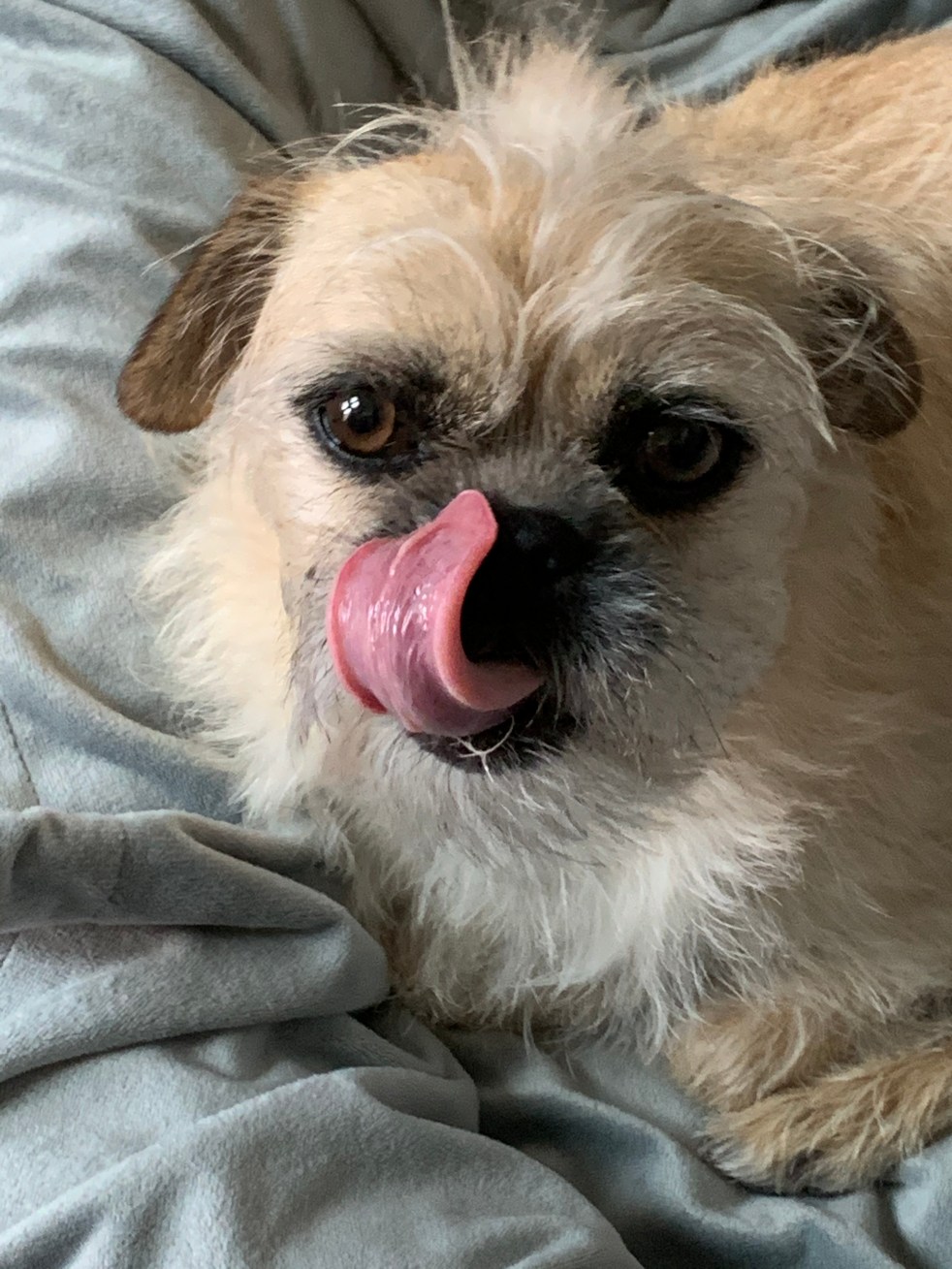
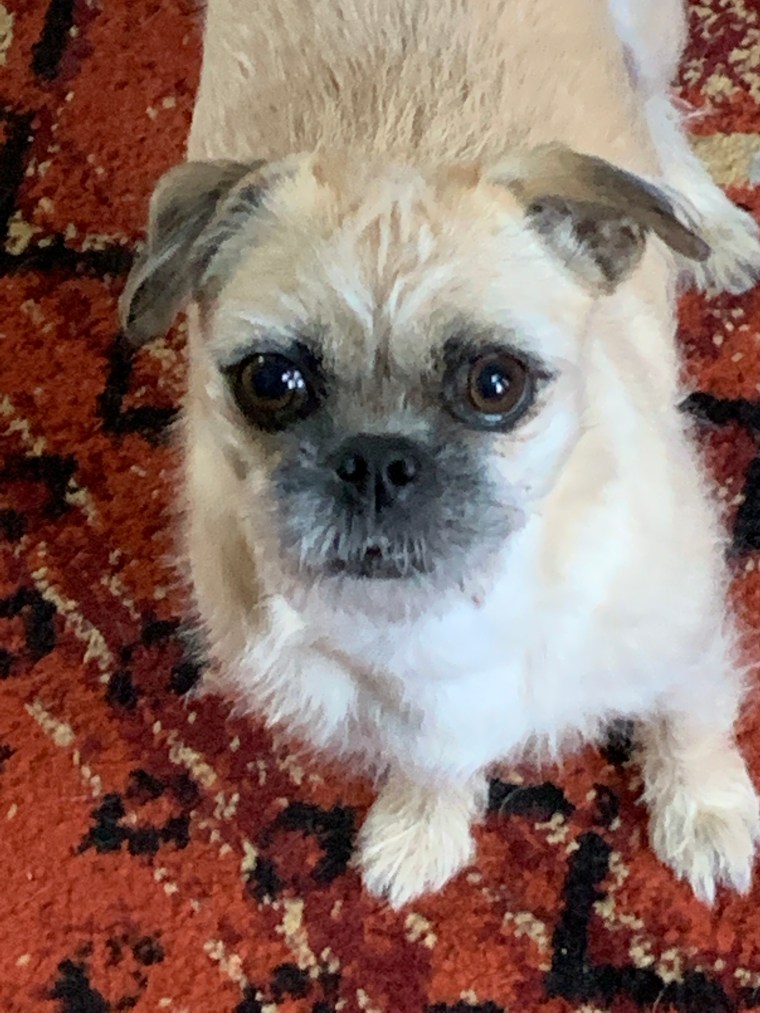
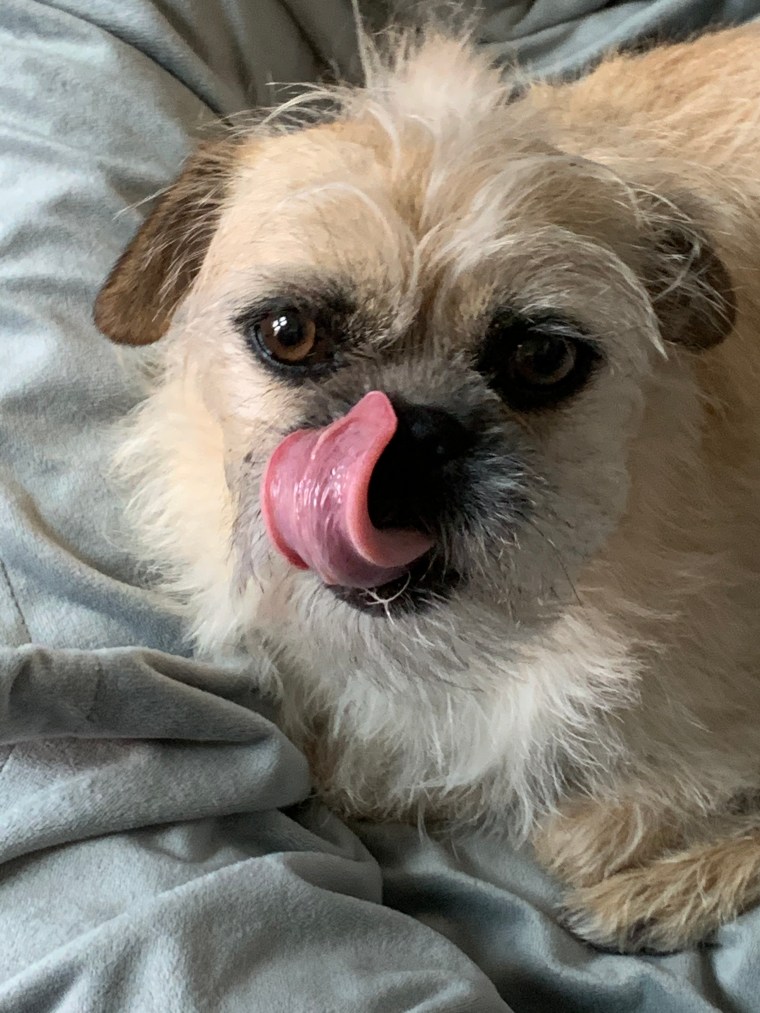
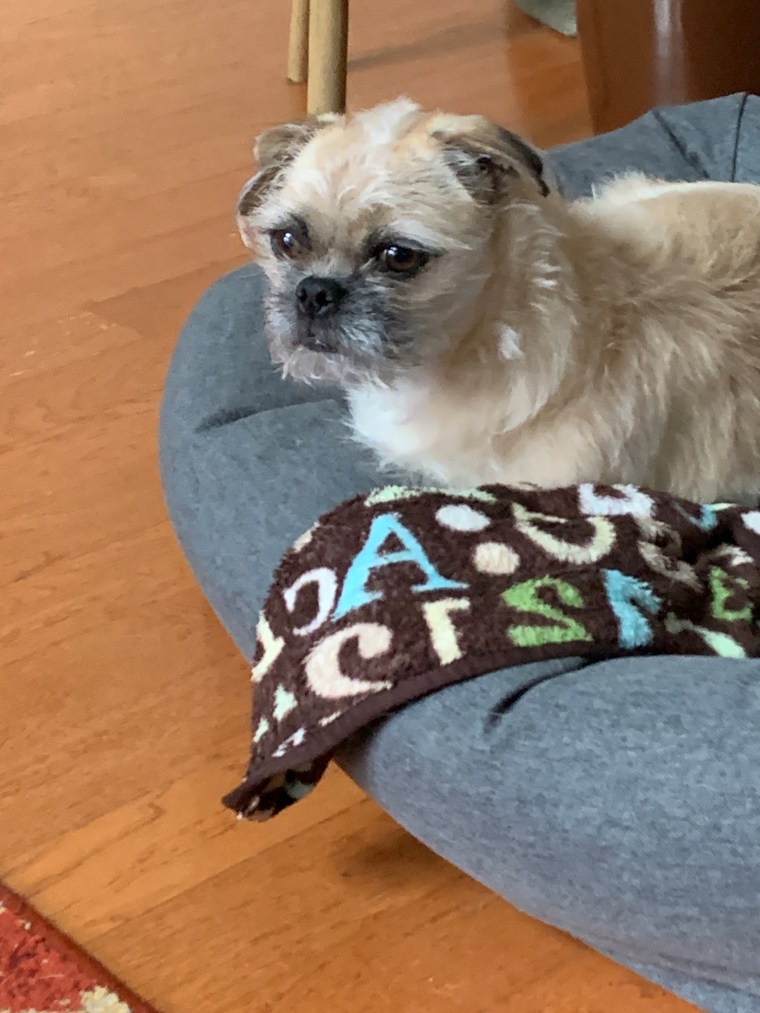
I was looking for a Brussels Griffon without the high price. There is a small but awesome no-kill shelter nearby, and I had talked to about wanting a Brussels Griffon and it wasn’t long before we met Griffy.
She was living on the streets pregnant, fortunately, an employee at Dallas Animal Control sent her to the shelter in Plano. The day I picked her up, she had just said goodbye to her babies and the foster mother. I know she must have been in shock, losing her babies and leaving her foster care and in a new house.
She took a lot of training, arguing about who’s the boss, and she didn’t want much petting but we now have the calmest dog except when she sees the UPS or any large truck going by the house. Her best buddy is her brother Jett whom you met the other day.
Giffy is a daddy’s girl, he walks her every day and takes both dogs to the park. When she started sleeping by me it was a total shock. I love her so much.
I’ve shown you, my children, show me yours in the comment section.
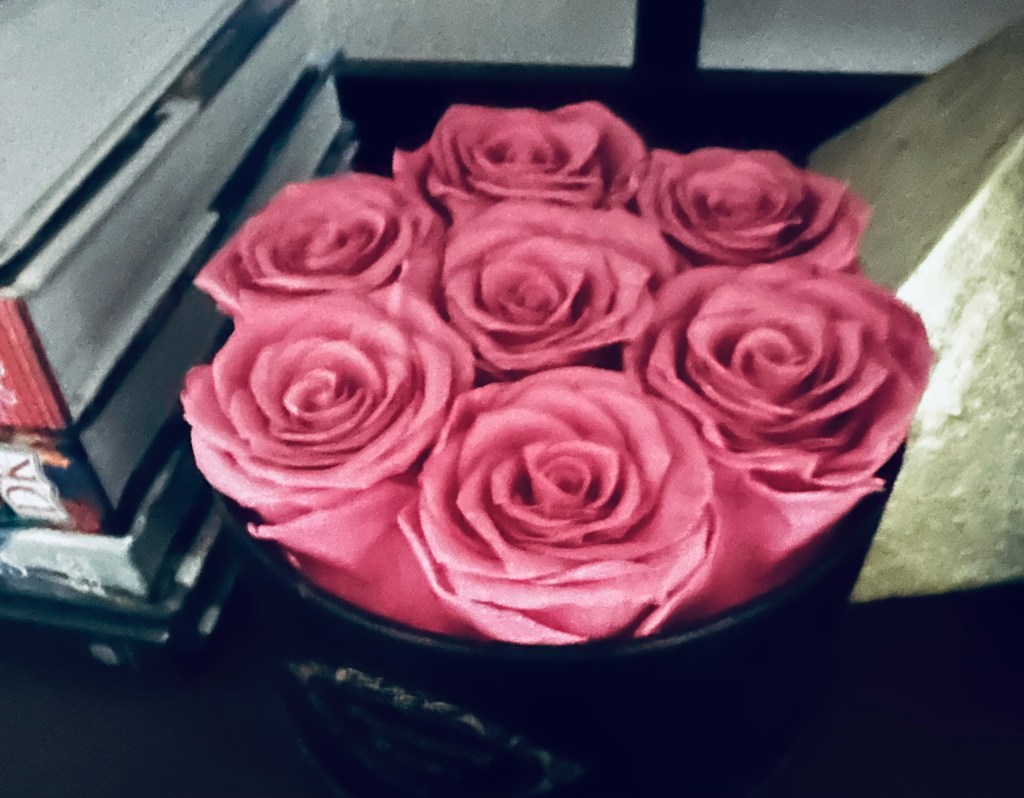
On Saturday I was looking for items to up my self-care routine and found these beautiful preserved pink roses in a box. They are on my bookcase near my chair, I get to see them all day. Self-care isn’t just a hot bath or foot massage, it can be something that brings you joy.
My husband will buy roses and a card which only lasts so long. I love fresh flowers, the preserved roses are there to enjoy all day.
The flowers are beautiful pink roses and they can last up to 3 years. WOW! They look great in the round black box. These were only $30, I’m worth more than that!
Here are a few products I’m loving with right now. I hope you find a product to add to your household or self-care routine. The list may also give you ideas for a surprise for friends, and family. All products were found on Amazon.
EUDEMON Child Safety Heat-Resistant Oven Door Lock
Oven Front Lock for Kids Easy to Install, Use 3M Adhesive, No Screws or Drill and easy to install. This lock will keep curious children by not allowing them to get burned.
Bath Spout Cover, Children’s Faucet Extender
Covers Baby Bathroom Tub Protects for Kids, Bathtub Spout Cover for Baby Kids Toddlers Protection Accessories Baby Safety During Bathing Time.
12 PCS Furniture Anchors for baby-proofing
Tip Child Safety Cabinet Straps to Help Furniture Secure to Wall Baby Proof Anchoring Kit for Shelf & Dresser to Protect Toddler
Proactiv 3-Step Acne Treatment
Benzoyl Peroxide Face Wash, Repairing Acne Spot Treatment for Face and Body, Exfoliating Toner – 30-Day Complete Acne Skin Care Kit
Mulberry Silk Pillow Cases Standard Size Silk Pillowcase with Zipper
Soft Breathable Smooth Cooling Satin Silk Pillow Covers for Sleeping for Hair and Skin (Lavender,20″X 26″) Silk pillowcases are great gifts. They keep the oil off your face and hair.






















:max_bytes(150000):strip_icc():focal(561x0:563x2)/crystal-jackson47-e57f861bf1e848208d1a83b04fd9e2f5.jpg)











 Looking for the Light