Grieving · Health and Wellbeing · Medical · Men & Womens Health · Mental Health

How Grief Shows Up In Your Body

It’s surprising how physical grief can be. Your heart literally aches. A memory comes up that causes your stomach to clench or a chill to run down your spine. Some nights, your mind races, and your heart races along with it, your body so electrified with energy that you can barely sleep. Other nights, you’re so tired that you fall asleep right away. You wake up the next morning still feeling exhausted and spend most of the day in bed.

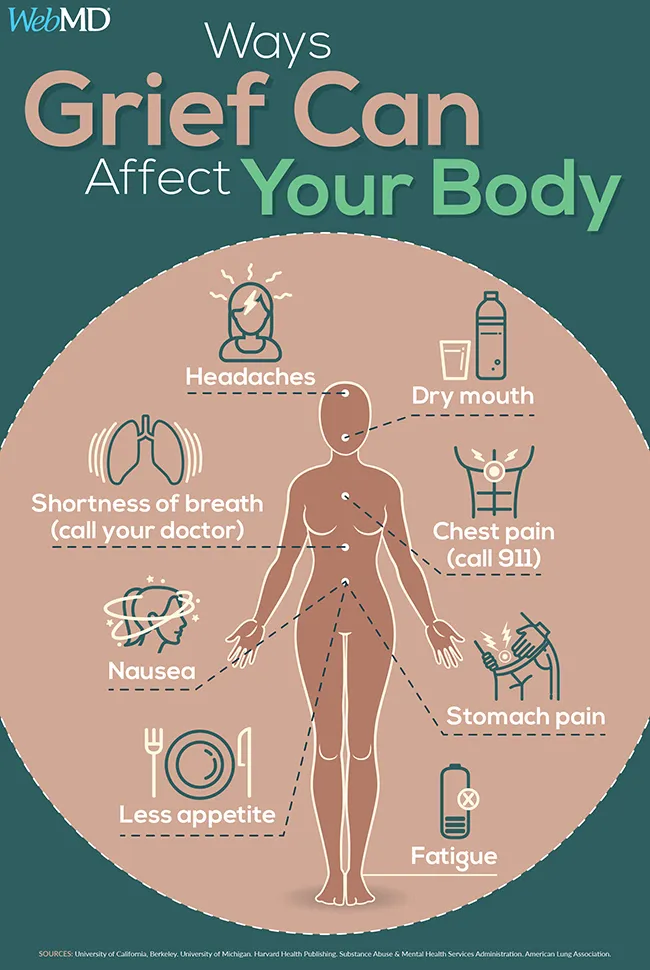
Amy Davis, a 32-year-old from Bristol, TN, became sick with grief after losing Molly, a close 38-year-old family member, to cancer. “Early grief was intensely physical for me,” Davis says. “After the shock and adrenaline of the first weeks wore off, I went through a couple of months of extreme fatigue, with nausea, headaches, food aversion, mixed-up sleep cycles, dizziness, and sun sensitivity. It was extremely difficult to do anything. … If there’s one thing I want people to know about grief, it’s how awful it can make your body feel.”

What causes these physical symptoms? A range of studies reveal the powerful effects grief can have on the body. Grief increases inflammation, which can worsen health problems you already have and cause new ones. It batters the immune system, leaving you depleted and vulnerable to infection. The heartbreak of grief can increase blood pressure and the risk of blood clots. Intense grief can alter the heart muscle so much that it causes “broken heart syndrome,” a form of heart disease with the same symptoms as a heart attack.

Stress links the emotional and physical aspects of grief. The systems in the body that process physical and emotional stress overlap, and emotional stress can activate the nervous system as easily as physical threats can. When stress becomes chronic, increased adrenaline and blood pressure can contribute to chronic medical conditions.

Research shows that emotional pain activates the same regions of the brain as physical pain. This may be why painkilling drugs ranging from opioids to Tylenolhave been shown to ease emotional pain.

Normal vs. Pathological Grief

Depression is not a normal part of grief, but a complication of it. Depression raises the risk of grief-related health complications and often requires treatment to resolve, so it’s important to know how to recognize its symptoms. Sidney Zisook, MD, a grief researcher and professor of psychiatry at the University of California, San Diego, says people can distinguish normal grief from depression by looking for specific emotional patterns.

“In normal grief, the sad thoughts and feelings typically occur in waves or bursts followed by periods of respite, as opposed to the more persistent low mood and agony of major depressive disorder,” Zisook says.

He says people usually retain “self-esteem, a sense of humor, and the capacity to be consoled or distracted from the pain” in normal grief, while people who are depressed struggle with feelings of guilt and worthlessness and a limited ability “to experience or anticipate any pleasure or joy.”

Complicated grief differs from both depression and normal grief. M. Katherine Shear, MD, a professor of psychiatry at Columbia University’s School of Social Work and director of its Center for Complicated Grief, defines complicated grief as “a form of persistent, pervasive grief” that does not get better naturally. It happens when “some of the natural thoughts, feelings, or behaviors that occur during acute grief gain a foothold and interfere with the ability to accept the reality of the loss.”

Symptoms of complicated grief include persistent efforts to ignore the grief and deny or “rewrite” what happened. Complicated grief increases the risk of physical and mental health problems like depression, anxiety, sleep issues, suicidal thoughts and behaviors, and physical illness.

How Does Avoidance Harm Your Health?

Margaret Stroebe, PhD, a bereavement researcher and professor of clinical psychology at Utrecht University, says that recent research has shed light on many of “the cognitive and emotional processes underlying complications in grieving, particularly rumination.”

Research shows that rumination, or repetitive, negative, self-focused thought, is actually a way to avoid problems. People who ruminate shift attention away from painful truths by focusing on negative material that is less threatening than the truths they want to avoid. This pattern of thinking is strongly associated with depression.

ways grief can affect your body infographic

Rumination and other forms of avoidance demand energy and block the natural abilities of the body and mind to integrate new realities and heal. Research by Stroebe, and others shows that avoidance behavior makes depression, complicated grief, and the physical health problems that go with them more likely. Efforts to avoid the reality of loss can cause fatigue, weaken your immune system, increase inflammation, and prolong other ailments.

How Do Role Adjustments Affect Your Health?

When someone close to you dies, your social role changes, too. This can affect your sense of meaning and sense of self.

Before losing Molly, Davis says she found a personal sense of value in “being good at helping other people and taking care of them.” But after Molly died, she felt like she “couldn’t help anyone for a while.” Losing this role “dumped the bucket” of her identity “upside down.” Davis says, “I felt like I had nothing to offer. So I had to learn my value from other angles.”

Caregivers face especially complicated role adjustments. The physical and emotional demands of caregiving can leave them feeling depleted even before a loved one dies, and losing the person they took care of can leave them with a lost sense of purpose.

“Research shows that during intense caregiving periods, caregivers not only experience high levels of stress, they also cannot find the time and energy to look after their own health,” says Kathrin Boerner, PhD, a bereavement researcher and professor of gerontology at the University of Massachusetts in Boston.

“This can result in the emergence of new or the reemergence of existing ‘dormant’ health problems after the death of the care recipient. These health issues may or may not be directly related to the caregiver’s grief experience, but they are likely related to the life situation that was created through the demands of caregiving,” Boerner says.

It can be hard to make life work again after a close family member dies. Losing a partner can mean having to move out of a shared home or having to reach out to other loved ones for help, which can further increase emotional stress and worry. Strobe says the stress of adjusting to changes in life and health during and after a loss can “increase vulnerability and reduce adaptive reserves for coping with bereavement.”

What Can You Do to Cope With Grief?

Emotional and physical self-care are essential ways to ease complications of grief and boost recovery. Exercising, spending time in nature, getting enough sleep, and talking to loved ones can help with physical and mental health.

“Most often, normal grief does not require professional intervention,” says Zisook. “Grief is a natural, instinctive response to loss, adaptation occurs naturally, and healing is the natural outcome,” especially with “time and the support of loved ones and friends.”

For many people going through a hard time, reaching out is impossible. If your friend is in grief, reach out to them.Amy Davis

Grief researchers emphasize that social support, self-acceptance, and good self-care usually help people get through normal grief. (Shear encourages people to “plan small rewarding activities and try to enjoy them as much as possible.”) But the researchers say people need professional help to heal from complicated grief and depression.

Davis says therapy and physical activities like going for walks helped her cope. Social support helped most when friends tried to reach out instead of waiting or asking her to reach out to them.

“The thing about grief and depression and sorrow and being suicidal is that you can’t reach out. For many people going through a hard time, reaching out is impossible. If your friend is in grief, reach out to them. Do the legwork. They’re too exhausted!”

Davis’ advice to most people who are grieving is to “Lean into it. You only get to grieve your loved one once. Don’t spend the whole time trying to distract yourself or push it down. It does go away eventually, and you will miss feeling that connected to that person again. And if you feel like your whole life has fallen apart, that’s fine! It totally has. Now you get to decide how to put yourself back together. Be creative. There’s new life to be lived all around you.

Melinda

Reference:

“WebMD News Special Report Reviewed by Neha Pathak, MD on July 11, 2019

Chronic Illness · Family · Health and Wellbeing · Medical · Men & Womens Health · Mental Health · Mental Illness

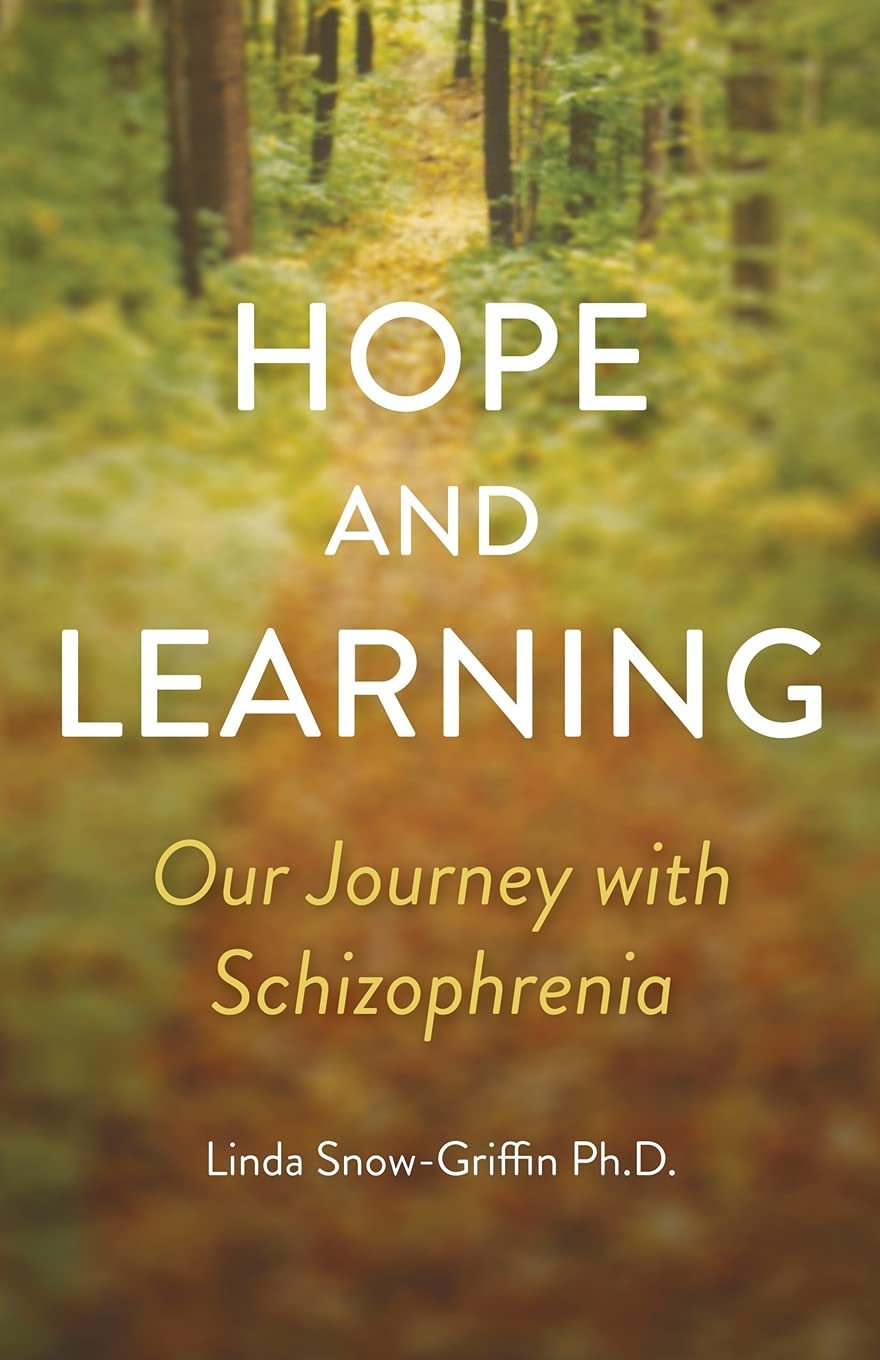
Book Review-Hope and Learning Our Journey with Schizophrenia by Linda Snow-Griffin

I want to say a special thanks to Linda Snow-Griffin for providing me a copy of her book Hope and Learning, Our Journey with Schizophrenia for a review.

Published 2021

Cherish Editions

About the Author

Linda Snow-Griffin, Ph.D. is a retired psychologist. She is the mother of two, stepmother of three adult children and grandmother of sixteen. She has practiced in a variety of settings – college, university and community mental health – and spent the last 30 years in private practice in Cincinnati. Her desire is to provide hope to families coping with mental illness, especially schizophrenia.

Blurb

When her son was diagnosed with Schizophrenia, Linda Snow-Griffin, a psychologist in private practice, felt devastated and overwhelmed. There were thousands of questions going through her mind: How can I help him? What does he need to get better? Will he be able to get better?

Hope and Learning narrates the 20-year journey Linda and her son embarked on, as they navigated their way towards recovery and a better understanding of what it is like to live with schizophrenia.


This book combines personal experience with schizophrenia with substantial data to create a heartwarming and informative resource.

My Thoughts

Linda shares her journey of her son’s diagnosis with Schizophrenia thru her intimate and raw writing. She discovered a journal of her son’s written in high school that set the wheels in motion that changed their life forever and in surprising ways.  

I have Bipolar Disorder, which is a serious mental illness, yet I have been around only one person with Schizophrenia and it was during one of my hospital stays. Being around “John” was not scary but he was totally detached, walked the halls constantly talking to other beings who controlled his life. As you can imagine, that was my perception of Schizophrenia. A stigma/myth that Linda changes in this wonderful book. 


Her son is highly functioning with medication and even attended college, it was quite difficult and presented some unique challenges when it came to writing his papers but with the understanding of his mother and love of his family, he made it thru. Linda’s book is heart-wrenching, at times it’s hard to imagine how difficult it must have been on a mother and family but what she shows us is love and understanding concurs all. 


I am so glad I read her book, my stigma of what Schizophrenia looked like changed and for that I am thankful. 


I recommend this book to anyone who thinks they may have or suspect a family member or a loved one has Schizophrenia, you will learn so much and walk away with answers and tools to take on your journey. 

Melinda

Repost

Cooking · Health and Wellbeing · Medical · Men & Womens Health · Recalls

Dietary Supplements Recalled Nationwide After 11 People Got Sick with Salmonella

Several dietary supplements containing the popular moringa leaf powder have been recalled after multiple consumers contracted Salmonella

Products manufactured using a single lot of recalled organic moringa leaf powder from Vallon Farmdirect of Johdpur, India, have been linked to at least 11 illnesses and three hospitalizations included in a multi-state outbreak of Salmonella, according to the U.S. Food and Drug Administration (FDA).

Cases have been reported in Florida, Kansas, Michigan, New York, North Carolina, South Carolina and Virginia, and the affected products include Food to Live brand’s Organic Moringa Leaf Power (8-ounce, 1-pound, 2-pound, 4-pound, 8-pound, 16-pound, and 44-pound bags) and Organic Supergreens Power Mix (8-ounce, 1-pound, 1.5-pound, 3-pound, 6-pound, and 12-pound bags) with lot codes of SO-69006 through SO-72558.

Africa Import’s Organic Moringa Leaf Power (1-kilogram box) sold after June 5 is also affected, as are all Member’s Mark Super Greens dietary supplement powder products, regardless of lot codes and best by dates. 

Outbreak Investigation of Salmonella: Moringa Leaf Powder

The supplements were distributed nationwide through both retail and wholesale channels.

The FDA is now encouraging consumers and retailers to refrain from eating, selling or serving the recalled products and is instead urging that the products be thrown away, and that any surfaces or containers they may have touched be sanitized.

Outbreak Investigation of Salmonella: Moringa Leaf Powder (October 2025)

Salmonella is a group of bacteria that can cause gastrointestinal illness and fever called salmonellosis, according to the FDA.

Symptoms often begin to develop 12 to 72 hours after infection, and they may include diarrhea, fever, abdominal cramps, high fever, aches, headaches, lethargy, a rash and blood in the urine or stool. In some cases, it may become fatal. 

After illnesses were reported in October, the Virginia Department of Health collected an open sample of Africa Imports moringa leaf powder from an affected individual’s home.

It later tested positive for Salmonella, based on a whole-genome sequencing that matched the strain causing illnesses in the outbreak. 

Outbreak Investigation of Salmonella: Moringa Leaf Powder (October 2025)

After more products, including an open sample of Member’s Mark Super Greens dietary supplement powder, yielded similar results, retailers ceased distribution and sales of the products and issued the voluntary recall. 

According to the FDA, the investigation is ongoing and authorities are continuing to “determine what additional products were made with the implicated lot of moringa leaf powder.”

As more and more recalls happen, we have to be vigilant with our food safety.

Melinda

Health and Wellbeing · Medical · Men & Womens Health · Mental Health · Self-Care

Woman Found Cutting This 1 Food Stopped The Migraines She’d Had for 10 Years

For nearly a decade, Megan Miller woke up every day bracing for pain. What began as the occasional migraine spiraled into years of confusion and fear — until one phone call, and a viral TikTok, changed everything.

“I cried like that,” Miller tells PEOPLE, recalling the emotional video that captured her raw reaction when she finally learned what could be causing her chronic migraines. “That video that was posted was literally, like, my real reaction to getting the call.”

The call that inspired her tears didn’t bring certainty at first. “The call wasn’t like, we know for sure that this is what’s doing it,” Miller says. “But the call was more of like, ‘Hey, this is kind of what we think could be causing it. Let’s try to cut out gluten. Let’s see what’s going to happen.’ ”

Miller’s pain began when she was just 17. “The very first one that I got, I woke up in the middle of the night screaming because I was in so much pain,” Miller recalls. “My parents rushed me to the ER, and the doctors actually thought I was having a stroke.”

Tests came back clear, but the cause remained a mystery. Over the next decade, Miller visited countless doctors and tried everything from prescription medications to lifestyle changes. “I had to learn really quickly, I need to file with the disability offices because, like, if I can’t make a class because I physically cannot move, you cannot hold that against me,” she explains. “So that’s been a big thing. Learned how to advocate for myself pretty young.”

Life became a balancing act between ambition and pain. “I would rather not take anything and just deal with the migraines,” Miller says, remembering how one medication dulled her mind and made her feel detached.

Each day revolved around uncertainty — would she make it through work or class without collapsing? “When they hit, they were completely debilitating,” she says. “I couldn’t see, couldn’t function, couldn’t even get out of bed.”

For years, she kept searching for a solution that never came. “I’ve been to neurologists, primary care doctors, even allergy specialists,” she says. “And no one could tell me why this was happening.”

That changed when she switched to a new primary care doctor who looked at her case differently. “It was the first time that a doctor really wanted to find an answer,” Miller recalls. “I’ve been to so many doctors that are just like, ‘We don’t know,’ and this was the first time that she really ran all the tests.”

The results revealed something no one had suspected: a severe gluten allergy, and possibly celiac disease. For the first time, Miller had an explanation that made sense.

“It was the first time that someone finally looked at all of it and said, ‘Wait a second, this could actually be connected,’ ” she recalls. “And that was such a relief, but also so frustrating because it took so long to get there.”

She had never imagined gluten could be behind her suffering. “People think gluten allergy, they think you eat a piece of bread, you’re throwing up, you’re having stomach cramps, all this stuff,” she says. “It can present really differently for a lot of people.”

For her, the allergy didn’t cause digestive issues. Instead, it looked like headaches and fatigue — symptoms she’d never linked to food. “I had no idea gluten could even do that,” she says. “If I’d known that, maybe I could’ve figured it out sooner.”

But a decade of pain management had taken its own toll. “Results that came back from my endoscopy … the stomach pain I was getting was actually from all of the aspirin-based products I’ve taken in the past 10 years [that] have just eaten away at my stomach,” she tells PEOPLE. “So now my stomach lining is basically not there.”

She had spent years trying to relieve her pain, not realizing those same medications were quietly damaging her body. The discovery was both freeing and devastating.

“That was a hard pill to swallow,” she admits. “I was just trying to make it through each day, and now I’ve got a whole new thing to heal from.”

Still, the diagnosis gave her something she hadn’t had in years — hope. When she shared her emotional reaction on TikTok, she had no idea it would strike such a chord. “Everyone was just so kind,” Miller says, smiling. “So many people commented like, ‘Oh my gosh, the same thing happened to me — when I stopped eating gluten, my migraines just went away.’ ”

Her story quickly became a space for others to share their own experiences. People offered encouragement, gluten-free recipes and even restaurant tips in the comments.

“Everyone just started giving their different suggestions, giving the recommendations, people offering their recipes for homemade bread,” she recalls. “It turned into this really positive community.”

That sense of belonging carried her through the hardest parts of learning to live gluten-free. “It is hard because there’s gluten in things I would have never thought there would be,” she says. “Having that support and just kind of having people that it’s like, ‘Yeah, it’s gonna suck … but you’re gonna feel so good not eating it that you’re not gonna want to.’ ”

When she returned to her hometown, she stumbled upon a fully gluten-free bakery that instantly made her feel welcome. “I walked in and I told her, ‘Okay, I’m like, newly gluten free,’ and she’s walking me through like, everything they have to offer,” Miller says. “It was just so sweet — she really cared.”

Now, each day without a migraine feels like a small miracle. “I’ve gone longer not eating gluten and not having a migraine than I have in 10 years,” she tells PEOPLE. “So I’m finally at the point that I’m like, I will take not eating gluten any day over having this head pain two or three times a week.”

After years of living in fear, she’s finally free from the constant dread. Her body, once a source of suffering, now feels like a source of peace. Within six weeks of completely eliminating gluten, Miller says she hadn’t had a single migraine — a stunning turnaround after years of two or three attacks a week.

“You have to fight for answers,” Miller says. “And you have to find a doctor that’s willing to actually advocate for you, willing to put in those tests.”

Through her videos, she continues to raise awareness about how gluten sensitivity can present in unexpected ways.

Now, pain-free for the first time in her adult life, Miller hopes her story will encourage others to listen to their bodies and keep searching for answers. “Your body doesn’t feel right, there’s a reason why,” she says. “And you kind of have to figure it out.”

As she continues to heal, gratitude has replaced frustration. Each migraine-free morning feels like a victory she once thought impossible.

“I feel like I finally get to live again,” Miller says. “It’s like I’m getting my life back, one day at a time.”

I am so happy for her, migrains can consume your life and it’s a blessing when I here a story of someone living a migraine free life.

Melinda

Reference:

https://people.com/after-10-years-of-chronic-migraines-woman-finds-solution-is-cutting-this-1-food-exclusive-11846211


Chronic Pain · Health and Wellbeing · Medical · Men & Womens Health

Pain Medications and Kidney Health

It’s almost a reflex: You have an ache or pain, so you reach for an over-the-counter (OTC) pain medication. But as routine as this behavior is, not everyone should casually take pain medications, as there can be potential negative interactions. 

For example, people with kidney damage or reduced kidney function might not be able to use every OTC pain medication. Let’s look at why and what you can safely do for pain relief.

Which pain medication is safest if you have kidney problems?

Before taking any pain medication, you should speak with your physician or a health professional to determine any possible interactions or risks that you might encounter.

For people with kidney disease, aspirin can increase the risk of bleeding. And in those with reduced kidney function, aspirin is not recommended unless prescribed by a physician. The recommended alternative can vary depending on the type and severity of kidney problems that you have. 

Often, acetaminophen (Tylenol) is the preferred alternative. But it’s encouraged that you use the lowest dose possible that still manages pain or fever symptoms, decreasing doses gradually. And likewise, you should not exceed more than 3,000 milligrams per day.

Alternatively, if an OTC acetaminophen drug doesn’t control pain symptoms, a physician may suggest a temporary prescription alternative like tramadol. In its immediate release form, tramadol can be used in individuals with chronic kidney disease (CKD) or end stage renal disease (ESRD).

However, extended release dosing for tramadol is not recommended for people with advanced CKD or ESRD.

Which pain medication is safe for kidney transplant patients?

Similar to people with kidney disease, transplant recipients should only consider acetaminophen to manage post-operative pain symptoms. Again, best practices include using the lowest dose possible and never exceeding 3,000 milligrams per day. 

Which pain medication is safe for kidney stones?

The short answer to this question is, it depends. If a patient has kidney stones with no underlying renal issues, then any OTC pain medication can be used to manage the pain symptoms associated with passing a kidney stone. 

This includes ibuprofennonsteroidal anti-inflammatory drugs (NSAIDs), and acetaminophen. Multiple studies and reviews have consistently shown positive patient outcomes when using OTC medications of all types to treat pain associated with renal colic or passing a kidney stone

However, if someone also has impaired kidney function and kidney stones, NSAIDs are not recommended. A physician will provide the best guidance, but typically, sticking with acetaminophen is the best choiceTrusted Source for managing kidney stone pain when you have kidney disease or impaired kidney function. 

Which pain medication can damage your kidneys?

Misusing any pain medication can increase your risk of kidney damage. This includes aspirin, ibuprofen, acetaminophen, NSAIDs, and of course, prescription opioid medications. The most common risks center around consuming too high a dose or taking medications for longer than recommended. 

But of all the OTC pain medication categories, NSAIDs pose the greatest risk of continuous kidney damage. Specifically, these medications can increase the risk of progressive kidney damage or sudden kidney failure. 

2019 studyTrusted Source involving over 764,000 U.S. Army officers found that participants who were prescribed more than seven daily doses of NSAIDs per month had an increase in the potential for an acute or chronic kidney disease diagnosis. 

Takeaway

Regardless of whether you have a diagnosed kidney disorder or have healthy kidney function, OTC medications should be used with care.

Excessive use by consuming too high a dose or for prolonged periods can lead to a variety of health problems throughout your body — including damage to the kidneys.

For people with kidney disease or impaired kidney function, avoiding NSAIDs unless directed by a physician is the safest way to avoid further harm. Instead, opt for acetaminophen and be sure to use the lowest dose for the shortest period to control pain symptoms. 

And when in doubt, speak with a physician or health professional before taking an OTC pain medication.

I have Stage 3 Chronic Kidney Dieases and it is hard to deal with pain when you can’t take NSAIDS and choose not to take pain pills. Ice works well for the short term.

Melinda

Reference:

https://www.healthline.com/health/kidney-health/which-painkiller-is-safe-for-kidneys?utm_term=feature&utm_source=Sailthru%20Email&utm_medium=Email&utm_campaign=fibro&utm_content=2025-10-21&apid=36735751&rvid=7f053d6ecf820dccd09e4914833cbd49bdfe95bb517404ee9b41601767d1bace#fa-qs

Chronic Illness · Health and Wellbeing · Medical · Men & Womens Health · Self-Care

Can You Benefit From A Weighted Blanket?

It’s that time of year when many of us are pulling out heavier blankets for the colder months of winter. If you have a chronic illness maybe you’ve already heard about weighted blankets, maybe even sleep with one year-round. If not familiar with weighted blankets, I’ll share some of the basics of buying one.

Weighted blankets come in all sizes, including children’s and throws. The blankets work by distributing weight evenly across the body to imitate a hug to induce better sleep by increasing Serotonin levels inducing a deeper sleep.

Weighted blankets have been known to help with many types of chronic illnesses and sleeping problems.

The key difference from your average blanket is they are made with glass beads as a filler. You purchase the weight of the blanket based you your own weight. It is also suggested that if you are a first-time user to buy a lighter one to start off.

The blankets come in a variety of fabrics and many have slipcovers you can purchase as well. I’m a very hot sleeper and they even make weighted blankets for people like me. Look for Cooling in the description.

I started my search last night for a new one since the first one I purchased was too heavy. I learned a lot about how they are made and why some are more expensive than others.

When you’re looking for a blanket you want small sewn 5″-3″ squares, that way the beads are more evenly distributed. The larger the square the more the beads can roll around.

Another important feature to look for is if it is machine washable, I found several that were hand wash only and I can’t go for that. I would recommend a duvet cover for your blanket which will allow you to keep it clean and only have to wash the blanket occasionally.

There are many lists of the top brands to buy, after looking at a few lists, I went to Amazon. I could not justify the $300 price of the top-rated blankets, it just doesn’t make sense. I found several including one on the list that cost $100 for a small size. I’m only buying a blanket for my side of the bed, not the entire King Size bed. He sleeps with the heavier blanket I bought years ago.

I found something interesting as I did more research. One brand I discovered said on more than one occasion, they are not for people with sensitive joints and back pain! Wait, hold the phone! What! I have sensitive hip joints and bad back pain. Do I need one of these blankets?

If you do decide to buy one, make sure you buy the right weight for your body. I’ve heard the praises of weighted blankets for years but for me, it was not the right choice.

Ask lots of questions and shop around before buying there are so many nuances to each blanket.

Melinda

Repost

Celebrate Life · Family · Grieving · Health and Wellbeing · Medical · Men & Womens Health · Mental Health

Caregiver To Grieving In Four Days

I’ve reposted this post several times over the years and 2010 was the original post. It’s critical to acknowledge how difficult life is for a caregiver and to think of ways to support them.

——

Each day was a roller coaster of how he felt and how exhausted I was. I learned so much being a caregiver to my grandmother and grandfather. As the population ages, many of you will take on the responsibility. One of the most difficult changes was going from granddaughter to caregiver. Even at 92 my grandfather had a strong mind and felt he didn’t need help. I pray for strength every day.

My grandfather died in 2010 at the young age of 92 years old. I spent more time with him in 2010 year than I spent at home. I cherish the time we had together, no matter how painful. They are my memories and my life changed forever with his death. His health declined so fast that for two days I did not realize that he was dying now, not in a couple of weeks. He was at home under hospice care and would not get in the hospital bed until two days before he passed. He fell out of bed that morning, he was so weak it was difficult for me to get him back in bed. I don’t think we would have been able to talk him into moving to the hospital bed if he had not fallen. For him the bed meant death and he was still fighting. My grandfather had End Stage Kidney Disease. An emergency trip to the hospital for his AFIB is how we learned he had about two months to live. We knew his kidneys were losing function but I was not ready for a timeline. His doctor had not given me that impression on a recent visit so I asked her to review the hospital records. I was not surprised but very saddened that she agreed with the prognosis. It took a couple weeks for my grandfather to believe the doctors were right. Kidney failure is a silent killer and luckily not a painful one. You start sleeping more until you sleep yourself into a coma.

I arrived on Sunday afternoon after two days of relief and he didn’t look any different. Monday morning I knew he was out of it by the things he was saying but thought it was a bad day. Tuesday I knew he was weak when he fell out of bed and felt like dead weight. It took everything in me to get him back in bed. My grandfather died on Thursday. What the doctors did not tell me is people his age die faster, the end came weeks sooner than we thought. I’m so thankful that my grandfather and I had time together to say what we wanted to say, cry about the loss and enjoy the memories. I have no regrets.

Cleaning out the house was so hard, 46 years of memories were everywhere. My grandmother left notes on everything, it was like mourning her death as I found each note. Notes on the back of photos, on little pieces of paper, and even on masking tape. I knew all the notes were there, we had looked at them many times but it was different this time. Everything was packed up this time and the house cleared out. My grandparents raised me so I’ve lost parents, they were the best you could ever pray for.  The house is empty but I see my life in every room, the great memories with my grandparents are everywhere you look. I am starting a new chapter in my life. It’s a long journey ahead.

Melinda

Repost from 2010

Health and Wellbeing · Medical · Men & Womens Health · Recalls

Over 2 Million Pounds of Pork Jerky Recalled for Potential Contamination with ‘Pieces of Wiry Metal’

The Food Safety and Inspection Service announced that multiple consumers reported finding metal in their Golden Island Korean barbecue pork jerky

A South Dakota company is recalling approximately 2.2 million pounds of barbecue pork jerky due to potential contamination with metal fragments.

The Food Safety and Inspection Service (FSIS) announced in a press release on Friday, Oct. 24, that LSI, Inc., based in Alpena, is recalling 2,277,540 pounds of Golden Island Korean barbecue pork jerky following reports of consumers finding “pieces of wiry metal” in the product. 

“LSI, Inc. determined that the metal originated from the conveyor belt used in production,” FSIS said in the release. “There have been no confirmed reports of injury due to consumption of this product.

“Anyone concerned about an injury should contact a healthcare provider,” they added.

Golden Island Korean Barbecue Pork Jerky,

The recalled product was shipped to Costco and Sam’s Club retail locations across the U.S. and displays “best by” dates ranging from Oct. 23 through Sept. 23, 2026. 

The recall includes 14.5-oz. and 16-oz. plastic pouches of ready-to-eat pork jerky with the label “Golden Island fire-grilled pork jerky Korean barbecue recipe,” per the release. 

Consumers can also identify the products by the establishment number “M279A” on the inside of the USDA mark of inspection.

The FSIS is urging consumers who might have already purchased the product “not to consume it” but to throw it away or return the item to the place of purchase.

“FSIS routinely conducts recall effectiveness checks to verify that recalling firms notify their customers of the recall and that steps are taken to make certain that the product is no longer available to consumers,” the FSIS said.

Consumers with questions about the recall are advised to contact info@goldenislandjerky.com.

The pork jerky recall comes after more than 1,000 pounds of Ada Valley frozen ground beef were recalled in July after pieces of metal were also reportedly found in the product, according to the FSIS.

Melinda

Reference:

https://people.com/barbecue-pork-jerky-recalled-metal-contamination-11837133

Cooking · Health and Wellbeing · Medical · Men & Womens Health · Recalls

Over 6 Million Eggs Have Been Recalled by the FDA amid Ongoing Salmonella Risk

The U.S. Food & Drug Administration (FDA) has issued a nationwide alert, instructing consumers, retailers and distributors not to eat, sell or serve certain eggs after the recall of more than 6 million eggs produced by the Arkansas-based Black Sheep Egg Company due to potential Salmonella contamination.

According to the announcement posted by the FDA on Monday, Oct. 20, the recall includes 12- and 18-count cartons of the company’s Free Range Large Grade A Brown Eggs with Best By dates between August 22 and October 31, 2025, and UPC 860010568507 and 860010568538.

Over 6 Million Eggs Have Been Recalled Due to Salmonella:

The agency also classified the action as a Class I recall, the highest risk level, given that eggs could pose a serious health threat of Salmonella.

The symptoms, which include diarrhea, fever and abdominal cramps, can usually last four to seven days and can be experienced 12 to 72 hours after ingesting the contaminated food. Vulnerable demographics — children under the age of five years old, those with comparable immune systems and the elderly — are subject to experiencing more severe infections. 

As the notice explains, the alarm was raised after 40 environmental samples collected at the company’s processing facility tested positive for Salmonella, including seven different strains known to cause human illness.

While no illnesses have yet been reported and the FDA has no current evidence linking the firm to an outbreak, the recall is being handled as a precaution.

Over 6 Million Eggs Have Been Recalled Due to Salmonella:

Although the eggs were originally shipped to retail and wholesale locations in Arkansas and Missouri, they may have been further distributed and repackaged before reaching other states.

That broader footprint extends the recall beyond the immediately identified region. A related Oct. 16 recall by the Texas-based brand Kenz Henz, which sold eggs sourced from Black Sheep in Houston, further underscores the distribution reach.

Retailers and food-service operators have been instructed to halt sales and distribution of the suspect eggs immediately. Consumers are advised to check any egg cartons in their refrigerators for the affected codes and dates, and either discard or return them to the location of purchase. Surfaces and containers that came into contact with the contaminated eggs should be thoroughly washed and sanitized. 

Anyone who has consumed the recalled eggs and develops symptoms is encouraged to contact a health-care provider and report the situation to the FDA for further investigation.

Not again?

Melinda

Reference:

https://people.com/over-6-million-eggs-have-been-recalled-by-fda-amid-salmonella-risk-11834683

Health and Wellbeing · Medical · Men & Womens Health · Mental Health · Moving Forward · Trauma

Agoraphobia: Symptoms, Causes and Treatment Options

Agoraphobia is a common but often misunderstood anxiety disorder that can make everyday situations feel overwhelming or even impossible; understanding the signs and seeking the right support can help you reclaim your freedom, 

Many mental health conditions are simply extreme degrees of minor challenges that most people face regularly. It’s perfectly natural to feel some nervousness when you’re going somewhere you’ve never been before or going to a crowded place where there are a lot of people you don’t know; But, agoraphobia is different.

If that slight tinge of nervousness becomes intense anxiety that prevents you from doing things you normally would, it might be a condition called agoraphobia.

What Is Agoraphobia?

Agoraphobia is an intense fear of situations where there may not be an easy way to escape or where you may feel trapped or helpless.

At its core, it’s a phobia of being in a situation where you’re panicking and there’s not an easy way out. This typically translates into a fear of familiar places, crowds, public transportation and very open areas like large parking lots and open water.

In any given year, about 2% of people experience agoraphobia. That is about 6.8 million people in the US. It’s more commonly diagnosed in women than in men.

Agoraphobia can have a profound impact on your daily life. It can range in severity from avoiding certain activities you might otherwise enjoy, like parties, concerts or other large social events, to being unable to leave your home.

Some people become homebound for years or are unable to maintain a career and care for themselves because of it.

The Relationship Between Agoraphobia and Anxiety and Panic Disorders

Agoraphobia, like any other phobia, is a type of anxiety disorder. But it also has a unique relationship to panic disorders.

Agoraphobia often develops after a panic attack in a public place where escape feels impossible. Even if you were able to get out of the situation the first time, you have a fear that next time you won’t be able to.

Symptoms of Agoraphobia

The symptoms of agoraphobia include an extreme fear of:

  • Unfamiliar places
  • Public spaces, especially crowded places
  • Waiting in line
  • Leaving home by yourself
  • Using public transportation
  • Enclosed spaces outside your home, like elevators or movie theaters
  • Large open spaces like parking lots or open water

Agoraphobia is specific to these types of circumstances, where you might not have a clear path to safety. Extreme anxiety in situations other than these might indicate other anxiety disorders.

Where’s the Line Between Worry and Agoraphobia?

One of the tricky aspects of phobias is understanding the difference between a “normal” amount of anxiety about a particular situation and a phobia. While only a mental health professional can diagnose agoraphobia, you could have this condition if:

  • Your level of anxiety in the situation is out of proportion with the actual danger
  • Your fear prevents you from doing things you would otherwise enjoy, like certain social outings
  • You stop doing certain things or going places unless you have a trusted companion with you
  • You’re experiencing these symptoms for six months or longer

When you’re in a situation that triggers your agoraphobia, the symptoms can manifest in physical, emotional or psychological and behavioral ways.

In these situations, physical symptoms can include:

  • Tightness in your chest
  • Rapid heartbeat
  • Shortness of breath or hyperventilating (breathing too fast)
  • Dizziness or disorientation
  • Shaking or trembling
  • Sweating even though you’re not warm
  • Upset stomach

Meanwhile, the emotional or psychological symptoms can include:

  • Dread
  • Fixating on what could go wrong
  • Feeling a loss of control
  • Fear that you’re dying

During agoraphobia triggering situations, you may also have these behavioral symptoms:

  • Avoiding certain situations, like crowded places
  • Only going to certain places if you have someone with you
  • Only going to certain places or events after planning out escape routes or what to do if you need to get out

Causes and Risk Factors of Agoraphobia

How do you know if you’re at risk for developing agoraphobia? It usually develops in the teenage or early adult years and does seem to have a genetic link. People who have a close relative with agoraphobia are more likely to develop it. Some studies indicate that the heritability is as high as 48-61%.

Genetics isn’t the only factor, though. There are often traumas and life experiences that contribute to agoraphobia, especially trauma that occurs in childhood. This can include abuse, being attacked or the loss of someone with whom you felt safe, such as a parent.

It’s also important to note that many people with agoraphobia have other mental health conditions too, like panic disorder, depression or PTSD. In particular, a large number of people with agoraphobia already had a panic disorder.Their agoraphobia may have been triggered after having a panic attack in a place where they felt unsafe or helpless.

While a panic attack in a public place might trigger agoraphobia, often these people already had some level of anxiety in these situations. So it may be a combination of panic disorder and existing agoraphobic tendencies.

How Agoraphobia Affects Daily Life

One of the hallmarks of a phobia or other anxiety disorders is its impact on your daily life and the limitations that it creates for you. It can affect your work, romantic relationships, family relationships and social life in numerous ways.

You may decline social events and invitations due to anxiety about the situation, or struggle to complete work assignments if they involve situations that make you anxious. You could be limited in the types of jobs you can accept.

Maybe you can only able to perform jobs where you can work from home or jobs that don’t involve situations in public or crowded places. Finally, your relationships may suffer because you aren’t able to join loved ones for the things they enjoy doing.

Agoraphobia can even prevent you from taking care of yourself and living independently, especially when it is severe. It could prevent you from doing essential tasks like going to the grocery store or running other errands, such as going to the doctor.

Finally, agoraphobia can have a substantial impact on your mental health, especially if you have co occurring conditions already. It can worsen conditions like depression, because you feel trapped at home or aren’t able to do activities that could boost your serotonin. In some cases, it can make substance use disorder worse, too.

Agoraphobia changed my life over five years ago. I don’t drive, walk outside of house, only leave the house for doctors appointments or to see my hairdresser. It’ also affected the activities I did in the past with my husband. I’ve read some great information on how to slowly gain confidence on being by myself. I have a plan to start as soon as my shoulder heals from surgery.

If Agoraphobia is impacting you quality of life, I hear you, and wish you all the best at venturing out when the time is right for you.

I am in no way supporting the site or it’s service offers, it is just the great information.

Melinda

To read the entire article click HERE.

Reference:

https://therapy.com/conditions/agoraphobia/