If you want to stay on top of Recalls, Safety Alerts and Adverse Reporting you can turn to FDA.gov for the most current trusted source for information.
On the FDA.gov website, all recalls are tracked to keep the public safe. Three key sections to look under are:
The FDA announced that various doses of prazosin hydrochloride have been voluntarily recalled
Drug makers have recalled more than 500,000 bottles of a blood pressure medication over concerns it may include a cancer-causing chemical.
The U.S. Food and Drug Administration (FDA) announced that New Jersey-based Teva Pharmaceuticals USA and drugs distributor Amerisource Health Services issued voluntary nationwide recalls for various doses of prazosin hydrochloride, according to the Associated Press.
The drug makers said the pill capsules may have nitrosamine impurities — or “No-nitroso Prazosin impurity C” — that are considered potentially cancer causing. About 580,000 bottles of various strengths have been recalled for having the impurities.
The FDA classified the recall as having a Class II risk level, “in which use of or exposure to a violative product may cause temporary or medically reversible adverse health consequences or where the probability of serious adverse health consequences is remote.”
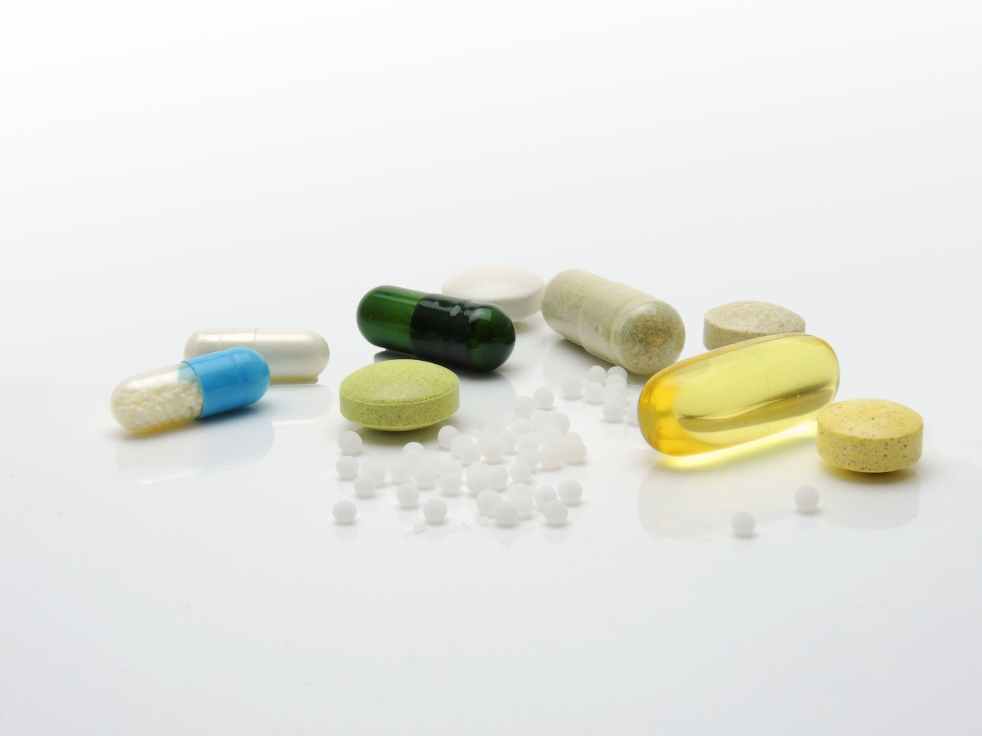
Pill bottles (stock image).Getty
A statement from the California State Board of Pharmacy reads: “According to the Health Hazard Assessment by Teva USA, exposure to the product of concern could lead to severe adverse health consequences, but the likelihood of harm was assessed as remote. The overall risk of harm in the patient population is considered to be medium.’
The recalled bottles included 181,659 of 1 mg bottles, 291,512 of 2 mg bottles and 107,673 of 5 mg bottles. The bottles may have up to 1,000 capsules each with expiration dates ranging from November 2025 to February 2028.
The lot numbers and expiration dates can be found on the FDA’s website.
According to the AARP, anyone who has affected medication should contact their doctor or pharmacy for specific guidance, return their medication to the pharmacy to dispose of it, and to report any side effects or issues to the FDA.
The Mayo Clinic states that prazosin is prescribed to patients to treat high blood pressure, also known as hypertension, which can cause the heart and arteries to not function properly and then damage brain, heart and kidneys. It can also result in a stroke, heart failure or kidney failure.
The medication is also sometimes prescribed for nightmares and other sleep disturbances caused by post-traumatic stress disorder, according to the AP.
In America we have the FDA to approve all prescription medications, manufacturers have to prove their drug has all the data on clinical trials, and they even do down to approving what the label can have on it. If the FDA is not satisfied the FDA will tell the manufacturer to go get this information and reapply. That’s critical to know. In America, we have a system that all prescriptions go thru before being released to the public. They also have a section you can report adverse reactions or a medical device that failed. We have a system.
I know that people with chronic illnesses especially those with chronic pain have trouble getting the pain management they need and out of frustration turn to the Internet. BEWARE!
There are other countries that have a system in place but we have no idea if it matches our standards. There are also countries that have no system to verify the drugs are pure, they do what they say and they are monitored.
The FDA says this about online Pharmacies.
Warning Signs of an Unsafe Online Pharmacy
Beware of online pharmacies that:
Do not require a doctor’s prescription.
Are not licensed in the U.S. and by your state board of pharmacy.
Do not have a licensed pharmacist on staff to answer your questions.
Send medicine that looks different than what you receive at your usual pharmacy, or arrives in packaging that is broken, damaged, in a foreign language, has no expiration date, or is expired.
Offer deep discounts or prices that seem too good to be true.
Charge you for products you never ordered or received.
Do not provide clear written protections of your personal and financial information.
Sell your information to other websites.
These pharmacies often sell medicines that can be dangerous because they may:
Have too much or too little of the active ingredient you need to treat your disease or condition.
Not contain the right active ingredient.
Contain the wrong ingredients or other harmful substances.
If you buy from any online site from another country, you have no guarantee of what’s inside. It could cause more harm to your body, it could have nothing in there to help you, and the worst is it can be laced with different products and can kill you.
That’s strong words I know but I have read too many articles and heard of personal stories where buying online was the worst move to make.
Melinda
References:
Yes, there are ligament Pharmacies online, I would check them out before you buy. Do an Internet search on the Pharmacy. You may be surprised what you find or you see they are legit Pharmacies you can go to. The key is what country is your medication coming from.
Where you can protect yourself is to search, search, and search before buying. Your health and life are more important. Personally, I would not buy a drug online unless my insurance company offers an online Pharmacy.
The recent research on Gabepentin focuses on the off-label use and why it’s becoming a drug of increasing concern for abuse and misuse. Off-label use means the drug is not approved or monitored by the FDA, for the ailment prescribed. The question becomes what is the reason the doctor thinks it will work, do they have patients who have seen improvement and will it help or do harm.
Doctors write prescriptions for off-label conditions on a regular basis and that doesn’t mean you need to pass on taking the medication. There were numerous occasions my Psychiatrist wrote me off-label prescriptions with great success. This is not a make or break decision, it’s a call to gather more information before making your choice.
This is what I gathered through reseach papers and articles.
Gabapentin is widely used in the United States for a number of off-label indications, often as an alternative to opioid therapy. Increasing evidence has emerged suggesting that Gabapentin may not be as benign as once thought and may be associated with substance abuse in concert with opioids. With concerns for safety mounting, it is prudent to examine the efficacy of Gabapentin across its many uses to understand the risk-benefit balance. Reviews on off-label indications such as migraine, fibromyalgia, mental illness, and substance dependence have found modest to no effect on relevant clinical outcomes. This high-quality evidence has often been overshadowed by uncontrolled studies and limited case reports. Furthermore, the involvement of Gabapentin in questionable marketing schemes further calls its use into question. Overall, clinicians should exercise rigorous appraisal of the available evidence for a given indication, and researchers should conduct larger, higher-quality studies to better assess the efficacy of Gabapentin for many of its off-label uses.
Gabapentin may cause breathing problems in people who use opioid pain medicines and those with chronic obstructive pulmonary disease (COPD). Older adults who take Gabapentin are also at a higher risk of breathing problems.
Because Gabapentin can enhance the psychological effect of opioids, it has the potential to be abused and has contributed to drug overdose deaths.
Drugs such as Gabapentin have been linked in rare cases to an increased risk of suicidal thoughts or behaviors. If you take Gabapentin, you or your family should tell the doctor about any unusual changes in your mood, such as agitation, violence, aggression, depression, or talking about wanting to hurt yourself.
Side effects of gabapentin
Common side effects of Gabapentin include:
drowsiness or dizziness
headache or blurred vision
nausea, vomiting, diarrhea, constipation
dry mouth
weight gain
swelling of the hands, feet, or ankles
back or joint pain
flulike symptoms such as fever or body aches.
Rare but serious side effects
Rare but serious side effects of Gabapentin include:
rash, itching, or yellowing of the skin
swelling of the face and throat, a condition called angioedema
problems speaking or swallowing
changes in memory, ability to concentrate, or personality.
Safely stopping treatment with Gabapentin
If you stop taking gabapentin suddenly, there is a chance of having seizures. Instead, you may need to gradually reduce how much Gabapentin you take until you stop it completely. Your doctor can advise you on how to safely stop treatment with Gabapentin.
Several large studies published in 2025 and earlier have tracked patients with ongoing Gabapentin prescriptions. The results were eye-opening. Adults who had six or more prescriptions showed about a 29% higher risk of dementia and an 85% higher risk of MCI compared to people who didn’t take Gabapentin. For those with 12 or more prescriptions, the numbers jumped even higher, roughly 40% greater dementia risk and a 65% increase in MCI. What’s especially surprising is that this wasn’t limited to older adults. Even people under 65, who typically aren’t considered high risk for dementia, seemed more vulnerable.
The cognitive side effects of Gabapentin are often subtle at first but can become harder to ignore with long-term use. Patients have reported memory loss, difficulty concentrating, slower thinking, and that frustrating “brain fog” feeling. Some research suggests these issues can appear within just a week of starting Gabapentin, while other studies found they show up more clearly after extended treatment. Either way, it’s clear that Gabapentin can have an impact on mental sharpness and attention.
Of course, it’s important to keep things in perspective. These studies show an association, not direct proof that Gabapentin causes dementia. Chronic pain itself is known to affect brain health, and many patients on Gabapentin are also taking other medications that could play a role. So while the findings are concerning, they don’t mean every person who takes Gabapentin long-term will develop dementia.
In America we have the FDA to approve all prescription medications, manufacturers have to prove their drug has all the data on clinical trials, and they even do down to approving what the label can have on it. If the FDA is not satisfied the FDA will tell the manufacturer to go get this information and reapply. That’s critical to know. In America, we have a system that all prescriptions go thru before being released to the public. They also have a section you can report adverse reactions or a medical device that failed. We have a system.
I know that people with chronic illnesses especially those with chronic pain have trouble getting the pain management they need and out of frustration turn to the Internet. BEWARE!
There are other countries that have a system in place but we have no idea if it matches our standards. There are also countries that have no system to verify the drugs are pure, they do what they say and they are monitored.
The FDA says this about online Pharmacies.
Warning Signs of an Unsafe Online Pharmacy
Beware of online pharmacies that:
Do not require a doctor’s prescription.
Are not licensed in the U.S. and by your state board of pharmacy.
Do not have a licensed pharmacist on staff to answer your questions.
Send medicine that looks different than what you receive at your usual pharmacy, or arrives in packaging that is broken, damaged, in a foreign language, has no expiration date, or is expired.
Offer deep discounts or prices that seem too good to be true.
Charge you for products you never ordered or received.
Do not provide clear written protections of your personal and financial information.
Sell your information to other websites.
These pharmacies often sell medicines that can be dangerous because they may:
Have too much or too little of the active ingredient you need to treat your disease or condition.
Not contain the right active ingredient.
Contain the wrong ingredients or other harmful substances.
If you buy from any online site from another country, you have no guarantee of what’s inside. It could cause more harm to your body, it could have nothing in there to help you, and the worst is it can be laced with different products and can kill you.
That’s strong words I know but I have read too many articles and heard of personal stories where buying online was the worst move to make.
Melinda
References:
Yes, there are ligament Pharmacies online, I would check them out before you buy. Do an Internet search on the Pharmacy. You may be surprised what you find or you see they are legit Pharmacies you can go to. The key is what country is your medication coming from.
Where you can protect yourself is to search, search, and search before buying. Your health and life are more important. Personally, I would not buy a drug online unless my insurance company offers an online Pharmacy.
Too many of us struggle to achieve a body ideal that’s just not obtainable by humans. It’s time to redefine what’s good, healthy and attractive on our own terms, say writers (and sisters) Emily Nagoski and Amelia Nagoski.
The Bikini Industrial Complex. That’s our name for the $100 billion cluster of businesses that profit by setting an unachievable “aspirational ideal,” convincing us that we can and should — indeed we must — conform with the ideal, and then selling us ineffective but plausible strategies for achieving that ideal. It’s like old cat pee in the carpet, powerful and pervasive and it makes you uncomfortable every day but it’s invisible and no one can remember a time when it didn’t smell.
Let’s shine a black light on it, so you can know where the smell is coming from. You already know that basically everything in the media is there to sell you thinness — the shellacked abs in ads for exercise equipment, the “one weird trick to lose belly fat” clickbait when all you wanted was a weather forecast, and the “flawless” thin women who fill most TV shows. The Bikini Industrial Complex, or BIC, has successfully created a culture of immense pressure to conform to an ideal that is literally unobtainable by almost everyone and yet is framed not just as the most beautiful, but the healthiest and most virtuous.
But it’s not just magazine covers, ads and other fictions that get it wrong. The body mass index (BMI) chart and its labels — underweight, overweight, obese, etc. — were created by a panel of nine individuals, seven of whom were “employed by weight-loss clinics and thus have an economic interest in encouraging use of their facilities,” as researchers Paul Ernsberger and Richard J Koletsky put it.
You’ve been lied to about the relationship between weight and health so that you’ll perpetually try to change your weight. But listen: It can be healthier to be 70 or more pounds over your medically defined “healthy weight” than just five pounds under it. A 2016 meta-analysis in The Lancet medical journal examined 189 studies, encompassing nearly four million people who never smoked and had no diagnosed medical issues. It found that people labeled “obese” by the CDC have lower health risk than those the CDC categorized as “underweight.” The study also found that being “overweight” according to the CDC is lower risk than being at the low end of the “healthy” range as defined by the US federal government and the World Health Organization.
Another meta-analysis even found that people in the BMI category labeled “overweight” may live longer than people in any other category, and the highest predictable mortality rate might be among those labeled “underweight.” Taking it further, newer research is suggesting that doctors warn their middle-aged and older patients against losing weight, because the increasingly well-established dangers of fluctuations in weight outweigh any risk associated with a high but stable weight.
Authors (from left) Emily and Amelia Nagoski. Photo: Paul Specht.
Our culture has primed us to judge fat people as lazy and selfish. And it goes deep. Amelia conducts a children’s choir, and she has to teach her kids to breathe. At ten, eight, even six years old, they already believe that their bellies are supposed to be flat and hard, so they hold their stomachs in. You can’t breathe deeply, all the way, without relaxing your abdomen, and you can’t sing if you can’t breathe. So Amelia has to teach children to breathe.
Please: Relax your belly. It’s supposed to be round. The BIC has been gaslighting you.
We’re not saying the people or companies that constitute the BIC are out to get you. Frankly, we don’t think they’re smart enough to have created this system on purpose. But they recognize there’s money to be made by establishing and enforcing impossible standards.
We all encounter the BIC every day. So how can we make it through the fray?
One strategy: Play the “new hotness” game.
When we reconstruct our own standard of beauty with a definition that comes from our own hearts and includes our bodies as they are right now, we can turn toward our bodies with kindness and compassion. Well, easier said than done.
Amelia is vain about pictures of her conducting, in which she inevitably has her mouth wide open and her hair is a sweaty wreck. Emily watches herself on TV and worries that her chin is too pointy because one time, somebody said it was. (We are identical twins.)
Neither of us has ever had the skinny proportions of a model, and we watched our mom — who was model-thin before she gestated two seven-pound babies at the same time — look at her reflection in mirrors and cry at what she saw there. What she saw there is very much like what we see in our own reflections now.
Which is why we play the “New Hotness” game, a way to let go of body self-criticism and shift to self-kindness. One day, Amelia was at a fancy boutique, trying on gowns for a performance. Attire for women conductors is hard to find: solid black with long sleeves, formal yet not frumpy is an unlikely combination. Finding all of this in her size is even more difficult.
She tried on a dress that looked so amazingly good she texted Emily a dress selfie, with a caption paraphrasing Will Smith in Men in Black II: i am the new hotness.
And now “new hotness” is our texting shorthand for looking fabulous without reference to the socially constructed ideal. We recommend it. It’s fun.
Maybe you don’t look like you used to, or like you used to imagine you should, but how you look today is the new hotness. Even better than the old hotness.
Saggy belly skin from that baby you birthed? New hotness.
Gained 20 pounds while finishing school? New hotness.
Skin gets new wrinkles because you lived another year? New hotness.
Hair longer or shorter, or a different color or style? New hotness.
Mastectomy following breast cancer? New hotness.
Amputation following combat injury? New hotness.
The point is, you define and redefine your body’s worth, on your own terms. It’s not necessary to turn toward your body with love and affection — love and affection are frosting on the cake of body acceptance, and if they work for you, go for it. But all your body requires of you is that you turn toward it with kindness and compassion, again and again, without judging all your contradictory emotions, beliefs and longings.
No doubt after you finish reading this, you will go out into the world and notice the diversity of bodies around you. And you will still have reflexive thoughts about the people who don’t conform to the aspirational ideal, envious thoughts about the people who do, or self-critical thoughts about the ways the world tells you that you fall short. And then you might even have emotional reactions to your emotional reactions: “Darn it, I shouldn’t think that!”
Change happens gradually. Your brain has been soaking in the BIC for decades; any time you step outside your door, you’re back in it; any time you turn on a TV, you’re back in it; and any time you put clothes on, you’re back in it. Just notice it, as you’d notice a fleck of dust floating through the air. Smile kindly at the mess. And know what’s true: Everyone is the new hotness. You are the new hotness. So is she. So are they. So are we.



:max_bytes(150000):strip_icc():focal(665x0:667x2)/pill-bottles-110125-fc03dd69018644299093ebefd0c3ca81.jpg)



 lookingforthelight.blog