October was full of informative awareness months, and November will also be. The list is extensive, if you want to read about all the awareness months and days, click here.
Awareness Months
Native American Heritage Month
Movember
National Homeless Youth Awareness Month
COPD Awareness Month
Diabetes Awareness Month
Epilepsy Awareness Month
Lung Cancer Awareness Month
Pancreatic Cancer Awareness Month
Awareness Days
International Stress Awareness Day – November 2
World Adoption Day – November 9
Veterans Day – November 11th
Humane Society Anniversary Day – November 22
National Recycling Day – November 15
International Day for Tolerance – November 16
International Transgender Day of Remembrance – November 20
International Survivors of Suicide Loss Day – 1st Saturday before Thanksgiving
Men, women, and people of all gender identities may experience depression at some point in their lives. Depression is a serious condition that affects how a person thinks, feels, and acts.
According to the Centers for Disease Control and Prevention (CDC), women seem to experience depression at a higher rate than men. However, it’s thought that men may be underrepresented in these numbers.
This may be due to mix of social and biological factors that make it more challenging to notice and diagnose depression in men. They may also feel culturally pressured to act “manly” by hiding their emotions.
Because of this, it’s more common for men to have depression with symptoms that are different and sometimes harder to identify.
If you think that you or someone you love may be struggling with depression, read on to learn about the signs and symptoms that men may experience and what you can do next.
Men with depression may first notice its physical effects. While depression is thought of as a mental health disorder, it can also manifest in the body.
Many men are more likely to visit their doctors for physical issues than for emotional issues.
Some common physical signs of depression in men include:
When most people hear the word “depression,” they think of a person who seems very sad. However, sadness is just one of many possible emotions depression can cause.
In addition to sadness, men may experience the following emotional symptoms of depression:
agitation
aggression
anger
emotional withdrawal from friends, family, and colleagues
hopelessness
lack of interest in family, community, hobbies, and work
The mental, physical, and emotional symptoms of depression in men can also affect behavior. Because some men resist discussing their emotions, it’s often their behavioral symptoms of depression that are most apparent to others.
In men, the behavioral symptoms of depression most commonly include:
difficulty meeting work, family, and other personal responsibilities
drug misuse
drinking alcohol in excess
engaging in risky activities, such as driving recklessly or having unprotected sex
While discussions around mental health seem to be expanding in reach and compassion, there’s still some cultural and social stigma around depression— particularly among men.
Generally, men are socialized by society to hold in their emotions, though we know doing so isn’t healthy. In their efforts to maintain these social norms, many men may be compromising their emotional, physical, and mental well-being.
In addition, many men are never taught to recognize the less typical signs of depression that they’re more likely than others to experience.
Some men never seek help for their depression because they never recognize the signs. On the other hand, some men who do recognize the signs may struggle to discuss their experience because they fear the judgment of others.
As a result, when many men experience the signs of depression, they begin to work long hours or otherwise fill their time to stay busy, instead of addressing the depression itself.
Diagnosing depression and seeking treatment can help save lives. Suicide rates are high among men, especially those who have served or currently serve in the military. Additionally, men are three to four times more likely than women to complete suicide.
In continuing to open up the conversation, we can help men with depression recognize the signs. By seeking treatment, men with depression can live their fullest possible lives.
Depression is most often treated with talk therapy, medications, or both of these things together. A healthcare professional can help create a personalized treatment plan that works best for you.
Many men begin treatment for moderate cases of depression by scheduling an appointment with a talk therapist (psychotherapist). From there, the therapist might suggest specific types of care, such as:
However, for more severe cases, medication might be prescribed right away to help alleviate some of the physical, mental, emotional, and behavioral symptoms of depression. This may be the case for someone with suicidal thoughts or who has attempted suicide.
Be aware that these medications often take several weeks to months or begin making a noticeable difference in the way you feel. Be patient and stick closely to the treatment plan.
When to seek help
If you’re experiencing one or more of the above symptoms of depression to the point that it interferes with your daily life, consider scheduling an appointment to meet with a mental health counselor.
Most insurance plans provide coverage for such counseling, and receiving care is discreet and confidential.
If you’re experiencing suicidal thoughts, plan to attempt, or have attempted suicide, call the National Suicide Prevention Lifeline at 800-273-8255, or dial 911.
While recent conversations around mental health have become more candid and inclusive, many men still find it difficult to talk about their emotions in a society that upholds traditional views about men.
It can also be challenging to identify the symptoms of depression in men, which are influenced by those same social factors as well as male biology.
By sharing knowledge about the symptoms of depression in men, we can help clear a pathway toward better, more inclusive mental healthcare.
With talk therapy, medication, or a combination of these two things, depression becomes a much more manageable part of the human experience.
That is one of the smartest things I’ve heard from any President.
Many will vote for a Presidential candidate and only for a particular party, not looking at both candidates to see who is best for America. For America to shift gears, we all must vote for who we think is best for America for the next four years. Every voice needs to be heard.
Be aware of
Last Presidential election some Republican volunteers were very aggressive at some polling places across the country. The worst story I saw on the news was about volunteers being aggressive by taking photos of people’s vehicles and license tags, taking photos of their children, getting in their faces yelling obscenities, and making threats. I didn’t experience that and I don’t think it was widespread but it is clearly voter intimidation. If you experience any intimidation tell the Polling Manager and call the police. We can’t tolerate this type of behavior.
Every American has the right to vote, please use your voice to help shape the next four years.
We are all different, yet we’re the same. I understand that many religions condemn any behavior that doesn’t fit their box and some are driven strongly by their religion. What we must not lose sight of is that we are equal.
The Early Gay Rights Movement in America
In 1924, Henry Gerber, a German immigrant, founded in Chicago the Society for Human Rights, the first documented gay rights organization in the United States. During his U.S. Army service in World War I, Gerber was inspired to create his organization by the Scientific-Humanitarian Committee, a “homosexual emancipation” group in Germany.
Gerber’s small group published a few issues of its newsletter “Friendship and Freedom,” the country’s first gay-interest newsletter. Police raids caused the group to disband in 1925—but 90 years later, the U.S. government designated Gerber’s Chicago house a National Historic Landmark.
Where and when is LGBTQ History Month Celebrated?
In the United States, LGBTQ History Month is celebrated every October. Canada and Australia also celebrate it this month. It is also recognized in the United Kingdom (in February), Hungary (in February), Finland (in November), and Berlin (in June).
And this past year in May, Cuba became the first country in Latin America to celebrate it. Italy also celebrated its first one this year in April.
How It Started
Every October, people around the world celebrate LGBT History Month, a time to honor the contributions and achievements of lesbian, gay, bisexual, and transgender people.
The first LGBT History Month wound up sparking over 150 events across the country in its first year, and the rest, as they say, is history.
In 2005, the UK became the first country to celebrate LGBT+ History Month, starting the journey towards a more inclusive world.
While it was first known as Lesbian and Gay History Month, the coordinating committee soon added “bisexual” to the title. It has subsequently become known as LGBTQ+ History Month.
Iconic Queer Figures to Honor
There are endless LGBTQ figures to honor this month, but here a few icons to start with:
Bayard Rustin, who organized the March on Washington in 1963, where Martin Luther King Jr.’s “I Have a Dream” speech took place
The lead singer has a great voice, love that special twang he does. The video looks like a ton of fun and half orgy. What do you think?
It’s the weekend!!!!!!
I’m glad you joined me for another edition of Weekend Music Share this week.
Have a great weekend!
Melinda
Welcome back to Weekend Music Share, the place where everyone can share their favorite music.
Feel free to use the Weekend Music Share banner in your post, and use the hashtag #WeekendMusicShare on social media so other participants can find your post.
Loneliness is more prevalent than ever — especially for people with chronic or invisible illnesses. Even when it feels difficult or impossible, here’s how you can stay socially connected.
If you live with a chronic illness, you likely know that loneliness is often an unexpected side effect. A chronic illness is a long lasting or permanent condition that requires ongoing medical treatment or limits activities of daily living. Examples include Crohn’s disease, endometriosis, fibromyalgia, and many other conditions.
And when your days are filled with attending doctor’s appointments, feeling too crummy to socialize, and constantly explaining your condition when you do make it out, it’s really no surprise that loneliness and chronic illness go hand in hand.
But now, this problem is becoming more prevalent than ever. The United States Surgeon General released an advisory in May 2023 calling attention to “the public health crisis of loneliness, isolation, and lack of connection in our country.”
If you’re living with a chronic illness, it can be helpful to create your own strategy for staying connected with others and preventing loneliness as much as possible. Take a look at why this is so important, as well as some accessible ideas to try.
The relationship between loneliness and chronic illness
People who live with chronic illness often feel the impact of isolation more than those without a chronic condition. Illness-related factors that can contribute to loneliness include:
being unable to socialize due to symptoms, fatigue, or pain
losing friends as a result of your illness
missing out on school, work, and hobbies
feeling as if nobody understands your condition and your lifestyle
managing a schedule crowded with medical appointments or hospitalizations
If your illness is mostly or entirely invisible, this can lead to even more feelings of isolation as you try to explain what’s going on in your body. And since the onset of the COVID-19 pandemic, many people with chronic illnesses have found that their loneliness has gotten even worse as they have continued to be conscientious about keeping their already-fragile bodies safe.
Even when you’re feeling relatively well, it can be hard to socialize. Chronic illness is often unpredictable, and our society isn’t set up to accommodate it. Fear of stigma or ableism might keep you at home. Or you may find that every ounce of your limited energy goes into school or work, with nothing left over for a social life.
Consequences of loneliness
Long-term loneliness can be a serious issue. The report from the Surgeon General stated that for older adults especially, the physical health consequences of a lack of connection include:
29% increased risk of heart disease
32% increased risk of stroke
50% increased risk of developing dementia
A lack of social connection also increases the risk of premature death by more than 60%. And loneliness and isolation increase the risk of mental health conditions such as depression, creating a vicious cycle.
Tips on preventing loneliness with a chronic illness
When symptoms and appointments dictate your life, it can feel nearly impossible to increase your social connection. But doing so is crucial for your mental and emotional health. Here are a few accessible ideas to try.
Start small
If the thought of ramping up your social life feels overwhelming, it’s OK to start small and take off the pressure, thinking in terms of acquaintances instead of best friends. Even “micro-interactions,” such as waving at your mailman or thanking a cashier, can give you a boost of connection.
Send someone a message on social media instead of passively scrolling, or go to a coffee shop on your next low-symptom day so you can be around people even if you aren’t directly speaking with them. These simple actions can have a bigger impact than you might think.
Find a community
Connecting with people who also live with chronic illness can stave off loneliness by reminding you that you aren’t the only one. Look for a support group run by a hospital or nonprofit — your doctor may have ideas. Or search online for a community similar to Bezzy. You’ll find countless social media groups, forums, and Zoom events created for people who live with certain conditions or chronic illness in general (including those who don’t have a diagnosis).
As you spend time with people who have similar experiences, it will become easier to articulate and explain your condition to people who aren’t sick.
Adopt a pet
Animals can help reduce stress and loneliness, and pet ownership is associated with lower levels of social isolation in adults. A pet is great company and can help you feel loved and needed.
If you can, consider adopting a pet. If you can’t put a lot of effort into caring for a pet due to your physical symptoms, look into a low-maintenance pet such as an adult cat. Or see if you can do any of the following from time to time:
care for or visit a friend’s or neighbor’s pet
visit a cat cafe
volunteer for low-energy tasks at a local humane society
visit a dog show, dock diving competition, or other pet-related event
Find a therapist
A therapist, counselor, or other mental health professional can help you navigate the mental and emotional side of chronic illness, including thoughts like “My illness makes me unworthy of friendship” and “Connection isn’t worth it.”
Look for a therapist who specifically focuses on clients with chronic illness. Ask your doctor for suggestions or search online. If you cannot pay for therapy, look into sliding-scale options or services offered by a nonprofit or community center.
Stay in touch
Remember, your social connections don’t always have to be big. If you can make it out for a night on the town, great! But if not, make sure you’re still doing something to stay in touch with the people you love.
Use email, social media platforms, phone calls, texting, or whatever communication method works for you. Planning video calls ahead of time might work best for one chronically ill person’s symptoms and schedule, while answering text messages on their own time could be better for somebody else.
Think about the options that are most accessible to you, and tell your family and friends that you want to intentionally catch up with them on a regular basis. Connecting with others as best you can will help you feel less isolated, even during flare-ups.
The bottom line
People are important. We need each other. We can’t live without each other. And even when it feels difficult or impossible, fighting for social connection is worth it.
Use these ideas to work around your chronic illness as you prioritize connection over isolation. Your body and mind will thank you.
Rape victims receiving closure is important to me and I hope to you too. Below is the background of Joyful Heart Foundation and how they started the initiative to End the Backlog. At the bottom, you will see why I’m flaming mad due to an unacceptable situation not far from where I live. Not to mention the atrociously high numbers of backlogged rape kits in Texas.
In 2015, the Joyful Heart Foundation played a fundamental role in the creation of the Sexual Assault Kit Initiative (SAKI), an important federal initiative for rape kit reform with then Vice President Biden. This program provided grants to communities to inventory untested rape kits, analyze those kits, investigate the resulting cases, prosecute offenders, and support survivors. This federal program has allowed jurisdictions to inventory more than 183,000 untested kits and send 90,000 kits for testing, resulting in more than 15,700 CODIS hits, almost 8,200 to serial violent offenders and 2,200 to serial sex offenders.
In 2016, the Joyful Heart Foundation launched its six pillar campaign to improve the way rape kits are handled nationwide and end the backlog of untested rape kits. Since then, we have helped pass 130 bills in 46 states affecting more than 321 million people and more than 136,000 survivors of reported rapes every year. Our campaign is one of the most successful state-level campaigns in history.
What is Joyful Heart Foundation
The Joyful Heart Foundation was founded in 2004 by Law & Order: Special Victims Unit (SVU) actress, director, and advocate, Mariska Hargitay. While playing Detective Olivia Benson on Law & Order SVU, Ms. Hargitay learned a tremendous amount about the crime of sexual assault. Letters from fans of the show poured in across the years; many were testimonies from survivors sharing their stories of abuse, isolation, fear, hope, and courage. As Hargitay became more informed about the topic, she was shocked and saddened by the prevalence of sexually-based crimes and how trauma impacts survivors, many for their entire lives. She felt she had to answer these survivor letters in a meaningful way. Her response was to create the Joyful Heart Foundation with the mission to transform society’s response to sexual assault, domestic violence, and child abuse, support survivors, and end this violence forever. Ms. Hargitay wanted to help survivors heal and reclaim joy in their lives.
What is the Rape Kit Backlog?
“To me, the backlog is one of the clearest and most shocking demonstrations of how we regard these crimes in our society. Testing rape kits sends a fundamental and crucial message to victims of sexual violence: You matter. What happened to you matters. Your case matters. For that reason, the Joyful Heart Foundation, which I founded in 2004, has made ending the rape kit backlog our #1 advocacy priority.”
Mariska Hargitay, Founder of The Joyful Heart Foundation
While the number of untested rape kits has decreased over the last decade – the backlog was once deemed to be 400,000 – today, we estimate that there are still 100,000 untested rape kits yet to be discovered.
You can clearly see the states who have tackled the backlog and those who have not. I’m ashamed of Texas, my home state, and these numbers send a clear message that women are not valued in Texas. A message coming from Governor Greg Abbott.
Let me give you an example and you will see what set me off last night.
Fort Worth is a smaller sister city to Dallas but this week, there was improper behavior with the law enforcement. I question if the entire city is flying blind. Last light at a City Council meeting the Chief of Police admitted that the deadline for clearing rape kits had once again not been met. He took responsibility and committed to correct the situation. I won’t hold my breath on that commitment. What shocked me even more was how the City Council acted like this was the first time they had heard about it. Who is overseeing the police????
The information only came out because the local news station invested. Here’s one of the findings.
On Wednesday, an NBC 5 Investigates series, “Justice Shelved”, revealed that more than 760 times in five years, Fort Worth police were late to submit rape kits to a lab in the state required 30 days.
New state records provided by the Department of Public Safety show Fort Worth police currently have 901 untested kits that are already past the 90-day mark, leaving victims who reported sexual assaults waiting for answers.
This is unacceptable and I think many heads need to roll and many more fired.
I always wanted everything my Gramps had, so when I was still in the bottle, he put a small amount of coffee in it. I slurped with joy and still do.
In high school, I was not interested in being popular or joining a sorority but somehow, I got talked into rushing for a sorority. During rush week we had to go a week without washing our hair. It nearly killed me, but one night we all spent the night at the so-called leader’s house and it was the last straw for me. They spent the night talking about their boyfriends, drinking, sex, and how they were popular at school. I couldn’t care less and left and turned the page on that experience.
I was naive in high school, thinking the cheerleaders were all goody-two-shoes and virgins. Not so much! One night while hanging out at the library, our hang spot, a cheerleader I only knew from class asked me if I would drive her around to smoke a joint. SURE! I hadn’t smoked a joint in years. We parked not far from the library and stoked away, the whole time she talked about how all her boyfriend wanted was sex. Sex and smoking a joint, wow my eyes were opened.
The high school football quarterback wouldn’t even speak to me, I was friends with almost everyone but not him. He was above mere mortals. At the 20-year high school reunion, I looked very different than in high school and all he wanted to do was dance and get me to leave with him. It was funny. I was there with my future husband. Men tend to think with the wrong head.
I’m keeping this post short since the other topics were too heavy for this one. You can look forward to topics like agoraphobia, dementia, driving my husband’s truck the size of an aircraft carrier, and forgetting how to drive.
Social anxiety disorder — previously known as social phobia — is an anxiety disorder in which you experience persistent fear of social or performance situations, according to the National Institute of Mental Health (NIMH). (1) People who have social anxiety disorder worry that they will behave in a way that will be embarrassing and humiliating and that they will be judged by others, particularly people they do not know well.
Suma Chand, PhD, director of the cognitive behavior therapy program in the department of psychiatry and behavioral neuroscience at St. Louis University School of Medicine in Missouri, says people who have social anxiety often feel they need to behave perfectly in social situations because they tend to imagine that others are superior to them and critical of them. They also have a longing for acceptance, but their fear of others’ judgment can keep them from finding it.
Social anxiety disorder consists of much more than the shyness or nervousness that many people feel in common social situations, such as going on a first date or giving a presentation (“stage fright”).
The condition can interfere with daily activities and even cause people to completely avoid social interactions, even though they often realize their anxiety is irrational. “I have often had my clients tell me how they are exhausted by social situations,” says Dr. Chand.
“This is because when they look back at these events, they see how their need to be perfect in social situations has caused them to experience high levels of anxiety before and during social situations,” she explains. “As a result, they often avoid many social situations — even though they feel bad about doing so.”
But, adds Chand, those with the disorder can learn to change the distortions in their thinking that lead to avoidance.
Signs and Symptoms of Social Anxiety Disorder
People who have social anxiety disorder tend to feel very anxious and self-conscious in common social situations. (2) Their fear that they will be judged by others can have a negative effect on school, work, and other daily activities, and can make it difficult for them to develop and sustain friendships.
When you have social anxiety disorder, common social fears include:
Attending parties and other social occasions
Eating, drinking, and writing in public
Meeting new people
Speaking in public
Using public restrooms
The anxiety of social anxiety disorder can also cause physical symptoms such as: (3,4)
Blushing
Profuse sweating
Nausea
Difficulty talking
Trembling
Rapid heart rate
Trouble catching your breath
Dizziness or lightheadedness
Muscle tension
According to the NIMH, when having to perform or be around other people, people who have social anxiety disorder tend to: (5)
Feel their “mind going blank”
Have a rigid body posture, make little eye contact, or speak with a very soft voice
Find it scary and challenging to be with other people, particularly strangers, and have a difficult time talking to them even though they want to communicate
Avoid places where there are other people
Signs and symptoms of social anxiety disorder can also include: (4)
Avoiding situations where you might be the center of attention
Having anxiety leading up to a feared activity or event
Spending time after a social situation reviewing your performance and finding flaws
Expecting the worst possible consequences from a negative social experience
Difficulty starting conversations, dating, entering a room in which people are already seated, returning items to a store, and other day-to-day experiences
Children may cry, have tantrums, cling to parents, or refuse to speak in social situations
Intense fear and anxiety only about speaking or performing in public (performance type of social anxiety disorder)
Causes and Risk Factors of Social Anxiety Disorder
There may be a genetic component to social anxiety disorder for some people. You’re more likely to develop the disorder if your biological parents or siblings have the condition. (4) However, scientists still don’t understand why some family members have the condition while others don’t. (5)
Research suggests that being raised by parents who engage in negative parental practices, such as being overprotective, overly anxious, or rejecting, may contribute to the development of social anxiety. (2)
Some researchers think misreading other people’s behavior may play a role in causing social anxiety or making it worse. For example, if you think people are staring or frowning at you when they are not. (5)
Underdeveloped social skills may also contribute to social anxiety disorder, although many people with the condition do not have a deficit in their social abilities.
Researchers are also investigating the roles that stress and environmental factors may play in causing social anxiety disorder.
Risk Factors
Several factors can increase your chances of developing social anxiety disorder, including: (4)
Risk Factors
Several factors can increase your chances of developing social anxiety disorder, including: (4)
Negative life experiences Children who are teased, bullied, rejected, ridiculed, or humiliated may be more likely to develop social anxiety disorder. Family conflict, trauma, abuse, or other negative life events may also be linked to the condition.
New social or work demands Meeting new people, giving a speech, or having to make an important presentation at work may trigger social anxiety disorder symptoms.
Having an appearance or condition that attracts attention Facial disfigurement, stuttering, tremors due to Parkinson’s disease, and other conditions can make people feel self-conscious and may trigger social anxiety disorder.
Shy temperament Children who are shy, timid, withdrawn, or restrained when dealing with new situations or people may have an increased risk of developing the disorder. People who have social anxiety disorder commonly say they were extremely shy as children. (However, social anxiety disorder and shyness are not the same thing.) (3)
How Is Social Anxiety Disorder Diagnosed?
To diagnose social anxiety disorder, your doctor may: (4)
Conduct a physical exam to help determine whether any medical condition or medication may be triggering your symptoms
Discuss your symptoms, how frequently they occur, and in what situations
Ask you whether certain situations make you feel anxious
Have you fill out self-report questionnaires about symptoms of social anxiety
Your healthcare provider will determine whether you have the criteria for social anxiety disorder as listed in the Diagnostic and Statistical Manual of Mental Disorders (DSM-5). These include:
Persistent, intense fear or anxiety about specific social situations because you fear you may be judged, embarrassed, or humiliated
Avoiding anxiety-provoking social situations or enduring them with intense fear or anxiety
Excessive anxiety that’s out of proportion to the situation
Anxiety or distress that interferes with your daily life
Fear or anxiety that is not due to a medical condition, medication, or substance abuse
Treatment and Medication Options for Social Anxiety Disorder
Treatment for social anxiety disorder is intended to help you function in your daily life. (2) The two most common types of treatment for social anxiety disorder are psychotherapy (psychological counseling or talk therapy), medications, or both. (4)
Psychotherapy helps most people with social anxiety disorder because it teaches you how to change negative thoughts about yourself. You also learn skills that help you gain confidence in social situations.
Cognitive behavioral therapy (CBT) has the most research support among psychotherapies for anxiety, and it works just as well whether it’s conducted individually or in groups.
In exposure-based cognitive behavioral therapy, you work up to facing the situations you fear most, little by little. This can help you develop the confidence you need to cope with anxiety-provoking social situations. You may also engage in social skills training or role-playing to practice your social skills.
CBT may even create positive changes in the brain. A study from 2017found that when those with social anxiety disorder participated in 10 weeks of CBT group therapy, it led to changes in parts of the brain that process and regulate emotions. (6) The changes were more pronounced when the therapy was most successful.
Breast Cancer Awareness Month is a month that has received a great deal of attention over the years due to the tremendous donations to support new treatment options. That does not mean we should look the other way and think it has enough attention. The success rate of survival has increased but there is still so much to know about Breast Cancer.
NBCF is dedicated to delivering comprehensive, educational information on breast health and healthy living. From understanding the importance of early detection, to knowing how to prepare for a mammogram, NBCF’s online resources and guides aim to empower women and men with useful information. View guides. Click here to learn more about breast self-examination steps.
The Patient Navigator Program is a proactive approach to helping patients overcome the barriers of cost, fear, and misinformation surrounding a disease and its prevention. Find a facility.
Other Resources
In addition to the breast care services that NBCF provides to women in need, the following resources offer financial assistance for breast cancer patients.
The Centers for Disease Control and Prevention (CDC) provides access to breast cancer screening services to underserved women in all 50 states, the District of Columbia, 5 U.S. territories, and 12 tribal organizations.
The American Cancer Society (ACS) provides resource lists for free or low-cost mammograms and financial assitance based on your location. When you go to their website, Cancer.org, look for the “About Us” tab in the top right corner. When you click on that, select your state in the “Where We Help” menu to be directed to a list of local resources.
Breast and Cervical Cancer Treatment Program (BCCTP)
This state program is funded through Medicaid to provide underserved women free healthcare throughout treatment. The program is available in all 50 states. For the application process, contact your local hospital and ask to speak to a nurse or patient navigator regarding the program.
The CFAC is a coalition of organizations that help patients reduce financial barriers during cancer treatment. When you visit their website, select the type of assistance needed and enter your zip code to find resources near your area.
The Mammography Facility Database is updated periodically based on information received from the three FDA-approved accreditation bodies: the American College of Radiology (ACR), and the states of Arkansas and Texas to provide a list of facilities where mammography services are available based on your location.
Breast Cancer needs to be taken seriously by all and it starts with self-exams and reaching out at the first sign of trouble. You also need to keep your doctor aware of your family history because it can play a big role in whether to not you have the DNA makers for Breast Cancer. Always air on the cautious side.
I’m glad you joined me on Wordless Wednesday and I hope to see you soon.
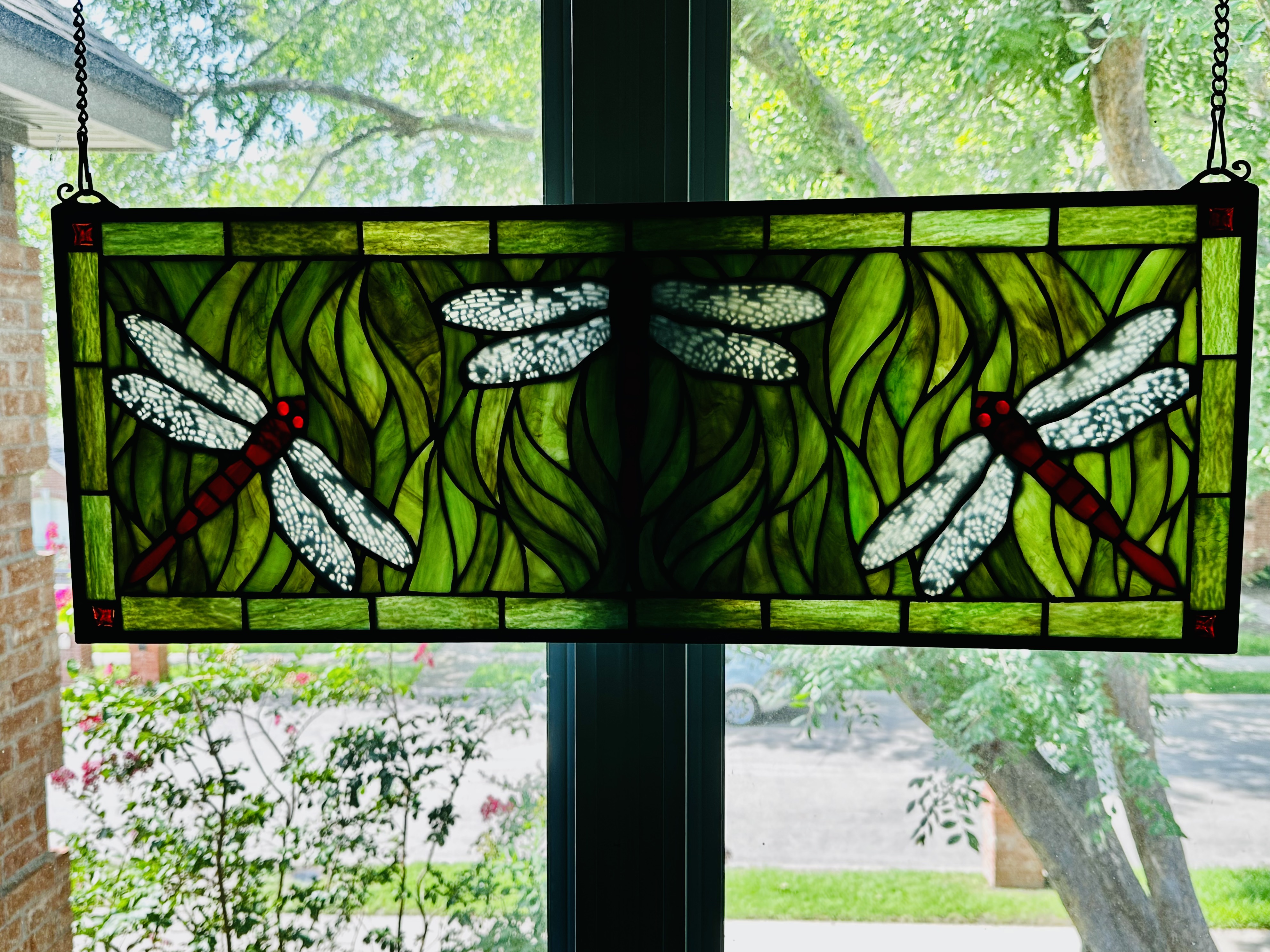
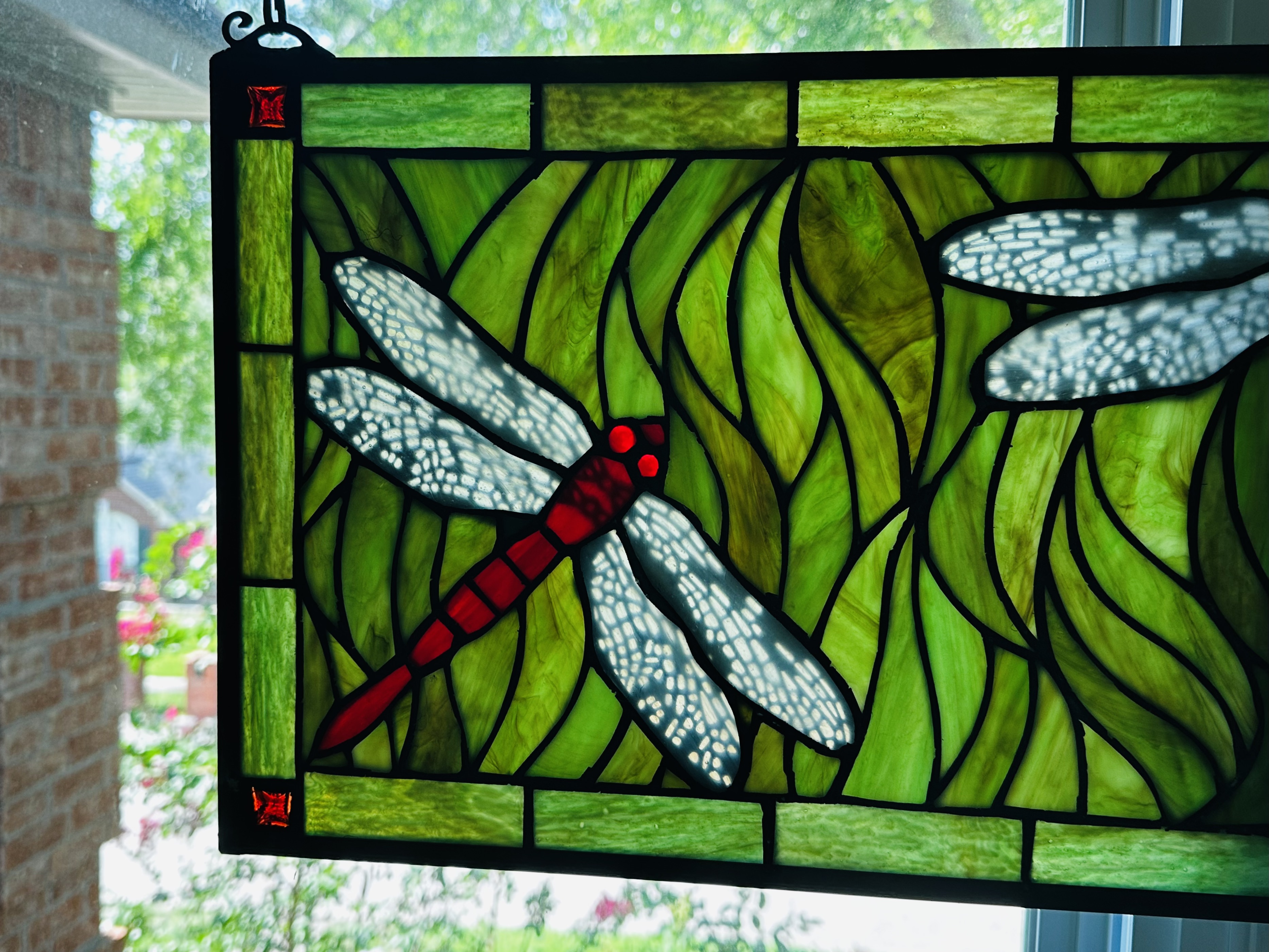
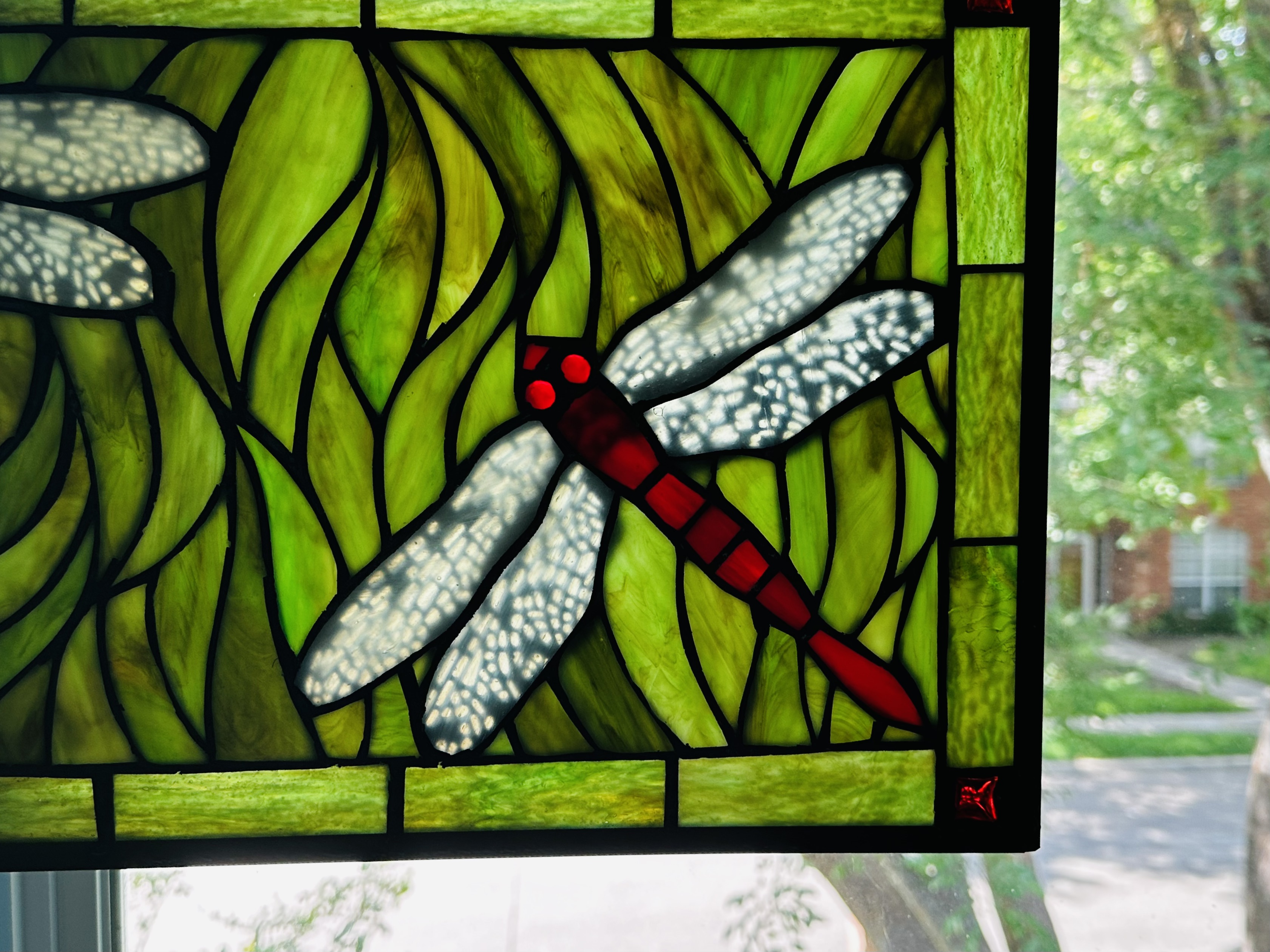
This is a beautiful piece of handmade leaded glass of Dragon Flies. The first photo is hard to see becaue it mosted coved by a tree outside my office window but as you look to the sides of the galls the colors shine through. Seeing Dragon Flies always make me smile.
I’ve always questioned the value of seeing a reporting out in the hailing winds and rain trying to stand up, what is the point. We know there is a storm, the news is covering it in the studio and we have better photos of what is happening than the few feet the reporters are in.
Hurricane Milton crossed the line for me, all the major channels were reporting and it was so bad that several had close calls and one was hit in the face with debris. Is this what it comes to? Put employees at risk for their lives to show this channel will go further than the next. I drew the line.
Anderson Cooper was reporting from Bradenton, Florida, and was barely able to stand, the rain was pouring down and he reached won to show how deep the water was a was hit in the face by flying debris. He sought safety after that. the situation could have been much worse.
The National Hurricane Center reported Milton reached Category 5 status twice and had maximum sustained winds of 120 mph when it hit Siesta Key, Florida, near where Anderson was reporting.
Anderson was working with Bill Weir who was in St Petersburg and was washed away. Why is this acceptable corporate behavior?
Social Media was blowing up with comments of concern for the safety of the reports but where were The corporations they work for? Do they feel this is dramatic television that people want to watch so they can make more money? Bullshit! This shows a total lack of care for human life!
Anderson was not the only reporter who put their life on the line, so did: Dylan Dryer and Ginger Zee and these are the ones I’ve heard of.
We have to stand up and say enough is enough! Let CNN, GMA, and The Today Show this cruel and unusual behavior by writing to the Media Corporations, taking to Social Media, and sending letters to your local media and your local political representative. Only we can make a difference because their employers will not.
There are thousands of stories and videos to read or watch of the hurricanes should you wish to relive the carnage.
I’m disgusted that Journalism has come to being thrown to the wolves. Long gone are the days when I wanted to be a Journalist. I won’t be treated like a piece of meat.
I pray to donate to the Red Cross or other legitimate charities on the ground to provide daily needs and support.
We landed last night with just enough light to find our car and head to Trader Joe’s for some goodies. We grabbed some dinner there so all we had to do was bring half a ton of luggage into the room and eat. My husband was happy because a college football game was on. After watching for a few minutes, I laid down to rest after an exhausting day at airports, walking and pulling luggage.
It’s very chilly here compared to home so I’m glad I brought my extra warm clothes. We’ve slept in this morning and plan to head out to see a few sites. I don’t know everywhere we’re going but I have the Vietnam Veterans Memorial at the top of my list. I like to pay my respect when I travel, that’s the very least I can do.
Tomorrow is Columbus Day and a holiday for many, I will write a post about it this afternoon. We have free days until Tuesday and then it’s off to The Mayo for meetings with doctors, getting blood work, testing, and leaving with a diagnosis.
This awareness month is critical for all ages, even the youngest of children can feel depression and even though you may think they should blow it off, it’s not that easy and you can alienate them from talking to you again. Today life is so hard on kids, from an early age they are judged for the way they look, and who their friends are, for any reason because there are so many who don’t know who to communicate with and are haters. Kids also mimic their parents, if your child is having problems, look at your own behavior.
Young girls are fed to believe that these so-called influencers are real perfect-looking people who are pumping the greatest products they have to have. It never crosses their mind that the person is not an influencer, they are made up to look like the girls want to be and they are selling a product they make money on. They don’t get it or don’t want to. They are bullied for being a certain weight or not looking like someone else’s unrealistic standards.
Mix in real life as they get older and a deeper depression may present itself, it could be short-term term or it could be from unresolved issues, one you may not even know about. The key is to get your children the help they need at every step. As they age, professional help may be the answer. Don’t let stigma keep your child from getting the help they need.
As for adults, life can get messy, people can hurt you deeply, someone you trusted can betray you and family can hurt the worst. Some people may be more predisposed to depression whereas others may be situational driven. Adults have their own stigma and don’t seek out help, some men don’t think they need help and some just don’t know where to turn because the answer is not their parents. This is where a therapist comes in, therapy can be short-term just to get over a hump or more long-term because you have many buried issues that need to be addressed.
—
October is recognized as Depression Awareness Month each year. The purpose is to increase understanding, decrease stereotypes, and help educate on how depression and other mental health issues impact people.
Awareness months give people affected by a specific condition a chance to share their stories. The goal is to help increase the overall understanding of depression or other conditions and help overcome stereotypes.
Depression is a common mental health concern in America and throughout the world. Far more than just “feeling sad,” depression negatively impacts how a person feels, thinks, and acts. It can cause disruption to school, work, and personal interests.
Misconceptions and misunderstandings of depression contribute to continuing stigmas about people living with the condition, the reasons it occurs, and their willingness to seek care.
In a 2018 study, researchers conducted a survey to assess the public’s knowledge of depression and the severity of the stigma surrounding it. Key findings included:
30% reported believing a “weak personality” causes depression
58.9% reported believing that pharmaceutical interventions or medications are not an effective treatment
over 70% reported understanding the importance of rest and that a person may appear happier than they actually are when living with depression
Depression can wear you out at the exact time you need all of your strength to fight. Trying to cope is extremely tiring — and it’s often difficult to know when others are suffering. That’s why, during October, we observe National Depression Education & Awareness Month. This important holiday helps teach us about the signs, symptoms, and treatment options for depression. It also lets all of us know that seeking help — either from a counselor, a trusted friend, or your community — is a sign of hope and strength.
Signs of Depression to look for
Feeling sad, hopeless, or empty.
Losing interest in activities that you used to enjoy.
Changes in appetite, weight loss, or weight gain.
Difficulty sleeping or sleeping too much.
Feeling tired and lacking energy.
Difficulty concentrating, making decisions, or remembering things.
Feeling irritable or restless.
Thoughts of death or suicide.
Withdrawing from social activities and isolating themselves from others.
Difficulty performing daily activities and taking care of themselves.
Feeling guilty or worthless.
Changes in behavior, such as increased substance use or reckless behavior.
Unexplained physical symptoms, such as headaches or stomachaches.
This is not an exhaustive list but it’s a good start to start looking for when you or your child it not themselves. It’s sometimes hard to see depression in yourself and you need someone you trust to give you feedback and it can be hard to hear. Work to have an open mind.
I’m glad you joined me on Wordless Wednesday and I hope to see you soon.
I shop at a store on Amazon and sometimes they run off-the-cuff crazy steals, I bought this ceramic vase for $5! The fake flowers cost more. I love the bright and dark orange color combination.
The newsletter talks about how to vote, the players in Texas who are up for election, and additional resources. Sometimes these newsletters publish a link, not sure why I can see the content but WordPress turns it to a link. Please click on the link or copy in paste on your computer to read. This message is important to all Texans.
October 2024
We are less than one month out from General Election Day! It is critical that Texans get out and vote as policymakers elected in 2024 will make major decisions regarding individuals and families affected by mental health conditions. Furthermore, exercising your right to vote ensures representation, the individuals we elect will be our voice at the local, state, and federal levels. When you participate in elections, we hold our elected officials accountable for their actions and decisions. Additionally, voting has the ability to drive social change as voters have the opportunity to advocate for policy reform and issues that are important to us.
Finally, voting promotes equality, providing an opportunity for all citizens to have a say in the decision-making process. Important Dates:General Election Day: Tuesday, November 5th, 2024 Early Voting: Monday, October 21st-Friday, November 1st, 2024 Last day counties can receive mail-in ballot requests: Friday, October 25th, 2024 Find out what’s on your personalized ballot by checking out Vote411.
Get involved & encourage others to do so too! The NAMI Texas team encourages you to check out NAMI National’s #Vote4MentalHealthcampaign webpage where you can pledge to vote for mental health, learn more about why mental health is more than a single policy issue and several ways to get engaged. Furthermore, the campaign provides resources like finding your voting options, requesting an absentee ballot, and planning to vote.
#Vote4MentalHealth Videos Check out this videothat highlights the importance of voting in all elections, from those at the White House to local school board elections. Additionally, watch this educational video on how votes for education, economy, and healthcare all impact mental health!
Please note: #Vote4MentalHealth is nonpartisan – the NAMI Alliance will never tell people what party or candidate to vote for; instead, it focuses on understanding how every person’s vote impacts mental health. NAMI Texas Voter Guide:
Additionally, check out NAMI Texas’ General Election 2024 Voter Guides! The Policy Team has collected information from Texas candidates on various mental health topics. This guide can be used to help you gather information regarding where candidates stand on various mental health systems and what they hope to improve upon if they are elected. Please note, that all candidates were contacted and only those who responded are in the guides.
Losing a baby is a very personal matter and one that we don’t often hear or talk about unless you’re close to someone who has experienced that loss. At 19 I had a miscarriage at 4-5 months along and my then-husband didn’t even acknowledge the child or the death, we never talked about the entire night it happened. Instead, he went out of town with the guys the next morning and there was no conversation when he returned. I was devastated, had no ride home, and didn’t have anyone to help me with the pain. I was in shock seeing the baby in the toilet at the hospital but I never grieved.
I can’t imagine the grief of carrying a baby close to term or full term and then watching them die, it has to be gutwrenching. There are many children born with diseases or a defect and they fight for their lives, but it was not to be. The overwhelming pain can only be felt by the parents who lost their baby. Think about the pain felt when the parents get home to see the baby’s nursery they planned so carefully without their baby.
These are my thoughts on what Pregnancy & Infant Loss Awareness Month is, let’s see the official meaning of the day.
When Pregnancy and Infant Loss Awareness Month was proclaimed.
In 1988, President Ronald Regan proclaimed October Pregnancy and Infant Loss Awareness Month. Pregnancy and Infant Loss Remembrance Day is observed on October 15th each year and includes the International Wave of Light.
In the United States, 1 out of every 4 pregnancies ends in miscarriage and 1 and every 160 pregnancies end in stillbirth. These numbers do not include infant death from preterm labor, diagnosis of life-limiting conditions, or SIDS.
What is Pregnancy Loss and Infant Loss Awareness Month?
Pregnancy and Infant Loss Awareness Month, observed every October, is dedicated to raising awareness about the grief and challenges faced by families who have experienced miscarriage, stillbirth, or the death of an infant. The month provides a platform for breaking the silence surrounding these often stigmatized and unspoken losses. Through various events, campaigns, and remembrance activities, it seeks to honor the lives lost, offer support to grieving parents, and educate the public on the impact of pregnancy and infant loss. It also encourages open conversations and fosters a sense of community among those affected.
When is National Pregnancy and Infant Loss Remembrance Day?
Pregnancy and Infant Loss Remembrance Day is observed on October 15th each year. It is a day dedicated to honoring and remembering babies who have passed away due to miscarriage, stillbirth, or infant death. Many people participate in the global “Wave of Light” by lighting candles at 7 PM in their local time zone to create a continuous wave of light across the world.
If you’ve lost a baby or know someone who has and wants to share their memory, consider setting up a memorial website on Ever Loved. Memorial websites are free, simple to use, and a beautiful place to share your baby’s obituary, event information, collect memories, and more.
I think the timing of Sober October is perfect, it comes right before the holidays and there is plenty of alcohol flowing at that time of year. Being or getting sober is damn hard any time of the year but during the holidays your endurance can get tested. For me to remain sober, I made it known that I had stopped drinking, that didn’t mean that others needed to stop but I wanted it known that this was a commitment to me and it was serious. I stopped drinking close to 20 years ago, went cold turkey, and never attended a meeting and my husband still drinks. Actually, he’s an alcoholic but that’s his choice. I had the strength to do it so quickly because it was affecting the medications for my mental illness and it’s hard to live without stability of the mind.
Don’t convince yourself that you can only have fun while drinking and stand firm that you can hang out with family or friends without drinking. One line to draw is that no one badgers you or says something negative because you’re not drinking. Give them one chance, stop the conversation, and set a boundary. If they can’t respect that, they are not your friend nor do they care about you. Parents and family can be the worst, hold the line clearly and if they break your boundary again don’t be around them. The psychology behind what they are doing quite frankly is disrespecting you.
Alcohol is like a drug, and you become addicted to it, it’s also easy to see alcohol as a comfort that makes the day easier. I get that, I understand that and I know that when you are ready to quit drinking YOU CAN. Seek out all the support you need, just don’t turn to a replacement addiction. Everyone is different and how we move past an addiction is different, don’t compare yourself to others, or buy into that you have to recover a certain way. There is no certain way, you have to make your own, just don’t do it alone.
Pardon the mess WordPress made out of the alignment. It looks fine in Editor but when reviewed it’s a complete mess. No surprise. Let’s put the frustration aside and enjoy reading about Ilze’s blog.
Thank you for all the great feedback on the Blogger Highlight series, I’ve enjoyed meeting each blogger and sharing their site with you. This week we highlight the blog A Day in the Life of a Latvian Mom. Ilze and I haven’t followed each other long but you would never know it. We became fast friends and now we talk almost every day. She is inspirational, logical with a touch of whimsy, and I can’t forget to say what a great photographer she is.
Hello! I’m Ilze, a mom of three wonderful kids who arrived in quick succession. This beautiful chaos led me to step away from my IT career to embrace motherhood fully.
Before becoming a mom, I built a career in IT, earning degrees in Programming and Computer Science. Almost two years ago, I accepted a position at a dream company after months of consideration, and I haven’t looked back since!
My blogging journey began with greeting card making, which eventually led to opening a photo studio to spend more time with my family. However, I soon realized I needed a change and discovered my love for making beeswax candles, experimenting with sweet aromas like green tea and lemon.
One thing I admire about Ilze is she can multitask until bone tired and still find humor in the day. What a blessing. The greatest lesson I took away from the posts is there is Physics to everything and life is how we look at it. This is a photo of her husband on a Zoom call with colleagues in Canada while he’s holding the water over the outdoor shower so Ilze can take her shower. Life can’t get much funnier!
Ilze is a devoted cook and has an archive full of delicious recipes to try your hand at. I saw this post and had to stop, drool, and think of how good it tasted. As my backing skills improve I will definitely try this cake. She has the ingredients and instructions laid out nicely so it is easy to follow.
I asked Ilze two questions:
What type of music she likes, why, and how has it changed her life? Her reply.
A song that’s close to me is “(You Make Me Feel Like) A Natural Woman” by Aretha Franklin. There’s something so powerful and soulful about the way she sings it. The song reminds me of the importance of authenticity and emotional connection, both in my personal life and in my work. It’s uplifting and grounding at the same time, and it always inspires me to embrace who I am and what I do. What a great song of liberty!
Aretha Franklin – (You Make Me Feel Like) A Natural Woman
The second question:
Tell me about your favorite job and what she learned from it, here’s her reply.
My favorite job is the one I’m currently in, which I started almost two years ago in client support. I enjoy it because it challenges me to think creatively and come up with solutions that aren’t always straightforward. I work with managers and stakeholders, helping them use the report-managing app eazyBI, which is a rewarding experience. What I’ve learned most from this job is how to assist with different management questions and how to build reports that are valuable for decision-making. Even when the work becomes overwhelming, I’m fortunate to have a great mentor and a supportive team, which has taught me the importance of collaboration and asking for guidance when needed.
Ilze is a multitasker to the nth degree, and she does it effortlessly, always with a good sense of humor, grounded in nature, and good manners, and being kind to all is not act! In her career, she’s been a professional photographer, had her own studio, and loves working in IT.
You are short-changing yourself if you don’t stop by and say hello, you’ll make a fast friend and her archives are a walk through nature, life, cooking, foraging, and remodeling an 1880 derelict house by hand.
Thanks to the incredible efforts of campaign groups, individuals, healthcare companies and charities, the world knows more about stomas. With that increased awareness comes a lot of good things, but unfortunately there’s still many ways in which those with an ostomy can feel ignored, misunderstood or sidelined. Here are just 5 ways in which we can be left feeling invisible with a stoma.
[ This post is in honour of 5th October Stoma Awareness Day 2024, the theme of which is “Do You See Me?”]
I had only heard of Ukraine a couple of times before Putin attacked Ukraine and knew nothing about Russia stealing Crimea away years prior. Since the war began, I think of Ukraine multiple times a day. The Ukrainian people are an example of community, love your neighbor, help one, help all, and they are strong to the core.
I’ve heard Ukrainians talk to reporters and talk about what happened to their house or how a family member was killed but one thing I DON”T hear is complaining. I believe in my heart that someone would share their last meal, true humanity.
I admire President Zelenski, he’s on the ground with the soldiers, and he talks about reality, he appears to be a humble man but with the strength of a million bulls. His determination and commitment to his country is why so many soldiers from other countries, including America came to fight in the war. He doesn’t put on airs, blow smoke, or play games. I love how he dresses the same regardless of who he meets, that tells me so much about him. He’s focused on the war, winning, and building a better life for all Ukrainians.
I have seen many interviews since the war started and I’m always struck by the resilience of the Ukrainian people. I see the sadness in their eyes yet I see hope. They have faith in a brighter day and make the best of every moment, and no doubt it’s much worse than what I see on television. To see neighbors taking care of a child who lost his mother while his father is on the front line is overwhelming heartbreaking and joyful, the child is not left aside, it’s loved and cared for. It’s a miracle.
I’ve gone out of my way to purchase items from Ukraine to help the few who can work continue to make a living. Etsy.com has a large community of Ukrainian sellers and they truly appreciate your business. The homemade wool items I’ve purchased from Woven Wool Art are high-quality and the seller will take custom orders. The extra cost of postage is nothing compared to helping someone who needs to work. Check Etsy out, if you order fast enough your items will get here by the holidays.
I’m sending hugs to all the Ukrainian people. :)
America would be a great place to live if we had leadership like President Zelenski.
Life throws all kinds of challenges at us from the loss of loved ones to mental health issues that make us feel like we will never be happy again but you know what? No matter how hard life has been and no matter how challenging it continues to be, you should never give up on finding happiness. Here’s why:
1. New Treatments Are Popping Up Like Apps on Your Phone
Do you know how there’s always a new app for everything these days? Well, the same goes for treatments for depression. If traditional talk therapy and medication aren’t cutting it, don’t worry—science has got your back. Ketamine therapy, for instance, has been making waves as a game-changer for treating depression. Yep, you read that right. The same stuff that was once seen as party drug material is now helping people kick depression to the curb. And that’s just one example—there are new treatments being discovered all the time.
So, the next time you feel like you’ve exhausted all your options, remember: somewhere out there, someone’s cooking up a fresh, innovative approach that just might be your golden ticket to happiness.
2. Happiness Is Not One-Size-Fits-All
Let’s clear something up: happiness isn’t like a pair of skinny jeans that only fit one type of person. It’s more like sweatpants—different for everyone, and much more comfortable. So if what works for one person (say, mindfulness meditation or bubble baths) doesn’t work for you, don’t sweat it. Happiness comes in a million forms, and you just need to find the one that fits you best. Maybe it’s painting your dog’s toenails (no judgment) or starting a new hobby like indoor skydiving. Keep exploring until you stumble upon your happy place.
3. Happiness Is Closer Than You Think (No, Really)
I know, it’s cliché to say “happiness is right around the corner,” but sometimes it really is. It’s just that the corner might be at the end of a path you haven’t tried yet. Whether it’s giving a new therapist a shot, picking up that hobby you dropped in 2014, or even trying something as wild as ketamine therapy, there are countless avenues to happiness you might not have considered. Spoiler alert: happiness might be waiting for you at the next twist or turn.
4. Setbacks Don’t Mean Failure
Look, no one finds happiness on their first try—if they did, we’d all be running around like a bunch of overly enthusiastic puppies. Life has ups and downs, and yeah, sometimes it feels like you’re stuck in the downs. But remember, setbacks are just detours, not dead ends. It’s okay to feel frustrated, to take a break, or even to scream into a pillow (highly recommended, by the way). Just don’t give up on the journey entirely. You’re not finished yet.
5. Because You Deserve It
You’ve probably heard this a million times, but I’m going to say it again: you deserve to be happy. Full stop. It doesn’t matter how long it takes or how many times you stumble along the way—your happiness is worth fighting for.
Take a deep breath, and keep on pushing forward because who knows where it will take you?!

































 Looking for the Light