

What is one of the most memorable conversations you’ve had recently?
Who was it with?
Why was it so special?
Melinda

Melinda
Surprised and grateful is my mood today.
I had an angel drop $100 in my pocket and I didn’t know I was involved in an Apple litigation. I’m always thrilled to have money fall from the sky!
Melinda

Thank you for all the great feedback on the Blogger Highlight series. I’ve enjoyed meeting each blogger and sharing their site with you. This week we highlight the blog of Ms. C. Loves.

In my world, where my life is ever so happening yet my memory is ever so fleeting, I have decided to dedicate some time weekly to preserve those precious moments for my future wrinkly self.
So here, I present to you: my valiant attempt to document all the big and small things in life that capture my heart (cheesy, I know!)—enjoy!
You have to stop by often to see what new is going on.
Melinda
In this fast-paced social media world, it can be difficult to find the time to look within or back in time. I hope you find these quotes and questions interesting. So glad you stopped by today!
Continue reading “Deep Thoughts”Posted Jan 08, 2021
When life knocks you down, drains you of energy, and weakens your resolve, the last thing on your mind is gratitude. It’s hardly surprising; after all, gratitude is an emotional response of appreciation for what we have. When we feel depleted it can feel impossible to draw from an empty reservoir.
And yet, developing gratitude during hard times is precisely what fills the void. What’s more, gratitude is the key to preventing emotional and physical breakdowns during times of stress.
The difficult circumstances we find ourselves in are not the only challenge to practicing gratitude. While it’s certainly true that gratitude can be an automatic emotional response to many of our life events, it rarely is. Rather, what’s more true is that gratitude is an internal perspective—a lens we view the world through—and one that we in fact control. The struggle to find gratitude comes from expecting life to be a certain way (and being disappointed and angry when it is not).
Maybe you have not thought about this before—what do you expect life to be like? Take the year 2020, for example—were you expecting a global pandemic? Probably not!
But really, when have we ever known what is going to happen? Over this past year, many good people developed cancer; many kind souls lost a loved one to a drunk driver; many hopeful new parents had a child born with birth defects. They weren’t expecting these life-changing events to occur, but nevertheless, they did. When our perspective of life is limited by the belief that life “should” be a certain way, we will find gratitude difficult to express.
Gratitude is only possible when we realize that all that we have is a gift.
Having worked and traveled in many countries around the world, here is my impression about differing cultures—the more we have, the less we express gratitude for it. In other words, excess leads to a feeling of entitlement. However, the opposite is true for those who live in extreme poverty: people who live in the poorest countries in the world tend to express tremendous appreciation for what they have. Moreover, they are not dissatisfied, anxiously waiting for the next good thing to come their way.
There is nothing like sharing a simple meal of bread and tea in the home of a person of modest means; indeed, the experience is humbling. Instead of a sense of anger, bitterness, or irritation for what they lack, they express gratitude for the things they do have—the ability to walk and breathe, to survive; they take note of the beautiful sky at night and the richness that friends and family provide them. Even in their poverty they willingly give away what they have to others in need.
Here’s a simple exercise to try. The next time you are stuck in traffic, frustrated that you “should” be arriving at your destination on time, try to change your focus and see what it does for your mood. A simple yet startlingly effective way to do this? Follow your senses: feel the warmth of the sun coming through the window (or perhaps your car’s heater); smell the cup of coffee sitting at arm’s reach in your cup holder; take a sip, perhaps marveling at the insulated mug that keeps it warm long past the pot; listen to a favorite song on the radio; look at your fellow travelers and allow curiosity to fill in the blanks of where they all might be headed to. Like you, they are people with hopes, dreams, and disappointment. Taking a break from focusing on your current stress will allow a brief reprieve by shifting your perspective to these small gifts in life, (and maybe even seeing all of life as the gift that it is).
When we get a hold of the idea that everything we have is a gift—and we express appreciation for the gift of life itself—we shift our perspective away from what we don’t have to what we do have. In appreciating what we have, we invite important changes to take place in our brain and body. Indeed, expressing gratitude on a daily basis provides many benefits—here are five that might surprise you.
Think of gratitude as a garden you plant. When you start incorporating gratitude practices into your activities of daily living, at first you won’t see any immediate change in your outlook on life. Lasting improvements in your emotional and physical health take time, but they will come if you are diligent. In fact, setting the intention to “plant a gratitude garden” in and of itself speaks to your capacity for hope and a more fulfilled life. And when the fruits of gratitude do show up? It will have been well worth the effort.

Evan Parks, Psy.D., is a clinical psychologist at Mary Free Bed Rehabilitation Hospital and an adjunct assistant professor at Michigan State University College of Human Medicine. He is the host of the Pain Rehab podcast. Online:Chronic Pain Rehabilitaiton book, Twitter, Facebook, LinkedIn
In this fast-paced social media world, it can be difficult to find the time to look within or back in time. I hope you find these quotes and questions interesting. So glad you stopped by today!
Continue reading “Deep Thoughts”Here are a few products I’m loving with right now. I hope you find a product to add to your household or self-care routine. The list may also give you ideas for a surprise for friends, family, or co-workers. All products were found on Amazon.

It was the first time I’ve found gloves that do not have too much elastic around the wrist. Mine were always too tight. These gloves are so soft and easy to put on. No elastic issues anywhere, I’m buying another one for downstairs.
I buy most of our products from Amazon even our groceries from there. The two-day delivery time is amazing. They even offer free shipping, actually most of the time. Last year, we started watching the series they offer. We have several that we hope they will come back. We’ve only had a few duds.
They now have a pharmacy, I haven’t tried the pharmacy but I know Amazon will deliver everything they commit to. When I can order our groceries and have them delivered the same day.
I love that they had only two places and it is so easy to open and my knuckles love it. The arthritis in my hands is worse as I age so I had to make adjustments. It’s multi-colored but you can see through to your medication
They look like Moleskin’s, even with the back pocket. They have a large selection of sizes and I bought the 252-page journal, which is 5.7 inches by 8 inches. This larger size is for my ancestry work.
Melinda
By Field Guide by Stampington
Melinda
Staring at the ground with no thoughts on my mind is one way my husband knows I have Brain Fog. He saw me staring out the window yesterday and checked to see if I was okay. He knows enough about Fibromyalgia and what the symptoms can feel like. Now that several more symptoms have joined the party, I have to work harder to keep each illness in line. Fibromyalgia can wreck many parties and unfortunately more cancelled events.
Yesterday I woke up and my back was one big spasm, this symptom, if it is one didn’t last long but left pain in the area. It could also be caused by my anemia but one in my back was a surprise to me.
I’ve been lucky, last year I had one big flare in the summer, and it felt like it lasted forever. The other flares were light which is great because I also spent a week in the hospital.
There are times when I don’t listen to myself and create much bigger issues. Here’s a bad example, I tried to manage my Urinary Tract Symptoms, severe fatigue, and eventually not able to walk. I got stubborn and resisted the hospital but when you can’t walk you know something is wrong.
PLEASE DON’T FOLLOW MY BAD IDEAS!
While taking care of myself for two months, the UTI infection turned into a Kidney Infection, I had a Bacterial Infection it took two days to identify the exact bacteria before they prescribed any antibiotic medications. My Potassium was very low which is what caused the inability to work.
I’m still dealing with the side effects of Anemia and the medication for it. And what comes along!!!!!! A flare started a couple of days ago and I have to see where it takes me.
I spend hours in bed daily, mostly not able to write and go back for a nap. I have a bad Brain Fog, which prevents my desire to do anything. I no longer feel guilt when my body needs a rest, even if it’s all day. The laundry is in the hamper, about three loads. I do a load and if it’s the next morning when I dry them, that’s fine with me.
If anyone with Fibromyalgia has had spasms in the back as part of a flare, please leave a comment. It would be nice to know if it’s Fibro or my anemia. I would really appreciate your help.
We can become very educated about our illnesses and symptoms but we can’t forget, that we are not a doctor, and no amount of reading will make you a doctor. We need to put our pride in the back seat to get the right diagnosis and treatment.
Have you found an upside to Fibro? Please let me know!
I wrote this post while having Brain Fog, it’s been a couple of days now.
Melinda

I can’t recall a year where my health issues have affected every month of the year. To top that off, I had traumatic experiences at two hospitals. What the hell is happening to America’s health system?
The latest traumatic experience happened this month when I stayed four days in the hospital. When I arrived at the ER I could not walk without my husband basically carrying me. I felt like death from trying to manage myself instead of going to the doctor, shame on me. The ER got the ball rolling by losing my medication list, I was so sick it didn’t occur to me until the third day when I was in full-on withdrawal from Xanax. I lit up like a fire, called home and my hubby had to drive back to the hospital at 8:30 pm to give them my list. The on-call doctor then sent all of my meds to the room and tried to make me take my morning meds too. The bacterial infection took two days to identify which sounds crazy. I left with a long list of diagnoses including chronic anemia, fluid in the heart, deficient potassium, and multiple neurological disorders. I could go on but I will end with the grossest. I reported an issue with the toilet around lunch, and the handyman around 80 years old showed up carrying a screwdriver. He spends several minutes ramming it in the toilet then goes to the sink and rinses it off. I thought I would throw up, that’s where I brush my teeth. I plan to file a complaint with the hospital and its reporting association.
Sojernes
Tardive Dyskinesia
Stage 3 Chronic Kidney Disease
GERD has caused another issue with my Esophagus
Chronic Fatigue
Four Concussions
Parkinsonism
There are others but these are the most important illnesses.
Add doctor’s appointments and lab work to the calendar, and it’s been a rough year.
My husband was also diagnosed with Leukemia and Skin Cancer.
I am focused on making 2024 much better than 2023.
I send hugs to everyone who needs it today.
Melinda
In this fast-paced social media world, it can be difficult to find the time to look within or back in time. I hope you find these quotes and questions interesting. So glad you stopped by today!
Continue reading “Deep Thoughts”
Melinda
In this fast-paced social media world, it can be difficult to find the time to look within or back in time. I hope you find these quotes and questions interesting. So glad you stopped by today!
Continue reading “Deep Thoughts”If you’ve read my blog for a long time, you know I don’t believe in Resolutions. Resolutions are wish lists, which you write down and never look back on because you’re not vested in making real goals for yourself. Pie in the Sky wishes are not going to come your way unless you have skin in the game to make each goal on the list happen.
Don’t put pressure to knock each one off of the list. Commit to a goal and work to make it happen. Some goals may take the entire year to complete, so be patient. Then pick another goal and put a plan in place to accomplish the goal which may involve asking someone for help.
Because of my health issues, I’m realistic about how long the list of goals is. I approach it like work, some goals have to be met, and those beyond meeting your goals are stretch goals. I’ll add a couple stretch goals but don’t feel like I failed if I did not meet them.
2023 has been extremely stressful along with many new diagnoses. My mind has already shifted to 2024. My first goal is to turn my attitude back to being positive. To do that I have two hospitals to file a complaint on and that will help release the scars both hospitals left behind. I feel this is the foundation goal and the others are built from there.
What I know for sure is that in 2024 each of us has new opportunities our way. We have to have open eyes and open hearts to see through the scammers and garbage to see the real opportunities.
I’m not against the parties and excitement of New Year’s Eve, I spent many years indulging myself. After many years with Chronic Illnesses, I look more logical this time of year brings. I want to have goals to help keep my mind focused on where I want to be at the end of 2024.
It’s so funny, I met my husband at a New Year’s Eve party. We were the oldest people there so we sat outside around a fire and smoked a cigar. We just celebrated 22 years of marriage.
Be super safe this holiday if you are out in crowds, wear your mask and if you’re prone to drink passed your limit make sure you have a ride. Life is too short for us to bring negativity or illness into our lives.
Melinda

Introspective

Melinda

Ted was a London-based client of mine who became a good friend. He was forty pounds overweight and, because he traveled a lot for work, he found it difficult to get into a healthy routine. After a long flight, he’d show up at a hotel tired, hungry and missing his family. He’d seek out comfort in a cheeseburger and a couple of beers, then he’d graze from the minibar. His wife and doctor were after him to lose weight and exercise, but somehow, knowing what he “had to” do never got him to do it.
Ted married late in life, and he and his wife adopted a boy from Romania named Alex. Alex had been orphaned at a young age and had spent his early years in heartbreaking circumstances. He’d barely been held, touched or spoken to, and was so malnourished he developed long-term learning disabilities.
Despite these difficulties, Alex was a very talented artist. One day, when he was 10, he drew a picture of himself alone, desolate and abandoned. He titled his picture “The Orphan.” Ted was not surprised at the theme — Alex often depicted his early memories — but this time, Ted noted that the figure in the picture was a young adult. When he asked Alex about it, his son began to cry. He said he “just knew” his dad would die because of his poor health habits, leaving Alex fatherless again.
In that moment, Ted later explained to me, he went from feeling that he “had to” change his health habits to feeling that he “wanted to.” He was motivated to get healthy out of love for his child and the desire to see Alex grow up. Ted began to make small changes — ordering salad instead of fries, placing the minibar candy out of sight, and exploring cities on foot rather than by cab — and those changes added up. He lost weight and has kept it off, because he wants to.
When we’re compelled by a wagging finger instead of a willing heart, we end up in an internal tug-of-war between good intentions and less-than-stellar execution.
When we double down on discipline and willpower, this rarely leads to the best results. You may drag yourself to the gym, but how often does that lead to you sticking with an exercise routine? You may call up your relatives out of obligation, but how often do you have a meaningful conversation? When we’re compelled by a wagging finger instead of a willing heart, we end up in an internal tug-of-war between good intentions and less-than-stellar execution.
Twenty-five hundred years ago, Plato captured this inner conflict with his metaphor of a chariot being pulled by two very different horses. One horse was passion — our internal urges — and the other was intellect — our rational, moral mind. Plato understood that we are constantly pulled in two opposing directions by what we want to do and what we know we should do. It is our job, as the charioteer, to tame and guide the horses in order to end up where we want to be.
Modern neuroimaging tells us that whenever the impulsive, reward-seeking system in our brain (passion) conflicts with our rational, long-standing goals (intellect), our brain tries to — pardon the pun — rein things in. Let’s say you’re trying to eat better. You’re at a restaurant, and you spot chocolate mousse on the dessert tray. That triggers activity in your nucleus accumbens, an area of the brain associated with pleasure. You want that chocolate mousse. But, no, you remind yourself, I can’t have it. As you muster up the strength to pass on dessert, your inferior frontal gyrus, a part of the brain associated with self-control, kicks in. With both areas activated, our brain is fighting with itself while we try to decide whether to dig in or abstain.
To make matters more complicated, our baser instincts have a head start. According to brain imaging, when we’re faced with a typical choice, basic attributes like taste are processed on average about 195 milliseconds earlier than health attributes. This might explain why, in one study, 74 percent of people said they would choose fruit over chocolate “at some future date,” but when fruit and chocolate were put in front of them, 70 percent grabbed the chocolate.
Want-to goals reflect a person’s genuine interest and values, while have-to goals are imposed, often by a nagging loved one or by our own sense of obligation.
Fortunately, there is a tiny tweak we can make to help us sidestep this competition between the two horses. Like Ted, we can position our goals in terms of what we want to do, as opposed to what we have to. When we tweak our motivation in this way, we don’t have to worry about which part of us prevails — our passion or our intellect — because our whole self is working in harmony.
Want-to goals reflect a person’s genuine interest and values (their “why”). We pursue them because of personal enjoyment, because of the inherent importance of the goal, or because the goal has been assimilated into our core identity. But most important, these goals are freely chosen by us.
Have-to goals, on the other hand, are imposed, often by a nagging loved one (“You’ve gotta lose that gut!”) or by our own sense of obligation, sometimes related to avoiding shame (“Good grief! I look like the Goodyear blimp! I can’t go to the wedding looking like this!”).
You can choose to eat a more healthful diet out of feelings of fear, shame or anxiety. Or you can choose to eat well because you view good health as an important quality that helps you feel good and enjoy life. A key difference between these two kinds of reasons is that although have-to motivations will allow you to make positive changes for a while, eventually that determination is going to break down.
Studies show, for instance, that two people with the same goal of losing five pounds will see that same serving of chocolate mousse very differently depending on their motivation. The person with a want-to motivation will physically experience it as less tempting (“The dessert looks nice, but I’m just not that interested”) and will perceive fewer obstacles in sticking to the goal (“There are other, healthier options on the menu”). Once she’s tweaked her motivation, she no longer feels like she’s struggling against irresistible forces.
Want-to motivation is associated with lower automatic attraction toward the stimuli that are going to trip you up — the old flame, the martini passing by on a waiter’s tray — and instead draws you toward behaviors that can help you achieve your goals. Have-to motivation, on the other hand, actually ramps up temptation because it makes you feel constricted or deprived. In this way, pursuing a goal for have-to reasons can undermine your self-control and make you more vulnerable to doing what you don’t want to do.
I’m not suggesting we should all simply think positive and ignore real concerns. If you can’t find a want to, then that could be a sign that change is in order.
If life is a series of small moments, each of which can be adjusted ever so slightly, and all of which, in combination, can add up to significant change, imagine how much ground you could gain by employing this simple tweak and finding the want to hidden in the have to. We all fall into these subtle traps of language and think, “I have to be on dad duty today,” or “I have to attend another boring meeting.” When we do this, we forget that our current circumstances are often the result of earlier choices we made in service of our values: “I want to be a father,” or “I love the work that I do and want to excel at my job.”
To be clear, I’m not suggesting we should all simply think positive and ignore real underlying concerns. If you can’t find a want to in some particular facet of your life, then that could be a sign that change is in order. If you entered your field because you wanted to make a difference in the world but your company is focused more on the bottom line, it may be time to switch jobs. Or if you’ve come to realize that your significant other is not the person you thought he was, you might need to seek a new relationship. Finding a want to is not about forcing any particular choice; it’s about making it easier to choose things that lead to the life you want.
Excerpted with permission from Emotional Agility: Get Unstuck, Embrace Change, and Thrive in Work and Life by arrangement with Avery Books, a member of Penguin Group (USA) LLC, a Penguin Random House Company. Copyright © 2016, Susan David PhD.
This is a book you might want to add to your shelf or audio to rely on as you face each challenge of “have to” and “want to”.
Melinda
In this fast-paced social media world, it can be difficult to find the time to look within or back in time. I hope you find these quotes and questions interesting. So glad you stopped by today!
Continue reading “Deep Thoughts”Encountering burnout can be a challenging and often overwhelming experience. It typically results from prolonged stress and can manifest as emotional exhaustion, reduced performance, and a lack of motivation. Boosting your mental health during these periods is crucial to recovery and overall well-being. Here’s a comprehensive guide on uplifting your mental health when dealing with burnout.
The first step in addressing burnout is recognizing and acknowledging its presence. Burnout can sneak up gradually, making it difficult to identify until it becomes severe. Common signs include constant fatigue, irritability, diminished job performance, and a general feeling of disillusionment. Acknowledging that you are experiencing burnout is not a sign of weakness but rather the first step towards healing and recovery.

Self-care is vital in combating burnout. This means prioritizing activities that replenish your energy and bring you joy. It could be as simple as reading a book, taking a long bath, or engaging in a hobby. The key is to engage in activities that are for you and about you.
Rest is equally important. This includes getting adequate sleep, as sleep deprivation can exacerbate symptoms of burnout. Creating a bedtime routine, ensuring your bedroom is a comfortable and calming space, and avoiding screens before bedtime can improve the quality of your sleep.
Setting boundaries is crucial in preventing and managing burnout. This might involve saying no to additional responsibilities, delegating tasks, or setting limits on your work hours. It’s important to communicate these boundaries to colleagues, friends, and family so they can support you in maintaining them.
Identifying and reducing stressors in your life is also important. This could mean reevaluating your workload, addressing conflicts, or changing routines that contribute to stress. While not all stressors can be eliminated, managing them effectively can significantly reduce their impact on your mental health.
Dealing with burnout can be isolating, but you don’t have to go through it alone. Seeking support from friends, family, or colleagues can provide a sense of community and understanding. Sometimes, just talking about what you’re going through can be incredibly relieving.
In some cases, professional help may be necessary. This could be in the form of counseling or therapy, which provides a safe space to discuss feelings and develop coping strategies. Support groups can also be beneficial, providing a platform to share experiences and learn from others who are going through similar challenges.
Physical activity is a powerful tool in boosting mental health. Exercise releases endorphins, which have mood-boosting effects. It doesn’t have to be intensive; even a daily walk or light yoga can make a significant difference.
Mindfulness practices like meditation and deep breathing exercises can also be beneficial. They help in managing stress, improving focus, and fostering a sense of peace. These practices can be particularly helpful in moments of overwhelm, helping to ground and center you.
In certain cases, nutritional supplements can support mental health. Products from science.bio supplements, for example, offer a range of supplements that can assist in managing stress and improving cognitive function. However, it’s important to approach the use of supplements cautiously and ideally under the guidance of a healthcare professional. Supplements should complement, not replace, other strategies such as a balanced diet, exercise, and adequate sleep.
Overcoming burnout and boosting mental health requires a multifaceted approach. It involves recognizing the signs of burnout, prioritizing self-care and rest, setting boundaries, seeking support, engaging in physical activity and mindfulness, and potentially incorporating supplements. Remember, recovery from burnout is a gradual process, and it’s important to be patient and kind to yourself as you navigate this journey.
This is a collaborative post.
Melinda
Every day when I see the countries that have visited my blog, I’m grateful. It’s a moment with no walls. Most of us have never talked but I feel your soul. Some of us do talk every day but unless I go to your blog, I don’t know what country you are from.
Today someone from Ukraine stopped by and my heart went through the roof. With the destruction of the war and the toll on the people, I felt blessed that one person was able to put the war to the side for one minute. Thank you.
I want to shout out to the people of Ukraine, the bond, the strength, and most importantly helping each other, and not leaving their neighbors behind is enviable. Ukraine is a very special country and one day I would love to visit to feel your spirit. There is no doubt in my mind Ukraine will rebuild and be stronger for it. President Zelensky is one hell of a man and leader. I love his down-to-earth nature and visiting leaders in his camo! WOW. No pretenses from him. If only America would learn from him.
So far this year, 116 countries have visited my blog, that’s mind-blowing! Many countries surprise me, like China, Russia, and several Middle Eastern countries. Thank you for letting me in your life even for a few minutes.
2023 has been the most challenging for my health and each of you is like a shot in the arm, like medicine.
I’m sending the best wishes your way and praying for your health and happiness.
Melinda

I left the hospital a couple of hours ago, I thought about how you have pulled me through one of the most difficult years personally.

Bono’s. voice share my joy!
Melinda
If you’re something who suffers from overthinking, you’re not alone. Rumination is a leading cause of anxiety and depression.
Fortunately, there are numerous things you can do to get out of your head and back into the world as you used to know it. It’s just a question of practicing the right activities. Do what works for you.
If you are someone who enjoys the company of others, invest more time in socializing. Focusing on other people and their needs can help to take your mind away from internal thoughts.
One option is to join a club of people with shared interests. Doing something with others can be an excellent way to focus on something new and get more enjoyment from life.
The other approach is to surround yourself with friends and family and do something productive together.
Another approach is to spend some time exploring the wilderness. Being in nature can have a profound healing effect on some people, helping them feel more grounded and connected to human origins.
You can try hiking, camping or even cycling. Experiencing nature in reality and not through a screen is a fundamentally different animal.
You could also try something thrilling, such as off-roading. Focusing on the track ahead of you while you drive an overpowered 4×4 helps to eliminate ruminations and makes you feel alive again.
Just make sure you have the proper supplies. Driving a hard-top Roxor requires having the correct Roxor accessories. Not being prepared could increase anxiety.
Another approach is to get lost in a good book. Spend some time rifling through the pages of a famous novel you haven’t read yet and absorb yourself in another world. Don’t let the same thought patterns dominate your life.
Travel can also be a fantastic healer if you have the financial ability to engage in it. Seeing new places and meeting new people gives you a fundamentally different perspective on life, letting you get more out of it.
You can also try learning something new. Taking up a new hobby or skill can be a wonderful distraction from the thoughts and images swirling around in your head.
The more cognitively demanding the task, the better it tends to be at eliminating rumination. Writing is high up on the list, as is dance, learning a musical instrument, and creating artwork. Pick something that feels uncomfortably difficult so that it takes up more of your mental resources, leaving less for pondering unpleasant thoughts.
You might also want to start journaling, something many therapy patients find helpful. Writing down your thoughts can be therapeutic and helps you sort out your feelings in your mind.
Finally, you can try puzzles and games. These can force you to return to the moment and have fun, something that might be lacking in your life if you struggle with intrusive thoughts. Find games that satisfy you when you solve them.
This is a collaborative post.
Melinda
R
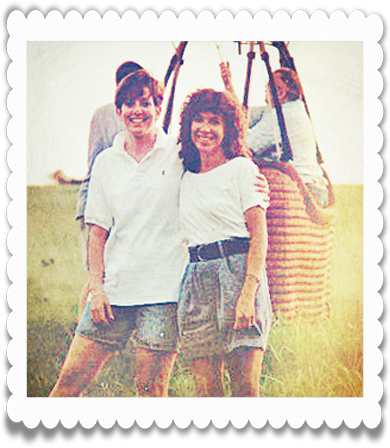
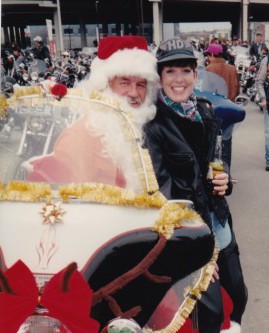
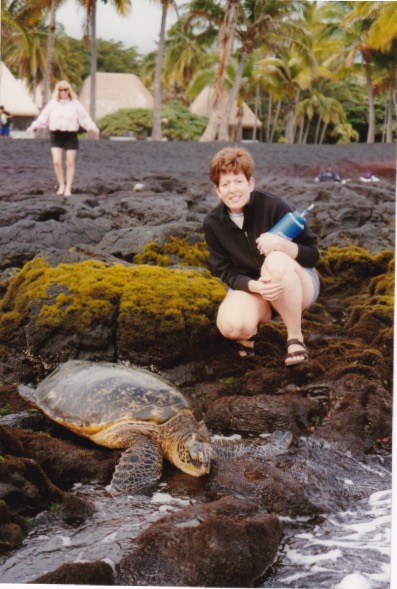
Thinking about the old days over the weekend, I know how blessed I am to have the experiences. I’ve added a few photos of a couple of adventures. It began at two years old.


Melinda
We, humans, are complicated creatures capable of expressing thousands of emotions. This site shows you that anxiety and stress are common across the natural world, and animals have many ways of showing it. Unfortunately for us, humans can also be very good at hiding those emotions, so it isn’t always possible to tell how a loved one or friend is feeling. Here are a few common signs that may suggest your friend is feeling more anxious or stressed than normal.
If you have noticed that small things seem to be bothering your friend more than usual, this could be a symptom of stress or anxiety. The Calm Clinic suggests that irritability is a common sign of anxiety and can cause people to unexpectedly get upset or even lash out. If your friend has displayed these symptoms, do not be afraid to quietly and sympathetically tell them you have noticed a difference in their behavior and ask if there is anything you can do to help. They may not have noticed the change yet themselves, so give them time and space if they need it to think about their behavior and any reasons that might be causing them to feel more irritable.
If your colleague at work is constantly reaching for the coffee, making silly mistakes, and looking exhausted, they may not be getting enough sleep. Anxiety and stress can throw off sleep patterns very quickly. According to Medical News Today, the link between stress and sleep deprivation is very common, with only 35% of Americans getting the correct amount of sleep. A lack of sleep can cause mental health problems to worsen and deepen, so sleep deprivation must be tackled. Again, this is a case of having a quiet word and asking if there is anything that keeps them up at night. If there is a worry often sharing it confidentially can help a friend to put things into perspective. Assure your friend that any discussions can be confidential, and you would only ever break confidentiality if you were worried they may harm themselves or others.
Our diet can fluctuate wildly due to stress and anxiety. Some people may overeat or reach for junk food over healthier options. Others swing the other way and may cut out food altogether. Of course, dietary changes are not always linked to mental health. Only raise the question with a friend if you feel the pattern has been sustained over a substantial period, and if you suspect stress or anxiety may be the trigger for the dietary shift. You can help someone by offering to cook meals or to share lunches with them. Even a few meals in a freezer that they can reach for when they don’t have the energy to cook can make a huge difference to someone’s overall well being.
If your friend does let you know that they are feeling more anxious or stressed than usual, then reassure your friend that there are easy steps you can both take together which will help. Look online for expert advice and positive stories from those who have been in similar situations.
This is a collaborative post.
Melinda
Thank you for all the great feedback on the Blogger Highlight series, I’ve enjoyed meeting each blogger and sharing their site with you. This week we highlight the blog Shedding Light On Mental Heath.

Shining a light on Mental Illness
Hi and welcome to my blog “Shedding Light on Mental Health.” My name is Amy Gamble and I am a National Award winning Mental Health Advocate focused on educating others about Mental Health related challenges.
I live with bipolar disorder and PTSD. My journey has been very long and difficult, but I was able to overcome my mental health challenges and recover.
I try to offer hope in my blogs as well as share insights.
Amy and I have followed each other for years. I’m overjoyed she has jumped over her challenges. What she didn’t say is that she is an Olympian and respected Speaker. You have to visit Amy’s blog.
Melinda
In this fast-paced social media world, it can be difficult to find the time to look within or back in time. I hope you find these quotes and questions interesting. So glad you stopped by today!
Continue reading “Deep Thoughts”My life is blessed, I understand life is about ups and downs and how we respond can change our life’s course. With the ups and downs I’ve experienced, my backbone is much stronger which helps when I feel pushed around, lately by doctors.
My new Psychiatrist who I’ve only met once in person and one video call. We haven’t established a relationship, that takes time. Every time we’ve talked, I leave with more questions. He’s all business which is great but he interrupts me and keeps on talking until he changes the subject, not anymore! At times I feel like he’s charted my future and I won’t fit a peg. Our meeting in January will not be more of the same. I’m taking back control of the topic even if I have to wait until the end of the meeting.
I want a collaborative relationship, which means I am a blank slate and WE fill in the blanks as we go. Taking a predefined peg board and pushing me into the holes will not work and it’s focused on what you want not what I need. He is up on new studies and he likes to mention them as if they are the only way to treat a patient. I will continue seeing him because finding another Psychiatrist is hard, they need extensive training on Bipolar Disorder.
When I look forward, all I see is the same
I have no extended family
No friends
The only people I see are doctors and my hairdresser
I can only drive in a 3-4 radius of the house due to cognitive impairment and Agrophobia
Have to coordinate schedules when I need my husband to take me to appointments
Lack of joy and hobbies
Blog
Photography
Bird watching from the kitchen window
Green Thumb inside and out
Ancestry
Driving limited
Agoraphobia
Dealing with multiple chronic illnesses
Cognitive Impairment
:(
This is a glimpse into my daily life or the lack of it. It’s hard to rebuild your life with several chronic illnesses, cognitive impairment, and Agrophobia. I’m building a new Bucket List that fits my new life. I kept fooling myself that I could complete my old list but it’s not possible now.
If you don’t already have a Bucket List I encourage you to start one, it may change your life.
I work hard not to think about what I can’t do, and stay focused on the here and now.
How do you deal with life challenges?
I can’t wait to see how you respond, and what I can learn from you.
Melinda
Thank you for the great feedback on the Blogger Highlight series, I’ve enjoyed meeting each blogger and sharing their blog with you. This week highlights the blog of Olive Tree Saints.
I’m a child of God, wife and mother. I’m also an incredibly flawed Christ-follower who wants to be available to God for whatever He gives me to do in this later chapter of my life. That means taking care of my wellness so I’m ready when He calls.
As someone who lives with fibromyalgia, I know how hard it can be to start and stick to a wellness plan, especially if it’s not personalized for you. I’m here to help you with that!
Terri is a certified Personal Trainer, Health Coach, and Nutrition Coach who wants to help others be as healthy as possible for them.
Terri loves life, and she’s inspiring. You have to check her out.
Melinda













 Looking for the Light