


Subscribe to continue reading
Subscribe to get access to the rest of this post and other subscriber-only content.

Subscribe to get access to the rest of this post and other subscriber-only content.
Subscribe to get access to the rest of this post and other subscriber-only content.
Melinda Bergeron, a member of the family that founded the Northeast Lyme and Associated Diseases Resource Foundation (NELAD.org), wrote this on the first anniversary of her father’s death.
365 days around the sun since you’ve been earthbound.
I remember the long drive to Boston, selfishly thinking, “all these false alarm calls over the years and you choose the days leading up to my birthday….”
I begged doctors to promise me he’d surpass the actual day. The thought of marking an end to our complex relationship on my birthday felt like a tragedy I’d never fully be able to grieve.
I remember the beautiful, young resident doctor who had such a remarkably warm presence, telling me at the time, that perhaps the duality of our relationship and the duality of celebration and grief, the duality of life and death, simultaneously around this time, might mean something to me–someday.
I thought, “what an absurd comment… I will never be able to celebrate my birthday ever again!”
I haven’t shared this with anyone outside of my immediate family, but after his death, I had nightmares. For about a week straight, anytime I fell asleep, I’d find myself standing in a cemetery and there was an empty casket sitting there beside an empty pre-dug hole.
My father was standing outside his casket REFUSING to get inside of it. It wasn’t a surprise that we’d be fighting, even in my dreams. I demanded that he “get in,” and let me close the book on his death. I needed to work through this. He said, “I’m not getting in, until you’ve figured it out.”
I was ENRAGED! Figure what out? I’ve always felt like the “forgotten” middle child. Besides, I thought I had it all figured out. I thought, “I get it, Dad, you want us to forgive each other. I do. So, get in the casket!”
This EXACT nightmare, with very little deviation in the script, went on for a week straight. I was taking melatonin, Benadryl, Unisom, and magnesium baths to help me sleep, while trying to stop the dreams. I was becoming disheartened, knowing I’d close my eyes and fight with my deceased father again, and again.
The stress of this was beginning to, again, trigger many of the debilitating physical symptoms I’ve had for years– all sorts of unexplainable symptoms prompting all sorts of weird diagnoses.
I had been struggling with syncope episodes, (aka, passing out). I was having right-sided weakness and paralysis, PNES (non-epileptic seizures), and migraines so bad I was bedridden for days at a time, until I got an IV cocktail to break the migraine. I had aphasia when I’d talk. I spent seven months of my pregnancy with my daughter, completely blind in my right eye, then several week long hospitalizations –only to be discharged once confirmed it wasn’t a stroke.
It was believed my father had Lyme disease and co-infections for a long time that caused his brain atrophy. What we would call “dementia” was shown to be induced by Lyme/vector-borne disease.
While my family and I were in the hospital with my father, my aunts had looked at me having heard these stories the last several years, my suffering, and my horrible quality of life. They told me I needed proper Lyme disease testing and a proper evaluation.
I shared the story of Maelynn, my youngest daughter, who had unusual and inconsistent allergic reactions and a mast cell activation diagnosis. At this point, I was willing to do anything just to feel better. So, I called the doctor they referred me to and I scheduled an appointment.
The dream stopped that NIGHT. Initially, I chalked it up to it being over a week out from the trauma, and the stress levels coming down.
I got my test results several weeks later, I DID have Lyme disease and a few co-infections. I started treatment, and while treatment has had its hurdles while trying to find what works for me, I haven’t had a SINGLE syncope episode, I haven’t had a single non-epileptic seizure, and I haven’t lost my vision in my right eye. I haven’t even had a migraine that has bedridden me for longer than a day in almost a year.
Furthermore, my littlest baby, who was tested and confirmed to have been born with the same strain I have, is also being treated–and her reactions have subsided! Truth.
That resident doctor was right. The duality of our complex relationship WOULD someday signify something so much more. This year on my 30th birthday, I was given the gift of better health and an early diagnosis for my daughter. While the anniversary of my father’s death was looming, it was almost impossible to think of him without immense gratitude and hope for the way in which his passing changed our lives.
I figured it out, Dad!
Thank you for loving me. Thank you for leading me down a path I wouldn’t have otherwise sought out on my own. Thank you for the rekindling of family relationships. Thank you for continuing to show up for me.
I miss you. I miss you so much, that when I cry, it hurts my chest. But I cry with love and praise in my heart now, rather than bitterness or angst.
Note: Melinda’s father, Matthew DiBara, passed away in 2024. Since then, his siblings and other family members have founded NELAD, which offers education, advocacy, resources, and support to families impacted by Lyme disease and other tick-borne conditions. Click here to learn more about NELAD.
Melinda
Reference:
Let’s spend NO MORE Week advocating, sharing our stories, participating in activities and supporting this most amazing organization. Check out their website for resources galore.
| February has been a powerful month for reflection. We commemorated Black History Month and raised awareness of challenges facing young people for Teen Dating Violence Awareness Month. We continue to be both awed by the strength and courage of the Epstein survivors in speaking out and horrified by even more revelations of the abuse so many endured and so many ignored. It is all a constant reminder of the vast scourge of violence, the far-reaching, long-lasting implications of it, and the need to continue to build a global movement to stop it… for everyone! It’s in this spirit that we continue our work, creating moments that bring communities together and driving change to end domestic and sexual violence once and for all. Get Ready for NO MORE Week 2026! In just a few days, NO MORE Week 2026 kicks off! From March 2nd–8th, communities from around the world are uniting to support survivors and prevention efforts. If you haven’t yet made your plans for NO MORE Week, it’s not too late! Throughout the week, commit to sharing tools, resources, information, and stories to help more people be able to recognize and respond to abuse. Or, plan to host a lunch & learn, pledge drive, or another small-scale awareness event at your workplace, campus, or community space. You can also join the NO MORE Week Challenge, our free, virtual Walk/Run uniting advocates and allies everywhere in raising awareness and speaking out against abuse. Take on the Challenge. However you choose to take part, be sure to tag @nomoreorg in your posts to share how you’re saying “NO MORE,” so we can celebrate and help amplify your efforts! |
Advancing Safety: NO MORE x CERRET
This month, we were proud to announce our new partnership with CERRET, which will include the co-development of a co-branded CERRET safety bracelet, as well as the integration of NO MORE’s awareness and training content into the CERRET app. Together, by bridging the gap between advocacy and tech, we’re looking forward to amplifying prevention efforts, empowering users, and expanding access to safety resources around the world.
Read more about this new partnership and check out the existing safety features on the CERRET app today!
I’m a proud supporter of No More and Joyfull Heart charities, they we’re both founded by Mariska Hargitay and she leads powerful teams and through her committed efforts, police across the country have cleared their backlog of untested rape kits. We’re not there yet but we will.
Melinda
Subscribe to get access to the rest of this post and other subscriber-only content.
When upsetting thoughts and feelings pop up, you might find yourself plummeting into a deep well of dread and overwhelm. During such stressful moments, you might start to believe there’s not much you can do about those emotions.
But that’s not actually the case. In fact, practicing self-soothing activities can help you climb out of that dark well and work toward feeling better.
How? According to psychologist Rebecca Leslie, PsyD, self-soothing activities can:
So, the next time you start to feel distressed, consider trying these 15 lesser-known self-soothing strategies.
Diaphragmatic (deep) breathing “helps calm you down and tells your mind and body you are safe,” says Leslie.
Research suggests that deep breathing can bring increased comfort and relaxation while helping decrease symptoms of anxiety, anger, confusion, and depression.
Leslie suggests imagining you have a balloon behind your belly button that fills up with your breath as you breathe in.
Square breathing, also called box breathing, offers another powerful technique.
To try this type of breathing:
In short, each step forms one side of the “square.”
Try this for 4 rounds or more, recommends Selma Bacevac, LMHC, a psychotherapist specializing in childhood trauma and attachment.
Scan your surroundings for the color blue or for your favorite color, suggests Bacevac.
“Gently rest your eyes in the hues of the color as you bring awareness to your breath, and slowly breathe in for 7 seconds,” she says.
Follow the inhale with a long, slow exhale.
It’s worth noting, too, that challenging yourself to find different objects in the same color could offer a distraction from the source of your distress.
A hug or any kind of compassionate touch causes your brain to release oxytocin. This hormone can make you feel safe, connected, and loved, explains Joree Rose, LMFT, a therapist and mindfulness and meditation teacher.
Bonus: Your brain can’t tell the difference between a hug someone gives you and one you give yourself. Wrapping your arms around your chest can instantly soothe your tense body.
“Art is an active tool we can use to move stress out of our body, express distress, and distract ourselves from what is bothering us by externalizing it,” says Jackie Tassiello, a board certified creative arts therapist and co-founder of Soulutions Therapy, based in Montclair, New Jersey.
One art technique to try? Watercolor painting. According to yoga teacher Namita Kulkarni, benefits reside in the “tactile pleasure of touching the paint to the paper, visual surprise and delight of watching the pigments swirl into the water and the ever-present unpredictability of water’s behavior.”
To start, simply buy a watercolor set at any craft or big box store.
When you’re upset, you might tell yourself stories like “This isn’t that bad,” “I’m overly sensitive,” or “I shouldn’t be feeling this way,” says Sera Lavelle, PhD, a clinical psychologist and hypnosis expert.
But this kind of dismissive, invalidating self-talk often just leaves you feeling worse.
Instead, validate your experience with self-compassion. According to Lavelle, this might involve:
Considered a form of self-hypnosis, autogenic training promotes relaxation in the body and a state of emotional calm.
To start, you might repeat certain phrases three times, says Leslie. Examples of soothing phrases might include:
Kaylin Zabienski, LMFT, a therapist and yoga teacher, used to get overwhelmed when running groups at her treatment center. To self-soothe, she’d wear a long necklace with a pendant or charm that she’d move up and down the chain.
“It doesn’t look like anything special, but the subtle vibration and sound that it made was extremely calming to me,” says Zabienski.
She suggests doing the same with your own clothing and accessories. “Using mindfulness and curiosity, it can be soothing to explore the item with your hands, to move it around on your skin, to notice its texture or any sounds it makes.”
Sending messages of love to yourself can go a long way toward helping ease emotional distress.
Liz FitzGerald, a yoga instructor and co-founder of Daygold, suggests doing this loving practice for at least 5 minutes:
According to Kulkarni, this restorative yoga pose activates the parasympathetic nervous system, which is responsible for rest and relaxation.
To try this pose, simply lie down with your legs up a wall. Hold the pose for up to 20 minutes.
Tip: If putting your legs up against a wall feels uncomfortable, you can put your legs on a couch, chair, or bed, says yoga and meditation teacher Catherine Tingey.
“Anything that we have to do over and over creates a rhythm, which can ease tension and create an outlet for our anxiety or stress,” says Tassiello.
Examples of repetitive tasks that may help soothe stress include:
During periods of intense distress and overwhelm, it can feel like you’re in the center of a tornado, at the whims of “wherever it’ll take you, making you feel helpless and more stuck,” says Rose.
Instead, try to shift your vantage point and imagine yourself as the meteorologist commenting on the tornado, she says, not someone trapped in the center.
In a nutshell, picturing yourself on the sidelines of an emotional storm can help reduce its power over you.
Immerse yourself in a sensory experience, recommends Neha Chaudhary, MD, a psychiatrist at Massachusetts General Hospital and chief medical officer at BeMe Health.
Chaudhary notes that this could mean:
Heart breathing, based on work from the HeartMath Institute, helps us “gain a deeper awareness and sense of calm, and return to center,” says Bara Sapir, an integrative life coach, MBSR-Trained provider, and founder of City Test Prep.
To practice, perform these three steps:
Using self-soothing tools in the moment can help a lot, but it’s equally as important to work on creating calm in your day-to-day routine.
According to Tassiello, you could:
When you experience a difficult emotion, a self-soothing technique can reduce distressing thoughts and help relax a frazzled body.
It can help to try these activities before you’re upset to see which ones resonate with you. You can even keep a list of your top five soothers in your phone.
Remember that learning to soothe yourself can take time, says Lavelle. Try to be patient with yourself while “reminding yourself that you deserve to feel peaceful and taken care of.”
Margarita Tartakovsky, MS, has been writing for Psych Central and other websites for more than a decade on a wide range of topics. She’s the author of the mental health journal “Vibe Check: Be Your Best You” (Sterling Teen). She’s especially passionate about helping readers feel less alone and overwhelmed and more empowered. You can connect with Margarita on LinkedIn, or check out her writing at her website.
Melinda
Reference:
https://www.healthline.com/health/self-soothe?utm_term=roundup&utm_source=Sailthru%20Email&utm_medium=Email&utm_campaign=alzheimers_carejourney&utm_content=2026-02-03&apid=36735751&rvid=7f053d6ecf820dccd09e4914833cbd49bdfe95bb517404ee9b41601767d1bace
If you’ve spent any time navigating the world of tick‑borne disease, you already know this: people don’t always take steps to protect themselves, even when they live in high‑risk areas.
And for years, public‑health messaging has chalked that up to a simple explanation — people just don’t know enough.
But a new Cornell University study suggests something far more complicated is going on. And honestly, it’s about time someone asked.
Researchers reviewed more than 1,000 survey questions from 36 studies conducted across the U.S., Canada, and Europe.
These surveys are the backbone of many public‑health campaigns. They’re supposed to tell us what people understand about ticks, what they fear, and what they do to protect themselves.
Except, as the Cornell team found, they mostly tell us what people know — not what they do, and certainly not why they don’t do what they ought to.
Lead author Emily Mader put it bluntly: many surveys “measure things that don’t impact behavior.” In other words, we’ve been asking the wrong questions.
The review found that:
If you’ve ever tried to get a teenager to use repellent, or a neighbor to do a tick check, you already know the truth: awareness doesn’t automatically lead to action. People skip prevention for all kinds of reasons — inconvenience, discomfort, cost, forgetfulness, or simply because no one around them is doing it.
The authors note that understanding the risk isn’t the same as believing prevention is doable or worthwhile. And that public‑health messages only work when they connect to something people care about — and when they come from trusted messengers.
That rings true for anyone who has watched tick‑borne disease spread while prevention campaigns stay stuck in the same loop: “Use repellent. Wear long pants. Do tick checks.” Good enough advice, but that alone doesn’t get the job done.
Tick‑borne illnesses continue to rise across the country. And yet, prevention behaviors remain stubbornly low.
The Cornell team isn’t calling for more surveys — just better ones. Surveys that ask:
If we want people to protect themselves, we need to understand the real‑world decisions behind their actions. And that starts with asking better questions.
Click here to read the Cornell study.
TOUCHED BY LYME is written by Dorothy Kupcha Leland, President of LymeDisease.org. She is co-author of Finding Resilience: A Teen’s Journey Through Lyme Disease and of When Your Child Has Lyme Disease: A Parent’s Survival Guide. Contact her at dleland@lymedisease.org.
Melinda
| Do you ever have those nights where nothing that you try can help you fall asleep? It’s not pain. It’s more like a general discomfort that you can’t quite pinpoint, but it has you tossing and turning. It’s such a horrible feeling because as you look at the clock, it keeps getting later and later and you just know that the following day you will be too exhausted to function. We have been working on a new magnesium spray formula to calm overactive nerves and help muscles to relax and we are finally ready to share it with you. Our Deep Sleep Magnesium Spray goes on perfectly as a primary layer to restore magnesium levels in the body and to increase absorption of your favorite pain relieving creams. I am a proud Affliate for Aromalief, that means I make a small commission from using the links. Using the links do not cost you more and will take to the Aromalief website. |
Magnesium plays a key role in nerve signaling and muscle relaxation, but many people are deficient — especially those dealing with stress, poor sleep, or chronic tension.
By applying magnesium directly to the skin, you bypass digestion and allow for fast, targeted absorption right where nerves and muscles need support.
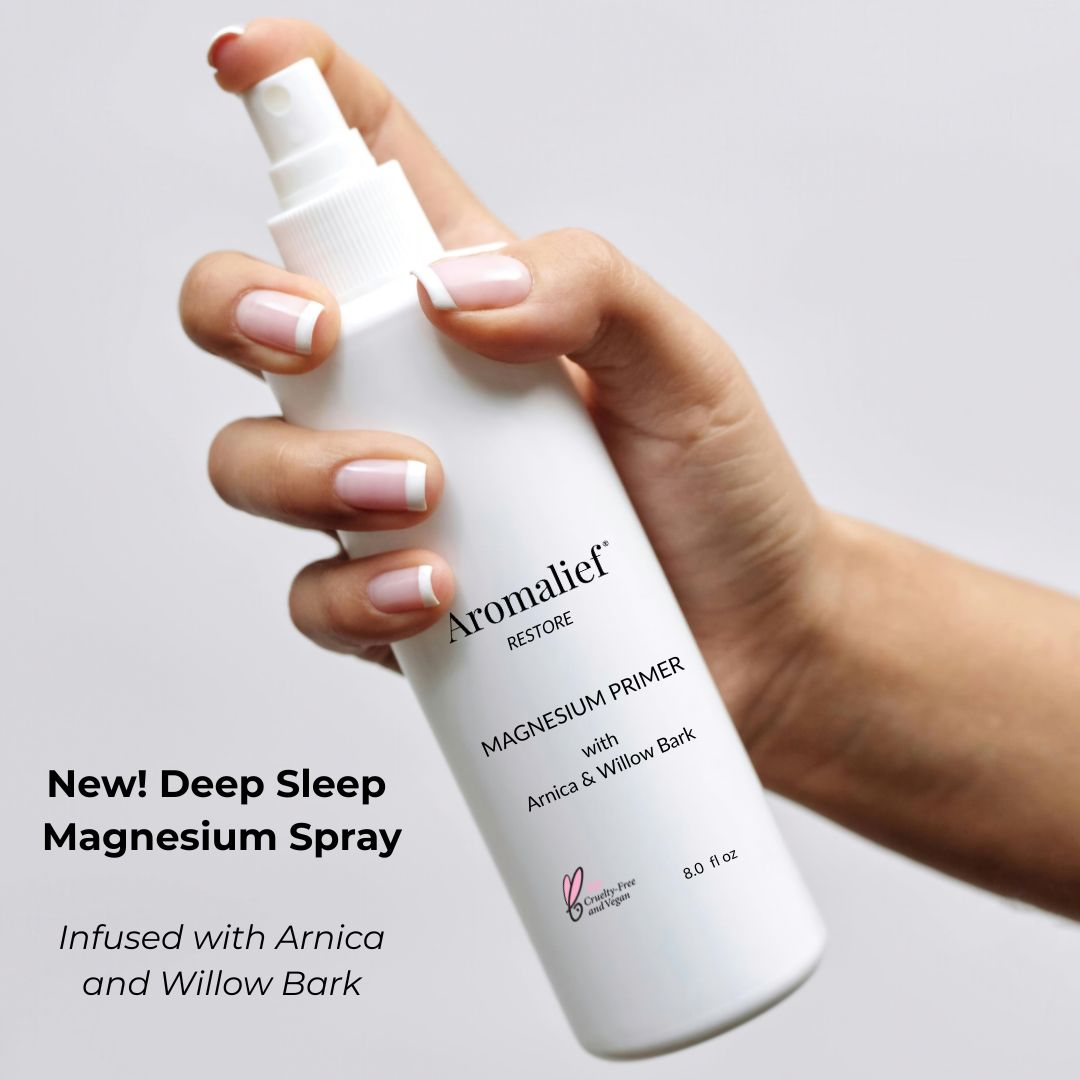
| The spray is good for relaxing, calming the nerves and enjoying your day without pain. The Deep Sleep Magnesium Spray works great with all Aromalief hand cream. What has helped me is using the spray and the Lavender Pain Hand Cream together. Lavender essential oil smells so good and adds to the relaxing. It’s a must buy. Melinda Reference: https://www.aromalief.com?sca_ref=244289.feW8IbRFn2 |
May is Maternal Mental Health Month, and moms around the world could probably use a break. During the COVID-19 pandemic, they have done even more of the childcare and housework, while also, in many cases, keeping up with their careers. How has the pandemic affected their mental health—either by creating new problems or by exacerbating perennial concerns?
In this edition of PsychPearls, Anita H. Clayton, MD, explores the wide and varied field of maternal mental health. Along with the effects of the pandemic, Clayton discusses prenatal mental health care, new and emerging treatments for postpartum depression and psychosis, and how what she saw in a courtroom set her on a path to becoming a renowned expert on maternal wellness.
https://embeds.audioboom.com/posts/7863094/embed/v4
Dr Clayton will speak further on these issues at the Annual Psychiatric TimesTM World CME Conference.
Dr Clayton is the David C. Wilson Professor and chair of the Department of Psychiatry and Neurobehavioral Sciences at the University of Virginia, with a secondary appointment as professor of clinical obstetrics and gynecology. She is the author of Satisfaction: Women, Sex, and the Quest for Intimacy, published by Ballantine Books in 2007, and an editor of the 2005 Women’s Mental Health: A Comprehensive Textbook. She is also a program co-chair of the Annual Psychiatric TimesTM World CME Conference.
Melinda

Melinda
I was kindly gifted a copy of One Step At A Time, by Francesca Giacomozzi from Soraya Nair at Cherish Editions for an honest review. Thank you, Soraya.
“Francesca Giacomozzi has lived in the UK since April 2016.
After quitting a full-time job that wasn’t fulfilling her, she studied to become a yoga teacher and reflexologist and now owns her own yoga teaching and massage therapy business.
Her drive to help others overcome mental health issues has pushed her out of her comfort zone, leading her to raise awareness about eating disorders as a daily mission.
Francesca has two degrees and can speak five languages.”
Excerpt From: Francesca Giacomozzi. “One Step at a Time.” Apple Books.
“My long-winded journey into a fuller and healthier self. Written with the hope that if you are lost, you will soon be found. This is the honest and unfiltered truth about me and my experiences as a warrior in eating disorder recovery. All the people mentioned in this book are real, and therefore have been made anonymous unless they provided consent to be spoken about by name.”
Francesca Giacomozzi found herself on the verge of a crisis, exhausted from waking up day after day without a sense of purpose. Determined to get her life back on track, she decided to take on a challenge to engage both her mind and body: a two-week walk along the South West Coastal Path.She invested in kit and prepared – or so she thought – for the solo trek. Little did she know, her journey would leave her with a completely different outcome to the one she expected. Her diary pages are filled with two tales: what happened on the trail, and how it made her feel on the inside.
When you’re faced with demons, you have two paths you can take. You can tackle them head-on or you can turn and run. Francesca found herself at a crossroads and decided to face her demons in the most interesting way. She set out to trek 360 miles across England to find herself and found so much more.
Armed with her diary, she sets out and discovers the generosity of others feeds her need for food. When you struggle with an eating disorder, you over focus on food and look for an emotional fulfillment which doesn’t come. Fran struggles with her thoughts and self loathing along the way but as she reaches her destination there is a new sense of self. A sense she can overcome and ask for help.
Ask for help she does, she sees a therapist for the first time and starts a new, more informed and self assured chapter. I beleive she is living her best life and inspires others with deep rooted struggles that there is light at the end of the tunnel.
Fran sprinkles in poetry throughout the chapters. She is a great writer and the book is a fast read, you can’t wait to see what adventure she will encounter next. You can also fully relate to the insecurities she feels about herself and in social situations.
I struggled with an eating disorder for years and can say this book hit home. It’s real and gives a look at the true mental and physical toll an eating disorder can take in the body.
This book is a great read for most types of mental health struggles, not just eating disorders. The guilt, anger, insecurities and shame are universal.
I highly recommend One Step At A time to everyone and give it 5 stars!
Cherish Editions is the self-publishing division of Trigger Publishing, the UK’s leading independent mental health and wellbeing publisher.
We are experienced in creating and selling positive, responsible, important and inspirational books, which work to de-stigmatise the issues around mental health, as well as helping people who read them to maintain and improve their mental health and wellbeing. By choosing to publish through Cherish Editions, you will get the expertise of the dedicated Trigger Team at every step of the process.
We are proud of what we do, and passionate about the books that we publish. We want to do the very best for you and your book, holding your hand every step of the way.
Happy Reading!
I know you will enjoy the book as much as I did and encourage you to pick up a copy today.
Melinda
Stalking is like being in Alice & Wonderland, paranoid, scared, no control, threats and you can’t get out until it’s over, it took over 7 months the last time. I had my claws out during the entire time and continued to listen to my gut more often. There are thousands of people are out there with a scam on their mind’s, if you have not met them in-person or you could find out how yourself another TikTok video. You may feel under a microscope until you can move forward, keep working through the trauma.
Legal definitions vary from one jurisdiction to another. Still, stalking is generally defined as a pattern of behavior directed at a specific person that would cause a reasonable person to feel fear. A crime in all 50 states and at the federal level, stalking is dangerous and potentially lethal.
| In 2019, about 1.3% of Americans ages 16 and older (3.4 million people) were victims of stalking, according to a report from the Bureau of Justice Statistics (BJS). The most frequently reported traditional stalking behaviors included the offender following and watching the victim. Stalking with technology most commonly included unwanted phone calls, voice or text messages, and emails and Internet messages.
The percentage of people who experienced stalking declined from 2016 (1.5%) to 2019 (1.3%). However, women continue to be victims of stalking more than twice as often as men. Overall, the data show most stalking victims know their stalkers. Among adults, 18- to 24-year-olds experience the highest rates of stalking, placing students on college and university campuses at high risk of becoming a victim. Research shows that most college students are stalked by someone they know, usually a fellow student. Colleges and universities that understand the dynamics of stalking and the negative impacts associated with it can support victims and hold stalkers accountablethrough campus programs and thorough investigations. In 2019, only 29% of stalking victims reported their victimization to police. Stalking victims who chose not to report the crime to police most often said they didn’t feel it was important enough to do so. |
Source: The Stalking Prevention, Awareness, & Resource Center |
If you believe you’re a victim of stalking, the Stalking Prevention, Awareness, and Resource Center provides guidance and resources in the What to Do if You Are Being Stalked section of their website.
Supported by the National Institute of Justice (NIJ), the Violence Against Women Research Consortium published a series of training videos and resources that cover stalking laws and best practices for law enforcement and prosecutors in stalking investigations.
January is recognized as National Stalking Awareness Month – an annual call to action to recognize and respond to the crime of stalking.
Date Modified: January 11, 2024
Internet Safety Special Feature: Cyberbullying and Cyberstalking
This online resource offers a compilation of publications and referrals to organizations dealing with cyberbullying and cyberstalking.
National Stalking Awareness Month
This webpage provides access to resources and materials that provide information about stalking and how to share information about National Stalking Awareness Month, which is recognized each January.
Office for Victims of Crime (OVC): Stalking
This website provides information about stalking and includes links to related organizations and topical publications.
Office on Violence Against Women (OVW): Stalking
OVW provides information on the U.S. Department of Justice’s legal and policy issues regarding violence against women and responds to requests for information regarding violence against women, including stalking.
Stalking Prevention, Awareness, and Resource Center (SPARC)
Funded by the Office on Violence Against Women, the goal of SPARC is to ensure first responders and other allied professionals have the specialized knowledge needed to identify and response to stalking cases.
Violence Against Women Research Consortium
The Rutgers Violence Against Women Research Consortium works collaboratively with interdisciplinary researchers and National Institute of Justice research scientists to identify, implement, and disseminate research and evaluation projects that fill the gaps in our current knowledge on stalking, as well as intimate partner violence, sexual violence, and teen dating violence.
Melinda
Reference:
That is a short sentence for a big answer! I live a laid back life now and the answer is actually shorter than you might expect.
Stay close to God
Be a good wife
Take care of my physical & mental health
Find joy by looking out the window
Help the charities I work with
Always looking forward to life
Be informed about the world around me
Cut negatives out of my life
Help when you can
Stay true to myself
Melinda
Made from stinging nettle plants, organic nettle tea can help relieve seasonal allergy symptoms with its natural antihistamine. You reap all the benefits of antihistamine symptom relief without having to take conventional medicines. You can drink the daily as a preventative or as needed.
Spirulina is a superfood full of amazing plant nutrients, like iron, calcium, vitamin A and C, and protein. While great for overall health, spiraling may be beneficial during allergy season because it is high in antioxidants and has been shown to protect the body from anything that might compromise the immune system. It is high in chlorophyll and is detoxifying. Other superfoods like Kale, turmeric, mace powder, hemp, and flax are great for reducing inflammation and boosting your immune system.
A probiotic can help boost your gut and immune system health, which plays a big part in seasonal allergies. You can digest probiotics by eating fermented items like sauerkraut, and kombucha, or by taking a supplement. Make sure it is a high-quality probiotic from an organic source.
Apple Cider Vinegar is detoxifying and practically a remedy for everything. Taking as little as 1 tablespoon a day can help you feel and be healthier, which will, in turn, reduce your allergy symptoms. Make sure you purchase unfiltered organic Apple Cider Vinegar.
Essential oils, such as melaleuca, peppermint, lavender, frankincense, lemon, and eucalyptus, help with seasonal allergy relief. I like to fill a roller bottle with a carrier oil and 5-10 drops of each chosen essential oil. I apply this to my nose, on my temples, and behind my ears when I begin to feel swollen or puffy, as well as to the bottom of my feet. You can use these as needed as well as preventative.
All great ideas from one of my favorite bookazines, Williow & Sage by Stampington.
Melinda
Repost
Notice the heading is Mental Wellness, not Mental Health or Mental Illness because they are each separate topics. Good Mental Wellness allows children and adults to live a fullfilling live and is critical for overall health. Put any preconcieved ideas aside and read the post for your health.
Mental Wellness is a term that considers psychological, physical, emotional, and social well-being. Looking at the whole self in this way can help people flourish. Mental Wellness is relevant to all of us, not just those experiencing mental health challenges.
Mental wellness encompasses emotional, psychological, and social well-being. It influences how we think, feel, and act, and is not merely the absence of mental illness. Instead, it represents a proactive approach to maintaining a balanced and fulfilling life. Key components of mental wellness include:
Working on Mental Wellness daily is like taking care of our body only a salad isn’t the answer.
Don’t let your misunderstanding of what Mental Wellness emcompasses stop you from living your best life.
To your health!
Melinda
References:
Leaning on the hard-earned wisdom of others helps shift your perspective and uplift your spirits, serving as a reminder that resilience is possible even on the toughest days.
May these words serve as a gentle source of inspiration and comfort. If you have a specific quote that helps you through the hard times, we invite you to share it in the comments.
“Love has, at its best, made the inherent sadness of life bearable, and its beauty manifest.” ~ Kay Redfield Jamison (An Unquiet Mind, 1995)
“If you cry because the sun has gone out of your life, your tears will prevent you from seeing the stars.”
~ Rabindranath Tagore
“In times of pain, when the future is too terrifying to contemplate and the past too painful to remember, I have learned to pay attention to right now. The precise moment I was in was always the only safe place for me.”
~ Nicholas Sparks
“Courage doesn’t always roar. Sometimes courage is the quiet voice at the end of the day saying, ‘I will try again tomorrow.’”
~ Mary Anne Radmacher
“Of all that is good, sublimity is supreme. Succeeding is the coming together of all that is beautiful. Furtherance is the agreement of all that is just. Perseverance is the foundation of all actions.”
~ Lao Tzu
“Hope is the thing with feathers that perches in the soul — and sings the tune without the words — and never stops at all.”
~ Emily Dickinson
“I believe that imagination is stronger than knowledge; myth is more potent than history; dreams are more powerful than facts; hope always triumphs over experience; laughter is the cure for grief; love is stronger than death.”
~ Robert Fulghum (All I Really Need to Know I Learned in Kindergarten: Uncommon Thoughts on Common Things, 1986)
“Life is like a piano; the white keys represent happiness and the black show sadness. But as you go through life’s journey, remember that the black keys also create music.”
~ Ehssan
“Those who love you are not fooled by mistakes you have made or dark images you hold about yourself. They remember your beauty when you feel ugly; your wholeness when you are broken; your innocence when you feel guilty; and your purpose when you are confused.”
~ Alan Cohen (Wisdom of the Heart, 2002)
“It isn’t the language of painters one ought to listen to but the language of nature…. Feeling things themselves, reality, is more important than feeling paintings, at least more productive and life-giving.”
~ Vincent van Gogh (letter to Theo van Gogh, The Hague, on or about Friday, July 21, 1882)
“Hello, sun in my face. Hello, you who made the morning and spread it over the fields… Watch, now, how I start the day in happiness, in kindness.”
~ Mary Oliver (poem, “Why I Wake Early,” 2004)
“Living well is an art that can be developed: a love of life and ability to take great pleasure from small offerings and assurance that the world owes you nothing and that every gift is exactly that, a gift.”
~ Maya Angelou (Wouldn’t Take Nothing for My Journey Now)
“Happiness is what greases the wheels of life, what opens the floodgates, raises the sun, aligns the stars, beats your heart, finds true love.”
~ Mike Dooley
“You gain strength, courage, and confidence by every experience in which you really stop to look fear in the face.”
~ Eleanor Roosevelt (You Learn by Living, 1960)
“We must let go of the life we have planned, so as to accept the one that is waiting for us.”
~ Joseph Campbell (to Diane K. Osbon, as recorded in Reflections on the Art of Living: A Joseph Campbell Companion)
“And once the storm is over, you won’t remember how you made it through, how you managed to survive. You won’t even be sure whether the storm is really over. But one thing is certain. When you come out of the storm, you won’t be the same person who walked in. That’s what this storm’s all about.”
~ Haruki Murakami (Kafka on the Shore)
“If you can’t fly, then run; if you can’t run, then walk; if you can’t walk, then crawl; but whatever you do, you have to keep moving forward.”
~ Dr. Martin Luther King Jr. (“Keep Moving from This Mountain,” speech at Spelman College, April 10, 1960)
“For what it’s worth: It’s never too late or, in my case, too early to be whoever you want to be. There’s no time limit. You can change or stay the same; there are no rules to this thing. We can make the best or the worst of it. I hope you make the best of it.… I hope you live a life you’re proud of. If you find that you’re not, I hope you have the courage to start all over again.”
~ Eric Roth (The Curious Case of Benjamin Button, film, 2008)
Melinda
Reference:
The post talks about how positive thinking and affermations help with Bipolar Disorder, the truth is everyone can benefilt from the post. What we think and say is what our brain believes.
Words — whether spoken or thought — carry incredible weight. They are capable of healing or harming. The unkind phrases people tell themselves so often can easily turn into beliefs, shaping an unfair and cruel view of who they are.
If words hold so much sway, why, then, can’t they be used for good?
What if your words and what you tell yourself hold the key to a better life? Imagine if, instead of riding along with the usual negative stream of consciousness, you said aloud: “I am worthy.” “I have the strength to overcome any challenge.” “I have come this far — I am capable.”
Appropriately termed “affirmations” or “self-talk,” these are positive statements that can help you confront and overcome self-sabotaging and negative thoughts and beliefs. When you repeat them often and believe in them, you can start making positive changes and rewriting your story.
Most people spend much of their waking time talking to themselves, although they might not always be aware of it. And that internal chatter is much more influential than many realize. Mood is created by the balance of chemicals in the brain — neurotransmitters like dopamine, serotonin, endorphins, and so on.
Yet even your thoughts or self-talk can alter your brain’s chemical reactions, shaping emotions and behaviors. What you say to yourself has real-world consequences.
“What you tell yourself is how you are programming your internal navigation system,” says Jill Sylvester, LMHC, MEd, who has a private practice in Hanover, Massachusetts, and is the author of Trust Your Intuition: 100 Ways to Transform Anxiety and Depression for Stronger Mental Health.
In this way, a person’s inner speech functions much like an internal compass or brain-based GPS. The tone of this self-talk influences our feelings, judgments, self-esteem, and actions — guiding them to move forward, change course, or settle into the status quo.
Sylvester’s metaphor is fitting and raises an important question: If someone isn’t paying attention to their self-talk, who is at the wheel? And where, exactly, are they going?
Repeated often enough, this silent self-address ultimately establishes a person’s default or foundational beliefs about themselves, those around them, and the world in general. So, in a sense, engaging in mindless self-talk is a lot like living on autopilot.
Even so, anyone can take back the controls. That voice in your head, after all, is your own.
The notion of thinking good thoughts is at the center of much psychotherapy, in fact. Reframing your negative thoughts is a powerful way to heal from past trauma. Furthermore, thinking positively to make yourself feel better is not self-deception, says Gregory L. Jantz, PhD, founder of the Center: A Place of Hope, one of the leading facilities for the treatment of depression.
In his book Moving Beyond Depression, Dr. Jantz writes that positive self-talk is “not mentally looking at circumstances with eyes that see only what you want to see. Rather, positive self-talk is about recognizing the truth in situations and in yourself…. [It] allows you to discover the obscured optimism, hope, and joy in any given situation.”
Lorenzo L. of New York City knows this firsthand. In his youth, Lorenzo struggled with “massive mood swings” that much later would be recognized as symptoms of bipolar disorder. Showing wisdom beyond his years, Lorenzo lifted himself out of depressive states by slowing his breathing and using positive affirmations.
With regular meditation, Lorenzo has learned to quickly identify his state of mind. Once he is fully aware of his current mood, he directs his self-talk accordingly: “When I’m coming down from mania or hypomania,” he says, his mantra is, “‘Don’t doubt yourself today. It’s okay that you don’t feel as joyful or productive today.’”
“When I’m cycling up to mania or hypomania,” he continues, “I say, ‘Try not to get too carried away. Use all of this extra energy for productive and healthy activities.’”
And when he is feeling balanced, he uses positive, encouraging inner speech to continue his sense of stability: “I can sustain this mood for more than this moment or day.”
“Self-affirmations,” Sylvester explains, “are positive statements that put a person in the driver’s seat of their life and create a path from which to grow.”
And grown he has. Working full-time and studying to become a certified public accountant, the 37-year-old Lorenzo credits his healthy mindset to meditation and cognitive behavioral therapy (CBT). With the help of his psychologist, he has solidified his initial forays into mindfulness and self-affirmation into a practical, tried-and-true strategy that improves his mood and alleviates his symptoms.
When the terrain is rocky and you’re struggling to stick to your wellness plan, positive self-talk can help you persevere by encouraging you to become proactive instead of reactive. In fact, you can harness your inner monologue to promote what psychologists call “self-regulation” — your ability to exert conscious control over emotional and physical responses to external situations.
You can strengthen your self-regulation by consciously distancing your thoughts from your experiences. One way to do this is to switch your self-talk from first person (“I,” “me,” “my”) to third person — using your own name instead.
An older randomized controlled trial found that doing so during times of stress fosters a sense of perspective, with net benefits including decreased anxiety, improved performance, and faster, more complete emotional recovery.
So, if you’re feeling anxious about an upcoming event or want to gain a bit of emotional separation from an experience to change your response, consider replacing “I” with your name when speaking or thinking your affirmations.
In times of overwhelm, it can be helpful to remind yourself who you are and what defines you as an individual. From there, you can make better decisions.
When Cheryl W. M. faces negative thoughts, she tells herself, “I don’t sweat the small stuff.”
By linking her desired mindset to her self-image in this way, she makes it easier to follow through with her goal of not letting minor inconveniences or difficulties become roadblocks.
Cheryl explains that her affirmation “helps to keep me centered and positive.”
Science supports Cheryl’s experience. In one study, participants with high levels of chronic stress showed reduced problem-solving ability. However, those who engaged in a brief self-affirmation activity performed significantly better on challenging tasks than those who didn’t.
This suggests that self-affirmations can protect against the negative effects of stress, such as impaired creativity and problem-solving.
Confirming the importance of linking affirmations to your identity, Sylvester says that empowering affirmations work best when they begin with “I am,” such as “I am true to myself,” “I am capable,” or “I am smart.” Set in the present tense, they “affirm that things are happening in the present, versus in the future.”
This is when first-person self-talk can prove beneficial, eliminating the emotional distance between your identity and what you want to affirm.
Kim S., understands the power of using self-talk in this way. Every time she looks in the bathroom mirror, she tells herself that she loves herself; then she says, “I am surrounded by love. I am strong today. I can make it right now, just for right now.”
In addition to using “I am” statements that focus on the current moment, Kim, who’s in her early sixties, also imagines being surrounded by white, healing light and beautiful hearts. “And if I have to,” she continues, “I repeat this five times per day.”
When you’re dealing with bipolar depression, it might feel inauthentic or untrue to say to yourself, “I am happy” or “I am capable.” Depression feels heavy and can often rob you of the belief that you can get out of bed, continue with your routines, and return to happiness. At these times, it’s essential to remember that your brain is mistaken.
Clinical psychologist and author of Overcoming the Destructive Inner Voice, Robert W. Firestone, PhD, identifies the “critical inner voice” — the stream of negative, self-defeating, and highly critical self-talk — as the “enemy within.” He writes that this enemy can be overcome only by recognizing it and actively working against it.
By distancing yourself from the “enemy within” and aligning with your true identity through positive, emotionally charged affirmations, you can move toward a more balanced and uplifting state of mind.
That sense of control can feel especially empowering when your mood seems to dictate your days.
Because internal self-talk influences both beliefs and behavior, cultivating awareness of that inner voice enables more intentional, affirming thought patterns.
Lorenzo says, “I know it’s difficult. If you’re struggling, there are ways to adapt your lifestyle and cope with difficult emotions. Such as, for me, affirmations and positive self-talk.”
“It’s a journey,” he says, “for sure.”
There are many ways to increase your sense of personal power and inject some positivity and affirmations into your daily routine. Here are a few to get you started.
Our mental health stays balanced from many forms of help and we need to look at all angles.
Melinda
Reference:
Here are a few products my husband & I are using right now and a few main stays. I hope you find a product to add to your wellness routine. The list may also give you ideas for a surprise for friends, and family. Most products are found on Amazon however, I’m not an Amazon Affiliate and I make no commission from you using the links. Each link takes you directly to the items Amazon page.
Up to 12 Hours Temporary Relief of Mild to Moderate Pain, Backache, Sore Muscle, Sprains, Bruises. Clinically studied & effective to temporarily relieve mild to moderate pain.
Contains two powerful pain fighting ingredients, menthol and methyl salicylate (an NSAID – a nonsteroidal anti-inflammatory drug).
Rounded corners that resist peeling and flexible fabric.
Discreet and Comfortable: Thin, flexible design conforms to your body, making them suitable for use at home, work, or on the go.
Visit the Sleep Innovations Store
Featuring pressure-relieving TEMPUR-Material™ and our adjustable blend for the ideal balance of comfort and support. 5-Year Warranty, Adjustable fill for personalized sleep, and This item features a removable, machine-washable cover so you can refresh your sleep space as often as you like.
https://www.tempurpedic.com/shop-pillows/cloud-hybrid-pillow/v/4346/
For Body Muscle Pain Cramps Relief, 6 Heat Settings Machine Washable Electric Heating Pad. Soft Multi-Function Heating Pad: Heating pads for women are made of ultra-fine plush and can be used on double sides, It is extremely soft and gives you unexpected gentle care. Electric heating pad can achieve rapid heating within a few seconds, and provides overheating protection, auto shut off, timing and other safety protection functions, allowing you to enjoy the happiness of pain relief without worry
6 Heating Levels & 4 Timing Settings: Warmth and pain relief in one heating pad with 6 heating levels from 104℉(40℃) to 149℉ (65℃) and 4 timer settings (1h/2h/4h/6h). Whether it’s a mild to strong and lasting hot compress effect, or keeping warm in the cold winter, large heating pad can help you choose the most appropriate heating temperature and timer according to the degree of physical discomfort at any time
My husband and I can’t live without these products, they have improved our life and especially our sleeping.
Reference:
.png "Five More Fabulous Fibro Bloggers")
We’re back with another round of inspiring fibro bloggers who continue to write, reflect, and uplift despite the daily challenges of chronic illness. These storytellers offer wisdom, humor, and solidarity to the fibromyalgia community—and beyond.
Glenys writes with gentle honesty about home life, aging, and the quiet rhythms of living with fibromyalgia. Her blog is a space of peace and acceptance, where chronic illness is acknowledged but not allowed to eclipse joy.
“I write about home keeping, aging, peace and acceptance. My blog is a place to reflect on the small things that make life meaningful—even when pain is present.”
Fibro-related posts include:
Dale combines photography and storytelling to explore life with fibromyalgia. His YouTube channel and blog are filled with creative therapy ideas, including how photography can be a healing outlet.
“I use photography to express what words sometimes can’t. Living with fibromyalgia has taught me to see beauty in stillness and resilience in imperfection.”
Fibro-related content includes:
Carrie blends advocacy, art, and lived experience to illuminate life with fibromyalgia and also axial spondylarthritis. Her blog, My Several Worlds, is a vibrant hub for chronic illness awareness. From her home in Taipei, she writes with clarity and compassion, offering both practical resources and emotional resonance within Asian healthcare and the wider world.
“Blogging is a great coping tool because it allows me to vent when I need to. Plus, it’s a great way to meet other people in the chronic illness community.”
Fibro-related content includes:
Her work is especially powerful for those seeking validation in complex medical systems, and for anyone who needs to hear: you are not alone, and your story matters.
Melinda’s blog is a blend of advocacy, interviews, and personal reflection. Her “Blogger Highlight” series lifts up other voices in the fibro community, and she writes candidly about mental health and invisible illness.
“I want to shine a light on the stories that often go unheard. Fibromyalgia is invisible, but our voices don’t have to be.”
Fibro-related posts include:
Windy writes about her experience with fibromyalgia and physical therapy, weaving in reflections on faith and healing. Her blog is heartfelt and grounded, offering hope to those navigating similar paths.
“My connection to God has helped me through the hardest parts of this journey. I write to share what I’ve learned and to remind others they’re not alone.”
Fibro-related posts include:
We hope you’ve enjoyed meeting these five fabulous fibro bloggers. Their voices are part of a growing chorus of resilience, creativity, and advocacy. Stay tuned for the next spotlight in our Focus on Five Fibro Blogs series or review the previous one.
Sending a special thanks you to all the Fibro Warrior’s who contribute to Fibro Directory, speading awareness is critical.
Fibro Bloggers Directory is the brainchild of Lee Good, the community of Fibro Warriors contribute post focused living with Fibromyalgia. If you are interested in learning about how to join the group, reach out Firbo Directory for information.
If you don’t want to join at this time, you can visit for invaluable resources.
Melinda
Reference:
https://www.fibrobloggerdirectory.com/search/label/fibro%20bloggers
I have updated the resources for Fibromyalgia and as always continue to look for more. I created this page to add to Organizations That Can Help pull down menus but because I don’t do it often, it’s not showing up in the right place yet. I’m working on because these resources are critical.
Patient Advocate Foundation
A pharmaceutical co-payment assistance program for insured patients suffering with chronic pain.
Together RX Access
Uninsured Americans gain access to immediate savings on prescription products right at their neighborhood pharmacies AND resources that help people take care of what’s most important—their health.
800-444-4106
www.togetherrxaccess.com
RxHope
RxHope is exactly what its name implies…a helping hand to people in need in obtaining critical medications that they would normally have trouble affording. We act as your advocate in making the patient assistance program journey easier and faster by supplying vital information and help.
Needy Meds
NeedyMeds is not a patient assistance program, but rather a source of information on thousands of programs that may be able to offer assistance to people in need. NeedyMeds does not have an application, nor can we answer questions about individual assistance programs. We strive to provide accurate and current information, but ask that you contact specific programs directly with questions.
800-503-6897
www.needymeds.com
Healthcare Bluebook
Helps consumers save money on medical expenses — everything from drugs to x-rays — by giving them access to a nationwide database that estimates a “fair price” for watever they’re paying for.
(888) 866-8159
healthcarebluebook.com
Free Drug Card Program
Nationwide Prescription Assistance Program (PAP) sponsored by a non-profit organization to help all Americans lower their prescription drug costs. This program has LOWEST PRICE LOGIC to guarantee that you get the best deal on your prescriptions. – See more at: http://freedrugcard.us/#sthash.IbJo8Fdh.dpuf
Benefits and Checkup
A patient assistance program that provides certain GSK prescription medicines to qualified patients who need help paying for treatment.
866-728-4368
www.bridgestoaccess.com
Melinda
Good question for which I have mixed answers for. I naturally tend towards being a night person because I love to sleep in a bit however during my working years, being a morning person was not an option and in fact towards the end of my career, I enjoyed waking up early to have a cup of coffee at home instead of on the way to work, to me coffee doesn’t taste the same while driving.
Now, I’m a bit of both because many nights I can’t sleep or sleep only a couple of hours which means I tend to take a nap mid-morning.
I’ve not been one to jump out of bed at 5:00 am to greet the day, what am I going to do at that hour?

Melinda
As we close out the end of 2025, it’s time to look ahead at what topics are trending as we move into the new year. The topics change reguraly and my goal is to stay current in what topics you want to read about.
Looking for the Light is successful when posts are on topics you are interested in. Please drop a comment to add additional topics you want to read about. :)
I will delve into many of the topics in the coming year. Staying current on what topics you are searching for helps me learn and allows me share the knowledge with you.
Melinda
Reference:
For nearly a decade, Megan Miller woke up every day bracing for pain. What began as the occasional migraine spiraled into years of confusion and fear — until one phone call, and a viral TikTok, changed everything.
“I cried like that,” Miller tells PEOPLE, recalling the emotional video that captured her raw reaction when she finally learned what could be causing her chronic migraines. “That video that was posted was literally, like, my real reaction to getting the call.”
The call that inspired her tears didn’t bring certainty at first. “The call wasn’t like, we know for sure that this is what’s doing it,” Miller says. “But the call was more of like, ‘Hey, this is kind of what we think could be causing it. Let’s try to cut out gluten. Let’s see what’s going to happen.’ ”
Miller’s pain began when she was just 17. “The very first one that I got, I woke up in the middle of the night screaming because I was in so much pain,” Miller recalls. “My parents rushed me to the ER, and the doctors actually thought I was having a stroke.”
Tests came back clear, but the cause remained a mystery. Over the next decade, Miller visited countless doctors and tried everything from prescription medications to lifestyle changes. “I had to learn really quickly, I need to file with the disability offices because, like, if I can’t make a class because I physically cannot move, you cannot hold that against me,” she explains. “So that’s been a big thing. Learned how to advocate for myself pretty young.”
Life became a balancing act between ambition and pain. “I would rather not take anything and just deal with the migraines,” Miller says, remembering how one medication dulled her mind and made her feel detached.
Each day revolved around uncertainty — would she make it through work or class without collapsing? “When they hit, they were completely debilitating,” she says. “I couldn’t see, couldn’t function, couldn’t even get out of bed.”
For years, she kept searching for a solution that never came. “I’ve been to neurologists, primary care doctors, even allergy specialists,” she says. “And no one could tell me why this was happening.”
That changed when she switched to a new primary care doctor who looked at her case differently. “It was the first time that a doctor really wanted to find an answer,” Miller recalls. “I’ve been to so many doctors that are just like, ‘We don’t know,’ and this was the first time that she really ran all the tests.”
The results revealed something no one had suspected: a severe gluten allergy, and possibly celiac disease. For the first time, Miller had an explanation that made sense.
“It was the first time that someone finally looked at all of it and said, ‘Wait a second, this could actually be connected,’ ” she recalls. “And that was such a relief, but also so frustrating because it took so long to get there.”
She had never imagined gluten could be behind her suffering. “People think gluten allergy, they think you eat a piece of bread, you’re throwing up, you’re having stomach cramps, all this stuff,” she says. “It can present really differently for a lot of people.”
For her, the allergy didn’t cause digestive issues. Instead, it looked like headaches and fatigue — symptoms she’d never linked to food. “I had no idea gluten could even do that,” she says. “If I’d known that, maybe I could’ve figured it out sooner.”
But a decade of pain management had taken its own toll. “Results that came back from my endoscopy … the stomach pain I was getting was actually from all of the aspirin-based products I’ve taken in the past 10 years [that] have just eaten away at my stomach,” she tells PEOPLE. “So now my stomach lining is basically not there.”
She had spent years trying to relieve her pain, not realizing those same medications were quietly damaging her body. The discovery was both freeing and devastating.
“That was a hard pill to swallow,” she admits. “I was just trying to make it through each day, and now I’ve got a whole new thing to heal from.”
Still, the diagnosis gave her something she hadn’t had in years — hope. When she shared her emotional reaction on TikTok, she had no idea it would strike such a chord. “Everyone was just so kind,” Miller says, smiling. “So many people commented like, ‘Oh my gosh, the same thing happened to me — when I stopped eating gluten, my migraines just went away.’ ”
Her story quickly became a space for others to share their own experiences. People offered encouragement, gluten-free recipes and even restaurant tips in the comments.
“Everyone just started giving their different suggestions, giving the recommendations, people offering their recipes for homemade bread,” she recalls. “It turned into this really positive community.”
That sense of belonging carried her through the hardest parts of learning to live gluten-free. “It is hard because there’s gluten in things I would have never thought there would be,” she says. “Having that support and just kind of having people that it’s like, ‘Yeah, it’s gonna suck … but you’re gonna feel so good not eating it that you’re not gonna want to.’ ”
When she returned to her hometown, she stumbled upon a fully gluten-free bakery that instantly made her feel welcome. “I walked in and I told her, ‘Okay, I’m like, newly gluten free,’ and she’s walking me through like, everything they have to offer,” Miller says. “It was just so sweet — she really cared.”
Now, each day without a migraine feels like a small miracle. “I’ve gone longer not eating gluten and not having a migraine than I have in 10 years,” she tells PEOPLE. “So I’m finally at the point that I’m like, I will take not eating gluten any day over having this head pain two or three times a week.”
After years of living in fear, she’s finally free from the constant dread. Her body, once a source of suffering, now feels like a source of peace. Within six weeks of completely eliminating gluten, Miller says she hadn’t had a single migraine — a stunning turnaround after years of two or three attacks a week.
“You have to fight for answers,” Miller says. “And you have to find a doctor that’s willing to actually advocate for you, willing to put in those tests.”
Through her videos, she continues to raise awareness about how gluten sensitivity can present in unexpected ways.
Now, pain-free for the first time in her adult life, Miller hopes her story will encourage others to listen to their bodies and keep searching for answers. “Your body doesn’t feel right, there’s a reason why,” she says. “And you kind of have to figure it out.”
As she continues to heal, gratitude has replaced frustration. Each migraine-free morning feels like a victory she once thought impossible.
“I feel like I finally get to live again,” Miller says. “It’s like I’m getting my life back, one day at a time.”
I am so happy for her, migrains can consume your life and it’s a blessing when I here a story of someone living a migraine free life.
Melinda
Reference:
If your relationship is taking more away from your life and well-being than it’s providing, there’s a good chance it’s toxic. Here’s how to know — and what to do if you realize your romance is unhealthy.
You’re dating someone new and everything feels … brighter. You’re giddy, practically floating on air. As the emotions from this punch-drunk chemical cocktail settle down, so too does the relationship. But rather than feeling the warmth of deepening intimacy and a comfortable routine, you start to lose yourself. Or at least that’s how it seems. Unproductive arguments happen regularly, and one or both of you seem prone to jealousy, passive aggression, or blame.
If those scenarios sound all too familiar, you may be involved in a toxic relationship. “We can think of toxic relationships the same way we think of toxic materials,” Shadeen Francis, LMFT, certified sex therapist, tells DailyOM. “Toxic relationships are ultimately harmful to our well-being, often worsening our health and happiness over time.”
A toxic romance is one that lacks the attributes of a healthy relationship. “At the heart of any great relationship is partnership,” says Wendy Newman, a relationship expert and author of 121 First Dates, whom DailyOM spoke with for this story.
If those scenarios sound all too familiar, you may be involved in a toxic relationship. “We can think of toxic relationships the same way we think of toxic materials,” Shadeen Francis, LMFT, certified sex therapist, tells DailyOM. “Toxic relationships are ultimately harmful to our well-being, often worsening our health and happiness over time.”
A toxic romance is one that lacks the attributes of a healthy relationship. “At the heart of any great relationship is partnership,” says Wendy Newman, a relationship expert and author of 121 First Dates, whom DailyOM spoke with for this story.
And that healthy partnership involves mutual love and high integrity, she adds, having each other’s backs and empowering each other to be the best version of yourselves. Both parties have good intent and stay responsible for their own feelings. “If any of these elements are missing, you’ve got the makings of a toxic relationship,” Newman says. “If you’re dealing with an opponent instead of a partner, that’s toxic.”
Meanwhile, if you’re continually offering your best self and stay willing to work through challenges, yet your partner isn’t receptive — or worse, they’re downright harmful — that’s toxicity worth paying attention to.
Conflicts and disagreements are a part of all relationships, says Francis, but if those conflicts undermine your trust and safety, that’s a concerning sign of toxicity.
A study published in the journal Family Process in 2019 showed that happy couples tend to take a solution-oriented approach to conflict. When they argue about things like how to spend free time or divvying up household chores, they aim to find mutually helpful outcomes versus ending up in an exhausting spiral with no fixes.
“You and your partner are different people and are going to have feelings, thoughts, needs, and desires that are at odds sometimes,” says Francis, adding that feeling disappointed, angry, or sad is okay. “But notice whether or not you still generally feel like a team. Even as there are problems, do you believe that you both are working toward resolving them? Can you still be kind to one another? Or is there blame, criticism, gaslighting, avoidance, or stonewalling?” If it’s the latter, and if kindness and resolution remain out of reach, that’s a toxic pattern.
Codependency is another toxic trait that can put your relationship and well-being off course. In this dysfunctional dynamic, one person takes on the role of the “giver” and the other is the “taker.” The giver sacrifices their own needs to tend to the other — potentially making excuses for their unruly behaviors — while the taker relies too heavily on those care attempts.
“Codependent relationships, even if they are warm and loving, are also often toxic relationship environments,” says Francis. “They are often organized not by love, but by insecurity, trauma bonding, and fear.”
Though it’s important to note that many people have overcome challenging childhood experiences without repeating those patterns as adults, if you or your partner grew up in an abusive household or around alcohol dependence, you may be more prone to this scenario.
A common thread among many toxic relationships is the isolating places they lead. You may become so involved in the toxic parts that you have little room in your life for friendships or hobbies. Your work life suffers as you struggle to concentrate on anything besides your relationship, while your moods and ability to sleep well dwindle.
While some of these issues might crop up in a pronounced way, gradual, subtle unfolding is common. Because “our relationship dynamics are a series of interactive habits, patterns of response, emotional exchanges, and routines that we form together over time,” says Frances, “it is not unusual for subtle changes or seemingly unimportant frictions to become entrenched problems in our relationships down the road.”
And because these frictions and their effects develop slowly, it’s easy not to realize the path you’re on until the pain or frustration accumulates. If you feel like something isn’t right, Frances adds, it’s important to “trust your embodied wisdom, even if you can’t quite put your finger on where or when things shifted.” And if your partner uses manipulation to avoid accountability, she says, they may capitalize on doubt and try to distract or gaslightyou into ignoring warning signs of toxicity.
While positive, healthy relationships allow you to strengthen other life areas and bolster self-esteem, a toxic relationship does the opposite. “A toxic relationship isn’t just one with challenges or hardships,” explains Francis. “They take a long-term toll on your health, whether that is emotional health, mental health, spiritual health, financial health, or physical health.”
While not all toxic relationships include narcissism, a narcissist’s extreme self-involvement can easily invite toxicity. “Narcissism involves a number of traits that are likely to create a toxic relationship: self-absorbedness, lack of remorse, low emotion regulation skills, a dependence on others’ admiration in order to feel self-worth, and a resistance to taking accountability for their impact on others,” Francis says.
You might also fall prey to gaslighting, manipulation, and severe emotional abuse when a partner’s narcissism is at play, which may show up as your being constantly controlled or ridiculed.
When on the receiving end of narcissistic behavior, your own needs fall to the wayside because of your partner’s self-focus. (At first, your partner may have showered you with over-the-top gestures and gifts, also known as “love bombing,” purely to “win” or “keep” you.).
Even though narcissism often stems from emotional neglect early in life, know that it’s not your responsibility to “fix” a partner who’s hurting you. You can have compassion and move on. And of course, narcissism doesn’t affect everyone who had a difficult childhood. Only about 5 percent of people have narcissistic personality disorder, the most severe form. If you recognize that you are prone to narcissist tendencies yourself, with time and effort, you can work through those wounds and find new strategies for soothing and relating to others.
An unhealthy, toxic relationship can be turned around, says Newman, if both people are willing to change their behaviors for good. “Not try to change, not hope to change someday. I mean literally change instantly, as in I see it, and I’ll stop it right this second.” While this shift is rare, she says — and requires committed efforts moving forward — it’s awesome.
Chanel Dokun, a relationship expert trained in marriage and family therapy, author of Life Starts Now: How to Create the Life You’ve Been Waiting For, and the co-founder of Healthy Minds NYC, agrees that a toxic relationship can be healed, “but only if each individual does the hard work to address their own unhealthy relational patterns,” she tells DailyOM. “The couple might need to take a substantial break to allow for healing and a reset to their dynamic.”
What you don’t have to do is stick around suffering, hoping the other person will change. Some relationships can’t be saved, and you may decide it’s time to go your separate ways, even if you still have feelings for your partner or they have certain traits that you admire.
When meaningful change isn’t feasible or you want out regardless — for whatever reason — both Francis and Newman suggest seeking help. That’s because breakups, while never easy, can be especially complicated and painful when you’re dealing with a toxic dynamic. If your self-esteem has lowered because of the relationship, leaving you in a more vulnerable state, even a relatively mild breakup might feel impossible. Regardless, you can get through it with proper care.
To get out of a toxic relationship, Newman says the support of friends, family, and possibly a trained professional such as a therapist is key. “Set yourself up to have someone in your corner who can have your back and reassure you that you’re making the right call. This is not the time to turn inward; look out to your community for love and help,” the expert says.
Ask your therapist or another trusted ally to help you role-play what you want to say to end the relationship and brainstorm next steps and logistics — say, if you and your partner are currently living together or will need to be in contact in the future, due to children you share together or for another reason. If you are able to make a more complete break and cut off all communication, that may be helpful, and even necessary, particularly if you feel your partner will try to gaslight, guilt, or otherwise manipulate you to stay with them, or you’ve developed a trauma bond, in which you feel you need the harmful partner.
There’s no quick fix or universal timeline when you’re healing from a toxic relationship that you’ve left behind, so keep being gentle with yourself. “Change is hard and takes time,” notes Frances. “You’ll need some grace to get to the other side.”
Continue to lean on your support systems and give yourself time to work through the aftermath with love and kindness toward yourself.
Meanwhile, delve into activities you’re curious or passionate about, with the knowledge that you are a “whole person with or without a partner,” says Dokun. “It’s possible to build a thriving life full of meaning and purpose without staying in a toxic dynamic, so prioritize the pursuit of your own life purpose over the relationship before you miss out on the life you deserve to live.”
To explore what that might look like for you, consider journaling, practicing guided meditation, or bringing these topics up with a friend or your therapist.
The rewards of the healing work you do can pay off more than you can imagine. Trust that process, knowing that you will absolutely be better off in the long run.
If you think you may be in an abusive relationship, contact the National Domestic Violence Hotline: 800-799-7233.
Melinda
Reference:
It’s that time of year when many of us are pulling out heavier blankets for the colder months of winter. If you have a chronic illness maybe you’ve already heard about weighted blankets, maybe even sleep with one year-round. If not familiar with weighted blankets, I’ll share some of the basics of buying one.
Weighted blankets come in all sizes, including children’s and throws. The blankets work by distributing weight evenly across the body to imitate a hug to induce better sleep by increasing Serotonin levels inducing a deeper sleep.
The key difference from your average blanket is they are made with glass beads as a filler. You purchase the weight of the blanket based you your own weight. It is also suggested that if you are a first-time user to buy a lighter one to start off.
The blankets come in a variety of fabrics and many have slipcovers you can purchase as well. I’m a very hot sleeper and they even make weighted blankets for people like me. Look for Cooling in the description.
I started my search last night for a new one since the first one I purchased was too heavy. I learned a lot about how they are made and why some are more expensive than others.
When you’re looking for a blanket you want small sewn 5″-3″ squares, that way the beads are more evenly distributed. The larger the square the more the beads can roll around.
Another important feature to look for is if it is machine washable, I found several that were hand wash only and I can’t go for that. I would recommend a duvet cover for your blanket which will allow you to keep it clean and only have to wash the blanket occasionally.
There are many lists of the top brands to buy, after looking at a few lists, I went to Amazon. I could not justify the $300 price of the top-rated blankets, it just doesn’t make sense. I found several including one on the list that cost $100 for a small size. I’m only buying a blanket for my side of the bed, not the entire King Size bed. He sleeps with the heavier blanket I bought years ago.
I found something interesting as I did more research. One brand I discovered said on more than one occasion, they are not for people with sensitive joints and back pain! Wait, hold the phone! What! I have sensitive hip joints and bad back pain. Do I need one of these blankets?
If you do decide to buy one, make sure you buy the right weight for your body. I’ve heard the praises of weighted blankets for years but for me, it was not the right choice.
Ask lots of questions and shop around before buying there are so many nuances to each blanket.
Melinda
Repost
It took me years to set limits on myself, especially when I was single. In 2017 I opened my now closed X account and the numbers of hours spent waisting time, I can’t get back. My phone and computer were like an appendege. I’m proud of myself for realizing it was affecting my mental health and my sleeping issues.
Changing habits is hard to do, it doesn’t happen overnight. My change started several years ago by focusing on sleeping habits to reduce anxiety. I go to bed an hour before bedtime, in that hour the goal is to unwind, clearing my head is necessary to falling asleep. Self-care helps the process, like an ultrusonic diffuser with calming essential oils, using a roller ball of essential oil on your pulse points, and indulging in hand & body cream. The room is dark, no electronics and a bit cooler.
What has made the biggest difference is cutting the time spent watching news in half and not spending time on the computer after 6:00PM, it sounds crazy yet my brain wakes up and it’s hard to wind down. When I hear my husband coming to bed I’m normally rested and ready to sleep. One key is being consistant with the time spent before bedtime.
A blessing and curse happened in January, all of my personal information was released is a large data breach, I’m now exposed for the rest of my life for identity theft. I had to change every password, get new credit cards, add second step authorizations and I decided to close all social accounts. The last step the easiest.
All changes require determination, commitment, and consistency.
Melinda
Earlier in the month I was diagnosed with persistent Hypocalcemia. The lack of calcium can cause many problems but the most troubling to me at this time is more Osteoporosis which I already have in my hip and heart complications, which I already have several heart issues.
Like everyone my appointment was pushed out and we wait out the social distancing to get back to normal. I’m lucky that I don’t have the worst symptoms yet.
Hypocalcemia (Calcium Deficiency Disease)
Calcium is a vital mineral. Your body uses it to build strong bones and teeth. Calcium is also needed for your heart and other muscles to function properly. When you don’t get enough calcium, you increase your risk of developing disorders like:
Children who don’t get enough calcium may not grow to their full potential height as adults.
You should consume the recommended amount of calcium per day through the food you eat, supplements, or vitamins.
Many people are at an increased risk for calcium deficiency as they age. This deficiency may be due to a variety of factors, including:
It’s important to ensure proper calcium intake at all ages.
For children and teenagers, the recommended daily allowances for calcium are the same for both sexes. According to the National Institutes of Health (NIH), the daily allowances are:
According to the U.S. government’s dietary guidelinesTrusted Source, calcium requirements for adults are:
Women need to increase their calcium intake earlier in life than men, starting in middle age. Meeting the necessary calcium requirement is particularly important as a woman approaches menopause.
The hormone disorder hypoparathyroidism may also cause calcium deficiency disease. People with this condition don’t produce enough parathyroid hormone, which controls calcium levels in the blood.
During menopause, women should also increase their calcium intake to reduce the risk of osteoporosis and calcium deficiency disease. The decline in the hormone estrogen during menopause causes a woman’s bones to thin faster.
Other causes of hypocalcemia include malnutrition and malabsorption. Malnutrition is when you’re not getting enough nutrients, while malabsorption is when your body can’t absorb the vitamins and minerals you need from the food you eat. Additional causes include:
If you miss your daily dose of calcium, you won’t become calcium deficient overnight. But it’s still important to make an effort to get enough calcium every day, since the body uses it quickly. Vegans are more likely to become calcium deficient quickly because they don’t eat calcium-rich dairy products.
Calcium deficiency won’t produce short-term symptoms because the body maintains calcium levels by taking it directly from the bones. But long-term low levels of calcium can have serious effects.
Early stage calcium deficiency may not cause any symptoms. However, symptoms will develop as the condition progresses.
Severe symptoms of hypocalcemia include:
Calcium deficiencies can affect all parts of the body, resulting in weak nails, slower hair growth, and fragile, thin skin.
Calcium also plays an important role in both neurotransmitter release and muscle contractions. So, calcium deficiencies can bring on seizures in otherwise healthy people.
If you start experiencing neurological symptoms like memory loss, numbness and tingling, hallucinations, or seizures, make an appointment to see your doctor as soon as possible.
Contact your doctor if you have symptoms of calcium deficiency disease. They’ll review your medical history and ask you about family history of calcium deficiency and osteoporosis.
If your doctor suspects calcium deficiency, they’ll take a blood sample to check your blood calcium level. Your doctor will measure your total calcium level, your albumin level, and your ionized or “free” calcium level. Albumin is a protein that binds to calcium and transports it through the blood. Sustained low calcium levels in your blood may confirm a diagnosis of calcium deficiency disease.
Normal calcium levels for adults can range from 8.8 to 10.4 milligrams per deciliter (mg/dL), according to the Merck Manual. You may be at risk for calcium deficiency disease if your calcium level is below 8.8 mg/dL. Children and teens typically have higher blood calcium levels than adults.
Calcium deficiency is usually easy to treat. It typically involves adding more calcium to your diet.
Do not self-treat by taking a lot of calcium supplements. Taking more than the recommended dose without your doctor’s approval can lead to serious issues like kidney stones.
Commonly recommended calcium supplements include:
Calcium supplements are available in liquid, tablet, and chewable forms.
It’s important to note that some medications could interact negatively with calcium supplements. These medications include:
Sometimes diet changes and supplements aren’t enough to treat a calcium deficiency. In this case, your doctor may want to regulate your calcium levels by giving you regular calcium injections.
You can expect to see results within the first few weeks of treatment. Severe cases of calcium deficiency disease will be monitored at one- to three-month intervals.
Complications from calcium deficiency disease include eye damage, an abnormal heartbeat, and osteoporosis.
Complications from osteoporosis include:
If left untreated, calcium deficiency disease could eventually be fatal.
You can prevent calcium deficiency disease by including calcium in your diet every day.
Be aware that foods high in calcium, such as dairy products, can also be high in saturated fat and trans fat. Choose low-fat or fat-free options to reduce your risk of developing high cholesterol and heart disease.
You can get 1/4 to 1/3 of your RDA of calcium in a single serving of some milks and yogurts. According to the United States Department of Agriculture (USDA)Trusted Source, other calcium-rich foods include:
While meeting your calcium requirement is very important, you also want to make sure you’re not getting too much. According to the Mayo Clinic, upper limits of calcium intake in milligrams (mg) for adults are:
You might want to supplement your diet by taking a multivitamin. Or your doctor may recommend supplements if you’re at high risk for developing a calcium deficiency.
Multivitamins may not contain all of the calcium you need, so be sure to eat a well-rounded diet. If you’re pregnant, take a prenatal vitamin.
Vitamin D is important because it increases the rate calcium is absorbed into your blood. Ask your doctor how much vitamin D you need.
To increase your calcium intake, you can add food rich in vitamin D to your diet. These include:
As with calcium-rich dairy products, some vitamin D-rich dairy products can also be high in saturated fat.
Sunlight triggers your body to make vitamin D, so getting regular exposure to the sun can also help boost your vitamin D levels.
Melinda
It’s been a year since I wrote Fibromyalgia Thoughts #7, I had no idea how well I had been managing. Until today, when I wasn’t managing at all. A wave came over me after breakfast just as I was going outside to water the plants, and the life drained out of me. I had to go back to bed even though I had a good night’s sleep, maybe the best sleep I’ve had in days.
The temperature here has already reached 100 degrees and the humidity is high. We’ve touched on several record-breaking days already and it’s not even July. July and August are usually the hottest months in Texas, but we are having average temps in June. The heat is exhausting.
I go out to water most days by 9:00 am but today I was delayed by an hour since I laid down. Boy, what a difference an hour makes. It’s not that I was feeling so much better but knew that if I could muster the energy it would be much easier to water now than wait or ask my husband for help. He’s always glad to help, but it’s my passion, my flowers, and my sanctuary. I thought if I could just get out there I would somehow feel better. NOT.
I’ve been battling many symptoms that have progressed over the past year, I don’t know if they are all Fibro since other things are going on with my health. I think telling myself it’s something else has somehow allowed me to keep pushing on.
I see a new Rheumatologist at the end of the month and I hope to have some answers. I’ve been keeping detailed notes of each symptom by body area and tracking the progression. I can only sleep for 2-3 hours at a time before the pain wakes me, I have to roll over and wait for sleep to come again. It’s very tiring.
The other morning the muscles in my legs were so tight I could hardly walk, I lay in bed thinking how am I going to do this. I took my muscle spasm medication and moved to the chair. I realized today that the limp from my hip is more pronounced, that’s from my Brusitis. I am late on my steroid injections and can tell.
I know this afternoon will include a nap, which I give myself grace. I’ve beat myself up for too many years for not being the best wife or granddaughter or best self. In fact, the best self I can be is to take care of my health, do what I can, be honest about what’s going on, and take the pass when I have to.
I’ll keep you posted on my Rheumatologist appointment. I work hard to not over-research my symptoms and go in with a layman’s diagnosis. I’ve taken very precise notes and the symptoms will hopefully lead to answers or in the right direction.
Melinda
You’ve probably heard the term or worse yet suffer from Painsomnia yourself. If the term is new to you, here’s the short version. A person experiences insomnia due to pain preventing them from falling asleep or staying asleep.
“Sleep helps our bodies rest and heal, so good-quality sleep is vital for people with chronic illnesses. However, painsomnia can make a good night of sleep feel like a pipe dream. Fortunately, medical researchers are starting to learn more about the condition and how patients can cope.”
I have the type of Painsomnia that keeps me up after waking from pain and makes it impossible to go back to sleep. My sleep medicine has worn off by then and no it’s just pain against sleep, and sleep rarely wins.
I have tried several hacks to help go back to sleep with mixed results. I have an essential oil stick with a Lavander fragrance that’s supposed to relax you but I can’t tell it does any good. The one item that has worked this past week is Delta 8 gummies. I take one right after waking up and they do relieve stress and keep my mind from wondering allowing me to go back to sleep.
I have to point out that I’m living without pain medication right now so it can be a challenge when I have to sleep on my shoulders and hips. No back or stomach sleeping for me.
The MD Anderson Sleep Center recommends that people adopt new habits into their nightly routine. These habits help form the foundation for good sleep hygiene:
If you have trouble sleeping, your healthcare provider may prescribe sleep aids or encourage you to try over-the-counter medications. These drugs can help regulate your circadian rhythm and lull you into slumber. Melatonin supplements help regulate your sleep cycle.9
A study from Cureus journal found that ashwagandha, a medicinal herb, can help people fall and stay asleep.10
Prescription drugs may include benzodiazepines, which are often used to treat anxiety and insomnia. Before you try any new supplements or prescriptions, make sure to consult your healthcare provider.
Cognitive-behavioral therapy is a treatment that encourages people to rethink and change their behaviors. For people with insomnia, cognitive behavioral therapy may help,11
For example, a person without a sleep routine can work with a therapist to start better habits before bed. If anxious thoughts are keeping you up at night, cognitive behavioral techniques can teach you to stop those spiraling thoughts and focus on other, more restful thoughts.
If your painsomnia makes you feel helpless, those worries can make it even harder for you to get sleep. You may blame yourself or blame your body if you’re struggling with painsomnia. Cognitive behavioral therapy can help you cope with some of that frustration.
While hypnotherapy is not a proven cure for painsomnia, some researchers have found that hypnosis might improve insomnia.12Hypnotherapy is an alternative medicine where practitioners use hypnosis and the power of suggestion to guide patients through various concerns.
Hypnotherapy is not a replacement for your healthcare provider or your current medications. Some researchers describe hypnotherapy as a sort of placebo. In either case, hypnosis can lull you into deep relaxation. This relaxation may help people with painsomnia fall asleep.
Melinda
Ref:
https://www.verywellhealth.com/painsomnia-5093183
Repost

















 lookingforthelight.blog