So glad you joined me this weekend, I hope you are doing great! Have an awesome weekend. I’m sharing music from one of my favorite UK artist James Bay. Please check out his other work, he will blow your mind on the guitar.
Re-energize, Re-generate and Seek Wellness
Melinda
Welcome back to Weekend Music Share; the place where everyone can share their favorite music.
Feel free to use the ‘Weekend Music Share‘ banner in your post, and don’t forget to use the hashtag #WeekendMusicShare on social media so other participants can find your post.
This post may contain an affiliate link that doesn’t cost you more money and helps fund my coffee habit.
I’ve updated my review with a new testimonial, which affirms what I discovered about the WaveLife Energy Cell, it’s a great pain-relieving product at a very accessible price point. Check out my review below and the WaveLife site for more information.
I’ve heard from WaveLife Technologies that many of you have purchased the WaveLife Energy Cell from my review. I would love to hear how the WaveLife Energy Cell worked for you.
I focused on my left knee pain since it is the greatest pain I have on a daily basis. I’m months overdue for a total knee replacement and thought this was a great way to see how well the product worked.
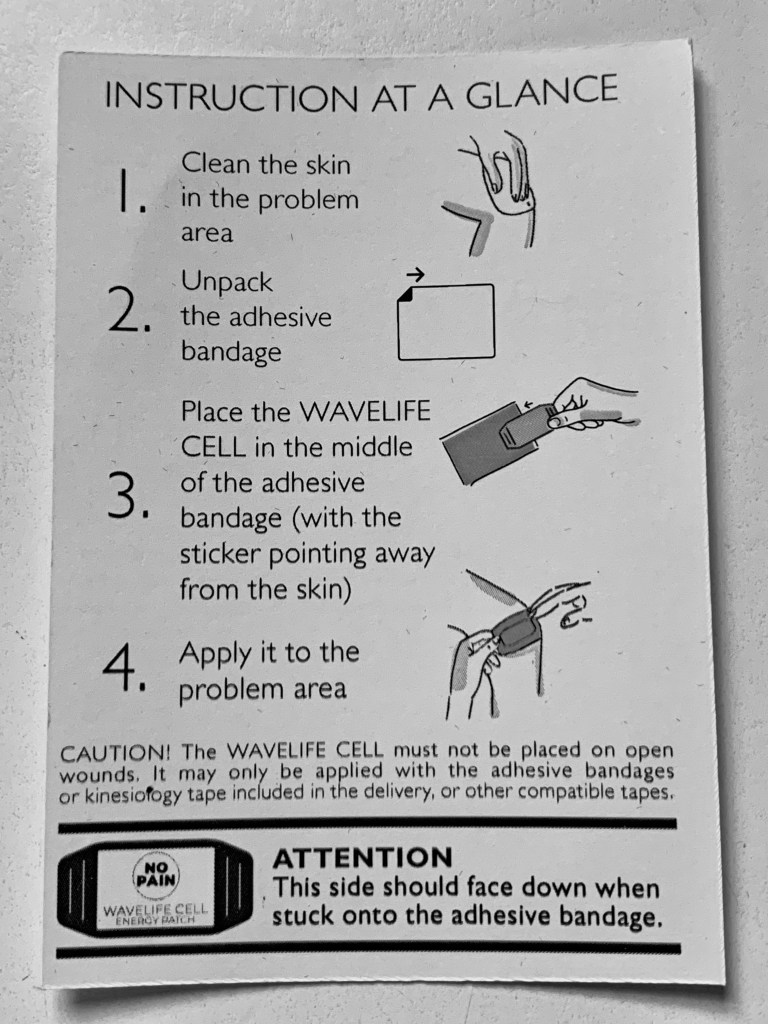
I taped the Energy Cell right below my knee just to the side to get good coverage of the stick-on pads. I wore it for six hours and the tape on the bandage just started to peel on one side at the end of six hours.
After 20-25 minutes of wearing the Energy Cell, I could feel the pain in my knee start to dissipate. The pain didn’t completely go away but the first day I was able to delay taking a pain pill by an hour and a half hour. Pretty good for the first day. I was really surprised by how easy it was to wear not to mention getting some real results.
The second thru the fourth day I experienced the same results, shortly after taping on the Energy Cell the pain started to dissipate. I was able to go from an hour and a half to two hours later than normal before taking my scheduled pain pill.
I can’t recommend the WaveLife Technologies Energy Cell enough! Anytime I can get pain relief no matter how little is a great day for me. I plan on purchasing a second for my husband.
*Here’s a discount code for 15% off your purchase, WAVELIFELIGHT15*
The Technical Information
Here’s more technical and scientific information about the Wavelife Technologies Energy Cell and the company.
The Wavelife Technologies Energy Cell is now available in the United States, you can find more information on retail pricing and how to purchase at concierge@wavelife.com.
WaveLife’s No Pain Energy Cell is a non-invasive, non-chemical pain management method that is based on over thirty years of research. It’s been developed in cooperation with over 2800 clinics in Germany, Switzerland, and Austria. It’s reported to help a wide range of pain, such as arthritis, headaches, lower back pain, post-surgery pain, upper back pain, and osteoporosis. You can find out more about the device and whether it could help you here.
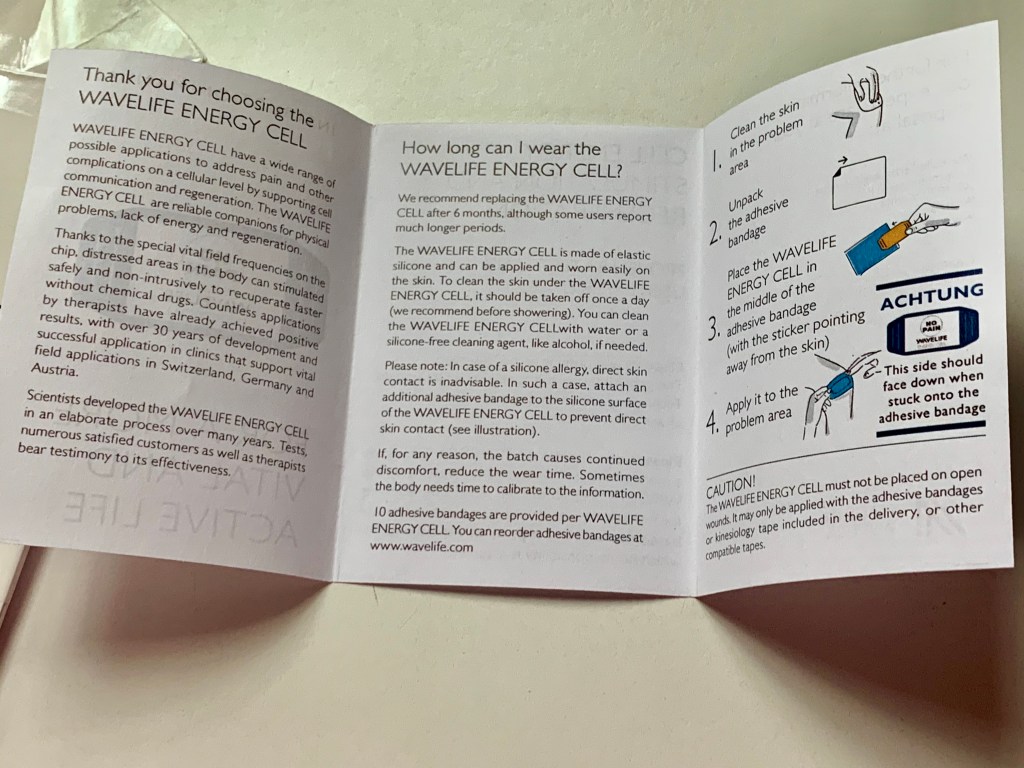
WAVELIFE ENERGY CELL has a wide range of possible applications to address pain and other complications on a cellular level by supporting cell communication and regeneration. The WAVELIFE ENERGY CELL is a reliable companion for physical problems, lack of energy, and regeneration.
Thanks to the special vital field frequencies on the chip, distressed areas in the body can be stimulated safely and non-intrusively to recuperate faster without chemical drugs. Countless applications by therapists have already achieved positive results, with over 30 years of development and successful applications in clinics that support vital field applications in Switzerland, Germany, and Austria.
Scientists developed the WAVE ENERGY CELL in an elaborate process over many years. Tests, numerous satisfied customers as well as therapist bear testimony to its effectiveness.
Bettie Hayes, 82, from Phoenix, Arizona, is a professional tennis coach who had a right hip replacement in 2013 due to osteoarthritis
“I have been suffering from pain on my lower back for at least ten years now. As a pain sufferer, I struggled most with my mobility; I like to garden and I like to play tennis, so pain definitely had an effect on these activities. I first put the Energy cell in my instep and I didn’t see results there, but later I put it on my left and right side of my lower back and immediately felt my pain diminished. Eventually, I got my mobility back again. What I like most about the Energy Cell is that it’s natural and there are no side effects. What I like most about not being in pain is movement; it certainly makes life better.”
Happy Friday! I am so glad you stopped by today. Please social distance, wear a mask, and take good care of yourself, we are depending on the actions of each other. Have a great weekend!
WOW! I can’t tell you how honored and humbled I am to be nominated in these categories for the Ninth Annual WEGO Health Awards.
Best in Show: Blog
Advocating for Another
Best in Show: Twitter
Best Kept Secret
Rookie of the Year
What are the WEGO Health Awards?
Since its inception in 2011, the WEGO Health Awards have proven to be one of the best ways to honor, recognize, and celebrate the work of patient advocates, influencers and healthcare collaborators who are helping others and transforming healthcare – often without any formal recognition.
With 16 different award categories, it is the only program to recognize patient leaders across all condition areas and platforms; whether running an online support group, speaking at conferences or sharing their health journey on Instagram, there is truly an award category to recognize every patient leader out there.
Endorsements for the #WEGO Health Awards are open!
Time to support your community leaders. You can think of your endorsement as a vote – so take a moment to browse these tremendous nominees and endorse those you believe should be recognized!
Nominations remain open until July 31st.
Here’s how you can nominate me for these or any of the other categories available. Thank you for all of your ongoing support.
If you suffer from chronic pain chances are you’ve taken addictive pain medication or at least talked to your doctor about finding pain relief. With limited alternatives for those looking for consistent pain relief, many are faced with the tough decision to take addictive medications.
If you read about drug addiction, you’ll often run across the saying dependence is not addiction. To me, addiction means I can’t stop taking the medication without withdrawing and major side effects. Medically addiction is explained as someone who abuses, I agree that is also addiction. I don’t buy into the saying dependence is not addiction.
I have taken addictive drugs most of my adult life for mental illness and have been through withdrawal more times than I can count. My guess is the feeling I’m having while going through withdrawal is very much like a drug addict wanting a fix. It’s ugly!
I also live with chronic pain and have made the decision to take addictive pain medication. The decision was one of the easiest I’ve had to make since the onset of chronic pain in 2013. The biggest mistake I made was not starting or increasing doses sooner and dealing with my General Practitioner instead of a Pain Management doctor.
I took several pain medications while undergoing Lyme treatment but the one I took the most often was Tramadol. After my Lyme treatment stopped I continued to take Tramadol through my General Practitioner, at one point taking 10mg tablets eight times a day and still not getting consistent relief.
I found a Pain Management doctor and now receiving the most comprehensive pain relief to date. He addresses all of my pain each month, we talk about pain levels, exactly where the pain is, what’s changed and is the medication providing me the level of relief I’m comfortable with. I don’t expect to live without pain, I don’t want to take that much medication and I don’t want to increase my addiction level which in turn increases my withdrawal time when stopping a medication.
I struggle with Fibromyalgia, Neuropathy, Arthritis, a bum knee in need of surgery, Lyme, and Osteoporosis. My surgeon gives me a steroid shot every three months for my knee and I see a Pain Management doctor for the rest of my pain.
I’ve tried several drugs for Neuropathy and now manage with 600mg per day of Gabapentin. My doctor prescribed 900mg, which is the maximum dose but I work on the philosophy if fewer works go with less. I always have a higher dose to go up to.
I take Percocet 10mg tablets three times a day
Belbuca (buprenorphine hydrochloride) film strips 900mcg twice a day (oral not skin)
Zanaflex 4mg as needed for muscle spams
I’m addicted to drugs, several drugs and I have to be responsible for not taking too many a day or I have to skip one the next day. When the time comes to decrease or stop taking the medication, I have to work with my doctor to withdraw responsibly, I won’t go through it without medical attention.
The medical community has left many people without medication and no withdrawal plan. It’s completely irresponsible. If your doctor cuts off your medication without a withdrawal plan, first find another doctor or go to the hospital for urgent care, and secondly file a complaint with the Medical Review Board. Together we can end this reckless behavior.
Here is a resource for drug addiction if you’re left to find resources on your own.
I hope you never need to use the above resource. I pray you have a responsible doctor who knows how to slowly and safely taper you off of each medication. It’s important to remember if you are addicted to more than one drug, each has to be dealt with separately. Don’t be pressured into withdrawing off of two drugs at one time without medical attention, often hospitalization.
Happy Anniversary with WordPress.com! You registered on WordPress.com 11 years ago. Thanks for flying with us. Keep up the good blogging.
There are days when it feels like yesterday when I started blogging back in 2005, my blog was called Defining Memories. My blog was a personal diary of the grieving process after my Granny died. After a couple of years, my post started to turn towards other memories, many not so good, but ones that needed to be dealt with. I also started openly talking about my mental illness and my life long journey to reach stability.
I realized a name change was in order, my journey was more of a search, sharing my struggles, my wins, and losses. So Looking for the Light was born. I had no idea of the wonderful journey ahead of me. Although sharing the most intimate details of child abuse, sexual assault, and mental illness wasn’t easy, it opened a door to people like me who were on a similar journey. We were at different points in the journey but talked a language each understood.
I’ve grown and the blog is a reflection of my growth towards a healthier relationship with myself, my past, and how I advocate for chronic illnesses including my mental health and living a healthier lifestyle. I’m in a good place. I turn 57 in a few weeks and feel like I’m on level footing.
This year I was nominated for several categories in The WEGO Health Awards which is a huge honor. It affirms I’ve reached someone and that’s why I share. All of your comments and feedback are so important to my growth and understanding. Needless to say, Looking for the Light wouldn’t be where it is today without you.
If I’ve touched your life in some way, I’m so glad we’ve crossed paths. I grow from every conversation and relationship I make.
Looking for the Light will continue to evolve as I grow, gain knowledge, and look for betters ways to share the information as I learn. You are most important to me and shape the growth of the blog. Your responses or lack of let me know what you’re interested in. Please know, I’m always open to suggestions or ideas, use the comment section to share your thoughts and feedback. I read every comment.
I’m going to close with one of my favorite quotes.
“If you are always trying to be normal, you will never know how amazing you can be.”
Led by researchers in Australia, an international team of scientists uncovered new genetic associations for allergies, asthma, and eczema by studying how soon in life individuals developed those conditions.
The researchers identified 76 genetic variants associated with these sorts of allergic diseases in or near 18 different genes. They found that about 50 of the variants are associated with both a higher risk for developing allergic diseases and developing one of these conditions at a very early age.
Genetic Burden
The significance of the finding is that it can help determine the overall “genetic burden” for developing allergies, or asthma or eczema, according to the co-lead author of the study Manuel Ferreira, Ph.D., a specialist in the genetics of asthma formerly at the QIMR Berghofer Medical Research Institute in Brisbane, Australia.
In this study, the findings indicate that people with the highest genetic risk are likely developing one of these conditions earliest in life. Those with the lowest genetic risk may never develop symptoms. Using this insight also helped researchers identify new genetic associations for these conditions.
While genetics plays an important role, environmental factors also influence the risk of developing an allergic condition. But the findings will help researchers better understand why and how allergic disease develops in some individuals and not others, as well as understand the genetic influences.
Overlapping Risk
Ferreira, now at Regeneron, previously worked on a study that found overlapping genetic risk factors for allergic diseases, such as asthma and hay fever, which used data from 23andMe.
For this study, the researchers used data from the dozens of previously published genome-wide association studies for allergic disease — some of which included data from 23andMe, as well as the UK Biobank and others.
So glad you joined me this weekend. In honor of Independence Day, I have picked something special for you. For those who live outside of The United States, The Fourth of July is the most significant national holiday in the United States. It celebrates the Declaration of Independence, adopted on 4 July 1776.
Have a great weekend.
Bell well and take good care of yourself.
Melinda
Welcome back to Weekend Music Share; the place where everyone can share their favorite music.
Feel free to use the ‘Weekend Music Share‘ banner in your post, and don’t forget to use the hashtag #WeekendMusicShare on social media so other participants can find your post.
Happy Friday! I am so glad you stopped by today! Please social distance, wear a mask, sanitize your hands, and take good care of yourself. Have a great weekend!
Just in time for your summer vacation, ok, Covid-19 vacay. A natural incest repellent is a great alternative for those with sensitive skin or other skin allergies. Remember natural sprays do not contain DEET which can keep mosquitoes and ticks at bay that carry tick-borne illnesses like Lyme Disease.
Add all ingredients together in a glass spray bottle in the order listed above, leaving essential oils to go in last. Shake to combine. Try to use an amber glass bottle if possible to prevent the sun from penetrating the oils inside, which could lessen their potency. Keep Bottle out of direct sunlight and somewhere cool.
I hope your Thursday is off to a great start! Life can be stressful right now, much more than normal. I want you to know I’m thinking of you and sending positive thoughts your way.
This post is part of TED’s “How to Be a Better Human” series, each of which contains a piece of helpful advice from people in the TED community; browse through all the posts here.
One of the side effects of working from home full-time because of the pandemic is working with a less than ergonomically ideal setup. Most of us didn’t have a home office space ready and waiting when we began to shelter in place, so if you’ve spent the past two months shifting around on a borrowed dining room chair with a cushion wedged behind you, you’re not alone.
But no matter our seating arrangements, there are some important things we can do to care for our backs, says Esther Gokhale, posture expert, acupuncturist and creator of the Gokhale Method. It doesn’t mean buying an expensive chair, either. “You don’t need anything fancy if you know what you’re doing to your own body,” she explains.
First of all, the problem isn’t with sitting itself, but how we’re doing it, says Gokhale. “It’s a cute soundbite to say ‘sitting is the new smoking’, but it’s very inaccurate to blame sitting. But no one in modern Western society is doing very well by their spinal discs, or vertebrae, or muscles or nerves.“
So what are we doing wrong?
It actually starts with something we were all taught — incorrectly, as it turns out — starting in childhood: sit up straight, shoulders back.
This advice, says Gokhale, sets us up in the wrong position. “What we end up doing is arching our backs by tensing up our muscles — the ropey ones that the massage therapist will tell you are tight. When we tighten them, we shorten them, and that arches the back, and what that does is it loads the discs [in the lower back] and jams the edges of the vertebrae against each other.”
When we keep trying to sit up straight, we can ultimately alter our anatomy, she explains. “If that becomes a habit — which it does for many people — then those tight, short muscles inhibit the blood supply in the area so now you have an anemic back and repair isn’t happening efficiently.”
This effort also takes an enormous amount of energy and it doesn’t actually last; we’re likely to slump again after a few minutes when we get tired.
If you have a tendency to slump — and most of us do — then you need to learn to lengthen your back. “You could [periodically] stop work to stretch your muscles for a few minutes and they’d get some relief, but a much smarter way is to use the time that you’re sitting to stretch yourself against the backrest,” explains Gohkale. She has created a technique called “stretch sitting” to help perfect this motion. The key? Don’t tuck in your tailbone, and use your muscles more.
“You are going to sit with your bottom well back in your chair, and then hinge away from the back rest. Place your fists on the lower border of your rib cage, and then gently push back so as to elongate your lower back. And now, grab some place of your chair maybe your arm rests or any other part of your chair, and gently push the top of you away form the bottom of you, like this; and now, hitch yourself to the back rest.
OK, now, ideally the chair would have some grippy thing mid-back to hold you, like you see hereor you would have an implement like our stretch sit cushion or a folded towel — something with friction to meet your mid-back and actually hold you up. Since you don’t have any implement, you might try bunching up your fabric in the back of your clothing, creating a kind of ledge, then hooking yourself there, and totally relaxing.”
To have a healthier back, developing core strength is important — but avoid doing crunches. Gokhale believes that you should focus on what she calls the “inner corset”; the group of core muscles that support your spine. The problem, she says, is that people tend to focus on one muscle when developing core strength — the rectus abdominus — but this won’t support our spines.
In fact, the exercises we do to strengthen our back often end up hurting us. “Crunches are well named; they crunch your discs and they crunch your nerves,” says Gokhale. “Instead, you should engage particular muscles that are deep in the abdomen and back. Then, when you’re going to do something active, instead of letting your discs and your nerves take the brunt, you let your muscles do the job.” (Gohkale offers a free guide to caring for your inner corseton her website.)
Standing desks can be good, but it’s still about how you hold your body. When you stand, Gokhale recommends adopting a stance of “readiness”, maintaining a little bit of spring in your knees. “The average person stands parked in their joints, locking their knees back, locking the hips forward, and arching their back,” she explains. “However, the groin is where most of the circulation to and from the legs happens, so you’re blocking all of that. Then, you’re creating an extra curve [in the spine] but you’re distending the ligaments and damaging the discs.”
Here’s the adjustment you need to make. “So what I teach people is to have a little bit of a ready position, with a little spring,” says Gokhale. “That takes muscular effort, but it’s way sounder. If your muscles aren’t used to working this little bit, then the chair pose [in yoga] is something that I recommend as a way of strengthening the same muscles that you need for standing well. In general: Use your muscles, spare your joints.”
When you’re relaxing on the sofa, it’s important to think about your back. We don’t stop damaging — or taking care of — our backs when our working day ends; everything we do has an impact on our bodies. So we should consider stretch sitting while we’re on the sofa too, suggests Gokhale.
This doesn’t mean that you need to tense up there, or that you can’t have a nice, deep sofa to sink into. But you should add a few cushions if you feel you need more support. “The key thing is you want to be upright and relaxed, not upright and tense and not relaxed and slumped. The way you put your base — your pelvis — is key.” This means not tucking in our tailbones, as we often tend to do when we relax on the sofa.
How you sleep affects your back too. Unfortunately, Gokhale has bad news for front sleepers: Don’t.“When you lie down on your front, you have a tendency to arch your back, and your neck is being asked to turn 90 degrees, which it isn’t able to very well. So there’s a lot of squishing and squashing. It’s not good.” Instead, try sleeping on your side — with a pillow between your knees to balance your hips if you suffer from back pain — or on your back.
The good news, says Gokhale, is you don’t need a fancy mattress. “The most important thing to do is add length to your body. Whatever length you have when you plop yourself down onto the bed is the length you’re going to have for the rest of the night. If it’s your short, compressed, daytime, arched or slumped length, then that’s what you’re doing in your bed.”
She recommends stretching out a little bit when you first lie down, focusing on lengthening your back rather than stretching your front so that you don’t arch your spine. That way, you can relax and have a night of sleep that’s good for you and your back.
The summer is in full swing. We may not be going out as much, but the heat is here and in this blog post I want to share with you 5 Anti-Inflammatory Summer Foods to fight the heat and pain.
Who doesn’t love a tall glass of iced tea? We found this amazing recipe for Cinnamon Turmeric Iced Tea for you to try. Green Tea or Black Tea would be some great choices, but most teas would do. The recipe calls for a sweetener of your choice, but you may want to stay away from sugar as much as possible. You can go with a few drops of stevia or a little honey. Extra points if you skip the sugar.
Frozen berries are another tasty way to stay cool this summer. Every supermarket has a frozen fruits section. Berries are full of anti-inflammatory properties and antioxidants to help you fight all sorts of nasty germs. You can eat them alone or blend them into a smoothie with some almond coconut milk.
Enjoy a traditional greek salad with cucumbers, tomatoes, olives, olive oil, vinegar, and feta cheese (or skip the cheese if you are vegan).
Another favorite snack for the summer is hummus with pita chips or whole grain toasted bread. Extra points if your hummus has garlic!
Finally, don’t forget to drink plenty of water. You can throw watermelon and mint into a jar with cool water the night before and the next day you can stay hydrated.
Stay cool and fight the pain with these 5 Anti-inflammatory Summer Foods and don’t forget the sunblock!!
What are some of your favorites? Send us your suggestions and if chosen you will be featured in our social media and win a free Aromalief Cream. Send submissions to info@aromalief.com
More than two years into the movement, male victims grapple with consequences after speaking out, from mockery to job offers drying up: “I’ve never been so vulnerable in my life.”
Last fall, Johnathon Schaech was running out of options. After making a living as an actor for 30 years — 1996’s That Thing You Do! was his breakout — he was in danger of losing his SAG health insurance from lack of work, and he and his wife were trying to have a baby. Schaech, 50, had become something of an unwitting spokesman for male #MeToo victims in 2018 after he said Italian director Franco Zeffirelli had sexually assaulted him on the set of the movie Sparrow in 1993. (Before Zeffirelli died in June 2019, his son, Pippo, denied the allegations in People magazine.) In the aftermath of that disclosure, Schaech found his acting opportunities drying up, and he parted with his agency, APA, and manager, Risa Shapiro.
“I’ve never been so vulnerable in my life,” Schaech says. “Like, whoa, wait a minute. What did I just do?” Schaech was unsure if his newfound vulnerability was hurting his confidence as an actor or if he was being blacklisted for speaking out. “People were taking one side of the #MeToo movement or the other, like a friend of theirs was called out or a friend of theirs was affected,” he says. “They didn’t necessarily hear my story. They heard their story.” Schaech began reaching out to friends for help and secured a meeting with showrunner Greg Berlanti, for whom he had worked on The CW show Legends of Tomorrow. They spoke about parallels between the way gay people in Hollywood had historically been shunned after they came out and the way Schaech worried the industry might be treating him now. Berlanti re-hired Schaech, allowing the actor to retain his health insurance.
It was a small act of kindness during what has been a turbulent time for Schaech and for many men like him who were inspired by the mostly female-driven #MeToo movement. For entertainment industry men, as with women, sexual assaults and harassment have often come from powerful agents, executives and directors. But male accusers have often faced a different set of stigmas and questions than their female peers: Couldn’t a “real man” fend off another man? What does their experience say about their sexuality? Are they being homophobic or outing someone by going public? “If this happens to you as a man, it’s looked upon as a weakness,” Schaech says.
Daniel Zuchnik/WireImage; Brian To/FilmMagic; Arnaldo Magnani/Getty ImagesFrom left: Spacey, Venit and Zeffirelli
Among the first Hollywood men to counter that narrative was Brooklyn Nine-Nine star and former NFL player Terry Crews, who reached a settlement with WME in 2018 after alleging that Adam Venit, then head of the agency’s motion picture department, repeatedly grabbed his genitals at a 2016 industry party. In a string of tweets posted days after TheNew York Times and The New Yorker first ran stories on Harvey Weinstein’s abusive behavior, the 6-foot-2, 240-pound Crews detailed his alleged sexual assault. Venit apologized, was suspended and stripped of his title at WME and ultimately retired. Crews would go on to endure mockery, including from 50 Cent, who posted on Instagram that had he been the man assaulted, “they would have had to take me to jail.” Crews, who declined to comment for this piece, also was heralded for speaking out, including being named one of Time‘s 2017 people of the year (as part of a group of “silence breakers”). And he has continued to work steadily, including serving as a host on America’s Got Talent and keeping his role as a lieutenant on Brooklyn Nine-Nine, which is set to shoot its eighth season.
My migraine journey started off very quickly, painful, and terrifying. I had no idea what was happening since I had not had a migraine before. I thought something else was wrong with me. Maybe my eyes were strained, maybe I was under to much stress, maybe my brain tumor had come back, I just didn’t know.
I would leave work as soon as I could to go home and lay down and pray for sleep. The pain was unlike any headache I ever had and my doctor called me “a headache person”. I was at the height of my career as a Senior Sales Manager, my whole week was spent in front of clients. It was excruciating to make it through a meeting before I could rush home and take a shot.
I was at more than one corporate meeting and have to leave, take an injection, and go back to the meeting. Those injections make you feel very strange, drugged, almost stoned. I would sit through the rest of the meetings and not remember half of what was said. Thank goodness I can take notes.
After experiencing several migraines in a month I went to my general doctor for help. At first, he gave me the injections to take, since I was only having a couple a month the injections should help. When my migraines starting happening every week the doctor put me on Beta-Blockers. I took them until the side effects were too much and I was still getting migraines.
He then put me on a daily pill for prevention and I continued to use the injections. I hobbled along like this for almost two years. Multiple migraines a week, missed work, missed family outings, and missing out on life. Migraines ruled my world.
One day while talking with my doctor and him scratching his head for answers, he said wait a minute, I read an article that might help us. He pulled it out and read it over and made a referral to an Ear, Nose, and Throat doctor.
Sure enough, I had a deviated septum and the pressure was causing my migraines. I had the out-patient surgery and have had far fewer migraines since.
Here’s some technical information about deviated septum.
For most patients, a deviated septum is something they are born with or that they developed as they were growing up. In some cases, a septum can become crooked as time passes or as a result of traumatic injury. Aside from irregular air flow, the following symptoms may arise from a deviated septum:
Nosebleeds
Congestion
Sinus infections
Snoring
Runny nose
Headaches
When a Deviated Septum Causes a Headache
The association between a deviated septum and the migraine condition can be found in sinus infections. When mucus becomes blocked, it can lead to infections, discomfort and headache, which may in turn cause stress and trigger a migraine episode in some patients. It is important to note that the sinus infection is acting as a trigger of stress rather than a direct trigger of migraines.
A deviated septum can be cured with a surgical procedure known as a septoplasty, which can be performed on an outpatient basis. For patients who suffer from major sinus infections, headaches and snoring, a septoplasty can bring about a major improvement in terms of quality of life. This may also be the case for patients who live with chronic migraine conditions, but only if the majority of their episodes were actually triggered by stress emanating from sinus infections or lack of sleep. According to Migraine Relief Center.
I’m so glad my doctor kept up with reading the medical journals or who knows how much longer I would have had to suffer. If you have constant or more than normal migraines, see an Ear, Nose and Throat doctor. Maybe you will be lucky enough to have a fixable problem.
*Just a note about having nose surgery*
My surgery was around 1994 so the way doctors approach nose surgery may be different today. At the time there were two schools of thought. Packing the nose and not packing the nose after surgery. Thank God my doctor was of the “not packing” school of thought. What that means is after my surgery there were no gauzes packed into my sinuses. I had to take these long q-tips and put Neosporin way up my nose for two weeks. During that time I had to be careful when sneezing and blowing my nose. At the end of the two weeks I went in for a check-up and he gave me the green light everything had healed fine.
The “packing” school of thought is packing your sinuses with gauze. I don’t remember how long you had to leave them in. When it is time for them to be removed, the doctor pulls them out through your nose. Most people I talked to said you want to lose your cookies when they come out. The only comparison I have is when my belly button was pierced. I felt like my stomach was coming up through the needle when he pierced me. To say it was painful is an understatement.
I hope the technology is different today but you might want to ask your doctor before surgery.
For those of you who continue to suffer from migraines, my heart goes out to you. I know how they can disrupt your day and your life. Keep looking for answers, keep reading the medical journals.
Anxiety, chronic pain, and depression are among some of the most common issues in the world and a lot of medicines do not really assist purely with these symptoms. That is why there are plenty of alternatives that can assist, such as CBD. There are plenty of different types of CBD and they work in different ways. They can also be ingested in many forms. Why not take a look at CBD Living Gelcaps to see the benefits. Taken as supplements that can really assist.
CBD has proven benefits on the body and they are renowned as essential supplements that support a healthy immune system, which can benefit your body and boost your natural defenses. Vitamin C supports all aspects of immune function needed for optimal antibody production, whilst Vitamin D is important for improved resistance, and Bilberry is packed with antioxidants that are beneficial to improving the overall immune system. By keeping your immune system healthy, you are keeping your body healthy as the immune system is key to keeping our bodies working healthily. Anxiety and depression often come hand in hand and you can look at some of the ways in which they can affect daily life.
Rapid heart rate
Palpitations
Chest pain or tight chest
Headaches
Sweats
Fear
Mental symptoms such as entrapment, doom, or fear.
You should always talk to your doctor if you have any of these symptoms as there are plenty of ways in which you can help yourself to overcome the symptoms. They are certainly not pleasant and can affect daily activities, including work, which is why taking supplements and also maintaining a healthy lifestyle can really help. Distraction is a huge key for people with anxiety and depression. Focusing on other things and looking at the benefits of new tasks and new adventures. When you don’t have access to your doctor or therapist, then there are some little things that you can add to your life just to give yourself that little boost when you need it.
Listen to music that is upbeat and inspires you.
Have a real laugh! (With friends if possible)
Take a walk around the park or the streets.
Declutter things, keep things simple in the house.
Give someone a hug and start smiling more, it helps reset the brain.
Think about the good things that you have and when things went well.
Allow yourself time to talk things through.
Talking through problems is so important because a problem shared is a problem halved and without this mentality, you will block things in your mind and keep yourself from progressing further. You need to be open to talking and to appreciate that mental health issues are common and you are never alone. With the help of CBD supplements and a great network, you are on the way to recovery. If you feel you have nobody to talk to then be sure to look at places online to help you where you can join online groups and forums.
Moving through the world as a black woman, I am accustomed to not being represented as “the norm.” Everything from the hue of the Band-Aids that cover my wounds to the heroes in the movies I watch makes me acutely aware of my deviation from what is typical and expected: I am black and female, whereas the world represented around me is often white and male. For me and for many members of minority groups in the United States, this realization does not come as an epiphany but is instead an essential fact that we must come to understand to navigate the world in which we live. It was not until I started medical school, however, that I realized the ways in which the standard representation of white and male might affect medical education — and consequently the quality of care that my peers and I will provide to our future patients.
I began to ponder this issue after taking my school’s mandatory in-person CPR training course. The paramedics walked in with large bags filled with plastic mannequins and opened them to reveal that all our “patients” were white male bodies. I left the 2-hour course without any knowledge of the nuances of performing CPR on patients with breasts or the potential precautions we should consider for pregnant women. These gaps are particularly troubling since women are less likely than men to receive bystander CPR because of fears regarding inappropriate touching, potential accusations of sexual assault, and causing injury.1
I had a similar feeling during a microbiology class as our professor swiftly moved through the final points of a lecture. The topic of the day was extracellular pathogens, and the star of the lesson was Borrelia burgdorferi, the bacterium known to cause Lyme disease. “A hallmark of stage 1 Lyme disease is a bull’s-eye rash, erythema migrans, which typically appears 3 days after infection,” the professor explained confidently. Behind him was an image from the Centers for Disease and Control and Prevention of a prominent red bull’s-eye rash on white skin. Shortly after the explanation, a classmate raised his hand and asked the professor, “How do you recognize this rash in patients with darker skin?” The professor responded that it is more difficult to see the rash on melanated skin (see figure) and moved on to the next slide.
Class ended and I felt unsatisfied with the idea that the answer could be so simple: “Stage 1 Lyme disease is hard to see in patients who are not white, so therefore we don’t depend on rash recognition for diagnosis.” It didn’t feel right, so I decided to look for answers. My first stop: Google. I searched “bull’s-eye Lyme disease” and the first page of images was populated with photos similar to the ones I had seen in class: a homogeneous representation of the rash on white skin. I was not surprised, but I was disappointed.
My mind started racing with questions: “Is the diagnosis of Lyme disease in black and brown patients delayed? Do these patients therefore present with more advanced symptoms, such as neurologic disorders and arthritis, than white patients?” More research revealed that my hypotheses were correct. One study of patients with Lyme disease found that there was a higher proportion of diagnoses of arthritis (late-stage Lyme disease) and a lower proportion of diagnoses of erythema migrans (stage 1 Lyme disease) among black patients than among white patients.2 The authors concluded that this difference could be attributed to a failure to recognize early signs of the disease in black patients.
From the images in textbooks used in medical schools to the photos displayed at medical conferences, patients of color are grossly underrepresented in medical educational material.3 If medical students and trainees are taught to recognize symptoms of disease in only white patients and learn to perform lifesaving maneuvers on only male-bodied mannequins, medical educators may be unwittingly contributing to health disparities instead of mitigating them. Most worrisome, the United States may be in danger of graduating large numbers of physicians who are unable to serve the needs of our ever-diversifying patient population.
Many medical schools throughout the country have integrated courses about health disparities into their curricula and have made diversity and community engagement key pillars of their institutional missions. Such efforts may fall flat, however, if we don’t ask ourselves important questions: What is the true value of these institutional reforms if we continue to underrepresent minority populations and women in our foundational learning material — or exclude them altogether? How might this lack of representation indirectly contribute to the disparities we seek to address? And, what moral responsibility do medical schools have to ensure that students graduate with the tools and experience necessary to equitably treat these patient populations?
As a first-year medical student, I have considered steps we can take to address these inequities during the early stages of medical education. First, it is essential that medical schools obtain female-bodied mannequins so that students can comfortably learn about the nuances of performing CPR on patients with breasts. Schools could also develop a complementary curriculum addressing common misconceptions about female bodies, appropriate touching, and follow-up conversations about consent. Second, medical educators should strive to include images of more than one skin type in their learning material. Reference photos of patients with nonwhite skin have already begun to be collected on online platforms such as Brown Skin Matters and VisualDx; such collections could be used as a starting point for developing new material.4 Finally, these reforms cannot be merely isolated changes, but should be part of broader policy changes and ongoing requirements implemented at all medical institutions. This approach will ensure that these changes are lasting and become ingrained in competencies for medical practice.
Medical education is missing the bull’s-eye. The current standardized, homogeneous representation of white males in medical education is exclusionary and puts patients of color and women at risk for adverse health outcomes. These exclusionary practices are pervasive throughout medicine and are indicative of a larger problem: the systemic exclusion of these patients from clinical trials, like their underrepresentation in anatomy courses, affects the quality of care we provide to these populations.5
As a black woman and future health care practitioner, I believe that educators should reevaluate their learning material and develop curricula for all levels of medical education that ensure equal representation of all people. The existing antiquated standard of white male representation may lead even the most well-meaning medical students to perpetuate health care disparities in their future practices. Our inaction will be especially harmful for patients with intersecting marginalized identities, such as women of color, who already bear the brunt of some of our most pressing health disparities. We must act expeditiously — going beyond written commitments to diversity and inclusion — if we seek to advocate for and equitably serve these patients.
I decided to become a physician because of my goal of advocating for and serving patients of all backgrounds — including those who look like me. My hope now is that the institutions that have pledged to teach me and my peers to become mission-driven physicians will provide us with adequate tools to achieve this goal.
Disclosure forms provided by the author are available at NEJM.org.
Virtual hugs. So glad you joined me this weekend. I do take request! Just drop your suggestions in the comment box. Have a great weekend.
Melinda
Welcome back to Weekend Music Share; the place where everyone can share their favorite music.
Feel free to use the ‘Weekend Music Share‘ banner in your post, and don’t forget to use the hashtag #WeekendMusicShare on social media so other participants can find your post.
Six months ago I was diagnosed with Hypogammaglobulinemia, an immune disorder where the body doesn’t create enough antibodies to fight off disease. The Immunologist ran a comprehensive round of labs and found I have low antibodies for all types of Pneumonia except one. He wanted me to get a Pneumonia vaccine now even though they are normally not given until age 65.
My General Practitioner has now given me both rounds of the vaccine. The pneumonia vaccine is a two-prong, one-shot then another eight weeks later. While there she asked if I had Chicken Pox as a child. Yes, I had Chicken Pox so she suggested I get a Shingles vaccine once we completed the Pneumonia vaccines. I go back after September 17th to get my Flu and Shingles round one shot. Yes, Shingles is also a two-round shot.
Shingles is another vaccine that isn’t normally talked about until your 65 but with my weekend immune system, it is better safe than sorry by waiting. Shingles are terrible and extremely painful. The Chicken Pox virus lives in your body and can reactivate by becoming Shingles later in life.
I already knew about the vaccinations because of my grandparents but had not thought about needing them at 55 years versus 65 years old.
Talk with your doctor about your risk for Pneumonia, it was a simple lab test and it clearly showed my body could not fight off all but one type. Who knew there were different types of Pneumonia?
As a parent who is also a survivor of incest, I want nothing more than to protect my children from sexual violence. I constantly wonder what it will take to improve, if not end, rape culture in our society.
Every 73 seconds, an American is sexually assaulted, according to the Rape, Abuse and Incest National Network, or RAINN. According to the Centers for Disease Control and Prevention, nearly 1 in 5 women and 1 in 38 men have experienced completed or attempted rape — forced or coerced vaginal, anal or oral sex. Rape can happen at the hands of known or unknown assailants, including spouses or significant others.
My oldest daughter is 9, and my twins — a boy and a girl — are 6. They are not too young to be educated about sexual health and what healthy relationships look and feel like. We refer to their body parts with the appropriate names; we talk about hygiene, privacy and boundaries. I have taught them about tricky people, and the thing we probably talk more about than anything else is consent.ADADVERTISING
At the core of its meaning, consent is about permission or an agreement to give and take something. When we use the word “consent,” we often use it in a sexual context because when someone is raped, permission has not been given, and something incredibly personal has been taken.
My goal is to protect my children, but I also have a responsibility to send them into the world with respect for all bodies and an understanding of how consent works and why it is important. The nuances of communicating our wants and then hearing the response or seeing it in a person’s body language during nonsexual situations are lessons we can teach our kids now so that later, when the stakes are higher, they already have the tools to build safe sexual relationships.
I was in the kitchen one evening and could hear my kids trading Pokémon cards. My 9-year-old daughter asked her 6-year-old brother if he would give up one of his cards for one she was offering. He hesitated and told her he wasn’t sure. She tried again. He considered but was reluctant. She tried to negotiate. He said no. She continued to offer him cards he might like, but he clearly didn’t want to trade. She was badgering him. I knew it was making him uncomfortable because he wanted to please her, but he didn’t want to say yes; he was saying no but, in my daughter’s opinion, not enthusiastically enough.AD
The situation was making me uncomfortable, too, so I stepped in. I praised my son for using his voice to communicate what he didn’t want. I told my daughter that she needed to walk away from the situation. He was telling her and showing her that he didn’t want to trade. I explained that her desires should never be forced onto someone else.
I reminded my daughter of the phrase “You asked, I/she/he/they answered.” This is meant to eliminate nagging when my kids want me to change my mind, and it helps me teach them that they can’t always get what they want. The phrase is a lesson in consent. “You asked for the card, he said no.”
Lexx Brown-James, a licensed marriage and family therapist, certified sex educator and author of“These are My Eyes, This is My Nose, This is My Vulva, These are My Toes,” is also a parent navigating these issues. “When we teach consent to our children — across the gender spectrum — we also have to teach and model respect, [but] respect has changed so much even throughout my own lifetime,” she says. Brown-James grew up in the South and was taught to obey authority without question, but she points out that the definition of respect has changed. It can be a shared goal of treating others how we would want to be treated, no matter the age or power difference, she says.
Brown-James says it is important to empower our children to say yes as well as no, and to make them feel like they will be heard. But kids can’t be in control all of the time, so it’s necessary for adults to model informed consent. Brown-James gives the example of a child going to the dentist. It’s scary, and a child may not want to go, but healthy teeth are important. She suggests giving power to a child’s voice even in those situations. Let them choose the side of the mouth the dentist can look at first. Allow the child to say when they need a break. And be sure you or the dentist check in to see how the child is doing.AD
Consent also needs to be visible and identified in everyday acts. Asking kids if we can hug them, tickle them or take a bite of their food are great ways to model patterns of asking before taking and then showing them that their voice has power. Notice how none of the situations discussed so far have anything to do with sex? This is important.
I emphasize “no means no” and “stop means stop” with my kids, but it’s not always easy. If something hurts or makes us uncomfortable, telling someone to stop is still confrontational. We may want to keep the peace rather than face another person’s negative reactions. Although I hope my kids will speak up for themselves, I also want them to be able to interpret the other side of the no. If they are ever in a situation where consent is not clear through words, I want my kids to learn how to read body language so they can safely stop an action that is making someone uncomfortable.
Joe Navarro, 25-year FBI veteran and author of “What Every Body is Saying” and “Louder Than Words,” writes that parents should start to teach about body language as soon as their children can understand simple instructions. He emphasizes that all nonverbal communication has meaning and that body language conveys our emotions. Navarro encourages parents to remind children that learning to read body language is a way to make people comfortable.AD
But what happens when consent is given, but with hesitation? Not all consent is enthusiastic, so Brown-James refers back to teaching kids how to check in. Kids provide plenty of teachable moments for this when they want to do something but are nervous. Brown-James uses an example of her daughter wanting to pet a dog but feeling anxious. She said yes, but her body language did not convey excitement. By using a slow, check-in-as-you-go approach, Brown-James’s daughter got close to the dog, decided where and when she wanted to pet the dog, then finally touched the dog and was ecstatic. With each step, Brown-James asked whether her daughter felt okay.
The work and mindfulness necessary to teach these nuances are worth the initial stumbling points or emotional labor involved. Rape culture will not improve with a one-time talk at puberty. A foundation of empowerment, respect and thoughtfulness for others needs to be put in place early so kids’ intuition can guide them, whether because someone has touched them inappropriately or because they are navigating a new physical relationship as a teen.
Before our kids become teenagers, though, they need the skills to say no for themselves and for others if a situation doesn’t feel right. Deliberate, ongoing and forward-thinking conversations about consent in nonsexual situations will help them navigate higher-stakes sexual decisions when they are older.AD
Amber Leventry is a writer and advocate who lives in Vermont. They run Family Rhetoric by Amber Leventry, a Facebook page devoted to advocating for LGBTQ families one story at a time. Follow them on Twitter and Instagram@amberleventry.
If your only choice is seeing a General Practitioner for chronic or mental illness, you will have to take on the additional responsibility to make sure you’re getting the best healthcare. What you can’t expect is a General Practitioner to be a one-stop shop, they have 15 minutes per patient and treat the most common illnesses. Once your 15 minutes is up, you have to save questions for the next appointment. And while it may be particularly frustrating to have to leave, it can help you to get into the right mindset for research.
We’re not talking about Dr Google here (which can be a very dangerous rabbit hole to go down), but there can be changes in lifestyle and pain management that may work. It’s not a one size fits all approach, but there are remedies like CBD cream that could work (the https://www.health.com/condition/pain/best-cbd-cream-for-pain is a handy resource) or it could be about focusing on mindfulness or more natural techniques like embracing the cold, as has been popularized by people like Wim Hof in recent years. But these approaches shouldn’t replace the help a General Practitioner can provide, just as long as you go into each appointment prepared.
If seeing a General Practitioner for all your chronic illnesses, go into each meeting expecting three questions to get answered, if the conversation doesn’t go off track. Go prepared with questions, concerns or medicine issues but don’t expect more than 15 minutes unless your insurance company allows 30-minute appointments. I schedule 30 minutes with my GP on each visit, that lowers my stress level and allows us to talk more in-depth if needed.
This itch-relief scrub is therapeutic on so many levels. It contains sugar to help exfoliate, oils to help hydrate, and oatmeal to help alleviate any irritation. The ground lavender buds are optional but they do add some spa-like qualities-yes, please.
You Will Need
1 cup steel-cut oats
Blender/Food Processor
1 TB. dried lavender buds
Mortar & pestle
1/2 cup sugar
1 TB. sweet almond oil
1/4 cup avocado oil
1 TB. coconut oil softened
Lavender essential oil
Bowl
Airtight Jar/Container
To Make
Add the steel-cut oats to a blender or food processor and pulse until the oats have a powder-like texture. Grind the lavender buds into a powder using the mortar & pestle. Combine the oats, flowers, sugar, and oils together in a bowl. Store in airtight jar or container.
Summer has arrived in Texas and we’ve been blessed with rain for three days. The tomatoes are rolling in and are sure good this year. We’ve had luck with a couple of varieties we had not been successful with in the past. Have a great day, I’m so glad you stopped by today.
































 Looking for the Light