Here in the UK, we are into our 4th week of “lockdown” although we are allowed to go outside for several reasons, many people are looking to find new ways to entertain themselves in their own home. I have spent the last few days being creative with these three activities. seed planting with recycled tins […]
New Orleans is a great city, there is an activity and cultural center for everyone. I’ve been twice and have to admit I find myself going back to my favorite sites instead of venturing outside of my comfort zone. I encourage you to do some homework on all the great things New Orleans has to […]
There’s never been a more important time to talk about mental health than now. Fortunately, there was already a growing movement to normalize mental health conditions and make the public more aware of early signs and symptoms. The movement was working and gaining momentum. It’s really a blessing to have greater awareness given we are […]
Your Friday prompt for Stream of Consciousness Saturday is “joint.” Use it as a noun, an adjective, or a verb–use it any way you’d like. Enjoy!
You never know where my mind will go when I read these prompts, this week is extra fun. My first I thought of the first joint I smoked, passed it around with a nice painted stone. It didn’t even work the first time. Another time I smoked a joint it worked so well my boyfriend and I got quite disjointed over a misunderstanding, probably who should get the next beer.
The second joint that comes to mind was a very painful one, my right knee. In 2017 my right knee joint finally gave out and I had to have replacement knee surgery. Not fun but well worth it to eliminate the ongoing pain.
It would have been nice to have several joints to smoke while recovering during my knee surgery but I obey the laws these days.
Melinda
Join us for the fun and sharing good media stories.
For more on the Stream of Consciousness Saturday, visit Linda Hill’s blog. Here’s the link:https://lindaghill.com
Here are the rules for SoCS:
Your post must be stream of consciousness writing, meaning no editing, (typos can be fixed) and minimal planning on what you’re going to write.
Your post can be as long or as short as you want it to be. One sentence – one thousand words. Fact, fiction, poetry – it doesn’t matter. Just let the words carry you along until you’re ready to stop.
There will be a prompt every week. I will post the prompt here on my blog on Friday, along with a reminder for you to join in. The prompt will be one random thing, but it will not be a subject. For instance, I will not say “Write about dogs”; the prompt will be more like, “Make your first sentence a question,” “Begin with the word ‘The’,” or simply a single word to get your started.
Ping back! It’s important, so that I and other people can come and read your post! For example, in your post you can write “This post is part of SoCS:” and then copy and paste the URL found in your address bar at the top of this post into yours. Your link will show up in my comments for everyone to see. The most recent pingbacks will be found at the top. NOTE: Pingbacks only work from WordPress sites. If you’re self-hosted or are participating from another host, such as Blogger, please leave a link to your post in the comments below.
Read at least one other person’s blog who has linked back their post. Even better, read everyone’s! If you’re the first person to link back, you can check back later, or go to the previous week, by following my category, “Stream of Consciousness Saturday,” which you’ll find right below the “Like” button on my post.
Copy and paste the rules (if you’d like to) in your post. The more people who join in, the more new bloggers you’ll meet and the bigger your community will get!
As a suggestion, tag your post “SoCS” and/or “#SoCS” for more exposure and more views.
Welcome back to Weekend Music Share; the place where everyone can share their favourite music.
Feel free to use the ‘Weekend Music Share‘ banner in your post, and don’t forget to use the hashtag #WeekendMusicShare on social media so other participants can find your post.
Add water, white vinegar and vegetable glycerin to a large jar. Close lid and shake vigorously. Add the essential oils. Close lid and shake again. Add cotton quilting squares or washcloths, and you’re done. Be sure to shake the jar and wring out the cloth before adding them to your load of laundry.
Note
Essential oils last longer in dark glass containers. Since I reused a clear jar, I store my dryer sheets in a dark place to extend shelf life.
It’s been possible to export your posts, images, and other content to an export file, and then transfer this content into another WordPress site since the early days of WordPress. This basic WordPress import moved content, but didn’t include other important stuff like themes, plugins, users, or settings. Your imported site would have the same […]
In this installment of “Dear Guy,” TED’s advice column from psychologist Guy Winch, he writes about how we can help other people — and still maintain our own well-being — during this pandemic.
“Resentment is a relationship killer,” says psychotherapist and couples counselor Susan Adler. If we want happier relationships, we need to drop the blame, own our mistakes, and act in ways that increase connection, not conflict.
This post is part of TED’s “How to Be a Better Human” series, each of which contains a piece of helpful advice from people in the TED community; browse through all the posts here.
“So many relationship problems actually have very little to do with the relationship itself.”
That’s the conclusion — shared in a TEDxOakParkWomen Talk — which Chicago psychotherapist Susan Adler has come to after years of working with couples. In fact, she believes that many of the so-called relationship difficulties she sees have much more to do with the individuals’ own problems.
As it turns out, she says most people have this blindspot: “Instead of seeing that our own unhappiness puts stress on our relationship, we blame our relationship for our unhappiness — we get mad, then we try to get even, then we wonder why things go badly.” And after repeated exposure to this potent blend of blame, resentment and retaliation, as Adler puts it, “you might still be a couple, but you’re no longer a team.”
We could all benefit from having better, closer bonds. “These are pretty tough times,” Adler states. “What if we could inspire each other — especially the people we partner with — to become more thoughtful, more loving versions of ourselves?”
Here, she shares three tips for happier relationships.
Step #1: Express your feelings to your partner — that is, anything but anger
It’s normal to feel angry or upset when your partner doesn’t meet your expectations or lets you down in some way. “Anger is like the bodyguard of emotions,” according to Adler. Many of us rely on it to act as a bouncer, keeping our more difficult, uncomfortable emotions in check. She explains, “We use anger to push away our hurt and our sadness and our vulnerability, and in the process we end up pushing away the people that we love the most.”
The next time your partner does something that makes you see red, stop yourself from immediately going on the attack. Instead, try to separate yourself (even moving to the bathroom or a corner of the room can be enough), take a deep breath, and ask yourself: ‘What am I really feeling underneath all this anger?’” After you’ve had some time to settle down, let your partner know what’s going on for you. “Expressing anything other than frustration or anger can bring you closer,” Adler says, and help you start a conversation — and not another argument.
Step #2: When your partner spins out of control, take the high road
The day will inevitably come when your partner behaves unwisely — they’re irritable, grumpy, unreasonable, testy, argumentative, prickly, you name it. It’s natural to want to respond in a similar vein. Resist the temptation, and remind yourself — as Adler puts it — “You can go down that rabbit hole with them, or you can make a different choice.”
And what is that different choice? “Challenge yourself to be helpful, patient, caring and kind,” says Adler. “These are all factors that research indicates make relationships happier.”For example, she suggests, “Instead of yelling, ‘Oh my god, what is wrong with you?, stop, take a breath, and imagine saying, ‘I’m so sorry you’re upset … How can I help?’ There is nothing to fight about if you’re being helpful.”
One common-sense rule of thumb from Adler: “As the saying goes, ‘The hallmark of a good relationship is when only one person goes crazy at a time.’” And the more that you can demonstrate the benefits of staying calm when your partner isn’t, the more your behavior can influence your partner to do the same when you’re in a spin.
Step #3: Express your to-dos and wishes in the form of “I would love it” statements
It’s no secret that communicating your needs is the key to a healthy relationship, but how you approach that communication is just as important. For instance, let’s say that you’re at your wit’s end because your partner is cancelling date night yet again because they have to work late. Your inclination would be to tell them, “You have absolutely no consideration for my feelings!” or “You never make time for me!”, even though you know those remarks set the stage for a blazing-hot argument.
Adler’s recommendation: Communicate what you want from them by telling them what you’d like to happen. So you might say something like, “I would love it if we could figure out a night that works for both of us to spend some time together.”
There is a caveat to this approach. Be careful with your “I would love it” statements, warns Adler. “Don’t say negative things like ‘‘I would love it if you would stop being such a jerk.’ That’s not positive; that’s criticism,” she explains. “And don’t say things that focus on the past, like ‘I would love it if you would have cleaned the kitchen yesterday’ … Focus on moving forward and being positive. This is how you set your partner and yourself and your relationship up for success. This is how you get your needs met.”
While these techniques can be highly effective, according to Adler, “these skills aren’t
for every situation and they’re not for every couple. Frankly, not every relationship should survive; some are just way too unhealthy.”
In the end, these steps are all about creating more opportunities for connection and communication, avoiding acting from a place of annoyance and anger, and recognizing how you might be letting your individual stresses and worries affect your relationship. Adler says, “When we take responsibility and we value one another, our new attitude can actually inspire our … partner to want to do the same thing.”
Millie was only 12 years young when she first appeared on the hit Netflix show. It’s no secret that child stardom is not the kindest to the mental health of young actors. For Millie’s 16th birthday, she shared a poignant post on Instagram. “There are moments I get frustrated from the inaccuracy, inappropriate comments, sexualization, and unnecessary insults that ultimately have resulted in pain and insecurity for me,” Millie wrote. “Not ever will I be defeated. I’ll continue doing what I love and spreading the message in order to make change. Let’s focus on what needs changing and I hope this video informs you on the things that go on behind the scenes of the headlines and flashing lights.”
Millie’s statement was accompanied by a video montage. Set to the soundtrack of “Changes” by Justin Bieber, a series of screenshots featuring various critical media headlines appeared. “Stranger Things star leaves Twitter after cyberbullying,” “Millie Bobby Brown criticized for adult style,” and “When did Millie Bobby Brown go through the change??? (Menopause)” are just a few harsh headlines that the young actor has had to deal with.
As a virus spreads in our world and takes us into uncharted waters, shutting down schools and universities, we have to learn new coping mechanisms, new ways of thinking — and new ways of learning. Teachers across the world are learning what it means to remote teach. The stress was felt globally putting together last […]
Thank you for stopping by today, times may be a bit crazy but we can pull thru anything together. We are one community and we can help others who need a hug. I’m sending my hugs to you.
Your Friday prompt for Stream of Consciousness Saturday is “deep.” Use it any way you’d like. Have fun!
I love to scuba dive, I got certified in 1987 and spent the next 15 years traveling around the world looking for great dive spots. Some of you may know, the color is best in the shallow waters because the most light comes in. However I like the deep, deep waters where the wrecks and big fish live.
The color isn’t brilliant but what you see is just as fascinating. I dove the wreck of the Rhone in the British Virgin Islands. Several of the large pillars are still standing, I was able to see a manhole and dive thru an opening in the wreck. Breathtaking and quite. So quite all you hear is your breath from the regulator.
Here is a little about the wreck.
Established in1980 | Area: 800 acres (including Dead Chest Island) The Wreck of the Rhone is the first and only Marine National Park in the British Virgin Islands. It is the most celebrated dive site in the BVI, and a major recreational attraction. The park includes examples of fringing reef habitat and seagrass beds. The wreck is that of a Royal Mail Steamer, which sunk during the hurricane of 1867 with 125 people on board. At 310 feet long and 40 feet wide, the wreck of the Royal Mail Steamer lies in two main parts in waters between 30 and 90 feet deep. Much of it is still intact and visible, including decking, parts of the rigging, the steam engine, and propeller. The marine park stretches from Lee Bay on Salt Island westward to include Dead Chest Island. The ship’s anchor broke away outside Great Harbour, Peter Island, and this site forms the second portion of the park. The park is used by several commercial dive operators daily. Other dive sites in the park include Rhone Reef, Blonde Rock, and Painted Walls. Anchoring is strictly prohibited in the area in and around the Rhone. The National Parks Trust has installed mooring buoys for use by all commercial, charter, and private vessels. If moorings are unavailable around the Rhone, vessels are required to use the Salt Island Settlement or Peter Island anchorages.
Please visit many of the great dive sites in The Virgin Islands.
Melinda
Join us for the fun and sharing good media stories.
For more on the Stream of Consciousness Saturday, visit Linda Hill’s blog. Here’s the link:https://lindaghill.com
Here are the rules for SoCS:
Your post must be stream of consciousness writing, meaning no editing, (typos can be fixed) and minimal planning on what you’re going to write.
Your post can be as long or as short as you want it to be. One sentence – one thousand words. Fact, fiction, poetry – it doesn’t matter. Just let the words carry you along until you’re ready to stop.
There will be a prompt every week. I will post the prompt here on my blog on Friday, along with a reminder for you to join in. The prompt will be one random thing, but it will not be a subject. For instance, I will not say “Write about dogs”; the prompt will be more like, “Make your first sentence a question,” “Begin with the word ‘The’,” or simply a single word to get your started.
Ping back! It’s important, so that I and other people can come and read your post! For example, in your post you can write “This post is part of SoCS:” and then copy and paste the URL found in your address bar at the top of this post into yours. Your link will show up in my comments for everyone to see. The most recent pingbacks will be found at the top. NOTE: Pingbacks only work from WordPress sites. If you’re self-hosted or are participating from another host, such as Blogger, please leave a link to your post in the comments below.
Read at least one other person’s blog who has linked back their post. Even better, read everyone’s! If you’re the first person to link back, you can check back later, or go to the previous week, by following my category, “Stream of Consciousness Saturday,” which you’ll find right below the “Like” button on my post.
Copy and paste the rules (if you’d like to) in your post. The more people who join in, the more new bloggers you’ll meet and the bigger your community will get!
As a suggestion, tag your post “SoCS” and/or “#SoCS” for more exposure and more views.
Thank you for stopping by today, times may be a bit crazy but we can pull thru anything together. We are one community and we can help others who need a hug. I’m sending my hugs to you.
Your Friday prompt for Stream of Consciousness Saturday is “deep.” Use it any way you’d like. Have fun!
I love to scuba dive, I got certified in 1987 and spent the next 15 years traveling around the world looking for great dive spots. Some of you may know, the color is best in the shallow waters because the most light comes in. However I like the deep, deep waters where the wrecks and big fish live.
The color isn’t brilliant but what you see is just as fascinating. I dove the wreck of the Rhone in the British Virgin Islands. Several of the large pillars are still standing, I was able to see a manhole and dive thru an opening in the wreck. Breathtaking and quite. So quite all you hear is your breath from the regulator.
Here is a little about the wreck.
Established in1980 | Area: 800 acres (including Dead Chest Island) The Wreck of the Rhone is the first and only Marine National Park in the British Virgin Islands. It is the most celebrated dive site in the BVI, and a major recreational attraction. The park includes examples of fringing reef habitat and seagrass beds. The wreck is that of a Royal Mail Steamer, which sunk during the hurricane of 1867 with 125 people on board. At 310 feet long and 40 feet wide, the wreck of the Royal Mail Steamer lies in two main parts in waters between 30 and 90 feet deep. Much of it is still intact and visible, including decking, parts of the rigging, the steam engine, and propeller. The marine park stretches from Lee Bay on Salt Island westward to include Dead Chest Island. The ship’s anchor broke away outside Great Harbour, Peter Island, and this site forms the second portion of the park. The park is used by several commercial dive operators daily. Other dive sites in the park include Rhone Reef, Blonde Rock, and Painted Walls. Anchoring is strictly prohibited in the area in and around the Rhone. The National Parks Trust has installed mooring buoys for use by all commercial, charter, and private vessels. If moorings are unavailable around the Rhone, vessels are required to use the Salt Island Settlement or Peter Island anchorages.
Please visit many of the great dive sites in The Virgin Islands.
Melinda
Join us for the fun and sharing good media stories.
For more on the Stream of Consciousness Saturday, visit Linda Hill’s blog. Here’s the link:https://lindaghill.com
Here are the rules for SoCS:
Your post must be stream of consciousness writing, meaning no editing, (typos can be fixed) and minimal planning on what you’re going to write.
Your post can be as long or as short as you want it to be. One sentence – one thousand words. Fact, fiction, poetry – it doesn’t matter. Just let the words carry you along until you’re ready to stop.
There will be a prompt every week. I will post the prompt here on my blog on Friday, along with a reminder for you to join in. The prompt will be one random thing, but it will not be a subject. For instance, I will not say “Write about dogs”; the prompt will be more like, “Make your first sentence a question,” “Begin with the word ‘The’,” or simply a single word to get your started.
Ping back! It’s important, so that I and other people can come and read your post! For example, in your post you can write “This post is part of SoCS:” and then copy and paste the URL found in your address bar at the top of this post into yours. Your link will show up in my comments for everyone to see. The most recent pingbacks will be found at the top. NOTE: Pingbacks only work from WordPress sites. If you’re self-hosted or are participating from another host, such as Blogger, please leave a link to your post in the comments below.
Read at least one other person’s blog who has linked back their post. Even better, read everyone’s! If you’re the first person to link back, you can check back later, or go to the previous week, by following my category, “Stream of Consciousness Saturday,” which you’ll find right below the “Like” button on my post.
Copy and paste the rules (if you’d like to) in your post. The more people who join in, the more new bloggers you’ll meet and the bigger your community will get!
As a suggestion, tag your post “SoCS” and/or “#SoCS” for more exposure and more views.
I appreciate you stopping by today! Please keep your distance and wash, wash, wash your hands. We’ll get thru this together. Have a great weekend! Melinda
I started sheltering in place in 2013 when I was diagnosed with Lyme Disease. I spent three years on IV Therapy seven days a week and walked only to the bathroom and back. The years after IV Therapy was just as rough.
I’ve been diagnosed with Fibromyalgia, cognitive disfunction which includes lack of balance and Dementia. Dementia is the real kicker. There are a host of other ailments I suffer from and will have more as the years pass. Lyme Diseases like many other chronic illnesses cause other complications.
I was told early on that Lyme would cause problems that seem unrelated for years to come because there is no cure and my immune system remains compromised. This past month I found her words to be true again.
I was diagnosed with Hypogammaglobulinemia last month. It’s an immune disorder of the blood. Hypogammaglobulinemia is a problem with the immune system that prevents it from making enough antibodies called immunoglobulins. Antibodies are proteins that help your body recognize and fight off foreign invaders like bacteria, viruses, and fungi. Without enough antibodies, you’re more likely to get infections. People with hypogammaglobulinemia can more easily catch pneumonia, meningitis, and other infections that a healthy immune system.
If your hypogammaglobulinemia is severe, you may get immune globulin replacement therapy to replace what your body isn’t making. You get this treatment through an IV. The immune globulin comes from the blood plasma of healthy donors.
I see a Hematologist on May 19th and look forward to what they have to say. I doubt labs will be open by then but she has my last lab work and doctor’s notes.
I quit driving years ago and have only driven a hand full of times in recent years. It’s not that I couldn’t drive but my husband came along to take notes since my memory is not what it used to be.
I’m very calm, I have a mental illness, Bipolar Disorder and my meds are working brilliantly. I met with my Psychiatrist and Therapist last month who both said I looked better than I have in years.
I’m ready for this to pass and it will pass but I’m perfectly calm and entertained indoors while my husband takes meetings in his office. The biggest problems are the four-legged kids who like to get into barking matches.
April is Sexual Assault Awareness Month. Part of raising awareness around sexual assault is not only highlighting the work being done to bring it to an end, but also focusing on supporting the health and well-being of survivors. Especially during these weeks of uncertainty and isolation, we know that the pressure experienced by survivors of violence can significantly increase.
Pain and trauma can thrive in isolation. Here are some tools—words, actions, and resources—to help guide you during these difficult times.Regularly and repeatedly check-in with yourself. Ask yourself, how is your mind and body—what emotions are you feeling? Common responses to trauma include tension, fear, anger, sadness, and maybe even feeling unsafe. Remind yourself that what you are experiencing is a common response to a traumatic event. If you are feeling in any way unsafe, reach out to a friend or a therapist to help create a safety plan. There are many medical professionals engaging in e-services — don’t let a quarantine keep you from getting the care you need. Having a good source of support can make a difference in the healing process. Know that your feelings are real, and be gentle with yourself in processing them. There are no right or wrong responses when coping with trauma. Allowing feelings to surface can make it easier to cope with them, but there are other helpful ways of addressing thoughts and feelings about a situation, such as talking, journaling, drawing, or creating art. Think about creating daily practices like exercise, relaxation, or breathing routines to help release tension and reduce stress. Resources are available. Despite quarantine orders, hotlines to provide support to survivors are continuing to operate. Make sure that you reach out for help if you need it: Rape, Abuse and Incest National Network 1 (800) 656-4673 www.rainn.orgNational Domestic Violence Hotline 1 (800) 799-7233 www.ndvh.orgNational Teen Dating Abuse Helpline 1 (866) 331-9474 www.loveisrespect.orgNational Suicide Prevention Lifeline 1 (800) 273-8255 www.suicidepreventionlifeline.orgWe hope these tools are useful as you navigate your path towards healing. Follow along on social media throughout the month of April as we share more information and resources to raise awareness about sexual assault.
Turns out, it’s less about “teaching” creativity to children — and more about creating a fertile environment in which their creativity will take root, grow and flourish. Researcher Mitch Resnick, director of the Lifelong Kindergarten Group at MIT, explains how we can do this.
Making your own essential oil is easier than you think. Gather dried herbs and oil of choice. Dried herbs are better than fresh to prevent mold.
Here are some single oils you can infuse along with their healing benefits.
Calendula Oil–Use for any skin remedies, like in lotion or facial oil.
Peppermint Oil–Wonderful for relieving aches and pains. It can be used as a massage oil or added to bath water. If you have a headache, rub a bit on your wrist and breath in the healing aroma.
Rosemary Oil–If you have hair troubles, such as poor growth, lice, or dandruff, rosemary is a great option. Add the infused oil to shampoo or use as a hair mask.
Lemon Balm Oil–Lemon balm is a natural astringent and has antibacterial properties, which are amazing for healing cold sores and other skin irritations.
To Make
Place the dried herbs in a clean 1 quart mason jar. Cover the herbs with the oil of your choice with a 1-to-2 ratio. Add enough that the herbs are completely covered by at least an inch oil. Seal the jar with an airtight lid, add either place outside or in a sunny window. Let infuse for at least four weeks. When the oil is ready, strain it through cheesecloth, making sure to strain as much oil as possible. Store the oil in same mason jar.
Although it may be difficult to sleep well with all that is going on around the world at the moment, good sleep is still possible. This article goes into one of the three things that you really need to sleep well on a regular basis.
I appreciate you stopping by today! Please keep your distance and wash, wash, wash your hands. We’ll get thru this together. Have a great weekend! Melinda
Welcome back to Weekend Music Share; the place where everyone can share their favourite music.
Feel free to use the ‘Weekend Music Share‘ banner in your post, and don’t forget to use the hashtag #WeekendMusicShare on social media so other participants can find your post.
Thank you for stopping by today, times may be a bit crazy but we can pull thru anything together. We are one community and we can help others who need a hug. I’m sending my hugs to you.
Melinda
Your Friday prompt for Stream of Consciousness Saturday is “beside you.” Write about whatever is beside you when you read this prompt. Not when you sit down to write, but whatever is beside you right now. Take note of it if you think you might forget. Enjoy!
The world is standing beside you.
The fire departments around the world are beside you.
The police and jail workers are beside you keeping the peace.
The government’s around the world are united beside you in helping each other thru these unprecedented times.
I’m beside you, right here ready to take any and all comments and requests for what you need. I can offer prayers and hugs all day long.
The television stations and media are beside you and keeping us up to date on how to best protect ourselves and loved ones.
I hope you have loved ones beside you, even the wet noise kind is a great relief.
Melinda.
Your Friday prompt for Stream of Consciousness Saturday is “.” Use it any way you’d like. Have fun!
Join us for the fun and sharing good media stories.
For more on the Stream of Consciousness Saturday, visit Linda Hill’s blog. Here’s the link:https://lindaghill.com
Here are the rules for SoCS:
Your post must be stream of consciousness writing, meaning no editing, (typos can be fixed) and minimal planning on what you’re going to write.
Your post can be as long or as short as you want it to be. One sentence – one thousand words. Fact, fiction, poetry – it doesn’t matter. Just let the words carry you along until you’re ready to stop.
There will be a prompt every week. I will post the prompt here on my blog on Friday, along with a reminder for you to join in. The prompt will be one random thing, but it will not be a subject. For instance, I will not say “Write about dogs”; the prompt will be more like, “Make your first sentence a question,” “Begin with the word ‘The’,” or simply a single word to get your started.
Ping back! It’s important, so that I and other people can come and read your post! For example, in your post you can write “This post is part of SoCS:” and then copy and paste the URL found in your address bar at the top of this post into yours. Your link will show up in my comments for everyone to see. The most recent pingbacks will be found at the top. NOTE: Pingbacks only work from WordPress sites. If you’re self-hosted or are participating from another host, such as Blogger, please leave a link to your post in the comments below.
Read at least one other person’s blog who has linked back their post. Even better, read everyone’s! If you’re the first person to link back, you can check back later, or go to the previous week, by following my category, “Stream of Consciousness Saturday,” which you’ll find right below the “Like” button on my post.
Copy and paste the rules (if you’d like to) in your post. The more people who join in, the more new bloggers you’ll meet and the bigger your community will get!
As a suggestion, tag your post “SoCS” and/or “#SoCS” for more exposure and more views.
Thank you for stopping by today, times may be a bit crazy but we can pull thru anything together. We are one community and we can help others who need a hug. I’m sending my hugs to you.
Melinda
Your Friday prompt for Stream of Consciousness Saturday is “beside you.” Write about whatever is beside you when you read this prompt. Not when you sit down to write, but whatever is beside you right now. Take note of it if you think you might forget. Enjoy!
The world is standing beside you.
The fire departments around the world are beside you.
The police and jail workers are beside you keeping the peace.
The government’s around the world are united beside you in helping each other thru these unprecedented times.
I’m beside you, right here ready to take any and all comments and requests for what you need. I can offer prayers and hugs all day long.
The television stations and media are beside you and keeping us up to date on how to best protect ourselves and loved ones.
I hope you have loved ones beside you, even the wet noise kind is a great relief.
Melinda.
Your Friday prompt for Stream of Consciousness Saturday is “.” Use it any way you’d like. Have fun!
Join us for the fun and sharing good media stories.
For more on the Stream of Consciousness Saturday, visit Linda Hill’s blog. Here’s the link:https://lindaghill.com
Here are the rules for SoCS:
Your post must be stream of consciousness writing, meaning no editing, (typos can be fixed) and minimal planning on what you’re going to write.
Your post can be as long or as short as you want it to be. One sentence – one thousand words. Fact, fiction, poetry – it doesn’t matter. Just let the words carry you along until you’re ready to stop.
There will be a prompt every week. I will post the prompt here on my blog on Friday, along with a reminder for you to join in. The prompt will be one random thing, but it will not be a subject. For instance, I will not say “Write about dogs”; the prompt will be more like, “Make your first sentence a question,” “Begin with the word ‘The’,” or simply a single word to get your started.
Ping back! It’s important, so that I and other people can come and read your post! For example, in your post you can write “This post is part of SoCS:” and then copy and paste the URL found in your address bar at the top of this post into yours. Your link will show up in my comments for everyone to see. The most recent pingbacks will be found at the top. NOTE: Pingbacks only work from WordPress sites. If you’re self-hosted or are participating from another host, such as Blogger, please leave a link to your post in the comments below.
Read at least one other person’s blog who has linked back their post. Even better, read everyone’s! If you’re the first person to link back, you can check back later, or go to the previous week, by following my category, “Stream of Consciousness Saturday,” which you’ll find right below the “Like” button on my post.
Copy and paste the rules (if you’d like to) in your post. The more people who join in, the more new bloggers you’ll meet and the bigger your community will get!
As a suggestion, tag your post “SoCS” and/or “#SoCS” for more exposure and more views.
“…We hope to share the stories that show kindness, compassion, hope, overcoming challenges and in general, the impressive resilience of the human spirit. For every dark, negative story out there, there is a positive, heartwarming story that will add some light and lift the human spirit.”
In a national emergency, some people’s initial thoughts are to fight over toilet paper. Others, like Good News Network reader Trina Branella, immediately want to leap to the aid of those in the front lines of the crisis.
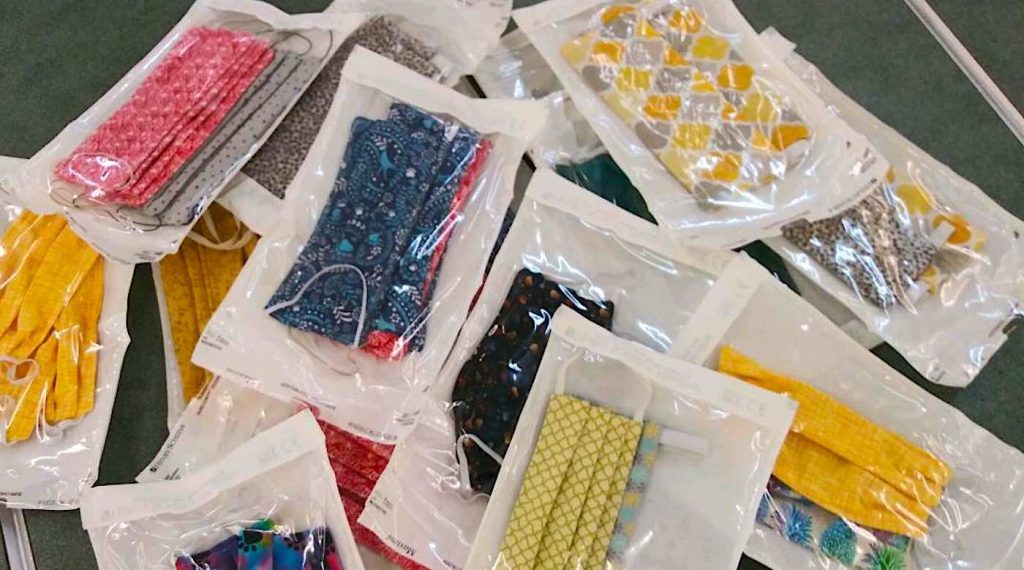
Trina began constructing and sewing cloth masks for a project in Indiana to help teenage cancer patients undergoing chemotherapy. Then, wanted to donate more masks to workers at four local chemo centers in New Jersey, spurred on by a friend of hers whose mother has cancer “and right now she’s using a bandana.”
Cloth masks are useful because they keep your hands from touching your nose and mouth (especially out in public where you don’t know if surfaces are clean). They also can contain sneezes and coughs, protecting those around you who may have vulnerable immune systems.
As Trina was running low on fabric and unable to purchase more, she asked around to see if there was anyone willing to donate to a good cause, but had no luck.
She then reached out to Good News Network on Friday, the very same dayGNN received a press release from JOANN fabric Stores announcing that the U.S. company would begin donating materials to anyone looking to sew together masks, gowns, or other essential medical equipment for healthcare workers.
After learning the JOANN Stores were launching the program on March 23, we submitted Trina’s order to the company and they said the supplies would be mailed immediately to her in Somerdale, New Jersey.
Branella was thrilled to hear about the donation program and ordered 5 yards of flannel, and a couple packets of 1/8 inch elastic.
“I just have this warm, little fuzzy going on right now,” she told GNN by phone. “I’m so happy they’re doing something. I love JOANN’s.”
Beyond just donated materials, JOANN is offering “Ship-to-Home” or “Curbside Pickup” options, so customers won’t need to come into the stores.
The chain includes 865 stores across 49 states (find your local store here)—but not all shops may be participating, so telephone the store first.
“The amazing thing about the crafting community is that, especially in difficult times, they are always looking for ways to help,” said Wade Miquelon, President & CEO of JOANN.
All open JOANN locations will serve as collection points, too, so that people sewing in their homes can drop off any items created, which will then be distributed to medical centers to help extend their dwindling supplies.
Photos by JOANN Stores
“We are seeing hospital workers, organizations and individuals coming into our stores for supplies to make these essential items, and our customers are asking us how they can help,” Miquelon added. “So many are spending their time and money to help in this tragic situation, and we want to step in to do our part to protect the amazing people who are helping the communities we serve.”
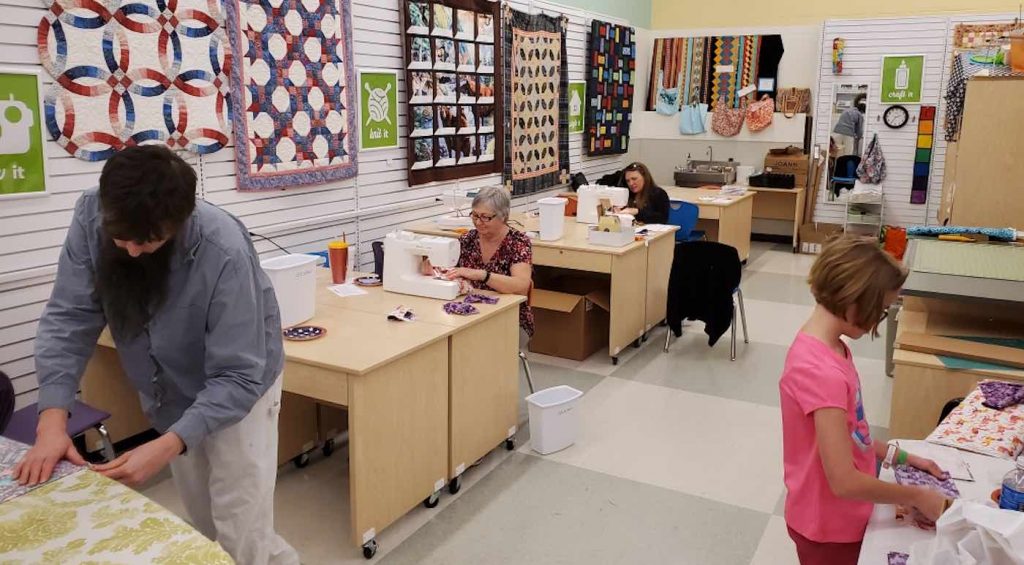
They say they will also open their classrooms—while adhering to social distancing guidelines—to any who want to help make these essential items. Participating locations will offer sewing machines, materials and guidance to help customers safely make face masks and covers, gowns and other items to donate to America’s hospitals. They have some How-to guides here.
“We have a generous community who can make a big difference as our healthcare system faces this crisis,” Miquelon said. “We’re here to support them, and all who make to give year round. We are all in this together.”
“We are the World” Blogfest” aims to spread the message of light, hope and love in today’s world. We are challenging all participants to share the positive side of humanity. This month’s co-hosts, Sylvia McGrath, Lizbeth Hartz, Shilpa Garg, Mary Giese, and Belinda Witzenhausen welcome participants and encourage all to join in during future months. #WATWB comes on the last Friday of every month. Click HERE for more information. You are always welcome to join in!You can find more stories of hope, light, and love on the WATWB Facebook Page. Click HERE to be part of the Light.





































 Looking for the Light