

Had a maintenance ECT session today and it was a whopper! Dizzy and woozy all day, slept for hours and hours. Still not quite steady on my feet. It hasn’t been going very well recently, so we’re going to stick with a two week repetition for the maintenance sessions. Saw my psychologist for the last […]
Holy Cow! — a Scarlet D
Conquering an Invisible Disability — Guest Blogger Shedding Light on Mental Health
From the moment I stepped into a psychiatric hospital during Christmas 2008 I knew I had a very long journey ahead of me. I had no idea the additional challenges that would unfold. I couldn’t have imagined how much my life could have been turned upside down. Untreated and under treated serious mental illness is […]
Conquering an Invisible Disability — Shedding Light on Mental Health
My Top 19 Chronic Illness Blog and Social Media Posts of 2019 — Guest Blogger The Disabled Diva’s Blog

Check out my top 19 chronic illness blog and social media posts of 2019 ! Did your favorite make the list?
My Top 19 Chronic Illness Blog and Social Media Posts of 2019 — The Disabled Diva’s Blog
I Don’t Believe in That Disease — Guest Blogger The Disabled Diva’s Blog

My diagnosis of fibromyalgia has been problematic. During one visit I mentioned my diagnosis of fibromyalgia and he said, and I quote “That’s not a real disease.”
I Don’t Believe in That Disease — The Disabled Diva’s Blog

Feliz Navidad
Merry Christmas

Powering Down at Night Time

Great suggestions from Willow and Sage by Stamptington
Simple Sleep Remedies
Set a consistent sleeping schedule. Going to sleep and waking up at the same time each day helps regulate your internal clock, making it easier to fall asleep and get up in the morning refreshed.
Drink plenty of water throughout the day, but stop at least two hours before bed. Otherwise, you’ll be waking up in the middle of the night to use the bathroom. Helpful tip: Start the morning with a cold glass of water to jump-start your day.
Put down your smartphone or tablet, and journal before bed to quiet your thoughts. When you stare at your electronics before bedtime, the blue light can suppress your body’s natural melatonin production, thus interrupting your sleep.
Utilize white noise to clear your mind. Use a sound app or a noisy fan to quite your surroundings.
Enjoy an Epsom salt bath. To detox and calm your body, dissolve Epsom salt in a warm bath, add baking soda to reduce itchiness and a few drops of essential oil if desired, and soak for twenty minutes.
Apply moringa oil to help with insomnia. Use either aromatherapy or apply on your temples or chest.
Incorporate essential oils into your nighttime routine. Diffuse blends as you prepare for bed or spray a lavender blend on your pillow for a soothing effect.
Go-to Nighttime Essential Oils
Lavender
Cedarwood
Chamomile
Frankincense
Sage
Ylang Ylang
Bergamot
Easy To Make Soothing Bath Salts *Great For Chronic Pain and Holiday Gift*
Willow and Sage by Stampington
Great for people who suffer from chronic pain. For an additional benefit add apple cider vinegar to water when running the bath.
You Will Need
4 cups Epsom salt
1/2 cup sea salt (optional)
25-30 drops of essential oils
3/4 cup baking soda
Large Bowl
Airtight containers
To Make
Mix the Epsom salt, sea salt, essential oils, and baking soda in a large bowl. Transfer mixture to airtight containers, such as a small glass jar for gifting. You can use any desired scent in your bath salts, but first, make sure to research the type of scent of essential oil that you’ll be using to ensure it’s safe for the bath.
Gluten-Free Salmon with Lime and Sesame Seeds Great for the Season
Gluten-Freedom by Alessio Fasano, MD with Susie Flaherty
Ingredients:
1 1/2 to 2 pounds salmon (wild-caught preferred with skin on)
Juice from 2-3 limes
Olive Oil
Sesame Seeds
Preheat oven to 350 degrees. Line baking sheet with parchment paper and coat very lightly with olive oil. Place salmon, skin side down, on parchment paper in the pan.
Squees the juice of 2-3 limes into a bowl. Use a pastry brush to coat salmon with lime juice. Coat the top of the salmon with sesame seeds. Bake for 15-20 minutes. Fish is done when it flakes easily with a fork. Be careful to not overcook.
Friday Quote

“But we, insofar as we have power over the world and over one another, we must learn to do what the leaf and the whale and the wind do of their own nature. We must learn to keep the Balance.”
-URSULA K. LE GUIN, The Farthest Shore
Need the full picture AGAIN — Guest Blogger A Dad trying to cope with the loss of his Partner and becoming a single parent.

It’s difficult to work if you only have part of the picture. This is so true of dyslexia. A few days back we explored how difficult it is for a child with dyslexia to answer school questions without help. A help which is often absent. Our son is dyslexic. He has found a way of […]
Need the full picture AGAIN — A Dad trying to cope with the loss of his Partner and becoming a single parent.
Have a safe and healthy holiday season :)
I wish everyone a safe and healthy holiday season. Your friendship, walking the journey with me, your loving and many times hilarious comments, just being there…..I deeply appreciate you and look forward to what we share in 2020.

Easy To Make Calming Oil-Great Holiday Gift

Willow and Sage by Stampington
This combination smells lovely and helps to soothe anxious feelings. You can keep one in your purse to have on hand throughout the day.
YOU WILL NEED
Carrier oil: fractionated coconut oil/grapeseed oil/jojoba oil
Glass roller bottle 10-ml.
6 drops lavender essential oil
6 drops orange essential oil
6 drops patchouli essential oil
4 drops frankincense essential oil
TO MAKE
Add the carrier oil to the glass roller bottle. Add essential oils to the bottle, and shake to combine.
Lena Dunham opens up about drug addiction: ‘Pills I thought dulled my pain actually created it’
‘When I was dropped off at rehab, I thought it was the end of my life,’ says Dunham
- Clémence MichallonNew York @Clemence_Mcl
- Monday 28 October 2019 16:42

Lena Dunham attends the Friendly House 30th annual awards luncheon on 26 October, 2019 in Los Angeles, California. ( Vince Bucci/Getty Images for Friendly House )
Lena Dunham has opened up about her prescription drugs addiction and her newfound sobriety.
The actor was named Woman of the Year by Friendly House, an addiction treatment facility for women in Los Angeles.
“I didn’t think that I was a drug addict,” Dunham, who has previously said she used to misuse prescription medication, said while accepting the honour at a luncheon this weekend, according to Variety.
Speaking in more detail about her former struggle around drugs, she added that “pills that I thought dulled my pain actually created it”.
Dunham, who has been sober for 18 months, first disclosed her history of drug abuse last year in a podcast with Dax Shepard.
At that time, she told the actor she had “misused [benzodiazepines]” for three years, adding: “Nobody I know who are prescribed these medications is told, ‘By the way, when you try and get off this, it’s going to be like the most hellacious acid trip you’ve ever had where you’re f****** clutching the walls and the hair is blowing off your head and you can’t believe you found yourself in this situation.”
During this weekend’s event, Dunham explained how media portrayals had skewed her perception of what addiction can look like.
“I didn’t think that I was a drug addict,” she said, deadpanning: “I thought drug addicts were depraved lunatics who wandered the streets, demanding crack from innocent children and flaunting their open wounds in public parks.
“And I was a successful, capable celebrity who wandered red carpets demanding attention and flaunting her open boobs on TV. It’s totally different.”Support free-thinking journalism and attend Independent events
The actor spoke candidly of her path to recovery, explaining: “When I was dropped off at rehab, I thought it was the end of my life.
“Seemingly overnight, I had lost almost all of what I hold dear: My relationships, my body and my career were in relative shambles.”
She made it clear that she’s now grateful for her sobriety, adding that “a woman who has overcome an addiction can do f****** anything”.
Independent culture newsletter
Easy To Make Soothing Bath Salts *Great For Chronic Pain and Holiday Gift*
Willow and Sage by Stampington
Great for people who suffer from chronic pain. For an additional benefit add apple cider vinegar to water when running the bath.
You Will Need
4 cups Epsom salt
1/2 cup sea salt (optional)
25-30 drops of essential oils
3/4 cup baking soda
Large Bowl
Airtight containers
To Make
Mix the Epsom salt, sea salt, essential oils, and baking soda in a large bowl. Transfer mixture to airtight containers, such as a small glass jar for gifting. You can use any desired scent in your bath salts, but first, make sure to research the type of scent of essential oil that you’ll be using to ensure it’s safe for the bath.
#Weekend Music Share

I’m so glad you stopped by today. I appreciate you and so glad to be a part of your day. Melinda
Friday Quote
Thank you for stopping by today, I really appreciate you. Sending good karma your way for a wonderful weekend. M


Get your Money for Nothing-Updated with Frugal Find
If you’ve watched daytime television you’ve heard every get rich quick scheme, start your own business and make $3,000 this month………I’m getting off track. I enjoy making money! I keep it simple by making money on purchases I’m already making. There are tons of apps that do coupons, check prices and anything imaginable if you want to be a SUPER SHOPPER.
I use two apps, Rakuten.com formerly Ebates and Honey.com. Both are installed in my browser and recognize when I shop at one of their partners. An Rakuten.com pop-up ask you to activate by clicking and it shows % of sale received on purchase.
Rakuten.com is my long-term favorite, it’s easy and they partner with all the places I shop. To date I’ve earned approximately $800.00. Rakuten.com pays out every quarter for your previous purchases. The big money days are when their partners offer double percent back and 10% days make me very happy. Small sales add up over the year.
Honey.com works based on finding coupon codes for your purchase. It runs thru a long list of coupon codes to see if one applies. You’ll see a pop up that says there are coupons codes. You click and it does it trick. I have not used Honey.com very long but received free shipping on several purchases.
*FRUGAL FIND
THREDUP.COM
ThredUp.com is a site for women’s clothing, shoes and accessesories. You can find new items with tags, almost new and used, all priced accordingly. You can also clean out your closet and send items to ThredUp to sale. They also accept some designer items for resale.
USE MY REFFERRAL LINK AND RECEIVE $20 CREDIT WITH FIRST ORDER.
http://www.thredup.com/r/5F6HUH
If you are a Prime Member at Amazon.com you have a world of free goodies offered movies, bookes…..on and on. I rely on Amazon.com since I don’t drive and Prime Members get two-day free shipping.
The best discovery I’ve made is the Amazon Prime Member Card. It’s a credit card that can only be used at Amazon.com, it’s offered with no fees. You receive 5% back on every purchase you make on Amazon.com. WOW!!!!!
To give my husband down time on weekends, we get our groceries delivered. Prime Members get free delivery. The amount of time saved has surprised him, the money has brought a smile to my face. The grocery section is Amazon Fresh, they have thousands of products including fresh bread.
Another up side to the delivery Amazon Fresh uses frozen bottled water to keep items cold. Each week we receive 6-8 bottles of water free.
If you really want to save money, work all the coupon apps and be a Super Shopper. You have to be organized to handle that many coupons and will need lots of extra storage space.
Happy Shopping!
M
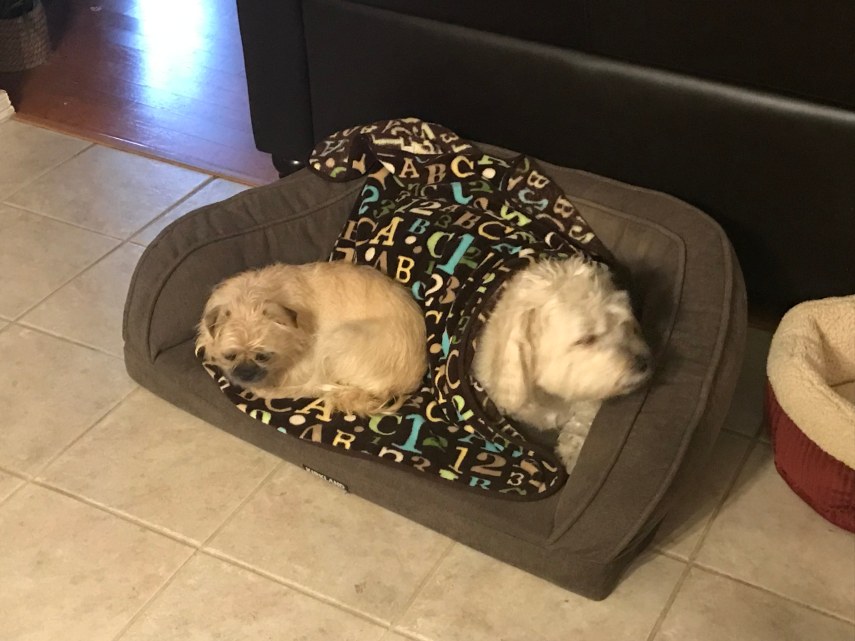
Dogs Thanksgiving From Griffy and Shaggy
I’m thankful for my two paw children today and every day.




Discover & Support Hidden Gem Charities this Holiday Season
Friday, November 22, 2019
The team from Charity Navigator, the nation’s largest independent charity evaluator and leading donor advocate, shares their thoughts on emerging nonprofit-sector issues and offers tips to better inform your intelligent giving decisions.
Find a charity to support today

I don’t know about you, but I love this time of year. For a few weeks, it feels like we’re largely able to put aside our differences for a renewed spirit of goodwill, hospitality, and generosity.
For many of us, the holiday spirit manifests itself in gifts to loved ones, as well as charities working on the causes close to our hearts. This year, make the most of those gifts by using Charity Navigator to inform your charitable giving.
Keep reading for tips on how to get the most of our (forever) free charity ratings and donation resources this holiday season.
Discover an Organization
Has the holiday spirit ignited your inspiration and generosity? If you already have a favorite charity, or charities, you can skip down to “Review their Rating.” If you’re looking for a charity that aligns with your philanthropic interests, stay here.
Charity Navigator provides in-depth evaluations for more than 9,000 of America’s largest and most well-known organizations. We understand that you’re busy, especially this time of year, which is why we’ve made discovering the right charity for you quick and easy.
Through our Discover tool, you can find a charity working on a current issue (or Hot Topic), or begin your search with the cause you care most about. Simply select your favorite cause and sub-cause, and use the search filters in the left corner to filter your results. Some donors filter their search by a charity’s size, regional scope, or star rating.
Take some time to review your results–read through the charities’ mission statements to understand where and how an organization is tackling the issue it set out to solve. You can also scroll to the bottom of the charities’ profiles to view a list of charities performing similar kinds of work.
Review their Rating
Charity Navigator’s free charity ratings make it easy to determine whether or not a charity is worthy of your support. Our multidimensional ratingsconsider a charity’s financial health and accountability/transparency: two important indicators of an organization’s efficiency and efficacy.
Organizations receive a 0-4 star rating for their financial health, accountability and transparency, and overall performance. Charity Navigator strongly encourages donors to consider 3- and 4-star rated organizations, which we consider to be highly-rated and meeting or exceeding industry standards. Organizations that receive 0-, 1-, or 2-star ratings are in need of varying degrees of improvement to come in line with best practices.
Charity Navigator provides the information and data you need to do as deep a dive into a charity’s health and performance as you’d like. We have found that all some donors need to make their donation is a quick glance at our evaluations. Others prefer to spend time reviewing how much a charity spends on things like programs and fundraising, or what policies they have in place to protect their staff, constituents, and donors. Whichever route you decide, Charity Navigator has what you need to feel confident giving generously this holiday season.
Make your Donation
Once you’ve discovered a charity and reviewed its rating to determine that its worthy of your support, you’re ready to make a donation. Charity Navigator’s Giving Basket makes it easy to support the charity, or charities, you’ve been researching without having to leave our site.
Charity Navigator’s Giving Basket is an easy, secure way to support the causes you’re passionate about. To initiate your donation, click on the green “Donate to this Charity” button at the top of the organization’s rating profile. A pop-up window will guide you through the donation process.
There are two additional features our users love about the Giving Basket. The first is their ability to give anonymously. Before you finalize your donation through the Giving Basket you have the opportunity to elect how much personal information you want to share with the organization you’re supporting. Whether you choose to share full information or remain anonymous, your gift will be properly receipted fully tax-deductible.
The second is their ability to support multiple charities in one, easy transaction. This saves time, keeping you from having to bounce from charity website to charity website to make all of your donations. It also eliminates the hassle of tracking down and saving all of those donation receipts. You will immediately receive an electronic receipt that reflects your individual and total contributions and the tax-deductible nature of your gifts.
Since its launch in October 2015, donors have used Charity Navigator’s Giving Basket to direct more than $67 million dollars to efficient and effective organizations. Join this community of satisfied donors by using the Giving Basket to make your year-end donations this holiday season.
More Tips and Tools
Charity Navigator helps America’s donors give confidently by providing them with the resources they need to make better-informed giving decisions. Thanks to the generous support of our users, we continue to offer all of our resources for free, all year round.
In addition to our ratings, some of our most popular resources are our Hot Topics, curated lists of highly-rated organizations working on a particular cause or issue; our Top Ten lists and Tips for Donors; and, this blog, which features expert voices, opinions, and guidance on topics like CEO compensation and support disaster relief effectively. And, there are many more tips and tools available to you at charitynavigator.org.
To our loyal readers who continue to use Charity Navigator to inform your charitable giving: thank you. Thank you for making us America’s largest and most-trust charity evaluator. To our new readers or first-time users: welcome. We hope you find our service and resources helpful, and welcome your thoughts and feedback. Please contact info@charitynavigator.org to ask questions and share comments with our team.
Written by Ashley Post, Communications Manager at Charity Navigator.
As a 501 (c) (3) organization itself, Charity Navigator depends on public support to help donors make informed choices. Please consider investing in the future of Charity Navigator by making a donation today. Donate now >> at 2:04 PMEmail ThisBlogThis!Share to TwitterShare to FacebookShare to PinterestLabels: Charity Navigator, discover feature, giving basket, giving tips,Holiday Giving, hot topics, ratings, resources, top 10
Happy Holidays

As we close in on the end of the year, it makes me stop and think about how thankful I am for you, for following and your helpful and often funny comments. You don’t have to celebrate Thanksgiving to be thankful, I pray you have much to be thankful for in your life.
Melinda
Congress has a bill to expand medical marijuana and CBD research
| Dear U.S. Pain Foundation advocates, We wanted to let you know about an opportunity to take action on a federal bill that would expand and coordinate scientific research of cannabidiol (CBD) or marijuana-derived products, allowing researchers to better understand their potential efficacy and safety. While medical cannabis is increasingly available in a number of states nationwide, too often, there is little clinical data available to help patients and health care providers make informed decisions about whether it would work well for their specific condition, or how much and what type to use. Introduced by Senators Dianne Feinstein, Chuck Grassley, and Brian Schatz, The Cannabidiol and Marihuana Research Expansion Act (S. 2032) would streamline the research process, eliminating the lengthy delays and roadblocks researchers face when trying to study medical marijuana and CBD-derived products. Why U.S. Pain supports S. 2032 We believe people with chronic illness and pain should have access to all safe, effective treatments, including medical cannabis. Research is critical as it would lead to increased understanding about cannabis as a therapeutic option (including efficacy, safety, proper dosing, best delivery methods, etc.) and may lead to new, FDA-approved treatment options for people with pain. Now is the time to take action U.S. Pain has created two online campaigns for advocates on this issue because we’d like to accomplish two goals: 1. Have the Senate Committee on the Judiciary schedule a hearing on the bill2. Gain additional cosponsors of the bill Click here and see if your Senator sits on the Committee on the Judiciary. If they do, use the button below. Urge your Senator to hold a hearing >> If your Senator doesn’t sit on the committee, you can still help support medical marijuana and CBD research by requesting he/she becomes a cosponsor.Get your Senator to cosponsor the bill >>To learn more about U.S. Pain’s views on medical cannabis, read our position statement here. Thank you for supporting us as we fight to open up research opportunities surrounding complementary and integrative therapy options for people with pain. Sincerely, Ellen Lenox Smith Co-Director for Medicinal CannabisU.S. Pain Foundation |
| U.S. Pain Foundation ellen@uspainfoundation.org | uspainfoundation.org 670 Newfield Street Suite B Middletown, CT 06457 |
Pre-Black Friday Sale on My Favorite Wellness Products — Guest Blogger The Disabled Diva’s Blog

No need to wait until Black Friday! Start saving today!
Pre-Black Friday Sale on My Favorite Wellness Products — The Disabled Diva’s Blog
Friday Quote
Have a happy and healthy weekend! :) M



Throwback Thursday
You’ve made my day by stopping by today, I always enjoy seeing you. Thanks for all the great comments, I take request too. M
Celebrating 17th Wedding Anniversary

It’s hard to believe it’s been seventeen years, so many have been spent caring for loved ones or being sick. I’ve lost so many years, no they weren’t technically lost, I was present during the first three years of our marriage, we had fun cooking together, enjoying a late-night swim and grocery shopping together.
When your vows say for better or worse you don’t think the worst will come so soon. You also don’t realize those years aren’t the worst, they get worse.
I was caring for my ill and dying grandparents over an eight-year period during the last years of their life. I stayed for weeks at a time. Absent, absent from my husband, our life and myself. It’s not a pity party today, it’s a real reflection of how marriage can be so different than you plan.
The year my gramps died I started getting sick and a year-long journey with a neurologist started. Every test was abnormal but she could not make a diagnosis. Luckily, I learned Internet search skills from my previous job and could start my research. I narrowed my guesses to eight autoimmune diseases and took a wild guess at Lyme. This is one of those times I wish I were wrong. Lyme and the illnesses it brings along have been in the driver seat since 2012.
This post isn’t about me, it’s about my husband. I’ve been absent, mentally unavailable, sick and dying since the early years of our marriage. I do think he got short-changed. We don’t know what we are committing to when we make our vows. The difference is those who stay committed to the vows no matter how shitty life gets.
I still expect the other shoe to fall, he’s never given me any reason to feel this way, it comes from from my traumatic childhood. Complete trust is impossible for me but I continue to build towards 100%.
When you’re chronically ill quilt is constantly over your shoulder, as I approach our anniversary day guilt has tainted my feeling of celebration. It angers me I’m not up to going to a restaurant for dinner, enjoy a bottle of wine or hold hands walking thru a park under the stars.
I am blessed to find someone who stands by their vows no matter how hard it gets.
Happy Anniversary Honey
Melinda
#Wordless Wednesday

New way to think about brain’s link to postpartum depression
Science News
Research in animals shows brain’s immune system is activated by stress during pregnancy
October 21, 2019
Source: Ohio State University
Chronic stress during pregnancy triggers an immune response in the brain that has potential to alter brain functions in ways that could contribute to postpartum depression, new research in animals suggests.
The study is the first to show evidence of this gestational stress response in the brain, which is unexpected because the immune system in both the body and the brain is suppressed during a normal pregnancy.
The Ohio State University researchers who made the discovery have been studying the brain biology behind postpartum depression for several years, creating depressive symptoms in pregnant rats by exposing them to chronic stress. Chronic stress during pregnancy is a common predictor of postpartum depression, which is characterized by extreme sadness, anxiety and exhaustion that can interfere with a mother’s ability to care for herself or her baby.
Stress is known to lead to inflammation, which prompts an immune response to protect against inflammation’s harmful effects. Based on what they already know about compromised brain signaling in rats stressed during pregnancy, the scientists suspect the immune cells in the brain responding to stress may be involved. If that’s the case, the immune changes may create circumstances in the brain that increase susceptibility to depression.
In unstressed pregnant rats, the normal suppression of the immune system in the body and the brain remained intact throughout pregnancy. In contrast, stressed rats showed evidence of neuroinflammation. The study also showed that the stressed rats’ immune response in the rest of their bodies was not active.
“That suggests there’s this disconnect between what’s happening in the body and what’s happening in the brain,” said Benedetta Leuner, associate professor of psychology at Ohio State and lead author of the study. She speculated that the signaling changes her lab has seen before in the brain and this immune response are happening in parallel, and may be directly related.
Leuner presented the findings Saturday (Oct. 19, 2019) at the Society for Neuroscience meeting in Chicago.
In this work, rats are exposed to unpredictable and varied stressful events throughout their pregnancies, a practice that adds a component of psychological stress but does not harm the health of the mother or her offspring.
In the stressed animals, the researchers found numerous pro-inflammatory compounds that indicated there was an increase in the number and activity levels of the primary immune cells in the brain called microglia. Their findings also suggested the microglia were affecting brain cells in the process.
Leuner’s lab previously determined in rats that chronic stress during pregnancy prevented motherhood-related increases in dendritic spines, which are hair-like growths on brain cells that are used to exchange information with other neurons. These same rats behaved in ways similar to what is seen in human moms with postpartum depression: They had less physical interaction with their babies and showed depressive-like symptoms.
Leuner and colleagues now plan to see whether the brain immune cells activated during gestational stress are responsible for the dendritic spine elimination. They suspect that microglia might be clearing away synaptic material on dendrites.
Leuner has partnered on this research with Kathryn Lenz, assistant professor of psychology at Ohio State, whose work explores the role of the immune system in brain development.
Though pregnancy was known to suppress the body’s immune system, Lenz and Leuner showed in a previous study that the same suppression of the immune system happens in the brain during pregnancy — the number of microglia in the brain decreases.
“By layering gestational stress onto a normal pregnancy, we’re finding this normal immunosuppression that should happen during pregnancy doesn’t occur, and in fact there’s evidence of inflammatory signaling in the brain that could be bad for dendritic spines and synapses,” Lenz said. “But we’ve also found changes in the microglia’s appetite. Every characteristic we’ve looked at in these cells has changed as a result of this stress.”
The researchers are now trying to visualize microglia while they’re performing their cleanup to see if they are eating synaptic material. They are also manipulating inflammatory changes in the brain to see if that reverses postpartum depression-like behavior in rats.
“We’ve seen the depressive-like symptoms and neural changes in terms of dendritic spines and synapses, and now we have neuroimmune changes suggesting that those microglia could be contributing to the neural changes — which we think ultimately underlie the behaviors,” Leuner said.
The research was supported by the National Institutes of Health.
Ohio State current and former students Caitlin Goodpaster, Nicholas Deems and Rachel Gilfarb also worked on the study.
Story Source:
Materials provided by Ohio State University. Original written by Emily Caldwell. Note: Content may be edited for style and length.
Cite This Page:
Ohio State University. “New way to think about brain’s link to postpartum depression: Research in animals shows brain’s immune system is activated by stress during pregnancy.” ScienceDaily. ScienceDaily, 21 October 2019. <www.sciencedaily.com/releases/2019/10/191021151538.htm>.
How should the FDA evaluate new medications for pain?
| Dear U.S. Pain volunteer advocates, We wanted to make you aware of an opportunity to submit public comments to the Food and Drug Administration (FDA). Specifically, the FDA would like the public’s views on two main issues: 1. What criteria the FDA should use to evaluate new opioids to treat pain2. What new incentives are needed to better support and encourage the development of new treatments for pain On Sept. 17 the FDA held a public hearing called “Standards for Future Opioid Analgesic Approvals and Incentives for New Therapeutics to Treat Pain and Addiction.” While the public hearing has passed, the FDA is accepting written comments until Nov. 18. How to submit Written comments are to be submitted to the Division of Docket’s Management (HFA-305), Food and Drug Administration, 5630 Fishers Lane, Rm. 1061, Rockville, MD 20852. Electronic comments can be submitted by using the button below.All comments must be identified with the docket number FDA-2019-N-2514. Please keep in mind that all comments submitted to the docket are public. Why advocates should engageWe think it is important for people with pain to let FDA know your thoughts on these issues. A number of people and organizations at the hearing said that they thought no new opioids should be allowed on the market. What’s your opinion about this? People with pain need new options There has long been a lack of new non-opioid medications approved for pain. We encourage you to tell FDA what impact pain has had on your life and how speeding up the development of new drugs in the pipeline could make a difference to your life and the lives of so many others debilitated by chronic pain. People with pain need to make our voices heard. We encourage you to write into the docket.Sincerely, Cindy SteinbergNational Director of Policy & AdvocacyU.S. Pain FoundationSubmit comments here! |
| U.S. Pain Foundation contact@uspainfoundation.org | uspainfoundation.org 670 Newfield Street Suite B Middletown, CT 06457 |
Morticia From The Addams Family Loves Roses



 Looking for the Light