Protesting high taxes and political corruption, American farmers begin a military standoff that closes the federal court in Springfield. Shays’ Rebellionwill eventually be defeated by a private militia, but it will sufficiently rattle national leaders to call for a stronger national government to suppress future uprisings.
1831
English chemist and autodidact Michael Faraday publically demonstrates his discovery of electromagnetism, or as he calls it, a ‘wave of electricity,’ via electromagnetic induction. His discovery of this energy transmission will help generate mankind’s electrical revolution.
1949
Twenty kilotons of nuclear fission flatten a purpose-built ‘town’ in a remote part of the USSR’s Kazakh Republic, and the Soviet Union is now on par with the US as the only other nuclear power on the globe. Called ‘First Lightning,’ the Soviet’s atom bomb is born of espionage and scientific brilliance.
2005
Once roiling with Category 5 strength over the Gulf of Mexico, Hurricane Katrina has weakened, but it’s still packing ferocious winds, as it makes landfall near New Orleans, Louisiana. A massive storm surge will breach levies, devastating that city as Katrina becomes one of the worst natural disasters in US history.
Being in touch with your values is essential to living a rich and meaningful life. By knowing what you care about most, you become inspired to live by your highest ideals, bringing out the best in yourself. In short, values help you find direction, meaning, and inspiration in life.
Unfortunately, however, it’s more complicated than this. Because too often enough, we get sidetracked. Too often, the demands of the day pull our attention away from what really matters, to serve our immediate emotional needs. We then lose touch of our ideals, and revert back to old – often destructive – habits.
If you wish to stop this from happening, break the cycle of bad habits, and bring forth the best of yourself, you have to reconnect with your values whenever you lose touch. And the easiest way to accomplish this, are value triggers.
What Are Value Triggers?
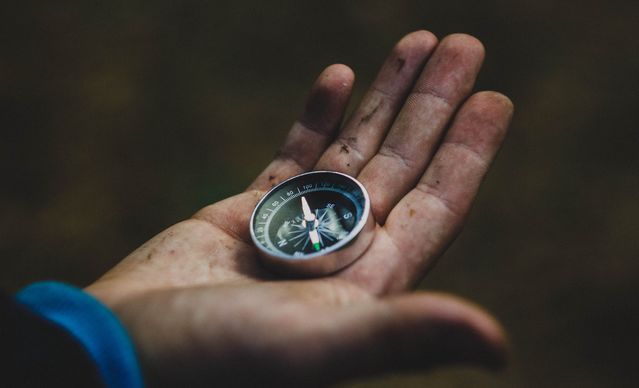
A value trigger is a physical reminder of your core values. By merely looking at it, you refocus back on what matters most, making you act more in line with your highest ideals. The trigger can be almost anything, as long as it makes you remember your values. Here are a few ideas:
Card in Wallet. Write down a few core values on an index card, and put it in your wallet. Whenever you’re feeling stressed, take it out and read it.
Background Screen. Change the background of your phone to a picture that represents your values. For instance, if you value self-courage you might set it to the picture of a lion if that image speaks clearly to you.
Jewelry. Pick a piece of jewelry (e.g. a ring, a bracelet, or a necklace) and let it stand for a certain value. Whenever you look at your accessory, reflect on it’s meaning.
Post-it Notes. Write down your values on a post-it note, and stick it somewhere visible, like your fridge or a computer screen.
Pictures of People. Print out pictures of people that for you exemplify your values. Our heroes and guides are picked by us because they stand for something in our lives. You can pick pictures of friends, family, teachers, coaches, spiritual leaders, well-known public figures — anyone who empowers you to care.
Pick a value trigger that works best for you. It doesn’t matter which one you choose, as long as it serves as a reminder of your core values.
Don’t Make This Mistake!
Don’t be fooled. A value trigger doesn’t magically change your life, just by having it. Instead, you need to actively engage the trigger. Whenever you look at your personal value trigger, ask yourself the following questions:
“Which value does this trigger stand for?”
“Why is this value important to me?
“What can I do today bring this value more into my actions and my life?”
By reflecting on your value trigger in this way, you increase its effectiveness. This doesn’t mean you will never again lose sight of what matters most. But it does mean you have an effective way to catch yourself whenever you fall off track, and quickly get back to living a rich and meaningful life.
How many participants in the MyLymeData patient registry ever had a Lyme-related rash? (34%) How many initially presented with flu-like symptoms? (64%) How many were misdiagnosed with a psychiatric illness? (54%)
These are some of the details you can learn in the MyLymeData 2019 Chart Book. This report is a compilation of our research results based on more than 2.5 million data points we have collected and analyzed within the MyLymeData project during Phase One.
Much of the information highlighted in this report was previously unknown to the community, because so little real-world research on Lyme disease has been conducted. MyLymeData is a testament to what can be achieved when patients pool their data to help find a cure. More than 12,000 people have joined the registry so far.
You can download your own free PDF copy of the 36-page 2019 MyLymeData Chart Book by clicking the button below.
You are what you eat, is the old adage, but what does your diet actually say about you?
23andMe has a unique opportunity to explore that question, as we investigate how dietary habits, along with genetics, demographics, lifestyle and other data can influence overall health outcomes.
Looking at diet specifically, our scientists analyzed the data of more than 850,000 people who consented to participate in research and who shared details about their own eating habits.
Using machine learning techniques* we were able to see that dietary choices clustered into four distinct types of eaters, which were mainly characterized by two dietary behaviors. The first one represents the spectrum of foods’ nutrient content from high nutrient-dense foods (i.e. low caloric foods with high nutrient content like vegetables, leafy greens, fruit, beans or whole-grains) to low nutrient-dense foods (i.e. high caloric foods with low nutrient content like. processed foods, sweets, sodas, pastries, saturated fats or fast food). The second main behavior differentiating diet groups is the meat intake, in particular, red and processed meat (e.g., sausages, hot dogs, ham, or cured bacon).
Dietary Types
Using these two behaviors as axes, we can plot the four main diet groups:
On one end, we find people who eat high nutrient-dense (HND) foods like vegetables, leafy greens and fruits and tend to avoid high caloric foods with low nutrient content like refined carbs, processed foods, saturated fats and fast food. Depending on their meat intake, these people can either be classified as HND + Carnivores (high meat intake) or Herbivores (low meat intake). Importantly, not all Herbivores are vegetarian or vegan; they just eat less meat than the other diet groups.
On the other end, we find people with a diet low in vegetables, leafy greens and fruits who also tend to eat more high caloric foods with low nutrient content, low nutrient-dense foods (LND). People in this group also tend to eat more meat, particularly processed and red meat (LND + Carnivores). Curiously, in this study we couldn’t find a group of people with a diet rich in low nutrient-dense foods that have a low meat intake (group absent in the lower-right corner of Figure 1).
Finally, the people in the middle we called Omnivores because they ate a little of everything.
Figure 1.Left graph represents the four defined diets projected in the two main behaviors axis (nutrient content of foods and meat intake). Right panel describes the nutritional differences between these diets, the dots represent the average response to the survey question: “How frequently do you eat this food?” Possible responses were: “not at all” (all dots empty), “1-2 times per week” (one filled dot), “3-6 times per week” (two filled dots), “once per day” (three filled dots) or “more than once a day” (all dots filled).
Men versus Women
After defining these dietary clusters, we looked to see if there were any obvious demographic differences between these groups, and there were. We found that women tend to group in the Herbivore or HND +Carnivore groups. Far fewer women — only about 20 percent in our study — were in the LND + Carnivoregroup. In contrast, about 30 percent of men were in that group. Women also tended to eat more fruits and vegetables and avoid meat more than men. About one in four women, versus one in six men were classified in the Herbivore group. (Figure 2)
Figure 2. Percent of users belonging to each diet class depending on their gender.
Younger versus Older
As with gender, if we look at age we also are able to see differences within each of the dietary classifications. In this study, younger people appeared to eat fewer fruits and vegetables and more high caloric foods with low nutrient content. We found that about 40 percent of adults under 30 belong to LND + Carnivorecategory, and only about 10 percent of this age group were in the Herbivore category. The reverse is true for individuals over 60, with people in that age group more likely to eat fruits and vegetables and less likely to eat refined carbs or fast food. This is not surprising since our diets change over time — think about the difference between the typical diet of a college freshman versus the typical diet of a senior citizen. Interestingly, when we look at Omnivores, their numbers don’t seem to change as they age. Is a part of the population resilient to changing their nutritional habits as they get older? We can’t say for sure without further study (Figure 3).
Figure 3. Percent of users belonging to each diet class depending on their age. Users were divided into four different age bins: under 30 (<30), between 30 and 45 (30-45), between 45 and 60 (45-60) and older than 60 (>60).
BMI by Dietary Groups
We also wanted to look at how these different dietary categories might impact weight, specifically BMI. What we found was that those individuals who ate more fruits and vegetables — Herbivores — were more likely to have a BMI in the healthy range — between 18.5 and 24.9 as defined by the Centers for Disease Control and Prevention (Figure 4). However, without exercise, those individuals in the Herbivore group were still likely to be overweight. That said, looking at our data it may be even more difficult to maintain a healthy BMI if your diet is in one of the other three dietary categories HND +Carnivore, Omnivore and LND +Carnivore.
Figure 4. Description of the relationship between the average body mass index (BMI) of each diet class and the users’ age (left panel) and the number of times that they exercise per week during at least 30 min (right panel).
A really surprising finding was that the difference in average BMI between the LND +Carnivore group and the Herbivore group is higher in women than in men. This raises the question: is a woman’s weight more sensitive to eating high caloric foods?
BMI by Gender
The differences between women and men in this study could be explained by many reasons. It’s important to highlight that BMI is a measure of weight adjusted for height, but it doesn’t take body composition into account. The difference in BMI between men and women could be partially explained by the differences in fat storage observed in men and women [3]. On average, women have from 6 to 11 percent more body fat than men. Studies show that estrogen reduces a woman’s ability to burn energy after eating, resulting in more fat being stored around the body. Experts in this field speculate that the likely reason for the differences in fat storage is to prime women for childbearing [3]. One could speculate that since there are gender-specific differences in fat storage, we might expect a fat-rich diet to impact women’s and men’s BMI differently.
Figure 5.Difference in BMI between users (divided by their gender) belonging to the LND+Carnivore group compared to that belonging to the Herbivore group.
Eating Behavior
This study has shed some light on the eating behaviors of the 23andMe community and how they vary by age and gender. More importantly, we have shown that diet plays a really important role to maintain a healthy weight which is really important for your health: The higher your BMI, the higher your risk for heart disease, high blood pressure, type 2 diabetes, and certain cancers [1], [2]. However, what you eat is not enough to define your weight since our data showed that even people in the Herbivore group need to exercise at least five times a week in order to have a healthy weight. In a future blog post we will look further into the differences in activity in the 23andMe research community broken down by age, sex and diet behaviors.
Rafaela Bagur Quetglas is a Data Scientist in Health Research and Development at 23andMe.
____________________________________
*Two machine learning techniques were used in this study. The first method, called k-means clustering, was used to place people with similar diet behavior into k distinct groups; in this case, k is four. The second method, called principal component analysis, identifies exactly which dietary details set those four groups apart from each other.
[1] Donald M. Lyall et al., (2017) Association of Body Mass Index With Cardiometabolic Disease in the UK Biobank: A Mendelian Randomization Study. JAMA Cardiol. 10.1001/jamacardio.2016.5804
[2] Bhaskaran K. et al., (2014) Body-mass index and risk of 22 specific cancers: a population-based cohort study of 5·24 million UK adults. Lancet. 10.1016/S0140-6736(14)60892-8
[3] Betty N. Wu and Anthony J. O’Sullivan (2011) Sex Differences in Energy Metabolism Need to Be Considered with Lifestyle Modifications in Humans. J Nutr Metab. 10.1155/2011/391809Tags: BMI, diet, Featured
Add all ingredients together in a glass spray bottle in the order listed above, leaving essential oils to go in last. Shake to combine. Try to use an amber glass bottle if possible to prevent the sun from penetrating the oils inside, which could lessen their potency. Keep Bottle out of direct sunlight and somewhere cool.
Your Friday prompt for Stream of Consciousness Saturday is start your post with a preposition.
The heat is oppressive outside, I open the door to let Griffy in and a wave of heat knocks me backwards. In Texas it’s been at or over 100 for weeks now and it’s wearing on me, that says a lot because I’m a native Texan. I count the days until September when cooler days will replace the heat. M
Join us for the fun and sharing good media stories.
For more on the Stream of Consciousness Saturday, visit Linda Hill’s blog. Here’s the link:https://lindaghill.com
Here are the rules for SoCS:
Your post must be stream of consciousness writing, meaning no editing, (typos can be fixed) and minimal planning on what you’re going to write.
Your post can be as long or as short as you want it to be. One sentence – one thousand words. Fact, fiction, poetry – it doesn’t matter. Just let the words carry you along until you’re ready to stop.
There will be a prompt every week. I will post the prompt here on my blog on Friday, along with a reminder for you to join in. The prompt will be one random thing, but it will not be a subject. For instance, I will not say “Write about dogs”; the prompt will be more like, “Make your first sentence a question,” “Begin with the word ‘The’,” or simply a single word to get your started.
Ping back! It’s important, so that I and other people can come and read your post! For example, in your post you can write “This post is part of SoCS:” and then copy and paste the URL found in your address bar at the top of this post into yours. Your link will show up in my comments for everyone to see. The most recent pingbacks will be found at the top. NOTE: Pingbacks only work from WordPress sites. If you’re self-hosted or are participating from another host, such as Blogger, please leave a link to your post in the comments below.
Read at least one other person’s blog who has linked back their post. Even better, read everyone’s! If you’re the first person to link back, you can check back later, or go to the previous week, by following my category, “Stream of Consciousness Saturday,” which you’ll find right below the “Like” button on my post.
Copy and paste the rules (if you’d like to) in your post. The more people who join in, the more new bloggers you’ll meet and the bigger your community will get!
As a suggestion, tag your post “SoCS” and/or “#SoCS” for more exposure and more views.
The ‘Auld Mug’ trophy is awarded for the first time to the winners of a sailing race around England’s Isle of Wight. The schooner ‘America’ sails into first place with an ample lead, and so the competition between the world’s best racing yachts will be known as the ‘America’s Cup.’
1902
Named for the man who founded Detroit in 1801, Antoine Laumet de La Mothe Cadillac, Michigan’s newest car company launches. The Cadillac Automobile Company rises from the ashes of the Henry Ford Company, after Ford leaves his company over a squabble with investors.
1986
Rob Reiner’s ‘Stand by Me’ hits theaters. Based on Stephen King‘s novella ‘The Body,’ the movie tells the story of four boys searching for a missing boy’s corpse. ‘Stand by Me’ will help make stars out of Wil Wheaton, River Phoenix, Corey Feldman, and Jerry O’Connell, and earn more than $52 million at the box office.
Bell revealed on Instagram that lately she’s been “feeling very off,” but she is utilizing resources and her support system to help her through it.
Kristen Bell, star of Veronica Mars, is one of many celebrities who has been open about her mental health. She recently posted on her Instagram story, “Lately I’ve been feeling very off.”
Bell added, “I’m checking in with my support systems and my resources and I hope you are too because we can handle whatever life throws at us if we ask for hope.”
Several days earlier, Bell posted a picture of herself in a split image. In one image, she looked happy, in another image, she looked depressed. “Ever feel like this?” she wrote. “Me too. Often. It’s okay to not feel ok. We’ll get through it together.”
On Instagram, Bell also suggested ways to battle back against tough mental health days, like going on Google and looking up “workouts near me, mental health resources near me, therapists near me, support groups near me.”
In previous interviews, Bell has been very open about her mental health struggles. She learned about her family’s difficulties with mental health when she was 18. Her mother told her that there was “a serotonin imbalance in our family line, and it can often be passed from female to female.” Her grandmother had endured electroshock therapy, and Bell learned how to take care of her own mental health through her mother.
When Bell decided to go on medication, her mother told her “the world wants to shame you for that. But in the medical community, you would never deny a diabetic his insulin. But for some reason, if someone needs a serotonin inhibitor, they’re immediately crazy or something.”
Last year, Bell participated in a campaign for the Child Mind Institute, where she posted a message to her younger self, saying, “People seem like they don’t have problems, but everyone’s human. Everyone has problems. Everyone feels yucky on the inside sometimes. I have suffered from anxiety and/or depression since I was 18. What I would say to my younger self is don’t be fooled by this game of perfection that humans play. Because Instagram and magazines and TV shows, they strive for a certain aesthetic, everything looks so beautiful, and people seem like they don’t have problems, but everyone’s human.”
In addition to contributing for The Fix, David Konow has also written for Esquire, Deadline, LA Weekly, Village Voice, The Wrap, and many other publications and websites. He is also the author of the three decade history of heavy metal, Bang Your Head (Three Rivers Press), and the horror film history Reel Terror (St Martins Press). Find David on LinkedIn and Facebook.
2 large eggs (or reconstituted Ener-G egg replacer or applesauce)
1 teaspoon baking soda
1/2 teaspoon baking powder
2 1/2 cups Jules Gluten-Free All Purpose Flour or other brand
12 ounces semisweet chocolate chips or dairy-free chocolate chips, peanut butter chips, white chocolate chips (available dairy-free), M&M’s, or a mixture
Bring the butter and shortening to room temperature and then beat together with sugars until light and fluffy (several minutes). Mix in the vanilla extract and eggs until combined.
In another bowl, whisk together dry ingredients. Gradually stir these dry ingredients into the sugar mixture. Stir in chips and nuts, if so desired.
Scoop dough into a container (metal, if possible) and cover tightly. Refrigerate of freeze until very cold (overnight is ideal). Preheat oven to 350 degrees (static) or 325 degrees (convection).
Drop measured tablespoons onto cookie sheet lined with parchment paper, at least 1 inch apart. Bake 8-9 minutes, or until the tops are lightly browned. Let them stand 5 minutes before removing them from cooling racks.
We are almost to our goal! Thank you so much to this amazing community for your support! We have raised over 80% of the funds to access this amazing database that will help us fund the future of Lyme disease!
We are only $760 short!For the past 3 years, Lyme Warrior has been working to fund research & patient care through grassroots fundraising and it is time for us to give the community significantly more of the support and it needs and deserves. _____ This program will allow access to a research and development database that will open doors for us to:•Fund more & signing larger research programs •Fund a patient care program to help offset medical costs for Lyme patients •Start a housing community for Lyme patients in need _____Please visit http://lymewarrior.us/open-doors to see how YOU can help us make change happen! Any amount truly helps! 💚💚💚 ThaLearn MoreAs a small token of our gratitude, donations over $50 will receive a custom made Opening Doors keychain from us for helping us make big change for our community.Thank you for your amazing support!
Have a great Woodstock kind of day! I can’t believe I was only seven years old. Stay hydrated. M
1483
Pope Sixtus IV consecrates a chapel in Rome after painters, including Botticelli, have finished their frescos. The ceiling, however, still needs a little work, and 25 years later a new pope will hire Michelangelo to paint what will be considered one of the greatest artworks of all time.
1914
Thirty-three years of toil comes to a close as one of the greatest engineering achievements in human history, a 51-mile-long channel carved through the Isthmus of Panama, opens to maritime traffic. The new shortcut between the Pacific and Atlantic will speed transport and remake the global economy.
1947
British Crown Rule ends in one of the most populous places on the planet, the vast, diverse country of India. Although the Dutch, Danish, and French were there before them, Britain has had a presence on the vast subcontinent since 1612. Today, however, India gains its freedom.
1969
Max Yasgur’s farm fills with masses of music lovers as the Woodstock Music and Art Fair kicks off its first day. Before the event is through, 400,000 will revel in rainstorms and mud, some of history’s best rock bands will jam, and a counterculture will consider itself transformed.
Bring Change to Mind is excited to announce that we have partnered with Mental Health for US, a nonpartisan educational initiative focused on elevating mental health and addiction in policy conversations by empowering grassroots advocates and improving candidate and policymaker health literacy. The initiative is powered by a coalition of stakeholder groups from around the country dedicated to uniting the American people to make systemic, long-term change with civic engagement tools and resources.
The movement launched at The American Foundation for Suicide Prevention’s 10th Annual Advocacy Forum by former U.S. Representative and co-chair of the Mental Health for US initiative Patrick J. Kennedy (D-R.I.). Former U.S. Senator Gordon H. Smith (R-OR), a long-time mental health advocate, will also serve as co-chair.
“The suicide rate has skyrocketed over the past 20 years because mental health and substance use disorders often go undetected and undertreated,” said Sen. Smith. “Suicide is the tenth leading cause of death in America. Now more than ever, we need our government leaders to stand up and champion systemic change. We have to make our voices heard.”
Reproductive health must be taken very seriously, which is why women should understand what endometriosis is. It is often a painful disorder inside of the uterus and involves the fallopian tubes, ovaries, and tissue lining the pelvis. and can go undiagnosed for years. Unfortunately, it can lead to infertility.
Defining Endometriosis
Endometriosis is when tissue that makes up the uterine lining is present on other organs inside your body. It usually appears to happen within the pelvis and lower abdomen, but it can happen anywhere in the body. Although men can be affected by the disorder, it is extremely rare and most common in women.
The Symptoms
Women can experience pain during intercourse, painful periods, lower abdomen pain, and infertility. Over time, unfortunately, pain can increase and become more intense. Some may also experience painful bowel movements and heavy menstruation. Other symptoms can range from bloating, nausea, constipation, fatigue…
It’s important to understand what glutens are and where to look forin order to establish a gluten-free lifestyle.As more people are diagnosed gluten intolerant more pre-made products will become available making choices much easier. I plan to write a number of post on the Gluten-Free lifestyle in the coming months. Below is a short list of items and ingredients you can eat. The Information is taken from Gluten Freedom by Alessio Fasano, MD. Founder and Director of the Center for Celiac Research at Massachusetts General Hospital Harvard Medical School. Melinda
Gluten is found in common foods such as breads, cereals, baked goods, and pasta. Because it’s used in processed foods as an additive or preservative, gluten is also found in a wide variety of foods and nonfood items from prescription medications to Play-Doh. If you are the food shopper in the family, you must learn to read labels very carefully to comply with gluten-free diet.
Your Friday prompt for Stream of Consciousness Saturday is “where.” Start your post with the word “where” and write whatever comes to you. Bonus points if you end your post with “where” too. Enjoy!
Where is this post going? I don’t know yet but have read some good ones this morning starting with “where”. Where does my dog get the idea I’m a snack machine, every action he makes he thinks is worthy of a snack. We don’t have children so we do spoil both of our dogs rotten, and they know it. I have to wipe my older dogs chin off after eating and clean his face, he thinks it deserves a snack.
Where is my snack, well my treat came this early a.m. in the form of a Starbucks Grande Latte and a blueberry muffin delivered right to my beside. Maybe I’m a little spoiled too. That’s our weekend ritual, my husband gets breakfast and me a coffee, we eat and then take a nap. What a wonderful way to spend a Saturday and Sunday morning.
This post was going where?
ShaggyGriffy
Join us for the fun and sharing good media stories.
For more on the Stream of Consciousness Saturday, visit Linda Hill’s blog. Here’s the link:https://lindaghill.com
Here are the rules for SoCS:
Your post must be stream of consciousness writing, meaning no editing, (typos can be fixed) and minimal planning on what you’re going to write.
Your post can be as long or as short as you want it to be. One sentence – one thousand words. Fact, fiction, poetry – it doesn’t matter. Just let the words carry you along until you’re ready to stop.
There will be a prompt every week. I will post the prompt here on my blog on Friday, along with a reminder for you to join in. The prompt will be one random thing, but it will not be a subject. For instance, I will not say “Write about dogs”; the prompt will be more like, “Make your first sentence a question,” “Begin with the word ‘The’,” or simply a single word to get your started.
Ping back! It’s important, so that I and other people can come and read your post! For example, in your post you can write “This post is part of SoCS:” and then copy and paste the URL found in your address bar at the top of this post into yours. Your link will show up in my comments for everyone to see. The most recent pingbacks will be found at the top. NOTE: Pingbacks only work from WordPress sites. If you’re self-hosted or are participating from another host, such as Blogger, please leave a link to your post in the comments below.
Read at least one other person’s blog who has linked back their post. Even better, read everyone’s! If you’re the first person to link back, you can check back later, or go to the previous week, by following my category, “Stream of Consciousness Saturday,” which you’ll find right below the “Like” button on my post.
Copy and paste the rules (if you’d like to) in your post. The more people who join in, the more new bloggers you’ll meet and the bigger your community will get!
As a suggestion, tag your post “SoCS” and/or “#SoCS” for more exposure and more views.
“Stillness or peace” may sound merely sentimental (“visualize whirled peas”). But deep down, it’s what most of us long for. Consider the proverb: The highest happiness is stillness.
Not a stillness or peace inside that ignores a pain in oneself or others or is acquired by shutting down. This is a durable stillness, a stillness you can come home to even if it’s been covered over by fear, frustration, or heartache.
When you’re at peace–when you are engaged with life while also feeling relatively relaxed, calm, and safe–you are protected from stress, your immune system grows stronger, and you become more resilient. Your outlook brightens, and you see more opportunities. In relationships, feeling at peace prevents overreactions, increases the odds of being treated well by others, and supports you in being clear and direct when you need to be.
How?
I think there are different kinds of stillness, and I’ll point out where each might be found. The first two kinds are pretty straightforward, while the third and fourth take a person into the deep end of the pool. It’s helped me to notice, appreciate, and (hopefully) practice each of these. It’s okay to focus on just one for a while; any peace is better than none!
In particular, enjoy your stillness, wherever you find it. In our culture of pressure, invasive demands for attention, and jostling busyness, inner peace must be protected. When you experience it, enjoy it, which will help it sink into you, weaving its way into your brain so it increasingly becomes the habit of your mind.
The Stillness of Ease This is the stillness of relaxation and relief, and it comes in many forms. You look out a window and feel calmer, talk through a problem with a friend, or finally make it to the bathroom. You exhale slowly, activating the soothing parasympathetic wing of your nervous system. You finish a batch of emails or dishes. You were worried about something but finally, get good news.
Whew. At rest. It’s easy to underestimate this sort of stillness or peace but it really counts. Take it in when you feel it.
The Stillness of Tranquility This is deep quiet in mind and body. Perhaps you’ve felt this on first waking before the mind kicks into gear. Or while sitting next to a mountain pond, something of its peace seeps into your heart. At the end of a workout, meditation, or yoga, you might have felt serene.
When mind and body are this settled, there is no sense of deficit or disturbance, and no struggling with anything, or grasping after it, or clinging to others. There’s inner freedom, a non-reactivity, that is wonderful.
The Stillness of Awareness This is a subtler kind of stillness. Perhaps you’ve had the experience of being upset and your mind is racing . . . and at the same time, there is a place inside that is simply witnessing, untroubled by what it sees. Or you may have the sense of awareness as an open space in which sights and sounds, thoughts and feelings, arise and disappear; space itself is never ruffled or harmed by what passes through it.
I’m not speaking of anything mystical here, only what you can see directly in your own mind. As either a bare witness or space through which the stream of consciousness flows, awareness itself is always still.
The Stillness of What’s Unchanging First, while most things continually change, some don’t; for example, the fact that things change doesn’t itself change. Two plus two will always equal four. The good thing you did this morning or last year will always have happened. Things that don’t change are reliable, which feels the stillness.
Second, while individual waves come and go, the ocean is always the ocean. While the contents of the universe are changing, the universe as the universe is not. You can get an intuition of this by recognizing that you are a local wave in a vast sea of human culture, nature, and the physical universe; yes, you are changing, but within an unchanging allness. The sense of this, even if fleeting, can really put you at peace.
Third, you could have a sense of something transcendental, something eternal, call it God, Spirit, the Unconditioned, or by no name at all. Beyond words, this offers “the peace that passeth understanding,” and I include it here because it is meaningful to many people (including myself).
* * *
May we all find stillness.
Like this article? Receive more like it each week when you sign up for Rick Hanson’s free Just One Thing Newsletter.
I don’t endorse Marty, actually I think he mostly peddles his supplements but he does provide some good information. M
Dear Subscriber,
Unfortunately, Lyme disease relapses occur. When they do there are specific steps you should take to figure out what needs to be treated and how to treat the problem. In How to Handle Lyme Disease Relapse included on my newYouTube Channel, I describe the steps to take to handle this problem.
Did you know relapses can be prevented? After you get a relapse under control, there are steps to take to prevent future relapses. In How to Handle Lyme Disease Relapse, I also describe these steps so you can maintain your health.
In Health,
Marty Ross MD Watch NowSpread the Word! ShareTweetForwardQuality Matters. See which products I found useful in my Seattle Lyme practice to prevent relapse.Look Now
The August series of my Lyme Q&A Webinar begins this Thursday. I have three webinars planned on Thursdays. Did you sign up?
Join my Lyme Q&A Webinar, Conversations with Marty Ross MD, to get answers. If you read this before Thursday 6 PM CST, it is not too late.
Each week is NEW. No two Lyme Q&A Webinars are the same because you create each one with your questions. What do you want to know about Lyme? I have an answer for that!
Find ways to improve your Lyme disease treatment. I am ready to help your recovery. Join me for the next Conversations with Marty Ross MD.
Sign up now to reserve your space for this Thursday.
Ask your Lyme disease questions in my live webinar called Conversations with Marty Ross MD. In this webinar you willlearn fresh ideas to take back your health and life. No two webinars are alike because they are designed by your questions.
Join me in my mission to improve lives. Please forward this email to anyone you know who has Lyme disease who will benefit from one of my Lyme Q&A Webinars.
So what are you waiting for? Sign up now to reserve your space for Thursday at 6 PM CST. I look forward to helping you.
I’m having a rough day so the history is short but quite interesting this week. Have a great day. M
This Day In History: 08/08/1974 – Nixon Resigns
On this day in 1974, on an evening televised address, President Richard M. Nixon announces his intention to become the first president in American history to resign. With impeachment proceedings underway against him for his involvement in the Watergate affair, Nixon was finally bowing to pressure from the public and Congress to leave the White House. “By taking this action,” he said in a solemn address from the Oval Office, “I hope that I will have hastened the start of the process of healing which is so desperately needed in America.”On this day in 1974, on an evening televised address, President Richard M. Nixon announces his intention to become the first president in American history to resign. With impeachment proceedings underway against him for his involvement in the Watergate affair, Nixon was finally bowing to pressure from the public and Congress to leave the White House. “By taking this action,” he said in a solemn address from the Oval Office, “I hope that I will have hastened the start of the process of healing which is so desperately needed in America.”On this day in 1974, on an evening televised address, President Richard M. Nixon announces his intention to become the first president in American history to resign. With impeachment proceedings underway against him for his involvement in the Watergate affair, Nixon was finally bowing to pressure from the public and Congress to leave the White House. “By taking this action,” he said in a solemn address from the Oval Office, “I hope that I will have hastened the start of the process of healing which is so desperately needed in America.”






















 Looking for the Light