Family · Health and Wellbeing · Infectious Diease · Men & Womens Health · Tick Borne Illnesses

Why some people with Lyme disease don’t test positive for it

Important Read.

By Nancy Dougherty

The immune response in Lyme disease has been described as dysregulated or maladjusted.

This is supported in part by the fact that many individuals who clearly have Lyme disease do not make a detectable immune (antibody) response to Borrelia burgdorferi (Bb), the tick-borne pathogen that drives the disease.

Research at the Johns Hopkins University School of Medicine may provide insights into why this occurs.

Dendritic cells (DCs) are a broad class of immune cells that reside at strategic sentinel sites in the body, including the skin and GI tract.

Dendritic cells stand watch for pathogens

DCs constantly monitor their environment by gobbling up the fluid that surrounds them to sense when pathogens arrive on the scene. When they detect a pathogen, DCs stop capturing material and move to the closest lymph node.

There, DCs interact with T lymphocytes (T cells) to activate and drive pathogen-specific T cells to help initiate a strong immune response to clear the pathogen and resolve the infection.

When everything is working right, activated dendritic cells provide three signals to T cells (signals 1, 2 & 3) that synergize to generate a strong T cell activation.

A large tick in a grassy area with sunny day and blue skies. Image 1 of 4

In a 2023 Johns Hopkins study, using proteomic and genomics-based approaches,  researchers found that DCs exposed to Borrelia burgdorferi were fully capable of generating signal 1 but signals 2 & 3 were abnormal. In fact, the features discovered overlapped with what is found in a tumor microenvironment, a site where immune responses are known to be suppressed and dysregulated.

A lead author of the publication, Mark Soloski, PhD, Professor Emeritus, Johns Hopkins University School of Medicine, divulges, “It has been known for some time that Borrelia burgdorferi is highly capable of evading the immune response, and this disruption of dendritic cell activation signaling is likely another clever way that Borrelia mutes the immune response.”

He adds, “Further study is needed to better understand the precise nature of the dendritic cell driven T cell responses in patients with Lyme disease.”

There are immediate implications, however.

Clearly, antibody-based diagnostic tests (the current standard) are going to miss those who are not making a normal antibody response due to Borrelia burgdorferi’s immune response disrupting behavior.

The need for direct testing

The need for effective direct diagnostic tests that identify Bb DNA or proteins directly has never been more obvious. Misdiagnosis and delayed diagnosis are indeed a common Lyme disease occurrence. Resulting treatment delays lead to worse prognoses, including potentially disabling chronic illness.

Fifty years after the discovery of Bb as the causative agent of Lyme disease, there are still no FDA-approved direct diagnostic tests for Lyme disease or treatments for persistent Lyme disease. These need to be developed, validated, and become broadly available.

Given that dendritic cells play such a key early role in immune response initiation, the novel features identified in Borrelia burgdorferi exposed cells may suggest new therapeutic targets that could help generate stronger, more robust immune responses in Lyme disease that could result in enhanced bacterial clearance and disease resolution. Immune modulators are effective therapeutic targets in cancer and could be promising therapeutic approaches for Lyme disease as well.

Nancy Dougherty is an education and communications consultant for the Johns Hopkins Lyme Disease Research Center

Melinda

Celebrate Life · Health and Wellbeing · Men & Womens Health · Mental Health · Mental Illness

Blogger Highlight-Shedding Light On Mental Illness

Thank you for all the great feedback on the Blogger Highlight series, I’ve enjoyed meeting each blogger and sharing their site with you. This week we highlight Shedding Light On Mental Illness.

Amy and I have followed and supported each other for many years, she has helped me through some dark times and Amy understands firsthand how Bipolar Disorder can affect your life. Her life is one of great accomplishments such as being an Olympian and a successful speaker and yet she has faced the demons of Mental Illness. If you’re looking for motivation and inspiration her blog is the place to go. 

Shedding Light On Mental Illness

“Shedding Light on Mental Health” is a compassionate and informative blog dedicated to breaking stigma and providing support for those navigating the complexities of mental health. Through years of mental health coaching, advocacy and speaking, I lean into my experiences and knowledge to help inform and educate my readers. Thanks for reading!

Amy is an Author & Olympian.

In January 2023, I began an 11 month journey to write a book about my experiences with mental health challenges. Almost everyday I wrote to finish a manuscript and ultimately had a book available on Amazon called Unsilenced: A Memoir of Healing from Trauma. I found the entire writing process to be unexpectantly be very empowering.

Here’s an excerpt from my book: “I had to come to terms with each piece of my past. From the sexual assaults, which wreaked havoc with my life, to the interactions with the criminal justice system and a near death experience. One event was quite a bit to cope with, but layered together, it was a lot to process. I tended to focus on one small piece at a time. Healing and grieving weren’t a linear process. The memories ebbed and flowed. I researched and found many stories of people who had struggled. Their stories shined a light for me that gave me hope I could fully recover too.”

Unsilenced

Unsilenced: A Memoir of Healing from Trauma is a deeply moving story of one woman’s journey through trauma’s unexpected, devastating effects and her ultimate recovery. Amy Gamble’s Story will leave the reader optimistic that even the darkest days can lead to bright outcomes.

Here is one of my favorite posts.

Tackling the taboo…42 Million Survivors!

Be sure to check out Amy’s book Unsilenced: A Memoir of Healing from Trauma, her story is one of survival and coming out the other side. 

Melinda

Looking for the Light


Celebrate Life · Fun · Health and Wellbeing · Men & Womens Health

Just Pondering

Hi, I’m glad you stopped by, and I look forward to seeing you soon. 

Some of the best conversations happen while we’re on a walk with someone we care about.
Who would you like to chat with while walking down the winding road? What would you talk about?

Melinda


Family · Health and Wellbeing · Infectious Diease · Men & Womens Health · Tick Borne Illnesses

Lone star ticks “extremely active” in Kansas this year

As of May 29, the Kansas Department of Health and Environment (KDHE) has received over 200 laboratory reports of tick-borne diseases.

Additionally, KDHE has received several reports of tick bites and complaints of high numbers of ticks, which indicates that tick activity and density are increasing and are occurring earlier in the season this year.

Numerous tick-borne diseases caused by bacteria are present in Kansas.

These include ehrlichiosis, Rocky Mountain spotted fever and other spotted fever group rickettsioses (SFGR), and tularemia. Two rare tick-borne viruses, Heartland virus and Bourbon virus, have also been identified in Kansas in both humans and ticks.

A large tick in a grassy area with sunny day and blue skies. Image 3 of 4

All of these tick-borne diseases are transmitted by the lone star tick, the most abundant tick in Kansas. Lone star ticks can be found widely throughout at least the eastern two-thirds of the state in a variety of habitats and are aggressive human biters.

This year alone, KDHE has investigated several tick-borne disease cases with severe health outcomes, including hospitalizations due to Rocky Mountain spotted fever and tularemia, and a fatal case of Bourbon virus.

“Vector-borne diseases, both those that are transmitted by ticks and those transmitted by mosquitoes are extremely active this year,” Dr. Erin Petro, KDHE State Public Health Veterinarian, said.

“I really encourage people to take the risk of vector-borne diseases seriously and take personal protective measures for themselves and their pets to reduce their chance of acquiring an illness from a tick or mosquito bite. We’re also seeing emerging tick-associated conditions, like alpha-gal syndrome, which can have lifelong consequences for those affected, which is why bite prevention is so important.”

SOURCE: Kansas Department of Health and Environment

Melinda

Image by Copilot

Family · Health and Wellbeing · Infectious Diease · Men & Womens Health · Tick Borne Illnesses

Avril Lavigne, who has sung about Lyme, named to Order of Canada

Singer/songwriter Avril Lavigne has been named to the Order of Canada, that country’s highest civilian honor. It recognizes individuals for their “exceptional contributions” to Canada and humanity.

According to the official website for the Order of Canada:

Avril Lavigne is one of the best-selling female artists of all time. With over 50 million albums sold worldwide, she paved the way for female-driven punk-rock music and continues to do so today. Generous with her time, she supports individuals with serious illnesses, disabilities and Lyme disease through the Avril Lavigne Foundation. A global ambassador for Special Olympics, she promotes inclusion and helps end the stigma around intellectual disabilities.

Lavigne became severely debilitated by Lyme disease in 2014 and was bed-bound for two years. In 2018, she released the single “Head Above Water,” based on her Lyme experience.

The Avril Lavigne Foundation supports people with Lyme disease, and other serious illnesses or disabilities. Through programs and grants, it provides funding, education and encouragement for its beneficiaries.

Watch her official video of “Head Above Water” here:

She has done a great deal to educate the younger generations about Lyme Disease.

Melinda

Celebrate Life · Fun · Mental Health · Music

#Weekend Music Share-When In Rome – The Promise (Official Music Video)

This request came from Willie Torres Jr. from the blog Being Crazy For Christ.

It’s the weekend!!!!!!

I’m glad you joined me this week for another edition of Weekend Music Share.

Have a great weekend!

Melinda

Welcome back to Weekend Music Share, the place where everyone can share their favorite music.

Feel free to use the Weekend Music Share banner in your post, and use the hashtag #WeekendMusicShare on social media so other participants can find your post.

Art · Celebrate Life · Fun · Travel

I Love Art, Here’s One Of My Favorites From Jim Stallings

I had an appreciation of art long before I bought my first piece and later while traveling, I would buy a piece to remind me of the trip. I only have five expensive pieces and the rest from my travels are street art or maps. Maps are another thing I collect and love picking them up while traveling. I bought this Jim Stallings while in Maui at an outdoor showing. He thanked me and we talked for a while, he was so down to earth and I didn’t even know who he was, just that I loved this piece. I think it was $800 and I display it in my bedroom without a frame on a decorative easel. His father owned a restaurant chain that I ate at regularly, on the menu was the first plant-based patty I had. It was so good it was hard to believe it wasn’t beef.

Here’s More About Jim Stallings

Stallings is considered an artists’ artist. Fascinated with art and artists from a very early age, private painting classes at age eight started the course of Stallings’ destiny. He earned a degree from the University of Central Oklahoma and then spent as much time as possible in the museums of London and Paris while earning a diploma from City University, London. Stallings then embarked on a backpacking odyssey for over two years that included more than five hundred miles in the Grand Canyon and the surrounding states ending in Denali National Park, Alaska. After four months in Alaska Stallings flew to Maui with only a backpack and a duffle bag where he began his artistic career.
Stallings hung his first early paintings in Maui restaurants which sold quickly leading to a number of gallery shows. He then opened his own gallery in Lahaina, Maui enjoying the friendships he made with collectors from every state in the United States and all over the world.
Stallings has explored the relationship of music and pure color for his entire artistic career. Deciding early on to pursue canvases of whimsy and purity, questions about the relationship of music, vibrations and visual art led Stallings to paint live on stage with symphony orchestras including the Long Beach, San Diego, Honolulu and the Russian National. Painting music as visual art was a defining moment in Stallings’ career. He enjoys exploring the harmony of music and color and their positive effects on the human spirit. He has worked with world renowned scientist, physicist, conductors and musician regarding the physics and energy of music.
After creating and selling more than two thousand original works of art, Stallings still pursues his love of painting classical and jazz music. He has also painted jazz music live at the Museum of Contemporary Art in Los Angeles, Las Vegas, Palm Springs, Napa and New York. Never complacent, Stallings continues to stretch his creative limits while sharing his passion for the arts.

Here are a few I like from his collection.

Floral On Blue by Jim Stallings

Floral on Blue

Floral Study by Jim Stallings

Floral Study

Bistro Five by Jim Stallings

Bistro Five

Interestingly, he has signed his paintings on the left and right. I have not seen that before.

Melinda

Reference:

https://fineartamerica.com/profiles/jim-stallings

Celebrate Life · Family · Health and Wellbeing · Holiday · Men & Womens Health

Let’s Honor Those Who Fought For Our Fredom This Independence Day On The 4th of July!

The 4th of July is one of the most important days for the Americas who are proud to call America home. To me, the 4th of July stands for what being American is about, bravery, honor, and doing what it takes to keep our country safe and free. Yes, we have our problems but I’m so proud to be America and it’s home for me. So many brave souls fought for our freedoms, many gave all but they were proud to fight for our country. I look beyond the surface of it being a day off work and fireworks but it is a day I’m deeply proud of and thank those that fought for my freedom. 

My Gramps and many of his brothers fought in WW11 and after my divorce at 19 years old I wanted to join the Air Force, Gramps said I was not cut out for the service, as the rules would be too hard on me. After 911 I wanted to list but the cut-off had been changed to 38 years old and I was 40. Gramps was right the service was not right for me and is not right for everyone but those who enlist are the ones who fight for our freedom today. I thank them for their sacrifices.  

Below is a great speech given by President Ronald Reagan called Patriotic Speech and a few songs I love about being an American. The one from Jonny Cash is especially moving. 


Celebrate Life · Fun · Health and Wellbeing · Photography

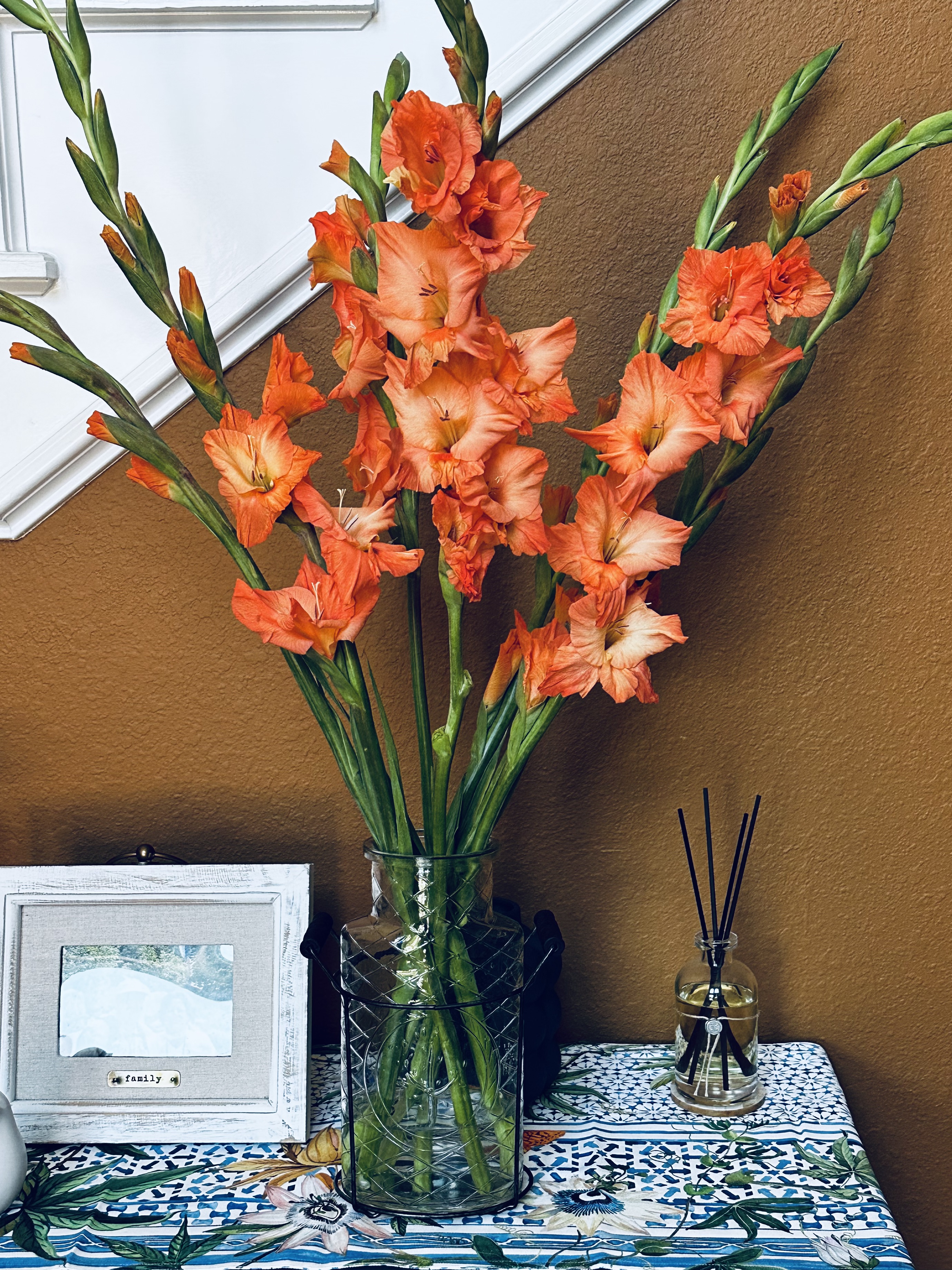
Wordless Wednesday-Orange Gladiolas

I’m glad you joined me on Wordless Wednesday and hope to see you soon.

My husband buy me flowers every Sunday and I’m so glad because I love cut flowers. This week he surprised my with the most beautiful orange Gladiolas. I have several photos included in this post.


What is you favorite cut flowers?

Melinda

Celebrate Life · Health and Wellbeing · Men & Womens Health · Moving Forward · Survivor · Trauma

Dating Violence, Stabbed 32 Times and Survives

By MELISSA DOHME CBS NEWS May 30, 2014, 2:15 PM

48 Hours: Dating violence survivor tells story

My name is Melissa Dohme. I am twenty-two years old and I live in Clearwater, Florida. On January 24, 2012, I found myself surrounded with family, covered in bandages, connected to machines, with tubes down my throat, praying and thanking God for saving my life. Hours before this moment I was lying alone in the road outside my home, covered in blood, taking what I thought would be my last breath. I had just been viciously attacked, beaten, and stabbed 32 times. How could this happen?

Looking back three years prior, I remember the exact moment I met this extremely charming, sweet, and funny guy named Robert Burton. When we started dating, everything was perfect, but as I prepared for my high school graduation, things began to change. Robert became extremely jealous, controlling, and short-tempered. I was going through verbal and emotional abuse throughout our two-year relationship without knowing it was abuse. The violence turned physical in the last few months, and by then I felt completely trapped. He would tell me if I was to leave or tell anyone about the abuse, he would kill me, my family, and himself. He began attempting suicide to scare me, but would stop and threaten me with weapons to prove he was serious.

One night, I had the opportunity, courage, and strength to run away and call the police–and finally, Robert was arrested for domestic battery. I felt my shackles of shame and fear release and I could safely end the relationship. After three months of peace and healing, Robert began calling me repeatedly in the middle of the night. He had one request–a hug. He was crying and said, “After all we have been through, I just need closure to move on after the terrible end to our relationship.” He promised to leave me alone forever if I just met him for a hug.

I ignored my intuition and walked outside. I was immediately ambushed. 19 stabs to my head, neck, and face; 13 stabs to my hands and arms in an attempt to defend myself. Two teens nearby heard me screaming, attempted to intervene, and called 911. I owe my life to these two angels. Once Robert believed he succeeded in taking my life, he drove away and attempted suicide. We were both saved that night, and thankfully, he is now serving a life sentence with no chance of parole.

When first responders arrived, I was alert enough to identify myself and him, despite hemorrhaging severely from cut arteries in my neck. I was airlifted to the hospital where I flat-lined four times, received twelve units of blood, suffered a stroke in my cerebellum, had a fractured skull, nose, and jaw with missing teeth, facial paralysis, stabbed larynx, and was severely beaten. It’s a miracle I am still alive today — even the doctors say so. I know God saved me, He couldn’t stop what happened but He did perfectly line up each individual after the attack who had a hand in saving my life.

I believe I was saved to tell my story. Through my faith I learned to accept, forgive, and move on. I realized I was given a voice for those who are too afraid to speak or no longer have the chance because their abuser succeeded in taking their life. I was saved to educate teenagers of the dangers of dating violence. When I was in high school, no one spoke about dating violence and if they had, I firmly believe I would have never gone through what I did. Following that horrific night, I felt the conviction to speak out, become an advocate, and create change. I now work as domestic violence advocate for a local non-profit organization, Hands Across the Bay, where and every day is a blessing.

——-

Melissa is a true hero. She turned the horrific events of that night to a mission to educate others. I would be proud to meet her and thank her. She will save someone’s  life with her efforts. She is courageous, embodies strength and a passion to help. I would hug her for turning the pain into a positive and not living with a resentful heart. Melissa is a special person. Stories like Melissa’s keep my past pain in perspective reminding me how blessed I am. 

Today, Melissa proudly works for Hands Across the Bay as the Executive Director. She feels everyday that she walks into work or steps on a stage to speak about her story, she is fulfilling her life purpose of why she was saved that horrific night. In an unexpected twist of fate, Melissa met and fell in love with Cameron Hill, one of the first responders on her call. Their 2017 wedding and fairytale love has captured the attention of millions across the world. In their free time, the couple enjoys spending time at The Remedy Farm, their backyard alpaca and llama farm in Pasco County.

Warrior

Repost from 2014

Celebrate Life · Health and Wellbeing · Men & Womens Health

What’s Your Mood Today?

On Thursday morning I went to the ER thinking I was having a stroke. Luckily I was not and it was my Esophagus acting up. I had a splitting headache and my chest was hurting and having spasms. Now that I’ve spent a few days recovering and taking new medication, I’m feeling better, much better.

Photo by Natalie on Pexels.com


I feel good!

 Melinda

Celebrate Life · Fun · Mental Health · Travel

Sending a Special Thanks to Uganda, Thailand, Yemen, Turkey and Kazakhstan

Thank you for visiting my blog and allowing me into your life. You’re what makes blogging so special. I have not been to any of the countries but have wanted to go to Uganda for as long as I can remember to see the Silver Back Gorillas. They are amazing animals and I can see their human behaviors. Diane Fosset spent years in Uganda researching the Gorillas and is famous for her research and the relationship she built with them. Now new researchers are picking up where her research left off, I’m so glad there is a new generation dedicated to the survival of the Gorillas and sharing their knowledge.

Melinda

Looking for the Light

Communicating · Health and Wellbeing · Men & Womens Health · Mental Health

Here’s a great video of Ronald Reagan being interviewed by Johnny Carson from 1975

The interview with Jonny Carson was after he was no longer the Governor of California and out of politics. This is not a take-party sides interview, it’s actually the opposite. He talks about common sense on issues that affect all people.

This video is so refreshing, and I look forward to the day someone like Ronald Reagan runs for the President. I try hard to keep out of politics but it’s very hard these days to not have an opinion, most of them strong. Many areas of our government are broken without a fix in sight. I love his candor and attitude and think he was a great President. We need someone like him to run for President because I don’t see anyone fit for the job now. 

Ronald Reagan Interview on The Tonight Show Starring Johnny Carson – 01/03/1975 – Part 02 – Bing video

The most important comment he made was, not verbatim, that people need to look to themselves to solve problems, not the government. Amen, and a cherry on top!!!!!

Melinda

Repost from 2020.

Celebrate Life · Health and Wellbeing · Infectious Diease · Men & Womens Health · Mental Health · Survivor

Here’s What Copilot Said About My Blog

Melinda has been running the Looking for the Light blog for quite some time. She’s passionate about helping others and works hard to be an armchair advocate. The blog has been around for 14 years now, and Melinda has learned a lot during this time. If you’re interested in reading her posts, you can find them on her blog. 🌟📝

Additionally, if you’d like to explore more, she also celebrated 11 years on WordPress with her blog, which originally started as a personal diary called Defining Memories after her Granny passed away. You can find more about that milestone here. 🕊️

Besides her reflections on the grieving process in her early blog called Defining MemoriesMelinda covers a variety of topics in her Looking for the Light blog. Some of these include:

  1. Mental Health: Melinda shares insights, personal experiences, and resources related to mental health. Her posts aim to raise awareness and provide support for those navigating mental health challenges1.
  2. Life Lessons and Inspiration: You’ll find uplifting content, life lessons, and inspirational stories that resonate with readers. Melinda’s writing encourages positivity and growth.
  3. Advocacy and Awareness: She advocates for causes she’s passionate about, such as child abuse preventiondomestic violence awareness, and human trafficking prevention. Her blog serves as a platform to spread awareness and promote change.
  4. Survivor Stories: Melinda shares stories of resilience and survival. These narratives highlight the strength of individuals who have overcome adversity.
  5. Creativity and Art: She explores creativity, art therapy, and the healing power of artistic expression. Expect posts related to photography, poetry, and other forms of creative expression.

Feel free to explore her blog and discover more fascinating content! 😊📝

Melinda began her blogging journey over 14 years ago when her blog was called Defining Memories. It served as a personal diary during her grieving process after her Granny’s passing. Over time, her blog evolved into Looking for the Light, where she shares insights, experiences, and advocacy on various topics. Melinda’s resilience shines through her posts, especially considering her health challenges, including Lyme diseasefibromyalgiacognitive dysfunction, and dementia1. She continues to inspire others, even amidst her own struggles. 🌟📝

Additionally, she has contributed to the Invisible Project: Migraine Third Edition, shedding light on life with pain and advocating for better treatment options and research for headache diseases2Melinda also highlights other bloggers, such as Creation of a Beautiful Life, emphasizing self-love, self-care, and pathways to happiness3. 🌿💡

It’s so interesting how AI pulls the information together. I could not have written this about myself. The Survivor Stories is from my blog Survivors Blog Here which I closed last year. I hope you enjoy the run down. 

Melinda

Celebrate Life · Health and Wellbeing · Mental Health · Self-Care

Things I’m Loving Personal Care For Women

Here are a few products I’m loving with right now. I hope you find a product to add to your household or self-care routine. The list may also give you ideas for a surprise for friends, and family. Most products are found on Amazon. I’m not an Amazon Affiliate and make no commission off the links and the links take you directly to Amazon.


Dura Avocado Superfood Spray Oil

  • Avocado Lotion – Avocado Spray Lotion provides moisturizing body lotion in a unique no-touch spray format. Made with nourishing coconut oil, this hydrating formula absorbs in seconds, leaves no greasy feeling and continues working for 48 hours.
  • Spray On Lotion – Comes in a convenient spray on bottle that allows for hands free application. Perfect for travel and those hard-to-reach spots. It couldn’t be more simple, just spray to apply! The lotion spray absorbs in seconds!

Visit the Duru Store

Body Glide For Her Anti-Chaff Balm

  • Additional Ingredients To Help Hydrate Skin And Retain Moisture. Rich In Vitamins A, B, E, And F
  • Apply Before You Put On Clothes, On Inner Thighs, Around (Sports) Bra, Wherever Skin Is Sensitive To Rubbing
  • Made With Allergen Free, Plant-Derived Ingredients. Vegan Approved, Never Tested On Animals. Child Safe
  • Effective And Longlasting For Daily Use In Demanding Conditions. No Petroleum, Lanolin Or Mineral Oils

Visit the BodyGlide Store

Weleda Skin Food Light Nourishing Cream

  • INTENSIVELY HYDRATES DRY SKIN: the ultimate moisturizer for dry, rough skin, this rich, botanical formula transforms skin to appear more luminous
  • MAXIMUM COVERAGE: just a small dab can nurture skin, ensuring every part of your body is hydrated and moisturized

Visit the Weleda Store

SGM Silk Mulberry Silk Pillow Cases

Mulberry Silk Pillowcase for Hair and Skin, 22 Momme Natural Silk Pillow Case.

  • Hypoallergenic and Gentle: Made from high-quality, hypoallergenic silk, pillowcases are gentle on all skin types and free from harsh chemicals and dyes.
  • SGMSILK’s silk pillowcases can alleviate hair tangling and reduce facial creases, which can help protect hair and skin health over time.
  • The soft and breathable silk material of SGMSILK’s pillowcases can help regulate body temperature, reduce sweating, and promote more restful sleep.

I love this pillowcase, they keep my hair in place and wick the oil off my face and hair. Amazon has had them on sale for anywhere between 45-50% off and I stocked up. I have not seen them on sale before but the regular price is very affordable at $21-$28 regular price. I wash mine in the washing machine and dry them, just take them out of the dryer right away or they will wrinkle. 

Visit the SGMSILK Store

Chemo Cold Therapy Socks & Hand Ice Pack Gloves

  • Best Gifts for Chemo Patients: Contains 1 pair of chemo ice gloves and 1 pair of cooling socks. The 280 GSM thickness cold socks come with 6 reusable gel ice packs. While the hand ice pack gloves comes with 4 gel cold pack. Professional chemo gloves and socks for chemotherapy neuropathy patients or those with arthritis, hand injuries, carpal tunnel, foot pain, plantar fasciitis and inflammation from hard work.
  • Ice Socks for Swollen Feet: Cold socks for chemotherapy neuropathy perfectly wrap your entire foot, ensuring adequate cold treatment to relieve foot pain, hot feet, foot fatigue, plantar fasciitis, Achilles tendon tendinitis, arthritis pain, sprain or plantar strain caused by inflammation and swelling, or reduce the swelling during pregnancy.
  • Ice Gloves for Arthritis Hands: Cold mittens for chemotherapy with dual-layer design for comprehensive protection to hands during cryotherapy. The cold gloves for chemotherapy neuropathy deliver soothing cold therapy to the hands to relieve hand, wrist and carpal tunnel pain, rheumatoid arthritis, tendinitis, inflammation and swelling caused by heavy work or during pregnancy. 

I use the gloves every night before going to bed, they make my hands feel so good in the morning. They also help with my Carpal Tunnel pain.

Visit the RelaxCoo Store

Dr. Ohhira’s Probiotics

  • HIGHEST QUALITY PLANT-BASED PROBIOTICS that are naturally fermented for three years with all-natural ingredients and 12 different strains of friendly bacteria. Not grown in a lab with a single culture medium, Dr. Ohhira’s process simulates the environment in the human gut. Natural fruits and vegetables are added seasonally to feed the bacteria which the bacteria process and the result at the end of 3 years is strong and effective probiotics and metabolites, what we call postbiotic metabolites.
  • THE DR. OHHIRA’S ORIGINAL PROBIOTIC capsule contains prebiotics (the fruits and vegetables) with strong and effective probiotic bacteria (12 strains) and postbiotic metabolites that the probiotic bacteria have been producing during three years of fermentation, including vitamins, amino acids, short-chain fatty acids (SCFAs), immune system-enhancing compounds, detoxifying agents and many other beneficial substances which support digestive function, whole health and improve the pH of your colon.

Visit the Essential Formulas Store

FOMIN Travel Deodorant Wipes

  • SAY GOODBYE TO SWEAT & ODOR: Our mini deodorant wipes for women and men are your go-to armpit wipes and body wipes when it comes to removing traces of unwanted sweat and bacteria. Stay confidently fresh anytime, no matter where life takes you!
  • TRAVEL-SIZED UNDERARM WIPES: Our handy travel deodorant wipes are individually wrapped and have been designed to be 100% biodegradable. These sweat wipes can be carried in a purse, wallet, gym bag, or conveniently placed in the car compartment.
  • CLEAN AND CONSCIOUS WIPES: Through our partnership with Plastic Bank, we are able to save 12 plastic bottles from reaching our oceans with every fomin product sold. We are also TUV-Compostable Certified, Leaping Bunny Certified, & OEKO-TEX Certified.

Visit the FOMIN Store

Ryka women’s Echo Knit Sneaker

  • PERFORMANCE TECH: RE-ZORB LITE for lightweight impact protection + shock absorption
  • MADE FOR WOMEN FIT: Designed for a woman’s unique foot shape, muscle movement, and build with a narrower heel, roomier toe, and softer foot cushioning
  • MATERIALS: Soft ribbed knit + Padded heel collar for extra cushioning
  • CLOSURE: Slip-on fit with stretch topline for extra flexibility + front and back pull tabs for easy on/off

Visit the Ryka Store

Melinda

Celebrate Life · Family · Health and Wellbeing · Men & Womens Health · Self-Care

July Awareness Days

It’s fascinating how the months were named and when. I didn’t learn this in high school History class. 

When Julius Caesar became Pontifex Maximus, he reformed the Roman calendar so that the 12 months were based on Earth’s revolutions around the Sun. It was a solar calendar, as we have today. January and February were moved to the front of the year, and leap years were introduced to keep the calendar year lined up with the solar year.

Fragile X Month

Frech-American Heratige Month

National Minority Mental Health Month

National Bison Month

Nation Cleft & Craniofacial Month

Sarcoma and Blood Cancer Month

UV Safety Awareness Month

Disability Pride Month

Minority Mental Health Awareness Month

Plastic Free July

Malala Day July 12th

Be Love Day July 16th

International Self-Care July 24th

World Heart Day July 29th

International Tiger Day July 29th

Melinda

Health and Wellbeing · Men & Womens Health · Mental Health · Self-Care

Emotional Stability and Sleep: The Unseen Connection By Guest Blogger My Mind Strength

Sleep is critical for good and physical health, it took me years to understand the impact the lack of sleep caused me. Now I have a bedtime routine that is solid and it includes going to bed for 45 minutes to an hour to relax and clear my head and going to bed at the same time every day. 

——-

How your mood depends on how well you sleep In today’s fast-paced world, sleep often gets overlooked. However, underestimating the power of sleep can lead to serious trouble. Sleep is crucial for our health and well-being, and neglecting it can have far-reaching consequences. Let’s dive into why sleep is so essential and what happens to your … Continue reading

Be sure to check her blog, she is whip-smart, and I’ve learned so much from her posts. 
 
Melinda
Celebrate Life · Fun · Music

#Weekend Music Share-ZZ Top – Gimme All Your Lovin’ (Official Music Video) 

It’s the weekend!!!!!!

I’m glad you joined me this week for another edition of Weekend Music Share.

Have a great weekend!

Melinda

Welcome back to Weekend Music Share, the place where everyone can share their favorite music.

Feel free to use the Weekend Music Share banner in your post, and use the hashtag #WeekendMusicShare on social media so other participants can find your post.

Celebrate Life · Health and Wellbeing · Mental Health

Just Pondering

Hi, I’m glad you stopped by, and I look forward to seeing you soon. 

While it can be easy to describe others without negativity, doing the same about yourself might be challenging. Without overthinking, write down the first 10 positive things about yourself that come to mind, write big and bold.

Photo by Fabian Wiktor on Pexels.com

Melinda

Celebrate Life · Health and Wellbeing · Men & Womens Health · Mental Health · Moving Forward · Trauma

NAMI Texas Advocacy Newsletter June 26, 2024  

Alternate text   
Hello Advocates,  In honor of Pride Month, the NAMI Texas Public Policy Team wanted to take the opportunity to provide some information and resources surrounding the LGBTQ+ community. The History: Pride Month is an annual celebration held throughout the month of June to honor and recognize the LGBTQ+ community and its history, culture, and contributions. It commemorates the Stonewall Riots, a pivotal event in LGBTQ+ history that occurred in June 1969 in New York City, which marked a turning point in the fight for LGBTQ+ rights. A note from NAMI National: “NAMI represents the interests of all people with mental health conditions, yet all people with mental health conditions do not have the same level of access to care and do not receive the same quality of care. Data shows that members of the lesbian, gay, bisexual, transgender, queer, questioning, intersex (LGBTQI+) community are at a higher risk for experiencing mental health conditions and often experience discrimination in health care settings.” You can read more about NAMI National’s stance on policies impacting the LGBTQ+ community here.   Organizations Focused on Providing LGBTQ+ Support and Resources:  The Trevor ProjectThe Trevor Project is a nonprofit organization that provides information, support and crisis intervention for LGBTQ+ young people.  The Trevor Project disseminates a yearly U.S. National Survey on the Mental Health of LGBTQ+ Young People. Fast Facts from the 2024 Survey:290% of LGBTQ+ young people said their well-being was negatively impacted due to recent politics.45% of transgender and nonbinary young people reported that they or their family have considered moving to a different state because of LGBTQ+-related politics and laws.50% of LGBTQ+ young people who wanted mental health care in the past year were not able to get it. The Jed Foundation “The Jed Foundation is a nonprofit that protects emotional health and prevents suicide for our nation’s teens and young adults, giving them the skills and support they need to thrive today…and tomorrow.” The Jed Foundation offers resources including but not limited to, literature reviews, support through online community forums and a Proud and Thriving Framework to develop and strengthen mental health support for LGBTQ+ students across the country.  Links to The Jed Foundation’s Resources and Supports:Proud & Thriving Project Announcement and Executive SummaryJED Queer & Questioning Literature ReviewJED Trans & Nonbinary Literature ReviewWebinar: Introducing the Proud and Thriving Framework to Support the Mental Health and Wellbeing of LGBTQ+ Students By using our voices to advocate for equitable access to mental health care and showing our unwavering support, we can create a welcoming and inclusive environment for all members of the LGBTQ+ community. With gratitude,The NAMI Texas Public Policy Team Sources:1. NAMIResolutionAgainstLGBTQDiscrimination.pdf2. The Trevor Project: 2024 U.S. National Survey on the Mental Health of LGBTQ+ Young People3. The Story of JED | The Jed Foundation
NAMI National’s #Vote4MentalHealth Pledge Mental health impacts nearly all aspects of our lives. And at NAMI, we advocate on a wide range of policy priorities, from health care to criminal justice to housing and beyond. No matter the topic, we know that mental health matters. Your vote in the upcoming elections matters, too. Every elected official – from the president and Congress to county commissioners and city councilmembers – has influence on issues impacting people affected by mental health conditions. That’s why it’s so important to understand how voting impacts mental health. Take the first step: click the following link to pledge to #Vote4MentalHealth this November.  NAMI won’t tell you who to vote for. We encourage you to research candidates on your ballot, decide what issues are most important to you, and cast your vote this election season. Save the Date: 2024 Positive Behavior Management and Support Workshops! The Texas Health and Human Services Commission (HHSC), in conjunction with the University of North Texas, is hosting free two-day Positive Behavior Management and Support (PBMS) and Advanced PBMS workshops in-person at the North Austin Complex on July 16 – 17. Continuing education units will be offered. Registration will open June 14, 2024.  For more information, visit Training Initiatives | Texas Health and Human Services. June 2024 Health and Human Services Reports: Consolidated Reporting of Opioid-Use Disorder Related Expenditures – Fiscal Year 2023 Medicaid Managed Care Oversight and Quality – June 2024 Overview of Medicaid Managed Care Procurement Process – June 2024 Reporting of Waiting Lists for Mental Health Services – May 2024 Annual Report on Federal Community Mental Health Block Grant Expenditures – 2024 HHSC Artificial Intelligence Testimony – June 2024 Annual Report on Federal Substance Use Prevention, Treatment, and Recovery Services Block Grant Energy Savings Program Quarterly Report – Q2 – FY2024 End of Continuous Medicaid Coverage Monthly Enrollment Report to CMS – June 2024 (Excel)Senate 2024 Interim Legislative Charges: Notice of Public Hearing Thursday, September 5, 2024, at 9:00am Senate Finance Committee (E1.036) Mental Health Services and Inpatient Facilities: Monitor the implementation of Senate Bill 30, 88th Legislature, Regular Session, with regard to appropriations made for expanding mental health services and inpatient facilities across the state. Report on the progress of inpatient facility construction projects. Assess and report on the effectiveness of spending on mental health services. You can view the full hearing agenda, hereWednesday, September 18, 2024 Senate Health & Human Services Committee (E1.012) Children’s Mental Health: Review care and services currently available to the growing population of Texas children with high acuity mental and behavioral health needs. Make recommendations to improve access to care and services for these children that will support family preservation and prevent them from entering the child welfare system. Access to Health Care: Evaluate current access to primary and mental health care. Examine whether regulatory and licensing flexibilities could improve access to care, particularly in medically underserved areas of Texas. Make recommendations, if any, to improve access to care while maintaining patient safety. You can view the full hearing agenda, here. You can review the list of Interim Charges in its entirety, hereHouse 2024 Interim Legislative Charges: Notice of Public Hearing Tuesday, July 9, 2024, at 10:00am Youth Health & Safety, Select (E2.026) The committee will meet to hear invited testimony only on the following interim charge: Behavioral Health Services for At-Risk Youth: Evaluate programs and services currently available to children and families that are either involved with, or at high risk for becoming involved with, the foster care and juvenile justice systems. Study the current barriers for accessing community-based behavioral health services for children with intense behavioral health needs, with an emphasis on ensuring that parents do not have to give up custody of children to gain access to services. Electronic public comment:Texas residents who wish to electronically submit comments related to agenda items on this notice without testifying in person can do so until the hearing is adjourned by visiting this webpage.  An additional hearing for this interim charge will be held on July 31, 2024, at which point public testimony can be provided. Wednesday, July 31, 2024, at 10:00am Youth Health & Safety, Select (E2.026)  The committee will meet to hear both invited testimony and public testimony on the following interim charge: Behavioral Health Services for At-Risk Youth: Evaluate programs and services currently available to children and families that are either involved with, or at high risk for becoming involved with, the foster care and juvenile justice systems. Study the current barriers for accessing community-based behavioral health services for children with intense behavioral health needs, with an emphasis on ensuring that parents do not have to give up custody of children to gain access to services. Please note: public testimony will be limited to three minutes You can view the full agenda for the July 7th hearing here.You can view the full agenda for the July 31st hearing here.  You can review the list of Interim Charges in its entirety, herePublic Policy Platform Development Input Our 2025-2026 Public Policy Platform surveys have concluded. Thank you much for your time and input on these important matters! We could not do this work without all of you. Stay tuned for our Public Policy Platform which will be published in the fall.  Breaking Barriers, Busting Stigma: An Infographic Series  NAMI Texas Policy Fellow, Hannah Gill, will be creating a series of infographics highlighting barriers that individuals with intellectual and developmental disabilities (IDDs) face. The following graphic is the fifth in the series.NAMI Texas Conference: Celebrating 40 Years of Hope and HealingEvery year, NAMI Texas hosts an Annual Conference and Awards Celebration. These events bring together individuals living with mental illness, family members, professionals, and the general public to highlight the latest updates in the mental health field, exchange information, and celebrate the year’s successes. With exciting keynotes, informative workshops, a lively exhibit hall, Continuing Education Credit, networking opportunities, and special surprises, the Conference has something for everyone. This year, we are celebrating 40 Years of Hope and Healing. We could not be more excited to be bringing the Conference to West Texas. All Conference events will be held in the heart of bustling downtown El Paso, primarily in the beautiful El Paso Convention Center. There are many nonstop flights to El Paso from major Texas airports. The local Affiliate in the area, NAMI El Paso, is eager to welcome Texans from across the state. We hope you will join us in November for this extra special celebration!  Ticket sales are live! As a thank you to our supporters for helping NAMI Texas have a successful Mental Health Awareness Month, there is a special sale on tickets through June 30th. Buy now to get the best possible deal on tickets! Check out this link to purchase your tickets.  2024 NAMI Texas Annual Conference Call-for-Presentations! All topics related to mental health are welcome, but the Conference Planning Committee has identified the following 4 thematic categories of particular interest: 1.) Children, Youth, & Families, 2.) Underserved Populations, 3.) Criminal Legal System, and 4.) Innovation and Creativity. For further details and to access the form, check out the call-for-presentations webpageThe deadline to submit a workshop proposal is August 2nd, 2024. NAMI SMARTS Classes Grassroots advocacy is about using your voice to influence policymakers and make a difference. Turn your passion and your lived experience into advocacy for mental health with the NAMI Smarts for Advocacy training. NAMI Smarts for Advocacy will enhance your advocacy skills and help you shape a powerful and personal story that will move policymakers. NAMI Smarts for Advocacy gives you step-by-step tools and the hands-on practice you need to feel confident and ready to make a difference. The NAMI Texas Public Policy Team does not currently have any classes scheduled. Be sure to keep an eye on our calendar for forthcoming classes. 
If you have anything you would like to share with NAMI Texas advocates in these emails, please send the information to policy.fellow@namitexas.org

–       Hannah Gill and the NAMI Texas Public Policy Team
Mental Health in the Media KCBD Investigates The Mental Health Crisis: Texas ranks last in access to mental health services“LUBBOCK, Texas (KCBD) – Brittany Simpkins remembers the moment she knew what she was meant to do. “Second semester of undergrad. I took a class in psychology of personality and was completely fascinated,” Simpkins said. Simpkins graduated with a Master of Science in Nursing, and took a job with LifeGift. Simpkins is now the intake director at Oceans Behavioral Hospital in Lubbock. “Watching somebody come in and they are completely at the end of their rope and don’t have any hope, don’t think that it’s going to get any better, walk out with a smile on their face and a hug and, ‘Thank you for saving my life,’ it doesn’t get any better than that,” Simpkins said.” ‘Grateful to be alive’: Programs take pressure off overwhelmed Texas mental health hospitals“When Jonathan Denhart was discharged from the psych ward at Austin Oaks Hospital last year, he was prepared to be back very soon. For more than 40 years, Denhart has cycled through rehabs, sober housing, mental health hospitals and 12-step programs to treat his bipolar and substance use disorders, but nothing worked. As Denhart was about to walk out the door a hospital staff member stopped him and suggested he stop by a place called Austin Clubhouse to try a vocational rehabilitation program.” Williamson County strives to close gaps in access to mental health care “As part of a collaborative effort, Williamson County officials have worked to increase access to mental health care, creating a more streamlined system for individuals experiencing mental distress. The county’s proactive approach prevents or redirects many individuals in the midst of a mental crisis from seeing a jail cell, instead allowing them to receive the appropriate help they need during a critical time.”  Mental health booth installation to come to the Borderland“EL PASO, Texas (KVIA) — El Paso has won a national contest to receive a Hope Booth. A Hope Booth is a mental health installation telephone booth that helps connect people with local mental health services and support. The Hope Booth offers 3-minute interactive experiences to users in need of a pick-me-up. The contest was launched on May 1st. After over a thousand comments, El Paso came out on top.” Former Texas RB Jamaal Charles Opens Up About Battle With Mental Health“AUSTIN — After ending his time on the Forty Acres as one of the best running backs in program history, former Texas Longhorns star Jamaal Charles enjoyed a successful 11-year NFL career after being a part of the historical However, Charles recently admitted that he’s endured some concerning battles with mental health since his retirement from football in 2019.”

NAMI is a highly respected organization with a ton of resources, be sure to check out their page for additional information and the advocacy work they do on Capital Hill. I’m a member of the Texas Chapter and NAMI is one organization I advocate for. It’s an armchair advocate but I do send letters to Texas and the Federal Government. on pressing issues and upcoming Bills.

Melinda

Health and Wellbeing · Men & Womens Health · Tick Borne Illnesses

10 Things You Should Know About New IDSA Guidelines For Lyme Disease

IMPORTANT READ!

Any Lyme Disease policy that does not include a CHRONIC LYME path is worthless. IDSA is the group I’ve spoken out against since being diagnosed. They are a small group of paid consultants and do not support Chronic Lyme Disease. They consult for the CDC and that is why patients are dying. Until the CDC uses factual information, which every health-related department in the American government has, the CDC remains useless to Lyme Disease patients.

———-

The Infectious Diseases Society of America (IDSA) just released its new Lyme guidelines. They are 48 pages long and will take time to digest, but I want to share my initial impressions. These guidelines are in many ways a walk down memory lane – not much has changed – and what has changed has gotten more entrenched.

The guidelines use the GRADE approach to evidence assessment that the National Academy of Science recommends [1]. There are now three sets of Lyme guidelines that use GRADE, including the International Lyme and Associated Diseases Society (ILADS) and the guidelines of NICE (the UK health agency).

The three sets of guidelines vary dramatically in their recommendations of key areas that Lyme patients care about—particularly in their assessment of how to diagnose and treat non-specific symptoms of Lyme disease and whether or not to retreat patients who remain ill.

Along the continuum of allowing for clinical judgment and consideration of patient values, the IDSA guidelines are by far the most restrictive of the three. Both the NICE and ILADS guidelines allow more flexibility in the exercise of clinical judgment and the use of shared medical decision-making between patients and clinicians based on individual circumstances.

The broad curtailment of clinical judgment by the IDSA here means that diagnosis, treatment, and retreatment are highly restricted and individualized care is replaced with a “one-size-fits-all” approach. It also means that for the most part individualized assessment of the risks and benefits for the individual patient have been hijacked by the IDSA, without examining or knowing the patient’s clinical history, circumstances, severity of illness, or values.

Denies persistent infection

Another key difference is that both ILADS and NICE recognize the potential for persistent infection, which the IDSA denies entirely.

To my eyes, the IDSA guidelines preserve deeply held biases of the former guidelines (many of whom are authors here). They also make a mockery of both the spirit and the rigor that GRADE is intended to instill in the guideline process. The goal does not appear to be to help patients get well, but rather to “game the system” and continue a pattern of systematically denying diagnosis and treatment to patients.

Process irregularities abound. They include using token patients, giving lip-service only to shared medical decision-making, inflating the importance of evidence base where it suits the authors, and using treatment outcomes the authors value instead of outcomes that are important to patients.

These guidelines deny care wherever they can. They do this by making it harder to be diagnosed and treated, by limiting treatment duration, by curtailing retreatment for most patients all together, and by not providing for the exercise of clinical judgment or shared medical decision-making in either the diagnosis or treatment of Lyme disease.

They have abandoned the use of the term Post Treatment Lyme Disease Syndrome (PTLDS) –at least in the guidelines. The importance of this is unknown.

The “chronic Lyme disease” section seems more designed to address legal concerns than patient care. (The IDSA has been subject to two legal actions for anti-competitive conduct.)

Some of the key points from the guidelines are highlighted below.

1. There was no representation of chronic Lyme patients on the guideline panel.

The IDSA says that the panel had “three patient representatives.” But the IDSA will not tell us their names. Representation needs to authentically reflect the patient community interests. It needs to be meaningful rather than token.

This means that a patient who is claimed to be a representative must be empowered to speak for the community with some form of accountability to the community. Anonymous patients cannot represent chronic Lyme disease patients because the community doesn’t even know who they are or if they are capable to fill the role—and there’s no way for them to be accountable. This is simply a form of tokenism [2].

2. The guidelines do not provide for shared-medical decision-making despite their lip service to the contrary.

Shared decision making in its broadest form is a process by which the clinician ensures that the voice of the patient is represented in the healthcare decision that is being made. It comes into play when more than one treatment option exists. Prostate cancer is the example most often given where patients can choose among four options that have different risk/benefit trade-offs.

In Lyme disease, the treatment options offered by the International Lyme and Associated Diseases Societies (ILADS) differ from those of the IDSA. Patients are entitled to know this. According to Professor Dorothy Fried at Yale, “virtually all patients . . . want to know . .. what other options are available” [3]. Yet, the IDSA guidelines do not even mention the ILADS guidelines.

I could not find any recommendations where the guidelines recommend that the clinician and patient discuss the risks and benefits of a treatment to determine the best course of action (which is what shared decision making requires). Shared-medical decision making does not require that IDSA physicians provide the treatment to the patient if they do not believe the treatment will be effective, but patients should be advised that there are different treatment approaches so that the patient can seek out a physician who might provide that treatment.

3. The IDSA guidelines do not use treatment outcomes important to patients as GRADE requires.

Under the GRADE evaluation scheme which the IDSA says it has used,, the ranking of outcomes is supposed to be based on the importance patients place on them [4]. Instead, the IDSA guidelines say that potential adverse events are more important than potential treatment benefits. Obviously, patients who are very ill or disabled would disagree. Both the ILADS and the NICE guidelines recognize this and rank potential treatment benefits first as patients would.

To understand the significance of this, you need to realize that all medical interventions have potential side effects or adverse effects. In addition, no treatments are universally effective. Whenever the evidence of treatment benefits was uncertain, the IDSA used ranking of adverse events above treatment benefits to deny treatment.

Usually, the decision of whether the risks of treatment outweigh the benefits is made by the patient and their clinician in the context of shared medical decision-making based on individual circumstances.  For example, how ill is the patient, have they been responsive to treatment before, how severe are the side effects for a particular treatment, how frequent are they, is this a patient who commonly has side effects or not? The IDSA guidelines do not recognize outcomes that are important to patients or provide for individualized care in the context of shared medical decision-making.

4. The IDSA guidelines set the evidence bar too high by requiring that studies be done before any treatment is appropriate.

In a disease that is research-disadvantaged like Lyme disease, that is a bar that cannot be overcome in the lifetime of sick patients. Clinical trials take a long time and no trials for the treatment of chronic Lyme disease have been funded by the NIH in over 20 years. When the IDSA guidelines say “there is no convincing evidence” or “no causal association has been found” or trials have not been done, they are saying that the needs of patient for care today should be deferred until clinical trials are conducted.

But patients can’t wait.  As Deborah Zarin, director of ClinicalTrials.gov. at the National Institute of Health explains:

“Clinical decisions are driven by the current reality. You can’t say to someone who has a medical need right then and there, ‘hold on we’ll do more clinical trials and get back to you in two years.’ You have to make decisions based on the best information available [4].”

The IDSA guidelines are also using average treatment effects from studies. That means that patients on average have to benefit. This approach does not work if patients vary in their response to treatment. For example, if one patient improves and another does not, on average there is no benefit even though one patient has improved. Precision medicine and individualized care recognize this and look to whether subgroups of patients improved. The NIH trials were too small to allow subgroup analysis. Studies of MyLymeData patients have shown that patients vary widely in their response to treatment and that a substantial portion improve with treatment [5,6].

5. Patients who don’t present with objective signs of early Lyme (an erythema migrans rash or Bell’s palsy) will have a difficult time getting diagnosed.

There is no diagnostic approach provided for patients who do not present with an EM rash. Although the guidelines seem to acknowledge that early Lyme can occur in the form of a flu-like illness without a rash, it is not separately addressed, and the guidelines do not provide a means of diagnosing it.

Nor are clinicians told how to diagnose any other form of early Lyme disease that manifests as non-specific symptoms. For example, the guidelines could say when clinicians have a high clinical suspicion of Lyme disease, they should test. But they do not say this. Some might argue that these diagnostic gaps will be filled in by clinicians in the trenches, I think it is more that patients without an EM rash will not be diagnosed.

6. Patients who don’t present with objective signs of late Lyme disease or neuroborreliosis will have a difficult time getting diagnosed.

The guidelines strongly recommend against “routine” testing for disease in patients with:

  • Typical amyotrophic lateral sclerosis (ALS),
  • Relapsing-remitting multiple sclerosis (MS),
  • Parkinson’s disease,
  • Dementia, or cognitive decline,
  • New-onset seizures,
  • Psychiatric illness, and
  • Children with developmental disorders.

One could argue that recommending against “routine” testing does not prohibit testing where clinical impressions or patient history suggest Lyme disease. But it seems more likely to be interpreted by rushed clinicians as a recommendation that they should not test these patients at all.

Frankly, it is also hard for me to see why we would not routinely screen these patients for a disease that may be treatable, like Lyme disease. Many of these diseases are progressive neurologic diseases with no hope of cure. All of these conditions involve treatments. Some treatments are merely palliative (designed to treat symptoms rather than the cause) and often must be taken for life. All treatments have side effects – most far more serious than the side effects associated with oral antibiotics. For example, many anti-depressants have side effects of weight gain or sexual impairment. This is not to say that anti-depressant should not be taken, but let’s not say we should not test these patients for Lyme disease.

They also strongly recommend against testing for Lyme disease in patients with non-specific neurological symptoms in the absence of a history of other clinical or epidemiologic support for the diagnosis of Lyme disease. It’s hard to say what the effect of this recommendation will be. The guidelines do not provide any basis for supporting a diagnosis that does not have objective manifestations (e.g. EM rash) and epidemiologic support is largely restricted to endemic areas that are mainly on the east coast.

In MyLymeData, 70% of patients report that they were not diagnosed until late stage (six months or more after symptoms onset). Symptoms reported by most of these patients are non-specific neurologic symptoms. Most of these patients are not on the east coast. I think these patients will have a tough time getting diagnosed under the new IDSA guidelines.

7. Retreatment for early and late Lyme disease is very restrictive generally because the possibility of persistence of infection is denied across the board.

The IDSA guidelines regard all animal studies as “highly heterogeneous and hav[ing] limited generalizability to natural human infection.” The exclusion of all animal evidence (which is widely recognized in other diseases) raises the evidence bar too high because human evidence generally is not obtainable. The fact is that persistent infection has been demonstrated in humans who are undergoing other medical procedures where a biopsy or tissue collection is required [4]. But these types of invasive procedures cannot be used commonly. Clinical trials targeted toward finding answers would be both not feasible and unethical. Limited retreatment exceptions are made for arthritis, meningitis, or neuropathy. As noted earlier, both the NICE and the ILADS guidelines accept the possibility of persistent infection.

8. The treatment for early EM rash or flu-like symptoms is limited to 10-14 days of treatment.

In the absence of objective disease activity such as arthritis, meningitis, or neuropathy, no retreatment is permitted for patients who do not recover. The recommendation for no treatment here is inconsistent with underlying treatment trials the authors are relying on. The treatment trials for early Lyme disease commonly retreated patients who remained ill [4].

9. Chronic Lyme disease and persistent infection do not exist or at least should not be treated. 

The reasoning for the section of the guidelines devoted to chronic Lyme disease is convoluted, hard to follow, and tortuous to read. It seems designed to address legal concerns rather than patient care. I will try to break it down piece-by-piece based on my read for you.

First, the IDSA guidelines state that there is no definition for chronic Lyme disease. This is not true as both ILADS and Aucott’s group have peer-reviewed publications that include the definition of chronic Lyme disease (essentially, patients who remain ill six or more months following treatment) [5,6] .

Second, the IDSA incorrectly characterize the four NIH trials as showing no treatment benefit when they had mixed results [7]. Some of the trials showed no benefit while others showed benefit in certain domains. Two of the trials showed a benefit on improved fatigue. They refer to these trials as being prolonged treatment, when they were actually limited to 90 days and cannot apply to longer treatments.

They then say that there have been no high-quality studies of patients who have heterogeneous symptoms. This may be true because those patients were excluded from the clinical trials as part of the selection process.

Next, they say that patients with “heterogenous symptoms” should be evaluated and alternative diagnosis should be ruled out. But they then recommend against treating these patients because a) “prolonged” treatments don’t work for patients with persistent symptoms, and b) “by definition, these patients often have no compelling clinical or laboratory support for the diagnosis of ongoing or antecedent Lyme disease.”

That’s an awful lot of mental gymnastics to say don’t treat. And the reason given seems to be “because I said so.” Almost all patients in MyLymeData have clinical support for their diagnosis and most report supporting lab tests.

They proceed to identify as the sole evidence gap, the possibility that patients have “medically unexplained symptoms”—which is code for we don’t know, we don’t care, and not my problem.

10. The guidelines make no recommendation for or against the use of antibiotics to treat STARI—specifically say “no recommendation; knowledge gap.”

Patients with a rash in areas where both STARI and Lyme disease exist may be treated clinically for the rash. The fact that there is “no recommendation; knowledge gap” for how to provide for STARI generally may mean that these is room for clinical judgment even when there is no geographic overlap with Lyme disease.

Patients had hoped that the IDSA would take the GRADE guideline process seriously and address the extensive comments that were submitted to an earlier glimpse of the IDSA draft. However, these comments it seems were simply ignored. Instead the guidelines do not address patient concerns or improve their outcomes. While most of healthcare is embracing measures that matter to clinicians and patients, with these guidelines the IDSA continues to turn a blind eye to the plight of Lyme disease patients.

Lorraine Johnson, JD, MBA, is Chief Executive Officer of LymeDisease.org and Principal Investigator of MyLymeData. You can contact her at lbjohnson@lymedisease.org. On Twitter, follow her @lymepolicywonk. 

References

  1. National Academy of Medicine. Clinical Practice Guidelines We Can Trust. National Academies Press: Washington, DC, 2011; p 217.
  2. Johnson, L.; Smalley, J. Engaging the Patient: Patient-Centered Research; Hall, K., Vogel, A., Croyle, R., Eds.; Springer: Switzerland, 2019; Vol. Chapter 10, pp. 507.
  3. Kashef, Z. To treat or not to treat: making the tough medical decisions with patients. YaleNews Jan. 13, 2016https://news.yale.edu/2016/01/13/treat-or-not-treat-making-tough-medical-decisions-patients.
  4. Cameron, D.J.; Johnson, L.B.; Maloney, E.L. Evidence assessments and guideline recommendations in Lyme disease: the clinical management of known tick bites, erythema migrans rashes and persistent disease. Expert Review Anti-Infective Therapy 201412, 1103-1135, doi:10.1586/14787210.2014.940900 http://www.ncbi.nlm.nih.gov/pubmed/25077519.
  5. Shor, S.; Green, C.; Szantyr, B.; Phillips, S.; Liegner, K.; Burrascano, J.J., Jr.; Bransfield, R.; Maloney, E.L. Chronic Lyme Disease: An Evidence-Based Definition by the ILADS Working Group. . Antibiotics 2019https://doi.org/10.3390/antibiotics8040269.
  6. Rebman, A.W.; Aucott, J.N. Post-treatment Lyme Disease as a Model for Persistent Symptoms in Lyme Disease. Front Med (Lausanne) 20207, 57, doi:10.3389/fmed.2020.00057 https://www.ncbi.nlm.nih.gov/pubmed/32161761
  7. Fallon, B.A.; Petkova, E.; Keilp, J.; Britton, C. A reappraisal of the U.S. clinical trials of Post-Treatment Lyme Disease Syndrome. Open Neurology Journal 20126, 79-87, doi:10.2174/1874205X01206010079 http://benthamscience.com/open/toneuj/articles/V006/SI0078TONEUJ/79TONEUJ.pdf.

These new policies muddy the waters even more for Lyme Disease patients. When seeking out a Lyme Liturate Doctor, ask what guidelines they follow, it’s critical to your care and your life depends on it!

Melinda

 

Art · Blogging · Celebrate Life · Fun · Travel

Sending A Special Thanks To Mali, Russia, Brazil, Spain And Greece For Visiting

I love to see what countries visit my blog, it actually hits my travel desire. Each week I look further into countries I’m not familiar with and this week I took a closer look at Mali. Mali, is a landlocked country of western Africa, mostly in the Saharan and Sahelian regions. Mali is largely flat and arid. The Niger River flows through its interior, functioning as the main trading and transport artery in the country. Sections of the river flood periodically, providing much-needed fertile agricultural soil along its banks as well as creating pasture for livestock. Although Mali is one of the largest countries in Africa, it has a relatively small population, which is largely centered along the Niger River. Agriculture is the dominant economic sector in the country, with cotton production, cattle and camel herding, and fishing among the major activities.

St Petersburg, Russia will always have a special place in my heart, I loved the city’s deep history, the Cathedrals, the architecture, and above all the kindness of the people. I knew three words in Russian and the people who didn’t speak English, many of them, tried so hard to help me, taking extra time when I was lost or not able to find a museum I really wanted to see. The history of St. Petersburg is fascinating and at one time it served as the capital of Russia. The Hermitage Palace and museum is something everyone needs to see, it is mind-blowing and houses not only fine art but the greatest collection of Faberge Eggs

I visited Madrid, Spain in 1988 and it was my first international trip. I keep a photo of a couple performing with string puppets in the square on my bookcase. We made the trip to Toledo, A UNESCO World Heritage Site, which includes the Cathedral of Toledo and the Alcázar fortress. The Cathedral was reportedly built in the Middle Ages and is one of Spain’s most important Gothic structures. At the same time, the Alcázar fortress has played a significant role in Spanish history, serving as a royal palace, military fortification, and now a museum. The fort was a trip back in time, on the huge wooden doors you could see where it was hit with cannonballs. The architecture was undescribable and being on the river made it even more special. The locals were welcoming and tried to help me so hard when we were lost and I needed to go to the bathroom. Try to speak that in body language. The exquisite handmade Ladro porcelain pieces are made in Spain and I found a special one to bring my Granny. We also found a beautiful black plate with gold detailing, all made by hand.  

Greece is high on my bucket list, with its deep history, magnificent blue water, cathedrals capped in blue, crazy uphill walking, and white-covered buildings and houses and the mob. I’ve read that mob still runs parts of the country although I bet they would prefer I not mention. Greece is also known for gold, when traveling you can pick up gold jewelry for a fraction of the price in America. There a plenty of shops to choose from and the designs are creative and playful. That’s just the tip of the iceberg that the Greek Islands are.  

Brazil is on my travel bucket list, the country has so much to offer. 

Statue of Peter the Great in St. Petersburg Square

Thank you so much for stopping by. 

Melinda

References:

https://www.britannica.com/place/Mali

https://en.wikipedia.org/wiki/History_of_Saint_Petersburg#1945–1970s

https://www.britannica.com/place/Madrid

https://www.britannica.com/place/Brazil

https://www.britannica.com/place/Greece

Family · Health and Wellbeing · Men & Womens Health · Self-Care

Why Does A Pain Relief Cream Burn?

I have been a proud Affiliate of Aromalief for many years and have written several reviews about their products. This post contains affiliate links that don’t cost you more, take you directly to their site, and help keep my coffee habit supplied.

OUR STORY

Hi, I’m Annabel! Welcome to Aromalief, a brand dedicated to helping women like you beat pain. I started Aromalief in 2018 to help my mom who was in pain. After wasting money on several products, I decided that my mom deserved better. 

With the help of a naturopathic chemist, we developed formulas that are clean, easy to apply and smell like rich essential oils. The experience of using Aromalief is like applying a luxurious body cream and not your grandfather’s pain reliever. 

Thousands of women across the US love and trust Aromalief and I am so proud of all the people who work at our small business (including my mom). 

– Annabel founder/daughter/mom

——-

Posted by Annabel Mendez on June 24, 2024

When you’re in pain, reaching for a pain relief cream can feel like a quick and easy solution. However, many people are familiar with the uncomfortable burning sensation that often accompanies the use of traditional pain relief creams. Understanding why this happens and how some products, like Aromalief, differ can help you make a more informed choice for your pain management needs.

Sensitive Skin

WHY DOES A PAIN RELIEF CREAM BURN?

1. ACTIVE INGREDIENTS

Many traditional pain relief creams contain ingredients like menthol, camphor, or capsaicin. These substances are known as counterirritants, meaning they create a mild irritation or sensation (like burning or cooling) on the skin to distract pain receptors from deeper pain.

  • Menthol and Camphor: These ingredients produce a cooling effect that can be intense, sometimes causing a burning sensation on sensitive skin.
  • Capsaicin: Derived from chili peppers, capsaicin works by depleting a neurotransmitter called Substance P, which is responsible for sending pain signals to the brain. The initial effect, however, can be a strong burning feeling as the nerve endings react.

2. SKIN SENSITIVITY

Individuals with sensitive skin or certain skin conditions like diabetes may experience heightened reactions to these active ingredients, resulting in a more pronounced burning sensation.

3. APPLICATION AMOUNT

Using too much cream or applying it too frequently can increase the intensity of the burning sensation. The concentration of active ingredients in the cream can lead to an overpowering effect if not used as directed. Some creams can have up to 25% active ingredients and even though this may sound like a good idea, the burning sensation may prove to be worse than the actual pain.

HOW AROMALIEF IS DIFFERENT

Aromalief has developed a premium formula that addresses pain relief without the intense burning sensation commonly associated with traditional creams. Our unique blend of active ingredients, nutrients, and botanicals are not found in other creams. When it comes to getting relief without the burning sensation here’s how:

Why Is Aromalief Different

1. SLOW RELEASE COOLING CRYSTALS

Aromalief incorporates slow-release cooling crystals in its formula. These crystals provide a gradual and gentle cooling effect, rather than an immediate and intense one. This slow release mechanism ensures sustained pain relief without the harsh burning feeling. Most companies don’t use this technology because it is 20x more expensive than traditional menthol or camphor. 

2. ALOE VERA

Aloe vera is well-known for its soothing and healing properties. It helps to calm irritated skin and reduce inflammation. In Aromalief, aloe vera works synergistically with the cooling crystals to enhance the overall soothing effect, making the cream more comfortable to use even on sensitive skin.

3. ALMOND OIL

Almond oil is a natural emollient that helps to moisturize and nourish the skin. It provides a protective barrier that not only enhances the skin’s hydration but also helps to minimize any potential irritation from the active ingredients. This makes Aromalief a gentler option for those with delicate skin.

Aromalief Vegan Pain Relief Cream

THE BENEFITS OF CHOOSING AROMALIEF

  • Gentle Yet Effective: Aromalief’s balance of slow-release cooling crystals, aloe vera, and almond oil offers effective pain relief without the discomfort of a burning sensation.
  • Skin-Friendly: The natural ingredients in Aromalief are designed to be kind to your skin, providing hydration and soothing effects along with pain relief.
  • Sustained Relief: The slow-release formula ensures that the cooling effect is long-lasting, providing extended relief from pain without the need for frequent reapplication.

CONCLUSION

While traditional pain relief creams can offer quick relief, the burning sensation they often cause can be a significant downside. Aromalief’s innovative approach with slow-release cooling crystals, aloe vera, and almond oil provides a more comfortable and skin-friendly alternative. By choosing Aromalief, you can experience effective pain relief without the burn, making it an ideal choice for those seeking both comfort and efficacy in their pain management solutions.

This blog post is not intended to provide medical advice. Please consult a physician.

I love the Hemp Pain Relief hand cream in Lavender and Orange the best.

Melinda

Celebrate Life · Health and Wellbeing · Men & Womens Health · Mental Health · Self-Care

Can You Be Too Kind?

Kindness without self-care creates burnout. And it’s common among people in caregiving professions like, doctors and nurses who continuously take on the emotional strain of others. But burnout doesn’t happen because you use up too many empathy or kindness chips. Usually, people burn out when they don’t have time for self-care practices that let them recharge and focus on their mental well-being.

Here are five helpful tips we often fail to do:

Take breaks

Nap

Schedule vacation days and truly disconnect

Spend time outside

Make time for wellness activities like meditation, exercise, or a hobby.

From a Prevention Magazine in December 2021

All great points we can all use to take care of our mental well-being.

Melinda

Blogging · Celebrate Life · Fun · Health and Wellbeing · Mental Health · Moving Forward

WordPress 15th Anniversary

Has it been 15 years? My original blog on WordPress was Defining Memories which I opened in 2005 and closed when I started Looking for the Light in 2014, that date is in question now. My archives show posts for Looking for the Light starting in 2014 however there are a few extra archives from Defining Memories.

During 2012-2013 I contributed to a toxic collaborative blog until I came to my senses and got the out of Sesspool. The blog may have been toxic but I met several people who are still a part of my life. Gavin from Noir is a dear friend and we talk almost every week, Gavin is an amazing human being and an excellent photographer. Daniel from Hyperion Sky is the best storyteller I’ve ever met and maybe read. He is currently supporting a family member with dementia and doesn’t post often and Army of Angles, she is not blogging at the moment.

In 2014 I was a co-founder of Survivors Blog Here, it was a collaborative site with many talented bloggers from all walks of life. It was all-consuming but it changed my life. It was closed and deleted this year.

The math doesn’t add up but close enough for me.

15 Year Anniversary Achievement

Happy Anniversary with WordPress.com!

You registered on WordPress.com 15 years ago.

Thanks for flying with us. Keep up the good blogging.

Thanks to the support of many, I’m turning 61 years old and haven’t felt this good in years and I’m just getting started. Yes, I’ve slowed down for ongoing health issues and my mental health. Today I put my mental health at the top of the list, every day.

It’s been a wild ride filled with life’s journey, good and bad. Thank you for visiting my blog, following, and commenting, you’ve filled my life with joy.

To the special bloggers in my life, there are no words only gratitude. You’ve helped me grow, soften, and express myself, you’ve mentored me and best of all is the connection with you. :)

Melinda