Men & Womens Health

Help me if you can, I’m feeling down *Do You Like New Theme?*

I continue to search for the perfect Theme. One that reflects me and the Advocacy work I support.  I feel this is to busy with the the three column layout and may be difficult to navigate.

Please give me feedback. I’m leaning towards the old theme or a new one. Help!

BACK TO PREVIOS THEME OR THIS THEME?  

ANY IDEAS?

Which Path to Take?
Which path to take?
Men & Womens Health

I’m Mourning and She’s Still Alive

Originally posted February 27, 2006

My grandmother passed away in 2005 from Dementia brought on by two strokes. I’m reposting for caregivers with a loved one with Alzheimer’s or Dementia. For those who have not been a caregiver, the post may help you down the road. Caregivers commit every ounce of energy to keep their loved one comfortable, take care of yourself. Your body can physically break down. Due to her lack of memory it’s hard to take an eye off her, 24/7. I was fortunate we had hospice care, allowing Gramps to play domino’s everyday until the last months. He was strong in accepting his life changed dramatically. He never complained.

A month ago my grandmother fell and broke her hip, a bad situation for any 85-year-old. Made worse with the memory loss. The hospital had the worst staff.. She’s home after a week in the hospital and another in a nursing home. That was hard on me, thinking about leaving her there and the response when Gramps wasn’t at her side. I took the grave shift and slept on floor next to her.

My mind runs to at high level by switching to what I call “caregiver mode”. I can manage tons of information, what drugs each takes, scheduling appointments, discuss test results or anything needed to take care of two people who are dying and “switch back” when at home.

Before the fall, my grandmother knew me and though our conversations were limited, I enjoyed sharing memories with her. She really enjoyed a photo book I put together that had many photos of her beloved dog, Blackie. Thinking about Blackie always made her smile and even though he died twenty years ago she remembered like it was today.

Driving to their house one day, tears rolling down my face. I could not stop crying. It took a few minutes to figure out what was causing so much pain. I switched from caregiver to granddaughter. My grandmother no longer knew me. We would not share our memories again. I knew the day would come and prayed our memories calmed her in some way. Seeing her memory fade by the days was harder than I imagined. I’m blessed being a caregiver to both grandparents

I”m miss my granny and think of her several times a day.

Xx  M

Men & Womens Health

Harvard School of Medicine Research on Schizophrenia

The research from Harvard School of Medicine sheds light on reseach in the area of Schizophrenia. When we or a loved one is affected by Schizophphrenia, you look for answers, wanting to know how the discovery can help in the future. I hope we can take several steps forward based on the research.  XxM

Biological Origin of Schizophrenia

By PAUL GOLDSMITHJanuary 27, 2016

The risk of schizophrenia increases if a person inherits specific variants in a gene related to “synaptic pruning”—the elimination of connections between neurons—according to a study from Harvard Medical School, the Broad Institute and Boston Children’s Hospital. The findings were based on genetic analysis of nearly 65,000 people.

The study represents the first time that the origin of this psychiatric disease has been causally linked to specific gene variants and a biological process.

It also helps explain two decades-old observations: synaptic pruning is particularly active during adolescence, which is the typical period of onset for symptoms of schizophrenia, and the brains of schizophrenic patients tend to show fewer connections between neurons.

The gene, complement component 4 (C4), plays a well-known role in the immune system. It has now been shown to also play a key role in brain development and schizophrenia risk. The insight may allow future therapeutic strategies to be directed at the disorder’s roots, rather than just its symptoms.

The study, which appears online Jan. 27 in Nature, was led by HMS researchers at the Broad Institute’s Stanley Center for Psychiatric Research and Boston Children’s. They include senior author Steven McCarroll, HMS associate professor of genetics and director of genetics for the Stanley Center; Beth Stevens, HMS assistant professor of neurology at Boston Children’s and institute member at the Broad; Michael Carroll, HMS professor of pediatrics at Boston Children’s; and first author Aswin Sekar, an MD-PhD student at HMS.

The study has the potential to reinvigorate translational research on a debilitating disease. Schizophrenia afflicts approximately 1 percent people worldwide and is characterized by hallucinations, emotional withdrawal and a decline in cognitive function. These symptoms most frequently begin in patients when they are teenagers or young adults.

“These results show that it is possible to go from genetic data to a new way of thinking about how a disease develops—something that has been greatly needed.”

First described more than 130 years ago, schizophrenia lacks highly effective treatments and has seen few biological or medical breakthroughs over the past half-century.

In the summer of 2014, an international consortium led by researchers at the Stanley Center identified more than 100 regions in the human genome that carry risk factors for schizophrenia.

The newly published study now reports the discovery of the specific gene underlying the strongest of these risk factors and links it to a specific biological process in the brain.

“Since schizophrenia was first described over a century ago, its underlying biology has been a black box, in part because it has been virtually impossible to model the disorder in cells or animals,” said McCarroll. “The human genome is providing a powerful new way in to this disease. Understanding these genetic effects on risk is a way of prying open that black box, peering inside and starting to see actual biological mechanisms.”

“This study marks a crucial turning point in the fight against mental illness,” said Bruce Cuthbert, acting director of the National Institute of Mental Health. “Because the molecular origins of psychiatric diseases are little-understood, efforts by pharmaceutical companies to pursue new therapeutics are few and far between. This study changes the game. Thanks to this genetic breakthrough we can finally see the potential for clinical tests, early detection, new treatments and even prevention.”

The path to discovery

The discovery involved the collection of DNA from more than 100,000 people, detailed analysis of complex genetic variation in more than 65,000 human genomes, development of an innovative analytical strategy, examination of postmortem brain samples from hundreds of people and the use of animal models to show that a protein from the immune system also plays a previously unsuspected role in the brain.

Over the past five years, Stanley Center geneticists and collaborators around the world collected more than 100,000 human DNA samples from 30 different countries to locate regions of the human genome harboring genetic variants that increase the risk of schizophrenia. The strongest signal by far was on chromosome 6, in a region of DNA long associated with infectious disease. This caused some observers to suggest that schizophrenia might be triggered by an infectious agent. But researchers had no idea which of the hundreds of genes in the region was actually responsible or how it acted.

Based on analyses of the genetic data, McCarroll and Sekar focused on a region containing the C4 gene. Unlike most genes, C4 has a high degree of structural variability. Different people have different numbers of copies and different types of the gene.

McCarroll and Sekar developed a new molecular technique to characterize the C4 gene structure in human DNA samples. They also measured C4 gene activity in nearly 700 post-mortem brain samples.

They found that the C4 gene structure (DNA) could predict the C4 gene activity (RNA) in each person’s brain. They then used this information to infer C4 gene activity from genome data from 65,000 people with and without schizophrenia.

These data revealed a striking correlation. People who had particular structural forms of the C4 gene showed higher expression of that gene and, in turn, had a higher risk of developing schizophrenia.

Connecting cause and effect through neuroscience

But how exactly does C4—a protein known to mark infectious microbes for destruction by immune cells—affect the risk of schizophrenia?

Answering this question required synthesizing genetics and neurobiology.

Stevens, a recent recipient of a MacArthur Foundation “genius grant,” had found that other complement proteins in the immune system also played a role in brain development. These results came from studying an experimental model of synaptic pruning in the mouse visual system.

“This discovery enriches our understanding of the complement system in brain development and in disease, and we could not have made that leap without the genetics.”

Carroll had long studied C4 for its role in immune disease, and developed mice with different numbers of copies of C4.

The three labs set out to study the role of C4 in the brain.

They found that C4 played a key role in pruning synapses during maturation of the brain. In particular, they found that C4 was necessary for another protein—a complement component called C3—to be deposited onto synapses as a signal that the synapses should be pruned. The data also suggested that the more C4 activity an animal had, the more synapses were eliminated in its brain at a key time in development.

The findings may help explain the longstanding mystery of why the brains of people with schizophrenia tend to have a thinner cerebral cortex (the brain’s outer layer, responsible for many aspects of cognition) with fewer synapses than do brains of unaffected individuals. The work may also help explain why the onset of schizophrenia symptoms tends to occur in late adolescence.

The human brain normally undergoes widespread synapse pruning during adolescence, especially in the cerebral cortex. Excessive synaptic pruning during adolescence and early adulthood, due to increased complement (C4) activity, could lead to the cognitive symptoms seen in schizophrenia.

“Once we had the genetic findings in front of us we started thinking about the possibility that complement molecules are excessively tagging synapses in the developing brain,” Stevens said.

“This discovery enriches our understanding of the complement system in brain development and in disease, and we could not have made that leap without the genetics,” she said. “We’re far from having a treatment based on this, but it’s exciting to think that one day we might be able to turn down the pruning process in some individuals and decrease their risk.”

Opening a path toward early detection and potential therapies

Beyond providing the first insights into the biological origins of schizophrenia, the work raises the possibility that therapies might someday be developed that could turn down the level of synaptic pruning in people who show early symptoms of schizophrenia.

This would be a dramatically different approach from current medical therapies, which address only a specific symptom of schizophrenia—psychosis—rather than the disorder’s root causes, and which do not stop cognitive decline or other symptoms of the illness.

The researchers emphasize that therapies based on these findings are still years down the road. Still, the fact that much is already known about the role of complement proteins in the immune system means that researchers can tap into a wealth of existing knowledge to identify possible therapeutic approaches. For example, anticomplement drugs are already under development for treating other diseases.

“In this area of science, our dream has been to find disease mechanisms that lead to new kinds of treatments,” said McCarroll. “These results show that it is possible to go from genetic data to a new way of thinking about how a disease develops—something that has been greatly needed.”

This work was supported by the Broad Institute’s Stanley Center for Psychiatric Research and by the National Institutes of Health (grants U01MH105641, R01MH077139 and T32GM007753).


 

Men & Womens Health

Throw Back Thursday *Tunes to carry you through weekend*

This week offers a variety of hot tunes. We celebrate the life of Glenn Frey and his contribution to music. Gone to soon.

Xx  M

I have a deep connection to song, why?

In Memory of Glenn 

Josh requested Hendrix Little Wing, the videos/sound were terrible. I hope you jam to my fav artist Eric Clapton.


Men & Womens Health

Zika Virus Spreads to 20 Latin American Countries and The Caribbean

Travelers Take Note  XxM

JAN 22 2016, 7:03 PM ET
Zika Virus Spreads to 20 Latin American Countries
by MAGGIE FOX

The Zika virus has now spread to 20 countries in Latin America and the Caribbean, including some popular tourist destinations, and it’s likely to spread farther, international health officials said.

And evidence is strengthening that the virus may cause a serious birth defect called microcephaly.

The virus can be expected to spread more, as the mosquitoes that carry it can be found across the region. It’s now spreading locally in Barbados, Bolivia, Brazil, Colombia, Ecuador, El Salvador, French Guiana, Guadeloupe, Guatemala, Guyana, Haiti, Honduras, Martinique, Mexico, Panama, Paraguay, Puerto Rico, Saint Martin, Suriname, and Venezuela. Samoa, in the south Pacific, is also reporting Zika for the first time.

The U.S. Centers for Disease Control and Prevention on Friday repeated its recommendation that pregnant women avoid travel to affected countries until more is known about whether it can infect unborn babies.

But a team of Brazilian researchers published early results of a study of 35 babies affected in Brazil last year that strengthen the evidence. The babies were born in August through October and all had confirmed microcephaly, which causes underdeveloped heads and brains.

Microcephaly can be caused by a range of factors and two other babies were found to have other causes of their microcephaly — one had a virus called cytomegalovirus, and the other had a genetic disorder that can cause the condition.

The other 35 babies tested negative for syphilis, toxoplasmosis, rubella, cytomegalovirus and herpes simplex virus infections. Their spinal fluid is being analyzed for Zika and other infections, but the results are not back yet, the Brazilian team reported in a CDC bulletin. They said 26 of the mothers reported having had a rash during pregnancy. A rash is one symptom of Zika, which almost always causes a very mild infection.

In a second report, a team of CDC experts said they’re still not sure about the association.

They’re also checking into reports of Guillain-Barré syndrome, a rare but serious neurological condition that can follow viral infections.

“Studies are under way to evaluate the risks for Zika virus transmission during pregnancy, the spectrum of outcomes associated with congenital infection and the possible association between Zika virus infection and Guillain-Barré syndrome,” they wrote.

In the meantime, the only way for people to protect themselves is to avoid mosquito bites by using repellent, wearing protective clothing and staying indoors.

No one can yet say why Zika hasn’t been associated with birth defects before, but the virus didn’t start spreading widely until 2007. The European Centers for Disease Control says there are two strains of Zika — one from Africa and one from Asia. It’s the Asian strain that’s spreading in the Americas, the ECDC said in a review of what’s known about Zika.

And last November, a team of Brazilian researchers found a genetic change in the virus spreading in Brazil. They’re trying to discover if that change has made the virus more likely to spread and whether it’s changed the way Zika affects people.

Men & Womens Health

A day in the Life of a Caregiver *Hillbillies call first*

Written 12/23/2009

butterfly on m

The post may get confusing, in one paragraph I may be talking to you and next I’m talking about what I did. If you have a questions, please drop me a line.

Many people are finding themselves in caregiver roles. I worked harder than imagined and so glad I did. The memories of being there out weights lack of sleep.

*Carry a list of your loved one’s, include all medicines, supplements and health issues. Keep one list in your wallet and a copy for your loved one in case of emergency. This is a life saver in an emergency.

*EMT’s look for answers in your wallet.

*If the first and second surgery does not work, Is there a third option?

*What is the recovery time and what type of home health services are needed. Doctor has to call in order.

*Keep a small note-book include notes about patient care and to do list.

 If your family has Hillbillies, oh I meant Vultures, I have my share. I scheduled their visit’s, this house is no longer “come as you wish.” Call me first! I have to create the best environment for gramps. I kept a tight fist on people trying to stir up dust. REMEMBER, I’m in charge. No need to ask gramps, you deal with me. As gramps grew weak, I posted a sign with visiting hours. For those without a brain, use a sign on front door, OXYGEN IN USE, NO SMOKING.

I made funeral arrangements, no input needed. I play serious ball when taking care of someone I love.

Look hard at the big picture, surgery is difficult for the elderly. Will his life improve by doing the surgery? What if we do nothing? How long do think we will live? What to expect when his bladder/kidneys starts to fail? I’ve questioned myself, should a 92-year-old have surgery?

Gramps went in for a non-invasive surgery which turned into three surgeries over two weeks. The second procedure the doctor inserted a catheters  one in each kidney. Imagine the pain of living with catheters implanted in your kidneys, to carry around for a week. Not to mention who’s there to empty the bags or other accidents. The catheters were inserted to make it easier for doctor go thru kidney to bladder. The last procedure included removing the catheters and completed  the bladder surgery.

It’s difficult to start a conversation about death until their sick. Conversation about their wishes, what songs they want to played a service,  memorial or church service, color of flowers. A birth certificate, marriage certificate and copy of will to see when it was written, an updated version might be in order. Judges don’t use the same language, example a will written 1972 is fair game for Judge to interpret as vague. If the will is over ten years or older, not a bad idea to have a lawyer look over. FOR SURE, if Vultures are on your back. It’s not fun when family members want to move you out of the loop.

I had this problem when gramps died. Their will was written while my parents were still married. Since they could have had another child, we were listed as heirs. If gramps updated the will, which is normal when a spouse dies, we could have cut the number of visits to the courthouse. Who knew? We had to prove we were the heirs and how related to gramps since his name was different than ours. What normally takes three months, took over a year. I was not prepared for the mounds of paper, legal documents, legal counsel, court dates. The same happened with Life Insurance. The policy my grandparents had did not include grandchildren, the funds went to next of kin, technically we were not his next of kin. It’s wasn’t a large amount, I had the money split with his living brothers and sister.

It’s easier to start the conversation early, while alive so they can understand what their signing or feel overwhelmed. The meetings, getting copies of all legal papers, getting yourself on their bank account, where are the insurance policies and medical HIPPA paperwork for each doctor.

Another surprise was having to notify Social Security right away.

Xx  M

Men & Womens Health

Throw Back Thursday *Jamming in to the Weekend*

I must have slept through the week, we can celebrate both days. Being at home I don’t have to know the day of week. Lyme Brain????????

Hello friends, I’m continuing to find the right Theme. Don’t be surprised when you drop by and see changes. I am trying to work WP on importing my previous blog. If you have any suggestion, I’m open for feedback.

I enjoy playing DJ with your music suggestions. We have great request this week. Keep the request  coming my way. I wanted to DJ  at young in life Playing your tunes brings fond memories.

One of my goals for 2016 is to learn more about friend/followers. I want to say  Thank You for dropping by for Throw Back Thursdays.

Xx  M

Don Henley plays a beautiful version of The Heart of the Matter


Hold on Loosely was requested by Selective Thought

A great selection this week from Hyperion Strum

Men & Womens Health

Happy Birthday Granny, You are my role model

1-1

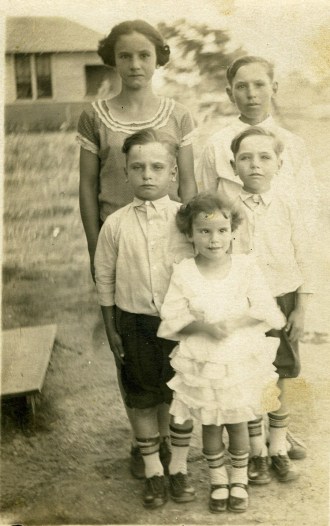
Granny is little girl in front, curly hair, cross eyed, gather around her siblings. Her life was shattered when her father died in 1930. Her mother could not manage the money, it must have been hard on the kids. Back in the old days the snake oil, fuller brush and many more stopped by. She would buy everything.

Her oldest brother joined the Circus and traveled around the world. He returned home starting a career as a Concierge at upscale restaurant.

Two of her brothers wanted money and fast. One became a bank robber, He and wife spent several years in prison.The day he walking out of jail, it was business as usual with eyes to cover his back.

The older joined the local Mafia. At the time slot machines were the way to the money.The tragedy is he was murdered with cyanide. I am totally fascinated buy the Mafia. I tried not to think about him dying in what became my bedroom.

Granny had tragedy through out her life. A lesser person might have crushed under the pressure. My father wasn’t even 2 years old when they where abandoned buy here husband. Granny worked hard labor to care for her son. She remarried my gramps when my father was 10 years old.

My grandmother never gave up. She never said I don’t know, it was learn as you go.

Granny was shy by nature and passive aggressive at time. She was beautiful, a true stunner in her younger days. She didn’t want gramps talking to another women. She took photos of gramps previous girlfriends and cut them out. Her temper was a slow burn, you didn’t want her going off on you.

My grandmother taught me how to wash close, do hand washing and don’t forget the crease down the front of jeans. When I was a tot Granny would light the gas fire in the bathroom, after bathing she would wrap me in a towel and lay me on bed for baby powder.

Happy Birthday Granny, thank you for always being you.

Xx M