

Month: November 2017

Insights from the Hotline Room: Planning for Holiday Gatherings
As the year winds down, folks across the country are headed home for the holidays to spend time with family and friends. While this is a time of celebration for many, it also presents challenges for some survivors of sexual abuse.

More often than not, the perpetrator of sexual violence is someone the victim knows. This is especially true for those who experience sexual abuse as a child: 93 percent of children know the perpetrator, and 34 percent are abused by a family member. For these survivors, holiday gatherings can mean facing painful memories, feelings of anxiety, or a chance of repeated harm.
During the holiday season, RAINN support specialists for the National Sexual Assault Hotline anticipate helping survivors who are going through a tough time at home or during family gatherings. Here, they share some strategies to help survivors feel safe.
- Identify alternative housing plans. Survivors who have flexible schedules during the holidays can stay in different places to avoid being in the family home or location where the abuse occurred.
- Consider staying with a friend or non-offending family member.
- Plan a mini-vacation or side trip during the time you would be asked to stay with family.
- Offer to join for family gatherings, but stay in an offsite location, like a motel or hostel (if finances allow). If you are concerned about ongoing safety, keep this location private from the perpetrator.
- Try to avoid close quarters. For many survivors, family pressures or traditions do not permit them to stay outside the family home. In this situation, survivors can brainstorm ways to avoid the perpetrator during gatherings.
- Make plans that involve leaving the home for an extended period of time, such as volunteering, catching up with old friends, or offering to run errands for the household.
- Think of possible excuses, such as having conflicting plans or needing rest, for not attending events where the offender will be present.
- If it makes you feel safer, stick to common areas and public places within the home or building, such as a living room or kitchen, and try to avoid secluded areas.
- Avoid talking to, sitting near, or standing around the person who hurt you. It’s okay to draw boundaries, even if makes other family members uncomfortable.
- Reach out to a neutral party. Survivors may feel isolated because of patterns of not being believed, fear of disclosing, or concerns about creating family tensions or division. Sometimes, it can be easier to talk to a neutral third-party that can offer support.
- Reach out to the National Sexual Assault Hotline by phone (800.656.4673) to be connected with a local sexual assault service provider, or chat online with someone who is trained to help.
- Download safety planning or meditation apps for a smartphone or tablet to help with stressful times.
- Read through recovery tips from RAINN, like Self-Care After Trauma and Tips for Survivors on Consuming Media.
- If you are in imminent danger, call 911.
4. Make a plan. Mapping out a game plan for family gatherings—in advance—can help survivors feel safe, comfortable, and prepared.
- Think through logistics. Does this plan require a car or other transportation? Will you need to arrive or depart the family gathering at a certain time?
- Consider how to talk to family if tensions arise. Not everyone is ready or able to disclose what happened—and that’s OK. Make a plan for how to answer tough questions or diffuse a tense situation.
If your safety plan falls through, or if you experience harm, know that you have done nothing wrong. You deserve support. The National Sexual Assault Hotline is free, confidential, and available 24/7: 800.656.HOPE (4673) and online.rainn.org
We Remember
Thanks Danica, I can’t think of a more important way to show the reality and the sense of humor the guys had. Of course the great sadness of the dead in Flanders Field.
Diana Nyad’s Story
Thank you for sharing her story, she’s a strong woman and can offer support to all of us. M

Rebel Recovery shared this article from the New York Times written by Diana Nyad an athlete and swimmer.

Here I was, a strong-willed young athlete. There he was, a charismatic pillar of the community. But I’m the one who, all these many years later, at the age of 68, no matter how happy and together I may be, continues to deal with the rage and the shame that comes with being silenced.
My particular case mirrors countless others. I was 14. A naïve 14, in 1964. I don’t think I could have given you a definition of intercourse.
My swimming coach was in many ways the father I had always yearned for. I met him when I was 10, and…
View original post 2,012 more words

RAINN: Danyol’s Story
RAPE, ABUSE, INCEST NATIONAL NETWORK
“I just want people to know that they don’t have to be afraid of their truth. Your truth is important, your truth is needed.”
Danyol Jaye was sexually abused and raped repeatedly by his older cousin between the ages of 7 and 10. The cousin enabled multiple perpetrator sexual assault when he locked Danyol in a dark closet and had his friends take turns entering the closet to sexually assault him.
Danyol first disclosed the abuse at age 15 to a close neighbor who was a friend of his mother’s. Not ready to share his story with his family, Danyol trusted the neighbor with the information. However, she immediately told his mother, who confronted him.
“It just felt like another violation. I felt in that moment that not only did my cousin violate me and take something from me, but now a person I trusted with this information also violated me and stole another choice from me. That feeling of violation was as hard as it was to endure the actual trauma.”
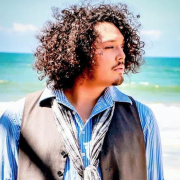
Danyol underwent a retraumatization from the violation of losing control of his story, and from his family’s reaction to it. Many of his family members questioned why he waited to speak about the abuse, and openly expressed their disbelief in his story. “There was so much conversation about me without me, but no one ever had a conversation with me.”
Because of the abuse, Danyol has suffered from body image issues, depression, and trust issues. Certain triggers related to the abuse—such as dark rooms—also cause him anxiety.
Danyol’s healing process began when his high school counselor encouraged him to attend student group therapy sessions, where he was able to open up about his story and receive support from his peers.
Other important aspects of Danyol’s healing process have been the support of his best friend of 15 years, connection to his faith, and artistic expression. Danyol created a one-man dramatic stage play about abuse and self-discovery. He wanted to tell his story in his own way and to reclaim the power of sharing what happened to him with his family and friends.
“It was very therapeutic. I remember days when I’d be working on the scripts and rehearsing lines—I would break out in tears. It was the first time I really came to terms with it. This happened to me. This is my truth, I am not a liar, I am not making it up.”
Danyol advocates for ways in which family and friends can be more supportive when a survivor discloses abuse. He recommends not pressuring survivors into giving detailed informations about their assault. This forces them into reliving the incident and can cause repeated trauma. This pressure to gain information makes the interaction focused on the individual who is asking, rather than on the survivor. Danyol instead suggests listening to the survivor, letting them share aspects of their story when they’re ready, and showing your support through believing their story. There are certain obstacles survivors who are men and boys face; learn more about them and find information and resources.
Danyol is currently pursuing a career in the entertainment industry and finishing his autobiography, which he hopes to complete next year. It has been important to Danyol to use his voice to empower other survivors to tell their stories when they’re ready.
“Talking about it really does take back power from the trauma.”

Neil Archbold on Nuddge Mental Health Services

Triple Shot Thursday *Can’t Stop the Feeling*
This week has been the best in ages, I’ve made new friends thru lengthy conversations. Identified new blogs to follow and received comments from people I haven’t talk to in a long time. You have made me so happy this week, my heart is filled with joy. Let’s see if the music choices can match the joy in my heart. A special treat from James Arthur who blows me away with this song/message. M
How to raise successful kids without overparenting — ideas.ted.com

Moms and dads often feel like they can’t win. If they pay too much attention to their kids, they’re helicopter parents; too little, and they’re absentee parents. What’s the happy medium that will result in truly happy, self-sufficient kids? Here are five tips. 1. Give your kids things they can own and control. “Enlist the…
via How to raise successful kids without overparenting — ideas.ted.com
Which of these habits are keeping you from being a great communicator? — ideas.ted.com

Yes, we all do these things, but they can suck the life from your conversations, says sound consultant Julian Treasure. Read this and strengthen your gift of gab. Over the years, I’ve identified a set of common emotional drivers that suck the power out of communication. I call them the four leeches. Most people —…
via Which of these habits are keeping you from being a great communicator? — ideas.ted.com
Crescendo
once again Candice builds a great picture thru her poetry. M


Is it an astigmatism or
The blur of a questioning heart
When things are disordered, the very edge
Clutching bitten sides as hollow city dwellers
Imagine faces looking downward into fast moving water, seeing drowned doves
A predilection for extremes
Where daughters cut their ropy hair
And open like heart chakras beneath festive lighting in department stores
Accents donating starry landscape above
Informing choices as snowbound relatives learning to talk over cold soup
Girls in A-line skirts, boys hiding erections behind glossy schoolbooks
And the heat of asfalt, curling like collars made of beaver
High gloves, no verbs, learning how to dye mouths like hair
Standing on unstable chairs, wobbling with frail grace
Where is moral nerve? Where negotiation?
Responsibility for one’s life, defines self respect into a set of bronze rings hung from pinched hips
Whatsoever the plan, pinned to walls to hide the cracks
Tension strung like artificial…
View original post 106 more words

Celebrate with Me, Yesterday I…..
Most know I have Chronic Lyme Diseases, ill for several years and still house bound. I didn’t realize until recently I had developed Agoraphobia created an additional challenge getting behind the wheel.
Lyme Diseases left me with early onset of Dementia, my balance is not the best and remembering is my biggest challenge. I’m taking medicine for Dementia and have seen improvement.
I had to overcome the challenges to find out who I am at 54 years-old. I hug and thank everyone who prayed for me over the years, this celebration is for you.
Yesterday I drove!
M

Four Tips For Talking To People You Disagree With
Westboro Baptist Church is infamous for attacking celebs but it was Blake Shelton who brought to light the hatred of this church. He wanted to do a concert in the arena, the city quickly said the noise level would get to high, I don’t remember every detail. Blake pulled his friends together, they found enough land and turned the show into a Charity event. I can’t recall the disaster at the time however the money went to the town affected. You could not see an empty seat, empty space, the place was over packed. He made some nice references to the church, this was not their first run in. M
TED Talks
FOUR TIPS FOR TALKING TO PEOPLE YOU DISAGREE WITH

iStock
Megan Phelps-Roper grew up in the Westboro Baptist Church and was picketing with signs like “gays are worthy of death” at the age of five.
She left 20 years later because strangers on Twitter changed her mind.
“Initially, the people I encountered on the platform were just as hostile as I expected,” she says. But slowly that changed. They started to ask about her beliefs, and she asked about theirs. Their conversations planted seeds of doubt, and slowly her entire worldview shifted — eventually driving her to leave the church (and the beliefs that came with it) behind.
In Megan’s TED Talk, she urges all of us to talk and to listen to the people we disagree with. Here, in her words, are her tips for how to have effective conversations:
1. Don’t assume bad intent.
Assuming ill motives almost instantly cuts us off from truly understanding why someone does and believes as they do. We forget they’re a human being with a lifetime of experience that shaped their mind, we get stuck on that first wave of anger, and the conversation has a very hard time ever moving beyond it.
But when we assume good or neutral intent, we give our minds a much stronger framework for dialogue.
2. Ask questions.
When we engage people across ideological divides, asking questions helps us map the disconnect between our differing points of view. That’s important because we can’t present effective arguments if we don’t understand where the other side is actually coming from and it gives them an opportunity to point out flaws in our positions.
But asking questions serves another purpose; it signals to someone they’re being heard. When my friends on Twitter stopped accusing and started asking questions, I almost automatically mirrored them. Their questions gave me room to speak, but they also gave me permission to ask them questions and truly hear their responses. It fundamentally changed the dynamic of our conversation.
3. Stay calm.
This takes practice and patience, but it’s powerful. When my husband was still just an anonymous Twitter acquaintance, our discussions frequently became hard and pointed, but we always refused to escalate. Instead, he would change the subject. He would tell a joke or recommend a book or gently excuse himself from the conversation. We knew the discussion wasn’t over, just paused for a time to bring us back to an even keel.
People often lament that digital communication makes us less civil, but this is one advantage that online conversations have over in-person ones. We have a buffer of time and space between us and the people whose ideas we find so frustrating. We can use that buffer. Instead of lashing out, we can pause, breathe, change the subject or walk away, and then come back to it when we’re ready.
4. Make the argument.
This might seem obvious, but one side effect of having strong beliefs is we sometimes assume that the value of our position is, or should be, obvious and self-evident; that we shouldn’t have to defend our positions because they’re so clearly right and good; that if someone doesn’t get it, it’s their problem — that it’s not my job to educate them. But if it were that simple, we would all see things the same way.
As kind as my friends on Twitter were, if they hadn’t actually made their arguments, it would’ve been so much harder for me to see the world in a different way. We are all a product of our upbringing, and our beliefs reflect our experiences. We can’t expect others to spontaneously change their own minds. If we want change, we have to make the case for it.
Watch the full talk to hear her extraordinary story:

Triple Shot Thursday *Bono, Jagger, The Edge and U2*
Three specials songs for you this week. U2 is one of my favorite bands. Running to Stand Still has special meaning for me. Aren’t we all running to or from something.
The band has a sense of humor, enjoys life and The Edge is an excellent photographer. Their friendship dates back to young boys singing in the Church Choir in Ireland. Have an awesome day! M
Domestic Violence
Teela thank you for sharing your wise words and speaking from the grave to help women today. The video is perfect. Lots of love M

This video describes every aspect of domestic violence and it’s effect on men, women and children.
Freaked out, Insecure, Neurotic and Emotional
Teela’s words on a very bad day. I am proud to say she took charge and moved away.
That’s me, I’m FINE. It ain’t pretty in here today so for that I’m sorry. Younger or sensitive readers might want to look away.
I suppose that this would be what one might call a dear *Jon* letter if *Jon* was the one gettin’ it. But, he ain’t. The blog is.
There are just a few things I want to say to that son-of-a-bitch. (He always hated it when someone called him that, he took it as a personal slight to his mother; God rest her soul.) She was no bitch; I just get great satisfaction out of knowing that he hates the hell out of it.
I always said that I wouldn’t be like his mother, but what the fuck do you know, I turned out just like her. 19 years with my father-in-law (God rest his soul) and she left him. Some 5 years later, she died with…
View original post 460 more words

I’m Afraid for a Friend! Domestic Violence, Addiction and Narcissistic *Many of you have the scars.
Please pray or send blessings to this beautiful woman who deserves all good life has to offer.
I lost a dear friend years ago. I plan to reblog some of her best post on Domestic Violence. Teela would love to help anyone. I’ve learned you can’t tell a friend what to do, when to do it and all others things we’d like to. When the heart’s involved, they need support, trusting friends, help with planning, doing what friends do best, be there for your friend.
This post dedicated to Teela Hart. Miss you much Teela.
 lookingforthelight.blog