Leeks are a great side dish and are healthy. This dish is simple and doesn’t take long to cook, the perfect dish this holiday season. Best yet, it’s Gluten-Free.
Cut the leeks in half lengthwise. Rinse them liberally under cold water, removing all the dirt and sand from them while keeping the halves intact. Pat them dry.
Place leeks cut side up in a medium baking dish. Coat them with the olive oil and season with 2 big pinches of salt and 1 big pinch of pepper.
Roast until they are tender and golden brown, 35 minutes, and serve immediately.
Serves 4
I have more recipes and DIY projects on the way. Right now I’m working on a Pumpkin Spice Latte recipe.
Enjoy!
Melinda
The recipe is from Kristin Cavallari’s cookbook True Comfort
Nutritious vegetables and chunks of lean meat simmering in their own juices come together to create a simple yet hearty slow-cooker dish that’s perfect for chilly weather.
Ingredients
2 pounds beef chuck, cut into 1-inch cubes
1/4 cup all-purpose flour
2 tablespoons olive oil, plus more as needed
1 cup low-sodium beef stock1/2 cup red wine
One 15-ounce can no-salt-added diced tomatoes, in juice
2 russet or Yukon gold potatoes, peeled and cut into 1-inch cubes
2 celery stalks, diced
2 carrots, diced1 large onion, diced
2 cloves garlic, minced
2 bay leaves1 tablespoon minced fresh thyme leaves
1 1/2 teaspoons kosher salt
Tools
Measuring cups
Liquid measuring cup
Measuring spoons
Chef’s knife Cutting board
Can opener Vegetable peeler
Resealable plastic bag
Large skillet
Tongs
6-quart slow cooker
Wooden spoon
Directions
Working in 2 batches, combine the beef and flour in a resealable plastic bag; seal and shake until the beef is completely coated with flour. Set aside.
Heat the 2 tablespoons oil in a large skillet over medium-high heat (see Cook’s Note). Working in batches and adding more oil as necessary, add the beef in a single layer and cook, turning occasionally, until the beef is nicely brown on all sides, about 4 minutes. Transfer the beef to a 6-quart slow cooker.
Add the stock and red wine to the skillet and bring to a boil, scraping up the browned bits with a wooden spoon, and continue to boil until slightly reduced, about 1 minute. Transfer the liquid to the slow cooker. Add the remaining ingredients and stir to combine. Cook on low for 6 to 8 hours or high for 4 to 6 hours. The beef and vegetables should be tender.
Cook’s Note
Alternatively, use a slow cooker that can be placed on a stovetop to sear the beef.
I’m so glad you are enjoying Fun Facts. I learn something new each week, even if it’s weird. I love hearing your comments!
The wedding of Princess Diana and Prince Charles was watched by 750 million people worldwide in 1981; sadly, 2.5 billion watched her funeral in 1997. (bbc.com)
With 3.572 billion viewers, half the world’s population watched the 2018 FIFA World Cup of soccer (or football, as many international fans call it), which is held every four years. That number is on par with the 2016 Summer Olympics; but only a quarter of the world watched the less-popular Winter Olympics in 2018. (fifa.com)
There are no muscles in your fingers: Their function is controlled by muscles in your palms and arms. (assh.org)
The hardest working muscle in your body is your heart: It pumps more than 2,000 gallons of blood a day and beats more than 2.5 billion times in a 70-year life span. (heart.org)
I’m glad you joined me for another edition of Weekend Music Share this week.
Have a great weekend!
Melinda
Welcome back to Weekend Music Share, the place where everyone can share their favorite music.
Feel free to use the Weekend Music Share banner in your post, and use the hashtag #WeekendMusicShare on social media so other participants can find your post.
Happy Thanksgiving to you. I think it’s important to look back to the first Thanksgiving to understand the Pilgrams were not the only ones celebrating the fruitful harvest. It’s interesting how our traditional Thanksgiving meal has changed over time.
“Wildfowl was there. Corn, in grain form for bread or for porridge, was there. Venison was there,” says Kathleen Wall, a foodways culinarian at Plimoth Patuxet, a living history museum in Plymouth, Massachusetts. “These are absolutes.”
Turkey may have been part of the holiday meal, along with venison, shellfish and corn, but pies and potatoes were decidedly not on the menu.
I pray you and your family are safe, making great memories, neighbors and not forgetting the elderly or those in need.
My ancestors were Cherokee Indians, I have 1/16 in my blood and I’m very proud. Many often forget that Native American Indians were here long before the migrants.
Every month there is a long list of awareness months, weeks and days which is why I only include a partial list. I encourage you to read the full list, and you can find it by clickinghere or at the bottom of the post.
Just three?????? At 62, my peeves have changed as I age, thank goodness. Peeves are what I call my last nerve and there are more than three but the top ones are: being told what to do or think, abuse of any kind including animals, arrogance.
Outside of the three are: people who wallow in their problems, liars, are unkind and rude, and people who do not help others. Oh, I can’t forget, someone constantly reminding me of what I need to do and the ones who won’t take responsibly.
I’m far from perfect but no one is, my attitude has changed along with what I think is important. I shake the thoughts off after they happen but they pop-up the next time.
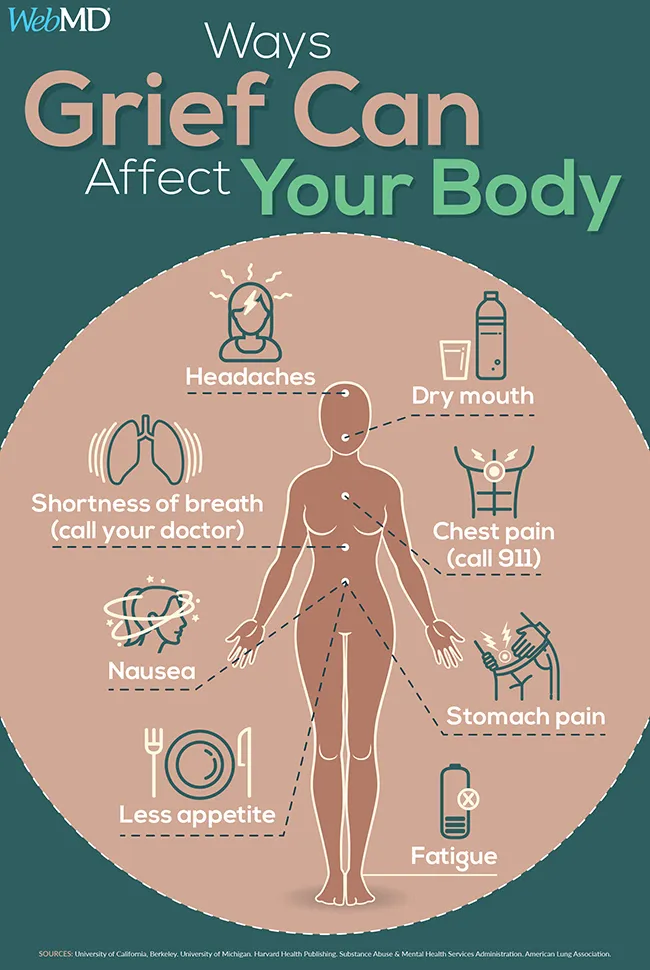
It’s surprising how physical grief can be. Your heart literally aches. A memory comes up that causes your stomach to clench or a chill to run down your spine. Some nights, your mind races, and your heart races along with it, your body so electrified with energy that you can barely sleep. Other nights, you’re so tired that you fall asleep right away. You wake up the next morning still feeling exhausted and spend most of the day in bed.
Amy Davis, a 32-year-old from Bristol, TN, became sick with grief after losing Molly, a close 38-year-old family member, to cancer. “Early grief was intensely physical for me,” Davis says. “After the shock and adrenaline of the first weeks wore off, I went through a couple of months of extreme fatigue, with nausea, headaches, food aversion, mixed-up sleep cycles, dizziness, and sun sensitivity. It was extremely difficult to do anything. … If there’s one thing I want people to know about grief, it’s how awful it can make your body feel.”
What causes these physical symptoms? A range of studies reveal the powerful effects grief can have on the body. Grief increases inflammation, which can worsen health problems you already have and cause new ones. It batters the immune system, leaving you depleted and vulnerable to infection. The heartbreak of grief can increase blood pressure and the risk of blood clots. Intense grief can alter the heart muscle so much that it causes “broken heart syndrome,” a form of heart disease with the same symptoms as a heart attack.
Stress links the emotional and physical aspects of grief. The systems in the body that process physical and emotional stress overlap, and emotional stress can activate the nervous system as easily as physical threats can. When stress becomes chronic, increased adrenaline and blood pressure can contribute to chronic medical conditions.
Research shows that emotional pain activates the same regions of the brain as physical pain. This may be why painkilling drugs ranging from opioids to Tylenolhave been shown to ease emotional pain.
Normal vs. Pathological Grief
Depression is not a normal part of grief, but a complication of it. Depression raises the risk of grief-related health complications and often requires treatment to resolve, so it’s important to know how to recognize its symptoms. Sidney Zisook, MD, a grief researcher and professor of psychiatry at the University of California, San Diego, says people can distinguish normal grief from depression by looking for specific emotional patterns.
“In normal grief, the sad thoughts and feelings typically occur in waves or bursts followed by periods of respite, as opposed to the more persistent low mood and agony of major depressive disorder,” Zisook says.
He says people usually retain “self-esteem, a sense of humor, and the capacity to be consoled or distracted from the pain” in normal grief, while people who are depressed struggle with feelings of guilt and worthlessness and a limited ability “to experience or anticipate any pleasure or joy.”
Complicated grief differs from both depression and normal grief. M. Katherine Shear, MD, a professor of psychiatry at Columbia University’s School of Social Work and director of its Center for Complicated Grief, defines complicated grief as “a form of persistent, pervasive grief” that does not get better naturally. It happens when “some of the natural thoughts, feelings, or behaviors that occur during acute grief gain a foothold and interfere with the ability to accept the reality of the loss.”
Symptoms of complicated grief include persistent efforts to ignore the grief and deny or “rewrite” what happened. Complicated grief increases the risk of physical and mental health problems like depression, anxiety, sleep issues, suicidal thoughts and behaviors, and physical illness.
How Does Avoidance Harm Your Health?
Margaret Stroebe, PhD, a bereavement researcher and professor of clinical psychology at Utrecht University, says that recent research has shed light on many of “the cognitive and emotional processes underlying complications in grieving, particularly rumination.”
Research shows that rumination, or repetitive, negative, self-focused thought, is actually a way to avoid problems. People who ruminate shift attention away from painful truths by focusing on negative material that is less threatening than the truths they want to avoid. This pattern of thinking is strongly associated with depression.
Rumination and other forms of avoidance demand energy and block the natural abilities of the body and mind to integrate new realities and heal. Research by Stroebe, and others shows that avoidance behavior makes depression, complicated grief, and the physical health problems that go with them more likely. Efforts to avoid the reality of loss can cause fatigue, weaken your immune system, increase inflammation, and prolong other ailments.
How Do Role Adjustments Affect Your Health?
When someone close to you dies, your social role changes, too. This can affect your sense of meaning and sense of self.
Before losing Molly, Davis says she found a personal sense of value in “being good at helping other people and taking care of them.” But after Molly died, she felt like she “couldn’t help anyone for a while.” Losing this role “dumped the bucket” of her identity “upside down.” Davis says, “I felt like I had nothing to offer. So I had to learn my value from other angles.”
Caregivers face especially complicated role adjustments. The physical and emotional demands of caregiving can leave them feeling depleted even before a loved one dies, and losing the person they took care of can leave them with a lost sense of purpose.
“Research shows that during intense caregiving periods, caregivers not only experience high levels of stress, they also cannot find the time and energy to look after their own health,” says Kathrin Boerner, PhD, a bereavement researcher and professor of gerontology at the University of Massachusetts in Boston.
“This can result in the emergence of new or the reemergence of existing ‘dormant’ health problems after the death of the care recipient. These health issues may or may not be directly related to the caregiver’s grief experience, but they are likely related to the life situation that was created through the demands of caregiving,” Boerner says.
It can be hard to make life work again after a close family member dies. Losing a partner can mean having to move out of a shared home or having to reach out to other loved ones for help, which can further increase emotional stress and worry. Strobe says the stress of adjusting to changes in life and health during and after a loss can “increase vulnerability and reduce adaptive reserves for coping with bereavement.”
What Can You Do to Cope With Grief?
Emotional and physical self-care are essential ways to ease complications of grief and boost recovery. Exercising, spending time in nature, getting enough sleep, and talking to loved ones can help with physical and mental health.
“Most often, normal grief does not require professional intervention,” says Zisook. “Grief is a natural, instinctive response to loss, adaptation occurs naturally, and healing is the natural outcome,” especially with “time and the support of loved ones and friends.”
For many people going through a hard time, reaching out is impossible. If your friend is in grief, reach out to them.Amy Davis
Grief researchers emphasize that social support, self-acceptance, and good self-care usually help people get through normal grief. (Shear encourages people to “plan small rewarding activities and try to enjoy them as much as possible.”) But the researchers say people need professional help to heal from complicated grief and depression.
Davis says therapy and physical activities like going for walks helped her cope. Social support helped most when friends tried to reach out instead of waiting or asking her to reach out to them.
“The thing about grief and depression and sorrow and being suicidal is that you can’t reach out. For many people going through a hard time, reaching out is impossible. If your friend is in grief, reach out to them. Do the legwork. They’re too exhausted!”
Davis’ advice to most people who are grieving is to “Lean into it. You only get to grieve your loved one once. Don’t spend the whole time trying to distract yourself or push it down. It does go away eventually, and you will miss feeling that connected to that person again. And if you feel like your whole life has fallen apart, that’s fine! It totally has. Now you get to decide how to put yourself back together. Be creative. There’s new life to be lived all around you.
Melinda
Reference:
“WebMD News Special Report Reviewed by Neha Pathak, MD on July 11, 2019
When many people see a big, beautiful pile of colorful autumn leaves, it feels like an open invitation to dive in. The scene evokes joy, nostalgia, and the simple thrill of childhood.
But for Isabel Rose, it brings up something very different. It reminds her of a moment that marked the beginning of her lifelong struggle with Lyme disease.
What others see as innocent fun, she now views with alarm.
Ticks thrive in damp, shaded environments close to the ground. Leaf piles, tall grass, and wooded edges are prime habitats for them. Children playing in these areas are at increased risk, often unaware that a single tick bite can lead to years of misery.
For Isabel, what began as a carefree childhood leap into a leaf pile became the start of a medical nightmare.
Isabel is now a writer, Lyme disease advocate, and founder of Mothers Against Lyme, a support network for families affected by congenital and pediatric Lyme. She also serves on the board of Project Lyme, a national nonprofit.
In a recent essay published on her Substack, Isabel shares the story of how a tick bite at age 8 led to decades of misdiagnosed symptoms, chronic illness, and eventually, the discovery that both she and her children had Lyme disease and co-infections.
Her experience is a powerful reminder of the importance of tick awareness. Ignoring the risks can be hazardous to yourself–and future generations.
David and I were close to 40 when we married and part of the reason for our success is that we talked about what traits we looked for in a lifelong partner, shared our complete backgrounds with each other, boundries and discussed possible issues we may have to face. I was completely honest about my mental illness and the challenges we would face. It was critical to put in all on the table before we were married.
Like all marriages, we’ve had tough finacial issues, medical and family issues but they never divided us. My Lyme Dieases treatment cost over $150,000 dollars none of which was covered by insurance which caused us to take a second mortgage on our house. He didn’t blink and was caring for me in the years that followed.
We had the same goals when we married and still share the same goals today. He has given me unconditional love, supported me in every way and even though he’s not one of many words, his actions always shows his love.
Marriage has ups and downs, for me it’s the downs that challenge your commitment, desire to communicate and comprimise.
I prefer both because they offer such different opportunities yet if I had to pick it would be water. I have loved the water or playing in water since I was a small child and once older I discovered the love of falling asleep being rocked by the water. There’s nothing like waking up to the sunrise drinking a cup of coffee while the water calms you.
I’ve had one bad experience on my friends 40ft boat. One day the weather was beautiful, I was sail boarding when I saw this massive black cloud coming our way. I rushed back to the boat and the waves on the way back to the dock were massive, he dealt with the waves while I was down stairs scared but constantly picking up items that had fallen including myself. I felt like it took forever. So glad he was at the helm.
The mountains are beautiful because the terrain is always different and you can see for miles. I was a hiker at one time but stopped after climbing a 1,000 feet to reach the top of Verna Falls at Yosemite National Park. We were rookies at climbing mountains and the climb reminded me why. You had to hike in circles all the way up, I had only one pole and several times I thought about stopping but knew better. The waterfall made every step worth it.
In this fast-paced social media world, it can be difficult to find the time to look within or back in time. I hope you find these quotes and questions interesting. So glad you stopped by today!
Great oldies that are as relevant today! Love the horns.
It’s the weekend!!!!!!
I’m glad you joined me for another edition of Weekend Music Share this week.
Have a great weekend!
Melinda
Welcome back to Weekend Music Share, the place where everyone can share their favorite music.
Feel free to use the Weekend Music Share banner in your post, and use the hashtag #WeekendMusicShare on social media so other participants can find your post.
WOW!!!!! I have a long list of histrorical people I would love to chat with and learn from. It’s a toss up between, George Washington, and Abraham Lincoln.
Why? because George Washington was the first President, a Founding Father, he didn’t belong to a political party and and presided over the convention that drafted the U.S. Constitution.
George Washington
Abraham Lincoln was the 16th President, and His Emancipation Proclamation paved the way for slavery’s abolition, while his Gettysburg Address stands as one of the most famous pieces of oratory in American history.
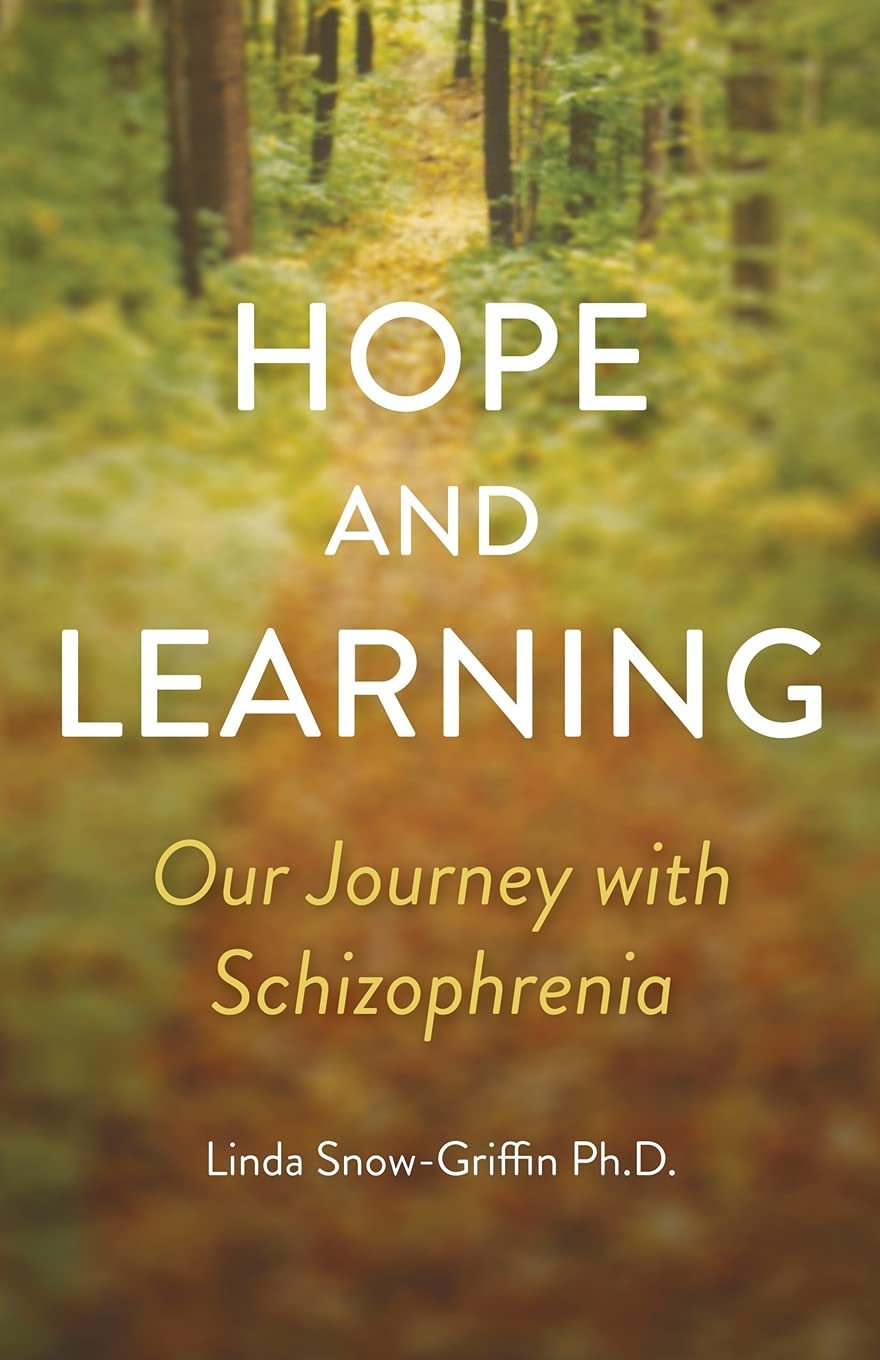
I want to say a special thanks to Linda Snow-Griffin for providing me a copy of her book Hope and Learning, Our Journey with Schizophrenia for a review.
Published 2021
Cherish Editions
About the Author
Linda Snow-Griffin, Ph.D. is a retired psychologist. She is the mother of two, stepmother of three adult children and grandmother of sixteen. She has practiced in a variety of settings – college, university and community mental health – and spent the last 30 years in private practice in Cincinnati. Her desire is to provide hope to families coping with mental illness, especially schizophrenia.
Blurb
When her son was diagnosed with Schizophrenia, Linda Snow-Griffin, a psychologist in private practice, felt devastated and overwhelmed. There were thousands of questions going through her mind: How can I help him? What does he need to get better? Will he be able to get better?
Hope and Learning narrates the 20-year journey Linda and her son embarked on, as they navigated their way towards recovery and a better understanding of what it is like to live with schizophrenia.
This book combines personal experience with schizophrenia with substantial data to create a heartwarming and informative resource.
My Thoughts
Linda shares her journey of her son’s diagnosis with Schizophrenia thru her intimate and raw writing. She discovered a journal of her son’s written in high school that set the wheels in motion that changed their life forever and in surprising ways.
I have Bipolar Disorder, which is a serious mental illness, yet I have been around only one person with Schizophrenia and it was during one of my hospital stays. Being around “John” was not scary but he was totally detached, walked the halls constantly talking to other beings who controlled his life. As you can imagine, that was my perception of Schizophrenia. A stigma/myth that Linda changes in this wonderful book.
Her son is highly functioning with medication and even attended college, it was quite difficult and presented some unique challenges when it came to writing his papers but with the understanding of his mother and love of his family, he made it thru. Linda’s book is heart-wrenching, at times it’s hard to imagine how difficult it must have been on a mother and family but what she shows us is love and understanding concurs all.
I am so glad I read her book, my stigma of what Schizophrenia looked like changed and for that I am thankful.
I recommend this book to anyone who thinks they may have or suspect a family member or a loved one has Schizophrenia, you will learn so much and walk away with answers and tools to take on your journey.
Several dietary supplements containing the popular moringa leaf powder have been recalled after multiple consumers contracted Salmonella.
Products manufactured using a single lot of recalled organic moringa leaf powder from Vallon Farmdirect of Johdpur, India, have been linked to at least 11 illnesses and three hospitalizations included in a multi-state outbreak of Salmonella, according to the U.S. Food and Drug Administration (FDA).
Cases have been reported in Florida, Kansas, Michigan, New York, North Carolina, South Carolina and Virginia, and the affected products include Food to Live brand’s Organic Moringa Leaf Power (8-ounce, 1-pound, 2-pound, 4-pound, 8-pound, 16-pound, and 44-pound bags) and Organic Supergreens Power Mix (8-ounce, 1-pound, 1.5-pound, 3-pound, 6-pound, and 12-pound bags) with lot codes of SO-69006 through SO-72558.
Africa Import’s Organic Moringa Leaf Power (1-kilogram box) sold after June 5 is also affected, as are all Member’s Mark Super Greens dietary supplement powder products, regardless of lot codes and best by dates.
The supplements were distributed nationwide through both retail and wholesale channels.
The FDA is now encouraging consumers and retailers to refrain from eating, selling or serving the recalled products and is instead urging that the products be thrown away, and that any surfaces or containers they may have touched be sanitized.
Salmonella is a group of bacteria that can cause gastrointestinal illness and fever called salmonellosis, according to the FDA.
Symptoms often begin to develop 12 to 72 hours after infection, and they may include diarrhea, fever, abdominal cramps, high fever, aches, headaches, lethargy, a rash and blood in the urine or stool. In some cases, it may become fatal.
After illnesses were reported in October, the Virginia Department of Health collected an open sample of Africa Imports moringa leaf powder from an affected individual’s home.
It later tested positive for Salmonella, based on a whole-genome sequencing that matched the strain causing illnesses in the outbreak.
After more products, including an open sample of Member’s Mark Super Greens dietary supplement powder, yielded similar results, retailers ceased distribution and sales of the products and issued the voluntary recall.
According to the FDA, the investigation is ongoing and authorities are continuing to “determine what additional products were made with the implicated lot of moringa leaf powder.”
As more and more recalls happen, we have to be vigilant with our food safety.
I don’t have a favorite month because each month has something wonderful to offer. New Years day is a great time to reflect on the challenges and accomplishments and turn my focus to apply what I’ve learned tothe new year.
As we close out the end of 2025, it’s time to look ahead at what topics are trending as we move into the new year. The topics change reguraly and my goal is to stay current in what topics you want to read about.
Men’s Top Search & Lifestyle Trends
Mindful Masculinity & Mental Fitness: Men are increasingly searching for ways to balance emotional resilience, mental health, and self-care, moving away from stoicism.
AI as Creative Collaborator: Searches around AI tools for design, music, and personal branding are booming.
Wellnesswear & Tech-Infused Fashion: Streetwear is merging with wellness and wearable tech, making style both functional and health-oriented.
Quiet Luxury & Throwback Fashion: Men are gravitating toward understated luxury brands and retro-inspired looks.
Digital Flex Culture & Streaming Shows: Entertainment searches highlight streaming series as cultural drivers, alongside a shift in how men present themselves online.
Fitness & Longevity: Hyrox competitions, organ supplements, and holistic fitness routines are trending.
Women’s Top Search & Lifestyle Trends
Sustainable & Eco-Friendly Fashion: Searches for eco-conscious clothing, retro-inspired sneakers, and TikTok-driven microtrends like Mermaidcore and Cowboycore are surging.
Biotech Skincare & Beauty Innovation: Exosome serums, beef tallow moisturizers, and peel-off lip stains are among the fastest-growing beauty searches.
Empowerment & Leadership: Women are increasingly searching for resources on entrepreneurship, breaking glass ceilings, and leadership opportunities.
Mind-Body Wellness: Lifestyle searches emphasize holistic health, balancing career success with personal well-being.
Retro & Hollywood Glam Revival: Old Hollywood beauty trends and maximalist prints are making a comeback.
Tech-Enhanced Lifestyle: AI-driven athleisure and smart fashion are gaining traction
Looking for the Light is successful when posts are on topics you are interested in. Please drop a comment to add additional topics you want to read about. :)
I will delve into many of the topics in the coming year. Staying current on what topics you are searching for helps me learn and allows me share the knowledge with you.
For nearly a decade, Megan Miller woke up every day bracing for pain. What began as the occasional migraine spiraled into years of confusion and fear — until one phone call, and a viral TikTok, changed everything.
“I cried like that,” Miller tells PEOPLE, recalling the emotional video that captured her raw reaction when she finally learned what could be causing her chronic migraines. “That video that was posted was literally, like, my real reaction to getting the call.”
The call that inspired her tears didn’t bring certainty at first. “The call wasn’t like, we know for sure that this is what’s doing it,” Miller says. “But the call was more of like, ‘Hey, this is kind of what we think could be causing it. Let’s try to cut out gluten. Let’s see what’s going to happen.’ ”
Miller’s pain began when she was just 17. “The very first one that I got, I woke up in the middle of the night screaming because I was in so much pain,” Miller recalls. “My parents rushed me to the ER, and the doctors actually thought I was having a stroke.”
Tests came back clear, but the cause remained a mystery. Over the next decade, Miller visited countless doctors and tried everything from prescription medications to lifestyle changes. “I had to learn really quickly, I need to file with the disability offices because, like, if I can’t make a class because I physically cannot move, you cannot hold that against me,” she explains. “So that’s been a big thing. Learned how to advocate for myself pretty young.”
Life became a balancing act between ambition and pain. “I would rather not take anything and just deal with the migraines,” Miller says, remembering how one medication dulled her mind and made her feel detached.
Each day revolved around uncertainty — would she make it through work or class without collapsing? “When they hit, they were completely debilitating,” she says. “I couldn’t see, couldn’t function, couldn’t even get out of bed.”
For years, she kept searching for a solution that never came. “I’ve been to neurologists, primary care doctors, even allergy specialists,” she says. “And no one could tell me why this was happening.”
That changed when she switched to a new primary care doctor who looked at her case differently. “It was the first time that a doctor really wanted to find an answer,” Miller recalls. “I’ve been to so many doctors that are just like, ‘We don’t know,’ and this was the first time that she really ran all the tests.”
The results revealed something no one had suspected: a severe gluten allergy, and possibly celiac disease. For the first time, Miller had an explanation that made sense.
“It was the first time that someone finally looked at all of it and said, ‘Wait a second, this could actually be connected,’ ” she recalls. “And that was such a relief, but also so frustrating because it took so long to get there.”
She had never imagined gluten could be behind her suffering. “People think gluten allergy, they think you eat a piece of bread, you’re throwing up, you’re having stomach cramps, all this stuff,” she says. “It can present really differently for a lot of people.”
For her, the allergy didn’t cause digestive issues. Instead, it looked like headaches and fatigue — symptoms she’d never linked to food. “I had no idea gluten could even do that,” she says. “If I’d known that, maybe I could’ve figured it out sooner.”
But a decade of pain management had taken its own toll. “Results that came back from my endoscopy … the stomach pain I was getting was actually from all of the aspirin-based products I’ve taken in the past 10 years [that] have just eaten away at my stomach,” she tells PEOPLE. “So now my stomach lining is basically not there.”
She had spent years trying to relieve her pain, not realizing those same medications were quietly damaging her body. The discovery was both freeing and devastating.
“That was a hard pill to swallow,” she admits. “I was just trying to make it through each day, and now I’ve got a whole new thing to heal from.”
Still, the diagnosis gave her something she hadn’t had in years — hope. When she shared her emotional reaction on TikTok, she had no idea it would strike such a chord. “Everyone was just so kind,” Miller says, smiling. “So many people commented like, ‘Oh my gosh, the same thing happened to me — when I stopped eating gluten, my migraines just went away.’ ”
Her story quickly became a space for others to share their own experiences. People offered encouragement, gluten-free recipes and even restaurant tips in the comments.
“Everyone just started giving their different suggestions, giving the recommendations, people offering their recipes for homemade bread,” she recalls. “It turned into this really positive community.”
That sense of belonging carried her through the hardest parts of learning to live gluten-free. “It is hard because there’s gluten in things I would have never thought there would be,” she says. “Having that support and just kind of having people that it’s like, ‘Yeah, it’s gonna suck … but you’re gonna feel so good not eating it that you’re not gonna want to.’ ”
When she returned to her hometown, she stumbled upon a fully gluten-free bakery that instantly made her feel welcome. “I walked in and I told her, ‘Okay, I’m like, newly gluten free,’ and she’s walking me through like, everything they have to offer,” Miller says. “It was just so sweet — she really cared.”
Now, each day without a migraine feels like a small miracle. “I’ve gone longer not eating gluten and not having a migraine than I have in 10 years,” she tells PEOPLE. “So I’m finally at the point that I’m like, I will take not eating gluten any day over having this head pain two or three times a week.”
After years of living in fear, she’s finally free from the constant dread. Her body, once a source of suffering, now feels like a source of peace. Within six weeks of completely eliminating gluten, Miller says she hadn’t had a single migraine — a stunning turnaround after years of two or three attacks a week.
“You have to fight for answers,” Miller says. “And you have to find a doctor that’s willing to actually advocate for you, willing to put in those tests.”
Through her videos, she continues to raise awareness about how gluten sensitivity can present in unexpected ways.
Now, pain-free for the first time in her adult life, Miller hopes her story will encourage others to listen to their bodies and keep searching for answers. “Your body doesn’t feel right, there’s a reason why,” she says. “And you kind of have to figure it out.”
As she continues to heal, gratitude has replaced frustration. Each migraine-free morning feels like a victory she once thought impossible.
“I feel like I finally get to live again,” Miller says. “It’s like I’m getting my life back, one day at a time.”
I am so happy for her, migrains can consume your life and it’s a blessing when I here a story of someone living a migraine free life.
I would like people to see me as a warm and welcoming person but in reality it doesn’t matter because their impression is their perception and has nothing to do with who I really am. The impression of me would also be different based on who I am meeting, say I’m meeting a religious leader, I would be humbled and taking in their presence and any lessons offered and not ask questions unless the door was open. I think the impression of me is different for everyone I met.
I am not a fluffy person and my writing is more raw and to the facts. That in itself could be taken may different way. All I can do is be who I am and hope that people will give me grace.
I’m so glad you are enjoying Fun Facts. I learn something new each week, even if it’s weird. I love hearing your comments!
Buckingham Palace in London, England, has 775 rooms, including 78 bathrooms. (royal.uk)
The White House in Washington, DC, has 132 rooms, including 35 bathrooms. (whitehouse.gov)
It takes 570 gallons to paint the exterior of the White House. (whitehouse.gov)
The teddy bear is named after President Theodore Roosevelt. After he refused to shoot a captured black bear on a hunt, a stuffed-animal maker decided to create a bear and name it after the president. (nps.gov)
Lincoln Logs were created by John Lloyd Wright, son of famous architect Frank Lloyd Wright, in the 1920s. They were named after Abraham Lincoln, who grew up in a log cabin. (nps.gov)
If your relationship is taking more away from your life and well-being than it’s providing, there’s a good chance it’s toxic. Here’s how to know — and what to do if you realize your romance is unhealthy.
You’re dating someone new and everything feels … brighter. You’re giddy, practically floating on air. As the emotions from this punch-drunk chemical cocktail settle down, so too does the relationship. But rather than feeling the warmth of deepening intimacy and a comfortable routine, you start to lose yourself. Or at least that’s how it seems. Unproductive arguments happen regularly, and one or both of you seem prone to jealousy, passive aggression, or blame.
If those scenarios sound all too familiar, you may be involved in a toxic relationship. “We can think of toxic relationships the same way we think of toxic materials,” Shadeen Francis, LMFT, certified sex therapist, tells DailyOM. “Toxic relationships are ultimately harmful to our well-being, often worsening our health and happiness over time.”
If those scenarios sound all too familiar, you may be involved in a toxic relationship. “We can think of toxic relationships the same way we think of toxic materials,” Shadeen Francis, LMFT, certified sex therapist, tells DailyOM. “Toxic relationships are ultimately harmful to our well-being, often worsening our health and happiness over time.”
And that healthy partnership involves mutual love and high integrity, she adds, having each other’s backs and empowering each other to be the best version of yourselves. Both parties have good intent and stay responsible for their own feelings. “If any of these elements are missing, you’ve got the makings of a toxic relationship,” Newman says. “If you’re dealing with an opponent instead of a partner, that’s toxic.”
Meanwhile, if you’re continually offering your best self and stay willing to work through challenges, yet your partner isn’t receptive — or worse, they’re downright harmful — that’s toxicity worth paying attention to.
4 Signs Your Relationship Is Toxic
You Don’t Operate as a Team
Conflicts and disagreements are a part of all relationships, says Francis, but if those conflicts undermine your trust and safety, that’s a concerning sign of toxicity.
“You and your partner are different people and are going to have feelings, thoughts, needs, and desires that are at odds sometimes,” says Francis, adding that feeling disappointed, angry, or sad is okay. “But notice whether or not you still generally feel like a team. Even as there are problems, do you believe that you both are working toward resolving them? Can you still be kind to one another? Or is there blame, criticism, gaslighting, avoidance, or stonewalling?” If it’s the latter, and if kindness and resolution remain out of reach, that’s a toxic pattern.
You’re Codependent
Codependency is another toxic trait that can put your relationship and well-being off course. In this dysfunctional dynamic, one person takes on the role of the “giver” and the other is the “taker.” The giver sacrifices their own needs to tend to the other — potentially making excuses for their unruly behaviors — while the taker relies too heavily on those care attempts.
“Codependent relationships, even if they are warm and loving, are also often toxic relationship environments,” says Francis. “They are often organized not by love, but by insecurity, trauma bonding, and fear.”
Though it’s important to note that many people have overcome challenging childhood experiences without repeating those patterns as adults, if you or your partner grew up in an abusive household or around alcohol dependence, you may be more prone to this scenario.
Your Life Is Falling Apart
A common thread among many toxic relationships is the isolating places they lead. You may become so involved in the toxic parts that you have little room in your life for friendships or hobbies. Your work life suffers as you struggle to concentrate on anything besides your relationship, while your moods and ability to sleep well dwindle.
While some of these issues might crop up in a pronounced way, gradual, subtle unfolding is common. Because “our relationship dynamics are a series of interactive habits, patterns of response, emotional exchanges, and routines that we form together over time,” says Frances, “it is not unusual for subtle changes or seemingly unimportant frictions to become entrenched problems in our relationships down the road.”
And because these frictions and their effects develop slowly, it’s easy not to realize the path you’re on until the pain or frustration accumulates. If you feel like something isn’t right, Frances adds, it’s important to “trust your embodied wisdom, even if you can’t quite put your finger on where or when things shifted.” And if your partner uses manipulation to avoid accountability, she says, they may capitalize on doubt and try to distract or gaslightyou into ignoring warning signs of toxicity.
While positive, healthy relationships allow you to strengthen other life areas and bolster self-esteem, a toxic relationship does the opposite. “A toxic relationship isn’t just one with challenges or hardships,” explains Francis. “They take a long-term toll on your health, whether that is emotional health, mental health, spiritual health, financial health, or physical health.”
You Notice Signs of Narcissism
While not all toxic relationships include narcissism, a narcissist’s extreme self-involvement can easily invite toxicity. “Narcissism involves a number of traits that are likely to create a toxic relationship: self-absorbedness, lack of remorse, low emotion regulation skills, a dependence on others’ admiration in order to feel self-worth, and a resistance to taking accountability for their impact on others,” Francis says.
You might also fall prey to gaslighting, manipulation, and severe emotional abuse when a partner’s narcissism is at play, which may show up as your being constantly controlled or ridiculed.
When on the receiving end of narcissistic behavior, your own needs fall to the wayside because of your partner’s self-focus. (At first, your partner may have showered you with over-the-top gestures and gifts, also known as “love bombing,” purely to “win” or “keep” you.).
Even though narcissism often stems from emotional neglect early in life, know that it’s not your responsibility to “fix” a partner who’s hurting you. You can have compassion and move on. And of course, narcissism doesn’t affect everyone who had a difficult childhood. Only about 5 percent of people have narcissistic personality disorder, the most severe form. If you recognize that you are prone to narcissist tendencies yourself, with time and effort, you can work through those wounds and find new strategies for soothing and relating to others.
Can You Fix a Toxic Relationship?
An unhealthy, toxic relationship can be turned around, says Newman, if both people are willing to change their behaviors for good. “Not try to change, not hope to change someday. I mean literally change instantly, as in I see it, and I’ll stop it right this second.” While this shift is rare, she says — and requires committed efforts moving forward — it’s awesome.
Chanel Dokun, a relationship expert trained in marriage and family therapy, author of Life Starts Now: How to Create the Life You’ve Been Waiting For, and the co-founder of Healthy Minds NYC, agrees that a toxic relationship can be healed, “but only if each individual does the hard work to address their own unhealthy relational patterns,” she tells DailyOM. “The couple might need to take a substantial break to allow for healing and a reset to their dynamic.”
How to Get Out of a Toxic Relationship
What you don’t have to do is stick around suffering, hoping the other person will change. Some relationships can’t be saved, and you may decide it’s time to go your separate ways, even if you still have feelings for your partner or they have certain traits that you admire.
When meaningful change isn’t feasible or you want out regardless — for whatever reason — both Francis and Newman suggest seeking help. That’s because breakups, while never easy, can be especially complicated and painful when you’re dealing with a toxic dynamic. If your self-esteem has lowered because of the relationship, leaving you in a more vulnerable state, even a relatively mild breakup might feel impossible. Regardless, you can get through it with proper care.
To get out of a toxic relationship, Newman says the support of friends, family, and possibly a trained professional such as a therapist is key. “Set yourself up to have someone in your corner who can have your back and reassure you that you’re making the right call. This is not the time to turn inward; look out to your community for love and help,” the expert says.
Ask your therapist or another trusted ally to help you role-play what you want to say to end the relationship and brainstorm next steps and logistics — say, if you and your partner are currently living together or will need to be in contact in the future, due to children you share together or for another reason. If you are able to make a more complete break and cut off all communication, that may be helpful, and even necessary, particularly if you feel your partner will try to gaslight, guilt, or otherwise manipulate you to stay with them, or you’ve developed a trauma bond, in which you feel you need the harmful partner.
How to Heal from a Toxic Relationship
There’s no quick fix or universal timeline when you’re healing from a toxic relationship that you’ve left behind, so keep being gentle with yourself. “Change is hard and takes time,” notes Frances. “You’ll need some grace to get to the other side.”
Continue to lean on your support systems and give yourself time to work through the aftermath with love and kindness toward yourself.
Meanwhile, delve into activities you’re curious or passionate about, with the knowledge that you are a “whole person with or without a partner,” says Dokun. “It’s possible to build a thriving life full of meaning and purpose without staying in a toxic dynamic, so prioritize the pursuit of your own life purpose over the relationship before you miss out on the life you deserve to live.”
To explore what that might look like for you, consider journaling, practicing guided meditation, or bringing these topics up with a friend or your therapist.
The rewards of the healing work you do can pay off more than you can imagine. Trust that process, knowing that you will absolutely be better off in the long run.































:max_bytes(150000):strip_icc():focal(946x2055:948x2057)/Moringa-Leaf-Powder-111525-01-99b8602eebcc421eba0f661d1813384a.jpg)
:max_bytes(150000):strip_icc():focal(1007x702:1009x704)/Moringa-Leaf-Powder-111525-02-d7038b00db734c4f9a3170ad39e1ed86.jpg)
:max_bytes(150000):strip_icc():focal(1059x976:1061x978)/Moringa-Leaf-Powder-111525-03-7723cb9cf7ac48bda7d1597a8b700422.jpg)











 lookingforthelight.blog