

Thank you for joining me for this week’s Friday Quote.

Melinda

Thank you for joining me for this week’s Friday Quote.
Melinda
My Grandparents had learned so much in their lifespan, and I always sought their advice. My husband is my trusted partner for advice for close to 23 years, and the only person I’ve turned to since my Grandparents died.
Have a great day.
Melinda
May is packed with awareness topics and there are too many to list, you can find the entire list HERE.
Melinda
Reference:
https://www.goodgoodgood.co/articles/may-awareness-days-months
Thank you for joining me for this week’s Friday Quote.

Melinda
Fewer and fewer companies follow through on their commitments. We had a new grill delivered today and it required two people to haul away the old grill. They only sent one person and my husband had to lift the heavy old grill to the front of the house. I can be a hard ass but if you commit then follow through.
There is no reason for children to have a phone at school. They are a distraction to listening in class. Parents do not need to call to chit-chat or ask questions during school hours. If it’s something pressing, call the Principle. Some will say they need them in case of a school shooting, BS. The kids need to focus on the teacher and the directions given to them from the Safety Plan.
Give kids wings, they will build confidence by making their own choices.
These were heartbreaking news stories. Recently three small children were out after dark, I mean late night. All three didn’t go to the crosswalk and all were hit by cars. None lived. This a lesson for parents, young children do not need to be out alone after dark.
If you notice a different behavior in your kids, watch closely. Has their language changed? or running with a different crowd? Talking about dark subjects? This is a good time to check out their social media accounts and the people they follow. Many times the police have found that social media accounts have clues or even threats. This may give you a better idea of what is happening in their life. Help your child before they ruin their life and the lives of others. Most importantly keep all guns in the house with a safely lock on them and locked in a safe your kids do not know the combination to.
When you call a company ask and write their name down. Over the last month, my husband has been dealing with our new medical insurance company who’s giving a different wrong answer every time he calls. It makes it harder to bump up the call and share who you’ve talked to if you don’t have names. Today he was told that the system was broken. I’m sure that is not what she meant.
Melinda
Thank you for joining me for this week’s Friday Quote.

Melinda
Thank you for joining me for this week’s Friday Quote.

Melinda
Thank you for joining me for this week’s Friday Quote.

Melinda
Thank you for joining me for this week’s Friday Quote.

Melinda
Thank you for joining me for this week’s Friday Quote.

Melinda
Thank you for joining me for this week’s Friday Quote.

Melinda
Local Non Profit Addiction Treatment Directory
Addiction Center.com Find Rehab Clinics In Your Area
Recovery.Org Find Addiction Treatment Near You
Rehab Centers Nation Wide (Insurance Specific)
Help Guide.org – Addiction Information
Drug Abuse Resources for Parents
SMART Recovery.Org – Self Management and Recovery Training
To see the complete list of resources check out Organizations That Can Help.
Melinda
KSAT.COM
Jared Hoehing, ProducerPublished:
Behavioral science expert gives some ways to help your child beat separation anxiety

NEW HAVEN, Conn. – According to the National Institutes of Health, the numbers of kids and adolescents struggling with anxiety, depression, and other mental health conditions have been steadily on the rise. Cognitive-behavioral therapy, which teaches the child coping skills, and medication may help. But for some kids and their families, there is little relief. Now, researchers are studying a new method that helps parents help their children.
Bedtime for some families can become a struggle. But when the goodnight routine for Nicole Murphy’s son began to stretch for up to three hours, she knew she needed help with his separation anxiety.
“His little mind was always racing nonstop. So, it was kind of hard for him to shut that off, I think,” Nicole explained.
Eli Lebowitz, Ph.D., Psychologist, Yale School of Medicine Child Study Center, and his colleagues, developed a method of training parents to support anxious children. It’s called SPACE, or supportive parenting for anxious childhood emotions. Parents go through training to help their child face anxiety. Lebowitz says the first step is to show support and not downplay what their child is feeling.
“I get it. This is really hard, but I know you can handle it,” shared Dr. Lebowitz.
Lebowitz said parents also learn to help their children by not accommodating them. For example, a parent who would limit visitors for a child who gets anxious around strangers, or speaks for a child who gets nervous speaking, learns not to take those steps. In a study of 124 kids and their parents, the Yale researchers examined whether SPACE intervention was effective in treating children’s anxiety.
“Even though the children never met directly with the therapist and all the work was done through the parents, we found that SPACE was just as effective as CBT in treating childhood anxiety disorders,” stated Dr. Lebowitz.
The Murphy’s used the techniques learned through SPACE to coach their son through bedtime. Within a few weeks, he was falling asleep in 30 minutes.
“For us, it was like life-changing, honestly,” smiled Nicole.
Melinda
Repost
For a complete list of resources visit Organizations That Can Help.
Melinda
Welbeck Publishing Group kindly gifted me The Smart Girl’s Handbook by Scarlett V Clark for review. Scarlett V Clark was 19 when she started her passion project which is now the UK’s largest Women’s Empowerment organization. Scarlett states she is just a girl who decided to go for it. Go for it she did! Today she helps millions of women overcome life’s obstacles which allows them to live to their full potential.
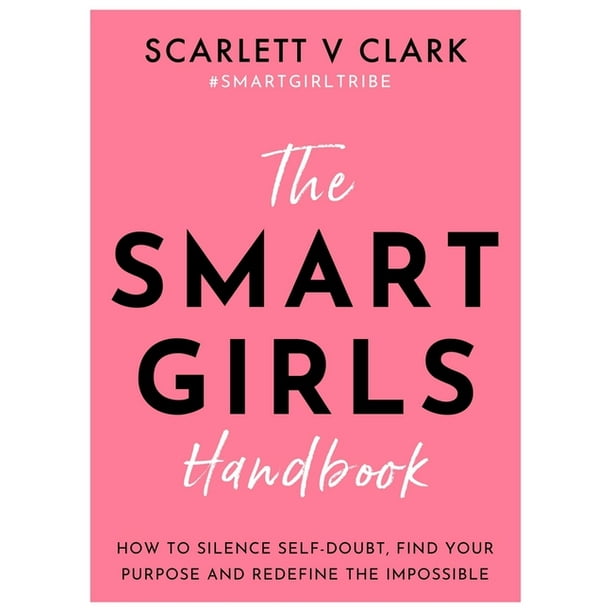
Giving women the tools they need to shine in the modern world, become their fearless and authentic self, and design the life and career that fills them with joy. The Smart Girls Handbook brings together inspiration, game-changing ideas, and empowering words from women around the world who have been through it all.
Scarlett V Clark is a speaker and the award-winning founder and CEO of Smart Girl Tribe, the UK’s number one female empowerment community. She is available to provide extracts and top tip features such as:
• How my toxic relationship became the catalyst to my success
• 6 stress busters to stop feeling anxious
• ‘You grow through what you go through’: embracing failure
• How to silence your inner ‘mean girl’
The Smart Girl Handbook is for women who are tired of being told what dress size they should be, tired of the negativity surrounding them today, including from other women, and for women who want to be their authentic selves. Life happens, and it’s not always pretty, but with a backbone, determination, and the guidance of The Smart Girl’s Handbook, you can come through unscathed, just slightly bruised but not battered.
Learn not to fall into the traps set out there to trip you up. Life around us is very negative, with news outlets, social media, and even toxic friends. You must learn to rise above the negativity, and Scarlett helps you silence your inner mean girl. The Smart Girl Handbook is all the questions you wish you could have asked when you were younger but had no one or place to turn for the answers.
I encourage every woman to buy Scarlett’s book, The Smart Girl’s Handbook. Maybe even share one with a friend. This is not your average self-help book that has been regurgitated over and over. She’s witty, original, and honest about the problem and how to get the answers. She’s not sharing pie-in-the-sky stories; this is her life, dissected and laid out for you to learn from. I think The Smart Girl book is an excellent primer for moms to help their daughters navigate the rough waters ahead.
Website: www.smartgirltribe.com
Facebook: Smart Girl Tribe
Instagram: @smartgirltribe
Podcast: ‘The Smart Girl Tribe Podcast’ is available on Podbean, Spotify, iTunes, and anywhere you can find podcasts.
Hi Melinda,
I am the author of The Smart Girls Handbook and I have to be honest, I cried when I read your review, it’s the first one that came in and you nailed the precise mission I wanted the reader to get out of the book. It would be brilliant to connect further but on launch day (March 4th) I’d love to invite you to share a review on Amazon knowing how inspiring you found it! I really think you could help mothers and other women in purchasing it. My entire business has been built on the idea of women fundamentally deserve more from the media and are fully deserving of living a beautiful life full of confidence, ambition and self-worth. I can’t wait to hear your thoughts, Scarlett X CEO/FOUNDER
We are Welbeck Publishing Group – a globally recognised, independent publisher based in London. Our mission is to deliver talent-driven publishing with leading authors and brands worldwide. Our books and products span a variety of categories including, fiction, non-fiction and stationery and gift. We are renowned for our innovative ideas, production values, and developing long-lasting content.
Welbeck’s amazing product comes to life for adults, children, and families in over 30 languages in more than 60 countries around the world. We have collaborated with many of the world’s leading institutions and licensors including – Disney, Universal, Paramount, HBO, Queen Productions, FIFA, International Mensa, Roald Dahl Literary Estate, the Science, Natural History and Imperial War Museums, and Royal Botanic Gardens, Kew.
Melinda
Repost from 2021
Thank you for joining me for this week’s Friday Quote.

Melinda
Every parent wants their kids to live a healthy and happy life, but they cannot expect their kids to understand all of this themselves. They are not the ones buying the food or paying for clubs and activities, which is why it’s so important for parents to know how to encourage a healthy lifestyle. If you want to ensure your kids grow up big and strong, consider these tips.
Your kids will not be able to live a healthy lifestyle if you don’t make healthy living accessible. Filling the home with candies and fatty foods will not do anyone any favors, so it’s worth buying whole foods that are good for their development and mental well-being to ensure they get into good habits early. It can be challenging to change children’s habits as they grow older if they haven’t been exposed to fruits and vegetables already, so establishing this kind of diet early can make a world of difference.
Similarly, parents need to lead by example. It’s not enough to push healthy foods or habits onto your kids if you don’t do the same, especially as they will look to you as an example. Besides this, you should also avoid common food mistakes that force kids to eat things they might not like, as this will only promote a negative association and could even impact their trust as they won’t feel comfortable eating what you serve them in case you’ve hidden other foods inside.
Healthy living is about what they eat and how they spend their time. Kids naturally need (and want) to burn off energy, so channeling this through sports and activities is an excellent way to introduce them to sports they may play for the rest of their lives. However, while you might want your child to be the next big football star, remember they might not share your interests. Instead, let them explore different sports to find one they love.

A healthy home is a cornerstone of a healthy lifestyle, so understanding how to create this environment is essential. Keeping the space clean and tidy is vital, as is cultivating a positive and supportive environment. Let your kids feel comfortable sharing their stories and feelings, and ask about their day to ensure they can see the value in being open and honest about their lives rather than trying to hide things from you.
Many kids can be scared of a doctor or dentist, but they need to understand how important regular healthcare and checkups are. You can help them by familiarizing them with medical professionals so they feel at ease. Besides typical doctors, treatment from physiotherapists, opticians, and chiropractic care are also important and can help your kids treat and overcome a variety of potential health issues as they grow up.
Healthy living can seem tricky for many parents, especially if they don’t have the time to put together lavish meals or cannot afford to buy their kids the newest sports gear. Still, these tips can make it easier for you to establish a healthy base that teaches your kids all they need to know about a healthy lifestyle.
This is a collaborative post.
Melinda
Repost
Thank you for joining me for this week’s Friday Quote.
Melinda
No one knows how to push your buttons like your family does. Here are some strategies for navigating challenging family dynamics and setting boundaries to help you get through difficult family gatherings unscathed.
Dreading an upcoming family gathering with your relatives? Learn from experts on how to navigate get-togethers with challenging family members, set healthy boundaries, and use confrontation as a positive tool to make the next family reunion a lot more bearable.
For many people, getting together with family can be a contentious time. At dinnertime, you may get into family drama about politics and current events. And then comes dessert, along with the open forum about why you haven’t settled down yet. (But Aunt Edna knows a nice boy you should meet!) And on yes, what exactly are you doing with your career these days? Because your perfect cousin Jennifer is a surgeon. Did you know that?
The election might be over, but the politically charged conversations at the family table are far from done. And then comes dessert, along with the open forum about why you haven’t settled down yet. (But Aunt Edna knows a nice boy you should meet!) And, oh yes, what exactly are you doing with your career these days? Because your perfect cousin Jennifer is a surgeon. Did you know that?
Ah, family. It’s not that they’re toxic — it’s just that they’re not always your cup of tea, yet you still like (maybe even love?) them enough to pay them a visit.
But what if this year could look more like a Norman Rockwell painting and less like the Jerry Springer show?
While we can’t make any promises, we do have some strategies that will help you stay as unruffled as possible — even when Aunt Edna asks for the fiftieth time why you aren’t married yet.
Before you go, do some journaling. Think and write about the issues in your family that tend to be the most triggering, especially during the holidays or other so-called “special” occasions that can feel anything but special.
“What you don’t want to do is to get drawn in, and that’s really easy for all of us because no one can push our buttons like our family members. They know us, grew up with us, know our weak links, so they will consciously or unconsciously push those buttons,” says Dr. Carla Marie Manly, a clinical psychologist and author of Joy from Fear, whom DailyOM interviewed for this story.
Use your journal to write down all the hot spots that you know will trigger you, such as unwanted comments about your appearance, career, love life, or political beliefs. “When you’re more aware of these hot spots and how you will navigate them, you will be able to approach them from a place of observing and not judging,” Dr. Manly explains. “That’s an important piece. When we judge, we get ‘hooked in’ and our emotions get hot.”
Boundaries will only be as strong as your willingness to follow through on the consequences if your boundaries are crossed.
While you have your journal out, your next task is to begin the crucial work of setting boundaries, starting with a list of what you value most.
“Boundaries are easier to create when you know what you’re protecting,” Kathryn Ely, a licensed professional counselor and founder of Empower Counseling & Coaching, tells DailyOM.
Ely suggests using a framework where you journal about your value in each of the following eight categories: mental health and physical well-being; your intimate love relationship; parenting and family; friends and community; career and finances; spirituality and faith; learning and self-growth; and adventure and leisure.
“When you determine what is most important to you in [these eight categories] of your life, that becomes your compass. Every action either takes you closer [to] or farther away [from what you value]. It becomes your guide for the boundaries you need,” says Ely.
Now, here’s the key part: Boundaries will only be as strong as your willingness to follow through on the consequences if your boundaries are crossed. “When you’re creating boundaries, it’s imperative to know the consequences. It does no good to create a boundary if you don’t enforce it,” says Ely.
That means clearly communicating with challenging family members what that boundary is and what will happen if they don’t respect it.
Manly suggests a “three-strike rule” when communicating and enforcing boundaries.
If someone crosses your line, make it clear that they have crossed it and politely ask that they not do it again. If they do, you will leave. (Strike one.)
If it happens again, remind them that they have crossed your line and to please not do it again. If they do, you will leave. (Strike two.)
If it happens for the third time, that’s strike three, and it is crucial that you follow through with your ultimatum. Make it clear this was the third time and that you are now leaving. Also, make it clear that you will be taking a week (one month, three months, however long you decide) of silence from them. And it’s okay to need more time even after that time passes, says Manly.
Honesty about your feelings and strong communication will always be your best allies when it comes to dealing with parents or in-laws, especially when they still treat you as a child and have trouble respecting how you have changed and grown. And it’s best to tackle that elephant in the room prior to the event.
One of Ely’s tactics is to ground your tough conversations in a place of love and respect. This is particularly helpful to remember if you’ve had negative experiences with confrontation in the past. But, as Ely notes, confrontation can be very beneficial to a relationship when you approach it with compassion and honesty.
For example, says Ely, if you have a parent who has difficult expectations of you, the confrontation might look like this:
“I love you and I’m sure you mean well, but when you say things like x, y, or z, it makes me feel like my results are more important to you than how I feel as a person, and that’s not okay with me. We’re going to have to do things differently moving forward. If this happens [insert the thing they say or do here], then this will happen [insert what the consequence is for breaking that boundary here].”
Another helpful strategy is to role-play as many scenarios and conversations that could arise during an event with difficult parents or in-laws ahead of time. You can do this with your partner, a trusted friend, or even yourself in front of a mirror.
“With family, it’s hard to keep our emotional regulation in check,” says Manly. “[Role play] gives you a chance to practice in a safe environment and helps you determine at what point you’ll walk away.”
Manly also suggests practicing this one simple, yet effective response to disarm any unwelcome comments: “I see your perspective. Thank you for sharing that.”
Having grown up under the same roof, siblings have a way of getting under each other’s skin like no one else can.
Something to help keep your emotional regulation in check around challenging family members such as siblings is to identify what they may use as “bait” to rock the boat, notes Manly. Perhaps it was a nickname they tease you with or a memory they know will make you hot with embarrassment.
When you can recognize that and calmly detach yourself from their “hook” by reminding them of your boundary (and perhaps giving them a “strike”), the better you’ll be able to stay composed and in control.
Also, it’s useful to recognize that all of your emotions are good, explains Manly. It’s how you use those emotions that can make an outcome either positive or negative. Anger, for example, is “telling us that our boundaries are being crossed,” she says.
When you feel that anger, recognize it or — better yet — communicate it. One way to do that: “I feel angry [or hurt] when you say that. I would prefer you do this [insert your desired outcome] in the future,” says Manly.
Again, don’t be afraid to follow through with your three-strike rule if your boundary isn’t being respected.
One of the best ways to deal with extended family? Step into the background and become “a fly on the wall,” suggests Manly. Stay quiet and observe the family dynamics, the conversations, what “bait” is triggering other people. Being an observer rather than a participant will help you detach yourself from any difficult behavior they might be exhibiting and see it as an extension of their own baggage.
Manly also suggests taking timeouts as often as needed. If you’re feeling triggered (but aren’t ready to make an exit quite yet), find a quiet place for a deep breath, perhaps in the kitchen.
“I love being in the kitchen and being the first person to clear the plates,” Manly says with a laugh. “Especially for introverts, going to the kitchen for a timeout, which is my go-to, is absolutely okay and healthy because you’re saying, I’m getting overloaded. You’re still part of the gathering, but you get your peace and quiet. Or go for a short walk. A lot of this is about self-care.”
Is there anyone in your family you actually enjoy seeing and having a conversation with? Be clear about what you want from a gathering on a personal level and make that your focus.
“Let what you want be the driving factor, not what you don’t want, so that [challenging] person doesn’t get all the power and ruin the occasion for you,” says Ely. “Ask yourself: ‘What do I want to say that I did at the end of this [event]? Who is the person I want to be in this situation?’ And then refuse to let those [challenging] people get in your way of doing that, even if you have to step outside or take a timeout — whatever you need to do in that situation to keep your focus on the positive parts for you.”
It doesn’t even have to be a person. The positive thing you focus on can also be your mom’s apple pie — whatever it takes to make it through. And knowing that you got through a challenging family event with both your self-respect and sanity intact will make that apple pie even sweeter.
Melinda
Thank you for joining me for this week’s Friday Quote.

Melinda
Thank you for joining me for this week’s Friday Quote.

Melinda
When I redesigned my site, I felt certain the widgets included would create an easy way to move around the site. I forgot one big widget, the Search Button. I appreciate Ilze from a day in the life of a latvian mom who pointed it out after telling her she could search for a post.
There is now a Search Button for you to narrow down the type of posts you’re looking for. If there’s anything else you feel the site is missing, please let me know. My goal is to make visiting as easy as possible.

Melinda
When I was diagnosed with rheumatoid arthritis (RA), I was terrified that my career was over. These tips helped me adapt my work life so that I could excel.
It started with joint pain and limited use of my left thumb.
Then came the debilitating fatigue that was so profound I couldn’t finish my workday. After numerous tests, office visits, and misdiagnoses, I was diagnosed with RA.
RA is a chronic, systemic form of arthritis that attacks the small joints in the body. This can lead to eventual joint deformity and immobility. I found myself not only grappling with what this new diagnosis meant but also fearful for my job.
I had worked so hard to be where I was in my career. I had dedicated my entire life to working in healthcare, and I was terrified I wouldn’t be able to continue.
Workers with chronic illness face unpredictable days and uncertain futures. They may worry about their own health, how their condition will progress, and what this might mean for the future of their employment.
The protections afforded chronically ill workers in the United States are vague.
To protect their health and their jobs, workers must navigate employers’ policies, which may include short-term and long-term disability plans and a patchwork of federal laws and regulations.
A 2009 report by the Center for Economics and Policy Research found that among 22 well-resourced nations, the United States was the only one that did not guarantee workers paid time off for illness.
There are two main laws that provide some protection for those with chronic illness in the United States.
The Family and Medical Leave Act allows employees to take up to 12 weeks off each year for medical or family emergencies, but pay is not guaranteed. This law provides job security if someone needs to take time off due to illness.
The Americans With Disabilities Act requires employers to make reasonable adjustments for disabled workers, often in the form of additional time off.
If you are dealing with a chronic illness, here are some strategies to help you maintain and even excel at your job.
Sometimes an empathetic co-worker can help with productivity. Other times, no one needs to know. It’s your business. Have questions about the Americans with Disabilities Act? Check out the Job Accommodations Network. Is it against the law to discriminate against a disability. For further information on filing a complaint, check out the Equal Employment Opportunity Commission.
If you need 90 minutes to get ready before work, 3 hours to get ready for bed, or a midday nap, plan for it. Planning appropriately, and generously, can help you optimize your time while at work.
Optimize your body’s ability to function by listening to it.
Even people without brain fog or medication side effects need to take breaks every 1 to 2 hours, especially when working on a big project or working long hours.
Lose the guilt when you call in sick because you are really sick. All too often, we tie too much emotion to calling in sick. If you’re really sick, you shouldn’t be at the workplace anyway. You are human!
When thinking about having a career when you live with a chronic condition, there are certain factors to consider more seriously. Start by taking an inventory of what you need out of a working environment. Ask yourself these questions about the role or career you are contemplating:
Sometimes it’s not a matter of what you’re doing but when you’re doing it. If you’re not a morning person, don’t work at a coffee shop.
Are your best hours in the afternoon and early evening? Maybe a receptionist role at a dance school is a good fit. Try to find a career where the hours fit your natural sleep schedule or the times of day when your symptoms tend to be the most manageable.
Can you break off and start your own company? Working for yourself has its benefits. Maybe there are freelance options at companies you are considering.
Upgrade your office chair, splurge on the ergonomic mouse, and adjust your monitors or other equipment to minimize strain on your joints. Here are some great tips from the Arthritis Foundation about creating an ergonomic office space.
Bring your medications, compression gloves, braces, ice packs, heating pads, ace wraps, and anything else you may need with you to the workplace.
If it helps you to be more productive, have it available to you throughout the day.
Advocacy organizations may offer resources that are specific to your condition. They may offer support, resources, or advocacy in your area, which may be helpful. I’d recommend starting with Chronically Capable.
If you can’t work anymore, you can apply for Social Security disability insurance. The process is lengthy, and the payments are modest, but you automatically qualify for Medicare health insurance coverage once approved.
If it doesn’t work, change it.
If you know the job you’re in now is not a good fit, it’s time for something new. Change is scary, but staying the same can be terrifying.
There are many ways to have a fulfilling career with a chronic illness. If you are open-minded and ask yourself the right questions, you can find something you love. If you love what you do, it will never feel like work.
Melinda
Reference:
“Violence is impractical because it is a descending spiral ending in destruction for all. It is immoral because it seeks to humiliate the opponent rather than win his understanding: It seeks to annihilate rather than convert. Violence is immoral because it thrives on hatred rather than love. It destroys community and makes brotherhood impossible. It leaves society in monologue rather than dialogue. Violence ends up defeating itself. It creates bitterness in the survivors and brutality in the destroyers.”
— in his Nobel Lecture delivered at the University of Oslo on Dec. 11, 1964
Melinda
Thank you for joining me for this week’s Friday Quote.

Melinda
By Denise Mann
Medically Reviewed by Allison Young, MD
Last Updated: 20 Dec 2024
Journaling about our feelings releases emotions, which allows for perspective and helps us to better manage our bipolar mood episodes.
Whenever James M. feels stressed, he logs onto his computer and writes it all away.
He says that journaling has been a major source of strength and hope in managing his bipolar 1 disorder. His online journal is now around 200 pages long — and counting.
“I first started writing when I was not feeling well, and I had thoughts circling around in my head that wouldn’t go away until I wrote them down,” recalls the 30-year-old internet technology professional in Concord, New Hampshire.
Journaling can play multiple roles. It can:
There are no hard-and-fast rules about when to journal, or in what form, or what to do with the entries once they are complete. Journal entries can be shared, discarded, or revisited at a later date.
James, who was diagnosed in 2012, doesn’t necessarily journal every day, and he almost never shares his pages with anyone, except for his therapist, on occasion. For him, it’s a personal and cathartic process — and, on occasion, inspiring.
“I will look back and be amazed at how much pain I was in, how much has changed, and how far I have come,” he says.
The first step in journaling: Silence your internal editor. Your entries don’t need to be polished or even grammatical. In fact, journaling doesn’t always mean putting pen to paper (or fingers to keyboard). The process can use visual formats instead, such as drawings, collages, and vision boards.
Journaling as part of art therapy can be helpful for individuals who don’t find it easy to express themselves in words, notes Adele C. Viguera, MD, assistant professor of psychiatry at Harvard Medical School in Boston, Massachusetts.
“A vision board or collage can be a good option,” she says. “Journaling can be as simple as drawing smiley faces or unhappy faces on the calendar to indicate mood.”
Both vision boards and written journals also can be used for goal-setting, Dr. Viguera points out.
“Writing down or illustrating your short-term goals for the day, or the things you want to accomplish long-term, can be very helpful,” she explains.
In short, the choice of how, and how often, to express yourself depends on the person.
Journaling is a versatile process that can meet you where you are, points out Ben Weinstein, MD, chair of psychiatry at Houston Methodist in Texas.
“It’s a way to offload thoughts and sort out feelings,” he says. “There are times when the very act of writing things down can resolve some of these feelings.”
James finds that letting his thoughts flow out his fingers gives him some much-needed distance.
“It gets whatever poison is running through my head out, and I feel better,” he says. “Maybe not 100 percent better, but I can start thinking of solutions.”
Jessica C., in her forties, has been living with bipolar 1 for nearly half her life. The Greensboro, North Carolina, resident values journaling as an emotional outlet.
“Journaling helps me because it gives me a safe space to release thoughts and emotions, with absolutely no judgment from anyone,” she says.
She has no set routine, essentially using journaling as a safety valve.
“I journal when I feel it’s necessary — most times, a few days a week, but sometimes, it’s several times a day,” she says. “I’ll just continue my previous paragraph for that day, but start out with putting the time of day that I wrote it.”
To read the entire article click HERE.
This a great article for all people, not just for those with Bipolar Disorder. Writing my thoughts down helps me organize them and I can go back later to see what I wrote.
Melinda
Reference:
Thank you for joining me for this week’s Friday Quote.

Melinda
by Kathy Reagan Young
Fact Checked by: Jennifer Chesak, MSJ
With careful planning and thoughtful strategies, you can find fulfilling employment opportunities that accommodate your unique needs.
Searching for a job is a job in itself. Add chronic illness to that mix, and the process becomes even more complex. The unpredictable nature of chronic conditions makes it important to have a plan for dealing with what can be unique hurdles during the job search.
I’ve been there, done that. That’s why I’m offering my practical tips and insights to help you navigate the job search successfully.
Before diving into the job search, it’s essential to assess your limitations, strengths, and preferences. Consider the impact of your condition on your daily life and energy levels.
Do you tend to “fade” as the day goes on? Setting hours to reflect and embrace this truth will be helpful. Are you unable to lift, walk long distances, or hold a phone? Do your hands get tired easily? Only you can know yourself.
Self-awareness will guide you to set realistic goals and find positions that align with your abilities. And it will set you up for success in the long run.
“Disability is a matter of perception. If you can do just one thing well, you’re needed by someone.”
— Martina Navratilova
Identify industries and roles that accommodate flexible schedules, remote work options, and supportive work environments. Look for companies with a strong commitment to diversity and inclusion, as they may offer more accommodations for people living with chronic illness.
So, how do you find this information?
Research. I like to check out companies on LinkedIn. It’s a great place to learn about a company’s culture and the people who work there. You can also learn a lot from anonymous postings of current and former employees on Glass Door.
The decision to disclose your chronic illness is a personal one. It may depend on the nature of your condition and the specific job requirements. Legally, employers cannot discriminate against people living with disabilities.
But let’s be honest: Discrimination is real. Doing what we can to control the narrative is a smart decision.
I used to advocate for everyone to be forthcoming — loud and proud, so to speak. “Share the real you,” I’d say. “Having to keep a secret is exhausting and stressful. Be authentically who you are.”
Then, multiple people shared with me their stories of discrimination and ableism. So, I no longer suggest that.
Now, I recommend securing the job first and disclosing your condition strategically if you decide to do so. Share only the most job-relevant information and nothing more. Focus on your skills and qualifications first, then discuss any necessary accommodations that will allow you to perform at your highest level.
And document, document, document. If you feel you’re being discriminated against at any point in the hiring stage or beyond, you’ll need documentation to substantiate your claims.
Explore online job search platforms and networks that cater to individuals with disabilities or chronic illnesses. Many websites feature job listings from companies actively seeking to hire people with diverse abilities, providing a supportive environment for job seekers with chronic illnesses.
Leverage your personal and professional networks. Tell friends, family, and colleagues about your job search and ask for recommendations or introductions.
Maybe you post on your favorite social network (Facebook, Instagram, etc) or email several friends and family members to inform them of your job search and ask for any advice. Networking opens doors to opportunities that may not be advertised through traditional channels.
Craft a compelling resume and cover letter that emphasize your transferable skills and accomplishments. Focus on experiences that showcase your ability to overcome challenges and achieve results.
Maybe a team member at a former job of yours resigned unexpectedly in the middle of a big project with a deadline looming. Instead of panicking, you assessed the skills of other team members to see how this deficit could be filled by existing talent, and you hired temporary outside help to fill in the remaining gaps to complete the project well and on time.
Sharing how you’ve overcome challenges in the past can help potential employers see the value you bring to the table, regardless of any limitations posed by your chronic illness.
Consider creating a skills-based resume that emphasizes your abilities and achievements rather than focusing on a chronological work history. This format allows you to showcase your skills prominently, capturing the attention of employers and demonstrating your suitability for the position.
Just search “skills-based resume” to see formatting examples.
Job interviews can be nerve-wracking, and sometimes we can face additional stressors. Take proactive steps to prepare for interviews by researching common interview questions and writing down your responses.
Consider practicing with a friend or family member to build confidence and refine your answers.
Develop a strategy for addressing potential gaps in your employment history due to health-related reasons, focusing on how you’ve maintained or improved your skills during such periods. For example:
During (specific timeframe), I was dealing with health challenges that taught me valuable lessons in resilience and adaptability. I remained active in professional networking groups, participated in online discussions, and did self-directed learning. This not only kept me informed about industry developments but also allowed me to exchange ideas with professionals in the field.
Navigating a job search with a chronic illness can be challenging, but with careful planning and thoughtful strategies, you can find fulfilling opportunities that accommodate your unique needs.
I have Bipolar Disorder and made the decision to not tell my employer exactly what health issue I had and I did not discuss it until my health forced me to take time off. If you have a physical limitation that creates a different situation and one where you will need to tell them upfront. Be leary, and keep documentation, the reality is not all employers are ethical and respect EEOC laws. That’s the cynic in me.
Melinda
Reference:
Thank you for joining me for this week’s Friday Quote.
Melinda
Thank you for joining me for this week’s Friday Quote.

Such wise words!
Melinda











 Looking for the Light