Celebrate Life · Health and Wellbeing · Men & Womens Health · Mental Health

A Healthy Aging Guide to Strength Training and Stretching at Home

Weight lifting and stretching are useful at any age, but there are specific benefits for older adults.

With aging comes concerns about strength, balance, and mobility. But integrating resistance training and stretching into your routine can keep you feeling healthy and strong. 

Not sure where to start? Read on for a primer on how movement can make a difference, plus a full-body workout and stretching routine that you can do at home.

Goals for your at-home strength training program 

Committing to and maintaining an at-home strength training program can be the first step to preventing — or delaying the onset of — many age-related ailments. 

The best part is, it doesn’t have to be complicated or time-consuming. 

Your at-home strength training program should:

  • Include 3 sessions weekly. Incorporate a 20- to 30-minute strength training session 3 days per week. You can work out at home with minimal equipment and still see significant results.
  • Work your whole body. Incorporate upper body, lower body, and core exercises to get the most out of each workout. 
  • Be consistent. The more consistently you strength train, the better your results will be. 

6 strength exercises to try at home 

Combine these 6 strength exercises for an effective and comprehensive full-body workout.

Unless otherwise noted, do 3 sets of 10–12 reps of each of these exercises.

One-leg balance

With balance declining as you age, proactively focusing on improving it is key. Start with this one-legged drill to suss out any imbalances you may have:

  1. Position yourself next to a chair or a wall if needed for balance.
  2. Stand with your feet together, arms down at your sides.
  3. Bend your knee and lift your right foot up off the ground behind you, holding where your leg forms a 90-degree angle. 
  4. Hold for 30 seconds, then repeat on the left leg. 
  5. Complete 2 holds on each side.

Squat

The squat is a powerhouse exercise, not only for building muscle but for preparing you for daily life. If you ever sit in a chair, you’ll benefit from squatting. Here’s how to do it:

  1. Stand with your feet shoulder-width apart, toes pointed slightly out, with your arms down at your sides.
  2. Push your hips back then bend your knees, lowering down until your thighs are parallel to the ground or as close as possible, as if sitting in a chair. Keep your chest lifted and proud throughout the movement. 
  3. Push up evenly through your whole foot, back to the starting position.

Wall pushup 

Pushups are one of the most effective exercises to gain upper body strength, and you need no equipment to execute them. Start on a wall, and then try a pushup kneeling if you want more of a challenge. Here’s how to do it:

  1. Get into a plank position with your hands on a wall at shoulder height and your feet about 3–4 feet from the wall. 
  2. Bend your elbows to come closer to the wall, maintaining a straight line from your head to your ankles. Keep your elbows at a 45-degree angle from your body. 
  3. Push back away to the starting position. 

Resistance band row

A strong back is key for good posture, among other things. Use a resistance band here to strengthen those muscles:

  1. Grab a resistance band, with a handle in each hand, and step on the band with both feet. 
  2. Cross the handles and hinge at the waist to a 45-degree angle.
  3. Maintaining a straight back, send your elbows up and back, rowing the handles up toward your chest. Squeeze your upper back muscles at the top.
  4. Pause, then slowly release back to start. 

Bird dog

A boon for both balance and stability, bird dog will challenge your full body. 

  1. Assume a position on all fours on the ground, placing your hands under your shoulders and your knees under your hips. 
  2. Keeping your neck neutral, simultaneously extend your right arm and left leg. Make sure your hips stay square to the ground. Pause at the top. 
  3. Return to start and repeat with your left arm and right leg. 

Glute bridge

An effective exercise for the posterior chain — or the back of your body — glute bridges will build strength in no time. Add a dumbbell to your hips if you need added resistance. 

  1. Start by laying on your back with your knees bent and feet flat on the floor. Your arms should be down at your sides. 
  2. Brace your core and push up through your feet, lifting your butt up off the ground until your hips are fully extended. Squeeze your glutes at the top. 
  3. Pause, then slowly return to start.

5 stretches to include in your at-home fitness routine

Do these 5 stretches to hit all of the major body parts and help improve your flexibility and mobility.

If not indicated, hold each stretch for about 30 seconds total. As you focus on breathing — deep inhale, deep exhale — try to go deeper into the stretch. 

Hamstring stretch

Particularly if you sit a lot, stretching the hamstrings is important to maintain good movement in the hips. Here’s how to do it:

  1. Position yourself with a step or another flat, raised surface in front of you. There should be about one foot between you and the step.
  2. Put one heel on the step and lean forward at the hips to a 45-degree angle.
  3. Feel the stretch in your hamstring, leaning forward to go deeper.

Seated hip stretch

Hip functionality is key to many movements in our daily lives, like walking, so keeping these muscles and joints mobile is important. Try this seated stretch:

  1. Sit in a chair and scoot down to the edge. Your feet should be flat on the floor and your back should be straight.
  2. Bring your right ankle to rest on your left knee, bending your leg to do so. 
  3. Lean forward slightly to feel the stretch in your hip.

Chest opener

Combat the forward-lean posture with this chest-opening stretch:

  1. Sit in a chair and scoot down to the edge. Your feet should be flat on the floor and your back should be straight.
  2. Interlace your fingers behind your back and open your chest up to the sky, dropping your shoulders.

Side-lying thoracic rotation

Another good stretch if you find your shoulders rounding forward, this rotation will target and release your upper body:

  1. Lay on the ground on your left side, arms straight out in front of you with palms touching.
  2. Lift your right arm straight up and over, opening your chest and allowing your right arm to drop to the other side of your body. Your head should follow.
  3. After 5–10 seconds, rotate back to start and repeat for 10 reps. 

Side-to-side reach

Stretch your back and core with this move:

  1. Stand straight with your arms down at your sides and feet shoulder-width apart.
  2. Bring your right arm up and over your head, bending your torso to the left as you go. 
  3. Hold here for 5–10 seconds, then return to center and switch arms. 

The takeaway

Consistently strength training and stretching, even for short periods 3 times per week, can help tremendously in delaying or preventing many age-related ailments. Start slow and watch your strength, balance, and mobility improve.

Last medically reviewed on October 11, 2024

Melinda

Reference:
Book Review · Celebrate Life · Health and Wellbeing · Men & Womens Health

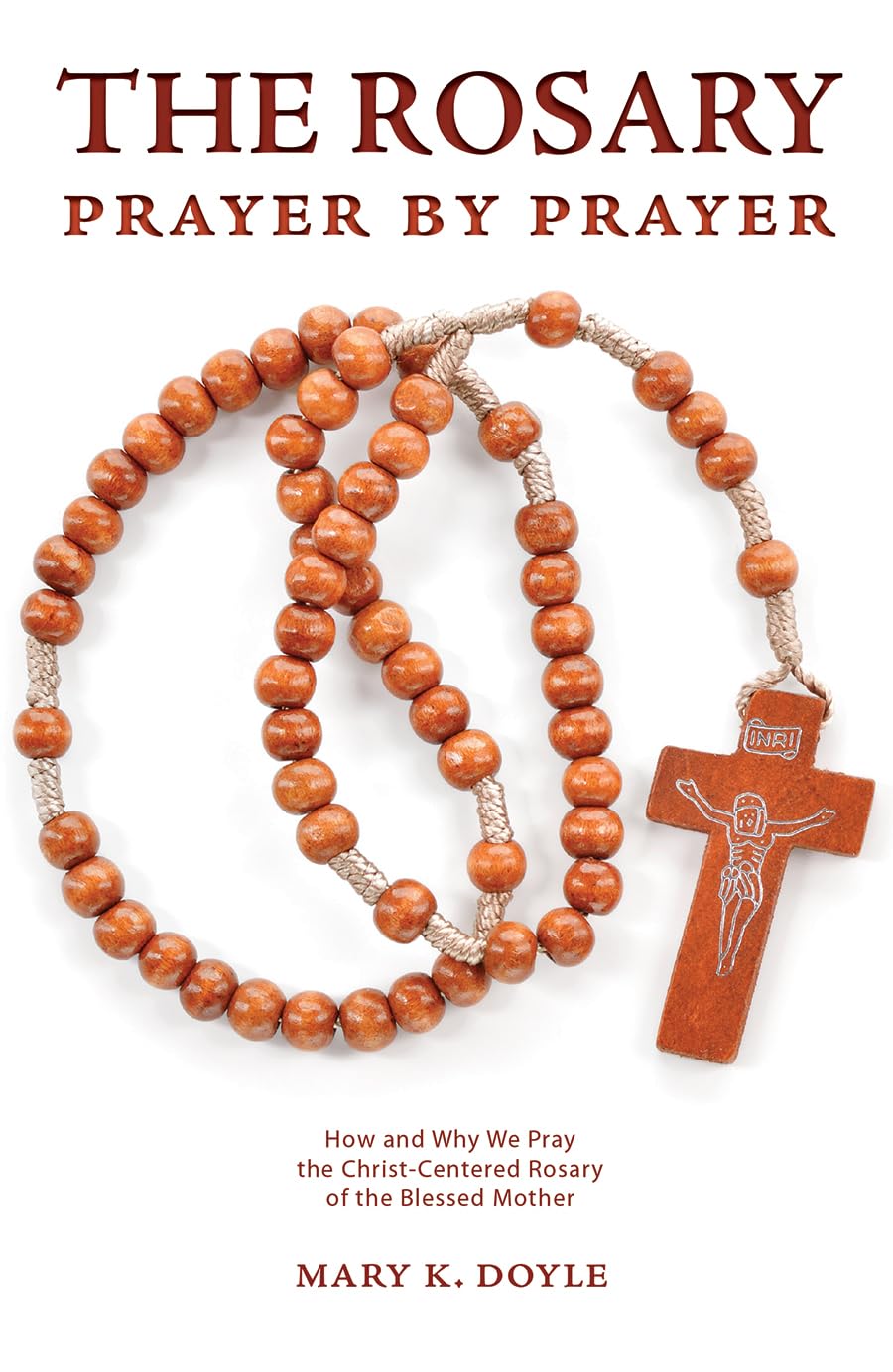
Book Review-The Rosary Prayer By Prayer By Mary K. Doyle

Mary and I have become good friends, and her encouragement, positive attitude, and motivation have helped me grow. Her book has expanded my life in new ways. Thanks, Mary.

About Mary K. Doyle

Author Mary K. Doyle has a Master of Arts Degree in Pastoral Theology. Her fluid, conversational writing style results from an extensive career in feature writing, advertising, and publicity over more than thirty years. Her latest book is Navigating Alzheimer’s: 12 Truths about Caring for Your Loved One. This information was taken from the back of the book.

Whether readers are praying the rosary for the first time or are already praying the rosary daily, they will find that The Rosary Prayer by Prayer is an invaluable resource and aid to promoting a deeper prayer experience. It is a treasure chest of information about the history and benefits of the rosary, suggestions for meditation on the mysteries, exquisite artwork, and references. This book is also an easy way to learn how to pray the rosary.

You can find Mary’s book on Amazon.

Here are a couple of reviews from Amazon

“I grew up Catholic, but didn’t know that there were multiple devotions to saying the rosary. And, as an adult and lapsed Catholic I was a bit fuzzy on the basics as well. This book does a soulful job of detailing the steps and introducing the special devotions of each of the mysteries. The pen and inks are a beautiful accompaniment to the text. A very nice gift book for anyone who wants to reaquaint themselves with the devotion of the rosary.”

“As a Catholic Man in the Knights of Columbus we oft say “REAL MEN SAY THE ROSARY.” I to my shame lapsed a bit in regular Rosary Prayer/Reflection…..BUT….. well … I came across this GEM of a BOOK! it has revived my devotion in the Rosary by new BUT Traditional reflections….magnificent charcoal pics in all Mysteries in short…. a book LONG NEEDED….I think it wonderful for Catholics who are long time Rosary users….Newbies…….or in my Case…….a lapsed “Rosary User” ….JP2 called it (the Rosary) his favorite Prayer… this book….will bring full circle why JP2 said this!!!”

Mary has written nine books; you can see the collection HERE.

My Thoughts

The book’s layout flows nicely and leads smoothly into the next topic.

Each Prayer shares the history of the Rosary prayers and references the Scripture where the prayer originated. Each prayer has an illustration of the Rosary, and the bead to start the prayer is circled.

The book is informative, not technical, and written with a gentle heart.

The Rosary is written for everyone, and her writing is easy to understand. I’ve learned so much. The Rosary Prayer By Prayer is a must-read for all Catholics or those who are curious. It’s a book for your bookshelves to reference for years to come.

Major Thumbs up!

Mary’s blog is Midwest Mary. Her writing is informative and inspirational. Stop by her blog, say hello, and enjoy the archives. You’ll be glad you did.

Melinda

Looking for the Light

Celebrate Life · Health and Wellbeing · Medical · Men & Womens Health

Robert Kennedy Jr. Is On My Last Nerve With His Latest Autism Project-Not A Rant

This post is not a rant; it’s based on facts that may set you ablaze, too.

Here’s a brief overview of how he is taking private medical records without permission to gather information and track people with Autism.

  • Robert F. Kennedy Jr. is amassing private medical records of Americans for a new autism study
  • This includes data from pharmacy chains, lab tests, smartwatches and more
  • The HHS secretary is also launching a registry that will track Americans with autism

What is next? Americans with no right to privacy?

This is appalling, and it opens the door for our government to use and misuse our private information.

Be sure to read the article in full; the information was taken from an interview on CBS.

Melinda

Reference::

https://people.com/rfk-jr-to-launch-autism-registry-using-private-health-records-11720156

Celebrate Life · Health and Wellbeing · Men & Womens Health

Daily Prompt

Daily writing prompt
What makes you nervous?

I am nervous about several things: snakes, fire, tornadoes, and running late.

Have a great day.

Melinda

Looking for the Light

Celebrate Life · DIY · Fun · Health and Wellbeing · Men & Womens Health

20 Supplies For Handmade Gift-Wrapping

Wrapping your gifts has never been easier, and you may have many items needed at home.

Fabric scraps

Wax paper

Parchment paper

Twine

String

Greeneery

Dried natural elements

Brown paper bag

Muslin bags

Cheesecloth

Glass jars

Scizzors

Tape

Glue

Naturally dyed materials

Ephemera

Decorative tape

Writing tools

Whole spices

Melinda

Reference:

Willow & Sage by Stampington

Celebrate Life · Health and Wellbeing · Medical · Men & Womens Health · Self-Care

First Aid Tinture & Wound Spray

Together, these herbs create a potent skin-healing and infection-preventing preparation that is great to have on hand.

You Will Need

Digital scale

0.5 oz. yarrow

0.3 oz thyme

0.2 oz lavender

5 oz vodka: 120 proof

Glass jar

Parchment paper: unbleached

Fine-mesh sieve

Cheesecloth

Large bowl

Dropper bottle/spray bottle

Melinda

Reference:
Wolllow & Sage by Stampington

Celebrate Life · Health and Wellbeing · Medical · Men & Womens Health · Mental Health

Blogger Highlight-Adjunct Wizard

Thank you for all the great feedback on the Blogger Highlight series. I’ve enjoyed meeting each blogger and sharing their site with you. This week, we highlight Adjunct Wizard. Paul has a varied background that results in great and sometimes quirky posts. He is also the caregiver of his wife, who has Parkinson’s Disease.

Adjunct Wizard

I write this for me but I am always interested in other’s thoughts about life and dealing with chronic disease.

My favorite quote: Finish each day and be done with it. You have done what you could. Some blunders and absurdities have crept in; forget them as soon as you can. Tomorrow is a new day. You shall begin it serenely and with too high a spirit to be encumbered with your old nonsense.  —  Emerson

Questions I asked Paul

M. Looking back, what experience shaped you into who you are today?

P. Being fired from a job… makes you a better person by forcing you to understand importance of self.

My little post about it is “Don’t Sit On The Sticker Bushes”

M. What is your favorite post and why?

P. Black Underwear

Why ? That day when I wrote it and later as I refer to it, it is a metaphor for the strong love I have for Cheryl. In the early days of her dementia I felt like I was always scrambling to quickly find out how to help her and be there with her because she could appear “just fine” to her friends and family. I quickly wound up doing all the household chores — it is easy to get lost in all that and forget that the disease was not Cheryl. The laundry that day bought all those thoughts to the fore.

My favorite recent post is Is This Fly Shit or is it Pepper? I could immediately relate to my career. As I said, I’ve had anought Fly Shit to last a life time.

Stop by Paul’s blog, say hello, pull up a seat, and read through his archives; you will find a nice mix of topics.

Melinda

Looking for the Light


Blogging · Celebrate Life · Health and Wellbeing · Holiday · Men & Womens Health

Croatia’s Slended Giant Easter Egg Tradition-The Connection of Eggs And Bunnies With Celebrating Easter By Guest Blogger Croatia, the War, and the Future

Melinda

Looking for the Light

Celebrate Life · Fun · Health and Wellbeing · Men & Womens Health

Daily Writing Prompt

Daily writing prompt
Describe a random encounter with a stranger that stuck out positively to you.

I had a wave only relationship with the neighbors across the street, they he reminded me of my Gramps. The day his wife died I went across the street to see how I could help. He invited me in and we talked awhile and our friendship grew from there. We talked almost daily on topics across the board. He was a gentle man and I was so glad he was in my life. I often look at his old house and the memories flash right back. I miss Jim.

Melinda

Celebrate Life · Fun · Health and Wellbeing · Men & Womens Health

Daily Writing Prompt

Daily writing prompt
Describe a decision you made in the past that helped you learn or grow.

I changed careers, and it was one of the best decisions. I spent 20 years being challenged, loved my job, and the paychecks were worth the hard work.

Melinda

Celebrate Life · Family · Health and Wellbeing · Men & Womens Health · Mental Health

Helping Your Elderly Relatives Stay Independent

Watching an elderly relative suffer due to decreasing independence can be so hard to bear, but luckily you needn’t simply sit on the sidelines for much longer. There are several tips and tricks that you can utilize to help them gain back some of the independence they have lost, and it couldn’t be easier to get started today. So, if you would like to find out more, then read on!

Image Source – Pexels 

Adapt Their Home 

One of the easiest ways to help an elderly relative gain back some of their independence is by adapting their home. Leaving their home means leaving behind most of their treasured possessions along with the memories attached to the property, so avoiding such a scenario can be extremely beneficial for their mental health. Start by tackling the issue of mobility, as getting around safely may be the biggest struggle for your elderly relative. Install grab bars in frequently-traveled areas such as the hallway, as well as around the toilet and shower to ensure they can stand up without the risk of falling. Investing in a fold-up seat to go inside their shower can help to reduce the risk of slips and falls dramatically. Seeking out more ergonomic furniture may also be of benefit for your elderly relative, as getting into and out of bed may be difficult for them. Luckily you can source both beds and chairs that slowly rise up to lift the user onto their feet without any struggle, so this may be an option you wish to explore. 

Offer Easy Access To Support 

Sometimes the sole reason for an elderly individual moving into sheltered accommodation is a lack of access to support, so making sure your relative can seek help should they need it is absolutely vital. Take some time to identify their weaknesses, and aim to assist them in working around these issues productively rather than simply passing the burden onto someone else. If you find that your elderly relative struggles to make their own meals, don’t let them go hungry or risk their safety using cooking equipment; sign them up for a ‘meals on wheels’ service that provides fresh dishes delivered straight to their door to ensure their nutritional needs are met. If they live alone and need some company, they may benefit from the services of a live-in-care provider. They can move into your elderly relative’s home or work out a visiting schedule that allows them to provide care and attention, performing tasks such as laundry, cleaning, and cooking, as well as assisting with medication and socialization. 

Helping your elderly relatives to stay independent has never been so simple when you can take the time to make the most of the brilliant ideas described above. Providing your family with the help they need to thrive in such a rewarding project, and they’ll no doubt appreciate your hard work and dedication. There’s no time like the present to adapt your elderly relative’s home and improve their access to essential support. 

This is a collaborative post.

Melinda

Repost

Celebrate Life · Health and Wellbeing · Men & Womens Health · Travel

Daily Writing Prompt

Daily writing prompt
What place in the world do you never want to visit? Why?

There are many places I would not visit because of war, terrorist, women’s rights and any place with big snakes. No huge snakes for me. It’s a shame becuase I would like to see the world.

Melinda

Celebrate Life · Fun · Health and Wellbeing · Mental Health

Wordless Wednesday-Jesus

I’m glad you joined me on Wordless Wednesday and I hope to see you soon.

Not one of my best photos but the message shines through. Taken in St. Petersburg, Russia at the Church of the Spilled Blood.

Melinda

Celebrate Life · Family · Health and Wellbeing · Mental Health · Moving Forward

9 Pieces of Practical Advice about Bullying

IDEAS.TED.COM

Oct 25, 2017 /

A teacher, psychologist, crisis-line supervisor and others share their suggestions for what you can do.

Bullying knows no borders — it occurs in every country in the world — and its impact can last long after the incidents end. For National Bullying Prevention Month, we asked people from the TED community who have firsthand experience of the problem to offer their best advice.

1. Asking for help is not a sign of weakness …

“Don’t think that letting someone else know you’re being bullied or asking them for help is a sign of weakness or that it’s a situation you should be able to handle on your own. Going through it alone isn’t a sign of strength on your part, because that’s what the bully wants. They want your isolation, they want you to feel helpless, and if they think they got you in that position, then they’re often emboldened. That was a mistake I made as a kid. It made things worse. When you don’t reach out, you feel like nobody understands what you’re going through and nobody can help you. Those monologues in your mind start getting louder.”
Eric Johnson, sixth-grade teacher from Indiana and a TED-Ed Innovative Educator (TEDxYouth@BHS Talk: How do you want to be remembered?)

2. … And telling someone about being bullied is not snitching.

“Often, kids have this fear of what they call snitching. But if you feel significant stress when you come to school, if it’s too hard for you to come into the building, or if you have the fear that someone will bother you by saying something or touching you inappropriately, then you must tell someone. This is not snitching — you’re protecting yourself.”
Nadia Lopez, principal of Mott Hall Bridges Academy, The Bronx, New York (TED Talk: Why open a school? To close a prison)

3. Surround yourself with allies.

“Bullies tend not to want to bully someone when that person is in a group, so make sure you’re with friends, people you trust and connect with. Knowing you have defenders around you who will stand up for you can really help.”
— Jen James, founding supervisor of the Crisis Text Line (Watch the TED Talk: How data from a crisis text line is changing lives from Crisis Text Line founder and CEO Nancy Lublin)

4. Try to pity, rather than hate, your bullies.

“I was bullied as a child, and I like to think the experience contributed to my sense of empathy. I want to see people treated with dignity, always. But for those who are being bullied, the key thing for them to remember is that bullying is not a show of strength but a show of weakness on the bully’s part. And if you can pity those who are bullying you — which I know is not so easy to do — then you can defend your inner self from their behavior.”
Andrew Solomon, professor of clinical psychology at Columbia University Medical Center and author of Far from the Tree: Parents, Children and the Search for Identity and The Noonday Demon: An Atlas of Depression (TED Talk: Love, no matter what)

5. It’s possible to triumph over bullies in your own mind.

“Fighting back on the inside can be as important as what happens on the outside. There was a study of 81 adults who were held as political prisoners in East Germany. They were subjected to mental and physical abuse, and decades after release, about two-thirds of the prisoners had struggled or were still struggling with post-traumatic stress disorder; one-third of the prisoners had not. Why? The smaller group had fought back in their own minds. Even though they complied with guards and signed false confessions, they prevailed on the inside in ways no one could see. Secretly, they refused to believe they were defeated, and they imagined that, sooner or later, they’d triumph.”
Meg Jay, clinical psychologist and associate professor of education at the University of Virginia (TED Talk: Why 30 is not the new 20)

6. Focus on everything that’s great about you; others notice those things, too.

“If you’re being bullied, remind yourself of all the good and beautiful things about you. You, like most of us, are here to make the world a better place. Nobody is liked by everyone, so just because one bully or one group of bullies doesn’t like you doesn’t mean other people don’t see all your amazing qualities.”
–Shameron Filander, sixth grade student and member of a TED-Ed Club in Capetown, South Africa

7. The traits singled out by your bullies are the ones that make you the wonderfully singular person you are.

“Bullies think and think about us to come up with various ways to make us feel down. But whatever reason you’re bullied for, that’s exactly what makes you unique! Do they call you fat? Correct them: you are not fat; you are just easier to see! Do they say you have a big nose? Tell them you breathe better than other people do! Everything about you is unique, like nothing else in the world.”
–Donara Davtyan, college freshman and former member of TUMO TED-Ed Clubin Yerevan, Armenia

8. If you’re considering retaliating against your bullies, stop before you act.

“Pause for a moment, and understand that what you’re about to do or about to say can have long-range implications. What you do or say will be how you’re remembered. So think: how do you want to be remembered? As somebody who was kind or mean?”
–Eric Johnson, teacher

9. If you ever witness someone being bullied, show them your support.

“This can be in the moment or afterwards, and it can consist of sending them a text, an anti-bullying emoji, or asking them to sit with you. Stepping into a bullying situation can sometimes be helpful if handled in the right way, but that’s not always right for each situation or each upstander.”
— Monica Lewinsky, social activist (TED Talk: The price of shame)

Melinda

Repost

Celebrate Life · Health and Wellbeing · Men & Womens Health · Mental Health

Deep Thoughts

In this fast-paced social media world, it can be difficult to find the time to look within or back in time. I hope you find these questions interesting. So glad you stopped by today!

“My First”

My First Boyfriend/Girlfriend:

My first love:

My first kiss:

Melinda

Reference:

The book 200 Deep Questions

Celebrate Life · Health and Wellbeing · Medical · Men & Womens Health · Mental Health

Feeling emotionally exhausted? 6 things you can do to release your stress

IDEAS.TED.COM

Jun 10, 2021 / Emily Nagoski PhD + Amelia Nagoski DMA

Stocksy

In their book Burnout: The Secret to Unlocking the Stress Cycle, coauthors (and twin sisters) Emily and Amelia Nagoski reveal that completing the stress cycle — finding a way to let our bodies know we’re no longer threatened or in danger and we can stop being stressed — can be the most effective way to avoid burnout and emotional exhaustion. Physical activity or any kind of physical movement is one great way to do this, but there are several other ways. 

Here are 6 evidence-based strategies to help you complete your stress cycle:

1. Breathing

Deep, slow breaths down-regulate the stress response, especially when the exhalation is long and slow and goes all the way to the end of the breath so your belly contracts. Breathing is most effective when your stress isn’t that high or when you just need to siphon off the very worst of the stress so you can get through a difficult situation.

A simple, practical exercise is to breathe in to a slow count of 5, hold that breath for 5, then exhale for a slow count of 10, and pause for another count of 5. Do that three times — for one minute and 15 seconds of breathing — and then see how you feel.

Casual but friendly social interaction is the first external sign that the world is a safe place.

2. Positive social interaction

Casual but friendly social interaction is an external sign that the world is a safe place. People with more acquaintances are happier. Just go buy a cup of coffee and say “Nice day” to the barista or compliment another customer’s earrings. Reassure your brain that the world is a safe, sane place, and not all people suck. It helps!

3. Laughter

Laughing together, and even just reminiscing about the times we’ve laughed together, increases relationship satisfaction. We mean belly laughs — deep, impolite, helpless laughter. When we laugh, says neuroscientist Sophie Scott, we use an “ancient evolutionary system that mammals have evolved to make and maintain social bonds and regulate emotions.”

Aarm hug in a safe and trusting context can do as much to help your body feel like it has escaped threat as joging, and it’s a heck of a lot less sweaty

4. Aceptance

Sometimes, a deeper connection with a loving presence is called for. Most often, this comes from a loving and beloved person who likes, respects and trusts you, whom you like, respect and trust. It doesn’t have to be physical affection (though physical affection is great). A warm hug in a safe and trusting context can do as much to help your body feel like it has escaped a threat as jogging a couple of miles, and it’s a heck of a lot less sweaty.

One example of affection is the “six- second kiss” advice from relationship researcher John Gottman. Every day, he suggests, kiss your partner for six seconds. There’s a reason behind the timing: Six seconds is too long to kiss someone you resent or dislike, and it’s far too long to kiss someone with whom you feel unsafe. Kissing for six seconds requires that you stop and deliberately notice you like this person, you trust them and you feel affection for them. By noticing those things, the kiss tells your body that you are safe with your tribe.
Another example: Hug someone you love and trust for 20 full seconds, while both of you are standing over your own centers of balance. Research suggests this kind of hug can change your hormones, lower your blood pressure and heart rate, and improve mood. It doesn’t have to be precisely 20 seconds. What matters is you feel the stress easing, or what therapist Suzanne Iasenza describes as “hugging until relaxed.”

Of course, affection doesn’t stop with other human beings. Just petting a cat or dog for a few minutes can help complete the cycle too.

5. A big ol’ cry 

Have you had the experience of just barely making it inside your home — or bedroom — before you slam the door behind you and burst into tears for 10 minutes? Then you wipe your nose, sigh a big sigh and feel relieved from the weight of whatever made you cry? You may not have changed the situation that caused the stress, but you completed the cycle.

Have a favorite tearjerker movie that makes you cry every time? Going through that emotion with the characters allows your body to go through it, too.

You might experience completing the stress cycle as a shift in mood or mental state or physical tension, as you brethe more deeply and your thoughts relax.

6. Creative expression 

Engaging in creative activities today leads to more energy, excitement, and enthusiasm tomorrow. Like sports, the arts — including painting, sculpture, music, theater and storytelling in all forms — create a context that tolerates and even encourages big emotions. Arts of all kinds give us the chance to celebrate and move through our big emotions.

P.S. How do you know you’ve completed the cycle?

It’s like knowing when you’re full after a meal or like knowing when you’ve had an orgasm — your body tells you. You might experience it as a shift in mood or mental state or physical tension, as you breathe more deeply and your thoughts relax.

It’s easier for some people to recognize than others. For some people, it’s as obvious as knowing that they’re breathing. That’s how it is for Emily. Long before she knew about the science, she knew that when she felt stressed and tense and terrible, she could go for a run or for a bike ride and at the end of it she would feel better.  She has always been able to feel it intuitively, that shift inside her body.

Don’t worry if you’re not sure you can recognize when you’ve completed the cycle. Especially if you’ve spent a lot of years — like, your whole life, maybe — holding on to your worry or anger, you’ve probably got a whole lot of accumulated stress response cycles spinning their engines, so it’s going to take a while before you get through the backlog.

All you need to do is recognize that you feel incrementally better than you felt before you started. You can notice that something in your body has changed, shifted in the direction of peace.

“If I was at an eight on the stress scale when I started, I’m at a four now,” you can say. And that’s pretty great.

Excerpted from the book Burnout: The Secret to Unlocking the Stress Cycle by Emily and Amelia Nagoski. Copyright © 2019 by Emily and Amelia Nagoski. Used by permission of Ballantine, an imprint of Random House Publishing Group, a division of Penguin Random House LLC. All rights reserved. No part of this excerpt may be reproduced or reprinted without permission in writing from the publisher.

To learn more about the stress cycle and burnout, watch Emily and Amelia Nagoski’s TED conversation: 

ABOUT THE AUTHORS

Emily Nagoski PhD is the author of “Come as You Are: The Surprising New Science That Will Transform Your Sex Life.” She has a PhD in health behavior with a minor in human sexuality from Indiana University, and a MS in counseling, also from IU, including a clinical internship at the Kinsey Institute sexual health clinic. A sex educator for 20 years, she is the inaugural director of wellness education at Smith College.

Amelia Nagoski DMA Amelia Nagoski holds a DMA in conducting from the University of Connecticut. An assistant professor and coordinator of music at Western New England University, she regularly presents educational sessions for professional musicians discussing the application of communications science and psychological research, including “Beyond Burnout Prevention: Embodied Wellness for Conductors.”

The spacing is wacky this morning; the system will not allow me to save the changes.

Melinda

Repost

Celebrate Life · DIY · Fun · Health and Wellbeing · Men & Womens Health · Self-Care

Easy DIY Self-Care Eye Pads

From Makeup and Beauty

This DIY is easy and super quick to do. It can also be done in the comfort of your own kitchen platform to relieve your eyes of all the exhaustion and get rid of the dullness around the eyes.

Photo by cottonbro on Pexels.com

You need:

Carrot (Known for its discoloration properties, carrot juice would help you get rid of the darkness and dullness around eyes)

Raw Milk (Known for its anti-tan properties, milk has always come handy in getting rid of dark circles around eyes)

Round Cotton Pads

Grater

To make the Eye Pads:

Grate about a teaspoon full of carrot in a bowl

Now, add some grated cucumber to the carrot.

Add about a teaspoon of raw milk (unheated) to this mixture.

Now, add a teaspoon full of rose water to this.

Now let this mixture rest for about 20 minutes to let the carrot and cucumber soak properly in the milk and rose water mixture.

Now, squeeze out the carrot and cucumber pulp and put the juice in a separate bowl.

Now, take the cotton pads separate the two sheets of cotton, and spread a thin layer of the pulp onto one side of the cotton.

Now take about a teaspoon of the juice extract and spread it over the thin layer.

Make a sandwich by closing the thin layer sheet with its other cotton sheet.

I hope you enjoy this easy-to-make self-care treat and remember you are worth it! Self-care is mental health care.

Melinda

Book Review · Celebrate Life · Health and Wellbeing · Men & Womens Health · Mental Health · Trauma

Book Review for Rachel Townsend’s Memoir Finding Frank

Jessica Owen from Cherish Editions kindly gifted me a copy of Rachel Townsend’s memoir Finding Frank for an honest review.

Rachel covers several difficult subjects, such as domestic violence, depression, child abuse, alcoholism, and drug addiction. She is raw and honest with the accounts of her life and I can relate on several fronts. I was rooting for her the whole way. 

Finding Frank reels you in fast, so find a comfy spot because once you start reading, you will keep turning the pages to see how her life takes the next turn.  

About the author

Rachel is a counselor and holistic therapist, now based in Cornwall in the UK, having a globetrotter for much of her life. As a counselor, motivated by her life experiences, she specializes in helping with trauma and recovery, and relationship problems. Outside of her profession, her personal experiences shape her prose.

About Finding Frank

How do you find love when all you’ve known as a child is violence and abuse?

How do you find your way back from the clutches of drug addiction and stop yourself from sinking deeper and deeper into a dark and debilitating depression? How do you carry on when you finally open your heart and then lose the one you love in the most tragic of circumstances?

Rachel’s story is a tale of triumph over adversity. Set in a tropical island paradise in the West Indies, Rachel’s journey takes her away to boarding school in England and on to the Middle East for the school holidays, where she first sets eyes on Frank.

Remarkably, Rachel not only finds a way to make peace with the terrible traumas of her past, but she manages to turn her life around completely and along the way, she finds love… a love she once believed was lost to her forever.

My Thought

“Finding Frank is a riveting memoir from Rachel Townsend who has overcome insurmountable odds to rise above trauma and blossom into a whole, loving person and respected author. She’s an inspiration for us all. Rachel comes from a background of violence and child abuse, she was abandoned by her mother as a child and uprooted from her island home to find herself in a boarding school in the Middle East. Rachel was guided by the love of her father and made new friends which helped her gain self-confidence. As a young woman, Rachel finds herself spiraling into a dark depression without the tools to cope, the darkness seems to have no end in sight. Rachel wanted love in her life but felt that true love would not come around a second time. Finding Frank is not your typical love story and that’s one of the reasons I love it. Life isn’t like the movies, it’s hard and painful at times. Rachel shows us no matter how hard and painful, you can overcome the past and build a solid future of your dreams. Finding Frank is a must-read, you may find yourself sharing with friends and family too.” 

Cherish Editions

Cherish Editions is the self-publishing division of Trigger Publishing, the UK’s leading independent mental health and wellbeing publisher.

We are experienced in creating and selling positive, responsible, important and inspirational books, which work to de-stigmatise the issues around mental health, as well as helping people who read them to maintain and improve their mental health and wellbeing. By choosing to publish through Cherish Editions, you will get the expertise of the dedicated Trigger Team at every step of the process.

We are proud of what we do, and passionate about the books that we publish. We want to do the very best for you and your book, holding your hand every step of the way.

What makes us different?

Visit About us to find out more.

I hope you’ve enjoyed this review and I look forward to your feedback. Don’t forget to buy your copy today and dive into the world of Rachel Townsend. 

Melinda

Repost


Celebrate Life · Fun · Health and Wellbeing

Fun Facts That Will Amaze You

I’m so glad you are enjoying Fun Facts. I learn something new each week, even if it’s weird.


More people visit France than any other country (Spain is second; the US third). (e-unwto.org)

You can still stay at the world’s oldest hotel, Nisiyama Onsen Keiunkan in Japan, which was founded in 705 AD. (guinnessworldrecord.com)

The longest place name in the word, at 85 letters, is “Taumatawhakatangihangakoauauotamateaturipukakapikimaungahoronukupokaiwhenuakitanatahu,” New Zealand. Locals just call it Taumata Hill. (newzealand.com)

The coldest temperature ever recorded occurred in Antarctica, -144 Fahrenheit, as reported by researchers in a scientific journal in 2018.

 The hottest temperature ever recorded occurred in Furnace Creek, Death Valley, California, at 134 degrees Fahrenheit on July 10, 1913

Enjoy! 

Melinda


Celebrate Life · Health and Wellbeing · Men & Womens Health · Mental Health · Self-Care

5 Ways To Be A New Version Of You This Summer

No matter whether you have recently gone through a breakup and you want to show your ex what he is missing, you could do with a confidence boost, or you simply have grown bored of your current style, a change of look can be a good thing. If it is something drastic you are after, we have some great suggestions. 

Photo by Criativithy on Pexels.com

One of the easiest and most effective ways to change your look is by changing your hairstyle. Has your hair been a mid-brown shade for as long as you can remember? Why not opt for a vibrant shade of red or a lovely golden honey color? If you are feeling even more daring, throw out the rulebook and go for one of the gorgeous pastel hair shades that are in trend today, such as luscious lilac and pale pink. 2022 has definitely been the year of unique hair trends so far. Check out pearlescent hair and geode hair for two trends that are bound to turn heads.

Nothing will give you a greater confidence boost than investing in a new smile. Cosmetic dentistry services from the likes of Chad Latino DDS mean you can achieve a Hollywood smile. Teeth whitening is a popular service, yet you should also look into gum reshaping or gum contouring, and teeth reshaping if you aren’t particularly happy with the way your gums and teeth look. 

Contouring is one of the hottest makeup trends this year and with good reason. You can change the appearance of your face entirely by contouring. There are plenty of video tutorials online to help you out along the way. Contouring is a great way to alter the definition of your cheekbones, the shape of your nose, and other aspects of your face through makeup manipulation, rather than needing to invest in something more drastic.

You will be shocked by how much of a difference this can make. You can change the appearance of your face by altering your eyebrows. Fuller eyebrows can make you appear more youthful, so if you currently have thin, arched eyebrows, switch them up and see how they soften your face. 

Celebrities are known for their unique and sometimes wacky sense of style. They make a massive impact because they dare to be different, and if you want to switch up your look entirely, this is what you need to do. However, you may not have the natural flair to do this yourself, and that’s completely fine because you can take inspiration from a particular celebrity instead. Celebrities that are famed for their unique yet amazing style include the likes of Gwen Stefani, Rita Ora, Alexa Chung, and Tilda Swinton. Spend some time researching different celebrities’ lookbooks and choose a celebrity whose style appeals to you most and fits in with your lifestyle. 

This is a collaborative post.

Melinda

Repost

Celebrate Life · Chronic Illness · Health and Wellbeing · Men & Womens Health · Self-Care

What Science Says About the Link Between Fibromyalgia and Migraine Episodes

While it’s not yet fully understood, research shows a strong connection between fibromyalgia and migraine symptoms. 

In 2021, chronic pain affected over 51 adults in the United States alone. Over 17 million of those adults experienced debilitating chronic pain that restricted their daily activities.

Both fibromyalgia and migraine episodes can cause chronic pain that makes it difficult to function from day to day. And for people who have both conditions, research suggests that fibromyalgia may even make migraine symptoms worse and more frequent.

Below, we’ll explore what science says about the relationship between fibromyalgia and migraine, including what treatment options are available for both.

Is there a connection between fibromyalgia and migraine episodes?

Research shows that fibromyalgia and migraine often occur together and that fibromyalgia can affect the frequency and severity of migraine episodes in people who have both conditions.

The following studies demonstrated a connection: 

  • In one study from 2019, researchers found that migraine symptoms were twice as prevalent in people with fibromyalgia versus those without. And in study participants who experienced migraine episodes, the risk of fibromyalgia was up to 1.5 times higher.
  • similar study found that over 30% of participants with migraine symptoms also had fibromyalgia, with the condition being more prevalent in those with chronic migraine and migraine episodes with auras.
  • Several studies also found that fibromyalgia may affect migraine frequency and severity. In one study from 2018, fibromyalgia was associated with higher headache severity and higher migraine-related disability.
  • Another study from that same year found that participants with both migraine and fibromyalgia experienced more frequent and painful migraine episodes, as well as lower quality of life.

Most of the studies on fibromyalgia and migraine don’t distinguish between different migraine types, such as complex or ocular migraine. However, some of the research does suggest that people with chronic migraine and migraine with aura may be more affected.

What’s happening in the brain when you have fibromyalgia?

Fibromyalgia is a chronic health condition that’s characterized by body-wide pain and tenderness, chronic fatigue, and difficulty sleeping.

Researchers aren’t entirely sure of what causes fibromyalgia, but evidence suggests that it affects the way the nerves of the brain receive and transmit information related to pain. Because of this, people with fibromyalgia appear to be more sensitive to pain than those without the condition.

What medications help with fibromyalgia and migraine episodes?

First-line treatment for fibromyalgia and migraine generally involves medications that reduce pain.

While there’s no cure for fibromyalgia, there are four medications commonly prescribed to help manage pain:

Research has shown that roughly a quarter of people living with fibromyalgia can find pain relief with these medications.

Migraine treatment also involves a combination of pain medications and other medications that may be helpful for reducing migraine frequency. Medications for migraine include both preventive and acute episode medications.

Preventive medications include:

Acute migraine episode medications include:

If you have both fibromyalgia and migraine, a combination of medications may help reduce your symptoms. However, you and your doctor will work closely together to decide which treatment options work best for you.

Alternative treatments for fibro pain and migraine episodes

Complementary and integrative treatments may also be helpful in reducing pain and improving the quality of life in people living with fibromyalgia and migraine episodes.

One review from 2020 ound that acupuncture was beneficial for reducing pain in people living with chronic pain conditions, including chronic migraine. And additional research suggests that acupuncture may also be helpful for reducing pain due to fibromyalgia.

In another review from 2019 researchers found that activities like yoga and tai chi appear to help reduce migraine frequency and severity. Research also suggests that activities like yoga may be helpful in reducing fibromyalgia pain and improving functioning and mood.

Other complementary treatments that may be helpful for chronic pain conditions like fibromyalgia and migraine include therapeutic massage, mindfulness, and certain supplements. However, researchers are still exploring just how effective these approaches can be for these conditions. 

Living with fibromyalgia

Over 4 million adults in the United States — or roughly 2% of the population ― live with fibromyalgia. If you or someone you love has been recently diagnosed with the condition, you can check out these resources that offer education and support:

Takeaway

Research shows that fibromyalgia and migraine commonly occur together and that having one of these conditions may increase the risk of having the other. 

Studies also show that for people who experience migraine episodes, fibromyalgia may affect the frequency and severity of those episodes.

Medication is the most common treatment approach for helping manage pain in both fibromyalgia and migraine. However, several other complementary approaches could be beneficial for reducing chronic pain levels and improving the quality of life in people with both conditions.

I know the pain of both Fibromyalgia and Migraines and they are both difficult to manage. I found that a multi-prong approach works best for me along with good sleep habits and daily self-care practices.

Melinda

Repost

Celebrate Life · Health and Wellbeing · Medical · Men & Womens Health · Mental Health

Bachelorette star Angie Kent reveals how her lactose intolerance affected her mental health

NEWS.COM.AU

Sophie Goulopoulos

Trust your gut, as they say!

From about eight weeks old, Angie Kent couldn’t have breast milk. As she grew older, she realised lactose products were “ruining her whole day”, so she listened to her body and made adjustments. 

There are so many lactose-free dairy options out there now. But when Angie Kent was growing up, not so much. There wasn’t even much information about lactose intolerance, which she now realises was the reason she couldn’t take breast milk after about the age of eight weeks and why, after noticing how eating regular dairy products brought on discomfort and pain, she made a “conscious effort” to research her symptoms and seek medical advice.

Body+Soul: You’ve spoken often about your journey with being a coeliac, but not of your lactose intolerance – why is that? 

Angie Kent: Coeliac disease can be a life-threatening disease for many people and I felt it was important to bring attention to how serious this intolerance is. By comparison, for most people, lactose intolerance symptoms can often be managed.

How does drinking/eating lactose make you feel? What are the major symptoms for you? 

Eating and drinking lactose gives me overall discomfort. I feel as if my digestive issues have the power to ruin my whole day. I don’t feel my best, and I don’t feel like I can be relaxed or active due to my physical pain from bloating, toilet troubles, and skin breakouts.

When did you first learn of your intolerance, and how did you get diagnosed? 

I was a colicky baby and was not able to have breast milk from eight weeks old. As a child, there wasn’t much education around being lactose intolerant and as I got older I could no longer deal with the pain and needed to do something about it.

I started noticing a pattern after eating dairy and experiencing consistent symptoms, so I made a conscious effort to listen to my body, researched my symptoms, and learnt more about lactose intolerance, and then sought medical professional advice.

How did avoiding lactose affect your social life/general diet/ability to eat what you wanted/mood? 

I find catering to my dietary restrictions these days is much easier with the increased number of alternative milk and lactose-free options, as well as the amazing vegan products that are now on the market.

Being lactose intolerant has just made me more conscious of what I am putting in my body, but I don’t feel like I have to make major sacrifices in my life.

You can still eat cheese even if you're lactose intolerant. Image: iStock.

How has knowing about your intolerance improved or changed your general wellbeing? 

My overall well-being improved when I got a handle on my symptoms and felt more myself again. I certainly know when something my body doesn’t agree with has snuck into my food, because all hell breaks loose with all different types of symptoms. I’m a sensitive soul.

What is the worst thing possible for you to eat/drink for your lactose intolerance? 

I don’t consume any dairy milk, yoghurts or creams because of my intolerances but I am a sucker for cheeses! With so many lactose-free dairy products out there, I can now enjoy lactose-free cheese without all the stress on my body physically and mentally. If you’re feeding your gut something it can’t process or handle, your mental health suffers too. It’s important to know your gut is your second brain. Why do you think people say ‘trust your gut’ so often?!

What non-dairy and dairy alternatives are you able to eat with your lactose intolerance? 

So many dairy products have lactose free options nowadays that I don’t necessarily have to seek dairy alternatives, my favourite brand is Liddells. But knowing that most coffee shops always have a range of reliable dairy-free alternatives always makes things really easy for me.

What does your average day on a plate look like now? 

I am mainly veggie-based so I will make myself a smoothie in the morning with my herbs, supplements powders, dairy-free yoghurt, bananas, blueberries, and almond milk.

For lunch I try to have a salad with lots of greens and maybe some kind of seafood. Dinner I love to make myself a veggie dish or fish curry! The options are endless.

For snacks, I can now snack on some lactose-free cheese singles, avocado, and tomato with rice crackers. I am mad about it! Plus lots and lots of herbal teas.

Melinda

Repost

Celebrate Life · Cooking · Health and Wellbeing · Medical · Men & Womens Health

Dietary Changes That Can Help Reduce Inflammation and Ease Chronic Pain

The benefits of changing your diet when living with chronic pain have long been debated. But while a diet full of processed and high sugar foods isn’t great for everyone in general, is there actually any truth in a diet curing chronic pain?

While changing your diet can eradicate your pain levels and cure you, there is some truth in looking at what you eat and how you can greatly impact your pain levels. However, because everyone experiences pain differently and lives different lifestyles, there is no one-size-fits-all when it comes to using diet to manage health conditions and pain. All you can do is an experiment and see what works for you if anything does at all. That being said, there have been numerous studies into an anti-inflammatory diet improving symptoms and pain levels in fibromyalgia patients, meaning they can improve their quality of life by making some easy dietary changes.

Photo by Polina Kovaleva on Pexels.com

Take It Slowly

The main thing to remember when making any dietary changes is that it can take time and patience to find what works for you. For example, cutting out many food groups won’t alert you of anything specific instead, it will further restrict your diet.

So try removing one food group at a time and see if it makes any difference before trying something else.

Best Foods For Inflammation

If you want to try some foods linked to good health, you can find some recommended foods for people with chronic pain. But doing your research into what works for you, especially if you lead an active lifestyle, can give you a better understanding of the nutrients you need to support your body the way it needs it.

Peas and other plant foods that include a pod, including beans and garbanzos (also known as chickpeas), white beans (also known as navy or cannellini beans), and hummus are examples of great foods for people with chronic pain.

Nuts and seeds are further examples of foods that fall into this category. Nuts include walnuts, almonds, pecans, and peanuts, along with sunflower seeds, pumpkin seeds, pine nuts. Peas and soybeans are a type of plant known as a “legume,” which is produced in a pod. Sugar snap peas, ordinary peas, roasted soy nuts, edamame, and any form of tofu are all acceptable options.

Berries, pomegranates, and cherries are examples of dark-colored fruits, which are beneficial in the prevention of inflammation. Drinking fruit juice should be avoided, or a small glass should be consumed and mixed with equal water. Fruit juice contains a high concentration of sugar, which exacerbates inflammation.

Yellow, orange, and red peppers, as well as tomatoes, are examples of vegetables. Arugula (rocket or roquette) and a variety of mixed greens, particularly dark leafy greens, such as spinach, chard, and kale, as well as leaf lettuce and romaine lettuce. Purple and green cabbage, onions, garlic, broccoli, Brussels sprouts, and cauliflower are among the vegetables you should try along with radishes, cucumbers, green beans, and green onions too. 

When it comes to changing your diet to reduce inflammation, you need to experiment with what world for you and allow your body time to adjust to the changes and rid itself of any irritants to fully benefit from the changes.

This is a collaborative post.

Melinda

Repost