Thank you for all the great feedback on the Blogger Highlight series. I’ve enjoyed meeting each blogger and sharing their blog with you. This week, I highlight The Mindful Migraine.
I’ve had migraines on and off since I was 11 years old. More recently, my ‘episodic hemiplegic migraines’ began to merge together, and I was diagnosed with ‘chronic migraine’. Chronic migraine reduced my ability to parent, work, study, travel and socialize. It is a debilitating condition, which is not yet fully understood and is not currently curable. It’s more than ‘just a headache’ – it’s a ‘full body catastrophe’ – and perhaps not surprisingly, can lead to isolation and depression.
Remember it’s ‘your brain – your pain – your journey’ and since every body and every situation is different, you should always work with your health care support network on which strategies will best suit your individual condition.
Questions I Asked Linda
M. What is your favorite post and why?
L. My favorite post is probably “The face of (dis)ability” – it aimed to show that people with chronic illness are still capable – we might be down but we’re definitely not out. It was one of the rare posts that I include a photo of myself, and in it, I’m celebrating my successes (showing myself as a uni student and a new blogger) AND acknowledging my limitations (I’m wearing my brain-fog shirt and my invisible disability lanyard). I think it’s a nice reminder that life is complex and there’s often more to everyone than meets the eye.
M. Looking back at your blogging experience, what stands out the most to you personally?
L. By far the greatest joy to me has been the sense of community that Blogland provides. When I first started blogging, I was lonely and felt as if my chronic illness had left me on the outside of my local community (no one I knew had chronic migraines, so no one really “got it”). Reading other blogs, commenting on their posts, and replying to their comments on my blog soon saw a network of bloggers grow around me. Those that had similar experiences helped me feel seen and understood, whilst those who were not annoyed by chronic illness helped me feel part of the wider world. Imagine logging on each morning and hearing from people like yourself, positioned all over the world!! What a wonder!! That same network now helps me stay motivated to keep writing, keep reading, keep encouraging others to speak their truth and be there for others
One of my favorite posts is Foot yoga for migraines. I shook my head at first, then realized it made sense.
Be sure to visit Linda’s blog, say hello, and enjoy her archives.
Poor lighting often gets overlooked in the workplace, as we talk about mental health and well-being, and the focus is firmly on creating happier and healthier workplaces. But bad lighting is associated with a range of ill-health effects, both physical and mental, such as eye strain, headaches, fatigue and also stress and anxiety in more high-pressured work environments. As we spend much of the day in artificial lighting, there is evidence that the lack of natural sunlight has an adverse effect on the body and the mind, and can result in conditions such as seasonal affective disorder (SAD).
As we navigate the darkest (and shortest days) of the year, 40% of office workers are struggling to work in poor lighting every day. This has a negative effect on their productivity and wellbeing – according to a new research report,looking at the impact of lighting in the workplace. This is a recent research report by the UK company Staples, where an online survey of 7,000 office workers was conducted in October 2018. The research sample consisted of a sample of desk-based office workers from ten European countries including: United Kingdom (2,000, with 302 in London), Germany (1,000), France (500), Netherlands (500), Sweden (500), Norway (500), Spain (500), Italy (500), Portugal (500) and Finland (500).
80% of office workers, said that having good lighting in their workspace is important to them, and two-in-five (40%) are having to deal with uncomfortable lighting every day. A third (32%) said better lighting would make them happier at work. However, when access to natural sunlight is so limited in the winter, many are feeling stressed and suffering from seasonal affective disorder (SAD), and often spend long hours at their desks which is sometimes their only access to light during the day. The results have also shown that 25% of the surveyed are frustrated at having to deal with poor lighting in their workplaces.
Often just 13-15 mins of exposure to natural light are enough to trigger the release of endorphins or “happy hormones”. Dr. Joe Taravella, a supervisor of pediatric psychology at NYU Lagone Medical center said that SAD “affects anywhere from 5% to 10% of the population:, which is a huge proportion of the population suffering from clinical levels of depression for up to a quarter of the year.
Another research concludes that there is a strong relationship between workplace daylight exposure and office workers’ sleep, activity, and quality of life.
World-City Itineraries: Doing Paris, London & New York With A Concierge
There are no statutory workplace lighting levels in the UK. Regulation 8 of the Workplace Health, Safety and Welfare (WHSW) simply requires that lighting at work is “suitable and sufficient” and that, where possible workplaces are lit by natural light. The emphasis on natural lighting and other related research reflects the consensus that daylight is the best form of light. But, in parts of the northern hemisphere, daylight by itself will not provide sufficient illuminance throughout a working area. This means that “sufficient and suitable” lighting usually needs a combination of natural and artificial lighting, and especially artificial lighting that can be personalized as per the activity, function and individual requirements, and those that can imitate natural daylight.
The research by Staples recommends providing SAD lamps to employees, and to have cold-tone lighting with high illuminance in the mornings for maximum productivity. In this research report, 68% of the surveyed workforce admitted that they would feel more valued by their employers if they considered their health and well-being and invested in suitable lighting.
Personalized lighting options can help create more inclusive work environments. One such way is the use of biodynamic lighting which can then adjust the lighting during the day for the tone and illuminance as per natural daylight levels outside, and also the individual requirements of the user. This way the employees feel more in control of their work environments, which has been shown to increase their levels of happiness and productivity in the workplace.
Some lighting designers have recommended an emphasis on cooler, daylight temperatures, for example by adding more blue to the mix. A trial by the University of Surrey’s sleep research center suggests that certain wavelengths of blue light suppress the sleep hormone that regulates sleep/wake cycles. The trial compared alertness levels among staff working in the blue-enriched light with those on a control floor. It found that first thing in the morning and at lunchtime, alertness levels were the same on both floors. But another measure just before staff left for home found significantly higher alertness on the trial floor. Staff also reported improved sleep patterns, and although not scientifically validated, indicated that visual acuity was better with the blue light, and after four weeks, 92% of people on the floor said they preferred it over the old lighting.
There is sufficient evidence now to show that well-being in the workplace can be hugely improved by providing lighting that mimics natural daylight, by bringing more natural light in with large windows, by providing suitable levels of illumination for visual acuity, and by providing personalized lighting that can be adjusted as per the individual biodynamics as well as the task on hand.
A social and creative entrepreneur, writer, TEDx speaker and organizer, and an inclusivity and diversity consultant, Pragya has extensive experience of working with schools and organisations, running workshops on sexism, female empowerment, feminist parenting, mental health …
Dr. Pragya Agarwal is an inclusivity consultant, campaigner for women’s rights and gender equality, TEDx speaker and CEO of The Art Tiffin. Follow Pragya on Linkedin, Twitter, and Facebook
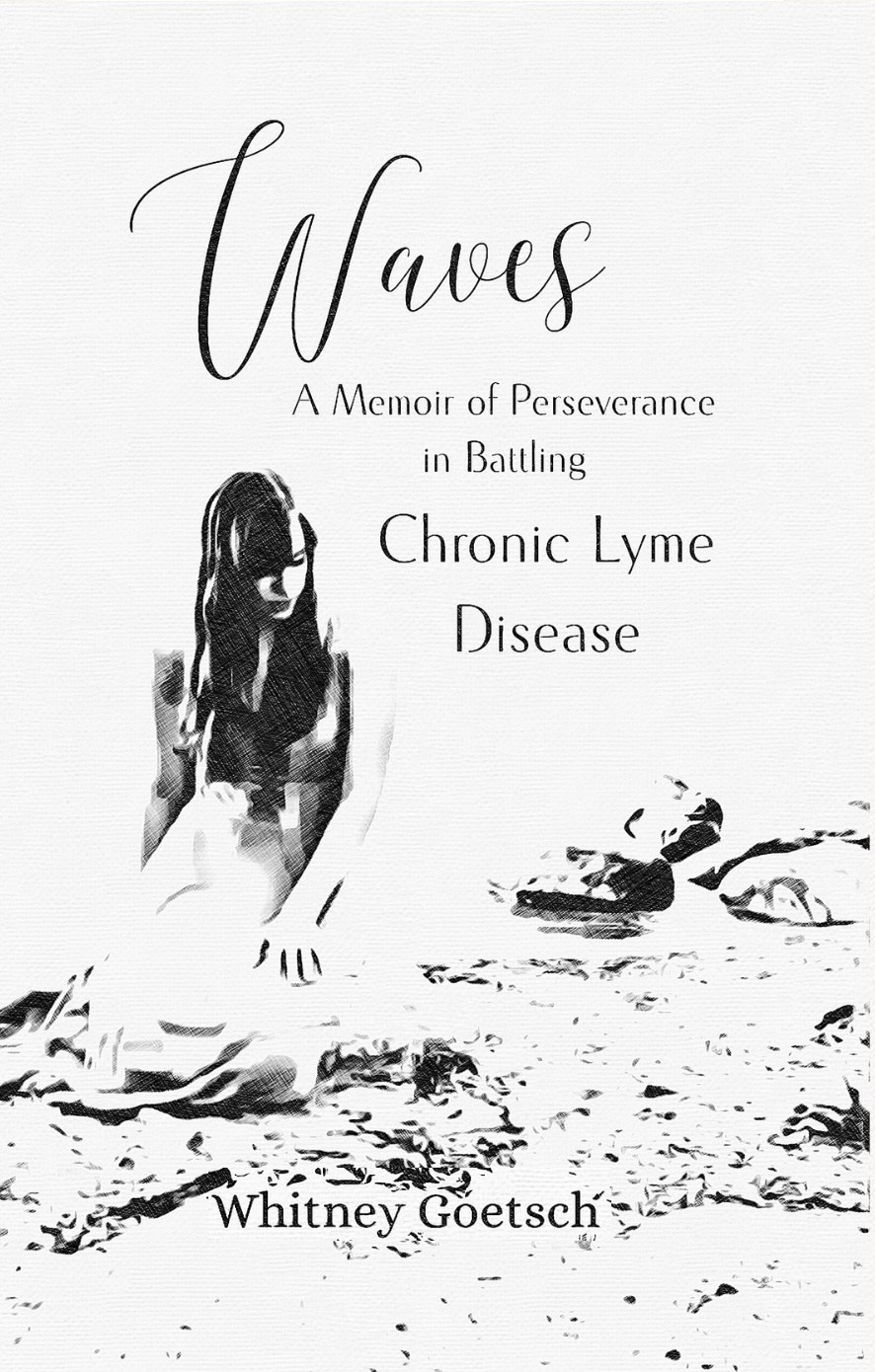
I was a young mother living my dream life when everything changed. At a wedding, I absentmindedly pulled a tick off the back of my leg, crushed it into the pavement, and moved on.
I never realized that tiny creature would alter the course of my life.
Not long after, my health began to unravel. Crippling symptoms emerged, yet every doctor I saw dismissed them as anxiety. But deep down, I knew something was terribly wrong.
What followed was a terrifying descent into medical uncertainty, a relentless fight to uncover the truth while my body continued to deteriorate.
For five years, I battled through a system that refused to listen, all while my family suffered alongside me. I suspected Lyme disease early on, but each time I voiced my concerns, I was brushed aside. “It’s just anxiety.” “You’re overreacting.” “Maybe it’s depression.” The gaslighting was endless.
Finally, after years of searching, I received the diagnoses that changed everything: Lyme disease, multiple co-infections, and alpha-gal syndrome. By then, the damage had already been done.
Documenting every struggle
Throughout this journey, I kept a journal, documenting every struggle, every setback, and every moment of resilience. In 2023, newly diagnosed and still fighting for my life, I turned those pages into a book—because this cannot not keep happening. Not to young mothers. Not to fathers, children, or anyone else. The cycle of medical dismissal and gaslighting must end.
I wrote my book while still in the fight, in the trenches of this disease, so it would be raw, real, and relatable. So others would know they are not alone.
You are not Lyme. You are not a burden. Lyme is the burden placed upon you.
Today, my battle continues. In the summer of 2024, I began SOT therapy for Lyme disease. This winter, I started SOT therapy for Babesia and Bartonella, alongside herbals and methylene blue.
Recent tests have revealed demyelination and autoimmune markers resembling those seen in multiple sclerosis and Alzheimer’s — the result of years of untreated infections.
To help heal my brain and reduce inflammation, I will soon begin peptide therapy. My medical team is also exploring stem cell therapy in Europe. The road ahead remains steep, but I refuse to give up.
Because this fight is not just for me. It’s for every person who has been dismissed, misdiagnosed, and left to suffer in silence.
At 40 years old and divorced, I took a chance on getting married again. I felt strongly that he was the one who would stay until the end. 22 years later, we’re going strong and closer than ever. No regrets for me.
Weight lifting and stretching are useful at any age, but there are specific benefits for older adults.
With aging comes concerns about strength, balance, and mobility. But integrating resistance training and stretching into your routine can keep you feeling healthy and strong.
Not sure where to start? Read on for a primer on how movement can make a difference, plus a full-body workout and stretching routine that you can do at home.
Committing to and maintaining an at-home strength training program can be the first step to preventing — or delaying the onset of — many age-related ailments.
The best part is, it doesn’t have to be complicated or time-consuming.
Your at-home strength training program should:
Include 3 sessions weekly. Incorporate a 20- to 30-minute strength training session 3 days per week. You can work out at home with minimal equipment and still see significant results.
Work your whole body. Incorporate upper body, lower body, and core exercises to get the most out of each workout.
Be consistent. The more consistently you strength train, the better your results will be.
Combine these 6 strength exercises for an effective and comprehensive full-body workout.
Unless otherwise noted, do 3 sets of 10–12 reps of each of these exercises.
One-leg balance
With balance declining as you age, proactively focusing on improving it is key. Start with this one-legged drill to suss out any imbalances you may have:
Position yourself next to a chair or a wall if needed for balance.
Stand with your feet together, arms down at your sides.
Bend your knee and lift your right foot up off the ground behind you, holding where your leg forms a 90-degree angle.
Hold for 30 seconds, then repeat on the left leg.
Complete 2 holds on each side.
Squat
The squat is a powerhouse exercise, not only for building muscle but for preparing you for daily life. If you ever sit in a chair, you’ll benefit from squatting. Here’s how to do it:
Stand with your feet shoulder-width apart, toes pointed slightly out, with your arms down at your sides.
Push your hips back then bend your knees, lowering down until your thighs are parallel to the ground or as close as possible, as if sitting in a chair. Keep your chest lifted and proud throughout the movement.
Push up evenly through your whole foot, back to the starting position.
Wall pushup
Pushups are one of the most effective exercises to gain upper body strength, and you need no equipment to execute them. Start on a wall, and then try a pushup kneeling if you want more of a challenge. Here’s how to do it:
Get into a plank position with your hands on a wall at shoulder height and your feet about 3–4 feet from the wall.
Bend your elbows to come closer to the wall, maintaining a straight line from your head to your ankles. Keep your elbows at a 45-degree angle from your body.
Push back away to the starting position.
Resistance band row
A strong back is key for good posture, among other things. Use a resistance band here to strengthen those muscles:
Grab a resistance band, with a handle in each hand, and step on the band with both feet.
Cross the handles and hinge at the waist to a 45-degree angle.
Maintaining a straight back, send your elbows up and back, rowing the handles up toward your chest. Squeeze your upper back muscles at the top.
Pause, then slowly release back to start.
Bird dog
A boon for both balance and stability, bird dog will challenge your full body.
Assume a position on all fours on the ground, placing your hands under your shoulders and your knees under your hips.
Keeping your neck neutral, simultaneously extend your right arm and left leg. Make sure your hips stay square to the ground. Pause at the top.
Return to start and repeat with your left arm and right leg.
Glute bridge
An effective exercise for the posterior chain — or the back of your body — glute bridges will build strength in no time. Add a dumbbell to your hips if you need added resistance.
Start by laying on your back with your knees bent and feet flat on the floor. Your arms should be down at your sides.
Brace your core and push up through your feet, lifting your butt up off the ground until your hips are fully extended. Squeeze your glutes at the top.
Do these 5 stretches to hit all of the major body parts and help improve your flexibility and mobility.
If not indicated, hold each stretch for about 30 seconds total. As you focus on breathing — deep inhale, deep exhale — try to go deeper into the stretch.
Hamstring stretch
Particularly if you sit a lot, stretching the hamstrings is important to maintain good movement in the hips. Here’s how to do it:
Position yourself with a step or another flat, raised surface in front of you. There should be about one foot between you and the step.
Put one heel on the step and lean forward at the hips to a 45-degree angle.
Feel the stretch in your hamstring, leaning forward to go deeper.
Seated hip stretch
Hip functionality is key to many movements in our daily lives, like walking, so keeping these muscles and joints mobile is important. Try this seated stretch:
Sit in a chair and scoot down to the edge. Your feet should be flat on the floor and your back should be straight.
Bring your right ankle to rest on your left knee, bending your leg to do so.
Lean forward slightly to feel the stretch in your hip.
Chest opener
Combat the forward-lean posture with this chest-opening stretch:
Sit in a chair and scoot down to the edge. Your feet should be flat on the floor and your back should be straight.
Interlace your fingers behind your back and open your chest up to the sky, dropping your shoulders.
Side-lying thoracic rotation
Another good stretch if you find your shoulders rounding forward, this rotation will target and release your upper body:
Lay on the ground on your left side, arms straight out in front of you with palms touching.
Lift your right arm straight up and over, opening your chest and allowing your right arm to drop to the other side of your body. Your head should follow.
After 5–10 seconds, rotate back to start and repeat for 10 reps.
Side-to-side reach
Stretch your back and core with this move:
Stand straight with your arms down at your sides and feet shoulder-width apart.
Bring your right arm up and over your head, bending your torso to the left as you go.
Hold here for 5–10 seconds, then return to center and switch arms.
Consistently strength training and stretching, even for short periods 3 times per week, can help tremendously in delaying or preventing many age-related ailments. Start slow and watch your strength, balance, and mobility improve.
Mary and I have become good friends, and her encouragement, positive attitude, and motivation have helped me grow. Her book has expanded my life in new ways. Thanks, Mary.
About Mary K. Doyle
Author Mary K. Doyle has a Master of Arts Degree in Pastoral Theology. Her fluid, conversational writing style results from an extensive career in feature writing, advertising, and publicity over more than thirty years. Her latest book is Navigating Alzheimer’s: 12 Truths about Caring for Your Loved One. This information was taken from the back of the book.
Whether readers are praying the rosary for the first time or are already praying the rosary daily, they will find that The Rosary Prayer by Prayer is an invaluable resource and aid to promoting a deeper prayer experience. It is a treasure chest of information about the history and benefits of the rosary, suggestions for meditation on the mysteries, exquisite artwork, and references. This book is also an easy way to learn how to pray the rosary.
“I grew up Catholic, but didn’t know that there were multiple devotions to saying the rosary. And, as an adult and lapsed Catholic I was a bit fuzzy on the basics as well. This book does a soulful job of detailing the steps and introducing the special devotions of each of the mysteries. The pen and inks are a beautiful accompaniment to the text. A very nice gift book for anyone who wants to reaquaint themselves with the devotion of the rosary.”
“As a Catholic Man in the Knights of Columbus we oft say “REAL MEN SAY THE ROSARY.” I to my shame lapsed a bit in regular Rosary Prayer/Reflection…..BUT….. well … I came across this GEM of a BOOK! it has revived my devotion in the Rosary by new BUT Traditional reflections….magnificent charcoal pics in all Mysteries in short…. a book LONG NEEDED….I think it wonderful for Catholics who are long time Rosary users….Newbies…….or in my Case…….a lapsed “Rosary User” ….JP2 called it (the Rosary) his favorite Prayer… this book….will bring full circle why JP2 said this!!!”
Mary has written nine books; you can see the collection HERE.
My Thoughts
The book’s layout flows nicely and leads smoothly into the next topic.
Each Prayer shares the history of the Rosary prayers and references the Scripture where the prayer originated. Each prayer has an illustration of the Rosary, and the bead to start the prayer is circled.
The book is informative, not technical, and written with a gentle heart.
The Rosary is written for everyone, and her writing is easy to understand. I’ve learned so much. The Rosary Prayer By Prayer is a must-read for all Catholics or those who are curious. It’s a book for your bookshelves to reference for years to come.
Major Thumbs up!
Mary’s blog is Midwest Mary. Her writing is informative and inspirational. Stop by her blog, say hello, and enjoy the archives. You’ll be glad you did.
Make smaller quantities, approximately what you will use in three months.
Make sure you only use absolutely clean and sterile equipment, utensils, and storage bottles.
Take out only as much product as you will use in the next week, and always store the rest in the refrigerator. If properly made and stored, the backstock will last three to four months.
Don’t dip your fingers in the container because you can introduce contaminants that will make the product go bad sooner. Instead, use a sterile spoon or spatula to transfer product from the backstock container to a daily-use container. Similarly, either use a spoon to scoop out the product for daily use or keep it in a pump bottle.
Store the daily-use container away from direct sunlight and heat.
If the recipe separates or smells off, discard it and make a new batch.
I’m retired, so my days are not as demanding. Stress is a different story. To relax, I go to my office with no noise, social media, phone, and no dogs. I meditate for as long as I can, which clears my mind, and then I go downstairs to eat dinner.
Thank you for all the great feedback on the Blogger Highlight series. I’ve enjoyed meeting each blogger and sharing their site with you. This week, we highlight Adjunct Wizard. Paul has a varied background that results in great and sometimes quirky posts. He is also the caregiver of his wife, who has Parkinson’s Disease.
I write this for me but I am always interested in other’s thoughts about life and dealing with chronic disease.
My favorite quote: Finish each day and be done with it. You have done what you could. Some blunders and absurdities have crept in; forget them as soon as you can. Tomorrow is a new day. You shall begin it serenely and with too high a spirit to be encumbered with your old nonsense. — Emerson
Questions I asked Paul
M. Looking back, what experience shaped you into who you are today?
P. Being fired from a job… makes you a better person by forcing you to understand importance of self.
Why ? That day when I wrote it and later as I refer to it, it is a metaphor for the strong love I have for Cheryl. In the early days of her dementia I felt like I was always scrambling to quickly find out how to help her and be there with her because she could appear “just fine” to her friends and family. I quickly wound up doing all the household chores — it is easy to get lost in all that and forget that the disease was not Cheryl. The laundry that day bought all those thoughts to the fore.
My favorite recent post is Is This Fly Shit or is it Pepper? I could immediately relate to my career. As I said, I’ve had anought Fly Shit to last a life time.
Stop by Paul’s blog, say hello, pull up a seat, and read through his archives; you will find a nice mix of topics.
I had a wave only relationship with the neighbors across the street, they he reminded me of my Gramps. The day his wife died I went across the street to see how I could help. He invited me in and we talked awhile and our friendship grew from there. We talked almost daily on topics across the board. He was a gentle man and I was so glad he was in my life. I often look at his old house and the memories flash right back. I miss Jim.
Watching an elderly relative suffer due to decreasing independence can be so hard to bear, but luckily you needn’t simply sit on the sidelines for much longer. There are several tips and tricks that you can utilize to help them gain back some of the independence they have lost, and it couldn’t be easier to get started today. So, if you would like to find out more, then read on!
One of the easiest ways to help an elderly relative gain back some of their independence is by adapting their home. Leaving their home means leaving behind most of their treasured possessions along with the memories attached to the property, so avoiding such a scenario can be extremely beneficial for their mental health. Start by tackling the issue of mobility, as getting around safely may be the biggest struggle for your elderly relative. Install grab bars in frequently-traveled areas such as the hallway, as well as around the toilet and shower to ensure they can stand up without the risk of falling. Investing in a fold-up seat to go inside their shower can help to reduce the risk of slips and falls dramatically. Seeking out more ergonomic furniture may also be of benefit for your elderly relative, as getting into and out of bed may be difficult for them. Luckily you can source both beds and chairs that slowly rise up to lift the user onto their feet without any struggle, so this may be an option you wish to explore.
Offer Easy Access To Support
Sometimes the sole reason for an elderly individual moving into sheltered accommodation is a lack of access to support, so making sure your relative can seek help should they need it is absolutely vital. Take some time to identify their weaknesses, and aim to assist them in working around these issues productively rather than simply passing the burden onto someone else. If you find that your elderly relative struggles to make their own meals, don’t let them go hungry or risk their safety using cooking equipment; sign them up for a ‘meals on wheels’ service that provides fresh dishes delivered straight to their door to ensure their nutritional needs are met. If they live alone and need some company, they may benefit from the services of a live-in-care provider. They can move into your elderly relative’s home or work out a visiting schedule that allows them to provide care and attention, performing tasks such as laundry, cleaning, and cooking, as well as assisting with medication and socialization.
Helping your elderly relatives to stay independent has never been so simple when you can take the time to make the most of the brilliant ideas described above. Providing your family with the help they need to thrive in such a rewarding project, and they’ll no doubt appreciate your hard work and dedication. There’s no time like the present to adapt your elderly relative’s home and improve their access to essential support.
There are many places I would not visit because of war, terrorist, women’s rights and any place with big snakes. No huge snakes for me. It’s a shame becuase I would like to see the world.
In this fast-paced social media world, it can be difficult to find the time to look within or back in time. I hope you find these questions interesting. So glad you stopped by today!
In their book Burnout: The Secret to Unlocking the Stress Cycle, coauthors (and twin sisters) Emily and Amelia Nagoski reveal that completing the stress cycle — finding a way to let our bodies know we’re no longer threatened or in danger and we can stop being stressed — can be the most effective way to avoid burnout and emotional exhaustion. Physical activity or any kind of physical movement is one great way to do this, but there are several other ways.
Here are 6 evidence-based strategies to help you complete your stress cycle:
1. Breathing
Deep, slow breaths down-regulate the stress response, especially when the exhalation is long and slow and goes all the way to the end of the breath so your belly contracts. Breathing is most effective when your stress isn’t that high or when you just need to siphon off the very worst of the stress so you can get through a difficult situation.
A simple, practical exercise is to breathe in to a slow count of 5, hold that breath for 5, then exhale for a slow count of 10, and pause for another count of 5. Do that three times — for one minute and 15 seconds of breathing — and then see how you feel.
Casual but friendly social interaction is the first external sign that the world is a safe place.
2. Positive social interaction
Casual but friendly social interaction is an external sign that the world is a safe place. People with more acquaintances are happier. Just go buy a cup of coffee and say “Nice day” to the barista or compliment another customer’s earrings. Reassure your brain that the world is a safe, sane place, and not all people suck. It helps!
3. Laughter
Laughing together, and even just reminiscing about the times we’ve laughed together, increases relationship satisfaction. We mean belly laughs — deep, impolite, helpless laughter. When we laugh, says neuroscientist Sophie Scott, we use an “ancient evolutionary system that mammals have evolved to make and maintain social bonds and regulate emotions.”
Aarm hug in a safe and trusting context can do as much to help your body feel like it has escaped threat as joging, and it’s a heck of a lot less sweaty
4. Aceptance
Sometimes, a deeper connection with a loving presence is called for. Most often, this comes from a loving and beloved person who likes, respects and trusts you, whom you like, respect and trust. It doesn’t have to be physical affection (though physical affection is great). A warm hug in a safe and trusting context can do as much to help your body feel like it has escaped a threat as jogging a couple of miles, and it’s a heck of a lot less sweaty.
One example of affection is the “six- second kiss” advice from relationship researcher John Gottman. Every day, he suggests, kiss your partner for six seconds. There’s a reason behind the timing: Six seconds is too long to kiss someone you resent or dislike, and it’s far too long to kiss someone with whom you feel unsafe. Kissing for six seconds requires that you stop and deliberately notice you like this person, you trust them and you feel affection for them. By noticing those things, the kiss tells your body that you are safe with your tribe.
Another example: Hug someone you love and trust for 20 full seconds, while both of you are standing over your own centers of balance. Research suggests this kind of hug can change your hormones, lower your blood pressure and heart rate, and improve mood. It doesn’t have to be precisely 20 seconds. What matters is you feel the stress easing, or what therapist Suzanne Iasenza describes as “hugging until relaxed.”
Of course, affection doesn’t stop with other human beings. Just petting a cat or dog for a few minutes can help complete the cycle too.
5. A big ol’ cry
Have you had the experience of just barely making it inside your home — or bedroom — before you slam the door behind you and burst into tears for 10 minutes? Then you wipe your nose, sigh a big sigh and feel relieved from the weight of whatever made you cry? You may not have changed the situation that caused the stress, but you completed the cycle.
Have a favorite tearjerker movie that makes you cry every time? Going through that emotion with the characters allows your body to go through it, too.
You might experience completing the stress cycle as a shift in mood or mental state or physical tension, as you brethe more deeply and your thoughts relax.
6. Creative expression
Engaging in creative activities today leads to more energy, excitement, and enthusiasm tomorrow. Like sports, the arts — including painting, sculpture, music, theater and storytelling in all forms — create a context that tolerates and even encourages big emotions. Arts of all kinds give us the chance to celebrate and move through our big emotions.
P.S. How do you know you’ve completed the cycle?
It’s like knowing when you’re full after a meal or like knowing when you’ve had an orgasm — your body tells you. You might experience it as a shift in mood or mental state or physical tension, as you breathe more deeply and your thoughts relax.
It’s easier for some people to recognize than others. For some people, it’s as obvious as knowing that they’re breathing. That’s how it is for Emily. Long before she knew about the science, she knew that when she felt stressed and tense and terrible, she could go for a run or for a bike ride and at the end of it she would feel better. She has always been able to feel it intuitively, that shift inside her body.
Don’t worry if you’re not sure you can recognize when you’ve completed the cycle. Especially if you’ve spent a lot of years — like, your whole life, maybe — holding on to your worry or anger, you’ve probably got a whole lot of accumulated stress response cycles spinning their engines, so it’s going to take a while before you get through the backlog.
All you need to do is recognize that you feel incrementally better than you felt before you started. You can notice that something in your body has changed, shifted in the direction of peace.
“If I was at an eight on the stress scale when I started, I’m at a four now,” you can say. And that’s pretty great.
To learn more about the stress cycle and burnout, watch Emily and Amelia Nagoski’s TED conversation:
ABOUT THE AUTHORS
Emily Nagoski PhD is the author of “Come as You Are: The Surprising New Science That Will Transform Your Sex Life.” She has a PhD in health behavior with a minor in human sexuality from Indiana University, and a MS in counseling, also from IU, including a clinical internship at the Kinsey Institute sexual health clinic. A sex educator for 20 years, she is the inaugural director of wellness education at Smith College.
Amelia Nagoski DMA Amelia Nagoski holds a DMA in conducting from the University of Connecticut. An assistant professor and coordinator of music at Western New England University, she regularly presents educational sessions for professional musicians discussing the application of communications science and psychological research, including “Beyond Burnout Prevention: Embodied Wellness for Conductors.”
The spacing is wacky this morning; the system will not allow me to save the changes.
This DIY is easy and super quick to do. It can also be done in the comfort of your own kitchen platform to relieve your eyes of all the exhaustion and get rid of the dullness around the eyes.
Jessica Owen from Cherish Editions kindly gifted me a copy of Rachel Townsend’s memoir Finding Frank for an honest review.
Rachel covers several difficult subjects, such as domestic violence, depression, child abuse, alcoholism, and drug addiction. She is raw and honest with the accounts of her life and I can relate on several fronts. I was rooting for her the whole way.
Finding Frank reels you in fast, so find a comfy spot because once you start reading, you will keep turning the pages to see how her life takes the next turn.
About the author
Rachel is a counselor and holistic therapist, now based in Cornwall in the UK, having a globetrotter for much of her life. As a counselor, motivated by her life experiences, she specializes in helping with trauma and recovery, and relationship problems. Outside of her profession, her personal experiences shape her prose.
About Finding Frank
How do you find love when all you’ve known as a child is violence and abuse?
How do you find your way back from the clutches of drug addiction and stop yourself from sinking deeper and deeper into a dark and debilitating depression? How do you carry on when you finally open your heart and then lose the one you love in the most tragic of circumstances?
Rachel’s story is a tale of triumph over adversity. Set in a tropical island paradise in the West Indies, Rachel’s journey takes her away to boarding school in England and on to the Middle East for the school holidays, where she first sets eyes on Frank.
Remarkably, Rachel not only finds a way to make peace with the terrible traumas of her past, but she manages to turn her life around completely and along the way, she finds love… a love she once believed was lost to her forever.
My Thought
“Finding Frank is a riveting memoir from Rachel Townsend who has overcome insurmountable odds to rise above trauma and blossom into a whole, loving person and respected author. She’s an inspiration for us all. Rachel comes from a background of violence and child abuse, she was abandoned by her mother as a child and uprooted from her island home to find herself in a boarding school in the Middle East. Rachel was guided by the love of her father and made new friends which helped her gain self-confidence. As a young woman, Rachel finds herself spiraling into a dark depression without the tools to cope, the darkness seems to have no end in sight. Rachel wanted love in her life but felt that true love would not come around a second time. Finding Frank is not your typical love story and that’s one of the reasons I love it. Life isn’t like the movies, it’s hard and painful at times. Rachel shows us no matter how hard and painful, you can overcome the past and build a solid future of your dreams. Finding Frank is a must-read, you may find yourself sharing with friends and family too.”
Cherish Editions
Cherish Editions is the self-publishing division of Trigger Publishing, the UK’s leading independent mental health and wellbeing publisher.
We are experienced in creating and selling positive, responsible, important and inspirational books, which work to de-stigmatise the issues around mental health, as well as helping people who read them to maintain and improve their mental health and wellbeing. By choosing to publish through Cherish Editions, you will get the expertise of the dedicated Trigger Team at every step of the process.
We are proud of what we do, and passionate about the books that we publish. We want to do the very best for you and your book, holding your hand every step of the way.
No matter whether you have recently gone through a breakup and you want to show your ex what he is missing, you could do with a confidence boost, or you simply have grown bored of your current style, a change of look can be a good thing. If it is something drastic you are after, we have some great suggestions.
One of the easiest and most effective ways to change your look is by changing your hairstyle. Has your hair been a mid-brown shade for as long as you can remember? Why not opt for a vibrant shade of red or a lovely golden honey color? If you are feeling even more daring, throw out the rulebook and go for one of the gorgeous pastel hair shades that are in trend today, such as luscious lilac and pale pink. 2022 has definitely been the year of unique hair trends so far. Check out pearlescent hair and geode hair for two trends that are bound to turn heads.
Nothing will give you a greater confidence boost than investing in a new smile. Cosmetic dentistry services from the likes of Chad Latino DDS mean you can achieve a Hollywood smile. Teeth whitening is a popular service, yet you should also look into gum reshaping or gum contouring, and teeth reshaping if you aren’t particularly happy with the way your gums and teeth look.
Contouring is one of the hottest makeup trends this year and with good reason. You can change the appearance of your face entirely by contouring. There are plenty of video tutorials online to help you out along the way. Contouring is a great way to alter the definition of your cheekbones, the shape of your nose, and other aspects of your face through makeup manipulation, rather than needing to invest in something more drastic.
You will be shocked by how much of a difference this can make. You can change the appearance of your face by altering your eyebrows. Fuller eyebrows can make you appear more youthful, so if you currently have thin, arched eyebrows, switch them up and see how they soften your face.
Celebrities are known for their unique and sometimes wacky sense of style. They make a massive impact because they dare to be different, and if you want to switch up your look entirely, this is what you need to do. However, you may not have the natural flair to do this yourself, and that’s completely fine because you can take inspiration from a particular celebrity instead. Celebrities that are famed for their unique yet amazing style include the likes of Gwen Stefani, Rita Ora, Alexa Chung, and Tilda Swinton. Spend some time researching different celebrities’ lookbooks and choose a celebrity whose style appeals to you most and fits in with your lifestyle.
While it’s not yet fully understood, research shows a strong connection between fibromyalgia and migraine symptoms.
In 2021, chronic pain affected over 51 adults in the United States alone. Over 17 million of those adults experienced debilitating chronic pain that restricted their daily activities.
Both fibromyalgia and migraine episodes can cause chronic pain that makes it difficult to function from day to day. And for people who have both conditions, research suggests that fibromyalgia may even make migraine symptoms worse and more frequent.
Below, we’ll explore what science says about the relationship between fibromyalgia and migraine, including what treatment options are available for both.
Research shows that fibromyalgia and migraine often occur together and that fibromyalgia can affect the frequency and severity of migraine episodes in people who have both conditions.
The following studies demonstrated a connection:
In one study from 2019, researchers found that migraine symptoms were twice as prevalent in people with fibromyalgia versus those without. And in study participants who experienced migraine episodes, the risk of fibromyalgia was up to 1.5 times higher.
A similar study found that over 30% of participants with migraine symptoms also had fibromyalgia, with the condition being more prevalent in those with chronic migraine and migraine episodes with auras.
Several studies also found that fibromyalgia may affect migraine frequency and severity. In one study from 2018, fibromyalgia was associated with higher headache severity and higher migraine-related disability.
Another study from that same year found that participants with both migraine and fibromyalgia experienced more frequent and painful migraine episodes, as well as lower quality of life.
Most of the studies on fibromyalgia and migraine don’t distinguish between different migraine types, such as complex or ocular migraine. However, some of the research does suggest that people with chronic migraine and migraine with aura may be more affected.
What’s happening in the brain when you have fibromyalgia?
Fibromyalgia is a chronic health condition that’s characterized by body-wide pain and tenderness, chronic fatigue, and difficulty sleeping.
Researchers aren’t entirely sure of what causes fibromyalgia, but evidence suggests that it affects the way the nerves of the brain receive and transmit information related to pain. Because of this, people with fibromyalgia appear to be more sensitive to pain than those without the condition.
Research has shown that roughly a quarter of people living with fibromyalgia can find pain relief with these medications.
Migraine treatment also involves a combination of pain medications and other medications that may be helpful for reducing migraine frequency. Medications for migraine include both preventive and acute episode medications.
If you have both fibromyalgia and migraine, a combination of medications may help reduce your symptoms. However, you and your doctor will work closely together to decide which treatment options work best for you.
Complementary and integrative treatments may also be helpful in reducing pain and improving the quality of life in people living with fibromyalgia and migraine episodes.
One review from 2020 ound that acupuncture was beneficial for reducing pain in people living with chronic pain conditions, including chronic migraine. And additional research suggests that acupuncture may also be helpful for reducing pain due to fibromyalgia.
In another review from 2019 researchers found that activities like yoga and tai chi appear to help reduce migraine frequency and severity. Research also suggests that activities like yoga may be helpful in reducing fibromyalgia pain and improving functioning and mood.
Other complementary treatments that may be helpful for chronic pain conditions like fibromyalgia and migraine include therapeutic massage, mindfulness, and certain supplements. However, researchers are still exploring just how effective these approaches can be for these conditions.
Living with fibromyalgia
Over 4 million adults in the United States — or roughly 2% of the population ― live with fibromyalgia. If you or someone you love has been recently diagnosed with the condition, you can check out these resources that offer education and support:
Research shows that fibromyalgia and migraine commonly occur together and that having one of these conditions may increase the risk of having the other.
Studies also show that for people who experience migraine episodes, fibromyalgia may affect the frequency and severity of those episodes.
Medication is the most common treatment approach for helping manage pain in both fibromyalgia and migraine. However, several other complementary approaches could be beneficial for reducing chronic pain levels and improving the quality of life in people with both conditions.
I know the pain of both Fibromyalgia and Migraines and they are both difficult to manage. I found that a multi-prong approach works best for me along with good sleep habits and daily self-care practices.






























 lookingforthelight.blog