Celebrate Life · Cooking · Health and Wellbeing · Men & Womens Health

Fan Favorite Creamy No-Dairy Tricks

If you crave creamy foods but don’t care for or can’t eat dairy, these vegan substitutes for heavy cream will help.

Photo by Polina Tankilevitch on Pexels.com

Elizabeth Shaw

Cashew Cream

“Cashews are frequently used in dairy-free products because they provide a texture similar to dairy without tasting like a nut,” Shaw says. “Cashew cream can easily be made with cashews, water, and salt.” If you can’t eat nuts, pureed white beans work similarly. 

Best In: sauces, mousses, salad dressings

Dairy-Free Milk + Olive Oil

Once blended, this combo mimics the higher fat content that gives heavy cream its thick, silky texture and taste. Shaw says-but it’s not a one-for-one substitute, so you’ll have to add it in stages until you get the consistency you’re looking for. 

Best In: sauces, soups, stews

Coconut Cream

It’s like a thicker, creamier coconut milk, and you’ll want to buy it sweetened or unsweetened depending on what you are using it for. If you can’t find it or already have full-fat coconut milk on hand, you can DIY it. “Place the coconut milk can upside down in the fridge overnight, then drain to remove the milk solids. Place the solids in a chilled bowl and whip with a hand or stand mixer until light and fluffy.” Shaw says.

Best In: mousses, whipped cream, sauces, curries 

Silkin Tofu + Plant Milk

“This combination is a great alternative and can be made by blending equal parts of each-plus, it boosts the protein of your recipe,” saw Shaw. It’s also lower in fat than heavy cream but still delivers the vibe you’re looking for. 

Best In: sauces, dressings, smoothies, puddings

Enjoy!

Melinda

Repost

Celebrate Life · Chronic Illness · Family · Health and Wellbeing · Medical · Men & Womens Health · Self-Care

Looking For Joy In 2025

2024 has been a difficult year for David and me health-wise. There are still unresolved health issues from my visit to The Mayo Clinic for which I have several specialists to see in 2025. The most difficult has been that David was diagnosed with three types of cancer this year. The first was CLL Leukemia, Skin Cancer, and most recently Small Cell Lymphocytic Lymphoma. It is common for Skin Cancer to follow Leukemia but the Lymphoma was quite a surprise. Leukemia and Lymphoma are two different cancers and very alarming to me. We’re still waiting to see if radiation treatment is the next step.

We don’t focus on it or the future, we rarely talk about it except after doctor appointments. We focus on the blessings we have and live life for tomorrow.

We know God has a plan for each of us and we are cool with his plan.

Melinda

Celebrate Life · Health and Wellbeing · Medical · Men & Womens Health · Mental Health

Feeling Sad for No Reason? Potential Causes and Coping Tips

Feeling sad all the time for no specific reason doesn’t always mean you have depression, but it does suggest you could be experiencing something more complex than sadness alone.

Sadness is a temporary state that often has a clear cause, like a big disappointment, the loss of someone close to you, or bad news from someone you love. 

This type of sadness can fluctuate throughout the day. In certain moments, the emotional burden might feel particularly heavy. You might cry often, feel numb or drained, and struggle to concentrate. 

At other times — when you get lost in something you enjoy or when a loved one distracts you — your sorrow may seem light enough that you can barely feel its weight. While it might linger in some form for days or weeks, it generally begins to ease naturally.

Persistent sadness is something else entirely. It can wrap around you like a heavy blanket, muffling the sensations and joy of everyday life. This sadness can leave you feeling low, empty, and defeated. You don’t know what caused your unhappiness, so you have no idea how to start feeling better.

Feeling sad isn’t at all unusual. After all, sorrow is a normal human response to disappointment and loss. Sadness that doesn’t have a clear reason behind it and doesn’t seem to improve, however, may suggest something else is going on.

Could it be depression?

While not everyone with depression will feel sad, unexplainable sadness you can’t seem to shake is one of the primary signs of depression. 

If your sadness does relate to depression, you’ll likely feel sad nearly all of the time — almost every day, for most of each day, for a period of 2 weeks or longer. Sadness, in other words, seems to become a constant companion. 

With depression, you’ll experience other symptoms, too. If several of the signs below accompany your sad or tearful mood, there’s a good chance you’re dealing with depression:

Chronic sadness, especially when related to depression, might also prompt regular thoughts of death or suicide. Even if you don’t have a plan to act on these thoughts, it’s always best to talk to someone you trust and get support right away (more on how to do this later).

Other factors to consider

You might begin to notice your feelings of sadness, along with any other symptoms you experience, follow a specific pattern. Depression can take different forms, and various underlying factors can have an impact on the way your symptoms show up. 

A few things to look for:

Rapid shifts in mood

People living with bipolar disorder often experience episodes of depression as part of a cycle that also includes episodes of mania or hypomania

You might notice you suddenly feel intensely happy, even euphoric. This abrupt change in mood might also involve:

  • impulsive behavior
  • restlessness and irritability
  • a renewed sense of energy that leaves you fixating on certain projects or activities
  • an increase in confidence and self-esteem
  • less of a need for sleep

This episode might last a week, or longer. 

Somewhere around 40 percentTrusted Source of people with bipolar disorder have what’s known as mixed features. You could experience sadness and other symptoms of depression at the same time as mania. 

This combination of symptoms can make it harder to understand what you’re experiencing, which could add to your distress. 

Seasonal sadness

Maybe your sadness seems to arrive or intensify around the same time of year the days begin to shorten. Once the longer, sunnier days of spring and summer arrive, you feel better, year after year.

It’s pretty common to feel a little low in autumn and winter. The nights get long and cold, and there are plenty of days when you may not even see the sun.

If this seasonal sadness persists and becomes serious enough to affect daily life, you could have seasonal affective disorder (SAD), a type of depression that occurs along with seasonal changes. 

Along with other common depression symptoms, you might also notice:

  • angry, pessimistic, or frustrated thoughts about the weather
  • withdrawal or increased avoidance of social settings 
  • an increased desire to eat and sleep

To read the complete article here.

There are many reasons we feel sad, and luckily, there’s a wealth of knowledge to help you navigate. My first step would be to call your doctor.

Melinda

Celebrate Life · DIY · Fun · Health and Wellbeing · Men & Womens Health · Mental Health

5 Creative Projects To Help Focus Your Mind

A creative project is a great way to focus your mind and spend some downtime. Art, gardening, craft, and DIY are all very therapeutic. You’ll feel more relaxed and gain some perspective. Creativity is the perfect way to channel stress and anxiety. Put your overactive mind to good use and make something you’ll cherish forever. There are plenty of different kinds of ideas depending on your interests. Here are five creative projects to help focus your mind.

                                                                                                                Photo by Daria Shevtsova on Pexels.com

Paint by numbers

Paint by Numbers is an example of a trendy craft gone viral during lockdown. It is incredibly therapeutic and relaxing, and not just for kids anymore. Even though you’re following instructions, it still requires a lot of patience and hard work. Paint by numbers is a good compromise if you like art but aren’t necessarily an experienced painter. You’ll be able to enjoy the results without being a natural artist. You can display your painting proudly for all your family and friends.

Winter Flowers

There are several reasons why gardening is so therapeutic. It’s a great way to get back in touch with nature and gain some perspective. Sun and fresh air also go a long way. Even when the seasons start to change, this doesn’t mean you have to be a fair-weather garden. There are plenty of winter flowers you can plant such as pansies and jasmine that grow all year round. If you want to keep it inside you could even build your own mini zen garden, or decorate the house with plants.

Customize your car

If you’re the type that likes to get your hands dirty then why not sink yourself into a project in the garage? Customize your car to your liking this fall. Automotive Stuff is an example of a site where you can find your own parts. You can even trade car parts online with other car owners. If you prefer, start small with the interior, or even work under the hood. If you’re passionate about cars you could invest in a used vehicle to revamp.

Make your own bath products

You’d be surprised how many simple products you can make at home. All you need is some essential oils and a couple of household ingredients, and you can make a variety of bath products. This is a more eco-friendly option as well, not to mention thrifty. If you want to use your creativity to make something you’re going to use, then bath products are ideal. You can even give them as gifts to your family and friends.

Upcycle your furniture

Whether you decide to flip the furniture or keep it, it’s easy to see why upcycling has become such a popular pastime. You could invest in some second-hand furniture at your local thrift store and turn it into a creative project. For example, you could find an old photo frame, print your Domonique Rodgers NC State print, and hang it on the wall. Creating Upcycling is a fun way to revamp furniture or repurpose other items. Perhaps you can find a new use for some old things around the house. It’s very therapeutic and satisfying. 

This a collaborative post. 

Melinda

Repost

Health and Wellbeing · Medical · Men & Womens Health · Mental Health · Self-Care

Unconventional Treatments To Tackle Menopause

The media plays a role not only in misinformation about menopause but also in how it portrays women with menopause. Tune out the riff-raff and look for real answers. Menopause has been a woman’s curse long before I knew what it was and how it affected the lives of women. There are thousands of books on the market about menopause and I thought maybe it was time to look at the unconventional ways women deal with the debilitating symptoms.

Let’s look at unconventional options to help with menopause

Acupuncture

Acupuncture involves inserting thin needles into specific points on the body to balance energy flow. Some women report reduced hot flashes, night sweats, and improved mood after regular sessions. While scientific evidence is mixed, it might be worth a try if you’re open to alternative therapies.

Herbal Remedies

  • Black Cohosh: Often used for hot flashes and mood swings. Some studies suggest it can be effective, but it’s not suitable for everyone.
  • Red Clover: Contains plant-based estrogens that may help with hot flashes, though results vary.
  • Evening Primrose Oil: Known for helping with breast pain and hot flashes. Always consult a healthcare provider before starting any herbal supplements.

Yoga and Meditation

These practices can help manage stress, improve sleep, and enhance overall well-being. Yoga, in particular, can increase flexibility and strength, which is beneficial during menopause.

Dietary Changes

Adopting a diet rich in fruits, vegetables, whole grains, and lean proteins can help manage symptoms. The Mediterranean diet, known for its anti-inflammatory properties, can be particularly beneficial.

Essential Oils

  • Lavender Oil: Known for its calming properties, it can help reduce stress and improve sleep.
  • Peppermint Oil: Can provide a cooling sensation, which may help with hot flashes.

Biofeedback

This technique involves learning to control certain physiological functions, such as heart rate and muscle tension, with the help of a biofeedback device. It can be effective in managing stress and related symptoms.

Hypnotherapy

Some studies suggest hypnotherapy can reduce the frequency and severity of hot flashes and improve sleep quality.

Remember, it’s essential to consult with a healthcare professional before starting any new treatments, especially if you have underlying health conditions.

Health-Related Reading Material

Understanding the Connection Between Menopause and Heart Rate Changes

Why Does Menopause Increase Your Risk of Heart Disease?

Natural Treatments for Menopause Symptoms

Maybe you can find something that works for you or at least reduces the symptoms.

Melinda

Reference:

https://copilot.microsoft.com

Healthline

https://www.webmd.com/menopause/menopause-natural-treatments

Celebrate Life · Family · Fun · Health and Wellbeing · Holiday · Men & Womens Health

Wordless Wednesday-Winter Wonderland

I’m glad you joined me on Wordless Wednesday and I hope to see you soon.


Melinda

Celebrate Life · DIY · Fun · Health and Wellbeing · Men & Womens Health · Self-Care

Easy DIY Self-Care Eye Pads

From Makeup and Beauty

This DIY is easy and super quick to do. It can also be done in the comfort of your own kitchen platform to relieve your eyes of all the exhaustion and get rid of the dullness around the eyes.

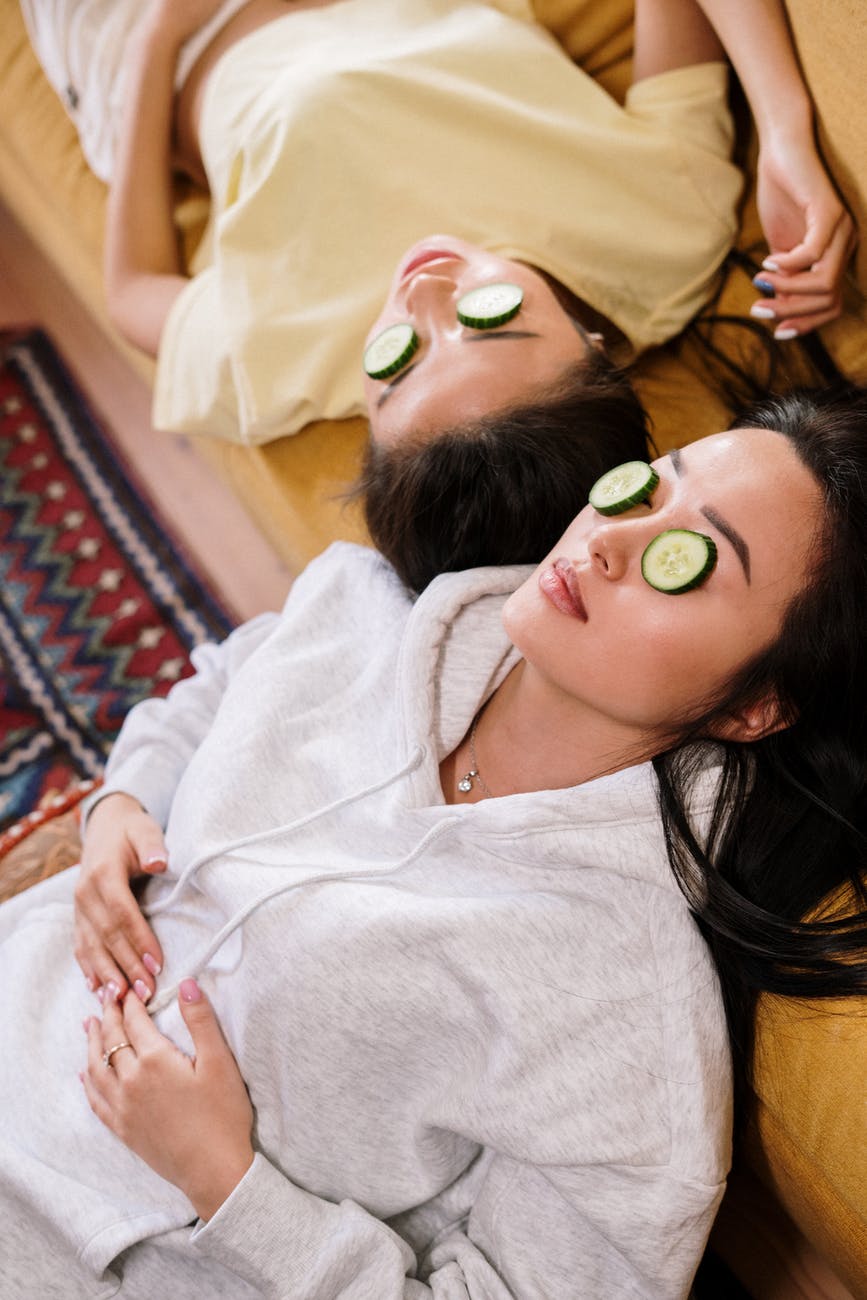
Photo by cottonbro on Pexels.com

You need:

Carrot (Known for its discoloration properties, carrot juice would help you get rid of the darkness and dullness around eyes)

Cucumber (Known for its cooling properties, cucumber would help in distressing your eyes giving them a relaxed effect)

Raw Milk (Known for its anti-tan properties, milk has always come handy in getting rid of dark circles around eyes)

Rose water (For the relaxation it provides to tired eyes)

Round Cotton Pads

Grater

To make the Eye Pads:

Grate about a teaspoon full of carrot in a bowl

Now, add some grated cucumber to the carrot.

Add about a teaspoon of raw milk (unheated) to this mixture.

Now, add a teaspoon full of rose water to this.

Now let this mixture rest for about 20 minutes to let the carrot and cucumber soak properly in the milk and rose water mixture.

Now, squeeze out the carrot and cucumber pulp and put the juice in a separate bowl.

Now, take the cotton pads separate the two sheets of cotton, and spread a thin layer of the pulp onto one side of the cotton.

Now take about a teaspoon of the juice extract and spread it over the thin layer.

Make a sandwich by closing the thin layer sheet with its other cotton sheet.

You have homemade eye pads ready with all the goodness of natural ingredients which will not only relax your eyes but will also deal with the dark circles and the dullness of your eyes.

I hope you enjoy this easy-to-make self-care treat and remember you are worth it! Self-care is mental health care.

Melinda

Repost

Celebrate Life · Health and Wellbeing · Men & Womens Health · Mental Health · Travel

Blogger Highlight-Croatia, the War, and the Future

Thank you for all the great feedback on the Blogger Highlight series, I’ve enjoyed meeting each blogger and sharing their site with you. This week we highlight the blog Croatia, the War, and the Future. We have followed each other for several years and I have learned much from her. I’m not particularly interested in Croatian politics but her posts teach the history, and how Croatia has evolved.

Croatia, the War, and the Future

Ina Vukic – Croatia: people, politics, history, economy, transitioning from communism to democracy

Ina has been a tireless volunteer on humanitarian aid and fundraising for victims of war in Croatia, Bosnia and Herzegovina, especially war orphans. From 1991 to beginning of 1994 she contributed in lobbying for international recognition of Croatian independence and Croatia’s rights in defending its territory and people from military aggression by Serbian forces. For this dedicated voluntary work Ina was awarded two Medals of Honour by the first president of the Republic of Croatia in 1995 (Commemorative Medal of the Homeland War and Order of the Croatian Trefoil). Ina has also written hundreds articles for newspapers in Australia and Croatia on the plight of Croatian people for freedom and self-determination, developing democracy in former communist countries. She holds two graduate and one post-graduate university degrees, specialising in behaviour, clinical and political psychology and management.

Ina has done some incredible work in her career including working with Vietnam Veterans for which I’m grateful. 

Questions I ask Ina:

M.

I remember you saying you worked with Vietnam Veterans, can you share a paragraph about your work? 

I.

I guess Australia was not different to the USA when it came to Vietnam Veterans suffering PTSD and for many it became chronic and lifelong. I believe up to 30% of Vietnam Veterans suffered PTSD, some acute and relatively short term and for most it became chronic albeit in varying degrees of severity of symptoms between individuals.  As a Clinical Psychologist in Sydney Australia, I worked in the Mental Health Hospital system mainly concentrating on disorder diagnostics and behaviour therapy in people with disabilities including dual diagnosis with mental illness as one of the two and cognitive impairment as the other. Outside my normal working hours, I also maintained into the late 1990’s a private psychological service through which I offered therapy and support to several Vietnam Veterans who had chronic PTSD and needed long-term support in order to maintain employment and family relationships at a good level. The purpose of my work was to reduce symptoms of PTSD especially concentrating on spousal relationship, which is an aspect of normal life that often suffers the most in PTSD sufferers and their spouses. Being useful in life, being and staying meaningfully employed and managing family and personal relationships were the main focus points to living with PTSD despite the horrors seen and experienced on the war front that haunt sufferers for decades.   

M.

Are there other jobs you are extremely proud of?

I.

Paid jobs I am extremely proud of revolve around my roles as Manager and then CEO of disability services that focused on closing institutions in which people with disabilities lived and helping them move into normal houses in the community. This was achieved by early 1990’s in the state of New South Wales in Australia and I was so proud to have played a significant and instrumental role in this in Sydney. After that my job as CEO of government-funded disability services for more than two decades was to ensure that people with disabilities become a part of the normal community they live in, that human rights and anti-discrimination measures are in place and that access to everything a community life has to offer, with appropriate assistance, happens for them.   

The unpaid job I am extremely proud of over the many years, which I applied myself to in my free time, was political activism and lobbying foreign governments from Australia to help Croatian people achieve independence from communist Yugoslavia. My family was one of hundreds of thousands families that in late 1950’s and early 1960’s, as applicable to my family, felt hard communist oppression to the point of being denied work because one did not accept the communist party, and consequently had no alternative in life but to emigrate from Yugoslavia in search of freedom and living life without fear. Australia offered a safe haven and “the sky is the limit” if you put your mind to it sort of opportunities in life.  After in May 1991 almost 94% of voters in Croatia voted for independence at the referendum I became one of the most politically active women of Croatian origins in Australia (and Western-world-wide) with view to help Croatia achieve independence and win the was of aggression that was waged against her because people wanted independence from Yugoslavia and a rule of democracy, not communism, not socialism.  Besides these activities I engaged relentlessly in fundraising for humanitarian aid, particularly for the many refugees, displaced, and children who had lost one or both parents in the war. I was and still am very proud of the two Medals of Honour I had received in 1995 from the President of Croatia for my exceptional and significant contribution to the Homeland War and the creation of the democratic and independent state of Croatia. 

M.

 Do you have a favorite post to share?  

I.

https://inavukic.com/2013/09/11/croatian-hero-of-911-lt-anthony-jovic/

I guess the above post on 9/11 tragedy detail would be among my favourite posts because it holds within it the wonderful reality that people from all backgrounds and ethnic descents give their lives in efforts to save others no matter where they are or where they have grown up. And it this post it happens to be an American Croatian. 

I am also quite partial to this post as it demonstrates bravery for an “adopted” country that after immigration becomes the second homeland. 

https://inavukic.com/2013/11/11/war-veterans-in-u-s-a-of-croatian-descent/

One of my favorite post

Croatian Folklore Costume Culture in the Diaspora

I love seeing the national dress and culture of other countries. This post takes you there. 

Be sure to stop by, say hello to Ina, and pull up a chair to read her fascinating posts. 

Melinda

Looking for the Light


Celebrate Life · Health and Wellbeing · Men & Womens Health · Mental Health · Self-Care

Daily Om Courses And Daily Inspirational Thoughts

Daily Om came to my attention last week and I want to share all the great low-fee courses with you. You can also sign up to receive Daily Inspirations via email. I’m not endorsing the company and have not taken any of their courses but many of the topics look right up my alley.

Our Story 

In 2004, Madisyn Taylor and Scott Blum founded DailyOM with a prescient vision: to bring the world together by offering inspirational messages delivered to your inbox each day. This groundbreaking vision launched DailyOM as one of the first spiritual newsletters on the internet.

Now, nearly twenty years later, DailyOM has grown from a small community of a few hundred subscribers into a thriving global wellness movement of over 3.5 million people dedicated to personal empowerment, growth, and transformation. As DailyOM has evolved, we’ve expanded our offerings to include a growing library of courses, information, and products. Whether it’s self-improvement, spirituality, health, or fitness, our team and worldwide community of teachers empower people to realize their potential in mind, body, spirit, and heart.

Awaken to Your Full Potential

Our mission is to inspire and empower your journey to greater wellness, healing, and transformation through holistic courses and resources from leading experts around the world.

Inspirations

Inspirational thoughts for a happy and fulfilling day.

Read Today’s Inspiration

A few of the courses offered

Quitting Self-Created Loneliness

End Anxiety and Panic Attacks

Re-Parent Your Inner Child

Karmic Relationships: How to Identify Them and Break Free

You Are What You Think

One thing I like about the site is the drop-down menu which allows you to choose the type of courses specific to your needs.

Get Your DailyOM Inspiration

Join our community of 1.6 million subscribers and receive free daily inspirational messages.

SubscribeBy subscribing you agree to the Terms of Use and Privacy Policy.

I will certainly browse the courses available, I’ve already seen a couple that looks interesting

Melinda

Reference:

https://www.dailyom.com/?aff=101&utm_source=bing&utm_medium=ppc&utm_campaign=brandeds&acct=F109XYCQ&msclkid=9c601715697919010470705198e35842&utm_term=om%20daily%20courses&utm_content=GS%20-%20US%20-%20General%20Branded%20Terms

Communicating · Health and Wellbeing · Infectious Diease · Medical · Men & Womens Health · Mental Health

The Most Important "Sexy" Model Video Ever

The Most Important “Sexy” Model Video Ever

http://youtu.be/bOXMKEnra8w

Save the Children gets the point across.

Warrior

Repost from 2014

Celebrate Life · Communicating · Health and Wellbeing · Men & Womens Health · Moving Forward

23 Female TED Speakers Tell Us About The Books That Shaped Them

Ideas.Ted.Com

Mar 7, 2018 /

Here are the books that profoundly influenced women from our speaker community, and they’re just as wonderfully diverse as TED itself.

Jane Eyre by Charlotte Brontë

When I read this book for the first time as a deeply odd fifth-grader (or, as Jane says, “poor, plain, and little”), it felt like grasping onto a life raft that had been flung to me through the folds of time. Feeling such a kinship with Jane and with Charlotte Brontë herself made me feel, quite suddenly, less alone. I still re-read this book every couple of years, and it still speaks to something primal and yearning in me — the outsider woman who is finally seen, finds love, but also has the strength and self-possession to reject that love until she is able to accept it from a place of her own power and dignity. If you haven’t read it, do so immediately; if you read it a long time ago, it is well worth reading again; and if you, like me, can’t get enough of it, may I also recommend Wide Sargasso Sea, which is a prequel by Jean Rhys centered on the story of the mad wife in the attic.

Naomi McDougall Jones (TED Talk: What it’s like to be a woman in Hollywood)

Good Woman by Lucille Clifton

I read this collection of poems at a time of life when I was extremely outwardly successful yet, as I later came to learn, mired in self-loathing. Clifton’s poems on blackness, femaleness, mothering and the body were the catalyst of my journey to self-love. Reading Clifton, I felt, “If these words are possible, if she is possible, maybe I am possible.”

Julie Lythcott-Haims (TED Talk: How to raise successful kids — without over-parenting)

Madame Curie: A Biography by Eve Curie

The book that shaped me was a biography of Marie Curie, written by her daughter Eve Curie. I read it when I was a pre-teenager, and it motivated me to become a scientist. I was inspired by how she felt that scientific research was a deeply worthwhile, even noble, calling and that she also had a family (two daughters) and was a devoted parent as well as an iconic researcher.

Elizabeth Blackburn (TED Talk: The science of cells that never get old)

Writings of Nichiren Daishonin by Nichiren Daishonin

Nichiren Daishonin was a Japanese philosopher (1222–82) who wrote at a time when women were dismissed and faced a life and future of woe. In this book, he encourages men and especially women to make possible the impossible. He addresses women with powerful phrases like, “Even if one were to meet a person who could cross the ocean carrying Mount Sumeru on his head, one could never find a woman like you. Even though one might find a person who could steam sand and make boiled rice of it, one could never meet a woman like you.” This kind of courage really shaped me in showing me the infinite value and dignity of life.

Wanda Diaz-Merced (TED Talk: How a blind astronomer found a way to hear the stars)

Einstein’s Dreams by Alan Lightman

I read this book, a linked collection of short stories about dreams Einstein had, when I was a teenager, and it helped me see the world through different eyes. The scenarios that the author describes in succinct and beautiful prose are imaginary — in one, time is a circle, endlessly repeating itself — but reading them increased my awareness of how extremely narrow a framework of time and space we live in.

Karen Lloyd (TED Talk: This deep-sea mystery is changing our understanding of life)

Any Pippi Longstocking book by Astrid Lindgren

Lately, in the context of the #metoo movement, I found myself reflecting upon the outsized influence that the children’s book character Pippi Longstocking has had on me. Growing up in the Netherlands, I was not surrounded by traditional stories created by Disney. The one character that was, was Pippi. A girl my age, Pippi was extraordinarily strong — strong enough to toss policemen off her veranda (hence my work today to hold the police around the world accountable for human-rights violations?). She was independent and lived in a big house by herself with a monkey and a horse (this was refreshingly different from dominant-gender narratives that involved futures created by princes and proposals), loyal, principled (she espoused sticking with your values over obeying rules), and anti-authority (she defied all formal structures of authority, from parents to educators — a key quality that I look for in leading a group of human-rights defenders). Last but not least, she was economically self-sufficient — she had a treasure trove of gold coins hidden in a tree trunk and taught me early on to be fiscally independent.

— Yvette Alberdingk-Thijm (TED Talk: The power of citizen video to create undeniable truths)

Blue Ocean Strategy: How to Create Uncontested Market Space and Make the Competition Irrelevant by W. Chan Kim and Renée Mauborgne

This book had an immense impact on me as I was developing the Runway of Dreams Foundation. It explores what it means to successfully create “blue oceans,” untapped market spaces ripe for growth and innovation. My middle son, Oliver, was born with a rare form of muscular dystrophy, which makes it hard for him to find fashionable and functional clothing. Through my experiences with him, I realized that millions of people around the globe were also struggling to access stylish clothing and that the fashion industry was not addressing their needs. Mainstream adaptive clothing was a wide-open “blue ocean” of opportunity, and the book gave me the tools and framework I needed to take action.

Mindy Scheier (TED Talk: How adaptive clothing empowers people with disabilities)

Born to Run: A Hidden Tribe, Superathletes, and the Greatest Race the World Has Never Seen by Christopher McDougall

Ah, how this book has impacted me! First and foremost, it was the first non-schoolbook which I read fully from end to end. While I’ve started reading many books, I never finished any. Many people say reading is for some people, not for all, but reading this book gave me another perspective — we just need the right book for us to fall in love with reading! This book is what got me into reading, and what a blessing that has been. Second, for those who love running, who are training for their next marathon, or who feel freed when they run, this book is a gem in allowing us to connect with the belief that humans were born to run, and most important, to consider that we were born to run barefoot. This book made me appreciate living barefoot. It has made me remind myself to take off my shoes and let my feet live freely whenever I can.

— Lana Mazahreh (TED Talk: 3 thoughtful ways to conserve water)

Bridge Across My Sorrows by Christina Noble with Robert Coram

I read this memoir when I was in my 20s, and to this day it remains one of the most powerful human survival stories I have read. The author endured a harrowing childhood and adolescence in Dublin and, later, a violent marriage. As an adult, she traveled to Vietnam, where she turned her attention to helping the impoverished and vulnerable street children in Ho Chi Minh City. She went on to establish her own foundation, which now has programs in Vietnam and Mongolia. Her ability to survive and succeed has always stayed with me. I realized that self-determination and courage are innate qualities that no one can take from you and should never be underestimated. The book isn’t easy to read; I cried a lot but I could not put it down. If you like to read about strong, real women, this book is a must.

Michelle Knox (TED Talk: Talk about your death while you’re still healthy)

Dept. of Speculation by Jenny Offill

I adored this novel from its first sentence. It is a portrait of a marriage seen through the eyes of an unnamed woman. It explores desire and its loss, the fears and hopes of birth and parenthood, and the terrors of things falling apart — all things that resonated deeply with me. I am also in awe of the apparently effortless way Offill weaves philosophy and history into her fictional narrative, rightly linking the intimate and domestic — traditionally seen as feminine spheres — to fundamental questions about the nature of knowledge and existence. This is a slender book (and as a mother of very young children, that is certainly a plus for me!), but each time I re-read it, I experience the kind of emotional connection with its protagonist that leaves me feeling listened to — which is what I value most in reading.

Tiffany Watt Smith (TED Talk: The history of human emotions)

The God of Small Things by Arundhati Roy

Roy’s novel remains one of my favorites of all time. Her complex tale of an Indian family in Kerala unfolds masterfully through a series of flashbacks and side stories, and her writing is nothing short of stunning. It is an incredibly intricate work of fiction that touches on a myriad of sensitive themes in Indian culture and society, ranging from forbidden love to politics and the complexities of the caste system. The book came out in 1997, when I was in law school in Boston, and I was transported to another time and place while reading it. I was raised in the United States as a first-generation Indian, and this was one of the first times I read a story set in a backdrop that was culturally familiar to me, even though the story itself was completely unfamiliar. The critical and commercial global success of The God of Small Things made me realize that culturally diverse stories mattered, and it planted the seed in my mind that perhaps there was room for my story among those voices.

Anjali Kumar (TED Talk: My failed mission to find God — and what I found instead)

The Untold Story of Milk: The History, Politics and Science of Nature’s Perfect Food: Raw Milk from Pasture-Fed Cows by Ron Schmid

This nonfiction book opened my eyes to the power that multinational corporations have over our food systems and the dangers and risks this poses to human health as well as livestock health. It puts into perspective how destructive consumerism is, and it made me question the power of marketing. It will make you think about the future of all food through a milky lens.

Su Kahumbu (TED Talk: How we can help hungry kids, one text at a time)

Just Kids by Patti Smith

Just Kids reads like a poem, as Smith’s wordcraft transports you to the bohemian New York of the late 1960s and ’70s. While her memoir recounts the relationship she nurtured with her lover and friend, photographer Robert Mapplethorpe, what resonated with me was the way it depicts the insatiable drive that the two artists had to express and refine their art and creations. I was struck by their commitment to and faith in their inner artistic voice, a message that inspired me to be more creatively courageous, both in my scientific work and in my personal life.

Miho Janvier (TED Talk: Lessons from a solar storm chaser)

Pussy: A Reclamation by Regena Thomashauer

This manifesto is as close to a come-to-Jesus moment as I’ll ever get. Thomashauer, who goes by the name Mama Gena (think: sexy, hilarious, take-no-prisoners, feminist, Jewish mother — the one who all your friends want to hang out with), has been working with women for 20 years to flip the script on our patriarchal culture. As women, we’ve ingested so much about sacrifice, suffering, working harder, working smarter, enduring, and sucking it up. She’s teaching us to stand for our pleasure and to stand for one another. Here’s what she says: when a woman is in her full pleasure, or — in Pussy parlance — “turned on,” everyone is taken care of. The first thing a turned-on woman does is turn to her sisters to bring them higher; her bright light illuminates her family and her community. She brings pleasure to her own life and to the world around her. Who doesn’t want that?

Sue Jaye Johnson (TED Talk: What we don’t teach kids about sex)

The Hobbit by J.R.R. Tolkien

My family immigrated to America when I was 11, and this book was the first real literature that I read after I learned English. It helped me understand that life is meant to have a villain or two, that failure often leads to the climax, and that people, like characters, develop, so even the most unlikely hero can save the day. And even though every great story must come to an end, there’s always a sequel — all you have to do is to get out of your Hobbit hole and embrace your curiosity to go on an adventure.

Fawn Qiu (TED Talk: Easy DIY projects for kid engineers)

In Search of Our Mothers’ Gardens: Womanist Prose by Alice Walker

In her 1974 essay, “In Search of Our Mothers’ Gardens, The Creativity of Black Women in the South,” which is part of this collection, Walker challenges us to imagine the experiences of our creative female ancestors and calls upon Black women to define their own identity as Black women artists throughout history: “How was the creativity of the Black woman kept alive, year after year and century after century, when for most of the years Black people have been in America, it was a punishable crime for a Black person to read or write? And the freedom to paint, to sculpt, to expand the mind with action did not exist. Consider, if you can bear to imagine it, what might have been the result if singing, too, had been forbidden by law.” When I first read these words, I wanted to explore the possibilities of these experiences and reinvest in the work of other Black female artists as a way of locating my own identity as an artist. Ever since I was a child, art has played a large part in my life. I am fascinated by the work of 19th-century artists and equally intrigued by the photographic images in my family album of the women that came before me.

Deborah Willis (TED Talk, given with her son Hank Willis Thomas: A mother and son united by love and art)

Being with Dying: Cultivating Compassion and Fearlessness in the Presence of Death by Joan Halifax

It was important to me that I give my mother the best possible experience in the very difficult and precious time when she was dying. But I had no idea how; I had no experience. I researched this topic as much as I researched cancer itself and how to fight it, and this book was the most helpful I read. Halifax is truly a gift to our world. She is the ultimate role model of how to be with someone who is going through the dying process. In understanding how to be present to the letting go of life, we can learn how to live more presently.

Alyssa Monks (TED Talk: How loss helped one artist find beauty in imperfection)

Mothers and Others by Sarah Blaffer Hrdy

This nonfiction book is an eye-opening exploration into how children are raised around the world and how child-rearing can inform the understanding of human nature more broadly. I relied heavily on it when writing my own book,which explores the brain mechanisms that enable us to care about other people’s welfare. As it turns out, the same brain networks that support caring for children also support care more broadly, an idea that builds on the author’s most essential point: one of the things which makes humans special as a species is that we don’t limit care to our own children. We can expand our circles of care and compassion outward to encompass nearly anyone, and it’s all because of the way our brains were set up to parent.

Abigail Marsh (TED Talk: Why some people are more altruistic than others)

Anne of Green Gables by L.M. Montgomery

Just a few pages into this book, I realized Anne Shirley was a kindred spirit. An orphaned girl with no material advantages but a richness of soul, imagination and ambition, Anne was wonderfully imperfect and extraordinarily real. I met her in sixth grade: She taught me that different doesn’t mean bad, smart beats pretty, and tomorrow is always fresh, with no mistakes in it — yet. Her courage to try and her willingness to hope inspired some of my own leaps and softened the thuds too. When you’ve got a friend who doesn’t just see a lake but the Lake of Shining Waters, you can find the silver lining in just about anything.

Kate Adams (TED Talk: 4 larger-than-life lessons from soap operas)

Wide Sargasso Sea by Jean Rhys

This great feminist novel, which is set in the Caribbean, blew me away at 18. Hypnotic and mesmerizing and sensuous, with the weight of the tropics, sin and loneliness, it was exhilarating because of the author’s psychological bravery and insight. I hope people are still reading her — she changed the lives of all the young women I knew.

Anne Lamott (TED Talk: 12 truths I learned from life and writing)

The Tibetan Book of Living and Dying by Sogyal Rinpoche

This seminal work changed my life in more ways than one. It distills ancient and profound Tibetan wisdom in a manner that is comprehensible to the Western mind. The two parts of the book — Life and Death — are naturally related to each other. While I am not an assiduous meditator, some of the advice and techniques explained in the Life section have stayed with me after just one reading. I learned how to calm the mind, even in situations that would otherwise cause a panic attack. But I found the section on dying even more powerful and useful. In Western societies we fear death and don’t talk about it much. Here, we learn how to prepare for our own end and how to help others transition. This was of immense value at a time when so many young people, friends and contemporaries were decimated by AIDS in the 1990s. Later on, as I grew older, so did my aunts, uncles and father. Facing up to their departures in ways practiced by advanced spiritual leaders takes away some of the pain, fear and sadness — theirs and ours. Unreligious and truly transformational, this book continues to inspire and provide endless wisdom on the great mysteries and challenges of our human existence.

Philippa Neave (TED Talk: The unexpected challenges of a country’s first election)

Salt by Nayyirah Waheed

For the past couple of years, I’ve had this collection of poems at my bedside. It’s brutal and love-filled at the same time, and I always find something that speaks to what I am feeling at the moment. Today, it’s this one …

knowing your power

is what creates

Humility.

not knowing your power

is what creates

Insecurity.

—ego

Sayu Bhojwani (TED Talk: Immigrant voices make democracy stronger)

Sexing the Cherry by Jeanette Winterson

This novel really influenced my thinking. The writing is so visual — gritty and sublime at the same time. It allows you to engage with vastness and wonder and the itchy curious experience of having your feet in mud. I also like the back story of the author, Jeanette Winterson. She is a difficult character to peg, one who is courageous, compassionate, intelligent, violent, proud, and argumentative, a fighter with a flair for love stories. She has definitely influenced my connection with multifaceted ideas of “female,” “queer” and “independent.”

Emily Parsons-Lord (TED Talk: Art made of the air we breathe)

Celebrate Life · Health and Wellbeing · Medical · Men & Womens Health · Mental Health · Self-Care

I’m Having Surgery Next Week And Will Be Out Of Pocket

Next week I’m having Carpal Tunnel surgery on my left and at the same time he is removing the brace in my wrist from when I broke it in 2018. This will be the worst of the surgeries. I go back at the end of the month for Carpal Tunnel surgery in my right hand but that is a much easier surgery with a quick recovery. What makes it more frustrating is I have Ostearithrois of the carpometacarpal joint in both thumbs. This means, the cartilage in those joints has disintegrated and is bone on bone, and it’s quite painful.

My left hand will be bandaged for two weeks, and for several weeks after I can’t do any heavy lifting. I’m already practicing how to dress with my fingers only, boy that’s hard. You use your thumbs for so many things.

Luckily I have my husband to help me but he will be back at work so I’ll have to learn to do things for myself. I expect the first week to involve many pain meds and sleeping. After that, I’ll try my hand at writing to see if I can do it without hurting my wrist and thumb.

I will still read your post although I might not be able to comment.

I will miss your friendship and our conversations.

Melinda

Celebrate Life · Chronic Illness · Health and Wellbeing · Medical · Men & Womens Health · Mental Illness · Self-Care

Taking Medication: A Small Price to Pay

by Elizabeth Drucker

Medically Reviewed by: Debra Rose Wilson, Ph.D., MSN, R.N., IBCLC, AHN-BC, CHT

Taking medication every day can be tiring and frustrating. But when it comes to living a healthy life, accepting this support is an invaluable step.

When I was 14 years old, sobbing uncontrollably in classes and during cheerleading practice, a psychiatrist scribbled out a prescription for Prozac. I paced through the aisles of the pharmacy, flipping through copies of Vogue and smelling the bottles of shampoo while I waited for the pharmacist to spill the capsules into a bottle. 

I knew something was “wrong” with me, but I wasn’t convinced swallowing these pills could make me feel better. I did know I was sad — so sad that it was agonizing to tumble out of my bed and make my way to the bus stop.

Finding what worked for me

Throughout high school, I cycled through the offices of many different psychiatrists. I was always looking for the next pill that could fix whatever was wrong with me. 

After I got over the initial shock of needing to rely on psychiatric medications, I started to see these pills as hopeful objects that would bring me some relief.

Each new psychiatrist and each new medication change brought new hope that I would get better. The doctors were encouraged that we would find the right medication and that my life would become more manageable. 

Then, during my senior year of high school, I was diagnosed with bipolar disorder. And with that came lithium, pills that are amazing at evening out my moods. So, now I live the lithium lifestyle. 

I have to remain vigilant about what my body is telling me because if the level of lithium in my blood gets high enough, I could get very sick. I’ve spent nights sleeping in emergency room beds because the lithium level became toxic and I needed fluids to rehydrate me. 

Even still, there’s no denying that this medication has saved my life.

It’s rescued me from some of the deepest, darkest depressions — those times when I felt so broken and raw that I was not sure if I could go on. Lithium has sucked the depression out of my marrow and allowed me to have more of a life. 

It’s clear that I need these chemicals to function. And I have a feeling that I will be taking lithium for a very long time, maybe even for the rest of my life. 

But I can handle that. I am just grateful that lithium exists, that I can swallow a few capsules and be back on track to regaining myself.

The ups and downs

However, despite its success, there are some nights when I’m so tired that I’m tempted to go to bed without taking my pills. I don’t want to be reminded that I’m sick and that I’m different from all of my friends. I doubt they’re reliant on pills just to survive. 

But then, I see flashbacks: me pacing through the corridors of the psych ward; me standing at the medication counter while nurses pour tablets and capsules into little cups; me rocking back and forth on my bed, hoping that I can somehow get some relief from my depression. 

So I stumble to the bathroom sink, fill up a large glass of water, and then bring it to my bed. I spill my cocktail of tablets and capsules onto my comforter and start taking them. 

I remind myself that these pills are a collection of chemicals that allow me to function, to get through the day without being interrupted by the manic or depressive symptoms of my bipolar disorder.

Taking pills has become a part of every day. And, for me, every day begins and ends the same way: with me taking the pills my psychiatrist has prescribed to keep my bipolar illness at bay. 

Accepting the downsides 

I think you know by now that, for me, taking my pills is not optional. The consequences are very real and very scary. 

My medication keeps the depression at bay. It keeps me on the other side of that locked psych ward door, a place I don’t want to be. My medication allows me to live just like those who don’t need medication — so I can go to college and even get through grad school.

Even though I know all of this, it doesn’t mean I’m thrilled that I’ll be relying on psychiatric medication for the rest of my life. Of course, I worry about the long-term consequences on my body.

For example, I know that lithium can be hard on the kidneys. The medication that does so much for my emotional state can also make me nauseous with trembling hands. And it’s very embarrassing when I’m at a restaurant with friends and my hands tremble every time I reach over to put some food on my plate. 

Someone very close to me passed away because he refused to be treated for his own mood disorder. I think of him when I’m reluctant to take my pills. 

I know this person in my life didn’t want to take psychiatric medication because of the stigma of mental illness. I feel it myself when I go to the pharmacy to pick up my lithium. I still whisper the names of the medications I’m picking up so nobody will think I’m “crazy.” 

The bottom line

Psychiatric medications are effective. I don’t care if I have to experience side effects because anything is better than depression to me. My pills have given me my life back. 

I can’t say it’s easy to manage those side effects when they have me sitting in the emergency room getting fluids, but I don’t want to spend my days in bed, crying and isolated.

Depression is one of the most painful things I’ve ever gone through and I’m so grateful my medications exist to bring me back to the real world. I will keep taking them because I want to feel better, and this is how I can.

The article looks at a person’s life and how they manage their illness and medication. I can say without a doubt, that taking your medication as prescribed is the best way to manage your illness. 

Melinda

Reference:

Blogging · Celebrate Life · Chronic Illness · Health and Wellbeing · Men & Womens Health · Mental Illness

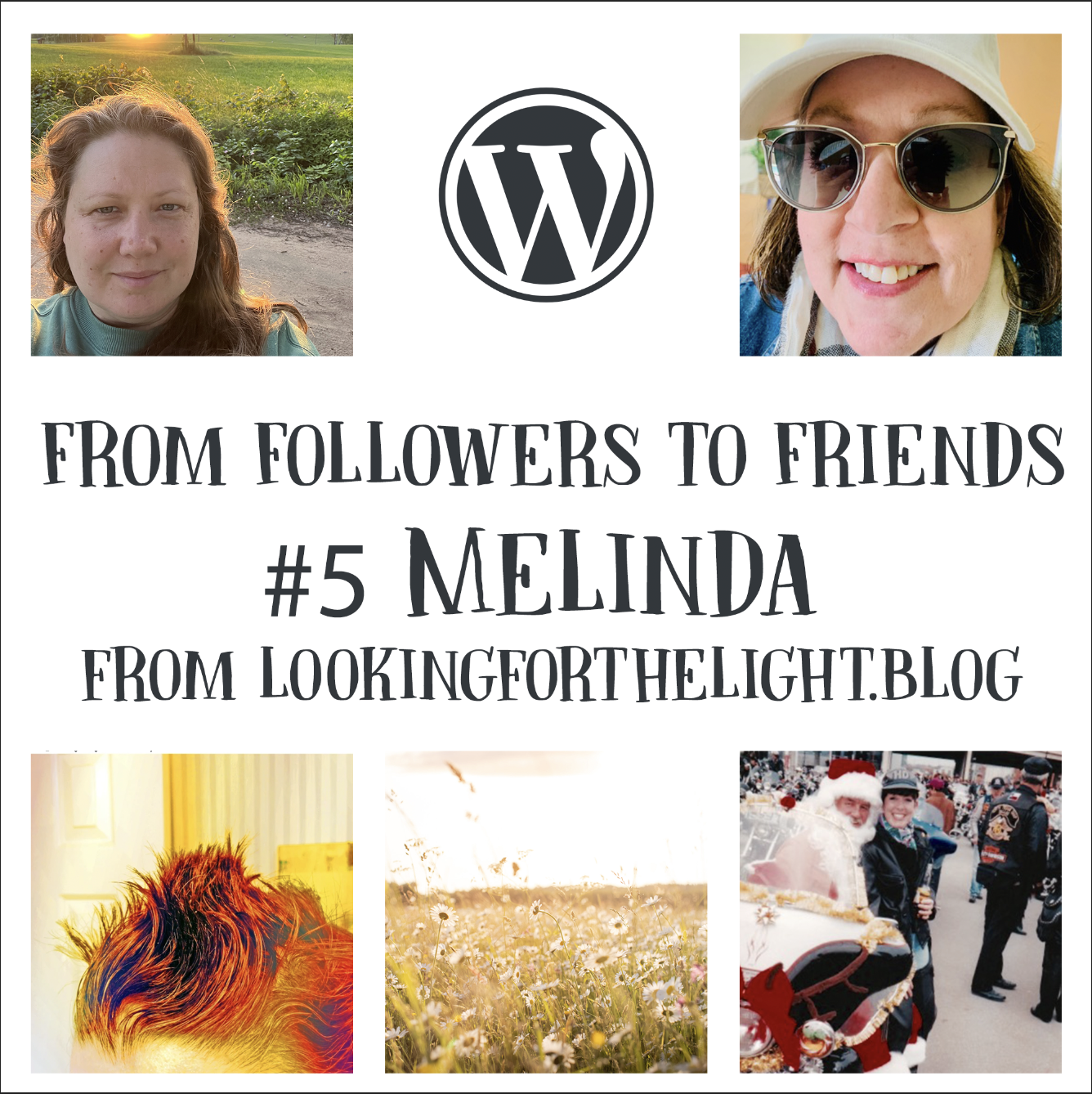
A Day In The Life Of A Latvian Mom Interviews Me

Ilze and I have become fast friends. We share many of the same interests and she’s also very wise. Her posts always entertain or teach me something new. Please overlook the mistake I made when I said “Most of my post…..” I don’t write for sympathy. Thank you Ilze for digging deep and sharing with the community.

#5: From Followers to Friends – Melinda from lookingforthelight.blog

I’m so happy to have Melinda from Looking for the Light as a wonderful supporter in the blogging community. Although we haven’t known each other for long, her kindness, warmth, and genuine encouragement always shine through in her thoughtful comments. If you haven’t already, I highly recommend visiting her blog, where she shares beautiful insights … Continue

Melinda

Family · Health and Wellbeing · Men & Womens Health · Moving Forward

I’m Sending Love To All The Soldiers Fighting In Ukraine

There are soldiers from other countries fighting side by side with the Ukrainians and I want to say how much I appreciate your sacrifice. Many of you are fighting far away from your families and you yearn to see them. You are fighting for the freedom of the Ukrainian people and I can’t thank you enough for having the conviction of the heart. No doubt, you’ve made lifelong friends in the worst of situations, but the end will come and we can all celebrate.

I want to give a huge shout-out to the Americans who are helping support Ukraine, have a piece of pecan pie on me. You need to know you are not forgotten back home this Thanksgiving Day in fact I bet your families are praying for you and counting the days to see you.

Be safe and remember you’re in our hearts.

The Ukrainian flag colors. 

Melinda

Celebrate Life · DIY · Health and Wellbeing · Men & Womens Health · Self-Care

Did You Know?

Just a few tips I’ve learned that work for me, I hope one of them helps you.

You can buy 4×4 inch sheer bags with ties and make shoe refreshers and refresh the clothes in the drawers. You can a 1 pound bag of loose fragrant lavender and make your own. I bought a pound in a glass container with a pop off top which was only $2 more and I can use the canister later. Well worth the $2.

If you wash your clothes on delicate unless it’s a large load, your clothes will last longer.

If you use a detergent for delicates, it’s often easier on sensitive skin.

I often wear sweater pants and the waist is often not dry with the rest of the load. I bought these wool dryer balls which cut down on drying time, clothes have fewer wrinkles and soften your clothes. NOT! The waist of my sweater pants were still moist, I could not tell the difference in wrinkles and my clothes came out with a ton of lent. I will have to use a lent brush to wear them.

If you add too much ice to your glass or have big lumps in your ice maker, save them for water to use later. I save the water for my plants. I collect the water in a large bowl if needed or add it to my watering bucket. This morning, I made tea and had leftover water, which I saved as well.

To have nice, even-growing plants, you need to turn them in another direction every week to get the extra sun.

I hope one of these tips is helpful.

Can you share a tip with me?

Melinda

Celebrate Life · Cooking · Family · Health and Wellbeing · Holiday · Men & Womens Health

Let’s Celebrate Thanksgiving Tomorrow

Thanksgiving at its core, is a celebration of the Pilgrims’ first harvest. The day was filled with joy for the achievements in the field and the opportunity to share a meal with others including Native Americans. 

I’m having a commercially made Thanksgiving dinner for which the sweat equity is picking it up but there is so much to be grateful for. Regardless of the setbacks and we all have them, I’m thankful for each day I wake up with my husband and dogs surrounding me.

Many of you are traveling for the holiday, and the weather is atrocious on both coasts. Take your time and plan for delays, even cancellations. The holidays are a great time to see family, but the weather can play center stage. Be safe.

I’m also thankful for you, the conversations, and laughs we’ve had are priceless.

Melinda


Blogging · Celebrate Life · Fun · Men & Womens Health · Travel

Sending a Special Thank You To The United Arab Emirates, Nepal, Paraguay, Réunion, Algeria, And Bahrain

Thank you for visiting my blog and allowing me into your life. Your time here makes me smile. I set a goal to travel the world as a child and get the chance through your visits. I appreciate your time reading and hope you’ve found a post that resonates with you. I have not had a chance to visit your home country yet, but it’s on my bucket list.

Take good care of yourself until I see you again. :)

Melinda

Celebrate Life · Chronic Illness · Health and Wellbeing · Medical · Men & Womens Health

December Awareness Months & Days

Click on the link at the bottom of the post to see the entire list for December.

Awareness Months

HIV/AIDS Awareness Month

National Drunk & Drugged Driving (3D) Prevention Month

National Human Rights Month

Safe Toys and Gifts Month

Seasonal Affective Disorder Awareness Month

Universal Human Rights Month

World Twin To Twin Transfusion Syndrome Awareness Month

Worldwide Food Service Safety Month

Awareness Days

Rosa Parks Bus Seat Refusal Anniversary – December 1

World AIDS Day – December 1

Giving Tuesday – 1st Tuesday after Thanksgiving

International Day of Persons with Disabilities – December 3

International Volunteer Day – December 5

Human Rights Day – December 10

International Animal Rights Day – December 10

Bill of Rights Day – December 15

One important awareness day for me is Giving Tuesday when many charities have donors who will double or triple your donation. I make all of my yearly donations on that day to help the money stretch further.

Melinda

Reference:

https://www.goodgoodgood.co/articles/december-awareness-days-months

Celebrate Life · Chronic Illness · Health and Wellbeing · Medical · Men & Womens Health · Mental Illness

2024 Must-Read Books on Bipolar Disorder

By Natalia Lusinski
Medically Reviewed by
Seth J. Gillihan, PhD
Last Updated: 22 Oct 2024
Reading memoirs and nonfiction about bipolar disorder helps connect with those living with this brain-based condition, whether you have it or love someone who does. By Natalia Lusinski
When it comes to bipolar disorder, sometimes it may be difficult for loved ones to understand what the person is experiencing. While they often view it through the lens of caregiving, they may not grasp the individual’s personal perspective.That’s where these books come in. They’ll help you feel less alone, whether you’re the one who has bipolar or know someone who does, like a friend, your partner, a parent, a coworker, a neighbor, a child, or anyone else in your social circle.We rounded up these 10 must-read books on bipolar from this year, perfect for personal reading or as a thoughtful gift for someone who could benefit from them.
1. Daddy’s Magical Rainbow – Having a Parent With Bipolar DisorderWhen a parent has bipolar disorder, it can be challenging for a child to understand the emotional ups and downs that come with the mental health condition. In Daddy’s Magical Rainbow – Having a Parent With Bipolar Disorder, author Sarah P. Foster aims to help children ages 4 to 11 better understand bipolar, though it’s also intended for readers of all ages.The story follows a little girl whose dad has bipolar disorder. She learns that “it’s the bipolar talking” — helping her realize it’s not her “fault” when her dad acts in certain ways, whether he’s angry, quiet, manic, or experiencing other emotions. Off the page, Foster is a special education teacher with 30 years of experience working with children. She also grew up in a home environment that was affected by mental health challenges. The illustrations add a lot of heart to the story and come with a unique touch. The illustrator, Lucie Pedersen, is only 10 years old, which likely explains why her artwork so naturally draws readers into the narrative. 
2. An Impossible Life: A True Story of Hope and Mental Illness An Impossible Life: A True Story of Hope and Mental Illness, by Rachael Siddoway and Sonja Wasden, is an award-winning bestseller highlighting how bipolar disorder can affect anyone — it does not discriminate. The book follows Wasden’s journey after being admitted to a psychiatric hospital — against her will — by her husband and father when she was 35 years old. On the outside, her life seemed idyllic: She was a mother of three living in the suburbs with her successful husband. However, behind closed doors, she was battling with intense symptoms of bipolar disorder, including manic and depressive episodes, as well as delusions. The book offers hope to those living with bipolar or those who know someone affected by it. Since her experience, Wasden has become a dedicated mental health advocate. Oprah Winfrey even participated in one of her virtual mental health book club discussions to help inspire female inmates at the world’s largest women’s prison.
3. The Bipolar Therapist: A Journey From Madness to Love and Meaning
The Bipolar Therapist: A Journey From Madness to Love and Meaning was written by Marcia Naomi Berger, LCSW. In this memoir, Berger is open and honest about her time spent in a psychiatric ward, particularly from the unique perspective of being a therapist who became a patient in the psych ward. Like anyone else, she had to confront the stigma and shameassociated with bipolar disorder. Through her story, we learn how this experience ultimately made her a more compassionate therapist. 
“Marcia Naomi Berger’s first-person account of her journey and transformation is courageous,” states Francis G. Lu, MD, professor emeritus in the department of psychiatry and behavioral sciences at UC Davis, in the editorial reviews. “As she writes, ‘Someone with mental illness is much bigger and more complex than their diagnosis.’”

4. Hogbook and Lazer Eyes 
Hogbook and Lazer Eyes is a graphic novel memoir by writer, actor, and stand-up comedian Maria Bamford and her husband, artist Scott Marvel Cassidy. The story is based on their unique courtship — told from the point of view of their pugs — and how they met on the dating site OkCupid, using the names “Hogbook” and “Lazer Eyes.” 
As it turns out, they had more in common than they initially thought: They both have bipolar 2 disorder. Whether you have bipolar or have been (or are) in a relationship with someone who does this heartwarming and funny book is sure to resonate.

5. Devout: A Memoir of Doubt
In Devout: A Memoir of Doubt, author Anna Gazmarian not only reflects on living with bipolar 2 disorder but also her struggles with spirituality. Raised in an evangelical household, Bazmarian’s 2011 diagnosis at age 18 led to a crisis of faith as well. Now 31 and living in Durham, North Carolina, where she works as an outreach coordinator for The Sun Magazine, a national literary publication, Gazmarian spoke with bpHope about her memoir earlier this year. “The longer I’ve had my diagnosis, and the longer I’ve sought treatment, the more I’ve learned to cope with having it be only part of my identity,” Gazmarian says, adding that opening up about her bipolar diagnosis and its impact has been a healing process. She hopes her story will inspire others. 

6. Bipolar, Not So Much: Understanding Your Mood Swings and Depression
Whether someone is newly diagnosed with bipolar disorder or has been living with the diagnosis for some time, this book, Bipolar, Not So Much: Understanding Your Mood Swings and Depression, offers valuable insights. Written by Chris Aiken, MD, a psychiatrist and assistant professor at New York University and Wake Forest medical schools, along with James Phelps, MD, emeritus psychiatrist, Samaritan Mental Health in Corvallis, Oregon, the book draws on their medical expertise to help readers understand the complexities of depressionand how to manage and cope with it. The authors also emphasize that bipolar disorder is nota one-size-fits-all diagnosis. They explore various treatment approaches, acknowledging that different methods work for different people. 

7. Be There: My Lived Experience With My Sister’s Bipolar Disorder
Be There: My Lived Experience With My Sister’s Bipolar Disorder tells the story of author Linsey Willis, the younger sibling and caregiver to her sister Betsy, who has bipolar disorder. Betsy’s diagnosis at 21, despite being an Ivy League-educated woman, came as a shock and drastically changed the course of her life. The book not only draws readers into Linsey and Betsy’s experiences but also resonates with anyone who has a sibling or loved one living with bipolar. At its core, the story carries an important message of resilience and hope

8. Living Well With Bipolar Disorder: Practical Strategies for Improving Your Daily Life
In Living Well With Bipolar Disorder: Practical Strategies for Improving Your Daily LifeDavid J. Miklowitz, MD, professor of psychology at the UCLA Semel Institute, offers practical strategies for managing life with bipolar disorder. He addresses common stressors to avoid, how to cope when they arise, and ways to handle mood swings effectively. 
The book covers a wide range of topics, from managing depression, mania, anxiety, and irritability to navigating daily routines such as sleep, relationships, and work. It also explores maintaining physical health, managing substance use, and making the most of medicationsand therapy for long-term mood stability.
“Dr. Miklowitz, an acclaimed authority in the treatment of mood disorders, provides clear and valuable suggestions for how to navigate a seemingly unnavigable condition,” Kay Redfield Jamison, PhD, professor of psychiatry and behavioral science at Johns Hopkins University School of Medicine, writes in an editorial review. 

9. Crazy… Or Something Else Entirely: A (Mostly) Secret Journey With Bipolar Disorder 
Jillian Dumond’s Crazy… Or Something Else Entirely: A (Mostly) Secret Journey With Bipolar Disorder is a heartfelt and humorous memoir that offers a candid look at how bipolar disorder has impacted her life, particularly in areas like dating and relationships. Written in a conversational style, Dumond invites readers into her world, sharing personal experiences that are both relatable and engaging. 
What makes the book even more compelling are the contributions from her family and friends, offering insights into bipolar disorder from a caregiver’s perspective. Through these multiple viewpoints, the book not only provides a deeper understanding of living with bipolar but also highlights the importance of support and empathy from loved ones.

10. The Social Rhythm Therapy Workbook for Bipolar Disorder
The Social Rhythm Therapy Workbook for Bipolar Disorder is written by Holly Swartz, MD, professor of psychiatry at the University of Pittsburgh, with a foreword by Ellen Frank, PhD, distinguished professor emeritus at the same university. In this workbook, Dr. Swartz explains how social rhythm therapy can help individuals with bipolar disorder reset their internal body clock, or circadian rhythm. By stabilizing daily routines and rhythms, this approach can reduce bipolar symptoms, lower stress, and support better mood management. The book offers practical tools for applying these strategies in everyday life to promote emotional stability

ABOUT THE AUTHOR

Natalia Lusinski
Natalia Lusinski is an editor and writer for bpHope and a wellness and lifestyle writer and editor, covering everything from health to travel to personal finance topics. Her work can be seen in several publications, including Business InsiderYahooForbesInsight Timer, and the L.A. Times. She spent several years living abroad and is currently working on a travel/grief memoir. (If anyone happens to be in Portugal, she’d love a pastel de nata.) Back in L.A., she runs a popular pizza Meetup and is still trying to find her favorite slice.

Her list looks very interesting and helpful.

Melinda

Celebrate Life · Chronic Illness · Health and Wellbeing · Medical · Men & Womens Health · Mental Health

Blogger Highlight-SOLONGASICANBREATHE

Thank you for all the great feedback on the Blogger Highlight series, I’ve enjoyed meeting each blogger and sharing their site with you. This week we highlight the blog Solongasicanbreath. I’ve followed Marie for a short time but we connected straight away. She has ME which is a severe chronic illness and she graciously answered a question about the illness for me. Interestingly enough we have the same illness, ME and CFS are the same just different names. It sounds like CFS is more often used in America whereas the UK uses ME. I know the struggle and mine is not severe, I admire Marie’s outlook on life with the struggle she has. 

SOLONGASICANBREATHE

In late 2011 ME – Myalgic Encephalomyelitis – entered my world after a viral infection and while I lost my full time job in Accounting, my hobbies (which included hot yoga, running with my local athletics club and horse riding), and everything that once defined me, I gained a swathe of space and time.

Since then, I’ve used this time to observe this odd world of ours, amend how I view the term “living” and dabble in writing and tree planting (my friends, husband and I have planted about 100 mainly native trees in our 3/4 acre garden).

I’m passionate about our environment and live as sustainably as I can. We grow a lot of our own vegetables while buying into consumerism as little as possible.

My poems, short stories and non-fiction can be found in the books Poems from Conflicted Hearts, Observant Observings, magazines and journals such as Slant, Caustic Frolic, ROPES, JuxtaProse, online resources Glossy News, Every Writer and newspapers Irish Examiner and Irish Independent.

From 2014 to 2021, I wrote a regular column for the magazine Athenry News and Views.

One very important post she wrote is about having ME its called Losing Myself. It’s a long read but worth every minute. 

WHAT IS ME?

As per the CDC, ME is a serious and often long-lasting illness that keeps people from doing their usual activities.

It makes physical and mental exertion difficult.

Symptoms include trouble thinking, severe tiredness and other symptoms.

There is no known cause or cure. Care usually means treating the symptoms that most affect a person’s life.

HOW TO HELP PATIENTS WITH ME IN IRELAND?

There are many organisations available to patients and their carers.

Irish ME/CFS Association: https://irishmecfs.org/

The Irish ME Trust: https://www.imet.ie/

ME Advocates Ireland: https://meadvocatesireland.blogspot.com/

Patients with Severe ME  remain bedridden and need help with basic activities including nutrition and hydration.

Questions I asked

M.  You’ve published many articles, how did you get involved in writing for magazines?

M.  Like everything in life, by accident! In early 2014 after having some poems I submit to an anthology published, the publisher of the anthology asked if I’d enough material for a solo poetry book, which I did. And after that book Observant Observings was published and some articles appeared in local media to promote it, the editor of a local magazine reached out to me and asked if I was interested in writing a regular column for them. I said why not! I wrote an article for every issue from late 2014 to 2021 when the magazine ceased trading due to the impacts of the pandemic. And while I was writing for them, I began sending off work elsewhere which too has been published. Then, in 2016, after I wrote a letter to the editor of our national newspaper, The Irish Independent, following our general election at the time, and pointing out the reasons for anger in the country, the editor of the paper reached out to me, asking if I’d follow up with a full length journalistic piece, and that was published under my own name, which gave me another feather in my cap! Life lesson: take calculated risks! Have confidence in your ability and challenge yourself!

M.  How do you find joy in your day?

M.  Like many people living with long term illness, and being as limited as I am due to my ME, I’ve had to adapt and re-learn what living means without having a job or social life or the hobbies I once had (which included hot yoga, running with a local athletic club and horse riding). It didn’t happen overnight. But the more I sat with myself, the more I began to look outward, to see the seasons change, the light change within a day, etc. That’s where I now find joy. Watching the seasons roll in and watching how nature and her creatures react to each change. At present I have a hooded crow who for the last 3 years has showed up at my kitchen window for breakfast, lunch, and dinner. Joy can be found in the smallest of places, and you don’t even have to dip into your pocket to enjoy it!

Be sure to pull up a chair and read through Marie’s archives, you’ll leave with more knowledge than you came with. 

Melinda

Looking for the Light


Celebrate Life · Cooking · Family · Fun · Health and Wellbeing · Men & Womens Health

From Family Cookbook-Dumplings

The family cookbook contains recipes my Gramma and Grannies used often. It is the type of food I grew up on good ole Southern food, from Granny’s roast to my Gramp’s dumplings.

This is one of Gramp’s favorites. He loved them so much that he carried the recipe in his wallet. 

What You Need

1 1/2 cups white flour

1/2 ts baking powder

1/4 ts salt

1/4 cup shortening 

How To Make

Sift flour, baking, and salt together

Crumble in the shortening with your fingers

Add just enough milk to make a very stiff dough

Using a spoon to mix

Roll out the dough on a well-floured board until it’s very thin

Cut 1/8 thick 

Cut into strips and lay into 3-quart post-medium chicken

1 1/2 broth into until boiling stock

Lower heat and cook slowly for almost 20 minutes

Do not take off the lid

Gramps loved dumplings

Melinda

Celebrate Life · Health and Wellbeing · Medical · Men & Womens Health · Self-Care

Question Of The Day

Our thumbs are important in many of the actions we take daily.

What are five things that are difficult to do without thumbs?

For me:

Opening the top on anything

Carrying something in my hands

Opening doorknobs

Buttonholes

Using scissors

Melinda


Art · Celebrate Life · Fun · Health and Wellbeing · Men & Womens Health · Mental Health · Self-Care

Meditative Painting to Heal Your Life Course

With all the discord in the world today, maintaining a positive and hopeful outlook can be challenging. So, how do you rise above it, maintain your positivity, and hold space for a world with more peace, love, and abundance? You have a choice, and it will require that you go within yourself, to your inner artist, and create what you desire, then radiate that inspiring energy, taking action that is in harmony with your dreams and deepest intentions. Painting has the power to bring you into the present and become a transformative and healing experience. For many, this is also one of the easiest ways to meditate, because you are allowing the “doing” of painting to guide you into the meditative state, rather than sitting still and trying to stop the mind.

Tap into Your Creative Spirit and Transform Your Life

In this empowering, 8-week course by creativity coach and mentor Whitney Freya, you’ll be guided into a new kind of meditation practice, meditative painting, which will help you become present to the part of you that is tapped into the frequency of love, possibility, and infinite abundance. You will activate your inner creativity, and empower yourself to be the change you want to see in the world through the act of painting your own sacred mandala. Mandalas have guided generations of healers, philosophers, shamans, and visionaries to their own sacred wisdom. With interactive lessons and video tutorials filmed in majestic natural locations, you will be transported to a peaceful place to process your feelings and experiences. By the end of this course, you will have a clearer vision of the life you want and move forward with more serenity.

What is included in this course:

  • Eight transformative lessons with videos that will teach you a powerful form of meditation to express your inner artist.
  • Step-by-step instruction on how to paint sacred mandalas through a process that is fun and playful.
  • Guided meditations and practices that will connect you to Mother Earth’s wisdom and nourishing energy.
  • Mindfulness techniques for getting centered and ways for setting your intentions to manifest what you desire.
  • Insights on how to raise your vibration in order to be a part of the collective that will help heal our world.
  • Artistic practices to help you release judgment and boost your creative confidence.

Who should take this course:

  • Individuals who want to experience deeper healing and balance in their lives.
  • People seeking a spiritual practice that is imaginative and playful.
  • Meditators looking for a different way to meditate that will deepen their connection with their inner vision and dreams.
  • Those that might have insecurities about their creativity and want a non-judgmental, safe environment to tap into and release their creativity.
  • Artists that would like to expand their skills.
  • Everyone that wants to work with their intuition and spiritual, creative energy.

In this course, be prepared to have fun, tap into your imagination, and let your creativity run free!

$55.00 USD Value • Pay What You Want

$19.00, $35.00, $55.00

This is the total amount for all lessons.

Pay extra to give more to our instructors and to help create new courses. No matter how much you pay, you’ll get the same course as everybody else.

What a great opportunity to invest in your life and learn new skills.

Melinda

Reference:

Celebrate Life · Chronic Illness · Health and Wellbeing · Medical · Men & Womens Health · Self-Care

Lung Cancer Awareness Month

Our lung health is critical to having a healthy life. I learned more about Lung Cancer while researching for this post, and I’m so glad I quit smoking 20+ years ago. 

Whether you are in perfect health, or you are living with a lung condition, there are many things you can do to protect your lungs and maintain your overall health and well-being.

Sometimes we take our lungs for granted. They keep us alive and well and for the most part, we don’t need to think about them. That’s why it is important to prioritize your lung health.

Your body has a natural defense system designed to protect the lungs, keeping dirt and germs at bay. But there are some important things you can do to reduce your risk of lung disease. Here are some ways to keep your lungs healthy.

Don’t Smoke

Cigarette smoking is the major cause of lung cancer and chronic obstructive pulmonary disease (COPD), which includes chronic bronchitis and emphysema. Cigarette smoke can narrow the air passages and make breathing more difficult. It causes chronic inflammation, or swelling in the lung, which can lead to chronic bronchitis. Over time cigarette smoke destroys lung tissue and may trigger changes that grow into cancer. 

If you smoke, it is never too late to benefit from quitting. We can help whenever you are ready.

I WANT TO QUIT 

Avoid Exposure to Air Pollutants That Can Damage Your Lungs

Indoor Air Quality

  • Indoor Air Quality (IAQ) refers to the air in the buildings and structures that we work, live, and play in as well as the immediate area around these buildings and structures.
  • IAQ is important for ALL of us since we spend up to 90% of our time indoors.
  • It can be surprising to learn that indoor air can be even more polluted than the air outdoors.
  • Secondhand smoke, chemicals in the home and workplace, mold and radon all can cause or worsen lung disease. 
  • You can take steps to improve your indoor air quality

Talk to your healthcare provider if you are worried that something in your homeschool or work may be making you sick.

Outdoor Air Pollution

The air quality outside can vary from day to day and sometimes is unhealthy to breathe. Knowing how outdoor air pollution affects your health and useful strategies to minimize prolonged exposure can help keep you and your family well. Climate change and natural disasters can also directly impact lung health.

To protect your lungs from outdoor pollution consider the following:

  • Avoid exercising outdoors on bad air days
  • Avoid exercising near high traffic areas
  • Check Airnow.gov to find out the daily air conditions in your area
  • Don’t burn wood or trash

Get Regular Check-ups

Regular check-ups help prevent diseases, even when you are feeling well. This is especially true for lung disease, which sometimes goes undetected until it is serious. During a check-up, your healthcare provider will listen to your breathing and listen to your concerns.

It is best to catch a lung condition in its earliest stages. That is why it is important for you to know what some of the common signs and symptoms are for lung conditions

Exercise

Whether you are young or old, slender or large, able-bodied or living with a chronic illness or disability, being physically active can help keep your lungs healthy. Learn more about how exercise can strengthen your lungs.

Public Health and Your Lungs

Health begins where we live, learn, work and play, and it’s important to ensure that safeguards are in place to protect us and prevent disease. 

SEE HOW PUBLIC HEALTH ISSUES CAN AFFECT LUNG HEALTH.

The scariest part is that you can get Lung Cancer from our everyday environment. To many saying “mask” sends their eyes rolling but if you think about it, wearing a mask prevents the Flu and COVID-19, and it protects your lungs. I look at China and see most people wearing masks, my guess is that COVID-19 scared them into the habit.

Melinda

Reference:

https://www.lung.org

Celebrate Life · Chronic Illness · Health and Wellbeing · Medical · Men & Womens Health · Self-Care

Diabetes Awareness Month

The number of people with Diabetes is staggering and can cut your life short if not managed. Below are estimates for the United States and estimates based on ethnic background.

Estimated prevalence of diabetes in the United States

  • Total: 38.4 million people of all ages had diabetes (11.6% of the population) in 2021. 38.1 million were adults ages 18 years or older.
  • Diagnosed: 29.7 million people of all ages had been diagnosed with diabetes (8.9% of the population).
    • 29.4 million were adults ages 18 years or older.
    • 352,000 were children and adolescents younger than age 20, including 304,000 with type 1 diabetes.
    • Age-adjusted data from 2019 to 2021 showed that, for both men and women ages 18 years or older, the prevalence of diagnosed diabetes was highest among American Indian and Alaska Native adults (13.6%), followed by non-Hispanic Black adults (12.1%), adults of Hispanic origin (11.7%), non-Hispanic Asian adults (9.1%), and non-Hispanic White adults (6.9%).
  • Undiagnosed: 8.7 million adults ages 18 years or older had diabetes but were undiagnosed (22.8% of adults with diabetes were undiagnosed).

Read about the estimates of diabetes in the United States External link and the prevalence of both diagnosed and undiagnosed diabetes in the National Diabetes Statistics Report from the Centers for Disease Control and Prevention (CDC).

According to the American Diabetes Association’s Economic Costs of Diabetes in the U.S. External link, the total estimated cost of diagnosed diabetes in 2022 was $412.9 billion, including $306.6 billion in direct medical costs and $106.3 billion in reduced productivity.

Additional Reports on Diabetes

References

Last Reviewed January 2024
This content is provided as a service of the National Institute of Diabetes and Digestive and Kidney Diseases (NIDDK), part of the National Institutes of Health. NIDDK translates and disseminates research findings to increase knowledge and understanding about health and disease among patients, health professionals, and the public. Content produced by NIDDK is carefully reviewed by NIDDK scientists and other experts.

Why is Diabetic Medications so expensive?

Pharmaceutical companies spend billions of dollars in research and development to create new drugs, and for them to recoup their investment the FDA gives them a timeframe where the drug can not be made into a generic. If companies didn’t have a chance to recoup on investment, manufacturers would stop doing research to make more targeted drugs through the research they do. Brand names are more expensive for this reason. They are not public health services and are not operated by our government. Our government gets involved when the drugs are presented to the FDA for approval.

If you don’t have medical insurance, the cost of medication can put a dent in your monthly cost of living. Before picking up your medication even if you have insurance go on the app GoodRX to see if they have a less expensive price, and the pharmacist will honor the GoodRX price. If GoodRX doesn’t have a lower price ask the pharmacist if they know of any coupon codes. The first thing I do when taking a brand drug is go to the medication’s website to see if they have a co-pay program. I’m taking several newer brand medications and paying almost nothing because of the company’s co-pay cards.

Melinda

Reference:

https://www.niddk.nih.gov/health-information/health-statistics/diabetes-statistics

Celebrate Life · Health and Wellbeing · Men & Womens Health · Self-Care

Things I’m Loving-Health And Household

Here are a few products I’m loving right now. I hope you find a product to add to your household or self-care routine. The list may also give you ideas for surprising friends or family. Most products are found on Amazon. I am not an Amazon Affiliate, I do not make a commission when you click on a link and the link does not cost you extra. The links take you right to the company’s Amazon site. 

Boiron

Arnicare Gel for Relief of Joint Pain, Muscle Pain, Muscle Soreness, and Swelling from Bruises or Injury – Non-greasy and Fragrance-Free – 4.2 oz
  • ARNICA FOR PAIN: This homeopathic medicine helps temporarily relieve muscle pain & stiffness due to minor injuries, overexertion & falls. Also great for pain, swelling, & discoloration from bruises.
  • TOPICAL PAIN RELIEF: Our non-greasy, water-based formula absorbs quickly & is unscented & paraben-free. This cooling gel is great for relief following an injury, intense workout, or general overexertion.

Boiron

ShiKai

Borage Therapy Hand Cream (2.5 oz) | Fragrance Free Moisturizer for Hands & Body | Fast Relief Lotion for Dry Skin | With Oatmeal & Shea
  • THE DRY SKIN SOLUTION: Borage Therapy moisturizes dry skin while tackling the underlying problem to keep skin hydrated longer. Provides moisture and soothing to parched skin.
  • FAST-ACTING HYDRATION: Ideal for hands, cuticles, and fingertips. Keeps skin healthy and supple long after the cream is applied, even after it’s washed away.

Visit the ShiKai Store

Scojo New York

Gels Original Blue Light Reading Glasses, Handmade Scratch Resistant Readers for Women and Men

SIMPLE YET SOPHISTICATED: Gels Originals are all about effortless style; all about understated elegance. With their rimless design and face-flattering oval lenses, these readers for men and women are compliments waiting to happen. And we’ve brought the frames to life in a myriad of unique colors. Love your readers classic & timeless? Colorful and full of character?

Visit the Scojo New York Store

Weleda

Plant Gel Toothpaste, 2.5 Ounce
  • Effective cleaning for sensitive teeth and gums.
  • Certified natural by NATRUE.
  • Free of sugar, artificial sweeteners, surfactants, synthetic preservatives, flavors, colorants, or raw materials derived from mineral oils.
  • Natural cleansing and protection for sensitive gums
  • Eases sensitivities and inflammation

Visit the Weleda Store

La Colombe Coffee

Vanilla Draft Latte, 11 fl oz Cans (Pack of 12), Coffeehouse Quality Cold Brew, Specialty Grade Coffee Beans, Ready-to-Drink

Treat yourself to our deliciously creamy Vanilla Draft Lattes. One-of-a-kind frothy texture meets real cold brew coffee with the flavor of a classic cafe latte. Made with high-quality ingredients, like farm fresh milk, beans roasted and brewed by us, and only a touch of sugar. Best enjoyed chilled!

Visit the La Colombe Store

I like these coffees so much that I subscribe to one case of mocha and one vanilla monthly. They are less sweet than some I’ve tried. 

Note about Amazon Subscribe & Save

If you buy products from Amazon regularly, you can save a % of the cost by subscribing. I subscribe to many items, and when the ship dates line up and you have five items coming, you can reach maximum savings of up to 15%. You can change how often the item is delivered and stop the subscription at any time. I love saving money and if I’m going to buy it anyway, it’s all the sweeter. 

Melinda

Celebrate Life · Communicating · Health and Wellbeing · Men & Womens Health · Mental Health · Moving Forward · Sexual Assault · Trauma

Join No More On 11/25/24 For The International Day for the Elimination of Violence Against Women

NO MORE

Dear Supporter,

You’re invited to join us on Monday, November 25th, the International Day for the Elimination of Violence Against Women, for a very special worldwide broadcast to increase awareness, solidarity, and concrete actions to address the global crisis of gender-based violence. Hosted in partnership with Peace One Day, and sponsored by Avon and the Centre for Public Impact, this event will feature an incredible lineup of survivors, advocates, performers, and global leaders.

They will share powerful stories, insights, and steps we can all take to fuel meaningful change in our communities and culture. Every day, millions of women around the world face the devastating reality of gender-based violence. One in three women will experience sexual or domestic violence in her lifetime, and more than 60% will never seek help. Of those who do, fewer than 10% will report their experience to the authorities. Now is the time to come together and say NO MORE!

So please plan to tune in to the #EVAWDay Broadcast on November 25th, starting at 1PM GMT / 8AM ET. You can watch at peaceoneday.org or on Peace One Day’s and NO MORE’s social channels. We will be in touch soon with more details, including a full list of the speakers and performers. In the meantime, please help us get one million viewers for the broadcast! Share this invitation with your friends, family, and colleagues because when we come together, we can create a world free from gender-based violence. Thank you for your support! 

Sincerely,

Pamela Zaballa Global CEO
 

This is a great opportunity to support women while learning first hand from the awesome speakers. 

Melinda

Chronic Illness · Health and Wellbeing · Medical · Men & Womens Health · Self-Care

Fibromylagia Thoughts #13

I was diagnosed with Fibromyalgia in 2015 and during the years that have followed, I’ve experienced many types of symptoms and flares. In the past six months I’ve had many waves of flares to differing degrees, and also have experienced symptoms I had forgotten were fibromyalgia-related. I had to go back and read the basics and all the types of symptoms a flare can bring about.

Here are a few symptoms that were new to me

Reactive skin, burning all over my body that felt like acid with the simple move of my shirt or wiping my hands dry.

The arthritis pain in my hands has reached a new level of pain.

Parts of my body hurt more than before.

Overview of Fibromyalgia

Fibromyalgia is a disorder characterized by widespread musculoskeletal pain accompanied by fatigue, sleep, memory and mood issues. Researchers believe that fibromyalgia amplifies painful sensations by affecting the way your brain and spinal cord process painful and nonpainful signals.

Symptoms often begin after an event, such as physical trauma, surgery, infection or significant psychological stress. In other cases, symptoms gradually accumulate over time with no single triggering event.

While there is no cure for fibromyalgia, a variety of medications can help control symptoms. Exercise, relaxation, and stress-reduction measures also may help.

This is a short overview of whoever. There’s a wealth of knowledge available to read. Remember to check out the Fibromyalgia organizations. Look for respected sources because I ‘ve ran across several sites that are only selling supplements or pushed memberships. You want solid resources.

Some exercises may help, look for them and see how they fit in your life.

Melinda

References:

https://www.mayoclinic.org/diseases-conditions/fibromyalgia/symptoms-causes/syc-20354780

Celebrate Life · Family · Fun · Health and Wellbeing · Men & Womens Health · Mental Health

Humane Society Anniversary Day – November 22

I can’t think of a better way to bring awareness to the good work the Humane Society does every day, 365 days a year. You can help them save more animals’ lives even with the smallest donation, they all add up. Also, look for weeks this time of year where your donations are matched by 2 or 3 times.

Happy Day Humane Society Custom Ink Fundraising


Who is The Humane Society International?

Sixty-five years ago, four animal advocates, determined to fill “a great vacuum, at the national level, in American humane work,” came together in a Denver living room to found a new organization with a bold vision, a broad reach and a principled commitment to making the world better for animals—all animals.

The four borrowed money against their life insurance policies to fund the group’s first few months, recruited a representative group of peers for their board of directors, and made the decision that a national organization needed to be based in the nation’s capital. They resolved to build a national constituency and train their energies on the era’s greatest animal welfare challenges—the inhumane slaughter of animals raised for food, the unrestrained use of animals in research, testing and education and the tragedy of animal homelessness.

Just as importantly, the organization they sought to build, from the start, would confront cruelty to animals wherever it occurred, “no matter by whom committed and without concern for who might be offended or alienated.”

Today, the fruits of their labors are known to all those who have supported the mission of the Humane Society of the United States through the years, and this week, we acknowledge our founders, Larry Andrews, Marcia Glaser, Helen Jones and Fred Myers. Their selflessness, their realism, their inclusiveness and their deep devotion to the ideals of animal protection are the beacons and signposts of our contemporary campaigns. Succeeding generations of advocates, on staff and on our board, along with our volunteers and our supporters, have helped to make real on the promise and the boldness of those who first conceived of an organization that would take on the biggest fights and root out cruelty. Each day, our skilled and dedicated staff here in the United States and around the world works to implement their vision. Our affiliates have expanded our scope further, with Humane Society International taking on animal protection issues in more than 50 countries around the world, and the Humane Society Legislative Fund working to strengthen federal policy for animals stateside.

I admire the four founders for thinking about animal welfare 65 years ago and for the organization’s growth to include farm animals. Please help if you can.

Melinda