

I hope you enjoy a few more of my 80″s favorites. Have a great day. I would love to hear your comments! M

I hope you enjoy a few more of my 80″s favorites. Have a great day. I would love to hear your comments! M
By Bethany Bray May 31, 2018
The findings, published in the May 2018 issue of the journal Pediatrics, analyzed seven years of billing data for emergency room and inpatient visits at children’s hospitals in the United States.
In 2008, the number of hospital visits for suicidal thoughts or suicide attempts in children and adolescents younger than 18 was 0.66 percent of total hospital visits. In 2015, that percentage  nearly doubled to 1.82 percent.
The co-authors of the journal article note that “significant increases” were seen across all age groups, but the highest rise was seen in adolescents, specifically the 15 to 17 and 12 to 14 years-old groupings. The data also pointed to a seasonal curve, with the fewest suicide-related visits in the summer and the most in the spring and fall.
“These findings are deeply troubling and also not surprising,” says Catherine Tucker, president of the Association for Child and Adolescent Counseling, a division of the American Counseling Association.
Tucker points to several factors that were in play during the time of the Pediatrics study (2008 to 2015), including an economic collapse that contributed to stress in families — even forcing some in younger generations to change career or college plans.
Also, “during this same time period, many states drastically cut funding to schools and youth-serving programs,” adds Tucker, a licensed mental health counselor and research director at The Theraplay Institute in Evanston, Illinois. “It is highly likely that the positive resources that were keeping some youth from hitting bottom were removed, making it harder for adults to intervene in a timely manner.”
Changing these statistics will take effort on the part of parents, schools, medical and mental health practitioners alike, says Tucker. Universal screening for anxiety, depression and trauma should be done in schools and doctor’s offices to identify youth who are struggling.
“In order to reverse this trend, schools need to bolster school counseling programs and free school counselors from spending the majority of their time on administrative tasks like testing and scheduling. School counselors see a majority of American children and are in a prime position to do preventive education and identify kids who are struggling before they become so distraught that hospitalization is required,” Tucker says.
“Additionally, parents and caregivers should be encouraged to monitor children’s and teens screen time and limit it to be sure that youth are getting adequate sleep, exercise and in-person interaction,” she continues. “Social media should be carefully monitored in younger children. Parents can reduce late-night use of phones by turning off WiFi after bedtime or not allowing phones or other screens in bedrooms. Counselors in agencies and private practice settings can help by encouraging parents to be alert to behavioral changes, monitoring screen time and helping kids manage their symptoms.”
MEN”S HEALTH
Chris Marvin had a secret morning ritual that he practiced in college. Sunlight creeping through drawn shades, he’d roll out of bed around 7 a.m. with a pounding head. After making sure his door was locked, he’d rummage through drawers and the depths of his mini fridge. Then, on a white marble desk that would have been pristine if not for the Thrasher and Mayhem stickers, he’d line up everything he needed to get through the day.
First, he’d pop a caffeine pill to feel alive; then he’d chase it with a couple of painkillers — a preemptive strike against the grind of training two hours a day, seven days a week. (“There is no rest muscle,” he’d tell himself.) A hit from his bong would help calm his racing heart. Instead of water, he’d pour a glass of whiskey to wash down his pre-workout supplements. Then he’d inject himself in either his glutes or deltoids with black market anabolic steroids. After putting his supplies back in their hiding places, he’d ride his bike a half mile from the off-campus house he shared with frat brothers to Sonoma State University in Northern California, where he studied exercise science.
“A kinesiology major doing all that shit? I was a walking oxymoron,” says Marvin, now 32. Nothing could keep him out of the gym, not even injuries that would eventually require surgery. “I’d have my training partner hold my shoulder in its socket so I could do heavy preacher curls. In my mind, I was indestructible.”
By the time he was 25 and working odd jobs back home in San Diego, Marvin weighed 210 pounds, and his back rippled like the Hulk’s. When he eventually cycled off the steroids and ramped up his use of synthetic marijuana, ecstasy, sleeping pills, and Valium — on top of the booze and painkillers — he dropped down to 141 and fell into a deep depression. After one wild bender, he spent more than a week locked down in a psych ward.
“I had done so many drugs that I didn’t sleep for eight days coming down off them,” he says. “From there, I went to a cognitive behavioral therapy program, and that’s where they pointed out that I had muscle dysmorphia. I’d never heard of it before. I was like, ‘What the fuck is that?'”
If you look closely, you might see a bit of yourself in Marvin. From a young age, men are taught to be bigger, stronger, and faster, and to fight through pain. Anger? Self-loathing? Anxiety? Who needs a therapist when you have the gym? And who among us hasn’t tried to fix our inward insecurities by addressing our outward appearance?
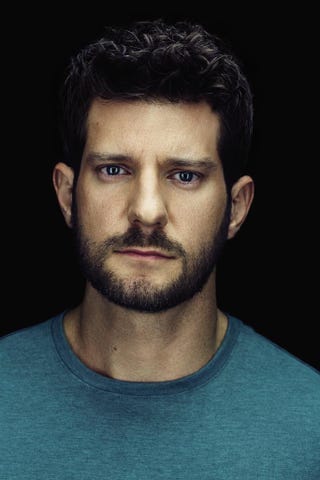
Unlike Marvin, you probably don’t have a mental disorder, much less a substance abuse problem that you developed to cope with it. Muscle dysmorphia, or MD, is a little-known psychological condition first described in scientific literature in the late 1990s. Because formal diagnostic criteria define MD as a subset of a broader group, body dysmorphic disorder, it’s impossible to know how many people are affected.
But the current diagnostic parameters, such as they are, can apply to millions of people who just aren’t satisfied with their physique. Those who suffer from so-called “bigorexia” obsess over their appearance, perceiving themselves to be insufficiently muscular even though they are indeed muscular, if not ripped. “People would give me compliments,” Marvin says, “but in my head I was like, ‘This part sucks.’ I was super insecure even though I looked better than most people. I would almost give myself dry heaves thinking about my body.”
The difference between someone with muscle dysmorphia and a regular fit guy is one of degree. Early research in the American Journal of Psychiatry reveals that a typical bodybuilder spends about 40 minutes a day thinking about improving his physique. Those with muscle dysmorphia spend about 325 minutes and check themselves out in a mirror an average of 9.2 times a day. The condition usually takes root in late adolescence or early adulthood, and most guys who exhibit hallmarks of MD have been bullied or shamed about their strength or appearance.
Marvin’s case was textbook. In high school, he was 5’11” and weighed around 150. Uncoordinated and nonathletic, he warmed the bench for the basketball team and became the butt of jokes in the weight room. “They laughed at me for being the weakest guy there,” he says. “I was a lot smaller than everybody. I was picked on a lot.”
Research shows that boys as young as 6 express a desire to be muscular, and that men are more likely to pursue such a physique if they were either teased or received encouragement to do so from parents or peers. And beyond their inner circle, men face constant pressure to look a certain way.
We see it in movies: Mark Wahlberg isn’t the world’s highest-paid actor because of his Boston accent. We see it on TV: Fat guys like Kevin James always play the fool. We see it in advertising: Quick, what’s an underwear model look like? We see it in magazines: Even at Men’s Health, we sell it on our covers. We see it in dating apps: How are you framing your Tinder profile? We see it in social media: The Rock has 100 million Instagram followers. We see it in video games: Research shows that men have lower self-esteem about their bodies after using very muscular avatars. We see it in toys: In the late 1990s, G.I. Joe Extreme action figures were pumped up to have the real-life equivalent of a 55-inch chest and 27-inch biceps.
“When we see images of muscular bodies, which we are bombarded with, we become less satisfied with our own,” says Stuart Murray, Ph.D., a clinical psychologist at UC San Francisco. “The established norm is unrealistic in a lot of ways. A lot of the idealized images we see are Photoshopped and by definition impossible to replicate. And models often do extreme dieting for a photo shoot.”
A few months before Marvin started at Sonoma State in 2008, he had a vision not so much of who he wanted to be but of what he wanted to become. “I had these fantasies like all guys have. I wanted to be big, buff, ride a motorcycle, get chicks, be athletic,” he says. “I was none of those things.” So he started working out, but didn’t know what to do in the gym or how long getting buff was supposed to take. A few months in, he bought steroids from an acquaintance and learned how to inject them from a classmate’s mom, a nurse who gave him syringes that she took from her hospital.
“I was 21 and a half. My testosterone was as high as it was ever going to be. I decided it wasn’t good enough,” he says. “I wanted that quick fix. And, of course, I put on 30 pounds and was like, ‘Holy shit, this is awesome.’ The feelings of power and confidence were pretty incredible. The drugs allowed me to be what I wasn’t. I felt smarter, I felt more confident, I felt sexier. I felt at ease.”
But the steroids didn’t address the underlying pathology of muscle dysmorphia, which led Marvin to focus obsessively on his perceived flaws. “I wouldn’t take my damn shirt off because I was so embarrassed about my chest,” he says. “Instead of being like, ‘Dude, check it out, my arms are growing, my legs are growing, my back is growing,’ I would zero in on my chest and be like, ‘Oh my god, I’m pathetic.’ I only focused on my inadequacies.”
Marvin checked off almost every box for symptoms and associated behaviors of muscle dysmorphia. Mood swings? “If you cut me off in traffic, I’d get angry because I assumed you did it on purpose.” Depression and anxiety? He lived in a state of “general discomfort just below panic,” especially around muscular guys. OCD tendencies? “I’d do a flex routine in the mirror every day and focus on my weaknesses.” Impaired social functioning? “I was incapable of being around people without at least being stoned on marijuana. I needed that buffer to feel okay about myself.” Some of his symptoms were associated complications of MD: Substance abuse? “At the inpatient program, they told me I was the most advanced drug user they’d ever met.” Suicidal thoughts? After a bad breakup, he says, “I contemplated driving my car off the road every day for about two years.”
When he stopped taking steroids in 2013, he faced a new problem: His body no longer produced testosterone naturally, a condition known as anabolic steroid-induced hypogonadism, or ASIH. He now uses a prescribed androgen cream every morning, rotating between sites on his forearms and upper torso. (His girlfriend can’t touch the active site for hours to protect her hormonal balance. Even a hug could do harm.) Because of the damage to ligaments and tendons from his insane workout regimen and steroid use, he wakes up to aches and pains in just about every joint.
“I fucked my body up for the rest of my life,” he laments. “Part of my therapy was realizing that my outsides do not define my insides. I would assign my morality based on how my body looked, how my workouts went, and what I ate that day.”
Eating disorders are another hallmark of muscle dysmorphia. Bulking up requires a high-calorie diet, but even with anabolic steroids, it’s extremely difficult for an experienced, genetically maxed-out lifter to do a “clean” bulk — a term for building muscle without also adding fat. The quest to get bigger while staying shredded leads to bizarre diet choices, with grossly inadequate levels of vitamins and minerals.
“Guys can look amazingly healthy, like Greek statues, and yet they’re very compromised medically,” says Murray, who is also codirector of the National Association for Males with Eating Disorders. “You can end up with a dangerously low heart rate and electrolyte imbalances.”
Clinicians identify three main types of disordered eating. Anorexia is calorie restriction; bulimia is purging calories by regurgitating food, using laxatives or diuretics, or exercising to cancel out intake (or a combo of these); and binge eating is losing control, eating when not hungry, or consuming excessive amounts at one time.
Though eating disorders and muscle dysmorphia are listed separately in the fifth edition of the Diagnostic and Statistical Manual of Mental Disorders, current research views them as a constellation of related behaviors. Both are the direct result of over-evaluating an idealized body type, which fuels either a drive for leanness, a drive for muscle mass, or both. These body image disturbances can give rise to disordered eating behaviors — an issue rarely talked about in the lives of men.
“There’s a double stigma in males,” says psychiatrist Brad Smith, M.D., medical director of eating disorder services at Rogers Behavioral Health, a treatment facility with branches nationwide. “There’s the stigma of having a psychological or psychiatric issue. It’s hard to get men to seek treatment even for depression. On top of that, this is typically characterized as a women’s illness.”
“Society has trained us that we are strong, masculine figures who don’t really think about that kind of thing,” says Dan Stein, 35, a strong, masculine figure who nearly died from that kind of thing.
Two weeks before he left home for the University of Minnesota in 2001, Stein weighed 215 pounds, thanks to years of McDonald’s runs, sugary sodas, and junk food. “My parents called me husky,” he says. “Dad bod, that’s probably the most accurate description of where I was at.” Determined to get in shape, he began running 6 miles a day, five days a week, and occasionally lifted weights in the school’s gym. By the time he returned home for winter break, he was down to 185 and, he says, “everyone told me how great I looked. It was an ego boost.” By the end of his second semester he weighed 165. “I did the freshman minus-50. But I was skinny-fat. I didn’t have muscles or much definition.”
A turning point came early in his sophomore year. Shirtless, Stein was throwing a football around with some friends on a grassy field near his apartment. Members of the school’s football team, also shirtless, happened to pass through. “Some very attractive girls went over and started talking to them,” Stein says. “In my head I was like, ‘I’ve been working out like crazy. What can I possibly do to look like these guys and get that attention?'”
Stein skipped so many classes to hit the gym that he failed out of school. He moved back in with his parents in Wisconsin and began waiting tables at a local steakhouse. Each night, he brought home the same dinner — pasta with marinara — and locked himself in his room so no one could see him swallow the marinara sauce and spit the noodles into the trash. He allowed himself just one real meal a year, Thanksgiving dinner, but only after running a solo half marathon in the morning. His exercise was so compulsive that he once ran in minus-10-degree weather. He was so obsessed with his body shape that he’d spend up to 15 minutes agonizing over which bottle of diet soda to drink: one that had five calories, or another that had 10.
“I was one of those ignorant people who thought the only way you burn calories is by working out,” he recalls. “I didn’t know that eating food is burning calories. That breathing, every function of our body, burns calories.”
At his lightest, the 5’10” Stein weighed just 132 pounds. He had sunken eyes, emaciated cheeks, and cold fingers and toes. The summer before his senior year of college (he eventually got his grades up at a technical school and finished at the University of Wisconsin-Milwaukee), he visited his older brother in Georgia. Though it was 90 degrees out, Stein wore a t-shirt, sweatshirt, and two pairs of sweatpants. His fingernails were blue, his lips purple. On the way to lunch, he asked his brother’s fiancee to turn the heat up in the car. “She looked at me like I was insane,” stein says. “My hands were ice cold. I started to think I had something physically wrong with me. Did I have cancer?”
A doctor back in Wisconsin told him he had 20 signs of starvation. “That’s when I had the realization I was anorexic,” he says. “My family always knew I had an issue, but they skirted around it, and I just pushed it aside. My body was in decay, and it really hit home that if I didn’t change something soon, this could kill me.”
“We need to educate people on what to look for and how to speak to our children,” says psychotherapist Andrew Walen, L.C.S.W.-C, founder of the Body image Therapy Center in Maryland and president of the National Association for Males with Eating Disorders. “It’s not about beauty. It’s about what makes you special — your humanity, your empathy, your kindness. These are the messages we need to give our young men, rather than ‘Are you the best? Are you the strongest? Are you the fittest?’ We’ve got to tell them that their body is their home. It’s not their billboard.”
Multiple eating disorders can overlap in people, and men with muscle dysmorphia often cycle through behavioral symptoms of all three; even a cheat meal can be considered binge eating if it causes mental distress. Early warning signs that your body might be compromised include dehydration, a slower heart rate, low blood pressure, and reduced body temperature. Compounding the problem: Doctors don’t always know what to look for in men.
Case in point: Walen recalls being approached by the parents of a 14-year-old boy who had lost more than 20 percent of his body weight in three months. He had become fixated on running, biking, and lifting weights, and he’d also become emotionally disconnected. “This is a classic case of a young adolescent male with an eating disorder,” Walen told the parents. “Let’s get labs to make sure he’s not medically compromised.” But the teen’s primary-care doctor didn’t believe it. He patted his patient on the belly and said, “He looks fine. I wish I had abs like that.” When the blood work came back, it showed failing kidneys and compromised liver enzymes.
Walen, 45, might understand male eating disorders better than anyone. He was a patient before becoming a therapist. In 1997, an MRI revealed that compulsive running had reduced his left hip socket to bone-on-bone. Afraid he’d need a hip-replacement surgery before age 30, he began lifting weights. If he couldn’t be as thin as he wanted to be, he figured he’d make himself as muscular as possible. He lifted so obsessively that he tore his rotator cuffs and labra in both shoulders. “That is absolutely a male experience of eating disorders, muscle dysmorphia, and body-image disturbance,” he says.
Hoping to find support, Walen attended a conference on eating disorders, but he felt out of place when he realized the other men in the room were fathers of young girls with eating issues. The only book that connected with him, Making Weight, focused on anorexia — wrestlers, boxers, MMA fighters, distance runners, and gymnasts are especially at risk — and didn’t address the spectrum of his experiences, particularly binge eating and compulsive lifting. So, in 2014, he wrote and self-published Man Up to Eating Disorders, to “normalize the experience and create a tribe of recovery.”
It’s vital work. By the time a man admits he has a problem and gets past his reluctance to seek help, the damage is often perilously advanced. One study found that between 1999 and 2009, the number of men requiring hospitalization for an eating disorder increased 53 percent, more than double the increase in women. “There’s a mistaken belief that this is rare and that men who suffer from these are atypical, emasculated, or weird,” Murray says. “We have to shift that gym culture.”
Stein now lives just outside Los Angeles and works for a social media company a few blocks from Muscle Beach. Five days a week, for no more than 75 minutes, he pumps iron at the original Gold’s Gym. “I’m surrounded by some of the most fit, attractive human beings on the planet,” he says. “There are moments where you think, ‘Good god, I wish I looked like that guy.’ But I push those thoughts out and they don’t derail me.”
He limits his cardio to 30 minutes a week, he says, “because I don’t want to lose weight anymore, and I associate cardio with losing weight.”
He maintains his 180 pounds and 9 percent body fat by eating six meals day, including lean protein (chicken, egg whites, fish), complex carbs (sweet potatoes, quinoa, whole wheat pasta), fruit (blueberries, apples), vegetables (asparagus, broccoli), and healthy fats (coco nut oil, almond butter, olive oil). He even has an occasional slice of cheesecake.
“I thought I was genetically dealt a bad hand,” he says of his old mindset. “When I started to understand that my body doesn’t act different from 99 percent of the public, I realized it wasn’t physical; it was mental. I know now that I bring so much more to the table than just how I look.”
Chris Marvin has experienced a similar transformation. The man who once popped 68 Percocets in less than 72 hours now attends 12-step fellowships at least three times a week. “My brain got me in the mess I was in, so I shouldn’t be trying to figure this stuff out alone,” he says. “I air stuff out.”
Marvin has been clean and sober since completing an intensive, three-month behavioral modification program five years ago. His new morning routine includes drinking a cup of coffee and saying a prayer that he wrote after finishing the program. It includes this line: “Relieve me of my fear and insecurity, and replace it with self-love and acceptance.”
Marvin named his personal-training business One Rep at a Time — a nod to overcoming addiction one day at time and to building genuine muscle over months and years. Some of his clients are also in recovery, and Marvin shares his struggles with them openly. “I feel like I’ve finally found my calling,” he says.
To put himself in the right mindset in the gym, Marvin listens to epic, intense battle music that “makes me feel like I’m saving the world.” He doesn’t swear at himself anymore, and he’ll frequently reset his body and mental focus with deep-breathing exercises. “I used to think that everybody who was a workout junkie would give themselves high blood pressure from being so angry,” he says. “My old workouts were a way to punish myself. I do this now as a way to improve myself.”
But Marvin knows what lurks in the background, waiting for a chance to consume his life once again. Every time he posts a shirtless photo on Instagram — a tried-and-true marketing strategy for personal trainers, but a risky one for someone recovering from muscle dysmorphia — he worries about triggering old insecurities or introducing new ones to his clients and followers. “My recovery is fluid,” he says. “It will always be a balancing act.”
Consider these statements from a 50-question eating disorder assessment designed specifically for men. Choose one of six responses — never, rarely, sometimes, often, usually, or always — as it applies to the following statements. Answering “always” to these and other statements suggests you may have a problem.
With additional reporting by Joshua St. Clair and Micaela Young. A version of this article was published in the May 2018 issue of Men’s Health Magazine.
If you suspect that you struggle with an eating disorder, please seek professional help immediately or call the National Eating Disorders Association support line at 1 (800) 931-2237.

Last week, Joyful Heart released our latest research report, “Defining Manhood for the Next Generation: Exploring Young Men’s Perceptions of Gender Roles and Violence.” Funded by the Verizon Foundation and conducted by GfK Custom Research, the research examines young men and boys’ perceptions of norms around masculinity, gender equality, and sexual violence and the male role models who influence those views. The report is now available on our website; I hope you will read it and share it. The good news is young men surveyed in the study unanimously agree that “real men” treat women with respect. However, many young men agree with outdated and dangerous societal norms—and far too many of them refuse to push back against these norms. Changing these views about gender, gender roles, sex, and sexual assault present our biggest challenge to catalyzing a cultural shift. Men and boys play a critical role in the movement to end sexual and domestic violence. While deep cultural change cannot happen overnight, it cannot happen at all until young men stand against outdated, sexist beliefs about gender and violence. Over the next few months, Joyful Heart will use these findings to create educational materials promoting aspirational, authentic, and intersectional views of healthy masculinity. |
|

Brene Brown

A stressful job can lead to serious mental health consequences.
Some 14% of common mental illnesses could be prevented by reducing job strain, a study published Tuesday in the journal Lancet Psychiatry found. The study, conducted by Australian mental health nonprofit the Black Dog Institute, analyzed the ways work conditions may affect mental health among 6,870 employees. It found that people experiencing job strain at age 45 were at an increased risk of developing mental illnesses such as depression and anxiety by age 50.
“These findings serve as a wake-up call for the role workplace initiatives should play in our efforts to curb the rising costs of mental disorders,” University of New South Wales associate professor and lead author on the report, Samuel Harvey, said.
To determine “job strain,” researchers looked at employees’ decision authority (the ability to make decisions about work), skill discretion (the opportunity to use skills during work), and asked questions about job pace, intensity and conflicting demands. More strain meant higher rates of mental illness regardless of gender, occupation, or class.
“It’s important to remember that for most people, being in work is a good thing for their mental health,” Harvey said. “But this research provides strong evidence that organizations can improve employee well-being by modifying their workplaces to make them more mentally healthy.”
Employers are increasingly allowing employees to treat mental health days like normal sick days, and it pays off: For every $1 spent on mental health training, companies see a return of investment of almost $10, according to a previous study from the Black Dog Institute, which researches mental health in the workplace and provides training for employers.
Some companies even offer free meditation and yoga classes. Consumer goods company Unilever UL, +0.18% for example, provides training for senior employees to recognize potential mental health problems and offers employee workshops on sleep, mindfulness and exercise.


| June is LGBTQ Pride Month, when lesbian, gay, bisexual, transgender, and queer/questioning people and their allies celebrate diversity, progress, and pride. This month, Joyful Heart reaffirms our support for survivors of all sexual orientations and gender identities or expressions.
Sexual and domestic violence can happen in all different relationships and to anyone. Respecting survivors’ diverse identities and experiences is essential. Many survivors face obstacles when it comes to disclosing their experiences or seeking help. However, these hurdles can be amplified for LGBTQ survivors who fear being “outed” to their friends and families, or who fear being discriminated against in the legal, medical, or criminal justice systems. Throughout the month, we will share resources, including our blog post: 5 Facts About Sexual and Domestic Violence in LGBTQ Communities. It takes courage for a survivor of sexual or domestic violence to share their story with anyone. Never underestimate your power to affect the course of a survivor’s healing journey. |
|
A few weeks ago I fell and gashed my head, needing six staples. We talked about going to a Doc-in-a-Box but decided to go the hospital. We didn’t choose a Doc-in-a-Box since some charge outrageous fees. My General Practitioner didn’t have anyone available so the choices were narrowed down.
We didn’t have time to find out if the Doc-in-Box charged reasonable fees or Urgent Care fees. What is the difference between the two is worth finding out. Here are a few options.
Tele-doctor Can handle colds, flu, baby needs and other non urgent care from your computer. Our Insurance company is pushing this option, it’s very affordable.
General Practitioner I prefer my GP, fees like a visit.
Doc-in-the-Box Doctors? Skilled Nurses? Handles a broken bones, sprained ankle, cold, flu and baby needs.
Urgent Care. Doctors? Skilled nurses? Fees? This is a gray area to me.
Choosing the hospital over other options put a dent in our pocket-book. I was there three hours, IV and all the fan fare which came to $12,000. Insurance will negotiate the amount to a number we can live with, thank goodness.
Know your options to be prepared.
Hope you enjoy the request this week. Want to hear your tune, the request line is open 24/7. Have a great weekend. M
Converse con otros sobrevivientes del asalto sexual en un espacio seguro y confidencial entre las 7 p.m a 9 p.m. tiempo del este, todos los Miércoles y Sábado.
RAINN ofrece apoyo gratuito las 24 horas al día, 7 días por semana para los sobrevivientes de la violencia sexual y sus seres queridos.
Gracias Melinda
New resourses for LGBT community provided by RAINN.org
Provided by RAINN
“Once I finally had the courage to speak, I was surprised by the compassionate reactions and the support and love I got. I realized the healing could begin and I wished I had done it a long time ago.”
Brad Simpson was groomed and sexually abused by a private sports trainer from age nine to his mid-teens. The older male sports trainer used emotional manipulation tactics to gain Brad’s trust and continue the abuse.
Brad remembers his trainer saying, “‘Touching sexual parts is what all champion athletes do. It’s how you get in touch with your core energy—that core animal instinct that makes you a great athlete.’” Brad recalls, “I was doing well in my sports; I was a real high achiever. It was my secret weapon.”
When Brad was eighteen, he went to a swim meet leading to the Olympic selection trials. He felt he needed his secret weapon again, so he went back to the sports trainer and the abuse continued. “It was already bad enough, but once I’d done that, I could never tell anyone about it because it was so embarrassing. I realized it was wrong; I was asking for it. I had that guilt and shoved it away forever.”
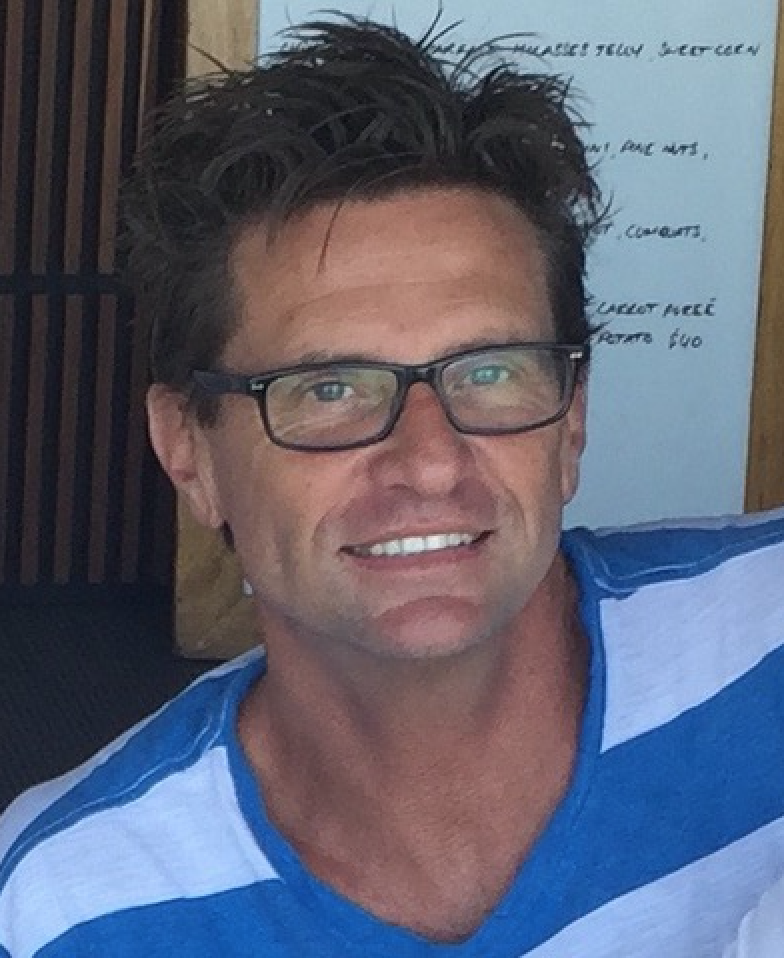
Brad didn’t tell anyone about the abuse for the next 35 years and instead focused on achieving goals in his career, sports, and social life. “It was scary; I was afraid of judgement most of all. I had feelings of guilt, and I struggled with self esteem and trying to hide my story.”
Four years ago, Brad spoke about the abuse to his wife for the first time in an attempt to explain some of his behavior. He didn’t want to use it as an excuse, but felt it was important to explain the trauma he had worked to hide through drug and alcohol use for so many years. “I made it so tough for her, and somehow she stuck around.”
After disclosing to his wife, Brad told his children and sought counseling. He feels his real healing began during his time at an addiction treatment facility where he found other survivors of child sexual abuse. “I started getting to know my inner child and learning to love that part of myself again. The little guy that felt it was his fault, the little guy that kept the secret.” He found the community aspect of his treatment to be valuable because others provided support and understanding in moments when he felt most isolated.
Brad’s parents didn’t know about the abuse until shortly before he entered the treatment facility. He resisted telling them because he didn’t want them to feel responsible for what happened. “I never blamed them for it; I never wanted to. It wasn’t their fault. They didn’t know because I hid it so well.” However, after going through a breakdown and nearly taking his life, he decided to tell them. His parents have been wonderfully supportive, but Brad still worries that they struggle with feelings of guilt. “I hate that I had to tell them because it was nobody’s fault.”
As is the case for many male survivors of sexual abuse, Brad has faced a specific set of challenges during his healing process. “I think for me and possibly other men, it’s a huge pride thing—feeling like you have to be the man and face your problems and get over it.” Being able to share with other male survivors has been important in helping him feel less alone in his healing process.
Brad has experienced PTSD, depression, and suicidal thoughts as a result of the abuse. When he was diagnosed with depression and bipolar disorder, he tried to avoid taking medication for it because he feared being judged for living with mental illness. “I had this fear of being crazy. Am I always going to be like this? Am I better off not being here?” He eventually started taking medication, and has also found it useful to learn about the brain chemistry behind depression and bipolar disorder. “Knowing about it has made it more tolerable and easier to understand my behavior and my feelings.”
Last year, a close friend of Brad’s from the treatment facility took his own life. “He had five kids, a beautiful family. People didn’t understand why he would do it, but I understand.” Brad mourns the loss of his friend, but does not judge him for his choice. “When you’re in that darkness it doesn’t seem like there’s a way out. It feels like it’s always been that way, it’s a truth that you have to hide, and eventually it doesn’t feel like you can anymore. But somehow we make it. We make it with the support of others. I just wish I could have helped my friend more.”
Brad also finds advocacy to be an important part of his healing. He and a friend he met through counseling who is also a member of RAINN’s Speakers Bureau have started two foundations. Show Up for Children and Courageous Survivors both provide support for survivors of child sexual abuse and spread prevention education.
Important parts of Brad’s healing have included meditation, yoga, and exercise as well as journaling and writing poetry. He has found it essential to be deliberate in his self-care routine and to embrace his creative side through his poetry and other writing that he shares on Twitter and Instagram. He recently completed an autobiographical book of prose, poetry, and journal entries touching on themes of healing, spirituality, and learning to love oneself.
He is grateful that his family has been there for him throughout this journey and for how wonderfully supportive and compassionate they have been. “I have made things very scary and difficult for them at times.”
“I’m focused on staying well so I can enjoy life with my children. At the moment I’m just thankful to be here; it always felt so hard just to stay. Hopefully one day it doesn’t have to feel like a struggle.”
This is a must see video. Jeremy Forbes shares great information to help you have a real conversation with a friend or love one. I did not see the twist coming, he’s a Survivor. M
Her life must be hell, I can’t imagine. M
I hope you enjoy this week’s hand-picked tunes. I love to spin for you, get those request in. Have a great weekend. Melinda
This video was extremely educational for me. I hope you find value in her words. M
Great speaker, educational and enlightening. M
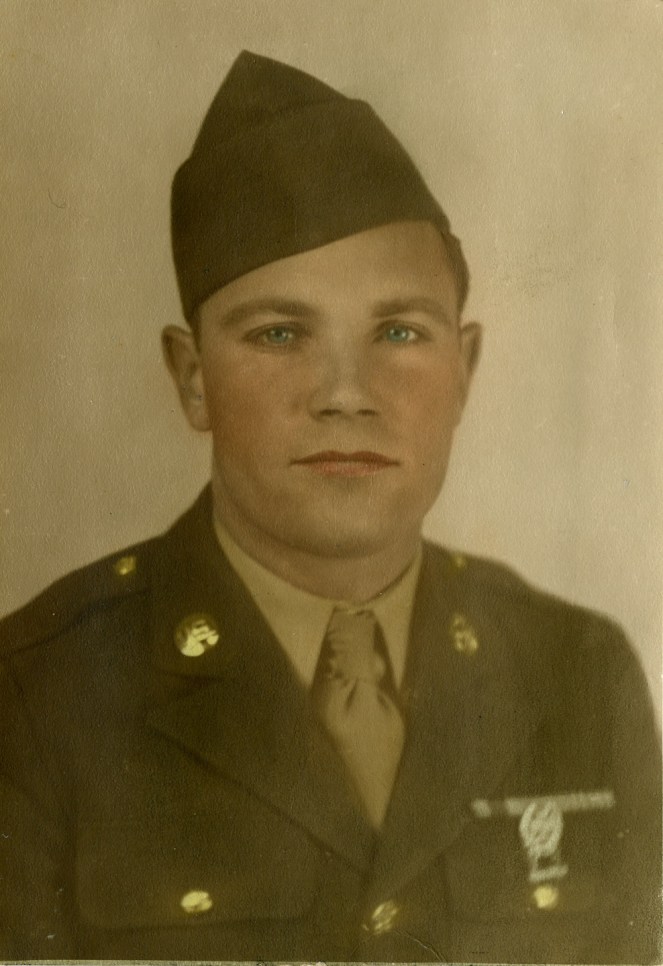
Thank you Gramps for fighting the good fight, having your teams back and making it home. So glad I had the chance to met you. I Love You. Melinda
Have a great weekend. M
Thanks Daniels, I love your Cowboy stories. Melinda
Have a great weekend. Thanks for stopping by, I love to spin for you. Got a request? Request line open 24/7 just leave in comment section. M
 It’s been almost a year since I started working on Twitter with charities and organizations that are close to my heart. I feel great to have almost 5,000 followers but this means nothing if you are not reading the great resources. Subjects like Mental Health, Child Abuse, Sexual Assault, Suicide and more. I only reblog tweets that have value to me and I hope for you.
The Twitter timeline is on the right side of page on http://www.survivorsbloghere and http://lookingforthelightblog.blog. Just scroll till you see.
As I look at a second year, I need know you’re reading. Please let me know you’ve read and do you see the value?
Have a great weekend. M
Thanks Daniel for sharing another great post. Take care my friend. Melinda
Enjoy Patrica Grace’s interview and her beautiful work. Melinda
Thank you Daniel for giving us a glance into the life of Dragons. M
I fell last week on a heavy glass table and gashed my head. David thought stitches were needed so off we went. I received six staples and out the door in less than three hours. The bill came yesterday, $12,000, I had more than a heart attack. We went to General Doctor to have a RN remove the staples. Five minutes of effort cost $88.00. Are these people on crack?
There are many hard-working people with kids and we know they get sick, how can someone manage? I know insurance will come back and say NO it’s not $12,000 it’s $2,000. The games insurance and the approved providers play. If you go out of network you are in for a shock.
If possible always check your insurance website to see that your doctor, hospital or Doc in a Box is covered in network. M












 Looking for the Light