



Today in History
Welcome to the weekend edition of Today in History. I’m so glad you’re enjoying the post. Have an awesome weekend.

1974
“Benji” opens in theaters
On October 17, 1974, Benji, a film about a stray dog who helps rescue several kidnapped children, opens in theaters; it will go on to become a family classic. Written and directed by Joe Camp, Benji starred a mutt named Higgins, who had been rescued as a puppy from a California …read more
1906
A shoemaker leads German soldiers in a robbery
Wilhelm Voigt, a 57-year-old German shoemaker, impersonates an army officer and leads an entire squad of soldiers to help him steal 4,000 marks. Voigt, who had a long criminal record, humiliated the German army by exploiting their blind obedience to authority and getting them to …read more
1835
The first resolution formally creating the Texas Rangers is approved
On October 17, 1835, Texans approve a resolution to create the Texas Rangers, a corps of armed and mounted lawmen designed to “range and guard the frontier between the Brazos and Trinity Rivers.” In the midst of their revolt against Mexico, Texan leaders felt they needed a …read more
1989
Oakland-San Francisco World Series game postponed because of earthquake
On October 17, 1989, a magnitude 6.9 earthquake rocks northern California during Game 3 of the World Series between the San Francisco Giants and Oakland Athletics at Candlestick Park, forcing postponement of the matchup. The series resumes 10 days after the earthquake, which …read more
1931
On October 17, 1931, gangster Al Capone is sentenced to 11 years in prison for tax evasion and fined $80,000, signaling the downfall of one of the most notorious criminals of the 1920s and 1930s.
Alphonse Gabriel Capone was born in Brooklyn, New York, in 1899 to Italian immigrants. He was expelled from school at 14, joined a gang and earned his nickname “Scarface” after being sliced across the cheek during a fight. By 1920, Capone had moved to Chicago, where he was soon helping to run crime boss Johnny Torrio’s illegal enterprises, which included alcohol-smuggling, gambling and prostitution. Torrio retired in 1925 after an attempt on his life and Capone, known for his cunning and brutality, was put in charge of the organization.
Enjoy!
Melinda

Homemade Orange Chia Simmering Potpourri *Great Gift Idea*
This is perfect for Fall and a great gift idea for the holiday season.

By Michelle Stewart
You Will Need
8 TB. orange peel
2 TB. tangerine peel
2 TB. whole cloves
2 TB. cinnamon chips
1 tsp. cardamom, decorticate
2 tsp. whole cardamom
1 TB. whole allspice
Bowl
Pot: heat-resistant
Glass spice jar: 6 oz.
Lable
To Make
Blend the citrus peel and spices together in a bowl. Boil a pot of water on the stove. Add1-2 tablespoons of potpourri to boiling water. Reduce heat to a simmer the spices as long as desired. The water will evaporate, so be sure to add more water as needed. You may reuse the same spices a few times during the week before discarding.
To Gift
Store potpourri in a glass spice jar and add a label.
My idea is, tie some raffia around the top with instructions.
Enjoy.
Melinda
ADHD Awareness Month
ADHD Awareness Month is celebrated every October, with events and activities happening all across the country and now, around the world, on the ground and on the Internet, capturing the notice of numerous national, regional and local media outlets resulting in articles, interviews and feature stories.
ADDA is a founding member of the ADHDAwarenessMonth.org coalition, along with ADHD Coaches Organization (ACO) and Children and Adults with Attention Deficit Disorder (CHADD).
This is the same group that brings you the International Conference on ADHD every year in November.
Every October, as we celebrate ADHD Awareness Month, you can count on ADDA to find ways to make it easier than ever for you, an adult with ADHD to help yourself.
That’s why our TADD Talks are a perennial hit! We ask the best of the best experts in adult ADHD to give our ADHD version of a “TED Talk.” Except TED talks are 18 minutes long. Our ADHD audience has a teeny bit of trouble paying attention so we cut that in half! TADD Talks are only 9 minutes long!

Subscribe to the ADDA Insider, and stay tuned all month (and year!) for exciting announcements that will help you help yourself.
—–
Difficulty with attention, concentration, memory, impulsivity, hyperactivity, and social skills — these are among the signs of attention deficit hyperactivity disorder, which affects millions of Americans. ADHD Awareness Month, sponsored by the Attention Deficit Disorder Association and observed each October, highlights the latest research and clinical studies with the goal of bringing more effective treatments. Its guiding principle is that life can be better for those with ADHD and for those who love or work with someone with ADHD.
HOW TO OBSERVE NATIONAL ADHD AWARENESS MONTH
-
Get tested
You may have ADHD and not know it. If you’re prone to procrastination, have trouble focusing on a task, or otherwise lack motivation, you may have a form of ADHD. The World Health Organization offers a test with 18 questions that can help make a diagnosis.
-
Share your story
The American Deficit Disorder Association invites those diagnosed with ADHD to share their stories so the public can see the human face of the disorder. The best way to reduce the stigma is for those challenged by it to share their stories.
-
Provide support
ADHD associations throughout the country sponsor support groups for kids and adults who suffer from attention deficit disorders. Find out if there’s a local group in your area and learn what you can do to support efforts to bring the latest treatments to those who need them.
ADHD is can have a huge impact on children and adults alike. Please be aware of the signs and talk to your doctor or a professional if you have ongoing symptoms.
Stay Healthy,
Melinda

Fun Facts That Will Amaze You
I’m so glad you are enjoying the new weekend tradition. We learn something new each week, even if it’s weird. I love hearing your comments!

There are no seagulls in Hawaii.
The sound of Darth Vader’s difficult breathing was made with a scuba regulator.
Luke Skywaker was originally named Luke Skykiller
A moonbow is a rainbow produced by moonlight rather than direct sunlight
The # symbol isn’t officially called a hashtag or a pound. It’s technically called an “octothorpe.” The “octo-” means “eight” to refer to its points
“Respair” is a 15th-century word meaning ‘fresh hope’ or a recovery from despair.[
A group of stingrays is called a fever.
The plural of cul-de-sac is culs-de-sac.
The term “lawn mullet” means having a neatly manicured front yard and an unmowed mess in the back.
Raccoons have four times more sensory cells in their paws than most mammals. This allows them to “see” with their hands and get images of the object they touch without even looking at them.
I really enjoy this week’s Fun Facts!!!!!! There are some good ones in here.
Enjoy!
Melinda

How To Deal With A Loved One’s Estate?
Grieving a loss is going to be one of the hardest times in most of our lives. It’s at times like these that some of us find it difficult to even think about concepts such as money or possessions. However, if a loved one has left an estate behind, then you need to make sure that it is dealt with appropriately. If you are the next of kin, it may be your responsibility to take care of it, too. So, what do you do about it?

Notify the appropriate parties
First of all, the Social Security Administration has to be notified if someone has passed away. There may be a legal team, such as a probate attorney, that your loved one has named as the executor of their estate. In such cases, you may have to do nothing except for getting in touch with them. If they haven’t named a probate attorney, it might be worth getting in touch with them yourself to help you go through the process legally and safely.
Take an inventory and protect it
When you are deciding how to handle your loved one’s possessions, then you will need to take an inventory of everything that they owned as best as possible. This will include any documents pertaining to assets or accounts that they own. To prevent theft or vandalism, you may want to move some assets to private storage but you should inform a probate lawyer if you plan to do this.
Claim any appropriate benefits
If you are aware of any life insurance policies, retirement accounts, or other benefits that your loved one may have received from employers, then it’s important to get the ball rolling on those claims. They may help to cover the costs of the funeral services and to help those who may be classified as dependents or beneficiaries of those benefits.
Liquidize what is necessary
Whether it’s necessary to take care of any accounts payable or simply to make the transfer of assets easier where no one is specifically named for receiving certain assets, you might want to liquidize some things. The best way to do this might be to work with professionals who set up local estate sales. This way, you can make sure that assets are handled as impartially as possible, paying only a portion of the return in exchange for the services provided and the sale facilitated.
Take care of any debts
There can be a lot of confusion around the debts that are left when someone has departed. However, in many cases, they are likely to still be responsible in so far as their estate can pay it out. This only counts for debts made their name only. Debts made under multiple names may fall in part or entirely to the other signers of the debt. Either way, it’s important to find out what debt a loved one has left, if possible, and to use the estate to pay off what you can. Otherwise, it may create legal problems as far as passing the estate on to others.
If you’re left to take care of a loved one’s estate, it’s important to go by the book as best as possible.
This is a collaborative post.
Melinda

How To Keep Your Loved One Living Independently
If you and your parent are facing down the question of what to do, as their ability to live independently diminishes, you may be concerned about how well the options are going to suit your needs and preferences. However, there are various choices you may not have looked into. Here, we will quickly sum up the pros, cons, and purposes of each.

Family as caregiver
In a lot of cases, people will choose to act in the role of caregiver for their own loved one. In fact, more millennials are becoming caregivers for their loved ones for a variety of reasons. For one, it’s more affordable than any of the other options and you may even be able to get some state assistance to help you work as a caregiver without worrying as much about having to keep another job. However, a lot of people also like to be more hands-on to ensure their loved one’s needs are met. It’s a big challenge, but many people do meet it.
A nursing home
Nursing homes, also known as care homes, are often treated as the least preferable answer. However, aside from general old age care, these can be some of the best facilities for dementia care, physical disability care, or care for those with mental health disabilities. You need to make sure that the facility you choose is equipped to suit the individual needs of your parents, but nursing homes can be very effective solutions.
How are independent living communities different?
Not every age care facility is the same. Independent living communities, also known as senior living communities or retirement communities tend to be better suited to those who can live a little more independently but might still need help and assistance again. Teams like Care Patrol can help you find the specific communities suited to the precise needs in question. Many of them also come with luxury amenities and therapies to help your parent continue to age as best as possible.
Professional in-home care
One of the more expensive options, in-home care services like Visiting Angels allows your loved one to still live at home while having someone to come and make sure their needs are taken care of, often for the majority of the day. In some cases, you can even get live-in home care but that can be even more costly.
Temporary or respite care
When it comes to in-home care, there is a hybrid option so that you don’t have to choose between paying large fees for constant professional care but you also don’t have to devote as large a portion to your life to being a caregiver. A lot of in-home care services also offer temporary or respite care, which allows you some personal time while making sure your loved one’s needs are still being met to your standards.
Which option works best is going to depend on the needs and abilities of you and your parent. This choice can’t be made for you but hopefully, the points above have given you some places to start looking.
This is a collaborative post.
Melinda

6 Simple Tips for Setting up a Home Workshop for Your Home Business
Every business operated from home requires some dedicated workspace. Accordingly, there are many options for a home workspace. However, not every business needs the same home office. For some, like freelance photography, you may convert your garage into a studio, while a portion of your living room can serve as a better workspace for freelance writing business.
In other words, setting up a home workshop for your home business depends on the kind of business you run. Here are six simple tips for setting up a home workspace for your home business.

Think about privacy
Any business run from home is prone to interference from different people within the house. Therefore, it is crucial to think about how you can separate your workspace from your home to reduce distractions. A great idea would be to create a dedicated room for work and separate from your family. There are many ways of separating your workspace. For instance, you can enclose part of the garage and use it as a workshop.
Make it unique
Your workspace should support what you do and keep you engaged. That is why you cannot use your living room when the TV is on as a workshop. However, you can make your workspace as unique as possible to enhance engagement and productivity. Think about using colors and other aspects to personalize your workshop.
Consider different options
There are many options when it comes to setting up a dedicated workspace at home. Think about the garage, the kitchen, and other available rooms. Whether you want to build an outdoor structure or convert an existing space, you must consider your options carefully. This way, you can make your workshop as motivational and inspiring as possible.
Prioritize functionality
Your workshop should be suitable for work all year round. For instance, if you want to convert your garage into a workspace, be sure to change the doors to make it look like an office. You may also need pest control services to make it functional. Consider everything you may need to do to make your workshop look better and ready for work.
Make it more comfortable and warmer
If you are turning your garage into a dedicated workspace, you may want to insulate it to make it more comfortable and welcoming. Secondary glazing installation on the windows may serve you well. You may also need extra floor insulation. This strategy will help you reduce your heating expenses and make your workplace warmer.
Security is crucial
Every business needs security regardless of the setting and size. Accordingly, it is only a matter of time before people find out you run a home business. That is why you should ensure your business is secure, especially if you separate it from the main house. Invest in solar streetlights and a security alarm system to protect your business equipment.
Final thoughts
It is crucial to designate a dedicated workspace for your home business to reduce distractions and increase productivity. Protect what is essential to your business by creating a safe, secure, and productive workshop. This aspect will help you keep stress levels low and focus on core functions.
This is a collaborative post.
Melinda
World Food Day
Our Actions are our Future
The food you choose and the way you consume it affect our health and that of our planet.
It has an impact on the way agri-food systems work.
So you need to be part of the change.Learn more

Take action
As a global community, we each have a role to play in the transformation of agri-food systems – from governments to private companies, farmers, civil society, academia, and all individuals, including youth! Together we can empower each and every element of our agri-food systems to collaborate more fairly, sustainably and inclusively from farm to table, and beyond.
We can all learn from nature by acting with nature.
Melinda

#Weekend Music Share *Michael McDonald and Doobie Brothers I Keep Forgetting Live

I’m so glad you’ve joined me this week for another edition of Weekend Music Share.

Welcome back to Weekend Music Share; the place where everyone can share their favorite music.
Feel free to use the ‘Weekend Music Share‘ banner in your post, and don’t forget to use the hashtag #WeekendMusicShare on social media so other participants can find your post.
Melinda

Friday Quote

Have a great weekend!
So glad you stopped by today and look forward to hearing your comments.
Melinda
Book Review for Hope Amid the Pain by Leslie L. McKee
I want to thank Leslie L. McKee for sharing an advanced copy of Hope Amid the Pain: Hanging On to Positive Expectations When Battling Chronic Pain and Illness (a 60-Day Devotional Journal) for an honest review.
HOPE Amid the Pain
Hanging On to Positive Expectations When Battling Chronic Pain and Illness (a 60-Day Devotional Journal)
©2021 by Leslie L. McKee
176 pages
Publish Date: October 25, 2021
About the Author
Leslie is an author, editor, and reviewer. She is a member of American Christian Fiction Writers and The Christian PEN. Some of her devotionals were published in compilations by Ellie Claire in 2017 and 2020. Her flash fiction stories have been published with Havok, Splickety, and Spark (websites, magazines, and anthologies). Her devotional journal (HOPE Amid The Pain: Hanging on to Positive Expectations When Battling Chronic Illness and Pain) will soon be published with Ambassador International. She enjoys reading, playing piano, crocheting, spending time with family and friends (and her turtle!), and rooting for the NY Giants.
Blurb
Why me? Is God punishing me? Is my faith not strong enough for God to heal me? How can I achieve my dreams? What’s my purpose?
If you’re someone living with a chronic illness or chronic pain, these are just a few of the questions you’ve likely asked on more than one occasion. You may feel overlooked or even resentful. You try to stay positive, but some days it’s hard. It’s natural to feel this way and grieve, but it’s still possible to have a hope-filled life. God has a purpose for the pain.
Christians aren’t immune from pain and illness, but we don’t have to go through it alone. Jesus promised that He would “never leave you nor forsake you” (Deuteronomy 31:6 NIV).
Millions of women suffering from chronic pain and illness want the reassurance they’re not alone. The devotions in Hope Amid the Pain are written by a chronic pain warrior with over twenty-five years’ experience and will point the reader to hope and encouragement. It’s possible to Hang On to Positive Expectations (HOPE) even amid the pain.
What Others Are Saying
Beautifully written, HOPE Amid the Pain tugs at the heart with both practical and spiritual instruction. Anyone who is or has suffered with crippling and debilitating pain or illness will find encouragement and support in this devotional. Spirit-lifting, wise, and filled with inspiration, this devotional is sure to strengthen hearts for wherever the Lord is leading.
Debbie Macomber | #1 NYT Bestselling Author
McKee writes with compassion and understanding. Words of grace and compassion for those struggling with chronic pain.
Vannetta Chapman | USA Today bestselling author
As a mental health therapist I often look for resources for clients who struggle with chronic mental and physical illnesses. Leslie L. McKee speaks from personal experience as a woman who suffers from chronic illness. She has combined her personal experience, her deep faith in Christ, and her writing skills to provide a devotional which will truly minister to women who are fellow travelers on the chronic illness journey. Her format provides encouragement with practical application based on Scripture. I can’t wait to be able to offer such a devotional to my clients.
Patricia J Edwards| LCSW, TheAntioch Group
My Thoughts
Leslie has been a chronic pain warrior for over twenty years and understands the challenges we face daily. She does a great job of lifting you up; it’s like a gentle hug from a friend.
The journal covers topics like:
Don’t Settle
You Are Enough
Rest Stop
Through The Fire
Leslie also offers a Resource guide at the back of the book and a chapter on Scriptures.
I think it’s a great gift for you or someone you care for who has a chronic illness or suffers from chronic pain. Self-care is critical to our overall health and especially our mental health.
Leslie’s book is a must buy and will be a resource you will refer to again and again.
Melinda
Repost from 2021

Will Having Children Change Your Marriage?
There is no denying that your life is going to change once you have children. This is the biggest change in anyone’s life. You and your partner have created another human. You will experience a love you have never experienced before. You will have a sense of responsibility you have never experienced before. You will be doing and learning about things you have never done before. It is only natural that this has an impact on the dynamic of your relationship. So, with that being said, let’s take a look at some of the common ways that relationships change once you have had kids.

Your relationship will end up getting a bit neglected
This is only natural. You don’t end up nurturing or prioritizing your relationship in the way that you should because you now have a crying baby to attend to all of the time. You will not have the attention and time you did for one and another before the baby. This can be difficult. However, it is important to try and make some time for one and another whenever you can. If your family offers to look after your baby so you can have a date night, take advantage of it.
You have a new bond
No matter how tough it gets, you will find that you have a new bond. Yes, lack of sleep takes its toll. Nevertheless, you have brought a beautiful baby into the world, which makes you smile and laugh. You will feel closer than ever. Despite the ups and downs, this strong sense of unity will be there.
You might hate your partner a little bit
Hate is a bit of a strong word here because it is rarely genuine hate, although it can feel like it at the time. You may find yourself snapping at your partner 24/7 or resenting them for going to work. It is important to recognize that your hormones are all over the place. You may think you need a divorce lawyer, but try to be patient and work through it. Of course, there are cases whereby divorce is the only option but take your time here. Most people refer to this stage as early mood swings. Not only have you gone through hormonal changes but you are probably suffering from a severe lack of sleep too. This is completely normal, so long as it does not turn into postpartum depression.
As you can see, there are a number of different ways that your relationship may change once you have had children. Some of these changes are positive and some are negative. However, it is important to acknowledge and accept these changes. Don’t be hard on yourself or your partner. You are both adjusting to a new way of life, and that in itself can be a challenge. Nevertheless, it is the most beautiful challenge of them all!
This is a collaborative post.
Melinda

Do You Have Seasonal Affective Disorder?
What is Seasonal Affective Disorder?
Seasonal Affective Disorder (SAD) is an older term for Major Depressive Disorder (MDD) with a seasonal pattern. It’s a psychological condition that results in depression which is normally provoked by seasonal change. The condition most often occurs in women, adolescents, and young adults.
Many times people will start to see a pattern to their depression as the seasons change. This is common in the winter months and in areas where it is darker more than there is light outside. SAD is more common the countries like Alaska and Canada than in South America.
SAD is classified into two types, one in the Summertime and the other in the Wintertime. The symptoms are markedly different.

Summertime symptoms are:
agitation
difficulty sleeping
increased restlessness
lack of appetite
weight loss
Wintertime symptoms are:
daytime fatigue
difficulty concentrating
feelings of hopelessness
increased irritability
lack of interest in social activities
lethargy
reduced sexual interest
unhappiness
weight gain
How do you know if you have Seasonal Affective Disorder?
If you notice these symptoms you should talk with your doctor right away and it would help if you kept a journal as to when the depression started. This will help the doctor make a correct diagnosis especially if you notice the changes appear to be seasonal. The more information you can provide the doctor more accurately they can diagnosis your depression.
How do you treat Seasonal Affective Disorder?
Your doctor can determine the best treatment and in severe cases, may prescribe medication or a combination of treatments. One treatment known to help is Light Box Therapy or a Lamp because they are specially designed to put out a minimum of 10,000 Lux full-spectrum light.
Here’s my post on the Top 5 SAD Lamps
I hope you will seek out more information and talk with your doctor if your symptoms are troubling you.
Melinda
Reference
https://www.healthline.com/health

Re-post SAD is not just the winter blues — and it may be hitting you harder this year
IDEAS.TED.COM
Dec 9, 2020 / Mary Halton
This post is part of TED’s “How to Be a Better Human” series, each of which contains a piece of helpful advice from people in the TED community; browse through all the posts here.
If the darkening evenings and turning leaves induce a mild sense of dread in you every year, you’re not alone.
With the arrival of winter, many of us experience Seasonal Affective Disorder — which bears the appropriate acronym of SAD — and can bring on a depressed mood, loss of interest in things that you normally enjoy, and changes in sleep and appetite. While there aren’t conclusive figures, it is thought to affect between one and nine percent of the population, depending on where you live.
Although we may think of it as being a distinct affliction of its own, SAD is actually classified as either bipolar or major depressive disorder, but with a seasonal pattern. This means that people who experience it feel much worse in the fall and winter and relatively balanced or potentially even manic in the summer months, explains Kathryn Roecklein PhD, an associate professor of psychology at the University of Pittsburgh who studies the condition.
“Depression itself is pretty episodic,” says Roecklein. “You have a period of it, and then it goes away. The distinction [with SAD] is the seasonal recurrence.” It also appears that SAD is two to four times more common amongst women.
Even though we are making greater efforts as a society to recognize the importance of our mental health, it can be tempting to dismiss SAD as a touch of the “winter blues” and to try to get on with life as usual. But the best approach, Roecklein says, is to accept and recognize that it’s something that we may genuinely suffer from — and need treatment for. Just as we would for heart disease or diabetes.
Why does winter make us SAD?
The story of SAD starts with our circadian rhythm — our internal body clock that tells us when to eat, go to sleep and wake up.
For the most part, we tend not to think too much about this system unless we have an unexpectedly late night or take a long-haul flight. But chronobiologist Emily Manoogian PhD says it plays a much more significant role.
“The circadian system is directly tied to how our brain functions, and this affects our cognitive ability, our behavior, our mood and our ability to remember things,” says Manoogian, who researches circadian rhythms at the Salk Institute for Biological Studies in California. “The circadian system is important for making sure that throughout your body and brain, regions are talking to each other the way that they should be and everything is balanced. We know that circadian disruption is heavily associated with every form of affective disorder — such as major depressive disorder, bipolar disorder, etc.”
Increased darkness in the fall and winter months is something that humans on much of the planet have experienced for thousands of years, but our technological advancement — in particular, artificial light — is interfering with this natural occurrence. Light is one of the most powerful stimuli for our circadian systems, and since the advent of electricity we’ve been sending our bodies a lot of mixed messages.
“This environment that we’ve created is inherently disruptive — it’s not lights on and off at a constant time to allow for a proper rest for our body; it’s lights on when we need to be up for work on some days, and then off later on other days,” explains Manoogian. “That creates this kind of social jetlag. That’s also going to make it a lot harder to sleep, and it can compromise health over time.”
Manoogian is also not a fan of daylight savings time. She says, “It shifts our exposure to sunlight later in the day and thus shifts our biological clocks. In the summer, we are getting sunlight later than we should, and when days are shorter, we are waking up in darkness. But the problem is that we still have to start work or school at the same times. This means that our schedules and our body are on different times, and this disrupts the circadian system.”
Although there is no evidence connecting it directly to SAD, daylight savings time is known to be widely disruptive to society and potentially even associated with cardiac health risks. There’s a growing movement to do away with the twice-annual time switch in several Canadian provinces, where Saskatchewan and (as of 2020) the Yukon Territory stick to the same time year-round, and similar proposals are being considered in other jurisdictions around the world.
What can you do?
As with any disorder, your treatment depends in part on severity. If SAD is significantly disrupting your life or making you feel as though life is not worth living anymore, it’s deeply important for you to reach out immediately to a mental health professional who can support you. Roecklein says that effective treatment options include taking medication, receiving cognitive behavioral therapy tailored to treating SAD, or using a SAD lamp (which delivers a higher dose of light than regular indoor lighting), but they should be explored under professional guidance.
If you’re wondering what to do because you’ve already bought a SAD lamp to use on your own, Roecklein says that there could be side effects. The most likely one, which is mild, is that you will feel it isn’t effective. This doesn’t mean that it can’t be the right therapy for you in conjunction with professional guidance — for instance, you could be using it at the wrong times or for the wrong duration. At the other end of the scale, mania is a very rare but significant side effect of improper use.
However, there are some relatively easy things you can do to support your circadian rhythms in everyday life. And while these aren’t guaranteed treatments for SAD, they can help give your body a stabilizing sense of routine.
Keep a consistent schedule, especially if you work from home
This doesn’t need to be a rigid, planned-down-to-10-minute increments affair; it’s more about keeping the stimuli that speak to your circadian system arriving roughly when it expects them, says Manoogian. Social interactions and food are two important circadian cues, so having regular mealtimes and breaks where you make a phone call, go for a walk or talk with other members of your household can really help.
Exercise is another important cue
It’s hard to get — and stay — motivated during a winter of pandemic-related restrictions, so any exercise is better than no exercise at all, emphasizes Manoogian. However, if you do choose to exercise outside, she says that the morning is a good time for your body to get some much needed natural light.
The only time for you to avoid exercising, if possible, is right before bed. When you do, it sends a confusing message to your body that night is a time to be active rather than to prepare for sleep.
Maximizing your light exposure is key
How much light we experience at different times of the day is important. Increasing the amount of light you get in the morning is helpful, whereas increasing your light exposure in the evening can be counterproductive.
So if your morning commute has changed from an hour in the car or on transit to a quick switch from your bed to your desk, you’re losing out on a lot of daylight that you are used to receiving just when you need it most. Taking a morning walk before you start your day, or even sitting near a bright window for the first half of your day can really help.
At night, reducing your light exposure and making your sleeping environment as dark as possible is also of huge benefit, explains Roecklein. “Most circadian biologists and sleep researchers I know have blackout shades and no night lights in their rooms — we don’t even have clocks with illuminated screens.”
No, it’s not just you — 2020 may be making your SAD worse
It’s difficult to separate the impacts of factors like the COVID-19 pandemic, the associated economic downturn and the psychological toll of the current political climate. But Roecklein has noted, at least anecdotally among the people in her SAD study, that there seems to be a higher instance of what psychologists refer to as “negative anticipatory cognitions” — where people consistently expect things to be worse in 2020 than in other years.
Roecklein also notes that experiencing negative life events — such as a bereavement, job loss or some other major change that requires large adjustment — as well as reduced opportunities for social and physical activity are additional risk factors for SAD. These areas of our lives have all been significantly impacted by COVID-19, so she and her colleagues anticipate a higher risk of people experiencing SAD this year.
However, there may be one small silver lining to the current situation, says Manoogian. While routine is very important for our bodies, a regular 9-5 work day can be very unnatural for those of us who aren’t morning people.
“The typical workday schedule is an artificial time that not everyone is able to stick to,” she explains. “If you work from home and you have a little bit of freedom about when you work, this could provide a very interesting opportunity for you to actually coordinate your schedule more with your internal clock.”
Sometimes it’s OK to doomscroll
Lastly, Roecklein wants to stress that although a routine is important, we are living through monumental events that are unfolding right before our eyes. And if we occasionally want to stay up a few hours later to feel better informed or more connected to other people experiencing the same thing… that’s actually fine.
“We take a moment to care for ourselves by thinking about the pros and cons. So there may be some nights where staying up late and doomscrolling is a choice one might make for good reasons,” says Roecklein. “But then on other nights, when we think about what we want most for ourselves — like better energy in the morning, a more positive mood, better alertness for the endless Zoom meetings — we might be more motivated to turn off devices, turn off the TV, dim the lights, and do all of those things that can help you wind down. Give yourself the chance to make that decision, and make the decision that’s right for you.”
ABOUT THE AUTHOR
Mary Halton is Assistant Ideas Editor at TED, and a science journalist based in the Pacific Northwest.

Just Pondering

When was the last time you had a good laugh? What was so funny?
Have a great day and remember to take care of yourself. You matter.
Melinda
30 Years Ago This Month My Life Changed Forever
At 28 years old the last thing you expect to hear is you have cancer! I had been for my annual gynecological exam and the doctor called me back in for a follow-up. Not a good sign. At the appointment, he informed me I had Cervical Cancer and was unsure how far it had spread and wanted to do a couple of non-invasive procedures first.

He did two procedures without success and the decision was made I needed a hysterectomy. It was hard to hear at that young of an age, not to mention I was not married and had no children. Not that children were high on my list since I was very career-driven but it was an option.
When looking further into my family history he noticed both my mother and grandmother had Ovarian Cancer at a young age, both had a hysterectomy, and my risk of developing it was high. He recommended a total hysterectomy which meant having children was no longer an option.
It only took a few minutes to decide my health was most important and developing cancer a second time was not a risk I wanted to take.
The surgery was a success and I did not require chemotherapy which was a huge blessing.
Please keep your annual appointments, one year can make all the difference.
I don’t have any children and my life is still full and no worse off without them. I would rather be at a lower risk of repeat cancer, it was a great decision.
Melinda

Breast Cancer Awareness Month
October is Breast Cancer Awareness Month, an annual campaign to raise awareness about the impact of breast cancer. Join us as we RISE together to help uplift women in need.

The past year has posed a challenge to just about everything, and breast cancer prevention is no exception. Although we saw setbacks in screenings and early detection, we’re rising to the challenge together.
For the past 30 years, NBCF has supported women by helping them get access to the education, screening, and support they need. This is our moment to rise up and do even more.

Take the eBook Quiz
Knowledge is power. Get free, customized eBook recommendations just for you.
October 16th: National Mammography Day
National Mammography Day is a part of Breast Cancer Awareness month and is celebrated on the third Friday of October every year.
Mammograms are a hugely important aspect of Breast Cancer Awareness Month, as millions of women across the globe are encouraged to attend Mammography screenings as part of the defence against developing breast cancer.
According to the CDC, cancer is the second biggest cause of death among Americans. Breast cancer is among the most common diagnosis in women, and screenings and exams are crucial for early detection and treatment.


——
I had my own scare years ago when a lump was found on my breast. My doctor did advanced testing and felt certain it was not malignant and watched it for ten years. Last year I went to a new doctor for my exam. I was called back in three times and told on one appointment it had grown. I became very worried and like many thought about the outcome.
Another doctor did an ultrasound and compared my images to the previous one and discovered it had indeed not grown. What a relief. I still have to be closely monitored every year with advanced screening and ultrasound. As it turns out, every October is when I have my annual screening. A perfect reminder.
Get your annual exam and do monthly breast exams at home. If you are unsure how to do them, ask your doctor for the proper way to look for changes in your breast.
In Health,
Melinda
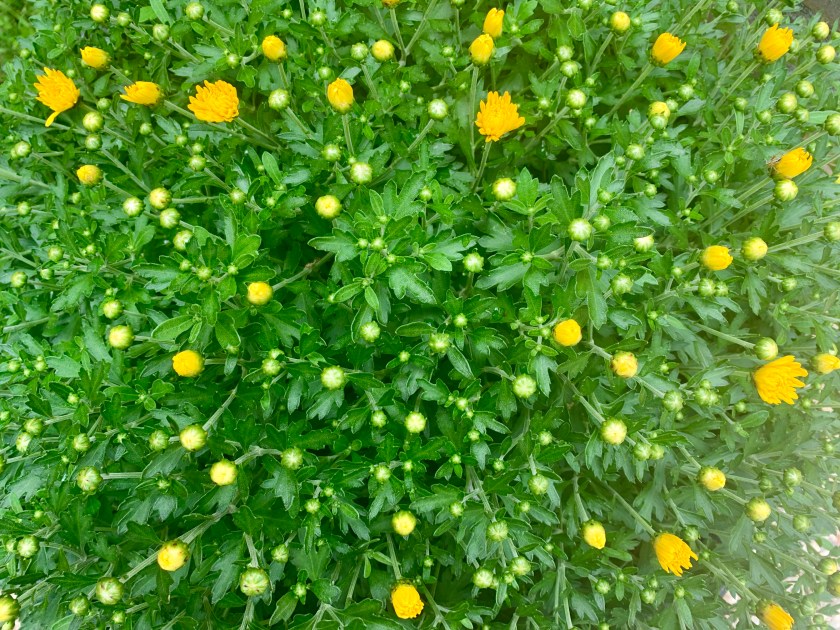
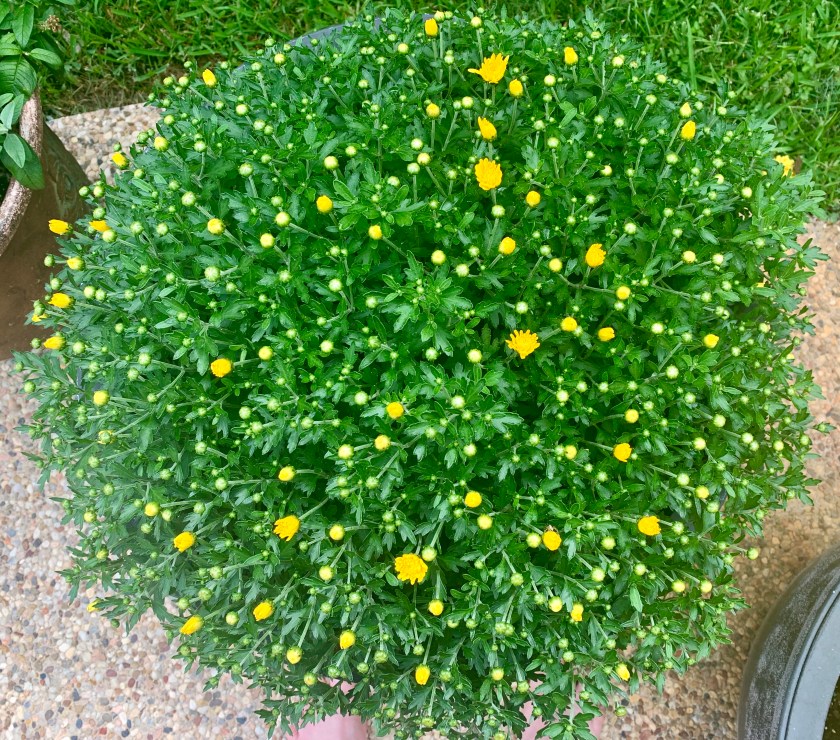
Wordless Wednesday*Yellow
Thanks for stopping by today, I appreciate you and look forward to your comments.

Have a great day!
Melinda

Do you ever feel like you’re not enough?
IDEAS.TED.COM
Mar 6, 2019 / Mary Halton
If your self-worth seems to rise and fall according to what other people think, you’re not alone. But you can challenge this mindset and find a new way of valuing yourself, says psychologist Meag-gan O’Reilly.
This post is part of TED’s “How to Be a Better Human” series, each of which contains a piece of helpful advice from someone in the TED community. To see all the posts, go here.
“How often do you get asked ‘What do you do?’ and feel like that question is going to determine how much attention or respect you receive?” That’s a question posed by Meag-gan O’Reilly, staff psychologist at Stanford University’s Vaden Health Center in Palo Alto, California, in a TEDxSJSU talk.
Perhaps you had the stomach-sinking experience of seeing your questioner’s face change or their eyes glaze over when they hear your response. It’s lousy. Instead of being seen and appreciated for all of your complicated individuality, you feel like your worth has been judged in a flash — and found wanting.
But getting a nod of approval is also unsettling, says O’Reilly. “Even those of us who seem to be winning at these conditions stand to lose because conditions change with time, age or unexpected hardships.”
O’Reilly recalls a vivid example from her own life. Once, at a party, she went up to the host — someone she’d never met before — to thank him for his hospitality. She smiled, stuck out her hand, and, she recalls, “I was met with the response of ‘Qualify yourself.’ … That’s when his friend beside him reiterated the question with more clarity: ‘Qualify yourself; tell him why he should talk to you.’”
O’Reilly says, “Immediately my mind split into two paths. The first and more dominant voice got to work on the task … What are the bells and whistles of my existence that I can showcase to woo and persuade this person I’m worth his time?”
Meanwhile, the other part of her was stunned, as she put it, that “there was a litmus test for conversation. I’m happy to say that this part of me won out. I didn’t engage. I simply said, ‘Thanks again for hosting’ and walked away.”
This incident spurred O’Reilly to think about how small moments like these can chip away at our self-worth. “As a psychologist who’s heard and held hundreds of human stories, I have witnessed firsthand how this mentality of feeling like you are not enough has stolen dreams, ambitions, relationships, health and happiness away from people,” she says.
For some of us, these encounters echo earlier occasions in our lives when we felt like our value as a person was determined by other people — usually adults — and fluctuated depending on what they thought of our latest grade, game, performance or accomplishment. O’Reilly says, “Think to yourself for a moment: What were some of the early messages you received about who you needed to be to show up in the world as meaningful?”
No matter how deep-rooted these experiences and feelings are, we can free ourselves from thinking that we’re not enough. This undoing may take a while to happen so we should be patient, cautions O’Reilly. “It’s a process, and I call it lifespan work.”
Here’s how we can start challenging the not-enough mindsets in ourselves and in the people around us, according to O’Reilly.
1. Do what makes you — not other people — happy.
Feeling like you’re not enough can sometimes lead you to take on certain friends, hobbies, projects or jobs that you think will make you look good in other people’s estimation. O’Reilly asks: “When was the last time you did something not because it’s going to show up on your resume, not because it meets that condition of worth you’re wrestling with, but just because you enjoyed it?”
It’s important to pursue the things that you genuinely enjoy because “it softens our stance toward ourselves,” says O’Reilly. “It allows us a zoomed-out perspective and gives us a chance to experience ourselves and others in a non-conditional way.” When you’re in the flow of doing what you love, you can shake off the weight of judgements and expectations.
2. Recognize that you have value — period.
Believing you’re enough does not mean that you should lower the bar for what you’d like to accomplish in life, emphasizes O’Reilly; it’s just that your personal enoughness remains constant and isn’t affected by your actions. She says, “Please go and achieve much. But do it in such a way that you know there’s a floor or a baseline of worth that you cannot descend below.”
Contrary to what some people fear, recognizing our inherent self-worth does not mean that we’ll be full of our own self-importance. O’Reilly says, “An inflated sense of self-esteem sounds like … ‘I can do it, I’m the best,” whether or not that’s actually true.” Inherent value, she adds, “sounds like ‘This is important to me, and I’m going to do my best … but it doesn’t define me.’”
3. When you meet new people, go beyond your job, title or school.
If we’d like to remove the judgment associated with the “So, what do you do?” question, we can also change how we respond to it. “The next time someone asks you what you do, don’t provide an occupation or field of study,” says O’Reilly. “Instead, share with them something that you cherish about yourself; try to break interpersonal ground with them and not start with labels.” (For more advice on the topic, read the TED Ideas article “How to introduce yourself so you’ll be unforgettable — in a good way.”)
4. Respond with love and acceptance to the successes and failures of your family, friends and colleagues.
Similar to the previous point, we need to try to model a new way of being if we want to ease the not-enough mindset in the people around us. Given how achievement-oriented society can be, says O’Reilly, “this is difficult … but a person is not a product and we need a culture that delineates the two and helps us see that one does not define the other.”
Wouldn’t you like the most important people in your life — young or old — to feel like they are enough? By appreciating them and showing that your care for them is unconditional, you can create change that will ripple outwards. “Enough is enough with these worth wars we’re waging,” O’Reilly says. “Think about how radically different our world and relationships would be if each of us actually acted like we all had inherent value.”
ABOUT THE AUTHOR
Mary Halton is Assistant Ideas Editor at TED, and a science journalist based in the Pacific Northwest.

4 Steps To Help When You Feel Overwhelmed
Everyone will encounter stress in life. Sometimes, this stress is entirely justified, and it’s all about how you respond to it. However, people will also experience unnecessary stress that can make them feel overwhelmed and affect their mental wellbeing, performance, and even relationships with those they love. Feeling overwhelmed is never a pleasant experience, and if you encounter this regularly, you need to identify ways to overcome it. Here are four steps you can use the next time it occurs.

Identify The Trigger
You cannot start to battle feelings of being overwhelmed without understanding your triggers. Many triggers can affect people, ranging from too much work to too much noise or even working with someone you do not get on with. Once you recognize your triggers, you can consider ways to avoid stress spikes. From here, you can look for ways to avoid the triggers, but if this isn’t possible – especially in professional settings – you can work out how to cope with them.
Stop and Step Away
There is no use in doing anything if you are stressed and overwhelmed. You are not thinking straight, leading to severe mistakes that put you and others in danger. If possible, you should stop what you’re doing and step away to remove yourself from the situation. There are breathing exercises that you can use to reduce stress, which can help clear your head and make it easier to think and consider your next move.
Ask Yourself If You Can Solve the Problem Now
Some problems are easily overcome, others are not. If you encounter an issue, you should ask whether you’re able to solve it right now. Things like situational stress are easier to solve than financial stress, which can take time and a plan. If you’re able to solve the problem right now, go ahead and do it. However, if you cannot solve the issue in the immediate moment, don’t worry about it too much. As challenging as this approach is, especially for those who experience severe stress and anxiety, it will at least allow you to think clearly at the moment and conceptualize the issue.
Get Help From Friends (Or Strangers)
You don’t need to deal with these issues alone. Friends, family, and even professional services are available to make problems more manageable. Those experiencing financial stress can compare credit and improve their standing with lenders and other financial institutions. People that feel stressed and overwhelmed in busy environments can get support from their partner, parents, siblings, or friends. Everyone looks for support differently, so work out what approach works best for you, and don’t feel embarrassed about discussing these issues with those closest to you, as they will always be happy to help.
Overcome
You might never truly escape those awful feelings of being overwhelmed. However, this doesn’t mean you cannot find useful and effective ways to manage these feelings. If you can take strong steps and understand how you can manage your stress, you won’t feel at the mercy of your emotions anymore.
This is a collaborative post.
Melinda

Want To Keep Your Car Maintained? Focus On These Areas
Outside of your home, your car might be one of the most expensive things that you own. Because of that, you’ll want to get a decent amount of use out of it. Keeping it well-maintained is the most effective way of doing so, which explains why it’s continually recommended.
You’ll need to focus on a few areas in particular. That’s primarily because they can be the most expensive car parts to replace. Though keeping them maintained will still cost money, it’ll be much less than needing a replacement.
That reason could be more than enough to persuade you to keep certain areas of your car maintained. It’ll also have the benefit of making sure that your vehicle keeps running smoothly.

Areas To Focus On To Keep Your Car Maintained
Alternator
Your alternator is one of the most expensive car parts that you might need to replace. Given the money involved, you’ll want to avoid this. Should this stop working, the electricals in the vehicle will also stop working.
You could easily expect to pay several hundred dollars on a replacement alternator. Add in labor costs, and this could easily get closer to $1,000. Maintaining it, however, should only cost a fraction of that.
Transmission
Your car transmission may be the most expensive car part to replace, outside of a complete engine overhaul. You’ll naturally want to avoid this cost as much as possible. To do so, you’ll need to prevent and be on the lookout for bad transmission symptoms.
There can be multiple ones to look out for, such as a noticeable noise when you’re in neutral. A burning smell is also one of the more common signs that your transmission has problems. If you notice any of these, you should get to the mechanic as soon as possible.
In many cases, some simple repairs will be all that’s needed. It’ll prevent you spending the thousands of dollars that repairs typically cost.
Camshaft
A car’s camshaft typically doesn’t get damaged over time. It could deteriorate because of a lack of maintenance and oil changes. Should you need to replace the camshaft, you could easily expect to pay $2,000.
Naturally, that makes regularly changing your oil and maintaining the camshaft a priority. You should also make sure that the valve spring pressure is in the right range. This should typically range between 85 and 150 pounds.
Should problems start appearing here, it will affect the rest of the vehicle. Getting it repaired early will obviously prevent all of this.
Fuel Pump
Fuel pumps are one of the most expensive car parts to replace and can often cost several hundred dollars on their own. That’s primarily because of the cost of the part itself, although the difficulty of replacing it also plays a role.
These are the parts that supply pressure to the injector to make sure that it runs right. Typically, the fuel pump can become damaged by particles often found in low-quality fuel. Thankfully, that makes it relatively easy to protect your fuel pump against damage.
Though high-quality fuel will be more expensive, it’ll cut down on damage to your car’s mechanics.
Catalytic Converter
The catalytic converter is a relatively easy part to replace, as it’s located between the muffler and engine. That doesn’t mean that it’ll be cheap to do so, however. That’s because it’s the part of the vehicle that turns chemical fumes into less harmful emissions.
That makes them relatively expensive. That can typically cost you over $1,000 to replace. Because of this cost, catalytic converters are quite commonly stolen. You’ll need to spend more time preventing theft than you would protecting against damage.
Being smart about where you park your car and where you travel is the easiest way of doing so.
Wrapping Up
Making sure that your car runs smoothly for as long as you have it is a priority for everyone. With the number of parts involved, trying to maintain everything could be overwhelming. Looking after each of the above will minimize the risk of any car problems.
It’s also worth getting your vehicle inspected regularly. Doing so will identify any problems before they get too large. Being proactive with your repairs and maintenance will often save you much more money than you’d think.
The above areas have long been seen as some of the most expensive car parts to replace. They’re also one of the easiest to protect and take care of. Make sure you do so to prevent the headache and hassle associated with replacing them.
This is a collaborative post.
Melinda

Blogger Favorite Creamy No-Dairy Tricks
If you crave creamy foods but don’t care for or can’t eat dairy, these vegan substitutes for heavy cream will help.

Cashew Cream
“Cashews are frequently used in dairy-free products because they provide a texture similar to dairy without tasting like a nut,” Shaw says. “Cashew cream can easily be made with cashews, water, and salt.” If you can’t eat nuts, pureed white beans work similarly.
Best In: sauces, mousses, salad dressings
Dairy-Free Milk + Olive Oil
Once blended, this combo mimics the higher fat content that gives heavy cream its thick, silky texture and taste. Shaw says-but it’s not a one-for-one substitute, so you’ll have to add it in stages until you get the consistency you’re looking for.
Best In: sauces, soups, stews
Coconut Cream
It’s like a thicker, creamier coconut milk, and you’ll want to buy it sweetened or unsweetened depending on what you are using it for. If you can’t find it or already have full-fat coconut milk on hand, you can DIY it. “Place the coconut milk can upside down in the fridge overnight, then drain to remove the milk solids. Place the solids in a chilled bowl and whip with a hand or stand mixer until light and fluffy.” Shaw says.
Best In: mousses, whipped cream, sauces, curries
Silkin Tofu + Plant Milk
“This combination is a great alternative and can be made by blending equal parts of each-plus, it boosts the protein of your recipe,” saw Shaw. It’s also lower in fat than heavy cream but still delivers the vibe you’re looking for.
Best In: sauces, dressings, smoothies, puddings
Enjoy!
Melinda

How Cultures Around The World Think About Parenting
What can American parents learn from how other cultures look at parenting? A look at child-rearing ideas in Japan, Norway, Spain — and beyond.
The crisis of American parenting, as anyone who has looked at the parenting section of a bookstore can attest, is that nobody knows what the hell they’re doing. Yet despite this lack of confidence and apparent absence of knowledge, many American parents zealously believe that their choices carve out their children’s futures. Indeed, they seek the advice of expert after expert in the field in order to succeed at one goal: to raise the happiest, the most successful, and the most well-adjusted leaders of the future.
But what dangers lay in thinking that there is one “right” way to parent? How much of how we parent is actually dictated by our culture? How do the ways we parent express the essentialness of who we are, as a nation?
“Americans have no script,” says Jennifer Senior (TED Talk: For parents, happiness is a very high bar), author of All Joy and No Fun: The Paradox of Modern Parenthood. “We believe we get to invent our future, our opportunities and who are our children are going to be. Which is wonderful, but also very troubling.”
In reporting her book, says Senior, when she asked mothers who they went to for parenting advice, they named friends, websites and books. None named their own mothers. Only the most current child-rearing strategies were desired, in order to best position their children for achievement in the future.
In other words, that which is most American about us — our belief that the future is unwrit — is what is driving us mad as parents. Senior paraphrases Margaret Mead, who wrote this in 1942: In America, there are only this year’s children.
In Norway, childhood is strongly institutionalized, says Norwegian sociologist and economist Margunn Bjornholt. Indeed, most children enter state-sponsored daycare at 1 year old (parents first get almost a full year of state-sponsored leave from work), then enter school and organized activities.
Norwegians believe that it is better for children to be in daycare as toddlers. At daycare, methods reflect the country’s fetishistic dedication to fresh air. So even in Oslo, where arguably the indoor air quality is fresher, and even in Scandinavian winters, children are bundled up and taken outside to nap in their strollers.
Craziness? Culture. In Japan, where Gross-Loh lives part of the year, she lets her 4-year-old daughter run errands with her 7-year-old sister and 11-year-old brother — without parental supervision. Her kids don’t hesitate to take the Tokyo subways by themselves and walk on busy streets alone, just like their Japanese peers. But when she comes back to the States, Gross-Loh doesn’t allow the same.
“If I let them out on their own like that in the U.S., I wouldn’t just get strange looks,” she says. “Somebody would call Child Protective Services.”
Both in Japan and Norway, parents are focused on cultivating independence. Children do things alone early, whether it’s walking to school or to the movies. The frames, however, are different. In Scandinavia, there is an emphasis on a democratic relationship between parents and children. In Sweden especially, the “rights” of a child are important. For example, a child has the “right” to access their parents’ bodies for comfort, and therefore should be allowed into their parents’ bed with them in the middle of the night. If a parent doesn’t allow them, they are both denying them their rights and being a neglectful parent. In parts of Asia, meanwhile, co-sleeping with a family member through late childhood is common. Korean parents spend more time holding their babies and having physical contact than most. But within a family, obedience is key — not democracy.
In Jewish tradition, says Wendy Mogel, a clinical psychologist and author of The Blessing of a B Minus: Using Jewish Teachings to Raise Resilient Teenagers, there’s a teaching in the Talmud that every parent has an obligation to teach their child how to swim.
“We’re supposed to be raising our children to leave us,” she says. “They must develop self-reliance and resourcefulness and resilience, which is a challenge, because we must allow our children to make mistakes.”
This is enormously hard for American parents to do. “Parents are genuinely anxious about really big things like the melting ice caps and collapsing economy and the unending stories about violence and predators and college admissions,” says Mogel. “They displace all of these fears of things they can’t control onto the one thing they believe they can control, which is children.”
American parents are highly focused on making sure that their children’s talents are groomed for success. Sara Harkness, a professor in the Department of Human Development and Family Studies at the University of Connecticut and a pioneering researcher on parenting and culture, found that nearly 25 percent of all of the descriptors used by American parents were a derivation of “smart,” “gifted” or “advanced.” “Our sense of needing to push children to maximize potential is partly driven by fear of the child failing in an increasingly competitive world where you can’t count on the things that our parents could count on,” Harkness suggests.
This is not unlike many Asian nations, where parenting, from a very early age, is focused highly on academics and college acceptance. One Korean mother who Harkness interviewed played English tapes to her 2-month-old baby “because it’s never too early to start,” she says. The parent’s primary role is as an educator, and the child’s role is to respect the parent and repay them with sacrifices.
In the Netherlands, meanwhile, parents used “smart” to describe their children only 10 percent of the time. Dutch parents believe strongly in not pushing their children too hard. “People would talk about a cousin who got a PhD and was very unhappy because there were no jobs at universities, and said that you shouldn’t teach your child to read before they got to school, because then your child would be bored at school and not have any friends,” says Harkness.
Instead, regularly scheduled rest, food and a pleasant environment are the top priorities for Dutch parents.
But in Spain, where families are focused on the social and interpersonal aspects of child development, parents are shocked at the idea of a child going to bed at 6:30pm and sleeping uninterrupted until the next day, instead of interacting and participating in family life in the evenings. “They were horrified at the concept,” says Harkness. “Their kids were going to bed at 10 p.m.”
In the U.S., we want to be Korean and Dutch and Japanese and Jewish and Norwegian and Spanish, all at once. “What is unique to us is the desire to be happy all the time and experience no discomfort and achieve,” says Mogel. “These are competing values.”
The American desire for solutions is starting to radiate outwards. A growing awareness of the scarcity of resources, and the potential for true social mobility, is increasing the pressure on parents globally to “parent” their kids, as a verb. In Taiwan, the most popular parenting books are translations of American guides.
Yet parental anxiety is a terrible idea to export. Instead, “we should be learning from each other,” says Harkness, “and recognizing that there are very different successful pathways to raising children.”
The diversity of ideas should be liberating, not stress-inducing, agrees Gross-Loh. “It was incredibly freeing to realize that there was no single way to do things and it’s totally okay to make mistakes as a parent,” says Gross-Loh of her research. “It gave me space to let my children be who they are, and let them grow into that.”
The U.S., home to immigrants who bring their own traditions from around the world, is uniquely positioned to both learn and let go. American parents can recast their scriptlessness as they see fit, drawing on both global tradition and present theory. Will they? Tomorrow’s children may decide.
For those who live outside of America, I would love to hear your perception’s, please leave a comment. I can take the good, bad and the ugly.
Melinda
Reference:
Amy S. Choi is a freelance journalist, writer and editor based in Brooklyn, N.Y. She is the co-founder and editorial director of The Mash-Up Americans, a media and consulting company that examines multidimensional modern life in the U.S.

The 7 types of rest that every person needs
TEDIDEAS.COM
Jan 6, 2021 / Saundra Dalton-Smith MD

Avalon Nuovo
This post is part of TED’s “How to Be a Better Human” series, each of which contains a piece of helpful advice from people in the TED community; browse through all the posts here.
Have you ever tried to fix an ongoing lack of energy by getting more sleep — only to do so and still feel exhausted?
If that’s you, here’s the secret: Sleep and rest are not the same thing, although many of us incorrectly confuse the two.
We go through life thinking we’ve rested because we have gotten enough sleep — but in reality we are missing out on the other types of rest we desperately need. The result is a culture of high-achieving, high-producing, chronically tired and chronically burned-out individuals. We’re suffering from a rest deficit because we don’t understand the true power of rest.
Rest should equal restoration in seven key areas of your life.
The first type of rest we need is physical rest, which can be passive or active. Passive physical rest includes sleeping and napping, while active physical rest means restorative activities such as yoga, stretching and massage therapy that help improve the body’s circulation and flexibility.
The second type of rest is mental rest. Do you know that coworker who starts work every day with a huge cup of coffee? He’s often irritable and forgetful, and he has a difficult time concentrating on his work. When he lies down at night to sleep, he frequently struggles to turn off his brain as conversations from the day fill his thoughts. And despite sleeping seven to eight hours, he wakes up feeling as if he never went to bed. He has a mental rest deficit.
The good news is you don’t have to quit your job or go on vacation to fix this. Schedule short breaks to occur every two hours throughout your workday; these breaks can remind you to slow down. You might also keep a notepad by the bed to jot down any nagging thoughts that would keep you awake.
The third type of rest we need is sensory rest. Bright lights, computer screens, background noise and multiple conversations — whether they’re in an office or on Zoom calls — can cause our senses to feel overwhelmed. This can be countered by doing something as simple as closing your eyes for a minute in the middle of the day, as well as by intentionally unplugging from electronics at the end of every day. Intentional moments of sensory deprivation can begin to undo the damage inflicted by the over-stimulating world.
The fourth type of rest is creative rest. This type of rest is especially important for anyone who must solve problems or brainstorm new ideas. Creative rest reawakens the awe and wonder inside each of us. Do you recall the first time you saw the Grand Canyon, the ocean or a waterfall? Allowing yourself to take in the beauty of the outdoors — even if it’s at a local park or in your backyard — provides you with creative rest.
But creative rest isn’t simply about appreciating nature; it also includes enjoying the arts. Turn your workspace into a place of inspiration by displaying images of places you love and works of art that speak to you. You can’t spend 40 hours a week staring at blank or jumbled surroundings and expect to feel passionate about anything, much less come up with innovative ideas.
Now let’s take a look at another individual — the friend whom everyone thinks is the nicest person they’ve ever met. It’s the person everyone depends on, the one you’d call if you needed a favor because even if they don’t want to do it, you know they’ll give you a reluctant “yes” rather than a truthful “no”. But when this person is alone, they feel unappreciated and like others are taking advantage of them.
This person requires emotional rest, which means having the time and space to freely express your feelings and cut back on people pleasing.Emotional rest also requires the courage to be authentic. An emotionally rested person can answer the question “How are you today?” with a truthful “I’m not okay” — and then go on to share some hard things that otherwise go unsaid.
If you’re in need of emotional rest, you probably have a social rest deficit too. This occurs when we fail to differentiate between those relationships that revive us from those relationships that exhaust us. To experience more social rest, surround yourself with positive and supportive people. Even if your interactions have to occur virtually, you can choose to engage more fully in them by turning on your camera and focusing on who you’re speaking to.
The final type of rest is spiritual rest, which is the ability to connect beyond the physical and mental and feel a deep sense of belonging, love, acceptance and purpose. To receive this, engage in something greater than yourself and add prayer, meditation or community involvement to your daily routine.
As you can see, sleep alone can’t restore us to the point we feel rested. So it’s time for us to begin focusing on getting the right type of rest we need.
Editor’s note: Fatigue can also be associated with numerous health problems, so please get checked out by your physician if it persists.
To learn more about Dr. Saundra Dalton-Smith and her work, visit her website.This post was adapted from her TEDxAtlanta Talk. Watch it here: https://www.youtube.com/embed/ZGNN4EPJzGk?version=3&rel=1&showsearch=0&showinfo=1&iv_load_policy=1&fs=1&hl=en-US&autohide=2&wmode=transparent
ABOUT THE AUTHOR
Saundra Dalton-Smith MD is a physician, researcher and the author of the book “Sacred Rest: Recover Your Life, Renew Your Energy, Restore Your Sanity.” Her work has been featured by Fast Company, FOX, MSNBC and Psychology Today. Learn more at DrDaltonSmith.com or by following her on Instagram (@DrDaltonSmith) or LinkedIn (Linkedin.com/in/drdaltonsmith).

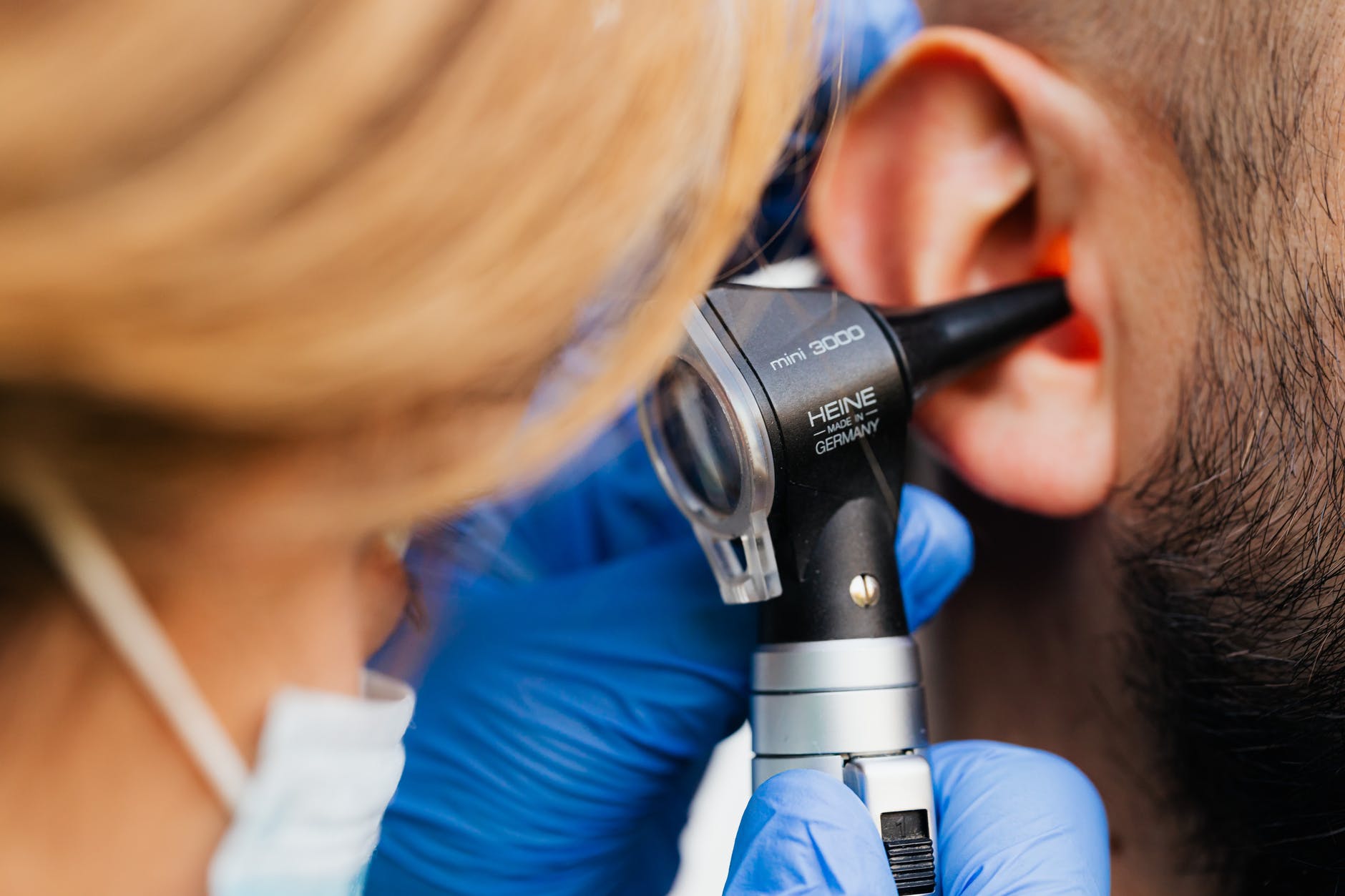
Common Causes of Hearing Loss
Hearing loss is one of the most common causes of concern among Americans over age 65 and can affect people at any age. With the right audiologist, you can learn which is the best behind the ear hearing aid for you. You might even discover that you need something inside the ear instead.
No matter what you do, you need to get support with your hearing, support that makes sense for you as an individual. This blog post will examine some of the more common causes of hearing loss and what you should do when you think that something may not be right with your hearing.
Common causes of hearing loss
Loud Noises
Loud noises are one of the most common causes of hearing loss. While you may be able to walk away from a loud concert or fireworks show without experiencing any issues, regular exposure to sounds at this volume over time can lead to tinnitus and even permanent damage in some cases. Tinnitus treatment is available, but of course prevention is always better than cure.
Infections
Infections like mumps or meningitis can lead to hearing loss. These infections are not as common today thanks to widespread vaccination programs, but you must talk with your doctor if you suspect an infection is the cause of your hearing issues. Treatment will vary depending on what exactly caused the problem and how severe it is, but antibiotics may be needed in some cases.
Diabetes
People who have diabetes are more likely to experience hearing loss than those who do not. This is because of the link between type II diabetes and nerve damage that can lead to tinnitus, dizziness, or even sudden deafness if left untreated for too long.
Suppose you suspect your hearing has been affected by diabetes. In that case, it’s important to consult with a doctor right away so they may examine your ears thoroughly and check for any signs of infection or other issues related to this condition. If possible, try to manage blood sugar levels as best as you can in order to keep potential complications at bay over time. If you have diabetes, you should have hearing tests carried out on a regular basis so that any problems can be picked up.
Injuries
Injuries from accidents like car crashes or sports injuries can lead to hearing loss. In most cases, these injuries are not permanent, but if the damage is severe enough, it could be more difficult for your doctors to treat and may leave you with some degree of long-term hearing problems.
Treatment will depend on what caused the issues and how bad they actually are, so make sure you speak honestly about any concerns you might have when visiting a doctor after an accident that has left you with a possible hearing impairment.
What to do if you suspect hearing loss
Visit an audiologist
If you have any reason to suspect that your hearing might be at risk, it’s essential to visit an audiologist as soon as possible so they can conduct a thorough test and help determine if there is anything wrong with your ears. This professional specializes in diagnosing issues related to the inner ear, which would include problems associated with tinnitus or even vertigo. If left untreated for too long, these conditions could actually lead to permanent damage over time, but treatment options are much more likely to succeed if caught early enough.
No matter what the issue may be, it’s always best not to ignore symptoms of potential hearing loss, especially when many causes are very easy to treat once detected by expert professionals like audiologists in this area of medicine!
Get a hearing aid
If the issue is something that cannot be treated with medication or surgery, you might consider trying a hearing aid. You can learn more about them, but these devices can be helpful even in cases where your loss was not caused by noise but instead an injury from years ago when it comes to allowing you to maintain some degree of normalcy in everyday life and quality of life.
While there are many treatment options available for those who suffer from hearing issues today, one thing is clear: if you suspect anything out of the ordinary related to your ears, then bring up any concerns as soon as possible so they may be adequately examined!
Benefits of hearing aids
The benefits of using a hearing aid are many, including enhanced socialization that can lead to better mental health and overall quality of life. Additionally, you will have more control over your environment when it comes to reducing loud noises or preventing them entirely if needed in some cases.
This is especially helpful for those who suffer from tinnitus which causes constant noise even while they sleep! Overall these devices provide an easy way for people with auditory issues related to aging or other medical conditions to gain back some degree of normalcy, so don’t hesitate if you think one might help make things easier on yourself today!
This is a collaborative post.
Melinda
Spiced Wine Sachet *Great Gift Idea*
This is a great hostess gift, great for parties, or makes an inexpensive gift for someone at the office.
You will need
Tea sachet/Cheesecloth
Spices
Dry red wine
Pot/Slow cooker
Orange slices
Honey/Sugar (optional)
To make
For a cozy beverage to have by your side, fill the tea sachet (or a square of cheesecloth) with cloves, star anise, cinnamon sticks, and peppercorns to simmer in some wine. Or attach these sachets to a bottle of wine for a holiday gift.
To make spiced wine, pour a bottle of dry red wine into a pot or slow cooker, and place the sachet into the wine. Add a few orange slices and simmer on low, do not boil, for about 45 minutes. Sweeten the wine with a few tablespoons of honey or sugar, if desired.
Serve in mugs with garnishes like cinnamon sticks or star anise.
Melinda
Refernce:
Blog Tour Interview With Bestselling Author Nancy Naigle For Her Latest Book The Shell Collector
Today I had the pleasure of talking with Bestselling Author Nancy Naigle author of over 25 books about her latest book The Shell Collector. The Blog Tour hits the road October 4th-10th, 2021. Be sure to check out the incredible give-a-way, details below.

About the Author
USA Today bestselling author Nancy Naigle whips up small-town love stories with a whole lot of heart. She began her popular contemporary romance series, Adams Grove while juggling a successful career in finance and life on a seventy-six-acre farm. Over twenty-five novels later, Nancy is a Romance Writers of America and ACFW Honor Roll author. Her books have been translated into multiple languages and received favorable reviews from major trade journals. Nancy’s latest release, THE SHELL COLLECTOR, is a touching novel of a friendship that crosses generations, and learning how even the smallest gifts can change a life for good.
Crown Media has adapted several of Nancy’s novels for Hallmark Channel, and Nancy novelized three Hallmark Original Movies set in the town of Evergreen. Hallmark fans may have recently enjoyed The Secret Ingredient and new in 2021 Sand Dollar Cove in the Summer Nights programming-both inspired by her novels.
Now happily retired from a career in the financial industry, this Virginia girl devotes her time to writing, antiquing, and horseback riding with friends.
Download a complete list of Nancy’s books at NancyNaigle, then stay up to date with future releases by joining Nancy’s free newsletter -or on Twitter @nancynaigle
Hugs and happy reading~
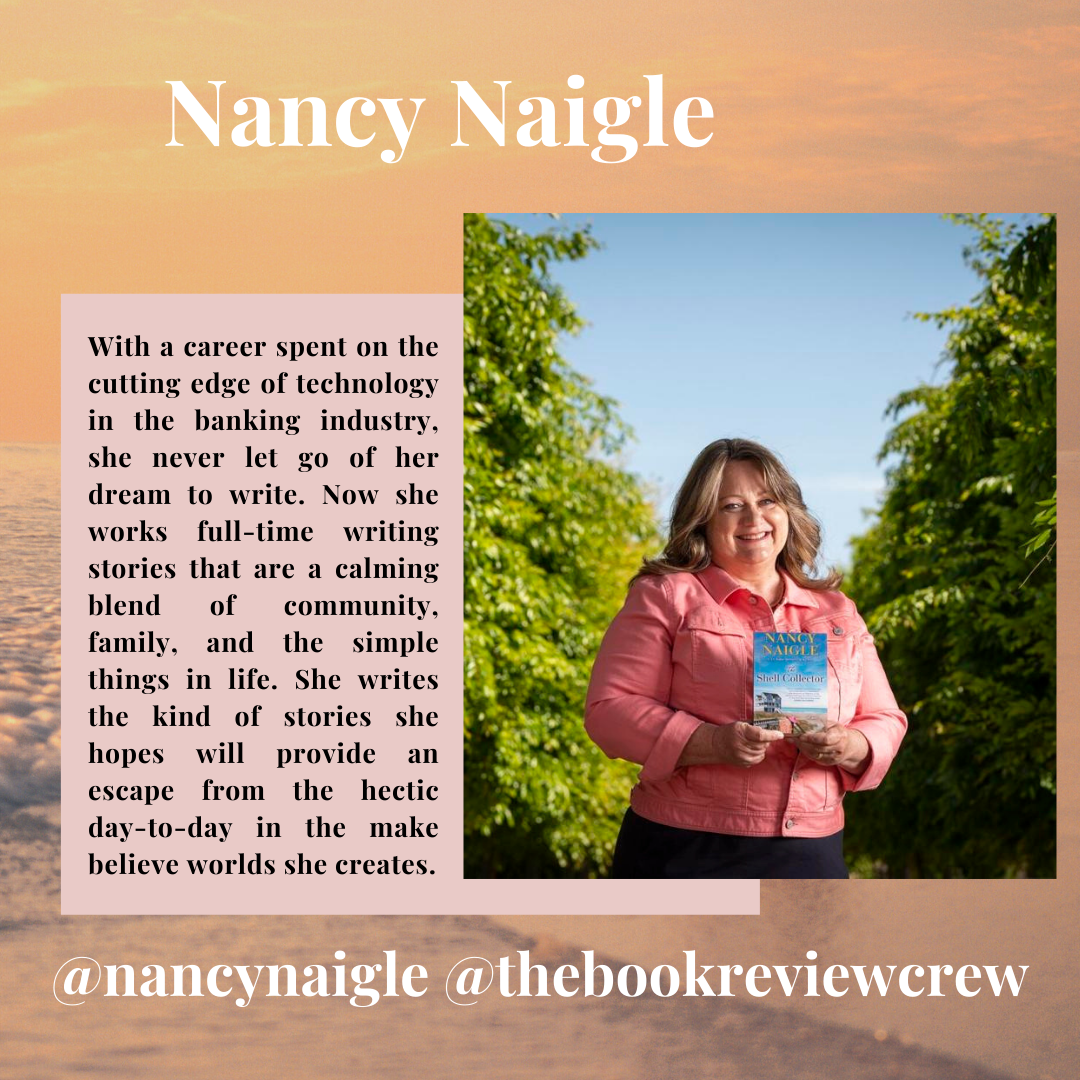
Blurb
“The Shell Collector is a beautiful story full of love, loss, and second chances.”—#1 New York Times bestselling author Debbie Macomber
From USA Today bestselling author Nancy Naigle, The Shell Collector is a touching novel of a friendship that crosses generations, and learning how even the smallest gifts can change a life for good.
Two years after her husband’s death, Amanda Whittier has two children to raise alone, an abandoned dream of starting a business, and a fixer-upper cottage by the sea. She has no room in her life for anything else and little interest in moving on after losing the man she loved.
Paul Grant is a relative newcomer to the area, and his work with former military dogs needing rehabilitation has been good for the town. Though he loved once before, he’s convinced he’s not suited for romance and is determined to find meaning—alone—through his work and role in the community.
Widowed Maeve Lindsay was born and raised on Whelk’s Island. Spirited, kind, and a little mischievous, she pours her life into the town. But she carries a secret that shapes her every move.
Together, these three souls find encouragement in the most mysterious places and discover a love that’s bigger than their pain, healing their wounded hearts in ways none of them could have hoped for or expected.
352 pages Published 2021

How did you get the idea for The Shell Collector?
I lost my husband to a really short battle with cancer in January 2014. Just three months and my whole world changed. Five weeks later I lost a cousin to cancer too. Grief is an incredibly hard thing to navigate. My cousin had shared a story with me about a friend of our family who walked the beach every morning. One day with something particularly heavy on her heart she kicked up a shell in the surf. When she picked up the shell, she noticed a message written inside. Not any message, but a scripture and one that seemed to be written just for her and what she was worried about.
That story hung on my heart after losing my cousin, and as I navigated my own grief slowly a story of two widows, one an older woman who walks the beach every day, the other a young mother of two who has just moved to the beach town to get her life going again after losing her husband two years prior. They help each other through, and the cross-generational friendship is so beautiful. I still tear up just talking about it. It’s about navigating grief to hope and happiness, and I promise there’s a lot of happiness in this story too. The setting is fictional, but imagine a small town on the North Carolina shore where the community pulls together and the off-season is precious. I grew up in Virginia Beach. Mom and I walked the beach all the time, and my younger brother and I played there. Reliving those playful memories through the two young children in this story was a joy.
#1 New York Times Best Selling Author Debbie Macomber wrote “The Shell Collector is a beautiful story full of love, loss and second chances.” What does it mean to you to be applauded by your peers?
Oh, my goodness! I’m such a fan girl, and I am so humbled and grateful to have had the chance to meet most all of my favorite authors. To have them endorse my book is still a “pinch-me” moment. I’m tearing up just thinking about the lovely quotes that were offered for The Shell Collector. This book came out of a very special place in my heart so the kind words are even sweeter a reward for this story.
If I were to ask a young Nancy what she wanted to be when she grew up, what would you have said and why?
LOL. Well, young Nancy wanted to be a zoologist and specialize in designing animal habitats. I still love the zoo! Somewhere around junior high I started dreaming of working for a big company in the city. Before I took early retirement to write full-time, I was a Senior Vice President with Ban of America. Writing was never on my radar as a career. When I turned 40 I decided I wanted to write one book to help one girl get through one bad day. That was the goal. It took me nine years to get that one book published, and it wasn’t until about book nine that I started thinking about making the leap to writing full-time as a realistic option.
What magazines are on your coffee table right now?
Cowboys & Indians (with Matthew McConaughey on the cover from earlier this summer) and REAL SIMPLE.
Who are your favorites authors? What are you reading right now?
The impossible question! You know I’m good friends with lots and lots of authors. I love and read them all. I’m currently reading Bookshop by the Sea by Denise Hunter. Books and beach—sounds like a winner to me!
Where do you go to find inspiration? Do you have a special quiet place?
I am inspired by life. Talking to people. Visiting new places. Trying new things. Living life with no agenda fills my creative well.
Tell me about your experience of making a book into a movie?
It’s a dream come true, but you should know that once the production company buys the option to turn my book into a movie, it’s out of my hands. They get to streamline the story as they see fit, and they don’t look for advice from the author. It’s exciting to see what pieces and parts of a 90,000 word novel they choose to include in the screenplay which is roughly 110 pages and about 20,000 words. ☺ Pssst – the book is always better!
What was the inspiration behind painting quotes on shells?
Well, I shared the original inspiration for the inscribed shells in the book above, but did you know I also have been painting shells and inscribing them for readers since the book released? Let me tell you about that!
I create a Pinterest board for every book I write while I’m writing it. Any research I do results in pics tucked away on that board. Now, that doesn’t mean it always ends up in the book, but it’s a great way to create an inspiration board. Along the journey of researching THE SHELL COLLECTOR I ran across the most beautiful shells. I decided to try my hand at it, and enjoyed it so much I’ve painted 100s of them! I use black chalk paint as a base, then dip, dot and dab acrylic paint using tiny brushes and mandala tools to pretty them up. In each one I write my favorite quote from the book ~ Interrupt Worry With Gratitude.
What’s next for you? Do you have a book or project already in the works?
More books! WHAT REMAINS TRUE comes out 5/3/2021. It is set in the same small mountain town of Antler Creek that my holiday novel, CHRISTMAS ANGELS, was set. Read that one this winter to get ready for the new release. WHAT REMAINS TRUE is already available for preorder at all your favorite retailers.
How would you like readers to follow or get in touch with you?
https://twitter.com/NancyNaigle
https://www.instagram.com/nancynaigle/
The Shell Collector Give-A-Way
Here’s how to enter:
Giveaway:
Autographed copy of the book, beach bag, and hand-painted shell with a quote from the book.
Link: https://woorise.com/thebookreviewcrew/the-shell-collector
 |
Melinda
World Mental Health Day
World Mental Health Day is an international day for global mental health education, awareness and advocacy against social stigma. It was first celebrated in 1992 at the initiative of the World Federation for Mental Health, a global mental health organization with members and contacts in more than 150 countries. This day, each October, thousands of supporters come to celebrate this annual awareness program to bring attention to mental illness and its major effects on peoples’ lives worldwide. In some countries this day is part of an awareness week, such as Mental Health Week in Australia.
I was diagnosed with Bipolar Disorder at 19 years old and didn’t get treatment until ten years later. I let my own stigma and depression dictate my well-being. I lost many good years to depression, rage, fear, and mania. It cost me in every aspect of my life: friends, money, jobs, and family.
Today I’m healthy with the help of medication and regular therapy sessions. I’m happy and have found a great medical team. This was critical to my success. If you can’t communicate with your Psychiatrist or Therapist, get another and keep changing until you can be honest with them.
I can’t stress enough how your General Practitioner isn’t qualified to manage your ongoing Mental Health matters. They are a good start but after trying medication and not getting better, you need to seek out a Psychiatrist or Therapist. They are the only ones who are specialized to understand the complex nature of Mental Health and Mental Illness.
Your Mental Health matters, every day!
Melinda

Homemade Beard Scrub for the Man in your life *Great Gift Idea
This makes a great gift for the men in your life. And it’s so simple to make.

By Danielle Williams
You Will Need
1/2 cup organic can sugar
4 tsp. olive oil
Bowl
Glass jar
Fabric scrap
Dried flower
To Make
Combine the sugar and olive oil in a bowl. Transfer the scrub to a glass jar, wrap it with a strip of fabric, and tuck in a dried flower clipping.
To Use
Gently massage a dollop of scrub on the face in a circular motion. Rinse off and apply your favorite mousurizer. Use whenever your face or beard area feels itchy or flacky.
 Looking for the Light