


Melanie Lockert remembers checking the traffic for her blog, Dear Debt, and feeling shocked at the results.
Someone had found her site by searching, “I want to kill myself because of debt.”
Lockert started Dear Debt in January 2013 after spending the previous year feeling depressed about her student loans. She posted monthly updates about her efforts to pay off $81,000 while working temporary hourly gigs before she landed a role running communications and planning events for a nonprofit. Along the way, she was open about her mental health struggles and how they were tied to her debt.
She had created her blog as a way to stay positive while she paid off the debt. But looking at the search terms that brought readers to her site made her recognize that her accountability stretched far beyond herself.
“It gave me an instant sense of purpose,” Lockert said.
She had attended counseling the previous year, after negotiating with a graduate student clinic to pay $5 per session while she was underemployed. She knew how much her debt affected her outlook.
She read up on the link between debt and depression. She saw she was far from alone.
“I found out that people who die by suicide are eight times more likely to have debt,” Lockert said. “From the emails I get, I know that debt is really affecting families and their mental health and their ability to find joy.”
People with debt are three times more likely to suffer from depression, according to a 2013 study published in the Clinical Psychology Review.
Lockert wrote a short post for people with debt who were feeling hopeless.
“You are not alone,” she declared. “You are not a loan.”
Still thinking about those search terms, she wrote another post.
“I want to jump through my computer and give you a hug,” she wrote. “Shake you and say your life is worth so much more.”
Then, she started getting emails from people who were desperate and afraid.
What Happened When She Wrote a Letter to Her Debt
A few months into blogging, Lockert wrote her first breakup letter to her debt.
“Dear Debt,” the letter reads. “You do not define me. My worth is more important than the value of your number. Love, M.”

Willow and Sage by Stampington
You will need
2 1/2 cups water
2 1/2 cups white vinegar
3-4 TB. vegetable glycerin
Jar with sealed lid: large wide mouth
12 drops orange essential oil
12 drops lemon essential oil
7 drops lavender essential oil
7 drops peppermint essential oil
Cotton quilting squares/washcloths
To Make
Add water, white vinegar and vegetable glycerin to a large jar. Close lid and shake vigorously. Add the essential oils. Close lid and shake again. Add cotton quilting squares or washcloths, and you’re done. Be sure to shake the jar and wring out the cloth before adding them to your load of laundry.
Note
Essential oils last longer in dark glass containers. Since I reused a clear jar, I store my dryer sheets in a dark place to extend shelf life.
RAINN.ORG
Christa is a Survivor of Sexual Assault, her story is hard to read and yet she comes out on top. She was able to more forward and rebuild her life. She has the strength like many of you.
“When you speak with a survivor of sexual assault, imagine that they are a loved one who has gone through this. How would you want them to be treated?”
Christa Hayburn was sexually assaulted by a superior at the Police Department where she served as a law enforcement officer.
For the next two years she did not report the assault to the department for fear of losing her job. When she experienced an unrelated injury and found out that she could no longer work as a police officer, she finally felt that she could report the assault to the Internal Affairs Department. After turning in a written description of the assault, she was taken to an interrogation room and questioned by two detectives for 6-8 hours.
“They whisked me away as soon as they saw that this involved a person in a position of power. That day was very retraumatizing.”
Christa says the department and the city did not take her report seriously or take measures to ensure that the perpetrator could not sexually assault others. After filing her report, Christa faced retaliation from the city. They expressed doubt about Christa’s medical reports regarding the injury that prevented her from continuing to serve on the police force, and appointed a private investigator to follow her.

Over the next four years, Christa fought against city officials to make sure that her report of sexual assault was investigated appropriately and that her injury was taken seriously. She eventually resigned from the department. Later, two more women reported being sexually assaulted by the same perpetrator, who had been promoted to deputy inspector.
Christa filed a federal retaliation lawsuit against the city, entering an extended legal process. She ultimately decided to discontinue the case for the good of herself and her family. “The day before my deposition I read through my internal affairs report and saw all the transcripts attacking me and attacking my credibility…trying to find flaws in me and my story,” says Christa. “I thought to myself—I’m done. How much more can I put myself through? When do I say, ‘enough is enough? That’s when I started a journey of setting boundaries for myself.’”
Christa is disappointed in the way her case was handled and believes that police departments need to have more training about how to work with survivors and those who have experienced trauma. At the department where she worked, Christa says that “Not only are these incidents happening, but then the institution goes after the victim and protects the perpetrator.”
As a law enforcement officer herself, she saw her role as someone who should act with integrity to protect and serve her community. “I’ve led my life following the law. It’s so disheartening to see the department not following the standards of honor and integrity they hold others to.”
Christa is thankful that she can continue to help survivors through sharing her own story and letting others know they are not alone. “Who am I? I had no position of power within the police department. But I knew that consistently telling my story would help someone else.” Christa served as a star witness for another victim of the same perpetrator, and her testimony helped win the case.
Because of the sexual assault, Christa has experienced PTSD, depression, and suicidal ideation. She found therapy and medication helpful in getting her through some particularly difficult periods of her healing, but regaining her sense of self has been most crucial. ”What’s been helpful for me has been learning who I am again. My identity was ripped away from me, and I had to relearn who Christa Hayburn was.”
She has also found meditation, exercise, and spending time outdoors to be helpful. “I’ve learned to treat myself with more self love than I have ever done in my life. I make sure to do things with my family, go out in nature, cook, spend time with my pets, spend time with friends—just be a normal human.”
Christa’s advice for other survivors is to not be afraid of relying on a support system of people you trust during the healing process. For Christa, her husband has been her greatest advocate. “He’s walked through this journey with me—through some ugly points. We are still together, and he is my biggest supporter,” says Christa. “I know what it’s like to have that support from someone, and that’s why it’s so important for me to give that support to others. If they can feel heard, then they’ll pass it on. It’s a ripple effect of love, compassion, and empathy.”
Christa finds strength, purpose, and healing in being an advocate for other survivors. “I never wanted to be a victim of my circumstances. I had to be an advocate for others and through that, for myself.” Christa recently worked with city officials to create a bill that would require all city workers to regularly receive sexual harassment training. “Being part of that was wonderful.”
Christa now works at a crisis center for sexual assault survivors where she finds fulfillment and continued healing through helping others and sharing her story. “I’m so glad I can be there for survivors. I will continue to advocate for change until true change takes place across the country. People in these institutions have to take sexual assault seriously and be more supportive of those who come forward.”
“Having the opportunity to share this is truly a gift—no one talks about it,” Christa says in regards to speaking about sexual assault within police departments. “But this is something we desperately need to talk about so that we can offer support and create true change in these communities.”
Christa’s hope for the future of sexual violence is that no one will have to fear coming forward to share their story. “No healing can be done when you’re afraid of losing everything from under you.”
“I’ve learned to step outside of my experience and realize that I have the ultimate control over my story and what the ending to that story looks like. The moment I realized that, I got my power back.”

The first thing I see and also comes to mind is the pool outside my living room. It’s beautiful and inviting, refreshing and even great fun at times. It’s been so hot in Texas that swimming is out of the question unless you’re out at 4:00 A.M. which I am not.

Here are the rules for SoCS:

This is a must see video. Jeremy Forbes shares great information to help you have a real conversation with a friend or love one. I did not see the twist coming, he’s a Survivor.
Melinda


Why does the REBLOG button not work so often? How can it work for months and then decide not to work for a day or even a week?
I’m venting as usual, the REBLOG button matters to me because I have a community Blog and the only way we upload new content is through REBLOGGING.
Thanks for allowing me to vent. Contacting the engineers do no good. Most times they know of the problem but have no solution to offer, OR I get the answer it has to do with Safari. There are millions of Mac OS users so using the Safari answer gets a good laugh. Why in the hell can’t WordPress keep a simple function working?
Melinda


Posted byChristobel Hastings
Published16 days ago

Camila Cabello is no stranger to speaking out about her mental healthstruggles, and in a bid to raise awareness of the effects of anxiety, the singer shared the self-help technique she turns to when she’s feeling overwhelmed by the chaos of everyday life.
In an age when our perception of the world is so often viewed through a heavily filtered lens, it can be tough to keep a cultivate a positive self-image. But despite the heavily-filtered images and aspirational messages we consume on our social media feeds, more and more celebrities are taking steps to break through the illusion of perfection and present a more nuanced reality.
One star leading the way when it comes to disrupting the narrative is Camila Cabello. The singer is no stranger to speaking out about her struggles with mental health, and in a candid note to her followers last month, she opened up about her experiences with anxiety, and the ways she’s learned to cope with being “incredibly nervous” and “socially anxious.”
This time around the Señorita singer is continuing her mental health conversation by sharing the coping mechanism she turns to when she’s feeling overwhelmed: breathing exercises.
Taking to Instagram, the singer posted a long note to her followers acknowledging that she has the power to influence positive change in people’s lives through her social media platform, even if in “small ways.”
“To anyone on here who is struggling, which we all do sometimes cause we’re human!!! I super recommend taking five minutes out of your day to just breathe,” Cabello began, alongside a photo of herself relaxing in a bar.
The singer went on to explain that although she never used to pay attention to the practice of meditation, and in particular the concept “noticing your breath”, the self-help technique has improved the quality of her life since she started taking time out of the day for herself.
“I’ve been doing this lately and it’s helped me so much, I didn’t understand meditation before, or the concept of just noticing your breath, but I’ve been doing it the past few months and I can feel the quality of my life improving,” she explained.
“I used to live so much in my head, constantly trapped in my overthinking and being in my head as opposed to the present moment – and lately just going back to my breath and focusing on it puts me back in my body and back in the present and helps me so much.
Cabello, who is set to perform Señorita with Shawn Mendes for the first time at the MTV VMAs tomorrow night, then advised taking up a breathing exercise “whenever you feel yourself getting overwhelmed” in your day-to-day life, taking time to concentrate on the sensation.
“Inhale for five seconds through your nose, and exhale for five seconds through your mouth – and super focus on your breath and how it feels coming in and out of your nostrils. Do it three times a day and whenever you feel yourself getting overwhelmed,” she continued.
The singer empathised with her followers and acknowledged that learning how to cope with life could frequently be “intense and hard”, which is why she wanted to share the mental health coping mechanism.
I think some tools are really life changing and help you know how to do that better, so I just thought i’d share something that’s really helped me,” the singer added.
Cabello’s honesty reminds us that everyone faces their own challenges in life, even the celebrities whose seemingly perfect lives we admire on our feeds. But by embracing an open conversation around mental health, we can break down shame and stigma, and find ways to lead a more authentic life.
Image: Getty
Posted on August 26, 2019 by Denise Hedley
There is something about being chronically ill that makes us need to know everything there is to know about what is wrong with our bodies. This, of course, gets us in trouble on occasion when the doctors take our knowledge of medical terminology and turn it around as proof that we are faking it.
I guess they didn’t get the memo. Chronic pain does not mean chronic stupidity.
We actually care. We are actively participating in our own care teams. We have gained a frightening amount of medical knowledge over the years just trying to understand our conditions. We know our bodies better than most. We deal with more in a short period of time, say during a flare, than many people deal within their lifetime.
That is in addition to what we deal with when we’re not in a flare. For us, the pain never really goes away.
Our experience adds to the knowledge we have accumulated. It enables us to cope with what is going on. It enables us to forge ahead through the abyss of opioid lies and laws that do little more than minimize our very existence.

Denise Hedley
I think we need to stand up and loudly use that knowledge because it is backed by our experience.
Those who have been responsible for the faux crisis have limited knowledge. They only know the scientific side. If any of them walked in our shoes for even one day, they would be on their knees in the ER pleading for help within hours. It’s a fact.
And I doubt they could handle any of what we face daily.
Because knowledge isn’t enough when justifying toying with the lives of millions. There must be both knowledge and experience…and sometimes, it’s the experience that tells the real tale.
It is experience that gave me the strength to call out the last doctor who told me that “everyone knows that opioids don’t work for chronic pain.” Experience tells me otherwise.
You can’t get shingles twice. Experience tells me otherwise.
The pain is all in your head. Experience tells me otherwise.
If you would get out and exercise, your pain would go away. Eight knee surgeries worth of experience in addition to advice from my doctors tells me otherwise.
And yet where does the knowledge and experience get us? Not very far thanks to opioid guidelines these days.
Personally, I’m sick of it.
It seems like we are cursed by our bodies, our knowledge, and now the CDC.
In the meantime, we can only do what we can do. We can participate in the Don’t Punish Pain rallies in October. You can go to the US Pain Foundation and work as an ambassador to help spread the word. You can call your representatives. Talk to doctors – let them know where you stand as a pain patient.
Just because we have something seriously wrong with us that causes us pain 24/7 doesn’t mean that we must be collateral damage. So far, we just aren’t loud enough. We need to get louder.
August 29, 2019 By 23andMe under 23andMe Research
A new genome-wide association study (GWAS) involving more than 490,000 individuals, including 75,000 23andMe customers who consented to research, offers an intriguing glimpse into the complexity of sexual behavior. While the study found thousands of genetic variants with very, very small affects on same-sex sexual behavior, it did not find any “gay gene,” nor did the researchers expect to.

The study, “Large-scale GWAS reveals insights into the genetic architecture of same-sex sexual behavior,” reveals some differences in the genetics of same-sex sexual behavior between men and women, for instance. It also shows that human sexuality is more nuanced than many believe. Rather, like personality and other complex human traits, a mix of genetic and environmental factors influences sexual behavior.
The researchers — in the United States, the Netherlands, the United Kingdom and Australia, — did not find any patterns among genetic variants that could be used to meaningfully predict or identify a person’s sexual orientation or behavior.
“[M]any loci with individually small effects…additively contribute to individual differences in predisposition to same-sex sexual behavior,” they write, describing genetic patterns consistent with many personality, behavioral, and physical traits.
23andMe is just one of the many institutions involved in this international collaboration, which includes scientists of different disciplines and areas of expertise from some of the world’s top academic and research bodies.
Because it’s a controversial topic, funding has historically been limited and recruitment of participants was difficult — many of the studies that had been done in this area were underpowered and under resourced.
23andMe — with its crowdsourced research platform that allowed anonymous, de-identified participation — was uniquely positioned to engage in this type of study. And, as a company, we are committed to representing the full diversity of the human population, and sexual behavior is just one component of that. Tags: Featured, sexual behavior, sexual orientation

August 28, 2019
A mother is praising a United Airlines crew and the passengers who supported her while her four-year-old son with autism was having a meltdown on their flight home from a family vacation.
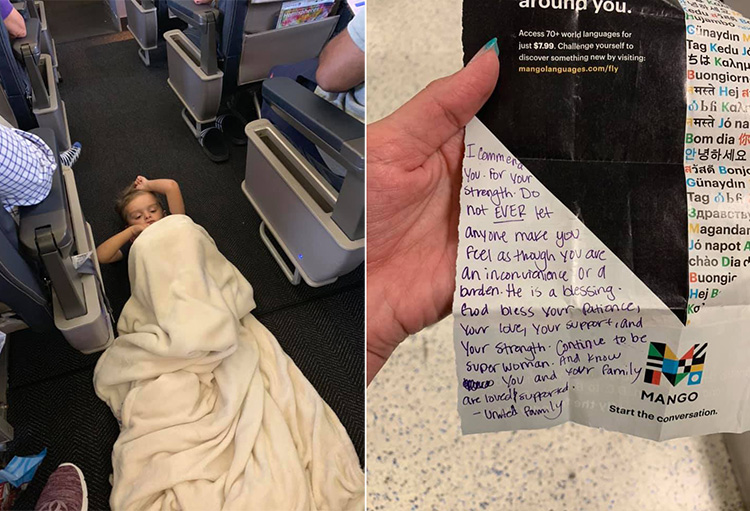
Credit: Lori Gabriel
This is what Lori Gabriel wrote on Facebook.
“So my little flyer (he’s autistic but normally loves to fly) didn’t have such a good flight home.
Trying to get him to stay seated was impossible he wanted to sit on the floor in the hall and in first class.
Huge thank you to united airlines they accommodated his needs, made sure we were all ok, worked around where he choose to sit.
To the lady that wrote me this note in seat 7D thank you, you may not know how much that means to us when we feel defeated. Thank you for helping and being kind just so happens she also works for United.
To the man in first class seat 6C you rock thanks for playing with Braysen and not minding him kicking your seat or messing with you! He loved your high fives!
Hopefully they will see this you never know with social media how fast word can spread but y’all made our flight less stressful being so understanding!
Shout out to the flight attendants Joseph Nation, Heather Bursid, and Rhonda they couldn’t have done a better job.
United really showed up tonight and helped us through this flight SAN-IAH flight UA2210.”
The note Gabriel received (pictured above) reads:
“I commend you for your strength. Do not EVER let anyone make you feel as though you are an inconvenience or a burden. He is a blessing. God bless your patience, your love, your support and your strength. Continue to be a super woman. And know you and your family are loved and supported.”
~~~GUIDELINES~~~


| Dear pain warriors, At U.S. Pain Foundation, we deeply believe in the power of sharing patient stories. Talking about our experiences with pain helps us to educate others, to create change, and to offer hope. That’s why our theme for Pain Awareness Month 2019, which begins Sunday, is #LetsTalkAboutPain. I first got involved in patient advocacy by writing a book about my experiences with complex regional pain syndrome. It enabled me to process my personal journey, take control of my story, and help create awareness for those like me. I hope speaking up about pain this September can do the same for you. This year, we have dozens of opportunities for you to help bring pain to the forefront of public conversations, ranging from our daily storyathon to social media giveaways to weekly events. All of these activities are presented in collaboration with our generous sponsor, Thrive Tape, the creator of an innovative, far-infrared kinesiology tape for all types of musculoskeletal conditions and injuries. (We encourage you to check them out! Use the code USPAIN for a discount.) How you can participate We have something for everyone! Most activities are online, which means you can take part from the comfort of your home. Storyathon. Each day in September, U.S. Pain will be sharing a video story of a real person living with pain. These individuals–from all walks of life–bravely submitted their personal stories in August to help create awareness. To watch the videos, follow us on Facebook and Twitter. Missed the video storyathon deadline? Share your written story. Educational events.Events include: “Talking publicly about pain: A Q&A with Ed Coghlan of National Pain Report,” on Sept. 5 at 1 pm EST, “Expression and movement: A dance class for chronic pain,” on Sept. 10 at 8 pm EST, “Becoming Incurable: A Q&A with Film Director Victoria Suan” on Sept. 17 at 1 pm EST, and more. Get details and register. Social media challenge & giveaways.Each day, we’ll be posting a daily task across our social media channels. On certain days, participation will enter you to win awesome prizes, including: kinesio tape from our presenting sponsor, Thrive Tape; pain relief devices from Quell; Oska; and Enso; and a copy of the book, “Taming Chronic Pain.” Learn more. Profile frame. Social media is an easy tool for generating awareness. For a quick way to call attention to pain, customize your Facebook or Twitter profile picture with our Pain Awareness Month frame, featuring this year’s campaign theme, #LetsTalkAboutPain. Keep it up throughout the month of September–or even beyond–and encourage others to do the same. Resources & materials toolkit. U.S. Pain has launched a toolkit of downloadable and/or printable materials–including a chronic pain infographic, Pain Awareness Month flyers, social media graphics, sample social media posts, and more–to help you spread the word about chronic pain in your local community and online. Access the toolkit here. Public awareness efforts. U.S. Pain volunteers have been busy obtaining government proclamations, getting buildings and landmarks to light up in blue on Sept. 13, having locations decorated in blue, organizing wear blue days on Sept. 27, and more. To see these efforts in action, subscribe to our newsletter or follow us on Facebook, Twitter, and Instagram. The above is just a sampling of opportunities to engage. To learn more about all Pain Awareness Month 2019 activities, visit our website.Let’s start talking! Remember: pain may be silent. But we don’t have to be. Thank you for working with us to create change for our community. If you have any questions about getting involved, please email us! Sincerely, Nicole HemmenwayInterim CEOU.S. Pain Foundation |

1786
Protesting high taxes and political corruption, American farmers begin a military standoff that closes the federal court in Springfield. Shays’ Rebellionwill eventually be defeated by a private militia, but it will sufficiently rattle national leaders to call for a stronger national government to suppress future uprisings.
1831
English chemist and autodidact Michael Faraday publically demonstrates his discovery of electromagnetism, or as he calls it, a ‘wave of electricity,’ via electromagnetic induction. His discovery of this energy transmission will help generate mankind’s electrical revolution.
1949
Twenty kilotons of nuclear fission flatten a purpose-built ‘town’ in a remote part of the USSR’s Kazakh Republic, and the Soviet Union is now on par with the US as the only other nuclear power on the globe. Called ‘First Lightning,’ the Soviet’s atom bomb is born of espionage and scientific brilliance.
2005
Once roiling with Category 5 strength over the Gulf of Mexico, Hurricane Katrina has weakened, but it’s still packing ferocious winds, as it makes landfall near New Orleans, Louisiana. A massive storm surge will breach levies, devastating that city as Katrina becomes one of the worst natural disasters in US history.
Posted Aug 11, 2019
Source: Pixabay/CC
Being in touch with your values is essential to living a rich and meaningful life. By knowing what you care about most, you become inspired to live by your highest ideals, bringing out the best in yourself. In short, values help you find direction, meaning, and inspiration in life.
Unfortunately, however, it’s more complicated than this. Because too often enough, we get sidetracked. Too often, the demands of the day pull our attention away from what really matters, to serve our immediate emotional needs. We then lose touch of our ideals, and revert back to old – often destructive – habits.
If you wish to stop this from happening, break the cycle of bad habits, and bring forth the best of yourself, you have to reconnect with your values whenever you lose touch. And the easiest way to accomplish this, are value triggers.
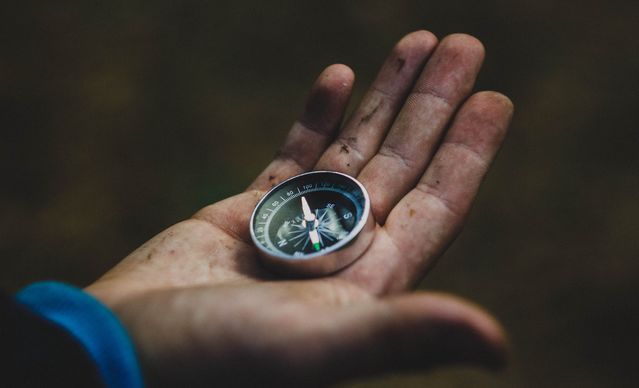
A value trigger is a physical reminder of your core values. By merely looking at it, you refocus back on what matters most, making you act more in line with your highest ideals. The trigger can be almost anything, as long as it makes you remember your values. Here are a few ideas:
Card in Wallet. Write down a few core values on an index card, and put it in your wallet. Whenever you’re feeling stressed, take it out and read it.
Background Screen. Change the background of your phone to a picture that represents your values. For instance, if you value self-courage you might set it to the picture of a lion if that image speaks clearly to you.
Jewelry. Pick a piece of jewelry (e.g. a ring, a bracelet, or a necklace) and let it stand for a certain value. Whenever you look at your accessory, reflect on it’s meaning.
Post-it Notes. Write down your values on a post-it note, and stick it somewhere visible, like your fridge or a computer screen.
Pictures of People. Print out pictures of people that for you exemplify your values. Our heroes and guides are picked by us because they stand for something in our lives. You can pick pictures of friends, family, teachers, coaches, spiritual leaders, well-known public figures — anyone who empowers you to care.
Pick a value trigger that works best for you. It doesn’t matter which one you choose, as long as it serves as a reminder of your core values.
Don’t be fooled. A value trigger doesn’t magically change your life, just by having it. Instead, you need to actively engage the trigger. Whenever you look at your personal value trigger, ask yourself the following questions:
By reflecting on your value trigger in this way, you increase its effectiveness. This doesn’t mean you will never again lose sight of what matters most. But it does mean you have an effective way to catch yourself whenever you fall off track, and quickly get back to living a rich and meaningful life.

Steven C. Hayes, Ph.D., is Nevada Foundation Professor at the Department of Psychology at the University of Nevada Reno.In Print:Get Out of Your Mind and Into Your Life: The New Acceptance and Commitment Therapy (A New Harbinger Self-Help Workbook)Online:Steven C. Hayes website for free ACT materials View Author Profile

| How many participants in the MyLymeData patient registry ever had a Lyme-related rash? (34%) How many initially presented with flu-like symptoms? (64%) How many were misdiagnosed with a psychiatric illness? (54%) These are some of the details you can learn in the MyLymeData 2019 Chart Book. This report is a compilation of our research results based on more than 2.5 million data points we have collected and analyzed within the MyLymeData project during Phase One. Much of the information highlighted in this report was previously unknown to the community, because so little real-world research on Lyme disease has been conducted. MyLymeData is a testament to what can be achieved when patients pool their data to help find a cure. More than 12,000 people have joined the registry so far. You can download your own free PDF copy of the 36-page 2019 MyLymeData Chart Book by clicking the button below. |
August 6, 2019 By 23andMe under 23andMe Research
By Rafaela Bagur Quetglas, PhD
You are what you eat, is the old adage, but what does your diet actually say about you?

23andMe has a unique opportunity to explore that question, as we investigate how dietary habits, along with genetics, demographics, lifestyle and other data can influence overall health outcomes.
Looking at diet specifically, our scientists analyzed the data of more than 850,000 people who consented to participate in research and who shared details about their own eating habits.
Using machine learning techniques* we were able to see that dietary choices clustered into four distinct types of eaters, which were mainly characterized by two dietary behaviors. The first one represents the spectrum of foods’ nutrient content from high nutrient-dense foods (i.e. low caloric foods with high nutrient content like vegetables, leafy greens, fruit, beans or whole-grains) to low nutrient-dense foods (i.e. high caloric foods with low nutrient content like. processed foods, sweets, sodas, pastries, saturated fats or fast food). The second main behavior differentiating diet groups is the meat intake, in particular, red and processed meat (e.g., sausages, hot dogs, ham, or cured bacon).
Using these two behaviors as axes, we can plot the four main diet groups:

Figure 1. Left graph represents the four defined diets projected in the two main behaviors axis (nutrient content of foods and meat intake). Right panel describes the nutritional differences between these diets, the dots represent the average response to the survey question: “How frequently do you eat this food?” Possible responses were: “not at all” (all dots empty), “1-2 times per week” (one filled dot), “3-6 times per week” (two filled dots), “once per day” (three filled dots) or “more than once a day” (all dots filled).
After defining these dietary clusters, we looked to see if there were any obvious demographic differences between these groups, and there were. We found that women tend to group in the Herbivore or HND + Carnivore groups. Far fewer women — only about 20 percent in our study — were in the LND + Carnivoregroup. In contrast, about 30 percent of men were in that group. Women also tended to eat more fruits and vegetables and avoid meat more than men. About one in four women, versus one in six men were classified in the Herbivore group. (Figure 2)

Figure 2. Percent of users belonging to each diet class depending on their gender.
As with gender, if we look at age we also are able to see differences within each of the dietary classifications. In this study, younger people appeared to eat fewer fruits and vegetables and more high caloric foods with low nutrient content. We found that about 40 percent of adults under 30 belong to LND + Carnivorecategory, and only about 10 percent of this age group were in the Herbivore category. The reverse is true for individuals over 60, with people in that age group more likely to eat fruits and vegetables and less likely to eat refined carbs or fast food. This is not surprising since our diets change over time — think about the difference between the typical diet of a college freshman versus the typical diet of a senior citizen. Interestingly, when we look at Omnivores, their numbers don’t seem to change as they age. Is a part of the population resilient to changing their nutritional habits as they get older? We can’t say for sure without further study (Figure 3).

Figure 3. Percent of users belonging to each diet class depending on their age. Users were divided into four different age bins: under 30 (<30), between 30 and 45 (30-45), between 45 and 60 (45-60) and older than 60 (>60).
We also wanted to look at how these different dietary categories might impact weight, specifically BMI. What we found was that those individuals who ate more fruits and vegetables — Herbivores — were more likely to have a BMI in the healthy range — between 18.5 and 24.9 as defined by the Centers for Disease Control and Prevention (Figure 4). However, without exercise, those individuals in the Herbivore group were still likely to be overweight. That said, looking at our data it may be even more difficult to maintain a healthy BMI if your diet is in one of the other three dietary categories HND + Carnivore, Omnivore and LND + Carnivore.

Figure 4. Description of the relationship between the average body mass index (BMI) of each diet class and the users’ age (left panel) and the number of times that they exercise per week during at least 30 min (right panel).
A really surprising finding was that the difference in average BMI between the LND + Carnivore group and the Herbivore group is higher in women than in men. This raises the question: is a woman’s weight more sensitive to eating high caloric foods?
The differences between women and men in this study could be explained by many reasons. It’s important to highlight that BMI is a measure of weight adjusted for height, but it doesn’t take body composition into account. The difference in BMI between men and women could be partially explained by the differences in fat storage observed in men and women [3]. On average, women have from 6 to 11 percent more body fat than men. Studies show that estrogen reduces a woman’s ability to burn energy after eating, resulting in more fat being stored around the body. Experts in this field speculate that the likely reason for the differences in fat storage is to prime women for childbearing [3]. One could speculate that since there are gender-specific differences in fat storage, we might expect a fat-rich diet to impact women’s and men’s BMI differently.

Figure 5. Difference in BMI between users (divided by their gender) belonging to the LND+Carnivore group compared to that belonging to the Herbivore group.
This study has shed some light on the eating behaviors of the 23andMe community and how they vary by age and gender. More importantly, we have shown that diet plays a really important role to maintain a healthy weight which is really important for your health: The higher your BMI, the higher your risk for heart disease, high blood pressure, type 2 diabetes, and certain cancers [1], [2]. However, what you eat is not enough to define your weight since our data showed that even people in the Herbivore group need to exercise at least five times a week in order to have a healthy weight. In a future blog post we will look further into the differences in activity in the 23andMe research community broken down by age, sex and diet behaviors.
Rafaela Bagur Quetglas is a Data Scientist in Health Research and Development at 23andMe.
____________________________________
*Two machine learning techniques were used in this study. The first method, called k-means clustering, was used to place people with similar diet behavior into k distinct groups; in this case, k is four. The second method, called principal component analysis, identifies exactly which dietary details set those four groups apart from each other.
[1] Donald M. Lyall et al., (2017) Association of Body Mass Index With Cardiometabolic Disease in the UK Biobank: A Mendelian Randomization Study. JAMA Cardiol. 10.1001/jamacardio.2016.5804
[2] Bhaskaran K. et al., (2014) Body-mass index and risk of 22 specific cancers: a population-based cohort study of 5·24 million UK adults. Lancet. 10.1016/S0140-6736(14)60892-8
[3] Betty N. Wu and Anthony J. O’Sullivan (2011) Sex Differences in Energy Metabolism Need to Be Considered with Lifestyle Modifications in Humans. J Nutr Metab. 10.1155/2011/391809Tags: BMI, diet, Featured

Willow & Sage from Stampington
You will need
1/2 cup vinegar
1/2 cup witch hazel
1/4 cup distilled water
1 TB. rubbing alcohol
20 drops eucalyptus essential oil
20 drops lemongrass essential oil
10 drops cedarwood essential oil
10 drops rosemary essential oil
10 drops peppermint/spearmint essential oil
Glass spray bottle 8 oz.
To Make
Add all ingredients together in a glass spray bottle in the order listed above, leaving essential oils to go in last. Shake to combine. Try to use an amber glass bottle if possible to prevent the sun from penetrating the oils inside, which could lessen their potency. Keep Bottle out of direct sunlight and somewhere cool.
Your Friday prompt for Stream of Consciousness Saturday is start your post with a preposition.
The heat is oppressive outside, I open the door to let Griffy in and a wave of heat knocks me backwards. In Texas it’s been at or over 100 for weeks now and it’s wearing on me, that says a lot because I’m a native Texan. I count the days until September when cooler days will replace the heat. M
Here are the rules for SoCS:

1851
The ‘Auld Mug’ trophy is awarded for the first time to the winners of a sailing race around England’s Isle of Wight. The schooner ‘America’ sails into first place with an ample lead, and so the competition between the world’s best racing yachts will be known as the ‘America’s Cup.’
1902
Named for the man who founded Detroit in 1801, Antoine Laumet de La Mothe Cadillac, Michigan’s newest car company launches. The Cadillac Automobile Company rises from the ashes of the Henry Ford Company, after Ford leaves his company over a squabble with investors.
1986
Rob Reiner’s ‘Stand by Me’ hits theaters. Based on Stephen King‘s novella ‘The Body,’ the movie tells the story of four boys searching for a missing boy’s corpse. ‘Stand by Me’ will help make stars out of Wil Wheaton, River Phoenix, Corey Feldman, and Jerry O’Connell, and earn more than $52 million at the box office.
BIRTHDAYS
James Corden, 40 Comedian
Valerie Harper, 80 Actress
Cindy Williams, 72 Actress

The sheet touches the underside of my arm and it burns.
My sandals touch a spot on my foot that shoots pain up my leg.
Sleeping is restless since shoulder and hip joints have painful arthritis.
Motivation for anything is non existent.
Sleeping requires narcotics, I hate the way they make me feel the next day.
Walking the day in a brain fog.
Keep changing crossed legs because of pain in each leg.
Depression creeps in and there’s no way to close the trap.
I work to keep hopes high during the day but realize at some point pain has overcome my body.
I pray tomorrow is a better day.
M






 Looking for the Light