Aromalief’s founder Annabel has written a timely post about how cold weather affects pain levels. My pain does tend to get worse in the colder months and I have felt it lately with several cold fronts. I have tried several of the recommendations in the post including being a daily user of Aromalief. I use the Lavender scent at night and the Orange Ginger during the day. One thing I love is how both soak in quickly without the greasy feeling so I can get back on the computer or go right off to sleep.
This post contains an affiliate link that earns me a small commission and doesn’t cost extra to use.
Do you feel like your pain gets worse during the cold, winter months? If you do, you’re not alone! A study revealed that 92% of chronic pain patients felt like their symptoms were exacerbated when the weather was cold. We know some of you might be experiencing this, which is why we couldn’t wait to share this blog post with you! In this week’s blog, we’ll go over the possible connection between cold weather and pain, and four ways to prevent or reduce those uncomfortable cold weather pains this winter.
While winter can be a wonderful time of year with decorative twinkle lights, hot chocolate by the fire, and family gatherings, for some people with chronic pain, it can be a dreaded time of year.
Many people express that their chronic pain conditions get worse as the weather gets colder. If you’re in this camp, you’re certainly not alone. In fact, one study revealed that a whopping 92% of patients with chronic pain felt that their symptoms were exacerbated when the weather was cold.
What does science have to say about this? Well, it’s a bit of a mixed bag, but there are some popular theories from doctors and researchers that could explain the apparent connection:
Colder temperatures can lead to less blood circulating to our extremities, which can lead to pain in our feet and hands.
Changes in barometric pressure can cause muscles, tendons, and bodily tissues to expand, which can cause pain in the joints.
Many people decrease their overall physical activity in the colder months, which can account for some stiffness and soreness.
Regardless of the cause, the bottom line is, it hurts! We want to help you feel better during these cold, winter months so that you can enjoy time with your loved ones.
Here are four ways to prevent or reduce those uncomfortable cold weather pains this winter.
Stay hydrated and avoid caffeine
Sipping on a warm drink is a great way to warm up your body, however, it’s recommended to stay away from caffeine if you’re experiencing chronic pain. Consuming caffeine can cause your blood vessels to temporarily narrow, which restricts blood flow to your extremities. This has the potential to lead to increased nerve pain, which nobody wants! Thankfully, there are many delicious alternatives to that cup of coffee that will actually support your body, rather than hinder it.
Also, don’t forget to drink enough water or other water-rich beverages! It’s easy to forget to hydrate when the weather is colder, but it’s especially important if you experience pain flare-ups when the temperatures dip. Water helps keep your body balanced and flowing, and helps lubricate your joints.
Keep moving
When it’s really cold outside, you probably just feel like snuggling up with a cozy blanket in front of the fire, right? Who doesn’t! It’s very important, however, to stay active in the colder winter months, especially if you’re dealing with chronic pain. Taking part in light cardio can warm up your muscles and promote good circulation, which can help ward off cold weather-induced neuropathy. There’s no need to go crazy—a gentle yoga session, a walk around your neighborhood or in nature, a quick elliptical session, or a light swim in a heated pool will all help immensely.
Bundle up
It’s time to break out the winter essentials: a warm coat, hat, scarf, gloves, and thick socks. Properly dressing when you go outside in cold weather will help you maintain your body heat which, in turn, will help your body maintain good blood flow and prevent muscle stiffness and nerve pain. Pay special attention to bundling up your feet and hands, as they are usually affected the most. Try using Aromalief Compression Gloves or Workvie Copper Compression Gloves either in the house or during your outings. These gentle compression gloves are perfect for keeping your hands nice and toasty and to reduce pain made worse by the cold.
Check your Vitamin D level
During these cold, dark months, you’re more vulnerable to developing a Vitamin D deficiency, particularly if you live in an area that doesn’t get much sunlight in the winter.
A 2010 study in Nutrition Journal discovered that 42 percent of U.S. adults were deficient in Vitamin D. That’s almost half of the people in America!
Vitamin D deficiency can cause a number of health issues including muscle, bone, and joint pain. It’s easy to test your level—just ask your family doctor to give you a blood test at your next visit. If it’s determined your level is low, you can take an inexpensive Vitamin D supplement daily. You can also make it a point to get out in the sunlight when it’s available.
Don’t let the winter months bring you down
We know that winter can be hard when you have chronic pain, but we hope that these suggestions make these cold days a little bit warmer and less painful.
Get some light exercise, bundle up, stay hydrated, and spend some time in the sun! If you follow these simple tips, you’ll be feeling a bit better in no time.
It is always important to ask your doctor before using these or any other creams. Even though products don’t require a prescription, it is still important to get their medical opinion.
Aromalief® is a brand of topical pain relievers made in Florida for women with chronic pain by women. It is 97% Naturally-derived, Vegan, and Cruelty-Free.
Try Aromalief Day and Night Gift Set to help with Pain Relief.
If you have any questions about our products you can always email us at info@aromalief.com and we will do our best to get you research-based answers.
This statement has not been evaluated by the Food and Drug Administration. This product is not intended to diagnose, treat, cure, or prevent any disease.
Please consult a medical professional prior to using this or any other product for pain relief.
It’s Wednesday! I’m so happy you’re here! This is an artistic interpretation of a photo my husband took in Tokyo. I have several more to share with you in the coming weeks. I want to go see all the sights but not sure I can deal with all the people, it’s so crowded.
Similar to productivity shame–the feeling that you’ve never done enough–time anxiety is when you feel you never have enough time to meet your goals or that you’re not maximizing the time you do have.
How often do you feel like you just don’t have enough time? Despite trying every time management technique and productivity strategyin the book, do you find it impossible to shake the feeling that time is slipping away? This is called time anxiety.
Similar to productivity shame–the feeling that you’ve never done enough–time anxiety is when you feel you never have enough time to meet your goals or that you’re not maximizing the time you do have.
“Time is what we want most, but what we use worst.” — William Penn
In our productivity-obsessed world, it’s common to feel overwhelmed with your schedule and workload from time to time.
But time anxiety is more than just a momentary spike in your workday stress. It’s an emotional specter that haunts your days, causes you to procrastinate on important tasks, and can even lead to burnout.
Unlike other aspects of our lives, time can never be controlled. So how can you move past the anxiety of time’s uncontrollable nature and learn to feel good about yourself and your work?
WHY YOU CAN’T STOP THINKING ABOUT HOW LITTLE TIME YOU HAVE
Time anxiety is the terrible feeling that you never have enough time and aren’t doing enough with the time you do have. But to understand why you feel this way, you first need to understand your relationship with time.
As children, time usually doesn’t mean much to us. Yes, we follow a bit of a schedule. But for the most part, we’re left to fill long, unstructured days with games and learning.
As we become teenagers, however, time starts to gain importance. We have school and sports and hobbies and friends to fill it. Not only that, but we’re often told that “wasting time” now will ruin our future.
Then, suddenly, time becomes our most important and scarce resource. As adults, we have college, work, families, and all other sorts of serious responsibilities that demand our time and attention.
As we get older, time becomes something we not only have to consider but try to control.
But here’s the irony: The more we focus on the limited time we have, the more limiting our time feels.
In other words, the more you worry about time, the more time feels like something you need to worry about.
In this way, time anxiety is a lot like the Pink Rhinoceros problem.
If I ask you not to think about a pink rhino, it’s going to be the first thing that pops into your mind.
Psychologists call this ironic process theory–the process where the deliberate attempt to suppress certain thoughts makes them more likely to surface.
That’s why you can’t tell someone to just stop worrying about time. The more you try to stop time anxiety, the more you’re likely to worry about it.
THREE TYPES OF TIME ANXIETY IMPACT YOUR PRESENT, FUTURE, AND OVERALL HAPPINESS
Instead of ignoring time anxiety, you need to understand how it impacts your thoughts, behaviors, and even habits. That’s because time anxiety impacts our thinking beyond just feeling stressed over your daily schedule.
In fact, time anxiety shows itself in multiple ways. Here are a few examples:
Daily time anxiety: This is the feeling of never having enough time in your day. You feel rushed. Stressed. Overwhelmed.
Future time anxiety: These are the “What ifs?” that ravage your brain. You feel paralyzed thinking through everything that may or may not happen in the future depending on your actions today.
Existential time anxiety: This is the overall anxiety of only have a limited time to live your life. No matter how much you race ahead or push forward, there’s only one finish line.
Now more than ever we demand that we make our time meaningful. This translates into anxiety about how we spend our time today, but also about how those actions impact our future.
The common answer is to focus on what you’re doing right now.
And while all those strategies work to help you use your time better, they don’t address the underlying issue.
HOW TO DEAL WITH TIME ANXIETY (ONCE AND FOR ALL)
Overcoming time anxiety comes down to awareness, understanding, and action.
In this sense, RescueTime was built to help people deal with time anxiety. We saw how our friends and colleagues constantly got to the end of the day and asked “Where did my time go?”
RescueTime observes how you spend time in apps, websites, and projects and gives you in-depth reports on your habits. It helps shine a light on where your time goes, which is a massive help in reducing time anxiety. The RescueTime dashboard shows you how you spend your time in apps, websites, and tools. But can too much observation of where your time goes actually add to your time anxiety?
The short answer is yes. Obsessing over any aspect of your life will lead to anxiety and stress and time is no different.
However, being unaware of where your time is going is just as stressful and can be one of the causes of time anxiety in the first place.
Think of it like the dieter wanting to lose weight. Obsessing over every calorie and carb is stressful and unsustainable. But ignoring what you’re eating won’t bring the results you want. It’s all about finding a balance between awareness and action so you can continue living your life.
If you want to remove time anxiety and feel better about your days, here are a few strategies to try.
1. Acknowledge your relationship with time
It’s probably been a long time since you thought about what time means to you (if ever).
But time anxiety builds when we ignore or try to manipulate the ways that time impacts our day. To start, you need to accept some truths about time:
Time exists
You can’t stop time from moving or slow it down
All you have control over is what you do in the future
This might seem like a silly first step, but acknowledging time’s impact on your life is a powerful way to quell anxiety and start moving forward.
2. Ask what ‘time well spent’ means to you
Time anxiety comes from feeling like you’re not spending your time in the best way possible. But do you really know what the ‘best possible way’ is?
Start by asking yourself what does a good day look like?
At work, what sort of tasks get you into a state of flow?
Outside of work, what hobbies or activities do you enjoy in the moment? Not just because they help you ‘turn off’ your mind?
Body: What do you like to do to feel healthy and active?
Mind: What pushes your mind in a good way?
Love: Who do you love spending time with?
Work: What work or tasks make you feel good?
Money: How do you want to use the money you do have?
Play: What hobbies or rest activities do you really enjoy?
3. Understand the planning fallacy (and why you have less time than you think)
Listing out lots of activities can lead to more time anxiety if you’re not careful. Instead, the goal here is to be realistic about what you can do with the time you have.
Unfortunately, most of us are pretty bad at planning. We believe that eight hours of work means we have eight hours of time to schedule. However, study after study shows most people have at best 2.5 hours of truly productive time a day.
We’ve written a full guide on the planning fallacy here. However, what it comes down to is that at work, most people spend:
15% of their time in meetings
25-30% of their computer time on email, chat, and video calls
40% of their time multitasking and working a sub-optimal way
And that doesn’t include time spent on breaks (which are a necessity) or on nonwork activities.
The same can probably be said for your time outside of work. You might have five hours between when you get home and when you go to bed, but are you considering things like dishes, shopping, cleaning up, etc.?
This isn’t meant to stress you out further but rather to help you understand that you do have limitations you have to work within. Time can’t be stretched to fill your to-do list.
4. Make space for the things that matter (and just do them)
Time anxiety can feel paralyzing. But the worst thing you can do is sit back and wait for motivation to spend your time in a better way.
Instead, psychologists have found that motivation does not precede action, action precedes motivation.
In other words, to feel motivated and happy, you need to act.
Look at your time well-spent activities and decide how they will fit into your day. This doesn’t necessarily mean scheduling a specific time for them (although many people do this with great success).
Instead, think about how your most meaningful tasks will fit into a real day.
Will you do them in the morning before work? On your commute? After dinner when the kids are in bed? Make space for them and time will sort itself out.
When you come to terms with your limited supply of time, it’s easier to turn off the TV, log off Twitter, and do things that make you feel good.
Thinking through your day like this can also help you cut out the time-wasters and distractions that add to your time anxiety. When you come to terms with your limited supply of time and what truly matters, it’s easier to turn off the TV, log off Twitter, and do things that make you feel good.
5. Practice being a ‘Satisficer’ instead of a ‘Maximiser’
An often overlooked aspect of time anxiety is how we think about the future. Many of us stress out over making the best choice possible. But there is no ‘perfect’ decision.
Psychologists have identified two types of decision-makers:
Maximizers strive to make a choice that will give them the maximum benefit later on.
Satisficers make choices according to their set of current criteria and nothing more.
Trying to maximize your time today, tomorrow, and every day after will only lead to more time anxiety. Instead, look at your time well-spent activities and realistic schedule and decide what fits best now.
(If it helps, studies have found that maximizers actually often make worse choices and suffer stress and anxiety in the process.)
TIME KEEPS ON SLIPPING. WE’RE JUST ALONG FOR THE RIDE.
We all want to spend our time in the best way possible. But stressing out over the seconds and minutes we have does us more harm than good.
As writer Maria Edgeworth wrote back in the 1800s:
“If we take care of the moments, the years will take care of themselves.”
Be realistic about your time, know what makes you feel accomplished and the rest will take care of itself.
I don’t typically pay much attention to Fox News but this article was a good one. I quit drinking over 15 years ago and the reason may seem strange to some, my mental illness. My doctor knew I drank with all the medication I took and said it was okay from a medical standpoint. He said it made the medication less effective. After years of ups and downs and hospital stays with ECT treatments, I decided that if a little extra effectiveness would help I wanted it. I’m fortunate that I’ve had no cravings since the last drink.
##
Experts weigh in on how Hollywood A-listers’ admissions can encourage others to make healthy lifestyle changes
On the surface, celebrities seem to have it all: fortune, fame and success.
But behind closed doors, a number of Hollywood’s leading stars struggle with alcohol, drugs and other substances. In a year of uncertainty and drastic change with a global pandemic, a wave of confessional gratitude has swept through Hollywood with more A-listers opening up about facing their demons and their sobriety journeys.
“There does seem to be a bit of a cultural shift in our attitudes towards alcohol with an awareness that less alcohol is good for your health and that periods of sobriety may be something to aspire to,” addiction expert Dr. James C. Garbutt told Fox News.
“Of course, if someone has a true alcohol use disorder then sobriety is a very positive thing and something to be celebrated,” he said.
From decades-long milestone accomplishments (Elton John) to one-year anniversaries (Heather Locklear) and even brave admissions of a relapse (Dax Shepard), celebrities have embraced 2020 to speak candidly about getting clean.
In some cases, stars speak out to help provide support to other addicts and show a pathway to sobriety. While others share their stories for a sense of freedom and to be open with their fans.
“For good or for bad, we are very interested in the lives of celebrities and value their opinions about the world often more than we do those with expert knowledge,” said Garbutt, an adjunct professor of psychiatry at the University of North Carolina’s School of Medicine.
“Therefore, I think when well-known celebrities acknowledge that they have had problems with substance use but have changed their lives and have become sober, it gives folks a sense of hope and confidence that they can also do it. It is a signal that: ‘I’m not some bad person, even successful people have my problems.’”
Miley Cyrus recently admitted she ‘fell off’ her path to sobriety amid the coronavirus pandemic. (Mike Coppola/FilmMagic)
Miley Cyrus was forced into sobriety after undergoing major vocal cord surgery in November 2019, and the singer confirmed she was six months sober in June this year, saying part of her decision to change her lifestyle was because of her family history of mental illness.
“I did a lot of family history, which has a lot of addiction and mental health challenges,” she told Variety at the time. “So just going through that and asking, ‘Why am I the way that I am?’ By understanding the past, we understand the present and the future much more clearly.”
Her mom, Tish Cyrus, 53, also paid tribute to her daughter and insisted the public’s perception of the “Can’t Be Tamed” hitmaker is misplaced.
“Everybody thinks Miley is like this wild thing,” Tish said on an episode of “Chicks in the Office” in July. “She’s the cleanest person I know. She’s like, she’s just so solid.”
However, her sobriety recently took a stumble amid the pressures of the pandemic.
The former Disney Channel star admitted having a setback amid the pressures of the pandemic.
Revealing she was two weeks sober, Miley told Zane Lowe in an Apple Music’s New Music Daily interview: “I fell off and I realized that I now am back on sobriety, two weeks sober, and I feel like I really accepted that time.
“One of the things I’ve used is, ‘Don’t get furious, get curious.’ So don’t be mad at yourself, but ask yourself, ‘What happened?’ To me, it was a f–k up because I’m not a moderation person, and I don’t think that everyone has to be f–king sober.”
Garbutt told Fox News how the “new normal” of isolation can be a trigger to some people in their sobriety mission.
“The [COVID-19 pandemic] is putting stress on nearly everyone and leading to increased isolation,” he said.
“We know that both stress and isolation lead to anxiety and depression and are triggers to use alcohol and drugs. It is clear that anxiety and depression are higher, so it is to be expected that alcohol use has gone up as well.”
Elton John
Elton John celebrated the 30-year anniversary of being sober in July. (Joel C Ryan/Invision/AP)
Elton John’s addiction to drugs and alcohol was heavily portrayed in the 2019 biopic “Rocketman” – and the singer admitted this year he’d be dead if he didn’t get help.
Celebrating a monumental 30 years sober in July, the “I’m Still Standing” singer, 73, posted to Instagram: “Reflecting on the most magical day having celebrated my 30th Sobriety Birthday.”
The star continued: “I’m truly a blessed man. If I hadn’t finally taken the big step of asking for help 30 years ago, I’d be dead. Thank-you from the bottom of my heart to all the people who have inspired and supported me along the way.”
Jessica Simpson
Jessica Simpson revealed in her first memoir, released earlier this year, that she battled an addiction with alcohol and pills to cope with the sexual abuse she endured as a child.
The singer and fashion designer, who shares three children with her husband, Eric Johnson, bravely opened up about how much her problems affected her day-to-day life, and her family, after hitting rock-bottom on Halloween in 2017.
Jessica Simpson got candid about her sobriety journey in her memoir released earlier this year titled ‘Open Book.'(Raymond Hall/GC Images)
“It was 7:30 in the morning and I’d already had a drink,” she wrote, recalling how later that day she and Johnson were prepping for a Halloween party and he asked her if she could help get the kids ready.
“I was terrified of letting them see me in that shape,” she confessed. “I am ashamed to say that I don’t know who got them into their costumes that night.”
The “Dukes of Hazzard” star told People in January: “When I finally said I needed help, it was like I was that little girl that found her calling again in life.” She added: “Honesty is hard, but it’s the most rewarding thing we have. And getting to the other side of fear is beautiful.”
Her action in recovery is endorsed by Garbutt.
“The first step is to recognize when alcohol use is getting out of control, for example, drinking to excess regularly and having negative consequences from drinking,” he told Fox News. “Overcoming shame and guilt are the next big hurdles.”
As well as her dramatic 100-pound weight loss after giving birth last year, Simpson has been glowing in recent social media posts, with fans noting she looks more radiant than ever.
“There are so many benefits to a dry month, including: saving money on drinks, late night munchies, hangover remedies and more, having more energy, losing weight by not taking in empty calories in alcoholic beverages and from said munchies, [as well as] better sleep and better skin,” said Sheinbaum, whose book is not specifically geared toward people in recovery.
Dry months can be typically a tool for cutting out alcohol temporarily, and can certainly lead to eliminating alcohol in the long-term, the trend journalist said.
Brad Pitt
Brad Pitt credited actor Bradley Cooper for helping him get sober. (Steve Granitz/WireImage)
Brad Pitt paid tribute to fellow-actor Bradley Cooper earlier this year for helping him get sober.
In a heartwarming moment at the National Board of Review Annual Awards Gala in January, where Cooper presented the “Once Upon a Time in Hollywood” actor with the best supporting actor award, Pitt told the crowd: “Bradley just put his daughter to bed and rushed over here to do this. He’s a sweetheart. I got sober because of this guy and every day has been happier ever since.”
Cooper revealed he quit drugs and alcohol at the age of 29 — five years before starring in his breakout movie “The Hangover” – in an interview with The Hollywood Reporter in 2012.
Pitt, 56, first spoke publicly about his alcohol problems in May 2017.
“I was boozing too much. It’s just become a problem. And I’m really happy it’s been half a year now, which is bittersweet, but I’ve got my feelings in my fingertips again. I think that’s part of the human challenge, you either deny them all of your life or you answer them and evolve,” the Oscar-winner told GQ.
Pitt confessed he had to change his lifestyle because he didn’t “want to live that way anymore.” He reasoned: “Truthfully I could drink a Russian under the table with his own vodka. I was a professional. I was good.”
Joe Rogan
Joe Rogan got candid last month about participating in “Sober October,” a short-term one-month abstinence from alcohol. (Michael S. Schwartz/Getty Images)
Comedian and podcaster Joe Rogan announced last month he committed to “Sober October” – a short-term one-month abstinence from alcohol, akin to the other popular trend “Dry January.”
The former “Fear Factor” host posted on social media screenshots of text messages with friends who had partaken in the short-term sobriety with him for the previous two years – but they refused to join him because the pressures of life in the pandemic made it too tempting to drink.
“It’s helpful – and certainly more encouraging – to have a sober month support squad that is participating in a dry month with you, so you have someone to cheer you on and vice versa,” according to lifestyle expert Sheinbaum.
“COVID-19 and 2020 as a whole have presented a unique set of obstacles and a great deal of stress. Many people drink alcohol as a way to blow off steam,” the author – whose book is available to pre-order ahead of its Dec. 29 release – continued.
“On the flip side, because there are fewer opportunities to attend social get-togethers, parties and large gatherings such as in-person networking events, weddings, concerts and the like that often serve alcohol or offer it. For some people, there may be less of an outside influence to consume alcoholic beverages, too.”
Other stars who have enjoyed sober months include Kelly Ripa, Rumer Willis and Lo Bosworth, CEO of LoveWellness, who wrote the foreword to Sheinbaum’s book.
Tim Allen
The ‘Home Improvement’ star recognized his 22 years of sobriety this March. (Michael Kovac/Getty Images for Moët & Chandon)
Tim Allen had credited stand-up comedy for saving him after a past that included time served in a federal prison for cocaine possession, being arrested for a DUI and a stint in rehab.
After a self-commitment to change, the “Home Improvement” actor proudly discussed his 22 years of sobriety during an appearance on “The Kelly Clarkson Show” in March.
“I’ve been drugs- and alcohol-free for about 22 years,” Allen, 66, said, revealing that someone reached out to him before he got sober.
“Because I had money and I was a star, people help, they enable you to get by,” recalled the comedian.
“The program I practice, it’s all about as soon as you get it, you gotta give it away. A kid can’t hold on to all these toys, and every time he sees a new toy, and he goes, ‘Mine,’ you gotta drop one of those before you can grab another one.”
He acknowledged his radical transition “doesn’t happen overnight. It’s a day-to-day thing.”
Garbutt praised that outlook.
“Realizing that ‘Rome wasn’t built in a day’ is important, and there will be ups and downs, but over time one’s life can improve immensely,” he said.
Heather Locklear
Heather Locklear celebrated one year of sobriety this March. (Jeffrey Mayer/WireImage)
Heather Locklear revealed she celebrated a year of sobriety in March after a tumultuous two years that saw the actress hospitalized, sued and in an outpatient drug rehab after many personal tribulations.
The former “Melrose Place” star, 59, announced the milestone in a post on Instagram, noting that social distancing during the pandemic meant physical contact would have to wait.
“Hugs will come later! 1 year sober today!!!,” she proudly wrote.
The message was shared alongside an image of a lengthy quote – attributed to Maya Angelou – about “life” and what it means to “live”.
A part of the passage read: “I’ve learned that no matter what happens, or how bad it seems today, life does go on, and it will be better tomorrow.”
Dax Shepard
Dax Shepard is in therapy with his wife, Kristen Bell, after admitting to a relapse earlier this year. (Cindy Ord/Getty Images)
Dax Shepard has never shied away from speaking candidly about his sobriety journey, and he recently confessed he relapsed and was abusing prescription pills.
The 45-year-old actor – who was 16 years sober before the slip – underwent surgery in August after breaking multiple bones in a motorcycle accident. He also shattered his left hand in an off-road accident earlier in the year.
As part of his recovery, the “Bless This Mess” star was prescribed painkillers and admitted to taking too much Vicodin for his pain, before progressing to taking the more powerful painkiller Oxycotin, downing eight 30mg pills a day.
He apologized to his wife, actress Kristen Bell, for “this enormous secret” and “gaslighting” her during an episode of his “Armchair Expert” podcast in September.
“My tolerance is going up so quickly that I’m now in a situation where I’m taking, you know, eight 30s a day, and I know that’s an amount that’s going to result in a pretty bad withdrawal. And I start getting really scared, and I’m starting to feel really lonely. And I just have this enormous secret,” he confessed.
Speaking out about his relapse, Bell confirmed she would stand by her husband of 7 years (they also have two daughters – Lincoln, 7, and Delta, 5).
“We have a plan. If he has to take medication for any reason, I have to administer it. But he was like, ‘So we need a stronger plan. I was faltering, and I have to do some sort of emotional work to figure out why I wanted to use again,'” she said
We all have the ability to chart our own course. Some will have a harder time than others but we can all take the wheel and carve out a life we want to live.
We achieve this by making small decisions every day that make a big impact on the whole. It’s not always the big steps we take, but it’s the small steps that will steer our path in the long haul.
One of the biggest steps I’ve taken to find happiness is to avoid negativity, which includes limiting the amount of news I watch daily, severe negative relationships, and limit social media interaction.
Another big step this year has been to make my mental health a priority. This includes self-care, tackling new challenges, and above all seeing about my physical health daily. That means taking my medication, keeping my critical doctor’s appointments, moving more often than sitting, eating a little better, and setting realistic expectations.
I work hard to give myself credit for what I accomplish each day, no matter how small it may seem. I work within my limits and don’t beat myself up if I can’t go the extra mile.
Last but not LEAST, I’m grateful. I try to look at the smallest things like I dropped a pill on the floor and I found it before my dog’s grateful.
The key is I’m driving the car, I’m behind the wheel.
What steps do you take each day to change your destiny?
Zak and Robin Williams | CREDIT: KEVIN MAZUR/WIREIMAGE
Robin Williams‘ son Zak is speaking out about the importance of mental health six years after the actor’s death.
On Tuesday’s upcoming episode of The Dr. Oz Show shared exclusively with PEOPLE, Zak opens up about Williams — who died by suicide in August 2014at the age of 63 — and the dark times he personally experienced after losing his father.
“I was acutely aware of my dad’s struggles with depression, it manifested in addiction at times, and he took great lengths to support his well-being and mental health, especially when he was challenged,” he says. “It was something that was a daily consideration for him.”
The PYM founder continues, “The main thing for me was noticing how he went through great lengths to support himself while he could show up for others. It was clear that he prioritized his mental health throughout most of his life, at least that I experienced with him.”
Zak says he found himself struggling with depression and addiction as well following the death of his father and realized that he needed help.
“I found myself hitting rock bottom when I wanted to just be numb. I found myself wanting to drink alcohol and just not think,” he recalls. “That was something that was really dysregulating for me.”
“I found myself waking up in the morning and feeling like I was having a dissociative experience, but I just didn’t want to be living the life I was living. I realized something had to give,” he says.
For Zak, he says finding “forms of healing, specifically relating to not only a healthy lifestyle, but also connecting with people,” has helped his mental health immensely.
RELATED VIDEO: Zak Williams Says His Dad Robin Was His Best Friend: I Understood What He Was Going Through
“I can’t stress how important service is to my life,” he says. “The other thing is I found community support groups to be really helpful. I’m in a 12-Step program, that’s very helpful for me personally. For others, it might be connecting through community organization or through sports, there’s any number of things.”
Prior to his death, Williams suffered from Lewy Body Dementia, a type of brain disease that affected his thinking, memory and movement control. It’s the second-most common type of progressive dementia after Alzheimer’s disease.
Earlier this year, Zak shared with PEOPLE about how he’s keeping his father’s spirit alive — which includes working with organizations such as Inseparable, a national policy and advocacy group that aims to ensure Americans are granted access to mental health care amid the coronaviruspandemic.
“I stay away from drugs and alcohol, I commit to support groups,” he said in May. “One thing I found very healing for me through my experience has been service and commitment to service work specifically around mental health and mental health support organizations. Eating well, committing to a healthy lifestyle. Things that I need in my weekly and daily regimen to better support my well-being.”
In October, Zak — who shares 18-month-old son McLaurin “Mickey” Clement with wife Olivia June — opened up to PEOPLE about how far he has come in his mental health journey.
“I’m thrilled to have a family and live the life that I always wanted to live,” he said. “I’ve learned I’m not broken. Despite experiencing traumatic events, I can recover. And I am now on a path of healing and being the person I always wanted to be.”
If you or someone you know need mental health help, text “STRENGTH” to the Crisis Text Line at 741-741 to be connected to a certified crisis counselor.
If you or someone you know is considering suicide, please contact the National Suicide Prevention Lifeline at 1-800-273-TALK (8255), text “STRENGTH” to the Crisis Text Line at 741-741 or go tosuicidepreventionlifeline.org.
Self-confidence is a can-do attitude that empowers determination and effort.
Posted Nov 16, 2020
For the adolescent, confidencecan often be hard to come by.
During childhood, the girl or boy may have felt relatively self-assured in the smaller, simpler, and sheltered world of home and family. But with the onset of adolescence (around ages 9 to 13), developmental insecurity begins. Now the teenager separates from childhood and parents to start the daunting coming-of-age passage through the larger world toward young adult independence – to young womanhood or young manhood.
Growing up keeps introducing more changes and challenges in the teenager’s path, creating fresh cause for self-doubt. “I can’t keep up!” “I won’t fit in!” “I’ll never learn!” “How will I get it done?” Parents may not always appreciate how, when youthful confidence is lacking, adolescence requires acts of courage to proceed. “Some days just showing up at school can feel scary to do!”
Coping with lack of confidence
How to help a young person cope with lack of confidence? By way of example, consider the common case of social shyness in middle school that can keep a young person more alone than she or he would like to be.
The child who had playmates in elementary school can become more socially intimidated in the push and shove of middle school when physical self-consciousness from puberty and social competition for belonging and fitting in can make making friends harder to do. As young people vie for standing, there can also be more social cruelty – teasing, rumoring, bullyingexcluding, and ganging up – to assert and defend social place.
As I was once told on lonely eighth-grader authority: “With all the meanness going around, middle school can be a good time not to have a lot of friends.” At the same time, she had a fervent desire to have a more socially satisfying high school experience. But how to accomplish this change when lack of confidence from shyness was holding her back?
I suggested that like all feelings, shyness can be very a good informant about one’s unhappy state, but it can also be a very bad advisor about how to relieve it. For example: “I’m not confident mixing with people, so I’ll feel better if I just keep to myself.” Following this emotional advice only makes shyness worse.
While it’s true that feelings can motivate actions; it’s also true that actions can alter feelings. So the prescription for the shy middle school student lacking social confidence was to put on an act. “Pretend to be more outgoing, and you’ll build confidence as you increasingly practice behaving that way.”
Empowering confidence
Worth parents listening for and affirming are adolescent statements of confidence. These express a can-do attitude and they come in many forms, a few of which are stated below.
“I can earn money.”
“I can make friends.”
“I can lift my spirits.”
“I can perform well.”
“I can finish what I start.”
“I can compete to do my best.”
“I can sustain important effort.”
“I can solve problems that arise.”
“I can speak up when I have need.”
“I can make myself do what needs doing.”
“I can keep agreements to myself and others.”
“I can work with people to help get things done.”
One job of parents is to encourage practices that enable their adolescents to make these and other kinds of self-affirming statements.
Confidence matters. It can inspire determination, empower effort, and support a sense of effectiveness: “I’m going to give it a shot.” Lack of confidence can reduce motivation, discourage effort, and lower self-esteem: “There’s no point in trying.”
Within the family, parents need to keep a tease-free, sarcasm-free, embarrassment-free home. Why? Because such belittling, like criticism, can injure confidence at a vulnerable age when believing in oneself becomes harder to do. So, no put-downs allowed.
Caution
All this said, supporting confidence in adolescents is not enough. Teaching adolescents how to direct it must also be done. After all, while human confidence can create much good, it can also inflict a great deal of harm. As history unhappily instructs, people who are very confident that they are right can commit a lot of wrong. So, by instruction and example, imparting ethical and responsible conduct matters even more.
Earlier in the year, Annabel at Aromalief wrote a blog post comparing Aromalief and Voltaren Gel. The feedback was great and she was asked to do another post about Aspercreme. Annabel is the founder of Aromalief and is very hands-on with the business, if you have questions don’t hesitate to ask her. You can check out my review of the Lavender Pain Cream here.
##
We believe in helping women find pain relief without negative side effects. Our creams are thoughtfully formulated to help your body and mind feel better without worrying about harmful chemicals or hurting animals.
At Aromalief, our goal is to provide you with the best pain relief creams for your chronic pain, but also to share with you information to help you make your own choice. Aromalief Vegan Hemp Pain Relief Creams are not for everyone, and that is OK. As a small company, we prefer to have happy and satisfied customers that share their experiences with their friends and family. In the past blog post we compared Aromalief vs Votaren Gel from Novartis. In this blog post, one of our readers asked us to share information about Aspercreme from Chattem, Inc whose parent company is Sanofi (we do not make or sell Aspercreme). Sanofi is a large multinational that is also the maker of Icy Hot and Capzasin.
Aromalief Hemp Pain Relief Ingredients
Aromalief Hemp Pain Relief Cream combines the cooling power of naturally derived menthol with a blend of botanicals and nutrients. The all vegan formula contains plant derived Glucosamine and it is all the only cream in the world to contain Chondroitin extracted from algae. The preservatives used in Aromalief are non-toxic and help to prevent bacteria from growing in it.
Aspercreme’s active ingredient is Trolamine Salicylate which belongs to the salicylate group of drugs. Aspirin is the most commonly known salicylate. Important to note is that also included in the formula are Parabens such as Methylparaben and Propylparaben.
ACTIVE INGREDIENTS
TROLAMINE SALICYLATE 10%
INACTIVE INGREDIENTS
ALOE BARBADENSIS LEAF JUICE, CETYL ALCOHOL, GLYCERIN, METHYLPARABEN, MINERAL OIL, POTASSIUM PHOSPHATE, PROPYLPARABEN, STEARIC ACID, TRIETHANOLAMINE, WATER
It is always important to ask your doctor before using these or any other creams. Even though products don’t require a prescription, it is still important to get their medical opinion.
Aromalief® is a brand of topical pain relievers made in Florida for women with chronic pain by women. It is 97% Naturally-derived, Vegan, and Cruelty-Free.
Pain Relief + Aromatherapy
Aromalief Hemp Pain Relief Creams combine anti-inflammatory nutrients with essential oils for the best vegan pain relief. Made with Hemp, Glucosamine, Chondroitin, L-Arginine, Menthol, Essential Oils.
##
I’m a firm believer in what we put on our body goes into our body which is why I chose Vegan products when possible. I am currently using Aromalief Orange Ginger scent for daytime and it smells great. Lightly scented non-greasy and works great on the hand and wrist pain I have from writing all day. I’ll do a review in a future post.
New longitudinal research shows combined lifestyle interventions promote mental wellness
NICM HEALTH RESEARCH INSTITUTE, WESTERN SYDNEY UNIVERSITY
A cross-sectional and longitudinal analysis of data from the UK Biobank, involving almost 85,000 people, has found that lifestyle factors such as less screen time, adequate sleep, a better-quality diet, and physical activity strongly impact depression.
With evolving data exploring the link between depression and lifestyle factors, the international research team led by Western Sydney University say their findings published today in BMC Medicine may help inform public health policy.
The study found:
A significant relationship between physical activity, healthy diet, and optimal sleep (7-9 hours) was associated with less frequency of depressed mood.
Screen time and tobacco smoking were also significantly associated with higher frequency of depressed mood.
Over time, the lifestyle factors which were protective of depressed mood in both individuals with clinical depression and those without a depressive disorder was optimal sleep (7-9 hours) and lower screen time, while a better-quality diet was indicated to be protective of depressed mood in those without depression
A higher frequency of alcohol consumption was surprisingly associated with reduced frequency of depressed mood in people with depression. This may potentially be due to the self-medicating use of alcohol by those with depression to manage their mood.
“The research is the first assessment of such a broad range of lifestyle factors and its effect on depression symptoms using the large UK Biobank lifestyle and mood dataset,” said lead co-author, Professor Jerome Sarris, NICM Health Research Institute, Western Sydney University.
“While people usually know that physical activity is important for mood, we now have additional data showing that adequate sleep and less screen time is also critical to reduce depression.
“The findings also suggest that one’s dietary pattern is partly implicated in the germination or exacerbation of depressed mood.
“The results may inform public health policy by further highlighting the important relationship between people being encouraged and supported to engage in a range of health-promoting activities. In particular, maintaining optimal sleep and lessening screen time (which is often an issue in youth), while having adequate physical activity and good dietary quality, may reduce the symptoms of depression,” said Professor Sarris.
###
The authors’ research also supports the use of a personalised, combined lifestyle interventions to help manage mood and promote physical wellness. This is in alignment with their recent World Psychiatry paper, led by senior author Dr Joseph Firth, a UKRI Future Leaders Fellow, from The University of Manchester, and Adjunct at NICM Health Research Institute, Western Sydney University.
Additional contributors to the study included NIHR Maudsley Biomedical Research Centre and King’s College London, United Kingdom, and the University of Padua, Padua, Italy.
Disclaimer: AAAS and EurekAlert! are not responsible for the accuracy of news releases posted to EurekAlert! by contributing institutions or for the use of any information through the EurekAlert system.
Growing old can be tough on both your physical and mental health. Losing mobility can mean that you lose independence, and unfortunately, it’s all too common to start losing those around you due to health conditions and other issues that affect the elderly. Offering your support to an elderly relative during their time of need could change their quality of life dramatically, giving them a pep in their step and a reason to carry on. It needn’t be difficult to provide your elderly relative with the helping hand that they need to thrive, as there are a few key areas in which you can focus your efforts to keep them as happy and healthy as possible. So, if you would like to find out more, then read on to uncover some of the best tips and tricks that you can utilize today!
The first step you should take when you gain the responsibility of caring for an elderly relative involves visiting their healthcare specialist to get a better idea of their current situation. They will be able to inform you of any specific issues such as difficulty with mobility, signs of Alzheimer’s, and any other potential issues that may need to be considered during your care. Their healthcare specialist will also be able to advise you on whether they believe your elderly relative can live comfortably in their own home or may feel better inside a specialized care facility that can meet their medical needs.
Adapt Their Home
If it’s recommended that your elderly relative should stay in the comfort of their own home, it’s vital that you are able to make some adaptations to suit their requirements. This could mean installing grab bars in places such as the bathroom and corridors, as these can be used for extra balance and mobility when your relative moves around their house independently. In addition, a stairlift is an essential investment for a home that’s laid out over more than one level, as stairs are a real hazard area for the elderly and it simply isn’t worth the risk.
Don’t Forget To Visit
Staying social by meeting up with friends and family is something that you most likely take for granted, as this just isn’t possible for elderly people. It would be such a miserable existence if your elderly relative were to sit inside their care facility, watching and waiting for a visitor that never arrives as they see other residents meet with their nearest and dearest. You must make an effort to go and see them as much as you can, especially if they no longer live in their own home, as they need interaction with people they know and love! This will also give them the chance to discuss any issues they have, as unfortunately, care facilities can encounter malpractice. You should aim to learn more about how to deal with such a scenario, as the facility has a commitment to outstanding care and these expectations must always be met.
Hi, it’s Wednesday! I’m thrilled you’re here! My husband brought these beautiful beads back from Tokyo and I added them to the OM hand. This is an artistic interpretation of a the photo I took.
These five different exercises — all from TED speakers — can help you add more thanks to your life.
Feel free to do the challenges in any way that suits you, whether it’s in back-to-back days or spread out over weeks or months. Then, if some of them resonate with you more than others, focus on those and save the rest for another time.
The key is discovering the practices that increase the gratefulness in your life. Enlisting a gratitude buddy — someone else who will do these exercises at the same time as you so you’ll able to share your experiences — can help, too.
Challenge #1: Take a photo every day of something you’re thankful for.
In 2008 Hailey Bartholomew, who lives in Queensland, Australia, was struck with a bone-deep case of the blahs. “I had two healthy kids, a lovely partner, but I just did not feel anything for my life.” she recalls in a TEDxQUT Talk. Bartholomew went to a counselor, who asked her to do this exercise for 10 days: Take 10 minutes at the end of every day to reflect on the things she was grateful for, and write them down. This activity led her to notice moments and objects she’d have otherwise missed. At the end of 10 days, she decided she wanted to continue — but with an important twist. “I needed a lot more of that,” she says. “Being a photographer, I decided I was going to do a photo a day for a whole year.”
Bartholomew took photographs of the sights that stirred her gratitude — the color green, her favorite umbrella, weeds blowing in the wind, a bug perching jewel-like on her daughter’s shirt. But when she zoomed in on an object and the appreciation it aroused in her, something else happened in her: She found herself looking beyond her preconceptions and stale stories.
Take her husband. She felt he wasn’t romantic — he didn’t take her on dates, buy her flowers, or enact other known tropes. One day, she was trying to figure out the subject for her daily gratitude photo. “I was looking around the room, and then I saw my husband serving dinner,” she says. “In the corner of my eye, I watched as he put the biggest piece of pie on my plate, and I was like, ‘Whoa’ … And he was doing that every day — he was putting me fully first. But I was not seeing it because I was not looking.”
What good things in your life would you see if you just took the time to look? This particular challenge has an obvious perk: Whenever you need a reminder of what really matters to you , you’ll have your photos to look back on.https://www.youtube.com/embed/zaufonUBjoQ?feature=oembed
Challenge #2: In your transactions with cashiers, baristas and others, take the time to look them in the eye and really thank them.
“Gratitude is not an emotion that comes naturally to me,” writes AJ Jacobsin this excerpt from his book Thanks A Thousand. “My innate disposition is moderately grumpy, more Larry David than Tom Hanks.”
A few years ago, Jacobs — who is based in New York City — set out on a quest to thank everyone behind one thing in his life that he couldn’t function without: his daily coffee. He thanked the farmers, the person who designed the disposable cup, the truckers who transported the beans, and many, many others.
Early in his journey, Jacobs went to his local coffee shop to thank Chung, the barista who served him most days. In a TED Talk, he says, “Chung has had people yell at her until she cried, including a nine-year-old girl who didn’t like the whipped cream design that Chung did on her hot chocolate … But Chung said that the hardest part is when people don’t even treat her like a human being. They treat her like a vending machine. They’ll hand her their credit card without even looking up from their phone. And while she’s saying this, I’m realizing — I’ve done that. I’ve been that a-hole. At that moment, I pledged: When dealing with people, I’m going to take those two seconds and look at them, make eye contact … That little moment of connection is so important to both people’s humanity and happiness.”
Note: Jacobs says both people. Because when we’re busy treating someone like they’re a vending machine, we’re not experiencing our own humanity either. The next time you get ready to make eye contact with a barista or cashier and thank them, consider also doing one or more of the following: remove your headphones or earbuds, smile, offer a sincere compliment.https://embed.ted.com/talks/aj_jacobs_my_journey_to_thank_all_the_people_responsible_for_my_morning_coffee
Challenge #3: Put up gratitude “stop signs” in your life.
Many of us spend our lives chasing after happiness — searching for the people, jobs, possessions and/or philosophies that will lead us to contentment. After we get there or get enough of those things lined up, we’ll have all the time in the world to be grateful. Right?
Nope — we’ve got the relationship between happiness and gratitude backwards, according to Benedictine monk and spiritual teacher David Steindl-Rast. In a TED Talk, he asks, “We all know quite a number of people who have everything … and they are not happy because they want something else or they want more of the same. And we all know people who have lots of misfortune, misfortune that we ourselves would not want to have, and they are deeply happy … Why? Because they are grateful. So it is not happiness that makes us grateful. It’s gratefulness that makes us happy.”
Br. Steindl-Rast believes that being grateful is as easy as crossing the street — and it consists of the same three steps: “Stop. Look. Go.” He adds, “But how often do we stop? … We have to get quiet. And we have to build stop signs into our lives.”
As an example, he recalls, “When I was in Africa some years ago and then came back, I noticed water. In Africa where I was, I didn’t have drinkable water. Every time I turned on the faucet [after I returned], I was overwhelmed. Every time I clicked on the light, I was so grateful. It made me so happy. But after a while, this wears off. So I put little stickers on the light switch and on the water faucet … I leave it up to your own imagination. You can find whatever works best for you, but you need stop signs in your life.”
You can put up the kinds of signs he suggests, but you could also “stop” to take photos of the things that provoke gratitude as Hailey Bartholomew does. Or, you might pick a point on your daily commute to “stop” and take note of something you appreciate. Maybe you could set your phone to buzz during the day, and let that be your prompt to survey your surroundings and your life for what’s good. (Br. Steindl-Rast is the cofounder and senior advisor to A Network for Grateful Living, and there are several other gratitude practices on their website.)
Challenge #4: Write a eulogy for a loved one — while they’re still alive — and give it to them.
When Keka DasGupta was 17, her life was punctuated by tragedy. Her father was burned in an accident, and he passed away two weeks later. She never had a chance to tell him what he meant to her before he died.
DasGupta, an Ontario, Canada-based marketing and PR strategist, didn’t want to experience that same regret with her mother, whom she’s very close to. In a TEDxWindsor talk, she recalls, “One day, I sat down and I wrote her a living eulogy. In it, I poured my heart out about the things that I admired about her the most, the way that she impacted my life, the things that I saw from her. Then I gave it to her.”
DasGupta didn’t receive an immediate response, and when she next saw her mom, she found out why. Her mother said, “I wanted to call you, but to be honest, I was so overcome by joy … I wanted to run out the front door and shout out to the world and say, ‘Look at this! Look at what my daughter wrote for me!’”
Challenge #5: Be honest about the thanks you’d like to hear from the people in your life.
One day, southern California therapist Laura Trice had an insight about herself. While she had no problems asking for exactly what she wanted in much of her life — shoes in her size and not a size bigger or smaller, a steak cooked medium rare and not one that was medium or rare — she didn’t do the same with the thanks or praise she received. Instead, she accepted any scraps that came her way and also accepted when there were no scraps at all.
When she looked around, she saw that many of us do this. In a TED Talk, she says, “I know a gentleman, married for 25 years, who’s longing to hear his wife say, ‘Thank you for being the breadwinner so I can stay home with the kids,’ but won’t ask.” She thought about what kept her from stating her needs, and explains, “It’s because I’m giving you critical data about me. I’m telling you where I’m insecure … Because what can you do with that data? You could neglect me. You could abuse it. Or you could actually meet my need.”
Of course, not everyone is so reticent. Trice adds, “I know a woman who’s good at this. Once a week, she meets with her husband and says, ‘I’d really like you to thank me for all these things I did in the house and with the kids.’”
Try this out with the people you’re closest to: your family and your friends-who-are-essentially-family. And while you’re telling them what you want to hear, be sure to ask them what they’ve wanted you to say to them.https://embed.ted.com/talks/laura_trice_remember_to_say_thank_you
Seeking an Emotional Support Animal (ESA)’s companionship and friendship can be liberating and therapeutic. However, choosing the right one to suit your specific needs could be challenging. Since the year 2016, the number of ESAs in the US shot up from 500,000 to over a million. Furthermore, deciding on particular character traits of the ESA you intend to choose is extremely important. If you’re in need of a perfect ESA pet, then this article throws light on important things you should consider beforehand.
Are you looking for a young or fully matured pet? This is a crucial question you need to answer before getting an emotional support pet. The average life expectancy of household pets ranges from twelve to fifteen years. Furthermore, animals of varied ages require specific needs, which should be a factor when deciding. Ideally, younger pets are easier to handle and train, but they tend to be very energetic, noisy, and overly curious. As they are still young, you may have your work cut out for you. To ease the burden, particularly with regards to their waste disposal, consider using a professional service. For example, if you have puppies that are not yet fully potty trained, you could hire a dog pooper scooper service to handle your pup’s waste. If your objective is to enjoy a calm and peaceful life with an ESA, a young pet may not be ideal for you. An older or mature pet may be more suitable, but they are harder to train.
Consider legal protections for ESAs and owners
Two significant laws protect emotional support pets in the United States; the Fair Housing Act (FHA) and the Air Carriers Access Act (ACAA). FHA provides the freedom to live with an emotional support pet in a rented home or in places where pets, in general, are prohibited. That includes the retirement home, campus accommodation, and hotels. The ACAA allows the ESA and its owner to board commercial flights without problems. The law also applies to flights that strictly forbid the presence of animals during a trip. For both laws, it is of utmost importance that your emotional support pet is sufficiently trained to avoid pooping in public.
Consider character traits in the pet
Just as humans have individual character traits, so do pets. For example, a Labrador that works well with a teenager is not full proof that the same species will do well with another person. Animals exhibit a wide-character variety in areas such as calmness and reaction to a strange item. For this reason, a skittish animal may not be ideal for an injured soldier looking for emotional support in a pet. It is necessary to consider the tolerance level of the animal you choose for emotional support. For example, if you already have a cat and are considering bringing in a dog as your emotional support, both should be able to live in harmony.
Consider your expenses
Naturally, some pets or breeds are more expensive to keep than others, and this should be considered when deciding on getting an ESA. For example, can your lifestyle accommodate monthly visits to the veterinary? Can you handle the bills that come with pet medications and care? In addition to these, some pets require regular grooming to improve their overall wellbeing. This will require a professional with years of experience in animal grooming, and they certainly do not come cheap. Suppose your ESA is a bird or a rabbit; keeping them healthy and active requires more money. These animals are easily prone to infections and over time, may begin to burn a hole in your wallet. Besides the initial financial value of your pet, you must consider other additional costs like pet food.
Consider establishing an emotional connection with the ESA
Perhaps, this is the most critical consideration of all. After all, the purpose of an emotional support pet is indicated in its general description. You may be lucky to establish an instant bond with the pet you choose, whereas it takes time and effort for others. Indeed, without an ESA, the animal you choose may turn out to be an ordinary pet.
ESA’s make life bearable for their owners who need them to go through life. Each ESA provides comfort, companionship, and a bond that lasts for as long as they are with their owners. Therefore, before you decide on choosing one, remember the considerations listed here.
This post is part of TED’s “How to Be a Better Human” series, each of which contains a piece of helpful advice from people in the TED community; browse through all the posts here.
I have struggled with feelings of unworthiness for as long as I can remember.
From the outside, my life looked pretty perfect when I was growing up. My parents had a happy marriage, they were supportive and they earned enough for us to be more than comfortable. I was mostly happy, but I also had a deep sense that something was wrong with me.
My most painful moments were at parties. When I went to Black parties, my friends made fun of me because I was rhythmically challenged and I couldn’t get my awkward middle-school body to mimic the latest dance moves.
Then, as the only Black girl at parties associated with my predominantly white school, I was never chosen to dance. I was never the object of anyone’s attention. I felt like I didn’t belong.
So, at around the age of 12, I decided that the way to cure these feelings of unworthiness was perfection. Simple, right? If I was just perfect, then I would fit in. I would be chosen. I would really be happy.
I threw myself into formal dance classes, worked hard in school and tried to be a supportive and selfless friend. My self-esteem was high when I got good grades and felt included — but it crashed when I didn’t do well academically or was left out.
I held on to the hope that if I could just find someone to love me, then I would finally feel worthy.
In college, busyness became my key strategy for trying to feel worthy. I juggled classes and tutoring with the Black Student Union, student government, gospel choir, step team … I barely gave myself time to breathe, to think, to be.
After college, my attention turned to trying to find a relationship to feel the void. The anxiety and ups and downs I experienced in this quest were exhausting. I remember going out to bars and clubs, and just like in junior high, I was rarely the one chosen to dance. I began to question my attractiveness with my brown skin and kinky hair and whether I’d ever be accepted by a potential partner. I held on to the hope that if I could just find someone to love me, then I would finally feel worthy.
I’ll let you in on a secret: None of it worked!
Not the perfectionism, the busyness, the relationships — well, maybe some of it did for a moment. Right after starting a new relationship or getting a good grade, I felt worthy. But soon enough, my feelings of self-worth slipped away and I was onto pursuing the next thing. As soon as I reached the bar I had set for my worth, it was raised yet again.
Have you ever experienced that?
After several years of therapy, spiritual growth and a PhD in clinical psychology, I’ve finally begun to cultivate an unconditional self-worth and shed the belief that “I’m not good enough”. I’m embracing myself — quirks and all — and this new path is liberating, enlivening and life-giving.
Let me share what I’ve learned with you. But before I do, you might be wondering if this is just more advice about self-esteem.
Unconditional self-worth is the sense that you deserve to be alive, to be loved and cared for to take up space.
I just want to clarify: Self-worth is not the same as self-esteem.
Our self-esteem is derived from our abilities, accomplishments, social positions and things we believe and we can achieve. We can bolster our self-esteem by improving our skills or performance, and our self-esteem goes up and down depending on how we’re doing in various aspects of our lives.
In contrast, unconditional self-worth is distinct from our abilities and accomplishments. It’s not about comparing ourselves to others; it’s not something that we can have more or less of. Unconditional self-worth is the sense that you deserve to be alive, to be loved and cared for. To take up space.
I have sat with hundreds of students at one of the top universities in the country and when we explore their concerns and dig to the root, we often find that they’re struggling with a deep sense of unworthiness. I believe there are many factors that cause us to feel this way.
Ads tell us that we need to buy things to be loved, accepted or to succeed. Our educational system teaches us that our worthiness as students is based on our grades or test scores. Our parents may have implied they’d love us more if we made the honor roll or the varsity team. Those of us who’ve experienced abuse, sexual assault and trauma may question our personhood and very right to exist. And, as social media pervades our lives, we have also begun to feel that our worthiness is based on the number of followers we have and likes we get.
Whatever the cause, for many of us our self-worth is tied to our accomplishments and possessions. As soon as we fail or lose approval, we experience low self-worth.
Unconditional self-worth is the antidote to low self-worth. It is a way out of self-criticism, shame and unhealthy behavior. It is a way out of depression, anxiety and substance abuse. It is time for us to base our worth on the fact that we are human to cultivate a worth that persists even when life does not go as we hoped.
So what keeps so many of us from cultivating unconditional self-worth?
Some people might fear that if they get too satisfied with themselves, they won’t be motivated to grow and change. Others could feel that accepting themselves as worthy would be arrogant. And some may simply believe that feeling worthy is just not possible.
I often wonder:
What the world would look like if we all cultivated unconditional self-worth?
What would you find the courage to do if you knew you were worthy?
What would you dare to dream if your self-worth wasn’t at stake?
What would you stop doing if you knew you were already worthy?
I believe people would resolve conflicts without violence and that more people would dare to do amazing things. I believe that if our self-worth wasn’t on the line, the world would look a lot better and more peaceful for all of us.
So how do we make this vision real?
See if you can let go of the thoughts you have about how the way you think, feel or look should be different. Instead, focus on the things you like about yourself.
Cultivating unconditional self-worth is an ongoing practice. Here are four ways you can begin to feel more worthy starting right here, right now:
1. Forgive yourself
Many of us struggle to feel worthy, because we are angry with ourselves about past mistakes. Forgiveness involves acknowledging and accepting what has happened. Acceptance releases us from blaming ourselves and others and allows us to move forward.
To forgive yourself, reflect on the circumstances that led to past mistakes, acknowledge the pain you experienced and identify what you learned from the situation. Then say to yourself “I forgive you” — in an honest and kind way.
2. Practice self-acceptance
I think many of us struggle with low self-worth because we think there’s something wrong with us and we refuse to accept ourselves the way we are. We receive so many messages that we are not OK the way we are. We’re told that we need to change our bodies, our clothes, our jobs or even our personalities to be acceptable.
See if you can let go of the thoughts you have about how the way you think, feel or look should be different. Instead, focus on the things you like about yourself. Over time, begin to embrace your quirks — your awkward laugh, your crooked smile, your unusual way of thinking about things. Through this acceptance, you’re acknowledging that you are worthy just the way you are.
Knowing that we are not alone in our struggles and pain reminds us that challenges don’t make us unworthy.
3. Be there for yourself
When life gets rough, many of us abandon ourselves during times of challenge. We engage in harsh self-criticism — which only leaves us feeling worse. What we need most when we are going through a difficult time is for someone to say “I see you. I see how badly you’re hurting. I’m here.”
We can do this for ourselves.
The next time you experience emotional pain, acknowledge how you were feeling and offer yourself some comfort. Place your hand on your chest, give yourself a hug or say something kind and soothing to yourself.
4. Connect to supportive people
Low self-worth can leave us feeling isolated and alone. When we think there’s something wrong with us, we tend to pull away from our relationships, and this isolation only exacerbates our feelings of unworthiness. Knowing that we are not alone in our struggles and pain reminds us that challenges don’t make us unworthy. Connecting to people who are supportive helps us to get in touch with our humanity and our sense of worth.
One last thing: The journey to unconditional self-worth is not always easy.The path is not straight or smooth, and you’ll face setbacks along the way — I certainly have.
It takes courage to free yourself from the conditions you’ve placed on your worth. The process of forgiveness can be messy, it can be scary to accept ourselves as we are, being there for ourselves can put us face to face with emotional pain, and connecting to others can make us feel vulnerable.
But I’m here to tell you that this journey is also beautiful and worth taking.On it, you’ll find strength, become grounded in your humanity and know that you are worthy. So I challenge you to embrace yourselves and begin living from a place of worthiness to find your own metaphorical dance floor and move freely.
Yes, I said dance floor.
I felt free, I felt exuberant, I felt full of life, I felt worthy.
On my journey, I found myself returning to the dance floor because that’s where my own struggles with unworthiness began.
It turns out, I’ve learned a few new moves since junior high.
A few summers ago, I went to a jazz festival by myself. As I sat there watching people dancing to the live music, I longed to get up and join them. But all of my old insecurities about my dance moves and not being chosen showed up.
Luckily, an elderly man invited me to dance, and after a song or two with him, I began dancing on my own. And as the notes of Latin jazz filled the air and I moved my body to the rhythm, I felt free, I felt exuberant, I felt full of life, I felt worthy.
Adia Gooden PhD is a licensed clinical psychologist and a dynamic speaker and trainer. She is passionate about helping others cultivate unconditional self-worth, and she received her bachelor’s degree from Stanford University and earned her PhD in Clinical Community Psychology from DePaul University.
The following tips can help your mental health: Daydream – Close your eyes and imagine yourself in a dream location. Breathe slowly and deeply. Whether it’s a beach, a mountaintop, a hushed forest or a favourite room from your past, let the comforting environment wrap you in a sensation of peace and tranquility. “Collect” positive […]
2020 IDPWD THEME: “NOT ALL DISABILITIES ARE VISIBLE”
On December 3 this year, during the annual celebration of people with disabilities, the 2020 theme ‘Not all Disabilities are Visible’ also focuses on spreading awareness and understanding of disabilities that are not immediately apparent, such as mental illness, chronic pain or fatigue, sight or hearing impairments, diabetes, brain injuries, neurological disorders, learning differences and cognitive dysfunctions, among others.
According to the WHO World Report on Disability, 15 per cent of the world’s population, or more than 1 billion people, are living with disability. Of this number, it’s estimated 450 million are living with a mental or neurological condition— and two-thirds of these people will not seek professional medical help, largely due to stigma, discrimination and neglect.
Another 69 million individuals are estimated to sustain Traumatic Brain Injuries each year worldwide, while one in 160 children are identified as on the autism spectrum.
These are just some examples of the millions of people currently living with a disability that is not immediately apparent, and a reminder of the importance of removing barriers for all people living with disability, both visible and invisible.
During the COVID-19 pandemic, isolation, disconnect, disrupted routines and diminished services have greatly impacted the lives and mental well-being of people with disabilities right around the world. Spreading awareness of invisible disabilities, as well as these potentially detrimental— and not always immediately apparent— impacts to mental health, is crucial as the world continues to fight against the virus.
I hope you will celebrate with me, as someone who has several inviable disabilities on this special day. It’s about awareness and opens the lines of communication for what people think about disabled people. I was so happy to see their theme this year, “Not all disabilities are visible”.
Please share this post with someone you know who can benefit from the information or open a door for you to have a conversation.
Nightware’s app uses a proprietary algorithm to generate a personalized sleep profile for each user to detect a nightmare by recording when the biometric data breaks from the norm. (Getty Images)
The FDA has cleared an app for the Apple Watch to help people suffering from nightmares or post-traumatic stress disorder (PTSD) get a better night’s sleep.
Dubbed Nightware, the prescription app monitors the wearer’s heart rate and movement while they sleep—and, if they’re having a nightmare, gently prods them out of the dream without aiming to wake them up completely, using the smartwatch’s vibrations.
The agency designated the app a breakthrough device in May 2019 for its promise to help adults with PTSD, and it has now granted the program a de novo clearance.
A randomized clinical trial showed that the ability to intervene in a nightmare led to improvements in sleep scores after 30 days, when compared to a sham device that provided no vibrations, according to the FDA.
“Sleep is an essential part of a person’s daily routine. However, certain adults who have a nightmare disorder or who experience nightmares from PTSD are not able to get the rest they need,” said Carlos Pena, director of the FDA’s Office of Neurological and Physical Medicine Devices. “Today’s authorization offers a new, low-risk treatment option that uses digital technology in an effort to provide temporary relief from sleep disturbance related to nightmares.”
The program uses a proprietary algorithm to generate a personalized sleep profile for each user to detect when they are having a nightmare by recording when the biometric data breaks from the norm.
Nightware estimates that nearly 5 million people in the U.S. suffer from nightmare disorders related to PTSD. The app is not meant to act as a standalone therapy for PTSD, and it should be used alongside any prescribed medications and other therapies.
From about eight weeks old, Angie Kent couldn’t have breast milk. As she grew older, she realised lactose products were “ruining her whole day”, so she listened to her body and made adjustments.
There are so many lactose-free dairy options out there now. But when Angie Kent was growing up, not so much. There wasn’t even much information about lactose intolerance, which she now realises was the reason she couldn’t take breast milk after about the age of eight weeks and why, after noticing how eating regular dairy products brought on discomfort and pain, she made a “conscious effort” to research her symptoms and seek medical advice.
Body+Soul: You’ve spoken often about your journey with being a coeliac, but not of your lactose intolerance – why is that?
Angie Kent: Coeliac disease can be a life-threatening disease for many people and I felt it was important to bring attention to how serious this intolerance is. By comparison, for most people, lactose intolerance symptoms can often be managed.
How does drinking/eating lactose make you feel? What are the major symptoms for you?
Eating and drinking lactose gives me overall discomfort. I feel as if my digestive issues have the power to ruin my whole day. I don’t feel my best, and I don’t feel like I can be relaxed or active due to my physical pain from bloating, toilet troubles, and skin breakouts.
When did you first learn of your intolerance, and how did you get diagnosed?
I was a colicky baby and was not able to have breast milk from eight weeks old. As a child, there wasn’t much education around being lactose intolerant and as I got older I could no longer deal with the pain and needed to do something about it.
I started noticing a pattern after eating dairy and experiencing consistent symptoms, so I made a conscious effort to listen to my body, researched my symptoms, and learnt more about lactose intolerance, and then sought medical professional advice.
How did avoiding lactose affect your social life/general diet/ability to eat what you wanted/mood?
I find catering to my dietary restrictions these days is much easier with the increased number of alternative milk and lactose-free options, as well as the amazing vegan products that are now on the market.
Being lactose intolerant has just made me more conscious of what I am putting in my body, but I don’t feel like I have to make major sacrifices in my life.
How has knowing about your intolerance improved or changed your general wellbeing?
My overall well-being improved when I got a handle on my symptoms and felt more myself again. I certainly know when something my body doesn’t agree with has snuck into my food, because all hell breaks loose with all different types of symptoms. I’m a sensitive soul.
What is the worst thing possible for you to eat/drink for your lactose intolerance?
I don’t consume any dairy milk, yoghurts or creams because of my intolerances but I am a sucker for cheeses! With so many lactose-free dairy products out there, I can now enjoy lactose-free cheese without all the stress on my body physically and mentally. If you’re feeding your gut something it can’t process or handle, your mental health suffers too. It’s important to know your gut is your second brain. Why do you think people say ‘trust your gut’ so often?!
What non-dairy and dairy alternatives are you able to eat with your lactose intolerance?
So many dairy products have lactose free options nowadays that I don’t necessarily have to seek dairy alternatives, my favourite brand is Liddells. But knowing that most coffee shops always have a range of reliable dairy-free alternatives always makes things really easy for me.
What does your average day on a plate look like now?
I am mainly veggie-based so I will make myself a smoothie in the morning with my herbs, supplements powders, dairy-free yoghurt, bananas, blueberries, and almond milk.
For lunch I try to have a salad with lots of greens and maybe some kind of seafood. Dinner I love to make myself a veggie dish or fish curry! The options are endless.
For snacks, I can now snack on some lactose-free cheese singles, avocado, and tomato with rice crackers. I am mad about it! Plus lots and lots of herbal teas.
Choosing between repairing and replacing a car can be a challenge. Without the skills to assess your car like a mechanic, many people feel as though they can’t figure out whether or not they’ll end up paying more to repair or replace their motor. Some car issues are big, while others are small, but it can be very hard to tell exactly how much a repair will cost until you have it done. To help you out with this, this post will be exploring some of the considerations you need to make as you go through this process. This should make it much easier to figure out if your car needs to be repaired for replacement.
What’s The Problem?
Before going too deeply into this, it’s always worth figuring out what the problem your facing actually is. This can be tricky when you don’t know much about cars, but you can usually use sound and the resources found on the web to give you a good idea. If your car is making a strange noise, you can search for this on Google, looking for potential causes of the issue.
Once you’ve done this, you can begin to look at the potential costs to get the issue fixed. There are loads of garages around the web that will happily discuss their pricing openly, giving you valuable insight into the price that you will have to pay. This isn’t always a sure way to find out how much something will cost, though, as each car job is different, and it can be hard for a garage to say what the issue might be when they first look at your car.
Alongside this, you could also consider the option of talking to people on sites like Reddit. Message boards like this are packed with users who are willing to spend their time to help others, even if they don’t get anything out of it. Describing your issue in detail with photos and videos will be essential, but this can give you a clear idea of the price of your repairs without having to go to a garage.
Potential Future Issues
Along with looking at the current issue with your car, it can also be worth thinking about future issues that could come about as a result. For example, replacing brake pads will fix issues with stopping, but you may still need to change your disks after a couple more months of driving. It can be hard to predict issues like this, making it worth asking those who are in the know to make sure that you aren’t going down the wrong path.
If an issue is likely to develop in the future no matter what repairs you make, it could be worth looking at replacing your car. Vehicles can get into a state where they hardly leave the garage, giving you loads of issues to deal with while also costing a small fortune. If this is the case, you will almost always save money by looking for a new motor.
Can You Fix It Yourself?
Being able to fix a car problem for yourself can drastically reduce the costs, with the fees that garages charge consisting largely of labor costs. This often makes it worth DIYing your car problems, but you have to make sure that you can both get your hands on the parts and handle the repair before you choose this option.
Finding the parts you need will be the most challenging part of this. eBay and Amazon can be a good place to start, though you may need to look for specialized stores to get your hands on things like wheel and tyre packages that will work for your car. Alongside this, it can also be a good idea to watch some YouTube videos of the repair you need to make before buying anything. This will give you a good idea as to whether or not you can do it, while also showing you the tools and parts you will need for it.
Choosing the DIY route can be a good idea when you are trying to save money, but it can also be very difficult. You need to make sure that you are confident in your ability to handle the repair before you get started, or you could easily find yourself without a car until you can get professional help. Tools can be expensive, making any job that requires specialist tools one for the garage.
The Value of Your Car
Finally, as the last area to think about, it’s time to consider the value of your car. If a repair is going to cost more than this, there will be little reason to look much further, and you may as well start hunting for a new car. But how exactly can you figure out the value of your car without having to get expert help? Thankfully, there are loads of different resources that can help you with this.
Car sales websites should always be the first place you look, as this will give you an accurate idea of what your car would sell for in good condition today. Look for your make and model, followed by searching for examples in similar conditions. This will give you an idea of the price range you can expect to get for your car.
Alongside car sales websites, you can also look for directories that list the value of different types of cars. While this might be a little faster, it won’t be as accurate as simply looking at prices, but it can still be worth the effort if you can’t find your car listed on any website. Using the lower estimates you find is a good way to avoid disappointment.
There will be some cases where it’s almost always best to repair your car instead of replacing it. For example, you might own a super-rare vehicle or one that just always increases in value.
In those cases, you should consider doing some restorative upgrades like fitting Wiseco pistons kits (or having an auto shop install them for you) – especially if your engine has done more than 100,000 miles.
You may also wish to consider a top-end rebuild to provide many more years of trouble-free motoring if you’ve got a highly desirable and valuable car. Of course, it’s not something everyone can afford to do, but it’s worth considering in some situations.
With all of this in mind, you should be feeling ready to take on the challenge of choosing whether to repair or replace your car. It can be hard when you find yourself stuck in a position like this, though most people have the resources to get themselves out of it when they put the work into it.
Hi, it’s Wednesday! I’m thrilled you’re here! These two beauties are chowing down on the dill I planted for them. Their appetite is voracious, mowing thru a plant in a day. This year there were about 25-30 of these beautiful caterpillars who will turn into magnificent butterflies.
It’s really important to be self-aware; and it can also be fun to get to know yourself better. The following questions can help you with this: 1. If you could change one aspect of your life or personality, what would it be? 2. Are you ‘your own person’ or are you defined, and pushed around, […]
This post is part of TED’s “How to Be a Better Human” series, each of which contains a piece of helpful advice from people in the TED community; browse through all the posts here.
Meetings can crush your soul.
My personal experience — and the prevailing wisdom of management and psychology research — is that meetings default to patterns like these:
• Whoever speaks first is likely to set the direction of the conversation.
• The higher-power, more extroverted, majority-demographic people are more likely to take up disproportionate airtime, receive credit, be given the benefit of the doubt and interrupt others.
• The larger the group, the less meaningful the conversation — and the less likely we are to break out into more meaningful, smaller group discussions because doing so is time- and space-consuming in the physical world.
• Key information is less likely to be shared when it is already known by others; lesser-known but important information tends to not be shared broadly.
• Whatever we did in the last meeting, we are likely to do again in the next meeting.
The result is predictable: A sub-optimal, sub-inclusive meeting.
I believe we can do better.
Whether you are running the meeting or just participating in it, there are ways to make it better and more inclusive. And, believe it or not, in some ways that’s easier to do on virtual platforms. So while many of us are stuck on our screens, let’s make the most of it and use some of the unique features offered by virtual platforms for better inclusion.
Here are 15 ways to make your virtual meetings better and more inclusive:
1. Have a facilitator
Too many in-person meetings flounder because there is no one at the wheel. The result is airtime hogging and groupthink, which are inclusion crushers. In virtual platforms, there is a clearly designated host.
Use this clarity as a nudge towards having a clearly designated facilitator who will balance airtime and bring out a range of perspectives.
2. Bring in more perspectives
Speaking of more perspectives, why talk about customers, when you can have an actual customer zoom in to your meeting? Why guess what employees in the field would think, when you can have actual field employees share their thoughts?
Take advantage of the virtual format to break out of the homogeneous networks that define our workplaces, levels on the org chart, communities, and social circles so that you can hear a broader array of perspectives.
3. Put names with faces
In many online platforms, such as Zoom, each participant’s name is visible. This creates a better opportunity to learn people’s names if you are meeting people for the first time (or like me, can’t remember names of people you have met in the past). You can also grab a screenshot which you can use as a reference for future interactions.
4. Clarify nicknames and preferred names
Platforms like Zoom allow the participant to edit their name as it appears on screen. Rather than always trying to guess which Rajiv goes by Raj and which goes by Rajiv, it will be visible to all.
We can then take ownership for referring to people as they wish, not in whatever way is most convenient or memorable for us (which will inevitably favor the majority group).
5. Learn how to pronounce people’s names
Have everyone share the phonetic spelling / pronunciation of their name in the chat box. For example, I might type in “Dolly = dah-LEE which rhymes with golly + Chugh = ‘u’ sounds like oo in ‘good’ and ‘gh’ is a hard g.”
Each participant should do this, not just those with “hard” names. Taking shared ownership of learning how to say people’s names is one step towards reversing the heartbreaking benefits which diversity and inclusion researcher Sonia K. Kang and her coauthors find for anglicizing one’s name (and “whitening” one’s resume) in the workplace.
And, speaking for my embarrassed self, I am less likely to avoid interacting with someone — which is the opposite of inclusive — when I have confidence that I am saying their name correctly.
6. Share pronouns
Many of us grew up at a time when preferred pronouns were not commonly shared so we have some catching up to do about gender identity. One best practice is to include preferred pronouns with one’s name to guide others.
Again, using the option to edit your name allows for this, or it can also be done in a chat function. So, my name might read “Dolly Chugh, she/her.” Again, it’s ideal if everyone does this, not just a subset of participants.
7. Read the room
Many platforms offer you a way to take the pulse of the room. Break up groupthink with a poll, which can be anonymous or not. This allows you to read the room and allows participants to take less popular stands without having to verbally navigate through those offering the majority opinion. Sharing the result of a poll can shift the group norm in an instant, by revealing a previously invisible perspective.
8. Elicit more ideas at once
In a virtual meeting, you can bring out many thoughts simultaneously by asking a question to which people can respond in the chat function. Then, the facilitator can call on people to discuss.
Keep in mind that many people find it difficult to process both auditory and text inputs at the same time, so it’s ideal to allow time for people to type in their responses. Also keep in mind that people using text readers will end up with the chat and the verbal discussion talking over each other, so it’s important to either space things out or know your audience on this one.
9. Make recordings and transcripts available
Consider recording as a way to support those who would benefit from listening at another time or with the option to pause. For example, people with pandemic parenting/caregiving responsibilities — who are disproportionately women — may need to multitask during the meeting.
The recording allows them to listen later and stay in the loop without burdening others. Of course, recording may make some uncomfortable or be problematic for other reasons so feel this out and be sure to have permission before recording.
10. Offer closed captioning
Some platforms offer automatic closed captioning, which can be useful in a wide variety of circumstances, such as when someone has hearing impairments, when some participants are engaging in a non-native language and when individuals are trying to block out background noise while listening.
This feature may need to be enabled so do some research into what your version of the platform offers. And, it’s rarely fully accurate so realize its limitations and edit afterwards.
11. Pivot in and out of smaller discussions
Breakout discussions are an excellent way to improve meeting performance and team relations. In the virtual world, it can be done in a click. Randomly assigning groups or pre-assigning diverse groups are both good modalities which can build relationships across all kinds of differences and boundaries.
The key to a good breakout is clear instructions about timing, purpose, and deliverables (if any). No need to endure default big group discussions.
12. Practice reading non-verbals
Use virtual meetings to sharpen your non-verbal reading skills. In virtual meetings, I’ve been stunned to witness what non-verbal researchers have knownall along: Words are just a slice of what we communicate. In the real world, it’s not polite to stare at people while trying to read their non-verbal reactions; in the virtual world, bring it on.
Stay in gallery view to watch the group or pin a particular video to be visible throughout the meeting — I call it “zoom-watching.” Send someone a private chat and watch them read it. Tell a joke and watch how people react. Listen to an argument and watch people cringe. Observe the impact that code-switching demands place on colleagues who hold marginalized identities.
Then, use what you notice to step in as an ally. Important: Be curious, not creepy, in your staring.
13. Assume accessibility is part of your job
I am embarrassed at how new I am to learning about accessibility and accommodations for a wide range of disabilities. I am learning so much from accessibility and inclusion expert Courtney Craven (in this guide and this guide).
I have been reactive in the past, compliantly doing what is suggested in a legal-y sounding email from an office whose job is to ensure accommodations are made, or a student specifically requests, and that’s it. If I get a document saying a student needs extra time on an exam, I grant it, without asking the student what is helpful to their learning outside of the exam, for example.
Honestly, it never crossed my mind to think about it. I want to — and can — do better. Join me in the realization that this is not someone else’s job.
14. Ask about accessibility needs
One thing I am learning is that often people experience backlash and bureaucracy when they try to advocate for their needs in schools and organizations, leading them to silence their needs. That’s what makes my passive and reactive approach the wrong approach.
I am going to be proactively asking my colleagues and students, “Are there ways in which the technology we are using can be made more accessible? Are there practices we are using in our meetings that are not working for you?” My new understanding is that I need to ask everyone this question, not just people who have identified themselves as needing an accommodation.
15. Check in and relaunch
You’ve never had more freedom to say “Let’s have a do-over” than 2020. More than ever, we are all learning as we go. So, proactively ask people what challenges they are having staying engaged, offering input and earning respect in virtual meetings.
In fact, Tsedal Neeley, Harvard Business School professor and author of the forthcoming book Remote Work Revolution, has sage advice — she proposes that we “relaunch” our remote teams as a way to help everyone orient to new realities. Think of these 15 tips for more inclusive virtual meetings as one step in that relaunch.
No doubt, much has been lost in this new virtual world — so much. I miss three people telling a funny story in unison. I yearn for accidental eye contact, however awkward it sometimes is. I barely remember what it’s like to see people’s footwear.
Still, much can also be gained in the virtual world. There are ways to foster inclusion in a virtual gathering that are not available in person. Try one or two of these ideas in your next virtual meeting. More inclusive meetings are better meetings.
This piece was originally published in Dolly Chugh’s Dear Good People newsletter, a five-minute monthly read containing timely, evidence-based, actionable advice. Sign up for it here.
ABOUT THE AUTHOR
Dolly Chugh is a Harvard-educated, award-winning social psychologist at the NYU Stern School of Business, where she is an expert in the unconscious biases and unethical behavior of ordinary, good people.
Made from stinging nettle plants, organic nettle tea can help relieve seasonal allergy symptoms with its natural antihistamine. You reap all the benefits of antihistamine symptom relief without having to take conventional medicines. You can drink the daily as a preventative or as needed.
Spirulina & Other Superfoods
Spirulina is a superfood full of amazing plant nutrients, like iron, calcium, vitamin A and C, and protein. While great for overall health, spiraling may be beneficial during allergy season because it is high in antioxidants and has been shown to protect the body from anything that might compromise the immune system. It is high in chlorophyll and is detoxifying. Other superfoods like Kale, turmeric, mace powder, hemp, and flax are great for reducing inflammation and boosting your immune system.
Probiotic
A probiotic can help boost your gut and immune system health, which plays a big part in seasonal allergies. You can digest probiotics by eating fermented items like sauerkraut, and kombucha, or by taking a supplement. Make sure it is a high-quality probiotic from an organic source.
Apple Cider Vinegar
Apple Cider Vinegar is detoxifying and practically a remedy for everything. Taking as little as 1 tablespoon a day can help you feel and be healthier, which will, in turn, reduce your allergy symptoms. Make sure you purchase unfiltered organic Apple Cider Vinegar.
Essential Oils
Essential oils, such as melaleuca, peppermint, lavender, frankincense, lemon, and eucalyptus, help with seasonal allergy relief. I like to fill a roller bottle with a carrier oil and 5-10 drops of each chosen essential oil. I apply this to my nose, on my temples, and behind my ears when I begin to feel swollen or puffy, as well as to the bottom of my feet. You can use these as needed as well as preventative.
All great ideas from one of my favorite bookazines, Williow & Sage by Stampington.
The pivotal role of patients in Lyme disease research
I gave the following remarks by telephone at the November 17 meeting of the Tick-Borne Disease Working Group.
Good morning. I’m Lorraine Johnson, the CEO of LymeDisease.org and the principal investigator of the MyLymeData patient registry and research platform.
Although Lyme disease is estimated to have over 400,000 cases per year, clinical trial research funding trails behind leprosy, which has an incidence of less than 200 cases a year.
In chronic Lyme disease, pharma has shown no interest in developing new treatment drugs and the NIH has funded just three clinical trial grants – the last one funded over 20 years ago.
The challenges of Lyme disease research
This means that even though it is not a rare disease, Lyme disease is research-disadvantaged and faces the same research challenges that rare diseases encounter. To facilitate and accelerate the pace of research, these diseases build a research engine linking patient registries, biorepositories, and clinical data networks. The NIH and the Patient Centered Research Outcomes Institute as well as the Agency for Healthcare Research and Quality have led efforts in this area. Dr. Collins recently acknowledged the important role of patient-led research in COVID-19.
MyLymeData has enrolled over 14,000 patients, collected over 5 million data points, and published three peer-reviewed studies. It has also partnered with the Lyme Disease Biobank, a project of the Bay Area Lyme Foundation and is working with a publicly traded company to help recruit patients for a diagnostics study.
MyLymeData was initially developed as part of the PCORnet patient-driven research effort when I served on its Executive Committee. I continue to serve as a subject matter expert in patient registries for PCORnet registries through the University of Chicago.
When the optimal treatment, duration, or combination of treatments is unknown–as it is in chronic Lyme disease–the process of conducting back-to-back sequential randomized controlled trials to determine the best treatment approach is not realistic. Dr. Califf, former head of the FDA who served with me on the PCORnet Executive Committee used to say, “Randomized trials are great, but they take too long, cost too much, and don’t apply to most people.”
Professor Abernathy at Duke puts it this way: “It can take more than a decade for a trial to progress from the idea stage to actionable information, and the cost and complexity mean that many questions will never be addressed with such trials”
Patients can’t wait for research that may not come. Patient registries like MyLymeData play a pivotal role in accelerating the slow pace of research. They allow us to evaluate care as it is actually provided by clinicians to provide the answers that chronic Lyme disease patients need today. To solve these problems, we will need to avail ourselves of all tools in our kits and all forms of evidence. Thank you.
Lorraine Johnson, JD, MBA, is the Chief Executive Officer of LymeDisease.org. You can contact her at lbjohnson@lymedisease.org. On Twitter, follow her @lymepolicywonk.
You don’t. And you’re also steering the focus away from someone who probably just wants to be heard. Here’s how to be a more considerate conversation partner, says radio host and writer Celeste Headlee.
A good friend of mine lost her dad some years back. I found her sitting alone outside our workplace, just staring at the horizon. She was absolutely distraught, and I didn’t know what to say to her. It’s so easy to say the wrong thing to someone who is grieving and vulnerable.
So I started talking about how I grew up without a father. I told her my dad had drowned in a submarine when I was only nine months old and I’d always mourned his loss, even though I’d never known him. I wanted her to realize that she wasn’t alone, that I’d been through something similar and I could understand how she felt.
But after I related this story, my friend snapped, “Okay, Celeste, you win. You never had a dad and I at least got to spend 30 years with mine. You had it worse. I guess I shouldn’t be so upset that my dad just died.”
I was stunned and mortified. “No, no, no,” I said, “that’s not what I’m saying at all. I just meant I know how you feel.”
And she answered, “No, Celeste, you don’t. You have no idea how I feel.”
Often subtle and unconscious, conversational narcissism is the desire to do most of the talking and to turn the focus of the exchange to yourself.
She walked away and I stood there feeling like a jerk. I had wanted to comfort her and, instead, I’d made her feel worse. When she began to share her raw emotions, I felt uncomfortable so I defaulted to a subject with which I was comfortable: myself. She wanted to talk about her father, to tell me about the kind of man he was. She wanted to share her cherished memories. Instead, I asked her to listen to my story.
From that day forward, I started to notice how often I responded to stories of loss and struggle with stories of my own experiences. My son would tell me about clashing with a kid in Boy Scouts, and I would talk about a girl I fell out with in college. When a coworker got laid off, I told her about how much I struggled to find a job after I had been laid off years earlier. But when I began to pay more attention, I realized the effect of sharing my experiences was never as I intended. What all of these people needed was for me to hear them and acknowledge what they were going through. Instead, I forced them to listen to me.
Sociologist Charles Derber describes this tendency as “conversational narcissism.” Often subtle and unconscious, it’s the desire to take over a conversation, to do most of the talking, and to turn the focus of the exchange to yourself. Derber writes that it “is the key manifestation of the dominant attention-getting psychology in America.”
We can craftily disguise our attempts to shift focus — we might start a sentence with a supportive remark and then follow up with a comment about ourselves.
The game of catch is often used as a metaphor for conversation. In an actual game of catch, you’re forced to take turns. But in conversation, we often find ways to resist giving someone else a turn. Sometimes, we use passive means to subtly grab control of the exchange.
This tug-of-war over attention is not always easy to track. We can very craftily disguise our attempts to shift focus. We might start a sentence with a supportive comment, and then follow up with a comment about ourselves. For instance, if a friend tells us they just got a promotion, we might respond by saying, “That’s great! Congratulations. I’m going to ask my boss for a promotion, too. I hope I get it.”
Such a response could be fine, as long as we allow the focus to shift back to the other person again. However, the healthy balance is lost when we repeatedly shine the attention back on ourselves.
While reciprocity is an important part of any meaningful conversation, the truth is shifting the attention to our own experiences is completely natural. Modern humans are hardwired to talk about themselves more than any other topic. One study found that “most social conversation time is devoted to statements about the speaker’s own emotional experiences and/or relationships, or those of third parties not present.”
The insula, an area of the brain deep inside the cerebral cortex, takes in the information that people tell us and then tries to find a relevant experience in our memory banks that can give context to the information. It’s mostly helpful: the brain is trying to make sense of what we hear and see. Subconsciously, we find similar experiences and add them to what’s happening at the moment, and then the whole package of information is sent to the limbic regions, the part of the brain just below the cerebrum. That’s where some trouble can arise — instead of helping us better understand someone else’s experience, our own experiences can distort our perceptions of what the other person is saying or experiencing.
The more comfortable you are, the more difficult it is to empathize with the suffering of another.
A study from the Max Planck Institute for Human Cognitive and Brain Sciences suggests that our egos distort our perception of our empathy. When participants watched a video of maggots in a group setting, they could understand that other people might be repulsed by it. But if one person was shown pictures of puppies while the others were shown the maggot video, the puppy viewer generally underestimated the rest of the group’s negative reaction to the maggots.
Study author Dr. Tania Singer observed, “The participants who were feeling good themselves assessed their partners’ negative experiences as less severe than they actually were. In contrast, those who had just had an unpleasant experience assessed their partners’ good experience less positively.” In other words, we tend to use our own feelings to determine how others feel.
Here’s how that translates to your daily conversations: Let’s say you and a friend are both laid off at the same time by the same company. In that case, using your feelings as a measure of your friend’s feelings may be fairly accurate because you’re experiencing the same event. But what if you’re having a great day andyou meet a friend who was just laid off? Without knowing it, you might judge how your friend is feeling against your good mood. She’ll say, “This is awful. I’m so worried that I feel sick to my stomach.” You’d respond, “Don’t worry, you’ll be okay. I was laid off six years ago and everything turned out fine.” The more comfortable you are, the more difficult it is to empathize with the suffering of another.
It took me years to realize I was much better at the game of catch than I was at its conversational equivalent. Now I try to be more aware of my instinct to share stories and talk about myself. I try to ask questions that encourage the other person to continue. I’ve also made a conscious effort to listen more and talk less.
Recently, I had a long conversation with a friend who was going through a divorce. We spent almost 40 minutes on the phone, and I barely said a word. At the end of our call, she said, “Thank you for your advice. You’ve really helped me work some things out.”
The truth is, I hadn’t offered any advice. Most of what I said was a version of “That sounds tough. I’m sorry this is happening to you.” She didn’t need advice or stories from me. She just needed to be heard.
Celeste Headlee is an award-winning journalist, the bestselling author of We Need to Talk: How to Have Conversations That Matter, and cohost of the series Retro Report on PBS. Headlee serves as an advisory board member for Procon and the Listen First Project. In her 20-year career in public radio, she has been the executive producer of On Second Thought at Georgia Public Radio and has anchored programs including, Tell Me More, Talk of the Nation, All Things Considered and Weekend Edition. She also cohosted the national morning news show The Takeaway for PRI and WNYC, anchored World Channel’s presidential coverage in 2012, and received the 2019 Media Changemaker Award.
Gluten-Freedom by Alessio Fasano, MD with Susie Flaherty
Ingredients:
1 1/2 to 2 pounds salmon (wild-caught preferred with skin on)
Juice from 2-3 limes
Olive Oil
Sesame Seeds
Preheat oven to 350 degrees. Line baking sheet with parchment paper and coat very lightly with olive oil. Place salmon, skin side down, on parchment paper in the pan.
Squees the juice of 2-3 limes into a bowl. Use a pastry brush to coat salmon with lime juice. Coat the top of the salmon with sesame seeds. Bake for 15-20 minutes. Fish is done when it flakes easily with a fork. Be careful to not overcook.
Despite having Chronic Lyme Disease, Fibromyalgia, Hypogammaglobulinemia, and Dementia, I’ve been relatively healthy for the past six months. I count my blessings and chalk it up to some big lifestyle changes.
I believe self-care is the things we do every day to stay healthy, not just the special moments we spend taking care of ourselves. I’m learning more every day about the importance mental health plays on physical health, they are intertwined.
Below are the simple but important steps I work to accomplish every day, there may be a day or two where I don’t get outside or go to Starbucks but as a general rule the outline is my daily schedule.
We go to the Starbucks drive-thru for a coffee. We have a huge container of Clorox wipes and have a routine we go thru before leaving the drive-thru to ensure we don’t get the virus.
Taking all of my medications is critical to my physical and mental health.
Women’s over 50 Multi-Vitamin with Calcium.
Biotin for healthy hair.
Calcium 1200mg.
Vitamin D with K-5000 IU of D3 and 180 Mcg of K2 MK7
Probiotics 100 Billion CFU
Nicotinamide 300mg-Recommended by my Lyme doctor to help improve the immune system at the cellular level.
Reduce stress by meditating several times a day for at least 5 minutes.
Only watch one hour of news, 30 minutes local, and 30 minutes national.
Light an aromatherapy candle, placed somewhere I won’t forget it’s burning.
In spite of COVID, I still schedule critical doctor’s appointments and lab work.
Getting outside for fresh air even for 10 minutes. Just hearing a bird call can change the outlook on my day.
There are several bird feeders and a birdbath at my kitchen window that my husband takes care of for me. I can not tell you the enjoyment I get out of seeing the birds, woodpeckers, and squirrels every day.
Spend multiple times a day with my dogs, one on one attention and training. it’s rewarding to watch them grow and learn. The love I get is unconditional.
Bedtime Routine:
Go to bed 2 hours before bedtime. In those 2 hours, there is no sound, no computer, no phone, nothing. I lather up with my CBD creams and favorite hand lotion and a touch of aromatherapy oil. Sometimes I’ll turn on the diffuser.
Those 2 hours give my mind time to wind down, get all the ramblings out, and let my mind completely calm down. At bedtime, I take my sleeping meds and another round of CBD cream. I’m now ready. Rarely do I have trouble going to sleep.
There’s no one size fits all to have the best healthy life but we all can take steps every day to push ourselves forward. What small steps have you taken each day to improve your physical and mental health?


























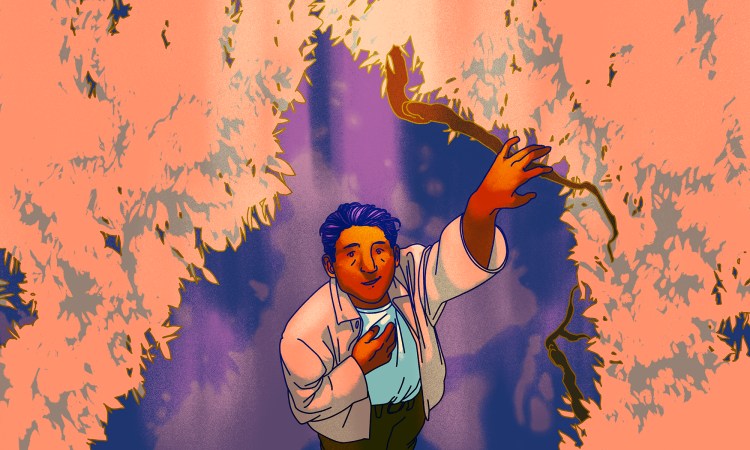










 lookingforthelight.blog