In a bowl, add the sugar, coconut oil, and vanilla extract. Using scissors, cut a vanilla bean into small pieces and add to the bowl. Use a handheld mixer to thoroughly combine the ingredients and break down the vanilla bean.
It’s ready when the mixture has a light, fluffy texture. Scoop the scrub into small glass jars, and decorate with string and another whole vanilla bean.
If you making it for yourself, use a large wide-mouth jar and put a small spoon inside to scoop out the amount needed.
You may want to make a double batch for when you run out and this scrub would make the perfect gift for so many occasions.
Aromatherapy can be a natural remedy for stress relief. The practice involves inhaling the scent of essential oils, which are extracted from plants, in order to promote health and well-being.
Your olfactory system directly affects the part of your brain that regulates emotion. That’s why smells can trigger memories and elicit feelings — both negative and positive. Aromatherapy can help in reducing stress and anxiety to engage a general state of calm.
A 2016 review even found that aromatherapy was effective at reducing pain, when combined with conventional treatments.
Essential oils are highly concentrated, which means you should exercise caution when trying them for the first time. They should also be used in moderation, especially if being applied topically, since they’re absorbed into the skin.
There are several ways to use essential oils for stress, from applying topically to inhaling the scent after diluting with water. A general rule of thumb is to follow the specific instructions for each essential oil you try. If you’re going to apply it topically, it’s best to test the oil on a small area of skin first to identify a potential reaction.
We chose these essential oils for their stress-reducing and anti-anxiety properties. We also took a look at any studies that supported the effectiveness of these properties.
Essential oils are generally considered safe to use when used properly.
However, as with any substance you introduce to your body, it’s best to take several precautions. Essential oils require dilution to prevent adverse reactions. As a general rule, you should keep concentration levels of essential oils below 5 percent.
Pay attention to dosage, purity, application method, and any possible drug interactions. Some oils are considered safe if inhaled, but they may be irritating if applied to the skin in concentrations as low as 3 to 5 percent.
When diffusing oils, use these safety precautions:
I’m glad you joined me on Wordless Wednesday and I hope to see you soon.
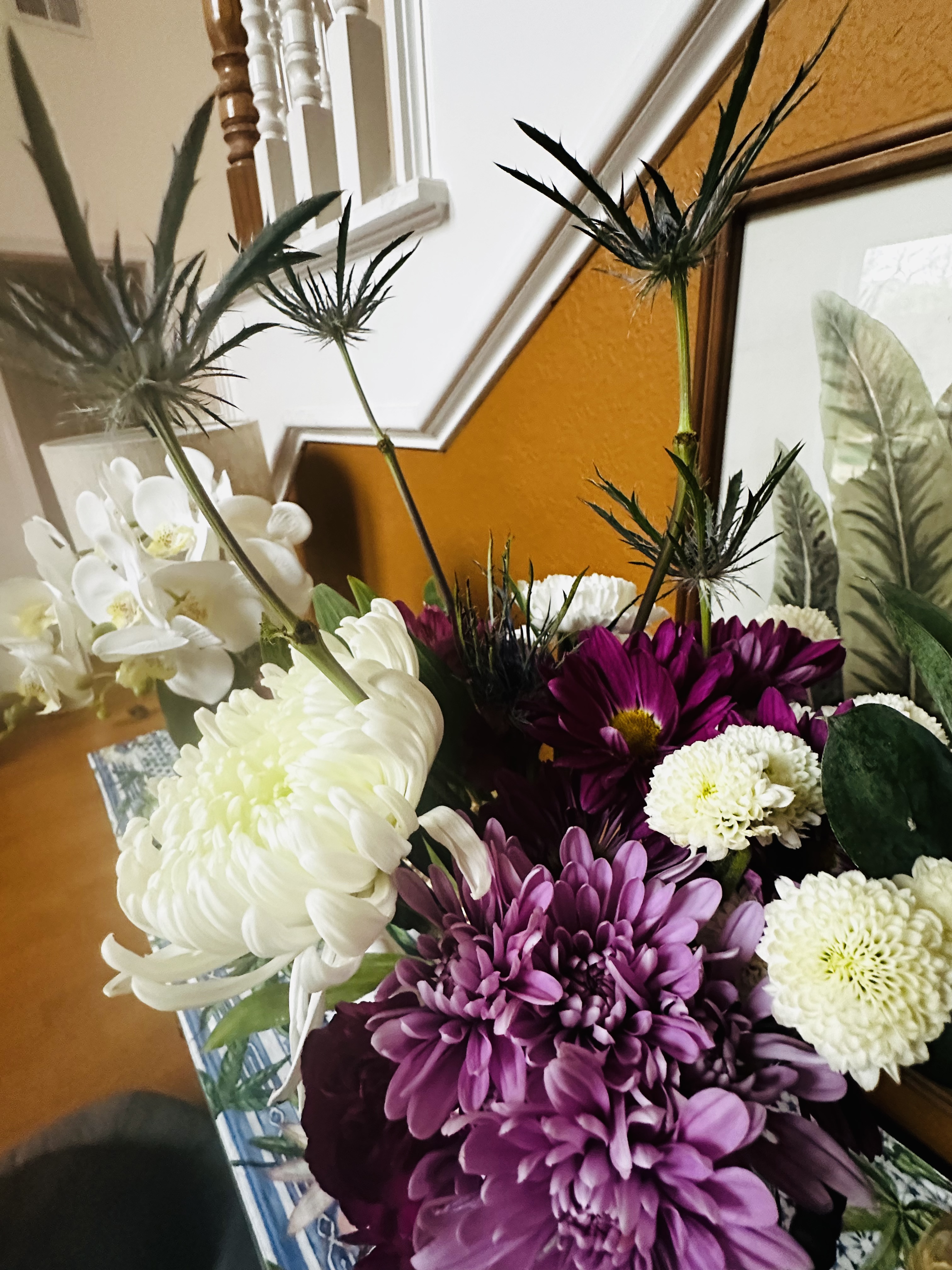
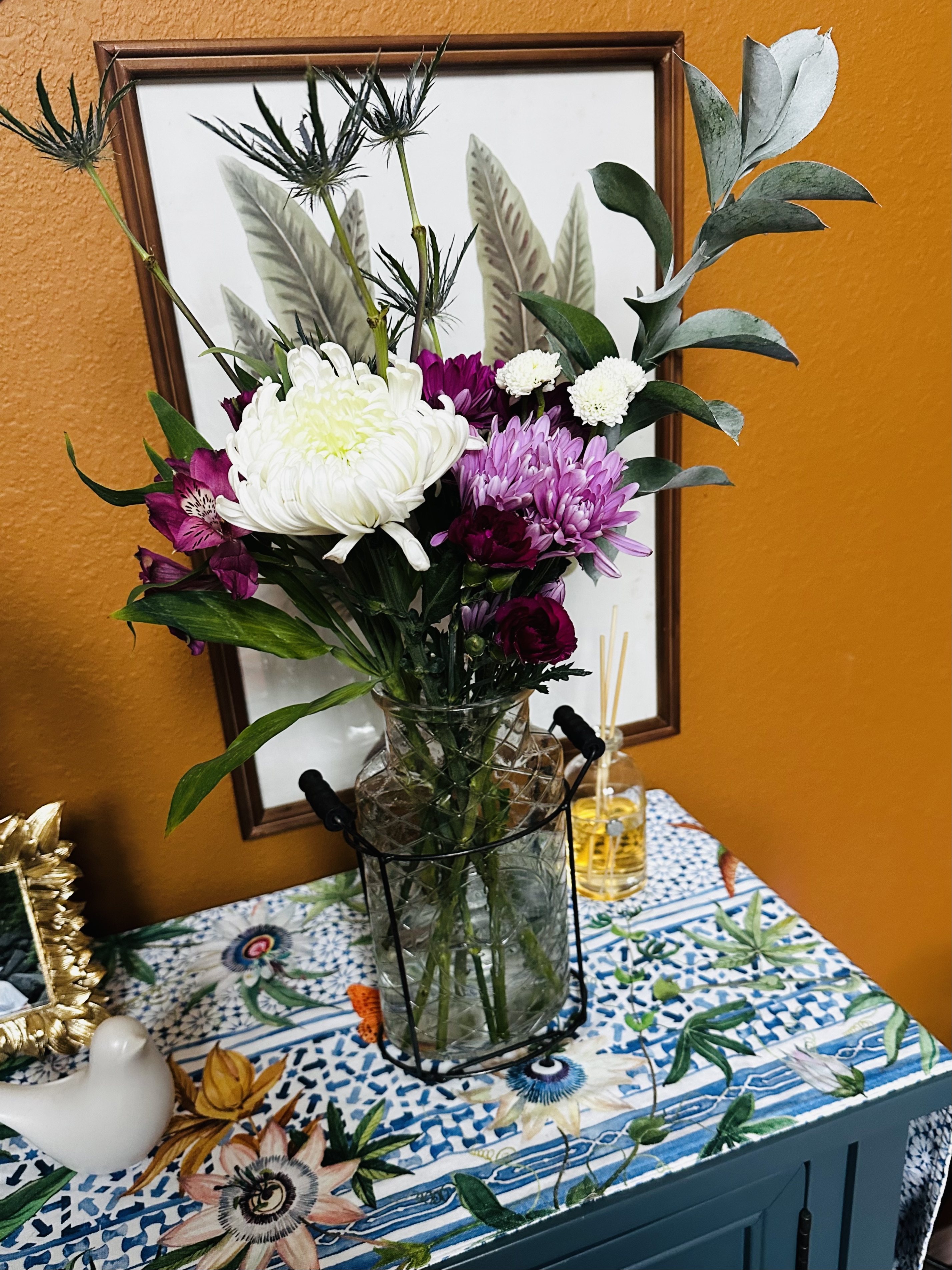
Many of you know my husband buys me fresh flowers weekly, but I decided to save the money and buy an artificial plant. The artwork is a great $17 find from Amazon. The table needed a refresh.
I want to thank Margie for sharing her story with me. She is a special woman who wants to help others who experience Postpartum Psychosis. Please share this post with someone who’s given birth recently.
Postpartum Depression accompanied by Psychosis
This is not a war to win. It cages a soul and will not allow reason of any kind. I prayed, I begged and I pleaded. You can have me, but you cannot have my daughter.
On this particular morning, I thought I’d heard a knock at my front door, or was that coming from the back door? I trusted nothing. I sat in the nursery until the pounding stopped, and the sound of what I thought was my name being called, ended. Rocking my angel. I sobbed so violently. I wanted the voices and the visions to go away. I wanted nothing more than to save my baby from myself.
Something made me pause. Was that the front lock-set being opened, the door flinging open, were those real voices?
They found me. Jo and Priscilla. They found me, and they did not let go of me. One took the baby, and the other took the phone directory.
And every chance I get, I tell them, “Thank you.”
I spent the following three and a half months in a locked Psych ward.
Each one of us has a story that shames us, it can trap us in a sort of hell, but sometimes to escape hell, we must find words to express our grievance. I used to think this would be one that I could not share for fear of losing someone whom I love(d). Now I fear that if I don’t share it, someone may lose their way, they may find themselves lost, alone, aberrant, and of course, crazy. I would rather lose every friend I have for the sacrifice of gaining that one that reached out to me in need. The one that discovered hope, when they felt there was none left. But, if you can find clarity if you can trust that there are people in this world that care first for others, and second for themselves, then you, and they will walk with you through hell. When we have true friends, they don’t leave us when the going gets rough. They stop at nothing to see that we realize how important we are, in their life. They don’t call you, Pyscho, MisFit, or Crazy. They call you, Friend. That having us is a joy, a blessing, a God-send. A true friend does not judge, does not keep a scorecard, and knows that we are them, should they ever need us, and not out of guilt or because a favor needs returning. No, a true friend stands by knowing that without our connection we are only half of ourselves.
When others walked out, you walked in. You asked for nothing in return. You never used my illness to shame me, to discount me, to write me off. You stood beside me and carried me through my darkest hours. Priscilla, Senn, and Jo McCormack thank you for seeing me when I could not see myself. But more than anything, thank you for saving my Megan from the psychotic lunatic that I had become. We have fought hard to win, and without each of you, I would have lost. It took three and a half months, out-of-state, in a mental institution, a number of medications, and therapy sessions, but I came home, loving and vowed that one day I would share this story.
Never give up hope. When you are at your weakest, grasp for straws. Dial for help. Swallow your pride. Do not fear that you will be labeled, CRAZY, for the rest of your life, even by those you thought would stand behind you through thick and thin. One of the best pieces of advice given to me was these words:
“They already think you’re crazy. Nothing you do, or say, will change their opinion. Absolutely nothing, therefore, be yourself. Only you know the journey and the victory.”
To Megan,
I promised you I would finish a tale that I had begun earlier in one of my posts. I think I even noted Day 16 as the day that I would write it. Day 16, arrived, but the time didn’t feel ‘just right’. Today it does. I believe you will recall the post, original, and if not, I’ll help you retrieve it.
I spent three full days in bed making Pom-Poms out of tissues. And not intentionally. “No, Martha, I did not use your official cut-and-twist guide.” I fashioned mine while I tried building a dam to nowhere, for my sinus drainage. I took my temperature so many times I killed the battery in the thermometer. I’ve never slept so many hours in my life! This comes from someone who suffers extreme bits of insomnia. Food? I found two cans of soup at the back of the cupboard and considering we don’t eat processed canned items I can’t help but wonder where they came from, much less, why I consumed them.
I’d had enough of this Chit, so by 10:00 a.m., I drug my lazy self out of bed and into the steaming shower, threw on some clothes, and asked Hannah if she’d like to go for a walk.
I thought I’d heard a lot of commotion over the roar of my blow dryer, but I wasn’t in the mood to go ‘seek-and-find,’ what all the mischief was. Once dressed, and out the door, I looked up the street to see the fire truck. What the heck?!#&@
Okay, right off the bat I have to confess. I’m not into seeking out horror. I can’t handle it. Put me in a car, drive me down the freeway, and have someone shout, “Look! There’s been a car accident!” What do I do? Slither down in my seat and turn my head in the opposite direction. If I’m the one who happens to be driving, you won’t find me rubbernecking.
Where was I going with this?
The Walk…(and not on the wild side.)
Finally, on our way, we journey toward the coffee shop. I realize I can’t enter, doggie and all, but then I remember the new app I have downloaded on my phone. Hannah and I mosey up to the patio and sit down. Attempting to order, I realize this app needs a few software upgrades, but I’m not in the mood to hack up the menu in broad daylight, much less try to find a work-around on the store’s wi-fi firewall. Dang, I can’t just walk away, the pup is looking at me with those sweet, begging eyes as if to ask, “How much longer, Mummy?”
Thinking comes quick when smitten by a man’s best friend. I lasso a chair with her harness and tie the pup securely to it, placing her in full view of any area I’ll find myself at once inside the store.
…..Admit it, you’re just a wee bit bored, but you just can’t seem to pull yourself away from all the action. Consider yourself a rubbernecker and let’s get moving…..
We are at a junction in the road. If we take the route we came, we’re out 1.5 miles, but if we journey the alternate route we are out 1.5 miles. Decisions, decisions, oh, and the trick math question at the end. (Find your calculators.)
Let’s go rogue. I’m caffeinated and jet-packed by toxic chemicals from eating rancid soup. What could go wrong?
The Traffic Light!…(into the jungle)
The sucker must have been rigged for red-light runners! Hannah and I were caught in the median of a crazed intersection. Everyone dreams of a cuppa joe or a fuel tank of $2.35 gasoline. I think the only thing that saved us was the California Highway Patrol t-shirt my son (in-law) gave me. I looked, OFFICIAL!
Okay, I was only a third grey, now color me white-headed. I match the dog now. Lesson learned: Rubberneckers. “You folks are everywhere!” One of you almost put tire tracks on my bright orange and pink sneakers. Tell the truth, “We’re you wanting my eye color or that close-up of fear earmarked across my face?”
…..This painstakingly will end at some point. Why don’t you take a snooze and check back later for the mischief of the last mile and a half?….
Safely in a green space, we walk among the oak trees listening to the sound of acorns dropping in our midst. (Note to self: Bring bike helmets in the future.) Meandering along and I look up to see we are at the high school. My heart skips a beat, and then another. “Wasn’t it just yesterday?” Oh, how time does fly. But I won’t let this moment go. I grab my phone and take a couple of photos. I zip them off to my two beautiful daughters. They’ll open their messages and go back in time themselves. I wonder at what moments their day will stand still? I knew mine. I know it well. I’ll cherish it forever.
There I sat awaiting the dismissal bell. The bell echoes. Oh, I miss that bell. I miss all the ringing of that far-off bell.
Saturday my youngest daughter moves away from home. Off to her grown-up home. Not a dorm room, no, those days are gone, too. There’s part of me that wants her to go, but then there is that part of me that knows how far away she may one day travel. And yet, I must give her the pieces of the apron strings, the wings to fly, to soar, to dream and dare.
Did anyone find me a pen and some paper? Did you find your calculators? Get ready, here she blows:
If I live 1.5 miles in one direction, yet I am able to travel in an opposing direction 1.5 miles and arrive at my origination, what direction am I traveling? We set off to run errands. Hannah’s errands, actually. I should just admit that some days I simply say to hell with the housework, laundry included, and I put my best friend in the car and we set about finding mischief.
We ran thru the CVS drive-through to pick up some of my meds and beg for the usual dog biscuit. FAIL! They were out of treats.
Starbucks redeemed her spirit though when they gave her a Puppy Whip. It’s a small cup container filled with whipped cream.
Across the railroad tracks and we head into Southlake. The outdoor shopping mall is always fun. There are fountains galore and hundreds of shade trees. Unfortunately, they have no outdoor drinking fountains. Hannah drank a bit of my iced tea as I cursed myself for not having brought along her collapsible water bowl and some water. Finally, I recalled the Whole Earth Provisions Store allows dogs in their store. I took my girl in and she made a group of newly found friends, all human and eager to dote upon her. Someone snagged a dog treat for her and everyone took turns petting her.
The girl is worn out. Now resting with a full tummy of treats and back inside to the cooled air conditioning.
___________________________
Post-Partartum Psychosis has to be taken seriously. I ask you to reach out for help and keep an eye on a loved one or signs of Depression or Psychosis.
She’s a survivor and an extremely strong woman. I’ve never met someone as strong as she is. It blows my mind what she’s been through and the pain she must feel.
I’m glad you stopped by and look forward to seeing you soon.
“Fall in love with your life. Wake up early, buy a cup of coffee, go for walks, eat good food, wear what makes you feel confident, listen to your favorite music. purposely create these small moments that make you fall in love with your life.”
Wish Jack Frost would stop nipping at your nose already? Grab a hot cup of cocoa, add some knee-slappers to your Netflix queue, and get ready to enjoy the season without the winter blues.
Dark mornings, darker evenings, and chilly gray days in between mean winter is here — and with the coldest season come the winter blues. There’s no clinical diagnosis for the “winter blues,” but experts at the National Institutes of Health say the so-called winter blues are fairly common and are usually marked by feeling more down than usual, sad, less energized, or less interested in activities one usually enjoys.
Because the winter blues is not a discrete medical condition, an accurate measure of how many people it affects is difficult to know for sure. Estimates suggest anywhere from 10 to 20 percent of American adults experience such seasonal mood changes at some level. (2)
A small percentage of people who experience a change of mood with the season do have seasonal depression, a more severe condition that is a medical disorder, also known as seasonal affective disorder (SAD). SAD affects between 1 and 9 percent of Americans (prevalence rates differ, depending on location and how severe the change of season actually is). (3)
According to the National Institute of Mental Health, SAD is a recurrent form of major depression, characterized by feelings of hopelessness and despair, fatigue, problems sleeping and concentrating, and changes in appetite. (4) Symptoms of winter blues are milder than those of SAD, but that doesn’t mean you should brush off your blah feeling.
“Feeling blue for a period of time is not, per se, normal,” says Jacqueline Gollan, PhD, professor in psychiatry and behavioral sciences at the Northwestern University Feinberg School of Medicine in Chicago. “When people feel blue, it’s a signal that something in their life needs attention.”
And there are things you can do to lift your mood. This winter, try these bad-mood zappers to beat the winter blues and stay well all winter long:
1. Lace Up Your Running Shoes and Get Moving
Getting at least 20 minutes of vigorous activity four times a week has been shown to reduce depressive mood, says Dr. Gollan. “And there are a variety of ways to get exercise,” she points out. Get a gym membership if that’s what it takes to keep you warm and working out, but you could also try riding your bike to work or running up and down the stairs.
2. Set Your Alarm Clock and Stick to a Sleep Routine
Tempting as it might be to sleep in on dark mornings, it’s best to stick with a regular sleep schedule — which means waking up at the same times on weekdays and weekends. Establish a routine wake-up time and a soothing bedtime ritual, and if you aren’t already in this habit, allow three or four weeks to get used to it, advises Gollan. It’s important to get at least seven hours of sleep every night for your overall health, according to guidelines from the National Sleep Foundation. (5) Also, make sure that your sleeping area is comfortable, slightly cool, and free of noisy distractions.
3. Queue Up a Stream of Laugh-Out-Loud Films
Experts believe that laughter actually stimulates processes in your brain that counter depressive symptoms. And since chuckling is downright contagious, you can invite a few pals over to share the popcorn.
4. Warm Yourself Up With a Mug of Real Hot Cocoa
It’s a good idea to make a few tweaks to your diet during the winter, says Susan Kleiner, PhD, RD, author of The Good Mood Diet. First, get cozy with some homemade hot chocolate, using non-dutched, natural cocoa powder (which is high in heart-healthy and mood-boosting flavonoids). “Plus, this drink gives a wonderful sense of something delicious, a treat, and a ritual to look forward to,” she says. She recommends drinking cocoa in the evening to prepare you for sleep. Make it with fortified milk, which provides a combination of carbohydrate, protein, and vitamin D— the combination helps increase serotonin levels, which help us relax, Dr. Kleiner says.
Kleiner also recommends eating fish — especially fatty fish rich in omega-3 fatty acids, such as salmon, lake trout, or sardines — three to five times a week, as this can help boost mood; plenty of whole grains, fruits, and vegetables; and at least one egg with the yolk (a good source of choline, which helps regulate nerve function and metabolism among other functions, and therefore is important to keep energy levels stable) each day, preferably for breakfast.
5. Host a Festive Party — But Don’t Stress
’Tis the season to deck the halls and host a small seasonal party. And if it’s already after the holidays, any excuse to host a gathering of friends will do — try a dinner party, cheese tasting, or board game night. Planning an event will give you something to look forward to — and it could also put you on other people’s invite lists (more fun for you!).
On a cautionary note, Gollan says that “chronic interpersonal hassles do increase perceived stress.” So if there’s a relationship in your social circle or family that’s an ongoing source of stress, give yourself a present and work it out, ideally before the party.
Seasonal depression is widespread and can make navigating colder months a challenge. Here are some ways to take care of yourself this season.
3. Queue Up a Stream of Laugh-Out-Loud Films
Experts believe that laughter actually stimulates processes in your brain that counter depressive symptoms. And since chuckling is downright contagious, you can invite a few pals over to share the popcorn.
4. Warm Yourself Up With a Mug of Real Hot Cocoa
It’s a good idea to make a few tweaks to your diet during the winter, says Susan Kleiner, PhD, RD, author of The Good Mood Diet. First, get cozy with some homemade hot chocolate, using non-dutched, natural cocoa powder (which is high in heart-healthy and mood-boosting flavonoids). “Plus, this drink gives a wonderful sense of something delicious, a treat, and a ritual to look forward to,” she says. She recommends drinking cocoa in the evening to prepare you for sleep. Make it with fortified milk, which provides a combination of carbohydrate, protein, and vitamin D— the combination helps increase serotonin levels, which help us relax, Dr. Kleiner says.
Kleiner also recommends eating fish — especially fatty fish rich in omega-3 fatty acids, such as salmon, lake trout, or sardines — three to five times a week, as this can help boost mood; plenty of whole grains, fruits, and vegetables; and at least one egg with the yolk (a good source of choline, which helps regulate nerve function and metabolism among other functions, and therefore is important to keep energy levels stable) each day, preferably for breakfast.
5. Host a Festive Party — But Don’t Stress
’Tis the season to deck the halls and host a small seasonal party. And if it’s already after the holidays, any excuse to host a gathering of friends will do — try a dinner party, cheese tasting, or board game night. Planning an event will give you something to look forward to — and it could also put you on other people’s invite lists (more fun for you!).
On a cautionary note, Gollan says that “chronic interpersonal hassles do increase perceived stress.” So if there’s a relationship in your social circle or family that’s an ongoing source of stress, give yourself a present and work it out, ideally before the party.
6. Give Yourself a Manageable Task to Accomplish
It’s important to build activities into your day — even chores, like cleaning the floor — that will give you a sense of competence and accomplishment. According to one psychological theory, we all have an innate need to feel competent in order to also grow emotionally, have a sense of integrity, and maintain well-being. (6)
Balance the hard work with little things that bring you pleasure, like treating yourself with fresh flowers or, yes, that homemade cup of hot cocoa. Doing fun and meaningful things is also the basis for behavioral activation, which Gollan says is an important strategy. It’s also one of the best-tested and most effective ways to alleviate depression, according to research. (7)
7. But Don’t Let Your To-Do List Get Too Out of Hand
Don’t overwhelm yourself with lists of projects and chores just because you can’t do other activities you might spend time doing in other seasons. If you love to garden in spring and summer as a stress-relieving activity, that doesn’t mean spending those same hours in the winter cleaning your closets is going to do you the same amount of good — nor be as enjoyable.
Complete the business you need to take care of, and do it on time.
Decide to stop procrastinating on the unpleasant stuff that could just snowball into more stress later, like unpaid bills, so you’ll have more time to do things you do enjoy. Get the tools you need to get organized.
8. Book a Staycation — Even if It’s a Mini One
Most people get a lift when they have something to look forward to. If your coworker’s upcoming Bermuda vacation has you dreaming of traveling, Gollan says you can save money and still get a boost by planning mini-getaways closer to home. You may not have the budget or time off of work to take an exotic trip, but it’s much easier to make time for and plan a local staycation treat, such as an afternoon ice skating with friends, trying out a new restaurant in a nearby town, or going to a concert.
9. Consider Light Therapy if You Can’t Get the Sunshine You Need
It’s dark when you leave for work and dark when you get home, so how are you going to get your daily dose of natural sunshine? And if you don’t think less sunlight during winter months can affect you, your mood, or your energy levels, think again. A decrease in sunlight can disrupt your body’s circadian rhythms, and cause a drop in serotonin levels and vitamin D levels, which can lead to depressive symptoms.
If you have the flexibility and the weather allows for it, schedule in an early-morning walk or lunchtime stroll. If you don’t, consider this option, which is especially beneficial for people with full-fledged seasonal depression: a full-spectrum light box. Light therapy can help regulate your body’s circadian rhythms and its natural release of the hormones that help you feel energized and the ones that help you sleep.
Gollan cautions that these are actually pretty powerful tools (and pricey!), so you really should work with a doctor or mental health professional who can advise you on when during the day to use it, and for how long.
10. Don’t Hesitate to See Your Healthcare Professional
“Blues can be part of some other system,” says Gollan. Chronic pain, headaches, sleep disorders, and even heart disease are all linked to depression symptoms, so check in with your healthcare provider to make sure your winter blues aren’t something more serious.
I bought a Light Therapy Box yesterday because the Winter Blues have hit me.
I love this song and his voice! Wow, Robert Palmer has stood the test of time.
It’s the weekend!!!!!!
I’m glad you joined me for another edition of Weekend Music Share this week.
Have a great weekend!
Melinda
Welcome back to Weekend Music Share, the place where everyone can share their favorite music.
Feel free to use the Weekend Music Share banner in your post, and use the hashtag #WeekendMusicShare on social media so other participants can find your post.
A consistently healthy diet may ease symptoms of depression. Here are experts’ in-season picks for your plate.
Fall and winter can be brutal for people with depression. It gets dark early, resulting in far less exposure to mood-brightening sunlight, plus colder temperatures can make you just want to stay in bed.
In addition, it’s a time of year filled with the sugar-laden, high-fat holiday foods that are often least likely to benefit our mental health. “It’s a challenging time for eaters,” says Drew Ramsey, MD, a nutritional psychiatrist based in Jackson, Wyoming. “There’s lots of delicious stuff that oftentimes isn’t so great for our mood.”
Atlanta-based Jerlyn Jones, RDN, agrees, pointing out that the relationship between an unhealthy diet and depression is often a vicious cycle. “If you have a poor diet, then you’re going to feel more depressed. And when you feel more depressed, you’re probably going to eat more of those types of foods,” says Jones.
The good news: Diet is a modifiable risk factor for depression. In other words, simply loading up on whole foods like fruits and vegetables, fish, nuts, legumes, and the like can improve symptoms of this mood disorder in some people, according to research.
The problem is that when people feel stressed and depressed, they tend to crave comforting foods that are higher in sugar, salt, and fat, Jones says. Unfortunately, the instant relief you experience from those foods — especially the sugar-laden ones — dissolves quickly, which then can cause your mood to crash.
Not to mention that filling up on so-called “junk food” can make it hard to receive enough of the essential nutrients that the brain needs to function at its best, including B vitamins, folate, and magnesium.
“These vitamins and minerals have been inversely associated with depressive disorders,” Jones says. “Foods that are high in different nutrients can make you feel so much better.”
Wondering which healthy cold-weather foods can improve your mood? Experts advise increasing your intake of these five.
Brussels Sprouts Are High in Folate
These cruciferous vegetables are rich in folate — a B vitamin that helps with mood regulation in the brain, Jones says. Studies have shown that B vitamins like folic acid — a form of folate — may benefit people with depression, according to a review article.
“This nutrient is linked to brain activity and increasing our moods,” says Jones. “Eating foods on a daily basis that are high in folate will help significantly improve the way you feel.”
Try adding raw, shredded Brussels sprouts to salads, or cut them in half, toss them with olive oil and spices, and roast them until brown.
Pomegranates Are Rich in Antioxidants
Another great fall food to eat regularly is pomegranate, a fruit high in antioxidants, Jones says. And it’s especially easy to reap this benefit because drinking pomegranate juice can significantly increase the number of antioxidants you take in, Jones notes.
In addition to their antioxidant content, pomegranates contain polyphenols, which have anti-inflammatory and antidepressant-like properties, according to a review article. “Inflammation is one of the root causes of depression, anxiety, and other mental health problems,” Dr. Ramsey says.
Pumpkins Boast a High Magnesium Content
These perennially popular fall fruits contain magnesium, which was linked to a lower risk of depressive symptoms and disorders in one systematic review.
Fitting this squash into your diet is easier than you may think — pumpkins are incredibly versatile. Try adding pureed pumpkin to soups, smoothies, and pasta sauces. Or simply snack on pumpkin seeds or toss them in a fall salad. “Pumpkin seeds are really one of our top [food] recommendations,” Ramsey says.
Sweet Potatoes Are Chock-Full of Vitamins
Usually harvested in September and October, sweet potatoes pack several essential nutrients — in particular, vitamin C. A meta-analysis concluded that higher levels of vitamin C are associated with reduced depressive symptoms, while lower levels of this vitamin are linked to increased symptoms, though more research is needed to confirm this association.
Winter Squash Is High in Vitamin B6
Winter squash comes in many forms — acorn squash, butternut squash, and spaghetti squash, to name a few. And each of them contain high amounts of vitamin B6, a nutrient shown to positively affect mood. One study found that a lower intake of vitamin B6 was associated with an increased risk of depression among more than 3,300 women.
More Tips for Healthy Seasonal Fare
Colder weather is a good time to consume more soup, especially clam chowders and seafood stews, says Ramsey. Dishes that contain mussels, clams, and oysters are dense with nutrients like magnesium, as well as omega-3 fatty acids, another nutrient that research suggests benefits people with depression.
If you’re in the mood for something sweet, Ramsey advises swapping sugary holiday desserts for dark chocolate, which is packed with antioxidants and fiber.
“There’s now some interesting data about how the nutrients in dark chocolate are stimulating but also good for the brain, in the sense that people who eat dark chocolatetend to have less depression,” Ramsey says.
Data from a survey of more than 13,000 U.S. adults showed that chocolate, especially dark chocolate, may be tied to a reduced risk of depressive symptoms.
Along with avoiding excess sugar, Ramsey advises being mindful of how much alcohol you consume around the holiday season.
“There’s a lot of drinking during the holidays, and alcohol can be awful if you have depression,” Ramsey says. “It tends to make people feel better in the short term, and then worse the next day.”
If you need help planning good-mood-friendly meals, the U.S. Department of Agriculture’s online tool MyPlate offers quizzes and hundreds of recipes to get you started.
The Takeaway
Although diet isn’t a cure for depression, eating nutritious foods can help people with the condition feel better. This fall and winter, consider adding seasonal fruits and vegetables rich in mood-enhancing nutrients like folate, antioxidants, and magnesium to your plate (think Brussels sprouts, pomegranates, and sweet potatoes, for example).
“There’s a lot of drinking during the holidays, and alcohol can be awful if you have depression,” Ramsey says. “It tends to make people feel better in the short term, and then worse the next day.”
If you need help planning good-mood-friendly meals, the U.S. Department of Agriculture’s online tool MyPlate offers quizzes and hundreds of recipes to get you started.
It can be overwhelming when a spouse receives an Alzheimer’s diagnosis, but there are many networks in place to make sure that both of you have the support you need.
Alzheimer’s disease is a progressive form of dementia ― an umbrella term for a handful of conditions that affect someone’s thinking, memory, behavior, personality, and more. Alzheimer’s is the most common type of dementia, and it affects more than 6 million people in the United States alone, according to the Alzheimer’s Association.
An Alzheimer’s diagnosis can signify the beginning of a new chapter of life for the person with the diagnosis and those close to them. And for spouses of people living with Alzheimer’s disease, their role can often shift to caretaker, which can bring its own set of challenges.
This article discusses tips for taking care of your spouse after their Alzheimer’s diagnosis, including how to take care of yourself and when it might be time to reach out for professional support.
Alzheimer’s disease can eventually make it difficult for a person to perform certain tasks on their own, so it can be helpful to build a supportive medical team early on. Here are some of the medical professionals that commonly make up a medical care team for someone with Alzheimer’s:
A primary care physician can help with general medical needs, like checkups, blood work, and specialist referrals.
A dietitian or nutritionist can help someone with Alzheimer’s meet their nutritional needs at every stage of the disease.
An occupational therapist can help teach skills that can make day-to-day life with Alzheimer’s easier.
A psychiatrist or psychologist can help someone navigate the emotional changes and overall impact that Alzheimer’s can cause.
A social worker can help provide information on assistance and access to community-based resources.
Whether your spouse has only one or a few of these professionals on their care team, knowing that the care team is there to help is important.
As a spouse, it can be especially helpful to maintain an open line of communication with your loved one’s medical team. One of the ways that you can do this is by scheduling or sitting in on phone calls or meetings with the care team members.
Meetings and appointments are also a great time to bring up any concerns you might have ― or any goals that you and your spouse have discussed for care. And if you have any questions about anything related to your loved one’s medical care, be sure to mention those, too.
As Alzheimer’s disease progresses through the stages and the condition’s symptoms become more severe, your loved one may require more assistance with tasks of daily living. For many people, most of this care takes place at home.
Here are two helpful tips that can help as you care for your loved one.
Accommodate Alzheimer’s and dementia needs
Dementia can affect your spouse’s physical movements and their ability to think or use memory. If your home and lifestyle accommodate these needs, it can make day-to-day activities less stressful for both of you.
Those with dementia may benefit from:
labels and reminders for important items, like medications, or household hazards, like cleaners
physical accessibility aids like ramps or easy-to-open door handles
clothes and personal care items designed for low mobility
living in a neighborhood without heavy traffic and with high walkability
a regular social schedule with time to see friends and family
Ask for support
Alzheimer’s disease can affect the lives of everyone involved, which is why support can be such an important part of care. And when you’re caring for a spouse with Alzheimer’s at home, support can come in many forms: financial, social, medical, and more.
Sometimes, this support looks like reaching out to a friend or family member for a little extra help with daily tasks like shopping and cooking. Or it might look like touching base with your spouse’s caseworker to sign up for financial assistance programs.
Either way, one of the great ways to care for yourself and your spouse is to reach out and ask for support in whatever area you might need.
Hire professional help
Someone with moderate to severe Alzheimer’s disease may find everyday tasks like dressing themselves, going to the bathroom, or even eating by themselves to be difficult. At this stage in the disease, caregiving can be ongoing.
As a caregiver to a spouse with Alzheimer’s, it can be difficult to keep up with their needs and your own ― which is where professional support comes in. Some of the most common options for caregiving support include home care aides, home healthcare aides, and respite services, to name a few.
Whether you’re looking for support for just a few hours or a longer time, it may help to take advantage of the help that’s around you.
The right time to consider professional help
When you’re the caretaker or someone close to you, it can be difficult to imagine entrusting that care to anyone else ― especially if it takes place outside the comfort of your own home.
However, sometimes your loved one might need more care than you can feasibly offer them, especially in the late stages of their disease. And toward the end of their life, some professionals can help navigate you both through the final stages of their journey.
If you feel that it might be time to explore professional caregiver or end-of-life support for your loved one, consider reaching out to their doctor to discuss the options available to you.
Spouses and partners of people living with Alzheimer’s disease tend to experience increased stress, anxiety, and depression. In fact, one 2020 study found that people whose spouses had Alzheimer’s disease and related dementias had a 30% increase in depressive symptoms than those without spouses with these conditions.
Here are a few tips you can follow to take care of your health while caring for a spouse with Alzheimer’s:
Take care of yourself: It can be hard to support your emotional health if you don’t support your physical health. Getting enough sleep, eating a balanced diet, and frequently moving your body are just a few ways you can take care of your body and mind.
Practice reducing your stress: Full-time caretaking can be stressful, so it’s important to set aside some time for activities that can reduce your stress. Not only can this help reduce your stress and improve your health, but it’ll also allow you to take better care of your loved one.
Take time to enjoy hobbies: As a caregiver, you may notice that your own hobbies and activities can fall by the wayside as you focus on your spouse. But one way you can nurture yourself during this time is by reconnecting with the hobbies and activities you enjoy ― alone or with friends.
Connect with your support: Speaking of connecting with others, no one should have to navigate life after a diagnosis of Alzheimer’s disease alone. Whether you connect with friends, support groups, or mental health professionals, try to lean on your support system when you need it.
Take vacations: This could be a trip with friends or a few days solo at a bed-and-breakfast ― but everyone deserves a little time to focus on themselves and relax.
It’s common for Alzheimer’s caregivers to feel many emotions about their loved one’s diagnosis ― sadness, grief, frustration, and even anger. Sometimes, you can work through these feelings alone, but other times, it can be difficult to work through them without the right support.
If you feel like you could use support navigating through this difficult time, whether physical, financial, emotional, or otherwise, consider reaching out to the professionals around you who can help.
My blogging friend Mary Doyle from Midwest Mary learned firsthand about the journey of caring for a loved one with Alzheimer’s when her husband was diagnosed. She has written three books about her experience with Alzheimer’s. Mary is generous and uplifting. Please stop by her blog and say hello.
Cindy is a great blogging friend and an inspiration to me. When she said her look book was poetry, I paused for a minute. I’m not one to get into poetry, but this book is different, it’s conversational and the topics speak to me. I love how it flows.
Celebrating Poetry is a Companion Guide to Re-Create and Celebrate.
A Little About Cindy
Cindy is a San Francisco native and currently lives nestled in the trees in a small community with her husband and four fur babies. Her debut book Recreate & Celebrate: 7 Steps To Live The Life Of Your Dreams has 40 5-star reviews on Amazon and can be found at local bookstores. She was voted Author of The Year by Spillworks Press, NY in 2024 and was voted Author of the Month by Spillworks Press, NY in April 2023 and Publication of the Month by Spillworks Press in October 2022.
“Celebrating Poetry by Cindy Georgakas is a joy to read and a perfect companion to Cindy’s book, Re-Create & Celebrate.
She shares a variety of poems relating to the ups and downs of everyday life. Her verses encourage us to discover and celebrate our own strengths and to face life’s challenges.
I highly recommend this wonderful book to reconnect with yourself and enrich your soul.”
–
“Cindy’s poetry is a warm embrace on a cold night. Each verse, a window into her soul, inviting the reader to peer in and understand. Her words, raw and honest, resonate deeply, making the reader feel both seen and understood. It’s as if she’s sitting across from you sharing her life story, one heartfelt poem at a time. A truly beautiful and moving collection that I loved.”
–
“First thing in the morning and last thing at night. I keep this lovely collection of poems next to my bed, and read one before falling asleep to feed my muse and my spirit. When I wake, I re-read the same poem again, and generally pick up something new that I missed in the first reading. No matter when or how you decide to read this beautiful collection, just know that you don’t want to miss a single one! 💞”
My Thoughts
I love how the book is laid out, there is a section where Cindy writes her thoughts followed by a collection of relative poetry. It’s more conversational than a poetry book. One of the most important things I can say is Cindy is inspirational, and positive and leaves you with questions to ponder.
Some of the topics Cindy covers in Celebrating Poetry are:
Be who you are
Look up not down
You reap what you sew
Bite your tongue
and so many more great topics that can help us shape your life for the positive.
I like that there are pages to write down your reflections which is great to look back at and remind you of which areas you would like to read again, and you will want to read again.
A few poems I especially related to:
Bite Your Tounge
Learn or Blame
Spit It Out
This book will become your trusted friend, one you can go back and lay your head on. There’s truth in Cindy’s words. I agree with one reviewer, it’s a must-read.
Journaling about our feelings releases emotions, which allows for perspective and helps us to better manage our bipolar mood episodes.
Whenever James M. feels stressed, he logs onto his computer and writes it all away.
He says that journaling has been a major source of strength and hope in managing his bipolar 1 disorder. His online journal is now around 200 pages long — and counting.
“I first started writing when I was not feeling well, and I had thoughts circling around in my head that wouldn’t go away until I wrote them down,” recalls the 30-year-old internet technology professional in Concord, New Hampshire.
Journaling can play multiple roles. It can:
Help people with bipolar understand their emotions more clearly
Sometimes predict — and prevent — episodes of mania or depression
There are no hard-and-fast rules about when to journal, or in what form, or what to do with the entries once they are complete. Journal entries can be shared, discarded, or revisited at a later date.
James, who was diagnosed in 2012, doesn’t necessarily journal every day, and he almost never shares his pages with anyone, except for his therapist, on occasion. For him, it’s a personal and cathartic process — and, on occasion, inspiring.
“I will look back and be amazed at how much pain I was in, how much has changed, and how far I have come,” he says.
The first step in journaling: Silence your internal editor. Your entries don’t need to be polished or even grammatical. In fact, journaling doesn’t always mean putting pen to paper (or fingers to keyboard). The process can use visual formats instead, such as drawings, collages, and vision boards.
Using Art and Words for Emotional Wellness
Journaling as part of art therapy can be helpful for individuals who don’t find it easy to express themselves in words, notes Adele C. Viguera, MD, assistant professor of psychiatry at Harvard Medical School in Boston, Massachusetts.
“A vision board or collage can be a good option,” she says. “Journaling can be as simple as drawing smiley faces or unhappy faces on the calendar to indicate mood.”
Both vision boards and written journals also can be used for goal-setting, Dr. Viguera points out.
“Writing down or illustrating your short-term goals for the day, or the things you want to accomplish long-term, can be very helpful,” she explains.
Sorting Out Your Feelings and Finding Emotional Balance Through Journaling
In short, the choice of how, and how often, to express yourself depends on the person.
Journaling is a versatile process that can meet you where you are, points out Ben Weinstein, MD, chair of psychiatry at Houston Methodist in Texas.
“It’s a way to offload thoughts and sort out feelings,” he says. “There are times when the very act of writing things down can resolve some of these feelings.”
James finds that letting his thoughts flow out his fingers gives him some much-needed distance.
“It gets whatever poison is running through my head out, and I feel better,” he says. “Maybe not 100 percent better, but I can start thinking of solutions.”
How Journaling Offers Judgement-Free Support
Jessica C., in her forties, has been living with bipolar 1 for nearly half her life. The Greensboro, North Carolina, resident values journaling as an emotional outlet.
“Journaling helps me because it gives me a safe space to release thoughts and emotions, with absolutely no judgment from anyone,” she says.
She has no set routine, essentially using journaling as a safety valve.
“I journal when I feel it’s necessary — most times, a few days a week, but sometimes, it’s several times a day,” she says. “I’ll just continue my previous paragraph for that day, but start out with putting the time of day that I wrote it.”
This a great article for all people, not just for those with Bipolar Disorder. Writing my thoughts down helps me organize them and I can go back later to see what I wrote.
Regardless of your version of true happiness, living a happier, more satisfied life is within reach. A few tweaks to your regular habits like getting more sleep and exercise can help you get there.
Habits matter. If you’ve ever tried breaking a bad habit, you know all too well how engrained they are.
Well, good habits are deeply engrained, too. Why not work on making positive habits part of your routine?
Below, you’ll find suggestions for daily, monthly, and yearly habits to help kickstart your quest. Just remember that everyone’s version of happiness is a little different, and so is their path to achieving it.
If some of these habits create added stress or just don’t fit your lifestyle, ditch them. With a little time and practice, you’ll figure out what does and doesn’t work for you.
The following daily habits may help you achieve more happiness in your life.
1. Smile
You tend to smile when you’re happy. But it’s actually a two-way street.
We smile because we’re happy, and smiling causes the brain to release dopamine, which makes us happier.
While not completely foolproof, researchers have found that the link between smiling and happiness could be attributed to the “facial feedback hypothesis,” where facial expressions may have a modest influence on emotions.
That does not mean you have to go around with a fake smile plastered on your face all the time. But the next time you find yourself feeling low, crack a smile and see what happens. Or try starting each morning by smiling at yourself in the mirror.
2. Exercise
Exercise isn’t just for your body. Regular exercise can help reduce stress, feelings of anxiety, and symptoms of depression while boosting self-esteem and happiness.
Even a small amount of physical activity can make a difference. You don’t have to train for a triathlon or scale a cliff — unless that’s what makes you happy, of course.
The trick is to not overexert yourself. If you suddenly throw yourself into a strenuous routine, you may just end up frustrated (and sore).
Consider these exercise starters:
Take a walk around the block every night after dinner.
Sign up for a beginner’s class in yoga or tai chi.
Remind yourself of any fun activities you once enjoyed but that have fallen by the wayside. Or you could consider starting activities you always wanted to try, such as golf, bowling, or dancing.
3. Get plenty of sleep
Most adults need at least 7 hoursTrusted Source of sleep every night. If you find yourself fighting the urge to nap during the day or just generally feel like you’re in a fog, your body may be telling you it needs more rest.
Here are a few tips to help you build a better sleep routine:
Write down how many hours of sleep you get each night and how rested you feel. After a week, you should have a better idea how you’re doing. You can also try using an app to track your sleep.
Go to bed and wake up at the same time every day, including on weekends.
Reserve the hour before bed as quiet time. Take a bath, read, or do something relaxing. Avoid heavy eating and drinking.
Keep your bedroom dark, cool, and quiet.
Invest in some good bedding.
If you have to take a nap, try limiting it to 20 minutes.
If you consistently have problems sleeping, consider talking with a doctor. You may have a sleep disorder that requires treatment.
Carbohydrates release serotonin, a “feel good” hormone. Just keep simple carbs — foods high in sugar and starch — to a minimum because that energy surge is short and you’ll crash. Choosing complex carbs, such as vegetables, beans, and whole grains, can help you avoid a crash while still providing serotonin.
Lean meat, poultry, legumes, and dairy are high in protein. Protein-rich foods release dopamine and norepinephrine, which boost energy and concentration.
Omega-3 fatty acids, such as those found in fatty fish, have been found to have anti-inflammatory effectsTrusted Source that extend to your overall brain health. If you don’t eat fish, you might consider talking with a doctor about possible supplementation.
Highly processed or deep-fried foods tend to leave you feeling down and so will skipping meals.
If you want to eat with your mood in mind, consider starting with making one food choice for your mood each day.
For example, swap a big, sweet breakfast pastry for some Greek yogurt with fruit. You’ll still satisfy your sweet tooth, and the protein will help you avoid a midmorning energy crash. Consider adding in a new food swap each week.
5. Practice gratitude
Simply being grateful can give your mood a big boost, among other benefits. For example, a two-part study found that practicing gratitude can have a significant impact on feelings of hope and happiness.
You might try starting each day by acknowledging one thing you’re grateful for. You can do this while you’re brushing your teeth or just waiting for that snoozed alarm to go off.
As you go about your day, consider keeping an eye out for pleasant things in your life. They can be big things, such as knowing that someone loves you or getting a well-deserved promotion.
But they can also be little things, such as a co-worker who offered you a cup of coffee or the neighbor who waved to you. Maybe it could even just be the warmth of the sun on your skin.
With a little practice, you may even become more aware of all the positive things around you.
6. Give a compliment
Research shows that performing acts of kindness may also help promote your overall well-being.
Giving a sincere compliment is a quick, easy way to brighten someone’s day while giving your own happiness a boost.
Catch the person’s eye and say it with a smile so they know you mean it. You might be surprised by how good it makes you feel.
If you want to offer someone a compliment on their physical appearance, make sure to do it in a respectful way.
7. Breathe deeply
You’re tense, your shoulders are tight, and you feel as though you just might “lose it.” We all know that feeling.
Instinct may tell you to take a long, deep breath to calm yourself down.
Turns out, that instinct is a good one. ResearchTrusted Source supports the fact that slow breathing and deep breathing exercises can help reduce stress.
The next time you feel stressed or are at your wit’s end, work through these steps:
Close your eyes. Try to envision a happy memory or beautiful place.
Take a slow, deep breath in through your nose.
Slowly breathe out through your mouth or nose.
Repeat this process several times until you start to feel yourself calm down.
If you’re having a hard time taking slow, deliberate breaths, try counting to 5 in your head with each inhale and exhale.
8. Acknowledge the unhappy moments
A positive attitude is generally a good thing, but bad things happen to everyone. It’s just part of life.
If you get some bad news, make a mistake, or just feel like you’re in a funk, don’t try to pretend you’re happy.
Acknowledge the feeling of unhappiness, letting yourself experience it for a moment. Then shift your focus toward what made you feel this way and what it might take to recover.
Would a deep breathing exercise help? A long walk outside? Talking it over with someone?
Let the moment pass and take care of yourself. Remember, no one’s happy all the time.
9. Keep a journal
A journal is a good way to organize your thoughts, analyze your feelings, and make plans. And you don’t have to be a literary genius or write volumes to benefit.
It can be as simple as jotting down a few thoughts before you go to bed. If putting certain things in writing makes you nervous, you can always shred it when you’ve finished. It’s the process that counts.
For those stressors you can’t avoid, remind yourself that everyone has stress — there’s no reason to think it’s all on you. And chances are, you’re stronger than you might think you are.
Instead of letting yourself get overwhelmed, try to address the stressor head-on. This might mean initiating an uncomfortable conversation or putting in some extra work, but the sooner you confront it, the sooner the pit in your stomach may start to shrink.
11. Avoid comparing yourself to others
Whether it happens on social media, at work, or even at a yoga class, it’s easy to fall into a place where you’re comparing yourself to others. The result? You may experienceTrusted Source more discontent, lower self-esteem, and even depression and anxiety.
It can take practice to stop comparing yourself to others, but it’s worth it for the benefit of having your inner peace and happiness.
You can start with some of the other tips on this list that can help draw your attention inward to yourself, such as deep breathing and journaling. You may also consider talking with a therapist for perspective.
If you like to read the entire article you can find it Here.
I’m glad you joined me for another edition of Weekend Music Share this week.
Have a great weekend!
Melinda
Welcome back to Weekend Music Share, the place where everyone can share their favorite music.
Feel free to use the Weekend Music Share banner in your post, and use the hashtag #WeekendMusicShare on social media so other participants can find your post.
This post is part of TED’s “How to Be a Better Human” series, each of which contains a piece of helpful advice from people in the TED community; browse through all the posts here.
If the darkening evenings and turning leaves induce a mild sense of dread in you every year, you’re not alone.
With the arrival of winter, many of us experience Seasonal Affective Disorder — which bears the appropriate acronym of SAD — and can bring on a depressed mood, loss of interest in things that you normally enjoy, and changes in sleep and appetite. While there aren’t conclusive figures, it is thought to affect between one and nine percent of the population, depending on where you live.
Although we may think of it as being a distinct affliction of its own, SAD is actually classified as either bipolar or major depressive disorder, but with a seasonal pattern. This means that people who experience it feel much worse in the fall and winter and relatively balanced or potentially even manic in the summer months, explains Kathryn Roecklein PhD, an associate professor of psychology at the University of Pittsburgh who studies the condition.
“Depression itself is pretty episodic,” says Roecklein. “You have a period of it, and then it goes away. The distinction [with SAD] is the seasonal recurrence.” It also appears that SAD is two to four times more common amongst women.
Even though we are making greater efforts as a society to recognize the importance of our mental health, it can be tempting to dismiss SAD as a touch of the “winter blues” and to try to get on with life as usual. But the best approach, Roecklein says, is to accept and recognize that it’s something that we may genuinely suffer from — and need treatment for. Just as we would for heart disease or diabetes.
Why does winter make us SAD?
The story of SAD starts with our circadian rhythm — our internal body clock that tells us when to eat, go to sleep, and wake up.
For the most part, we tend not to think too much about this system unless we have an unexpectedly late night or take a long-haul flight. But chronobiologist Emily Manoogian PhD says it plays a much more significant role.
“The circadian system is directly tied to how our brain functions, and this affects our cognitive ability, our behavior, our mood and our ability to remember things,” says Manoogian, who researches circadian rhythms at the Salk Institute for Biological Studies in California. “The circadian system is important for making sure that throughout your body and brain, regions are talking to each other the way that they should be and everything is balanced. We know that circadian disruption is heavily associated with every form of affective disorder — such as major depressive disorder, bipolar disorder, etc.”
Increased darkness in the fall and winter months is something that humans on much of the planet have experienced for thousands of years, but our technological advancement — in particular, artificial light — is interfering with this natural occurrence. Light is one of the most powerful stimuli for our circadian systems, and since the advent of electricity we’ve been sending our bodies a lot of mixed messages.
“This environment that we’ve created is inherently disruptive — it’s not lights on and off at a constant time to allow for a proper rest for our body; it’s lights on when we need to be up for work on some days, and then off later on other days,” explains Manoogian. “That creates this kind of social jetlag. That’s also going to make it a lot harder to sleep, and it can compromise health over time.”
Manoogian is also not a fan of daylight savings time. She says, “It shifts our exposure to sunlight later in the day and thus shifts our biological clocks. In the summer, we are getting sunlight later than we should, and when days are shorter, we are waking up in darkness. But the problem is that we still have to start work or school at the same times. This means that our schedules and our body are on different times, and this disrupts the circadian system.”
Although there is no evidence connecting it directly to SAD, daylight savings time is known to be widely disruptive to society and potentially even associated with cardiac health risks. There’s a growing movement to do away with the twice-annual time switch in several Canadian provinces, where Saskatchewan and (as of 2020) the Yukon Territory stick to the same time year-round, and similar proposals are being considered in other jurisdictions around the world.
What can you do?
As with any disorder, your treatment depends in part on severity. If SAD is significantly disrupting your life or making you feel as though life is not worth living anymore, it’s deeply important for you to reach out immediately to a mental health professional who can support you. Roecklein says that effective treatment options include taking medication, receiving cognitive behavioral therapy tailored to treating SAD, or using a SAD lamp (which delivers a higher dose of light than regular indoor lighting), but they should be explored under professional guidance.
If you’re wondering what to do because you’ve already bought a SAD lamp to use on your own, Roecklein says that there could be side effects. The most likely one, which is mild, is that you will feel it isn’t effective. This doesn’t mean that it can’t be the right therapy for you in conjunction with professional guidance — for instance, you could be using it at the wrong times or for the wrong duration. At the other end of the scale, mania is a very rare but significant side effect of improper use.
However, there are some relatively easy things you can do to support your circadian rhythms in everyday life. And while these aren’t guaranteed treatments for SAD, they can help give your body a stabilizing sense of routine.
Keep a consistent schedule, especially if you work from home
This doesn’t need to be a rigid, planned-down-to-10-minute increments affair; it’s more about keeping the stimuli that speak to your circadian system arriving roughly when it expects them, says Manoogian. Social interactions and food are two important circadian cues, so having regular mealtimes and breaks where you make a phone call, go for a walk or talk with other members of your household can really help.
Exercise is another important cue
It’s hard to get — and stay — motivated during a winter of pandemic-related restrictions, so any exercise is better than no exercise at all, emphasizes Manoogian. However, if you do choose to exercise outside, she says that the morning is a good time for your body to get some much needed natural light.
The only time for you to avoid exercising, if possible, is right before bed. When you do, it sends a confusing message to your body that night is a time to be active rather than to prepare for sleep.
Maximizing your light exposure is key
How much light we experience at different times of the day is important. Increasing the amount of light you get in the morning is helpful, whereas increasing your light exposure in the evening can be counterproductive.
So if your morning commute has changed from an hour in the car or on transit to a quick switch from your bed to your desk, you’re losing out on a lot of daylight that you are used to receiving just when you need it most. Taking a morning walk before you start your day, or even sitting near a bright window for the first half of your day can really help.
At night, reducing your light exposure and making your sleeping environment as dark as possible is also of huge benefit, explains Roecklein. “Most circadian biologists and sleep researchers I know have blackout shades and no night lights in their rooms — we don’t even have clocks with illuminated screens.”
No, it’s not just you — 2020 may be making your SAD worse
It’s difficult to separate the impacts of factors like the COVID-19 pandemic, the associated economic downturn and the psychological toll of the current political climate. But Roecklein has noted, at least anecdotally among the people in her SAD study, that there seems to be a higher instance of what psychologists refer to as “negative anticipatory cognitions” — where people consistently expect things to be worse in 2020 than in other years.
Roecklein also notes that experiencing negative life events — such as a bereavement, job loss or some other major change that requires large adjustment — as well as reduced opportunities for social and physical activity are additional risk factors for SAD. These areas of our lives have all been significantly impacted by COVID-19, so she and her colleagues anticipate a higher risk of people experiencing SAD this year.
However, there may be one small silver lining to the current situation, says Manoogian. While routine is very important for our bodies, a regular 9-5 work day can be very unnatural for those of us who aren’t morning people.
“The typical workday schedule is an artificial time that not everyone is able to stick to,” she explains. “If you work from home and you have a little bit of freedom about when you work, this could provide a very interesting opportunity for you to actually coordinate your schedule more with your internal clock.”
Sometimes it’s OK to doom scroll
Lastly, Roecklein wants to stress that although a routine is important, we are living through monumental events that are unfolding right before our eyes. And if we occasionally want to stay up a few hours later to feel better informed or more connected to other people experiencing the same thing… that’s actually fine.
“We take a moment to care for ourselves by thinking about the pros and cons. So there may be some nights where staying up late and doomscrolling is a choice one might make for good reasons,” says Roecklein. “But then on other nights, when we think about what we want most for ourselves — like better energy in the morning, a more positive mood, better alertness for the endless Zoom meetings — we might be more motivated to turn off devices, turn off the TV, dim the lights, and do all of those things that can help you wind down. Give yourself the chance to make that decision, and make the decision that’s right for you.”
ABOUT THE AUTHOR
Mary Halton is Assistant Ideas Editor at TED, and a science journalist based in the Pacific Northwest.
Thank you for the great feedback on this series. I sit down to a blank screen and see what comes to mind.
People are born good-hearted, they learn the rest from their parents and experiences in life.
If parents and their children spend less time on their phones or computers, they can have family conversations and make memories.
If parents drink, smoke, and swear, they can expect the same from their children. Do as I say does not work.
If you have room in your garage or back driveway, why do you park in front of the house? It makes the street look junky.
Leaving your outdoor Christmas lights on until February is not cool, stop procrastinating.
When someone calls me mame, I do a double take, I rarely hear it, and it makes me smile.
Remember to revere the elderly, everyone has the time to let them get across the street without honking.
If your city has bike lanes, use them. Biking groups should not be able to ride on the major/high-traffic streets. They are a traffic hazard and always cause traffic back-ups.
I want to thank Andrea Marchiano, Managing Editor at Trigger Publishing for sharing the book Between for review. The release date is February 4th, 2025. Between is a memoir of gender transition by a mother and her son. The book helps us learn the challenges they both faced and their mission is to break down the stigma and educate those who have questions about Transgender.
My Thoughts
Gemma and Leo Thelford are brutally honest in sharing their story, the good, the bad, and the ugly. It’s important to remember that Leo comes from a loving family that supports him. His father has a difficult time during the transition due to a lack of knowledge and his own stigma. His younger sibling had a difficult time wrapping his head around it. The journey was difficult but the family worked through it together.
For the purpose of this book, it’s the story between Leo and his mother. Gemma and Leo write their own chapters and it really helped the dialogue sink in because you have both of their thoughts on a subject.
What do you say when your 11-year-old daughter says she’s a boy? Between is a complex story of a daughter explaining to her mother that she doesn’t feel like a girl. With honest conversations and research Gemma began to understand the road her daughter may be facing and took an active role in each step of the way.
Their story warms my heart because they had the love and trust to make this huge change in their life.
Between is one of the most interesting books I’ve read and it answered many of my questions.
I have worked with Andrea for years and have learned from every book I’ve read.
At Trigger Publishing, our mission is to empower individuals on their mental health journey through the power of lived experience. We are dedicated to publishing real stories by real people, showing our readers that they are not alone and that recovery is possible. Our books and digital solutions, available through our parent brand Trigger Hub, provide hope, support, and practical tools for mental wellness.
I’m glad you joined me on Wordless Wednesday and I hope to see you soon.
The second photo was taken from their website; the majestic building shines through. David took the first photo through a window in the Mayo Clinic buildings.
Highlights of the building include:
Bas relief caricatures – These images provide visual variety on the lower levels of the building’s exterior and represent themes ranging from St. George, the patron saint of England, slaying the dragon (honoring the Mayo family’s English ancestry) to a happy elephant and sad donkey (reflecting the presidential election of 1928, the year the building opened, when Republican Herbert Hoover defeated Democrat Al Smith).
Bronze doors – Standing 16 feet high and weighing 4,000 lbs. each, they are always open, closing only for great solemn events such as the death of Mayo Clinic leaders and national tragedies. In earlier years, Joe Fritsch, nicknamed “Joe Clinic” served as doorman and unofficial goodwill ambassador.
Carillon – Mounted in the tower of the Plummer Building, the 56-bell carillon brings the gift of music to downtown Rochester. Learn more about the Carillon.
Lobby – Marble from around the world adds beauty to this area. A mosaic of inlaid marble highlights the large registration counter. Note the bronze tablet on the wall near the lobby entrance. On August 8, 1934, President Franklin D. Roosevelt presented the plaque to the Mayo brothers on behalf of the American Legion.
Elevators – The elevators were originally run by an operator whose job it was to safely bring patients and staff to the various floors. Now automatic, the elevators still retain their vintage charm.
Historical Suite – The third floor of the Plummer Building contains the offices of Dr. Will and Dr. Charlie Mayo, in addition to the elegant Board of Governors Room with the brothers’ diplomas and awards. Other artifacts in the Historical Suite include the 1950 Nobel Prize for discovery of cortisone. Formally named the W. Bruce Fye Center for the History of Medicine in 2015, this area Historical Suite is open for self-guided tours Monday through Friday from 9:00 a.m. to 4:00 p.m. Read More »
Thank you for all the great feedback on the Blogger Highlight series, I’ve enjoyed meeting each blogger and sharing their blog with you. This week we highlight Ephemeral Encounters. We have not followed each other for long, but I had to follow after reading a few poems. Maggie is kind and giving; her personality shines through her words.
I am Maggie Watson, an Indie Poet and Author from Scotland.
My poetry journey began at the start of the pandemic in 2020.
At that point, I had no idea it would then become such a big part of my life.
We can all agree that those years were very difficult, and I found the "lockdowns" particularly hard.
So I began putting pen to paper, merely to get my sense of isolation and frustration down on paper.
Fast forward to December 2020 and "The Madness of Corona" was published (by a publishing house).
Her lasted book is called, Pieces of Me, A collection of poems.
I am pleased to announce that my New Collection of Poetry is now available to pre-order (Kindle Version) on Amazon
The Paperback Edition will be released on 7/10/2025.
I asked Maggie a couple of questions:
M. You started writing in 2020, how did you know it was your life’s passion?
M. At that point I had no idea that writing would become my passion. Covid had just raised its ugly head. I felt very isolated at the time, so I began putting my thoughts down on paper. Living on my own with the uncertainty of what was going on in the outside world was horrendous, my mental health was not great at that time (I am prone to low mood). I could not have envisaged the huge part it would then become in my life, but I am so very happy that I did pick up that pen!
M. You have been published many times, what is your favorite piece of work and why?
M. My favourite piece is “The Mask”.
It was in my first Collection, “The Madness of Corona”, which was published by a publishing house.
The Mask really conveys what people with depression sometimes do.
We wear a mask because there are still many people who don’t get it.
People also wear masks to hide their pain (the wounds that no one sees).
Another favorite poem of Maggie’s is In the Shadow of My Pen, it’s a “fire in your belly ” poem, one which I hope anyone reading would draw strength from.
My agoraphobia started a year or two before the pandemic. It was frustrating but my therapist helped on the journey. It started with intrusive thoughts that people were chasing me in their car and planning to hurt me by driving me off the road. These thoughts lasted for a long time. These are not dreams, they came during the day.
It’s possible the trigger was set off by me driving to a doctor I had seen for 15 years and getting lost. I had left my cell phone at home, so it was very stressful because I didn’t know the area well and had problems getting back to the freeway. Is this connected? I don’t know.
Then dreams started that were centered around my car. I couldn’t find the right key, I rented a car and when I looked for it I didn’t know how to find the car. I was carrying a huge keychain full of keys and I couldn’t find the right key and different dreams continued. The dreams came often in the beginning. The latest thought is someone is following me after going to the bank.
I thought it might be Agoraphobia but I thought it was someone who could not leave the house. When I started reading about Agoraphobia, I was shocked by the different types. I found my symptoms listed and now have an answer.
One treatment option is EMDR Sessions. It works for many people but some doctors do not recommend it for people with Bipolar Disorder. I’ve chosen not to have the treatments.
For now, I only drive within a 3-4-mile radius of the house, making me less independent. I don’t focus on Agoraphobia, it’s when I make plans to leave the house that the feelings kick in and dictate what I do next.
New Orleans has seen many tragedies throughout it’s history and no matter how bleak the situations looked at the time, the soul of New Orleans came together and bounced back. We have to process our emotions, anger and grieve, once we grieve, keep in mind the good memories, the conversations and the kindness, that is the memory you want.
Our hearts are broken now, but once we grieve, we can look for joy in life.
I tamed my intense cravings and calmed my binge-eating habits to help keep my diet — and my bipolar moods — in balance.
My co-worker carefully extricates her lunch from the toaster oven. The slice of leftover pizza, cheese dripping over its edges, smells divine. She observes me plopping frozen spinach, grilled chicken, and a splash of tomato sauce into a microwave-safe casserole dish and says, “You’re so good. I wish I could eat like that.”
“It’s easy to be good when you’re afraid of passing out over your keyboard from low blood sugar,” I reply to excuse my freakishly healthful lunch. I explained to her that maintaining a good diet keeps my moods in check and would go beyond the bounds of casual break-room small talk.
The steadier my blood sugar levels throughout the day, the steadier my energy, the more alert I feel, the less anxiety I experience, and the more productive I am. The more alert and productive I am, the better I keep bipolar depression at bay.
Work festivities can be a tad awkward, though. I’ve become adept at resisting temptation when someone brings in a plate of brownies, despite the bewildered urging when I refuse. “You gotta try this. It’s Aunt Bessie’s recipe.” Or, “C’mon, who doesn’t like chocolate?” I try to explain, “I love chocolate. It just doesn’t love me.”
Binge Eating and Bipolar Disorder
I used to be a binge eater, regularly losing and gaining as much as 50 pounds. After getting home from work, I could easily inhale ice cream by the pint or a sleeve of chocolate chip cookies dipped in milk — or both. The sugar was like a tranquilizer for my anxious feelings.
Several months and several dress sizes later, I would restrict my eating to lose the excess weight. I cut and cut and cut calories until I was down to diet soda, French fries, and not much else. But crash dieting crashed me into hypomania. By the time I fit into my skinny jeans, my judgment would be even skimpier.
I finally gave up the hard stuff — chocolate, desserts, anything with white flour — when I was trying to get pregnant. (Who knew that wide swings in weight can throw the reproductive hormones off kilter?) Two kids and an education in nutrition later, my weight fluctuates by a more moderate 10 pounds or so. And as long as I don’t eat sugar, I don’t crave it.
How Stress and Fatigue Cause Carbohydrate Cravings
If only it were just sugar. If I’m not careful, bagels and white bread can just as easily send me to Bingeland.
Stress and fatigue fuel our hunger for carbohydrate-heavy treats. There’s a connection between carbs and the brain’s production of serotonin, the “feel-good” hormone — although trying to piece together exactly how this works makes me remember why I flunked organic chemistry.
Here’s an easier tidbit from bio class: The body turns any carb into glucose, a.k.a. blood sugar, to use as energy. The more quickly carbs “dissolve,” the more quickly glucose gets dumped into the bloodstream. Blood sugar levels spike, and what goes up must come down — leading to lethargy and low mood.
In self-defense, I’ve become a student of the glycemic index. Originally developed to help people with diabetes keep their blood sugar in balance, the glycemic index tells you how quickly glucose levels rise after eating a particular food.
White bread, alas, ranks high on the glycemic index. As a compromise, I end my day with a slice of whole wheat bread slathered with crunchy peanut butter and a smidgeon of strawberry jam.
Finding the Right Eating Habits for Bipolar Mood Management
I live in a rush zone from 5:30 a.m. until I chase my daughter into bed at 9:30 p.m. I chow down a protein bar and travel mug of cold water while driving to the office. I write bits of stories and articles in my head while working out. The drive home doubles as a time to make business and social calls.
PB&J on whole wheat unwinds me. It quells my anxiety about everything I need to accomplish before bedtime, everything I am not going to accomplish before bedtime, and everyone I will let down by not getting to every “to do.”
Of course, it’s possible to find that relaxed, comforted feeling through journaling, writing a gratitude list, meditating, stretching, or walking around the block. When I’m tired, though, it’s much easier to use food to chase away my anxiety. And if I actually kept off that extra 10 pounds, what would I have to whine about?
Maybe that’s the real question I need to ask myself: What am I really hungry for? Understanding my needs and making small adjustments can help me balance eating habits and self-care, supporting a healthier, more stable mood over time.
UPDATED: Originally printed as “My Battle of the Binge”, Winter 2014
I had problems with binge eating when I was younger and always tied it to stress. Now I have a different perspective to mull about.
Do you make resolutions every new year but rarely manage to stick to them beyond the end of January? Research shows that just eight percent of people manage to stick to their resolutions, with many people abandoning their good intentions around mid-January. But, it is crucial to remember that although your previous attempts may not have been successful, you can still achieve your resolutions in the future; you just need to know how to do it. Getting your new year off to the most positive start possible is an excellent way to get on the path to success in the new year. Here are some tips to help ensure your 2025 gets off to a positive start.
Focus on Your Health
Good health is the foundation that enables people to achieve their goals. If your health is poor, it is challenging to focus on other areas of your life and how you would like to live. Making your health a priority in the new year is a great way to start on a positive note.
When deciding to make health a priority, it is a good idea to begin by focusing on habits and behaviors that are damaging your wellness. Getting the proper support to overcome addictions is an excellent way to get started and break free from the control these habits have over your life. Seeking professional support is a big help, and you can do this by taking a look at Rehab List to find the treatment you need more easily.
Reduce Your Stress Levels
Feeling constantly stressed can take its toll on your well-being and impact your mood. It is hard to feel positive when you have constant stress weighing you down. Taking action to reduce the stress in your life and changing the way you respond to it is an excellent way to get your new year off to a positive start.
Stress can be beneficial in some situations, and the stress response plays a crucial role in keeping people safe in potentially dangerous circumstances. However, having your stress response triggered regularly can impact both your health and your outlook on life. Playing an active role in dealing with your stress is a valuable way to manage it. Identifying the root causes of your stress and addressing these is beneficial. Mindfulness techniques to prevent you from becoming caught up in unhelpful thinking patterns.
Nurture Your Wellbeing
Giving your well-being the attention it deserves is another excellent way to start the new year positively. Channeling your efforts into activities that nourish your body and mind rather than harm them will ensure you feel at your best as you start the new year. Focusing on nurturing your physical and mental health to become as strong as possible will provide a firm foundation for a positive start to a new chapter in your life.
One important key I learned several years ago is to focus on the goals that mean the most to me. I write only a handful of goals and then focus on making them happen. If needed I can always rethink and add a couple more. There’s nothing like having a list of 25 and accomplishing nothing. That doesn’t do much for your self-confidence.
One of the greatest rewards of slowing down on writing is that it has allowed me to spend more time communicating with the bloggers who comment. I thank each of you who have left your comments, they are the lifeblood and the joy of blogging. I appreciate the time you’ve taken to share with me, it brings a smile every time
Here are the bloggers who have commented the most this year.
In this fast-paced social media world, finding time to look within or back in time can be difficult. I hope you find these quotes and questions interesting. I’m so glad you stopped by today!
We believe:
An ordinary life can be extraordinary; there is beauty in IMPERFECTION, and the magic can be found in the everyday.