
Category: Mental Health
How to support a friend or family member who’s struggling with their mental health
IDEAS.TED.COM
May 28, 2021 / Sahaj Kaur Kohli

Alamy
Every one of us has mental health in the same way that every one of us has physical health. Yet despite the prevalence of mental health struggles, there is still so much stigma around them. Worldwide the leading cause of disability is depression, according to the World Health Organization, and in the US alone, nearly 1 in 5 of adults lives with a mental illness.
As a mental health therapist-in-training and the founder of Brown Girl Therapy, the largest mental health community for children of immigrants living in the West, I regularly get asked this question: “How can I support a loved one who is struggling with their mental health?” With the multiple crises we’re currently living through, it can feel like more and more people we know are currently hurting.
Maybe you’ve noticed that a friend’s behavior or demeanor has changed and you’re concerned, or a family member is opening up to you for the first time about their anxiety. I know it’s challenging to know what to say or do. Here are eight things that you can do and eight things you should not do when you’re supporting someone who is struggling with their mental health.
First, the dos:
DO listen and validate
Be curious about what your friend is struggling with and how it’s impacting them. Instead of asking yes-or-no questions, ask open-ended questions to allow them to share their experience with you — questions like “What’s going on?” or “How long have you been experiencing this?” or “How are you coping?”
When they respond, use validating statements that will help them feel heard and accepted just as they are. Many people who struggle with their mental health may often blame or judge themselves about what they’re going through; some may feel that their struggles aren’t valid because they’re all “in their head.”
Even if you can’t completely understand or relate to their feelings or experiences, you want to communicate to your loved one that they’re perfectly OK — — this can be as simple as saying “That sounds really difficult”.
Support looks different for everyone, and what you may need when you’re struggling may not be what someone else needs.
DO ask what they need from you
Instead of making assumptions about what would be helpful to your loved one, ask them directly: “How can I support you?” or “What would be helpful to you right now?” Remember: Support looks different for everyone, and what you may need when you’re struggling may not be what someone else needs when they’re having a hard time.
DO offer to help with everyday tasks
A lot of people who struggle with their mental health may find it incredibly difficult to make basic decisions or perform even seemingly small chores. Instead of using the generic phrase “I’m here if you need me,” try to be specific about what you’re offering so your friend won’t have to bear the burden of reaching out or figuring out what they need in the first place.
If you visit them, take a look around and see what they could use assistance with — like doing the dishes, weeding, vacuuming or folding laundry. If you talk to them, offer to take them to a doctor’s appointment or do a grocery or drugstore run for them; you might also consider sending them a gift card for their meals.
DO celebrate their wins, including the small ones
When a person is struggling with their mental health, every day can be full of challenges. So cheer on their accomplishments and victories. This can help affirm their feelings of agency and efficacy. This could look like thanking them for being so honest and vulnerable with you or congratulating them for going to work or for taking their dog out for regular walks.
Many people who struggle with their mental health already feel a baseline level of guilt for being a drag on other people’s time, energy and mental space.
DO read up on what they’re struggling with
There’s another important burden you can remove from their plate: Having to teach you about mental illness. Instead, take the time to educate yourself on what they’re going through — for example, learning more about depression, panic attacks or anxiety — so you can understand their lived experience and be aware of severe or risky behaviors or symptoms to look out for.
Today, there are so many places online to find informative, helpful content, from peer-reviewed journals and articles by mental health professionals to posts in digital communities and personal essays by people who share in your loved one’s mental-health challenges.
DO check in with them regularly
Many people who struggle with their mental health already feel a baseline level of guilt for being a drag on other people’s time, energy and mental space. Consistently check in (a quick text is fine) with them, keep them company when you can, and remind your friend that you love them and you’re on their side.
DO recognize that not all mental health struggles look the same
Not all mental health challenges or mental illnesses look the same. Some people might struggle as the result of a specific event or circumstance, while other people may be living with a chronic mental illness. If the latter is true for your loved one, don’t expect them to “get over” it as they would with a flu or broken bone.
Meet them where they are, reminding them you understand it’s something they are living with. This can take different forms depending on what they need — this could mean understanding when they cancel plans on you because they’re having a particularly tough day or adapting your plans with them to reflect what they’re able to do.
It’s important we remove the stigma from taking care of our mental health and talk about it just like we’d talk about going to a physician for a physical illness.
DO normalize talking about mental health
Don’t wait for them to bring up their struggles, or shy away from being direct with them. It’s important we remove the stigma from taking care of our mental health and talk about it in the same way we’d talk about going to a physician or taking medication for a physical illness. You might even consider opening up and being vulnerable when talking about your own mental health so instead of feeling judged, your loved one feels safe being honest with you.
Now, the don’ts:
DON’T compare their experience to others
I really want to drive one point home: Everyone experiences their mental health struggles and mental health illnesses differently. In the guise of trying to make a loved one feel better, you may be tempted to tell them “everyone deals with anxiety [or depression etc] sometimes” or bring up an acquaintance who had the same illness but benefited from a specific strategy, treatment or therapy.
Resist this temptation. Even though saying those things can be helpful in terms of normalizing their experience and making them feel less alone, they can also have the unintended effect of pressuring them to get over it or minimize what they’re feeling.
Another thing to avoid — reminding them of what they have or should be grateful for. Toxic positivity and comparison to others can reinforce the narrative that your loved one’s problems aren’t important.
Avoid using stigmatizing words like “crazy” or “cuckoo”, or saying things like “that’s so OCD” or “take a Xanax”
DON’T use stigmatizing language
Be careful how you talk about mental health around your friend (and in general!). Avoid using stigmatizing words like “crazy” or “cuckoo”, or using clinical diagnoses or medications flippantly in conversation — like saying “that’s so OCD” when someone is very organized or telling someone to “take a Xanax” when you want them to calm down. Check your own assumptions surrounding mental health issues, professional mental health care and medication so you aren’t causing your loved one unnecessary pain.
DON’T take their behavior personally
People’s mental health struggles are often not linear or predictable. Maybe your friend is less talkative one day, and maybe your sister keeps rescheduling your phone dates. While you may feel hurt or offended by their actions, don’t automatically assume that they are reflections of how your loved one feels about you.
Instead, use their cues as moments to check in on them, ask what you can do to support them, and remind them that you’re here for them when and if they need.
You want to be with your loved one while they’re navigating their own struggles, not steering them or pushing them.
DON’T be confrontational or try to control the situation
When you’re faced with a loved one in pain or distress, it can be really difficult not to get in the metaphorical driver’s seat and forcefully do what you think will relieve their suffering. But in doing this, you’re diminishing their sense of agency. You want to be with your loved one while they’re navigating their own struggles, not steering them or pushing them. So don’t be aggressive about what they should or shouldn’t do, and don’t give them ultimatums.
DON’T get discouraged
You may feel helpless when you’re helping and supporting a loved one who is struggling, and you don’t see them making progress. Just because you feel helpless doesn’t mean you can’t be helpful. Your loved one does not expect you to find them the magic solution or to be perfect; instead, they just need you to be present.
DON’T burn yourself out trying to support your loved one
The better you take care of yourself, the better you can be of support to your loved one. Make sure to keep taking care of yourself, doing the things you love and recharging your own batteries while being there for your loved one. Be clear and direct about your boundaries, and find ways to honor what you need to do in order to be able to show up for them.
People who are struggling with their mental health are not broken, and they do not need to be fixed.
DON’T try to fix them
People who are struggling with their mental health are not broken, and they do not need to be fixed. By jumping in with solutions and advice when they don’t explicitly ask for it, you’re sending them the message that what they’re going through is wrong or bad when in fact you are projecting your own discomfort with what they’re going through. Realize that your impulse to dive into a fix-it mode can actually be a coping mechanism to ease and absolve your own discomfort or anxiety. Which brings me to my next point …
DON’T avoid the feelings that come up for you
When we see our loved ones grappling with something difficult, chronic or hard to comprehend, it can often bring up our own difficult feelings and our own discomfort or anxiety. When this happens, it’s important not to shove that stuff under the rug. Spend time reflecting on what’s coming up for you.
Here are some questions you can ask yourself: Are you anxious because you’re scared of what’s going to happen to your loved one? Are you avoiding them because you feel helpless? Are you carrying around your own biases or stigmas around mental illness? Are you on edge because you’re resentful, burned out or just plain confused?
It’s important to get clarity on what’s coming up for you and why, so you can take care of yourself and still be there for your friend. Don’t be ashamed if you find that you could use some support or professional care. One great US-based resource is the National Alliance on Mental Illness, which hosts free support groups for people who love someone that’s struggling with their mental health.
Watch Sahaj Kaur Kohli’s TED Conversation now:
ABOUT THE AUTHOR
Sahaj Kaur Kohli is the founder of Brown Girl Therapy, the first and largest mental health and wellness community of its kind for children of immigrants living in the West, where she works to promote bicultural identity and destigmatize therapy. She is also currently pursuing her master’s in clinical mental health counseling. Kohli’s passion lies at the intersection of narrative storytelling and mental health advocacy. A former journalist, she is currently working on a book to be published by Penguin Life.
5 scripts to help you deflect nosy questions, stop advice-givers, fend off criticism and more
IDEAS.TED.COM
Jun 1, 2021 / Terri Cole
Angus Greig
This post is part of TED’s “How to Be a Better Human” series, each of which contains a piece of helpful advice from people in the TED community; browse through all the posts here.
Boundaries are a process. There’s no magic pill that ensures a perfect execution — but the tools and scripts that follow will help you create a foundation to build on.
As you try them out, keep the words that work for you, practice them and open your mind to the vast options for responding mindfully, constructively and truthfully. The more integrated the words become, the less you’ll have to think. Truth will come out of your mouth with ease (and maybe even speed). Eventually you’ll find that sweet spot of healthy assertiveness — not too passive and not too aggressive.
Especially in the beginning, give yourself permission to set boundaries messily, badly or while sweating profusely. What matters most is that you do it.
Script #1: What to say when someone asks you something you’re just not sure about
As you start to flex your boundary muscles, pause to take stock of what you truly desire, especially if you’re prone to auto-accommodating and over-functioning. It can often be helpful to buy yourself more time to assess the situation and figure out specifically what you want.
Here are a few ways to do that:
● “I need a minute to regroup. Can we pick this up in a half hour?”
● “Can we chat about this later today, after I’ve had more time to think about it?” Once you’ve reflected, you can serve up a clear, charge-free “no”, depending on the context.
● To a friend who wants you to go to a dinner that sounds shoot-me-now painful: “I’m going to say no to dinner, but I’d love to catch up another time.”
● To the colleague who wants you to help with a project that’s beyond the scope of your specialty, interest or duty: “I can’t, unfortunately. But once I finish up my current deadline, I’ll circle back to see if there’s a way I can support you.”
You don’t owe anyone your personal information, especially not to satisfy their curiosity.
Script #2: What to say to deflect nosy questions
Often, my clients and students believe that they owe other people explanations and answers about anything and everything. In reality, you’re under no obligation to respond to nosy questions, even if they’re not overtly offensive. You don’t owe anyone your personal information, especially not to satisfy their curiosity.
Here are a few ways to sidestep nosy questions:
● To someone who asks how much money you make: “Trust me, not even close to what I’m worth.”
● To someone who asks about your love life: “I’d rather not discuss it right now. When I have news to share, I’ll let you know.”
● To a colleague who asks what you plan to do with your day off: “That’s why they call it a personal day!” or “Wouldn’t you like to know?”
If the person persists, repeat your stock answer. Depending on the relationship and level of aggression, you can add, “And that’s all I have to say.”
Script #3: What to say when someone is giving you unsolicited advice
If you want to share news or a personal dilemma with a friend, relative or colleague who is often quick to give you their opinion, you can set them up for success by starting with a qualifier, such as:
● “I have a situation I want to share with you. Can you just listen with compassion, please?”
● “I want to share what is going on for me and I ask that you simply listen without offering advice or criticism. I’d really appreciate that.”
If you forget to use one of those qualifiers or worry that they’re too confrontational, you can still halt their auto-advice — ‘cause you know it’s coming — with:
● “At the moment, I’m not looking for feedback. I would love it if you could just lend a compassionate ear.”
And in relationships — especially long-standing ones where the other party has a well-established fixer role — you might want to offer more context about what you’re striving for:
● “I love that you are always game to help me out. What I’d appreciate right now is for you to listen and have faith I’ll come to the answer on my own.”
Do not allow anyone to use their so-called “truth” as a stick to beat you with. Your truth is the one that matters most.
Script #4: What to say when someone is judgmental or critical of you
Veiled criticism can be worded in a way that sounds helpful or caring, but if your body wisdom starts to pipe up, you know that their judgment is crossing a line. When a friend, family member or coworker makes a rude comment and then says, “I’m just being honest,” you may feel inclined to accept their words, even though they make you feel bad.
I say: Don’t.
Someone who gives you genuinely constructive criticism is actually rooting for you — they care about you, and they’re initiating a hard conversation to clue you in to something important. If you respect this person and know them to be genuine, you will likely be open to their feedback.
But comments about how you wore the wrong dress or how bad your hair looks? Not constructive. The next time someone tells you how unflattering your jeans are or reminds you of a less-than-stellar track record in love, you can say:
● “I don’t recall asking you.”
● “What you call ‘honesty’, I call you ‘giving me your unsolicited opinion and criticism’. Please don’t.”
If you are in a relationship with someone who hides behind the “just being honest” shield, don’t put yourself in the line of fire. For example, if your super-negative friend says, “You got your hair cut,” do not open the door for her to give you an insult by asking her, “Do you like it?” You can simply reply, “Yes, I did.”
Do not allow anyone to use their so-called “truth” as a stick to beat you with. When it comes to your life, your truth is the one that matters most.
Script #5: What to say when a line has been crossed
The number-one challenge I see with my clients and students is uncertainty about how to tell someone that they’ve crossed a line. Often, if you can open up a conversation, the rest will flow. Quickly alerting the other person to your feelings, concerns, or objections can stop an easily corrected misstep or misunderstanding from turning into something more.
Here are some basic conversation starters that will help you get the ball rolling:
● “I thought you should know . . .”
● “I wanted to bring something to your attention. The other day, I felt uncomfortable when . . .”
● “I need to share my experience of what went down, because I’d like you to understand how I feel and where I am coming from . . .”
● “I want you to be aware of my feelings about what happened . . .”
One of my go-to formulas that I have been using and teaching for many years, for expressing when a boundary has been violated, is a four-part nonviolent communication process. It was originated by Marshall B. Rosenberg PhD in his seminal book by the same name.
Here’s a quick summary:
“When I see/experience ______________, I feel ______________ because my need for ______________ is not met. Would you be willing to ______________?”
This process is effective because you’re not calling names or making judgments. You are helping the other party understand how you feel and communicating the specific action that will alleviate your upset. As with all of these scripts or suggestions, you can use this framework and make it your own.
Excerpted from the new book Boundary Boss: The Essential Guide to Talk True, Be Seen, and (Finally) Live Free by Terri Cole. Copyright © 2021 Terri Cole. Published by Sounds True in April 2021.
ABOUT THE AUTHOR
Terri Cole is a licensed psychotherapist, a global empowerment and relationship expert, and the author of the book, Boundary Boss: The Essential Gide to Talk True, Be Seen, and (Finally) Live Free.
Book Review For Time To Talk By Alex Holmes
I was kindly gifted Time To Talk: How Men Think About Love, Belonging and Connection from Maddie Dunne-Kirby at Wellbeck Publishing Group for an honest review. Thank you, Maddie.
Released in April 2021, Time To Talk is available on Amazon
Blurb
We live in a super-connected world, yet men specifically, struggle to connect and share. This is changing… but not quickly enough. Award-winning podcaster Alex Holmes sets out to accelerate this shift, debunking lingering myths around masculinity, love and connection by exploring what causes this sense of loneliness.
Starting with ‘Real Man Myths’ and features designed to encourage us to open up and share, Alex motivates us to move from:
- Ignoring to Acknowledging.
- Being Closed to Opening Up.
- Can’t to Can.
- Avoiding to Embracing.
- Expecting to Accepting.
Sharing his experiences on his podcast and as a young British black man, Time to Talk is a love letter to all the men who have lost their way and to the women that love them.
About the Author
Alex Holmes is an award-winning podcaster and writer from London. He has been hosting and producing podcasts since 2016 including What Matters with Alex Reads, now named Time to Talk, and Mostly Lit, which was named by the Guardian and the BBC as one of the top podcasts of 2017 and won the Best British Podcast award at the 2018 British Book Awards. He now hosts the Time to Talk podcast, which focuses on mental health.
My Thoughts
We can be talking heads at times, just show up, chat and not get down to the meat of the subject. While this type of conversation is essential to everyday life, to live an authentic life you have to be open with your emotions. By taking the conversation down to the next level, past the surface, you can learn more about others and yourself.
Men are often raised being told to not cry, or show emotion, don’t get depressed, basically, men have been told to suck it up and this had caused a major mental health crisis as they walk into the world with these unrealistic and unhealthy goals.
Alex was traveling down the path of life when two major events rocked his emotional state. One was the suicide of an acquaintance and the second the London Riots of 2011. Emotions flooded and many emotions turned to anger and anger started to flow over. Alex knew it was time for a major change in his life. A change in how he looked at his life and how he fits in it
These events sent Alex down the road of self-discovery, he sought out well-known writers, religious thinkers, psychologists,s and many other diverse types of thinkers to uncover who he really was.
Alex sets out to debunk the myth’s that most men are raised by. Today Alex has an award-winning podcast, Time To Talk where he tackles everyday topics with his guest in a safe environment to be open with themselves on what may be holding them back in life.
Time to Talk by Alex Holmes is a great read, one I would recommend to anyone on a self-journey or just interested in where the road may take you.
Welbeck Publishing Group
Welbeck Publishing Group is an exciting, fast-growing independent publisher based in London, dedicated to publishing only the very best and most commercial books spanning a number of genres and categories, from leading authors and well-known brands to debut talent. We live for books that entertain, excite and enhance the lives of readers around the world.
From building our boutique fiction and narrative non-fiction lists to shaping our world-renowned illustrated reference, gift and children’s titles, our aim is to be a market-leader in every category in which we publish. Our books and products come to life for adults, children, and families in 30 languages in more than 60 countries around the world, selling through a variety of traditional and non-traditional channels. We are constantly looking for new ways to deliver our exceptional content and new ideas to inspire readers and listeners everywhere.
www.welbeckpublishing.com
I’m so glad you are enjoying the book reviews. I’ve had the great pleasure to hear from three authors with great feedback on my reviews. I take that my skills are improving. Have a stack of six more books to read so stay posted for all genres of book reviews.
Do yourself a favor and go buy Time To Talk by Alex Holmes and break down your barriers in your life.
Have a great day.
Melinda
June Is international Men’s Health Month —Guest Blogger Reclaiming HOPE

My Hubby and I have an ongoing ‘argument’ about who has to die first…. I know — morbid, right? Actually, we each say we have to be the first to go, because we don’t want to have to live without the other one. Unfortunately, statistics aren’t on my side for winning that argument… Did you […]
June Is international Men’s Health Month — Reclaiming HOPE

What Is Depression?
Documentary Films That Explore Trama-And Space For Healing
The Science Behind How Parents Affect Child Development
Upside To The Pandemic
I know it may be hard to think about an upside during a pandemic but for me, there is a silver lining. My husband has been working from home since March 2020. This has created a huge ripple effect on both of us.

We were not the type of couple who talked on the phone or emailed during the day, if anything it was an “I’m on the way home” call. Now we communicate during the day in real-time instead of at end of a long workday, and a stressful commute.
There’s also a practical side to not commuting, spending less on dry cleaning, gasoline, wear and tear on the vehicle, and the insurance company offered rebates since people were driving less.

We adopted a puppy, Jet, and are able to potty train together, a big relief. He can also walk both dogs at lunch every day and several days a week we go to the park for 20 minutes to walk the dogs instead of his commute time.

We cook together, which has made cooking more fun, less stressful, and we eat earlier since there is no commute time and which is better for your digestion.
He’s home for coffee and breakfast, no fast food which is much better for his health, we have lunch together every day, and most days we go to the drive-thru at Starbucks for a mid-afternoon break and take the dogs with us. Fun for everyone.
Him being home and us spending so much time together has given us insight into what life in retirement looks like and we’ve learned we’re still friends and love each other.
His schedule now allows him to run errands on Friday, he takes a long lunch, which frees up Saturdays. Less to do on Saturday means being able to do something for himself like go to Golf Course, honey do’s or just relax.
Have you given thought to what your upside is?
Melinda
How To Discover Your “Why” In Difficult Times
Turing Into Your Parents
I guess as we all age we look at our life and can compare how our life is like or different than our parents. For me, I was raised for the most part by my grandparents and my granny was my mother.

This post is more about my life becoming more like my granny’s everyday.
Granny was legally blind and was not able to drive, she spent her entire life asking others to help get her to where she needed or my gramps took her once they were married.
You would look at my life and not see the similarities on the surface but they are growing into one. I have early onset Dementia caused by Lyme Disease and it continues to progress. Over the past few year the parameter I can drive gets smaller and smaller. That’s if my husband let’s me drive.
The other similarity in our lives is my granny had Dementia too, brought on by two strokes. She didn’t know much after the second stroke and was very withdraw and self-harming.
I look back at growing up and my gramps did all the grocery shopping and errands, sometimes granny would sit in the car but most of the time she stayed home. Before her strokes she worked cleaning houses but her life was still small in the number of people she knew and experiences she had.
She cleaned house, did most of the cooking and kept up with the family via phone.
I look at my life today and my husband does all the grocery shopping and errands, sometimes I wait in the car. My life is very small, since we have no family here my interactions are with doctors and the people at Starbucks.
I never asked my granny if she would have changed her life, if she wished she could drive, did she want more for herself?
When I ask myself those questions the answers are yes, absolutely.
Melinda
Book Review for Where Do We Go From Here? By Bethany Hacker
Jessica Owen from Cherish Editions kindly gifted me Where Do We Go From Here? by Bethany Hacker for an honest review. Thank you, Jessica.
Release Date June 10th, 2021
You will find Bethany’s book at Amazon and Cherish Editions.
![Where Do We Go From Here?: An Inside View of Life in a Mental Health Hospital by [Bethany Hacker]](https://m.media-amazon.com/images/I/51YmwYsQTPS.jpg)
Blurb
Where Do We Go From Here tells the true story of what life is like in a psychiatric hospital? From the good to the bad and the ugly, every bit of life in the hospital is exposed. The book acknowledges how easy it can be to go down the rabbit hotel of depression, whilst also providing the reader with hope and the knowledge that there is a light at the end of the tunnel. In this deeply absorbing memoir, Bethany Hacker shares a slightly humorous look into the brain of a normal girl with a lot of trouble going on inside of it.
About The Author
Bethany was born in Italy to American parents who worked as teachers on a US military base. She spent her developmental years there and ended up moving to the US for University where she studied Political Science. After deciding that Europe felt more like home, she moved back to Italy and onward to the UK where she was treated for various mental health issues. She currently works at a charity helping families with children in hospitals while trying to gain skills to eventually become a therapist to help others cope with any kind of mental illness.

My Thoughts
“Where do you go when you’ve lost hope? When there’s no end in sight? How do you pick yourself up when you can’t get out of bed in the morning?
Where Do We Go From Here? is the perfect book to help family members understand where you go and what’s it’s like when you’re in the hospital. It will help others better understand what it takes to get on level ground and there are no quick fixes. I think it will help open lines of communication and bring more understanding.
Cherish Editions
Cherish Editions is the self-publishing division of Trigger Publishing, the UK’s leading independent mental health and wellbeing publisher.
We are experienced in creating and selling positive, responsible, important and inspirational books, which work to de-stigmatise the issues around mental health, as well as helping people who read them to maintain and improve their mental health and wellbeing. By choosing to publish through Cherish Editions, you will get the expertise of the dedicated Trigger Team at every step of the process.
We are proud of what we do, and passionate about the books that we publish. We want to do the very best for you and your book, holding your hand every step of the way.
What makes us different?
Visit About us to find out more.
Where Do We Go From Here? is a must-read and a great book to help friends and family understand what daily life is like when you’re in a Psychiatric Hospital. I think it will open communication and bring a new understanding.
Once you’ve read, be sure to tell me what you think.
Melinda
Suicide, What’s Left Behind?
This is a previous post I feel is important to shine a light on for Mental Health Awareness Month.
Some states like Colorado have what’s called a Red Gun Law. It basically allows someone who is concerned that a person may harm themselves or others to go before a judge and if warranted, have their weapons taken away for 30 days. This type of law could save many lives, in that 30 days, you might be able to get your loved one or friend the help they so desperately need.
5/30/21
Melinda

My father committed suicide in 1992 after a long struggle with mental illness, he was 52 years old. This post isn’t about how to prevent suicide, or that it’s preventable, this post is about what is left behind after a person commits suicide.
September is Suicide Prevention Month and I’ve struggled with what to write. I do believe strongly that as a society we have to talk about suicide. As much as I advocate for everything I believe in suicide is something so personal to me that it’s different. It’s not the stigma, I don’t care what anyone thinks about my father’s death. It’s that in order to prevent suicide you have to start so far in advance of the person wanting to commit suicide.
My father abused me and we were estranged from the time I was a teenager. When I lived with my father I knew he was emotionally unstable but I was a kid and had my own problems. After 14 years my father calls me and starts talking about suicide. About how he can’t work, how he doesn’t have any money, and on and on.
The daughter and human in me responded, I was heartbroken, in shock, felt responsible and started paying his bills, sending him money and we talked all the time. He constantly talked about people bugging his phone, and people following him. I didn’t realize at the time my father was delusional.
I continued to beg him every time we talked to not kill himself, to think about my granny, his mother who would be devastated. I talked and pleaded for months. Begged him to go to the doctor. I did what I could.
I got a call late one Sunday saying “your father did away with himself” from my gramps. I was in such shock I called right back and asked was he dead or on the way to the hospital. No, he’s dead.
Here are a few things I learned after my father died.
He had been in a downward spiral for years by looking at his living conditions. He had boxes and boxes of cassette tapes by his bed, recordings he had made. I remember him talking about someone bugging his phone so I listened to every one of those tapes several times. There was nothing on most of them, some were recordings of my father talking on the phone. Some were just noise or his breathing. My father was delusional.
I could go on and on but there are a few takeaways.
One of the most difficult things you have to deal with in a suicide death is a closed casket funeral. You can’t see their face and say goodbye so there is an unmet emotional void that never goes away.
I did everything within my power, my dad was a grown man. A man with his own free will. I could not make him go to the doctor for help. There wasn’t a Gun Law in Texas where you could call the police and they would come out to take away a gun. There may not be one now.
I felt unbearable guilt, the pressure of the weight of thinking I could have prevented my granny’s pain was so much I drank myself crazy.
What I did learn from his death as we had the same mental illness, Bipolar Disorder, and was 75% more likely to commit suicide because my father had. I took that information and I found the best Psychiatrist I could. He is still my doctor today and has saved my life many times.
You can’t stop someone from killing themselves if they are determined. They will find a way now or later.
What we can do is look for signs early in life and during a crisis to see if a person needs help and guide them in that direction. If you’re a parent you have much more control when your child is younger.
The key to preventing suicide is to bring all the emotional damage to the surface to be dealt with and treat mental illnesses in a responsible manner the best we can. I will also add that if you’re inclined you can push for laws that allow the police to be called and for them to take the gun away for some period of time. Each state is different. You can also push for stronger gun laws if that is your wish.
Melinda
Random Thoughts on this side of Mental Illness
This post was from last years Mental Health Awareness Month. By reading it I’m happy to say I’ve been stable for 1.5 years now. This is one of my most raw post and I share so that someone else will reach out for help, call a friend, call the police, call the school counselor, call somebody.
Melinda
5/29/21

May is Mental Health Awareness Month and mental health has been on my mind more than normal. I come from generations of family members with mental illness including my father who had Bipolar Disorder.
I have treatment-resistant Bipolar Disorder which means medicines don’t always work on me. I live on a cocktail of nine medications and have been stable on this mix for six months.
I expect this to be an unpopular post, that’s okay I want to hear all your comments.
All people have to be held accountable for their actions. The thought that came to mind this morning was a murder case that disturbs me to this day. A woman in Texas drowned all five of her children in the bathtub. She pleaded temporary insanity. I would have to agree she was insane, how could someone kill their five children? She only spent five years in a mental health ward in the prison. Is five years of medical oversite enough punishment? Is she no longer insane? I think not. I’m responsible for all of my actions regardless of my mental state.
My father sexually abused me, was it ok because he was mentally ill? It wasn’t his fault? I don’t buy into that theory. My father never sought help for his mental illness and committed suicide at 52 years old. He made the decision to not seek treatment, at the end of his life he was too sick to see how far down he was. He’ll be held accountable by a higher power than me.
I was nine years old the first time I attempted suicide, it was the first of many attempts throughout my life. As an adult educated on my illness, I have a support system in place. I have to be disciplined in taking my medication, going to therapy, seeing my Psychiatrist, and communicate with my husband or pay the price of becoming unstable.
I have Dementia brought on by Lyme Diseases and my mind slips a little each day. I watched my granny slip away and have chosen not to live that way. I plan to commit suicide before my memory is completely gone. I don’t want my husband to have to go thru all the pain of caring for me. It’s gut-wrenching to watch someone disappear behind their eyes.
We don’t talk about it often but he accepts that he can’t change my mind. My Therapist and Psychiatrist know, they wish I felt different but know the truth, you can’t change someone’s mind. Last night I told my husband that it was selfless of me, it’s the only word I could come up with. He said it’s love, that’s exactly how I felt in my heart. I want to protect him from the pain I witnessed my gramps go thru as my granny slowly died.
I’ll be held accountable for my actions by a higher power.
Melinda

Withdrawal: The Beast Within
May is Mental Health Awareness Month, I have a couple more days to share with you the struggles I’ve been thru with my Bipolar Disorder.
I wrote this post in 2016 during a very low time and was going thru withdrawal because I took too many pills and ran out a week before I could get a refill. My doctor would normally have been able to call in the needed medication but he was out of touch on vacation. I was flying solo, with my husband having to watch his wife fall to pieces in front of him and he could do nothing.
There will be many times when what I’m saying makes no sense. It’s quite painful to read this post today.
Please keep your medication in check and if that means you have to count them or have someone count them for you, that’s what you need to do.
5/29/21
Melinda
I HAVE BIPOLAR DISORDER
MY MENTAL HEALTH IS TIED TOGETHER WITH MULTIPLE MEDICATIONS, THREE OF WHICH I’M ADDICTED TO. MY STRUGGLE WITH BIPOLAR DISORDER IS BALANCED OUT ON A FOUNDATION BUILT ON XANAX. I AM ADDICTED TO THREE OF THE DRUGS WITH XANAX BEING THE NASTIEST TO WITHDRAW FROM. LYME DIEASE HAS TAKEN MY MEMORY AND I TOOK TO MANY XANAX BEFORE THE NEXT REFILL. IT’S A CONTROLLED SUBSTANCE IN TEXAS WHICH MEANS ONLY YOUR DOCTOR CAN APPROVE EVEN ONE PILL BEFORE REFILL. MY DOCTOR WAS ON VACATION AND I WAS BATTLING THE BEAST WITHIN.
I’m on the mend, just not well enough to write a post about my journey. Thanks to everyone who has reached out to me. I was able to battle things out at home, there was a point when the questions came up, was it time to go to hospital.
Below are a few comments I’ve made while piecing myself back together. They are not entertaining, quite disgusting actually but IT’S REAL. I have Treatment Resistant Bipolar Disorder with Xanax as the anchor drug.
I’ve lived thru what doctors or instructions may mention about withdrawal. IF you were not aware of what Xanax withdraw looks like, FIRST look in the mirror. It’s the patients responsibility to participate with treatment. One critical way is being aware of every angle, good, bad, nasty, uncomfortable, make you beat yourself against the wall, wailing in pain……..I feel like my worst sins have beaten me with a bat bat 24/7 for a week.
I hope one person can read the babbling and come out with something to help themselves, their children, their husband, their wife, a family member, the homeless person on your corner.
I would not spread my guts out if I didn’t believe one person could use my experience. One commitment I made when starting my blog, when it’s ugly I will fly the flag high for anyone who wants to read. If you can’t handle the language, don’t enter the post.
I’m lost without the community. My body will heal up in a few days/a week.
Xx M
ME:I just read your post about the increase in meds, yes it is scary as hell every time and that’s a gauge you don’t want to lose, it just doesn’t mean an auto NO. You are getting better at trusting, which essential to living with mental illness. Remember, it’s an illness not who you are. Think hard about the increase, what you told the doc, why he believes you need and increase based on what you’ve told him and then you can settle into, ok I’m not taking BECAUSE/I’m taking AND Committing to HOW MANY DAYS/WEEKS TO SEE A CHANGE. IF you are not 100% committed/UNLESS severe side effects/ If committed you have to be willing to go thru the adjustment your body WILL go thru. DOD you know what to look for? How long? When to go to hospital? CRITICAL questions if YOU ARE Taking.
ME: IF NOT TAKING, you can’t sit and wait until next appointment. You have to be able to articulate to doctor WHY you are not going to take. Give the doctor a chance to clear up any questions or misunderstandings. Then If you still are not going to take, no prob. ARE YOU ready to jump off that drug completely, possible some withdraw depending how long taking.OR ARE you willing to keep taking the amount of that drug and take what he suggest next which should address WHY your NOT taking the increased dose.
ME: It SUCKS, it’s a bitch, asshole any name you can think of BUT you have a mental illness, YOU said YOU were going to participate in getting your life on the rails as much as possible no matter how long it takes.
Sorry honey, the facts.
ME: Below is the HELL I’ve been in. You will recognize some of the symptoms because you have not had them in control, even though in HELL you can see WHAT the next level of hell is. This is why you can’t fuck with your meds. This is what happens in various degrees.
ME: I’m exhausted and back to bed for my whole body to rest. Please print out this whole comments, when you are starting to get anxious look at. Xanax is an excellent anti-anxiety med, highly additive and will beat the shit out of you if you fuck with it. That may help you get more in tune with body so you pick up the signals sooner. :)
ME: you are an awesome Christian Sister. The passage brought a tear. At a time when physically I’m all alone, now more than anytime I know there are friends in Christ who are there. Praying for me is a bonus. God brings people down a path, we have no idea what his perfect hands are doing, we’re going about our business. You/I/everyone crosses paths, sometimes they are the path God laid out, that intersection will bring two people together if/when God see’s a need. That is why we crossed paths, and for many others reasons we learn from each other. The last thing on my mind is a blog/my blog/your blog/survivors blog. I’m still putting the pieces of my brain back together. The rest we know is not essential and down on the want pole. Thank you for thinking of survivors, quite possibly a decision I make/or not will have a huge impact. I have to figure out if I’m ready and everyone else is aware and who’s on the boat. Keep you posted as I take another step. Day One 3:30 pm CST
ME: an older message said moving at nano speed, NOT unless nano backward is such at thing. Very small steps, my body is better to a pulp from me throwing myself around the bathroom during the three worst days with the beast inside. When you have a mental illness you need medication to function, if the balance is off tiny amount no prob. If you see saw is up in air and down on ground there’s a huge problem. That’s where I’ve been. Lyme has taken my memory, without knowing I took to many Xanax which I require but when you take to many before a refill, it’s hell. When a drug is classified a Controlled Substance, created to slow down addiction in America, only your doctor can approve even one pill. My Doc is half- retired and this past Friday was the absolute earliest it could be filled without my Doc phoning the pharmacy. Withdraw on Xanax which I’ve taken for 15 years is starts to get nasty after 2-3 days. From there it’s straight to hell in a blink of an eye! I learned one thing thru this, exactly what Controlled Substance means.
I’m sure you will file in your huge memory bank should you ever need. I’m off to take photos of what it looks like on paper when I come unwound.
ME: I’ve have seen bad and I’ve seen heaven. UTSW Psychiatric Hospital is where I go to have ECT Treatments to dig me out from under the boulder. It’s a truly welcome sight. I’ve learned all of the above and once I saw how a good/great caring facility takes care to get you on your feet so you and your support team can help while you and doctor work on getting me stable. I almost went there Wednesday night, a medical hospital can’t give me what I needed fast enough. I was near the bottom of the meanest beast, myself, going thru an unintentional need to withdraw. When my husband heard me wailing out of control, banging myself around the bathroom, battered and helpless except to let the beast keep kicking me. He said were going, we didn’t but he thought medical hospital and I knew it was to see my caregivers at UTSW Dallas. Today is Day One, I’m home by myself and although slow I’ve made it thru half a day. I would never hesitate to get in car to go straight there, I’ve been there 20 times.:)
Daddy was 52 on 2/22/1992
I’m reposting this because May is Mental health Awareness Month and I think it’s very important to acknowledge those who have committed suicide or try to understand those who might. As I’ve said many times, you will not change a person’s mind if they are determined to kill themselves but you can hopefully interview early enough to get them the help they need. I was not able to that with my father.
Don’t ever give up, no matter how hard you have been pushed away, don’t push back. try another route. Just keep trying.
Melinda 5/29/21
This post was written in 2014
My father suffered from Mental Illness his entire life. When he was a teen, Doctor’s told my grandmother he was hyperactive and gave her tranquilizers. I doubt he took one pill. Estranged since I was thirteen years old, I could not look my abuser in the eye. Daddy started calling when I was 28 years old. He was delusional, talking in sentences that made no sense. I picked up he needed money, I started paying his bills. He said he was going to kill himself and kept rambling. I could not get through to him. I did not tell anyone in my family either. He was so far gone, he could not process what I was saying.
On February 22, 1992, my father took his life. I felt overwhelming guilt. Unsure how my grandmother would react to me not telling her. It’s a guilt I’ll carry to my grave. At 28 years old it was hard to feel pain and remember the past. In the note, he asked me to handle arrangements. I did what I’d done for years, stuff my emotions down, act strong and get it done. There are many who inherit Mental Illness, have a relative who suffers or experienced suicide in the family who suffer in silence. Healing from child abuse is difficult, it can feel impossible when the abuser is a parent. I never told my grandparents about my father sexually abusing me.
Every day is one step in forwarding motion. I was diagnosed with Bipolar Disorder at 19 years old. I’ve mostly healed since my father’s death. I forgave him long ago. I hope you can take the first step and reach for support. There is light at the end of the tunnel.
Melinda
Running to Stand Still
May is Mental Health Awareness Month and I wanted to shine a light on my own mental health struggles. I believe trauma in our early years greatly impacts our mental health. I got the short in the the stick as they say and I’m so glad to have had the right people in my life and the will to fight to get where I am today.
I have Bipolar Disorder on top of trauma related PTSD but today I’m stable. take my meds 99% of the time, keep a schedule, work hard to reduce stress in my life since that is one of the big triggers with my Bipolar Disorder.
I want to say to anyone out there who is struggling, do something. Anything, a step forward is a step forward. If you are at the bottom barely hanging on, check yourself in to a Psychiatric Hospital and ge the help you need. There is no shame, NO SHAME! I’ve been hospitalized several times and I’m alive today.
If you want to live and don’t know who, reach out to someone. Call 911 if you have to, go to the hospital, do something. Your life is important!

Original post from 3/2014
The song “Running to Stand Still” by U2 pierced my soul. I can’t explain the feeling. It describes my life in four simple words. I have fought most of my life to stay alive, many of my own bad choices. In the early sixties, my parents met at a party. I don’t know if they dated or a one-night stand. At 17 years old she was pregnant and engaged to another man. Women didn’t have the voice we do today so it was a shot-gun wedding. I don’t know what baggage she brought to the relationship. I know both of her parents were alcoholics. I believe one issue was the two kids with picket fence fantasy and displaced anger. I was physically and mentally abused by my mother from birth. We lived in a two-story duplex. One afternoon my grandparents came over. My grandmother learned my mother had left me upstairs in the bathtub at six months old. On another visit in the middle of winter, they found me in a diaper, my high chair pushed up to an open window. I was running a fever and was crying. She opened the window because I was hot. I was not physically able to run but believe my mind started running early. Running from the pain, feeling unloved, lack of trust, and believed the terrible things said to me were true. It’s been a long journey to learn who I am. Most days I think positive, keep the pain locked away and maneuver my Bipolar Disorder. I buried the past for survival and to move forward. I’ve learned from years of therapy, pain finds you or affects your health. Both have found me, we work on my inner child each session.
M/Warrior
More Than Postpartum Depression: Addressing Maternal Mental Health Through the Life Cycle
Psychiatric Times
What are the implications of maternal mental health not only for mothers, but also for children, families, and society as a whole?
May is Maternal Mental Health Month, and moms around the world could probably use a break. During the COVID-19 pandemic, they have done even more of the childcare and housework, while also, in many cases, keeping up with their careers. How has the pandemic affected their mental health—either by creating new problems or by exacerbating perennial concerns?
In this edition of PsychPearls, Anita H. Clayton, MD, explores the wide and varied field of maternal mental health. Along with the effects of the pandemic, Clayton discusses prenatal mental health care, new and emerging treatments for postpartum depression and psychosis, and how what she saw in a courtroom set her on a path to becoming a renowned expert on maternal wellness.
https://embeds.audioboom.com/posts/7863094/embed/v4
Dr Clayton will speak further on these issues at the Annual Psychiatric TimesTM World CME Conference.
Dr Clayton is the David C. Wilson Professor and chair of the Department of Psychiatry and Neurobehavioral Sciences at the University of Virginia, with a secondary appointment as professor of clinical obstetrics and gynecology. She is the author of Satisfaction: Women, Sex, and the Quest for Intimacy, published by Ballantine Books in 2007, and an editor of the 2005 Women’s Mental Health: A Comprehensive Textbook. She is also a program co-chair of the Annual Psychiatric TimesTM World CME Conference.
Melinda
Mental Health Month: How to manage email anxiety
Human Resource Director
BY Emily Douglas 17 May 2021
Do you have a deep-rooted fear of your inbox?
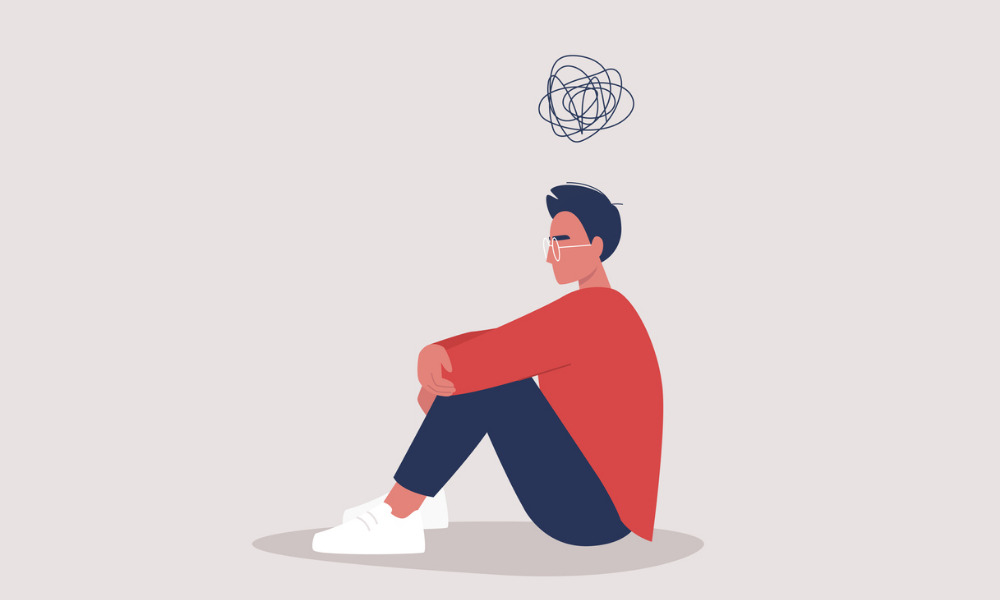
It’s 3.15am Monday morning. While the rest of the world sleeps soundly, you’re twitching to turn on the bedside lamp. You’re edging towards your phone. It’s been buzzing on and off, sounding in the dark, which can mean only one thing.
Emails are waiting.
You think, I’ll just take a quick peek – a quick look then back to sleep. There’s no harm in that, right? After all, maybe it’s urgent. Maybe it’s my manager. Maybe it’s my CEO. Maybe the company’s been liquidated and everyone’s been fired and it’s all my fault!
Sound familiar? You, my friend, have email anxiety. And you’re not alone.
Email anxiety is a deep-rooted fear of looking through your inbox – coupled with an innate inability not to. Striking any time day or night, sufferers feel intense anxiety around their inbox – worried about both receiving emails and having to read them. The average employee spends around four hours each day reading and responding to messages – with most workers receiving up to 120 emails every day. For employees suffering with anxiety, each day is a battle between wanting to be productive and being paralysed by nerves.
Why do emails cause anxiety?
While email anxiety is nothing new, it has become more prevalent since COVID-19. Now, with employees working from their homes, work-life balance is even more difficult to attain. The added pressure of the current pandemic, coupled with increased working hours and C-suite expectations, is leading to a mental health crisis. And, if HR doesn’t act quickly, we’re going to see psychological wellbeing take a massive hit.
The link between technology and stress was debated by Dr Gini Harrison, Dr Mathijs Lucassen in their recent study Stress and anxiety in the digital age. In this research, they theorized that we’re becoming overly dependant on our phones, leading to perpetual distraction and poor sleep habits.

When you consider that a lot of employees have their work emails on their smart devices – it’s clear that this need to be constantly connected is wrecking our mental, physical, and emotional health.
How do you manage excessive emails?
So, what’s to be done? Well, the easiest option would be to take your emails off of your mobile phone. And while we do recommend that, it doesn’t stop the stress and anxiety surrounding in-office, desktop, messages. If the issue is simply being overloaded with too many emails, speak to your manager and raise the issue with them. We’re all guilty of CC’ing people into emails when they don’t really need to be there – so, before you send any messages, be cognizant of this. Look through the recipients. Do they all have to be there? Can you remove any? If this is implemented as best practice across the whole company, believe me, you’ll see a dramatic drop in email volume.
Another option is to add an Out Of Office folder to your inbox. Any messages that come through when you’re technically ‘off the clock’ will go into a sperate file for you to check during working hours. With certain email accounts, you can add a reminder that will pop up if you try to email someone outside of their allotted schedule. This acts as a first line of defence should employees get too trigger happy with late night messages.
Angela Champ, SVP of HR at Alpine Building Maintenance, recommends a complete inbox cleanse – removing all unwanted toxins from your account.
“Unsubscribe from any newsletters or emails that no longer add value or help you do your job,” she told HRD. “From there, set aside certain blocks within your day to read and respond to emails, rather than reading them continuously, and turn off the notifications so you’re not tempted to check. Finally, I’d say that if a message thread is longer than three emails deep, pick up the phone. So much more can be resolved with a five-minute call than a super long email chain.”
How do you overcome email anxiety?
When it comes to addressing the issue of unmanageable anxiety, take a step back and breathe. The pandemic has us all in a spin, working constantly, developing unhealthy habits, and feeling burned out. When the panic sets in, walk away from your desk and step outside for a few moments. Go for a walk, practice some mindfulness, and realise that whatever this email says, it’s not the end of the world. As with most anxiety, it’s not the end result we fear, it’s the fear of fear that’s debilitating.
For employers, if you want to help your workers through email stress, you too have to become more self-aware and take some accountability.
“Knowing your recipient is key,” Dr Melanie Peacock, associate professor of HR, told HRD. “This is why, especially in a virtual world, we need to take the time to build opportunities for people to develop interpersonal relationships with one another. Trust doesn’t just appear; it’s created and nurtured. When one trusts the recipient email anxiety is lessened.”

Why every desk at your office should have a plant
Ideas.TED.com
May 20, 2019 / Mary Halton + Daryl Chen
Call it green energy — by giving every employee a plant, engineer Mike Robinson created an environment where both humans and their leafy friends thrive. Plus, 9 recommendations for hardy, hard-to-kill plants to call your own.
This post is part of TED’s “How to Be a Better Human” series, each of which contains a piece of helpful advice from someone in the TED community; browse through all the posts here. Besides a paycheck and reasonable hours, what else does a person need to thrive at work? Decent space, adequate supplies and tools? Yes. Lunch breaks, sick days, time off to recharge? Sure. A plant? Well … Such an idea had never occurred to engineer Mike Robinson. He owns a small company based in British Columbia, Canada, that designs and builds windbreaks and other control structures. One day, his wife, Suzanne, who runs the company with him, said: “I think we should give every person in the office a plant for their desk.” Robinson was skeptical. He thought that plants would be distracting and a drain on people’s time. “The average staff member would probably spend about five minutes a day either looking after the plant or admiring it,” as he puts it in a TEDxWhiteRock talk. Upon his wife’s insistence, however, he agreed to give it a try. He and Suzanne bought 20 plants for their 20 employees. Then, they did something a bit different. Instead of handing them out, they asked each employee to approach the tableful of plants and choose their own — but from the perspective of the plant. Think of it like a human-plant speed-date. Robinson explains, “So you have to put yourself in the spot of the plant, as it were, and say, ‘Which person do I want to be my new friend?’” Employees then received a small sign on which they wrote ‘My friend is …’ and their own name, stuck it in the soil, and brought it into their personal workspace. Over time, Robinson realized that the plants were having a positive impact. He says, “I did my own mathematics, and I reckoned that we might be doing about 30 percent more business per staff [member].” Of course, this is far from a scientific study. There’s no control group or double-blind — just a company filled with happy plant lovers excelling at their jobs. And maybe that’s enough. Another sign that something is going right: After 5 years, not a single plant has died. Robinson guesses that since each was hand-selected and bears the employee’s name on the label, they’re well-tended because “this is your friend and you care about your friend.” As he explains, “Our office is a more contented place, a relaxed place, and a place that I’m proud to be to be a part of, and a big part of that is the personal plant.” But what plant is right for your desk? Perhaps you’ve gotten one and felt the warm glow of human-plant friendship — only to see it wither before your eyes. We asked Rebecca Bullene, New York City horticulturist, cofounder of Greenery Unlimited and the person who designed and tends the greenery at the TED NYC offices, to recommend hardy plants for different light conditions. Note: Almost all of these plants are available in desktop sizes, but if you want them to stay that way, you will need to prune them.Plants for low light
Sansevieria plant, or snake plant: “They’re an architectural plant; I usually use them in spaces that have a more modern aesthetic,” says Bullene. ZZ plant, or emerald palm: “This plant has very deep glossy leaves and a kind of two-tone coloring. It’s a softer plant.” Aglaonema, or Chinese evergreen: “It has very beautiful patterning on the leaves, and it’s a larger-leafed plant. It is a welcoming plant.”Plants for medium light
Monstera deliciosa, or Swiss cheese plant: “It’s a fabulous name for a fabulous plant. The leaves have a really interesting texture, and this plant is a fast grower.” Schefflera arboricola: “it’s very cute. It’s one of my favorites, and it’s easy to take care of.” Anthurium, or laceleaf plant: “This is one of my favorite flowering plants. I prefer them to orchids because orchids can be difficult to care for and their blooms only last for about six weeks, whereas the anthurium puts up new flowers year-round.”Plants for high light
Ficus audrey, or banyan fig: “While the fiddle-leaf fig is the most popular ficus, the ficus audrey is gaining. I think it’s just as beautiful, if not more so. It has very velvety leaves, and its growth habit is more restrained.” Philodendron selloum, or philodendron hope selloum: “This was popular in the 1970s and the 1980s and fell out of favor, but it’s having a resurgence now. These plants have large tropical leaves with really deep cuts in them and a lovely, ruffle-like texture. This is not one that you’d have on your desk — it’s large — but next to it.” Succulent plants, such as aloe vera, pincushion or zebra plant: “These are very popular right now. They’re best on a sunny windowsill rather than away from natural light. Most need water every 7 to 10 days, but touch the soil first — if it’s damp, don’t water it. They really like to dry out between waterings.” Echeveria: “This is a flowering succulent that’s good in high light. They put out these long stems with bell-shaped flowers.” But what if you’re in a space that has no windows or a window facing a stairwell? “The sansevieria and aglaonema can survive in a room with no windows, although they won’t flourish. But people without natural light should known that grow lights have come far in the past three years,” says Bullene. “They screw into any fixture and they provide the same kind of light to work by, but they’re actually introducing a full spectrum of light for plants. I’ve seen plants respond really well to them.” One brand that she’s had good results with is Sansi. What about air plants? “These generally require more care and attention than people are willing to give. When I’ve gone into a store and the sales people are like, ‘Oh, you don’t need to do anything with them,’ it breaks my heart,” says Bullene. “One of the fundamentals of plant care is to think about a plant’s native habitat and how to recreate it so the plant will be happy. Air plants grow in extremely high humidity environments that are full of life; they get their nutrients from the air.” She recommends either putting them near a humidifier (and misting them regularly) or soaking them for 20 minutes at a time in a bowl of water. Air plants like bright, indirect light. Last but not least: Don’t overwater. “There’s a direct proportional relationship between light and water. The less light a plant gets, the less water it should receive; the more light, the more water,” explains Bullene. “Often, people think they should water every day, and that’s the kiss of death. In a low light environment, you should water plants every 10 days or so.“ What’s confusing is the signs of overwatering and underwatering are largely the same — yellow leaves, wilting — and most of us respond by adding water. Says Bullene, “I’d say 80 percent of the time plants are receiving too much water, and the correct response would be to withhold it for a little bit longer.” Watch Mike Robinson’s TEDxWhiteRock talk now:ABOUT THE AUTHORS
Mary Halton is Assistant Ideas Editor at TED, and a science journalist based in the Pacific Northwest. Daryl Chen is the Ideas Editor at TED.An Additional Resource:
https://happydiyhome.com/succulent-care/Can We Stop Emotions From Ruling Our Lives?
Psychology Today
Posted May 17, 2021
KEY POINTS
- Emotions dominate our lives. We either spew feelings excessively or sequester them inside us.
- Relationships between people with disparate and even opposite displays of emotion involve an emotional tango that ill serves both parties.
- Emotions can be used to inform and enhance thinking, behaviors, and interpersonal relationships. Asking yourself these questions will help.

Source: Hier und jetzt endet leider meine Reise auf Pixabay aber/Pixabay
Emotional displays flood our lives. Television, radio, social media, conversations, and written media provide a continual barrage of anger, tears, venom, upset, and grief. The political arena is an ongoing slugfest of emotional outrage, gesture, name-calling, and put-downs.
An excessive outpouring of feelings dominates our interpersonal landscape as well. How did we arrive here? Does everyone use an emotional megaphone or only some of us? Some of us are emotionally reserved. How do we coexist with each other?
As a child and adult psychiatrist for 40 years, I have some observations on both the over- and under-expression of feelings and the implications for both emotional health and illness. I discuss these observations in the book I co-authored with psychiatrist Homer B. Martin, M.D., called Living on Automatic: How Emotional Conditioning Shapes Our Lives and Relationships.
Neurophysiologists and neuropsychologists point out that feelings are subjective experiences of emotions. Emotions arise from patterns of neuralactivity in the limbic system. Then feelings interpret the neural-based emotions. For the purposes of this article—psychiatric, not neurophysiologic—I use feelings and emotions interchangeably.
Emotions and roles in relationships
We all have emotions. Most of us assume our feelings and emotional expressions are hardwired in us, but they are not. In childhood, we grasp how, how much, and when to display feelings. This takes place through unaware teaching within our families, and the roles parents shape in us for managing relationships. We grasp these roles by age 3.

Source: Piyapong Saydaung/Pixabay
The emotionally subdued
Some of us master the role of hiding our feelings and keep them under wraps. In this role, we rarely acknowledge, much less show, our feelings. We may be unable to identify when we are sad, happy, angry, or anxious.
During psychotherapy, when I ask such people what they feel in a given situation, they say, “I don’t know what I feel,” or “I’m unsure.” Often, they tell me what they thinkinstead of what they feel. We refer to such people as reserved or unemotional.
Reserved people can make poor judgments when other people are involved because they do not use their own feelings to assess what they need to think, do, or say. They suppress feelings and, in so doing, come to believe their bottled-up emotions are powerful. They fear that their suppressed emotions will erupt with volcanic force, either imploding them or wreaking damage on others.
The emotional proclaimers
Other people are shaped during childhood into roles in which they exude emotions and display them often and excessively. They like the effects their emotions have on others. They want others to cater to their emotional displays. They send messages of:
- Be upset with my eruptions.
- Calm me down.
- Indulge me.
- Walk on eggshells around me.
- Fix my feelings.
- Cater to my changeable moods, and indulge my next outpouring of feelings.

Source: Engin Akyurt/Pixabay
These people have such a focus on their emotions that when I ask them what they think, they tell me what they feel.
Emotionally overflowing people also make poor decisions involving others. They make decisions based on whimsical and ever-changing emotions. They forego reason. Since they are consumed by their emotional demonstrations, they are good at distracting other people and at having attention focused on themselves. Later on in relationships, they exhaust those with whom they associate.
The tango of emotions in relationships
How do people with disparate and even opposite displays of emotion exist with one another? This coexistence weaves itself similarly to a tango dance. The dance unfolds in perpetually enduring relationship patterns.
Overly emotional people expect the emotionally reserved to cater to their feelings. It is a way to get attention from others. It is a way to be loud but behaviorally inert. The emotionally reserved at first admire the emotional outpourings of others. Only later, after many attempts to calm them or satisfy them, are they worn down and exhausted.
Why do they admire the emotionally bombastic when they are emotionally reticent and reserved themselves? Their admiration is based on wishing they could demonstrate such lavish displays of their own feelings. “I wish I could be like that,” they say. They also enjoy the thrill and challenge of trying to tame the unmanageably emotionally extravagant.

Source: Gino Crescoli/Pixabay
As these patterns endure in relationships, the demonstrative person is increasingly emotional with louder displays. The mesmerized, reserved person loves indulging them until they reach exhaustion. They continue to keep a tight lid on their own emotions. Both people are made worse by their interpersonal tango, which ill serves each of them.
Patterns in society
The same interpersonal emotional patterns happen in the larger society. We admire the plethora of emotions in the public arena. We glue ourselves to the television and social media to ooh and aah, admire or denigrate.
We seek out emotional people for entertainment. Holding these people in the limelight fuels those who enjoy exuding their feelings. They escalate. They grow their audience. The squeaky wheel gets the oil and the ratings.

Source: Jose R. Cabello/Pixabay
Emotionally reserved people shun being on center stage. They gladly throw attention to those who want it. One group does not exist without the other.
Both the emotionally quiescent and the effusive may use quick-fix methods to open up and dampen down their feelings. They improperly use prescription medications, alcohol, or illicit drugs. Such use is prevalent and creates both physical and emotional health problems for users, their families, and work colleagues.
How to escape the emotional stranglehold
Over-emoting people are oppressive to be around. Under-emoting people are oppressed within themselves. We should become aware of the dance and look at ourselves deeply enough to cease the imperiousness brought on by feelings. It can be done.
When we are in the throes of strong feelings, we can ask ourselves questions that will help us decipher the emotion, decide how reasonable it is for the circumstance, and what course of action to take. Here are questions to ask yourself.
1. What emotion do you have?
You may be crying, but what is your true emotion? Are you sad, mad, jealous, frustrated?
2. What is going on that evokes your emotion?
Is someone putting you down, praising you, angering you, or ignoring you? Who are you with, and what is the interaction about?
3. What other occasions create this same feeling/emotion?
Do you get angry when also ignored by others? Are you jealous in similar situations with others?
Do you get mad when others praise you?
4. How reasonable for your circumstance is the emotion you feel?
If you are angry because you are left out of a decision made by your spouse, ask yourself if this is a big concern worth being angry about. Was the decision major—what kind of car to buy? Was it minor—what size eggs to buy?
5. Are you conditioned to the emotion because of childhood experiences?
If so, you could be reacting emotionally in a knee-jerk way when the situation does not reasonably call for it.
If you were expected to hide emotions as a child, you might be more reasonable with yourself and reveal your emotions to another person rather than concealing them. Or, if you were expected as a child to have boisterous emotional displays, you may need to tone down displays of your feelings.
6. Once you evaluate the facets of your emotion, what is the most reasonable action to take under the circumstances?
Maybe you are unreasonable to be so angry at your spouse for buying a size of eggs you didn’t want. You may decide to tone down or break off your anger, finding it too excessive. Or, you may decide it’s more reasonable to express your frustration to your spouse instead of holding in that emotion.
Overly emotional people can grasp how to think about their feelings instead of displaying feelings all the time. They can access rational thoughts instead of deciding and manipulating others with emotions.
The reluctantly emotional can learn to identify and elaborate their emotions to inform them of what goes on inside them and in their relationships. They may discover there is a time and place for them to kick up a fuss, shout for joy, or be the center of attention.
We do better in life when emotions inform our thoughts, behaviors, and interactions with others, not when they dominate us.
Christine B. L. Adams, MD is a child psychiatrist in private practice in Louisville, KY. She is co-author of the book Living on Automatic: How Emotional Conditioning Shapes Our Lives and Relationships.
Stroke Awareness Month, My Granny’s Story
If you think you have to be a smoker, a drinker, overweight, or have high blood pressure to have a stroke, think again. My Granny was in her early 80’s when she had two strokes within a year’s time, the second one was a massive stroke. That left her with Dementia from the damage done to her brain and she became a violent shell of herself over time. She died a couple of years later.
She ate a clean diet, had quit smoking 40 years earlier, never drank, didn’t have high blood pressure, and weighed all of 110 pounds soaking wet.
Strokes can happen to anyone.
Doctors were never able to give us an explanation and this is why I write this post. May is Stroke Awareness Month and you need to know what can happen if you or a loved one develops Dementia from a stroke.

Dementia is like Alzheimer’s in that it robs your memory. The first stroke the damage wasn’t as bad so she knew something was wrong with her and was very unhappy but not violent. The second stroke hit a large part of her brain and affected her memory in the worst way.
Imagine knowing you are sick, you don’t understand what is going on, and you confused all the time. My Granny became violent by hitting herself in the head or banging her head on the wall saying she didn’t want to live like that.
You have two choices medically, do nothing or find a Psychiatrist who can prescribe the right types of drugs to calm them down. The latter is often found as a warning on medication labels, Not for use for elderly Dementia patients.
My gramps and I had to decide what was best for my granny, not society. We found a good doctor who put her medication to try to slow the Dementia down, and a combination of other drugs to keep her a bit zoned out but not over-drugged.
This worked fine for a time, then she became solely dependent on my gramps being with her. He couldn’t leave the house any longer. The doctor had given us four emergency pills for if or when she became too violent. To date, we had not used any. My gramps went to get groceries and I was there with her. After five minutes she kept saying he had been gone an hour and why wasn’t he back yet. I tried to distract her with a little photo album I made of her and gramps and her favorite dog. That worked a few times. She would come back to why is he taking so long. why is he taking so long?
I got up and showed her on the clock exactly when he left and what time it was, it had only been 15 minutes. The logic didn’t compute. She continued to escalate to the point of saying why did gramps leave her here. I asked her where she was and she didn’t know but didn’t recognize she was in her own home. I took photos off the wall to show her my dad, brother, gramps, and myself. Nothing worked, she was convinced he had left her somewhere.
She became very violent, hitting herself in the head, banging her head against the wall screaming for my gramps. I had to think quick. It was time for the emergency medication. I was able to convince her we forgot to take one of her medications and she took the pill. It knocked out and I thanked God!
My gramps was not able to leave home again until after she died.
This is just one example, there are many and each an extremely painful to watch. It breaks your heart not to be able to help your loved one.
I will STRONGLY say, do whatever you have to do to make your loved ones’ life more comfortable if they become violent. Don’t settle for less or you will be making hospital visits.

These posts will give you an even better idea of the hell life is like for a Dementia caregiver.
Dementia Induced Thoughts of Suicide
I’m Morning And She’s Still Alive
Melinda
Snoop Dogg’s Daughter Opens Up About Recent Mental Health Struggles
Complex
Snoop Dogg’s daughter, Cori Broadus, took to Instagram over the weekend, where she opened up about her mental health struggles over the last few weeks, revealing that she tried to take her own life.
“The last few weeks my mental has not been so great at one point I tried to end my life but you & my family really give me a purpose to live & helped me realize Iife is much more than materialistic things & you gotta just keep pushing through the bullshit,” she wrote.
It appears the “you” who has helped Cori in her time of need is her boyfriend, Wayne Deuce, who is seen in several pictures in the above post. Wayne also shared the same series of photos in his own post on Instagram, along with a note on a chalkboard easel in which he wrote, “I love you Princess. This time is about us getting our minds right for a better and healthier lifestyle. We riding til the end.”
Both of their posts conclude with the Mental Health Awareness hashtag. May is Mental Health Awareness Month, which aims to help people understand and normalize the existence of mental illnesses among millions of people living in the United States. According to Mental Health America, the organization that started this monthly observation in 1949, one in every five American adults will have a diagnosable mental health condition in any given year.
Mental health issues have come to the forefront in wake of COVID-19. MHA Screenings taken from January 2020 to September found that over eight in 10 people who took the anxiety screen scored with moderate to severe symptoms, while more than eight in 10 people scored with moderate to severe symptoms of depression consistently since the start of the pandemic.
The theme for this year’s Mental Health Awareness Month is “You Are Not Alone,” a statement that reinforces the reality that mental illnesses are more common than some people might think, and something that people shouldn’t feel stigmatized by, especially as we collectively deal with the aftermath of the pandemic, and what that means for our personal and professional lives.

Book Review of Finding My Right Mind By Vanessa Potter
Maddie Dunne-Kirby from Wellbeck Publishing Group gifted me a copy of Finding My Right Mind, One Woman’s Experiment To Put Meditation To The Test by Vanessa Potter for an honest review. Wellbeck is gifting one person a copy of Vanessa’s book. Find out more at end of the post.
Gobsmacked is the only word I can say about Finding My Right Mind. I believe that’s a British saying, please correct me if I’m mistaken. Vanessa’s story is like a brick to the head in the very best way. She’s smart, funny, and realistic about the cards she’s dealt.
You can find Vanessa Potter’s book Finding My Right Mind at Amazon.co.uk

The true story of an ordinary woman who went to extraordinary lengths to discover whether meditating could change her life. Insightful, funny, and informative, Vanessa road-tests 10 techniques from mindfulness to psychedelics, and still manages to pick the kids up!
My Thoughts
What would you do if you woke up on day blind and paralyzed? This is where Vanessa finds herself, she’s married with children and at the height of her career. What Vanessa does next is nothing short of a miracle. Using her knowledge of meditation she teaches her body to remember feelings, such as the feel of sand in your toes. With sheer grit, she uses 10 techniques to build the life she wants to live. Finding My Right Mind is a must-read for everyone, she an inspiration and will have you examine your life as you live it today. You will find Vanessa’s book inspirational, fascinating, and looking forward to turning the page. She shows us what the mind can truly do.
Wellbeck Publishing Group
Welbeck Publishing Group is an exciting, fast-growing independent publisher based in London, dedicated to publishing only the very best and most commercial books spanning a number of genres and categories, from leading authors and well-known brands to debut talent. We live for books that entertain, excite and enhance the lives of readers around the world
From building our boutique fiction and narrative non-fiction lists to shaping our world-renowned illustrated reference, gift and children’s titles, our aim is to be a market-leader in every category in which we publish. Our books and products come to life for adults, children, and families in 30 languages in more than 60 countries around the world, selling through a variety of traditional and non-traditional channels. We are constantly looking for new ways to deliver our exceptional content and new ideas to inspire readers and listeners everywhere.
One lucky UK reader will win a copy of Finding My Right Mind by Vanessa Potter just by sending me your thoughts on the review and I will draw numbers. The book will mail from the UK publisher.
This is a must-read story. I’m glad you are enjoying the book reviews, keep your comments coming. I have six books lined up to read so stay tuned.
Melinda
The 3 things that keep people feeling motivated at work
IDEAS.TED.COM
Angus Greig
This post is part of TED’s “How to Be a Better Human” series, each of which contains a piece of helpful advice from people in the TED community; browse through all the posts here.
In the modern economy, motivation is a tricky thing.
A hundred years ago, when people like Frederick Taylor were pioneering the field of scientific management, motivation was pretty easy. The idea was you could switch people from an hourly rate to a piece-rate system to do a set of repetitive tasks, and it would incentivize them to do the tasks faster. It was a rudimentary idea, but in some organizations it’s still the philosophy behind how pay — especially incentive pay — is set. And there’s actually a decent amount of research that incentives like that can work to increase motivation when there is a really clear understanding of exactly what tasks must be done to earn the reward. But in a knowledge work or creative work economy, those easy-to-understand, repetitive tasks are becoming more and more rare.
Fortunately, there’s another option to increase motivation.
The research that began to uncover that option was conducted by two men: Richard Ryan and Edward Deci. Deci and Ryan pioneered what would come to be known as self-determination theory. Self-determination theory essentially argued that people are motivated when they can determine for themselves what to work on and how to work on it.
In other words, Deci and Ryan and other pioneers in this field of research asserted that incentives could actually decrease motivation — because incentives take away a sense of power to determine the work for oneself. But self-determination theory didn’t just point out why so many well-meaning incentive plans fail. It also outlined several drivers of human motivation, drivers that could be built into a job or a team culture to make work more motivating and increase motivation.
Below, I’ll outline the three main drivers of motivation according to self-determination theory — autonomy, competence, and relatedness — and I’ll provide practical ways to leverage the power of each.
People who experience autonomy at their jobs don’t feel micromanaged. Instead, they feel empowered by their managers to pursue objectives and deadlines on their terms.
1. Autonomy
The first motivational driver is autonomy. Autonomy refers to how much people feel in control of their own life and able to make their own choices. In the context of work, autonomy means people feel they have a say in what they work on and how they work on it. They don’t feel micromanaged; they feel empowered by their managers to pursue objectives and deadlines on their terms.
Creating a sense of autonomy in an individual or on a team can come in many forms. It could be by mutually assigning objectives and establishing deadlines. It could also be giving people more freedom over where they work, or incorporating the team or individuals in decision making more often.
One easy way to judge whether you are leading from a place of autonomy versus control is to pay attention to your feedback or coaching conversations with the team. Specifically, do this: Pay attention to how many times you’re giving them advice vs. asking them questions. If you’re often giving advice or telling people how to do something, you could be diminishing their sense of autonomy. But if you are asking questions designed to guide them to finding their own solutions, then you are leaving them in control.
Remind people of the progress they’ve already made — and show them you’re trying to help them make even more progress.
2. Competence
The second motivational driver is competence. Competence refers to our desires to seek control but also to experience mastery. Competence speaks to our natural human desire to be learners, to be growing and feeling like we’re making progress. It could be progress in our career, progress towards a set of objectives or working for a team or a company that is making progress. Anything that helps individuals feel they are moving toward mastery leverages competence as a motivation.
Creating a sense of competence in an individual or on a team might actually be more about what you don’t do. Much of the job of a team leader is providing feedback or constructive criticism. But constructive or negative criticism has been found in numerous studies to decrease a person’s feeling of competence, and thus reduce motivation.
So rather than just focusing on constructive feedback, make sure you’re taking the time to celebrate wins, large and small. And make sure that even when you are giving people constructive feedback, you are pairing it with a lot of positive feedback and praise as well. That way it reminds them of the progress they’ve already made — and show them you’re trying to help them make even more progress.
If you can ensure the members of your team know who exactly is being helped by their efforts, you can almost guarantee they’ll be willing to work hard to help those people.
3. Relatedness
The third and final motivational driver is relatedness. Relatedness refers to our will to connect with others, interact and care for other people. In terms of research, we’ve only just begun to grasp just how important relatedness to others truly is. But we know that humans are much more motivated to take actions when they’re seen as pro-social — that is, when they’re seen as being able to help other people.
Creating a sense of relatedness in an individual or on a team means making sure people build connections to each other. But it also means making sure people know the significance of what they’re being asked to do and how it relates to the whole team and the team’s and organization’s larger objectives. Even better, you might frame the team’s work in a way that makes it quite clear exactly who is helped by the organization’s, the team’s and even the individual’s actions.
This is not about reiterating the company’s mission statement — instead, it’s about creating a connection between the mission and the specific people who are served when that mission is accomplished. If you can ensure the members of your team know who exactly is being helped by their efforts, you can almost guarantee they’ll be willing to work hard to help those people.
Now if you’re read this far, you probably noticed what hasn’t been discussed yet. I haven’t talked about salaries or about perks like free food or a keg in the refrigerator. I didn’t talk about how many hours people are working or any of things typically discussed when employers are working to build a more engaged and motivated workplace. Yes, those things are all great. They just don’t do much for motivation — at least when compared to creating a sense of autonomy, competence and relatedness.
When people have the ability to determine how they work, the means to judge their progress and the feeling that their work helps other people, they can’t help but be motivated to get to work.
This article originally appeared on DavidBurkus.com and it’s been adapted with the author’s permission.
Watch his TEDxUniversityofNevada Talk here:
ABOUT THE AUTHOR
David Burkus PhD is an organizational psychologist and bestselling author of five books, including Leading from Anywhere: Unlock the Power and Performance of Remote Teams.
Did you know curiosity comes in different forms? P.S.: One of them can help you deal with anxiety
IDEAS.TED.COM
May 12, 2021 / Judson Brewer MD, Ph
Kati Szilágyi
Back in 2006, psychologists Jordan Litman and Paul Silvia identified two main “flavors” of curiosity, which they dubbed D-curiosity and I-curiosity.
The D in D-curiosity stands for deprivation, the idea that if we have a gap in information, we go into a restless, unpleasant, need-to-know state, while the I in I-curiosity stands for interest, the pleasurable aspects of the hunger for knowledge. In other words, curiosity — our drive for information — can induce a state that is either aversive or pleasant.
Deprivation curiosity is driven by a lack of information, often a specific piece of information. For example, when you see a picture of a famous actress and you can’t remember her name, you might start racking your brain to remember who it is. Trying to remember might get you into a contracted state, as though you are trying to squeeze that answer out of your brain. Then when you go to google for help and see her name, you feel a sense of relief because you’re no longer deprived of the information.
This extends to texting and social media. If you are out to dinner and you feel or hear a text come into your phone, you might notice that suddenly it’s hard to pay attention — not knowing what the text says can make you restless, causing your body temperature to rise, and that fire of uncertainty is only put out when you check your phone.
Each of the curiosity “flavors” feels different in our bodies — deprivation feels closed, while interest feels open.
Interest curiosity is piqued when we’re interested in learning more about something. Usually this isn’t a specific piece of information (like an actress’s name) but a broader category. For example, did you know that there are animals who keep growing in size until they die? They are called “indeterminate growers” and include sharks, lobsters and kangaroos. In fact, based on its size, one 20-pound lobster was believed to be 140 years old. That’s one big, old lobster! Isn’t that fascinating?
Interest curiosity is when you dive into an internet search and realize hours later you’ve learned a whole bunch of stuff and your thirst for knowledge has been quenched. It feels good to learn something new. This is different from filling a deficit, simply because you weren’t experiencing a deficit in the first place. For instance, you didn’t know about big, old lobsters but when you learned about them, you were intrigued and delighted to know more.
Unlike the D-curiosity — which is about reaching a destination — the I-curiosity is more about the journey. Each of these curiosity “flavors” has different “tastes”, and they feel different in our bodies. Deprivation feels closed, while interest feels open.
What this means is getting more and more curious about what anxiety feels like in your body, instead of assuming you know everything about it or that it will never change.
Most of us approach ourselves and the world with D-curiosity, like a problem to be solved. But we’re all in the perfect place to tap into our I-curiosity, which we can leverage to help ourselves break old habits and build new ones.
In practice, what this means is getting more and more curious about what anxiety feels like in your body and how it triggers your worry and procrastination habit loops, instead of assuming you know everything about anxious or that your feelings will never change or you have to find a magic pill or technique to cure you of it.
Over the years, I’ve found that curiosity is a simple tool that helps people — regardless of language, culture and background — drop directly into their embodied experience and tap into their natural capacities for wonder and interest. It puts people right in that sweet spot of openness and engagement.
Let me walk you through a curiosity exercise that I teach everyone on Day 1 in the Unwinding Anxiety app. This exercise can work as a kind of panic button for when anxiety hits, and it takes about 2 minutes.
Whenever I do this exercise, I like to use the mantra “Hmmmm”. It allows me to bring a playful, even joyful attitude to what I’m doing.
Step 1:
Find a quiet comfortable place. You can be sitting, lying down or standing up; you just need to be able to concentrate without being distracted.
Step 2:
Recall your most recent run-in or incident with a habit loop, which is any habit you find yourself returning to whenever you’re worried or anxious.
See if you can remember the scene and relive that experience, focusing on what you felt right at the time when you were about to act out your habitual behavior. What did that urge to go ahead and “do it” feel like?
Step 3:
Check in with your body. What sensation can you feel most strongly right now?
Here’s a list of single words or phrases to choose from. Pick only one — the one you feel most strongly:
tightness
pressure
contraction
restlessness
shallow breath
burning
tension
clenching
heat
pit in stomach
buzzing/vibration
Step 4:
In terms of this feeling, is it more on the right side or the left? In the front, middle, or back of your body? Where do you feel it most strongly?
And was there anything you noticed about being curious about what part of your body you felt the sensation in? Did being a little curious help with getting closer to this sensation?
Step 5:
If the sensation is still there in your body, see if you can get curious and notice what else is there. Are there other sensations you’re feeling? What happens when you get curious about them? Do they change? What happens when you get really curious about what they feel like?
Step 6:
Follow them over the next 30 seconds — not trying to do anything to or about them — but simply observing them. Do they change at all when you observe them with an attitude of curiosity?
Whenever I do this exercise, I like to use the mantra “Hmmmm” — as in, the hmm you naturally emit when you’re curious about something (and not to be confused with the traditional mantra “Om”). I find saying “hmm” to myself gets me out of my head and into a direct experience of being curious. It also allows me to bring a playful, even joyful attitude to what I’m doing; it is hard to take yourself too seriously when you are hmm-ing.
If you notice that by being curious you gained even a microsecond more of being with your thoughts, emotions and sensations than you have in the past, then you’ve taken a huge step forward.
This short exercise is just intended to give you a taste of curiosity and to support your natural capacity to be aware about what is happening in your body and your mind at any moment instead of getting caught up in a habit loop. If you notice that by being curious you gained even a microsecond more of being with your thoughts, emotions and body sensations than you have in the past, then you’ve taken a huge step forward.
Here’s what a patient in the Unwinding Anxiety program told me about curiosity:
When I first started the program, I didn’t quite buy into the benefits of curiosity. Today, I felt a wave of panic, and instead of immediate dread or fear, my automatic response was “Hmm, that’s interesting.” That took the wind right out of its sails! I wasn’t just saying it was interesting; I actually felt it.
Sometimes I get the question “What happens if I’m not curious?” My response is to use the mantra of hmmm to drop right into your experience. Ask yourself: “Hmm, what does it feel like not to be curious?”
This helps people move from their thinking, fix-it mind state into a curious awareness of their direct sensations and emotions in their bodies and move out of their thinking heads and into their feeling bodies.
Excerpted with permission from the new book Unwinding Anxiety: New Science Shows How to Break the Cycles of Worry and Fear to Heal Your Mind by Judson Brewer MD PhD. Published by Avery, an imprint of Penguin Random House, LLC. © 2021 by Judson Brewer.
Watch his TEDMED Talk here:
Watch this TED-Ed Lesson about panic attacks here:
ABOUT THE AUTHOR
Judson Brewer MD, PhD Judson Brewer is the Director of Research and Innovation at the Mindfulness Center and associate professor in psychiatry at the School of Medicine at Brown University, as well as a research affiliate at MIT. As an addiction psychiatrist and expert in mindfulness training for treating addictions, he has developed and tested novel programs for habit change, including both in-person and app-based treatments for smoking, emotional eating and anxiety. Based on the success of these programs in the lab, he cofounded MindSciences, Inc. to create app-based versions of these programs for a wider audience. He is also the author of the book The Craving Mind.
Melinda
What’s Your Happiness Score?
What Is The Difference Between Guilt And Shame?
Gifts for People Who Love to Garden
Buying gifts is always a challenge, but one way to find the ideal gift for a special person in your life is to focus on a niche that you know is of interest to them. So if you know someone who loves gardening, you’ll be glad to learn there are lots of gifts that are ideally suited to people who love to garden. We’re going to look at the best of the bunch today, so keep reading to find out all about them.

An Attractively Designed Bird Bath
The great thing about birdbaths is that they’re not just about adding something functional to the garden. They also act as great ornamental pieces, so if you’re looking for something to give that brings a visual impact, an attractively designed birdbath could be exactly what you’re looking for. There’s no shortage of designs and options out there to choose from these days either.
Gardening Gloves
If you want to make the process of gardening a little more comfortable for a special person in your life, a pair of high-quality garden gloves can make the perfect gift. Again, there are lots of styles and designs out there, just make sure you choose a pair that fits well. It’s a good and affordable gift option so it should definitely be considered.
A Seed Subscription
Right now, subscription services are all the rage. There’s a subscription service for just about everything, so you might not be surprised to learn that there’s also a subscription available for seeds. That means you can get different seeds sent to your door each month, so this could be a great gift idea. You could pay for their seed subscription for a year, for example.
The Latest Top Books
There’s a range of great gardening books released each and every year. They might be guide books, general advice, or even photo books. There’s something for just about every garden lover on the shelves of your local book store, so it’s an avenue you should definitely explore. This article is A Review Of The Best Gardening Books in 2020, so it might give you some interesting ideas for which you might want to buy.
Solar-Powered Outdoor Lanterns
You don’t have to choose something that’s focused on the task of gardening; it might be a good idea to choose a gift that adds something new and fun to the garden and has a social dimension. Some solar-powered outdoor lanterns allow you to light up the garden at night and carry on the party into the evening. It’s a good gift idea and they’re also eco-friendly as the battery can charge up during the night and be put to use during the day.
If you’re looking for gifts for the gardener in your life, the ideas above should provide you with the inspiration you need. Find a gift they’re guaranteed to love and help them get even more out of their love of gardening with the kinds of gift options we’ve discussed here.
May Is Mental Health Awareness Month, My Journey
My Journey
I don’t write about my Mental Health often but it’s Mental Health Awareness Month, and I can’t think of a better time.

Photo by Thiago Matos on Pexels.com
I’ve been stable for about three years and it was a long journey during that depressive period. After being stable for several years I spiraled into a dark depression, getting numb and darker by the day. I tried four different drugs before finding the drug I’m on. It has worked like a miracle.
That’s how my life has gone since I was 19 years old. Stable or depressed or hypo or manic or dark depression or unable to function. It’s been a difficult journey and one that I almost didn’t make several times. The first time I tried to kill myself was at nine years old, that should have been a sign that something was wrong with me.
I have been hospitalized several times sometimes for up to a month a time and have had 21 Electro Convulsive Treatments. The journey has been very dark at times and I’m so thankful that I had family and a husband who fought hard when I wouldn’t.
The only thing I can say to anyone who is suffering from Mental Illness or a Mental Health challenge, it can and often will pass. I’m not going to sugar coat it, there are some Mental Illnesses that reaching stable is as well as you will get, that’s a huge achievement.
I have Bipolar Disorder and for the past 25 years have been on the depressive side. For the prior 20 years, I lived in a blissful Hypo Manic state. It was blissful until I fell off that cloud and crashed so hard I almost didn’t make it up.
One key to my success is having a Psychopharmacologist as my main doctor and seeing a therapist regularly. I know Psychopharmacologists are more expensive and harder to find but they know the brain in detail and how medications work so they can connect the dots with what symptoms you’re having with the medication you need. I’ve seen my doctor for 30 years and it scares me he is about to retire and I don’t know who is going to take his practice.
I believe strongly that for ongoing challenges with Mental Health/Mental Illness medication is required for some period of time. For me, it’s a lifetime, for others it’s until they’re stable.
I also believe strongly that seeing a Therapist on regular basis is as critical as medication. Sometimes we sabotage ourself and a Therapist can help us thru negative self-talk. The key to remember is what each doctor or Therapist does as a specialty. If you’re seeing a Psychiatrist/Psychopharmacologist you are only going to get medication, you are not going to get any therapy. There are also different types of Therapists so you need to make sure you are getting a referral for the right type. I am not skilled enough to tell you what type you need but your Psychiatrist can.
I’m almost 58 years old and at times I didn’t think I’d ever see 30 years old. It takes everything you have and more to deal with your Mental Illness or Mental Health and it’s worth the effort.
What goes up must come down again!
If you’d like to read more about my journey with Bipolar Disorder, check out my archives.
Melinda
Repost from 2021
 Looking for the Light