Memory loss is very common in elderly people and even if they do not develop a serious condition like Alzheimer’s or dementia, it is likely that they will forget things from time to time. In some cases, this doesn’t really affect their life too much but it can make it difficult for them to live independently if they forget important things, like taking medication or eating.
As we get older, it falls to us to care for elderly loved ones, and managing memory issues is often a big part of this. If you want them to be able to live independently, you need to find ways to help them manage their memory problems so they can be safe and comfortable. Here’s how you can support an elderly family member with memory problems.
Be Realistic About The Scale Of The Problem
Often, it can be hard to admit that your loved ones are losing their memory and so people are in denial about it. They just put it down to age and say that it’s not that serious, they’re just forgetting a few details here and there. However, if somebody in your life is suffering from Alzheimer’s or dementia, they need a lot of care and assistance if they are able to live safely. So, be realistic about the situation and if you are concerned, take them to the doctor to get checked. You may need to consider long-term care options like a senior community with a dedicated memory care service. If you are not honest with yourself and your family about the scale of the problem, you could be putting your loved ones in danger.
Be Understanding
Memory loss is very frustrating and when they forget things, they may get angry about it. If they forget something very important, it could be frustrating for you too. But if you are not understanding the situation, it only makes things worse. It’s important that you are patient with them and you reassure them that you forget things too and it’s ok. The more understanding you are, the less stressful this situation will be for them.
Write Lists
Lists are the easiest way to remember things, so when you visit loved ones, talk to them about their schedule for the next few days and then write some simple lists to help them remember things. Sticky notes around the house can be very helpful too. For example, if they need to take medication, put a small note somewhere they will see when they get up, so they always remember. If they have a smartphone and they are comfortable using it, you can add reminders to it as well.
Help Them Keep Their Brain Active
Keeping your brain active is so important as you get older and it helps to slow and prevent memory loss. If you are concerned about a loved one’s memory, you should find ways to keep their brain active as much as possible. Helping them to be more socially active is very beneficial, and you could encourage them to do puzzles and play games too.
Dealing with memory loss is tough but it’s something that many of us will experience. If you follow these steps, you can support a loved one with memory loss.
Statistics indicate that juvenile crimes increase by 35% in the summer months. As if that’s not bad enough, the ever-present allure of screens means that the average teen now spends over seven hours a day behind electronic devices during summer. These alarming statistics make parents wonder how to engage their kids during those long, hot months. If you’re a worried parent, here are four ways to keep your teenager busy during summer.
A study revealed that summer jobs can reduce teen crime by 43%. Therefore, a part-time job is an excellent way to keep your teenager busy. It equips them with many useful skills while keeping them away from trouble. Moreover, a paid part-time job will teach them about financial management at a very early age. They can learn how to save money, buy basic things, and be independent. The right job will teach your child how to work with people and manage their time. Plus, the skills they acquire will stick with them for life.
Explore artistic and creative outlets
Summer break provides an ideal opportunity for teenagers to explore their creative sides and develop new skills. You can encourage your teenager to pursue artistic activities after getting a job. Depending on their time, your teen can combine their job with a creative activity. Consider enrolling your child in a summer art class, a creative writing workshop, or a music class. These activities keep them occupied and foster self-expression, boost confidence, and provide a platform for personal growth. And believe it or not, allowing your teen to explore their artistic side can create a healthy outlet for stress and improve their emotional well-being.
Encourage volunteering and community service
Giving back to communities through volunteering is one of the most emotionally-rewarding ways for a teenager to spend summer. Some studies have shown that volunteering instills a sense of responsibility and empathy while enhancing self-esteem and personal growth. It also gives them a sense of purpose, even at a very young age. So, encourage your teenager to identify causes they are passionate about and connect with local organizations that offer volunteer opportunities. From environmental cleanup projects and community service to volunteering at a local shelter, these activities will keep your teenager busy and contribute to their development.
Let them join a local club or group for teens
Depending on where you live, it shouldn’t be too difficult to find a positive local club or youth group for your teenager. You can find a scouting club, an academic, agricultural, or faith-based group for your teenager to join. Regarding a faith-based group, for example, your teenager can join a local church group for teens or youth, created to nurture spiritual growth, faith, morality, and good behavior. Of course, some religious institutions have a bad rap for sexual misconduct and abuse, so conduct a background check before signing up your child. And should the worse happen, don’t hesitate to let a religious institution sexual abuse lawyer help you.
I was kindly gifted an advanced copy of Finding Joy with an Invisible Chronic Illness, Proven Strategies for Discovering Happiness, Meaning, and Fulfillment by Christopher Martin from NetGallery for a review.
Published 2021
I am a school psychologist, husband, father, and – pertinent to this website – an author who has multiple invisible chronic illnesses.
And an invisible chronic illness is a beast. On top of draining you physically, a chronic illness can impact all aspects of your life ranging from causing financial hardship to harming your relationships to dampening your spirits. Try to be cheerful when you have this unremitting “monkey on your back” known as an invisible chronic illness that constantly demands your attention 24-7. Needless to say, it’s easy to let yourself and others down.
Plus, your family or friends can’t see your illness, as it’s invisible, and they may not understand. Most with an invisible illness are familiar with “advice” ranging from “stay positive” to “you look good” to “Have you tried ___ for your condition?” Yup, you probably have, and it didn’t work.
On top of that, best wishes in accessing (and maintaining) high quality medical care when you are too tired to even take care of yourself.
Welcome to the world of an invisible chronic illness. I should know. I suffer from multiple invisible chronic illnesses, including a primary immune deficiency disorder and bronchiectasis.
But it doesn’t have to be this way – for you or for me. While I am not cured of my illness, I enjoy a fulfilling life and experience ongoing joy, peace, and happiness. Because of outstanding medical care, extensive self-educating and self-care, a supportive family, and a strong faith, I effectively manage my chronic illnesses. But I didn’t want to be the only one to benefit. It was my goal, in turn, to give back to others by doing what I love to do: authoring books on these conditions.
Blurb
“Finding Joy is a vital guide on how to best manage and navigate life with a chronic illness.”—James Nestor, New York Times bestselling author of Breath: The New Science of a Lost Art
“Finding Joy provides a comprehensive, evidence-based roadmap for not only coping with chronic illness, but personally optimizing self-growth and resiliency from the experience.” —Joanne Joseph, PhD, professor of psychology and interim dean of the College of Health Sciences, SUNY Polytechnic Institute, and author of The Resilient Child: Preparing Today’s Youth for Tomorrow’s World
* How can you experience those good thoughts and feelings, enjoy life to its fullest, and de-stress when faced with relentless physical suffering?
* How can you enhance your relationships, find support, respond to the naysayers, and possibly even help them understand you and your illness?
* When seeking medical care, how can you get the answers you deserve, and access and maintain quality healthcare?
Early Reviews
“”Finding Joy is absolutely phenomenal. Chris Martin’s heartfelt approach offers numerous meaningful strategies to thrive when faced with the many unseen and unrecognized issues of living with an invisible chronic illness.””—Heather Lewis-Hoover, MS, CAS, school counselor
““Finding Joy is a vital guide on how to best manage and navigate life with a chronic illness.””—James Nestor, New York Times bestselling author of Breath: The New Science of a Lost Art
“Finding Joy provides a comprehensive, evidence-based roadmap for not only coping with chronic illness, but personally optimizing self-growth and resiliency from the experience.” —Joanne Joseph, PhD, professor of psychology and interim dean of the College of Health Sciences, SUNY Polytechnic Institute, and author of The Resilient Child: Preparing Today’s Youth for Tomorrow’s World
My Thoughts
I think Chris says it best, the diagnosis is a step forward, it’s not the last.
Finding Joy with an Invisible Chronic Illness is a great find, one for all to read, patients, loved ones, and, family members. It is a simple and practical approach to taking control by understanding how we think and what we have control over when it comes to our chronic condition and healthcare treatment.
I’m glad you joined me for another edition of Weekend Music Share this week.
Have a great weekend!
Melinda
Welcome back to Weekend Music Share, the place where everyone can share their favorite music.
Feel free to use the Weekend Music Share banner in your post, and use the hashtag #WeekendMusicShare on social media so other participants can find your post.
Years ago my father’s roommate committed suicide in his bedroom. The signs were clear but my father had no idea. The roommate woke up one morning and mowed the yard, cleaned the house, he returned everything he had borrowed including money owed. He then went to his bedroom and didn’t come out for hours. For reasons unknown to me my father went to check on his gun and it was missing. He knocked on the door repeatedly with no answer. Growing concerned he called the police, the moment the police breached the door the gun went off.
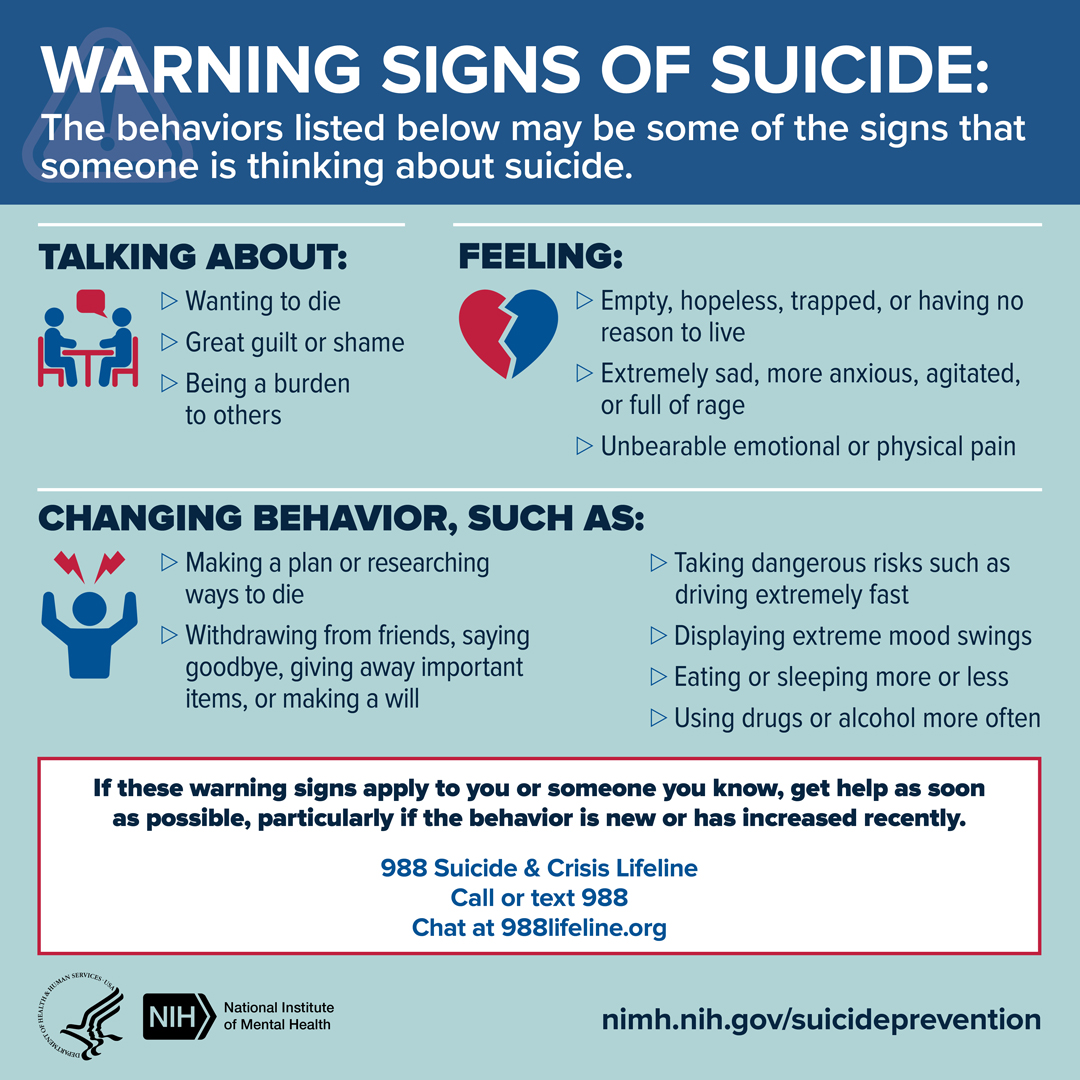
Being familiar with the signs that someone may be in a mental health crisis may save their life, the key is understanding the signs and knowing how to approach the conversations. This is not an easy task and often you will not be let in. That should not stop us from trying. This is a very fragile time and it takes great empathy, patience, and understanding to help someone in crisis. This is not a short-term, wham-bang fix and doesn’t involve your ego.
These are warning signs shared by The National Institute of Mental Health.
Fibromyalgia Awareness Month is important to me because I have it and know others that do. One of the biggest challenges Fibromyalgia patients face is there are so many different symptoms and they mimic other illnesses. That’s one reason it can years to get a proper diagnosis.
Why National Fibromyalgia Awareness Day?
Fibromyalgia is a chronic, complicated disease that affects millions of men and women throughout the world. A musculoskeletal illness produces widespread severe pain with symptoms like increased skin sensitivity, muscular rigidity, difficulty sleeping, memory and attention problems, excessive weariness, and headaches.
It is a challenging condition to identify because there isn’t a single test that can detect and treat it, and the symptoms get frequently misdiagnosed as attributed to other illnesses. Many people feel that the condition is psychological and not genuine due to a lack of research and the difficulties in defining the variables that cause it. Furthermore, there is no permanent relief for the suffering.
As a result, the keys to combating Fibromyalgia are awareness and financing. The goal of this day is to raise awareness about the condition and to encourage further research into finding a cure. The day’s observances greatly minimize the level of threat and the likelihood of being afflicted. When we try to learn more about a disorder like fibromyalgia, we realize just how far we’ve come in terms of innovation and advancement. Observing National Fibromyalgia Awareness Day allows us to reflect on our accomplishments.
Thoughts
Another huge challenge of having Fibromyalgia is it’s invisible, you don’t look sick unless you’re having your worst day. Most of the time you look fine and that is where the misunderstanding about the illness starts with friends and family. You can’t predict how you’ll feel tomorrow let alone next week, so you make plans, only to have a flair day and can’t get out of bed or can’t think straight and have to cancel your plans.
When people think you look fine and you’re not they can take it personally, that’s why it is important to share the basics of the illness and tell them that when you have to cancel on short notice it has nothing to do with them or not wanting to see them.
One suggestion for those newly diagnosed is to take your loved one or family member to a doctor’s appointment. This made a huge difference for me with my mental illness. My husband got to hear everything from the doctor’s mouth and got a better understanding of what I was dealing with. We also tell our doctor symptoms we don’t talk about every day and this is another time your loved one can understand all the ways Fibromyalgia affects your life.
Another way you can help is to participate in a Clinical Trial for Fibromyalgia, Keep your eyes open for news about trials in your area. It’s always possible you’ll get a drug that helps you in some way vs a placebo. It’s a 50% chance. The key is to understand the risks and or interactions with your other medications.
Go easy on yourself. If the house isn’t as clean as you’d like, don’t worry about it. Work a little at a time or call a house cleaning service if you can.
I’m glad you joined me for another edition of Weekend Music Share this week.
Have a great weekend!
Melinda
Welcome back to Weekend Music Share, the place where everyone can share their favorite music.
Feel free to use the Weekend Music Share banner in your post, and use the hashtag #WeekendMusicShare on social media so other participants can find your post.
This is a previous post I feel is important to shine a light on for Mental Health Awareness Month.
Some states like Colorado have what’s called a Red Gun Law. It basically allows someone who is concerned that a person may harm themselves or others to go before a judge and if warranted, have their weapons taken away for 30 days. This type of law could save many lives, in that 30 days, you might be able to get your loved one or friend the help they so desperately need.
My father committed suicide in 1992 after a long struggle with mental illness, he was 52 years old. This post isn’t about how to prevent suicide, or that it’s preventable, this post is about what is left behind after a person commits suicide.
September is Suicide Prevention Month and I’ve struggled with what to write. I do believe strongly that as a society we have to talk about suicide. As much as I advocate for everything I believe in suicide is something so personal to me that it’s different. It’s not the stigma, I don’t care what anyone thinks about my father’s death. It’s that in order to prevent suicide you have to start so far in advance of the person wanting to commit suicide.
My father abused me and we were estranged from the time I was a teenager. When I lived with my father I knew he was emotionally unstable but I was a kid and had my own problems. After 14 years my father calls me and starts talking about suicide. About how he can’t work, how he doesn’t have any money, and on and on.
The daughter and human in me responded, I was heartbroken, in shock, felt responsible and started paying his bills, sending him money and we talked all the time. He constantly talked about people bugging his phone, and people following him. I didn’t realize at the time my father was delusional.
I continued to beg him every time we talked to not kill himself, to think about my granny, his mother who would be devastated. I talked and pleaded for months. Begged him to go to the doctor. I did what I could.
I got a call late one Sunday saying “your father did away with himself” from my gramps. I was in such shock I called right back and asked was he dead or on the way to the hospital. No, he’s dead.
Here are a few things I learned after my father died.
He had been in a downward spiral for years by looking at his living conditions. He had boxes and boxes of cassette tapes by his bed, recordings he had made. I remember him talking about someone bugging his phone so I listened to every one of those tapes several times. There was nothing on most of them, some were recordings of my father talking on the phone. Some were just noise or his breathing. My father was delusional.
I could go on and on but there are a few takeaways.
One of the most difficult things you have to deal with in a suicide death is a closed casket funeral. You can’t see their face and say goodbye so there is an unmet emotional void that never goes away.
I did everything within my power, my dad was a grown man. A man with his own free will. I could not make him go to the doctor for help. There wasn’t a Gun Law in Texas where you could call the police and they would come out to take away a gun. There may not be one now.
I felt unbearable guilt, the pressure of the weight of thinking I could have prevented my granny’s pain was so much I drank myself crazy.
What I did learn from his death as we had the same mental illness, Bipolar Disorder, and I was 75% more likely to commit suicide because my father had. I took that information and I found the best Psychiatrist I could. He is still my doctor today and has saved my life many times.
You can’t stop someone from killing themselves if they are determined. They will find a way now or later.
What we can do is look for signs early in life and during a crisis to see if a person needs help and guide them in that direction. If you’re a parent you have much more control when your child is younger.
The key to preventing suicide is to bring all the emotional damage to the surface to be dealt with and treat mental illnesses with the help of a Therapist & Psychiatrist. I will also add that if you’re inclined you can push for laws that allow the police to be called and for them to take the gun away for some period of time. Each state is different. You can also push for stronger gun laws if that is your wish.
It took me many years to grieve my father but I have reached the other side. You can too.
Mental health is wealth, especially during Mental Health Awareness Month, which is celebrated in May. The stigma around mental health and treatment has long existed, even though this has started to change. Still, people hesitate to seek help or even talk about it with their loved ones for fear of being judged and facing unnecessary backlash. Simple logic dictates that if we are hurt anywhere, we must seek treatment to get better. This applies to both our mental- and physical well-being. While Mental Health Awareness Month is celebrated in the U.S., a more universal day is also celebrated by the WHO on October 10, and it is known as World Mental Health Day.
What To Do When You Need Help
When living with a mental health condition or facing a mental health concern, it’s common to feel like no one understands what you’re going through. But many people overcome the mental health challenges they face. You aren’t alone – help is out there, and recovery is possible.
IF YOU ARE IN CRISIS: Text “MHA” to 741741 or call 1-800-273-TALK (8255) to reach a trained crisis counselor 24/7, 365 days a year. Spanish speakers: 1-888-628-9454. Deaf & hard of hearing: TTY users, use your preferred relay service or dial 711 then 1-800-273-8255
I was diagnosed with Bipolar Disorder when I was 19 years old but didn’t take it seriously until my father committed suicide in 1992. After a few doctors who gave me way too much medication to work, I found my current doctor.
He’s a Psychopharmacologist and I’m so lucky to have found him. A Psychopharmacologist goes through additional training on top of being a Psychiatrist. One of the most important reasons to see one is if they understand the brain better and which medicine will interact with the part of the brain affected. It takes a lot of the guesswork out of what type of medication you need for your specific symptoms.
If I could make one parting suggestion, it would be to include a loved one in all of the appointments with your doctor. To make sure my husband understood what I was going through and felt it was best to hear it from the doctor’s mouth. It’s been a lifesaver.
I was kindly gifted a copy of One Step At A Time, My Eating Disorder Dairies by Francesca Giacomozzi from Soraya Nair at Cherish Editions for an honest review. Thank you, Soraya.
About Author
“Francesca Giacomozzi has lived in the UK since April 2016.
After quitting a full-time job that wasn’t fulfilling her, she studied to become a yoga teacher and reflexologist and now owns her own yoga teaching and massage therapy business.
Her drive to help others overcome mental health issues has pushed her out of her comfort zone, leading her to raise awareness about eating disorders as a daily mission.
Francesca has two degrees and can speak five languages.”
Excerpt From: Francesca Giacomozzi. “One Step at a Time.” Apple Books.
Blurb
“My long-winded journey into a fuller and healthier self. Written with the hope that if you are lost, you will soon be found. This is the honest and unfiltered truth about me and my experiences as a warrior in eating disorder recovery. All the people mentioned in this book are real, and therefore have been made anonymous unless they provided consent to be spoken about by name.”
_______
Francesca Giacomozzi found herself on the verge of a crisis, exhausted from waking up day after day without a sense of purpose. Determined to get her life back on track, she decided to take on a challenge to engage both her mind and body: a two-week walk along the South West Coastal Path.
She invested in kit and prepared – or so she thought – for the solo trek. Little did she know, her journey would leave her with a completely different outcome to the one she expected. Her diary pages are filled with two tales: what happened on the trail, and how it made her feel on the inside.
My Thoughts
When you’re faced with your demons, you have two paths you can take. You can tackle them head-on or you can turn and run. Francesca found herself at a crossroads and decided to face her demons in the most interesting way. She set out to trek 360 miles across England to find herself and found so much more.
Armed with her diary, she sets out and discovers the generosity of others feeds her need for food. When you struggle with an eating disorder, you over focus on food and look for an emotional fulfillment which doesn’t come. Fran struggles with her thoughts and self loathing along the way but as she reaches her destination there is a new sense of self. A sense she can overcome and ask for help.
Ask for help she does, she sees a therapist for the first time and starts a new, more informed and self assured chapter. I beleive she is living her best life and inspires others with deep rooted struggles that there is light at the end of the tunnel.
Fran sprinkles in poetry throughout the chapters. She is a great writer and the book is a fast read, you can’t wait to see what adventure she will encounter next. You can also fully relate to the insecurities she feels about herself and in social situations.
I struggled with an eating disorder for years and can say this book hit home. It’s real and gives a look at the true mental and physical toll an eating disorder can take in the body.
This book is a great read for most types of mental health struggles, not just eating disorders. The guilt, anger, insecurities and shame are universal.
I highly recommend One Step At A time and give it 5 stars!
Cherish Editions
Cherish Editions is the self-publishing division of Trigger Publishing, the UK’s leading independent mental health and wellbeing publisher.
We are experienced in creating and selling positive, responsible, important and inspirational books, which work to de-stigmatise the issues around mental health, as well as helping people who read them to maintain and improve their mental health and wellbeing. By choosing to publish through Cherish Editions, you will get the expertise of the dedicated Trigger Team at every step of the process.
We are proud of what we do, and passionate about the books that we publish. We want to do the very best for you and your book, holding your hand every step of the way.
Happy Reading!
I know you will enjoy the book as much as I did and encourage you to pick up a copy today.
As a parent, there will be very little in life that is more important to you than your family. And because of this, you will want to be sure that they are happy and live good lives. However, that can sometimes be hard to work out. Maybe you’re not sure what you need to do to make that happen? It can seem more complex than it needs to be. Because one sure-fire way to make sure that they live a good life is to keep them healthy. Let’s take a look at ten different ways that you can make sure that your whole family stays as healthy as possible.
For starters, you will want to make sure that this is a priority for you. It’s easy to just let things slip by the wayside or for you to think that this is going to need way more time and attention than it does. In fact, being healthy can just become a natural part of your lifestyle and routine. But for that to happen, you have to proactively make it a conscious priority.
Educate Yourself
It’s also a great idea to make sure that you’re educated on health issues. There will always be concerns that you might want to be aware of. Sometimes, you won’t always know when something is wrong, and being aware of what could be is a great idea. You might not recognize adult cradle cap or food allergies, but if you’re staying in the loop you’ll know more and what to look out for. Even just reading up on nutrition and health, in general, can put you in a great position.
Get Regular Check-Ups
Then, you might want to be sure that you’re seeing your doctor and dentist as much as possible. Staying on top of your visits is just a quick and simple way to make sure that you’re all healthy. It’s a great way to avoid any issues and catch anything before it’s bad too.
Focus On Nutrition
One of the greatest ways to stay healthy is to make sure that you’re all ticking off the proper nutrition that you all need. This doesn’t mean you have to eat super crazy healthily, but looking to get as much fruit and vegetables into your diets as much as possible can make such a difference to your health.
Limit Toxins
Whether you know it or not, there are so many toxins in life that we can all be exposed to on a regular basis. And so, it’s important for us to make sure that we’re doing what we can to limit that. Minimizing toxins can be such a small way to make sure that you have a huge impact on your family’s health for years to come.
Find A Balance
It’s never too good of an idea to live a life of extremes. Of course, you don’t want your children to be unhealthy. But at the same time, you’re definitely not going to want them to go to extremes and be on the other end of the scale. Because being uber strict with healthy eating can also lead to issues. So, as with anything, you will want to find a good balance. Do this with food, exercise, and your attitude to health and life in general.
Make Exercise Fun
Then, when it comes to the exercise you want your family to do, it’s a great idea to try and make it fun. If you’re a drill sergeant with workouts, it can be quite tough. So try to mix things up and have fun with it. Think about different sports you can try out or games you can play. Even rollerblading or hiking or different things out in the wild can be a great way to work out and stay fit as a family.
Create A Relaxed Environment
If your home is a stressful place to be, it’s going to make your family feel stressed out. That’s never going to be an ideal situation for anyone. So, instead, it’s a good idea to make sure that you’re creating a relaxing space instead. You can manipulate the environment in so many ways and it can be a great idea for you to allow everyone to feel relaxed and able to rest in your family home.
Make Communication Important
It’s also a great idea to make sure that you can all communicate well as a family. This isn’t something that all families make a priority, but it definitely should be. If you can have better communication as a family, it can bring you closer together. It can also mean that you feel happier together and that you’re able to talk and air issues – whether with each other or in general. A close happy family can be so much healthier. It can make a much bigger impact than you’d think.
Care About Health Holistically
Finally, you should make sure that you’re looking at health holistically and not just on the surface. Sure, seeing your doctor is important – and so is what you eat and how much you move. But the mind is also vital too. Mental health should be made a priority. Making sure that you’re all happy and looking after your minds is key. Encourage rest and self-care. Make sure everyone knows it’s okay not to be okay. Because you can make life great together and get through it all together.
It’s always going to be important for you to make sure that your family is happy and healthy. But approaching that may not look the way that you think it should. Instead, you can approach this in so many different ways that can go on and make such a huge collective difference. So take action today, enjoy the process, and know that you’re doing your best to keep your entire family happy and healthy.
Do you want to make sure that your aging parents are being taken care of? If so then this is the guide for you. Here you will find out what steps you can take to protect those who you love, today.
Know the Signs of Trouble
The first thing you need to do is know the signs of trouble. If you are a caregiver, then you have to remember that there is a limit to what you can do alone. The best thing you can do is reach out for help. Keep an eye on your loved one’s health and their living conditions. It may be that they are no longer able to keep up with activities, such as bathing, walking, cooking or even cleaning. If you notice a drastic change in your loved one’s living environment, for example, if things become cluttered or dangerous then this can also signify that something is wrong. With that in mind, taking care of yourself is also very important. If you feel angry or irritable all the time or if you are losing sleep over things then this is a sign that you are overwhelming yourself. If you want to protect your loved one even more, consider looking at our team page from Montana Elder Law.
Protect your Health
As a loving caregiver, it is all too easy for you to devote all of your time and attention to the ones you are actively trying to support. At times, you may find that it is too easy to overlook your health along the way. Don’t let your standard of health suffer. Be sure to check in with yourself and your family so you can make sure that everyone is feeling good. Drink lots of water, make time to exercise, and also talk to someone if you need it.
Give Yourself a Break
If you are a caregiver then it’s easy for you to feel as though the weight of the world is resting on your shoulders. This is especially the case if you are part of the sandwich generation. This generation often finds that they are looking after younger and older people at the same time. It is very natural for you to want to fill up your schedule and take care of everyone. That being said, you need to cut yourself some slack sometimes. As you build out your calendar, make sure that you have enough time for yourself and that you are giving your body a chance to rest and recharge, free from stress.
Make the Most Out of Tech
In this day and age, there are all kinds of ways that you can put tech to work and make things way easier for yourself going forward. Add cameras and home security features if you want to keep your loved one safe when you are not home, and give your senior relative an alert button. If you do this then you give them the chance to alert an authority if something happens. Use a group chat too, so you can talk about your loved one with your sibling or other caregivers.
If you’re something who suffers from overthinking, you’re not alone. Rumination is a leading cause of anxiety and depression.
Fortunately, there are numerous things you can do to get out of your head and back into the world as you used to know it. It’s just a question of practicing the right activities. Do what works for you.
Socialize
If you are someone who enjoys the company of others, invest more time in socializing. Focusing on other people and their needs can help to take your mind away from internal thoughts.
One option is to join a club of people with shared interests. Doing something with others can be an excellent way to focus on something new and get more enjoyment from life.
The other approach is to surround yourself with friends and family and do something productive together.
Explore The Wilderness
Another approach is to spend some time exploring the wilderness. Being in nature can have a profound healing effect on some people, helping them feel more grounded and connected to human origins.
You can try hiking, camping or even cycling. Experiencing nature in reality and not through a screen is a fundamentally different animal.
Go Off-Roading
You could also try something thrilling, such as off-roading. Focusing on the track ahead of you while you drive an overpowered 4×4 helps to eliminate ruminations and makes you feel alive again.
Just make sure you have the proper supplies. Driving a hard-top Roxor requires having the correct Roxor accessories. Not being prepared could increase anxiety.
Get Lost In A Good Book
Another approach is to get lost in a good book. Spend some time rifling through the pages of a famous novel you haven’t read yet and absorb yourself in another world. Don’t let the same thought patterns dominate your life.
Start Traveling
Travel can also be a fantastic healer if you have the financial ability to engage in it. Seeing new places and meeting new people gives you a fundamentally different perspective on life, letting you get more out of it.
Learn Something New
You can also try learning something new. Taking up a new hobby or skill can be a wonderful distraction from the thoughts and images swirling around in your head.
The more cognitively demanding the task, the better it tends to be at eliminating rumination. Writing is high up on the list, as is dance, learning a musical instrument, and creating artwork. Pick something that feels uncomfortably difficult so that it takes up more of your mental resources, leaving less for pondering unpleasant thoughts.
Start Journaling
You might also want to start journaling, something many therapy patients find helpful. Writing down your thoughts can be therapeutic and helps you sort out your feelings in your mind.
Puzzles And Games
Finally, you can try puzzles and games. These can force you to return to the moment and have fun, something that might be lacking in your life if you struggle with intrusive thoughts. Find games that satisfy you when you solve them.
I’m glad you joined me for another edition of Weekend Music Share this week.
Have a great weekend!
Melinda
Welcome back to Weekend Music Share, the place where everyone can share their favorite music.
Feel free to use the Weekend Music Share banner in your post, and use the hashtag #WeekendMusicShare on social media so other participants can find your post.
It is important to acknowledge that women’s stereotypes still exist and need to be challenged for us to promote growth. This blog post will discuss 5 of the most persistent women’s stereotypes and how they limit and reduce women’s potential.
We will also explain why it is important to break these clichés in order for us to continue to progress and promote gender equality.
This is one of the most common stereotypes about women, and it’s simply not true. Women are just as capable as men with cars, whether in terms of knowledge or skill. Many women have played a decisive role in bringing the automotive industry forward, such as Florence Lawrence, who created the brake lights, for instance.
Women are taking on DIY car repair projects and are becoming experts in their own right as much as men. Women are often seen as passive passengers, but the reality is that they can be just as involved and knowledgeable when it comes to cars.
The first step in breaking this stereotype is for women to become more directly involved and knowledgeable about cars. This can start with simply becoming more familiar with the specificities of their vehicles via the owner’s manual. You can also buy a manual online if there is none with your car, such as here for the Ford Transit Connect owner’s manual. Learning about basic car maintenance, researching car parts, and troubleshooting easy faults are steps supported by the manual that can dismantle this cliché.
Women Are Weak
The stereotype that women are weak has been perpetuated by society for centuries. This notion has been reinforced by the fact that biologically speaking, women have less muscle mass than men. However, this does not mean that women cannot be strong. In fact, with proper strength training, they can become incredibly strong. Take a look at some of the strongest women in history, starting with Abbye Pudgy Stockton, who balanced her husband above her head.
Women Aren’t Good At Math
The stereotype that women are not good at math has been around for centuries. Its origin dates back to the 1600s when it was believed that women did not possess the intellectual capacity to comprehend complex mathematical concepts. This idea was perpetuated through cultural beliefs and stereotypes that favored men in intellectual pursuits.
Ultimately, the stereotype that women are not good at math or science, in general, is both outdated and incorrect. Girls and women can be just as talented in mathematics as their male counterparts, but they may need more resources and encouragement to reach their full potential.
Studies have found no difference in intelligence or math ability between men and women. The same studies have also found that girls typically perform better than boys in elementary and secondary school mathematics courses. The real issue is that girls and women are often held back from pursuing careers in the sciences due to a variety of gender-based barriers. These include a lack of access to high-quality education, a lack of support from family and peers, and even a lack of female role models in the sciences.
Women Don’t Make Good Leaders
It’s time to break the stereotype that women aren’t good leaders. While it may be true that there are fewer women in leadership roles than men, this does not mean that women cannot lead effectively and successfully. History counts many successful female leaders, and countless modern businesses have also chosen female CEOs as their heads.
In fact, research suggests that women tend to have different qualities that make them better leaders. For example, studies show that women have greater emotional intelligence, which can be an advantage when leading a team. They are also more likely to focus on collaboration and communication, which helps to create an open and productive work environment. Additionally, research indicates that female leaders are more likely to be seen as nurturing and supportive of their employees, leading to higher morale and greater productivity.
Women Are Mothers
This is an important stereotype to break. More and more women choose against having children for a variety of reasons. They are often at the receiving end of harsh criticism. Social expectations have not evolved during the past centuries and continue to perceive women’s role as being a mother. Motherhood doesn’t define an individual’s purpose in life. Women can be anything they want to be, whether this includes being a mother or not. Not having children doesn’t make you any less of a woman.
Sisters, mothers, and besties, it’s time to unite our voices and break these stereotypes, one after the other.
Men, women, and people of all gender identities may experience depression at some point in their lives. Depression is a serious condition that affects how a person thinks, feels, and acts.
According to the Centers for Disease Control and Prevention (CDC), women seem to experience depression at a higher rate than men. However, it’s thought that men may be underrepresented in these numbers.
This may be due to mix of social and biological factors that make it more challenging to notice and diagnose depression in men. They may also feel culturally pressured to act “manly” by hiding their emotions.
Because of this, it’s more common for men to have depression with symptoms that are different and sometimes harder to identify.
If you think that you or someone you love may be struggling with depression, read on to learn about the signs and symptoms that men may experience and what you can do next.
Men with depression may first notice its physical effects. While depression is thought of as a mental health disorder, it can also manifest in the body.
Many men are more likely to visit their doctors for physical issues than for emotional issues.
Some common physical signs of depression in men include:
When most people hear the word “depression,” they think of a person who seems very sad. However, sadness is just one of many possible emotions depression can cause.
In addition to sadness, men may experience the following emotional symptoms of depression:
agitation
aggression
anger
emotional withdrawal from friends, family, and colleagues
hopelessness
lack of interest in family, community, hobbies, and work
The mental, physical, and emotional symptoms of depression in men can also affect behavior. Because some men resist discussing their emotions, it’s often their behavioral symptoms of depression that are most apparent to others.
In men, the behavioral symptoms of depression most commonly include:
difficulty meeting work, family, and other personal responsibilities
drug misuse
drinking alcohol in excess
engaging in risky activities, such as driving recklessly or having unprotected sex
While discussions around mental health seem to be expanding in reach and compassion, there’s still some cultural and social stigma around depression— particularly among men.
Generally, men are socialized by society to hold in their emotions, though we know doing so isn’t healthy. In their efforts to maintain these social norms, many men may be compromising their emotional, physical, and mental well-being.
In addition, many men are never taught to recognize the less typical signs of depression that they’re more likely than others to experience.
Some men never seek help for their depression because they never recognize the signs. On the other hand, some men who do recognize the signs may struggle to discuss their experience because they fear the judgment of others.
As a result, when many men experience the signs of depression, they begin to work long hours or otherwise fill their time to stay busy, instead of addressing the depression itself.
Diagnosing depression and seeking treatment can help save lives. Suicide rates are high among men, especially those who have served or currently serve in the military. Additionally, men are three to four times more likely than women to complete suicide.
In continuing to open up the conversation, we can help men with depression recognize the signs. By seeking treatment, men with depression can live their fullest possible lives.
Depression is most often treated with talk therapy, medications, or both of these things together. A healthcare professional can help create a personalized treatment plan that works best for you.
Many men begin treatment for moderate cases of depression by scheduling an appointment with a talk therapist (psychotherapist). From there, the therapist might suggest specific types of care, such as:
However, for more severe cases, medication might be prescribed right away to help alleviate some of the physical, mental, emotional, and behavioral symptoms of depression. This may be the case for someone with suicidal thoughts or who has attempted suicide.
Be aware that these medications often take several weeks to months or begin making a noticeable difference in the way you feel. Be patient and stick closely to the treatment plan.
When to seek help
If you’re experiencing one or more of the above symptoms of depression to the point that it interferes with your daily life, consider scheduling an appointment to meet with a mental health counselor.
Most insurance plans provide coverage for such counseling, and receiving care is discreet and confidential.
If you’re experiencing suicidal thoughts, plan to attempt, or have attempted suicide, call the National Suicide Prevention Lifeline at 800-273-8255, or dial 911.
While recent conversations around mental health have become more candid and inclusive, many men still find it difficult to talk about their emotions in a society that upholds traditional views about men.
It can also be challenging to identify the symptoms of depression in men, which are influenced by those same social factors as well as male biology.
By sharing knowledge about the symptoms of depression in men, we can help clear a pathway toward better, more inclusive mental healthcare.
With talk therapy, medication, or a combination of these two things, depression becomes a much more manageable part of the human experience.
Hello Tuesday! One improvement I am currently working on is spending more time outside with Mother Nature. The sunshine and fresh air helps my mental health for the entire day.
My story is about two people, my grandparents. In my teens, I was a wild child who struggled with addiction. After they won custody of me, I moved in the year before my gramps retired. Tough love, strict rules, and a positive environment changed my life. They loved me unconditionally and there’s no greater feeling.
Where Do We Go From Here tells the true story of what life is like in a psychiatric hospital? From the good to the bad and the ugly, every bit of life in the hospital is exposed. The book acknowledges how easy it can be to go down the rabbit hotel of depression, whilst also providing the reader with hope and the knowledge that there is a light at the end of the tunnel. In this deeply absorbing memoir, Bethany Hacker shares a slightly humorous look into the brain of a normal girl with a lot of trouble going on inside of it.
About The Author
Bethany was born in Italy to American parents who worked as teachers on a US military base. She spent her developmental years there and ended up moving to the US for University where she studied Political Science. After deciding that Europe felt more like home, she moved back to Italy and onward to the UK where she was treated for various mental health issues. She currently works at a charity helping families with children in hospitals while trying to gain skills to eventually become a therapist to help others cope with any kind of mental illness.
My Thoughts
“Where do you go when you’ve lost hope? When there’s no end in sight? How do you pick yourself up when you can’t get out of bed in the morning?
Where Do We Go From Here? is the perfect book to help family members understand where you go and what’s it’s like when you’re in the hospital. It will help others better understand what it takes to get on level ground and there are no quick fixes. I think it will help open lines of communication and bring more understanding.
Cherish Editions
Cherish Editions is the self-publishing division of Trigger Publishing, the UK’s leading independent mental health and wellbeing publisher.
We are experienced in creating and selling positive, responsible, important and inspirational books, which work to de-stigmatise the issues around mental health, as well as helping people who read them to maintain and improve their mental health and wellbeing. By choosing to publish through Cherish Editions, you will get the expertise of the dedicated Trigger Team at every step of the process.
We are proud of what we do, and passionate about the books that we publish. We want to do the very best for you and your book, holding your hand every step of the way.
Where Do We Go From Here? is a must-read and a great book to help friends and family understand what daily life is like when you’re in a Psychiatric Hospital. I think it will open communication and bring a new understanding.
Once you’ve read, be sure to tell me what you think.
I’m glad you joined me for another edition of Weekend Music Share this week.
Have a great weekend!
Melinda
Welcome back to Weekend Music Share, the place where everyone can share their favorite music.
Feel free to use the Weekend Music Share banner in your post, and use the hashtag #WeekendMusicShare on social media so other participants can find your post.






























![Where Do We Go From Here?: An Inside View of Life in a Mental Health Hospital by [Bethany Hacker]](https://m.media-amazon.com/images/I/51YmwYsQTPS.jpg)


 lookingforthelight.blog