Hey! So glad you stopped by today, I look forward to your comments each week.
Melinda
Hey! So glad you stopped by today, I look forward to your comments each week.
Melinda
Reposts from 2014.
I woke up weeping this morning, the reasons are never known. I sit down to write and start to cry. Unsure of what I need emotionally, my focus turns to the computer. Today I needed to hear I was loved.
Josh Groban fills my soul, maybe he can fill you with love today.
Melinda
The trigeminal nerve is the largest of cranial nerves and consists of 12 pairs of nerves that control many functions of the face. Causes of trigeminal neuralgia range from pressure on the nerve, aging, or a disorder that wears away the myelin such as cerebral palsy. Other causes include injury or stroke.
Those with trigeminal neuralgia may experience severe pain in the face and jaw. Even slight stimulation can trigger pain. The pain can be shooting or jabbing. Before an episode begins, some sufferers experience a burning sensation. The pain may be localized or spread and may worsen over time. It can also last a few minutes or days.
While treatments such as surgery or medications may provide relief, the condition is progressive over time.
Before we can celebrate the passing of this special day, we must first understand what trigeminal neuralgia is. TN is a disorder of the fifth cranial nerve (the trigeminal nerve) that causes chronic pain. It comes in two forms: TN1 and TN2. One can be affected by both of these types, but TN2 is typically a progression of TN1. This condition causes extreme and burning pain in the face, excessive salivation, depression, anxiety, and facial or head contortion. This pain can be triggered by routine activities such as brushing your teeth, shaving, or drinking a hot beverage; however, there is not always a trigger. An episode can occur spontaneously. TN may be caused by multiple things, such as multiple sclerosis, tumors, tangled arteries, an injury to the trigeminal nerve, or a blood vessel pressing on that nerve.
Physical and neurological examinations will be used to find a diagnosis, along with a review of patient history. In order to rule out other conditions, doctors may employ MRIs. Once a diagnosis is obtained, treatment consists of surgery, psychotherapy, anticonvulsants, and antidepressants. Doctors also recommend meditation and yoga.
I’m so thankful that research dollars are spent on a rare disease and I’m sure those with the illness are grateful too.
Melinda
References:
https://patientworthy.com/2021/10/14/celebrating-national-trigeminal-neuralgia-awareness-day/
Inflation Buster!

Willow and Sage by Stampington
2 1/2 cups water
2 1/2 cups white vinegar
3-4 TB. vegetable glycerin
Jar with sealed lid: large wide mouth
12 drops orange essential oil
12 drops lemon essential oil
7 drops lavender essential oil
7 drops peppermint essential oil
Cotton quilting squares/washcloths
Add water, white vinegar, and vegetable glycerin to a large jar. Close the lid and shake vigorously. Add the essential oils. Close the lid and shake again. Add cotton quilting squares or washcloths, and you’re done. Be sure to shake the jar and wring out the cloth before adding them to your load of laundry.
Note
Essential oils last longer in dark glass containers. Since I reused a clear jar, I store my dryer sheets in a dark place to extend their shelf life.
This is an inflation buster! When you can use a product more than one time you’re helping the planet. We can do our part for climate change on the micro level, it all adds up.
Melinda

Melinda
Smartphones have come to dominate our lives, we use them for work, socializing, entertainment, and more; but they can seriously affect our mental well-being at the same time. Still, you don’t need to abandon your phone, simply optimize it and live a healthier lifestyle. Read on to find out how to make your smartphone lifestyle healthier and more beneficial.
Social media can enhance someone’s life significantly, it helps people to stay connected around the world and creates a space for self-expression; but there’s a dark side to social media that most people have encountered, the tendency to compare our lives to our friends and rivals.
Social media and poor mental health have a close correlation because the platforms are as addictive as they are harmful. If you don’t want to take some breathing space from social media try hiding the apps on your smartphone so they are less convenient to locate spontaneously.
A smartphone – like an internet itself – demands your attention! Apps, websites, and emails, all want to send you a notification about the latest update. Of course, this service can be useful if you require updates for your work or social life, but it also interferes with your everyday life.
Living with a smartphone is a game of cat and mouse in some sense, the device is demanding your attention and you have to handle this demand responsibly. One of the best ways to reduce its hold on your life is to optimize the notifications of apps, chats, and websites, to relevant ones.
There’s nothing wrong with having an iPhone 13 in your life but you need to know how to use it to protect your mental health and wellbeing. If you find that your digital life is starting to stress you it’s time for digital downtime. Remember, the stress hormone can be very damaging for you.
Digital downtime involves giving yourself permission to turn off your phone for a period and live life on your own terms. It can be challenging at first but separating yourself from your device indicates your level of attachment to technology. Train yourself to find a better overall balance.
Smartphones might be the source of some mental health conditions, but they can also be the solution. There is a wide range of apps to support mental health and wellbeing, so browse through them and find one that supports your life situation the best. Here are a few options.
Betterhelp is a therapy app; when you sign up to BetterHelp you get access to a wide range of accredited and experienced mental health therapists. The app matches you to a suitable practitioner and you can contact them when you need them. Insight Timer is for meditation.
Smartphones are an amazing piece of technology, modern devices have the same processing power as the Nasa computers in the 1960s that sent a mission to the mood. The downside is the mental health issues that go with the amazing capabilities. So look after your mental health.
This is a collaborative post.
Melinda
This post was so popular I wanted to share it again. Melinda
Ideas.Ted.Com
Jenice Kim
This post is part of TED’s “How to Be a Better Human” series, each of which contains a piece of helpful advice from someone in the TED community. To see all the posts, go here.
Imagine if eating were as simple as, say, refueling a car. You’d fill up only when an indicator nudged towards E, you couldn’t possibly overdo it or else your tank would overflow, and you’d never, ever dream of using it as a treat.
Instead, for many of us, eating is anything but straightforward. What starts out as a biological necessity quickly gets entangled with different emotions, ideas, memories and rituals. Food takes on all kinds of meanings — as solace, punishment, appeasement, celebration, obligation – and depending on the day and our mood, we may end up overeating, undereating or eating unwisely.
It’s time for us to rethink our relationship with food, says Eve Lahijani, a Los Angeles-based dietician and a nutrition health educator at UCLA. She offers three common-sense steps to help get there.
So many things drive us to eat — it’s noon and that means lunchtime, it’s midnight and that means snack time, we’re happy, we’re anxious, we’d rather not bring home leftovers, we’re too polite to say no, we’re bored, and oh, wow, has someone brought in donuts?!?
Similarly, we suppress our appetite for a myriad of reasons — we’re too busy, we’re sad, we’re mad, nobody else is eating, it’s too early, it’s too late, we’re too excited.
Now try doing this: Eat only when you’re hungry; stop when you’re full. “It may seem obvious to you,” concedes Lahijani. Still, think over your past week: How many times did you eat when you weren’t hungry?
She suggests that we think about our hunger and our fullness on a 0-10 scale, with 0-1 being famished and 9-10 being painfully stuffed (as in holiday-dinner stuffed). She says, “You want to begin eating when you first get hungry, and that correlates with the three or a four on the scale and [to stop] … when you first get comfortably full, a six or seven on the scale.”
The reason you shouldn’t wait until you’re starving (or, 0-2 on the scale) is because that’s when people tend to make nutritionally unsound choices. If you’ve ever gone to the supermarket when you were ravenous, you probably didn’t fill up your cart with produce; you gravitated towards the high-calorie, super-filling items.
Lahijani says, “It’s also wise to eat when you first get hungry because you’re more likely to enjoy your food [and] you’re more likely to eat mindfully … When you let yourself get too hungry, chances are, you’re eating really fast and not really paying attention. In fact, one of the biggest predictors of overeating is letting yourself get too hungry in the first place.”
When Lahijani was a stressed-out college and graduate student, her eating took one of two forms: she was either dieting or bingeing. As she says: “Whenever I was on a diet, the diet told me what to eat,”; while on a binge, she’d eat whatever was convenient or go all out on foods forbidden by her then-diet. Developing a different relationship with food meant stepping out of those patterns. “Instead of listening to others’ opinions of what I should eat, I became silent and I tuned into my own body,” she says. “I fed my body what it was craving.”
It turns out Lahijani didn’t crave junk food. She says, “I was actually tasting things for the first time, because my mind wasn’t filled with judgment and guilt. I actually found that my body actually craved nurturing, nourishing foods like vegetables and fruits. I actually liked my sister’s kale and quinoa salad.”
It’s not surprising that we do this. After all, as children, we quickly learn that rejoicing and parties come with cake, while transgressions result in … no cake. But one of the great things about being an adult is, we can establish our own associations. By all means, let’s continue to mark our birthdays with cake — or with fresh fruit and a stockpot of homemade veggie chili if that’s what you prefer. Or, celebrate in ways that have nothing to do with eating. You can set your own rules now.
When Lahijani’s fraught feelings about food eased, she was surprised to find these effects go beyond eating. “What’s really interesting is to see how making peace with food affected other areas of my life. As I learned how to listen to myself, I became better at listening to others, I became more empathetic,” she says. “As I made a point to trust myself, I became more trusting in my relationships and more vulnerable, and as I became more loving to myself … I learned what it meant to love someone else.”
Watch her TEDxUCLA talk here:
Decluttering is all the rage as a concept, but it can help people live a calmer and more relaxed life. Living with less offers the chance to spend less time cleaning and tidying up, and physical clutter also leads to mental clutter.
So how can you make light work of the clutter in your home?

To get rid of large items quickly or bags of clothes, you don’t feel like sorting through donations can be the fastest route. People are often happy to pick things up quickly when there isn’t a price tag.
Your chosen charity will benefit from the goods when people buy them, and you’ll know you did something for the planet and the people in the area.
Only donate things in good condition.
Bring the buyers to your door with a yard sale. Those who haven’t had yard sales before can feel a bit awkward just putting your items on the lawn for others to browse and buy. But some people are dedicated to buying yard sale items and selling them as a business. Reading some yard sale tips will help you make the most of the sale.
This could be any number, but starting with 5 is a great place. Find 5 things that need to go, 5 things you can donate, and 5 things to sell. Do this weekly to keep the steady decluttering pace without overwhelming yourself.
It is easy to get overwhelmed by the sheer amount of things that need to be cleared and removed. Making a list for each room can make the job a lot easier. You can check off a few items on the list and track where you have gotten up to.
Unless you have a team dedicated to helping you clear out the house in record time, it is more beneficial to do it in short bursts until you get to where you want to be. Doing it in short sharp bursts means it won’t become overwhelming or feel like you have taken on too much. Setting 30-minute times and selecting a goal on the list is the best way to keep progressing without taking too much.
One thing that makes people feel like they need to declutter is insufficient storage for the space. When you have the right size and style of storage, everything will have its place – and it will look less messy.
It can be as simple as adding extra shelving or getting roll-away storage under the bed.
Be ruthless when it comes to your trash. Anything that isn’t for donation and likely won’t sell should make its way to the trash. Try to recycle where possible – but make putting things in the trash one of your favorite things.
Tins, jars, dried goods, makeup, and skin care have a use-by date. Go through yours and ensure that anything out or almost out makes it to the bin. This can clear up a huge amount of space.
Read more about the benefits of a clean home: Can A Clean House Make You Feel Better?
This is a collaborative post.
Melinda
In this fast-paced social media world, it can be difficult to find the time to look within or back in time. I hope you find these quotes and questions interesting. So glad you stopped by today!
Continue reading “Deep Thoughts”Thank you for all the great feedback on the Blogger Highlight series, I’ve enjoyed meeting each blogger and sharing their site with you. This week I highlight a new blogger, Gradina Magica.
Fii schimbarea pe care vrei sa o vezi in lume!
Translated: Be the change you want to see in the world!
You don’t have to know Roaminaian to follow her blog, enjoy the awesome photos and use the WordPress translator.
Melinda
National Child Health Day is on the first Monday of every October where we show our support of children’s health, family, and those that work hard to help them. Family income is a major factor in the health of children both physically and mentally. Children from households below the poverty line have a higher obesity rate than those above it, and with the epidemic not slowing down, it’s clear that there’s more that we need to do.
There weren’t any facilities dedicated to the treatment of children until the mid-nineteenth-century. They were treated at home and if that wasn’t an option for families, children went to municipal almshouses just like their parents did. The understanding of children’s health wasn’t defined back then and oftentimes abandoned and orphaned babies were left in infant asylums.
By the 1860s, the problem worsened until hospitals that specialized in the care of children were developed to address the issue. There was a stigma surrounding the sick and the poor and not enough was being done to stem the tide. The early children hospitals would admit these sick and abandoned children and offer food, clothing, and more to better their health. The philosophy of these hospitals was that even if their parents made bad decisions, it wasn’t the fault of the children.
Melinda
References:

On October 2, 1985, actor Rock Hudson, 59, becomes the first major U.S. celebrity to die of complications from AIDS. Hudson’s death raised public awareness of the epidemic, which until that time had been ignored by many in the mainstream as a “gay plague.”
Hudson, born Leroy Harold Scherer Jr., on November 17, 1925, in Winnetka, Illinois, was a Hollywood heartthrob whose career in movies and TV spanned nearly three decades. With leading-man good looks, Hudson starred in numerous dramas and romantic comedies in the 1950s and 60s, including Magnificent Obsession, Giant and Pillow Talk. In the 1970s, he found success on the small screen with such series as McMillan and Wife. To protect his macho image, Hudson’s off-screen life as a gay man was kept secret from the public.
On October 2, 1965, a team of scientists invent Gatorade, a sports drink to quench thirst, in a University of Florida lab. The name “Gatorade” is derived from the nickname of the university’s sports teams. Eventually, the drink becomes a phenomenon and makes its inventors …read more
The former French colony of Guinea declares its independence on October 2, 1958, with Sekou Toure as the new nation’s first leader. Guinea was the sole French West African colony to opt for complete independence, rather than membership in the French Community, and soon …read more
Chief Justice Earl Warren swears in Thurgood Marshall, the first Black justice of the U.S. Supreme Court. As chief counsel for the National Association for the Advancement of Colored People (NAACP) in the 1940s and ’50s, Marshall was the architect and executor of the legal …read more
On October 2, 1941, the Germans begin their surge to Moscow, led by the 1st Army Group and Gen. Fedor von Bock. Russian peasants in the path of Hitler’s army employ a “scorched-earth” policy. Hitler’s forces had invaded the Soviet Union in June, and early on it had become one …read more
Melinda

Enjoy!
Melinda
Reference:
Hey! So glad you stopped by today, I look forward to your comments each week.
Melinda

This month has some interesting Awareness Days. This is not an exhaustive list, you can search the Internet for monthly awareness days and get more than enough resources.
See you throughout the month with educational posts.
Melinda
Yom Kippur translates from Hebrew to English as Day of Atonement. Traditionally, Jews spend the holiday fasting and reflecting on sins committed over the past year. Even if you’re not Jewish, you can acknowledge the holiday, and it is indeed respectful to share well wishes to your friends and colleagues who do observe.
According to tradition, it is on Yom Kippur that God decides each person’s fate, so Jews are encouraged to make amends and ask forgiveness for sins committed during the past year. The holiday is observed with a 25-hour fast and a special religious service. Yom Kippur and Rosh Hashanah are known as Judaism’s “High Holy Days.”
God judges all creatures during the 10 Days of Awe between Rosh Hashanah and Yom Kippur, deciding whether they will live or die in the coming year. Jewish law teaches that God inscribes the names of the righteous in the “book of life” and condemns the wicked to death on Rosh Hashanah; people who fall between the two categories have until Yom Kippur to perform “teshuvah,” or repentance. As a result, observant Jews consider Yom Kippur and the days leading up to it a time for prayer, good deeds, reflecting on past mistakes and making amends with others.
Melinda
References:
I hear stories every day about doctors not listening to the patient. I’ve had two situations like this and both ended differently. The first time, I encountered a frustrating conversation with my Psychiatrist, he had me talk with a Therapist in the office. She had known him for a long time and she gave me pointers on how to get his attention and keep him from getting frustrated. She said to keep things short and sweet. It worked. That meeting made all the difference and still see him 30 years later, her too for that matter.

The second experience was building over months and months. I was coming off of Lyme Treatment and had my GP take over my care. He worked with me but was always in a rush, even after booking double appointments. I learned to keep my list short so we could get to all my issues. It came down to the fact that I had maxed out on Tramadol and isn’t wasn’t working. He had no idea where to go next and didn’t refer me to a Pain Doctor. I quit his practice. Most doctors can tell when they have all they can. If they are out of your bailiwick they need to pass the patient on for the things they need assistance with.
I’m glad that decision was made. I love my new doctor and she sends me to a specialist when I have a problem she can’t address. She spends 30 minutes with patients giving plenty of time to discuss your list, maybe. You have to prioritize what issue is most important and start your conversation with that.
Don’t set unrealistic expectations. They have very tight schedules even Specialists and they can’t answer every question you have. You have to narrow it down to three items at most. Write down your questions so the doctor can see you are prepared.
Once in, skip the pleasantries and jump right in. Say I know you are busy so let me jump right in. Then ask your first question, if it draws out because it needs explaining then schedule another appointment before you leave to follow up on other questions. I believe we have to go into a doctor’s office knowing that we are not going to get everything answered in one meeting unless we only have one question.
Bring a dedicated journal to write just medical notes in. This is where you write your questions and your perception of the meeting. Be sure to date each appointment.
The worst thing we can do is play Internet doctor and go in telling them what’s wrong with us. Write your symptoms in a journal, start talking about the most important item for you and let them take the lead, speak up if you need to interject. Be very aware the doctor at most practices only gives 15 minutes to each patient however, if they run late you may not get your full appointment time. Always book a double appointment if insurance will let you. I did that and it helped a great deal. Then I got close to 20 minutes with him and he was less in a rush.
Another best practice is to take someone with you. If it’s someone close to you it’s possible they’ve noticed something new about you and can tell the doctor. I think anyone with a mental illness needs to take someone with them. It gives your partner or family member to hear straight from the doctor’s mouth what is wrong and what you need to take or do.
Don’t leave the doctor’s office without talking about the side effects of any new medication written.
Melinda

Here’s the post on me the Asps Wrangler, you’ll find it humorous. If you’re not familiar with Asps read the warnings here.
Melinda
After the big showdown with my stepfather, my mother finally relented and let me move to my dad’s. I knew living with my dad was not going to be peaches and cream but at least the beatings and emotional abuse would stop. I was in for a completely different ride but it was bumpy.
One important piece of information is my dad had been taking me to bars since I was nine years old. I’m 12 years old, it’s summertime, and I know no one except the neighbors. There were a couple of neighbors who drank or smoked pot so I hung around their place.
My dad could see I was going crazy without friends. So, my dad start taking me to the club every weekend and sometimes to parties. These parties were for adults, not children. I saw things no 12-year-old should see. At one party, my dad and I were sitting at the bar drinking and I was smoking pot. I had to go to the bathroom and it was upstairs, walking up the stairs was a full-on orgy taking place. I had to walk over people to get to the bathroom.
My dad was married and had a girlfriend, so he would go to the 7-11 every day to call his girlfriend. There were a group of young people who hung around the 7-11 and he thought if we met I would be happy. One night he drove me up there and introduced me to the group. They were all older than me and out of high school. What was my father thinking? Maybe it made sense to him because I had already been hanging out with many older people. Knowing what I know today, he was not well mentally.
Now, this was my gang, even started dating one guy who was 21 years old. In what world do a 12-year-old girl and a 21-year-old man make sense? Not in America. He was the local drug dealer, every week we would break down a kilo of pot and sell it to our friends. Friday night was distribution time, back then you could buy a four-finger bag for just $10! Sometimes I would stay at a friend’s house while he meet some other people. We partied and lived in a world of smoke. Because he had access to other drugs he would ask me if I wanted anything special, it was always hash, speed, or LSD. I had one bad trip on LSD and that was the last time I took it. I was eventually addicted to speed.
One night my boyfriend and I were at my dad’s watching a movie on television, my dad came out of his room madder than hell and put a 357 mag to my boyfriend’s head and told him to get out. Of course, I was mad as hell and a bit frightened so I ran away. My father drove around with that gun and threatened all my friends to tell him where I was. He was pointing the gun at them. I was on the passenger side floorboard when my dad approached one of my friends and I saw the threat playing out. My friends didn’t think anything about it. Now my boyfriend and I started planning how we would kill my father, in the end, God must have said no.
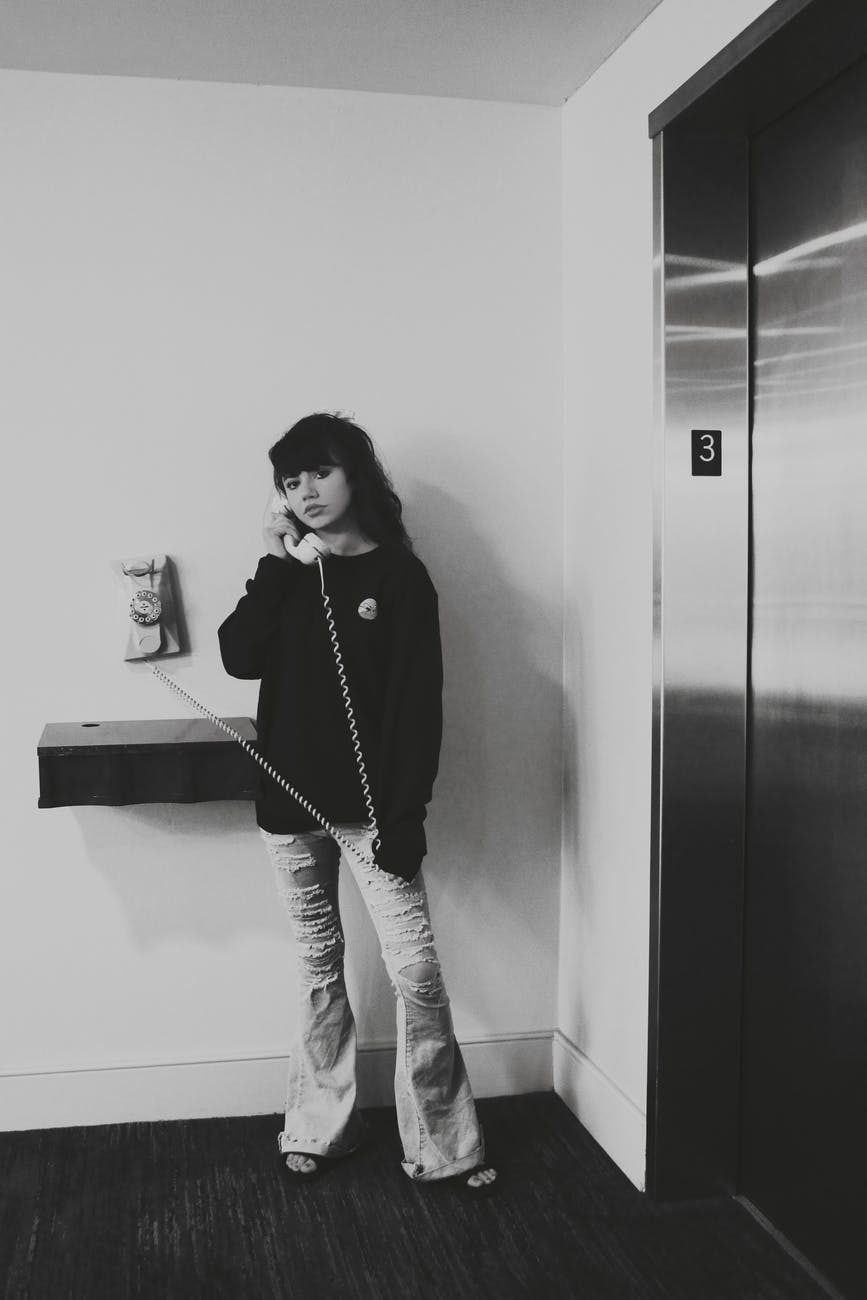
At this point, I was 13 years old and in eighth grade. I didn’t care much for school and would hang out with my friends instead. After missing 34 days of school my father found out and had me put in juvenile detention for three days. My stay was an eye opener to the violence out there, so many girls were in solitary confinement. The stay didn’t affect me, I got out and talked my dad into letting me go to the Eagles concert with my boyfriend just a few days later. It would have been fine except my boyfriend drove a motorcycle so we borrowed a friend’s car. The car broke down as we were almost there. We walked the rest of the way and said we’d figure it out after the concert. After the concert, I used the toll booth phone and called my dad. The worst part is it was freezing outside, my father had never been to that city over an hour away from him. Trying to give directions, I said right before the toll both look for the car. It took him hours to find us and he was pissed.
Right after that, he put a restraining order on my boyfriend, like that would stop me from seeing him. I was in love and we were going to get married. The fights with my dad kept escalating until he put a gun to my head. That was the last straw, I tried and almost succeeded in killing myself. My dad was so out of touch with reality, he took me by the cub to get a glass of milk. He drove 20 minutes to the club when he could have driven five minutes to the hospital. He’s not able to connect with reality.
By this time I was on probation for carrying a gun and saw my probation officer every month and never spoke a word for seven months. She would tell me that the state was already looking for a boot-camp type of place to send me, that was for kids who could not be reformed. She felt I could be reformed and kept talking to me until the eight-month when I said send me somewhere that is not a boot camp and I’ll go. It took a few months but she found a convent that ran a bad girl boarding school, Mount St. Michaels.
Luckily for me, it was only thirty minutes from my grandparents. My father was not allowed to see me for a year, and my mother was allowed but she never came. Every Wednesday night there was group counseling, and my grandparents came every time. I couldn’t visit with them but over time they let me say hello and my grandmother would bring goodies for the entire dorm.
I was in a boarding school for a year, and I cherish my time there. The nuns were always complementary, positive, and reassuring. One day hurt my thumb, and several nuns circled me, held my thumb and they prayed the pain would go away. This was new to me but it worked.
I started going to the Catholic church on-site every day and eventually converted to Catholicism after completing my studies. Father George and my counselor Jim were my teachers and at Baptism, I chose my Catholic name, Catherine, and name Jim as my guardian.
As always my mother fucked up another big moment for me. I was scheduled to leave on the 10th, we had a big party planned and say our goodbyes. Instead, my mother shows up on the 9th, I’m hauled out of class not knowing what was going on until I saw my mother’s car. No goodbyes, nothing. Someone had finished packing my room and off we went. It wasn’t until years later I realized the reason she came early is my brother’s birthday is on the 10th, she couldn’t be bothered the day of his birthday so she showed up unannounced.
I didn’t want to go back to my mother’s and talked with my grandparents about coming to live with them. Behind the scenes, my grandparents put everything in place to take custody of me. My mother never blinked an eye.

Reformed, I was to a point but still drank and did drugs. My grandparents ran a tight ship and my opportunities were limited to weekends. I wasn’t doing many drugs just smoking pot when it was around. Drinking was another story. This was a continuation of my drinking which lead to addiction. My granny knew I drank and if I were taking medication, she would tell me not to take my medication since it was the weekend. I did pretty well at hiding it except for the night I was skunked, hit the washer, and threw up. Gramps knew then I was drunk but no punishment.
I guess they looked at the trauma I grew up with and gave me a pass at times. With my grandparent’s love and strict rules, I went to 10th grade with confidence. I was your typical teenager except I was hiding a horrific past.
I was also sexually abused by my dad but am not ready to say it out loud.
Melinda
I want to give a special thanks to Editor, Andrea Marchiano from Cherish Editions for sending me the book This Is Mandy by Mandy Kay.
Obsessive-compulsive disorder (OCD) is an anxiety disorder that affects millions of people of all ages. Unfortunately, it is often kept a secret – and that’s true in the case of young Mandy, too.
Mandy’s OCD affects her life at home and school, as she spends so much time on her compulsions and obsessions: washing her hands, brushing her hair, checking locks, and re-writing her classwork – over and over and over. But Mandy comes to realize that OCD isn’t shameful, and it doesn’t have to be hidden. Instead, speaking up helps her to feel like herself again.
Having OCD is hard for adults but think about how children feel about their OCD. They are still growing, being judged at school, and do not understand why they do the things they do. Not to mention the stigma. Obsessive-compulsive disorder is broad-reaching, it can affect your entire day. I can’t imagine the stress a child must feel.
Mandy has an art project, she has to paint a portrait of herself. She spends so much time picking the right paint and brush she has little time to draw. But she finished and the portrait has a red face, and black eyes, basically looking very unhappy. Her teacher is alarmed by her work she takes her to a private place to talk about why she drew herself that way. Mandy likes her teacher and opens up about her morning rituals. The teacher reassures her there is nothing to be scared of and that she would get her some help.
Once Mandy gets the help, she feels better. Mandy is confident now and feels good about herself and the future.
I would recommend this book to all children and adults to read to their children. It highlights the struggle with OCD and with treatment life is better. The other moral of the story is trusting someone to share your problems with can often help you deal with them.

We have built a first-class resource of curated books produced and published in-house to create a unique collection of mental health recovery titles unrivaled in quality and selection. We work with experts, psychologists, doctors, and coaches to produce our books, but we also work with real people looking to share their stories to reach out to others and provide hope, understanding, and compassion. These brave authors also aim to raise awareness of mental health’s “human” face and its impact on everyday lives.
Melinda
When I read about the new Kuau FrequenCell, I had to try it! A special thanks to Communications Director Nassia Bitha for sending me the product and being so easy to work with. Be sure to visit Vital Field’s website to see the science behind each product, Vital Field does extensive research and testing before a new FrequenCell is released.
The Kuau Cell has been developed for everyone interested in improving their quality of life and revealing their highest potential.
The cumulative expert knowledge and the science of using precisely targeted frequencies for health management and pain management are now, for the first time in history, available to end-users worldwide. Vitalfield applications don’t replace or compete with traditional medicine or conventional treatment methods. They are intended to provide an alternative treatment to pain and health, when conventional methods fail to provide significant results on their own. With zero negative side effects reported and over 80% reported satisfaction from customers, we are confident in offering a full money-back guarantee if our product does not work for you.
Since Vitalfield products are safe, natural, non-invasive and non-chemical, it’s worthwhile to see if our product can reduce your pain and improve your life.
Kuau Cell is a special Energy Cell. In it, the energy of a shamanic ritual, ancient herbal knowledge, and energized water all merge together. The unusual ingredients from the digitized version of the medicinal cactus ritual are a key factor. This ritual’s purpose is rooted in deep cleansing and reconnecting with Mother Earth. The high alkaloid cactus extract used is not psychoactive, but acts as a cell activator.
I started wearing on 9/22/22 and have seen an increase in energy and clarity. I plan to wear it longer to get the full effect and will keep you up to date.
Today is the 25th and I’ve only taken one nap, that’s a huge improvement over every day. I woke up at 4:00 am today and have not had a nap. I worked in the garden, deadheaded my roses, and several other plants in the backyard. I even put fertilizer in the Hibiscus plant and thinned indoor flowers.
I recommend the Kuau Cell to anyone looking for increased energy and clarity.
You can find more information on all Frequencells here
To your health,
Melinda
Thank you for all the great feedback on the Blogger Highlight series, I’ve enjoyed meeting each blogger and sharing their site with you. This week I highlight a new blogger, Adventure is out there.
A love story that meets travel and nature
Melinda
Cardiovascular diseases (CVD) are the most common cause of death globally. An estimated 17 million people die from CVD every year. Coronary heart disease or strokes were the major causes of these deaths. A common misconception about CVD is that it impacts more people in developed countries who are more reliant on technology and lead sedentary lifestyles. But more than 80% of the deaths occur in middle-income and low-income countries. Fortunately, the main causes of cardiovascular disease are modifiable factors, which include lack of exercise, smoking, and a poor diet.
Cardiovascular disease (CVD) is a class of diseases that affect the heart or blood vessels (veins and arteries). It can be caused by a combination of socio-economic, behavioural, and environmental risk factors, including high blood pressure, unhealthy diet, high cholesterol, diabetes, air pollution, obesity, tobacco use, kidney disease, physical inactivity, harmful use of alcohol and stress. Family history, ethnic background, sex, and age can also affect a person’s risk of cardiovascular disease.
115,000 – the number of times our heart beats in a day.
2,000 – the number of gallons of blood pumped by the heart every day.
1893 – the year in which the first open-heart surgery occurred.
3,500 – the age in years of an Egyptian mummy in which the earliest-known case of heart disease was identified.
1,200 – the fastest heartbeat per minute — that of the pygmy shrew.
1 pound – the weight of the human heart.
60,000 – the number of miles our blood vessel system can extend to.
1,500 pounds – the weight of a blue whale’s heart.
1.5 gallons – the amount of blood pumped by our heart each minute.
You may even be able to find a World Heart Day event near you that’s offering health check services. It doesn’t get much easier than that!
Maintaining a healthy weight and low Body Mass Index (BMI) can help decrease your chances of developing heart disease. Whether you decide to attend a gym or fitness class — or prefer to get involved at a World Heart Day event — try to make being active a priority.3. Schedule life-changing seminars
Most cardiac emergencies occur near someone who could potentially help — so setting up a CPR class and learning how to resuscitate a person could save lives. Cooking demonstrations, health lectures, and fitness lessons are also great events to plan for World Heart Day.
According to the World Health Organization, as many as 80% of all heart attacks and strokes are preventable. The majority of deaths due to CVD are precipitated by risk factors such as high blood pressure, high cholesterol, obesity, or diabetes, which can, to a large extent, be prevented or controlled through the consumption of a healthy diet, regular exercise and avoiding tobacco. Keeping an eye on your blood pressure, cholesterol levels and blood sugar levels is also very important.
There are many other best practices you can do to prevent Cardiovascular Disease. Click on the links below to find more information.
I have a heart condition, it’s an Arrhythmia that will not kill you. You feel like you’re having a heart attack but it’s not. I’ve been to the hospital many times because it was so bad I wanted to make sure it wasn’t a heart attack. I also have an artery that is narrow and slows the blood down to the heart. The Mayo Clinic made the diagnosis after several Cardiologists failed to find the answer.
The best thing we can do besides getting ourselves in good shape is to learn CPR. We never know when a family member or a stranger will need life-saving help.
Our heart keeps us alive, we use it 24/7 and we need to take care of it or it will come back to bite us.
Melinda
References:
The first Congress of the United States approves 12 amendments to the U.S. Constitution, and sends them to the states for ratification. The amendments, known as the Bill of Rights, were designed to protect the basic rights of U.S. citizens, guaranteeing the freedom of speech, …read more
Two months after announcing its intention to disarm, the Irish Republican Army (IRA) gives up its weapons in front of independent weapons inspectors. The decommissioning of the group’s substantial arsenal took place in secret locations in the Republic of Ireland. One Protestant …read more
On September 25, 1894, President Grover Cleveland issues a presidential proclamation pardoning followers of the Church of Jesus Christ of Latter-day Saints (also known as Mormons) who had previously engaged in polygamous marriages or habitation arrangements considered unlawful by …read more
Unwilling to rest as a one-hit wonder when its first big hit, The Monkees, went off the air in 1968, the television production company Screen Gems wasted no time in trying to repeat its success. On September 25, 1970, in the 8:30 p.m. time slot immediately following The Brady Bunch, ABC premiered a program that would give Screen Gems its second TV-to-pop-chart smash: The Partridge Family.
If the Beatles served as the inspiration for The Monkees, it was the real-life family act the Cowsills that inspired Screen Gems to dream up The Partridge Family, but the family demurred when it learned that actress Shirley Jones, and not Barbara Cowsill, would be playing the role of Shirley Partridge. Undaunted, Screen Gems hired four non-singing child actors for the roles of Laurie, Danny, Chris and Tracy Partridge and one future teen idol, David Cassidy, for the role of Keith.
After aborting a poorly planned and ill-timed attack on the British-controlled city of Montreal, Continental Army Colonel Ethan Allen is captured by the British on September 25, 1775. After being identified as an officer of the Continental Amy, Allen was taken prisoner and sent …read more
Melinda
In this fast-paced social media world, it can be difficult to find the time to look within or back in time. I hope you find these quotes and questions interesting. So glad you stopped by today! Continue reading “Deep Thoughts”
Today’s prompt for Stream of Consciousness Saturday is: “home.” Use it as a noun, a verb, an adjective, or an adverb. Enjoy!

When I think of home, I think about my grandparent’s house. I went to live with them at 14 years old. We lived in a very old part of town, the house was 900 sq ft, with no shower, window air conditioners, no cable, no dishwasher, and one bathroom.
I had the best growing up years in that house. Without all the technology in the house, no cable or Internet, you had more face time with each other and family. That’s how we spent our days, we cooked together, hand washed and dried the dishes.
They lived on a 1/3 acre of land so we had a huge garden. Gramps was the master gardener. We ate fresh veggies and fruits every day. We didn’t have canned food except for asparagus which granny loved.
It was a simple life and it was a great life for a teenager to grow up in such an environment. I was very sad when we sold the home, all the memories flashed back as we prepared to sell the house.
Melinda
1. Your post must be stream of consciousness writing, meaning no editing (typos can be fixed), and minimal planning on what you’re going to write. 2. Your post can be as long or as short as you want it to be. One sentence – one thousand words. Fact, fiction, poetry – it doesn’t matter. Just let the words carry you along until you’re ready to stop. 3. I will post the prompt here on my blog every Friday, along with a reminder for you to join in. The prompt will be one random thing, but it will not be a particular subject. For instance, I will not say “Write about dogs”; the prompt will be more like, “Make your first sentence a question,” “Begin with the word ‘The,’” or will simply be a single word to get you started. 4. Ping back! It’s important, so that I and other people can come and read your post! For example, in your post you can write “This post is part of SoCS:” and then copy and paste the URL found in your address bar at the top of this post into yours. Your link will show up in my comments for everyone to see. The most recent pingbacks will be found at the top. NOTE: Pingbacks only work from WordPress sites. If you’re self-hosted or are participating from another host, such as Blogger, please leave a link to your post in the comments below. 5. Read at least one other person’s blog who has linked back their post. Even better, read all of them! If you’re the first person to link back, you can check back later or go to the previous week by following my category, “Stream of Consciousness Saturday,” which you’ll find below the “Like” button on my post. 6. Copy and paste the rules (if you’d like to) in your post. The more people who join in, the more new bloggers you’ll meet and the bigger your community will get! 7. As a suggestion, tag your post “SoCS” and/or “#SoCS” for more exposure and more views. 8. Have fun!
For more streams, rules, and tips for Stream of Consciousness Saturday, visit our host, Linda at: Linda G Hill
Enjoy!
Melinda
Reference:
Maybe you’ve heard the buzzword Neuroplasty and wondered if it could help with chronic pain. I’m quite curious so this post is a learning experience for me too.
Neuroplasticity is the brain’s capacity to continue growing and evolving in response to life experiences. Plasticity is the capacity to be shaped, molded, or altered; neuroplasticity, then, is the ability of the brain to adapt or change over time, by creating new neurons and building new networks.

The importance of neuroplasticity can’t be overstated: It means that it is possible to change dysfunctional patterns of thinking and behaving and to develop new mindsets, new memories, new skills, and new abilities.
It is obvious that we do many physical things automatically. It generally takes little conscious effort to walk, gesture, chew, or balance while riding a bicycle. We routinely accomplish relatively difficult tasks without too much thought. It is frequently not necessary to think about how to accomplish these tasks because our brains have learned and practiced these skills so well that they occur with little or no effort. In addition to physical activities, we have learned certain cognitive skills that we typically perform with minimal mental effort, such as adding simple numbers, reading, typing, and recognizing certain patterns of speech as belonging to certain dialects.
The reason we are able to accomplish these feats quickly and effortlessly is that neural networks or pathways have been formed in our brains with connections to our bodies. These pathways are very specific and unique to an individual, and they consist of thousands of brain cells devoted to these tasks. They can be very simple or quite complex. For example, most people have the experience of driving somewhere familiar and not recalling exactly how they got there. They were in autopilot mode.
An acquaintance told me this story. He served in Vietnam in the late 1960’s and his company was ambushed. His unit sustained many injuries and some were killed. He incurred shrapnel wounds to his left leg and was eventually “medevacked” to safety. He returned home and limped on that leg with a fair amount of pain for several months. However, after rehabilitation, he recovered. Both the pain and limping resolved and he felt fine. About 20 years later, while taking a walk with his wife, he had a sudden recurrence of the old pain and limping. He mentioned this to his wife, who asked, “Did you notice that?” A helicopter was buzzing overhead. The pain was learned by the brain due to an injury and then reactivated later by a triggering stimulus.
Neural pathway pain is the cause of many disorders that will be discussed in this blog, including fibromyalgia, irritable bowel syndrome, chronic headaches and several other common conditions. Fortunately, it is very possible to reverse neural pathway pain for the same reason that it began: neuroplasticity. The brain has non-pain neural pathways to all areas of the body, which have not been forgotten, and activation of these pathways will turn off the painful pathways. I saw a woman who had pain in two areas: her wrist and her jaw. However, instead of having pain that was present on a regular basis, her pain alternated between these two spots. She would have pain in her wrist for several days and this pain would completely disappear only to be replaced by pain in the jaw; then the situation would reverse. This pattern of pain is highly suggestive of neural pathway pain. Another common pattern is for people to develop pain in one spot for several months, which disappears only to be replaced by pain in another area, and at a later date, that pain resolves leading to a different pain.
The advantages of neuroplasty include that, when done by experienced medical professionals, it’s a safe and effective.
Another attraction of neuroplasty? There are virtually no side effects or risks. The procedure is minimally invasive, unlike open surgery. Because the procedure is fluoroscopically- guided, the medical professional has a precise view of where to safely perform the procedure.
A big advantage to neuroplasty, unlike having major spine surgery, is that you’ll be able to return home the same day as the procedure and return to work and/or your daily routine the day after.
Typically, after the procedure the back pain relief will either disappear instantly or may resolve over a couple of weeks. You may feel some achiness as the anesthesia dissipates.
Dr. Helm notes that, “In some patients, relief may not occur initially, but can occur later, as the patient performs the neural flossing.”
Neural or “nerve” flossing consists of exercises designed to mobilize nerves and help relieve pain created by compressed or irritated nerves. The exercises help to increase range of motion, relieving pain, and minimizing nerve damage. The exercises can also improve overall flexibility and strength.
He recommends that neural flossing exercises to mechanically stretch the nerve root, “Should be done two to three times a day for several months to enhance the hydrostatic effect of the injection and to prevent recurrence of entrapment.”
After the procedure, medication may be prescribed post procedure to decrease and prevent nerve irritation.
Dr. Helm advises that, “Neuroplasty stands in a continuum, from more conservative to more invasive procedures. Generally, one would want to do neuroplasty prior to more aggressive procedures, such as surgery or spinal cord or peripheral nerve stimulation.”
Pain relief from neuroplasty can last two years or more, according to some research. All in all, neuroplasty is a tool in a spine specialist’s toolbox, but it might be the right tool for the job for you.
Neuroplasty treatment includes an injection, the good news is it’s minimally invasive. I’ve heard other chronic illness patients talk about Neuroplasty and became curious. I’ll keep you updated as I learn more. It’s great news that the treatments can last two years! Two years of relief sounds impossible but it’s not.
Melinda
References:









 Looking for the Light