Here’s something different for a Stream of Consciousness Saturday prompt: The word is, “want.” Make the word “want” the first, second, or third word of your post. Have fun!
I want all the rain we’ve received in the past two weeks to get stored up and available in July when there is little to no rain in Texas. It’s rained close to two inches this weekend already, when we think it’s lightening up here comes another downpour.
The upside to all this rain is how all my flowers are blooming out so beautifully and growing fast. We have tomatoes on all six plants and looks like another bumper crop for just the two of us.
Have a great weekend! See you next week.
Melinda
Join us for the fun and sharing good media stories.
For more on the Stream of Consciousness Saturday, visit Linda Hill’s blog. Here’s the link:https://lindaghill.com
Here are the rules for SoCS:
Your post must be stream of consciousness writing, meaning no editing, (typos can be fixed) and minimal planning on what you’re going to write.
Your post can be as long or as short as you want it to be. One sentence – one thousand words. Fact, fiction, poetry – it doesn’t matter. Just let the words carry you along until you’re ready to stop.
There will be a prompt every week. I will post the prompt here on my blog on Friday, along with a reminder for you to join in. The prompt will be one random thing, but it will not be a subject. For instance, I will not say “Write about dogs”; the prompt will be more like, “Make your first sentence a question,” “Begin with the word ‘The’,” or simply a single word to get your started.
Ping back! It’s important, so that I and other people can come and read your post! For example, in your post you can write “This post is part of SoCS:” and then copy and paste the URL found in your address bar at the top of this post into yours. Your link will show up in my comments for everyone to see. The most recent pingbacks will be found at the top. NOTE: Pingbacks only work from WordPress sites. If you’re self-hosted or are participating from another host, such as Blogger, please leave a link to your post in the comments below.
Read at least one other person’s blog who has linked back their post. Even better, read everyone’s! If you’re the first person to link back, you can check back later, or go to the previous week, by following my category, “Stream of Consciousness Saturday,” which you’ll find right below the “Like” button on my post.
Copy and paste the rules (if you’d like to) in your post. The more people who join in, the more new bloggers you’ll meet and the bigger your community will get!
As a suggestion, tag your post “SoCS” and/or “#SoCS” for more exposure and more views.
Psychiatrists are warning of a “tsunami” of mental illness from problems stored up during lockdown.
They are particularly concerned that children and older adults are not getting the support they need because of school closures, self-isolation and fear of hospitals.
In a survey, psychiatrists reported rises in emergency cases and a drop in routine appointments.
They emphasised that mental-health services were still open for business.
‘Patients have evaporated’
“We are already seeing the devastating impact of Covid-19 on mental health, with more people in crisis,” said Prof Wendy Burn, president of the Royal College of Psychiatrists.
“But we are just as worried about the people who need help now but aren’t getting it. Our fear is that the lockdown is storing up problems which could then lead to a tsunami of referrals.”
A survey of 1,300 mental-health doctors from across the UK found that 43% had seen a rise in urgent cases while 45% reported a reduction in routine appointments.
One psychiatrist said: “In old-age psychiatry our patients appear to have evaporated, I think people are too fearful to seek help.”
Another wrote: “Many of our patients have developed mental disorders as a direct result of the coronavirus disruption – eg social isolation, increased stress, running out of meds.”
Dr Bernadka Dubicka, who chairs the faculty of child and adolescent psychiatry at the RCP, said: “We are worried that children and young people with mental illness who may be struggling are not getting the support that they need.
“We need to get the message out that services are still open for business.”
Dr Amanda Thompsell, an expert in old-age psychiatry, said using technology to call a doctor during lockdown was difficult for some older people.
They were often “reluctant” to seek help, and their need for mental-health support was likely to be greater than ever, she added.
‘Clear priority’
Mental-health charity Rethink Mental Illness said the concerns raised were supported by evidence from people living with mental illness.
In a survey of 1,000 people, many said their mental health had got worse since the pandemic had started, due to the disruption to routines that keep them safe and well.
“The NHS is doing an incredible job in the most difficult of circumstances, but mental health must be a clear priority, with investment to ensure services can cope with this anticipated surge in demand,” said the charity’s Danielle Hamm.
She said it could take years for some people to recover from the setbacks.
Sending a special shout out to all the front line workers, grocery stores, delivery businesses, everyone doing their part to keep our countries safe and moving forward. Wash your hands and keep your distance. Virtual hugs. Have a great weekend.
Melinda
Welcome back to Weekend Music Share; the place where everyone can share their favourite music.
Feel free to use the ‘Weekend Music Share‘ banner in your post, and don’t forget to use the hashtag #WeekendMusicShare on social media so other participants can find your post.
If you are feeling suicidal please reach out to a medical professional or go to the nearest hospital. If you think you will hurt yourself or others go to the hospital right away. Hospitals are prepared to help during this time as always.
Melinda
This is a repost from 2015 I thought might help someone today. If you’ve reached the bottom and not sure where to turn, please talk to your doctor about all of your options. ECT has allowed me to celebrate my 56th birthday this year.
I’ve had 20+ ECT treatments. The treatments are necessary when I hit bottom becoming delusional and suicidal. I hope to shine a light on ECT and dispel the myths. Please keep an open mind,the procedure may save your life. In my experience a Psychiatric facility associated with a respected hospital is far superior to chain facility’s. This post is based on top facility in area. I will share the experience with the worst in another post.
I’ve had treatment in-house and outpatient. For me a crisis with suicidal thoughts are best handled in-house with 24 hour care. I’ll share step by step how ECT is handled at UTSW in Dallas.
You arrive and change to a gown, the RN calls you to patient area to make sure your meds have not changed. UTSW has strict processes to prevent mistakes. You will be asked you name many times. The RN prepares an IV in your arm which is used for a short acting anesthesia and muscle relaxer.
When it’s your turn, you walk into a small operating room. There you will see your doctor, several RN’s and anesthesiologist You meet everyone, again double checking you ID bracelet. They ask if you have questions. Usually they are answered by doctor prior to treatment. The anesthesiologist will ask a couple of questions about allergy’s.
You lay down in hospital bed, your heart is monitored throughout. The doctor is logging type of ECT. Usually the ECT machine is right by your head. The RN will take your socks off so your feet can be seen. The movement of the foot tells the doctors you had seizure.
A tech is next to you with an oxygen mask, being claustrophobic I ask if he’ll wait till last-minute to put it on. The muscle relaxer is inserted in IV to allow time to work. The doctor will place ECT “head-gear” on. You will also be given a mouth guard. A RN or tech will take doctors instructions on where to place the electrodes.
You will have your arm band checked several times. I love the quality process UTSW University has in place. The head RN will ask if everyone is ready to time out. They will run through who the patient is, what type of ECT having and is everyone ready.
The Anesthesiologist injects, you falls right to sleep. The procedure only takes minutes. When you wake up you have a RN assigned to your recovery They usually juggle a couple of people. You may get some juice for your dry throat. Once all the effects have worn off and IV removed, you can usually get dresses and walk around so RN can see you’re ok. You’ll receive follow-up instructions. Sign the release paperwork and the RN talks to who will drive you home. No driving yourself after ECT.
Typical side effects, jaw hurts from the seizure, may have headache and lethargic from meds in IV. It takes significantly longer to get you ready than perform the treatment.
A couple of notes: there are several positions doctors can use for ECT treatment. I think most common are Unilateral and Bilateral. I’ve had both and prefer Unilateral. You may have to do more treatments to feel improvement however you don’t lose as much short-term memory.
Bilateral treatment has its benefits, it works faster. You may lose some short-term memory. When I say short-term memory, memories right before treatment and right after.
In the DFW area UTSW/Zale is where you want to go if having ECT or staying in-house.
Parasite prevalence mapsEducational website includes a US map down to the county level, showing where dogs have tested positive for Lyme, anaplasmosis, erhlichiosis and other diseases. Also, information about protecting your pet from tick-borne diseases.
CAPC The Companion Animal Parasite Council has comprehensive information about how to protect your pets from ticks and other parasites.
National Coalition of Anti-Violence Programs: A coalition of programs that document and advocate for victims of anti-LGBT and anti-HIV/AIDS violence/harassment, domestic violence, sexual assault, police misconduct and other forms of victimization. Site has a list of local anti-violence programs and publications. Hotline: 212.714.1141
The Trevor Project:Help and suicide prevention for LGBTQ youth. Hotline: 866.488.7386
GLBT National Hotline:Call center that refers to over 15,000 resources across the country that support LGBTQ individuals. Hotline: 888.THE.GLNH (843.4564) pen pals, weekly LQB and T chatrooms for youth
FORGE (For Ourselves: Reworking Gender Expression): Home to the Transgender Sexual Violence Project. Provides services and publishes research for transgender persons experiencing violence and their loved ones.
Spring is in the air in Texas. All six tomatoes have babies on them and plenty of blooms. We will have enough tomatoes to keep the two of us thru the summer. Have a great day, I’m so glad you stopped by today. Melinda
May 12th is Fibromyalgia Awareness Day. In fact, the whole month of May is dedicated to raising awareness of fibromyalgia. Why is awareness important? Just as with other conditions or illnesses, as people become more aware, more attention and resources are given to treatments and hopefully one day, a cure. Another reason awareness is so […]
MONDAY, MAY 11 The Hoda Show on Sirius XM at 1pm EST
TUESDAY, MAY 12 89.3 KPCC – Southern California Public Radio Morning Edition with Susanne Whatley
TUESDAY, MAY 12 Interview with Hoda Kotb and Jenna Bush Hager on Today at 10am EST
WEDNESDAY, MAY 13 Interview on Late Night with Seth Meyers
FRIDAY, MAY 15 Interview on Live with Kelly and Ryan
Check your local listings for stations and air time. We will be posting links to the special appearances on our website and social sites as they become available. Please share with your friends and family. Thank you!Matching Donation Members of our Board of Directors have issued a very generous matching gift to further augment our resources and reach. Every dollar raised from our community will be matched $1 – $1 up to $80,000. Our Board and staff have worked to strengthen and adapt our strategic plan, revisit the logistical options available for our high school program while remote learning, committed our resolve to a high touch model to support our students, and have modeled contingency plans for budget goals. In this very critical time and with the increased demand for mental health support, we thank you in advance for considering a gift of any amount. ❤️Donate Today ❤️Join the #NoNormal MovementClick Here to Join Glenn in our #NoNormal Campaign
Being stuck at home is new to many people. But I started sheltering in place in 2013 when I was diagnosed with Lyme disease. I spent three years on IV therapy, seven days a week, and walked only to the bathroom and back. The years after IV therapy was just as rough.
I required assistance with everything. The pain unbearable–going to the bathroom, taking a shower, walking down the stairs were so difficult. Mentally I struggled, too, trying to remember to make appointments and phone calls I needed to. I couldn’t even handle putting my medicine in the case each week without mistakes. I felt so much guilt. I thought my husband would leave me as soon as he could, or maybe he would have an affair. Why couldn’t I keep up with showering and fixing my hair? When was the last time I wore makeup?
But I have learned to overcome my guilt by dealing with facts, not fears, and knowing I can handle whatever reality throws my way.
In addition to Lyme disease, I’ve been diagnosed with fibromyalgia, cognitive dysfunction (which includes lack of balance), and dementia. Dementia is the real kicker. There are a host of other ailments I suffer from, and I’m sure I will have more as the years pass. I was told early on that Lyme would cause problems that seem unrelated for years to come because there is no cure and my immune system remains compromised. This past month I found that to be true again when.
I was diagnosed with a new immune disorder, hypogammaglobulinemia. Hypogammaglobulinemia is a problem with the immune system that prevents it from making enough antibodies called immunoglobulins. Antibodies are proteins that help your body recognize and fight off foreign invaders like bacteria, viruses, and fungi. Without enough antibodies, you’re more likely to get infections. People with hypogammaglobulinemia can more easily catch pneumonia, meningitis, and other infections that a healthy immune system.
This makes the COVID-19 pandemic especially scary for me. I get stressed out when I watch more than an hour of news a day, or see people not wearing masks.
In general, though, I’m very used to having to stay at home. I quit driving years ago and have only driven a handful of times in recent years. It’s not that I couldn’t drive, but my husband came along to take notes at appointments since my memory is not what it used to be. Don’t get me wrong. I miss the independence of driving without my husband having to take off work. I also miss being able to see my hairstylist, getting a manicure, and finding great spots for taking photos.
I have to get out of the house for my mental health, at least a little bit, regardless of my immune deficiencies. We still go for a Starbucks run as often as possible. We have a whole sanitation process down, including wiping down his mask, credit card, steering wheel, and both of the top of our cup to the bottom. We take all precautions when he brings groceries in and packages, we wash our hands immediately and wash again after putting everything away. He doesn’t want me to get sick, and I know he does everything possible every time he leaves the house.
I’m ready for this to pass and it will pass, but for now, I’m staying calm and entertained indoors as best as I can. I hope you can do the same.
When you are first learning about Lyme disease, it can be hard to know which way to turn. Here are some links to get you started.
General information
www.lymedisease.orgLymeDisease.org gives info about ticks, Lyme disease, co-infections, prevention, risk maps, downloadable brochures, blogs, news and events. If you are wondering if you might have Lyme disease, see our symptom checklist, for a printable PDF you can share with your healthcare provider.
MyLymeData is LymeDisease.org’s survey tool that tracks patient progress over time. It allows people to quickly and privately pool information about their Lyme disease experiences. When large amounts of data are combined, we can see patterns that help us determine which treatments work best. Add your Lyme data to MyLymeData to help find a cure for Lyme disease.
ILADS–International Lyme and Associated Diseases Society. Professional organization for doctors who treat Lyme disease. Lyme info, educational videos, downloadable brochures.
Parasite prevalence mapsEducational website includes a US map down to the county level, showing where dogs have tested positive for Lyme, anaplasmosis, erhlichiosis and other diseases. Also, information about protecting your pet from tick-borne diseases.
CAPC The Companion Animal Parasite Council has comprehensive information about how to protect your pets from ticks and other parasites.
New reports estimate that every state in the U.S. has seen cases of Lyme disease. What exactly is the tick-riddled disease and how can you be sure you have it?
Though anyone can develop a COVID-19 infection if they are exposed to the novel coronavirus, health officials have continued to stress that some groups of people — namely those who are older or have underlying health issues — are particularly at risk for severe infection should they fall ill.
Included in that group are Lyme disease patients, Dr. Raphael Kellman, founder of Kellman Wellness Center, told Fox News.
“Patients who have Lyme disease have a severely impacted immune system. A big component of Lyme disease is a hyperactive immune system that is always in a state of inflammation,” he explained, noting this factor, in particular, could make these patients more at risk for severe illness.
Kellman: Patients who have Lyme disease have a severely impacted immune system. A big component of Lyme disease is a hyperactive immune system that is always in a state of inflammation.
The coronavirus turns our own immune system against us. It activates our immune system and it overly produces different cytokines, which is further activating the immune system. Coronavirus causes a cytokine storm and overproduction of cytokine, causing much of the damage we see in coronavirus patients, such as pulmonary lung damage and pneumonia that ensues. The inflammation could be a component of the cardiovascular and neurological dysfunction, such as headaches and other neurological manifestations that we see in coronavirus patients as well.
Lyme disease patients are faced with similar neurological symptoms, like coronavirus patients, such as pain, headaches, brain fog, etc. People who have Lyme disease are more susceptible because of their inability to fight off disease. Their immunity isn’t as strong in killing viruses and microbes. People with Lyme disease are at a greater risk of incidence and severity of coronavirus.https://feeds-elections.foxnews.com/covid/public/index.html?uid=fox-covid19-heatmap-counties-1
Fox News: What concerns do you have as tick season ramps up, coinciding with the ongoing coronavirus epidemic?
Kellman: We have to be very vigilant this tick season, more so than any other year, so that we prevent Lyme disease from developing. We also have to take a more proactive stance in our treatment and prevention of coronavirus, in addition to wearing masks and tracking the virus, there is a whole realm of medicine that is not being seen. It is not only drugs and vaccines that will help us combat this pandemic. There are a plethora of natural compounds that have been shown to help other coronaviruses.
Fox News: What can be done to support those with Lyme disease as the epidemic continues?
We [should also] run a baseline test of vitamin levels and identify deficiencies. Many people have deficiencies and don’t realize it. It’s important to get vitamin D levels checked to make sure you’re in a good range and taking the supplement if you’re suffering from a deficiency. Strong vitamin D levels show you have a lower risk of developing the diseaseand you’re more likely to survive the virus.
Blood tests are also important to measure the baseline levels of cytokines to see who is at risk.
Sending a special shout out to all the front line workers, grocery stores, delivery businesses, everyone doing their part to keep our countries safe and moving forward. Wash your hands and keep your distance. Virtual hugs. Have a great weekend.
Melinda
Welcome back to Weekend Music Share; the place where everyone can share their favourite music.
Feel free to use the ‘Weekend Music Share‘ banner in your post, and don’t forget to use the hashtag #WeekendMusicShare on social media so other participants can find your post.
May is Mental Health Awareness Month and mental health has been on my mind more than normal. I come from generations of family members with mental illness including my father who had Bipolar Disorder.
I have treatment-resistant Bipolar Disorder which means medicines don’t always work on me. I live on a cocktail of nine medications and have been stable on this mix for six months.
I expect this to be an unpopular post, that’s okay I want to hear all your comments.
All people have to be held accountable for their actions. The thought that came to mind this morning was a murder case that disturbs me to this day. A woman in Texas drowned all five of her children in the bathtub. She pleaded temporary insanity. I would have to agree she was insane, how could someone kill their five children? She only spent five years in a mental health ward in the prison. Is five years of medical oversite enough punishment? Is she no longer insane? I think not. I’m responsible for all of my actions regardless of my mental state.
My father sexually abused me, was it ok because he was mentally ill? It wasn’t his fault? I don’t buy into that theory. My father never sought help for his mental illness and committed suicide at 52 years old. He made the decision to not seek treatment, at the end of his life he was too sick to see how far down he was. He’ll be held accountable by a higher power than me.
I was nine years old the first time I attempted suicide, it was the first of many attempts throughout my life. As an adult educated on my illness, I have a support system in place. I have to be disciplined in taking my medication, going to therapy, seeing my Psychiatrist, and communicate with my husband or pay the price of becoming unstable.
I have Dementia brought on by Lyme Diseases and my mind slips a little each day. I watched my granny slip away and have chosen not to live that way. I plan to commit suicide before my memory is completely gone. I don’t want my husband to have to go thru all the pain of caring for me. It’s gut-wrenching to watch someone disappear behind their eyes.
We don’t talk about it often but he accepts that he can’t change my mind. My Therapist and Psychiatrist know, they wish I felt different but know the truth, you can’t change someone’s mind. Last night I told my husband that it was selfless of me, it’s the only word I could come up with. He said it’s love, that’s exactly how I felt in my heart. I want to protect him from the pain I witnessed my gramps go thru as my granny slowly died.
I’ll be held accountable for my actions by a higher power.
COLUMBUS, Ohio — With the COVID-19 pandemic forcing folks to cope with loneliness, job loss and grief, the National Alliance on Mental Illness is teaming up with Instagram to connect young people to mental health support resources during this challenging time.
On its Instagram page, NAMI is posting tips and recommendations to help folks feel less vulnerable and more connected. The organization’s chief medical officer Ken Duckworth said the project is targeting young people because three-quarters of all mental-health vulnerabilities begin before age 25, and social distancing could intensify those feelings.
“Our goal is to get resources, get things that are easy for them to digest and to make it appealing for young people to have a conversation about what all of us are experiencing, which is a challenge to our sense of routine and, in some cases, the development of anxiety problems,” Duckworth said.
For tips, go to NAMI’s Instagram account at @NAMICommunicate or call their hotline at 1-800-950-NAMI.
If you’re feeling anxious while stuck inside alone during the pandemic, Duckworth recommended limiting news intake and avoiding social media before bed. He said social distancing doesn’t have to mean social isolation and recommended reaching out and strengthening relationships.
“If you have an elderly neighbor you can shop for or you want to reach out to a nephew you haven’t talked to in a while – if you can find meaning in adversity, that seems to predict long-term well-being from adverse situations,” he said.
According to federal data, about 10 percent of Ohio youth between 12 and 17 years of age reported suffering from at least one major depressive episode over the past year. The NAMI Ohio chapter has more resources online at namiohio.org.
Cleveland Scene works for you, and your support is essential.
Our small but mighty local team works tirelessly to bring you high-quality, uncensored news and cultural coverage of Cleveland and beyond.
Unlike many newspapers, ours is free – and we’d like to keep it that way, because we believe, now more than ever, everyone deserves access to accurate, independent coverage of their community.
Whether it’s a one-time acknowledgement of this article or an ongoing pledge, your support helps keep Cleveland’s true free press free.
Sleep is your life-support system and Mother Nature’s best effort yet at immortality, says sleep scientist Matt Walker. In this deep dive into the science of slumber, Walker shares the wonderfully good things that happen when you get sleep — and the alarmingly bad things that happen when you don’t, for both your brain and body. Learn more about sleep’s impact on your learning, memory, immune system and even your genetic code — as well as some helpful tips for getting some shut-eye.
LeAnn Rimes wants to “take away the shame” associated with mental health.
The 37-year-old singer has opened up on her battle with depression and anxiety, and says that facing her “pain” helped her process how she was feeling, rather than “getting lost” in her emotions.
She said: “At first I didn’t want to face my pain because I thought I would get lost in it. But I didn’t. People are so ashamed to talk about it and ask for help. But taking away the shame is so important.”
LeAnn became a child star in her teens, and has admitted she was struggling with “emptiness and sadness” behind the scenes.
She added: “There was so much emptiness and sadness amidst joy. And I had to be LeAnn Rimes, the entity, not LeAnn Rimes, the person. I was very fragmented.”
The ‘How Do I Live’ hitmaker says things reached breaking point in 2010, following her divorce from Dean Sheremet and her affair with now-husband Eddie Cibrian.
She explained: “There was something in the press every week that was just so fabricated. Obviously there are mistakes that I take great responsibility for. But my whole life I had cared what everyone thought of me. So the public shaming was a deep thing that I took on. I had so much underlying grief. Everything accumulated and I had to give in.”
After her 30th birthday, LeAnn entered a treatment facility to help combat her mental health struggle, and says she now focuses on maintaining her “self-worth”.
Speaking to People magazine as part of their Let’s Talk About It mental health initiative, she said: “It was the first night I was ever alone, ever. There was a lot of co-dependency. And a lot of healing that needed to be done.
“I know who I am now. And I try to keep things in perspective. The need for others’ approval has changed big-time. Self-worth is key.”
When Tamar Canady thinks about the upsides to the coronavirus pandemic, she thinks about how she and her 15-year-old daughter sleep in more these days.
But the downsides are difficult.
Ella Canady, like many teens, often hides her emotions. But recently at her home in Phoenix, she has had some uncharacteristic breakdowns in front of her mom. She misses her friends. And school – the real kind, not the kind where she sits in front of a computer for five hours a day.
“I’m sorry,” Tamar says as she soothes her daughter. “I know you didn’t want this.”
Nobody knows when or if life will return to normal after the coronavirus pandemic. But as the weeks of stay-at-home orders and school closures continue nationwide, parents are questioning whether isolation measures and physical distancing are doing lasting damage to their kids’ emotional development.
Will this generation grow up fearful of touching or standing too close? Will they know how to make friends or interact in group gatherings? And how will it affect their academics and job prospects?
Psychologists and economists are still gathering data, but here’s the consensus for the short term: Most of the kids will be all right.
Some experts see younger children poised to bounce back better than adolescents and teens, who are going to face some stress. But in general, children’s resilience is inherently tied to the stability and safety of their families.
That’s why children from families who are already vulnerable – with the tightest finances, facing job losses, food insecurity, housing instability or fractured relationships – are likely to fare the worst and will need the most help. Without solid emotional and financial supports, those children are likely to face the biggest blow to their social, psychological and academic development.
“We really are facing two crises,” said Ariel Kalil, a developmental psychologist at the University of Chicago and director of the Center for Human Potential and Public Policy. “We have the economic crisis, but we also have this school crisis that will have uneven impacts, depending on a family’s income.”
In general, high-income families will have the means and habits to make up for school closures. But low-income families will face more stress and have less access to resources.
“They’ll have fewer habits and supports for stimulating their children in the home environment to make up for that schooling loss,” Kalil said.
Life may be weird right now, but many kids will build resiliency through this period, child development experts say.
There’s no precedent in the research literature for this kind of collective impact. But social and emotional outcomes for children will depend largely on how close they are to stress and how long it lasts, the stability of the resources around them and the presence of relationships that help moderate the stress, psychologists say.
“I don’t think this is going to have an everlasting effect,” said Seth Pollak, a psychology professor at the University of Wisconsin-Madison and director of the Child Emotion Lab. Much of his work focuses on how disadvantaged children develop. But he suspects affluent, college-bound students will emerge just fine.
“Most kids will ride this out and probably write some interesting college application essays about it.”
For toddlers, life during the pandemic is giving them exactly what they yearn for: the ability to more fully attach themselves to their parents stuck at home, said Amy Learmonth, a psychology professor at William Paterson University of New Jersey who studies children.
“I would not worry about the little ones, even though they’re driving their parents nuts,” Learmonth said. “In the infant and toddler phase, it’s kids’ goal in life to have their attachment figure close to them.”
Learmonth said she worries more about children in their tween years, who are pivoting from having family members at the center of their social interactions to placing peers in that role. Adolescents and teens are figuring out how to make and be friends with people because they share commonalities, not just proximity.
“They’re the ones who are probably suffering most in the short-term,” Learmonth said. “What they’re learning in the hallways of middle school is vastly different from what they’re learning to do in a virtual group chat with friends.”
For some kids who associate those hallway interactions with stress or anxiety, quarantine has actually provided some relief, said Tim Kearney, chief of behavioral health at Community Health Center Inc. in Middletown, Connecticut. The organization serves students’ mental health needs at about 100 school-based sites across the state.
But many other children are struggling with the loss of face-to-face time with peer groups, as well as the loss of other school and community rituals, Kearney said.
‘I don’t know what to do with myself’
For Alina Tran, a senior at East Haven High School in Connecticut, her biggest worry before COVID-19 was picking out a college. Now she’s worried about keeping her Advanced Placement course grades above a C while trying to finish her senior year online. Tran places a lot of pressure on herself and dreams of becoming an optometrist.
She’s attended art therapy sessions for years at school to help manage her stress. Now those therapy sessions, hosted by Community Health Center, have moved to Zoom. Last week, Tran met online with three other students and a therapist while drawing from their homes and bedrooms.
“I don’t know what to do with myself,” said Tran, who found herself too out of sorts to even doodle. But she held up a painting from a previous week, where the prompt was to place a lighthouse in an incongruous setting. Tran painted it into a meadow.
“My parents didn’t graduate from college,” she said. “I’m really stressed about it. And with this whole pandemic, and with visiting colleges and everything getting canceled, I don’t really know a good way to transition to college.”
Tran’s therapist assured her that her feelings were normal and encouraged her to make time for creativity to help stay calm.
It’s actually good advice for everyone. Kearney said adults can best help their kids by staying focused on the present, and by getting physical and mental exercise daily.
“One thing that helps is for parents to exercise creativity: ‘Let’s have a dinner from such-and-such a country, let’s eat food that’s all the same color, let’s have a picnic in the bedroom,’ ” Kearney said.
Parents should also consider relaxing limits on screen time, he added. Social media can provide kids with a much-needed connection to peers and social groups, especially for those who can’t safely go outside.
Kearney and other child psychologists worry most about children from the most challenging circumstances.
“I have kids I’m treating who are going stir crazy because they haven’t gone outside in three weeks,” Kearney said. “They don’t have a yard, a patio or a balcony, and if they open the door to the hallway, there are lots of people milling about.”
The study was designed to track families where at least one parent worked in the service industry – in normal times. But the arrival of the pandemic allowed researchers to survey families before and immediately after the public health crisis shuttered most of the American economy.
The blow was immediate: More than 4 out of 10 households experienced a layoff between February and mid-March, said Anna Gassman-Pines, an associate professor of public policy at Duke University and a co-author of the research. Her partner is Elizabeth Ananat, an economist at Barnard College.
The job losses were accompanied by a spike in severe mental health symptoms. About 10% of parents reported feeling anxious or depressed all day at the end of March, up from 6% of parents who reported feeling that way a month prior, the results showed.
Children felt worse, too. About 20% of them started chronically misbehaving at home, their parents reported, a jump from 14% the month before, Gassman-Pines said.
“What was surprising to us was just how quickly families’ well-being took a hit after the full extent of the crisis started to take place,” Gassman-Pines said.
Research shows economic downturns are linked with a host of bad outcomes that hit vulnerable families hardest.
Disadvantaged youth who experience community downturns in their formative years are more likely to have lower test scores and lower rates of college attendance, Gassman-Pines added. And even if children don’t have a family member who loses a job, they tend to do worse in school and life when many people around them experience unemployment.
The most dramatic solution won’t be cheap: Gassman-Pines said policymakers need to be thinking about how to get more cash to low-income families as quickly as possible.
“The majority of these people responded that they cannot pay for groceries this month,” Gassman-Pines said. “Same with rent and mortgage. They are really needing resources for those.”
Contact Erin Richards at (414) 207-3145 or erin.richards@usatoday.com. Follow her on Twitter at @emrichards.
Education coverage at USA TODAY is made possible in part by a grant from the Bill & Melinda Gates Foundation. The Gates Foundation does not provide editorial input.
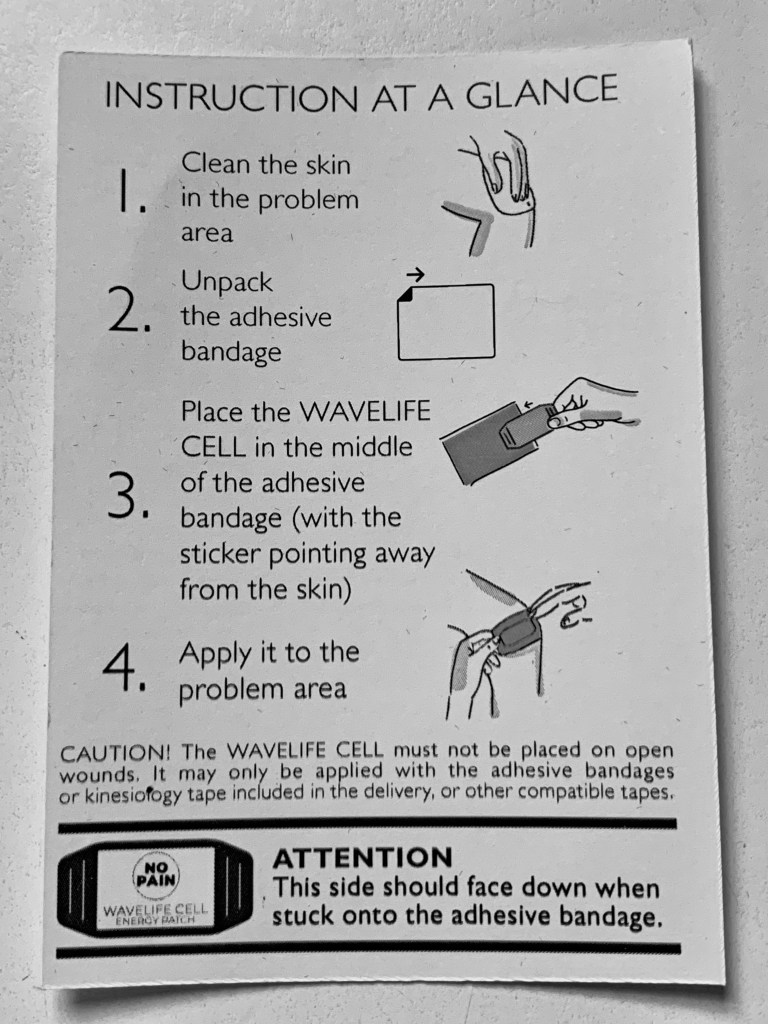
I’ve heard from WaveLife Technologies http://www.wavelife.com that many of you have purchased the WaveLife Energy Cell from my review. I would love to hear how the WaveLife Energy Cell worked for you. Have a great pain-free day. (Pain-free as possible)
I focused on my left knee pain since it is the greatest pain I have on a daily basis. I’m months overdue for a total knee replacement and thought this was a great way to see how well the product worked.
I taped the Energy Cell right below my knee just to the side to get good coverage of the stick-on pads. I wore it for six hours and the tape on the bandage just started to peel on one side at the end of six hours.
After 20-25 minutes of wearing the Energy Cell, I could feel the pain in my knee start to dissipate. The pain didn’t completely go away but the first day I was able to delay taking a pain pill by an hour and half hour. Pretty good for the first day. I was really surprised by how easy it was to wear not to mention getting some real results.
The second thru the fourth day I experienced the same results, shortly after taping on the Energy Cell the pain started to dissipate. I was able to go from an hour and a half to two hours later than normal before taking my scheduled pain pill.
I can’t recommend the WaveLife Technologies Energy Cell enough! Anytime I can get pain relief no matter how little is a great day for me. I plan on purchasing a second for my husband.
*Here’s a discount code for 15% off your purchase, WAVELIFELIGHT15*
The Technical Information
Here’s more technical and scientific information about the Wavelife Technologies Energy Cell and the company.
The Wavelife Technologies Energy Cell is now available in the United States, you can find more information on retail pricing and how to purchase at concierge@wavelife.com.
WaveLife’s No Pain Energy Cell is a non-invasive, non-chemical pain management method that is based on over thirty years of research. It’s been developed in cooperation with over 2800 clinics in Germany, Switzerland, and Austria. It’s reported to help a wide range of pain, such as arthritis, headaches, lower back pain, post-surgery pain, upper back pain, and osteoporosis. You can find out more about the device and whether it could help you here.
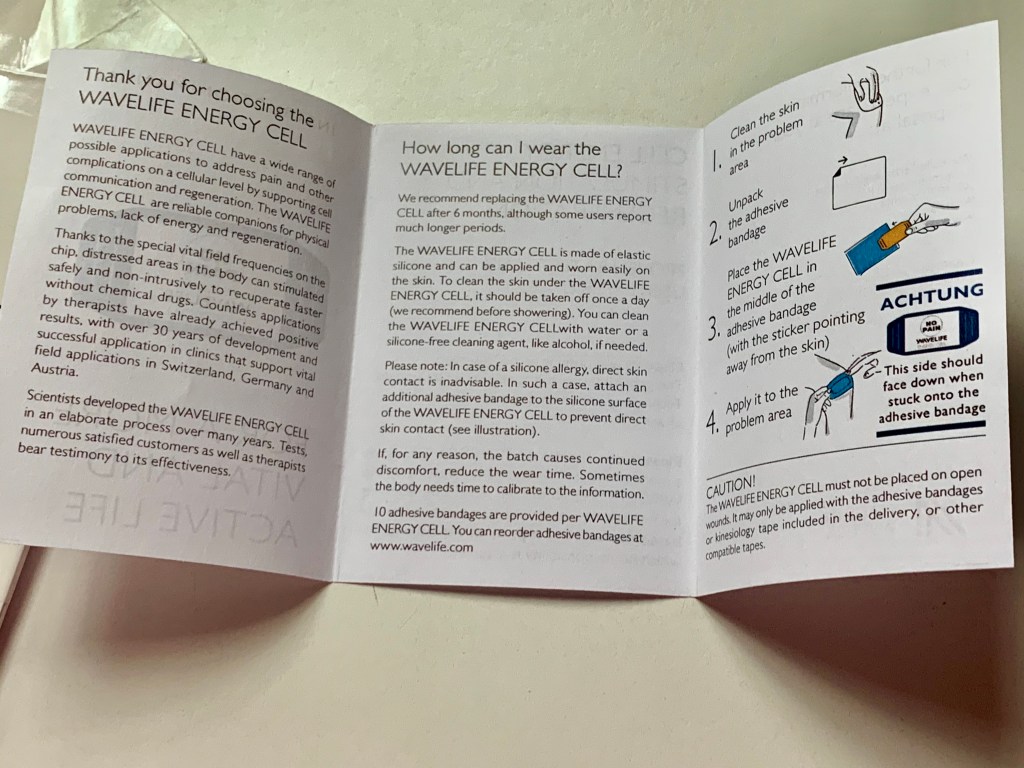
WAVELIFE ENERGY CELL have a wide range of possible applications to address pain and other complications on a cellular level by supporting cell communication and regeneration. The WAVELIFE ENERGY CELL are reliable companions for physical problems, lack of energy and regeneration.
Thanks to the special vital field frequencies on the chip, distressed areas in the body can stimulated safely and non-intrusively to recuperate faster without chemical drugs. Countless applications by therapist have already achieved positive results, with over 30 years of development and successful applications in clinics that support vital field applications in Switzerland, Germany and Austria.
Scientist developed the WAVE ENERGY CELL in an elaborate process over many years. Tests, numerous satisfied customers as well as therapist bear testimony to it’s effectiveness.
How long can I wear the WAVELIFE ENERGY CELL?
We recommend replacing the WAVELIFE ENERGY CELL after six months, although some users report much longer periods.
“I was in so much pain, I could hardly walk. Someone recommended the Energy Cell. I put in on, within hours I was in much less pain, and 3-4 days later, I could bend my knee again. I don’t even think about my knee now.” Franz Klammer, 1976 Downhill Ski Olympic Champion / 25 World Cup Wins
“I was introduced to the WaveLife Cell through a client of mine, and I found it’s a really good alternative for not only pain, but also stress relief. I’d like to see this product become more mainstream; it’s really going to become the future of our business in many ways.”
We can get so caught up in treatments and pressing forward that the topic of Self-Grief, (the process of grieving your “former” self) is a rarely spoken about issue within the Lyme Disease, Chronic Pain and Illness communities. Many people frequently experience hardship over not feeling like their self that they used to be. They cannot do the same hobbies, have the same friends, etc. However, if you allow yourself to go on this journey of self-grieving; you often will end up learning your own goals and true self better than you ever could imagine.
1. Allow your mind time to catch up to what your body is going through and has gone through.
Did you have a full-time job? Were you in school to finish a degree? Could you shower, put on makeup, get dressed and STILL have energy to go out or socialize? Me too. The changes that happen when serious illness enters your life is a whirlwind of loss to say the least. As if a category 5 hurricane crashed through every single life plan and goal that was once laid out before you, it takes time to come to grips with the losses and to establish a course of action. Don’t expect yourself to be able to process all of these at once. It will come in waves, ride them instead of bracing for impact.
2. Accept limitations without settling for less.
Living with limitations does NOT mean a life half empty. It may take you longer to complete a mentally draining task, but you can do it. You may need assistance with walking, driving, or even self-care but at the end of the day you are not doing less…in fact, you are doing more because you have to now learn how to achieve all of those check marks by your to do list (even if it’s a mental list) in a totally new fashion. Accepting your difference will never make you less than another, it only empowers you to reach your goals by whatever means necessary.
3. Avoid romanticizing your time before illness.
This is a BIG one and honestly one of the hardest for me. We’ve all heard those stories about the “good ole days”. The good ole days of someone’s football triumphs, crazy parties and cross-country love affairs make for great Netflix specials but are often far from reality. However, they serve as great examples of what not to do. Think about it, when you see characters that do these rose-colored glasses reminiscing, they are not typically the most fulfilled individuals nor the most cheerful. Putting a version of yourself or even a time period in your life on a pedestal only breeds bitterness and strife. We can remember fondly times before disease raised its ugly head but allowing thought patterns to form saying “the good days are behind us” only gives depression, angst and hopelessness take root.
4. Set new achievable goals.
Is there a book you’ve always wanted to read? What about a topic that has always peaked interest? After facing the reality of your own mortality, there is a certain freedom that follows. The societal norms get pushed aside and you are truly free to do and be whatever it is that you desire. Grow how you want to grow, heal what wounds your heart tries to hide, embrace life in all its sublimity. The possibilities are endless. So, what if you physically can’t climb Mt. Everest! Most people can’t. You have your own Mt. Everest within you…start climbing!
5. Understand and forgive that most people will not be able to comprehend what you have experienced.
“You don’t get it until you’ve got it.” One of my Lymie friends says that all the time and I love it! Because it is so very true! Think of how hard it would be to explain the sunset to someone that is blind. Or what a flower smells like to someone who cannot smell. (I had a friend that couldn’t smell, its hard to do…trust me). The same goes for life with Lyme Disease. No one else will ever fully understand the struggle of having doctors turn you away or feeling like your body has turned against you. Good luck explaining how you miss yourself to someone that has never walked that dark and terrifying path. But that is why we have a community like this in place. We know. We have been there. We are still there. Forgive those that don’t understand. They won’t get it until they have it.
6. Dream a new dream for YOU!
Just because the life you dreamed of didn’t play out doesn’t mean you cannot develop a new dream. Guess what, most people have multiple dreams in a lifetime. You may feel like it is too late in life to start dreaming and reaching for a new purpose; but it is never too late! We never stop growing as people and should never stop learning. Why not carry that on into your life path too?
7. Release your bottled-up emotions.
Cry, scream, break cheap plates you buy from a thrift store. ANYTHING! Those feelings of guilt and pain flow especially well when breaking things. Don’t ask me how I know, I just know. You don’t always have to be the strong one, the inspiring one, the funny girl or guy. If you are sad, be sad. It really is that simple. We were given emotions in order to feel and connect to the reality around us; to experience life in all its majestic chaos.
8. Get involved with your fellow warriors.
Want to feel a sense of purpose again? Missing that social interaction you use to feel when you were able to be a “functioning member” of society? Open up about your struggles. Reach out to other Lyme Warriors and Pain Warriors. When you form a connection based upon using your pain for power, you will see that your story is so powerful. Even if you don’t want to go public about your journey, simply reaching out to someone that is struggling can be a great source of personal achievement and satisfaction. If you are a real go-getter, my fellow over achieving warriors, get involved in a nonprofit organization. Take up donations for a charity. Watch that goofy live feed, share the fundraising events, comment and let a writer know you enjoyed their piece. There are so many ways (big and small) that you can get involved and spread some love.
9. Learn to love yourself and your body in the present condition.
Instead of the running narrative in your mind (and possibly out loud) that “my body hates me”, “my immune system is weak”, “this will never change”, “I will always be in pain”, or even “I can’t do this anymore”; fill your mental space will reassurance, love and acceptance. Your body doesn’t hate you. Your immune system truly is doing the best it possibly can and just needs your help. This is the only physical form we are given and therefore our one true and original ally in this fight for survival. Your body is already under attack for a large majority of the day, don’t allow your own mental consciousness to become another battle for it to wage. Become your own ally. Take medications, meditate, eat healthy foods and nurture yourself.
10. This one is up to you!
This is no one else’s journey but yours. At the end of the day, you are the one that holds the only power in this situation. Yes, not even your disease is more powerful than the essence of you. While disease may wreck our bodies, YOU are still in there. Your essence, soul, spirit remains regardless of the physical shell it inhabits. So, we here at Lyme Warrior want to hear what additional steps you are taking to make this chapter your new “good ole days” story origin.
“Now we’re going to vote on whether we vote to re-vote on the original question.”
(That’s the gist of what Co-Chairman David Walker told the Tick-Borne Diseases Working Group this week, though not an exact quote.)
I’m sure I wasn’t the only person listening in to scratch their head and say “Whhhhaaaat?”
Let me back up and give a little context.
The TBDWG is a federal panel under the auspices of the US Department of Health and Human Services. Over the past year, it has held meetings, received and voted on recommendations from its various subcommittees, and started the process of compiling a report to Congress that’s due in November 2020.
There were still issues to sort through at the April 27 meeting, which the public could watch online.
About that federal inventory
One question had to do with recommendations from the Federal Inventory Subcommittee.
The TBDWG had previously asked all pertinent federal agencies to provide an inventory of all of their programs that relate to tick-borne diseases. The goal was to figure out what’s already happening and what still needs to happen. (Seems like a good idea to me.)
Based on this research, this subcommittee offered several recommendations that sailed through without a problem. Then things hit a snag with the following proposal:
Recommend that IF the CDC posts any Lyme treatment guidelines, that they include guidelines on persistent Lyme disease.
(Note: the CDC website currently only offers information about early Lyme—offering nothing for people with persistent Lyme, still sick and suffering long after the acute phase has passed.
And after years of actively endorsing the IDSA’s Lyme treatment guidelines—which do not recognize persistent Lyme—the CDC does not currently list any Lyme guidelines on its website. Furthermore, as the Lyme community well knows, the question of persistence in Lyme is a highly contentious issue.)
Here’s what happened at the meeting, as near as I could tell.
The recommendation was moved and seconded. Then, for reasons not made clear, five panel members abstained from voting. At one point, the vote was announced as 5 abstaining, 5 yeses and 3 no votes. (Though shortly later, some people disputed those numbers. Nobody clarified the official vote for the folks tuning in from home.)
It appeared the abstainers felt that they had defeated the issue, because “yes” votes didn’t comprise a majority of panel members. But here’s the rub: abstentions don’t count one way or the other. So, the recommendation passed, 5-3.
Pandemonium
When that reality sank in, pandemonium broke out. One panel member said he wanted to change his abstaining vote to “no.” Not allowed.
Things got very bizarre very fast. Some people wanted to vote on the original question again. Some didn’t. Some people wanted to re-open discussion, others didn’t. “Robert’s Rules of Order” (which are supposed to guide meetings like this) were mentioned a few times, but nobody seemed to care much. Several new motions were proposed and seconded.
Co-chairman Walker kept saying things like “We’re voting on whether we should vote on whether we should vote…” and I could imagine a collective “HUH?” reverberating throughout the audience.
There was about 15 minutes of this nonsense. The kindest face I can put on it is to conclude that these people are so wigged out by the coronavirus pandemic that they’ve pretty much all lost their ability to be lucid and well-behaved.
With one notable exception. The Lyme Disease Association’s Pat Smith, the only patient advocate on the panel, kept steady, measured tones. And in the end, she prevailed.
It was, after all, her recommendation to have the CDC acknowledge persistent Lyme disease. The Working Group did not ultimately re-open discussion or voting on the original motion. So, for the moment anyway, the following recommendation still stands:
Recommend that IF the CDC posts any Lyme treatment guidelines, that they include guidelines on persistent Lyme disease.
Supposedly, this means the TBDWG will include this point in its upcoming report to Congress. (But there’s another public meeting in July. Any bets on whether this proposal will actually make it into the final document?)
Pat Smith did another solid favor for the Lyme community during the meeting as well. At one point, she asked if and when the federal inventories of Lyme-related programs could be released to the public. After what seemed like hemming and hawing from various members, the panel asked the Designated Federal Officer if such a thing would be allowed.
Her reply: “I see no reason why not.”
Me neither. In my view, the more information like this we can make public, the better.
May 1, 2020, update: After musing for a few days, I have revised my take on this. It was much more than poor behavior. It was devious behavior.
The five abstainers sure gave the impression they were trying to game the system—to gain a “no” vote without out having to own up to it. When that ploy didn’t work, there was a mad scramble to go after their initial objective—which was to flush the proposal regarding persistent Lyme disease. (Lucky for us, that didn’t happen.)
That’s what this whole kabuki dance has been about since the inception of this 2019-2020 version of the Working Group. There’s been a concerted effort to minimize Lyme disease as much as possible—and heaven forbid, don’t mention the dreaded words “chronic” or “persistent.”
Interesting (and appalling) that Lyme disease—which the CDC acknowledges is responsible for 80% of tick-borne disease cases is the US—will get about 12% of the TBDWG’s upcoming report. (One chapter out of eight.)
Interesting (and appalling) that Dr. Eugene Shapiro, who hasn’t attended recent Working Group meetings, managed to show up for this one. So he could vote against the measure having to do with “persistent Lyme.” (More than 37,000 members of the Lyme community signed a petition to keep him off this panel. READ MORE.)
TOUCHED BY LYME is written by Dorothy Kupcha Leland, LymeDisease.org’s Vice-president and Director of Communications. She is co-author of When Your Child Has Lyme Disease: A Parent’s Survival Guide. Contact her at dleland@lymedisease.org.
PS. My colleague Lonnie Marcum live-tweeted the meeting. Here’s her summary of how it went.
I hope that you and your families are safe and healthy. As tomorrow marks the first day of Mental Health Awareness Month our BC2M Family wants to extend strength, stamina and resilience to each of you. As the world collectively struggles with instability, isolation, anxiety, and an uncertain future, I have been grateful for how everyone in our community has pulled together to weather this crisis. I want to share some positive news and hope that you will join us this May as we end stigma while we shelter in place together.We will come out of this time stronger for what we have learned about dealing with adversity, changed in our interpersonal relationships, and more appreciative of our ability to speak openly and honestly about how we are feeling. Thank you for being a part of this movement of change – reach out to your loved ones, listen deeply, be kind to yourself, share your compassion and together we will save lives.In health and gratitude, Pamela Harrington
May is National Mental Health Awareness Month and I wanted to repost a very personal story. If someone you know needs mental health support, more now than ever please reach out to the many resources available. If you would like to find some resources you can look at the top of my home page and follow my Twitter feed.
Melinda
Twenty-eight years ago my father killed himself, I was twenty-eight years old. It’s strange that my father has been dead as long as he was alive in my life.
I’ve written about his suicide many times over the years but this year feels different. It’s hard to put into words but I’ll share what words come to mind.
I knew you were going to kill yourself, you brought me to my knees with grief when you started yelling about dying. You said you needed money, I paid your bills for a year, that didn’t change anything. You were no longer the person I knew, you were delusional, you were hallowed.
I arrived at my grandparent’s house last, I walked in and said I knew daddy was going to kill himself. I don’t know if anyone felt anger towards me for knowing and not saying anything.
I felt guilty for a couple of years that I couldn’t stop his suicide but the fact is you can’t change anyone’s mind. Only the person in pain can decide to reach out and get help.
If you are trying to help someone who is saying they are going to kill themselves, don’t think you can help them by yourself. Be there for them but the only way for a positive outcome is to get professional help.
If the person is like my father and refuses to see how sick they are, do everything you can to make sense but know you can’t change a person’s mind.
Your Friday prompt for Stream of Consciousness Saturday is “directions.” Find a household cleaner/bottle of shampoo/something in the freezer/anything you can find with instructions on it, then copy down a single direction (just one) on how to use/cook/etc. your chosen thing, and make it the first line or word of your post. Then keep writing whatever comes out. Have fun!
The closet thing to me was a bottle of Iron supplements so here are the directions. Suggested usage: For best results take one capsule daily or as recommended by your healthcare practitioner.
The thing about vitamins and supplements is how many times do we actually ask the doctor about each one and do they agree with the dosage on the bottle? I do good to include the supplements in my medicine list.
Do you follow instructions? For the most part I do for medicine and cooking. Outside of that it depends on the mood and traffic.
Join us for the fun and sharing good media stories.
For more on the Stream of Consciousness Saturday, visit Linda Hill’s blog. Here’s the link:https://lindaghill.com
Here are the rules for SoCS:
Your post must be stream of consciousness writing, meaning no editing, (typos can be fixed) and minimal planning on what you’re going to write.
Your post can be as long or as short as you want it to be. One sentence – one thousand words. Fact, fiction, poetry – it doesn’t matter. Just let the words carry you along until you’re ready to stop.
There will be a prompt every week. I will post the prompt here on my blog on Friday, along with a reminder for you to join in. The prompt will be one random thing, but it will not be a subject. For instance, I will not say “Write about dogs”; the prompt will be more like, “Make your first sentence a question,” “Begin with the word ‘The’,” or simply a single word to get your started.
Ping back! It’s important, so that I and other people can come and read your post! For example, in your post you can write “This post is part of SoCS:” and then copy and paste the URL found in your address bar at the top of this post into yours. Your link will show up in my comments for everyone to see. The most recent pingbacks will be found at the top. NOTE: Pingbacks only work from WordPress sites. If you’re self-hosted or are participating from another host, such as Blogger, please leave a link to your post in the comments below.
Read at least one other person’s blog who has linked back their post. Even better, read everyone’s! If you’re the first person to link back, you can check back later, or go to the previous week, by following my category, “Stream of Consciousness Saturday,” which you’ll find right below the “Like” button on my post.
Copy and paste the rules (if you’d like to) in your post. The more people who join in, the more new bloggers you’ll meet and the bigger your community will get!
As a suggestion, tag your post “SoCS” and/or “#SoCS” for more exposure and more views.
Thank you to all the front life workers across the globe, we can not make it without your perseverance and sacrifice. I appreciate you stopping by today! Please keep your distance and wash, your hands. Have a great weekend! Melinda


















 Matching Donation Members of our Board of Directors have issued a very generous matching gift to further augment our resources and reach. Every dollar raised from our community will be matched $1 – $1 up to $80,000. Our Board and staff have worked to strengthen and adapt our strategic plan, revisit the logistical options available for our high school program while remote learning, committed our resolve to a high touch model to support our students, and have modeled contingency plans for budget goals. In this very critical time and with the increased demand for mental health support, we thank you in advance for considering a gift of any amount.

















 “I was in so much pain, I could hardly walk. Someone recommended the Energy Cell. I put in on, within hours I was in much less pain, and 3-4 days later, I could bend my knee again. I don’t even think about my knee now.”
 “I was introduced to the WaveLife Cell through a client of mine, and I found it’s a really good alternative for not only pain, but also stress relief. I’d like to see this product become more mainstream; it’s really going to become the future of our business in many ways.”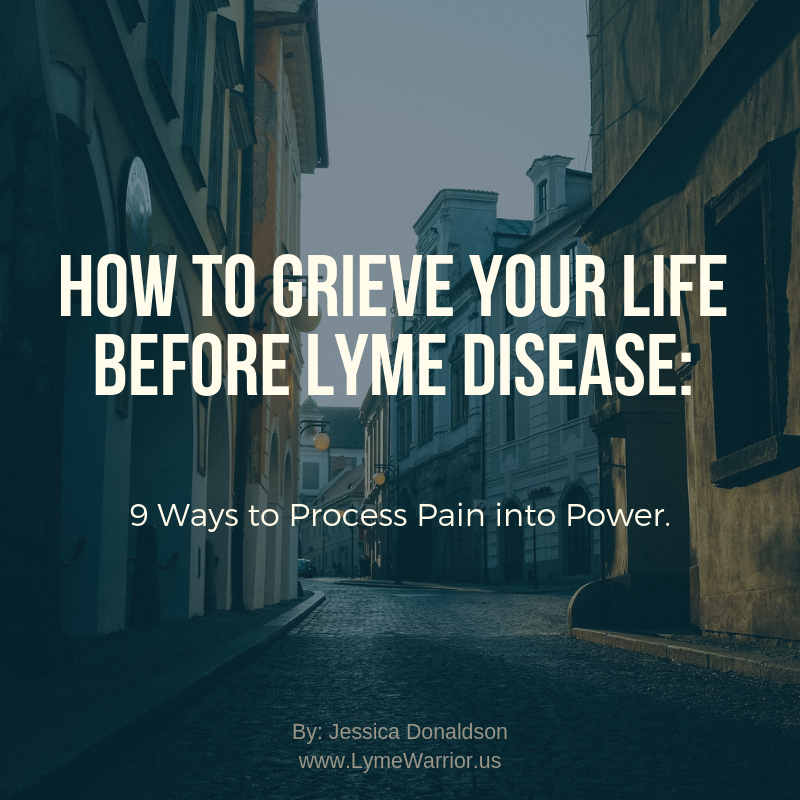








 lookingforthelight.blog
