Celebrate Life · Fun · Health and Wellbeing · Men & Womens Health · Mental Health

How to be Happy! — Guest Blogger Happy Healthy Me – a Journey

‘The thing everyone should realise is that the key to happiness is being happy by yourself and for yourself’ – Ellen DeGeneres If you were asked the question ‘what is your ultimate goal in life?’ what would you say? For me, and I am sure for many people, it would be happiness. We all want […]

How to be Happy! — Happy Healthy Me – a Journey
Celebrate Life · Fun · Health and Wellbeing · Men & Womens Health · Mental Health

Cozy Playlist

For those days worth spent relaxing and enjoying the weather and season. 

Photo by Alina Vilchenko on Pexels.com

Willow and Sage Winter 2021

I’ve Got My Love To Keep Me Warm by Billie Holliday

Winter Song by Leslie Odom, Jr.

Have Yourself a Merry Little Christmas by She & Him

What Are YOu Doing News year’s Eve by Ingrid Michaelson

Winter Winds by Mumford & Sons

I Think It’s Going to Rain Today by Norah Jones

Winter by The Rolling Stones

Sleigh Ride by Ella Fitzgerald

La Vie en Rose by Daniela Andrade

Wintertime Love by The Doors

A Winter Romance by Dean Martin

It May Be Winter Outside (But in My Heart it’s Spring) by Love Unlimited

Enjoy!

Melinda

Celebrate Life · Health and Wellbeing · Men & Womens Health · Mental Health

What You Need To Stay Healthy *Series

In order to be our best selves, our body needs many things to stay healthy. We have our physical health, how we eat, and exercise to stay on top of our game. We also have our mental health which plays a large part in our overall health. Let’s explore some ideas.

This post is an overview of the series of posts to follow that will go into more detail about what our body needs to stay healthy.

Staying healthy isn’t just about eating all vegetables, being a vegetarian, or refraining from sugar. That’s not realistic for everyone. Eating healthy is about making better choices, the little ones each meal that adds up to the bigger sum. We all know what is bad for our health, we’ve had that pounded in for years, what’s important is moderation.

If you like chocolate, which has been shown to be good for you, eat a piece each day, just don’t eat several pieces or the whole bar. If you like cake, treat yourself once a month to a piece, not each week. If cookies are your thing, treat yourself one week then refrain for the next several weeks. It’s all about moderation and anticipation. Like the item is a treat.

Many people fail when it comes to eating healthy because they think it’s an all or nothing. If you neglect the food items you love you will fall back into old habits. Eating pasta is great, not every day, and not a huge plate full. Add a little less parmesan cheese to it to make it less fattening. Little steps.

Eating more greens is difficult for some because they haven’t tried them or have not had them cooked properly. Take the food you like to cook, say an Asain dish and add some Bok Choy. It doesn’t have to be a lot, make sure to cut all the huge ribs off. This will give your dish more flavor, add your greens and not leave the greens as a side dish until you find what you like.

Kale is another good example, it’s great in pasta dishes and can make them much healthier by adding. You still get the great pasta and sauce taste just with an added texture.

Every day try to look at what you eating and drinking, be aware of the calories and make the little steps to improve your health.

One of the most important items or body needs is water, lot’s of it. It flushes out the toxins in our bodies. Every organ in our body including our skin needs water. Some people like to drink water at room temperature, others like it cold and some don’t like it at all. To those who don’t like the taste or lack of add some low-calorie flavored nutrients in a flavor you like.

In my next post, we will dive deeper into what we need to eat, vitamins, and supplements we need to stay healthy.

Everyone needs physical activity but that doesn’t mean you have to run a marathon or pump iron. The more physical activity we get the healthier we are, but any amount is still good for you. If you go from no activity to walking around your block once a week, that’s more. The same with food, we have to look for opportunities to add some activity to our day. Instead of sitting down while talking on the phone, walk around the house.

Take the laundry upstairs in smaller loads to get in more steps. You get the laundry put away and some extra physical activity.

Walk to the mailbox instead of stopping by in your car, it’s simple steps that can add to better physical health.

All physical activity is good for us, the more we do the better it is for our health.

In follow-up posts, we will discuss ways to get our body moving regardless of time constraints or medical conditions.


Mental health is often overlooked as something we need to be healthy but it’s critical to our overall health. We live in a high-paced, full-on, 24/7 world which is quite stressful. Maybe more stressful than you know. The key is to stop and assess where you are, how stressed are you, are you sleeping, are you anxious, are you snapping at everyone around you? Or maybe you’ve become withdrawn.

Self-care is critical to your mental health and it comes in many forms.

In future posts, we will take a deep dive into how our mental health plays a critical role in our overall health and how to achieve it.

Each topic is an overview, a jump start that we will break down in future posts.

Melinda

Health and Wellbeing · Men & Womens Health · Mental Health

How To Move Your Life Forward After A Traumatic Medical Experience

Whether you have undergone a major procedure that’s gone wrong or you’ve been treated badly by a medical professional, the experience can cause long-lasting trauma. 

The fact is that something like this can have a big impact. This kind of experience is highly traumatic, which can mean that it has an ongoing impact and causes a lot of trauma. 

Knowing how to move past that feeling of trauma and move forward with your life is not always as easy to do as you might wish it could be. Sometimes, moving past trauma can be extremely difficult to do; often knowing where to start can be the hardest part. 

Photo by Juan Pablo Serrano Arenas on Pexels.com

Bearing that in mind, below we have shared some tips and suggestions for how you can approach dealing with a traumatic medical experience and how you can slowly move on. 

Understand that it wasn’t your fault 

It’s extremely common for victims of medical malpractice or medical mistakes to blame themselves, but it’s important to remember that you’re not at fault. Blaming yourself is only going to make coping with the trauma that you have experienced harder. So it’s important to try and understand that whatever happened to you, it’s not your fault. You weren’t the one in charge when you were seeking medical support, a medical practitioner was in charge, and therefore in control of the care and treatment, you received. 

Seek therapeutic support 

Often, it can be hard to move past what you may have experienced – whether it was birth trauma or a negative experience while undergoing a simple procedure – but talking about what happened to you can help to make things a little easier. 

Talking, and unwrapping what happened to you, can help to make dealing with the pain from said trauma easier. It can also make gaining an understanding of why it happened to you easier to understand. It might be hard to talk at first, but over time you should find

Get compensation 

If you’ve been negatively impacted by a medical experience, it’s important to think about what options you have. You shouldn’t have to live with daily trauma and anxiety around medical care. You shouldn’t have to deal with flashbacks and fear at the thought of seeking medical advice or care. 

Sometimes, seeking medical malpractice attorneys to take on your case and get compensation for what you endured, can be the best step forward you can take. You didn’t do anything wrong, and yet you’ve been left with this negative experience – and a lot of trauma and fear most likely – so you deserve compensation. 

Moving forward from a negative medical experience might seem impossible, but the fact is that it is possible to move on. It won’t be easy – and your medical trauma may always stay with you – but it is possible to take steps to move your life forward and move on. 

This is a collaborative post.

Melinda

Health and Wellbeing · Men & Womens Health · Mental Health

4 simple exercises to strengthen your attention and reduce distractibility

IDEAS.TED.COM

Jun 8, 2018 / Rebekah Barnett

Our attention gets hijacked by everything from the stress in our lives to the ding of our phones. Neuroscientist Amishi Jha shows how we can cultivate the ability to focus on what really matters.

“I think, therefore I am distracted.”

If Descartes were writing today, this is what his famous aphorism might have become. We’re living in an age of distraction, battered by our own customized waterfall of notifications, alerts, texts, videos, bingeable TV, and more. It’s not surprising our minds often feel like a jumble.

But it turns out we’re not at the mercy of our runaway minds. Amishi Jha (TED Talk: How to tame your wandering mind), an associate professor of psychology at the University of Miami and the director of contemplative neuroscience for the UMindfulness Initiative, studies the brain’s attention mechanisms, and she’s found there are specific exercises we can do to strengthen our ability to pay attention. Here, she explains how you can get your wandering mind back under control.

Our attention is fragile. Jha likens our attention to a “a flashlight you can direct to whatever you choose.” Since research indicates our mind wanders 50 percent of our waking hours, it means most of us are walking around with darting, flickering flashlights. Internal distractions — everything from job stress to a craving for alcohol — and external distractions — like a thunderstorm weather alert on our phone screen — easily disrupt our attention. Whether the interruptions are significant or silly, they are “a basic hijacking of our attentional resources away from the task at hand,” she says. This lack of attention has serious consequences for all of us, but especially for people in high-stakes fields like medicine, the military and criminal justice.

So, how do we gain control of those flickering flashlights and achieve focus? “That’s where mindfulness training comes in,” says Jha. She describes this training as a “portable brain fitness routine to keep our attention strong.” She has tested the effects of such training on subjects in high-stress groups, like athletes and military personnel. Her research has found that the attention of someone who hasn’t had mindfulness training declines when they’re under intense stress, but in people who’ve had training, their attention remains stable. What’s more, in people who regularly do mindfulness exercises, their attention actually gets better over time — even when they’re under stress. According to Jha, researchers have started to uncover other benefits associated with mindfulness, including reduced anxiety, protection from depression relapse, and improved working memory.

What is mindfulness? It’s about paying attention to the present moment with awareness and without emotional reactivity. “It doesn’t require any particular worldview or spiritual or religious belief system,” says Jha. Mindfulness training can be broken down into two major categories: focused attention and open monitoring. They’re very different, yet complementary, practices.

Focused attention exercises cultivate your brain’s ability to focus on one single object, like one’s breath. To do mindful breathing, sit in a comfortable, upright position and focus all your attention on the sensation of breathing — “for example, the coolness of air moving in and out of your nostrils or your abdomen moving in and out,” says Jha. “Focus on something that is tied to your sensory experience. When your mind wanders away from that sensation to internal mental content or an external distraction, gently return it to the breath-related object.” Don’t be surprised or disappointed if you find yourself retrieving your mind hundreds of times during a 15-minute session. Think of your brain like a puppy you’re training to walk on a leash. Gently redirect it every time it darts away.

Another focused-attention exercise is mindful walking. Notice the sensations of walking — “your feet on the ground, the wind caressing your skin, sounds in the air,” says Jha. Walking can take place either indoors or outdoors. You might find this activity easier than mindful breathing; go with whatever exercise works best for you.

One final focused-attention exercise is the body scan. Remember the idea of your attention being like a flashlight? “A body scan is essentially taking that flashlight and directing it systematically through the entire body,” Jha says. Start by focusing your attention on your toes, taking note of whatever sensations might be there. Tightness? Tingling? Warmth? Cold? Next, you can move on to the soles of the feet and the heels, then the legs, stomach, and so on, slowly moving your flashlight up your body. After you have a good grounding in focused attention practice and can keep your attention on a particular object or set of sensations for a period of time, you can move on to open monitoring.

Open monitoring helps you learn to pay attention to what’s happening around you without becoming attached to it. This practice is not about paying attention to a particular object or objects. Instead, it’s about remaining open to any experience — internal or external — that arises, and allowing it to wash over you. “You don’t process it, you don’t think about it,” Jha says. “You just notice its occurrence and allow it to dissipate.” To do this, sit in a comfortable, upright position and try to be aware of any sensations, thoughts or emotions that emerge, without holding on to them. It might help you to label what comes up by using words like “planning,” “worrying,” “judging,” “remembering.” You can do this silently or out loud. After you name it, let it go. Think of what you’re doing as like watching clouds move in the sky and observing the different shapes they make — but in this practice, you’re watching your thoughts travel through your mind. And yes, there will be times when you feel like you keep getting hooked on a particular thought or sensation and can’t seem to drop it. Says Jha, “If you find you’re so lost in thought that you can’t do the open monitoring practice, go back to doing a focused attention exercise to steady yourself again.”

People generally start to see benefits when they practice for about 15 minutes a day, 5 days a week, for around 4 weeks. “If you do more, you benefit more,” she says, “but if you do less than 12 minutes a day, we don’t really see any benefits.” If you try any of these exercises and have trouble keeping your mind still, know that that’s a common experience. Jha urges people not to feel discouraged — as with any new activity or sport, you need to practice. “The mind will wander, and that’s completely fine. It’s not about not letting the mind wander; it’s when the mind wanders, to gently return your attention,” she says.

Start small. “Begin with whatever you consider a reasonable goal and cut it in half, and make a commitment for some period of time,” says Jha. Your goal might be as simple as vowing to stop every day and take the posture of one of the practices, says Jha. Chances are, once you sit (or walk), you’ll decide to stay for a while. Whatever your initial goal, commit to that for a month — and congratulate yourself for making it! — and then gradually increase your practice time until you’re doing it for 15 minutes, 5 days a week. Finding a mindfulness community, whether virtual or in person, can help you stick to the activity. What’s most important, says Jha, is to make sure “you really support yourself to create the habit of practicing,” whether that means setting multiple reminders for yourself or finding a quiet spot and time at your home or workplace to sit.

Jha has seen the positive impact of mindfulness training on the many people she’s worked with over the years. One thing that struck her is how much the military personnel say it has improved not just their ability to work under pressure but also their home lives. Many told her that they’d struggled to be present with their families after returning from deployment. But after mindfulness training, they found they were better able to be present with their loved ones — which is something most of us would like to do, too. “This idea of being present to the people around us when we really want to be present — it often escapes us how to do this,” says Jha. By reclaiming our own attention, we can more fully connect with the people who matter to us.

To see a list of mindfulness resources from Jha, go here. To help you get started, she suggests trying the apps Insight TimerHeadspace and 10% happierAdditional resources for online and in-person mindfulness courses can be found at the Center for Healthy Minds, the Penn Program for Mindfulness, the Contemplative Sciences CenterDuke Integrative MedicineOsher Center for Integrative Medicine at UCSF, the UCSD Center for Mindfulnessthe UMass Center for Mindfulness, the UCLA Mindful Awareness Research Center and the Osher Center for Integrative Medicine at Vanderbilt.

https://embed.ted.com/talks/amishi_jha_how_to_tame_your_wandering_mind

ABOUT THE AUTHOR

Rebekah Barnett is the community speaker coordinator at TED, and knows a good flag when she sees one.

Health and Wellbeing · Men & Womens Health · Mental Health

Hypomania: Bipolar Rollercoaster

When you have Bipolar Disorder it’s not just up or down, there’s an in-between, it’s called Hypomania. Of all the states of Bipolar Disorder, this is one of the most dangerous because you don’t see it and if you do, you don’t want it to end.

Photo by Dana Cetojevic on Pexels.com

I experienced Hypomania for 10 years, some of the best years of my life and after the fall, some of the worst years of my life.

My career was at an all-time high, I was an Executive Salesperson, number one in the company, winning award after award and making a very comfortable living.

When you have Bipolar Disorder, hypomania can make almost anything possible. I went to Russia by myself, traveled to France, around the United States, and the Caribbean with my friends.

My doctor kept telling me the higher you go the harder you fall. I didn’t want to give up the person I was. It’s intoxicating, so powerful, and hard to accept that it’s your illness in control.

I crashed hard, straight into the darkest depression. I got fired from my job, blew through my savings, and filed for bankruptcy. Did I mention getting divorced and building a new house? I lost everything.

What I lost was not worth the high. All the negative thoughts came back. My life is not as exciting, anxiety kept me in the house. Many days I didn’t get of bed. I was suicidal, requiring hospitalization on several occasions to receive ECT treatments to help bring me out of the darkness.

It’s been 20 years since I’ve felt manic in any form and it’s been a blessing. I’ve suffered several debilitating bouts with dark depression requiring hospitalization and ECT but my life stayed intact.

I have to give credit not only to my Psychiatrist and Therapist but to my husband. He started going on my doctor’s appointment with me from the beginning and this made a world of difference. I didn’t have to try and explain what was going on, he saw it from my conversations with the doctor and hearing it firsthand. My husband has been critical in helping me manage my Bipolar Disorder.

Don’t let the rollercoaster lure you in! As my doctor said, the higher you go the harder you fall. I know this to be true.

Melinda

Health and Wellbeing · Men & Womens Health · Mental Health

How to Look After Your Health and Wellbeing

More than any other animal, human beings suffer from mental and emotional stress – this is due to our psychological development and self-awareness. But it’s not only the mental side of things we need to look out for; our wellbeing is closely tied to our physical and emotional health as well. In this post, we take a quick look at some of the ways we can improve our overall health.

Photo by Helena Lopes on Pexels.com

Physical Health 

Hair 

If you’re like most people, you wash your hair regularly to keep it clean and maintain a healthy outwards appearance, but washing your hair too often could be doing more harm than good. That’s because hair requires natural oil produced in the follicle glands that get washed away. 

Healthy hair is oily hair; it is not dry or brittle and should not contribute to a flaky scalp; if you find that your hair has any of these qualities, it’s time to do something about it. First, switch your hair products to chemical-free ones and consider washing your hair less regularly for more oil.  

Skin 

People spend a lot of time and money looking after their skin because it’s one of the first outward signs of wellbeing. However, all the skincare products in the world can’t help you if your skin is affected by your lifestyle or your moods; in that case, you need an alternative solution.

The good news is that skin is a responsive organ; it responds positively to diet, exercise, and natural skin care products that aim to rehydrate rather than dry out the skin. If you adopt a healthy stress-limited lifestyle, you will notice an immediate improvement in your skin quality.

Teeth 

Well-being isn’t always about what you do on the inside to maintain your optimal health; it’s also about how you appear to others. Human beings are social animals, and we are strongly affected by our interactions with others. That’s one reason people pay so much attention to their teeth. 

Excellent dental care, such as the kind you can receive from https://peninsulafamilydentist.com, can alter the way you feel about yourself and how much success you attain in the world. With a smile that is clean, shiny, and white, you can’t fail to impress your friends, co-workers, and boss.

Emotional Health 

Mind 

Now to the intangible aspects of your health that are just as important as the physical side. The mind is a set of faculties that are responsible for mental phenomena. In simple terms, the mind can be described as the imagination, memory, thoughts, individual will, and bodily sensations.

A healthy mind is a balanced mental and emotional state without any intrusive thoughts or memories. A healthy mind allows you to be productive throughout the day and to enjoy your life without feeling stress or ill-will; you can improve the health of your mind with mindfulness.  

Emotions 

Emotions are closely connected with the mind when thoughts, ideas, and impressions arise that create positive or negative emotions – sometimes a mixture of both, which leads to “mixed feelings.” Improve your emotional health by refining your mind with meditation and knowledge.

This is a collaborative post.

Melinda

Book Review · Celebrate Life · Chronic Illness · Health and Wellbeing · Men & Womens Health · Mental Health · Moving Forward

Book Review Finding Joy with an Invisible Chronic Illness by Christopher Martin

I was kindly gifted an advanced copy of Finding Joy with an Invisible Chronic Illness, Proven Strategies for Discovering Happiness, Meaning, and Fulfillment by Christopher Martin from NetGallery for a review. 

Published 2021

I am a school psychologist, husband, father, and – pertinent to this website – an author who has multiple invisible chronic illnesses. 

 And an invisible chronic illness is a beast.  On top of draining you physically, a chronic illness can impact all aspects of your life ranging from causing financial hardship to harming your relationships to dampening your spirits.  Try to be cheerful when you have this unremitting “monkey on your back” known as an invisible chronic illness that constantly demands your attention 24-7.  Needless to say, it’s easy to let yourself and others down. 

      Plus, your family or friends can’t see your illness, as it’s invisible, and they may not understand.  Most with an invisible illness are familiar with “advice” ranging from “stay positive” to “you look good” to “Have you tried ___ for your condition?”  Yup, you probably have, and it didn’t work. 

      On top of that, best wishes in accessing (and maintaining) high quality medical care when you are too tired to even take care of yourself.    

      Welcome to the world of an invisible chronic illness.  I should know.  I suffer from multiple invisible chronic illnesses, including a primary immune deficiency disorder and bronchiectasis. 

 But it doesn’t have to be this way – for you or for me.    While I am not cured of my illness, I enjoy a fulfilling life and experience ongoing joy, peace, and happiness.  Because of outstanding medical care, extensive self-educating and self-care, a supportive family, and a strong faith, I effectively manage my chronic illnesses.  But I didn’t want to be the only one to benefit.  It was my goal, in turn, to give back to others by doing what I love to do:  authoring books on these conditions. 

Blurb

“Finding Joy is a vital guide on how to best manage and navigate life with a chronic illness.”—James Nestor, New York Times bestselling author of Breath: The New Science of a Lost Art

“Finding Joy provides a comprehensive, evidence-based roadmap for not only coping with chronic illness, but personally optimizing self-growth and resiliency from the experience.” —Joanne Joseph, PhD, professor of psychology and interim dean of the College of Health Sciences, SUNY Polytechnic Institute, and author of The Resilient Child: Preparing Today’s Youth for Tomorrow’s World

* How can you experience those good thoughts and feelings, enjoy life to its fullest, and de-stress when faced with relentless physical suffering?

* How can you enhance your relationships, find support, respond to the naysayers, and possibly even help them understand you and your illness?

* When seeking medical care, how can you get the answers you deserve, and access and maintain quality healthcare?

Early Reviews

“”Finding Joy is absolutely phenomenal. Chris Martin’s heartfelt approach offers numerous meaningful strategies to thrive when faced with the many unseen and unrecognized issues of living with an invisible chronic illness.””—Heather Lewis-Hoover, MS, CAS, school counselor

““Finding Joy is a vital guide on how to best manage and navigate life with a chronic illness.””—James Nestor, New York Times bestselling author of Breath: The New Science of a Lost Art

“Finding Joy provides a comprehensive, evidence-based roadmap for not only coping with chronic illness, but personally optimizing self-growth and resiliency from the experience.” —Joanne Joseph, PhD, professor of psychology and interim dean of the College of Health Sciences, SUNY Polytechnic Institute, and author of The Resilient Child: Preparing Today’s Youth for Tomorrow’s World

My Thoughts

I think Chris says it best, the diagnosis is a step forward, it’s not the last. 

Finding Joy with an Invisible Chronic Illness is a great find, one for all to read, patients, loved ones, and, family members. It is a simple and practical approach to taking control by understanding how we think and what we have control over when it comes to our chronic condition and healthcare treatment. 

Enjoy Reading,

Melinda

Looking for the Light

Health and Wellbeing · Men & Womens Health

The 8 health benefits of dark chocolate! —Guest Blogger Happy Healthy Me – a Journey

‘What you see before you my friend, is the result of a lifetime of chocolate’ – Katharine Hepburn Dark chocolate is healthy! It’s true! I’ve always loved dark chocolate, even as a child. Most people I knew then, thought it was odd. I’d always search for the single dark chocolate in the big variety tin […]

The 8 health benefits of dark chocolate! — Happy Healthy Me – a Journey
Celebrate Life · Fun · Health and Wellbeing

Fun Facts That Will Amaze You

I’m so glad you are enjoying Fun Facts. I learn something new each week, even if it’s weird. I love hearing your comments! 

The oldest person ever to have lived (whose age could be authenticated), a French woman named Jeanne Louise Calment, was 122 years old when she died in 1997. (guinnessworldrecord.com)

 Sliced bread was first manufactured by machine and sold in the 1920s by the Chillicothe Baking Company in Missouri. It was the greatest thing since…unsliced bread? (chllicothenews.com)

 The Earl of Sandwich, John Montagu, who lived in the 1700s, reportedly invented the sandwich so he wouldn’t have to leave his gambling table to eat. (pbs.org)

 The first college football game was played on November 6, 1869, between Rutgers and Princeton (then known as the College of New Jersey) in New Brunswick, New Jersey. Rutgers won. (ncaa.com)

 Experiments in universities have actually been carried out to figure out how many licks it takes to get to the center of a Tootsie Pop, both with machine and human lickers (because this is important scientific knowledge!). The results ranged from 252 to 411. (tootsie.com)

Enjoy! 

Melinda


Celebrate Life · Health and Wellbeing · Men & Womens Health · Mental Health

International Human Rights Day

Human Rights Day is celebrated annually around the world on 10 December every year. The date was chosen to honor the United Nations General Assembly’s adoption and proclamation, on 10 December 1948, of the Universal Declaration of Human Rights, the first global enunciation of human rights and one of the first major achievements of the new United Nations. The formal establishment of Human Rights Day occurred at the 317th Plenary Meeting of the General Assembly on 4 December 1950, when the General Assembly declared resolution 423(V), inviting all member states and any other interested organizations to celebrate the day as they saw fit.

Wikipedia

Photo by cottonbro on Pexels.com
Human Rights Day

Human Rights Day date is marked to promote the rights which all individuals have, regardless of religion, gender, race, caste, ethnicity, colour or nationality.


To deny people their human rights is to challenge their very humanity: Nelson Mandela 

A right delayed is a right denied: Martin Luther King 

All human beings are born free and equal in dignity and rights: Eleanor Roosevelt 

I think human rights is something we can fight for every day on a small scale, it’s the simple steps we take, like doing the right thing and calling out injustices. To take your fight to a larger scale join one of the organizations around the world that fight for all human rights.

Melinda

Celebrate Life · Fun · Health and Wellbeing · Men & Womens Health · Mental Health

21 Tips For Managing A Chronic Christmas — Guest Blogger Invisibly Me

Life with chronic illness & pain is hard enough without festive expectations & stress on top. Here are 21 tips to manage a chronic Christmas.

21 Tips For Managing A Chronic Christmas — Invisibly Me
Celebrate Life · Fun · Health and Wellbeing · Men & Womens Health · Travel

Hot Air Balloon Mishap

Jackie&Me Balloon Ride
Celebrating after Balloon Ride

I can’t recall a time when adventure was not on my mind. I’m the thrill seeker who will travel halfway around the world to bungee jump off the highest bridge.

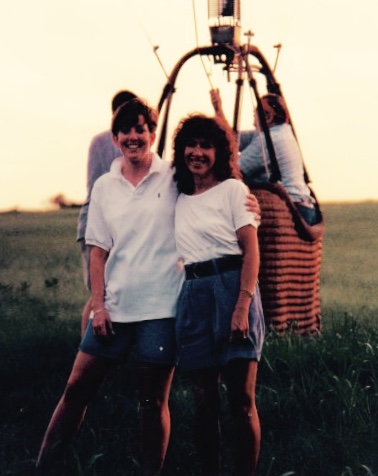
This is my friend Jackie (curly hair) who lives in England. Our birthdays are close so we enjoyed celebrating together when she lived here for a couple of years. A hot air balloon ride was my birthday gift that year and hers too. 

We live in a large city so we had to fly northeast. We lift off heading for the cow pastures in the distance. The sun slowly went down giving a beautiful light display. As we were landing the wind picked up. Before I know it we hit a tree, bounce up and over to another tree. I wasn’t scared of crashing, my interest was cow patties and cold champagne waiting. The mishap added to the adventure.

You will find ballooning in the French countryside on my Bucket List.

I would love to hear what you have on your Bucket List. 

Melinda

Celebrate Life · Health and Wellbeing · Men & Womens Health · Mental Health

Gift Ideas for Your Frazzeled Friends

Everyone has undoubtedly experienced struggles this year, your friends included. And so, if you’re wondering what thoughtful gifts to buy this year to cheer up your closest, the solution lies in getting them something that will help bring on relaxation. And below, we’ve got just the ticket, in the form of gift ideas to consider giving this year.

Photo by Vlada Karpovich on Pexels.com

Pajamas

Pajamas are the ultimate pieces of clothing associated with relaxation and sleep. Gift your friend some super-soft pajamas to snuggle into this Christmas, and you’re sure to increase their comfort and make them feel more relaxed in an instant.

Weighted Blanket

Find a snuggly blanket for your friend, preferably one that feels heavy. Heavy blankets help to reduce anxiety in sufferers because they emulate the feeling of a big warm hug.

Lavender Oil

Lavender oil is an essential oil that can help your best friend unwind. Lavender is a natural sleep aid, which can tempt over-thinkers and anxious friends to sleep with ease. 

Dark Chocolate

Chocolate will never go down a miss with anyone. The delicious edible is also proven to positively impact a person’s wellbeing, improving their mood and immunity. 

Therapy Putty

Therapy putty is the perfect gift for your friend who needs stress relief on the go. Squishing therapy putty between your fingers is great for reducing stress levels and can help your friend feel more at ease.

Journal

Stress and anxiety strike at any moment. Often at inconvenient times when there’s no one around to talk to, to help rationalize and organize their thoughts. As a remedy, gift a journal to your overthinking friend so that they can write down what they feel when you’re not around to listen. 

Plant

A few indoor plants are well-known for reducing stress. Greenery, in general, is excellent for your well-being. Snake and basil plants have calming properties that put their owners at ease. If your friend has office space at home, suggest they pop it on their desk to help them manage their stress throughout the day.

Bath Bomb

A scented bath bomb will encourage your friend to use your gift by taking a hot bath, which is all part of your ploy to help them to relieve stress. 

Candle

A soothing aroma can make a world of difference to how we feel. And having flickering candles around the room is relaxing to see. From tea lights to a large Yankee candle, there’s a lot of candles out there that would make an ideal relaxing gift for your friend.

Suppose your friend is going through a rough patch or seems particularly down or stressed as of late. You don’t need to wait until Christmas to send them one of the thoughtful gifts above. Most of the ideas above you can order online and get sent directly to your friend. 

Melinda

Celebrate Life · Fun · Health and Wellbeing · Men & Womens Health · Mental Health

Everyday Magic


Bella and Grace by Stampington

Adventure can mean something different for all of us. Some people may want to skydive while others want to fix an old house.

Big or small. What are all the adventures you want to go on?


Enjoy your day! 

 Melinda

Health and Wellbeing · Men & Womens Health · Mental Health

Are You Experiencing Cognitive Dysfunction?

Have you ever experienced cognitive dysfunction or sometimes called brain fog? If so you will know exactly what it is and what it feels like. In fact, most of us have experienced it at some point or another, and it is actually a very common experience. While at times it might go hand-in-hand with a mental health issue, it can also just happen as a response to temporary stimuli, and can soon pass in those cases. But if you are experiencing it too often, or you just want to know how you can avoid it, try out the ideas in this article. If you have chronic brain fog you should check with your doctor in that it could be a symptom of a medical condition and need more attention. 

Photo by Sergey Katyshkin on Pexels.com

What Is Brain Fog?

While brain fog is not a specific medical condition that is recognized, it is a common experience and it has entered the language in the past few years for that reason. Generally, it is characterized by cognitive dysfunction, including memory loss and a lack of clarity in the mind, and generally a poor concentration with an inability to focus. If you find yourself experiencing this kind of brain fog, you will find that it is hard to focus on anything for too long. It can be a surprisingly upsetting experience.

Avoiding Brain Fog

How to avoid or get rid of brain fog will depend on what caused it, so the first thing to do is to identify that as closely as you can. There are many common causes of brain fog, including overuse of smartphones and social media, lack of sleep, abusing drugs and alcohol, stress, hormonal alterations, and poor diet. If any of these are jumping out at you as possible issues that you might need to fix, then that should be your first port of call.

Beyond that, it is all about making sure that you are generally looking after yourself. If you do that, you might be able to avoid brain fog altogether.

Photo by nicollazzi xiong on Pexels.com

Other Methods

If you are still experiencing brain fog on a regular basis, you might want to consider some other trusted options, such as meditation. With regular practice, meditation becomes easier and you will find that you have a better and better sense of what is going on in your mind, which will help you to stop brain fog in its tracks. That’s something that we can all look forward to.

Beyond Brain Fog

Life on the other side of brain fog is much clearer, happier, and more engaged, so it is absolutely worth trying to get rid of it as best as you can. If you try the options above and it’s enough, and you will find that you can enjoy life all the more as a result. If brain fog continues, please speak with your general practitioner about your symptoms. 

This is a collaborative post.

Melinda

Health and Wellbeing · Men & Womens Health

4 Ways To Keep Your Vehicle Running Longer Than It Otherwise Might

Running a vehicle is often a large investment in time, energy, and financial prowess, and so many could be forgiven for wanting such a utility to run as long as possible. But of course, driving on the roads and driving safely on the roads are two separate habits, and will be determined in large part by the condition of the vehicle you use.

For this reason, it’s important to make sure your vehicle is not only roadworthy from a technical legal sense, but also that it’s in good condition, operates well, and that certain elements such as the brake tuning and tire pressure are properly maintained. In this post, then, we’ll discuss four different ways for keeping your vehicle running longer than it otherwise might, what that could imply, and a few tips for getting there without overdoing it.

This way, you’ll not only enjoy a better vehicle with more utility to offer, but you’ll notice yourself operating on the roads as a better, safer, more observant driver. With that in mind, let’s begin:

Photo by Tim Samuel on Pexels.com

Avoid Harsh Driving Habits

Harsh driving habits, such as constantly accelerating quickly and braking harshly, giving yourself too little room to turn with, overrevving your engine, and avoiding regular maintenance can leave a car more worn out than it may otherwise be. The opposite of these actions, then, can help you stay safer on the roads, as well as maintain your vehicle as necessary.

Calm Yourself On The Road

No matter the strain, be that a road covered in black ice, harsh drivers tailgating you or cutting you off, or passengers who may not be behaving as well as they could, keeping a calm head can help you find a safe place to park or to find an alternate route without escalating the situation. Focus behind the wheel has probably saved more lives and vehicles than anything else.

Proper & Regular Cleaning

Cleaning the interior and exterior of your car semi-regularly should be an essential practice to upkeep. No matter if you enjoy washing it by hand or visiting a professional car wash center, the more you can remove unnecessary dirt, grime, dust, and interior buildup the better, and the more capably your vehicle will perform.

Understand Its Functioning

There’s nothing better for a car’s functioning than an owner who understands how to diagnose its issues. Taking a healthy interest in car maintenance, do-it-yourself repairs, and adjacent considerations such as understanding your vehicle’s dashboard lights, when to notice it pulling from side to side, or when a tire needs replacement can help its longevity more than anything else. 

This is why investing in essential resources, like Ford F-150 factory shop manuals, can help you keep up with your maintenance to the degree that official mechanics would, too. It will also help you speak to mechanics with fluency, ensuring a perfect overall outcome.

With this advice, you’re certain to keep your vehicle running for longer than it otherwise might.

This is a collaborative post.

Melinda

Health and Wellbeing · Men & Womens Health · Mental Health

How many close friends do most people have? The answer is …

IDEAS.TED.COM

Dec 2, 2021

Going through a global pandemic has brought us together in some ways, but it’s also separated many of us from our routine interactions with friends and acquaintances. And in doing so, it’s led us to look at our relationships and reflect on the ones we’d like to add to our lives — and the ones we’ve left behind. 

Voraciously curious data journalist Mona Chalabi has been thinking about her friendships too, and she recently explored this topic in her podcast Am I Normal?. Here’s an excerpt from that episode, where Chalabi speaks with renowned friendship researcher Robin Dunbar PhD, an evolutionary psychologist at Oxford University: 

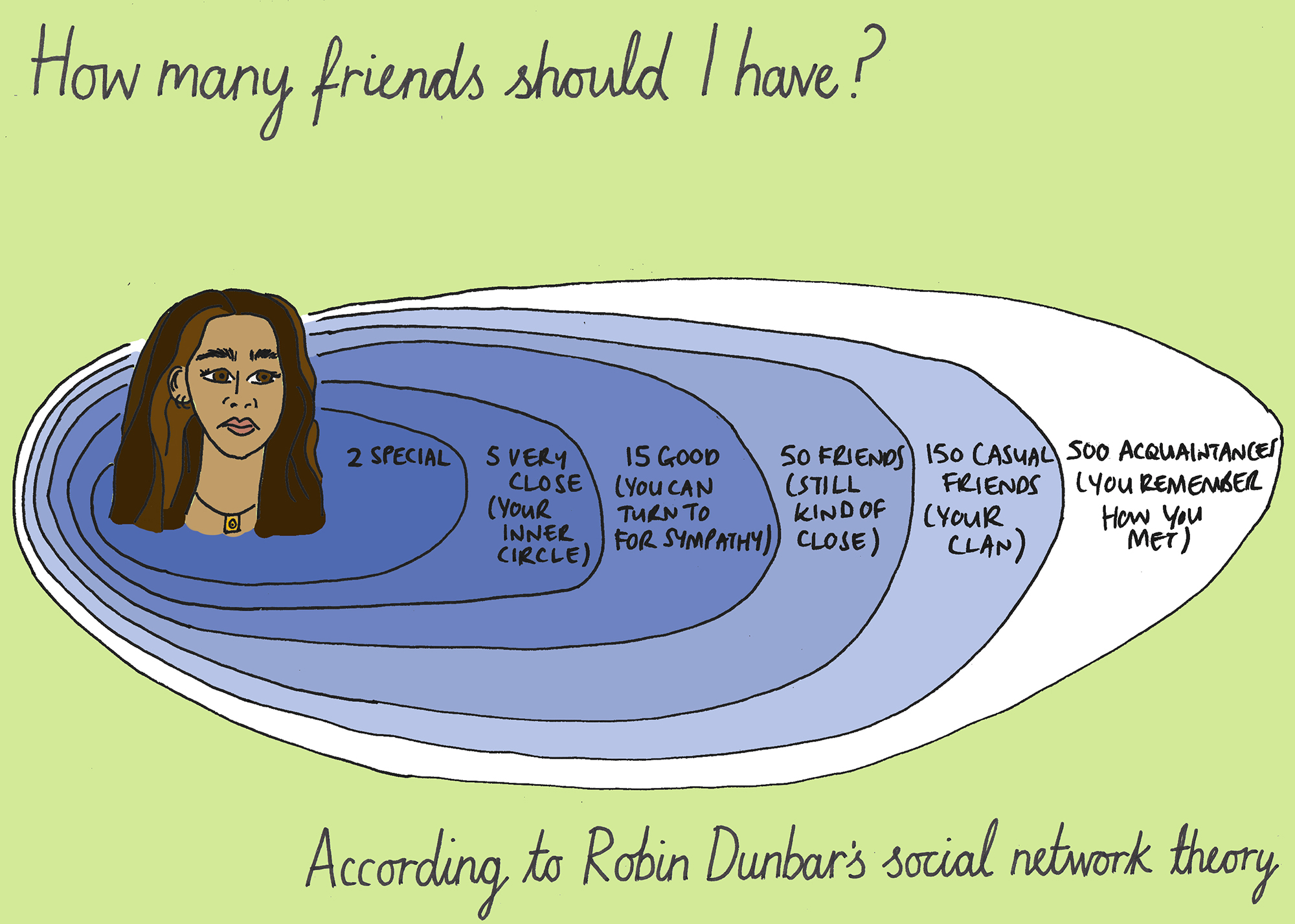
Mona Chalabi: According to Dunbar, our apple basket of relationships has an average of 150 people in it. This 150 figure is referred to as “Dunbar’s number“. Now it might seem high, but what Dunbar is looking at is the number of relationships the brain can handle at one time. This includes family, best friends, acquaintances, workmates, even the bartender you know by name. So they’re friends of a wide range of types. 

Dunbar has studied social relationships since the ’70s, first in primates and then in humans. He developed the number while studying primates’ social networks. And that was when he noticed that the size of those social groups was relative to the size of the primates’ brains.

“Introverts prefer to have fewer friends,” says Dr. Dunbar. “They probably sort of hover around the 100 – 150 mark.”

Robin Dunbar: And so I just, out of idle curiosity, thought, “Well, what happens if we stick human brains into this equation?” And when we did that, it gave this figure of 150. And that number then just kept turning up all over the place. 

Chalabi: The figure popped up in surprising places — offices, communes, even Christmas card lists. 150 is also the estimated size of Neolithic farming villages in the Middle East and 11th-century Britain … Dunbar says 150 for simplicity, but really, it’s a range between 100 and 250, depending on several factors.

Dunbar: One is obviously personality. So introverts prefer to have fewer friends. They probably sort of hover around the 100 –  150 mark …

Chalabi: Another factor is age. 

Dunbar: The size of personal social networks over the lifespan increases as you grow through childhood, hits a peak somewhere in the late teens, early 20s at something approaching about 250. And then from about the 30s, surprisingly coinciding with reproduction, it drops to about 150 after which it remains very stable.

Illustration: Mona Chalabi

Chalabi: … You see, within that 100 – 250 friend range, there are layers or concentric circles. The first layer is about 1.5 people. That often represents your parents or your romantic partner.

Dunbar: Then the next layer out is somewhere around about 5 — we think of those as your intimate friends. The next layer out is 15 — those you might think of as best friends. Then there’s a layer at 50 — good friends. A layer at 150 — just friends. A layer at 500 —  which we think of as acquaintances.

Chalabi: 50 good friends! Five-zero! That feels like a whole lot of people! And I think this is the tier where I’m having the most trouble. 

… The more I think about it, part of the problem here might be that some of the people who were once part of that super-close friend group, maybe I just didn’t do enough to keep them there.

Dunbar: Certainly our research shows very clearly that if you fail to maintain that level of investment, friendships start to die slowly, but surely. Six months after you’ve not contacted them, they will have dropped down from being a good friend to maybe just a friend. And if it carries on for a couple of years, they will end up as an acquaintance.

Want to learn more? In her TED podcast Am I Normal?, data journalist, writer and illustrator Mona Chalabi dives into the numbers to get us answers to some of the most puzzling questions — like just how long does it take to get over a breakup and how bad is it to marry a cousin. But since statistics can’t tell the whole story, she also talks with experts, strangers and even her mother. Go here to listen to the irresistible episodes now. 

You can also watch this TED original video with Mona Chalabi here: 

Celebrate Life · Health and Wellbeing

How to Develop Self-Compassion — Guest Blogger Don’t Lose Hope

“This is a moment of suffering. Suffering is part of life. May I be kind to myself in this moment. May I give myself the compassion I need.” – Kristin Neff We hear a lot today about self-compassion. But how do we show compassion to ourselves? What does this look like in our everyday lives? […]

How to Develop Self-Compassion — Don’t Lose Hope
Celebrate Life · Fun · Health and Wellbeing · Men & Womens Health

Fun Facts That Will Amaze You

I’m so glad you are enjoying this weekend tradition of Fun Facts. I learn something new each week, even if it’s weird. I love hearing your comments! 

Three presidents, all Founding Fathers—John Adams, Thomas Jefferson, and James Monroe—died on July 4. Presidents Adams and Jefferson also died the same year, 1826; President Monroe died in 1831. Coincidence? You decide. (constitutioncenter.org)

The Barbie doll’s full name is Barbara Millicent Roberts, from Willows, Wisconsin. Her birthday is March 9, 1959, when she was first displayed at the New York Toy Fair. (barbiemedia.com)

There actually aren’t “57 varieties” of Heinz ketchup, and never were. Company founder H.J. Heinz thought his product should have a number, and he liked 57. Hint: Hit the glass bottle on the “57,” not the bottom, to get the ketchup to flow. (heinz.com)

 The tallest man ever recorded was American giant Robert Wadlow (1918–1940), who stood 8 feet 11 inches. Wadlow’s size was the result of abnormally enlarged pituitary gland. (guinnessworldrecords.com

The tallest living man is 37-year-old Sultan Kosen, from Turkey, who is 8 feet, 2.8 inches, who set the record in 2009. His growth is also due to a pituitary issue. (guinnessworldrecords.com)

Enjoy! 

Melinda


Health and Wellbeing · Men & Womens Health

Superfoods for winter — Guest Blogger My Name is Haifa

It is widely known that during winter season, people are in high risk of getting sick easily. What is more concerning, the number of covid19 cases has returned to increase again in some regions around the globe such as in Africa and Europe. I genuinely believe, It is preferable to adopt a healthy diet while […]

Superfoods for winter — My Name is Haifa
Health and Wellbeing · Men & Womens Health

 International Day of Persons with Disabilities

International Day of People with Disability on December 3 each year is an international observance promoted by the United Nations since 1992. 2012 marks the 20th anniversary of the International Day for People with Disabilities. The day aims to promote an understanding of people with disability and encourage support for their dignity, rights and well-being.

Photo by Porapak Apichodilok on Pexels.com


Around 15% of the world’s population, or one billion people, live with disabilities. People are often unaware of the great number of persons living with disabilities around the world and the challenges they face.

Persons with disabilities, “the world’s largest minority”, often face barriers to participation in all aspects of society. Barriers can take a variety of forms, including those relating to the physical environment or to information and communications technology (ICT), or those resulting from legislation or policy, or from societal attitudes or discrimination. The result is that persons with disabilities do not have equal access to society or services, including education, employment, health care, transportation, political participation or justice. The day aims to promote an understanding of disability issues and mobilize support for the dignity, rights and well-being of persons with disabilities. It also seeks to increase awareness of gains to be derived from the inclusion of persons with disabilities in every aspect of life.

One point I want to make is there are a large number of people with invisible disabilities. An invisible disability is one where you might say “you don’t look sick”.

Some people only think of disability applying someone in a wheelchair, or walking with a cane but there are many people who have difficulty with everyday functions who are disabled who don’t look disabled to you. 

Please be polite and patient if you see someone in handicapped parking and never take advantage of the parking space, I don’t care how sick you are. 

Enjoy the day.

Melinda

Health and Wellbeing · Men & Womens Health · Mental Health

Book Review Adaptable by Alexa Carlin

I was kindly gifted a copy of Adaptable-How to Lead with Curiosity, Pivot with Purpose, and Thrive Through Change by Alexa Carlin from NetGalley, GracePoint Publishing, and Wex Press for a review. 


Pub Date 14 Sep 2021 
GracePoint Publishing, WEX Press

About the Author

At 17, Alexa Carlin became CEO of her first company, designing jewelry that made a difference, one bracelet at a time. But at 21, she was induced into a medical coma and given a one-percent chance to live. In Adaptable, she shares the stories of her journey, offering powerful insights into hope, courage, and life’s challenges.

Blurb

Life’s obstacles offer two distinct directions: They can push you backward or fuel you forward. The choice is up to you.

Written in a heartfelt and authentic tone, Adaptable invites readers to develop a new perspective on their past and current obstacles. The stories, lessons, and action steps that fill each chapter gently guide readers back to their true selves, allowing them to connect deeply to their inner light and shine brightly with their true purpose.

Alexa encourages and inspires readers to use their own challenges not as a reason to abandon dreams, but as a springboard from which to thrive.

Reviews

“Empowering, real, raw, and game-changing! Alexa’s stories within Adaptable will remind you of the potential you hold inside of you and the strength to push through any obstacle. An inspiring book by an inspiring woman!” – Jess Ekstrom, author of Chasing the Bright Side

Adaptable is a must read for anyone trying to silence that negative voice in their head and go after their dreams. Alexa’s voice is so real, inspiring, and motivating that you can’t help but feel empowered to live your best life.” – Rachel DeAlto, author of relatable, Relationship Expert, and television personality

My Thoughts

Adaptable is a story about overcoming insurmountable odds and taking the bull by the horns. Alexa inspires you to stay focused on your dreams and to chart a course for success by using your own obstacles as a learning experience for achieving each and every goal you set.

Alexa takes the obstacles in her young life and turns them into the motivation she needs to chart her own course.  

“This book is meant to be consumed in two ways. First, read it from front to back. Second, use it as a tool to help you find hope when it may be lost, to help you through times of self-doubt when pursuing your dreams, or for a beacon of light during some difficult times. Keep it near and anytime you feel you need a reminder, randomly flip open to a new chapter while asking for the answer you’re looking for, and read whatever chapter opens up.” I think this is the best way to read the book, it’s a story and a handbook to reflect on. 

Adaptable is a great book for everyone, from college students, just started out to professionals on the way up the ladder. 

Enjoy Reading!

Melinda

Looking for the Light

@lookinglight

Celebrate Life · Health and Wellbeing · Men & Womens Health · Mental Health

Daily Quote

Happy Thursday!

Photo by Samuel Theo Manat Silitonga on Pexels.com

“I’ll never be content to stay forever in one place. I’m too madly in love with all the places I haven’t been, the people I haven’t met, the food I haven’t tried on the streets I haven’t danced on.”

Brook Hampton

Have a great day.

Melinda

Celebrate Life · Fun · Health and Wellbeing · Men & Womens Health · Mental Health

Everyday Magic


Bella and Grace by Stampington

It is not often that we find ourselves in awe of something, but’s an incredible feeling. When was the last time you saw something so beautiful it took your breath away?


Enjoy your day! 

 Melinda

Celebrate Life · Health and Wellbeing · Men & Womens Health · Mental Illness

Book Review Manic Man by Jason Wegner and Dr. Kerry Bernes

I was kindly gifted a copy of Manic Man, How to Live a Successfully with a Severe Mental Illness by Jason Wegner and Dr. Kerry Bernes from Soraya Nair, Managing Editor at Cherish Editions for a review. Thank you, Manic Man was another great read from Cherish Editions. 

 Because this review was done many years ago I’m not able to make the changes to the layout that I would like to.


Manic Man: How to Live Successfully with a Severe Mental Illness by [Jason Wegner, Dr. Kerry Bernes]


Published 2021

Cherish Editions

About the Authors

Jason Wegner

Lives with a severe mental illness, Bipolar Disorder 1.


Dr. Kerry Bernes
B.Ed., M.Sc., Ph.D., R.Psych., ABPP
Board Certified in Clinical Psychology (American Board of Professional Psychology)

Blurb


His courageous story begins with a glimpse of Jason’s normal life before the hypomanic stage of his illness kicks in. The mania starts when he tries the dangerous psychedelic drug LSD and takes off a few weeks later in Tanzania. He is in a full-blown manic episode while in Africa, and his behaviours and journaled thoughts demonstrate this. Weeks of mania continue after he returns from Africa until he is tricked into an ambulance and taken to the hospital’s emergency wing. He would be hospitalized in the acute psychiatry ward for 57 days, but his journey to improved mental health had just begun.


To lift Jason out of his severe depression, his psychologist Dr. Kerry Bernes developed “The Octagon of Life,” which represents the eight areas that Jason needed to focus on to rebuild his life. He shares this model in Manic Man, too.

Reviews:


“Jason gives an inside look into his brain during his mania, depression and recovery. It helped me to learn more about the bipolar disorder, as well as mental health in general. Thank you for sharing your story and breaking the stigma surrounding an invisible illness.”


“A must read for anyone who knows anyone going through a mental health crisis. Very well written. Thank you for writing this book.”

My Thoughts

I completely understand where Jason is coming from because I was diagnosed with Bipolar Disorder 1 at 19 years old. Being in a Manic in a state is hard to describe. You have firm beliefs that are not reality, they are grandiose, supernatural, and intoxicating. So intoxicating you don’t want the feelings to stop even when you realize how sick you are. 

Jason was like a train going full steam with no brakes, ideas and thoughts coming at him like the changing of slides in a hand projector. They say is the higher you are the harder you fall and Jason fell hard. 

He spent 57 days in a Phsychaitrict hospital after his parents intervened on his behalf when his behavior became so erratic they grew concerned for his wellbeing. 

During his stay in the hospital, Jason learned about this illness, began to come to terms with his behavior, and started medication which is essential for Bipolar Disorder patients. 

I highly recommend this book to anyone who has a friend or loved one with Bipolar Disorder, it will give you first-hand insight and you can’t get anywhere else. If you think someone has Bipolar Disorder this is a good book to help you better understand the signs and symptoms. 

Cherish Editions

Cherish Editions is the self-publishing division of Trigger Publishing, the UK’s leading independent mental health and wellbeing publisher.

We are experienced in creating and selling positive, responsible, important and inspirational books, which work to de-stigmatise the issues around mental health, as well as helping people who read them to maintain and improve their mental health and wellbeing. By choosing to publish through Cherish Editions, you will get the expertise of the dedicated Trigger Team at every step of the process.

We are proud of what we do, and passionate about the books that we publish. We want to do the very best for you and your book, holding your hand every step of the way.

Enjoy Reading

Melinda

Looking for the Light