Health and Wellbeing · Men & Womens Health · Mental Health

How to have more inclusive meetings over Zoom

Photo by olia danilevich on Pexels.com

DEAS.TED.COM

Oct 20, 2020 / Dolly Chugh

This post is part of TED’s “How to Be a Better Human” series, each of which contains a piece of helpful advice from people in the TED community; browse through all the posts here.

Meetings can crush your soul. 

My personal experience — and the prevailing wisdom of management and psychology research — is that meetings default to patterns like these:

• Whoever speaks first is likely to set the direction of the conversation.

• The higher-power, more extroverted, majority-demographic people are more likely to take up disproportionate airtime, receive credit, be given the benefit of the doubt and interrupt others.

• The larger the group, the less meaningful the conversation — and the less likely we are to break out into more meaningful, smaller group discussions because doing so is time- and space-consuming in the physical world.

• Key information is less likely to be shared when it is already known by others; lesser-known but important information tends to not be shared broadly.

• Whatever we did in the last meeting, we are likely to do again in the next meeting.

The result is predictable: A sub-optimal, sub-inclusive meeting.

I believe we can do better.

Whether you are running the meeting or just participating in it, there are ways to make it better and more inclusive. And, believe it or not, in some ways that’s easier to do on virtual platforms.  So while many of us are stuck on our screens, let’s make the most of it and use some of the unique features offered by virtual platforms for better inclusion.

Here are 15 ways to make your virtual meetings better and more inclusive:

1. Have a facilitator

Too many in-person meetings flounder because there is no one at the wheel. The result is airtime hogging and groupthink, which are inclusion crushers. In virtual platforms, there is a clearly designated host.

Use this clarity as a nudge towards having a clearly designated facilitator who will balance airtime and bring out a range of perspectives.

2. Bring in more perspectives

Speaking of more perspectives, why talk about customers, when you can have an actual customer zoom in to your meeting? Why guess what employees in the field would think, when you can have actual field employees share their thoughts?

Take advantage of the virtual format to break out of the homogeneous networks that define our workplaces, levels on the org chart, communities, and social circles so that you can hear a broader array of perspectives.

3. Put names with faces

In many online platforms, such as Zoom, each participant’s name is visible. This creates a better opportunity to learn people’s names if you are meeting people for the first time (or like me, can’t remember names of people you have met in the past). You can also grab a screenshot which you can use as a reference for future interactions.

4. Clarify nicknames and preferred names

Platforms like Zoom allow the participant to edit their name as it appears on screen. Rather than always trying to guess which Rajiv goes by Raj and which goes by Rajiv, it will be visible to all.

We can then take ownership for referring to people as they wish, not in whatever way is most convenient or memorable for us (which will inevitably favor the majority group).

5. Learn how to pronounce people’s names

Have everyone share the phonetic spelling / pronunciation of their name in the chat box. For example, I might type in “Dolly = dah-LEE which rhymes with golly + Chugh = ‘u’ sounds like oo in ‘good’ and ‘gh’ is a hard g.”

Each participant should do this, not just those with “hard” names. Taking shared ownership of learning how to say people’s names is one step towards reversing the heartbreaking benefits which diversity and inclusion researcher Sonia K. Kang and her coauthors find for anglicizing one’s name (and “whitening” one’s resume) in the workplace.

And, speaking for my embarrassed self, I am less likely to avoid interacting with someone — which is the opposite of inclusive — when I have confidence that I am saying their name correctly.

6. Share pronouns 

Many of us grew up at a time when preferred pronouns were not commonly shared so we have some catching up to do about gender identity. One best practice is to include preferred pronouns with one’s name to guide others.

Again, using the option to edit your name allows for this, or it can also be done in a chat function. So, my name might read “Dolly Chugh, she/her.” Again, it’s ideal if everyone does this, not just a subset of participants.

7. Read the room 

Many platforms offer you a way to take the pulse of the room. Break up groupthink with a poll, which can be anonymous or not. This allows you to read the room and allows participants to take less popular stands without having to verbally navigate through those offering the majority opinion. Sharing the result of a poll can shift the group norm in an instant, by revealing a previously invisible perspective.

8. Elicit more ideas at once 

In a virtual meeting, you can bring out many thoughts simultaneously by asking a question to which people can respond in the chat function. Then, the facilitator can call on people to discuss.

Keep in mind that many people find it difficult to process both auditory and text inputs at the same time, so it’s ideal to allow time for people to type in their responses. Also keep in mind that people using text readers will end up with the chat and the verbal discussion talking over each other, so it’s important to either space things out or know your audience on this one.

9. Make recordings and transcripts available

Consider recording as a way to support those who would benefit from listening at another time or with the option to pause. For example, people with pandemic parenting/caregiving responsibilities — who are disproportionately women — may need to multitask during the meeting.

The recording allows them to listen later and stay in the loop without burdening others. Of course, recording may make some uncomfortable or be problematic for other reasons so feel this out and be sure to have permission before recording.

10. Offer closed captioning 

Some platforms offer automatic closed captioning, which can be useful in a wide variety of circumstances, such as when someone has hearing impairments, when some participants are engaging in a non-native language and when individuals are trying to block out background noise while listening.

This feature may need to be enabled so do some research into what your version of the platform offers. And, it’s rarely fully accurate so realize its limitations and edit afterwards.

11. Pivot in and out of smaller discussions 

Breakout discussions are an excellent way to improve meeting performance and team relations. In the virtual world, it can be done in a click. Randomly assigning groups or pre-assigning diverse groups are both good modalities which can build relationships across all kinds of differences and boundaries.

The key to a good breakout is clear instructions about timing, purpose, and deliverables (if any). No need to endure default big group discussions.

12. Practice reading non-verbals

Use virtual meetings to sharpen your non-verbal reading skills. In virtual meetings, I’ve been stunned to witness what non-verbal researchers have knownall along: Words are just a slice of what we communicate. In the real world, it’s not polite to stare at people while trying to read their non-verbal reactions; in the virtual world, bring it on.

Stay in gallery view to watch the group or pin a particular video to be visible throughout the meeting — I call it “zoom-watching.” Send someone a private chat and watch them read it. Tell a joke and watch how people react. Listen to an argument and watch people cringe. Observe the impact that code-switching demands place on colleagues who hold marginalized identities.

Then, use what you notice to step in as an ally. Important: Be curious, not creepy, in your staring.

13. Assume accessibility is part of your job

I am embarrassed at how new I am to learning about accessibility and accommodations for a wide range of disabilities. I am learning so much from accessibility and inclusion expert Courtney Craven (in this guide and this guide).

I have been reactive in the past, compliantly doing what is suggested in a legal-y sounding email from an office whose job is to ensure accommodations are made, or a student specifically requests, and that’s it. If I get a document saying a student needs extra time on an exam, I grant it, without asking the student what is helpful to their learning outside of the exam, for example.

Honestly, it never crossed my mind to think about it. I want to — and can — do better. Join me in the realization that this is not someone else’s job.

14. Ask about accessibility needs

One thing I am learning is that often people experience backlash and bureaucracy when they try to advocate for their needs in schools and organizations, leading them to silence their needs. That’s what makes my passive and reactive approach the wrong approach.

I am going to be proactively asking my colleagues and students, “Are there ways in which the technology we are using can be made more accessible? Are there practices we are using in our meetings that are not working for you?” My new understanding is that I need to ask everyone this question, not just people who have identified themselves as needing an accommodation.

15. Check in and relaunch

You’ve never had more freedom to say “Let’s have a do-over” than 2020. More than ever, we are all learning as we go. So, proactively ask people what challenges they are having staying engaged, offering input and earning respect in virtual meetings.

In fact, Tsedal Neeley, Harvard Business School professor and author of the forthcoming book Remote Work Revolution, has sage advice — she proposes that we “relaunch” our remote teams as a way to help everyone orient to new realities. Think of these 15 tips for more inclusive virtual meetings as one step in that relaunch.

No doubt, much has been lost in this new virtual world — so much. I miss three people telling a funny story in unison. I yearn for accidental eye contact, however awkward it sometimes is. I barely remember what it’s like to see people’s footwear.

Still, much can also be gained in the virtual world. There are ways to foster inclusion in a virtual gathering that are not available in person. Try one or two of these ideas in your next virtual meeting. More inclusive meetings are better meetings.

This piece was originally published in Dolly Chugh’s Dear Good People newsletter, a five-minute monthly read containing timely, evidence-based, actionable advice. Sign up for it here

ABOUT THE AUTHOR

Dolly Chugh is a Harvard-educated, award-winning social psychologist at the NYU Stern School of Business, where she is an expert in the unconscious biases and unethical behavior of ordinary, good people.

Health and Wellbeing · Men & Womens Health

Natural Seasonal Allergy Relief

Nettle Leaf Tea

Made from stinging nettle plants, organic nettle tea can help relieve seasonal allergy symptoms with its natural antihistamine. You reap all the benefits of antihistamine symptom relief without having to take conventional medicines. You can drink the daily as a preventative or as needed.

Spirulina & Other Superfoods

Spirulina is a superfood full of amazing plant nutrients, like iron, calcium, vitamin A and C, and protein. While great for overall health, spiraling may be beneficial during allergy season because it is high in antioxidants and has been shown to protect the body from anything that might compromise the immune system. It is high in chlorophyll and is detoxifying. Other superfoods like Kale, turmeric, mace powder, hemp, and flax are great for reducing inflammation and boosting your immune system.

Probiotic

A probiotic can help boost your gut and immune system health, which plays a big part in seasonal allergies. You can digest probiotics by eating fermented items like sauerkraut, and kombucha, or by taking a supplement. Make sure it is a high-quality probiotic from an organic source.

Apple Cider Vinegar

Apple Cider Vinegar is detoxifying and practically a remedy for everything. Taking as little as 1 tablespoon a day can help you feel and be healthier, which will, in turn, reduce your allergy symptoms. Make sure you purchase unfiltered organic Apple Cider Vinegar.

Essential Oils

Essential oils, such as melaleuca, peppermint, lavender, frankincense, lemon, and eucalyptus, help with seasonal allergy relief. I like to fill a roller bottle with a carrier oil and 5-10 drops of each chosen essential oil. I apply this to my nose, on my temples, and behind my ears when I begin to feel swollen or puffy, as well as to the bottom of my feet. You can use these as needed as well as preventative.


All great ideas from one of my favorite bookazines, Williow & Sage by Stampington.  


Melinda

Repost

Health and Wellbeing

Easy To Make Peppermint Sugar Scrub-Perfect Holiday Gift

Photo by Nataliya Vaitkevich on Pexels.com

I believe this recipe came from Willow & Sage by Stampington.

YOU WILL NEED

Yields 1 cup

1/2 cup coconut oil

Glass bowl

1 cup granulated sugar

12-15 drops peppermint essential oil

Glass jars

Candy cane, finely crushed

TO MAKE

Melt the coconut oil in a glass bowl in the microwave for about 30 seconds, and let cool for five minutes. Stir in the sugar and essential oils until combined. Package the peppermint sugar scrub in airtight glass jars, and sprinkle finely crushed candy cane on top; mix the candy cane into the scrub if desired.


Health and Wellbeing · Men & Womens Health

The pivotal role of patients in Lyme disease research

LYMEDISEASE.ORG

Lorraine Johnson avatar

Lorraine Johnson, JD, MBA

18NOV2020

LYMEPOLICYWONK:

The pivotal role of patients in Lyme disease research

MyLymeData

I gave the following remarks by telephone at the November 17 meeting of the Tick-Borne Disease Working Group.

Good morning. I’m Lorraine Johnson, the CEO of LymeDisease.org and the principal investigator of the MyLymeData patient registry and research platform.

Although Lyme disease is estimated to have over 400,000 cases per year, clinical trial research funding trails behind leprosy, which has an incidence of less than 200 cases a year.

In chronic Lyme disease, pharma has shown no interest in developing new treatment drugs and the NIH has funded just three clinical trial grants – the last one funded over 20 years ago.

The challenges of Lyme disease research

This means that even though it is not a rare disease, Lyme disease is research-disadvantaged and faces the same research challenges that rare diseases encounter. To facilitate and accelerate the pace of research, these diseases build a research engine linking patient registries, biorepositories, and clinical data networks. The NIH and the Patient Centered Research Outcomes Institute as well as the Agency for Healthcare Research and Quality have led efforts in this area. Dr. Collins recently acknowledged the important role of patient-led research in COVID-19.

MyLymeData has enrolled over 14,000 patients, collected over 5 million data points, and published three peer-reviewed studies. It has also partnered with the Lyme Disease Biobank, a project of the Bay Area Lyme Foundation and is working with a publicly traded company to help recruit patients for a diagnostics study.

MyLymeData was initially developed as part of the PCORnet patient-driven research effort when I served on its Executive Committee. I continue to serve as a subject matter expert in patient registries for PCORnet registries through the University of Chicago.

When the optimal treatment, duration, or combination of treatments is unknown–as it is in chronic Lyme disease–the process of conducting back-to-back sequential randomized controlled trials to determine the best treatment approach is not realistic. Dr. Califf, former head of the FDA who served with me on the PCORnet Executive Committee used to say, “Randomized trials are great, but they take too long, cost too much, and don’t apply to most people.”

Professor Abernathy at Duke puts it this way: “It can take more than a decade for a trial to progress from the idea stage to actionable information, and the cost and complexity mean that many questions will never be addressed with such trials”

Patients can’t wait for research that may not come. Patient registries like MyLymeData play a pivotal role in accelerating the slow pace of research. They allow us to evaluate care as it is actually provided by clinicians to provide the answers that chronic Lyme disease patients need today. To solve these problems, we will need to avail ourselves of all tools in our kits and all forms of evidence. Thank you.

Lorraine Johnson, JD, MBA, is the Chief Executive Officer of LymeDisease.org. You can contact her at lbjohnson@lymedisease.org. On Twitter, follow her @lymepolicywonk. 

Related Posts:

  1. LYMEPOLICYWONK: Yes, Patients Need a Role in Setting Research Agendas! 
  2. LYMEPOLICYWONK: Patient Centered Research and Lyme—An idea whose time has come? 
  3. LYMEPOLICYWONK: LYME IS PART OF A MUCH BROADER DEBATE ABOUT THE ROLE OF PATIENTS IN HEALTHCARE 
  4. LYMEPOLICYWONK: Patients want NIH to prioritize chronic Lyme research 

Tags : MyLymeData« Previous Post Tweet summary of Nov.17 meeting of TBD Working GroupNext Post » Phyllis Mervine’s public comment to TBD Working Group

We Invite You To Comment On Our Facebook Page.

Visit LymeDisease.org Facebook Page


Health and Wellbeing · Men & Womens Health · Mental Health

Why we should all stop saying “I know exactly how you feel”

IDEAS.TED.COM

Sep 21, 2017 / Celeste Headlee

You don’t. And you’re also steering the focus away from someone who probably just wants to be heard. Here’s how to be a more considerate conversation partner, says radio host and writer Celeste Headlee.

A good friend of mine lost her dad some years back. I found her sitting alone outside our workplace, just staring at the horizon. She was absolutely distraught, and I didn’t know what to say to her. It’s so easy to say the wrong thing to someone who is grieving and vulnerable.

So I started talking about how I grew up without a father. I told her my dad had drowned in a submarine when I was only nine months old and I’d always mourned his loss, even though I’d never known him. I wanted her to realize that she wasn’t alone, that I’d been through something similar and I could understand how she felt.

But after I related this story, my friend snapped, “Okay, Celeste, you win. You never had a dad and I at least got to spend 30 years with mine. You had it worse. I guess I shouldn’t be so upset that my dad just died.”

I was stunned and mortified. “No, no, no,” I said, “that’s not what I’m saying at all. I just meant I know how you feel.”

And she answered, “No, Celeste, you don’t. You have no idea how I feel.”

Often subtle and unconscious, conversational narcissism is the desire to do most of the talking and to turn the focus of the exchange to yourself.

She walked away and I stood there feeling like a jerk. I had wanted to comfort her and, instead, I’d made her feel worse. When she began to share her raw emotions, I felt uncomfortable so I defaulted to a subject with which I was comfortable: myself. She wanted to talk about her father, to tell me about the kind of man he was. She wanted to share her cherished memories. Instead, I asked her to listen to my story.

From that day forward, I started to notice how often I responded to stories of loss and struggle with stories of my own experiences. My son would tell me about clashing with a kid in Boy Scouts, and I would talk about a girl I fell out with in college. When a coworker got laid off, I told her about how much I struggled to find a job after I had been laid off years earlier. But when I began to pay more attention, I realized the effect of sharing my experiences was never as I intended. What all of these people needed was for me to hear them and acknowledge what they were going through. Instead, I forced them to listen to me.

Sociologist Charles Derber describes this tendency as “conversational narcissism.” Often subtle and unconscious, it’s the desire to take over a conversation, to do most of the talking, and to turn the focus of the exchange to yourself. Derber writes that it “is the key manifestation of the dominant attention-getting psychology in America.”

We can craftily disguise our attempts to shift focus — we might start a sentence with a supportive remark and then follow up with a comment about ourselves.

The game of catch is often used as a metaphor for conversation. In an actual game of catch, you’re forced to take turns. But in conversation, we often find ways to resist giving someone else a turn. Sometimes, we use passive means to subtly grab control of the exchange.

This tug-of-war over attention is not always easy to track. We can very craftily disguise our attempts to shift focus. We might start a sentence with a supportive comment, and then follow up with a comment about ourselves. For instance, if a friend tells us they just got a promotion, we might respond by saying, “That’s great! Congratulations. I’m going to ask my boss for a promotion, too. I hope I get it.”

Such a response could be fine, as long as we allow the focus to shift back to the other person again. However, the healthy balance is lost when we repeatedly shine the attention back on ourselves.

While reciprocity is an important part of any meaningful conversation, the truth is shifting the attention to our own experiences is completely natural. Modern humans are hardwired to talk about themselves more than any other topic. One study found that “most social conversation time is devoted to statements about the speaker’s own emotional experiences and/or relationships, or those of third parties not present.”

The insula, an area of the brain deep inside the cerebral cortex, takes in the information that people tell us and then tries to find a relevant experience in our memory banks that can give context to the information. It’s mostly helpful: the brain is trying to make sense of what we hear and see. Subconsciously, we find similar experiences and add them to what’s happening at the moment, and then the whole package of information is sent to the limbic regions, the part of the brain just below the cerebrum. That’s where some trouble can arise — instead of helping us better understand someone else’s experience, our own experiences can distort our perceptions of what the other person is saying or experiencing.

The more comfortable you are, the more difficult it is to empathize with the suffering of another.

study from the Max Planck Institute for Human Cognitive and Brain Sciences suggests that our egos distort our perception of our empathy. When participants watched a video of maggots in a group setting, they could understand that other people might be repulsed by it. But if one person was shown pictures of puppies while the others were shown the maggot video, the puppy viewer generally underestimated the rest of the group’s negative reaction to the maggots.

Study author Dr. Tania Singer observed, “The participants who were feeling good themselves assessed their partners’ negative experiences as less severe than they actually were. In contrast, those who had just had an unpleasant experience assessed their partners’ good experience less positively.” In other words, we tend to use our own feelings to determine how others feel.

Here’s how that translates to your daily conversations: Let’s say you and a friend are both laid off at the same time by the same company. In that case, using your feelings as a measure of your friend’s feelings may be fairly accurate because you’re experiencing the same event. But what if you’re having a great day andyou meet a friend who was just laid off? Without knowing it, you might judge how your friend is feeling against your good mood. She’ll say, “This is awful. I’m so worried that I feel sick to my stomach.” You’d respond, “Don’t worry, you’ll be okay. I was laid off six years ago and everything turned out fine.” The more comfortable you are, the more difficult it is to empathize with the suffering of another.

It took me years to realize I was much better at the game of catch than I was at its conversational equivalent. Now I try to be more aware of my instinct to share stories and talk about myself. I try to ask questions that encourage the other person to continue. I’ve also made a conscious effort to listen more and talk less.

Recently, I had a long conversation with a friend who was going through a divorce. We spent almost 40 minutes on the phone, and I barely said a word. At the end of our call, she said, “Thank you for your advice. You’ve really helped me work some things out.”

The truth is, I hadn’t offered any advice. Most of what I said was a version of “That sounds tough. I’m sorry this is happening to you.” She didn’t need advice or stories from me. She just needed to be heard.

Excerpted with permission from the book We Need to Talk: How to Have Conversations That Matter by Celeste Headlee. Published by Harper Wave, an imprint of HarperCollins Publishers. © 2017 Celeste Headlee.

ABOUT THE AUTHOR

Celeste Headlee is an award-winning journalist, the bestselling author of We Need to Talk: How to Have Conversations That Matter, and cohost of the series Retro Report on PBS. Headlee serves as an advisory board member for Procon and the Listen First Project. In her 20-year career in public radio, she has been the executive producer of On Second Thought at Georgia Public Radio and has anchored programs including, Tell Me More, Talk of the Nation, All Things Considered and Weekend Edition. She also cohosted the national morning news show The Takeaway for PRI and WNYC, anchored World Channel’s presidential coverage in 2012, and received the 2019 Media Changemaker Award.

Health and Wellbeing · Men & Womens Health

Gluten-Free Salmon with Lime and Sesame Seeds Great for the Season

Photo by Huy Phan on Pexels.com

Gluten-Freedom by Alessio Fasano, MD with Susie Flaherty

Ingredients:


1 1/2 to 2 pounds salmon (wild-caught preferred with skin on)

Juice from 2-3 limes

Olive Oil

Sesame Seeds

Preheat oven to 350 degrees. Line baking sheet with parchment paper and coat very lightly with olive oil. Place salmon, skin side down, on parchment paper in the pan.

Squees the juice of 2-3 limes into a bowl. Use a pastry brush to coat salmon with lime juice. Coat the top of the salmon with sesame seeds. Bake for 15-20 minutes. Fish is done when it flakes easily with a fork. Be careful to not overcook.

Enjoy!

 In Health,

Melinda

Health and Wellbeing · Men & Womens Health · Mental Health

Every Day Health Hacks

Despite having Chronic Lyme Disease, Fibromyalgia, Hypogammaglobulinemia, and Dementia, I’ve been relatively healthy for the past six months. I count my blessings and chalk it up to some big lifestyle changes.  

I believe self-care is the things we do every day to stay healthy, not just the special moments we spend taking care of ourselves. I’m learning more every day about the importance mental health plays on physical health, they are intertwined.

Below are the simple but important steps I work to accomplish every day, there may be a day or two where I don’t get outside or go to Starbucks but as a general rule the outline is my daily schedule.


We go to the Starbucks drive-thru for a coffee. We have a huge container of Clorox wipes and have a routine we go thru before leaving the drive-thru to ensure we don’t get the virus.

Taking all of my medications is critical to my physical and mental health.

Women’s over 50 Multi-Vitamin with Calcium.

Biotin for healthy hair.

Calcium 1200mg. 

Vitamin D with K-5000 IU of D3 and 180 Mcg of K2 MK7 

Probiotics 100 Billion CFU

Nicotinamide 300mg-Recommended by my Lyme doctor to help improve the immune system at the cellular level.

Manuka Honey, Certified UMF 20+ (MGO 850+) 

Use Clean CBD products.

Eat fresh fruit and yogurt for lunch.

Reduce stress by meditating several times a day for at least 5 minutes.

Only watch one hour of news, 30 minutes local, and 30 minutes national. 

Light an aromatherapy candle, placed somewhere I won’t forget it’s burning.

In spite of COVID, I still schedule critical doctor’s appointments and lab work.

Getting outside for fresh air even for 10 minutes. Just hearing a bird call can change the outlook on my day.

There are several bird feeders and a birdbath at my kitchen window that my husband takes care of for me. I can not tell you the enjoyment I get out of seeing the birds, woodpeckers, and squirrels every day.

Spend multiple times a day with my dogs, one on one attention and training. it’s rewarding to watch them grow and learn. The love I get is unconditional.

Bedtime Routine:

Go to bed 2 hours before bedtime. In those 2 hours, there is no sound, no computer, no phone, nothing. I lather up with my CBD creams and favorite hand lotion and a touch of aromatherapy oil. Sometimes I’ll turn on the diffuser.  

Those 2 hours give my mind time to wind down, get all the ramblings out, and let my mind completely calm down. At bedtime, I take my sleeping meds and another round of CBD cream. I’m now ready. Rarely do I have trouble going to sleep. 

There’s no one size fits all to have the best healthy life but we all can take steps every day to push ourselves forward. What small steps have you taken each day to improve your physical and mental health?

In Health,

Melinda

Health and Wellbeing · Men & Womens Health

Vegan Gifts for Women Over 40

Aromalief Team

November 13, 2020  

New from the Aromalief blog is a great Women’s gift guide. Annabel has done an excellent job of rounding up gift ideas that I would love to receive, especially the Passion Planner and Aromalief package.

Holiday shopping has started earlier than ever this year! To help you pick out some thoughtful gifts for the women in your life (or for yourself!), we’ve rounded up some of our favorite Gifts for Women Over 40. All wonderful and unique ideas to end 2020 strong and begin 2021 full of energy and positivity! 

Vegan Gifts for Women Over 40


Our Vegan Gifts for Women Over 40 brings has wonderful and unique ideas to end 2020 strong and begin 2021 full of energy and positivity. 

The holidays are just around the corner and 2020 has been a challenging year in so many ways. From COVID to fires and more, the country is under stress and for those of us with chronic pain, this may translate into pain flare ups. However, we need to take care of ourselves and try our best to choose hope because the world needs more people that look for the light instead of falling into darkness. 

OY-L Be Well Kit

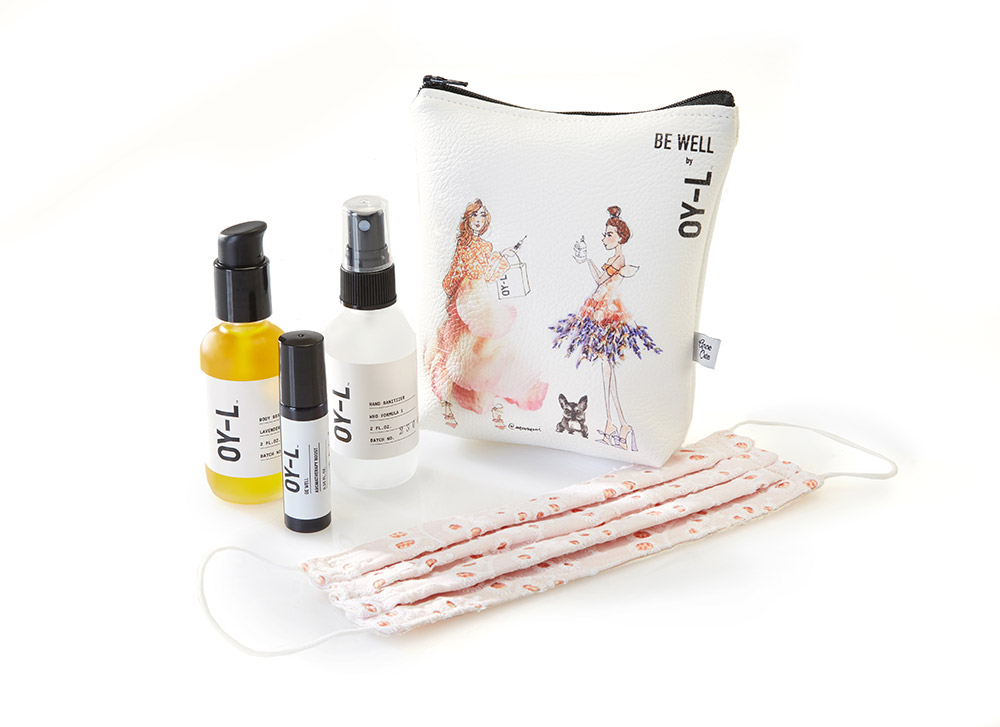
1. It’s like your mini 2020 survival kit that includes your basics during COVID and still be stylish. Be Well Kit contains a plant-based hand sanitizer, a body serum to relieve dryness, an antibacterial powerhouse in a roll-on for an aromatherapy boost and a cotton face mask- all bundled in a signature reusable pouch.

$45 Shop Be Well Kit from OY-L 

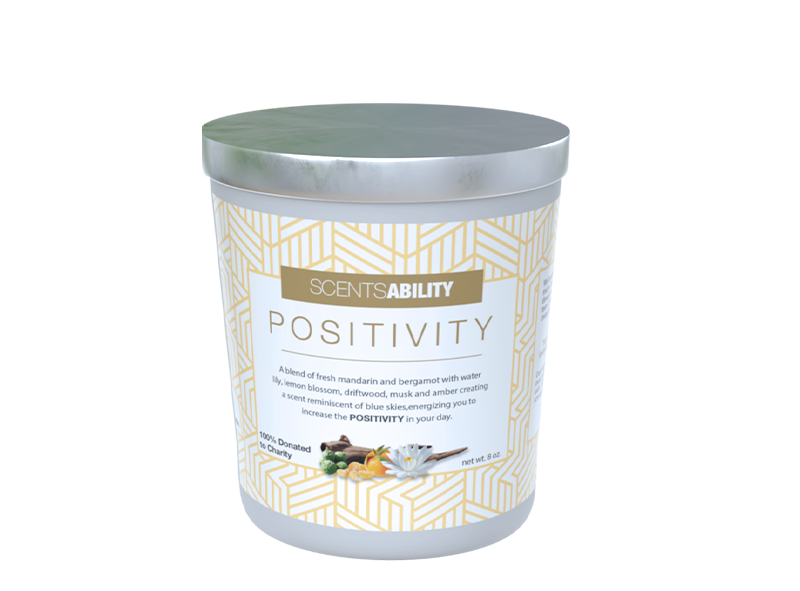
2. The Positivity Candle from Scentsability will help with your state of mind. Light it up for a gentle reminder for the light you wish to be for the world. Based in South Florida, Scentsability provides training and work for adults living with intellectual and developmental disabilities (I/DD). A blend of fresh mandarin and bergamot with water lily, lemon blossom, driftwood, musk, and amber, creating a scent reminiscent of blue skies, energizing you to increase the POSITIVITY in your day.

$25 Shop Positivity Candle from Scentsability

Courtney Black Quilt Vegan Sustainable Cross-Body Bag

3. This stylish bag is made from recycled water bottles. They have several other wonderful designs, but this one has the perfect size and shape to wear daily or to a special occasion when we go back to doing those things. 

$135 Shop Labante USA Cross Bag

Weekly 2021 Annual Pacific Blue - Passion Planner

4. This is my favorite planner and I have been using this for the past 2 years. Some of my favorite features are the weekly motivational quotes, a personal and work list because we need to not just work, but also take care of ourselves as people. The other great thing is the monthly reflections section. This planner is perfect to live life with purpose. 
$1 for every planner sold will benefit charity: water, a non-profit organization whose mission is to bring clean and safe drinking water to people around the world through community-owned and sustainable water projects

$35 Shop Passion Planner in Pacific Blue 

5. No list would be complete without Aromalief. Our brand has been steadily growing thanks to the wonderful support of our customers. This winter we excited to bring you the Aromalief Day & Night Gift Set that comes in a beautiful box and ready to gift. This is the perfect gift for a wonderful and caring person that may be stressed and suffering from aches and pains.

$64 Shop Aromalief Hemp Pain Relief Creams Day & Night Gift Set

These amazing Vegan Gifts for Women Over 40 are perfect for giving to others or even for yourself. 

Be sure to check out the other great products offered at Aromalief For a limited time get 50% OFF MILD SCENT

FREE Shipping Orders $30+

In health,

Melinda


Health and Wellbeing · Men & Womens Health

Making Life a Little Easier for Your Elderly Loved Ones

Photo by Pixabay on Pexels.com

If you have an elderly loved one in your life, it’s extremely important to keep an eye out for them and to help them wherever possible. Sure, it may feel odd looking after these people. After all, they are often individuals who looked out for us and helped us while we were growing up. But now, the tables have switched and it’s your turn! Now, in particular, they are likely to need more help than ever, as we’re living through a pandemic. Here are a few steps you can take to make their life as easy as possible!

Pandemic Related Help

Coronavirus has wreaked havoc for almost everybody this year. But the virus and disease are most dangerous to elderly individuals – the over 70s – in general. So, your elderly loved ones may need a little more support during this time. Here are some steps you should be taking to help them out!

  • Provide Them With Up to Date Information – right now, many of us are getting our news from our smartphones. We get notifications and can read the news on a second by second basis to see new guidelines and regulations. Elderly people, on the other hand, tend to get their news from newspapers, the radio, or the television. This makes updates slower. So, keep them in the know by updating them yourself.
  • Do Their Shopping for Them – supermarkets are packed with people. Sure, many may be implementing social distancing. But it’s generally best to pick up your elderly loved ones’ shopping for them. This can include food shopping, toiletries, picking up prescriptions, and other essentials.

  • Keep In Touch – it’s easy for the elderly to feel pretty lonely right now. Keep in touch to make sure they’re feeling loved and so they can have a chat. Give them a call regularly.

Day to Day Life

There are steps you can take to make the elderly’s day to day lives – whether we are in a pandemic or not – a little simpler. Here are a few to consider!

  • Adapting Their Home – there are many changes you can make to your elderly loved one’s home to make it more comfortable and easier to get about. Whether that’s a stairlift, a walk-in bath, or anything else.
  • Helping Their Mobility – sometimes elderly people find it a little difficult getting from A to B. Maybe they’re no longer comfortable driving. Maybe they don’t have the energy to walk long distances. This is when you can contact Scooters ‘N Chairs. They have all sorts of mobility equipment available.
  • Consider Care Services – some elderly individuals need a little help around the house day today. If you are unable to provide this yourself due to other commitments, you may need to look into care services. This could include at-home care or moving your loved one into a care home. A proper assessment will determine their needs.

These changes aren’t all too big. So, make the effort to ensure your elderly loved one is getting everything they could possibly need on a day to day basis to make their lives as easy as possible!

This is a collaborative post.

In health,

Melinda

Health and Wellbeing · Men & Womens Health

4 Ways You Can Support Elderly Relatives

Photo by Tima Miroshnichenko on Pexels.com

Your parents and older relatives spent their time supporting you through a range of roadblocks you encountered in life. Now that they are older, it’s your turn to repay the favor. But how can you, your partner, siblings, and children provide the vital support that seniors need as they grow older? 

Help Them Find Communities

It’s easy for seniors to become isolated from the world around them. Their friends may not live close enough anymore. Or they aren’t as mobile as they once were. However, staying in touch with a community can help stave off degenerative diseases such as Alzheimer’s, which will ensure their quality of life is as good as it can be. There are plenty of elderly communities around that you can find and introduce your relatives to, allowing them to meet people their age who share their interests. This means they won’t solely rely on you for the company, and can even have new experiences. 

Give Them Ways to Contact You 

Life can be exceptionally busy, there’s no doubt about this, and because of this, there’s a risk that you neglect to get in touch with your elderly relatives as often as you should. However, this shouldn’t mean they cannot get in touch with you when they feel like a chat. Smartphones, laptops, and tablets may intimidate them at first, but they are crucial for ensuring that they can contact you, allowing you to offer the support they need. They won’t need the latest smartphone, but something easy to use and with a strong wifi connection will do the trick. 

Include Them 

When planning how to support your parents, you need to remember that they are not just there. They are still human, and they will always have their preferences for how they want to live. Because of this, you must include them in any plans you have for offering support. Don’t neglect to ask them what they want to do, whether it’s visiting them at their house or go somewhere else where they can get some fresh air. It’s easy to feel like you lose your autonomy the older you get, so providing a chance to retain their independence will do wonders for their well being. 

Assess What They Need 

Sometimes, you can’t provide exactly what your elderly relatives need, so you need to assess these needs and look for solutions. While they might live at home now, medical conditions could impact how easy this is for them. If this is the case, you can consider retirement homes or care workers who will visit your relatives to provide the treatment they need. Services that offer such assistance include https://catholiccarecenter.org/long-term-care/, which will provide expert service and give you and your relatives the peace of mind you need. 

Support

Supporting your elderly relatives will help them manage their senior years more comfortably and prevent any of the loneliness or isolation problems that can come from old age. Whether they require a helping hand now and again or need more professional support, you can be there for them no matter what and make the best of the last years you have with them. 

This is a collaborative post.

In health,

Melinda

Health and Wellbeing

Great Gluten-Free Dessert For Of All Ages

From Helen Allan Christchurch, New Zealand

Photo by Nestor Cortez on Pexels.com

For your next birthday party, make a “pavlova” – a delicious meringue shell filled with whipped cream and topped with fresh fruit. With it’s sweet, fluffy interior and crunchy crust, meringue is a favorite for kids of all ages. The desert, which is claimed by both New Zealand and Australia, was created for the great imperial Russian ballerina, Anna Palova, during her tour in the 1920’s.

INGREDIENTS:

4 egg whites

1 cup fine granulated sugar (castor sugar)

1 teaspoon white vinegar

2 teaspoons cornstarch

1 teaspoon vanilla extract

1 cup heavy cream

1 tablespoon whipping cream

1 tablespoon powdered sugar (if desired)

1 teaspoon vanilla extract

Strawberries and kiwi fruit

Preheat oven 250 degrees. Beat eggs whites on high speed until they look like ribbons when dropped from the beater. Add sugar, one tablespoon at a time, beating after each addition. Beat meringue mixture until it forms stiffs peaks but isn’t dry.

Fold vinegar, cornstarch, and vanilla into mixture. Using parchment paper on a cookie sheet, spoon the meringue mixture into a circle on the sheet about six to eight inches in diameter ( a rubber spatula really helps with this step.)

Bake 1 1/2 hours. Turn oven off and open the door, leaving the meringue to cool. The meringue shell will fall as it cools but that is okay.- that’s when whipped cream is for.

When the meringue shell is cool, whip the cream in the mixing bowl until it thickens. If desired, add sugar and vanilla to the cream. Don’t overbeat the cream or it will clump. Cover meringue with whipped cream and sliced fruit. You might want to make two-this is a very popular dessert! One pavlova serves six to eight people. And just in case you’d like the kids to eat dinner before dessert, try this traditional New Zealand family dinner one weekend.

Enjoy!

In Health,

Melinda

Health and Wellbeing

Easy To Make Gluten-Free Peanut Butter Cookies

Photo by Marta Dzedyshko on Pexels.com

By Anna Quigg

One of my favorite sweet treats during that ravenous time in my second trimester was a homeade peanut butter cookie. The recipe is so quick and it’s easy, it’s a snap.

INGREDIENTS

1 beaten egg

1 cup sugar

1 cup peanut butter

Mix well and drop on parchment paper on a cookie sheet. Bake at 375 dgrees for 10 minutes until golden.

Enjoy!

In Health,

Melinda

Health and Wellbeing

Gluten-Free Chocolate Chip Cookie Recipe

Photo by Sara Santos on Pexels.com

 This is not my recipe but has been a big success around our house and feedback from readers has been overwhelmingly positive.

Ingredients

8 tablespoons (1/2 cup) butter or non-dairy alternative (Earth Balance Buttery Sticks)

8 tablespoons (1/2 cup) shortening (or Earth Balance Shortening Stick)

1 cup firmly packed light brown sugar

1/2 cup granulated cane sugar

3/4 teaspoon sea salt

2 teaspoons gluten-free vanilla extract (Neilson Massey Madagascar Bourbon Vanilla)

2 large eggs (or reconstituted Ener-G egg replacer or applesauce)

1 teaspoon baking soda

1/2 teaspoon baking powder

2 1/2 cups Jules Gluten-Free All-Purpose Flour or other brand

12 ounces semisweet chocolate chips or dairy-free chocolate chips, peanut butter chips, white chocolate chips (available dairy-free), M&M’s, or a mixture

Bring the butter and shortening to room temperature and then beat together with sugars until light and fluffy (several minutes). Mix in the vanilla extract and eggs until combined.

In another bowl, whisk together dry ingredients. Gradually stir these dry ingredients into the sugar mixture. Stir in chips and nuts, if so desired.

Scoop dough into a container (metal, if possible) and cover tightly. Refrigerate of freeze until very cold (overnight is ideal). Preheat oven to 350 degrees (static) or 325 degrees (convection).

Drop measured tablespoons onto a cookie sheet lined with parchment paper, at least 1 inch apart. Bake 8-9 minutes, or until the tops are lightly browned. Let them stand 5 minutes before removing them from cooling racks.

Makes approximately 60 cookies

In Health, 

Melinda


Health and Wellbeing · Men & Womens Health

Review of WaveLife Technologies Energy Cell

I’ve updated my review with a new testimonial, which affirms what I discovered about the WaveLife Energy Cell, it’s a great pain-relieving product at a very accessible price point. Check out my review below and the WaveLife site for more information. 

This post contains affiliate links which means I make a small commission when you use them at no additional cost to you and it helps my coffee habit.

I’ve heard from WaveLife Technologies that many of you have purchased the WaveLife Energy Cell from my review. I would love to hear how the WaveLife Energy Cell worked for you.


I focused on my left knee pain since it is the greatest pain I have on a daily basis. I’m months overdue for a total knee replacement and thought this was a great way to see how well the product worked.

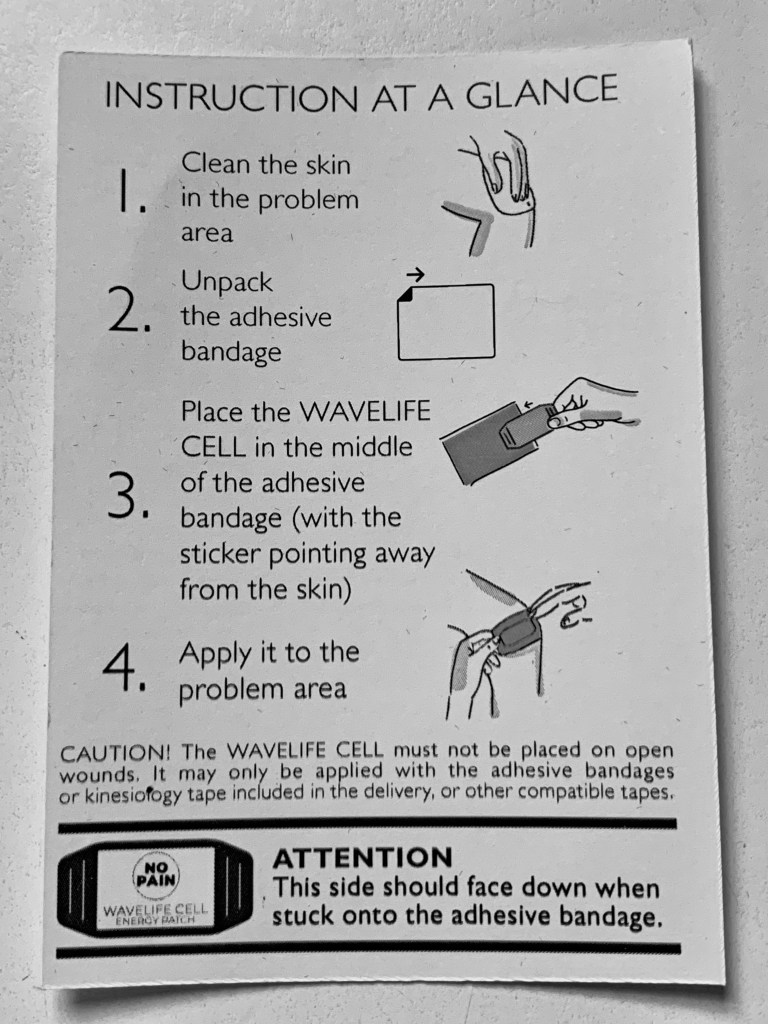
I taped the Energy Cell right below my knee just to the side to get good coverage of the stick-on pads. I wore it for six hours and the tape on the bandage just started to peel on one side at the end of six hours.

After 20-25 minutes of wearing the Energy Cell, I could feel the pain in my knee start to dissipate. The pain didn’t completely go away but the first day I was able to delay taking a pain pill by an hour and a half hour. Pretty good for the first day. I was really surprised by how easy it was to wear not to mention getting some real results.

The second thru the fourth day I experienced the same results, shortly after taping on the Energy Cell the pain started to dissipate. I was able to go from an hour and a half to two hours later than normal before taking my scheduled pain pill.

I can’t recommend the WaveLife Technologies Energy Cell enough! Anytime I can get pain relief no matter how little is a great day for me. I plan on purchasing a second for my husband.

WaveLife Technologies 

*Here’s a discount code for 15% off your purchase, WAVELIFELIGHT15*

The Technical Information

Here’s more technical and scientific information about the Wavelife Technologies Energy Cell and the company.

The Wavelife Technologies Energy Cell is now available in the United States, you can find more information on retail pricing and how to purchase at concierge@wavelife.com.

WaveLife’s No Pain Energy Cell is a non-invasive, non-chemical pain management method that is based on over thirty years of research. It’s been developed in cooperation with over 2800 clinics in Germany, Switzerland, and Austria. It’s reported to help a wide range of pain, such as arthritis, headaches, lower back pain, post-surgery pain, upper back pain, and osteoporosis. You can find out more about the device and whether it could help you here.

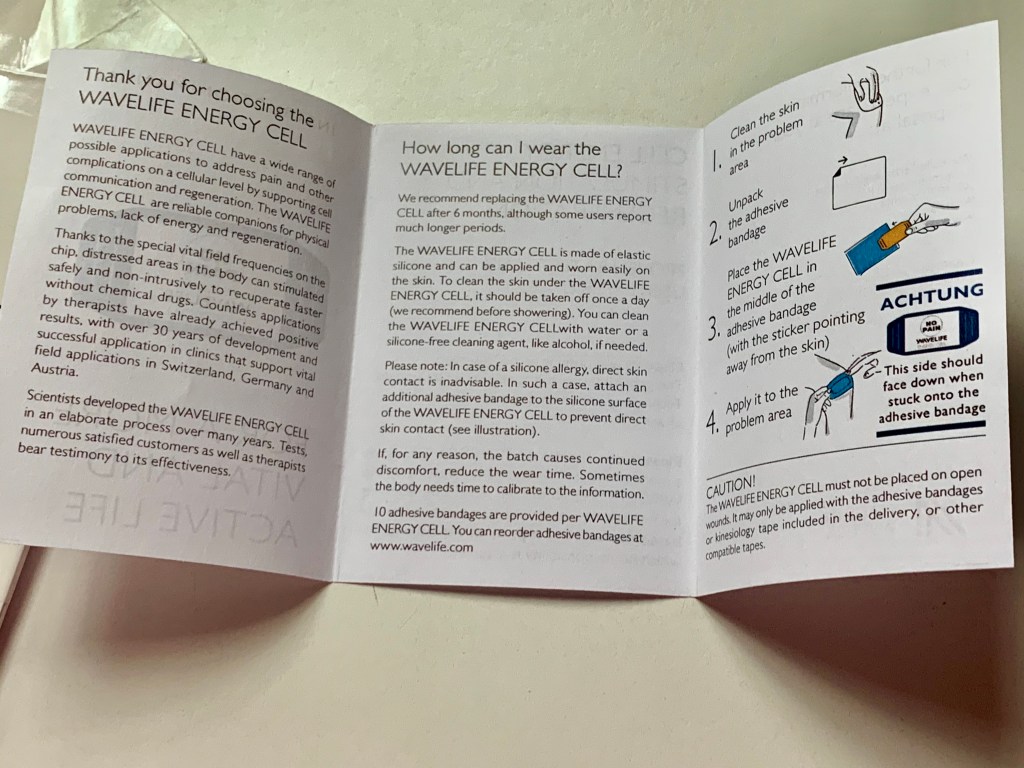
WAVELIFE ENERGY CELL has a wide range of possible applications to address pain and other complications on a cellular level by supporting cell communication and regeneration. The WAVELIFE ENERGY CELL is a reliable companion for physical problems, lack of energy, and regeneration.

Thanks to the special vital field frequencies on the chip, distressed areas in the body can be stimulated safely and non-intrusively to recuperate faster without chemical drugs. Countless applications by therapists have already achieved positive results, with over 30 years of development and successful applications in clinics that support vital field applications in Switzerland, Germany, and Austria.

Scientists developed the WAVE ENERGY CELL in an elaborate process over many years. Tests, numerous satisfied customers as well as therapist bear testimony to its effectiveness.

Bettie Hayes, 82, from Phoenix, Arizona, is a professional tennis coach who had a right hip replacement in 2013 due to osteoarthritis

SEE HER VIDEO INTERVIEW HERE

“I have been suffering from pain on my lower back for at least ten years now. As a pain sufferer, I struggled most with my mobility; I like to garden and I like to play tennis, so pain definitely had an effect on these activities. I first put the Energy cell in my instep and I didn’t see results there, but later I put it on my left and right side of my lower back and immediately felt my pain diminished. Eventually, I got my mobility back again. What I like most about the Energy Cell is that it’s natural and there are no side effects. What I like most about not being in pain is movement; it certainly makes life better.”


How long can I wear the WAVELIFE ENERGY CELL?

We recommend replacing the WAVELIFE ENERGY CELL after six months, although some users report much longer periods.

For more information please contact WaveLife Technologies

Here’s a discount code for 15% off your purchase, WAVELIFELIGHT15

In Health,

Melinda


Health and Wellbeing · Men & Womens Health

Vital Field Formerly WaveLife *New Mission New Products

WaveLife is now Vital Field with a new mission and innovative new products. I have heard from many of you that you purchased the No Pain Cell and also found pain relief. You will be excited to hear about the new products being launched. The packaging may change by the time the new products are reviewed.

The new Anti-Inflame Cell and Resistance Cell are en route and once I have a chance to test I will post a review on them as well.

No-Pain Cell – targets any type of musculoskeletal pain, especially ones where muscle stiffness and inflammation are an issue

No-Pain package.jpg

Anti-Inflame Cell – specifically developed to target inflammation

Anti-Inflame package.jpg

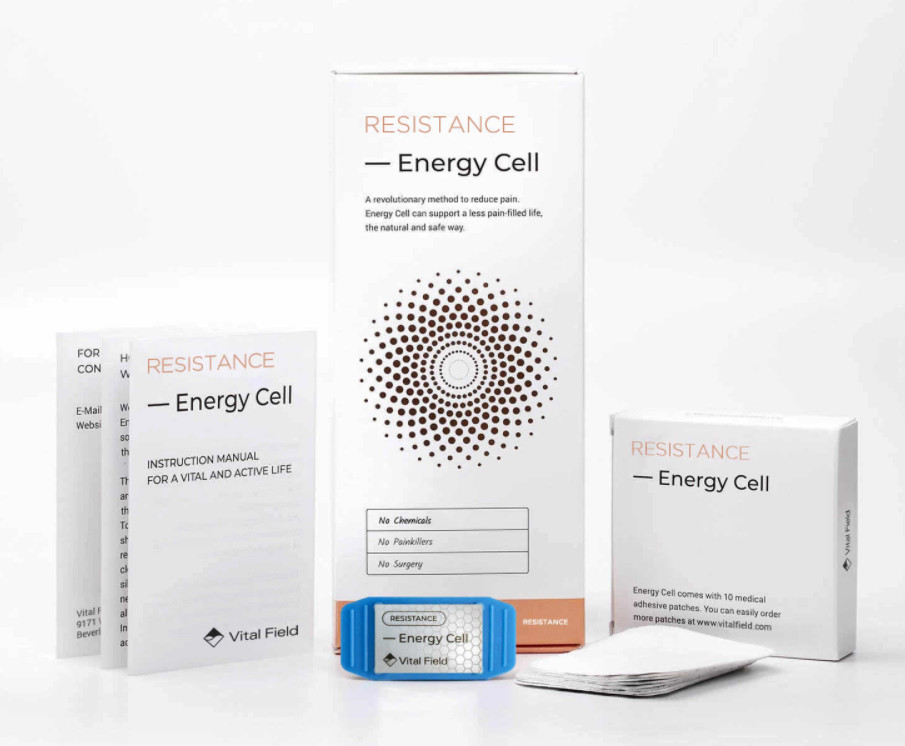
Resistance Cell – developed to support the immune system

Resistance Cell package.jpg

The Energy Cell is a 100% natural, non-toxic, non-invasive, and non-addictive patented composite with magnetic properties, utilizing crystallized components and silicone, and which can retain and emit the therapeutic frequencies of Vital Fields for at least 6 months. Vital Fields are subtle energy fields, 100% natural, that help transfer energy and information across the body’s living systems (cells, organs, and micro-organs) so the body’s cells can repair and regenerate post-damage. Vital Fields have been researched and developed over the past four decades by experts and scientists.

I had great success with my knee pain with the No-Pain Cell. My knee needs a total replacement and is always hurting due to bone of bone pain. There is also a great deal of inflammation surrounding the area. As mentioned in my review, I received pain relief in 20-30 minutes after putting on the No-Pain Energy Cell with the provided patches. Once I ran out of patches I used regular surgical tape and found the same results.

The science behind the technology is well tested and peer-reviewed. I hope you will check out the Vital Field site and learn more about their products. Also, stay tuned for my reviews on the Anti-Inlame Energy Cell and Resistance Energy Cell.

In Health,

Melinda

Children · Communicating · Family · Health and Wellbeing · Mental Health

Researchers: Parents can help their children to face anxiety

KSAT.COM

Jared Hoehing, Producer Published: 

Behavioral science expert gives some ways to help your child beat separation anxiety

Photo by Daria Shevtsova on Pexels.com

NEW HAVEN, Conn. – According to the National Institutes of Health, the numbers of kids and adolescents struggling with anxiety, depression, and other mental health conditions have been steadily on the rise. Cognitive-behavioral therapy, which teaches the child coping skills, and medication may help. But for some kids and their families, there is little relief. Now, researchers are studying a new method that helps parents help their children.

Bedtime for some families can become a struggle. But when the goodnight routine for Nicole Murphy’s son began to stretch for up to three hours, she knew she needed help with his separation anxiety.

“His little mind was always racing nonstop. So, it was kind of hard for him to shut that off, I think,” Nicole explained.

Eli Lebowitz, Ph.D., Psychologist, Yale School of Medicine Child Study Center, and his colleagues, developed a method of training parents to support anxious children. It’s called SPACE, or supportive parenting for anxious childhood emotions. Parents go through training to help their child face anxiety. Lebowitz says the first step is to show support and not downplay what their child is feeling.

“I get it. This is really hard, but I know you can handle it,” shared Dr. Lebowitz.

Lebowitz said parents also learn to help their children by not accommodating them. For example, a parent who would limit visitors for a child who gets anxious around strangers, or speaks for a child who gets nervous speaking, learns not to take those steps. In a study of 124 kids and their parents, the Yale researchers examined whether SPACE intervention was effective in treating children’s anxiety.

“Even though the children never met directly with the therapist and all the work was done through the parents, we found that SPACE was just as effective as CBT in treating childhood anxiety disorders,” stated Dr. Lebowitz.

The Murphy’s used the techniques learned through SPACE to coach their son through bedtime. Within a few weeks, he was falling asleep in 30 minutes.

“For us, it was like life-changing, honestly,” smiled Nicolle.

Melinda

Health and Wellbeing

Holiday Gift Ideas *Women’s Subscription Boxes


It may feel a little early to start talking about the holidays but this year is like no other year in that shipping is already impacted before we hit the peak holiday season. Here are a couple ideas for the special women in your life, that includes YOU!  

These are a couple of my long time favorite subscription boxes. I can always count on these companies to deliver items of the highest quality that can be put to use right away or will make a great gift for someone on your list. Let’s not forget the holidays are right around the corner.

CauseBox

From clean beauty standouts to sustainable swaps, the Fall Box has a little of everything: 4 options to customize, 6 sustainable, ethical, full-size products worth over $250, one beautifully illustrated box. Yep, all that for just $49.95.

For a limited time, new members who join thru my link with get a free PMD Microderm, a $159.00 value as a gift.

I’ve been an annual member of CauseBox for three years and can say without a doubt have never received a disappointing box. They are women-owned, YEAH, they are committed to helping other women get out of poverty by working with artisans from around the world. Each month quarter CauseBox will send you a box packed full of items you need, some you even get to customize and the value is over $250 for the quarterly price $49.95.

Laurel & Reed

Laurel & Reed was created out of our founder’s journey to live a more organic and healthy lifestyle after she found out her father was battling cancer. Through his battle and into his remission, she chose to shift to a pure, clean, and all-natural lifestyle – knowing the harmful effects toxic beauty has on a women’s skin and health. 

Laurel Reed is clean beauty at it’s finest in a monthly subscription box for just $49.95. I can trust Laural & Reed to offer three to four full-size products of the highest quality at a fraction of the retail value. I don’t buy every month because they offer such great products that fit my need that I don’t need them every month. I’ve been a regular customer for three years and have never been disappointed. They are women-owned and committed to clean beauty.

Curateur

CURATEUR delivers coveted name-brand fashion, beauty, and home essentials right to your door every season. Plus, it unlocks year-round access to our members-only Shoppe, and other exclusive benefits. All items are Rachel Zoe approved and offered at exclusive prices.

Curateur is the most luxurious quarterly subscription box I buy, it’s a fashion-oriented box with a splash of clean beauty and skincare. Rachel Zoe is at the helm of this box and is another great woman-owned business. I’m have received two boxes and WOW you get so much luxury for only $99.99 per quarter. The Fall box is valued at over $700.00 retail. I am counting the days until my box ships. The Curator Fall box has a beautiful large Burgandy vegan tote bag, Eddie Burgo Supra Link Neck and matching Earings, two beauty, and skincare items, a marine collagen gel, and a highlighter. You had a choice of the matching earrings or a pair of Le Specs Neptune sunglasses, I chose the earrings.

Kinder Beauty

Get up to $165 worth of clean, vegan & cruelty-free skincare, makeup, hair-care, and accessories, including at least two full-sized products. Vegan and cruelty-free makeup, skincare, hair-care, and accessories, curated with kindness and delivered to your door each month!

Women-owned Kinder Beauty is all things clean beauty for only $25 per month. I have a six-month subscription Kinder Beauty and will probably renew at the end of the term. Everything they do it’s with love and kindness. I love their weekly emails and Instagram site for monthly reveals.

These are a few of my favorite women’s subscription boxes and will share more gift ideas in a future post. 

In Health,

Melinda


Health and Wellbeing

Best Pain Relief Cream for Knee Pain

November 06, 2020  

Aromalief Team

The founder of Aromalief, Annabel has given me permission to post this from the Aromalief blog. I know many of you suffer from knee pain, so I wanted to share the information in her latest post.

Knee pain can have a huge impact in your day to day life, even more so if it’s chronic. Unfortunately, most pain relief creams focus on numbing the pain, instead of helping the actual problem. In this week’s blog, we’re going over what benefits make for a good pain relief cream for knee pain, and how these benefits go beyond just numbing the pain. 

The best pain relief cream for knees needs to have 3 critical benefits. The pain relief cream should have an anti-inflammatory, an analgesic, and nutrients to help keep the knees fluid. Most pain relief creams for the knees contain one or two of these benefits, but Aromalief Hemp Pain Relief Cream helps with all 3. Let’s discuss these in more detail.

Topical Analgesic Menthol and Menthol Crystals for Instant Knee Pain Relief Aromalief

When your knees are in pain it can be from either an acute injury or a chronic condition such as arthritis. The topical analgesic will help with the immediate pain. In Aromalief, we use a combination of menthol for fast relief and menthol crystals that release a cooling effect over time to provide a longer lasting pain relieving effect. It is important to massage the area to keep the blood flowing. However, this can be even more painful without a topical analgesic. Most creams stop at just this benefit, but anti-inflammatory is also important.

Inflammation on the knee white blood cells pain relief cream for knees Aromalief

When a part of the body hurts, white blood cells rush to help it fix the injury. This increase in blood to the area causes the knee to swell. Common anti-inflammatory ingredients are NSAIDs (diclofenac) or Salicylates (aspirin), these may be available in oral or cream form. Aromalief contains rich hemp oil, l-arginine, and MSM to bring down the inflammation and keep the blood flowing as a more natural alternative.

The third critical factor to get relief from pain in your knees is to keep the knees lubricated. Imagine a machine that moves forwards and backwards every single day without oil. Eventually, the machine breaks down, the same thing happens as we age, have an injury, or a chronic illness. People typically take Glucosamine/Chondroitin oral supplements to help prevent the deterioration of the knees, but over time the pills can begin to hurt the stomach. The other downside is that by taking them orally, the effect is spread out throughout the body and eventually discarded. Aromalief contains a special type of Glucosamine that is derived from plants and the chondroitin in Aromalief is even rarer since it is obtained through a fermentation process from cultivated algae. 

How to Use Aromalief Hemp Pain Relief Cream for your Knees?

It is best to apply Aromalief 2-3 times per day for at least the first 10 days because your knees probably have a significant amount of damage. Gently massage a nickel size amount over each knee when you first wake up and when you go to bed. If you walk a lot or work standing up, you should also apply it midday, although it may not always be possible. As soon as you are home, lay on our back and raise your legs up against a wall or over some pillows to improve your circulation.

Raise your legs for knee pain relief to reduce inflammation Aromalief Hemp Relief Cream

Something else to consider is to apply Aromalief to your hips. Oftentimes, your knees could hurt because of a misalignment to the hips. By massaging your hips and stretching them you could release tendons and ligaments that are pulling on your knee. This is better assessed by a physical therapist, but it shouldn’t be ignored. Even though you are feeling pain in your knees, the root cause can be somewhere else. 

It is always important to ask your doctor before using these or any other creams. Even though products don’t require a prescription, it is still important to get their medical opinion. 

Aromalief® is a brand of topical pain relievers made in Florida for women with chronic pain by women. It is 97% Naturally-derived, Vegan, and Cruelty-Free. 

Try Aromalief Day and Night Gift Set to help with Knee Pain Relief. Shop Here

If you have any questions about our products you can always email us at info@aromalief.com and we will do our best to get you research based answers.

This statement has not been evaluated by the Food and Drug Administration. This product is not intended to diagnose, treat, cure, or prevent any disease.

Please consult a medical professional prior to using this or any other product for pain relief. 


Health and Wellbeing · Men & Womens Health

What Does It Really Take To Afford a Million-Dollar Home?

One of the biggest expenses in your life is going to be your home. A deposit is a large chunk of money that can take years to save up for. Even then, it’s not over yet and you still need to pay hundreds or even thousands every month to keep up with your mortgage. Buying a home outright in a single payment seems incredibly difficult. So how do people afford incredibly luxurious homes? What does it really take to be so wealthy? Is it all just luck, or is there some trick to it?

Unfortunately, there’s not really a trick to being able to afford an expensive home. Some people may have gotten lucky in life and ended up being born into wealth, but for most of us, grinding our way up to that level of wealth can take years of hard work and a sprinkle of good fortune. But what does it really take to be so wealthy? Is it all about managing your money, or are there personality traits and strategies that can help?

Source: https://unsplash.com/photos/Cqvdb3bvmCY (CC0)

What’s the deposit on a million-dollar home?

If you thought that a typical mortgage down payment was expensive then the equivalent for a million-dollar home will probably scare you.

Most mortgages have an upper limit of how much can be borrowed. The maximum that can be borrowed is usually around $700,000 in good circumstances. This means that to afford a million-dollar home, you’ll need to make a down payment of at least $300,000 in some areas. Most million-dollar homes will exceed that million-dollar threshold, and it’s unlikely that you’ll qualify for a loan that large unless you have an excellent credit score. In reality, your down payment is going to be much higher unless you can qualify for a jumbo loan with strict requirements.

But how do you afford it in the first place?

The path to being rich isn’t linear. There are multiple ways to achieve it, and it’s going to depend heavily on your circumstances, education, knowledge, and ultimately motivation.

Here are a few tips on how you can develop a millionaire mindset:

  • Learn to focus on the things that you want. Don’t be timid when you want to achieve something. Do everything you can to learn about it and approach it with passion. When you wake up wanting to get things done, you’re halfway there already.
  • Set goals that are achievable. It’s impossible to make progress if you don’t track how far you’ve come. Set yourself some achievable goals and work towards them before setting harder ones.
  • Be frugal. Don’t just throw away your money. Make sure the money you spend is an investment in your life or in your wealth. Don’t just waste it away as soon as you have it.
  • Be hungry for knowledge. The more you learn, the more skills you’ll have. Don’t be afraid to fail occasionally to learn from your mistakes.

Becoming a millionaire and affording a million-dollar home are two very different things, but it all starts with a successful-oriented mindset that drives you to do better.

This is a collaborative post.

In Health,

Melinda

Health and Wellbeing · Men & Womens Health

What To Do If You’re Unhappy In Your Marriage

No one wants to be unhappy or feel sad in a marriage. However, the reality is that relationships are hard and take a lot of work. Not all are successful, and some will eventually end. The upside is that there are actions you can take if you’re unhappy in your marriage.

Photo by Andrea Piacquadio on Pexels.com

What you don’t want to do is nothing and be miserable in silence. It’s better to address your emotions and problems and try to work through them than to brush them aside for another day. Be proactive and do your best to rectify the situation and then see what happens. Remain flexible and adaptable and open to where life takes you after you put in the hard work.

Evaluate What’s Not Working

If you’re unhappy in your marriage, then you should take a step back and evaluate what’s not working and know the warning signs. There may be problem areas that you can identify and work through to help you two get to a better place. For example, maybe it’s that you don’t spend enough quality time together or that there’s a lack of communication in your marriage. Identify the issue or obstacle and then get together to try to come up with solutions you both feel comfortable with and can get behind.

Seek Professional Help

You may also want to seek professional help if you’re unhappy in your marriage. There are marriage counselors out there who specialize in this type of therapy and can try to mediate and offer suggestions for improvement. For it to work, you both must be willing to go and be open and honest about your emotions and feelings. It’ll be an ongoing process instead of a quick fix so you need to be committed to it for the long haul if you’re going to come out stronger on the other side as a couple.

Consider A Split

You may have thought about it and have concluded that you’re truly unhappy in your marriage. Maybe you’ve tried all you could do and feel like there’s no going back or it won’t get better. In this case, you might want to consider a split and hire a team of divorce lawyers who can guide you through the process and ensure the best outcome for you. They can assist you in making the tough decisions and stand up for you to protect your rights.  

Practice Self-Care

It’s easy to get lazy about taking good care of yourself or feel unmotivated to do so when you’re unhappy in your relationship. However, you’re only hurting yourself when you take this approach. Instead, practice self-care and do your best to stay healthy and well even though it may be a tough situation for you. Get enough sleep, talk to your friends and family, and exercise to help reduce the stress and anxiety you’re feeling.

Conclusion

These are a few choices you have if you’re unhappy in your marriage and looking for ways to improve your circumstances. While it’s okay to feel sad or down about it, you also need to remain positive and take actions that will help move your relationship or life in the right direction. 

This is a collaborative post.

In Health,

Melinda

Health and Wellbeing · Men & Womens Health · Mental Health

Developing a Positive Mental Attitude — Guest Blogger Coaching Skills International

1. Remind yourself that you are not your feelings. 2. Don’t sweat the small stuff; choose to focus on what matters. Ignore or overlook the petty slights and grievances. 3. Feel the power as you learn to take control of your reactions. You’re not just a puppet where someone pulls your strings. 4. Don’t agree […]

Developing a Positive Mental Attitude — Coaching Skills International
Health and Wellbeing · Men & Womens Health

The Approval Addiction —Guest Blog

A lot of us wish for our talents, our intelligence, or our strengths to be recognised, appreciated, and known by others. But we very soon start to rely on these approvals and try to ‘alter’ our lives to fit in within these expectations. Unfortunately, right from here starts a very vicious cycle. Ever since I […]

The Approval Addiction —
Health and Wellbeing · Men & Womens Health · Mental Health

Selena Gomez Sat Down With Vice Presidential Candidate Kamala Harris to Discuss Mental Health Care and Voting

SEVENTEEN

By Carolyn Twersky Oct 29, 2020

“As a citizen, as someone who truly cares about their country, not voting is just not an option.”

Selena Gomez sat down with Vice Presidential Candidate Kamala Harris to speak about the importance of voting ahead of Election Day on November 3rd. During the discussion, Selena shared why she’s voting as well as the issue that is most important to her. 

“To be honest, I think in the past, when I was younger, I wasn’t very educated on the voting process,” Selena admitted. “The past four years, I’ve experienced a lot and I feel my vote counts more than ever. As a citizen, as someone who truly cares about their country, not voting is just not an option.”

Senator Harris then brought up lupus, an autoimmune disease Selena has been open about suffering from. Harris pointed out that the disease, “disproportionately affects people of color” and her sister has it. 

“There’s so many women of color who have lupus and are still, you know, struggling to get the kind of attention and treatment that they deserve,” Harris said. “And that’s one of the things that Joe [Biden] and I are fighting for, which is to hold on to the Affordable Care Act and expand it.”

Harris explained that she believes health care isn’t just necessary for issues affecting the body, but also mental health issues. “You know, the way I think about it is that we have to understand healthcare, you can’t just think that the body starts from the neck down,” she said. “We also need health care from the neck up.”

Selena, who has been very outspoken about struggling with her mental health agreed. “I’ve had so many dreams about creating places that people could go to,” she said. “I think there’s a part of me that wishes we had some sort of place that felt like, OK, maybe you just need to get help. You know it should be something that people can understand and breakdown, because I truly know that this is something that’s important and important to me.” 

This year, one in ten eligible voters is part of Gen Z. Because of that, your vote is so important in this election, and Selena emphasized that when talking to Harris.  

“It’s really encouraging to see more and more young people come together for it because we are the ones that are going to trail blaze and we are going to be the next wave of people that truly are going to decide our future and I plan on doing everything that I can to help and to just also encourage people to vote.” 

Harris ended the chat by encouraging anyone who has questions about voting to head to IWillVote.com

CAROLYN TWERSKY Assistant EditorCarolyn Twersky is an assistant editor for Seventeen covering celebrities, entertainment, politics, fashion, beauty, and health. This content is created and maintained by a third party, and imported onto this page to help users provide their email addresses. You may be able to find more information about this and similar content at piano.io

Health and Wellbeing · Men & Womens Health · Mental Health

Art therapy: Healing Emotional Trauma Through Creativity

The Daily Star

By Ayman Anika

Artwork by Hamida Akter Mira

October 13, 2020

Throughout the journey of our lives, we encounter several kinds of trauma, and store conscious and unconscious pain in our emotional backpack. Art can ease this pain, and through any forms of art, we can weave a path that leads to liberation from the anguish of traumatic experiences.

The word “create” has been derived from the Latin word creare and this word is also etymologically associated with “growing.” To create something is to do; to do is to produce and this production bears both cognitive and social benefits for the subject involved in the task. The link between unconsciousness and art is a fascinating one and art therapy can be very useful for patients suffering from severe mental health issues such as depression, dementia, anxiety, and even post-traumatic stress disorder.  

Experts have defined art therapy as a form of expressive therapy that uses the creative process of making art to improve a person’s physical, mental, and emotional well-being. Mental illness and art are two different fields and yet, they are very intimately connected. Art is the manifestation of our innermost emotions and therapists have been using this link to explore art as an alternative to help those who are suffering from different psychological distresses. Well-renowned psychoanalyst Otto Rank has proposed that art can be a way to overcome distress and Melanie Klein has suggested art as a means of recognising the structure of the mind. Various psychoanalysts have recently begun to establish that art is a sort of vehicle that facilitates mobilisation. By mobilisation, the experts are referring to the anguish experienced by an individual and art can be a creative way of transforming or reshaping traumatic experiences.  

This powerful medium has become quite popular in the field of medical sciences. There are all sorts of therapies that involve different forms of art such as music, painting, writing, photography, etc. People usually do better when they are part of a creative process, for example, people suffering from terminal cancer benefit from the humorous situation in the performing arts and for this purpose, in some hospitals, there is a therapy known as clown therapy. One does not always have to see a therapist to experience the therapeutic benefits of artistic expression. However, visiting a licensed professional has its advantages, as the therapist can tailor each activity to that individual’s needs.

Writing is equally a very effective medium to release emotional pain. Words always communicate our emotions and actions; and anyone can reach a state of calmness through putting their thoughts into words. Hence, journaling has been recommended by many experts. Again, studies show that creating art stimulates the release of dopamine, and this chemical is released when we do something pleasurable — this gives us a sense of accomplishment. It is very crucial to remember that no one needs to be an expert in creating art or to try art therapy. The simple steps are to brainstorm and write down the preferred ideas. It is important to listen to yourself and lovingly accept all your emotions and thoughts.

The greatest benefit of art therapy is that it gives an individual a healthy outlet for expressing and releasing all their feelings and fears. Though the concept of art therapy is a very recent one, it is a very powerful medium to fight stress, anxiety, or any other emotional trauma. Every form of art helps us to heal as it allows an individual to be compassionate and empathetic. Anyone can choose the materials as well as the type of art they like and transform their emotional wounds into something beautiful and meaningful. During the process of art creation, people take themselves to the path of self-discovery, and it certainly aids them to eliminate emotional roadblocks and connect with themselves as well as others.   


Health and Wellbeing · Men & Womens Health · Mental Health

What Depression Looks Like

Anyone can experience depression whether it’s situational, like the COVID crisis, chronic pain or illness or having a mental illness. I have Bipolar Disorder I, which means although my moods can swing from highs to lows, most of the time I’m depressed. I was first diagnosed at 19 years old and sought advanced treatment at 28 years old after my father committed suicide. Below are a few examples of what depression has looked like for me.

Your family sends someone over to check on you since they haven’t heard from you in days/weeks

Sleep for 22 hours a day

Don’t shower for weeks

Can’t remember when you ate

Your mailbox is so full the postman stops delivering mail

Emotional eating or buying

Feel deep guilt over lying to family and friends for years trying to hide your depression

You are numb, empty inside

It’s been eight months and five new prescriptions and still no improvement

The doctor tells you if you cancel another appointment he will fire you and you almost drive off the freeway on the way home

To depressed to take your medication no matter how bad you want to

Fall so low that death must feel good

Don’t know what day it is

Drink to much

Have a detailed plan on how you will commit suicide

The normal mood is depressed, your taking medication just to get you above the line to normal happy

Taken over 50 medications or combinations of medicines

Had 21 Electro Shock Treatments

Spent multiple weeks, multiple times in Psychiatric hospital

Divorced because husband didn’t believe you were depressed

Cut off contact with everyone in an effort not to have to explain what’s going on or where you were

Lose your job on the third day because you can’t get out of bed

Don’t fill your prescriptions because you can’t drive one mile

These are a few examples of the struggles I’ve had with Bipolar Disorder for almost 40 years. The blessing is I have an exceptional Psychopharmacologist and Therapist who I’ve been seeing for over 30 years. My doctor has been tough on me, never allowed me to make excuses, and taught me how to explain my feelings in an effort to prescribe the right type of medication. He strongly recommended I seek out therapy which I did and have never looked back.

Therapy doesn’t help control my depression but allows me to process the anxiety, guilt, and emotions I have from being depressed. I also process my traumatic background with her which helps me clear any unresolved childhood events.

There is light at the end of the tunnel, sometimes you can’t even see a glimmer but there’s always light at the other end.

Please don’t try to deal with your depression alone, even if it’s situational depression, like a death or divorce, everyone needs emotional support. Go talk to someone.

Keep a log of your feelings by day the best you can in order to share those raw emotions with a Psychiatrist or Therapist. Raw feelings will help get to the root of any issue much quicker than going to an appointment saying I’m depressed without clear examples.

If your general physician is prescribing your medication and you are still experiencing depression please seek out a professional with specialized training. A general doctor doesn’t have the in-depth knowledge of medications or about ongoing depression to get you to the other side.

In Health,

Melinda

Health and Wellbeing · Men & Womens Health

Organizations That Are Raising Health Awareness In November

I thought you would like to see organizations that are raising awareness during the month of November. From Healthline.

  • American Diabetes Month
  • Bladder Health Month
  • Chronic Obstructive Pulmonary Disease (COPD) Awareness Month
  • Diabetic Eye Disease Month
  • Lung Cancer Awareness Month
  • National Alzheimer’s Disease Awareness Month
  • National Epilepsy Awareness Month
  • National Family Caregivers Month
  • National Healthy Skin Month
  • National Hospice Palliative Care Month
  • National Stomach Cancer Awareness Month
  • Pancreatic Cancer Awareness Month
  • Prematurity Awareness Month
  • World Antibiotic Awareness Week (Nov. 11–17)
  • World Prematurity Day (Nov. 17)
  • GERD Awareness Week (Nov. 17–23)
  • Great American Smokeout (Nov. 19)
  • International Survivors of Suicide Day (Nov. 21)
  • National Family Health History Day (Nov. 26)

In Health,

Melinda

Health and Wellbeing · Men & Womens Health

How To Protect Your Business From COVID-19

As the second COVID-19 lockdown is due to begin, it’s time to look at how to protect your business from the damaging effects the virus and the lockdown may have. While many people were recently relieved that things looked set to go back to normal or at least into the “new normal,” unfortunately, it was short-lived as the coronavirus case numbers have increased again, and drastic action has to be taken. You may have learned lessons from the first lockdown, whether it is things you should have done, done differently, or not done at all. The critical thing is that this time you will know what to expect and work as best you can to protect your business. So, what this time?

Photo by cottonbro on Pexels.com

Remote working

Most businesses experienced their employees remote working in some way during the first lockdown, so they will be used to the process and know what works best for them. Some of your employees are best getting up and showered and dressed in their work clothes to get in the work mindset, while others find they work better in their comfy clothes and sat on the sofa. That’s for your employees to work out, but at least this time, they can be prepared either way, or they can try working a different way this time if they felt they weren’t in a good enough routine last time. As an employer, make sure that you have sufficient support networks in place for your employees; this means regarding technology and work materials and equipment that they need, but also, you need to be more aware of their mental health this time around. Many people’s mental health is deteriorating the longer that the pandemic goes on, and the more issues they have to deal with. Make sure they know they can talk to you if they need to and that you check in on them while they’re working from home.  

Prepare For The Return To Work

You can take this time now to plan your next return to work, and while this means deep cleaning, disinfecting the office, calling in the Renew Crew to do a power wash, and maybe putting in more social distancing measures and hand sanitizing stations, it also means preparing your business for something new and different because the world has changed.  Now it’s worth looking at next year’s plan rather than trying to save this year’s. Despite how it may seem, you’re actually in a good position now as you can adapt to respond meaningfully and creatively to the current marketplace. For example, marketing campaigns and images will need to include people wearing face masks and respecting social distancing. Take the time to think carefully about which direction you want to take your business in and understand what’s needed to bring solutions to the problems and overwhelming challenges your customers are facing.

Be as frugal as you can

If your business struggled during the first lockdown, then you need to be more careful this time. Of course, this goes without saying, but it’s knowing how to be more frugal that’s important. Do you know how you can maximize your profit margins? While it might seem like a good time to get certain jobs done, it is important to control your spending during this time and to put away any extra cash you can. Find out what you’re entitled to in terms of deferrals on rent and loans, and if there’s any way you can save money on your suppliers, then do so. Find out what other funding is available to you or if there are any temporary loans you can apply for.

Plan for every eventuality

If COVID-19 has taught us anything, it’s that you never know what’s around the corner. If you want to protect your business, then you need to be prepared for anything and everything. This isn’t an easy thing to do while trying to run your business, but if you are on top of your finances and know what your business can take and what it can’t, then you can make plans. Try to think of every scenario that you can, and don’t forget to factor in what could happen to the third parties you rely on to keep your business running and providing a service to your customers. While your business may have a good chance of making it out the other side, some of the businesses that you work with and rely on might not be so lucky, so make sure you have a contingency plan just in case. 

This is a collaborative post.

In Health,

Melinda

Health and Wellbeing

What Do First Time Home Renovators Wish They’d Known?

Home renovation is an exhilarating, frustrating, emotional, challenging, and often addictive process. The journey of seeing a house go from unloved wreck to home of your dreams is a feeling quite unlike anything else. Getting there can be quite the ride, but you may find that you love the end result so much you’re soon itching for your next big project. There are many reasons to renovate an older home. Generally speaking, you can get much more for your money and it may enable you to buy a bigger plot or in a nicer area that would normally have been just out of your budget. If the property is liveable, you can then give yourself some extra time to save up the money needed for construction work.

It can also prove a good investment – if you buy at the right price and are able to make the renovation budget work, and you don’t overdevelop the property when it comes time to sell hopefully you will have made a profit. It’s also a chance to design and develop a home exactly as you want it, specific to all your own needs and preferences. There are a lot of plus points to renovating your first home.

On the other hand, being prepared is everything, or first-time renovation projects can be quite a shock. The expense, noise, mess, unexpected problems, and missed deadlines can be enough to put some people off for life. So how do you get ready for renovation if you’ve never done it before? And what do more experienced home renovators wish they had known before their first project?

Photo by Rene Asmussen on Pexels.com

Budget Is Key

It may not be very romantic to hear, but everything within your project is driven by one factor: budget. There’s no denying the extensively redeveloping property is hugely expensive, so understanding from the outset exactly what your renovation budget is, and estimating realistically are vital. After all, no one wants to run out of cash part way through a building project. It’s quite likely you may have to scale back some of your expectations, especially on a first project, when you’re unlikely to have huge cash reserves to fall back on. Plan out the projects you want to do in phases, in order of how urgent they are. You may have to wait a while between phases if you need to save up more money or secure a loan for the building works. Keep a close eye on the budget during the project and remember that the small things can be expensive and quickly add up. Decide in advance what features of the renovation are an absolute deal-breaker for you, and what you will be prepared to compromise on if you have to. Always create a contingency fund. It’s likely that there may be unforeseen issues that pop up during the course of the project – especially with older properties – that you haven’t budgeted for, so this margin could save you. You may find yourself having to pay for additional structural work, new electrics, or even things like local pest control. And if by some miracle, you don’t spend it, it can be spare cash to spend on the final decorative touches. Remember that it is possible to save money on a home renovation. Learning to DIY some of the slightly easier bits yourself can be very cost-effective, so jobs such as painting, adding skirting, etc are all easy wins. Shop around for everything, from equipment hire to kitchens, to get the best price, and consider what preloved elements you could either reuse from the original property or source elsewhere.

Get The Layout Right

The key to a successful renovation is to find a new layout that works. You will either be working within the original floorplan of the house, but with the option to remove and add walls and reconfigure the space – or you may be extending your home to add on additional space. You’ll be surprised what the right layout change can do to transform both the feel and the usability of a property – for example, opening up a maze of little rooms to form a free-flowing, open-plan space. If you do want to keep smaller rooms, there are lots of tricks to make them appear more spacious, from the clever placement of mirrors to dressing the windows so that they look taller and choosing paint techniques that make the room look bigger. 

It’s a time in your life you will always remember, so be prepared, do your research and embrace the chaos – your ideal home is now within reach.

This is a collaborative post.

In Health,

Melinda

Health and Wellbeing · Men & Womens Health

Different Ways To Detox

It shouldn’t come as too much of a surprise to find that everything we put into our bodies, either on purpose or accidentally (such as food, drink, pollutants in the air, and so on), will have some effect on it. This could be a good thing, such as eating the right foods and filling our bodies with nutrients and vitamins, or it could be a bad thing, such as filling our bodies with chemicals from cigarettes, for example. 

Photo by Pixabay on Pexels.com

These harmful elements will build up over time, as our bodies are unable to handle them in the same way as it can deal with useful additives, and eventually, they will make us feel sick, lethargic, unproductive, even depressed. 

This is why detoxing once in a while is a good idea. When you detox, you remove all of these bad things from the body and therefore reduce the chances of feeling unwell or getting sick. There are several ways that detox can be done, but it is also a good idea to speak to your doctor first, as they will be able to guide you on how to do it safely. 

Supplements 

Adding supplements to your diet can start a good detox routine. Supplements can be taken in pill form such as those found at Shredz Supplements or could be used in the form of a tea, for example. Chamomile, peppermint, ginger, and many more herbal teas are great for detoxing. 

Using the right supplements means you will feel more energetic, and your metabolism will work more quickly to rid your body of the unwanted elements it contains. This is why you will need to research exactly which kind of supplement will work best for you, as they will all be different, and it will depend on what you are looking for as to which one you pick. 

Photo by Nadi Lindsay on Pexels.com


Drink More Water 

If we never drank anything other than water, our bodies would be extremely healthy. Water contains everything we need to keep our organs working correctly, so drinking more of it will work wonders when it comes to detoxing. Drinking water will literally flush the toxins out of your body, boosting the work the kidneys are doing. 

It can be boring to just drink water, and this is understandable. However, making it your mission to drink more water than you do right now, and then adding more each day until you feel and look great (the more water you drink, the better your skin will look too), will give you a great new lease on life. Of course, you can still drink coffee, wine, and soda (or anything else) too, but when you drink more water than anything else, it really will make a difference. 

Quit Bad Habits 

Our bodies are truly amazing. If allowed to, they will generally be able to heal themselves, and any damage done through bad habits like smoking, drinking too much alcohol, or not exercising enough, can be undone, assuming these bad habits are stopped. 

This will be hard, but if you want to detox completely and you want to be as healthy as possible, quitting bad habits is something you definitely must consider. 

This is a collaborative post.

In Health,

Melinda